Article

Anti-Spoofing Method by RGB-D Deep Learning for Robust to Various Domain Shifts

Department of Computer Software Engineering, Dong-Eui University, Busan 47340, Republic of Korea
*
Author to whom correspondence should be addressed.
Electronics 2025, 14(11), 2182; https://doi.org/10.3390/electronics14112182

Submission received: 18 April 2025 / Revised: 23 May 2025 / Accepted: 27 May 2025 / Published: 28 May 2025
(This article belongs to the Special Issue Deep Learning-Based Object Detection/Classification)

Abstract

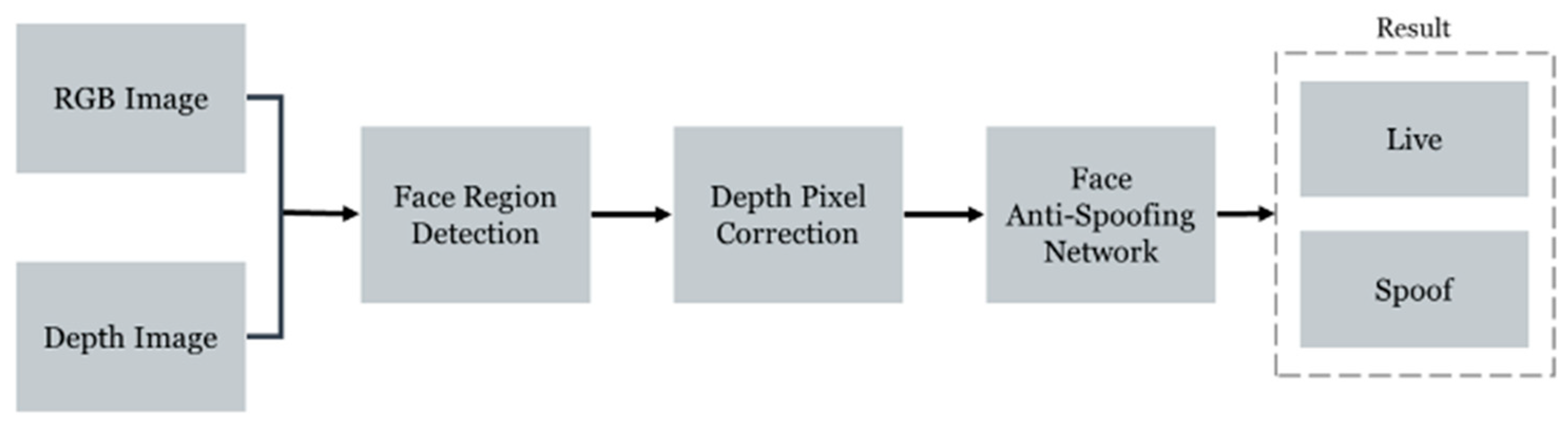
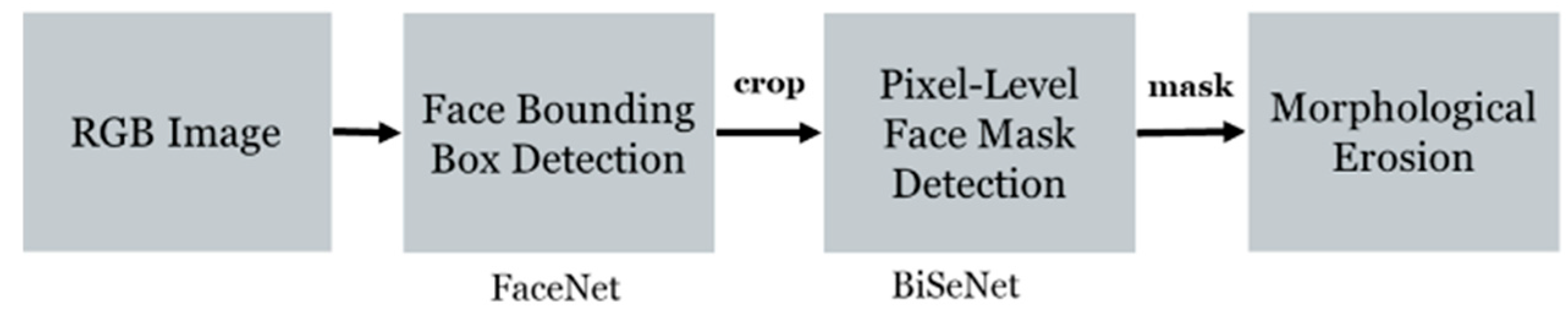
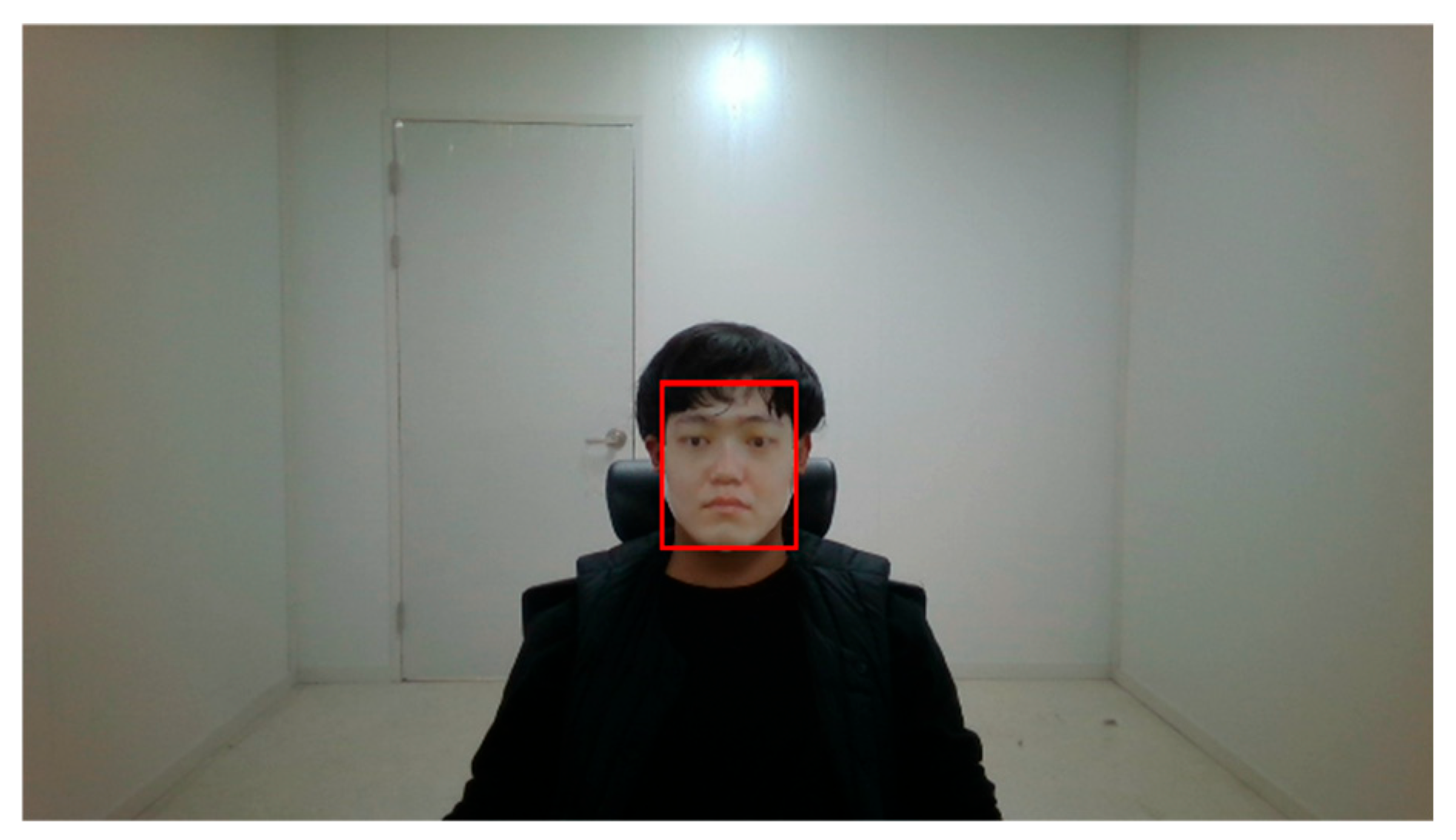
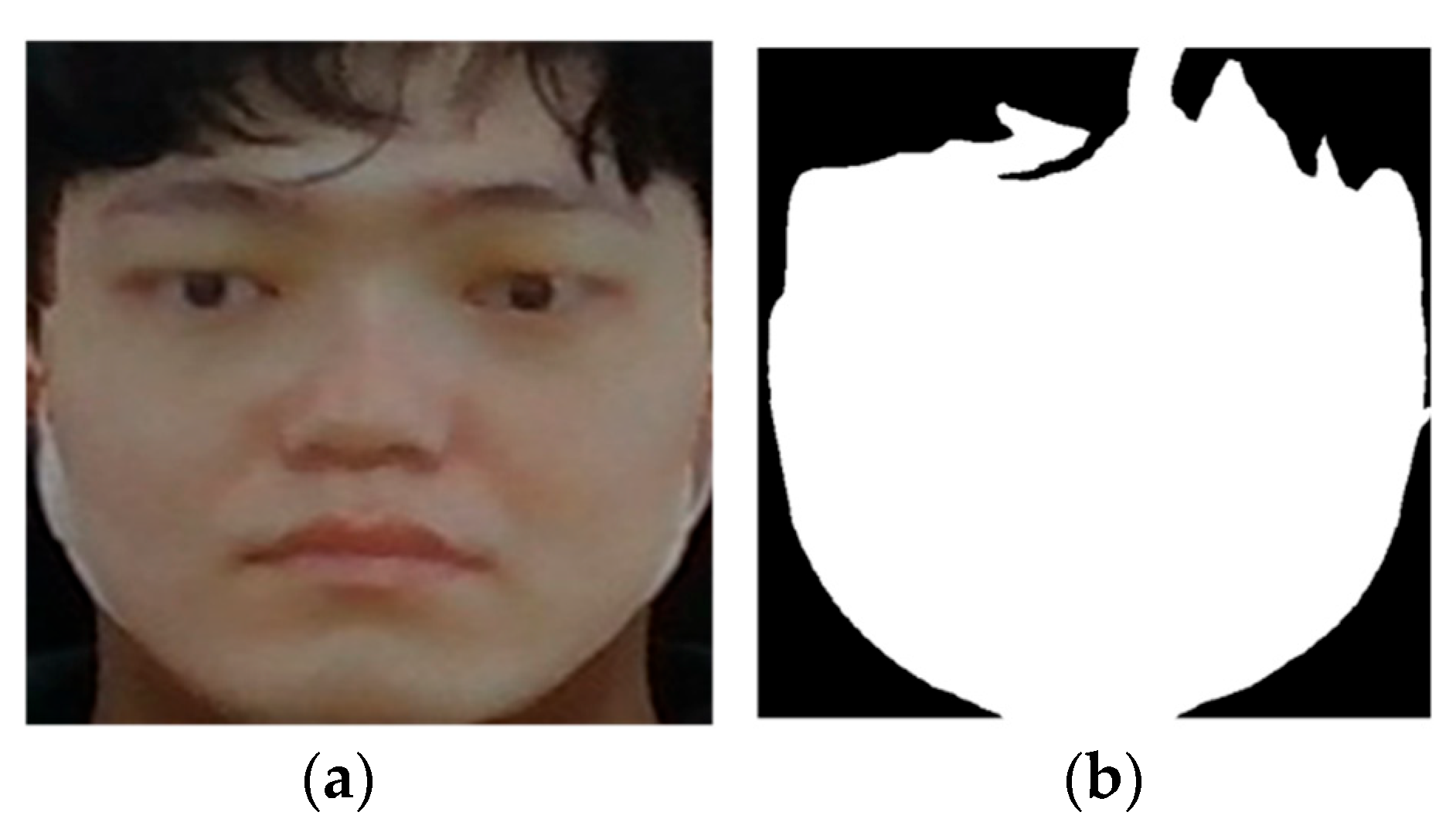
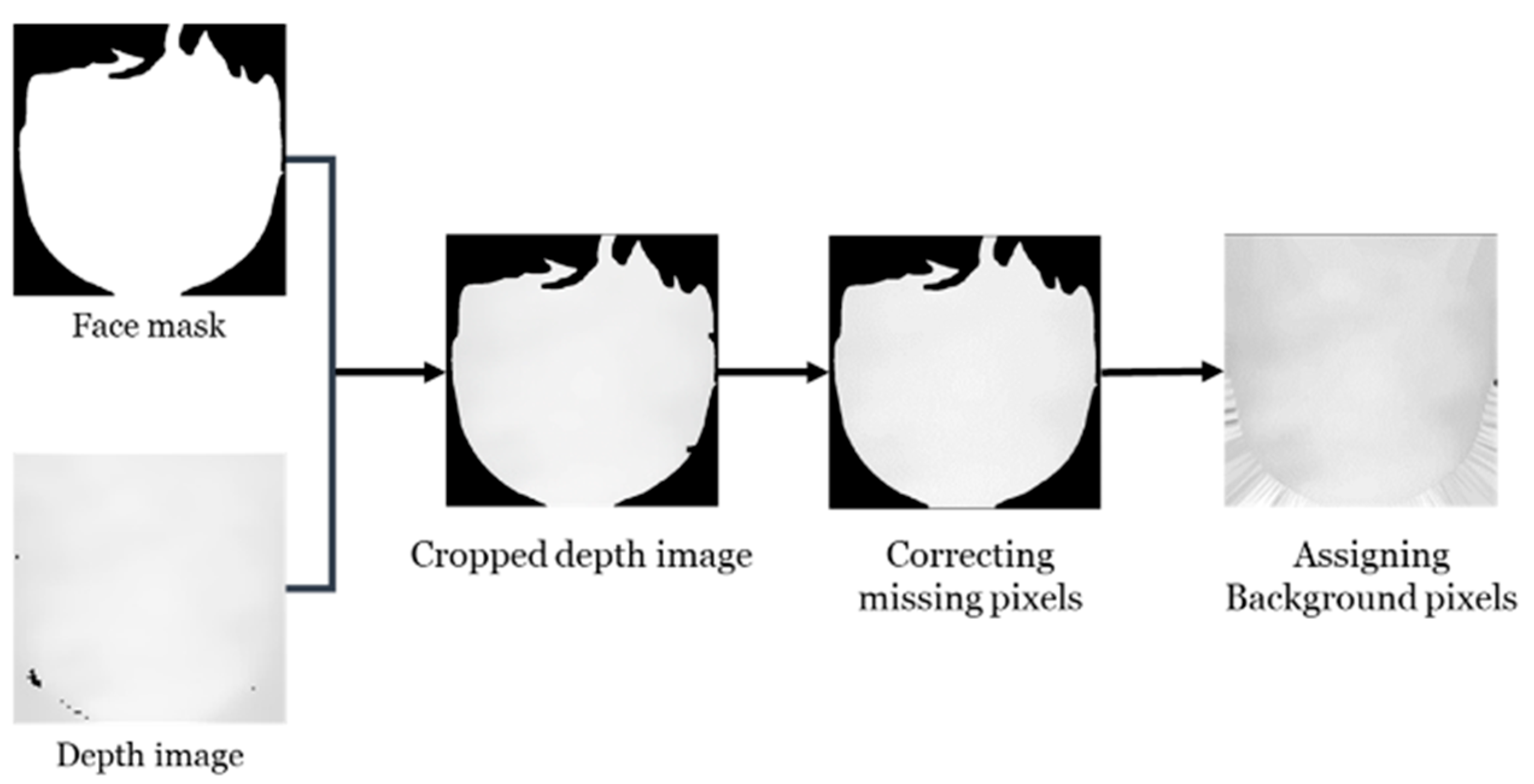
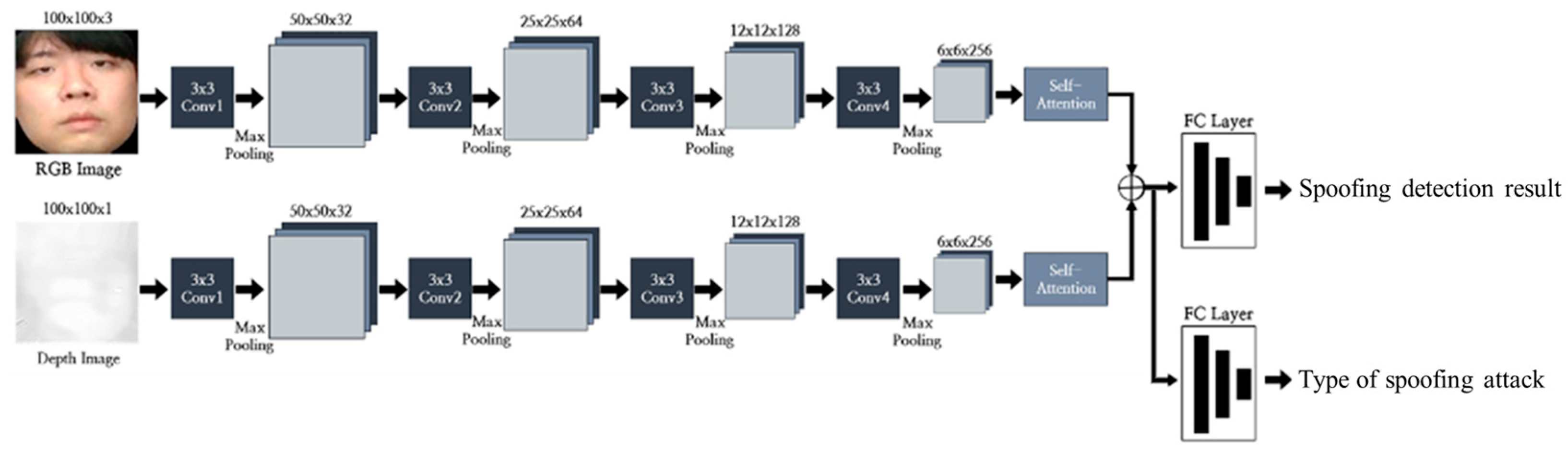
We propose a deep learning-based face anti-spoofing method that utilizes both RGB and depth images for face recognition. The proposed method can detect spoofing attacks across various domain types using domain adversarial learning for preventing overfitting to a specific domain. A pre-trained face detection model and a face segmentation model are employed to detect a facial region from RGB images. The pixels outside the facial region in the corresponding depth image are replaced with the depth values of the nearest pixels in the facial region to minimize background influence. Subsequently, a network comprising convolutional layers and a self-attention layer extracts features from RGB and depth images separately, then fuses them to detect spoofing attacks. The proposed network is trained using domain adversarial learning to ensure robustness against various types of face spoofing attacks. The experiment results show that the proposed network reduces the average Attack Presentation Classification Error Rate (APCER) to 11.12% and 8.00% compared to ResNet and MobileNet, respectively.
Keywords: face anti-spoofing; presentation attack; RGB-D image; domain adversarial training face anti-spoofing; presentation attack; RGB-D image; domain adversarial training