Article

VonEdgeSim: A Framework for Simulating IoT Application in Volunteer Edge Computing

Infomation System Department, FCIT, King Abdulaziz University, Jeddah 21589, Saudi Arabia
Electronics 2024, 13(20), 4124; https://doi.org/10.3390/electronics13204124

Submission received: 19 July 2024 / Revised: 15 October 2024 / Accepted: 16 October 2024 / Published: 19 October 2024
(This article belongs to the Section Computer Science & Engineering)

Abstract

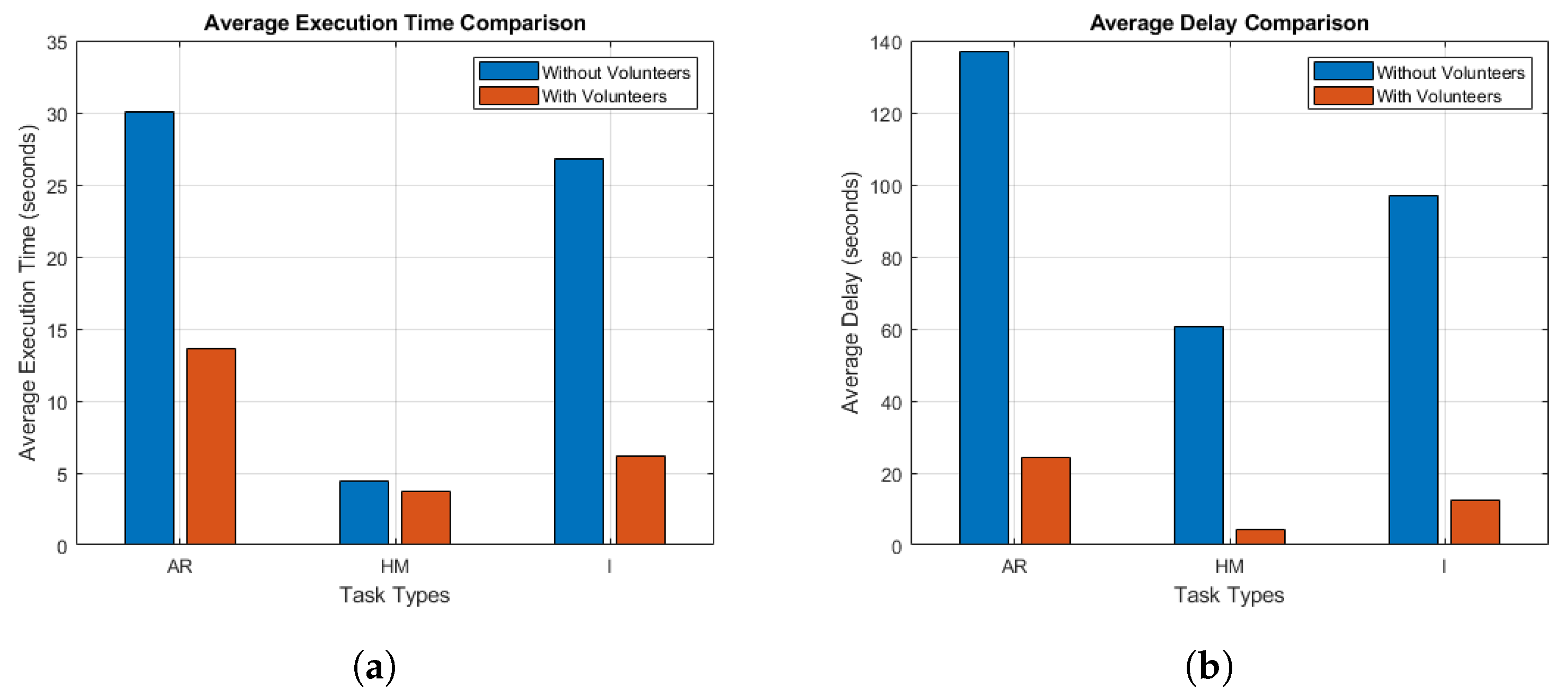
Recently, various emerging technologies have been introduced to host IoT applications. Edge computing, utilizing volunteer devices, could be a feasible solution due to the significant and underutilized resources at the edge. However, cloud providers are still reluctant to offer it as an edge infrastructure service because of the unpredictable nature of volunteer resources. Volunteer edge computing introduces challenges such as reliability, trust, and availability. Testing this infrastructure is prohibitively expensive and not feasible in real-world scenarios. This emerging technology will not be fully realized until dedicated research and development efforts have substantiated its potential for running reliable services. Therefore, this paper proposes VonEdgeSim, a simulation of volunteer edge computing. To the best of our knowledge, it is the first and only simulation capable of mimicking volunteer behavior at the edge. Researchers and developers can utilize this simulation to test and develop resource management models. We conduct experiments with various IoT applications, including Augmented Reality, Infotainment, and Health Monitoring. Our results show that incorporating volunteer devices at the edge can significantly enhance system performance by reducing total task delay, and improving task execution time. This emphasizes the potential of volunteers to provide reliable services in an edge computing environment. The simulation code is publicly available for further development and testing.
Keywords: volunteer edge computing; edge computing; Internet of Things; simulation; trust management; fault tolerance volunteer edge computing; edge computing; Internet of Things; simulation; trust management; fault tolerance