Article

Improved Control Strategy for Dual-PWM Converter Based on Equivalent Input Disturbance

1
School of Electrical and Information Engineering, Wuhan Institute of Technology, Wuhan 430205, China
2
Hubei Key Laboratory of Digital Textile Equipment, Wuhan Textile University, Wuhan 430200, China
3
Hubei Key Laboratory of Intelligent Robot, Wuhan Institute of Technology, Wuhan 430205, China
4
Vehicle Measurement Control and Safety Key Laboratory of Sichuan Province, Chengdu 610039, China
*
Author to whom correspondence should be addressed.
Electronics 2024, 13(18), 3777; https://doi.org/10.3390/electronics13183777

Submission received: 21 July 2024 / Revised: 11 September 2024 / Accepted: 17 September 2024 / Published: 23 September 2024
(This article belongs to the Special Issue Advanced Control Strategies and Applications of Multi-Agent Systems)

Abstract

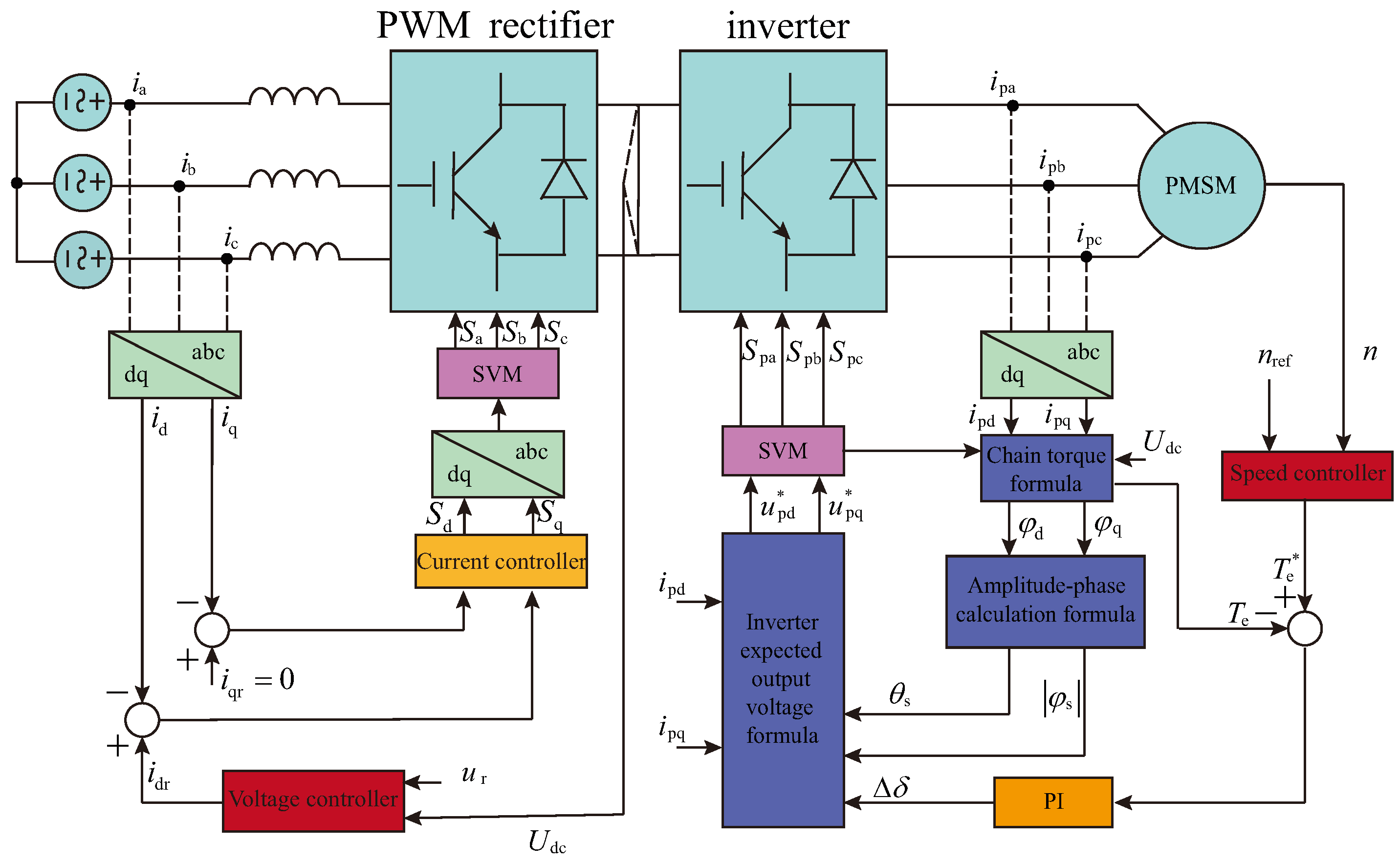
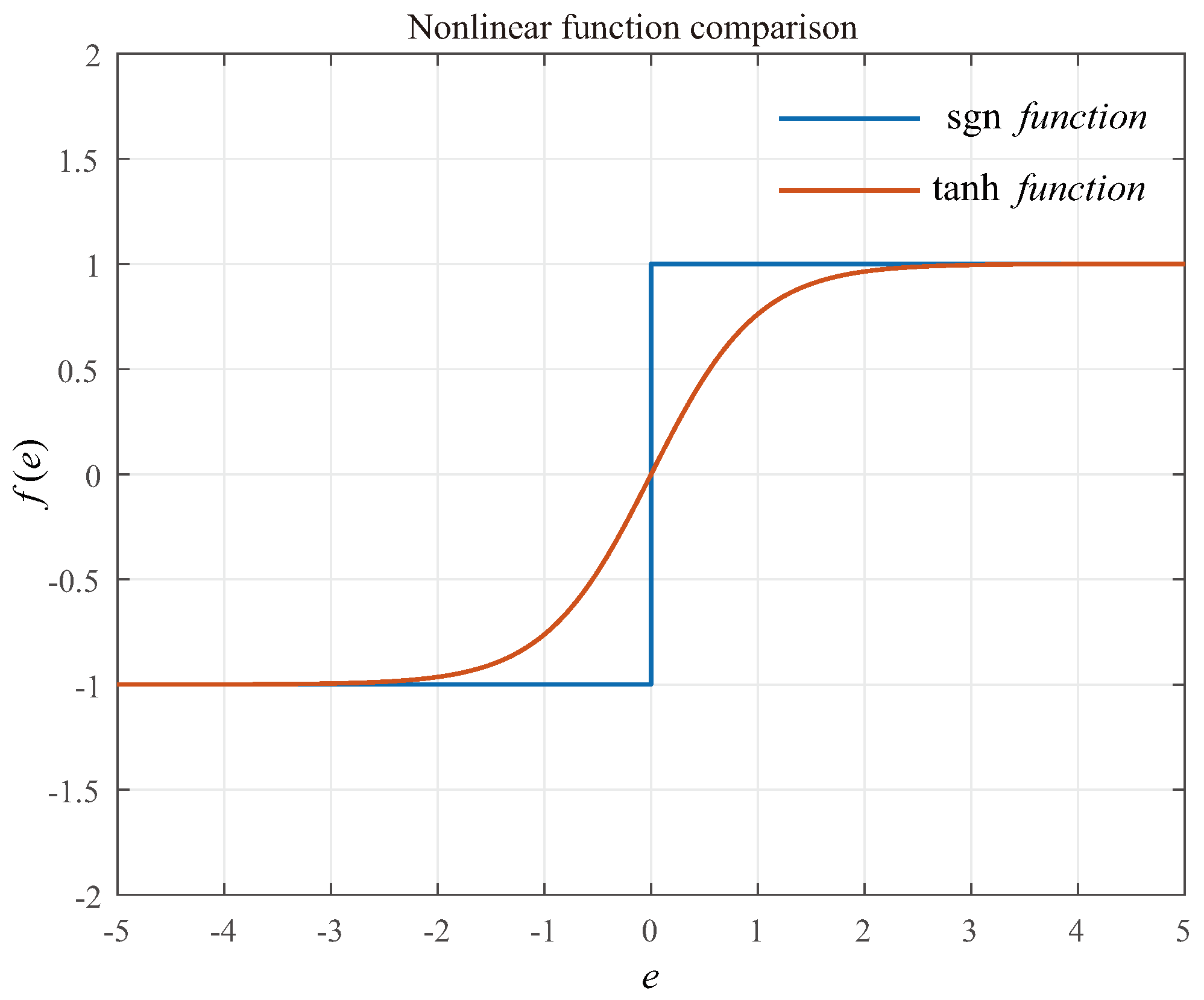
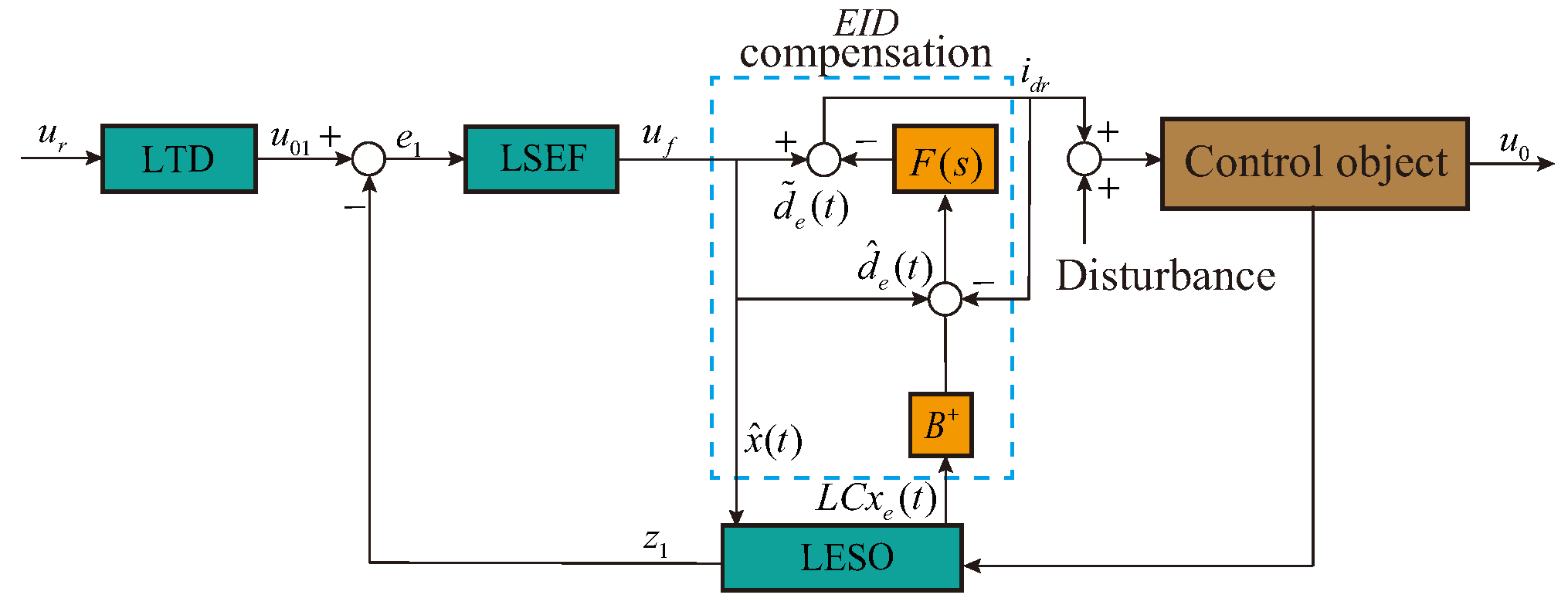
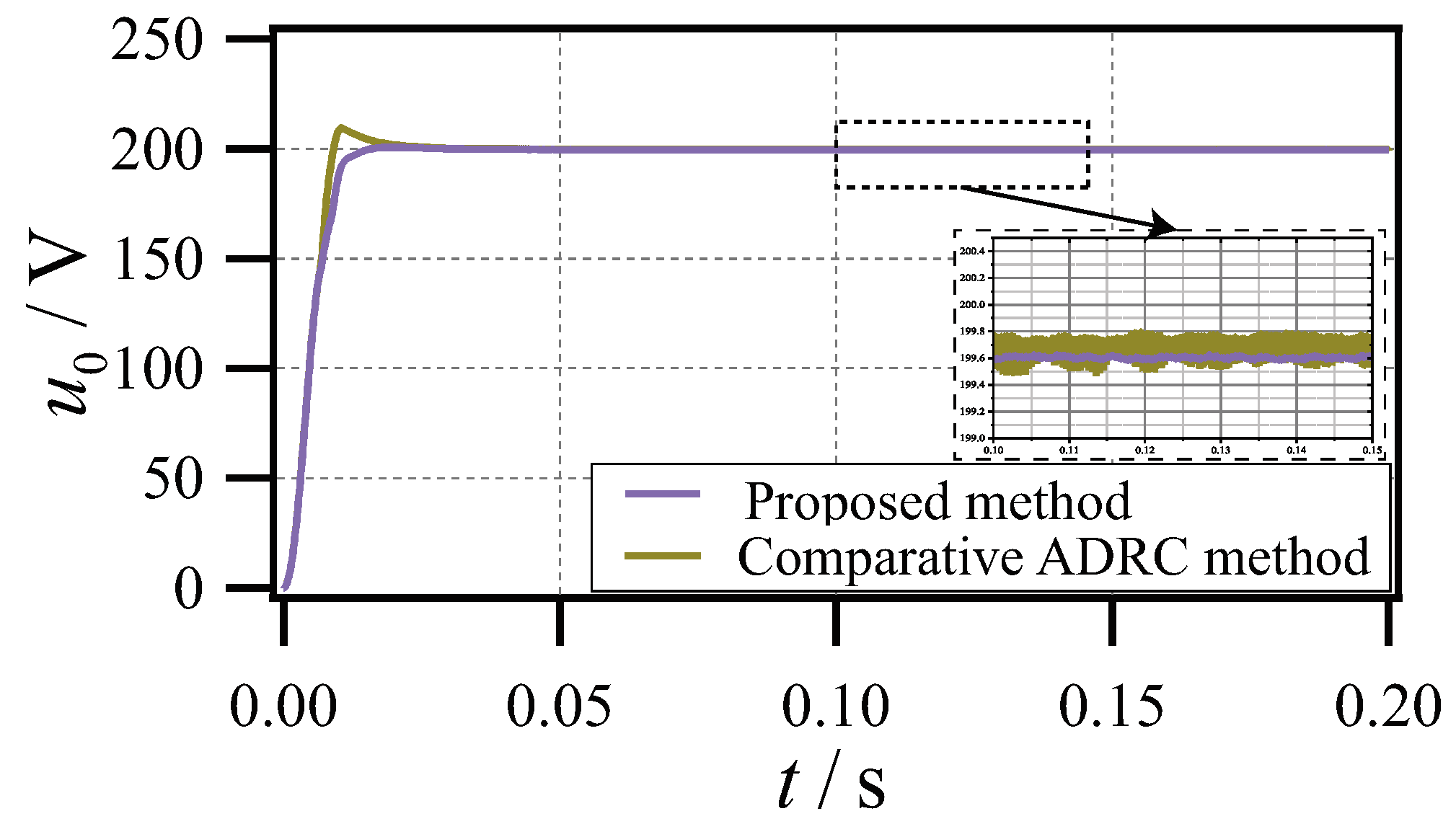
Aiming at the problems of jittering waveforms and poor power quality caused by external disturbances during the operation of a dual-pulse-width-modulation (PWM) converter, an improved terminal sliding mode control and an improved active disturbance rejection control (ADRC) are investigated. The method is based on mathematical models of grid-side and machine-side converters to design the controllers separately, and the balance between the two sides is maintained by the capacitor voltage. An improved terminal fuzzy sliding mode control and equivalent input disturbance (EID)-error-estimation-based active disturbance rejection control are presented on the grid side to improve the voltage response rate, and an improved support vector modulation (SVM)–direct torque control (DTC)–ADRC method is developed on the motor side to improve the robustness against disturbances. Finally, theoretical simulation experiments are built in MATLAB R2023a/Simulink to verify the effectiveness and superiority of this method.
Keywords: dual-PWM converter; terminal fuzzy sliding mode control; active disturbance rejection control; equivalent input disturbance; SVM-DTC control dual-PWM converter; terminal fuzzy sliding mode control; active disturbance rejection control; equivalent input disturbance; SVM-DTC control