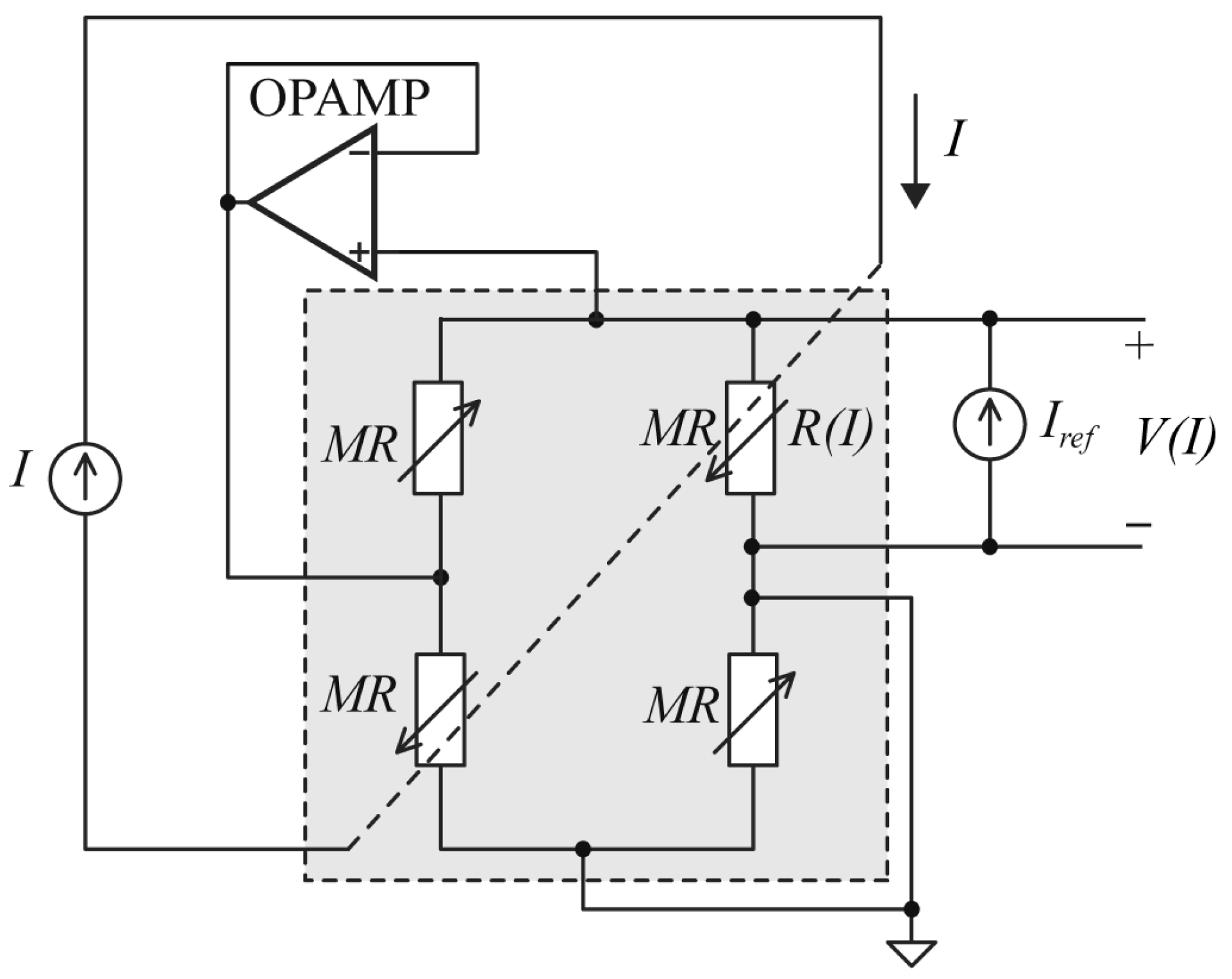
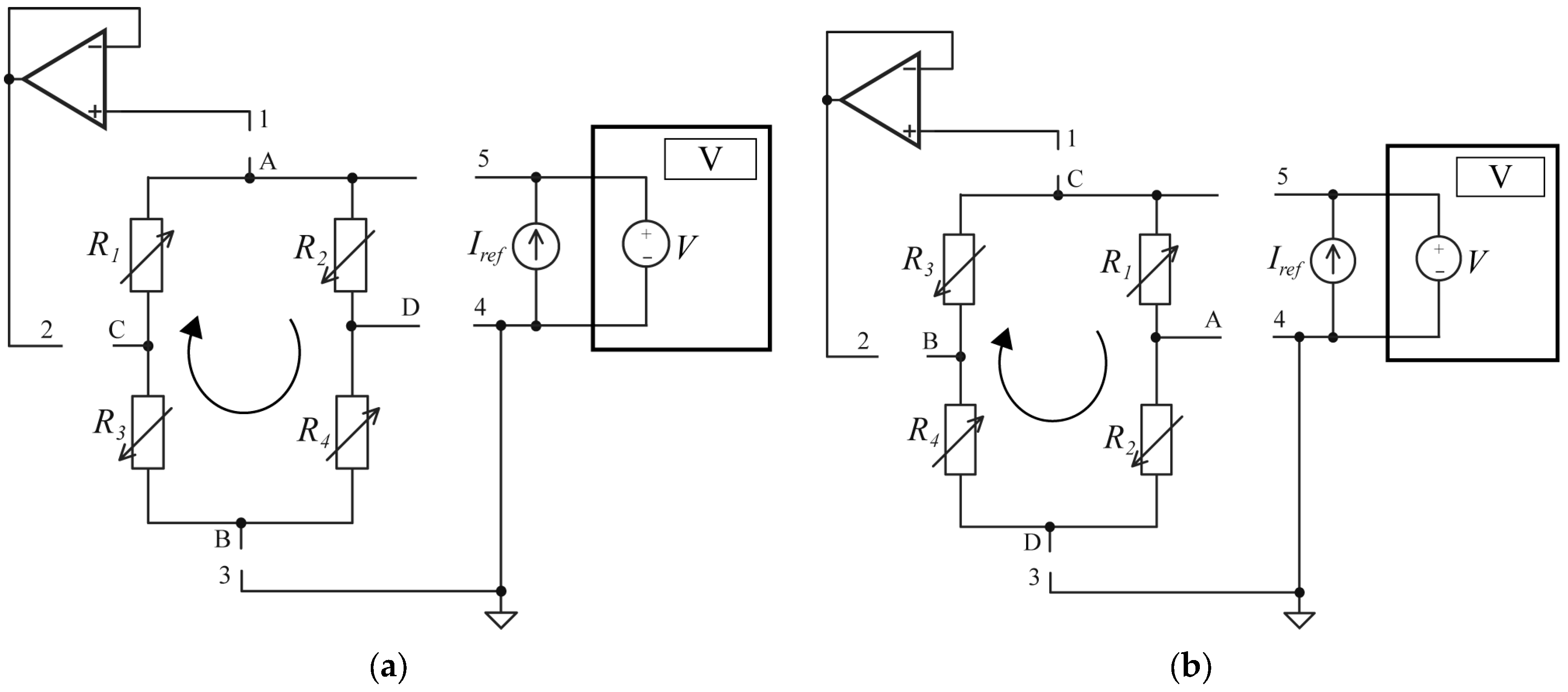
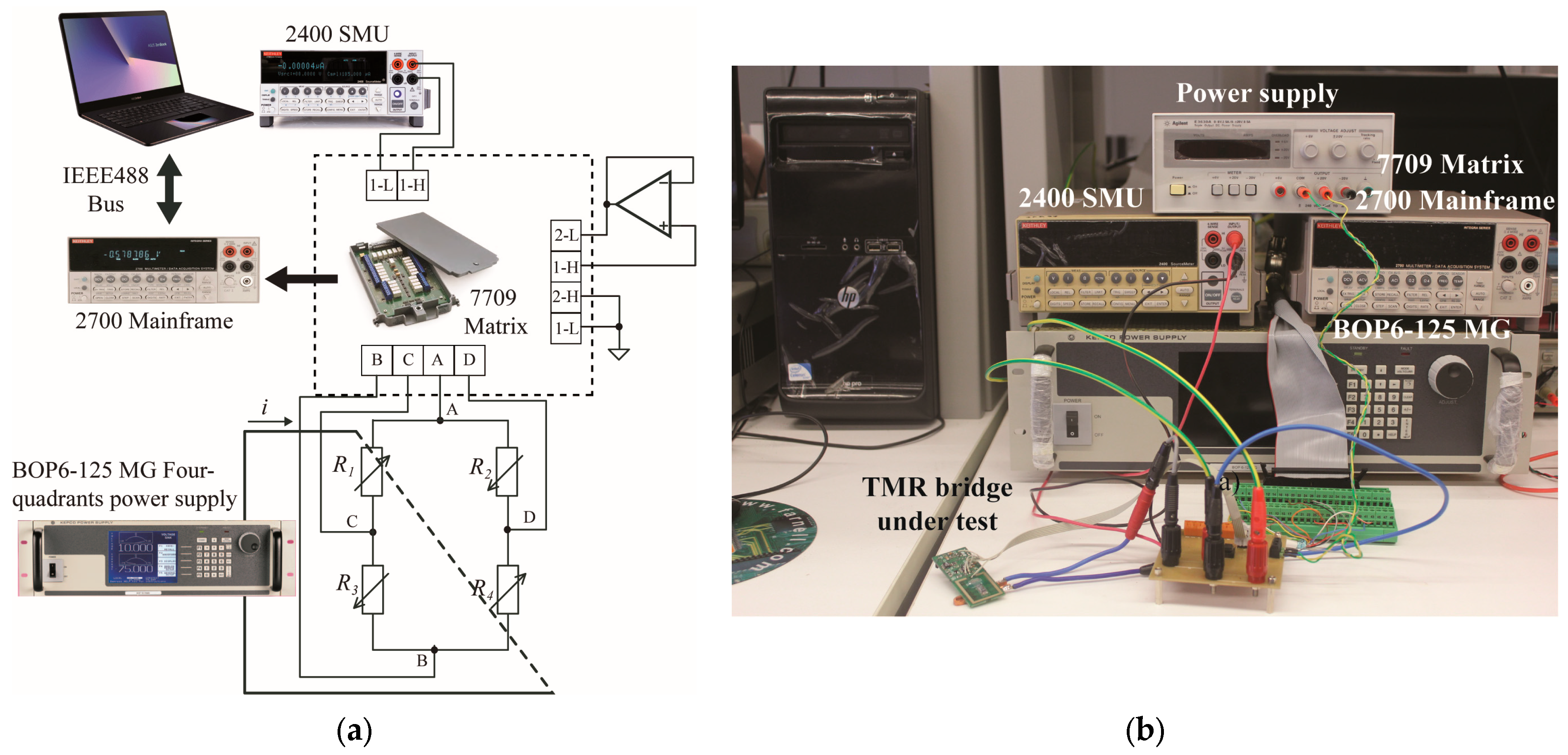
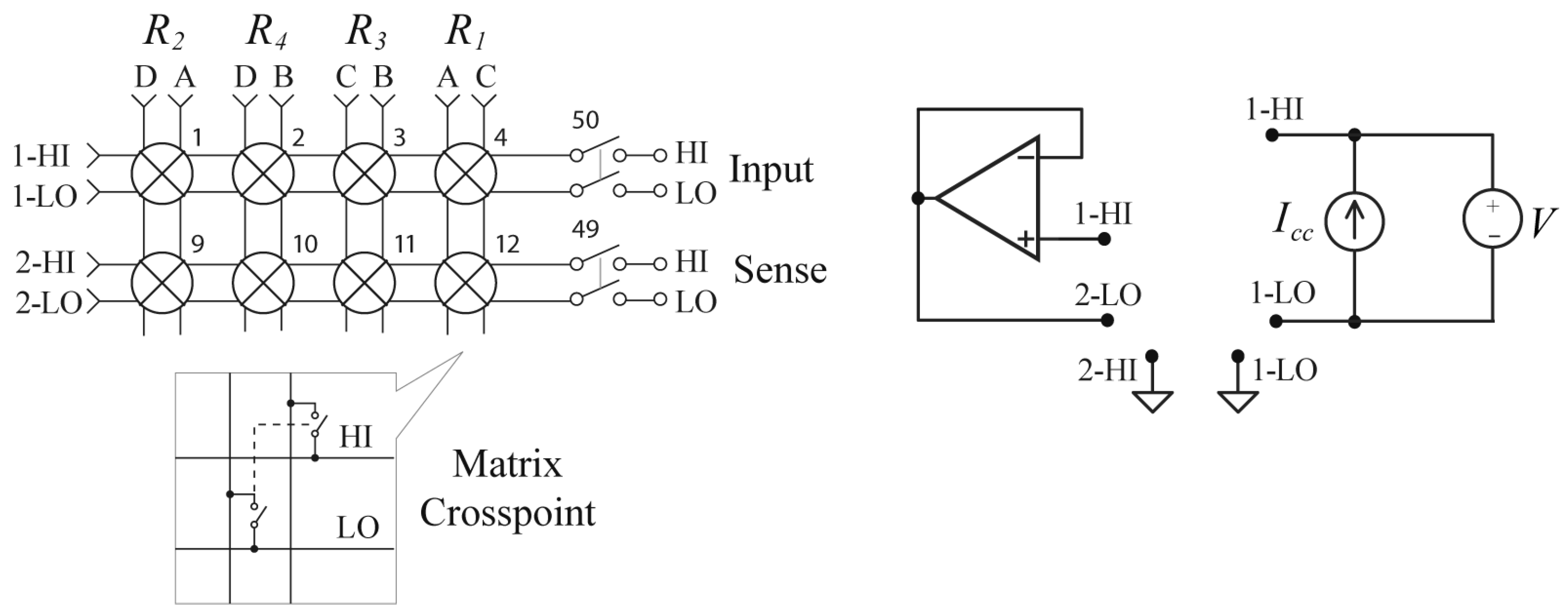
Magnetoresistive Shunt as an Alternative to Wheatstone Bridge Sensors in Electrical Current Sensing

 , ,
, ,  and
and Abstract
Share and Cite
Ramírez-Muñoz, D.; García-Gil, R.; Soriano-Díaz, S.; Cardoso, S.; Freitas, P.P. Magnetoresistive Shunt as an Alternative to Wheatstone Bridge Sensors in Electrical Current Sensing. Electronics 2024, 13, 2991. https://doi.org/10.3390/electronics13152991
Ramírez-Muñoz D, García-Gil R, Soriano-Díaz S, Cardoso S, Freitas PP. Magnetoresistive Shunt as an Alternative to Wheatstone Bridge Sensors in Electrical Current Sensing. Electronics. 2024; 13(15):2991. https://doi.org/10.3390/electronics13152991
Chicago/Turabian StyleRamírez-Muñoz, Diego, Rafael García-Gil, Sandra Soriano-Díaz, Susana Cardoso, and Paulo P. Freitas. 2024. "Magnetoresistive Shunt as an Alternative to Wheatstone Bridge Sensors in Electrical Current Sensing" Electronics 13, no. 15: 2991. https://doi.org/10.3390/electronics13152991
APA StyleRamírez-Muñoz, D., García-Gil, R., Soriano-Díaz, S., Cardoso, S., & Freitas, P. P. (2024). Magnetoresistive Shunt as an Alternative to Wheatstone Bridge Sensors in Electrical Current Sensing. Electronics, 13(15), 2991. https://doi.org/10.3390/electronics13152991