Abstract
A balanced bandpass filter (BPF) with a wide differential mode (DM) bandwidth and steep DM passband selectivity and high common-mode (CM) block based on slotline stub-loaded resonators (SSLRs) is designed in this brief. The proposed SSLR, which is composed of a half-wavelength slotline resonator and a shorted slot stub loaded at the symmetrical plane, is applied to achieve a broad DM passband with a center frequency at 5.1 GHz and a 3 dB bandwidth of 92%. Meanwhile, two transmission zeros (TZs) are introduced to realize a steep DM passband selectivity. The center frequency and bandwidth of the DM passband can be adjusted by changing the dimensions of SSLRs and the gaps between them. Meanwhile, one narrow notched band with a 3 dB bandwidth of 4.9% is realized by employing one coupled quarter-wavelength short-circuited stub at the input ports. In addition, the DM stopband with a rejection level of 10 dB can be extended to 20 GHz. The designed balanced broadband filter is stimulated by a U-shaped microstrip line to slotline transition structure, which can realize wideband a CM block with a high suppression level without influencing the DM one, and this can reduce the design complexity. In order to prove the idea, a balanced broadband filter is designed and measured. The predicted results of S parameters are compared with the measured ones, and a good agreement is achieved.
1. Introduction
In recent years, balanced circuits have been paid increasingly close attention due to their high immunity to environmental noise, interference, and crosstalk compared with their single-ended counterparts. Bandpass filters (BPFs) are essential devices in the RF front end of wireless communication systems. Therefore, balanced BPFs have been research hotspots, and several balanced BPFs were presented in [1,2,3]. In [2], three half-wavelength transmission lines were employed to achieve a balanced BPF with broad bandwidth. Two balanced BPFs using open stubs were proposed in [3]. However, the common-mode (CM) rejection can only be greater than 20 dB when covering the entire differential mode (DM) passband. A dielectric resonator (DR) with two modes located below the metal cavity was studied to realize a balanced filter with a dual-band performance in [4]. In recent years, a U-shaped microstrip line to slotline transition structures were proposed, which show high and wideband CM rejection [4,5]. The DM signals can be transmitted from the microstrip line to the non-resonant slotline while CM signals are suppressed. In order to generate a broad DM passband, different methods have been attempted and studied [6,7,8]. Stub-loaded resonators (SLRs) were employed to implement a wide DM passband in [6]. Different complementary split-ring resonators with a half wavelength were also employed to generate more DM resonant points [7]. However, it is difficult to implement a wide DM passband because the coupling between the resonators is weak. In [8], novel strip-loaded slotline resonators are used to design differential wideband BPFs with intrinsic CM suppression. Five transmission poles (TPs) are generated while the flexibility of transmission zeros (TZs) is not mentioned. However, the stopband is narrow. On the other hand, the extant unexpected narrow band jamming signal, such as a wireless local-area network signal, may interfere with the ultra-wide band (UWB) users. Thus, a balanced UWB filter with a notch-band is expected to block these jamming signals.
In this brief, a balanced BPF with a wide DM bandwidth is designed. The proposed BPF can realize steep DM passband selectivity, controllable DM notched band, wide DM stopband, and wideband CM suppression with a high suppression level. The balanced BPF consist of two U-shaped microstrip lines to slotline transition structures and two sets of slotline stub-loaded resonators (SSLRs). The SSLRs are used to achieve a wide DM passband with a center frequency of 5.1 GHz. Meanwhile, two transmission null points are introduced to achieve a high DM frequency selectivity. Meanwhile, one narrow notched band with a 3 dB bandwidth of 4.9% is achieved to suppress the strong interference signal. On the other hand, the DM stopband with a rejection level of 10 dB can be extended to 20 GHz. In addition, the CM suppression is broad and is independent from the DM response. Therefore, the design complexity is reduced greatly. The simulated results are compared with the measured ones, and a good agreement is observed.
2. Balanced Wideband BPF
2.1. Overall Architecture
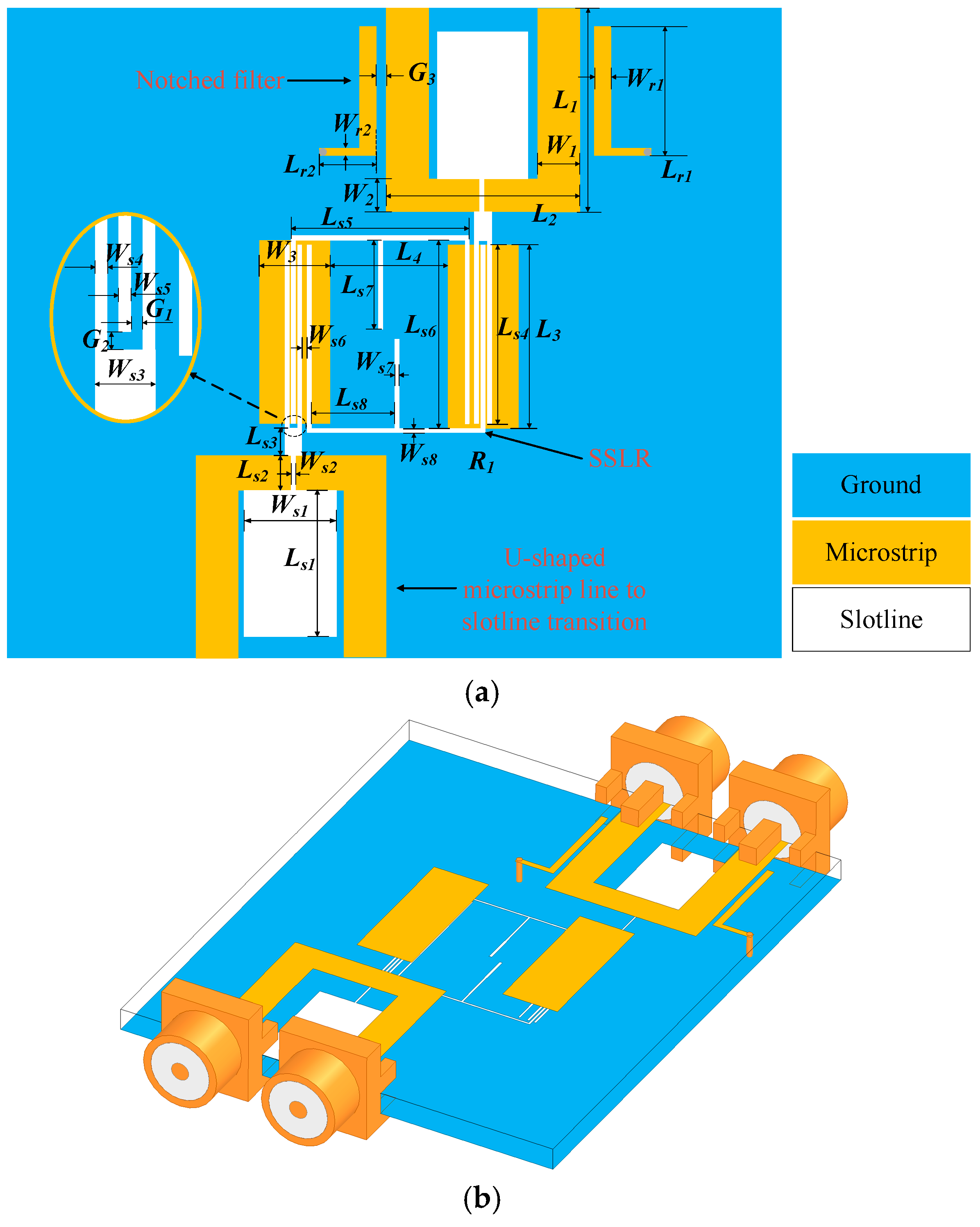
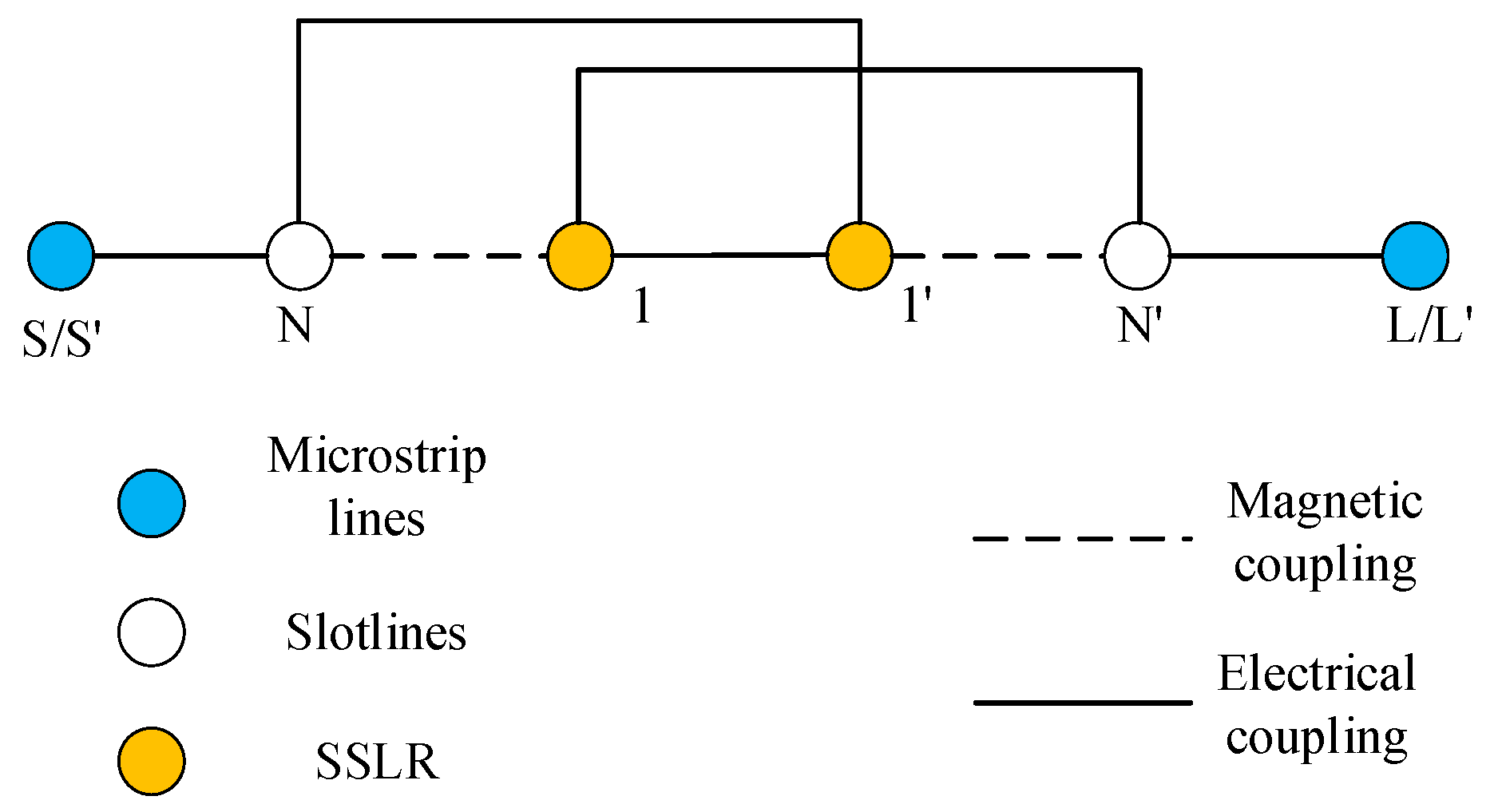
The designed balanced wideband filter is observed in Figure 1, and is composed of SSLRs, two U-shaped microstrip line to slotline transition structures, and quarter-wavelength short-circuited resonators. The orange block is the microstrip line located on the top surface of the substrate, while the white one shows the slotline on the bottom surface. For a balanced wideband BPF, there are two main parts: the DM part and the CM part. The wide DM passband is implemented by employing the proposed SSLRs. Figure 2 shows the coupling scheme of the proposed balanced wideband BPF. In order to generate two TZs, the pseudo-interdigital coupling between the proposed SSLRs is employed, which can improve the passband selectivity. U-shaped microstrip lines to slotline transition structures are used to implement a good and wideband CM suppression. Meanwhile, the CM responses are independent from the DM ones, which can simplify the design procedure. Moreover, two quarter wavelength shorted circuit resonators are loaded adjacent to the input ports to generate the notched band. The proposed balanced BPF is realized based on the Rogers RT/Duroid 5880 [9]. (εr = 2.2, tanδ = 0.0009, h = 0.8 mm). The dimensions are shown in Table 1.
Figure 1.
Layout of the designed balanced broadband filter: (a) Top view; (b) 3D view.
Figure 2.
Coupling scheme of the designed balanced wideband BPF.
Table 1.
Dimensions of the designed balanced wideband filter. Unit: mm.
2.2. SSLR
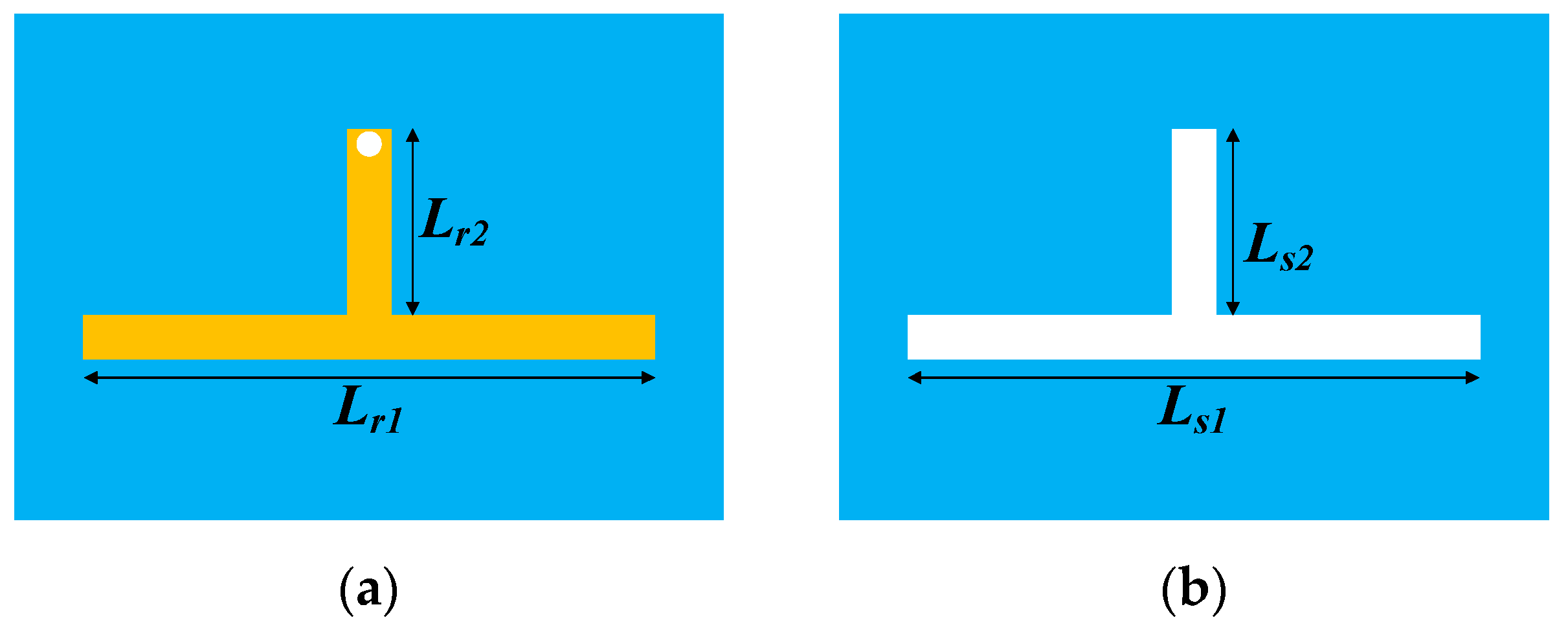
Figure 3a shows the conventional SLR, which is composed of a microstrip half-wavelength resonator and a shorted stub located at the center. Similar to the structure of SLR, SSLR is composed of a half-wavelength resonator and a shorted slot stub, while it is located at ground level, as given in Figure 3b. Since the SLR is a symmetric structure, the odd-even mode method can be used to analyze it. The resonant frequencies of the even and odd modes of SLR can be calculated as follows:
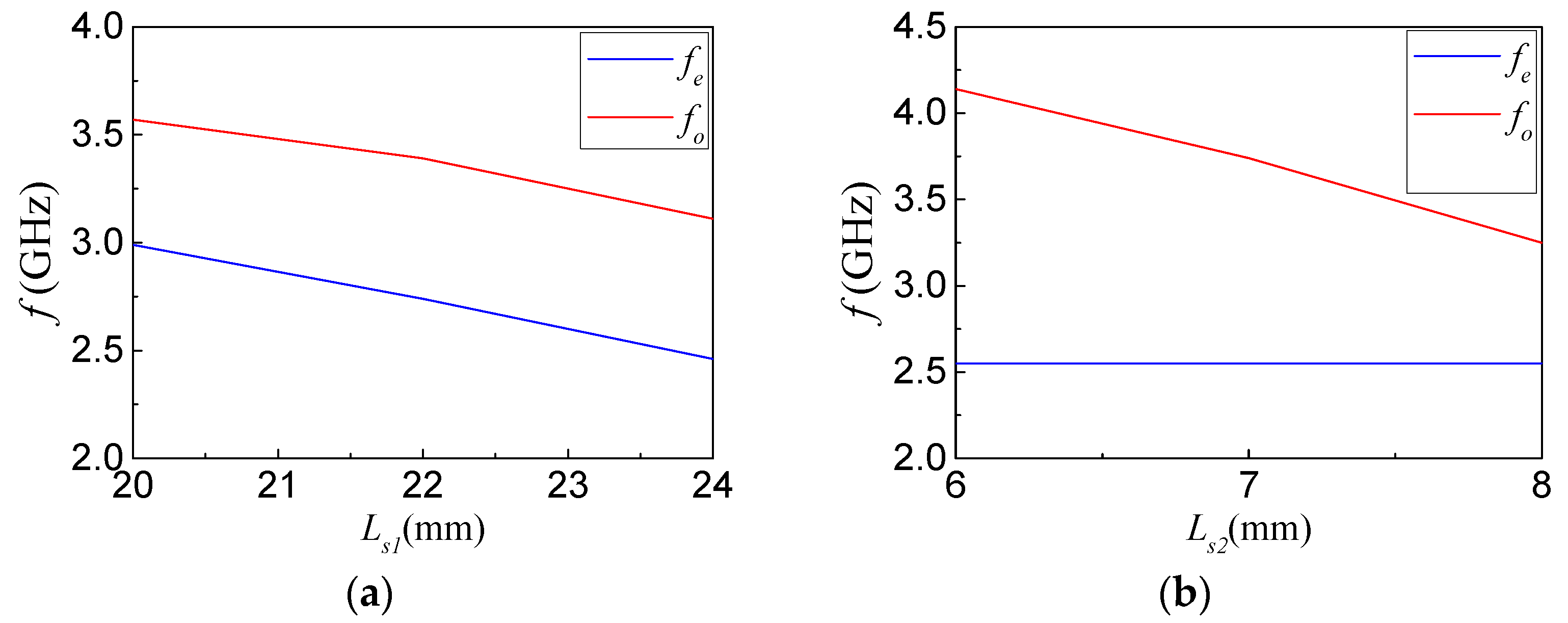
where c is the light speed in free space and εeff represents the effective dielectric constant of the substrate. Since SSLR is symmetrical in structure, an odd- and even-mode analysis method can also be employed. Similar to SLR, SSLR also has two resonant frequencies (fe, fo) that can be adjusted independently by controlling the dimensions. Figure 4 shows the resonant frequencies of the proposed SSLR with Ls1 and Ls2, which are simulated by the software High Frequency Structural Simulator (HFSS). It can be seen from Figure 4 that the two resonant frequencies are changed to the lower frequency by increasing Ls1, while fo can be independently controlled by Ls2. To further verify the validity of our analytical method, SSLR is analyzed through the characteristic mode analysis (CMA) with CST Microwave Studio [10]. The working principle of arbitrarily shaped structures can be intuitively provided without being affected by external excitation sources. During the simulation process, SSLR is etched on the bottom layer of the dielectric. The results show that two characteristic modes are generated from 2 to 10 GHz. The two characteristic modes, named modes 1 and 2, are implemented at 2.5 and 3.7 GHz, respectively. The electric field distribution of SSLR proposed in a different mode is shown in Table 2. The conclusion obtained by CST simulation is consistent with that obtained by HFSS simulation.
Figure 3.
Configuration of (a) SLR and (b) SSLR.
Figure 4.
Resonant frequencies of the proposed SSLR with (a) Ls1, and (b) Ls2.
Table 2.
E-field distribution of SSLR.
2.3. DM Transmission
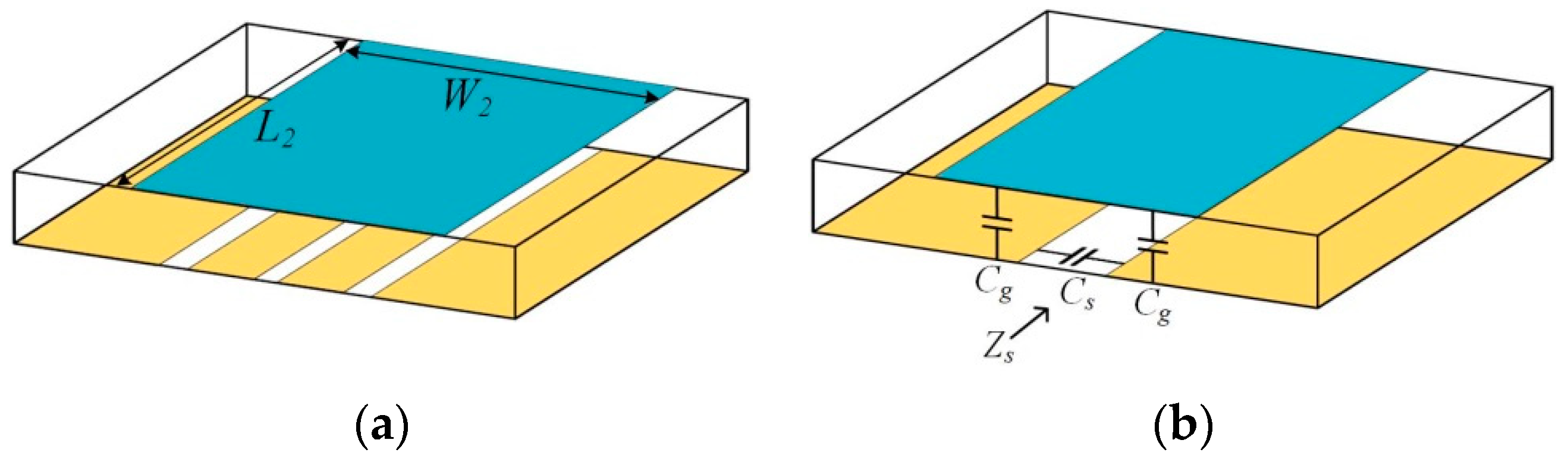
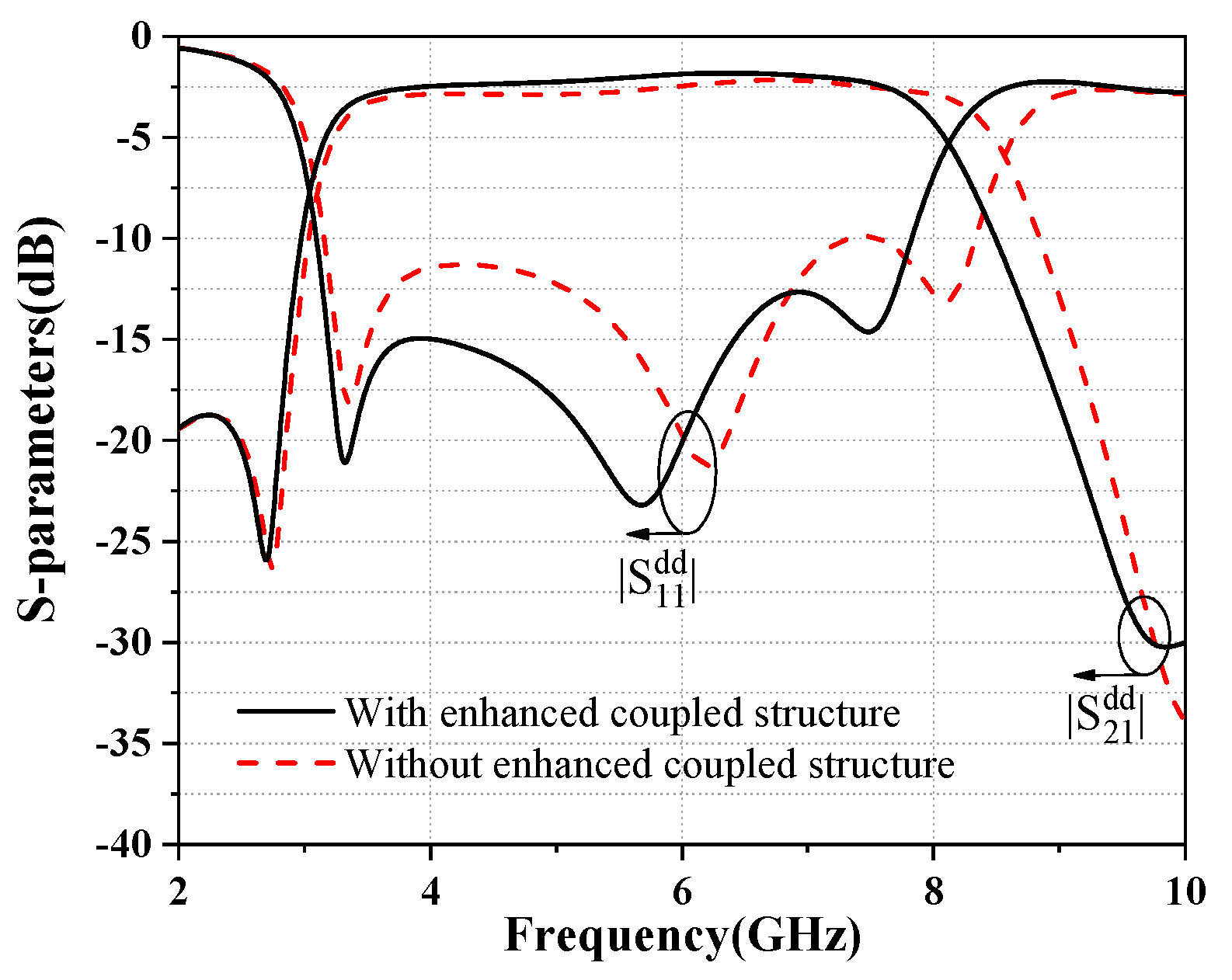
In [10], the designed balanced BPF is realized by employing four microstrip lines to slotlines conversion, which results in the increased insertion loss and larger size. In this work, the proposed BPF is based on SSLRs, and two microstrip lines to slotline conversions are needed. It is easier to achieve lower loss and miniaturization. At the same time, a three-slotline couple structure is employed. Generally, the length of the slotline is a quarter wavelength. In order to increase the coupling strength between the three slotlines, a rectangular metal is used on the other side, as given in Figure 5a. The main parameters of the enhanced coupled structure are the characteristic impedance (Zs) and the coupling capacitance (Cs), as given in Figure 5b. By introduing a back shielding strip, the per-unit-length shunt capacitance can be increased from Cs to (Cs + 2 × Cg) while Zs will be decreased. Meanwhile, its transmission performance is shown in Figure 6. Through adjusting the dimension of the rectangular metal, different characteristic impedance (Zs) and coupling capacitance (Cs) can be achieved. Therefore, the coupling strength of the three-slotline coupled structure can be changed.
Figure 5.
(a) Physical dimensions of the uniform slotline of the three-slotline coupled structure shielded by a rectangular metal. (b) Equivalent capacitance structure.
Figure 6.
Comparison of S parameters with a different coupled structure.
2.4. DM Notched Band
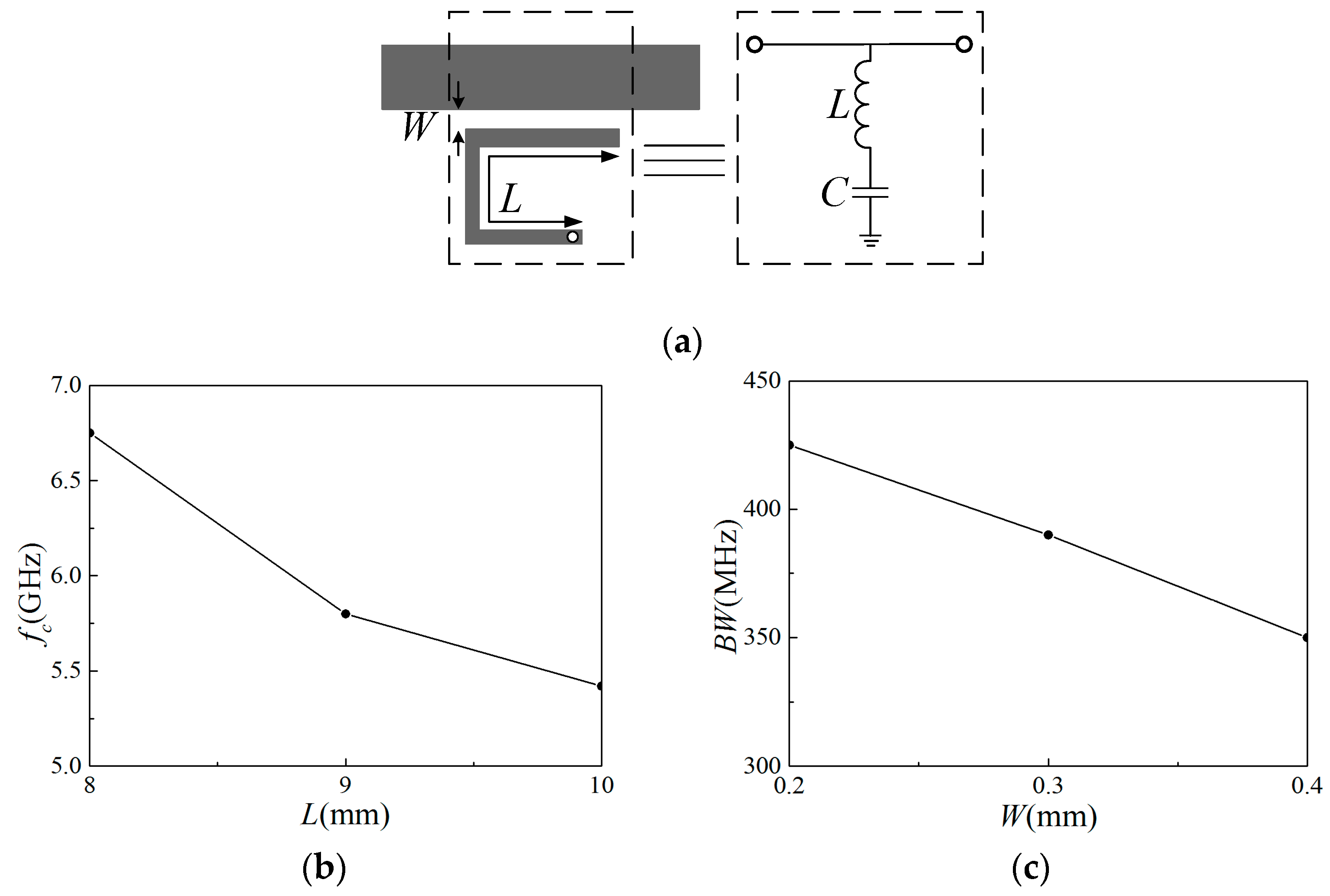
The DM notched band is realized by introducing a folded quarter-wavelength resonator. The resonator is short-circuited and can be equivalent to one parallel series LC resonance circuit. The frequency responses of the coupled short-circuited quarter-wavelength resonator with different lengths are simulated by HFSS, as given in Figure 7. The simulated results show that the resonant frequency and the bandwidth can be controlled independently by adjusting the length L of the coupling resonator and the gap between the coupled resonator and the microstrip line. Therefore, by appropriately adjusting the dimensions of the short-circuited resonator, the notched band can be achieved at the desired frequency.
Figure 7.
(a) Layout and equivalent circuit, (b) center frequency on L length, and (c) bandwidth of the coupled resonator with varied parameters.
2.5. CM Suppression
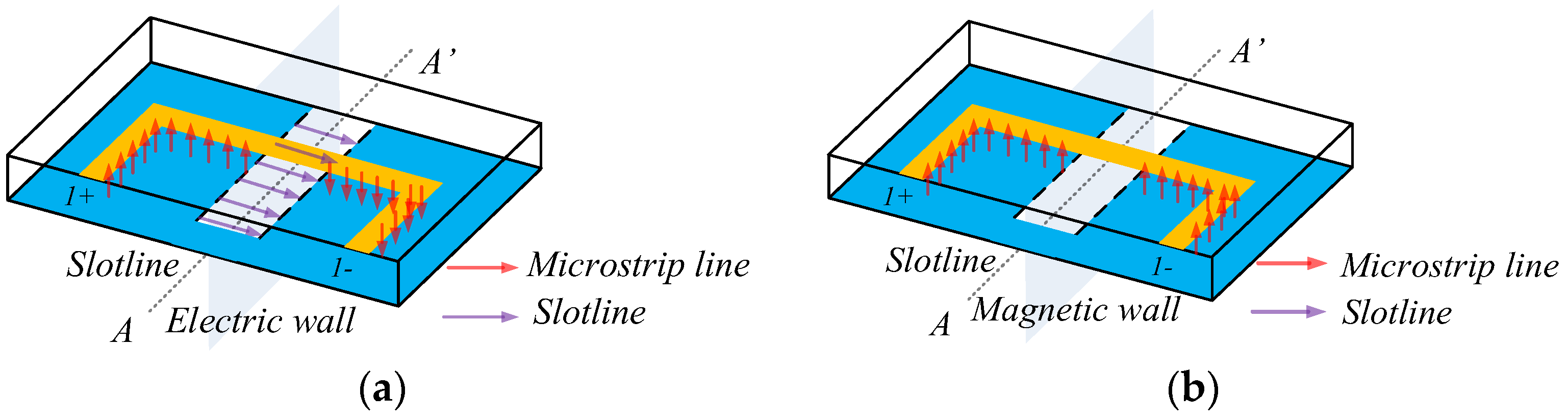
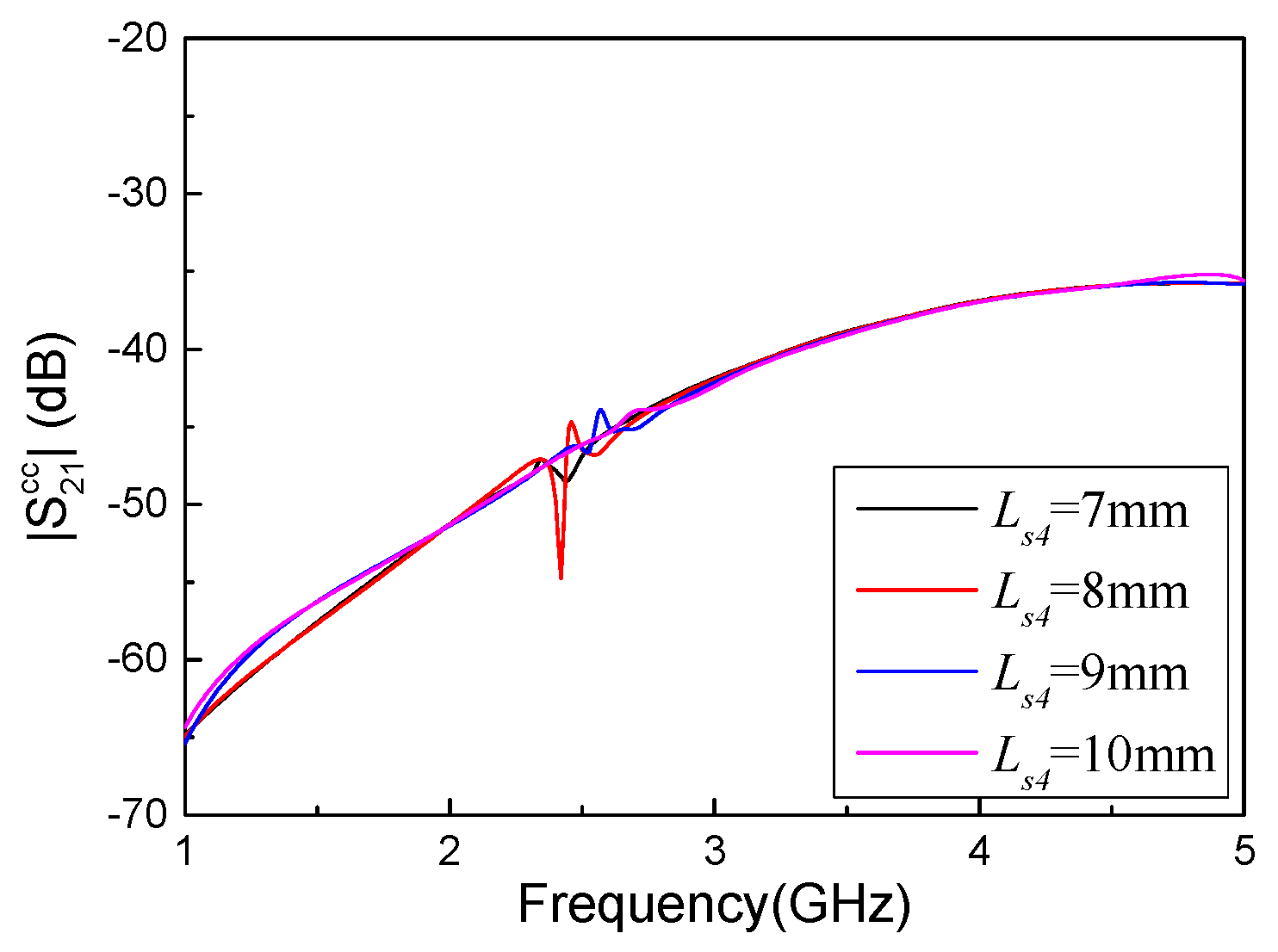
The electric field distributions in the U-shaped microstrip line to the slotline transition structure under DM and CM operation are shown in Figure 8, respectively, where A-A′ is the symmetry plane of the U-shaped microstrip line to slotline transition structure. When a DM excitation is applied, the plane of symmetric A-A′ can be equivalent to an electrical wall. The DM signals in the U-type microstrip line can be transmitted into the slotline modes with strong magnetic coupling, and then transformed to the next one. On the other hand, when a U-shaped microstrip line to slotline transition structure are under the CM operation, a virtual magnetic wall can be implemented at the symmetric plane A-A′. The magnetic wall is perpendicular to the electric field of the slotline mode, which conflicts with the magnetic wall’s boundary condition. Therefore, the slotline cannot achieve the transmission of CM signals. So, the CM signals will be rejected. The suppression characteristic of the U-shaped microstrip line to slotline transition structure on CM signals is inherent and independent of the operating frequency, as shown in Figure 9. As a result, the design complexity can be reduced significantly.
Figure 8.
Electric field distributions in U-shaped microstrip line to slotline transition structure under (a) DM and (b) CM operation.
Figure 9.
Simulated CM response of the proposed balanced BPF with Ls4.
2.6. Simulated and Measured S-Parameters
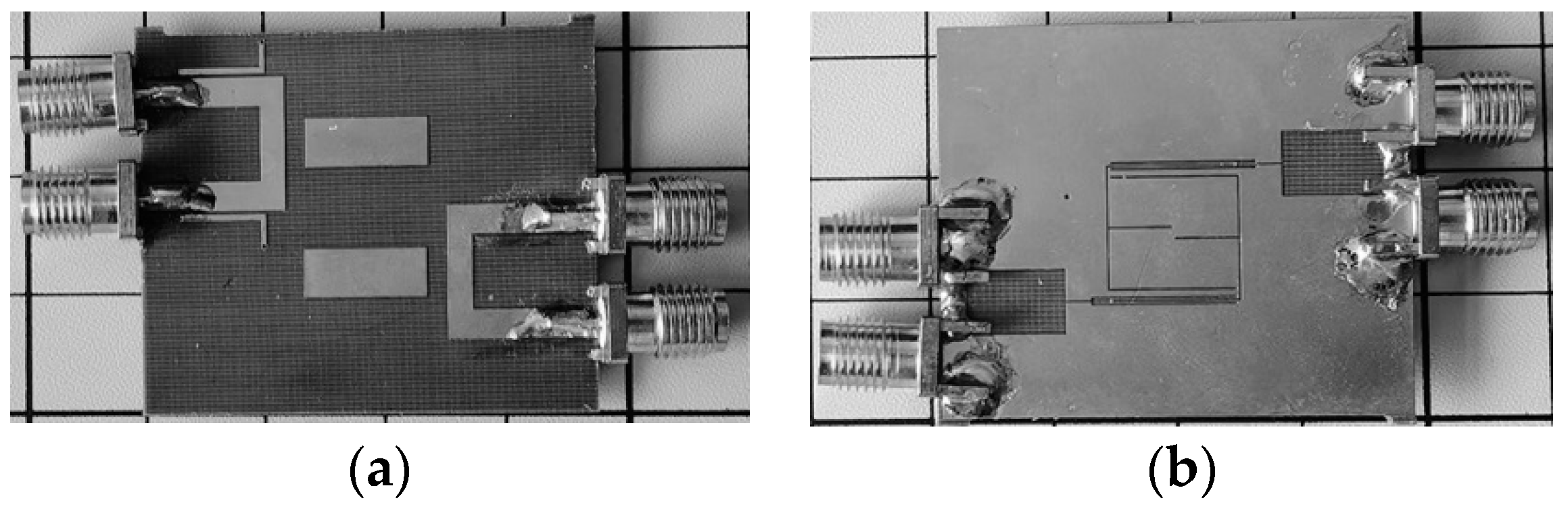
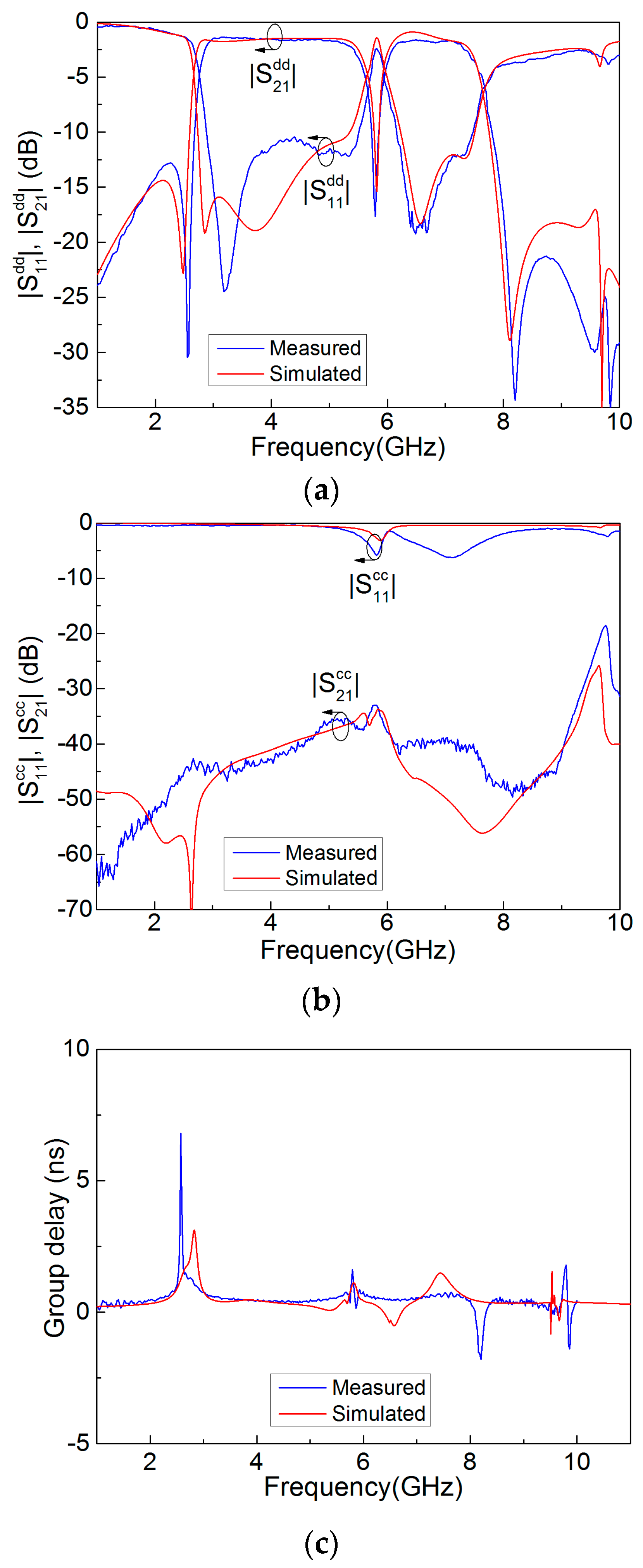
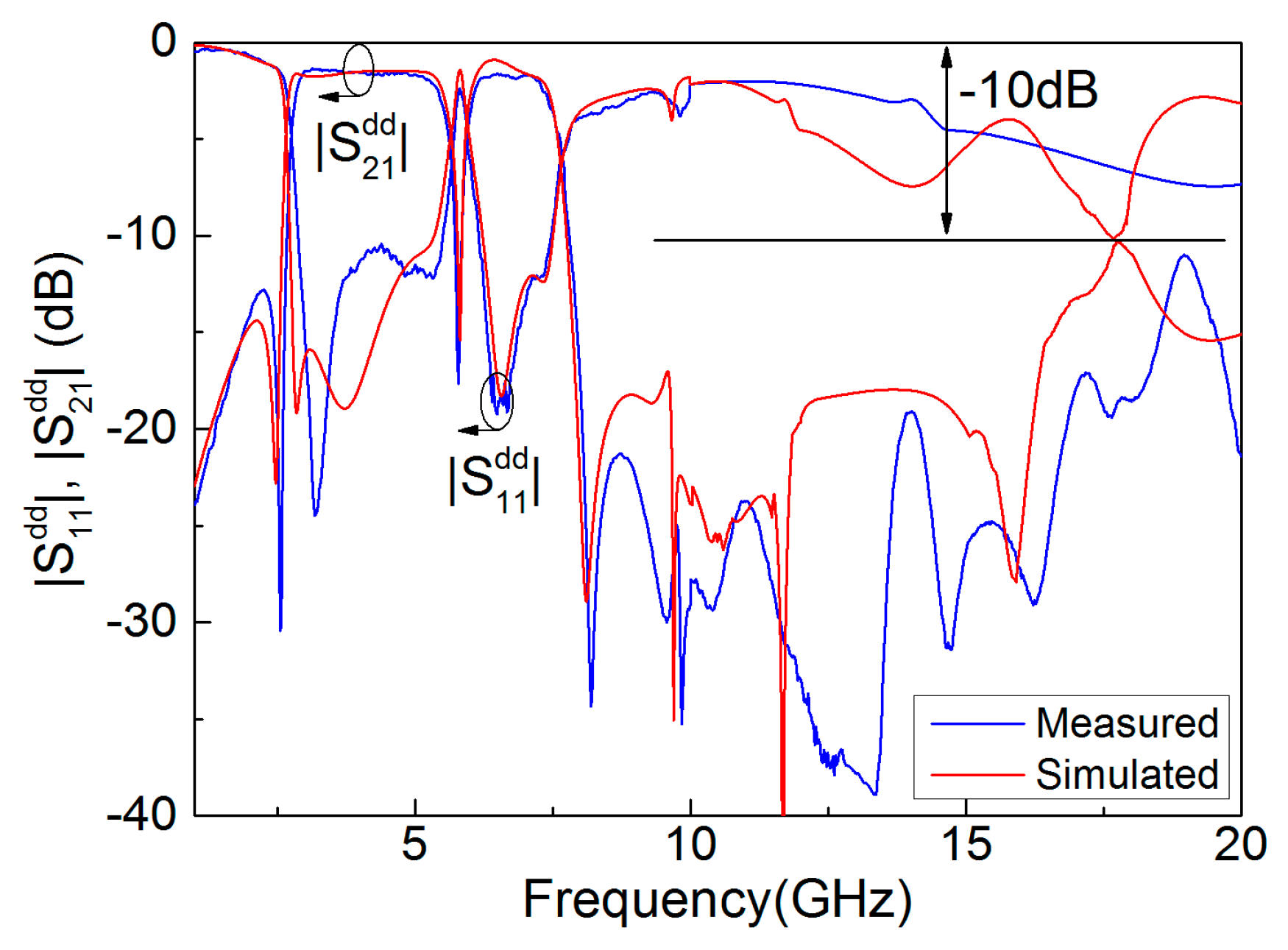
In order to prove the design idea, a balanced broadband filter is manufactured and measured, as given in Figure 10. The total effective dimension is only 33.2 mm × 25 mm. Figure 11 shows the comparison of the simulated results and the measured ones. The S-parameters of the proposed filter were measured with an Agilent vector network analyzer (VNA) N5230A. The measured DM passband center frequency is 5.1 GHz, with a 3-dB FBW of 92%. The insertion loss of the center frequency is better than 1.9 dB. Meanwhile, one narrow notched band with a 3 dB bandwidth of 4.9% is realized by employing one coupled quarter-wavelength short-circuited resonator at the input ports. In addition, the DM stopband can be extended to 20 GHz with a rejection level of 10 dB, as shown in Figure 12. For the CM suppression, the rejection level is more than 30 dB, covering the DM passband. The discrepancy between the measurement and the simulation results is due to the error of simulation as well as the error of PCB fabrication and measurement. We compared the performances of the proposed filter and the other ones, as given in Table 3. It can be observed that the designed balanced broadband filter shows better performances in the DM passband selectivity and CM block.
Figure 10.
Fabricated balanced wideband filter: (a) Top; (b) Bottom.
Figure 11.
Comparison of the simulation and measurement (1–10 GHz): (a) DM reflection coefficient and transmission coefficient; (b) CM reflection coefficient and transmission coefficient; (c) DM group delay.
Figure 12.
Comparisons of the simulated and measured DM reflection coefficient and transmission coefficient (1–20 GHz).
Table 3.
Comparison with some reported balanced wideband BPFs.
3. Conclusions
In this paper, an original balanced filter with broad bandwidth based on a U-shaped microstrip line to slotline transition structure and SSLR is achieved. By employing the pseudo-interdigital coupling structure in the feeding and SSLR, the better DM insertion losses of 1.9 dB, wider FBW of 92%, and steeper DM selectivity of 0.73 are realized. In addition, the DM stopband can be extended to 20 GHz with a rejection level of 10 dB. The U-shaped microstrip line to slotline transition structure can achieve wideband CM suppression with a high rejection level of more than 30 dB. The proposed balanced wideband BPF exhibits good DM transmission and CM rejection, which illustrates the potential implementation for future balanced systems.
Author Contributions
Y.L., W.W., J.L. and M.Z. designed and fabricated the proposed structure. F.W. revised the manuscript. All authors have read and agreed to the published version of the manuscript.
Funding
This research received no external funding.
Data Availability Statement
Not applicable.
Conflicts of Interest
The authors have no conflict of interest.
Abbreviations
| BPF | Bandpass filter |
| CMA | Characteristic mode analysis |
| CM | Common-mode |
| DM | Differential mode |
| DR | Dielectric resonator |
| HFSS | High Frequency Structural Simulator |
| SSLRs | Slotline Stub Loaded Resonators |
| SLRs | Stub loaded resonators |
| TPs | Transmission poles |
| TZs | Transmission zeros |
| VNA | Vector network analyzer |
| UWB | Ultra-wide Band |
References
- Rich, W.F.; Stringer, T.A. System-Generated Electromagnetic Pulse and Spacecraft Charging Effects: A Review of the Technology as Applied to System Hardening Problems. IEEE Trans. Nucl. Sci. 1980, 27, 1523–1528. [Google Scholar] [CrossRef]
- Qiang, J.; Shi, J.; Cao, Q.; Shen, Z. Compact Differential Wideband Bandpass Filters Based on Half-Wavelength Lines. IEEE Microw. Wirel. Compon. Lett. 2017, 27, 906–908. [Google Scholar] [CrossRef]
- Feng, W.; Gao, X.; Che, W.; Yang, W.; Xue, Q. High Selectivity Wideband Balanced Filters with Multiple Transmission Zeros. IEEE Trans. Circuits Syst. II Express Briefs 2017, 64, 1182–1186. [Google Scholar] [CrossRef]
- Chen, J.-X.; Li, J.; Shi, J. Miniaturized Dual-Band Differential Filter Using Dual-Mode Dielectric Resonator. IEEE Microw. Wirel. Compon. Lett. 2018, 28, 657–659. [Google Scholar] [CrossRef]
- Xu, L.; Wang, Z.X.; Wei, F.; Li, R.; Zou, X.T. A Highly Selective Balanced Wideband Bandpass Filter Based on Nested Split-ring rResonators. Int. J. RF Microw. Comput. -Aided Eng. 2019, 29, e21875. [Google Scholar] [CrossRef]
- Wei, F.; Yang, Z.-J.; Qin, P.-Y.; Guo, Y.J.; Li, B.; Shi, X.-W. A Balanced-to-Balanced In-Phase Filtering Power Divider with High Selectivity and Isolation. IEEE Trans. Microw. Theory Tech. 2019, 67, 683–694. [Google Scholar] [CrossRef]
- Wei, F.; Guo, Y.J.; Qin, P.-Y.; Shi, X.W. Compact Balanced Dual- and Tri-band Bandpass Filters Based on Stub Loaded Resonators. IEEE Microw. Wirel. Compon. Lett. 2015, 25, 76–78. [Google Scholar] [CrossRef]
- Guo, X.; Zhu, L.; Wu, W. Strip-Loaded Slotline Resonators for Differential Wideband Bandpass Filters with Intrinsic Common-Mode Rejection. IEEE Trans. Microw. Theory Tech. 2016, 64, 450–458. [Google Scholar] [CrossRef]
- Available online: https://www.rogerscorp.cn/advanced-electronics-solutions/rt-duroid-laminates/rt-duroid-5880-laminates (accessed on 6 June 2023).
- Available online: https://www.3ds.com/products-services/simulia/products/cst-studio-suite/ (accessed on 6 June 2023).
- Zhang, W.; Wu, Y.; Liu, Y.; Yu, C.; Hasan, A.; Ghannouchi, F.M. Planar Wideband Differential-Mode Bandpass Filter with Common-Mode Noise Absorption. IEEE Microw. Wirel. Compon. Lett. 2017, 27, 458–460. [Google Scholar] [CrossRef]
- Feng, L.-P.; Zhu, L. Strip-Loaded Slotline Resonator for Compact Differential-Mode Bandpass Filters with Improved Upper Stopband Performance. IEEE Microw. Wirel. Compon. Lett. 2017, 27, 108–110. [Google Scholar] [CrossRef]
- Aliqab, K.; Hong, J. Wideband Differential-Mode Bandpass Filters with Stopband and Common-Mode Suppression. IEEE Microw. Wirel. Compon. Lett. 2020, 30, 233–236. [Google Scholar] [CrossRef]
- Chen, W.; Wu, Y.; Wang, W. Planar Wideband High-Selectivity Impedance-Transforming Differential Band-pass Filter with Deep Common-Mode Suppression. IEEE Trans. Circuits Syst. II Express Briefs 2020, 67, 1914–1918. [Google Scholar]
- Wang, X.-H.; Zhang, H.; Wang, B.-Z. A Novel Ultra-Wideband Differential Filter Based on Microstrip Line Structures. IEEE Microw. Wirel. Compon. Lett. 2013, 23, 128–130. [Google Scholar] [CrossRef]
Disclaimer/Publisher’s Note: The statements, opinions and data contained in all publications are solely those of the individual author(s) and contributor(s) and not of MDPI and/or the editor(s). MDPI and/or the editor(s) disclaim responsibility for any injury to people or property resulting from any ideas, methods, instructions or products referred to in the content. |
© 2023 by the authors. Licensee MDPI, Basel, Switzerland. This article is an open access article distributed under the terms and conditions of the Creative Commons Attribution (CC BY) license (https://creativecommons.org/licenses/by/4.0/).