Article

Fuzzy Hardware Tool: An Adaptable Tool to Facilitate the Implementation of Fuzzy Inference Systems in Hardware


Posgrado en Ciencias de la Ingenieria, Tecnologico Nacional de Mexico, Instituto Tecnologico de Tijuana, Tijuana 22414, Mexico
*
Author to whom correspondence should be addressed.
Electronics 2023, 12(13), 2853; https://doi.org/10.3390/electronics12132853

Submission received: 11 May 2023 / Revised: 20 June 2023 / Accepted: 26 June 2023 / Published: 28 June 2023
(This article belongs to the Section Computer Science & Engineering)

Abstract

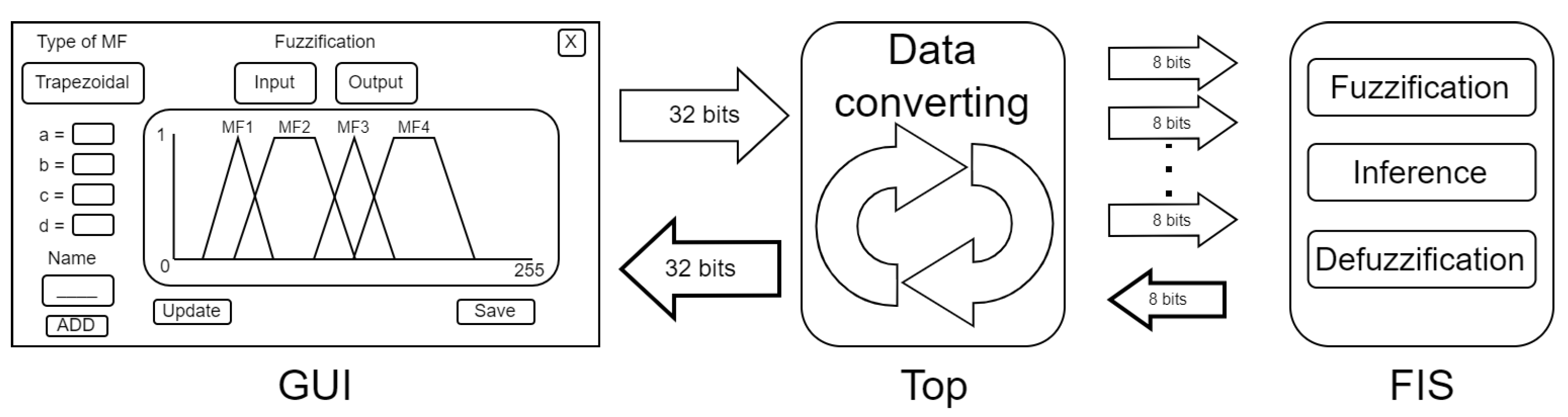
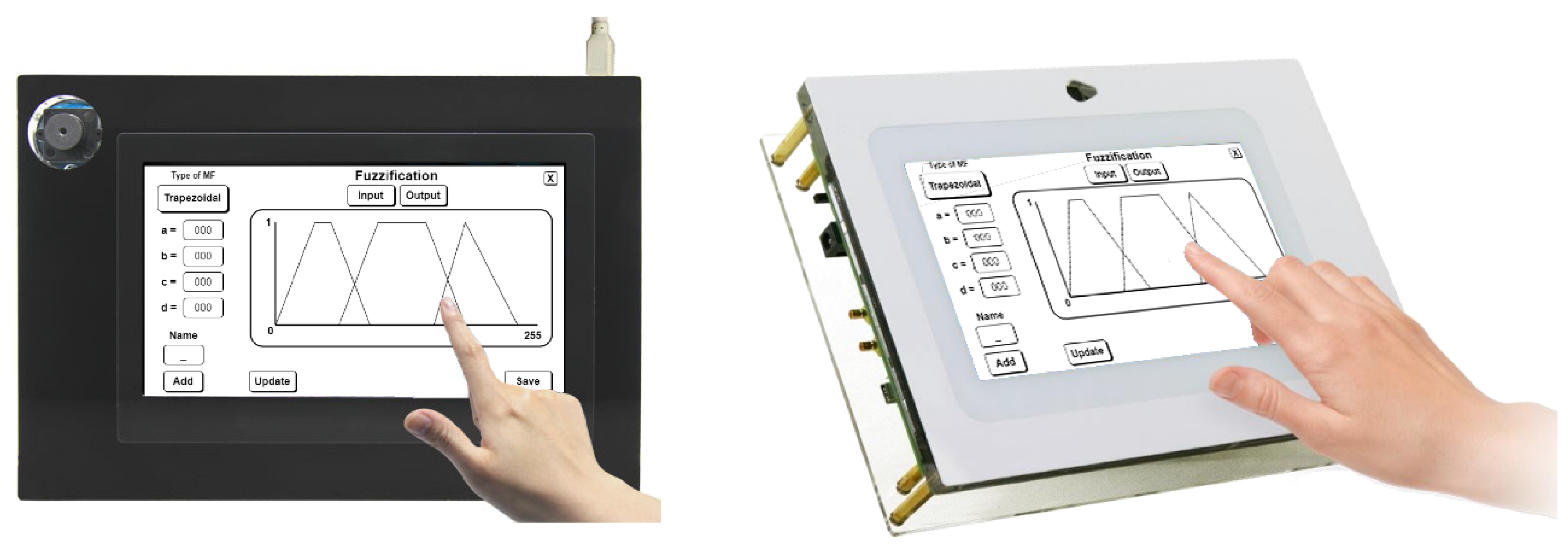
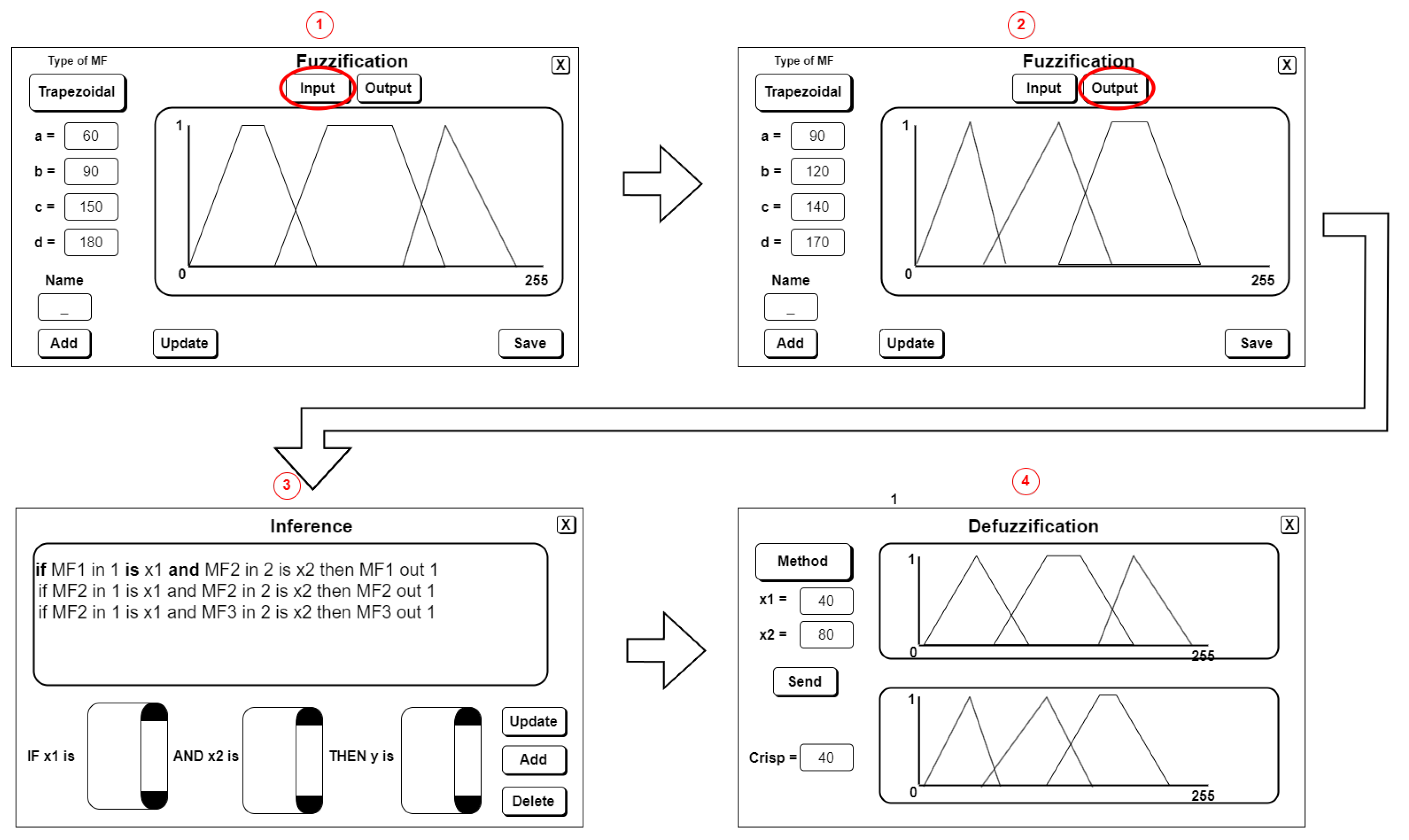
A Fuzzy Inference System (FIS) is a system that represents human reasoning based on fuzzy if-then rules to extract valid results from imprecise or uncertain information. These systems have been applied to various engineering fields, such as control and image recognition, and have encouraged the search for development tools that provide facilities for the design, simulation, and implementation of FISs. Most of the available software tools for the design of FISs have been developed by the scientific community, and very few are commercial tools. According to the state of the technology, the fuzzy systems implemented in hardware have shown higher performance than software implementations. For this reason, different strategies for automatic hardware synthesis of FISs have been proposed in the literature. The available tools for FIS implementation, including MATLAB, Simulink, and Xfuzzy environment, require advanced hardware knowledge, and it is necessary to synthesize and implement the program on FPGA each time a change is made to the code. This paper presents a novel approach for the implementation of fuzzy systems on hardware devices that enables the direct implementation of FISs through a graphical user interface. The VHDL code is pre-synthesized and integrated with the interface, allowing users to experiment with different input parameters, such as membership functions and fuzzy rules, without resynthesizing the code on an FPGA. To verify the effectiveness of the proposed approach, experiments were conducted on two similar System-on-Chip (SoC) devices, VEEK-MT and VEEK-MT2. The results showed that the proposed solution represents a significant advancement in the study of fuzzy systems on hardware devices, providing a flexible and user-friendly approach to their design and implementation.
Keywords: fuzzy inference system; mandami; fuzzy hardware tool; FPGAs; VHDL; SoCs fuzzy inference system; mandami; fuzzy hardware tool; FPGAs; VHDL; SoCs