Article

A Fast Image Guide Registration Supported by Single Direction Projected CBCT

1
School of Information Science and Engineering, Yunnan University, Kunming 650500, China
2
Yunnan Leg Technology Co., Ltd., Kunming 650041, China
*
Author to whom correspondence should be addressed.
Electronics 2022, 11(4), 645; https://doi.org/10.3390/electronics11040645

Submission received: 20 January 2022 / Revised: 6 February 2022 / Accepted: 10 February 2022 / Published: 18 February 2022
(This article belongs to the Section Computer Science & Engineering)

Abstract

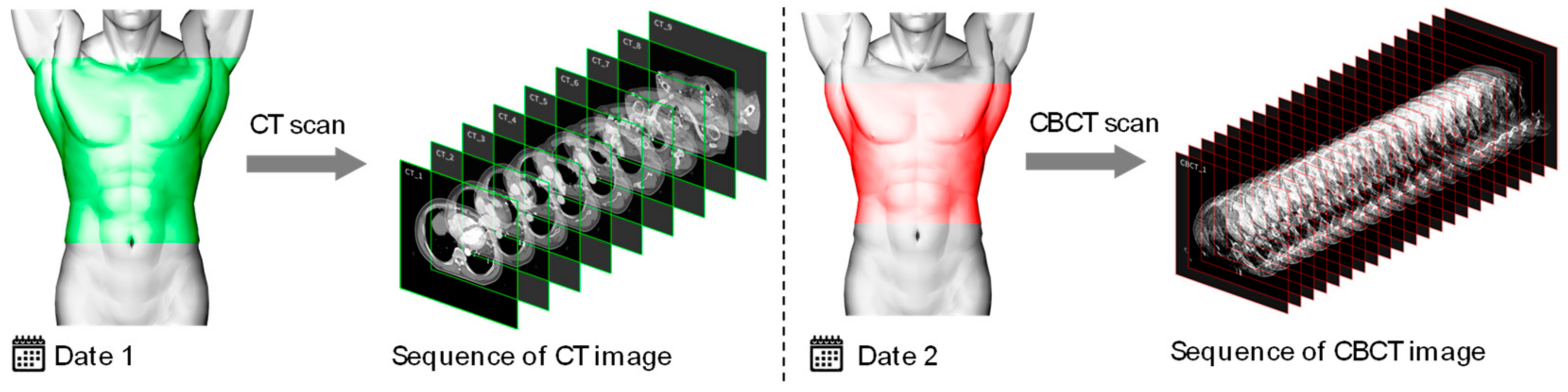
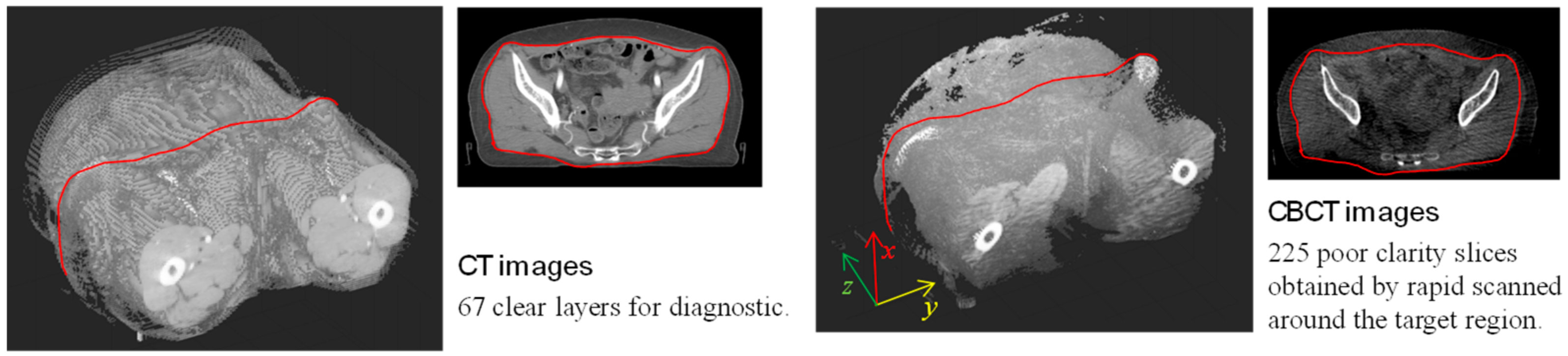
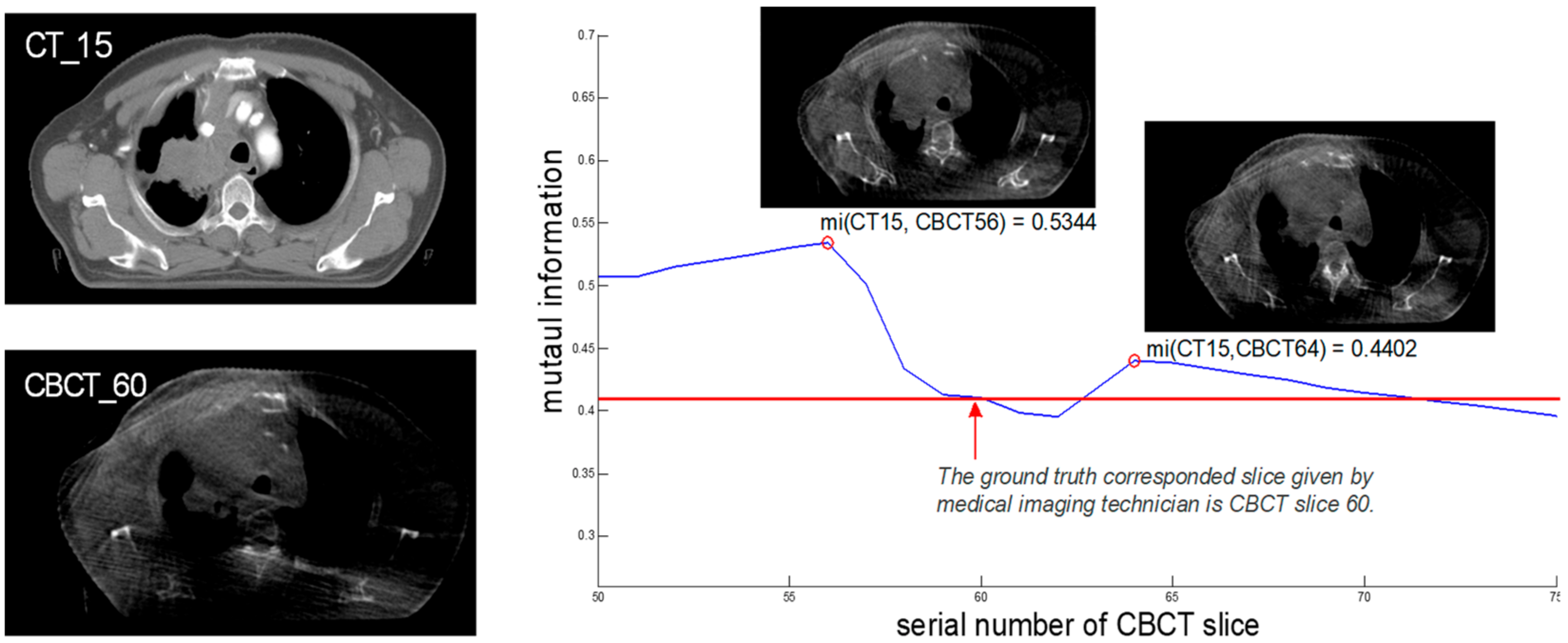
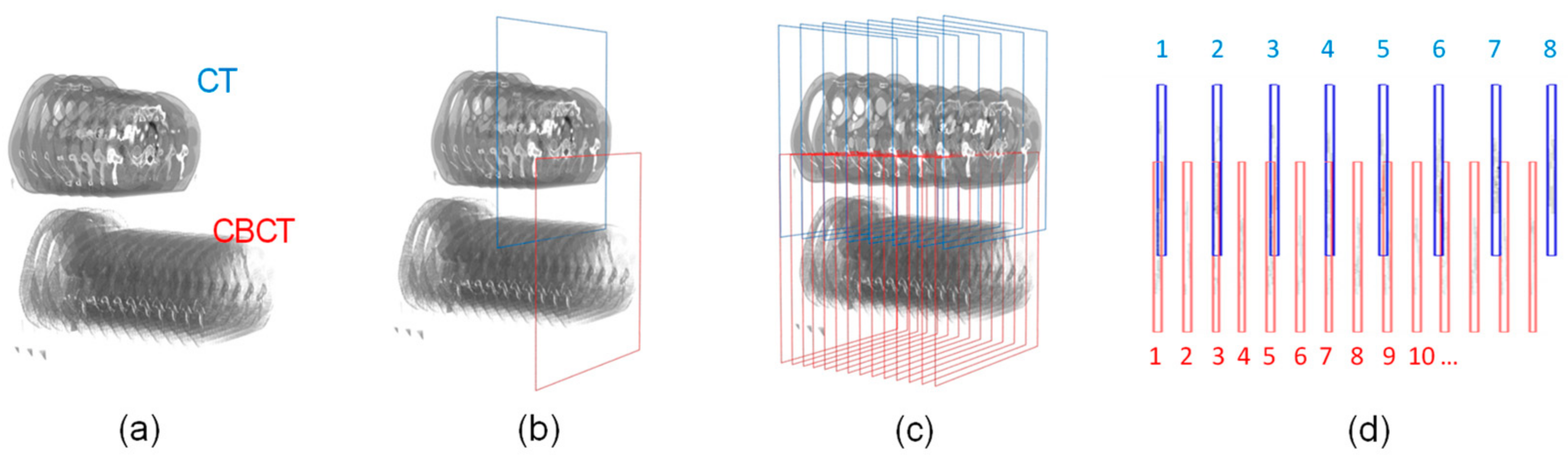
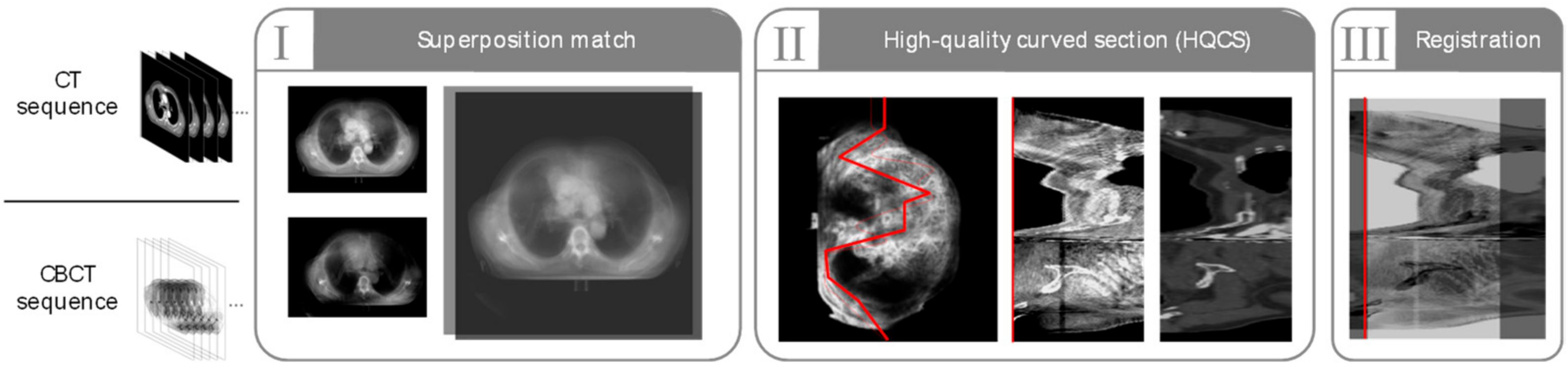
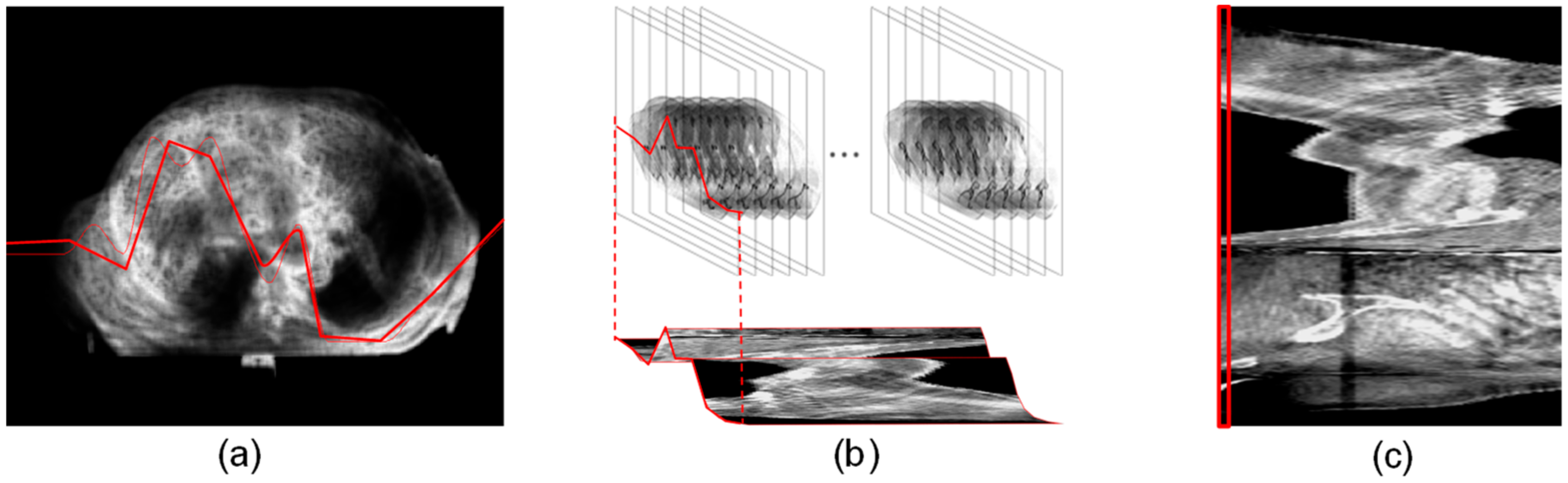
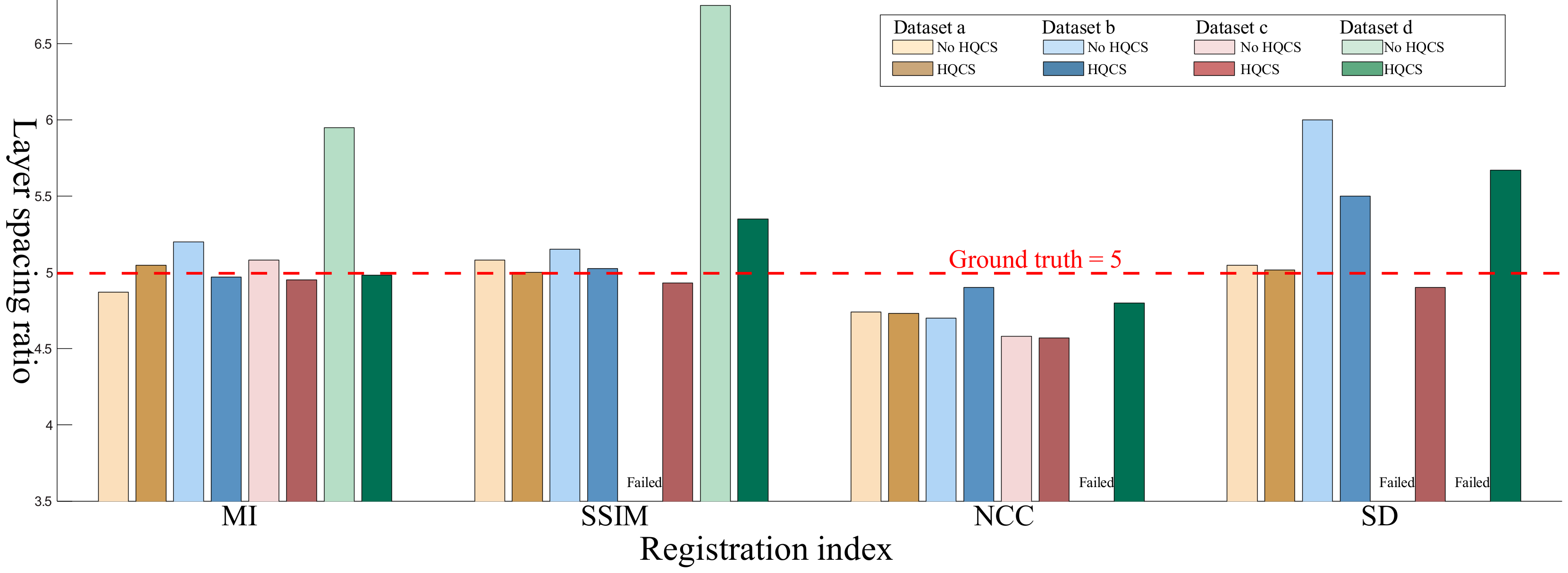
Image registration is an important research topic in medical image-guided therapy, which is dedicated to registering the high-dose imaging sequences with low-dose/faster means. Registering computer tomography (CT) scanning sequences with cone beam computer tomography (CBCT) scanning sequences is a typical application and has been widely used in CBCT-guided radiotherapy. The main problem is the difference in image clarity of these two image sequences. To solve this problem, for the single projection image sequence matching tasks encountered in medical practice, a novel local quality based curved section encoding strategy is proposed in this paper, which is called the high-quality curved section (HQCS). As an optimized cross-section regularly encoded along the sequence of image, this curved section could be used in order to solve the matching problem. Referencing the independent ground truth provided by medical image physicians, with an experiment combined with the four most widely used indicators used on image registration, matching performance of HQCS on CT/CBCT datasets was tested with varying clarity. Experimental results show that the proposed HQCS can register the CT/CBCT effectively and outperforms the commonly used methods. Specifically, the proposed HQCS has low time complexity and higher scalability, which indicates that the application enhanced the task of diagnosis.
Keywords: image registration; medical image processing; image guide; CT imaging image registration; medical image processing; image guide; CT imaging