Article

Specific Emitter Identification Model Based on Improved BYOL Self-Supervised Learning

College of Electronic Engineering, National University of Defense Technology, Hefei 230000, China
*
Author to whom correspondence should be addressed.
Electronics 2022, 11(21), 3485; https://doi.org/10.3390/electronics11213485

Submission received: 27 September 2022 / Revised: 12 October 2022 / Accepted: 25 October 2022 / Published: 27 October 2022
(This article belongs to the Special Issue New Advances in Visual Computing and Virtual Reality)

Abstract

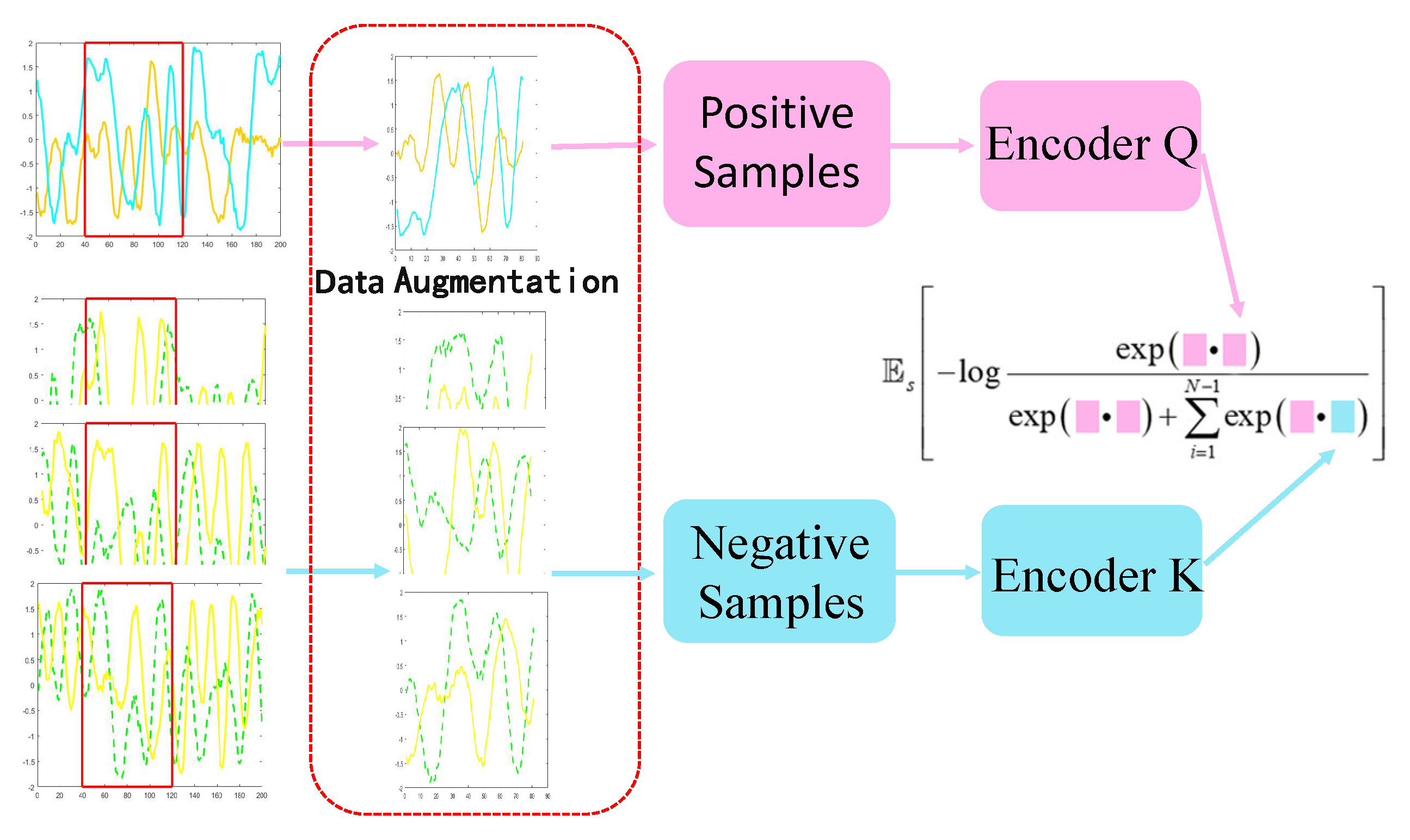
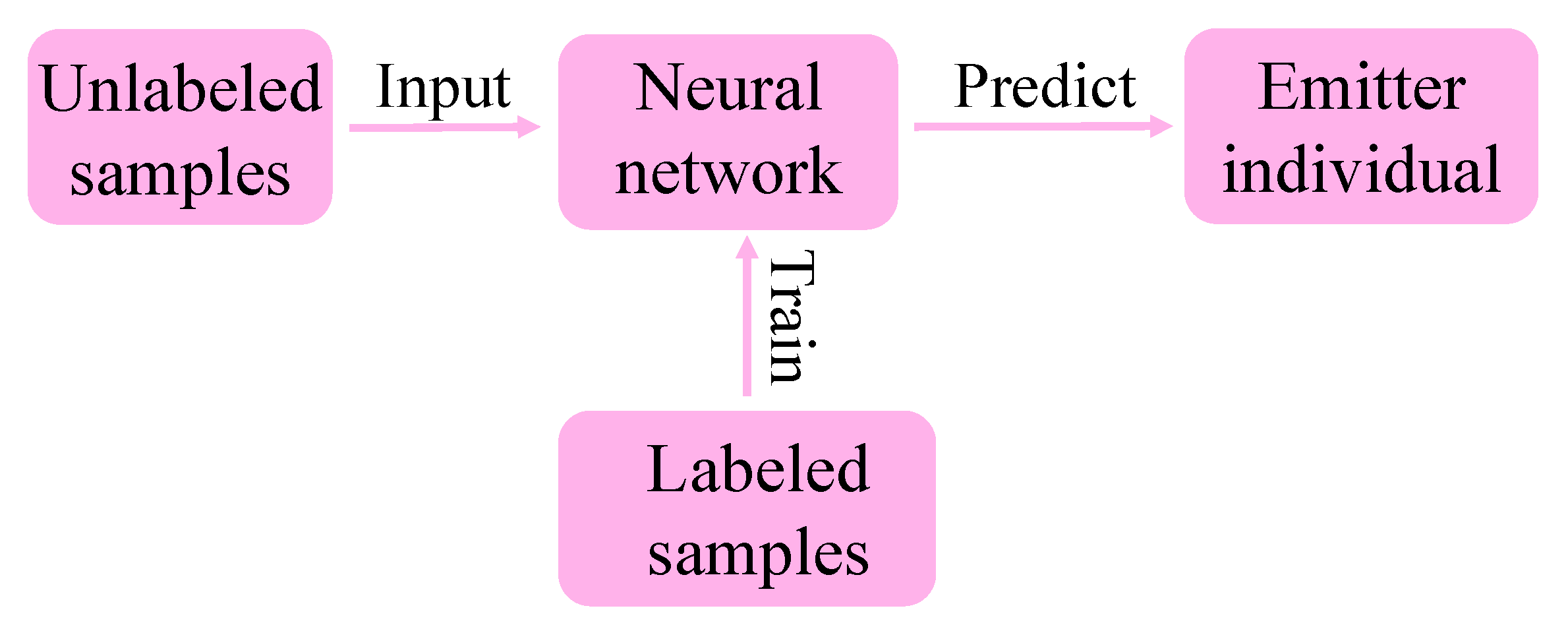
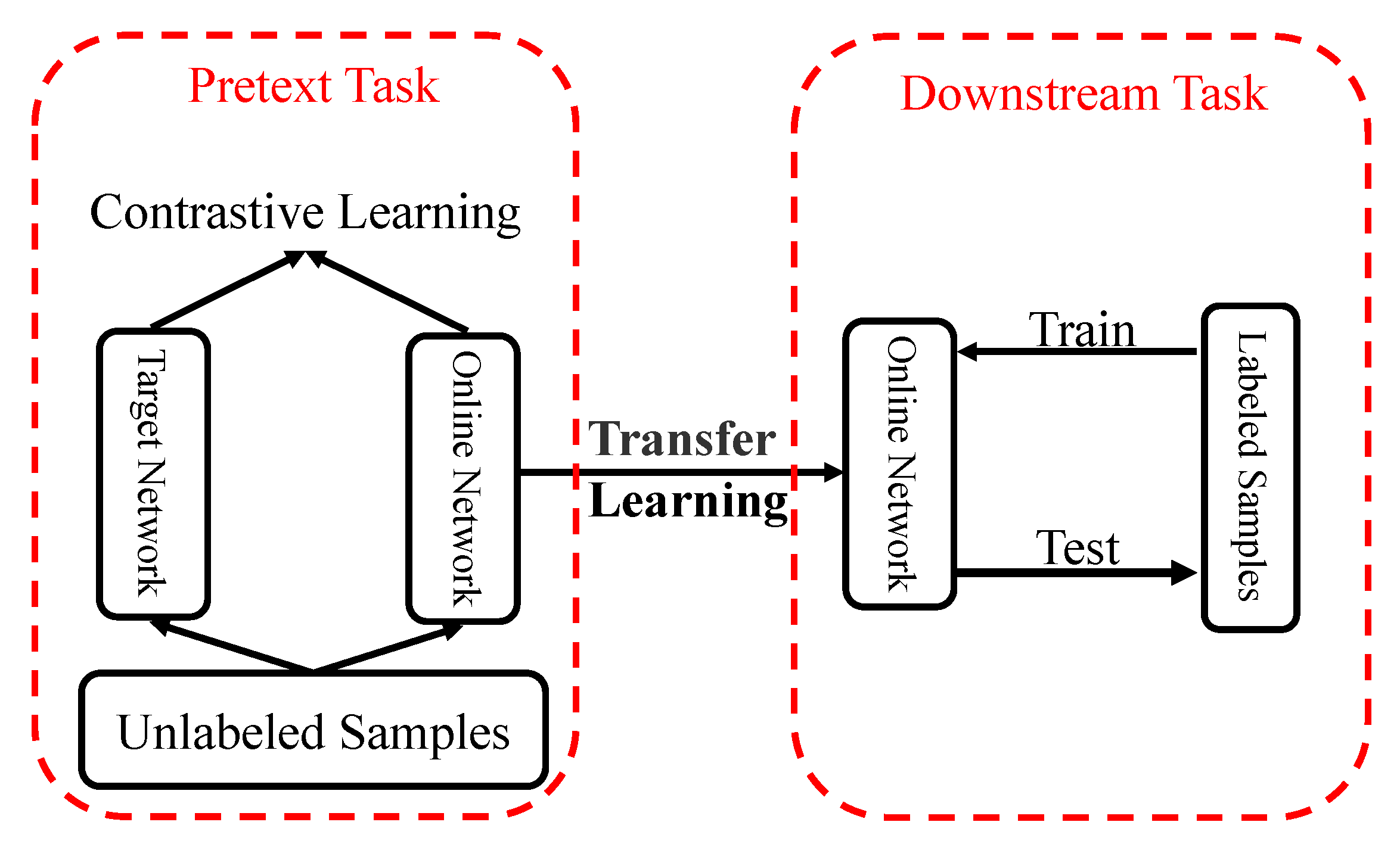
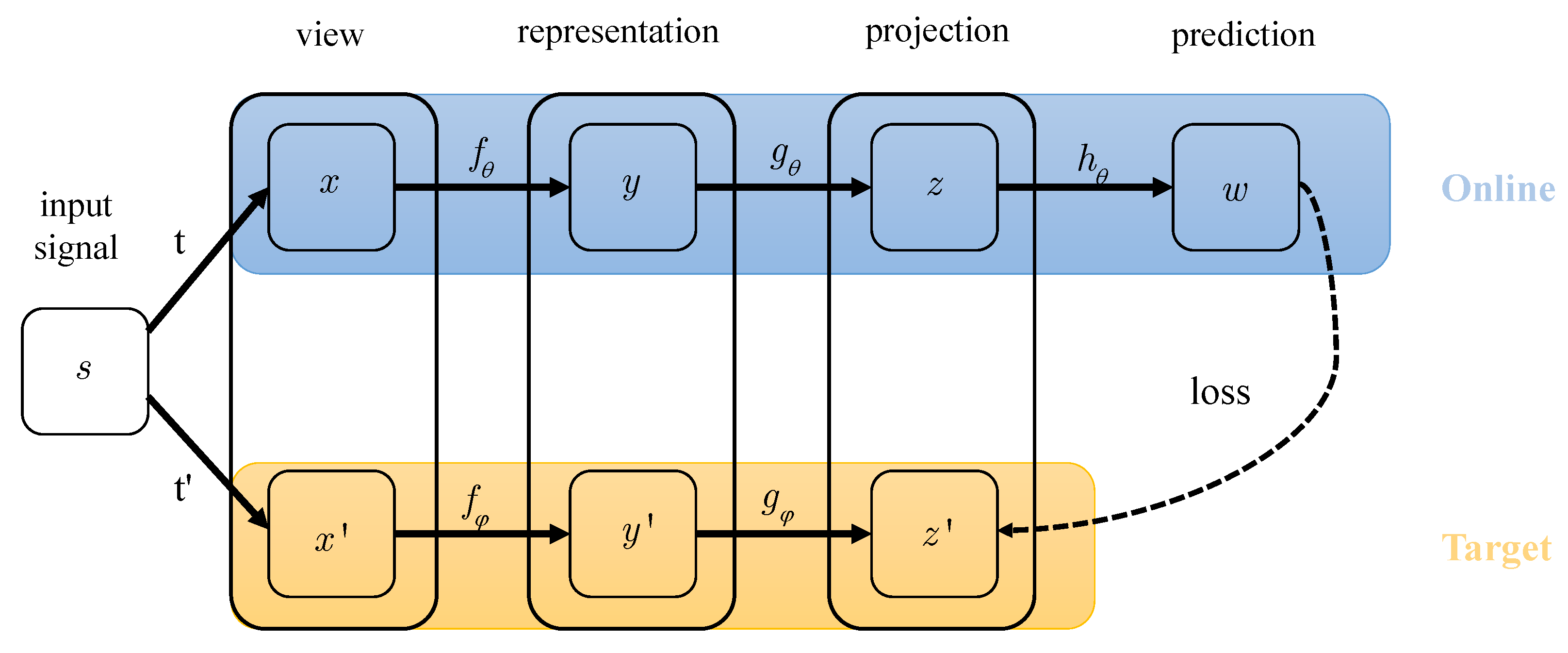
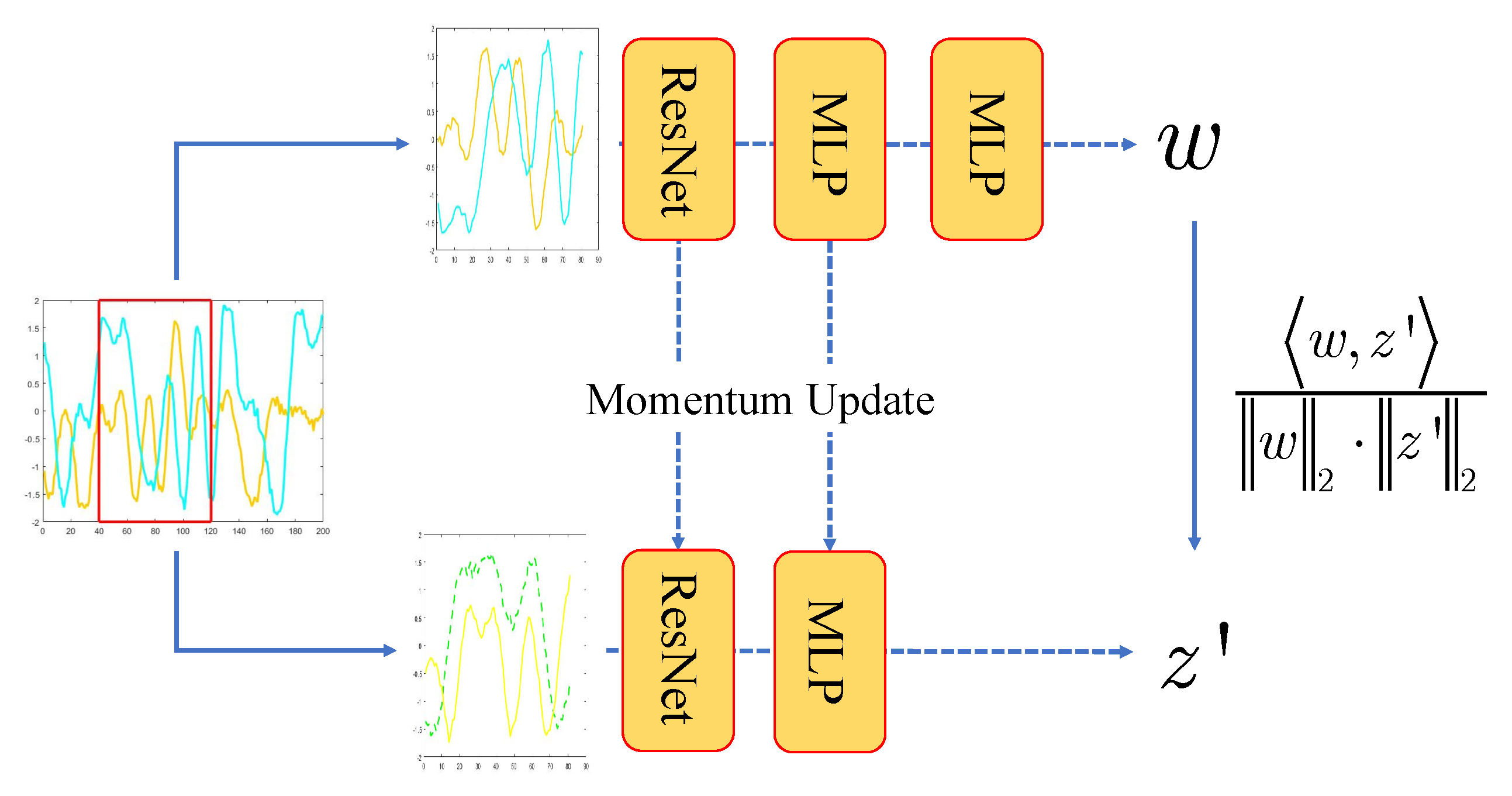
Specific emitter identification (SEI) is extracting the features of the received radio signals and determining the emitter individuals that generate the signals. Although deep learning-based methods have been effectively applied for SEI, their performance declines dramatically with the smaller number of labeled training samples and in the presence of significant noise. To address this issue, we propose an improved Bootstrap Your Own Late (BYOL) self-supervised learning scheme to fully exploit the unlabeled samples, which comprises the pretext task adopting contrastive learning conception and the downstream task. We designed three optimized data augmentation methods for communication signals in the former task to serve the contrastive concept. We built two neural networks, online and target networks, which interact and learn from each other. The proposed scheme demonstrates the generality of handling the small and sufficient sample cases across a wide range from 10 to 400, being labeled in each group. The experiment also shows promising accuracy and robustness where the recognition results increase at 3-8% from 3 to 7 signal-to-noise ratio (SNR). Our scheme can accurately identify the individual emitter in a complicated electromagnetic environment.
Keywords: specific emitter identification; self-supervised learning; small samples; deep learning; signal processing specific emitter identification; self-supervised learning; small samples; deep learning; signal processing