Article

Exploiting Solar Energy during an Aerial Mapping Mission on a Lightweight UAV
1
C-Astral Aerospace, Ltd., 5270 Ajdovscina, Slovenia
2
Faculty of Electrical Engineering, University of Ljubljana, 1000 Ljubljana, Slovenia
*
Author to whom correspondence should be addressed.
Electronics 2021, 10(22), 2876; https://doi.org/10.3390/electronics10222876

Submission received: 26 October 2021 / Revised: 10 November 2021 / Accepted: 18 November 2021 / Published: 22 November 2021
(This article belongs to the Special Issue Drones and UAVs Energy Management Progress and Challenges)

Abstract

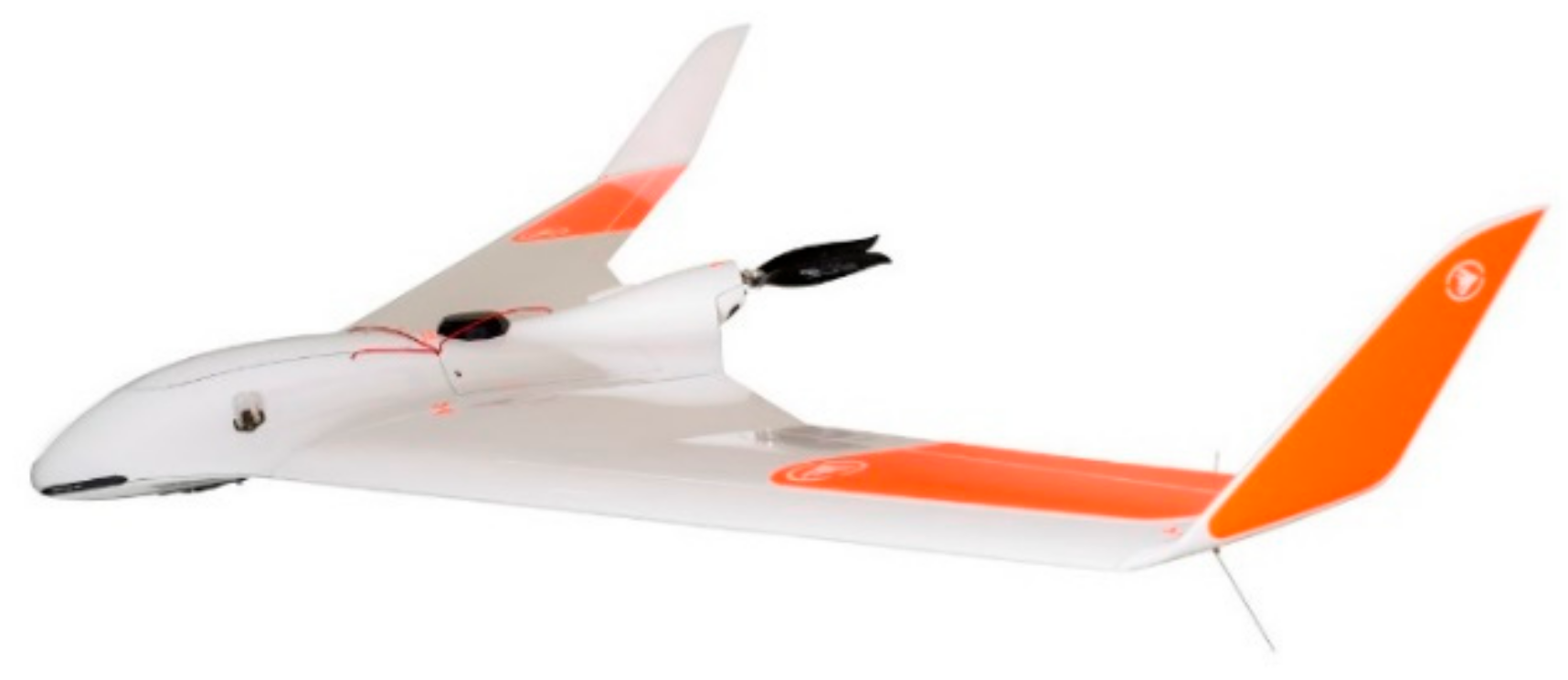
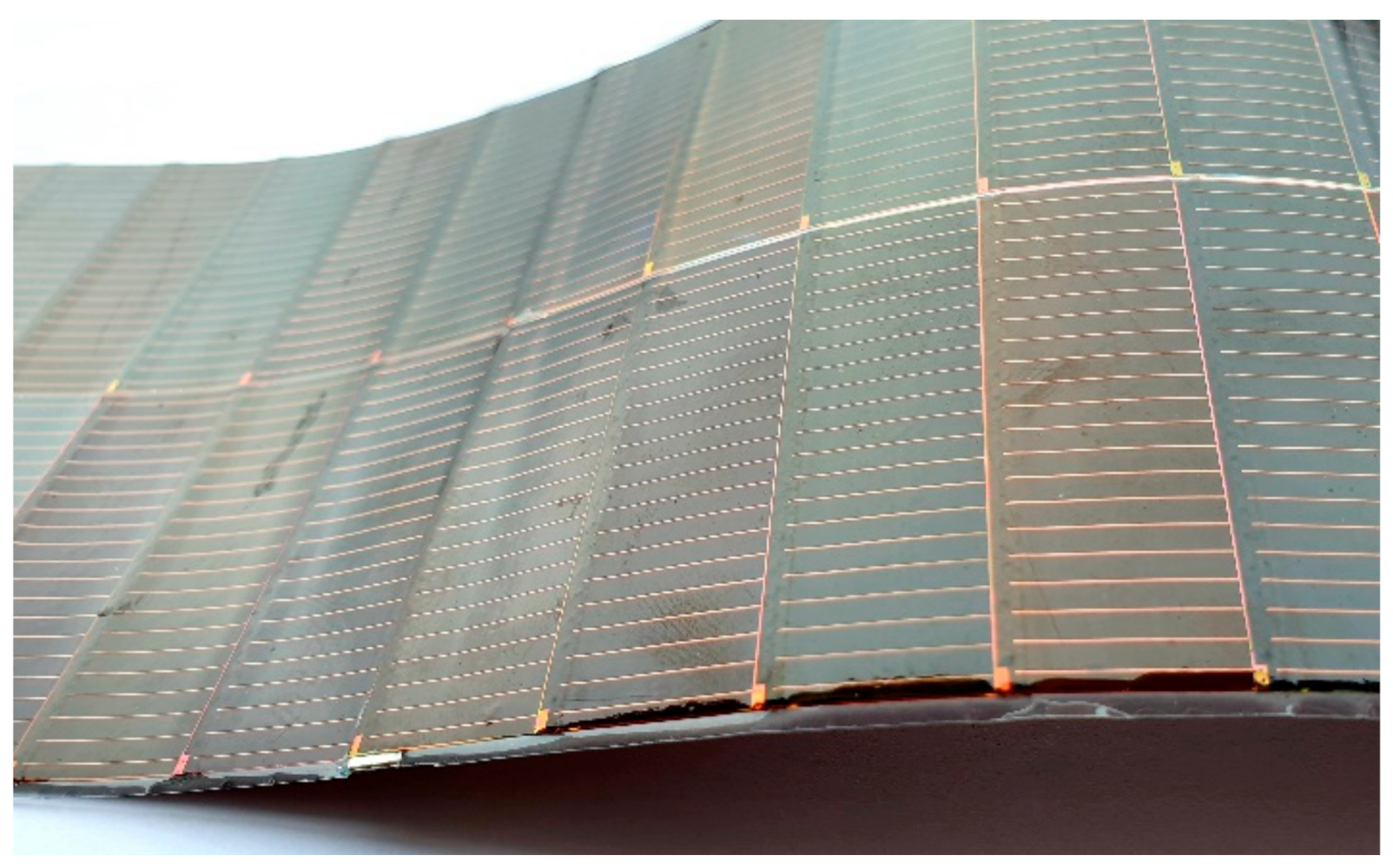
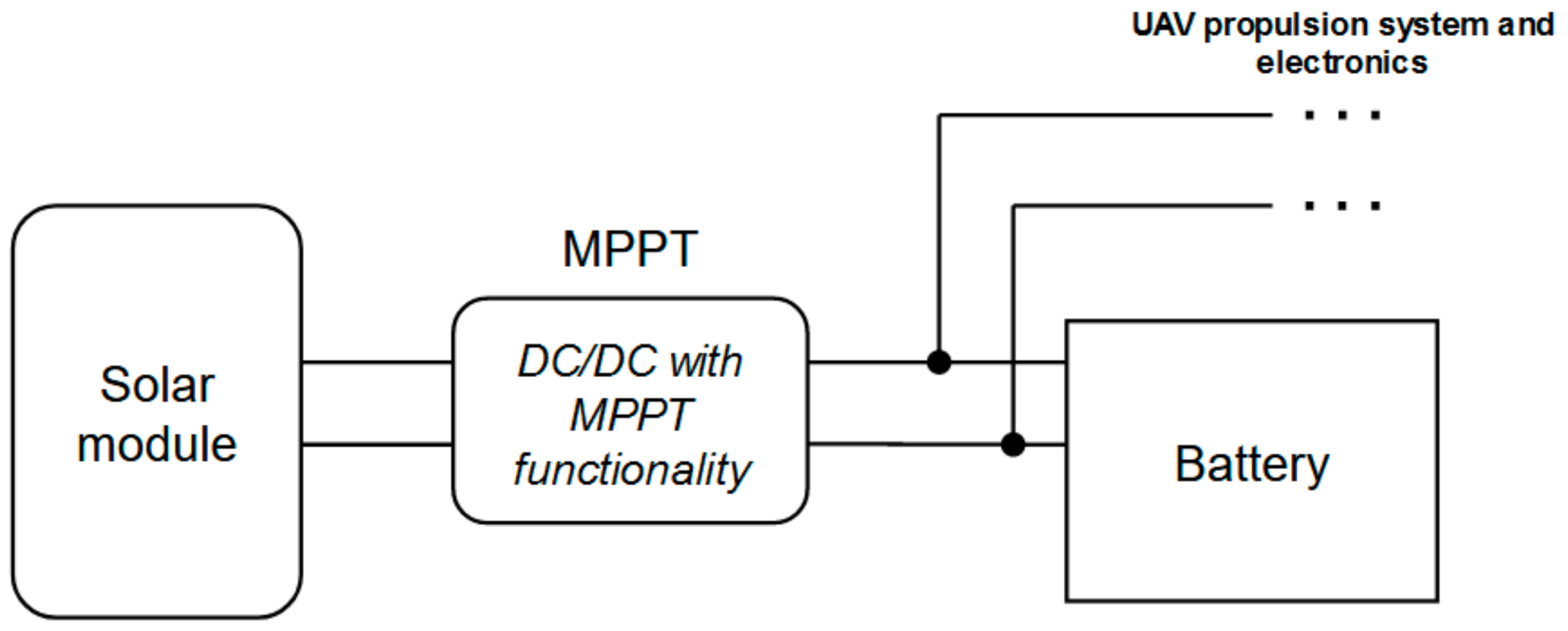
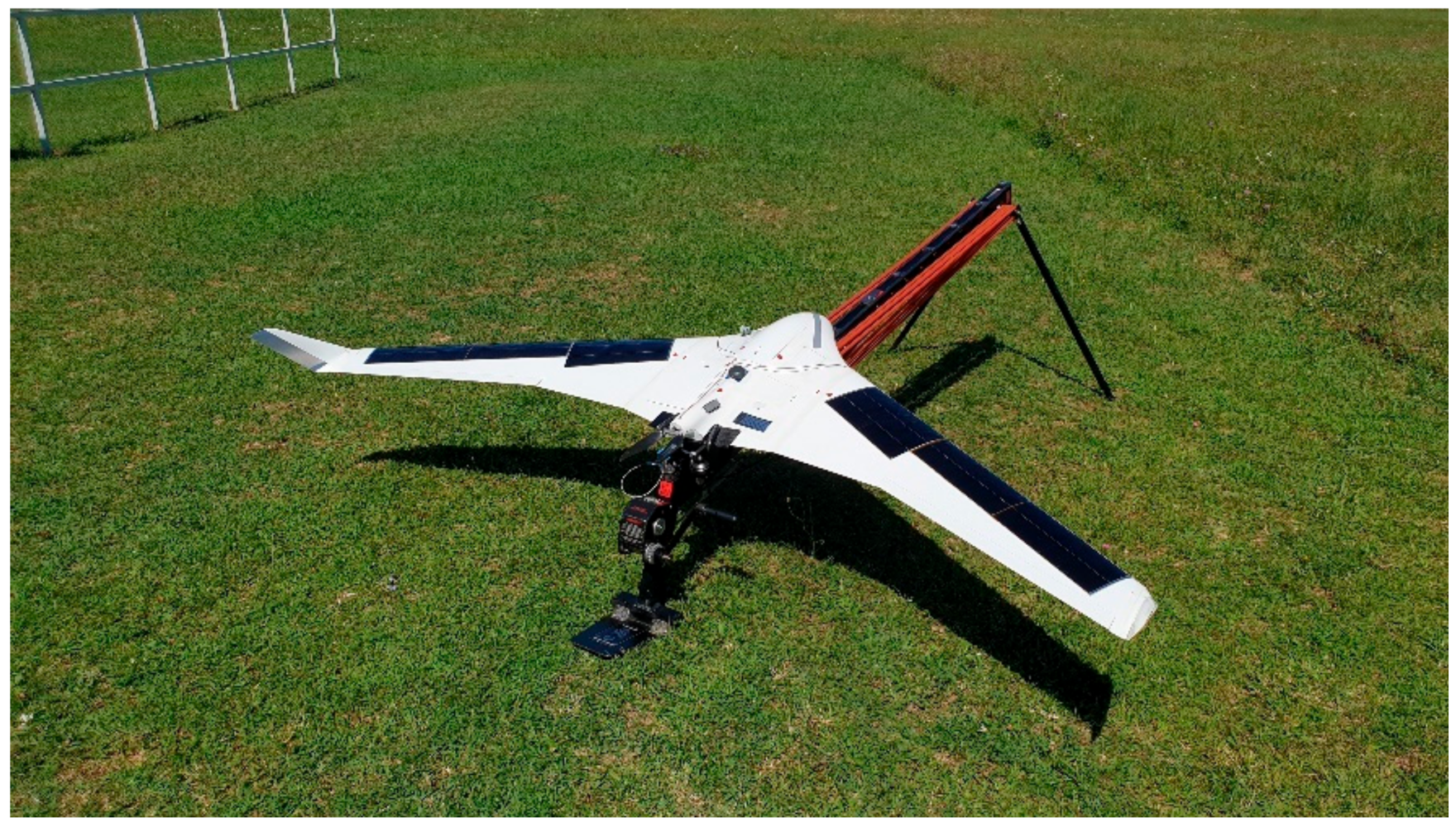
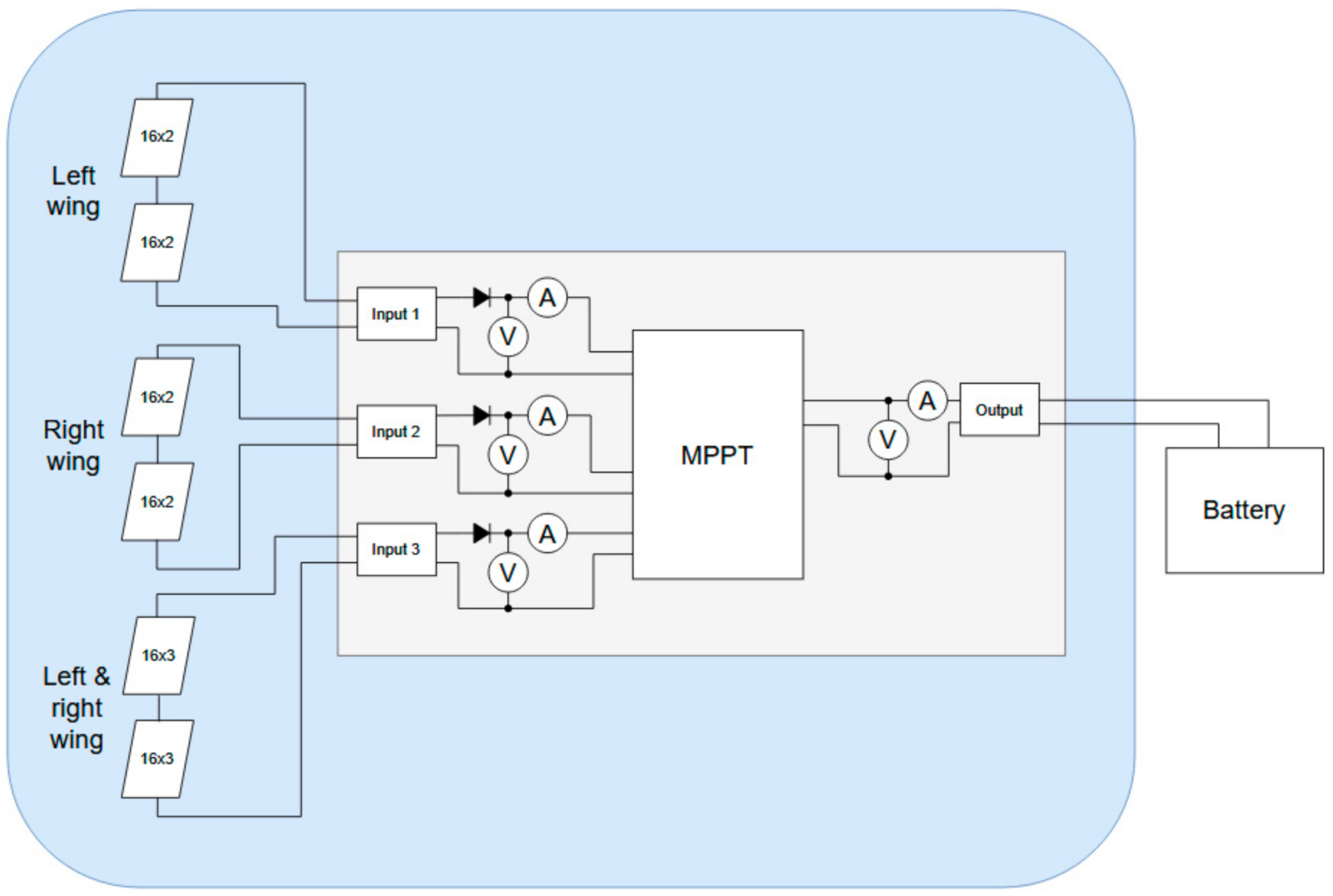
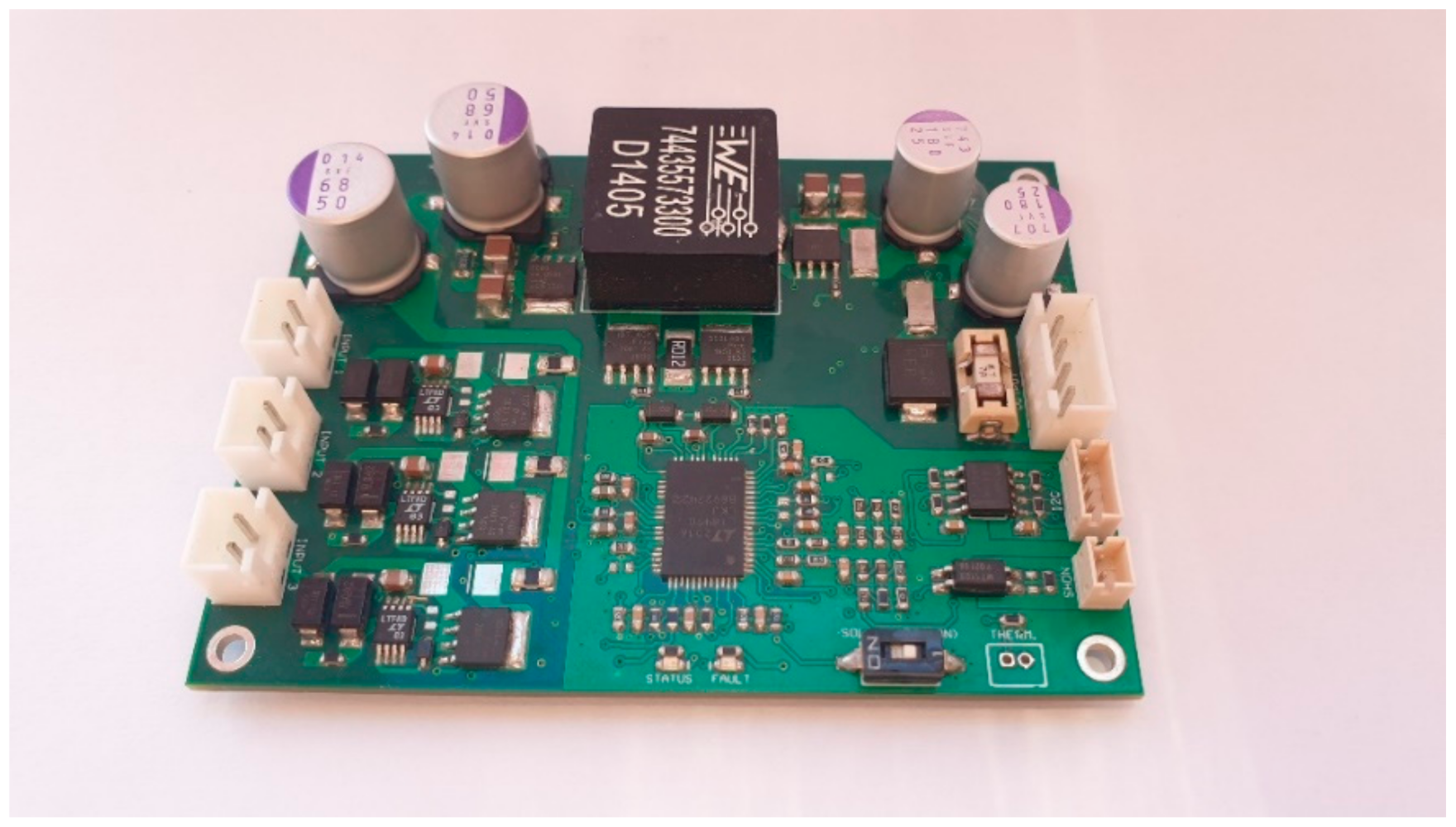
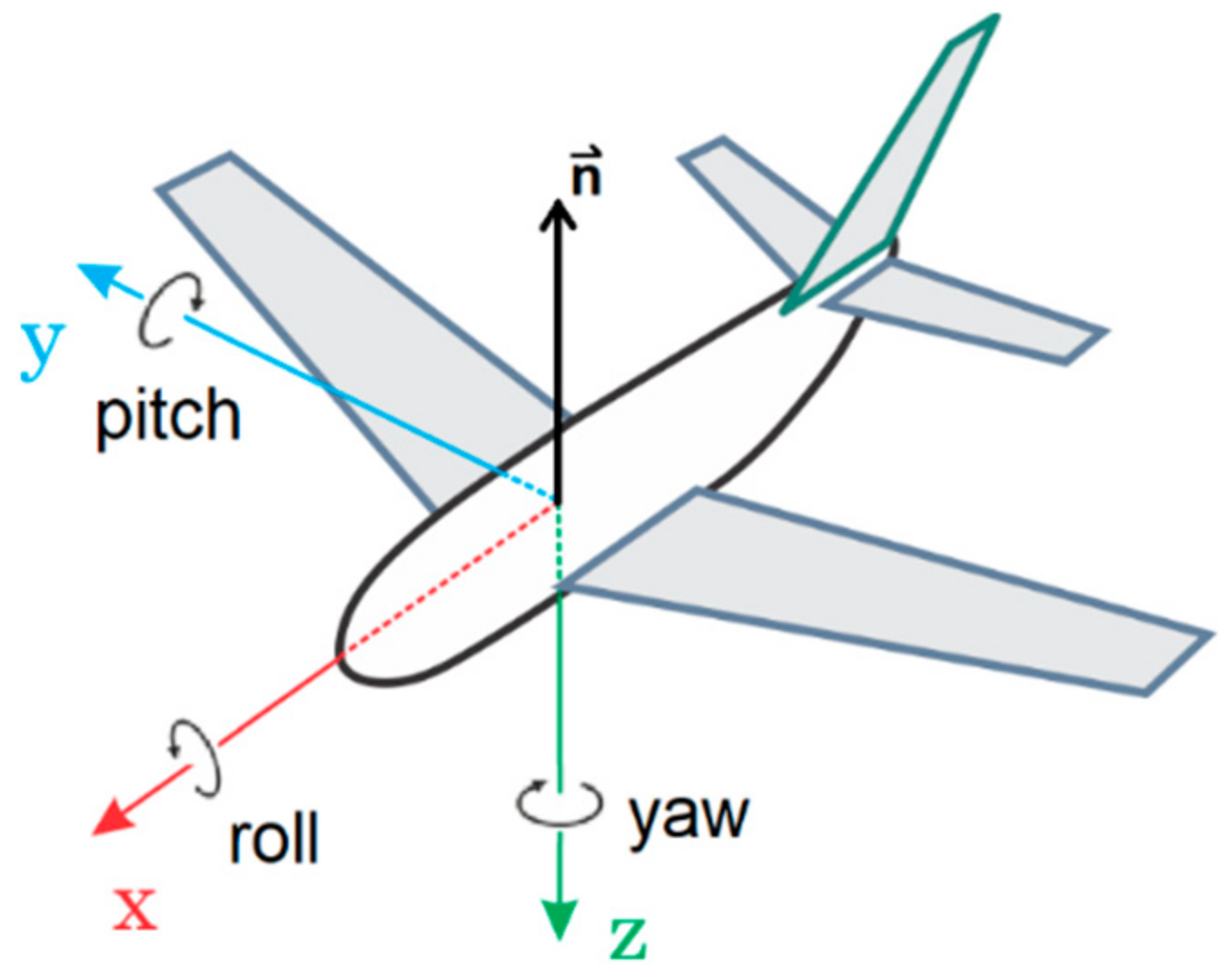
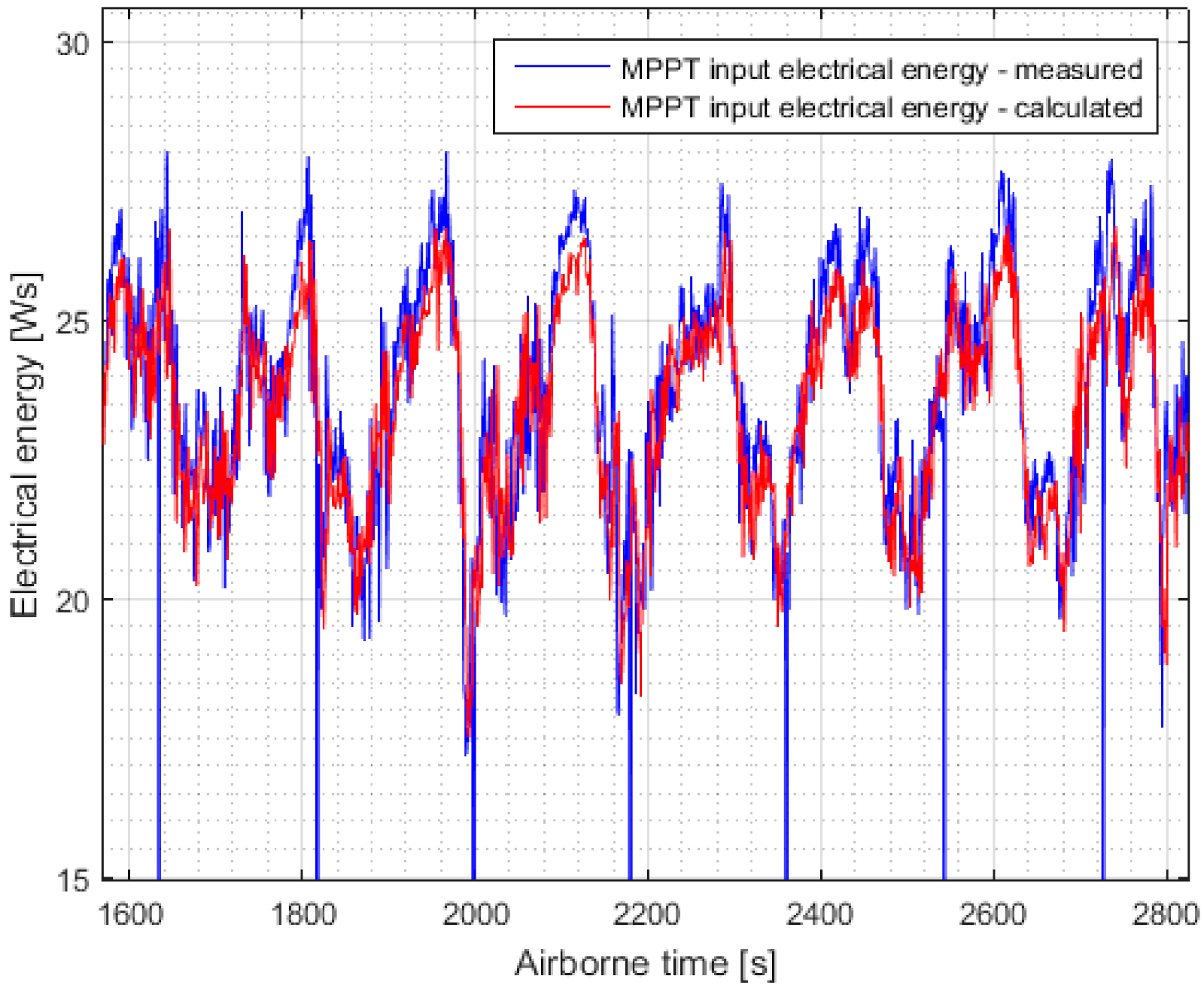
In this study, we present options for extending the endurance of a lightweight unmanned aerial vehicle (UAV), along with their advantages and disadvantages. We present a developed solution based on the use of gallium–arsenide (GaAs) solar modules installed on a UAV and connected to a custom-made maximum power point tracker (MPPT) with an integrated perturb and observe (P&O) algorithm. The mathematical behavior required to calculate the electrical energy production from solar energy on the UAV from known UAV angles of rotation, the position of the sun in the sky, solar irradiance measurements, the solar module area and the solar modules efficiency is presented. A comparison of the calculated and actual measured electrical energy production results during an aerial mapping mission is presented. We perform a number of aerial mapping mission flights and the experimental results confirm an energy efficiency value of more than 96.27% for the MPPT and extended flight endurance by up to 21.25%. In addition, onboard measurements and other data captured during flights confirm the proposed electrical energy production calculation.
Keywords: UAV; solar energy; electrical energy; endurance extension; MPPT; rotation matrix; green energy UAV; solar energy; electrical energy; endurance extension; MPPT; rotation matrix; green energy