Article

On-Line Learning and Updating Unmanned Tracked Vehicle Dynamics

by
Natalia Strawa
,
Dmitry I. Ignatyev
*,
Argyrios C. Zolotas
and
Antonios Tsourdos
Centre for Autonomous and Cyber-Physical Systems, SATM, Cranfield University, Cranfield MK43 0AL, UK
*
Author to whom correspondence should be addressed.
Current Address: Hyper Poland, 03-828 Mazowieckie, Poland.
Electronics 2021, 10(2), 187; https://doi.org/10.3390/electronics10020187

Submission received: 13 October 2020 / Revised: 8 January 2021 / Accepted: 11 January 2021 / Published: 15 January 2021

Abstract

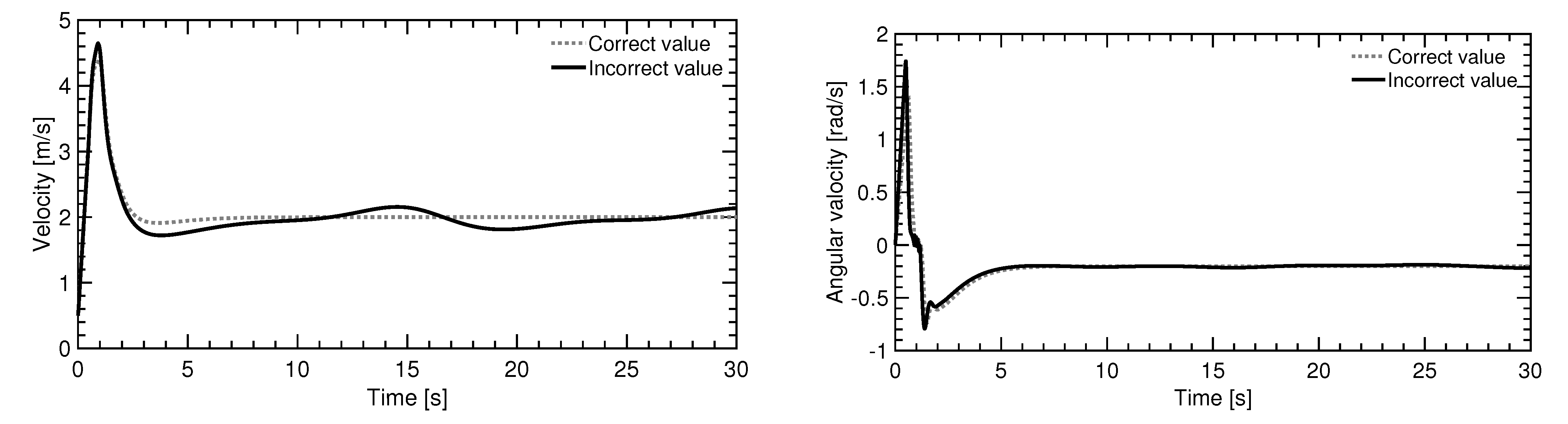
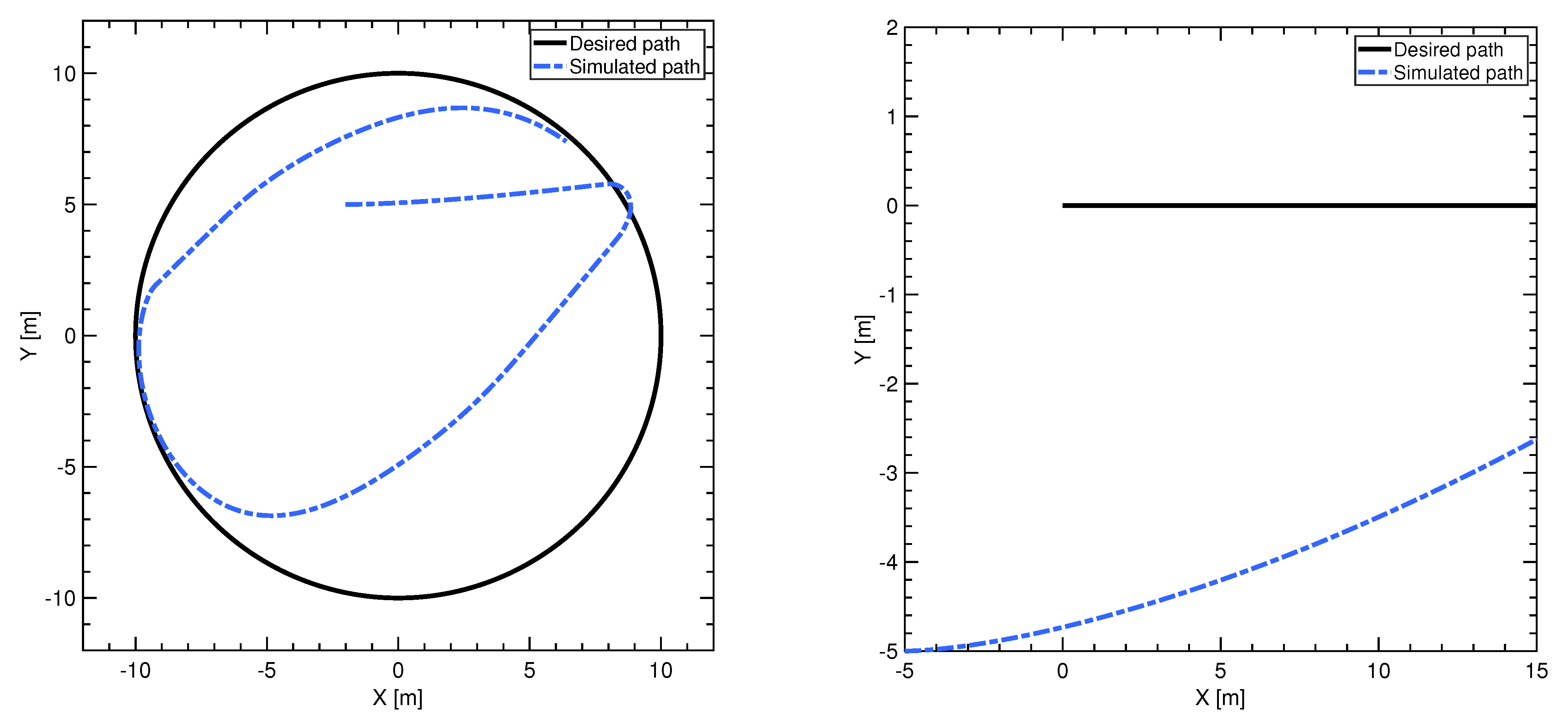
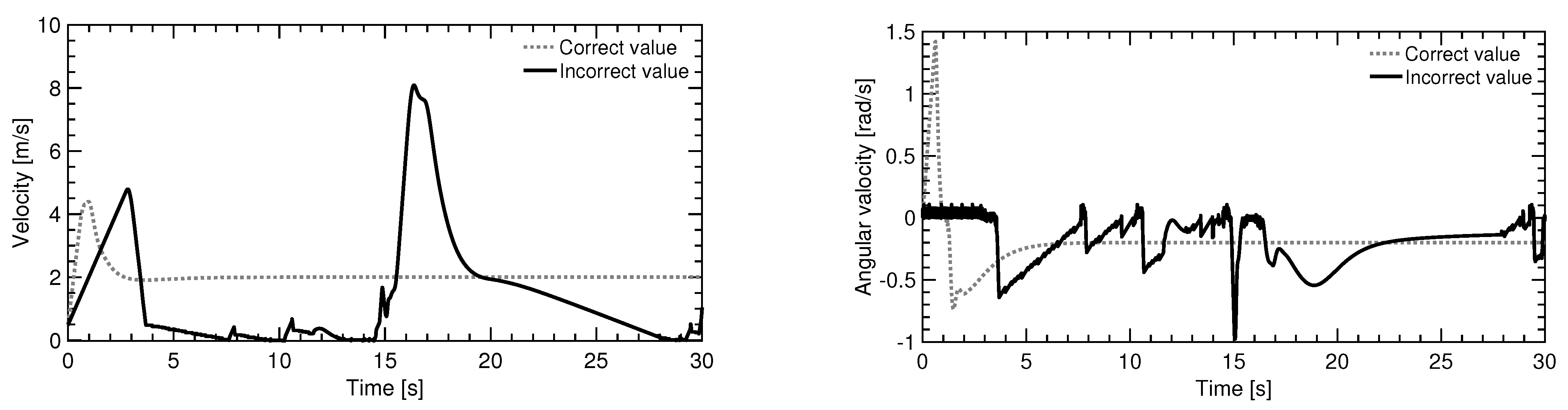
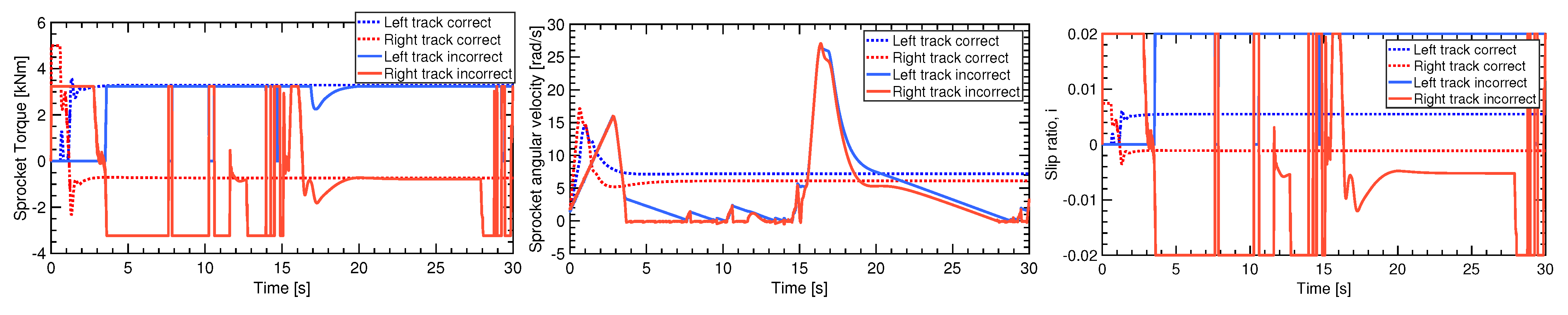
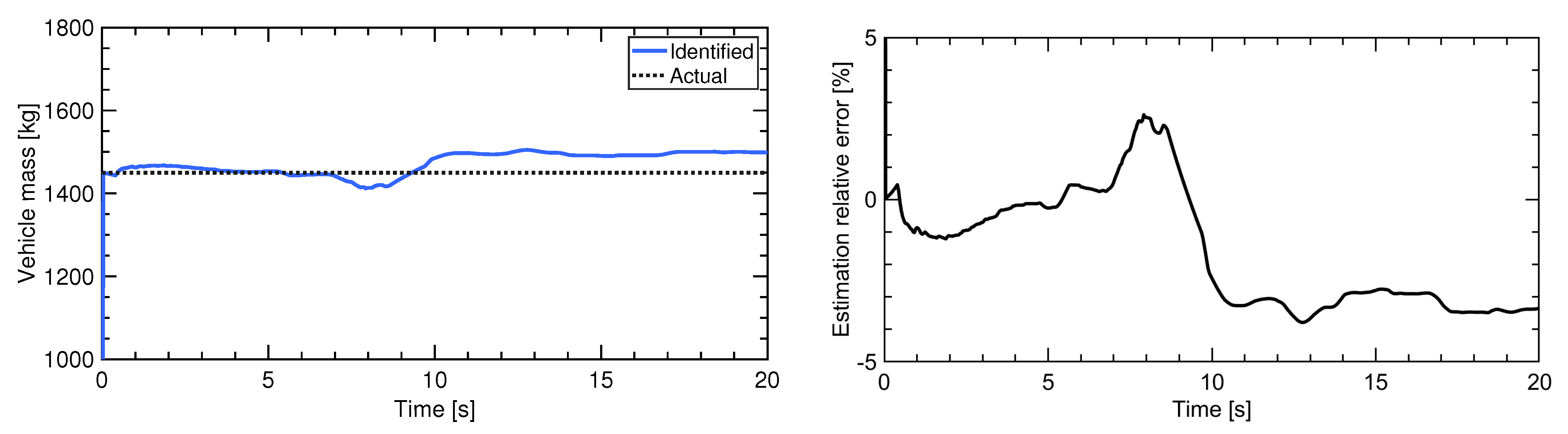
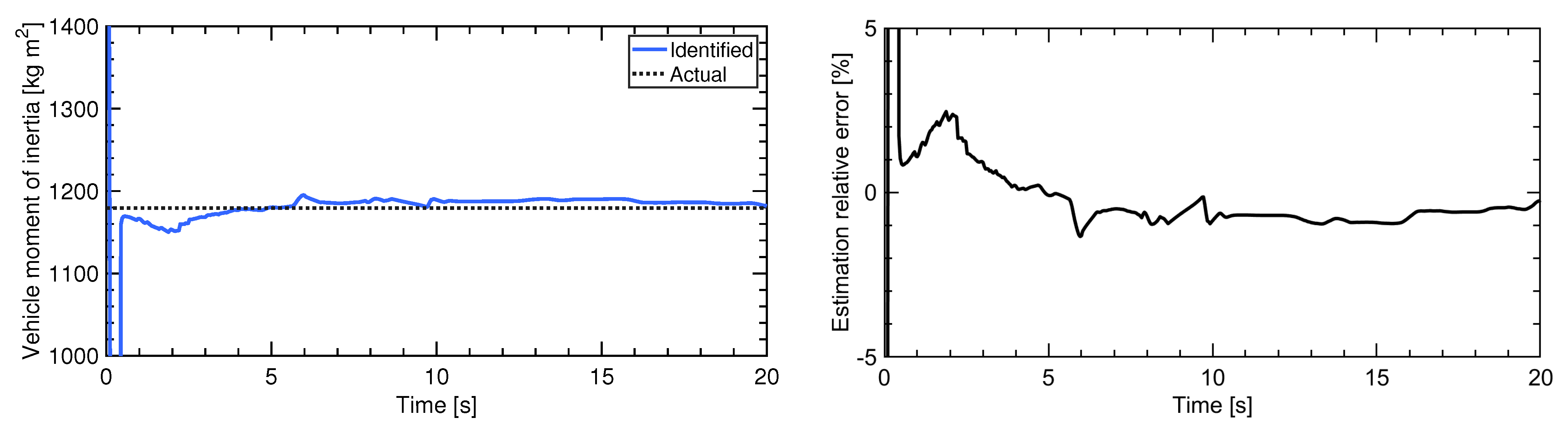
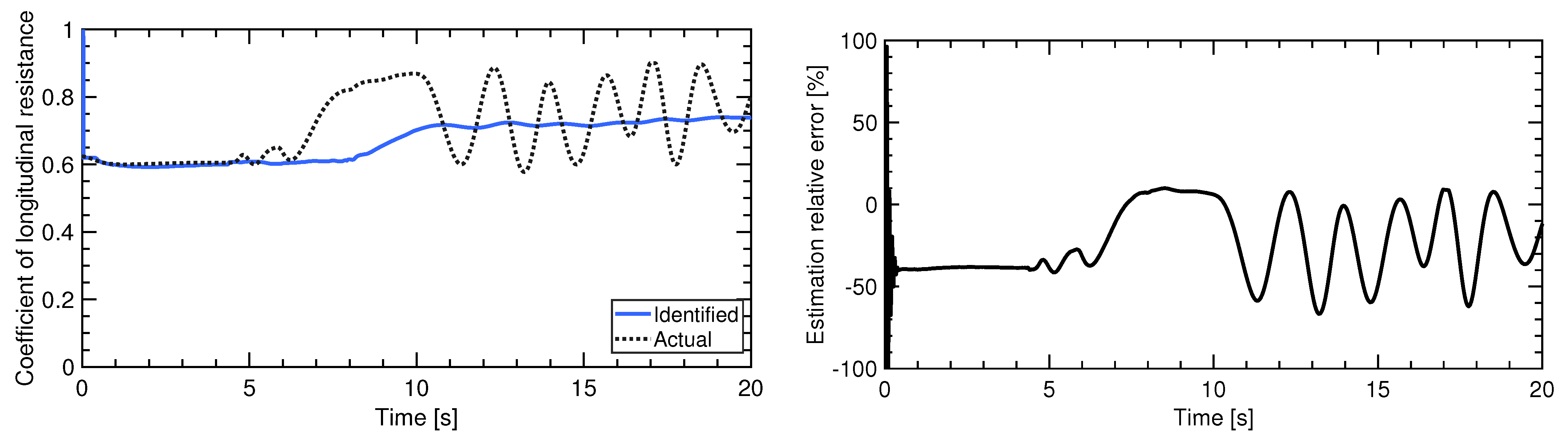
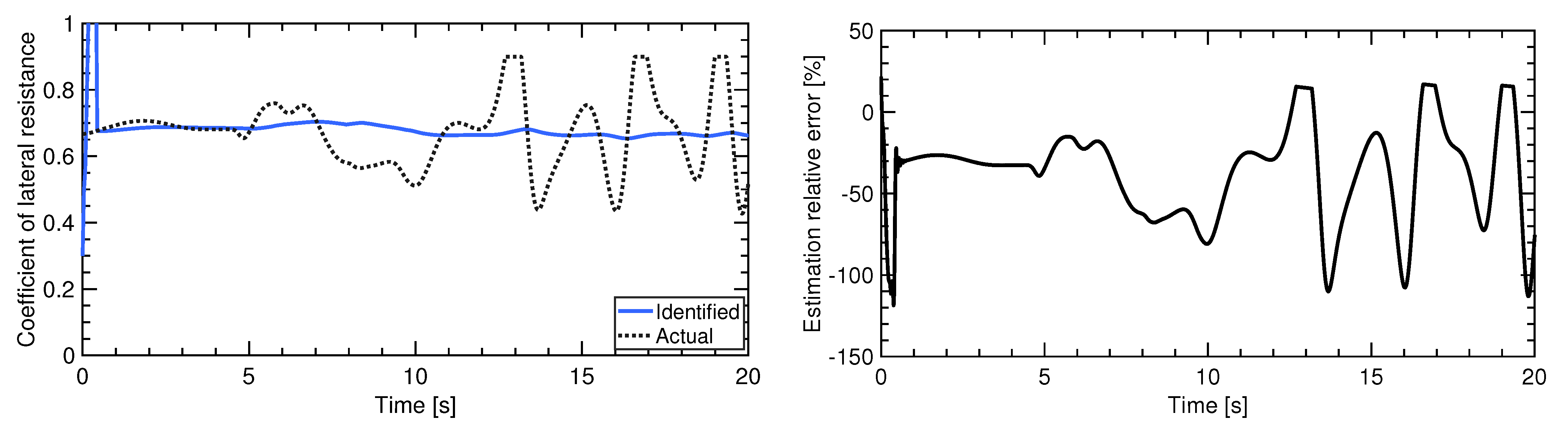
Increasing levels of autonomy impose more pronounced performance requirements for unmanned ground vehicles (UGV). Presence of model uncertainties significantly reduces a ground vehicle performance when the vehicle is traversing an unknown terrain or the vehicle inertial parameters vary due to a mission schedule or external disturbances. A comprehensive mathematical model of a skid steering tracked vehicle is presented in this paper and used to design a control law. Analysis of the controller under model uncertainties in inertial parameters and in the vehicle-terrain interaction revealed undesirable behavior, such as controller divergence and offset from the desired trajectory. A compound identification scheme utilizing an exponential forgetting recursive least square, generalized Newton–Raphson (NR), and Unscented Kalman Filter methods is proposed to estimate the model parameters, such as the vehicle mass and inertia, as well as parameters of the vehicle-terrain interaction, such as slip, resistance coefficients, cohesion, and shear deformation modulus on-line. The proposed identification scheme facilitates adaptive capability for the control system, improves tracking performance and contributes to an adaptive path and trajectory planning framework, which is essential for future autonomous ground vehicle missions.
Keywords: unmanned tracked vehicle; inertial parameters; vehicle-terrain interaction; identification; recursive least square with exponential forgetting; generalized Newton–Raphson; Unscented Kalman Filter unmanned tracked vehicle; inertial parameters; vehicle-terrain interaction; identification; recursive least square with exponential forgetting; generalized Newton–Raphson; Unscented Kalman Filter