
Article

Zero-Keep Filter Pruning for Energy/Power Efficient Deep Neural Networks †
Department of Computer Engineering, Hallym University, Chuncheon 24252, Korea
*
Authors to whom correspondence should be addressed.
This paper is an extended version of our paper published in 11th International Conference on Information and Communication Technology Convergence (ICTC), Jeju Island, Korea, 21–23 October 2020.
Electronics 2021, 10(11), 1238; https://doi.org/10.3390/electronics10111238

Submission received: 30 April 2021 / Revised: 18 May 2021 / Accepted: 19 May 2021 / Published: 22 May 2021
(This article belongs to the Special Issue Advanced Communication Techniques for 5G and Internet of Things)

Abstract

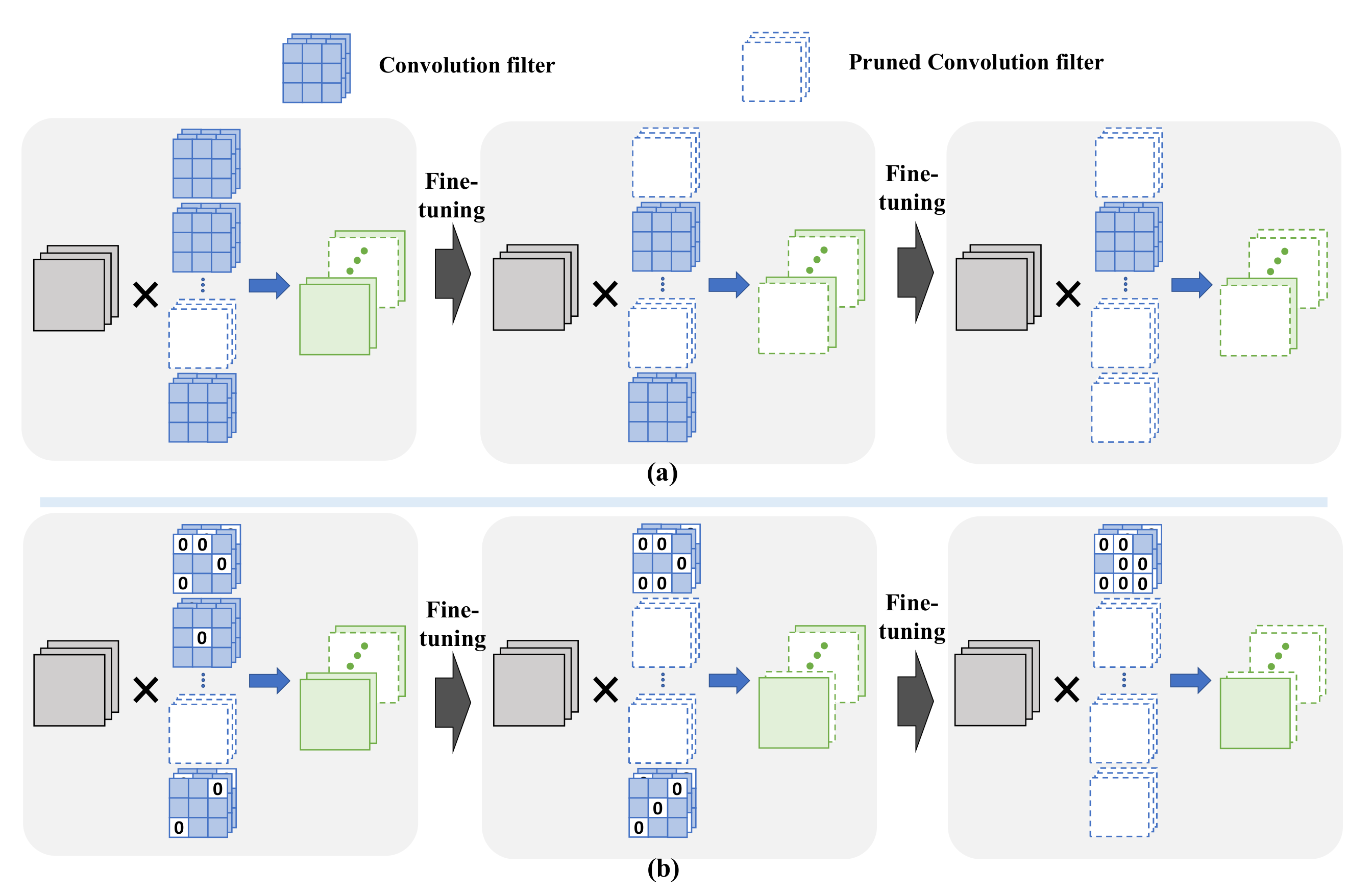
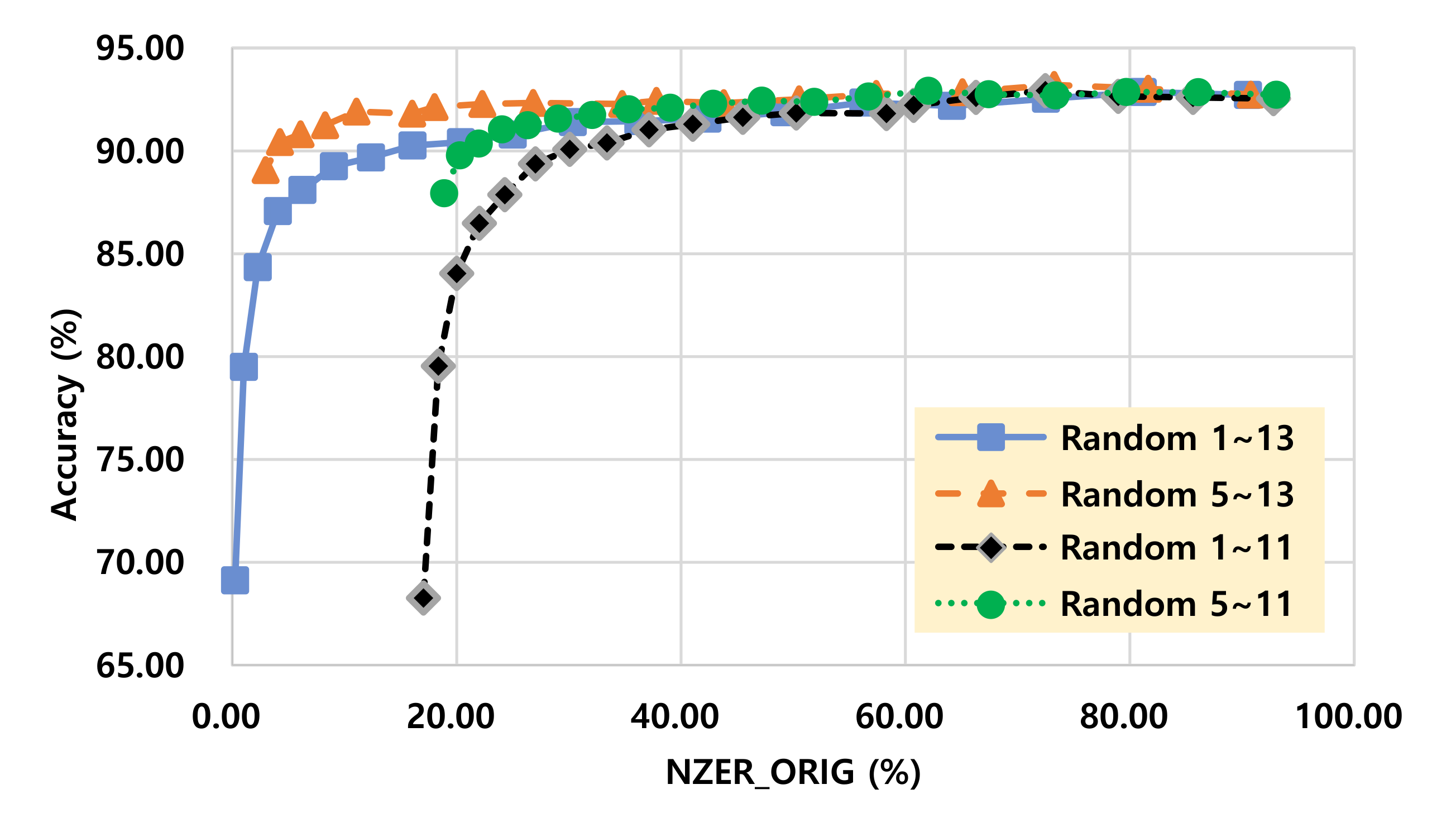
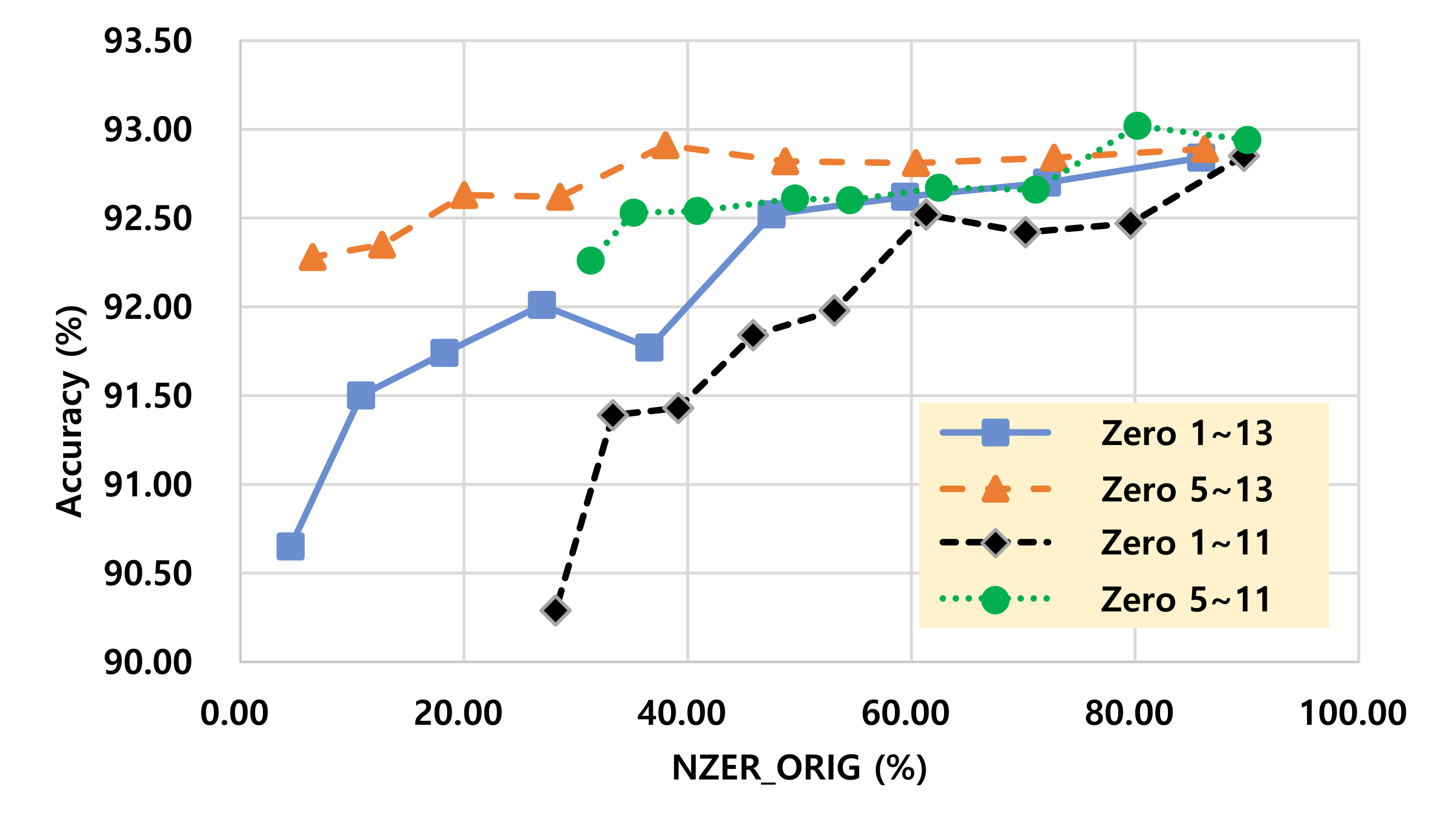
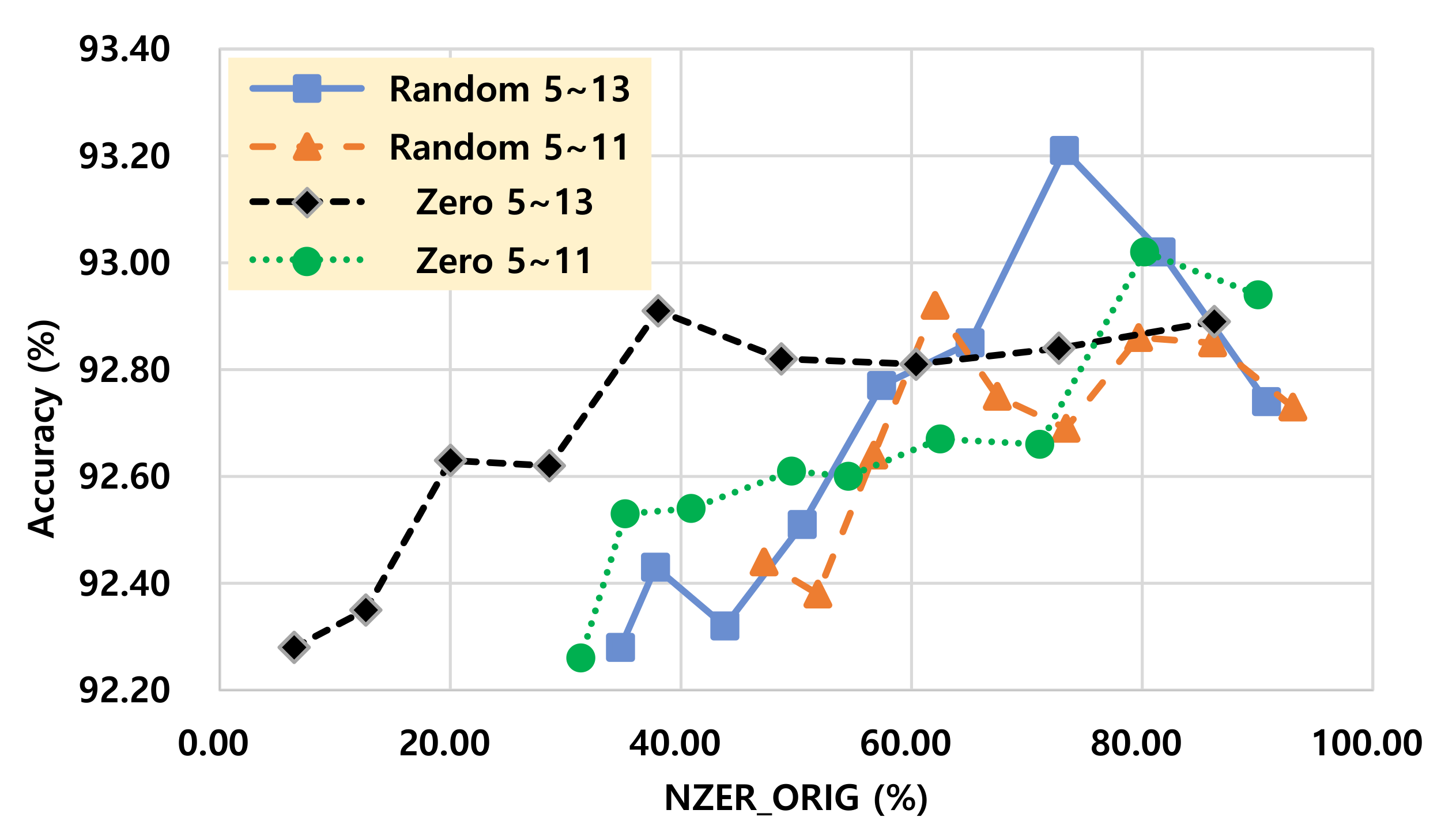
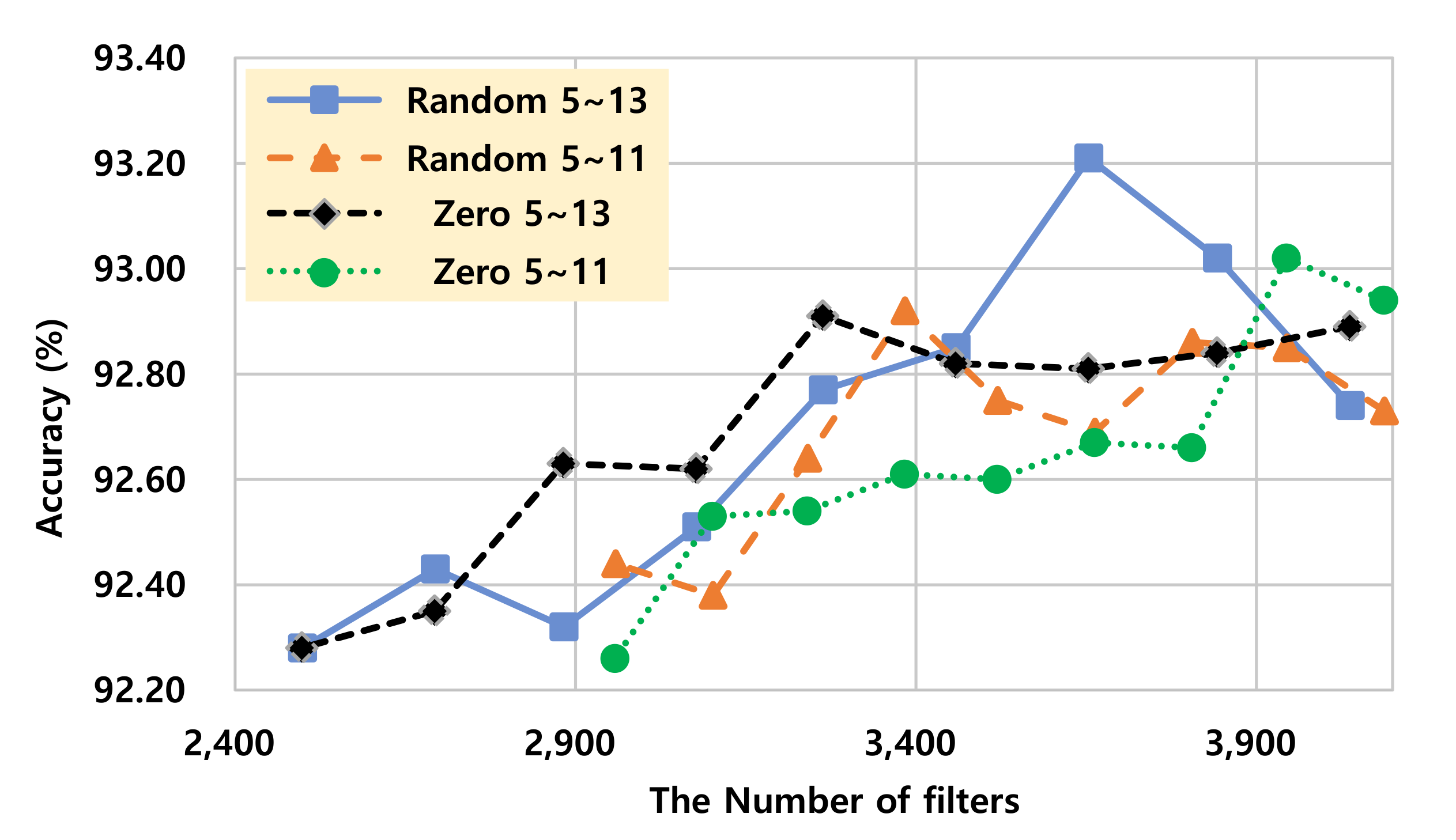
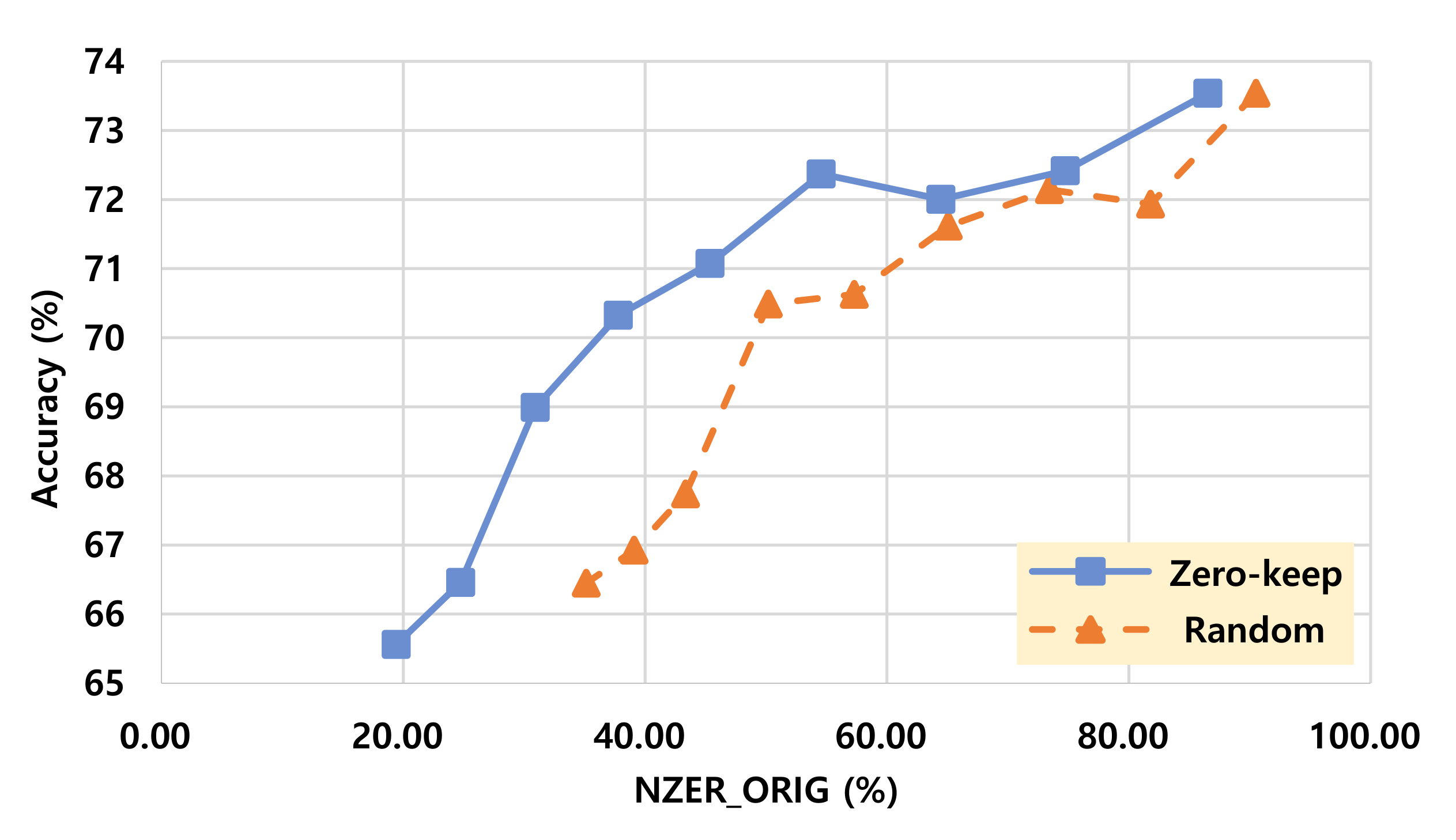
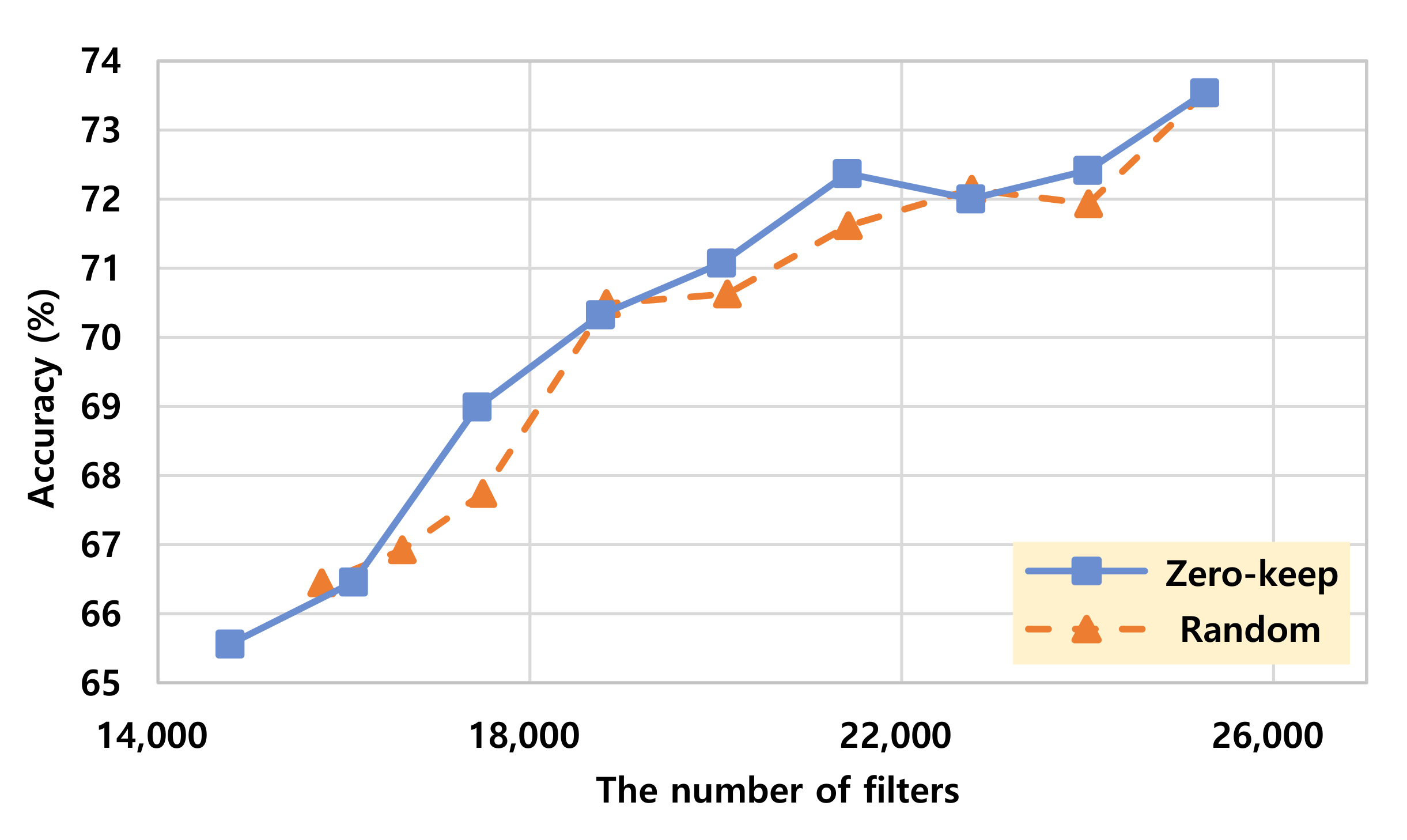
Recent deep learning models succeed in achieving high accuracy and fast inference time, but they require high-performance computing resources because they have a large number of parameters. However, not all systems have high-performance hardware. Sometimes, a deep learning model needs to be run on edge devices such as IoT devices or smartphones. On edge devices, however, limited computing resources are available and the amount of computation must be reduced to launch the deep learning models. Pruning is one of the well-known approaches for deriving light-weight models by eliminating weights, channels or filters. In this work, we propose “zero-keep filter pruning” for energy-efficient deep neural networks. The proposed method maximizes the number of zero elements in filters by replacing small values with zero and pruning the filter that has the lowest number of zeros. In the conventional approach, the filters that have the highest number of zeros are generally pruned. As a result, through this zero-keep filter pruning, we can have the filters that have many zeros in a model. We compared the results of the proposed method with the random filter pruning and proved that our method shows better performance with many fewer non-zero elements with a marginal drop in accuracy. Finally, we discuss a possible multiplier architecture, zero-skip multiplier circuit, which skips the multiplications with zero to accelerate and reduce energy consumption.
Keywords: deep learning; convolutional neural networks; filter pruning; image classification; energy efficiency deep learning; convolutional neural networks; filter pruning; image classification; energy efficiency