Review

Water Resources and Environmental Sustainability: Current Challenges and Future Perspectives

by
Samia Rahman Moon
1,
Md. Mahbubur Rahman
1,*,
Aminur Rahman
2,*,
Aftab Ahmad Khan
3,
Muhammad Altaf Nazir
4,
Md. Ariful Islam
5 and
Md. Abdulla-Al-Mamun
6
1
Department of Mechanical Engineering, Khulna University of Engineering & Technology, Khulna 9203, Bangladesh
2
Department of Biomedical Sciences, College of Clinical Pharmacy, King Faisal University, Al-Ahsa 31982, Saudi Arabia
3
Department of Civil and Environmental Engineering, College of Engineering, King Faisal University, Al-Ahsa 31982, Saudi Arabia
4
Institute of Chemistry, The Islamia University of Bahawalpur, Bahawalpur 63100, Pakistan
5
Department of Mechanical and Industrial Engineering, Louisiana State University, Baton Rouge, LA 70803, USA
6
Institute of Leather Engineering and Technology, University of Dhaka, Dhaka 1209, Bangladesh
*
Authors to whom correspondence should be addressed.
Resources 2026, 15(2), 31; https://doi.org/10.3390/resources15020031
Submission received: 21 November 2025 / Revised: 5 February 2026 / Accepted: 11 February 2026 / Published: 12 February 2026
(This article belongs to the Special Issue Advanced Approaches in Sustainable Water Resources Cycle Management)

Abstract

Water resources are the key to human well-being, economic growth, and ecosystems, but the growing pressure on them is caused by climate change, high population rates, industrial development, and unsustainable consumption. The quality of water degradation, overexploitation of groundwater, and the growing water scarcity pose a significant threat to the sustainability of the environment, as well as international security. This review examines key drivers and challenges in water resources management, such as climate variability, pollution by traditional and emerging contaminants, lack of governance, and cross-boundary conflicts. It also discusses innovative solutions like advanced water treatment technologies, reuse and recycling systems, nature-based approaches, smart monitoring networks, and integrated policy frameworks that can contribute to a circular and sustainable water economy. In addition, the interdisciplinary approach, climate-adaptive infrastructure, enhanced governance, and increased international collaboration are also highlighted as necessary to attain resilient and equitable water systems. Through a balance between policy innovation and community participation and technological progress, water resource management will be able to shift towards ensuring environmental sustainability and also towards enhancing the implementation of the United Nations Sustainable Development Goals.

1. Introduction

Water is a very vital and scarce natural resource on the earth, which is the basis of human livelihood, environmental quality, and socio-economic growth. It promotes farming, industry, and energy generation and is essential in ensuring that there is a balance in the ecosystem and the health of the people. Nearly 70% of freshwater extraction is utilized in agriculture, 20% in industry, and almost only 10% to household consumption around the world, but almost 2.2 billion individuals still do not have access to safe drinking water service [1]. Figure 1 shows a global distribution of nations with varying trends of time on per capita total water withdrawal and total water withdrawal. The figure identifies regional variations between continents and categorizes the trends that have been observed into the rising, inverted U-shaped and wave patterns, offering a cohesive deal of how the water withdrawal patterns change worldwide [2]. Areas with emerging withdrawal patterns are usually typified by high population growth, urbanization, and growth of water-intensive agricultural or industrial systems that strain drinking water sources. Conversely, inverted U-shaped patterns, which are also typical of most Organisation for Economic Co-operation and Development (OECD) countries, suggest a period of growing withdrawals followed by a plateau or even a reduction, due to gains made in water-use efficiency, structural economic changes, and an enhanced system of drinking water management and control. Wave-type paths commonly reflect zones with high climatic variation, economic swings or policy shifts that lead to a sporadic rise and fall in water withdrawals that may temporarily undermine drinking water reliability and distribution among the sectors.
The increasing rate of global change that is being accelerated by climatic variability, a high rate of population growth, urbanization, and industrialization has, however, exerted unprecedented pressure on the global water systems [3,4]. All these factors have not only aggravated water scarcity but also deteriorated water quality, disrupted the hydrological cycles, and endangered the stability of natural and human systems [5,6,7].
The water resource is strategic and cross-cutting in the concept of environmental sustainability, which integrates ecological wellness and economic integrity, social justice, and global sustainability [7]. The nexus of water, energy, and food is also another theme that emphasizes the need to manage the interdependence of water availability, energy production, and food security as a whole [4]. The excessive pumping of groundwater, poor irrigation methods, and poor wastewater management channels are continuing to drain freshwater resources and reduce the quality of water in most parts of the world. Moreover, agricultural runoffs, industrial effluents, and untreated municipal wastewater have caused pollution, which has caused the formation of a complex combination of pollutants [8,9]. The discharge into the freshwater systems includes nutrients, heavy metals, pharmaceuticals, microplastics, and per- and polyfluoroalkyl substances (PFASs), the occurrence of which poses a threat to aquatic and human biodiversity [10]. When combined, these pressures pose enormous problems as far as fair access to clean and safe water is concerned [11].
Climate change is another problem, which contributes to the burden of water resource management in the world. The reactions to the shift in the precipitation patterns, more droughts, the melting of the glaciers, and the rise in the rates of evapotranspiration are altering the precipitation pattern and water availability in the region [12]. The rising number and severity of floods, cyclones, and extended dry seasons are threatening the water supply reliability and are devastating major infrastructure. It is estimated that almost fifty percent of the world population will suffer water stress by 2050, with the worst effect being encountered in arid and semi-arid areas in Africa, the Middle East, and South Asia [13]. Large cities like Delhi, Cape Town, and Sao Paulo are already experiencing a dwindling groundwater supply and increasing water pollution problems [14]. Although technological solutions have been researched extensively so far in an attempt to resolve these problems, the current research tends to treat the technological, governance, and policy aspects separately. Consequently, it has inadequately integrated appraisals that comprehensively review the interaction between governance structures, multisectoral policies, and intersectoral cooperation and technical interventions. Such complicated issues, thus, cannot be resolved solely by using technological innovation, which should explain the necessity of a more holistic and interdisciplinary approach to research [11,15,16].
In addition to the physical and environmental factors of the problem, the water problem also has deep origins in the problems of governance, institutional, and socio-political factors. The problems that remain as obstacles to effective water management include decision-making that is in pieces, cooperation across boundaries, lack of transparency of data, and poor enforcement systems [17]. Even though the concept of integrated water resources management (IWRM) has gained popularity and prominence across the world, conflicting interests, financial constraints, and fragmented institutions are impediments to the successful implementation of IWRM [18]. The solutions to the conflicts of interest, the enhancement of financing mechanisms, and the better coordination of institutions play a significant role in advancing the effectiveness of IWRM. The policy initiatives in the future must thus not be confined to technical integration but also take into account governance reforms and capacity building. Multi-level governance that entails the realization of technological innovation based on an inclusive policy framework, stakeholder participation, and socio-economic equity should therefore be required in the management of water sustainability and fairness [19].
This review will contain a critical and broad evaluation of the current situation of water resources management in the general framework of environmental sustainability. Although many extensive reviews have been conducted on the subject of the sustainable management of water resources, they usually focus on one of the facets of the issue, without undertaking an overall evaluation, which would be taken into account on a technical, ecological, and governance level. This review analytically reviews the major issues, such as hydrological variability due to the climate, the rise in water scarcity, pollution, and contamination, groundwater depletion, and the constraint of governance. At the same time, it reflects on innovative and advanced solutions to such challenges as new water treatment technologies (e.g., membrane filtration, nanotechnology, and energy-efficient desalination), nature-based solutions (NbS) to ecosystem restoration and flood prevention, digital water systems made by the Internet of Things (IoT) and assisted by artificial intelligence (AI) to monitor in real time, and policy innovations that could enable a circular water economy and climate resilience. Through a combination of these points, the research offers practical ideas that can be used in planning, management, and policy formulation of water resources sustainably.
The proposed review is a multidisciplinary review that synthesizes technology, ecological, and governance perspectives and links the engineering, ecological, economic, and social policy disciplines in a systematic manner. It acknowledges the role of international partnership and community participation in sustainable water management, as well as global development targets of the United Nations Sustainable Development Goals (SDG 6: Clean Water and Sanitation; SDG 13: Climate Action). These interdependent themes are synthesized to form the structure of the review and guided by the hypothesis that through the reduction in technological innovation, nature-based solutions, and reinforced multi-level governance, the resilience, equity, and sustainability of global water systems could be enhanced. This integration is what makes this review realize its purpose through a critical analysis of interactions between technological, ecological, and governance solutions and provides actionable information to research, policy, and practice to support sustainable and resilient water futures.
To achieve this goal in an organized way, this review will be structured in the following way. Section 2 reviews the major challenges that are associated with modern water resources management, which are hydrological variability due to climate, growing water scarcity, pollution, and contamination, groundwater depletion, and governance constraints. Section 3 reviews the significant response pathways, especially the technological progress in water treatment and monitoring, natural methods of ecosystem restoration and risk management, digital water systems to facilitate real-time monitoring and decision making, and policy and governance innovations to facilitate adaptive and inclusive management. Section 4 details how these techniques can fit into a systemic approach with an emphasis on prioritization, decision-making, and feasibility of implementation in various socio-economic and institutional contexts. Section 5 summarizes the findings and provides major future research, policy, and implementation directions to further develop sustainable and resilient water resources management.

2. Current Challenges in Water Resources Management

The existing issues in the area of water resources management are multidimensional and interconnected and might create a threat to environmental sustainability, the welfare of the population, and economic development. These include climatic changes and hydrological uncertainty, increasing water scarcity and pressure, water quality deterioration through pollution, and extensive institutional, governance, and transboundary coordination loopholes. All these problems are inter-related, and thus, holistic management is highly essential. Holistic management in this case implies the combination of technological solutions (e.g., advanced water treatment and digital monitoring systems), ecological and nature-based (e.g., ecosystem restoration and flood management) ones, efficient governance and policy frameworks, and active stakeholder and community involvement so that water resources could be used sustainably, justly, and resiliently [20].

2.1. Climate Change and Hydrological Variability

Climate change and the accompanying changes in the hydrological cycle are affecting the change in its very core, and this is being experienced in the form of more droughts, more and more intense floods, unpredictability, and a major shift in the process of surface water and groundwater [21]. The warming caused by humans, as one such example, causes an increase in evapotranspiration and a variation in the precipitation regimes, and in turn, the change in the amount, time, and space of water resources [6,20,22]. These changes have a direct effect on urban systems, agriculture, and hydropower. Precipitation timing and intensity variations cause changes in reservoir inflows and result in a discrepancy in the timing of water supply and demand. This impacts hydropower production and the stability of irrigation and city water supplies [23]. Figure 2 illustrates climate-induced variability in runoff and evapotranspiration.
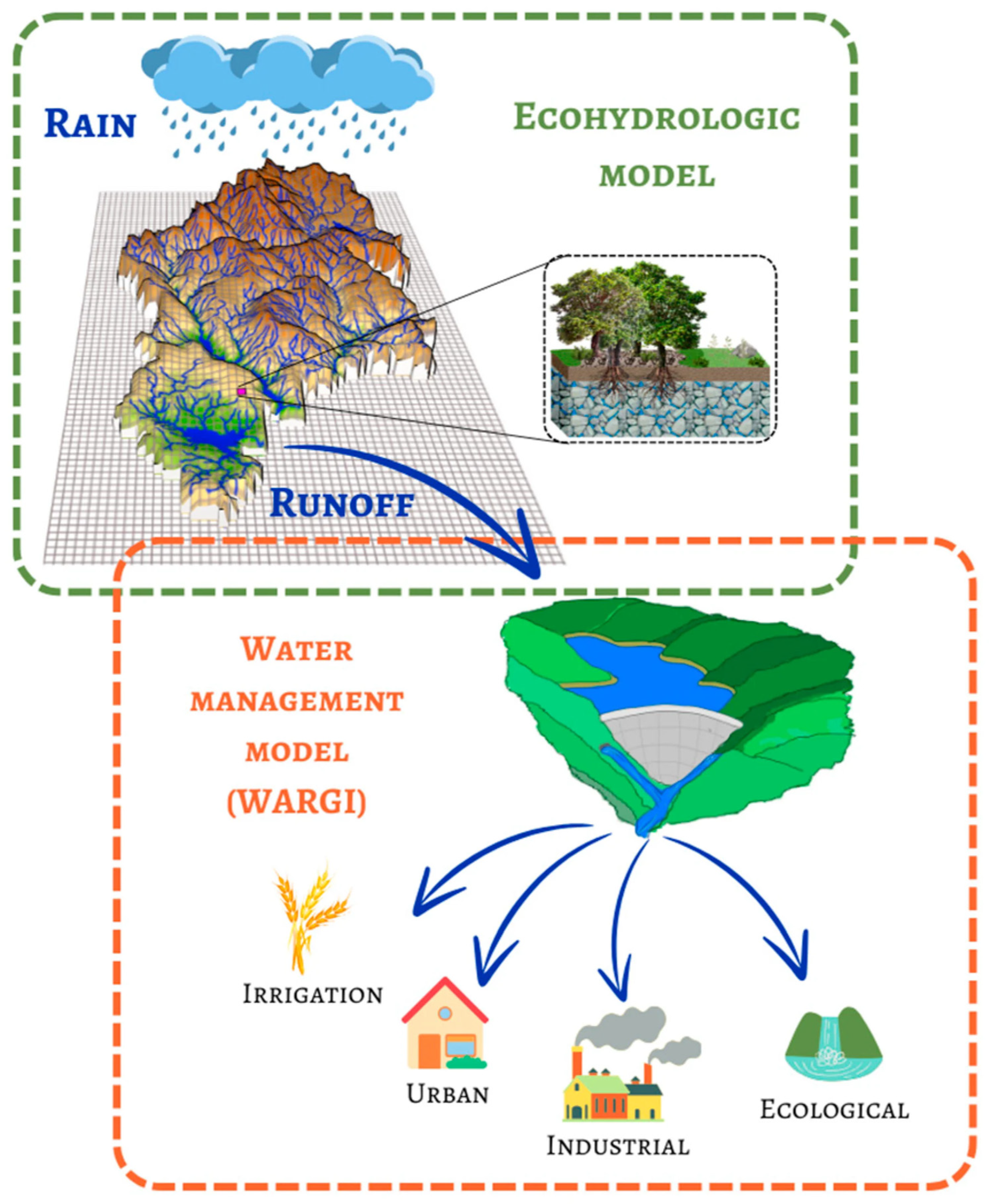
The effects of climate variability on reservoir performance can be evaluated using coupled ecohydrological and management modeling frameworks, for example, by integrating watershed-scale hydrological models such as the Soil and Water Assessment Tool (SWAT) or the Variable Infiltration Capacity (VIC) model with reservoir operation models including the Hydrologic Engineering Center–Reservoir System Simulation (HEC-ResSim) or RiverWare, thereby jointly simulating inflows, ecological responses, and operational decisions under alternative climate scenarios. These panels illustrate how climate-driven runoff changes interpret reservoir storage and service reliability.
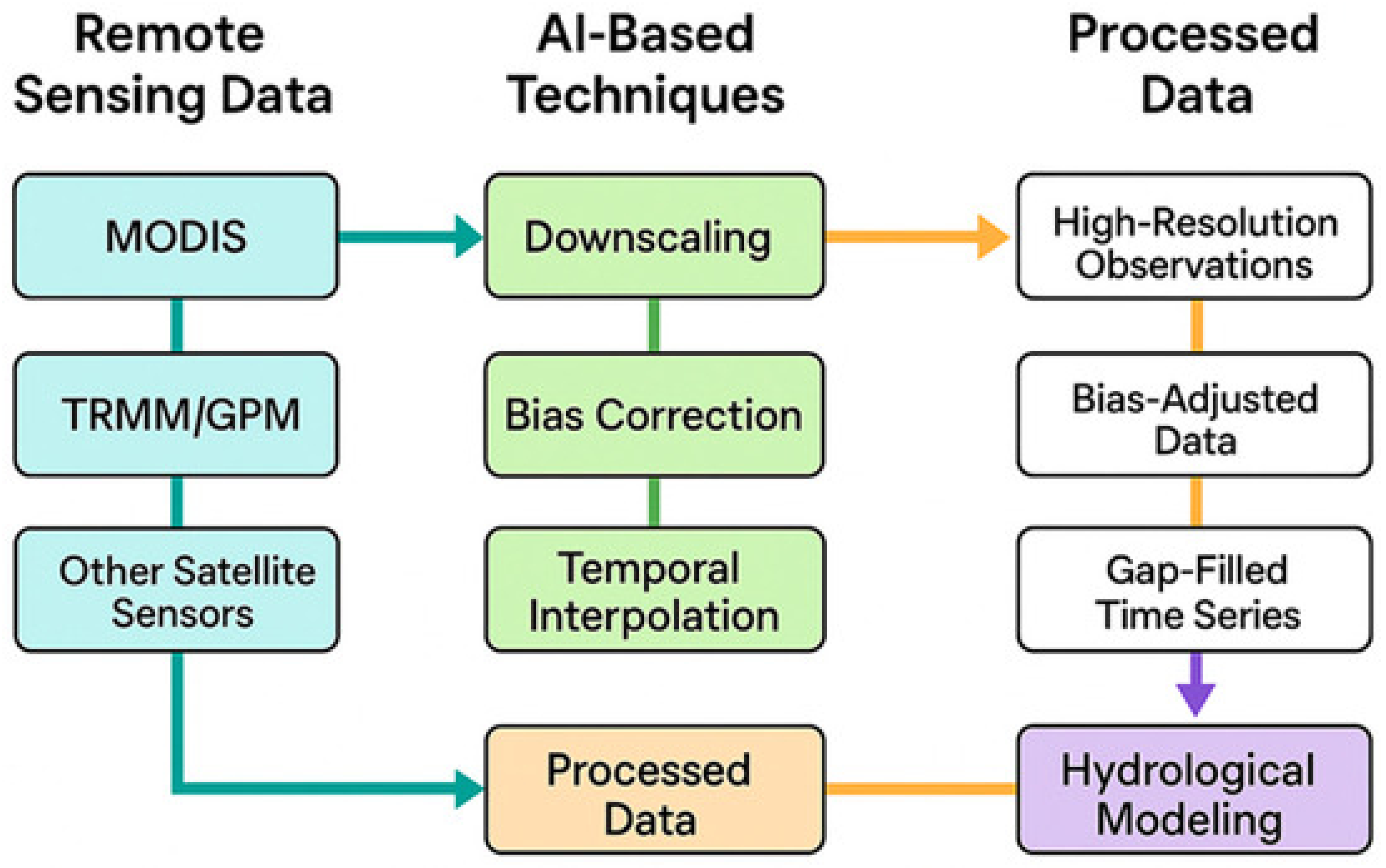
An example of the application of a coupled ecohydrological–management modeling framework is the impact of low snow accumulation in mountain catchments and shifts in melting seasons, which alter river flow timing and reduce summer base flows critical for irrigation and hydropower production [6]. Unpredictable precipitation further increases the risk of flash floods in urban and rural water systems while reducing aquifer recharge, thereby threatening groundwater security [24]. Integrating artificial intelligence (AI) and advanced modeling techniques enhances the predictive capabilities of such complex systems [25]. AI refers specifically to data-driven machine learning and deep learning approaches (e.g., artificial neural networks and related architectures), which learn nonlinear relationships from large observational and remote sensing datasets, rather than to purely mathematical or deterministic models. The AI-based models enhance the simulation of the streamflow and groundwater dynamics to offer more credible estimations of system conditions and short-term forecasts that directly operate the reservoir, flood preparedness, and water allocation choices [26]. Indicatively, AI has enhanced the utilization of satellite-based hydrometeorological information on streamflow and groundwater prediction of ungauged or data-sparse basins by enhancing the quality, precision, and retention of remote sensing outputs. AI is primarily applied as a data enhancement and preprocessing tool, rather than as a stand-alone predictor, acknowledging the limited availability of in situ training data in such basins. Deep learning algorithms can predict the spatial down-sampling and bias of the precipitation and soil moisture projections with the topographic and land-surface characteristics and machine learning processes extrapolating the time gaps to produce coherent time sequences [27]. The improved quality of inputs through these AI-based preprocessing and forecast advances provides better inputs to hydrological and ecohydrological models, thereby improving the quality of management-relevant outputs including inflow predictions, drought signals, and lead times of floods, which the management uses in operational decisions and long-term water resource planning [28]. Figure 3 illustrates the schematic of AI-enhanced preprocessing of satellite data for hydrological modeling, highlighting how high-quality inputs support reliable predictions and actionable decision-making in a coupled ecohydrological–management context.
Nevertheless, important research gaps remain, as many hydrological models have limited capability to represent nonlinear hydrological processes, coupled land-use and climate change impacts, and dynamic feedbacks arising from human water-use decisions. These restrictions underline the need for advanced approaches and models that would take into consideration a range of different scenarios and parameters to improve the precision of hydrological performance [29]. In addition, the findings emphasize the importance of socio-economic and environmental strategies on water resources management to mitigate the adverse effects of climate change. This includes optimizing reservoir activities and modifying the strategy of managing extreme hydrological activities in an attempt to enhance the sustainability of water resources [26]. These have significant implications for the formulation of integrated, adaptive, and climate-resilient water management strategies that will be resilient to future climatic and hydrological uncertainty [30]. Despite these advancements, there are still significant gaps in the research, especially in the capacity to forecast and comprehend the joint impacts of climate change and land-use change on water resources. It requires stronger and flexible models to capture these dynamic processes and their long-term impacts on water availability and quality [29].

2.2. Water Scarcity and Stress: Socio-Economic and Transboundary Drivers

Water scarcity is one of the most pressing issues of contemporary water resources management because this factor occurs when the demand for water is too close or exceeds the supply amount, and the situation is characterized by the appearance of water stress and, in the most extreme cases, water crisis. From a hydrological perspective, scarcity reflects limitations in both blue water (surface water and groundwater available for abstraction) and green water (soil moisture available for rainfed agriculture and ecosystems), particularly under climate variability and change. This imbalance is further increased due to regional, temporal, and sectoral variability, and there are some very strong effects in the various geographies and water-use sectors [31]. In these areas, it is possible to identify several typical causes of water crises, such as large-scale agricultural water abstractions, accelerated population increase, industrial water needs, insufficient infrastructure development, and governmental issues.
As an example, the North Slope of the Tianshan Mountains in China faces a lack as irrigation requirements are on the rise, but some are replenished by the rain and glacier runoffs [32]. Such systems highlight the coupled role of green water from precipitation and blue water from meltwater and rivers in sustaining agricultural production. Likewise, in South Africa, water scarcity is exacerbated by population increase and pressure and water pollution, which forces water to be utilized more efficiently with alternative supply systems to prevent allocation crises [33]. Stress in megalopolises leads to water scarcity due to residential and industrial water consumption and inadequate infrastructure in the world [34]. To overcome them, better functioning and coordination of the water management tools (including rules of allocation, price mechanisms, monitoring) and redistribution of water between lower-value and higher-value water in the sectors are needed, considering social and environmental limitations [33,35,36].
These instances explain that although there are local distinctions, the real drivers are, in most cases, similar: agricultural over withdrawal, inadequate infrastructure, inequality in policy applications, and socio-economic strains. Climate change further alters the balance between blue and green water availability, amplifying vulnerability in arid and semi-arid regions. In addition, governance issues are often exacerbated by water shortages and water stress in transboundary basins. The overlapping and even opposing national policies, competing water rights and imbalance in power and access to data on shared river systems may escalate scarcity and exposure to conflict [34]. Under these circumstances, poor coordination and lack of cooperative structures convert hydrological stress to a compound socio-political risk, highlighting governance as a driving factor and not a problem. The ability of economies to be resistant to a water shortage also differs significantly. The physical water availability is not the sole determinant of hydro-economic vulnerability; economic structure, resilience of infrastructure, and inclusion into the global supply chains are also determinants of vulnerability. As an illustration, in some of the fast-developing Chinese cities, hydro-economic risk is high with water shortage, which portrays how urban demand, industrial reliance, and local supplies interrelate and lead to water stress. These examples show that a combination of management issues that deal with physical scarcity and socio-economic exposure is significant. Water scarcity has a direct impact on agricultural production because the availability of water is the measure of the capacity to meet increased food demands. Therefore, the drivers of scarcity act on hydrological, socio-economic, and institutional levels, and all these aspects are interconnected and, therefore, should be managed as a whole [31,37,38]. Table 1 summarizes recent research on hotspots of arid/agricultural regions, transboundary basins, and regional water-stress zones highlighting how growing demand, shrinking supply, and institutional/regional inequalities collectively drive water stress. By synthesizing these regional examples, the review identifies generalizable patterns and drivers that can inform both context-specific and broader water management strategies.

2.3. Pollution and Quality Degradation

Conventional pollutants, including nutrients (nitrogen and phosphorus), organic matter, as the biochemical oxygen demand (BOD) and chemical oxygen demand (COD), as the measure of the total oxidizable organic load (biodegradable and non-biodegradable fractions), and microbial contamination, which are the main limitations of drinking water supply, ecosystem health, and wastewater reuse on the global scale, traditionally lead to the degradation of water quality. Overloading of nutrients due to agriculture and urban effluents remains the most common cause of eutrophication, hypoxia, and harmful algal proliferation in the surface waters, and poor sanitary quality, measured in coliform bacteria and other pathologists, is a direct threat to the health of people. These old water quality problems are not replaced by emerging contaminants, including per- and polyfluoroalkyl substances (PFASs), pharmaceuticals, and microplastics; rather, they introduce additional and increasingly problematic issues (e.g., long-term effects, bioaccumulation, and chronic exposure). On the same note, dissolved levels of metals are usually not of significant concern, except in cases like arsenic or iron in groundwater; however, their importance is again through trophic chain bioaccumulation and biomagnification, and thus, the fish of higher trophic levels become the predominant target of human health. Based on this, a comprehensive evaluation of water quality deterioration should entail classic pollutants that determine the usability of water and new pollutants that make the treatment process more difficult to manage and therefore riskier [45,46].
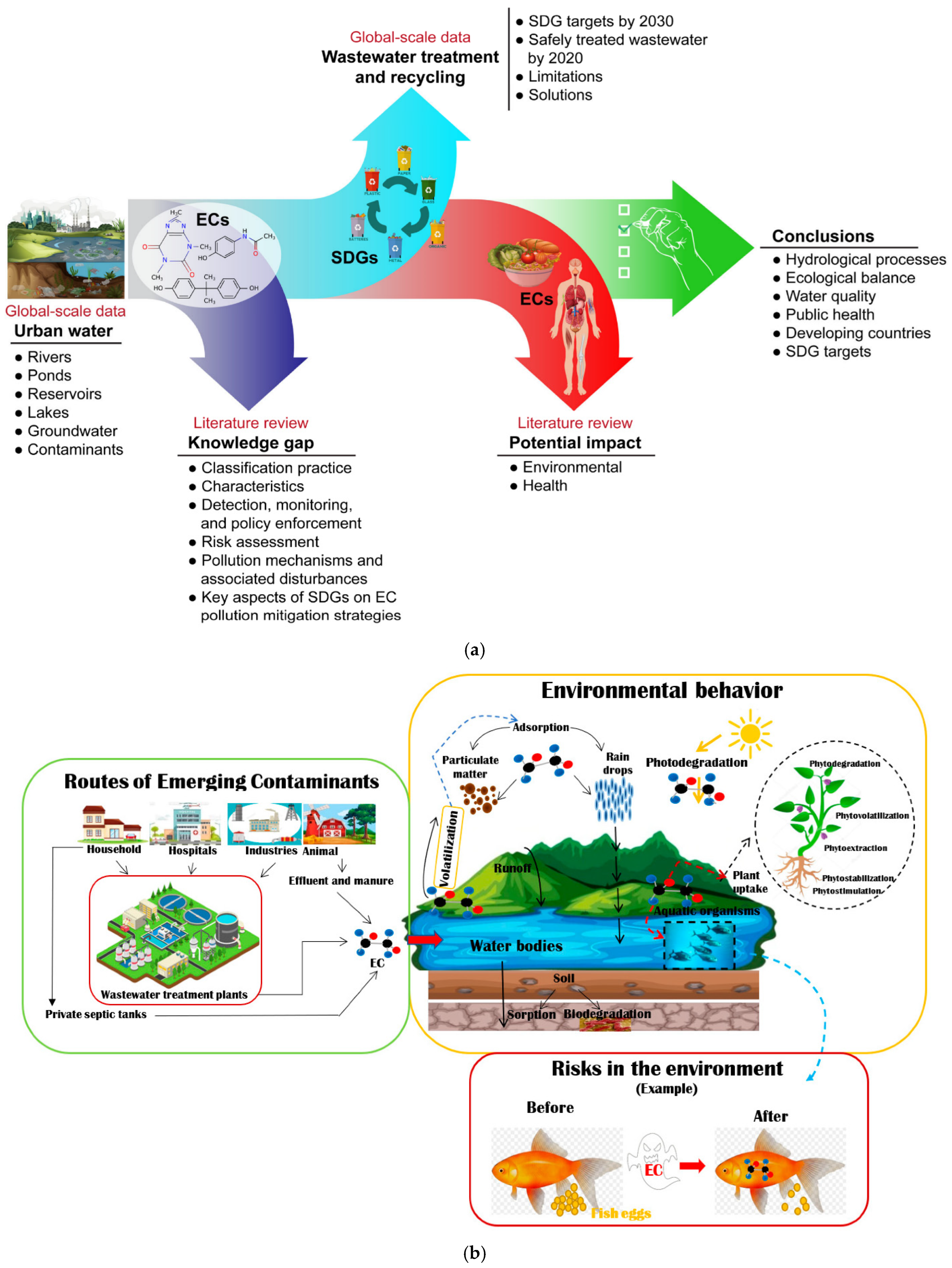
A growing number of pollutants, including PFAS, microplastics, and pharmaceuticals, are contributing significantly to the deterioration of water quality. However, their relative importance varies depending on persistence, bioaccumulation, toxicity, and prevalence. For instance, PFAS are highly persistent and widely distributed, posing long-term ecological and human health risks, whereas certain pharmaceuticals, though more localized, can disrupt aquatic organisms even at low concentrations. Microplastics act as vectors for other pollutants and influence trophic transfer across ecosystems, making them a priority in certain contexts. Stormwater runoff is also important as an avenue of transportation of these contaminants, which are currently being widely identified as found in both surface and ground water [45]. Figure 4 presents an integrated image of the sources and respective environmental impact of emerging contaminants, with respect to focusing on the contaminants that pose the greatest risk to environment and human well-being. As shown in Figure 4a, domestic wastewater and industrial effluents are the most significant point sources, with constant inflows of pharmaceuticals, personal care products, industrial chemicals, and PFAS. On the other hand, agricultural runoff is non-point, diffuse, and sporadic, introducing pesticides and veterinary drugs, nutrients, and microplastics into surface and groundwater. These pollutants are transported in various ways, namely surface runoff, subsurface leaching, and atmospheric deposition, which characterizes their maintenance and spatial distribution in the aquatic systems [46]. Figure 4b illustrates the subsequent ecological and human health impacts, as it dwells upon the mechanisms of bioaccumulation in aquatic biota, trophic transfer, and degradation of other valuable ecosystem functions including nutrient control and water purification. Collectively, it demonstrates the complexity and interdependence of water pollution by directly relating different sources of contaminants, different pathways of transportation (surface runoff, under surface leaching, and atmospheric deposition), and ecological and human health impacts downstream. Such interconnection becomes even more important since sources, routes, and consequences are interrelated and, therefore, require combined treatment technologies and integrated management systems to ensure the reduction in risks [47].
The agricultural runoffs, industrial effluents, and untreated municipal water sewage of the cities are significant sources of water quality degradation. These sources carry with them pollutants like pharmaceuticals, personal care products, as well as heavy metals into both the terrestrial and aquatic environments, which are very dangerous to the health of the human and the integrity of the ecosystem [48,49]. In particular, untreated wastewater and municipal effluents can be taken as the major sources of these contaminants because the conventional wastewater treatment plants do not have the technology to fully detoxify a great number of pharmaceuticals and personal care products and other emergent compounds [49]. The processes of ecosystem services like water purification, climate regulation, and habitat support are likely to be disrupted by such pollutants, resulting in an unwanted environmental condition. In one case, an example of the unremovable pollutants and other chemicals present in the structures of rivers may surpass the level of environmental quality and become hazardous to aquatic life, making the management of water resources challenging [50]. These contaminants have serious health risks to human health. Drugs and beauty products that are categorized by the US Environmental Protection Agency as carcinogens and endocrine disruptors may spill into the drinking water sources, and they can make the general population develop specific health problems, including the widespread presence and proliferation of antibiotic-resistant bacteria in contaminated urban waters [51]. The occurrence of antibiotic resistance in such environments is now well documented rather than unexpected, reflecting long-term exposure to antibiotics and other selective agents. Moreover, the presence of emerging contaminants can negatively influence public perception of drinking water quality, even when immediate health risks are limited [51,52]. Management strategies of these high-risk contaminants, including advanced nanofiltration or nano-adsorption treatment technology, must presently be given top priority in the criteria to reduce the worst threats on water quality, as these approaches can remove pathogenic microorganisms and resistant bacteria (nanofiltration) and mitigate the spread of antibiotic resistance by reducing antibiotics and other selective agents (nano-adsorption) [53]. Furthermore, better risk governance, which is aided by systematic analytical procedures and the incorporation of social interests, can be used to recognize and manage arising risks to water quality in their early stages [52]. These strategies are important in terms of delivering assurance that the quality of water is not affected and the environment and human health are not impacted by the consequences of pollution and deterioration of water quality.

2.4. Overextraction and Groundwater Depletion

Unsustainable groundwater abstraction is a common threat to water security in various regions of the world, which results in the creation of irreversible loss of groundwater storage, land sinking, and coastline and deltaic aquifer salinization. Agricultural irrigation is the main cause of this overextraction, as most of the groundwater abstractions in most parts of the world occur as a result of agricultural irrigation and way more than that of industry and domestic. The increased groundwater loss in different locations has been reported by both satellite gravity measurements and ground research and has identified the spatial dimension of the losses and the long-term dimension of the aquifer recovery after the storage has been lost [54,55,56]. Another frequent cause of saltwater intrusion in coastal and deltaic regions is over-pumping, which further degrades the quality of groundwater along kilometers of coastal land, destroying drinking water resources, irrigation systems, and soils. In order to solve these interdependent problems, taking into consideration the magnitude and longevity of groundwater shrinkage caused by agricultural activities, the analysis incorporates groundwater shrinkage effects, modeling instruments, susceptibility measures, and control plans into a logical analytic structure that connects perceived shrinkage to risk examination and control measures.
As a good example, the Mekong Delta in Vietnam: the extraction together with the alteration of river discharge and sea-level/tidal processes has enhanced the salinity intrusion and progression of the saline fronts deep into the land, which have measurable impacts on the quality of groundwater and agricultural production [57]. This framework can be used to combine observational data and numerical modeling to have an integrated perspective on both the physical processes that contribute to depletion and the efficiency of possible mitigation strategies. Algorithms and tools based on indices are popular in gauging the vulnerability of groundwater and in aiding groundwater management and planning choices. Physical numerical models like SEAWAT that model the flow and solute transport of variable density groundwater allow the analysis of scenarios of saltwater intrusion based on variable recharge, pumping stresses, and sea-level rise. In contrast, vulnerability indices such as GALDIT (groundwater occurrence, aquifer hydraulic conductivity, level of groundwater, distance from the shoreline, impact of existing barriers, and thickness of the aquifer) based on groundwater occurrence, aquifer hydraulic conductivity, groundwater level, distance from the coastline, impact of barriers, and aquifer thickness provide a screening-level spatial assessment to identify areas most susceptible to intrusion. These methods are complementary when used together with field monitoring data (e.g., groundwater levels and salinity): vulnerability indices are used to prioritize and design monitoring, and numerical models are used to quantify processes and analyze management scenarios, informing evidence-based decisions in groundwater management [58]. Recent studies have not only combined SEAWAT with GALDIT to map local time-varying vulnerability but also suggested variants of GALDIT to be more sensitive to local hydrogeological complexity [59]. Table 2 lists the most popular modeling tools, vulnerability indices, and monitoring methods that are usually used to assess groundwater overextraction and coastal salinization. Together, these modeling and index-based tools form an integrated approach that connects physical impacts to risk assessment and management decision-making.
Mitigation and adaptation strategies cut across engineering, nature-based, and governance measures. Mitigation and adaptation strategies span engineering, nature-based, and governance measures. Managed Aquifer Recharge (MAR) implemented through recharge basins, infiltration galleries, or induced riverbank filtration has been shown to be effective in restoring groundwater levels and buffering seasonal deficits under site-specific conditions, particularly in aquifers with suitable hydraulic properties, adequate storage capacity, and compatible recharge water quality. Coastal and alluvial evidence shows that MAR has the potential to reduce groundwater depletion and saltwater intrusion when recharge rates, clogging potential, and geochemical compatibility are well controlled and when MAR is incorporated into monitoring and adaptive management frameworks. By integrating MAR with vulnerability assessments and modeling outputs, interventions can be prioritized and designed for maximum effectiveness.
General reviews as well as regional case studies show that MAR is effective yet varies in performance and requires specific design and monitoring programs [58,71]. In certain settings, physical barriers (e.g., cutoff walls and subsurface dams) and controlled pumping plans have the potential to slow saltwater intrusion, but such measures are costly, technologically challenging, and location-specific; modeling experiments are necessary to determine how effective they are likely to be before taking action [72]. In addition to engineering solutions, there should be sustainable groundwater management. Policies that tie extraction limits to estimates of recharge encourage efficient water utilization in irrigation, and encourage a reduction in leakage in urban systems, decrease pressure on aquifers [73,74]. Notably, climate change exacerbates the risk of groundwater, as it slows down natural recharge and changes freshwater–saltwater ratios, and thus, climate projections need to be considered in groundwater management and land-use planning. The integrated framework demonstrates that combining monitoring, modeling, indices, and management interventions is essential for designing effective strategies that reverse depletion trends and protect aquifer quality. MAR in combination with demand management, enhanced monitoring (with GRACE and remote sensing), and basin-scale coordination are the most promising solutions to reverse the depletion trend and ensure the quality of the aquifer [75,76].

2.5. Governance, Policy, and Institutional Gaps

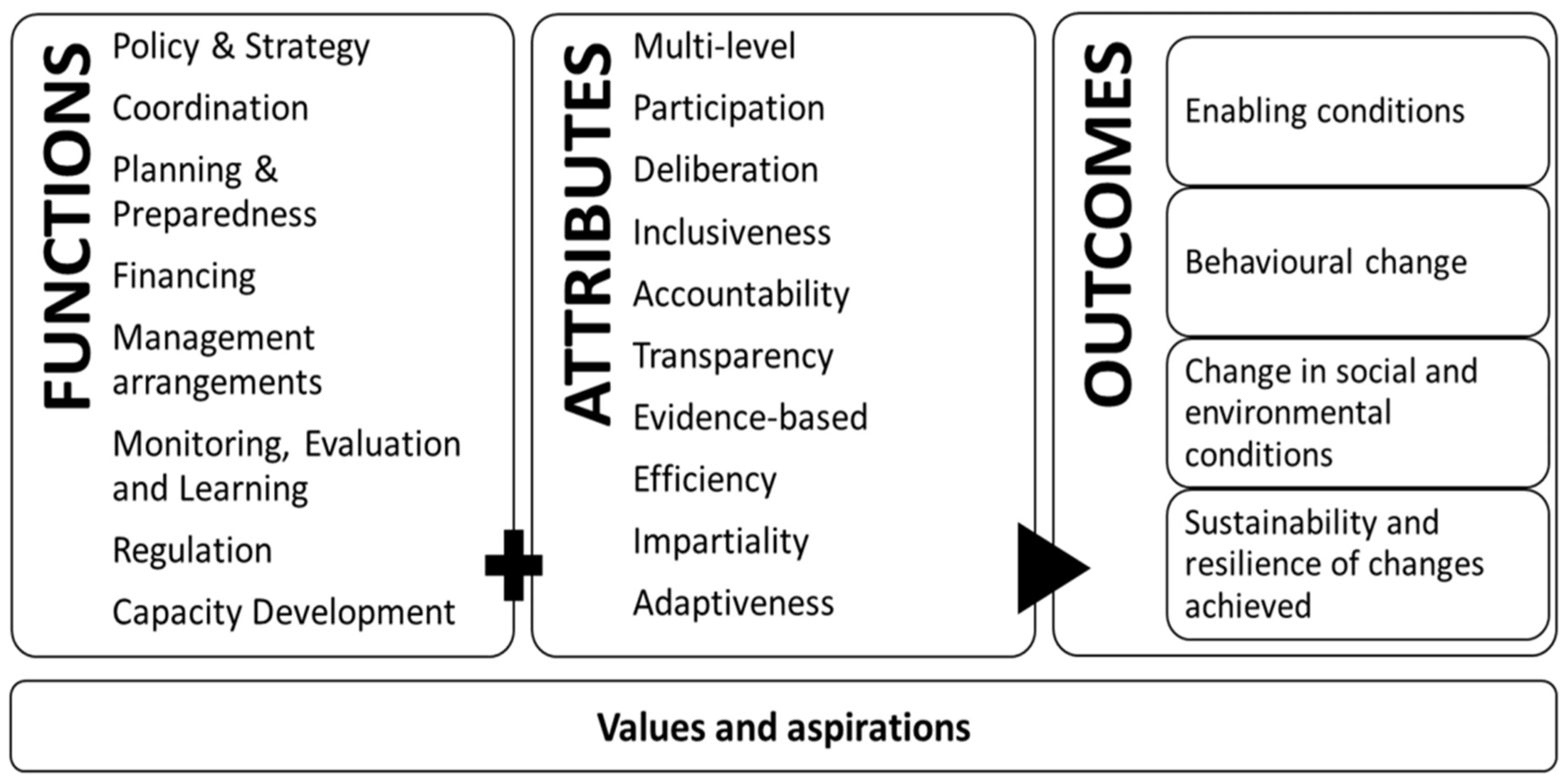
One of the issues in water resources management revolves around the issue of governance of competing water uses, whereby various sectors and social groups, including agriculture, domestic supply, industry, ecosystems, and energy, tend to compete over the same constrained resource. Such conflicts do not only occur because of physical scarcity but also due to variations in priorities, rights of access, institutional power, and decision-making. Good governance systems are thus important to make trade-offs, distribute water fairly, and reconcile between economic growth and social or environmental goals. These issues become more difficult in transboundary and multi-jurisdictional environments, where shared water resources are governed by various legal, institutional, and policy frameworks, and these issues have become a primary management issue because of the need to coordinate and resolve conflicts. Against this context, governance, policy, and institutional gaps play a very crucial role in the manner in which water-related conflicts are resolved and how sustainable water management systems can be established. It is under this background that the role of governance, policy, and institutional gaps is very instrumental in the way water-related conflicts are solved and how sustainable water management systems can be developed. Good water resource management extends beyond technical solutions to also include good governance structures, policies, and institutional integrity. This is because current challenges in the management of water resources, especially in the areas of governance, policy, and institutional levels, are related to the weaknesses in the core governance functions such as fragmented management processes, ineffective transboundary coordination, and ineffective or absent regulatory processes [77]. Some of this complexity is due to the fact that institutional arrangements are not aligned with the mobilized resources to bring about water policies. Such incompatibilities are usually most visible at the stage of implementation, where high policy aims are sabotaged by capacity, coordination, or resource limitations. The meso-institutions act as the coordinating interface when policies and regulations at the macro-level are converted into local practices. Nevertheless, their presence cannot be considered enough: the absence of explicit mandates, the inability to coordinate, and the lack of or insufficient authority to enforce mandates of meso-institutions undermine the vertical integration of policy and directly lead to implementation failures and disjointed water management performance. Such gaps at various levels of governance are directly converted into measurable water management consequences, including inefficiencies in the delivery of services, unequal distribution of resources, and low resilience to climate stressors. These gaps have been attempted to be addressed by the Objectives of the OECD Principles on Water Governance, which in reality have had numerous hitches [78]. The other such illustration of the complexity of water governance is the diversification of the system of governance at the urban level. Such systems need policies that will facilitate nature-based solutions, including wetland restoration and watershed conservation, to facilitate integrated water resources management, which would align water use within sectors without compromising ecological sustainability [79]. However, local stresses such as excessive land use and economic operations require adaptive administrative processes, which in the majority of cases are incompatible at the level of governance. The misalignment of local, urban, and national levels that follow minimizes the efficiency of the policies and prevents the accomplishment of sustainable water results. These issues might be mediated with the help of decision-support tools and participatory methods that would offer the integration of solutions and be specific to the needs of each city [80]. Transboundary cooperation is particularly essential in regions like Oklahoma, USA, where the government is typified by two reasons: overlapping jurisdictions and discontinuous authorities [17]. A lack of remedy for these gaps in governance may result in adverse consequences at different levels, such as antagonistic access to resources, inefficient distribution, and low adaptability to climate variability. This breakdown reduces the effectiveness of the policy and the sustainability of natural resource utilization, which is obtaining increasing importance in the environment of climate variability and the forecasted rise in extreme weather conditions. Figure 5 shows a water governance analytical framework which demonstrates that gaps in governance functions and attributes are expressed in the form of institutional and policy failures that eventually impact water management outcomes, sustainability, and resilience at local, urban, and transboundary levels [81].
Adaptive properties in the governance systems, though, can be beneficial in boosting resilience, and thus, the discovery and strengthening of these properties might provide avenues to improved policy systems [78,81]. The comparative analysis of water policies in the USA and Africa reveals that there exist differences in the institutional framework and the need to develop a context-specific solution, which could help to address the local problems. There is a significant difference in the institutional and governance capacities to manage water in different regions. In the United States, water governance structures and infrastructure systems are reasonably developed, and in most African situations, water management is limited by a lack of capacity to develop institutions, a lack of infrastructure, and increased vulnerability to climate variability and water shortages and scarcity. This analogy brings out the role of the gap in governance in the difference in water management performance and resilience outcomes across regions [33,82].
Therefore, to create resilient water management practices, the process of governance and stakeholder engagement has to be improved [83]. To govern water well, the idea of IWRM must be deployed, especially with regard to fulfilling Sustainable Development Goal (SDG) 6. Implementation and successful operationalization of IWRM, however, is hampered in most situations because of institutional capacities, resource depletion by implementing institutions, as well as a lack of knowledge of the IWRM principles and processes. The introduction and feasibility of IWRM can be revived by a refreshed focus on the cross-cultural methods and learning integration [84]. Lastly, individual decision-making and collective water management goals cannot be easily aligned at the expense of high transaction costs and need institutional changes and collective action [85]. The interventions will deal with governance gaps at various levels and enhance coordination, which can directly enhance water management outcomes, sustainability, and resilience to climate and anthropogenic stresses.

3. Innovations and Emerging Solutions

The ecological solutions, policy, and technology should be combined in the sustainable management of water. Currently, intelligent development toward energy-efficient and adaptable water infrastructure involves a blend of the use of membrane technologies, nanomaterials, and the application of AI-based systems that enhance the real-time monitoring, prediction, and decision-making of water systems [86]. Nature-based circular water practices and solutions promote the restoration of ecosystems, wastewater reuse, and climate resiliency. Fair management is ensured by improvement in governance, engagement of the stakeholders, and socio-hydrological clarity. A combination of these strategies will be a multidimensional approach to water and environmental sustainability over the long term [19].

3.1. Advanced Water Treatment and Process Technologies

The current trends in water treatment technologies have revolutionized modern-day water management through efficiency in the process, the ability to eliminate contaminants, and improved energy performance, thereby promoting circular and sustainable water management. The modern treatment systems are increasingly using membrane-based systems, nanomaterial-based enhanced processes, and hybrid systems, with membrane technologies forming the core physical separation step, to counter emerging contaminants and water shortages.
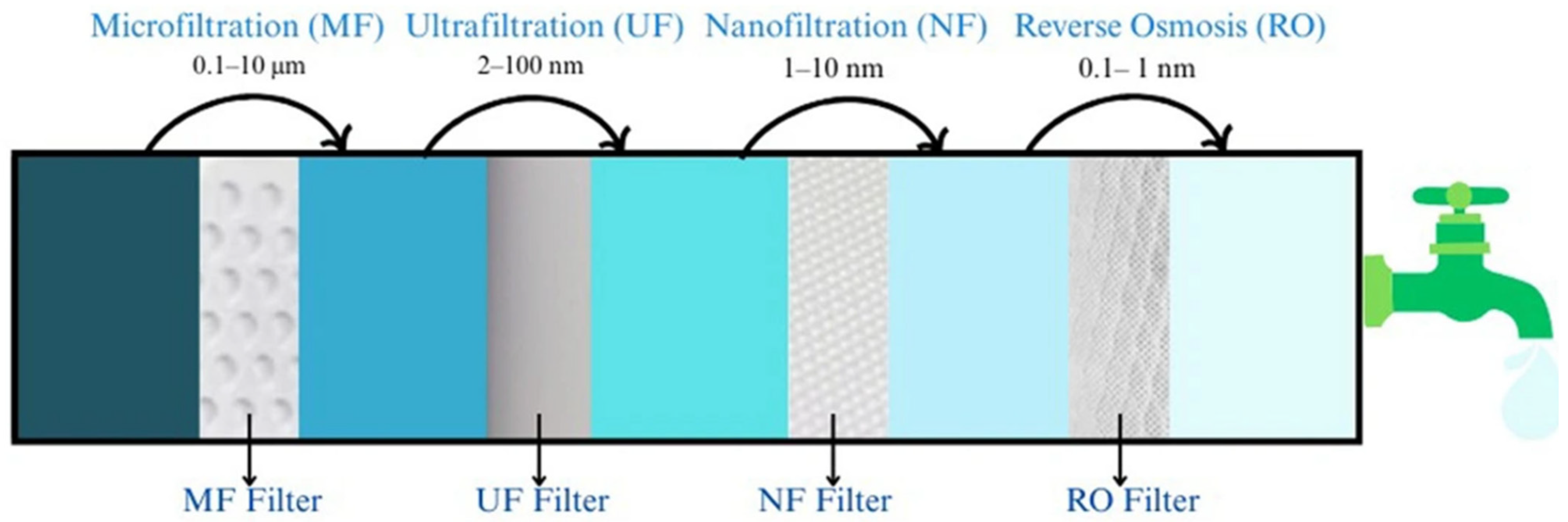
The fundamental physical treatment processes that enable the separation and removal of contaminants in advanced water and wastewater treatment systems are membrane technologies and nanomaterials. Pressure-driven membrane processes as well as osmotically driven systems employ size exclusion, charge effects, and diffusion-based mechanisms to remove solids, pathogens, salts, and diverse organic and inorganic pollutants [87,88]. One of the most efficient and scalable approaches for treating diverse water impurities remains membrane-based technology, such as microfiltration (MF), ultrafiltration (UF), nanofiltration (NF), and reverse osmosis (RO) [89]. These technologies are being utilized with proven effectiveness at both municipal and industrial scales. Figure 6 illustrates the processes of membrane filtration technologies working together when all the filtration is applied in a sequence of decreasing pore sizes of the filter.
Recent trends have been on energy-efficient and fouling-resistant membranes which enhance flux recovery and lifespan of operation. As an example, the selectivity and antifouling properties of thin-film composite (TFC) membranes have been improved by the introduction of hydrophilic polymers or nanofillers, including graphene oxide and titanium dioxide nanoparticles [90]. Despite their technical maturity and performance benefits, the widespread implementation of advanced membrane technologies, particularly RO, remains constrained by high capital investment, energy demand, and operational and maintenance costs, which often limit adoption to centralized facilities and economically favorable contexts.
Hybrid membrane systems integrating the biological processes (e.g., membrane bioreactors, MBRs) with sophisticated oxidation processes (AOPs) have demonstrated strong potential in the elimination of pharmaceuticals, endocrine-disrupting compounds, and microplastics [91,92]. These hybrid systems represent a mid-level technological maturity, balancing high treatment performance with moderate operational complexity, making them suitable for advanced municipal and hospital wastewater treatment. Also, the solar-assisted desalination and pressure-retarded osmosis (PRO) systems offer sustainable brackish or salty water treatment to reduce energy reliance and carbon dioxide emissions [93,94]. Although these technologies show strong potential for energy recovery and decarbonization, their large-scale implementation remains context-dependent and is currently more applicable in pilot-scale or region-specific deployments. Table 3 summarizes all the membrane-based technologies applied in water treatment, their mechanisms, and applications.
Nanotechnology has increasingly been applied in water purification, especially for enhancing the adsorption and degradation of persistent and difficult-to-remove pollutants [95,96]. Compared with conventional membranes, nanomaterials offer superior selectivity and reactivity but are generally less mature in terms of regulatory approval, long-term stability, and large-scale commercialization. Nanomaterials engineered in the form of carbon nanotubes, MXenes, and metal–organic frameworks (MOFs) are characterized by high surface area, adjustable porosity, and reactivity. Recent studies have demonstrated that functionalized nanocomposites are being used in the photocatalytic degradation of organic contaminants under solar irradiation, which allows the simultaneous disinfection and detoxification of contaminants [96,97]. In addition, biomimetic nanomaterials such as chitosan-based nanocomposites and green-synthesized nanoparticles are under development to meet the requirements of sustainability and reduce secondary pollution [98,99]. The introduction of nanomaterials in the existing membrane matrices not only enhances permeability but also allows selective removal of ions, which is useful in the zero-liquid-discharge (ZLD) process of industrial wastewater management [100].
Emerging contaminants can be effectively removed using advanced membrane filtration, nanomaterial-enhanced adsorbents, and hybrid treatment systems; however, their performance and operational costs are highly context-dependent. While reported removal efficiencies are often high under optimized laboratory and pilot-scale conditions, full-scale implementation costs vary substantially with influent composition, target contaminant classes, energy demand, membrane fouling rates, adsorbent regeneration requirements, and system integration constraints [101,102]. These reasons underscore the significance of site-specific design and techno-economic assessment in the process of transfer of new advanced treatment technologies between the laboratory and the real world.
Table 3. Recent advancements in membrane technologies for sustainable water treatment and desalination.
Membrane TypeModification or TechnologyKey Findings/AdvantagesApplicationReferences
Thin-Film Composite (TFC) MembraneGraphene oxide (GO) and TiO2 nanofiller incorporationEnhanced antifouling resistance, higher permeability, improved salt rejectionUsed for brackish water desalination; 15–20% higher flux recovery[103,104]
Nanofiltration (NF) MembraneHydrophilic polymer coating (e.g., PEG, PVP)Reduced fouling, increased hydrophilicityIndustrial wastewater reuse; extended operational lifespan[105,106]
Membrane Bioreactor (MBR) + Advanced Oxidation Process (AOP) HybridIntegration with photocatalytic TiO2 or UV-AOPHigh removal efficiency of pharmaceuticals and EDCs (>95%)Municipal and hospital wastewater treatment[107]
Solar-Assisted Reverse Osmosis (RO)Coupled with solar photovoltaic powerEnergy-efficient desalination, reduced CO2 emissionsSmall-scale desalination in arid regions[108,109]
Pressure-Retarded Osmosis (PRO)Hybrid RO–PRO configurationSimultaneous desalination and energy recoveryUsed in seawater–wastewater gradient systems[110,111,112]

3.2. Digital and Smart Water Management Systems

Unlike physical treatment technologies, digital and data-driven water management systems function as enabling layers that enhance monitoring resolution, predictive capability, and operational efficiency rather than directly removing contaminants. Artificial intelligence (AI), machine learning (ML), Internet of Things (IoT) sensing, digital twins, and decision-support systems (DSSs) collectively support adaptive control, risk anticipation, and efficient allocation across water treatment, distribution, and basin-scale management. These technologies are very useful in transfers between space scales; but still, their usefulness and scalability are heavily reliant on the availability of data, maturity of infrastructure, governance abilities, and socio-economic conditions of an area.
The sensor networks based on IoT offer real-time monitoring of important operational and hydrological parameters, such as transmembrane pressure, flux, indicators of fouling, energy consumption, and the quality of effluent. The streams of data produced by such systems can be used in detecting incidents, monitoring systems, leakage detection, and early-warning systems on both facility and network levels [113,114,115,116,117]. They have been shown to be effective in centralized city utilities and factory networks [118,119,120], but scaling issues have been seen in less-connected regions, either due to low connectivity, maintenance, or institutional support.
Data analytics obtained based on AI and ML stimulate the digitalization of the water industry, allowing predictive models and decision support at the utility and basin levels, and carry out fully automatic control mainly in pilot projects or with highly supervised processes [121]. These algorithms take advantage of multi-source data (i.e., meteorological, streamflow, and groundwater data) to detect nonlinear system behavior, forecast the fouling formation, optimize operating conditions (e.g., pressure, recovery rate, and cleaning cycles), as well as minimize energy requirements and chemical consumption over comparatively simpler rule-based control methods [122]. Empirical modeling, convolutional neural networks, and other data-driven models like the long short-term memory architecture have been shown to have better predictive power in streamflow forecasts and groundwater-level estimation and contaminant transport modeling compared to traditional empirical techniques [123,124,125,126].
Digital twins are used as a complement to data-driven strategies to enable the creation of dynamic virtual water system representations, which combine physics-based process models with real-time sensor data. With the help of these platforms, the scenario analysis, predictive maintenance, and optimization of the system under varying influents, demand, and climatic conditions are made possible [127,128]. Though digital twins and AI-based decision-support systems are being integrated at pilot and utility levels to support a variety of applications, including operational optimization and predictive maintenance, their prevalence is yet to be achieved. The major limitations are data availability, interoperability with the existing control infrastructures, and institutional and technical capacity, especially in resource-constrained environments.
Remote sensing with satellites supplements terrestrial IoT systems with spatially coherent data on precipitation, evapotranspiration, soil moisture, and surface water processes [129]. Integrated into AI-based models and digital twins, such datasets complement drought and flood early-warning systems and enhance the prediction of water distribution at the basin scale, especially in data-scarce areas [130,131]. Recent comparative studies suggest that ensemble AI-based forecasting structures utilizing the combined power of deep learning models, including long short-term memory networks and random forest ensembles, can enhance short-term flood prediction accuracy more than 30-fold compared to traditional physics-based hydrological models, including conceptual rainfall–runoff models and deterministic hydraulic simulations [132]. These benefits can be explained by the fact that data assimilation is better and that ensemble AI methods can help represent nonlinear hydrological responses in fast-varying conditions.
DSS combines IoT sensor data, satellite-derived observations, AI-oriented predictions, and simulation of a digital twin to aid the planning and allocation of the dynamic water resource in the presence of uncertainty [133,134]. In such systems, real-time monitoring shows the state of systems in real time, whereas the models, based on AI analysis, reflect future scenarios and assess alternative working and allocation plans. The analytics of big data also help policymakers and operators find spatial and temporal trends in water distribution, evaluate management intervention in near real time, and increase transparency and governance [135].
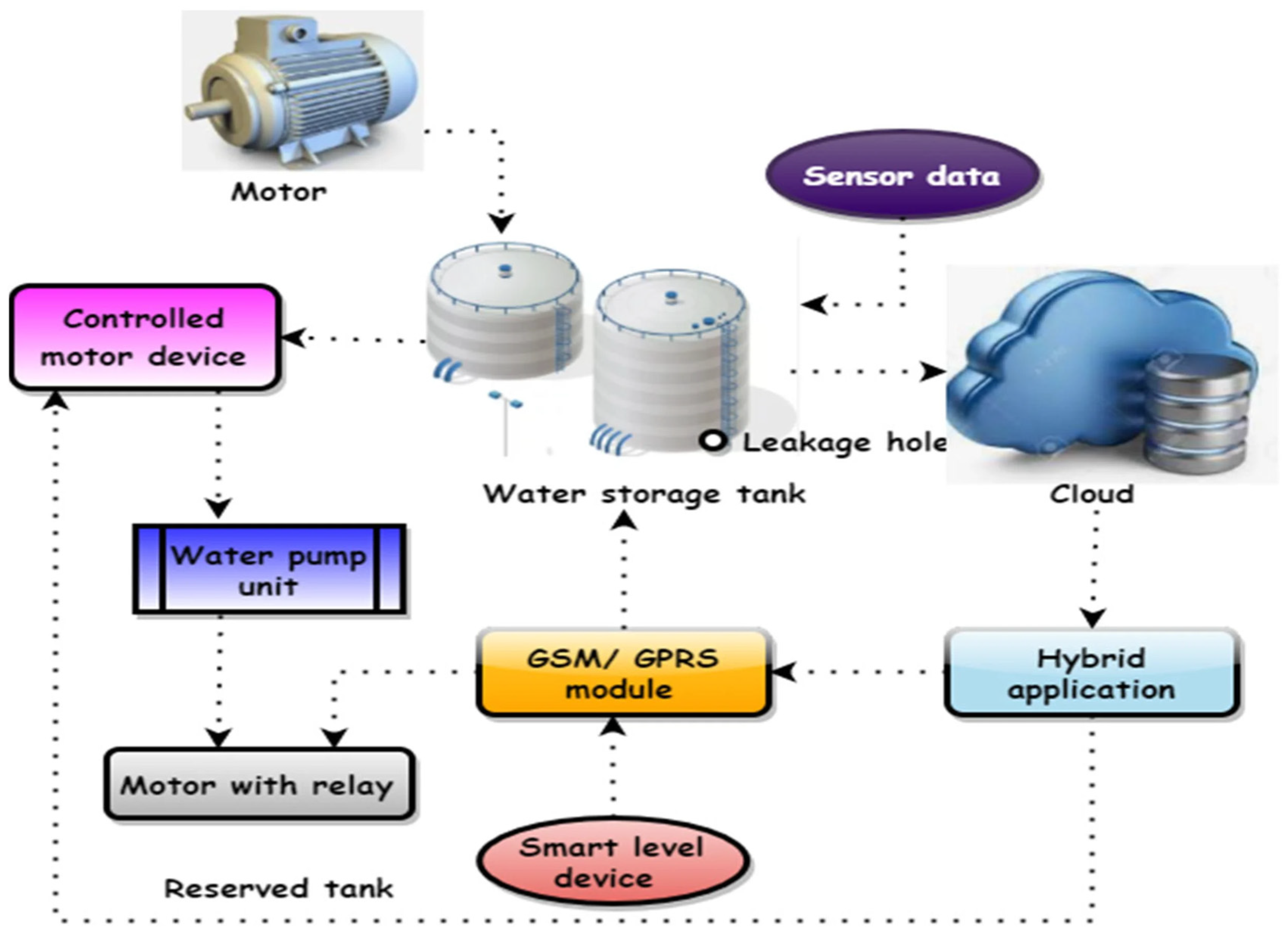
On a smaller spatial scale, such as households and buildings, smart water systems integrating level sensors using the IoT, direct digital controllers (DDCs), autonomous motor-control devices, and smart monitoring platforms allow efficient water utilization with feedback in real-time and autonomous operation [136,137,138]. Figure 7 demonstrates an IoT-based smart water management system where the level sensors, direct digital controller (DDC), and three-phase pump are combined with cloud-based communication and are linked to provide real-time monitoring and remote control of water storage and supply. The system illustrates sensor-based feedback, and remote access of users can be used to minimize overflow losses, optimize pump operation, and enhance water-use efficiency at household and building levels when infrastructure is controlled.
The role of digital and smart water management systems is as an enabling infrastructure that boosts the performance of superior treatment technologies, water reuse mechanisms, and integration of renewable energy in the desalination and water distribution systems [139]. These technologies help maintain adaptive, resource-saving, and climate-resilient water management by connecting monitoring, prediction, and control within the integrated cyber-physical structures in accordance with the goals of the circular economy and sustainability [140,141,142,143]. However, its broad usage is still confined to the high cost of capital, data management, and lack of technical capacity, especially in the developing world [19]. To overcome these shortcomings, the open data platforms, cross-sectoral collaborations, and specific capacity building programs will have to be increased in order to scale up smart water technologies on an international scale.

3.3. Nature-Based Solutions (NbS)

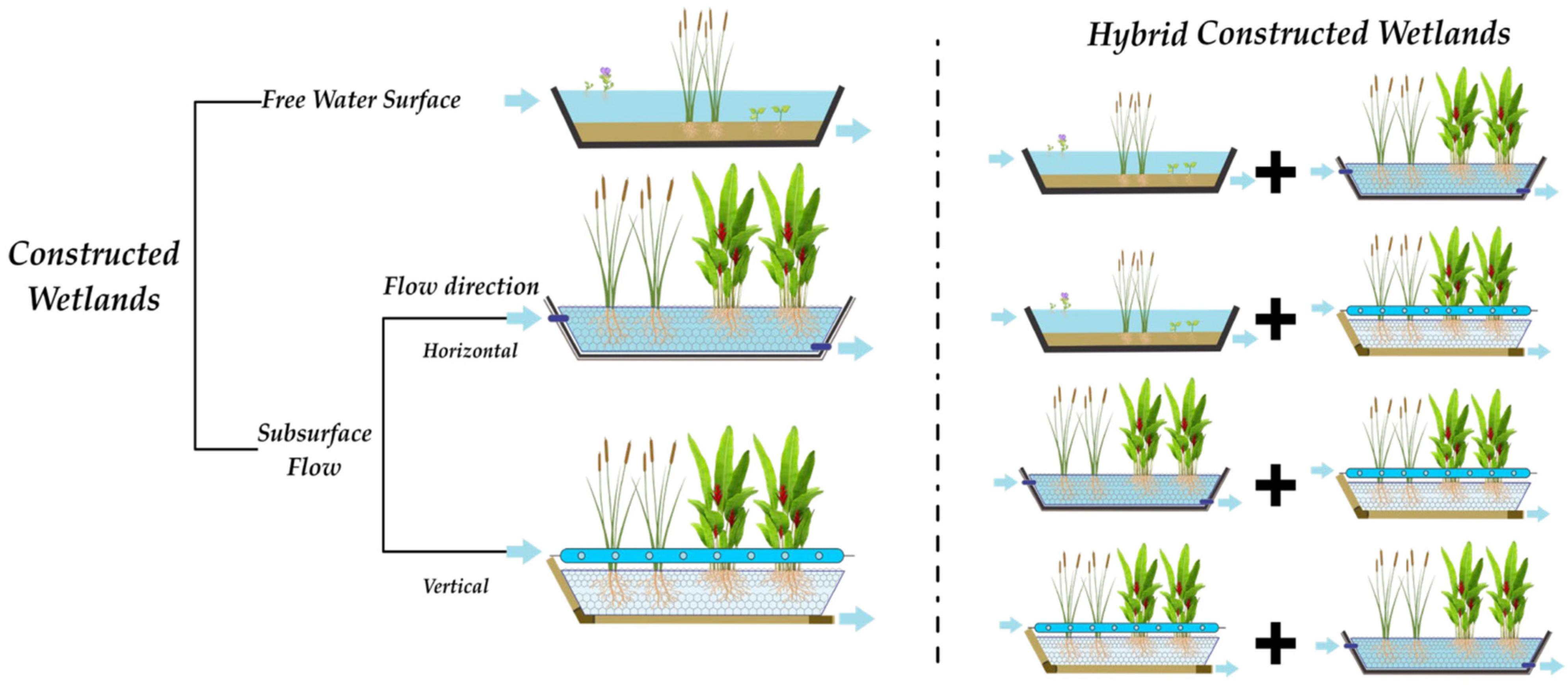
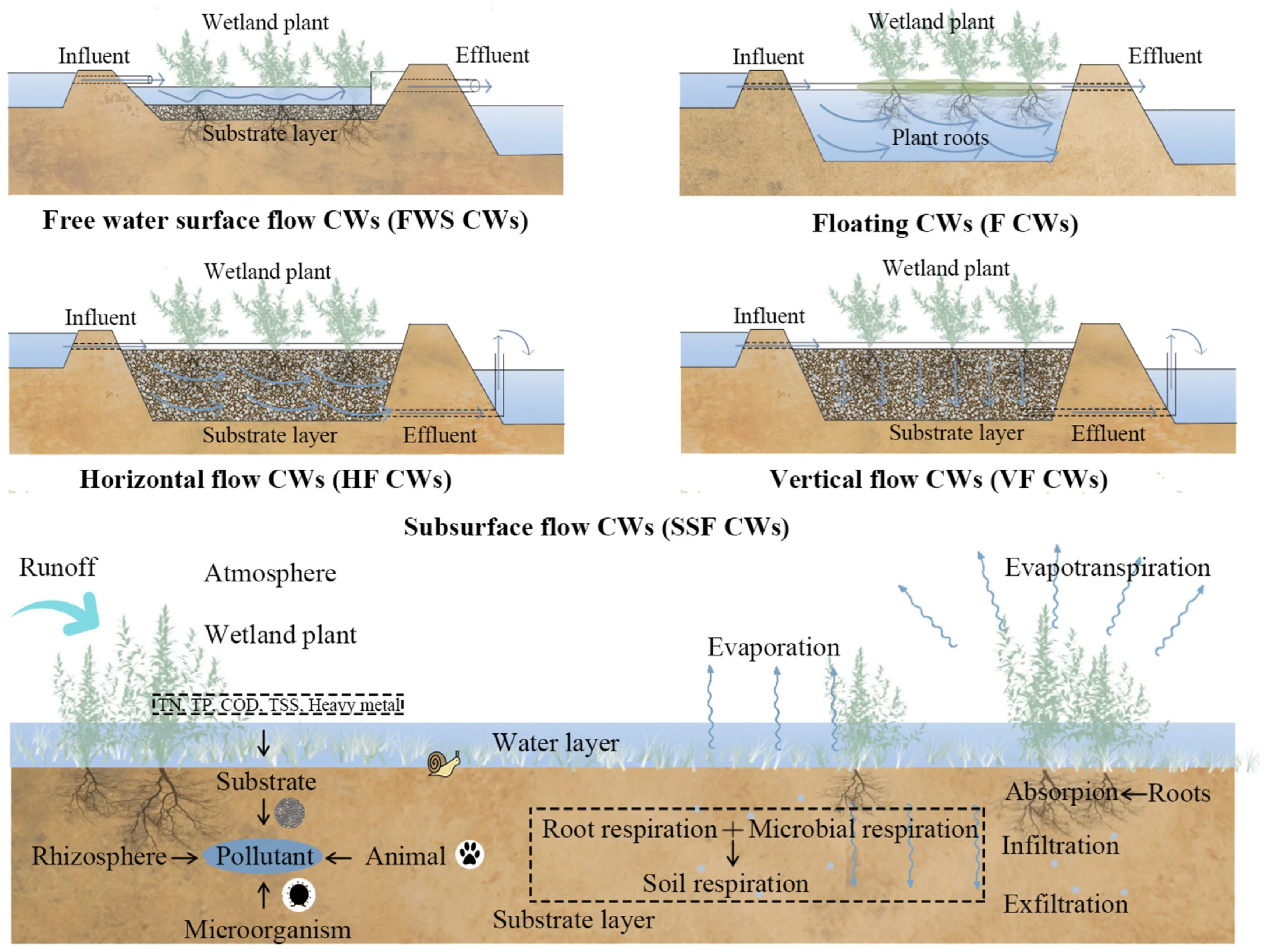
Nature-based solutions (NbS) is also an emerging and sustainable approach to water resources management that integrates ecological processes into the scheme and infrastructure. Contrary to traditional gray systems, NbS, such as wetland restoration, reforestation, riparian buffers, and green infrastructure, have the advantage of being multifunctional to improve the water quality, improve groundwater recharge, reduce floods and droughts, and maintain biodiversity and carbon sequestration [144]. However, NbS effectiveness and reliability also greatly rely on hydrological regime, land-use pressure, and the governance capacity, unlike the more traditional gray infrastructure. Recent studies have shown that NbS can reduce the magnitude of the floods, increase stormwater handling, increase thermal control of metropolitan regions, and increase the water content of the ground and soil infiltrate, hence regulating water scarcity and delaying water excess as climatic variability rises. NbS, including green roofs, permeable pavements, urban wetlands, and reclaimed riparian corridors, have been shown to produce quantifiable results in the reduction in the amount of runoff, the minimization of flood potential, and the mitigation of heat stress in urban and peri-urban environments. Comparative evaluations have shown that NbS tend to be more successful than gray systems in co-benefits and long-term resilience, although they have slower response times and are more spatially variable in hydrological operation. NbS is applied in urban and peri-urban settings to address the joint flood, stormwater, and heat stress issues [145]. Constructed wetlands (CWs) are generally accepted as useful nature-based technologies in wastewater treatment, as well as water quality enhancement. They replicate the natural wetland processes and combine vegetation, substrate, and activity of the microbes to eliminate contaminants using physical, chemical, and biological processes. Commonly, CWs are classified based on hydraulic regime and configuration of flow to include: free-water-surface systems, subsurface-flow systems, and floating-treatment wetlands [146]. These designs vary in their ability to remove pollutants, space needs, and their robustness of operation, which determines their applicability in an urban, rural, and resource-limited environment. The configurations have different treatment pathways, hydrologies, and the mode of removing pollutants, such as differences in hydraulic residence time, the presence of oxygen, the supremacy of biogeochemical processes (e.g., aerobic degradation, anaerobic transformation, and sorption), and interactions between vegetation and microbes, as shown in Figure 8.
Figure 9 illustrates the classification and structural configurations of constructed wetlands for wastewater treatment. On the left, constructed wetlands are divided into three main types: free water surface (FWS), horizontal subsurface flow (HSSF), and vertical subsurface flow (VSSF). FWS wetlands allow water to flow above a planted substrate, while HSSF and VSSF systems direct flow through a planted substrate either horizontally or vertically, respectively. The right side of the figure demonstrates hybrid constructed wetlands, which combine two wetland types in series to enhance treatment efficiency, taking advantage of both surface and subsurface processes [147].
However, empirical evidence remains uneven across different types of nature-based solutions. While large-scale urban green infrastructure (e.g., vegetated pavements and retention parks) has been documented through implemented case studies, there is still limited long-term and transferable evidence for certain NbS, particularly landscape-scale restoration measures and policy-driven NbS interventions regarding their performance, scalability, and effectiveness across diverse climatic and institutional contexts [148,149]. While such urban NbS demonstrate high scalability in high-income governance settings, their transferability to rapidly urbanizing regions is often constrained by land availability, maintenance capacity, and institutional coordination. Examples of NbS on a large scale in Klagenfurt, Austria, such as vegetated pavements and rain-absorbing parks as pilot projects and demonstration cases, have shown how green infrastructure, when integrated, can maximize stormwater infiltration and minimize irrigation requirements [150]. In the same manner, constructed wetlands and reforested watersheds have been shown to mitigate sedimentation, nutrient loading, and greatly enhance the water quality and health of downstream watersheds [151,152]. NbS are also critical to climate adjustment and carbon storage [153]. It has been demonstrated that reforestation and mangrove restoration activities can increase carbon sequestration and watershed resilience, especially in tropical and deltaic areas where hydrological pressure has been exerted by deforestation and urbanization. Nevertheless, the magnitude and persistence of these benefits are strongly context-dependent, with governance effectiveness and long-term land protection emerging as key determinants of performance. Recent assessments show that NbS has the potential to reduce the amount of flood risk in Malaysia by enhancing catchment infiltration and retention in monsoonal extreme catchments [154]. Although they have become increasingly acknowledged, NbS implementation has issues associated with context-specific transferability, monitoring, and institutional support [155]. An international audit discovered that process-based metrics like stakeholder involvement and institutional capacity are portable, but hydrological and ecological outputs of NbS are diverse based on local weather conditions, soil texture, and the administration of that area [156]. This variability limits the direct scalability of NbS without adaptive design and localized performance evaluation. Also, there is a lack of empirical evidence concerning the long-term hydrological performance, as well as cost–benefit tests, which impedes the use of the policy on a large scale [157]. Implementation of NbS into the mainstream water governance and planning models must be coordinated using institutional arrangements that cut across ecological and engineering fields [158]. NbS is included in IWRM strategies to facilitate the achievement of Sustainable Development Goals (SDG 6 and SDG 13), which focus on resilience, ecosystem health, and social well-being [19]. When strategically combined with gray infrastructure, NbS can function not only as complementary measures but as scalable system components whose performance is optimized through adaptive governance, monitoring, and hybrid design. Through green and gray infrastructure, the decision-makers can use NbS not only as complementary actions but as the building blocks of sustainable and adaptive water systems that can be used to deal with the increased demands of climate change and urbanization.

3.4. Policy and Governance Innovations

Policy and governance innovations are also emerging as key tools that can be used to attain sustainable water management. Policies like IWRM, circular water economy (CWE), and transboundary water cooperation are designed to mediate the goals of policy, economic tools, and stakeholder involvement towards ensuring long-term water security. These governance ideas vary significantly in terms of effectiveness, level of institutional maturity, and transparency, with regard to administrative capacity, level of regulatory consistency, and socio-economic contexts. IWRM focuses on water, land, and other resources management in a coordinated way in order to achieve maximum economic and social welfare without affecting the sustainability of the ecosystem [153,159]. Although it has been supported worldwide, evidence from implementation indicates that IWRM performs most effectively in settings with strong institutional integration and cross-sector coordination, whereas the majority of initiatives in low-capacity governance environments lack institutional coherence and intersectoral alignment and therefore require prioritization of adaptive and inclusive governance mechanisms [160].
CWE is a comparatively recent policy concept that is gaining acceptance thanks to its capacity to promote the re-use, recycling, and recovery of water resources of closed-loop systems. The two sustainability and resilience purposes that CWE pursues, specifically in places with water shortages, are enhanced by efficient wastewater treatment, resource recycling, and energy efficiency [161,162]. CWE is more operationally oriented and technology-driven than IWRM, but has little applicability due to the cost of high capital, regulatory preparedness, and acceptance by the people. The practical experience of other urban water reuse projects in Spain and Singapore has shown that with the right regulatory and institutional environment, wastewater can be converted into a strategic resource, and environmental effects can be minimized [163]. However, it should be mentioned that the transboundary water cooperation continues to be the core of common water systems management under the pressures of climate and population [164]. The examples of successful governance structures like the Mekong River Commission and the Senegal River Basin Development Organization show how joint institutions can be used to achieve equitable distribution, exchange of information, and conflict avoidance [165,166]. Nonetheless, experience indicates that these cooperative structures have been less successful in basins where there are power asymmetries, weak legal requirements, or small stakeholder incorporation, phenomena that still continue to limit cooperation in most areas [166].
Economic policy instruments are also significant in enhancing the efficiency of water use and affecting user behavior. Mechanisms that are incentive-based, such as tiered water pricing and ecosystem service payments (PES), have been demonstrated to promote conservation and raise financial funds to support watershed protection and ecosystem preservation [167,168]. Meanwhile, the legitimacy and localization of water policies depend on stakeholder engagement. The models of co-governance that include community involvement and the multi-level participation of stakeholders are said to enhance the delivery of viable water practices within rural and urban settings [169]. However, institutional capacity, participatory culture, and long-term financial support are highly dependent on their performance. Table 4 presents significant governance strategies, such as IWRM, CWE policies, and Transboundary Cooperation (TC), which portray their character and chief concerns of application. These approaches are not mutually exclusive; on the contrary, IWRM offers the integrative planning rationale, CWE policies often operationalize the aims of efficiency and reuse, TC deals with basin-wide coordination across political borders, and economic instruments serve as facilitative mechanisms to coordinate incentives with sustainable water management objectives.
The policymakers must embrace flexible evidence-based policies to introduce these innovations of governance which incorporate social, ecological and technological aspects. This incorporates cross-sectoral cooperation, openness and vivid policy tools which have the capability to alleviate climatic uncertainties. The comparative analysis implies that there is no universally efficient model of governance; instead, context-related balances of IWRM principles, circular economy strategies, and collaborative institutions bring the most resilient results. The future water sustainability will be institutional capacity building and inclusion of the decision-making processes to be incorporated to make the water governance resilient, efficient, and equitable.

4. Future Perspectives

The future of sustainable water resource management consists of applying the multidisciplinary approaches to it, in which the innovations in engineering would be integrated in conjunction with the policy modifications, social relations, ecological restoration, and economic research [175,176]. The solutions to water-related issues can be achieved through overcoming the barriers between disciplines to come up with comprehensive, dynamic solutions that are sensitive to both human and environmental aspects of the systems and also understand the interdependence of hydrological, ecological, and socio-economic systems [177,178]. In this view, the suggested framework is naturally scalable and can be applied on various spatial and institutional scales between a local and urban system and a river basin level and transboundary context, by modulating technological intensity, governance structure, and involvement of stakeholders in accordance with the socio-hydrological environment and institutional capacity.
The systems thinking and nexus-based models, such as the Water–Energy–Food–Ecosystem (WEFE) nexus, in determining strategic planning at both transboundary and basin levels is increasingly becoming a topic of consideration within the research community. The framework focuses on operational tools (e.g., smart monitoring and decentralized NbS) at the smaller scales (e.g., municipalities or irrigation districts) but on coordination mechanisms, data sharing, and adaptive governance structures at the bigger scales (e.g., basin). It will be noteworthy to find the solution to climate-resilient infrastructure and coping governmental systems that would reduce the effects of climatic changes on hydrological networks [179]. This type of structure should be dynamic, data-oriented, and capable of being inclusive to the extent that the policies are liberal to fit the climatic variability, developing technologies, and up-and-coming socio-economic trends [180]. It will be possible to have early-warning systems, risk-informed decisions and more robust water allocation plans through the integration of climate forecasts and integration of real-time hydrological and socio-economic scenarios into the planning models.
Nevertheless, the effective execution of these advanced strategies highly depends on the participation and prioritization ability of the decision-makers, especially in terms of guiding financial, institutional, and technical resources. Most digital and technology-intensive models like IoT networks, AI-driven prediction, and digital twins demand huge upfront costs, long-term maintenance, and expert human capacity, which becomes extremely difficult to achieve in low-income and resource-scarce settings. The main difference in such environments is that the authorities usually focus on short-term socio-economic needs rather than long-term technological investments, and the digital water solutions can be less famous. Therefore, there should be staged and context-based adoption processes, in which basic monitoring interventions (e.g., nature-based solutions, low cost, yet high impact), basic governance reforms, and digital tools should be introduced at an earlier stage, and further evolved with the expansion of the institutional capacity and financial resources.
In all settings, including more advanced ones, conflicting priorities in policies and budgetary limitations require the availability of explicit decision-support frameworks to inform strategic investment decisions. Increasing the involvement of decision-makers via capacity-building, pilot programs, and evidence-based prioritization models is thus of the essence in ensuring that technological innovation results in implementable and equity-based water management results. The involvement of the community-based programs and the active work of the partnerships between the state and the business can stimulate the sustainable realization of the water management strategies [181]. This form of association increases financial sustainability, innovation, and local ownership to make water infrastructure and management systems just and sustainable [181,182]. The stakeholders, such as women populations, youth programs, farmer groups, and indigenous people, among others, may be involved in even greater numbers, which may contribute to the greater legitimacy of the governance and lead to socially equitable water management.
The water governance practices in the future must align with the United Nations Sustainable Development Goals (SDGs), particularly SDG 6 (Clean Water and Sanitation) and SDG 13 (Climate Action), which must strive to achieve equitable access, resilience, and ecological balance [183]. The application of the principles of the circular economy of water, nature-based solutions, and digital transformation will also aid in making the resources efficient and managing them according to the scale [184]. Digital transformation is also complementary; smart sensing networks, AI-driven predictions, digital twins, and blockchain-driven water accounting are taking center stage in transparency, efficiency, and integrated planning.
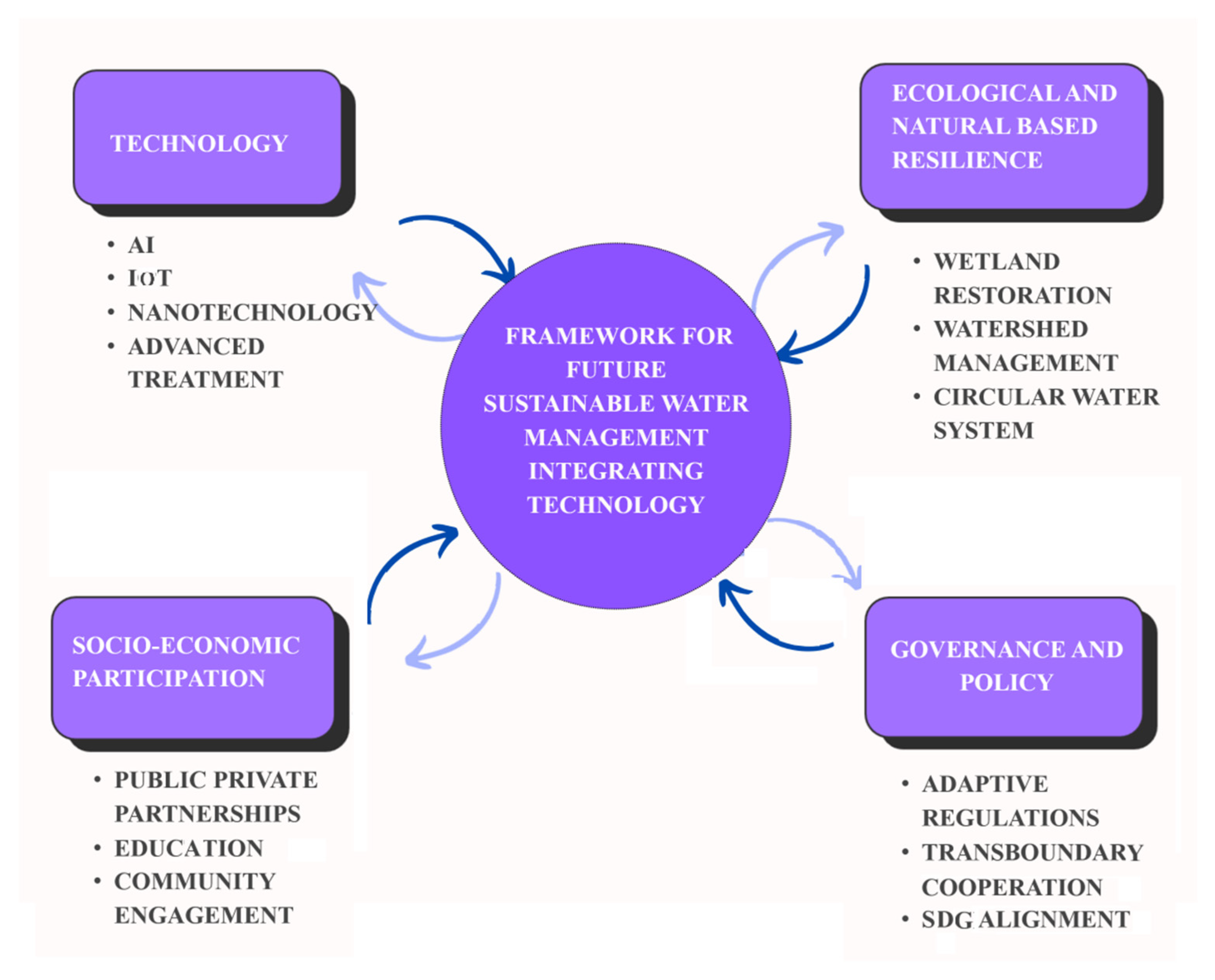
Figure 10 shows an interactive and holistic picture of future sustainable water management, showing that the use of technological methods, ecological action, socio-economic participation, and governance systems can be based on interdependency as opposed to being independent or parallel factors.
The new technology is creating information and feedback from operations through AI, IoT, nanotechnology, membrane processes, and advanced treatment systems, which are used to make decisions on governance and flexible laws. The ecological and nature-based approaches, such as the restoration of wetlands, rehabilitation of watersheds, controlled recharge of aquifers, and circular water systems, are useful and supportive to the technological monitoring and policy assistance as they increase the resilience of systems and lower the long-term management expenses. The socio-economic involvement of people via citizen science, capacity building, and multi-stakeholder partnerships serves as a mediator layer that transforms technological and ecological interventions into social and robust practices that are accepted by the locals. These interactions are organized through governance and policy frameworks based on adaptive regulation, integrated basin management, transboundary cooperation, and SDG alignment, which make cross-sectoral integration, accountability and scaling across institutional contexts possible [183]. The diagram thus highlights the feedback loops and element reinforcement to each other as we see how action on one area reinforces results on other areas.
The long-term equity, inclusiveness, and global partnership in the process of water resources management will eventually be achieved only through concerted efforts, relentless innovations and common accountability [19]. By balancing technological advancement with ecological safeguards, inclusive governance, and community engagement, the proposed framework supports context-sensitive and scalable pathways toward climate-adaptive and sustainable water systems [185,186].

5. Conclusions

The evidence that has been synthesized in this review suggests that majority of the contemporary water problems are multi-faceted, like the variability in hydrology, seasonal and geographical scarcity, pollution by different sectors, and distorted governance that hinders concerted management initiatives. The infrastructure-based solutions that had been used traditionally could no longer help in solving the current water management issues. Instead, there should be a paradigm shift in sustainable water management, which should encompass the use of advanced technologies, solutions founded upon nature, and improved institutional frameworks. Some of the innovations that are shown to increase access to clean water and reduce environmental effects include membrane filtration, nanomaterials, energy-efficient desalination, and decentralized treatment systems. Other natural ways such as conservation of wetlands, watershed recovery, and reforestation to help the system resilient, reduce floods, and support biodiversity. Remote sensing, IoT networks, and artificial intelligence are new digital tools that offer predictive systems and real-time decision support that enhance system reliability and adaptive management.
A holistic approach is required in order to secure water in the long term, meaning that technological advancements, the ecology, and governance should be a service to the population. The disconnection between science, policy, and implementation can be offset through circular water economy models, climate-resilient infrastructure as well as the enhanced public–private collaboration. Inclusion of everyone in community participation and inter-boundary collaboration is essential to achieve fair and amicable distribution of common resources. Simultaneously, community engagement and enhanced cross-boundary collaboration are essential in shared basins and socially fragile environments where fairness, conflict avoidance, and institutional credibility are the factors that define the success of water governance.
The main focus of the strategies presented in line with Sustainable Development Goals (SDG 6: Clean Water and Sanitation; SDG 13: Climate Action) is evident: these strategies need to facilitate resilience, equity, and sustainability, promote evidence-based policies, and provide future research with context-specific solutions that can be scaled up. It is important to adopt evidence-based, forward-looking, and coordinated strategies so that water resources can have the potential to support human living, ecosystems, and socio-economic growth in the long run in a sustainable way.

Author Contributions

Conceptualization, M.M.R. and A.R.; Methodology, S.R.M., M.M.R., A.R. and M.A.I.; Formal analysis, S.R.M., M.A.N. and M.A.-A.-M.; Investigation, A.A.K. and M.A.N.; Visualization, S.R.M., M.M.R. and A.R.; Writing—original draft, S.R.M., M.M.R. and A.R.; Resources, M.M.R. and A.R.; Writing—review and editing, A.A.K., M.A.N., M.A.I. and M.A.-A.-M.; Supervision, M.M.R. and A.R.; Project administration, M.M.R. and A.R. All authors have read and agreed to the published version of the manuscript.

Funding

This research received no external funding.

Data Availability Statement

All the data used in this study are presented in the manuscript.

Acknowledgments

While preparing this work, the authors used ChatGPT (GPT-5.2, OpenAI, 2026), Perplexity AI (accessed on 20 January 2026), and Grammarly Premium (Grammarly Inc., San Francisco, CA, USA, https://www.grammarly.com) to paraphrase and edit the language. After using those tools, the authors reviewed and revised the content as needed and take full responsibility for the publication’s content.

Conflicts of Interest

The authors declare no conflicts of interest.

References

  1. Abou-Shady, A.; Siddique, M.S.; Yu, W. A Critical Review of Recent Progress in Global Water Reuse during 2019–2021 and Perspectives to Overcome Future Water Crisis. Environments 2023, 10, 159. [Google Scholar] [CrossRef]
  2. Zhang, X.; Li, Y.; Wang, J.; Chen, Q.; Liu, H. Global Water Use and Its Changing Patterns: Insights from OECD Countries. Water 2024, 16, 3592. [Google Scholar] [CrossRef]
  3. Li, M.; Cao, X.; Liu, D.; Fu, Q.; Li, T.; Shang, R. Sustainable Management of Agricultural Water and Land Resources under Changing Climate and Socio-Economic Conditions: A Multi-Dimensional Optimization Approach. Agric. Water Manag. 2022, 259, 107235. [Google Scholar] [CrossRef]
  4. Han, X.; Hua, E.; Engel, B.A.; Guan, J.; Yin, J.; Wu, N.; Sun, S.; Wang, Y. Understanding Implications of Climate Change and Socio-Economic Development for the Water-Energy-Food Nexus: A Meta-Regression Analysis. Agric. Water Manag. 2022, 269, 107693. [Google Scholar] [CrossRef]
  5. Sukanya, S.; Joseph, S. Climate Change Impacts on Water Resources: An Overview. In Visualization Techniques for Climate Change with Machine Learning and Artificial Intelligence; Elsevier: Amsterdam, The Netherlands, 2023; pp. 55–76. [Google Scholar]
  6. Ciampittiello, M.; Marchetto, A.; Boggero, A. Water Resources Management under Climate Change: A Review. Sustainability 2024, 16, 3590. [Google Scholar] [CrossRef]
  7. Mishra, B.; Kumar, P.; Saraswat, C.; Chakraborty, S.; Gautam, A. Water Security in a Changing Environment: Concept, Challenges and Solutions. Water 2021, 13, 490. [Google Scholar] [CrossRef]
  8. Singh, B.J.; Chakraborty, A.; Sehgal, R. A Systematic Review of Industrial Wastewater Management: Evaluating Challenges and Enablers. J. Environ. Manag. 2023, 348, 119230. [Google Scholar] [CrossRef]
  9. De Anda, J.; Shear, H. Sustainable Wastewater Management to Reduce Freshwater Contamination and Water Depletion in Mexico. Water 2021, 13, 2307. [Google Scholar] [CrossRef]
  10. Rahman, A.; Haque, M.A.; Rahman, M.M.; Shinu, P.; Rahman, M.M.; Khan, A.A.; Rushd, S. Comprehensive Review of Microbial, Plant, Biochar, Mineral, and Nanomaterial Solutions for Lead-Contaminated Wastewater. Toxics 2025, 13, 1082. [Google Scholar] [CrossRef]
  11. Ferdush, J.; Rahman, M.M.; Parvez, M.M.H.; Mohotadi, M.A.A.; Uddin, M.N. Green-Synthesized Nanomaterials for Water Disinfection: Mechanisms, Efficacy, and Environmental Safety. Nanomaterials 2025, 15, 1507. [Google Scholar] [CrossRef]
  12. Muzammal, H.; Zaman, M.; Safdar, M.; Adnan Shahid, M.; Sabir, M.K.; Khil, A.; Raza, A.; Faheem, M.; Ahmed, J.; Sattar, J.; et al. Climate Change Impacts on Water Resources and Implications for Agricultural Management. In Transforming Agricultural Management for a Sustainable Future; Kanga, S., Singh, S.K., Shevkani, K., Pathak, V., Sajan, B., Eds.; World Sustainability Series; Springer Nature: Cham, Switzerland, 2024; pp. 21–45. [Google Scholar]
  13. Karimi, M.; Tabiee, M.; Karami, S.; Karimi, V.; Karamidehkordi, E. Climate Change and Water Scarcity Impacts on Sustainability in Semi-Arid Areas: Lessons from the South of Iran. Groundw. Sustain. Dev. 2024, 24, 101075. [Google Scholar] [CrossRef]
  14. Li, E.; Endter-Wada, J.; Li, S. Characterizing and Contextualizing the Water Challenges of Megacities. J. Am. Water Resour. Assoc. 2015, 51, 589–613. [Google Scholar] [CrossRef]
  15. Barbieri, M.; Barberio, M.D.; Banzato, F.; Billi, A.; Boschetti, T.; Franchini, S.; Gori, F.; Petitta, M. Climate Change and Its Effect on Groundwater Quality. Environ. Geochem. Health 2023, 45, 1133–1144. [Google Scholar] [CrossRef]
  16. Oiganji, E.; Igbadun, H.; Amaza, P.S.; Lenka, R.Z. Innovative Technologies for Improved Water Productivity and Climate Change Mitigation, Adaptation, and Resilience: A Review. J. Appl. Struct. Equ. Model. 2025, 29, 123–136. [Google Scholar] [CrossRef]
  17. Prniyazova, A.; Turaeva, S.; Turgunov, D.; Jarihani, B. Sustainable Transboundary Water Governance in Central Asia: Challenges, Conflicts, and Regional Cooperation. Sustainability 2025, 17, 4968. [Google Scholar] [CrossRef]
  18. Al-Saidi, M. Conflicts and Security in Integrated Water Resources Management. Environ. Sci. Policy 2017, 73, 38–44. [Google Scholar] [CrossRef]
  19. Das, A.; Mishra, S. Smart and Sustainable Water Management: Policy, Technology, and Innovation Pathways for Resource Resilience. Green Tech. Res. Sustain. 2025, 5, 5. [Google Scholar] [CrossRef]
  20. Davamani, V.; John, J.E.; Poornachandhra, C.; Gopalakrishnan, B.; Arulmani, S.; Parameswari, E.; Santhosh, A.; Srinivasulu, A.; Lal, A.; Naidu, R. A Critical Review of Climate Change Impacts on Groundwater Resources: A Focus on the Current Status, Future Possibilities, and Role of Simulation Models. Atmosphere 2024, 15, 122. [Google Scholar] [CrossRef]
  21. Ghazi, B.; Jeihouni, E.; Kalantari, Z. Predicting Groundwater Level Fluctuations under Climate Change Scenarios for Tasuj Plain, Iran. Arab. J. Geosci. 2021, 14, 115. [Google Scholar] [CrossRef]
  22. Wang, X.; Liu, L. The Impacts of Climate Change on the Hydrological Cycle and Water Resource Management. Water 2023, 15, 2342. [Google Scholar] [CrossRef]
  23. Montaldo, N.; Sirigu, S.; Zucca, R.; Ruiu, A.; Corona, R. Hydrological Sustainability of Dam-Based Water Resources in a Mediterranean Basin Undergoing Climate Change. Hydrology 2024, 11, 200. [Google Scholar] [CrossRef]
  24. Aytac, A.; Dogan, M.S.; Tuna, M.C. Energy-Based Hydro-Economic Modeling of Climate Change Effects on the Upper Euphrates Basin. J. Water Clim. Change 2024, 15, 733–746. [Google Scholar] [CrossRef]
  25. Biazar, S.M.; Golmohammadi, G.; Nedhunuri, R.R.; Shaghaghi, S.; Mohammadi, K. Artificial Intelligence in Hydrology: Advancements in Soil, Water Resource Management, and Sustainable Development. Sustainability 2025, 17, 2250. [Google Scholar] [CrossRef]
  26. Chang, F.-J.; Guo, S. Advances in Hydrologic Forecasts and Water Resources Management. Water 2020, 12, 1819. [Google Scholar] [CrossRef]
  27. Gacu, J.G.; Monjardin, C.E.F.; Mangulabnan, R.G.T.; Mendez, J.C.F. Application of Artificial Intelligence in Hydrological Modeling for Streamflow Prediction in Ungauged Watersheds: A Review. Water 2025, 17, 2722. [Google Scholar] [CrossRef]
  28. Gacu, J.; Monjardin, C.; Mangulabnan, R.; Pugat, G.; Solmerin, J. Artificial Intelligence (AI) in Surface Water Management: A Comprehensive Review of Methods, Applications, and Challenges. Water 2025, 17, 1707. [Google Scholar] [CrossRef]
  29. Haider, S.; Masood, M.U.; Rashid, M.; Alshehri, F.; Pande, C.B.; Katipoğlu, O.M.; Costache, R. Simulation of the Potential Impacts of Projected Climate and Land Use Change on Runoff under CMIP6 Scenarios. Water 2023, 15, 3421. [Google Scholar] [CrossRef]
  30. Teklay, A.; Dile, Y.T.; Asfaw, D.H.; Bayabil, H.K.; Sisay, K.; Ayalew, A. Modeling the Impact of Climate Change on Hydrological Responses in the Lake Tana Basin, Ethiopia. Dyn. Atmos. Ocean. 2022, 97, 101278. [Google Scholar] [CrossRef]
  31. Ershadfath, F.; Shahnazari, A.; Sarjaz, M.R.; Andaryani, S.; Trolle, D.; Olesen, J.E. Blue and green water availability under climate change in arid and semi-arid regions. Ecol. Inform. 2024, 82, 102743. [Google Scholar] [CrossRef]
  32. Liu, X.; Tang, Q.; Zhao, Y.; Wang, P. Persistent Water Scarcity Due To High Irrigation Demand in Arid China: A Case Study in the North Slope of the Tianshan Mountains. Earth’s Future 2024, 12, e2024EF005070. [Google Scholar] [CrossRef]
  33. Otieno, F.; Ochieng, G. Water Management Tools as a Means of Averting a Possible Water Scarcity in South Africa by the Year 2025. Water SA 2007, 30, 120–124. [Google Scholar] [CrossRef]
  34. Belhassan, K. Water Scarcity Management. In Water Safety, Security and Sustainability; Vaseashta, A., Maftei, C., Eds.; Advanced Sciences and Technologies for Security Applications; Springer International Publishing: Cham, Switzerland, 2021; pp. 443–462. [Google Scholar]
  35. Qin, H.; Cai, X.; Zheng, C. Water Demand Predictions for Megacities: System Dynamics Modeling and Implications. Water Policy 2018, 20, 53–76. [Google Scholar] [CrossRef]
  36. Fu, Z.; Sun, S.; Konar, M. Hydro-Economic Risk and Resilience to Supply Chain Water Scarcity in Chinese Cities. Environ. Sci. Technol. 2024, 58, 21578–21588. [Google Scholar] [CrossRef]
  37. Ingrao, C.; Strippoli, R.; Lagioia, G.; Huisingh, D. Water Scarcity in Agriculture: An Overview of Causes, Impacts and Approaches for Reducing the Risks. Heliyon 2023, 9, e18507. [Google Scholar] [CrossRef]
  38. Xing, Y.; Wang, X. Precision Agriculture and Water Conservation Strategies for Sustainable Crop Production in Arid Regions. Plants 2024, 13, 3184. [Google Scholar] [CrossRef]
  39. Vellaiyan, A.; Chinthapalli, U.R.; Bandu, S. Addressing Water Scarcity and Climate Risks: Sustainable Solutions for Al Kharj, Saudi Arabia. Sustainability 2025, 17, 9273. [Google Scholar] [CrossRef]
  40. Almulhim, A.I.; Abubakar, I.R. Exploring Household Water Conservation Behaviors in Saudi Arabia: A Structural Equation Modeling Approach. J. Open Innov. Technol. Mark. Complex. 2025, 11, 100486. [Google Scholar] [CrossRef]
  41. Hussain, Z.; Wang, Z.; Yang, H.; Arfan, M.; Wang, W.; Faisal, M.; Azam, M.I.; Usman, M. Evolution and Trends of Water Scarcity Indicators: Unveiling Gaps, Challenges, and Collaborative Opportunities. Water Conserv. Sci. Eng. 2024, 9, 8. [Google Scholar] [CrossRef]
  42. Poonia, V.; Mukherjee, A.; Singh, A.D.; Swarnkar, S. Clustering-Based Assessment of Long-Term Surface Water Scarcity and Per Capita Vulnerability in Arid India. Earth Syst. Environ. 2025. [Google Scholar] [CrossRef]
  43. Munia, H.A.; Guillaume, J.H.A.; Wada, Y.; Veldkamp, T.; Virkki, V.; Kummu, M. Future Transboundary Water Stress and Its Drivers Under Climate Change: A Global Study. Earth’s Future 2020, 8, e2019EF001321. [Google Scholar] [CrossRef]
  44. Zhou, Y.; Di, Y.; Huang, X.; Fu, S.; Qi, X.; He, C.; Destouni, G. Steep Sustainability Challenges in Transboundary Basins Worldwide. Environ. Sci. Ecotechnol. 2025, 27, 100611. [Google Scholar] [CrossRef]
  45. Mannaf, M.M.; Rahman, M.M.; Uddin, M.N.; Bappy, M.A.; Tushar, M.M.R.; Uddin, M.R. Advanced graphene-based nanotechnologies for remediation of per- and polyfluoroalkyl substances (PFAS) and microplastics in water. Discover Water 2026. [Google Scholar] [CrossRef]
  46. Varatharajan, G.R.; Ndayishimiye, J.C.; Nyirabuhoro, P. Emerging Contaminants: A Rising Threat to Urban Water and a Barrier to Achieving SDG-Aligned Planetary Protection. Water 2025, 17, 2367. [Google Scholar] [CrossRef]
  47. Almeida-Naranjo, C.E.; Guerrero, V.H.; Villamar-Ayala, C.A. Emerging Contaminants and Their Removal from Aqueous Media Using Conventional/Non-Conventional Adsorbents: A Glance at the Relationship between Materials, Processes, and Technologies. Water 2023, 15, 1626. [Google Scholar] [CrossRef]
  48. Bayabil, H.K.; Teshome, F.T.; Li, Y.C. Emerging Contaminants in Soil and Water. Front. Environ. Sci. 2022, 10, 873499. [Google Scholar] [CrossRef]
  49. Morin-Crini, N.; Lichtfouse, E.; Liu, G.; Balaram, V.; Ribeiro, A.R.L.; Lu, Z.; Stock, F.; Carmona, E.; Teixeira, M.R.; Picos-Corrales, L.A.; et al. Worldwide Cases of Water Pollution by Emerging Contaminants: A Review. Environ. Chem. Lett. 2022, 20, 2311–2338. [Google Scholar] [CrossRef]
  50. Diamanti, K.S.; Alygizakis, N.A.; Nika, M.-C.; Oswaldova, M.; Oswald, P.; Thomaidis, N.S.; Slobodnik, J. Assessment of the Chemical Pollution Status of the Dniester River Basin by Wide-Scope Target and Suspect Screening Using Mass Spectrometric Techniques. Anal. Bioanal. Chem. 2020, 412, 4893–4907. [Google Scholar] [CrossRef] [PubMed]
  51. Mani, M.; Pachaiappan, R.; Mahendra Gowda, R.V.; Aroulmoji, V. Environmental and Health Effects of Emerging Contaminants—A Critical Review. Int. J. Appl. Sci. Eng. 2023, 10, 3449–3470. [Google Scholar] [CrossRef]
  52. Hartmann, J.; Van Der Aa, M.; Wuijts, S.; De Roda Husman, A.M.; Van Der Hoek, J.P. Risk Governance of Potential Emerging Risks to Drinking Water Quality: Analysing Current Practices. Environ. Sci. Policy 2018, 84, 97–104. [Google Scholar] [CrossRef]
  53. Moreira, J.B.; Santos, T.D.; Zaparoli, M.; De Almeida, A.C.A.; Costa, J.A.V.; De Morais, M.G. An Overview of Nanofiltration and Nanoadsorption Technologies to Emerging Pollutants Treatment. Appl. Sci. 2022, 12, 8352. [Google Scholar] [CrossRef]
  54. Cooper, R.J.; Hiscock, K.M. Groundwater Resources: Challenges & Solutions. Camb. Prism. Water 2025, 3, e1. [Google Scholar] [CrossRef]
  55. Jomaa, I. The Role of Groundwater Depletion in Local and Global Climate Change. Zenodo 2025. [Google Scholar] [CrossRef]
  56. Jasechko, S.; Seybold, H.; Perrone, D.; Fan, Y.; Shamsudduha, M.; Taylor, R.G.; Fallatah, O.; Kirchner, J.W. Rapid Groundwater Decline and Some Cases of Recovery in Aquifers Globally. Nature 2024, 625, 715–721. [Google Scholar] [CrossRef]
  57. Tran, D.A.; Tsujimura, M.; Pham, H.V.; Nguyen, T.V.; Ho, L.H.; Le Vo, P.; Ha, K.Q.; Dang, T.D.; Van Binh, D.; Doan, Q.-V. Intensified Salinity Intrusion in Coastal Aquifers Due to Groundwater Overextraction: A Case Study in the Mekong Delta, Vietnam. Environ. Sci. Pollut. Res. 2022, 29, 8996–9010. [Google Scholar] [CrossRef]
  58. Lyu, P.; Song, J.; Yin, Z.; Wu, J.; Wu, J. Integrated SEAWAT Model and GALDIT Method for Dynamic Vulnerability Assessment of Coastal Aquifer to Seawater Intrusion. Sci. Total Environ. 2024, 925, 171740. [Google Scholar] [CrossRef] [PubMed]
  59. Chronidou, D.; Tziritis, E.; Panagopoulos, A.; Oikonomou, E.K.; Loukas, A. A Modified GALDIT Method to Assess Groundwater Vulnerability to Salinization—Application to Rhodope Coastal Aquifer (North Greece). Water 2022, 14, 3689. [Google Scholar] [CrossRef]
  60. Langevin, C.; Swain, E.; Wolfert, M. Simulation of Integrated Surface-Water/Ground-Water Flow and Salinity for a Coastal Wetland and Adjacent Estuary. J. Hydrol. 2005, 314, 212–234. [Google Scholar] [CrossRef]
  61. Mastrocicco, M.; Busico, G.; Colombani, N.; Vigliotti, M.; Ruberti, D. Modelling Actual and Future Seawater Intrusion in the Variconi Coastal Wetland (Italy) Due to Climate and Landscape Changes. Water 2019, 11, 1502. [Google Scholar] [CrossRef]
  62. Xu, Z.; Hu, B.X.; Xu, Z.; Wu, X. Numerical Study of Groundwater Flow Cycling Controlled by Seawater/Freshwater Interaction in Woodville Karst Plain. J. Hydrol. 2019, 579, 124171. [Google Scholar] [CrossRef]
  63. Chang, S.W.; Chung, I.-M.; Kim, M.-G.; Tolera, M.; Koh, G.-W. Application of GALDIT in Assessing the Seawater Intrusion Vulnerability of Jeju Island, South Korea. Water 2019, 11, 1824. [Google Scholar] [CrossRef]
  64. Trabelsi, N.; Triki, I.; Hentati, I.; Zairi, M. Aquifer Vulnerability and Seawater Intrusion Risk Using GALDIT, GQISWI and GIS: Case of a Coastal Aquifer in Tunisia. Environ. Earth Sci. 2016, 75, 669. [Google Scholar] [CrossRef]
  65. Sun, A.; Scanlon, B.; AghaKouchak, A.; Zhang, Z. Using GRACE Satellite Gravimetry for Assessing Large-Scale Hydrologic Extremes. Remote Sens. 2017, 9, 1287. [Google Scholar] [CrossRef]
  66. Wang, Q.; Lu, C.; Zheng, Y.; Wang, Z.; Li, J.; Tan, Y. In-Situ and Triple Collocation-Based Evaluations of Tianmu-1 Global Soil Moisture Products. Remote Sens. Environ. 2025, 328, 114892. [Google Scholar] [CrossRef]
  67. Kishor, K.; Aggarwal, A.; Srivastava, P.K.; Sharma, Y.K.; Lee, J.; Ghobadi, F. A Systematic Literature Review of MODFLOW Combined with Artificial Neural Networks (ANNs) for Groundwater Flow Modelling. Water 2025, 17, 2375. [Google Scholar] [CrossRef]
  68. Sahoo, S.; Jha, M.K. Numerical Groundwater-Flow Modeling to Evaluate Potential Effects of Pumping and Recharge: Implications for Sustainable Groundwater Management in the Mahanadi Delta Region, India. Hydrogeol. J. 2017, 25, 2489–2511. [Google Scholar] [CrossRef]
  69. Akbar, H.; Nilsalab, P.; Silalertruksa, T.; Gheewala, S.H. Comprehensive Review of Groundwater Scarcity, Stress and Sustainability Index-Based Assessment. Groundw. Sustain. Dev. 2022, 18, 100782. [Google Scholar] [CrossRef]
  70. Rojas, R.; Gonzalez, D.; Fu, G. Resilience, Stress and Sustainability of Alluvial Aquifers in the Murray-Darling Basin, Australia: Opportunities for Groundwater Management. J. Hydrol. Reg. Stud. 2023, 47, 101419. [Google Scholar] [CrossRef]
  71. Sufyan, M.; Martelli, G.; Teatini, P.; Cherubini, C.; Goi, D. Managed Aquifer Recharge for Sustainable Groundwater Management: New Developments, Challenges, and Future Prospects. Water 2024, 16, 3216. [Google Scholar] [CrossRef]
  72. Abd-Elaty, I.; Ahmed, A. Would Mixed Physical Barriers Be Able to Desalinate Coastal Aquifers from Seawater Intrusion under Pumping Conditions? Groundw. Sustain. Dev. 2025, 29, 101424. [Google Scholar] [CrossRef]
  73. Meles, M.B.; Bradford, S.; Casillas-Trasvina, A.; Chen, L.; Osterman, G.; Hatch, T.; Ajami, H.; Crompton, O.; Levers, L.; Kisekka, I. Uncovering the Gaps in Managed Aquifer Recharge for Sustainable Groundwater Management: A Focus on Hillslopes and Mountains. J. Hydrol. 2024, 639, 131615. [Google Scholar] [CrossRef]
  74. Russo, T.; Alfredo, K.; Fisher, J. Sustainable Water Management in Urban, Agricultural, and Natural Systems. Water 2014, 6, 3934–3956. [Google Scholar] [CrossRef]
  75. Imig, A.; Welsh, K.; Klausner, S.; Hotta, C.I.; McKenzie, Z.; Perosa, F.; Stephens, M.; Turner, A.; Thomas, J.; Chaves, H.M.L.; et al. Climate Change Resilience of Freshwater Supply on Small Islands: Research Gaps and Strategies for a Case Study in Grand Bahama. J. Hydrol. Reg. Stud. 2025, 59, 102430. [Google Scholar] [CrossRef]
  76. Alao, J.O.; Bello, A.; Lawal, H.; Abdullahi, D. Assessment of Groundwater Challenge and the Sustainable Management Strategies. Results Earth Sci. 2024, 2, 100049. [Google Scholar] [CrossRef]
  77. Tran, T.A.; Tortajada, C. Responding to Transboundary Water Challenges in the Vietnamese Mekong Delta: In Search of Institutional Fit. Environ. Policy Gov. 2022, 32, 331–347. [Google Scholar] [CrossRef]
  78. Ménard, C.; Jimenez, A.; Tropp, H. Addressing the Policy-Implementation Gaps in Water Services: The Key Role of Meso-Institutions. Water Int. 2018, 43, 13–33. [Google Scholar] [CrossRef]
  79. Sun, Y.; Ye, S.; Zhong, W.; Guo, R. Collaborative Governance in Urban Water Area Conservation: Strategies for Mitigating Blue Space Encroachment. J. Hydrol. Reg. Stud. 2025, 62, 102862. [Google Scholar] [CrossRef]
  80. Kirsop-Taylor, N.; Russel, D.; Jensen, A. Urban Governance and Policy Mixes for Nature-Based Solutions and Integrated Water Policy. J. Environ. Policy Plan. 2022, 24, 498–512. [Google Scholar] [CrossRef]
  81. Jiménez, A.; Pérez-Foguet, A.; Llamas, M.R. Unpacking Water Governance: A Framework for Practitioners. Water 2020, 12, 827. [Google Scholar] [CrossRef]
  82. Nwokediegwu, Z.Q.S.; Adefemi, A.; Ayorinde, O.B.; Ilojianya, V.I.; Etukudoh, E.A. Review of water policy and management: Comparing the USA and Africa. Eng. Sci. Technol. J. 2024, 5, 402–411. [Google Scholar] [CrossRef]
  83. Caniglia, B.; Frank, B.; Kerner, B.; Mix, T.L. Water Policy And Governance Networks: A Pathway To Enhance Resilience Toward Climate Change. Sociol. Forum 2016, 31, 828–845. [Google Scholar] [CrossRef]
  84. Grigg, N.S. Framework and Function of Integrated Water Resources Management in Support of Sustainable Development. Sustainability 2024, 16, 5441. [Google Scholar] [CrossRef]
  85. Gómez Gómez, C.M.; Pérez-Blanco, C.D.; Adamson, D.; Loch, A. Managing Water Scarcity at a River Basin Scale with Economic Instruments. Water Econ. Policy 2018, 4, 1750004. [Google Scholar] [CrossRef]
  86. Nti, E.K.; Cobbina, S.J.; Attafuah, E.E.; Senanu, L.D.; Amenyeku, G.; Gyan, M.A.; Forson, D.; Safo, A.-R. Water Pollution Control and Revitalization Using Advanced Technologies: Uncovering Artificial Intelligence Options towards Environmental Health Protection, Sustainability and Water Security. Heliyon 2023, 9, e18170. [Google Scholar] [CrossRef]
  87. Shannon, M.A.; Bohn, P.W.; Elimelech, M.; Georgiadis, J.G.; Mariñas, B.J.; Mayes, A.M. Science and technology for water purification in the coming decades. Nature 2008, 452, 301–310. [Google Scholar] [CrossRef]
  88. Elimelech, M.; Phillip, W.A. The future of seawater desalination: Energy, technology, and the environment. Science 2011, 333, 712–717. [Google Scholar] [CrossRef] [PubMed]
  89. Rahman, M.M.; Uddin, M.N.; Parvez, M.M.H.; Mohotadi, M.A.A.; Ferdush, J. Bio-Based Nanomaterials for Groundwater Arsenic Remediation: Mechanisms, Challenges, and Future Perspectives. Nanomaterials 2025, 15, 933. [Google Scholar] [CrossRef]
  90. Farahbakhsh, J.; Vatanpour, V.; Khoshnam, M.; Zargar, M. Recent Advancements in the Application of New Monomers and Membrane Modification Techniques for the Fabrication of Thin Film Composite Membranes: A Review. React. Funct. Polym. 2021, 166, 105015. [Google Scholar] [CrossRef]
  91. Rosman, N.; Salleh, W.N.W.; Mohamed, M.A.; Jaafar, J.; Ismail, A.F.; Harun, Z. Hybrid Membrane Filtration-Advanced Oxidation Processes for Removal of Pharmaceutical Residue. J. Colloid Interface Sci. 2018, 532, 236–260. [Google Scholar] [CrossRef]
  92. Zhang, H.; Xian, H. Review of Hybrid Membrane Distillation Systems. Membranes 2024, 14, 25. [Google Scholar] [CrossRef]
  93. Abdelgaied, M.; Kabeel, A.E.; Kandeal, A.W.; Abosheiasha, H.F.; Shalaby, S.M.; Hamed, M.H.; Yang, N.; Sharshir, S.W. Performance Assessment of Solar PV-Driven Hybrid HDH-RO Desalination System Integrated with Energy Recovery Units and Solar Collectors: Theoretical Approach. Energy Convers. Manag. 2021, 239, 114215. [Google Scholar] [CrossRef]
  94. Pandey, A.K. Sustainable Water Management through Integrated Technologies and Circular Resource Recovery. Environ. Sci. Water Res. Technol. 2025, 11, 1822–1846. [Google Scholar] [CrossRef]
  95. Thakur, S.; Ojha, A.; Kansal, S.K.; Gupta, N.K.; Swart, H.C.; Cho, J.; Kuznetsov, A.; Sun, S.; Prakash, J. Advances in Powder Nano-Photocatalysts as Pollutant Removal and as Emerging Contaminants in Water: Analysis of Pros and Cons on Health and Environment. Adv. Powder Mater. 2024, 3, 100233. [Google Scholar] [CrossRef]
  96. Sanjeev, N.O.; Vallabha, M.S.; Rabi, R.R.L. Nanotechnology-Based Approaches for the Removal of Microplastics from Wastewater: A Comprehensive Review. Beilstein J. Nanotechnol. 2025, 16, 1607–1632. [Google Scholar] [CrossRef] [PubMed]
  97. Mannaf, M.M.; Rahman, M.M.; Sabuj, S.T.; Talukder, N.; Lee, E.S. Current Progress in Advanced Functional Membranes for Water-Pollutant Removal: A Critical Review. Membranes 2025, 15, 300. [Google Scholar] [CrossRef]
  98. Puri, S.; Divakar, S.; Pramoda, K.; Praveen, B.M.; Padaki, M. A Review on Bio-Inspired Nanoparticles and Their Impact on Membrane Applications. RSC Sustain. 2025, 3, 1212–1233. [Google Scholar] [CrossRef]
  99. Wang, Y.; Guo, Y.; Yang, C.; Meng, H.; Li, S.; Sarp, S.; Li, Z. Bio-Inspired Fabrication of Adsorptive Ultrafiltration Membrane for Water Purification: Simultaneous Removal of Natural Organic Matters, Lead Ion and Organic Dyes. J. Environ. Chem. Eng. 2023, 11, 109798. [Google Scholar] [CrossRef]
  100. Morgante, C.; Ma, X.; Chen, X.; Wang, D.; Boffa, V.; Stathopoulos, V.; Lopez, J.; Cortina, J.L.; Cipollina, A.; Tamburini, A.; et al. Metal-Organic-Framework-Based Nanofiltration Membranes for Selective Multi-Cationic Recovery from Seawater and Brines. J. Membr. Sci. 2023, 685, 121941. [Google Scholar] [CrossRef]
  101. García-Ávila, F.; Zambrano-Jaramillo, A.; Velecela-Garay, C.; Coronel-Sánchez, K.; Valdiviezo-Gonzales, L. Effectiveness of Membrane Technologies in Removing Emerging Contaminants from Wastewater: Reverse Osmosis and Nanofiltration. Water Cycle 2025, 6, 357–373. [Google Scholar] [CrossRef]
  102. Foorginezhad, S.; Zerafat, M.M.; Ismail, A.F.; Goh, P.S. Emerging Membrane Technologies for Sustainable Water Treatment: A Review on Recent Advances. Environ. Sci. Adv. 2025, 4, 530–570. [Google Scholar] [CrossRef]
  103. Ahmad, N.A.; Goh, P.S.; Wong, K.C.; Zulhairun, A.K.; Ismail, A.F. Enhancing Desalination Performance of Thin Film Composite Membrane through Layer by Layer Assembly of Oppositely Charged Titania Nanosheet. Desalination 2020, 476, 114167. [Google Scholar] [CrossRef]
  104. Almansouri, H.E.; Edokali, M.; Abu Seman, M.N.; Ndia Ntone, E.P.; Che Ku Yahya, C.K.M.F.; Mohammad, A.W. Antifouling and Desalination Enhancement of Forward Osmosis-Based Thin Film Composite Membranes via Functionalized Multiwalled Carbon Nanotubes Mixed Matrix Polyethersulfone Substrate. Membranes 2025, 15, 240. [Google Scholar] [CrossRef]
  105. Liu, Y.; Zhu, J.; Chi, M.; Eygen, G.V.; Guan, K.; Matsuyama, H. Comprehensive Review of Nanofiltration Membranes for Efficient Resource Recovery from Textile Wastewater. Chem. Eng. J. 2025, 506, 160132. [Google Scholar] [CrossRef]
  106. Covaliu-Mierlă, C.I.; Păunescu, O.; Iovu, H. Recent Advances in Membranes Used for Nanofiltration to Remove Heavy Metals from Wastewater: A Review. Membranes 2023, 13, 643. [Google Scholar] [CrossRef]
  107. Monteoliva-García, A.; Martín-Pascual, J.; Muñío, M.M.; Poyatos, J.M. Removal of a Pharmaceutical Mix from Urban Wastewater Coupling Membrane Bioreactor with Advanced Oxidation Processes. J. Environ. Eng. 2019, 145, 04019055. [Google Scholar] [CrossRef]
  108. Almetwally, E.M.; Elazab, M.A.; Kabeel, A.E.; Yasser, Y.; Elgebaly, A. Solar Powered Reverse Osmosis Desalination: A Systematic Review of Technologies, Integration Strategies and Challenges. Desalination 2025, 615, 119228. [Google Scholar] [CrossRef]
  109. Al-Addous, M.; Bdour, M.; Rabaiah, S.; Boubakri, A.; Schweimanns, N.; Barbana, N.; Wellmann, J. Innovations in Solar-Powered Desalination: A Comprehensive Review of Sustainable Solutions for Water Scarcity in the Middle East and North Africa (MENA) Region. Water 2024, 16, 1877. [Google Scholar] [CrossRef]
  110. Ding, J.; Zhou, Q.; Zhou, Z.; Chu, W.; Jiang, Y.; Lai, W.; Zhao, P.; Wang, X. A Novel Hybrid Reactor of Pressure-Retarded Osmosis Coupling with Activated Sludge Process for Simultaneously Treating Concentrated Seawater Brine and Wastewater and Recovering Energy. Membranes 2022, 12, 380. [Google Scholar] [CrossRef] [PubMed]
  111. Senthil, S.; Senthilmurugan, S. Reverse Osmosis–Pressure Retarded Osmosis Hybrid System: Modelling, Simulation and Optimization. Desalination 2016, 389, 78–97. [Google Scholar] [CrossRef]
  112. Nyavor, O.; Konlan, J.; Gyabaah, K.; Mensah, P.; Li, G. Development of A Biodegradable Tapioca Starch-Based Polymeric Composite for Non-Structural Applications. SPE Polym. 2025, 6, e70018. [Google Scholar] [CrossRef]
  113. Dharmarathne, G.; Abekoon, A.M.S.R.; Bogahawaththa, M.; Alawatugoda, J.; Meddage, D.P.P. A Review of Machine Learning and Internet-of-Things on the Water Quality Assessment: Methods, Applications and Future Trends. Results Eng. 2025, 26, 105182. [Google Scholar] [CrossRef]
  114. Miller, T.; Durlik, I.; Kostecka, E.; Kozlovska, P.; Łobodzińska, A.; Sokołowska, S.; Nowy, A. Integrating Artificial Intelligence Agents with the Internet of Things for Enhanced Environmental Monitoring: Applications in Water Quality and Climate Data. Electronics 2025, 14, 696. [Google Scholar] [CrossRef]
  115. Pujari, S.G.; Hulage, S.B.; Solanki, P.S. Real-Time Data Collection and Monitoring Using Internet of Things (IoT) for Smart Water Resource Management: A Systematic Literature Survey. Int. J. Sci. Res. Comp. Sci. Eng. 2025, 13, 41–49. [Google Scholar] [CrossRef]
  116. Ansari, S.A.; Vidyarthi, V.K. Use of Internet of Things in Water Resources Applications: Challenges and Future Directions: A Critical Review. Discov. Internet Things 2025, 5, 96. [Google Scholar] [CrossRef]
  117. Boyle, C.; Ryan, G.; Bhandari, P.; Law, K.M.; Gong, J.; Creighton, D. Digital Transformation in Water Organizations. J. Water Resour. Plan. Manag. 2022, 148, 04022031. [Google Scholar] [CrossRef]
  118. Essamlali, I.; Nhaila, H.; El Khaili, M. Advances in Machine Learning and IoT for Water Quality Monitoring: A Comprehensive Review. Heliyon 2024, 10, e27920. [Google Scholar] [CrossRef]
  119. Amador-Castro, F.; González-López, M.E.; Lopez-Gonzalez, G.; Garcia-Gonzalez, A.; Díaz-Torres, O.; Carbajal-Espinosa, O.; Gradilla-Hernández, M.S. Internet of Things and citizen science as alternative water quality monitoring approaches and the importance of effective water quality communication. J. Environ. Manag. 2024, 352, 119959. [Google Scholar] [CrossRef]
  120. Jan, F.; Min-Allah, N.; Düştegör, D. IoT Based Smart Water Quality Monitoring: Recent Techniques, Trends and Challenges for Domestic Applications. Water 2021, 13, 1729. [Google Scholar] [CrossRef]
  121. Jayakumar, D.; Bouhoula, A.; Al-Zubari, W.K. Unlocking the Potential of Artificial Intelligence for Sustainable Water Management Focusing Operational Applications. Water 2024, 16, 3328. [Google Scholar] [CrossRef]
  122. Alvi, M.; Batstone, D.J.; Mbamba, C.K.; Keymer, P.; French, T.; Ward, A.; Dwyer, J.; Cardell-Oliver, R. Deep learning in wastewater treatment: A critical review. Water Res. 2023, 245, 120518. [Google Scholar] [CrossRef] [PubMed]
  123. Ponnuru, A.; Madhuri, J.V.; Saravanan, S.; Vijayakumar, T.; Manimegalai, V.; Das, A. Data-Driven Approaches to Water Quality Monitoring: Leveraging AI, Machine Learning, and Management Strategies for Environmental Protection. J. Neonatal Surg. 2025, 14, 664–675. [Google Scholar] [CrossRef]
  124. Ed-Dehbi, W.; Ahlaqqach, M.; Benhra, J. Artificial Intelligence for Optimal Water Resource Management: A Literature Review. In Proceedings of the 1st International Conference on Smart Management in Industrial and Logistics Engineering (SMILE 2025); MDPI: Cham, Switzerland, 2025; p. 52. [Google Scholar]
  125. Hafezifar, E.; Shourian, M. Groundwater Level Prediction Using Deep Learning-Based Recurrent Neural Network and Numerical Modeling: A Comparative Study. Earth Sci. Inform. 2025, 18, 378. [Google Scholar] [CrossRef]
  126. Huang, J.; Chen, J.; Huang, H.; Cai, X. Deep Learning-Based Daily Streamflow Prediction Model for the Hanjiang River Basin. Hydrology 2025, 12, 168. [Google Scholar] [CrossRef]
  127. Xu, Q.; Wang, J.; Gao, W.; Ren, S.; Zhang, S. Digital Twin: State-of-the-Art and Future Perspectives. In Proceedings of the 2024 5th International Conference on Computer Science and Management Technology (ICCSMT 2024), Shanghai, China, 8–10 November 2024; pp. 847–853. [Google Scholar] [CrossRef]
  128. Granata, F.; Di Nunno, F. Financing the Future of Water: Unlocking Investment, Innovation, and Governance for Resilient Infrastructure in a Changing Climate. Earth Syst. Environ. 2025, 9, 2117–2141. [Google Scholar] [CrossRef]
  129. Ferreira, A.; Rolim, J.; Paredes, P.; Cameira, M.D.R. Methodologies for Water Accounting at the Collective Irrigation System Scale Aiming at Optimizing Water Productivity. Agronomy 2023, 13, 1938. [Google Scholar] [CrossRef]
  130. Jiang, D.; Wang, K. The Role of Satellite-Based Remote Sensing in Improving Simulated Streamflow: A Review. Water 2019, 11, 1615. [Google Scholar] [CrossRef]
  131. Morante-Carballo, F.; Arcentales-Rosado, M.; Caicedo-Potosí, J.; Carrión-Mero, P. Artificial Intelligence Applications in Hydrological Studies and Ecological Restoration of Watersheds: A Systematic Review. Watershed Ecol. Environ. 2025, 7, 230–248. [Google Scholar] [CrossRef]
  132. Venkata Rao, G.; Nagireddy, N.R.; Keesara, V.R.; Sridhar, V.; Srinivasan, R.; Umamahesh, N.V.; Pratap, D. Real-Time Flood Forecasting Using an Integrated Hydrologic and Hydraulic Model for the Vamsadhara and Nagavali Basins, Eastern India. Nat. Hazards 2024, 120, 6011–6039. [Google Scholar] [CrossRef]
  133. Zhao, T.; Song, C.; Yu, J.; Xing, L.; Xu, F.; Li, W.; Wang, Z. Leveraging Immersive Digital Twins and AI-Driven Decision Support Systems for Sustainable Water Reserves Management: A Conceptual Framework. Sustainability 2025, 17, 3754. [Google Scholar] [CrossRef]
  134. Haider, S.; Rashid, M.; Tariq, M.A.U.R.; Nadeem, A. The Role of Artificial Intelligence (AI) and Chatgpt in Water Resources, Including Its Potential Benefits and Associated Challenges. Discov. Water 2024, 4, 113. [Google Scholar] [CrossRef]
  135. Dai, Y.; Huang, Z.; Khan, N.; Labbo, M.S. Smart Water Management: Governance Innovation, Technological Integration, and Policy Pathways Toward Economic and Ecological Sustainability. Water 2025, 17, 1932. [Google Scholar] [CrossRef]
  136. Alkhudhiri, A.; Darwish, N.B.; Hilal, N. Analytical and Forecasting Study for Wastewater Treatment and Water Resources in Saudi Arabia. J. Water Process Eng. 2019, 32, 100915. [Google Scholar] [CrossRef]
  137. Baig, M.B.; Alotibi, Y.; Straquadine, G.S.; Alataway, A. Water Resources in the Kingdom of Saudi Arabia: Challenges and Strategies for Improvement. In Water Policies in MENA Countries; Zekri, S., Ed.; Global Issues in Water Policy; Springer International Publishing: Cham, Switzerland, 2020; Volume 23, pp. 135–160. [Google Scholar]
  138. AlGhamdi, R.; Sharma, S.K. IoT-Based Smart Water Management Systems for Residential Buildings in Saudi Arabia. Processes 2022, 10, 2462. [Google Scholar] [CrossRef]
  139. Shabib, A.; Tatan, B.; Elbaz, Y.; Aly Hassan, A.; Hamouda, M.A.; Maraqa, M.A. Advancements in Reverse Osmosis Desalination: Technology, Environment, Economy, and Bibliometric Insights. Desalination 2025, 598, 118413. [Google Scholar] [CrossRef]
  140. Sheik, A.G.; Kumar, A.; Patnaik, R.; Kumari, S.; Bux, F. Machine Learning-Based Design and Monitoring of Algae Blooms: Recent Trends and Future Perspectives—A Short Review. Crit. Rev. Environ. Sci. Technol. 2024, 54, 509–532. [Google Scholar] [CrossRef]
  141. Rathore, W.U.A.; Ni, J.; Ke, C.; Xie, Y. BloomSense: Integrating Automated Buoy Systems and AI to Monitor and Predict Harmful Algal Blooms. Water 2025, 17, 1691. [Google Scholar] [CrossRef]
  142. Narendra, K.; Manjushree, M.; Adur, A.J.; Raajasubramanian, D.; Srinivasan, S.; Murali, R. Self-Healing Water Systems: The Future of Smart, Adaptive, and Regenerative Water Networks. Clean. Water 2025, 4, 100112. [Google Scholar] [CrossRef]
  143. Olawade, D.B.; Fapohunda, O.; Wada, O.Z.; Usman, S.O.; Ige, A.O.; Ajisafe, O.; Oladapo, B.I. Smart Waste Management: A Paradigm Shift Enabled by Artificial Intelligence. Waste Manag. Bull. 2024, 2, 244–263. [Google Scholar] [CrossRef]
  144. Santos, E. Nature-Based Solutions for Water Management in Europe: What Works, What Does Not, and What’s Next? Water 2025, 17, 2193. [Google Scholar] [CrossRef]
  145. Oral, H.V.; Carvalho, P.; Gajewska, M.; Ursino, N.; Masi, F.; Hullebusch, E.D.V.; Kazak, J.K.; Exposito, A.; Cipolletta, G.; Andersen, T.R.; et al. A Review of Nature-Based Solutions for Urban Water Management in European Circular Cities: A Critical Assessment Based on Case Studies and Literature. Blue-Green. Syst. 2020, 2, 112–136. [Google Scholar] [CrossRef]
  146. Sun, C.; Rao, Q.; Chen, B.; Liu, X.; Ikram, R.M.A.; Li, J.; Wang, M.; Zhang, D. Mechanisms and Applications of Nature-Based Solutions for Stormwater Control in the Context of Climate Change: A Review. Atmosphere 2024, 15, 403. [Google Scholar] [CrossRef]
  147. Marín-Muñiz, J.L.; Sandoval Herazo, L.C.; López-Méndez, M.C.; Sandoval-Herazo, M.; Meléndez-Armenta, R.Á.; González-Moreno, H.R.; Zamora, S. Treatment Wetlands in Mexico for Control of Wastewater Contaminants: A Review of Experiences during the Last Twenty-Two Years. Processes 2023, 11, 359. [Google Scholar] [CrossRef]
  148. Chen, Y. Integrating Nature-Based Solutions for Urban Stormwater Management into Existing Urban Fabrics. IOP Conf. Ser. Earth Environ. Sci. 2024, 1402, 012016. [Google Scholar] [CrossRef]
  149. Monteiro, C.M.; Mendes, A.M.; Santos, C. Green Roofs as an Urban NbS Strategy for Rainwater Retention: Influencing Factors—A Review. Water 2023, 15, 2787. [Google Scholar] [CrossRef]
  150. Spongecity in Klagenfurt. Available online: https://www.swm.aco/news-events/spongecity-in-klagenfurt (accessed on 20 January 2026).
  151. Irwin, N.B.; Irwin, E.G.; Martin, J.F.; Aracena, P. Constructed Wetlands for Water Quality Improvements: Benefit Transfer Analysis from Ohio. J. Environ. Manag. 2018, 206, 1063–1071. [Google Scholar] [CrossRef]
  152. Ferreira, C.S.S.; Kašanin-Grubin, M.; Solomun, M.K.; Sushkova, S.; Minkina, T.; Zhao, W.; Kalantari, Z. Wetlands as Nature-Based Solutions for Water Management in Different Environments. Curr. Opin. Environ. Sci. Health 2023, 33, 100476. [Google Scholar] [CrossRef]
  153. Okolie, C.C.; Danso-Abbeam, G.; Ogundeji, A.A.; Owolabi, S.T.; Kunguma, O. Achieving the Sustainable Development Goals through Nature-Based Solutions amidst Climate Change. Evidence from Scopus and Web of Science (WoS) Databases. Sustain. Futures 2025, 10, 100855. [Google Scholar] [CrossRef]
  154. Rosmadi, H.S.B.; Ahmed, M.F.; Mokhtar, M.B.; Halder, B.; Scholz, M. Nature-Based Solutions (NbS) for Flood Management in Malaysia. Water 2024, 16, 3606. [Google Scholar] [CrossRef]
  155. Brasil, J.; Macedo, M.; Lago, C.; Oliveira, T.; Júnior, M.; Oliveira, T.; Mendiondo, E. Nature-Based Solutions and Real-Time Control: Challenges and Opportunities. Water 2021, 13, 651. [Google Scholar] [CrossRef]
  156. Gao, M.; Lee, K.E.; Shamsuddin, A.S. Landscape Approaches and Stakeholder Engagement in Nature-Based Solutions for Sustainable River Floodplains: A Systematic Review. Ecol. Indic. 2025, 176, 113686. [Google Scholar] [CrossRef]
  157. Castelo, S.; Amado, M.; Ferreira, F. Challenges and Opportunities in the Use of Nature-Based Solutions for Urban Adaptation. Sustainability 2023, 15, 7243. [Google Scholar] [CrossRef]
  158. Adeoba, M.I.; Odjegba, E.E.; Pandelani, T. Nature-Based Solutions: Opportunities and Challenges for Water Treatment. In Smart Nanomaterials for Environmental Applications; Elsevier: Amsterdam, The Netherlands, 2025; pp. 575–596. [Google Scholar]
  159. Samadi-Foroushani, M.; Keyhanpour, M.J.; Musavi-Jahromi, S.H.; Ebrahimi, H. Integrated Water Resources Management Based on Water Governance and Water-Food-Energy Nexus through System Dynamics and Social Network Analyzing Approaches. Water Resour. Manag. 2022, 36, 6093–6113. [Google Scholar] [CrossRef]
  160. Adom, R.K.; Simatele, M.D. Overcoming Systemic and Institutional Challenges in Policy Implementation in South Africa’s Water Sector. Sustain. Water Resour. Manag. 2024, 10, 69. [Google Scholar] [CrossRef]
  161. Farfán Chilicaus, G.C.; Cruz Salinas, L.E.; Silva León, P.M.; Lizarzaburu Aguinaga, D.A.; Vera Zelada, P.; Vera Zelada, L.A.; Luque Luque, E.O.; Licapa Redolfo, R.; Ramos Farroñán, E.V. Circular Economy and Water Sustainability: Systematic Review of Water Management Technologies and Strategies (2018–2024). Sustainability 2025, 17, 6544. [Google Scholar] [CrossRef]
  162. Mbavarira, T.M.; Grimm, C. A Systemic View on Circular Economy in the Water Industry: Learnings from a Belgian and Dutch Case. Sustainability 2021, 13, 3313. [Google Scholar] [CrossRef]
  163. Giakoumis, T.; Vaghela, C.; Voulvoulis, N. The Role of Water Reuse in the Circular Economy. In Advances in Chemical Pollution, Environmental Management and Protection; Elsevier: Amsterdam, The Netherlands, 2020; Volume 5, pp. 227–252. [Google Scholar]
  164. Smith, D.; Winterman, K. Models and Mandates in Transboundary Waters: Institutional Mechanisms in Water Diplomacy. Water 2022, 14, 2662. [Google Scholar] [CrossRef]
  165. Deribe, M.M.; Melesse, A.M.; Kidanewold, B.B.; Dinar, S.; Anderson, E.P. Assessing International Transboundary Water Management Practices to Extract Contextual Lessons for the Nile River Basin. Water 2024, 16, 1960. [Google Scholar] [CrossRef]
  166. Varady, R.G.; Albrecht, T.R.; Modak, S.; Wilder, M.O.; Gerlak, A.K. Transboundary Water Governance Scholarship: A Critical Review. Environments 2023, 10, 27. [Google Scholar] [CrossRef]
  167. Develey, L.; Gonçalves, L. Insights on Payment for Environmental Services in Fisheries: A Systematic Review. Coasts 2025, 5, 20. [Google Scholar] [CrossRef]
  168. Chen, C.; He, G.; Lu, Y. Payments for Watershed Ecosystem Services in the Eyes of the Public, China. Sustainability 2022, 14, 9550. [Google Scholar] [CrossRef]
  169. Julio, N.; Figueroa, R.; Ponce Oliva, R.D. Water Resources and Governance Approaches: Insights for Achieving Water Security. Water 2021, 13, 3063. [Google Scholar] [CrossRef]
  170. Ndubuisi, O.G.; Obiorah, C.A.; Ugah, T.A.; Agbakhamen, C.O.; Ali, S.E.; Nesiama, O. Integrated Water Resource Management in a Changing Climate: Assessing Adaptive Strategies, Technologies, and Policies for Resilient Water System. Int. J. Innov. Sci. Eng. Technol. Res. 2025, 13, 264–277. [Google Scholar] [CrossRef]
  171. Emeka, U.C.; Chikwendu, O.C. Circular Economy in Wastewater Management: Water Reuse and Resource Recovery Strategies. Int. J. Latest Technol. Eng. Manag. Appl. Sci. 2025, 14, 128–136. [Google Scholar] [CrossRef]
  172. Rahaman, M.M. Principles of Transboundary Water Resources Management and Water-Related Agreements in Central Asia: An Analysis. Int. J. Water Resour. Dev. 2012, 28, 475–491. [Google Scholar] [CrossRef]
  173. Negreiros De Medeiros, M.D.G.; Lausanne Fontgalland, I. Economic Instruments for Water Conservation: Charging for Water Use and the Pigouvian Tax for Mitigating Water Pollution. Rev. Interdiscip. Meio Ambient. 2024, 6, e232. [Google Scholar] [CrossRef]
  174. Van Der Wel, K.; Van De Mortel, M.; Van De Grift, L.; Akerboom, S. How to Make Stakeholder Participation Work? Constructing Legitimacy in Environmental Policymaking. J. Environ. Policy Plan. 2025, 27, 166–181. [Google Scholar] [CrossRef]
  175. Zhou, P.; Zhang, Q.; Zhang, F.; Li, Z. Sustainable Water Resource Management: Challenges and Opportunities. Environments 2025, 12, 268. [Google Scholar] [CrossRef]
  176. Granata, F.; Di Nunno, F. Pathways for Hydrological Resilience: Strategies for Adaptation in a Changing Climate. Earth Syst. Environ. 2025, 10, 203–231. [Google Scholar] [CrossRef]
  177. Roy, M.; Sarker, J.R.; Roy, S.S. Trends, Patterns, and Future Directions in Water Resources Management Research in Australia: From Scientometric Insights to a Dynamic Socio-Hydrological Feedback Model. Sustain. Horiz. 2025, 16, 100159. [Google Scholar] [CrossRef]
  178. Ceseracciu, C.; Nguyen, T.P.L.; Deriu, R.; Branca, G.; Vozinaki, A.-E.K.; Karatzas, G.P.; Mellah, T.; Akrout, H.; Yıldırım, Ü.; Kurt, M.A.; et al. Innovative Governance for Sustainable Management of Mediterranean Coastal Aquifers: Evidence from Sustain-COAST Living Labs. Environ. Sci. Policy 2025, 167, 104038. [Google Scholar] [CrossRef]
  179. Prakash, A.; George, R.; Barua, A. Socio-Hydrological Frameworks for Adaptive Governance: Addressing Climate Uncertainty in South Asia. Front. Water 2025, 7, 1556820. [Google Scholar] [CrossRef]
  180. Cortiços, N.D.; Duarte, C.C. Climate Resilience and Adaptive Strategies for Flood Mitigation: The Valencia Paradigm. Sustainability 2025, 17, 4980. [Google Scholar] [CrossRef]
  181. Casady, C.B.; Cepparulo, A.; Giuriato, L. Public-Private Partnerships for Low-Carbon, Climate-Resilient Infrastructure: Insights from the Literature. J. Clean. Prod. 2024, 470, 143338. [Google Scholar] [CrossRef]
  182. Lima, S.; Brochado, A.; Marques, R.C. Public-Private Partnerships in the Water Sector: A Review. Util. Policy 2021, 69, 101182. [Google Scholar] [CrossRef]
  183. Baig, F.; Kassem, A.; Akhter, Z.; Kabeer, S.; Faiz, M.A.; Baig, M.F.; Sherif, M. Synergies and Struggles: Water Security and Climate Action in South Asia’s Quest for SDG 6 and SDG 13. Gondwana Res. 2025, 148, 393–414. [Google Scholar] [CrossRef]
  184. Arora, N.K.; Mishra, I. Sustainable Development Goal 6: Global Water Security. Environ. Sustain. 2022, 5, 271–275. [Google Scholar] [CrossRef]
  185. Mazhandu, Z.; Mashifana, T. Active pharmaceutical contaminants in drinking water: Myth or fact? DARU J. Pharm. Sci. 2024, 32, 925–945. [Google Scholar] [CrossRef]
  186. Das, R.K.; Marma, M.; Mizan, A.; Chen, G.; Alam, M.S. Heavy Metals and Microplastics as Emerging Contaminants in Bangladesh’s River Systems: Evidence from Urban–Industrial Corridors. Toxics 2025, 13, 803. [Google Scholar] [CrossRef] [PubMed]
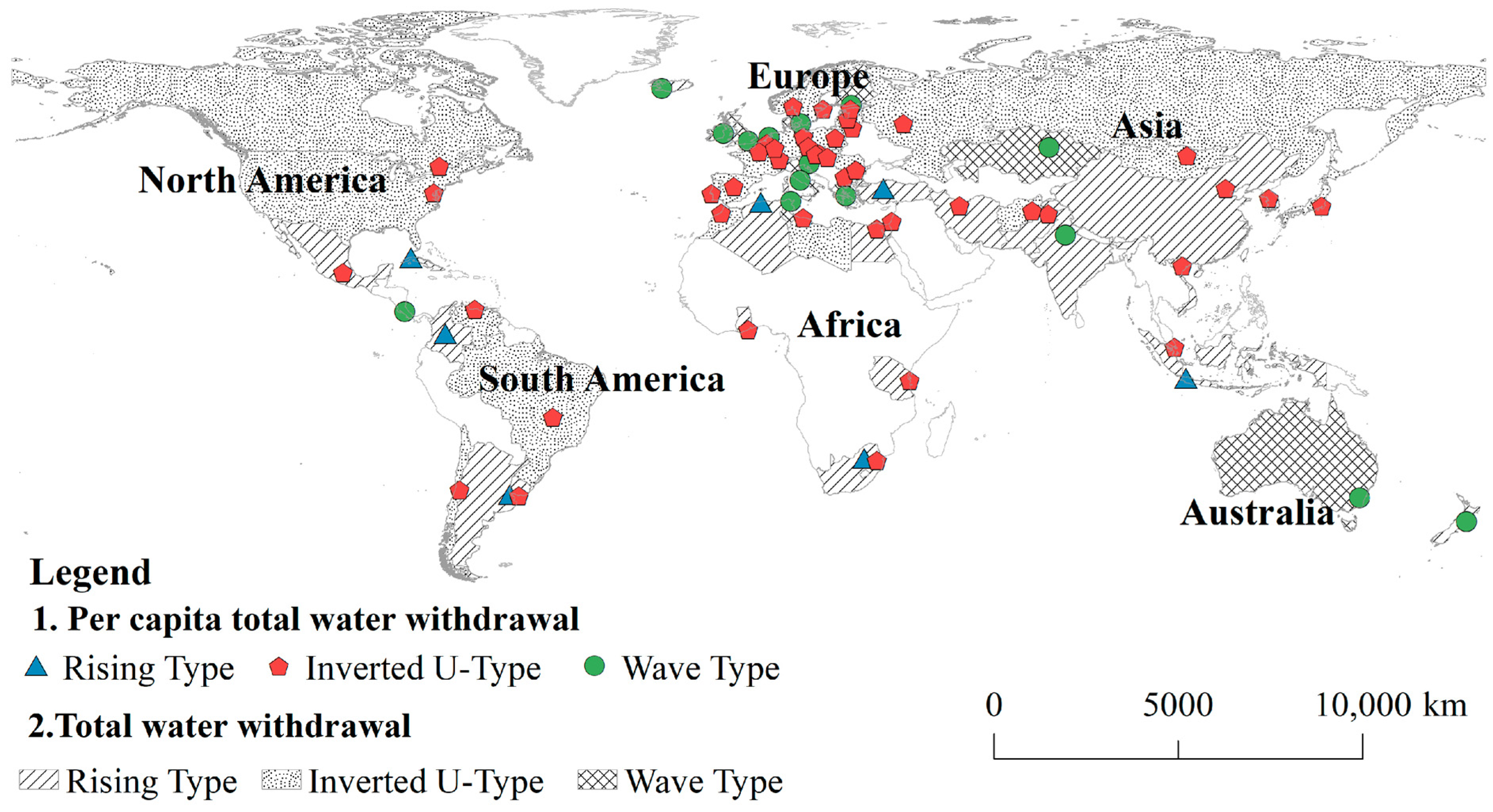
Figure 1. Global distribution of countries according to the temporal trends of water withdrawal. Colored symbols represent trend types of per capita total water withdrawal, including rising type, inverted U-type, and wave type, while shaded patterns indicate corresponding trend types of total water withdrawal. Continental labels are provided for spatial reference, illustrating regional heterogeneity in water-use dynamics across North America, South America, Europe, Africa, Asia, and Australia [2].
Resources 15 00031 g001
Figure 2. Schematic diagram of the coupled ecohydrological model and water resources system optimization aided by the Water Resources Graphical Interface (WARGI) [23].
Resources 15 00031 g002
Figure 3. Conceptual framework of AI-enhanced satellite data preprocessing for hydrological modeling. Satellite-derived inputs undergo AI-based downscaling, bias correction, and temporal interpolation to produce high-resolution, bias-adjusted, and gap-filled datasets for streamflow and groundwater prediction [27].
Resources 15 00031 g003
Figure 4. Pathways and impacts of emerging contaminants in aquatic ecosystems. (a) Major sources and transport routes of emerging contaminants (per- and polyfluoroalkyl substances (PFAS), pharmaceuticals, and microplastics) from urban, industrial, and agricultural origins into water bodies. (b) Ecological and human health impacts, including bioaccumulation, trophic transfer, and ecosystem service disruption [46,47].
Resources 15 00031 g004
Figure 5. Water governance analytical framework showing core governance functions and attributes and the manifestation of institutional and policy gaps that affect sustainable and resilient water resource management [81].
Resources 15 00031 g005
Figure 6. Schematic representation of a membrane-based treatment system [89].
Resources 15 00031 g006
Figure 7. Internet of Things (IoT)-based smart water management systems [138].
Resources 15 00031 g007
Figure 8. Schematic representation of major types of constructed wetlands (CWs) and their pollutant removal mechanisms [146].
Resources 15 00031 g008
Figure 9. Constructed wetland systems: conventional types (free water surface (FWS), horizontal subsurface flow (HSSF), vertical subsurface flow (VSSF) on the left; hybrid wetlands integrating surface and subsurface flows for enhanced pollutant removal on the right [147].
Resources 15 00031 g009
Figure 10. Conceptual framework for future sustainable water management integrating technology, ecological resilience, socio-economic participation, and governance innovations.
Resources 15 00031 g010
Table 1. Summary of recent empirical studies examining water-scarcity hotspots across diverse geographic and governance contexts.
Hotspot TypeResearch Focus and Key FindingsReferences
Arid/agricultural regionsA study from Saudi Arabia (Al Kharj region) found rising water scarcity driven by demand and climate vulnerability; used Structural Equation Modeling (SEM) modeling with 525 respondents.[39,40]
Arid/global overviewGlobal study identified 21 water-scarcity “hotspots” classified into 7 clusters; drivers include hydro-climatic change, population growth, agriculture.[41,42]
Transboundary basinsGlobal assessment under SSP/RCP scenarios: water stress in transboundary basins could double by 2050 under high emissions/population growth.[43]
Transboundary/governanceStudy of “Steep sustainability challenges in transboundary basins worldwide”: shows inequities and resource stresses in shared basins.[44]
Table 2. Overview of key tools and methods used to assess groundwater depletion and saltwater intrusion.
Tool/MethodPrimary ApplicationStrengthsLimitations/ConsiderationsReferences
SEAWAT (variable-density groundwater flow and solute transport model)Simulates freshwater–saltwater interactions, predicts salinity intrusion under different pumping, recharge, and sea-level scenariosHigh accuracy; supports scenario testing; widely validated in coastal/deltaic systemsRequires detailed hydrogeological data; computationally intensive; results sensitive to boundary conditions[60,61,62]
GALDIT Index (saltwater intrusion vulnerability index)Rapid screening of coastal aquifer vulnerability based on hydrogeological indicatorsEasy to apply; useful for regional-scale mapping; supports management prioritizationStatic, index-based approach; may oversimplify complex processes; weighting factors may vary by region[63,64]
Modified GALDIT/Integrated SEAWAT–GALDIT ApproachesTime-varying vulnerability assessment; enhanced representation of local hydrogeologyImproved accuracy; captures temporal dynamics; adaptable to site-specific conditionsRequires calibration; still relies partly on subjective index components; higher data demand[59]
GRACE Satellite GravimetryDetects large-scale groundwater storage variationsExcellent for basin to continental scale trends; independent of local monitoring networksPoor spatial resolution; requires separation of surface water/soil moisture signals[65]
In Situ Monitoring (piezometers, sampling, geophysical surveys)Local groundwater level and salinity monitoringHigh accuracy at local scale; essential for calibration/validationSparse networks in many regions; maintenance and long-term consistency required[66]
Numerical Groundwater Models (MODFLOW, FEFLOW)Simulate groundwater flow, depletion trends, and impacts of pumpingFlexible; widely used; supports management scenariosLimited in representing density-dependent flow without extensions; requires expert setup[67,68]
Index-Based Water-Stress Tools (extraction-to-recharge ratio, groundwater stress indices)Assess long-term sustainability of pumping relative to rechargeSimple and widely applicable; requires minimal dataDoes not capture salinity dynamics or spatial heterogeneity[69,70]
Table 4. Major governance frameworks supporting sustainable water management and the challenges limiting their operationalization.
ApproachCore PurposeKey ChallengesReferences
IWRMCoordinated management of water and land resources for sustainabilityInstitutional fragmentation; weak cross-sector coordination[170]
Circular Water Economy (CWE)Promote water reuse, recycling, and resource recoveryHigh initial costs; regulatory and public acceptance barriers[171]
Transboundary Cooperation (TC)Joint management of shared water systemsPower imbalances; limited legal enforcement[172]
Economic Instruments (Pricing, PES)Encourage efficient water use and fund ecosystem protectionRisk of inequity; requires strong oversight[173]
Stakeholder ParticipationImprove policy legitimacy and local relevanceTime-intensive; requires capacity building[174]
Disclaimer/Publisher’s Note: The statements, opinions and data contained in all publications are solely those of the individual author(s) and contributor(s) and not of MDPI and/or the editor(s). MDPI and/or the editor(s) disclaim responsibility for any injury to people or property resulting from any ideas, methods, instructions or products referred to in the content.