1. Introduction
Nowadays, digital infrastructure, innovation ecosystems, and artificial intelligence (AI) readiness have become critical drivers of economic and societal performance [
1]. In contemporary production, such drivers enable large-scale data collection; however, by integrating AI-based learning, prediction, and optimization, systems are reshaped, fostering smarter, more autonomous, and more adaptive production environments that support not only operational efficiency but also long-term sustainability objectives. This technological evolution reflects a broader shift from Industry 4.0, characterized by automation, connectivity, and data exchange, to Industry 5.0, which emphasizes a systemic approach [
2,
3]. Within this context, production management faces rising complexity, volatility, tighter quality standards, and stronger sustainability and resilience expectations, demanding research into how AI reshapes its systems [
4]. When addressed independently, sustainability tends to emphasize environmental protection, resource efficiency, and social responsibility, whereas resilience focuses on absorbing disruptions, recovery capability, and adaptive responses under uncertainty [
5]. Resilience research remains fragmented across disciplines, with varying definitions, elements (e.g., flexibility, redundancy and adaptive management), and implementation strategies [
6,
7]. These align production design with both long-term sustainability goals and short-term disruption management requirements [
5].
Moreover, optimization has become a major concern in contemporary production and supply network design [
8]. Production has moved beyond single-objective optimization toward multi-dimensional decision models that jointly consider environmental impact, social outcomes, and system robustness. Optimization under uncertainty is where AI truly shows its value. In complex, unpredictable environments, organizations can no longer plan on stable assumptions [
9]. Especially in volatile environments shaped by demand fluctuations, geopolitical shocks, and sustainability pressures, AI supports more complex planning by moving beyond static optimization models toward adaptive decision systems that continuously learn from new information [
10]. Machine learning algorithms can simulate multiple disruption scenarios, anticipate variability in supply and demand, and evaluate trade-offs across competing objectives [
11]. Rather than optimizing solely for short-term profit, AI-based models allow managers to balance economic performance with environmental sustainability metrics and resilience indicators such as recovery time, redundancy, and flexibility.
AI is increasingly discussed as an integrative framework capable of accessing vast information resources, synthesizing large volumes of heterogeneous data, identifying and learning complex production patterns, and generating real-time, context-aware recommendations [
12,
13] that may exceed the productivity of traditional tools. By embedding predictive and autonomous decision-making into core operational processes, AI enhances resource coordination, stabilizes production flows under uncertainty, and supports continuous improvement at multiple organizational levels [
14]. Moreover, AI’s capacity to integrate information across machines, workers, and supply chain partners enables a more holistic form of production management: a highly adaptive, resilient one, aligned with emerging sustainability and circularity imperatives [
15]. As production systems evolve toward higher levels of interconnectivity and human–machine collaboration [
16], AI shifts in the literature from a mere technological add-on toward a tool that redefines how production is planned, monitored, and optimized [
17].
Under such circumstances, this paper, given its bibliometric review methodology, presents the major changes AI has brought to production management. The literature addressed several topics, including data-driven optimization, predictive decision modeling, and sustainability-oriented production (including the highly marketed concept of smart manufacturing). In our view, there is more to highlight on this topic: data analysis with keyword occurrence mapping, subject-area classification, and collaborative networking would yield the results needed to underscore insights into production ecosystems. Such a consolidated understanding of AI’s transformative role would link these broader research patterns with the concrete operational changes occurring within production systems.
In the context of production, AI-based analytics and decision-support systems have become a logical operational response: they are increasingly positioned to strengthen prediction under uncertainty, optimize resource allocation, and improve coordination and responsiveness [
18]. This is important within smart factories, where interconnected machines, sensors, and cyber-physical systems generate continuous data streams that AI can interpret to support autonomous or semi-autonomous decision-making. In these systems, AI enables dynamic scheduling, predictive maintenance, quality monitoring, and real-time process optimization [
19], thereby transforming production systems from volatile, linear systems into proactive, adaptive, and self-regulating systems [
20].
Therefore, scholars and practitioners alike need to understand how AI reshapes production management. First, AI adoption is no longer limited to isolated operational tasks [
21], but is progressively transforming business strategies [
22] and, especially, production systems [
23,
24]. Firms implement changes in designing workflows, coordinating resources, and governing increasingly autonomous processes. Second, the rapid development of AI-enabled tools has outpaced the advancement of integrated theoretical frameworks that can explain their cumulative effects on productivity, sustainability, and resilience [
25]. Without a consolidated understanding, organizations risk fragmented implementation, suboptimal investments, and unintended socio-technical consequences [
26]. Third, as global supply chains become increasingly exposed to disruptions, AI-driven production management offers new pathways to enhance adaptability, predictive capabilities, and circularity. These dimensions are key elements of policy agendas and strengthen industrial competitiveness. Yet, despite its strategic relevance, the literature remains dispersed across disciplines, limiting both scholarly progress and practitioners’ capacity to navigate the organizational and technological shifts driven by AI in production systems.
A systematic and comprehensive review is therefore essential to map the intellectual landscape, identify dominant and emerging research streams, and clarify how AI is redefining the principles and practices of production management. Such an effort would advance academic understanding and provide practitioners and policymakers with evidence-based insights to guide the responsible, effective integration of AI into production systems.
Existing bibliometric work touching this space remains fragmented and narrower in scope than the present study. Strasser, Tripathi, and Brunner [
27] analyzed keywords and topics related to AI in manufacturing, but without a PRISMA-guided selection process or a triangulated combination of performance analysis, co-authorship mapping, and thematic density analysis. Belu and Marinoiu [
28] conducted a bibliometric analysis of AI in supply chain management using VOSviewer 1.6.19 and Bibliometrix 4.4.2. on 400 Scopus-indexed documents (2010–2024), but this work is confined to the supply chain function rather than to production management as a whole. At a broader level, Fosso-Wamba and Guthrie [
29] mapped the intersection of AI with both Industry 4.0 and Industry 5.0 across a large, technology-centered corpus, without specifically isolating production management as the unit of analysis or examining its managerial and organizational dimensions. To our knowledge, no existing bibliometric study combines a PRISMA-guided, Web of Science-based dataset spanning 2016–2026 with a triangulated analysis of performance indicators, keyword co-occurrence clustering, country- and author-level collaboration networks, and thematic density mapping, explicitly framed around how AI reconfigures production management as a managerial and organizational system rather than as an isolated technological capability. The present study addresses this gap and clarifies its specific contribution relative to the broader AI-and-Industry-4.0/5.0 bibliometric literature.
Given the ongoing growth of this topic, this research aims to conduct a systematic bibliometric analysis that maps the intellectual structure and evolution of AI-driven research in production management. The specific objectives are as follows:
SO1. Identifying the dominant themes, conceptual clusters, and methodological patterns that characterize AI applications in production management.
SO2. Examining how research streams have developed over time and how they collectively shape current understandings of AI-enabled transformations in production systems.
SO3. Outlining future research directions that advance both theoretical and practical insights into the role of AI in reshaping production management.
Thus, this study contributes to the literature by providing a comprehensive, structured mapping of research output on artificial intelligence in production management over the period 2016–2026. First, we construct a rigorously filtered dataset using a PRISMA-guided selection process applied to the Web of Science (WoS) database, ensuring transparency and replicability in document identification and screening. Second, we provide a longitudinal analysis of publication trends to capture the field’s growth trajectory and maturation. Third, we examine the distribution of research areas to clarify the disciplinary foundations of AI-driven production research and to highlight its interdisciplinary diffusion across various domains. Fourth, we apply VOSviewer network analysis to identify eight distinct keyword clusters, revealing the core thematic structures that organize the literature. In addition, we analyze country-level and author-level co-authorship networks to uncover global collaboration hubs and the structural configuration of research communities. Finally, we complement network mapping with keyword word cloud analysis to illustrate thematic density and emerging directions within production contexts. Together, these elements provide a triangulated bibliometric perspective that moves beyond singular applications toward an integrated understanding of AI’s role in production management.
Guided by the general objective herein mentioned before, the study addresses two research questions:
RQ1: How much has the scientific output on AI reshaping production management matured between 2016 and 2026?
RQ2: How has AI in production management been positioned within the dominant intellectual structures of this literature, namely its core themes, disciplinary foundations, and collaboration hubs?
By answering these questions, we aim to clarify both the field’s developmental trajectory and its structural composition, thereby establishing the conceptual basis of this paper. In terms of structure, it is organized as follows:
Section 2 outlines the materials and methods used to undertake the bibliometric analysis;
Section 3 highlights the empirical results, whereas
Section 4 provides a thorough discussion of the findings in relation to existing scholarship; and
Section 5 completes the study by highlighting key conclusions and directions for future research.
2. Materials and Methods
This study aims at analyzing the evolution of scientific research which focuses on the reconfigurations of production management with artificial intelligence. Patterns, structures, impact and effects within specialty literature, as well as its dynamics are determined by conducting a bibliometric review. This research approach uses quantitative data to highlight the capital of a field by analyzing the intellectual, social, and conceptual relationships between various scientific items [
30]. In terms of methodology, it consisted of the following three stages:
- (1)
Design of research strategy: analyzing what to map or measure by defining filtering items according to three specific categories: ‘AI integration’, ‘production contexts’, and ‘management contexts’ (see
Table 1). These categories were identified during a brainstorming session of the research team with the focus on including in the analysis only the items that make a connection between artificial intelligence and production management.
- (2)
Collection of data: selection of metadata sources (databases), creation of Boolean search queries, retrieval and export of records, cleaning of the database, and preparation of the generated data. To identify relevant publications, a dataset was extracted from the Web of Science (WoS) Core Collection, one of the most widely used and reliable databases for bibliometric research due to its high-quality indexing and consistent citation metadata [
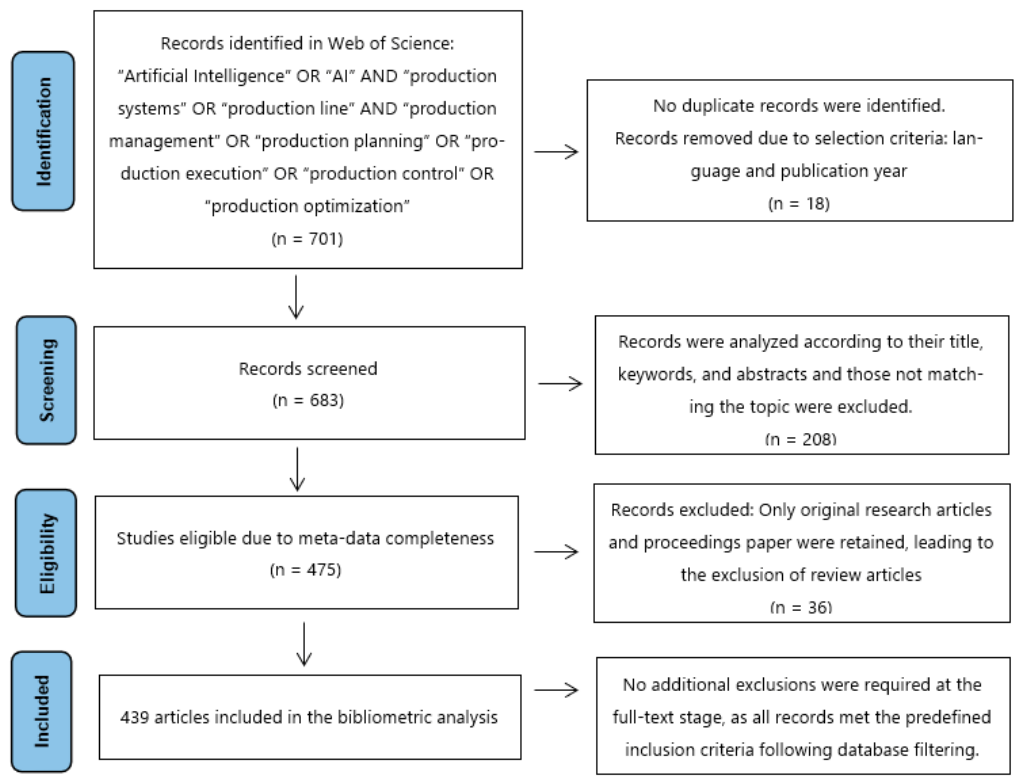
31]. The search was conducted on April 2026 and the Boolean search string was (“artificial intelligence” OR “AI”) AND (“production systems” OR “production lines”) AND (“production management” OR “production planning” OR “production execution” OR “production control” OR “production optimization”). The search query was applied across all fields to capture studies addressing the transformations artificial intelligence has brought to production management, a relatively new research topic. The initial search identified 701 records. The selection criteria were applied as in
Table 1. First, one non-English publication was excluded. Second, publication year was used as a refinement criterion, and we removed the other 13 items (98.15% of research on this topic was published in the last 10 years, highlighting the topic’s novelty). Third, we excluded the other four records because they focused on research fields (like chemistry and physics) intentionally avoided to maintain thematic precision and prevent the inclusion of loosely related publications. After applying these criteria, the final dataset consisted of 683 records. However, to ensure transparency and replicability, the study adapted the Preferred Reporting Items for Systematic Reviews and Meta-Analyses (PRISMA) guidelines [
32] to strengthen the credibility of the findings [
33]. Its application helped us fit the objectives of the bibliometric study even if its use is mandatory for systematic and scoping reviews only [
34]. Two authors independently analyzed the titles, keywords, and abstracts of the articles and rated each record as 0 (exclusion) or 1 (appropriateness), and then performed cleaning based on the articles’ relevance to the research objectives. We calculated the inter-rater reliability with Cohen’s coefficient, which indicated that the two raters’ coding and classifications aligned extremely well, with κ = 0.907 (95% CI, 0.872 to 0.942 showing high reliability) and
p < 0.001 reflecting statistical significance. Hence, we excluded a total of 208 articles which were not rated as 1 by both raters. The remaining 475 records were checked for eligibility according to their type, excluding editorial material and reviews. Finally, the number of records identified, screened, assessed for eligibility, and ultimately included in the final synthesis (
n = 439) is illustrated in the PRISMA flow diagram presented in
Figure 1.
- (3)
Generating results, interpreting findings and visualization. Bibliometric mapping and network visualization were performed using VOSviewer version 1.6.20, a widely used software tool for constructing and visualizing bibliometric networks. The analysis included keyword co-occurrence mapping, author co-authorship networks, and country collaboration networks in order to identify the intellectual structure and collaboration patterns of the field. In addition, word cloud analysis and descriptive statistics were generated using Microsoft Excel 365 to examine keyword distribution and thematic density within the dataset.
To obtain a more comprehensive understanding of the research output, the study applied a triangulation of complementary bibliometric techniques. First, descriptive statistical graphs based on Web of Science subject categories were used to examine the disciplinary distribution of the literature and to identify the main knowledge domains shaping research on artificial intelligence in production management. Second, network visualization techniques were implemented using VOSviewer to perform co-word and collaboration analyses. These analyses focused on three key dimensions: author keywords, country co-authorship networks, and author collaboration patterns. Together, these networks provide insight into the thematic structure of the field and the main research communities contributing to its development. In addition, a keyword density analysis [
35,
36] was conducted for the two most prominent research areas identified in the dataset in order to explore thematic concentrations and emerging research directions in greater depth. By combining descriptive statistics, network analysis, and thematic density exploration, the study integrates multiple analytical perspectives that allow the results to be interpreted from both structural and thematic viewpoints. This triangulated approach also supports the study’s research questions by enabling the examination of the evolution of scientific output over time, while simultaneously revealing the intellectual structure and emerging trends within the field.
In order to extend our perspective on the field’s evolution and scientific structure, the analysis also examines the disciplinary composition of the existing literature.
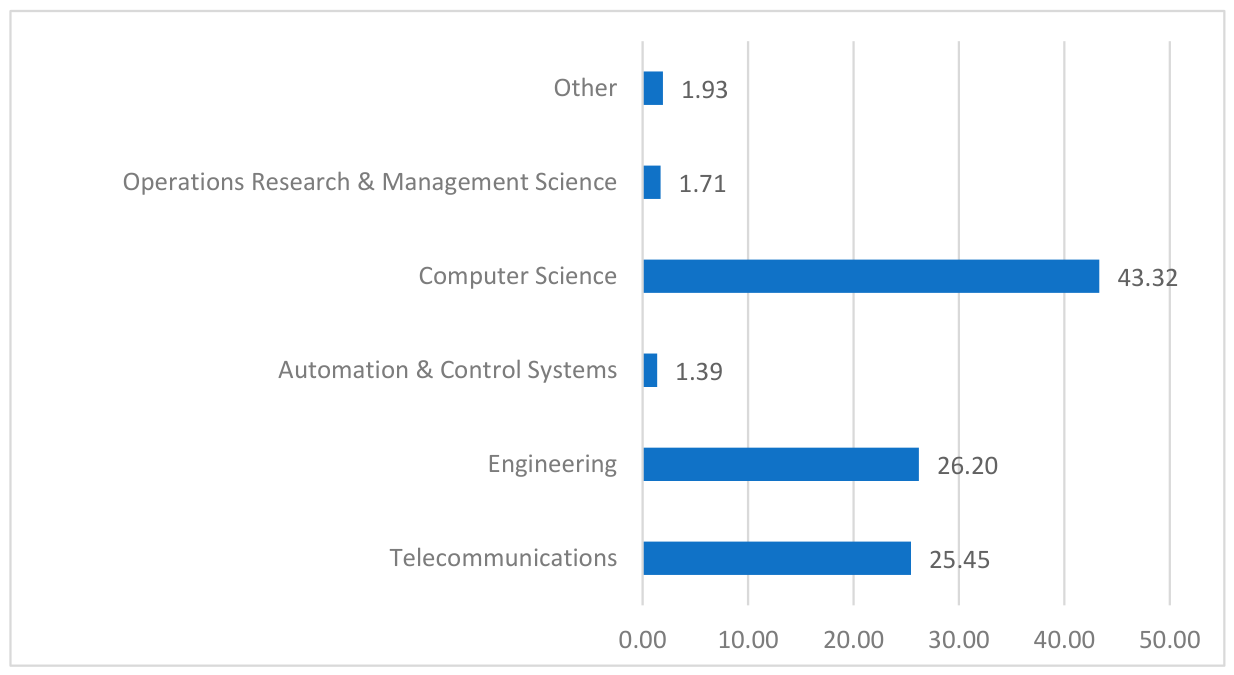
Figure 2 illustrates the distribution of the publications across major research areas. The findings reveal that computer science represents the dominant field (43.32% of the total records included in the analysis, in absolute values). This result highlights the importance of computational methods, artificial intelligence technologies, and digital systems in production management. It also reflects the increasing integration of AI-driven approaches into industrial and organizational environments. Moreover, the second most represented area is engineering (26.20% of publications, in absolute values), indicating that research in this area focuses on industrial automation, smart manufacturing, predictive maintenance, process optimization, and production system resilience. Telecommunications (24.45% in absolute values) ranks third; this shows the growing importance of connectivity, data exchange infrastructure, Internet of Things (IoT) ecosystems, and intelligent communication networks in supporting advanced technological applications. Modern AI-enabled production and operational systems are highly dependent on robust communication architectures and real-time information flows. Hence, the relatively high proportion confirms the interdisciplinary nature of AI adoption within industrial contexts. Actually, the analysis of research areas related to the keywords “Artificial Intelligence” and “production management” shows that research on AI in production management is multidisciplinary, with contributions in both technical and applied domains.
Once the disciplinary foundations of the literature have been clarified, the temporal patterns are presented.
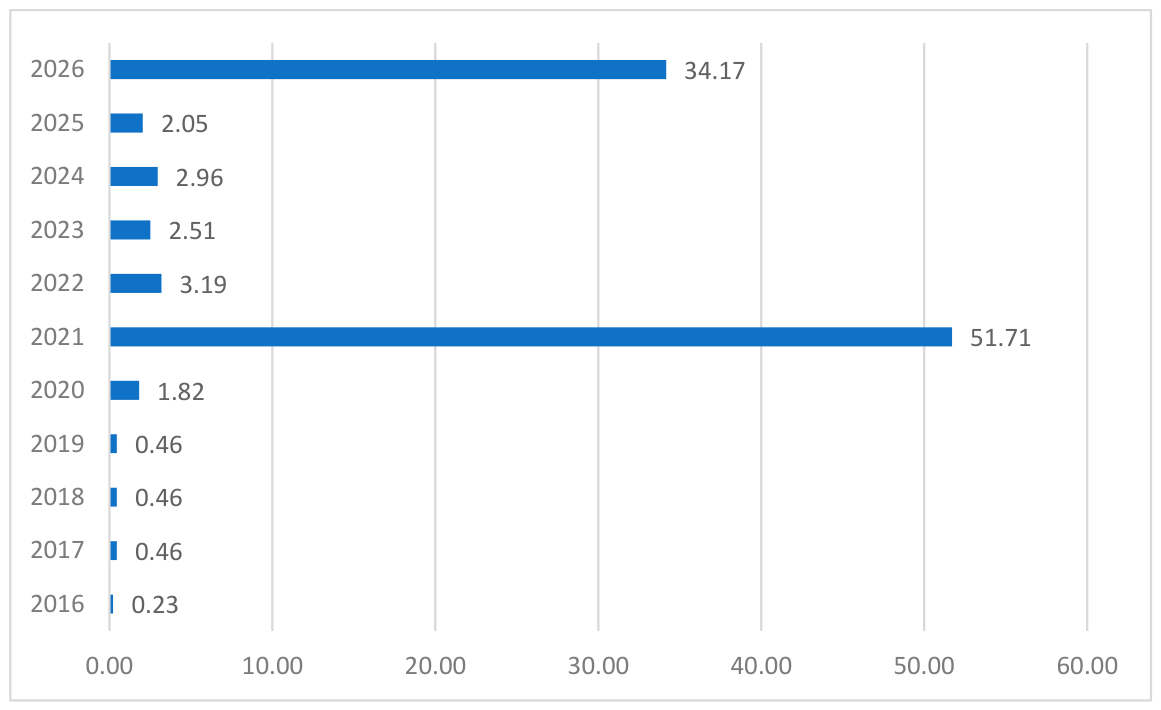
Figure 3 presents the distribution of the analyzed publications between 2016 and 2026. The results indicate highly uneven research output, characterized by two peaks: 2021 and the ongoing 2026 (included to underline researchers’ increasing interest). The year 2021 records the highest share of publications (51.71%), suggesting intensive research on a new topic like AI in production at the referenced time (the period of 2016–2020 recorded limited research activity, below 0.5%). In our view, this peak in productivity may be linked to thematic attention or funding opportunities, and we shall cautiously analyze the data in depth in the next section of the paper. Moreover, between 2021 and 2026, the topic underwent post-peak normalization until the recent integration of AI use across all industrial fields, which brought a new concentration starting in 2026, accounting for 34.17% in the first months. This finding shows the growing academic attention on the topic, potentially reflecting the consolidation or expansion of earlier themes, as well as the future development of new paradigms.
3. Results
This section presents the main findings from the bibliometric analysis of the 439 articles forming our dataset, structured into two complementary result categories: performance analysis and science-mapping output [
37]. The performance analysis provides a quantitative overview of the field by examining publication trends by leading journals and countries, thereby revealing the productivity and impact patterns that shape AI-related research in production management. In parallel, the science-mapping results uncover the intellectual and conceptual structure of the domain through co-citation networks, keyword co-occurrence clusters, and thematic evolution maps, offering insights into how research interests have emerged, converged, or diversified over time. Together, these two analytical dimensions provide a comprehensive understanding of the field’s growth path while underlying the intellectual structure of the field.
3.1. Performance Analysis
3.1.1. Research Productivity
Our dataset consists of 439 items, which seems imbalanced: 27 articles and 412 conference proceedings papers (legitimate bibliometric units, as indexed by Web of Science in the core collection for their valid scientific output). This disproportionate distribution indicates that the available evidence base is heavily skewed toward conference outputs, particularly those associated with recurring thematic volumes like the Advances in Production Management Systems (APMS) series. On one hand, the bibliometric patterns identified in this review mainly reflected conference-driven dissemination dynamics rather than the broader, peer-reviewed journal landscape. Hence, the generalizability of the findings should be interpreted as representative of a specific publication ecosystem rather than the entire research field.
On the other hand, in the context of AI applied to production management, conference proceedings are not a marginal component of the scientific landscape but the primary and most legitimate channel for knowledge dissemination. Because our research topic is both emerging and technologically dynamic, journals (characterized by long review cycles and conservative scopes) capture only a small fraction of early methodological advances, prototypes, and empirical validations. APMS series particularly function as a core publication ecosystem where new algorithms, architectures, and industrial applications are first introduced, peer-reviewed, and debated. Excluding conference papers from our bibliometric review would therefore remove the foundational and most up-to-date contributions, leaving only 27 journal articles and producing a distorted, incomplete, and statistically fragile representation of the field. Bibliometric standards explicitly state that there is no reason for choosing some document types and excluding others [
38,
39], proceedings indexed in peer-reviewed databases like Web of Science constituting valid citable items and being essential for accurately mapping intellectual structure, thematic evolution, and research trends. Thus, their inclusion is not only justified but methodologically necessary to ensure representativeness and fidelity to how AI in production management actually develops and disseminates. Additionally, their exclusion would be a bias [
39,
40]. However, the generalizability of the findings would be improved with more research articles that would fully capture this broader topic.
Regarding articles, our research retrieved 27 records on how AI reshapes production management, accounting for only 6.15% of the results.
Table 2 below shows that journals published by Elsevier are the most favored by authors (37.04%), followed by Taylor & Francis and MDPI, each at 14.81%. We underline that the distribution of publications across 21 distinct journals indicates a limited thematic and editorial reach. The most preferred journal is Engineering Applications of Artificial Intelligence (SJR in 2025 of 1.782, Q1) which accounts for three publications, followed by four journals with two publications each: CIRP Annals—Manufacturing Technology (SJR in 2025 of 1.347, Q1), Journal of Manufacturing Systems (SJR in 2025 of 3.304, Q1), International Journal of Production Research (SJR in 2025 of 2.215, Q1), and Journal of Intelligent Manufacturing (SJR in 2025 of 1.888, Q1). These journals are all recognized as leading venues in advanced manufacturing and production engineering, with an increasing focus on AI-enabled industrial systems.
The remaining journals each contribute one publication, reflecting the field’s methodological and interdisciplinary breadth and highlighting the need to encourage research on this topic. Notably, several specialized academic presses of academic institutions or institutes in Spain, Poland, Slovenia, Austria, and Taiwan highlight the complementary presence of niche publishing houses that support academic interdisciplinary and application-oriented contributions.
Furthermore, the analysis of publications in conference proceedings (93.85%) presented in
Table 3 below reveals a highly asymmetric distribution, with the majority of contributions concentrated within the APMS series published by Springer, highlighting research priorities over time. Starting with 2018, it has become a central venue for shaping and disseminating AI-driven innovations in production management, reflecting both technological advances and the field’s shift toward intelligent, adaptive, and socio-technical production systems. However, given the importance of AI in reshaping production systems, it is striking that this topic has not gained comparable prominence in other major conference proceedings, despite its clear and accelerating relevance to the field.
Out of a total of 412 publications, 89.32% originate from two APMS thematic volumes, underlining the central role of scientific conferences as primary dissemination platforms for research in production management, intelligent manufacturing, and AI-driven industrial systems. The largest cluster corresponds to APMS: Artificial Intelligence for Sustainable and Resilient Production Systems (53.64%), highlighting the field’s strong orientation toward AI-enabled sustainability and resilience. This is followed by APMS: Cyber-Physical-Human Production Systems (35.68%) reflecting the growing emphasis on integrated human–machine collaboration and cyber-physical architectures aligned with industrial trends, for example, Industry 5.0. However, this concentration shows a significant methodological issue: the manuscript does not capture the entire landscape of AI research in production, but rather a specific subset represented by AI in production management. This imbalance shapes the temporal and thematic patterns observed and the broader evolution of the sub-field needs for specific development within research. It should be noted that the dataset relies exclusively on the Web of Science Core Collection and is heavily weighted toward conference proceedings: 93.85% of the 439 included documents are conference papers, and within this subset, 89.32% originate from two thematic volumes of the Advances in Production Management Systems (APMS) series as herein mentioned before. This concentration reflects both the genuine centrality of APMS as a dissemination venue for AI-in-production-management research and a degree of sample selection bias introduced by the single-database search strategy. Consequently, the thematic clusters and structural patterns identified below should be interpreted as most representative of the APMS research community and, more broadly, of literature indexed in WoS, rather than as a fully database-agnostic picture of the field. This limitation and its implications for the generalizability of the findings are discussed further in
Section 5.
3.1.2. Top Countries
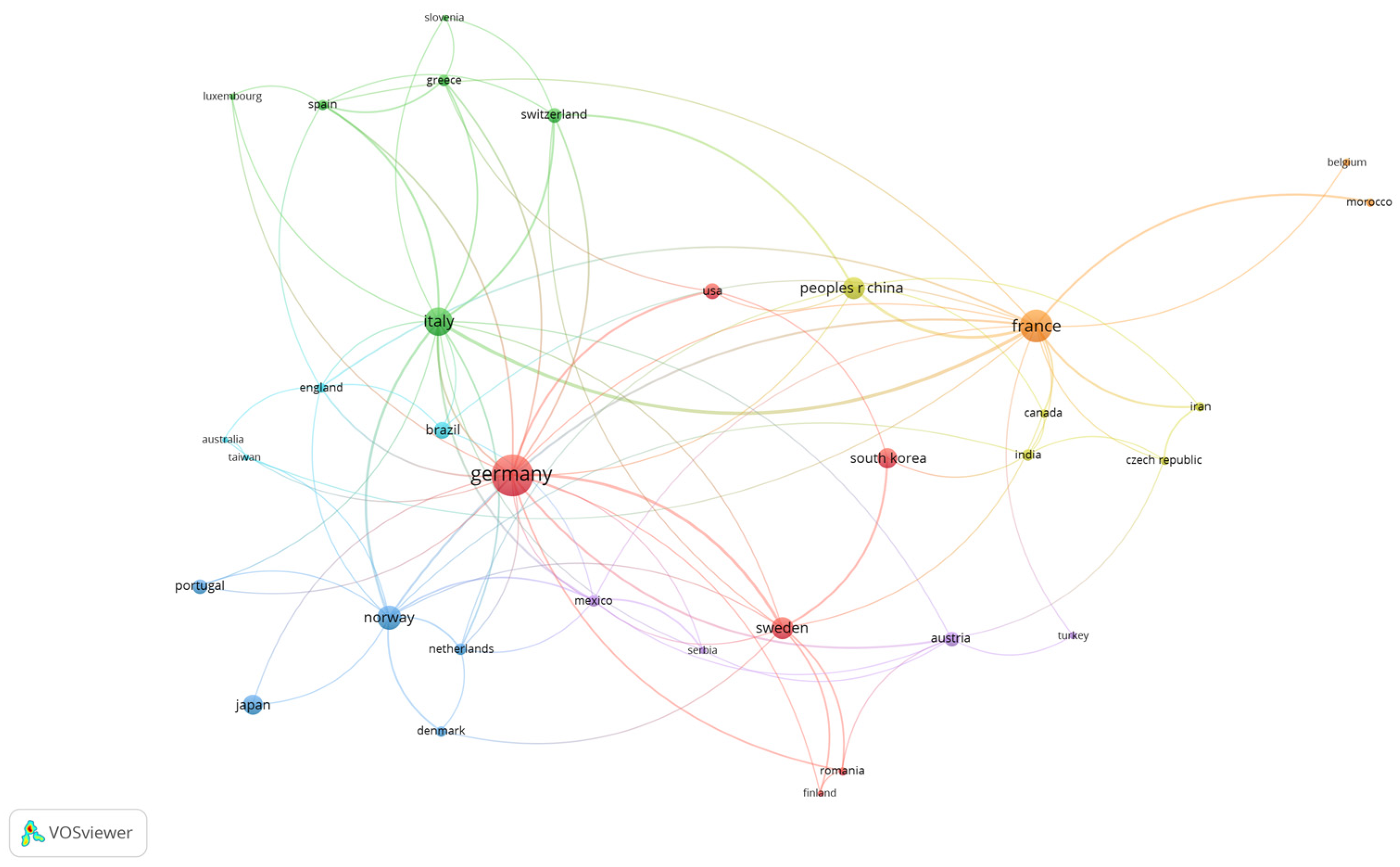
The country co-authorship map generated with VOSviewer highlights the international collaboration structure of the literature and reveals a network of 33 countries grouped into 7 clusters, as presented in
Figure 4. Overall, the map shows a field that is clearly international, but not evenly connected. A small number of countries occupy the core of the network, while others remain more peripheral, suggesting lower publication output or weaker collaborative integration. The most prominent countries are Germany, France, Italy, Sweden, Norway and South Korea, which appear to play leading roles in shaping international research collaboration in this area.
Among them, Germany (Cluster 1, Red, TLS = 33, 23 occurrences) stands out as the network’s main hub. Its central position and large node size suggest both strong research output and a high level of collaboration with multiple partners. Germany is linked with countries such as Italy, Sweden, France, South Korea, Brazil, Norway, and Romania, showing that its influence extends across several collaboration circles rather than a single regional bloc. France (Cluster 7, orange, TLS = 25, 14 occurrences) also appears as a major collaboration center. It occupies an important bridging position between Western European countries and a number of non-European partners, including China, India, Iran, Canada, and Morocco. This suggests that France plays a key role in expanding the international reach of the field and in connecting European research with broader global partnerships. Italy (Cluster 2, green, TLS = 45, 18 occurrences) is another highly influential country in the network. Its dense set of links, especially with Spain, Greece, Switzerland, Brazil, and Germany, points to a strong collaborative role within the European research space. Similarly, Sweden (Cluster 3, blue, TLS = 32, 15 occurrences) holds a visible coordinating position, with links to Germany, South Korea, Austria, Romania, and Finland, suggesting that it helps maintain connections between Northern Europe and other parts of the network.
Beyond these major hubs, the map also shows several smaller collaboration groups. Some, such as those involving Norway, Japan, Denmark, the Netherlands, and Portugal, remain moderately connected to the core while preserving internal cohesion. Others are more peripheral, including Belgium, Morocco, Australia, Taiwan, Finland, and Turkey, whose marginal positions suggest a more limited or specialized role in the dataset.
One of the most noticeable features of the map is the strong European concentration of collaboration. Most of the largest and most connected countries are European, and many of the strongest visible ties also occur within Europe. At the same time, the presence of countries such as South Korea, Japan, India, China, Brazil, Mexico, Canada, and the USA shows that the field is not exclusively European, but is gradually expanding through selected international partnerships. Overall, the map suggests that the collaboration structure is international but clearly hierarchical. Most countries are connected directly or indirectly through the main hubs, yet a small group of countries, especially Germany, France, Italy, and Sweden, clearly dominate the network. This points to a field that is steadily internationalizing, but whose collaborative influence and knowledge production remain concentrated in a relatively small core.
3.2. Science Mapping
3.2.1. Co-Authorship
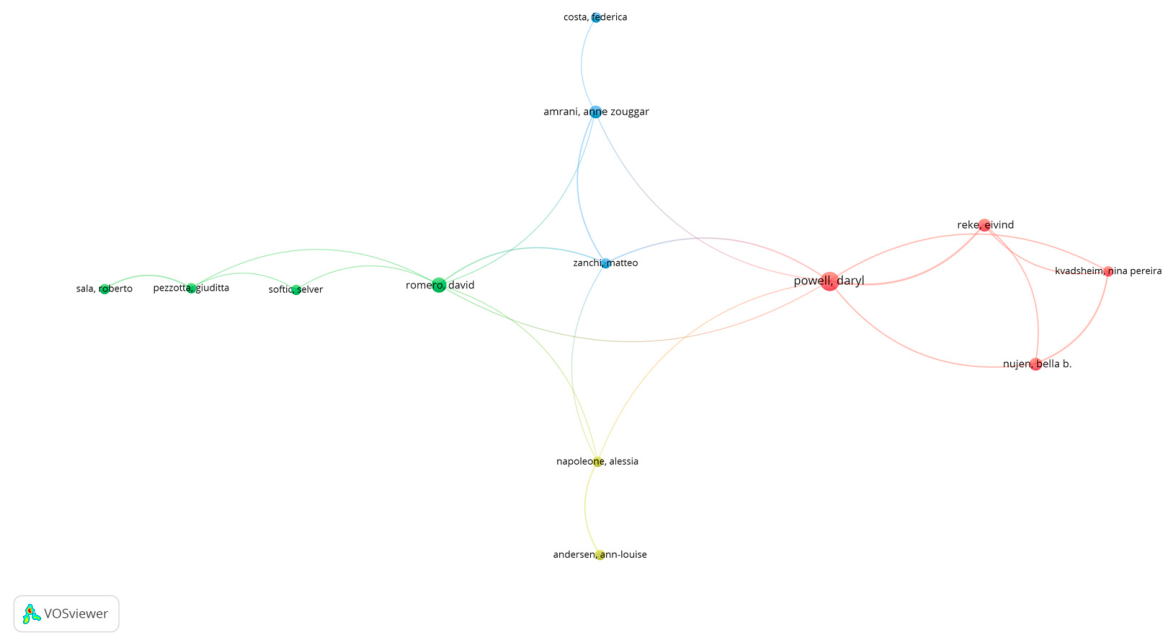
The author co-authorship map generated with VOSviewer in
Figure 5 below reveals a relatively compact but clearly structured collaboration network composed of 13 authors grouped into 4 clusters. Compared with broader country or keyword networks, this map reflects a more specialized level of collaboration, organized around a few tightly connected research teams rather than a single, dense, fully integrated community. Overall, the network suggests that collaboration in this area is meaningful, but still somewhat fragmented, with several small groups linked through a limited number of bridging authors.
At the center of the network, Daryl Powell (Cluster 1, red, TLS = 20, 19 occurrences) stands out as the most prominent and strategically positioned author. The relatively large node size and central placement suggest that Powell plays a key role in the collaborative structure of this topic. More importantly, Powell connects directly with authors from multiple clusters, indicating a clear bridging function between otherwise separate research groups. In bibliometric terms, this position is especially important because it reflects not only visibility but also a stronger integrative role in linking different collaboration circles. The first collaboration group includes Nina Pereira Kvadsheim, Bella B. Nujen, Daryl Powell and Eivind Reke. This cluster appears cohesive and well connected internally, suggesting a stable pattern of collaboration. Because Powell also serves as the main bridge to the rest of the map, this group seems to represent one of the most influential author teams in the network.
Another cluster (Cluster 2, green, TLS = 13, 12 occurrences) includes Giuditta Pezzotta, David Romero, Roberto Sala and Selver Softić. Within this group, David Romero occupies the central position, clearly showing his position as the core collaborator of the cluster. In addition to maintaining strong internal ties, Romero also appears to connect this group to the wider network, making him another important linking figure, although less central than Powell.
The third cluster (Cluster 3, blue, TLS = 11, 8 occurrences) is formed by Anne Zouggar Amrani, Federica Costa and Matteo Zanchi. Here, Amrani plays the main internal coordinating role, while Zanchi is the connection point between this smaller group and the broader network. Although less central than the first two clusters, this group still contributes to the diversity of the collaboration structure. Moreover, the smallest cluster (Cluster 4, yellow, TLS = 10, 7 occurrences) includes Ann-Louise Andersen and Alessia Napoleone. This pair forms a localized collaboration unit with limited but still visible links to the wider map. Their peripheral position suggests a more focused or specialized partnership rather than broad collaborative involvement across multiple groups.
Hence, one of the most important features of the map is the presence of a few bridging authors who prevent the network from becoming fully disconnected. In particular, Powell, Romero, and to a lesser extent Zanchi appear to play this linking role. This suggests that knowledge exchange within the research area depends heavily on a small number of central actors. Without these connections, the network would likely appear much more fragmented.
Overall, the co-authorship network reveals a moderately connected yet clearly clustered structure. Research in this area seems to develop through small, focused, and semi-autonomous teams rather than through a single unified collaboration core. This pattern shows that changes produced by AI to production management represent an active and growing topic, but are still in the process of building stronger author-level collaboration across groups.
3.2.2. Word Analysis
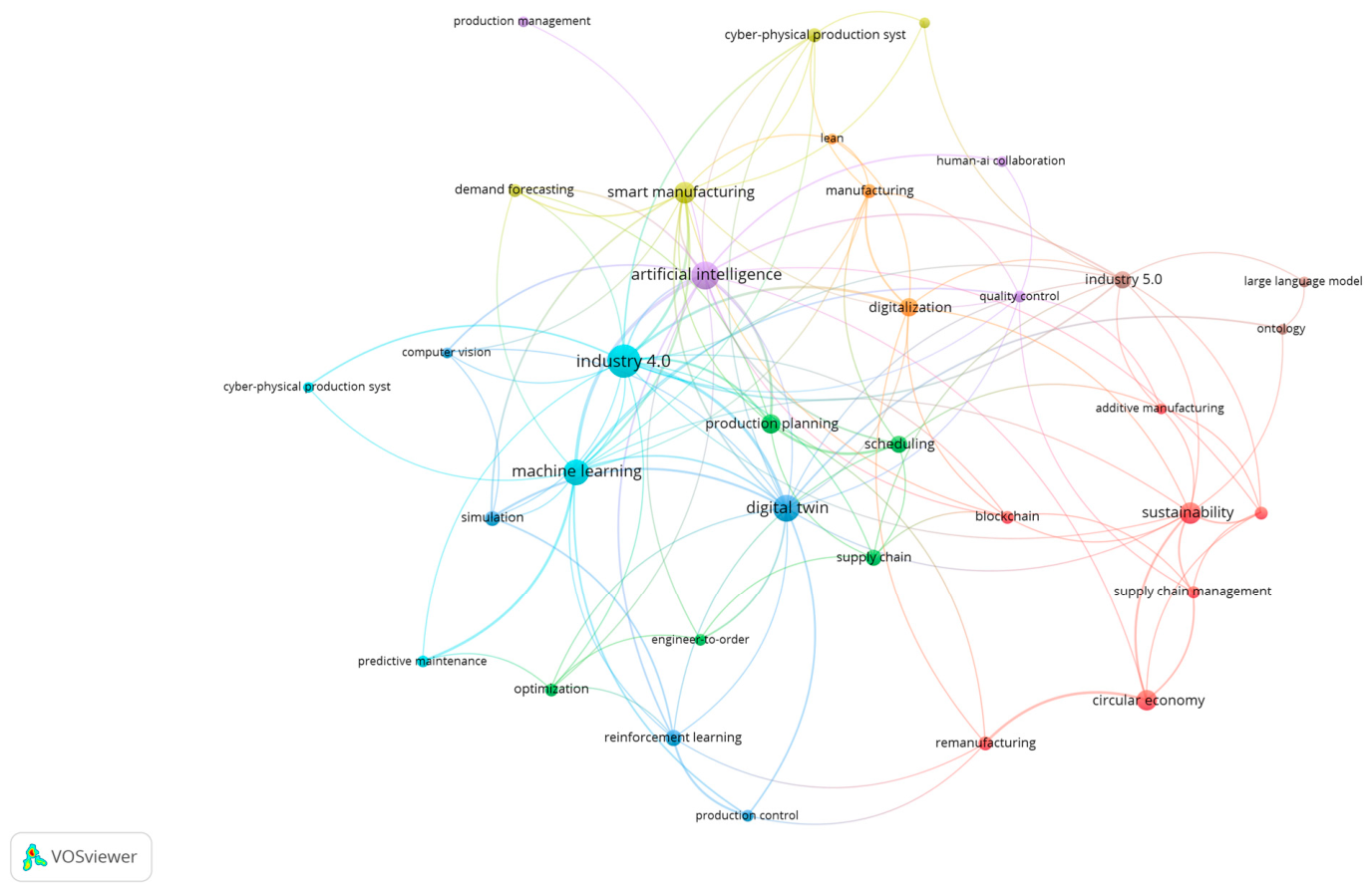
The keyword co-occurrence map, see
Figure 6 below, generated in VOSviewer offers a clear view of how the literature on artificial intelligence in production management is currently structured. The network includes 35 keywords grouped into eight clusters, showing that the field is both diverse and increasingly interconnected. At the center of the map are terms such as Industry 4.0, artificial intelligence, digital twin, machine learning, smart manufacturing, and sustainability. Their central position suggests that these are the main concepts shaping recent research. In other words, the literature is no longer focused on AI as a standalone technology, but on how it is embedded in wider production systems, managerial processes, and digital transformation.
One of the strongest thematic directions is the link between AI and sustainable production systems (Cluster 1, red, TLS = 150, 18 occurrences). This cluster includes sustainability, circular economy, remanufacturing, additive manufacturing, blockchain, resilience, and supply chain management. Together, these terms suggest that researchers are increasingly examining how AI can make production more efficient, traceable, adaptable, and environmentally responsible. The close link between sustainability and supply chain concepts also shows that AI is being used to support broader goals such as transparency, resource efficiency, and resilience across production and logistics networks.
A second major area of interest appears in Cluster 2 (green, TLS = 120, 11 occurrences), which includes production planning, scheduling, optimization, engineer-to-order, and supply chain. This cluster reflects a more traditional production-management perspective, where AI is applied to improve coordination, forecasting, and operational decision-making. Its position in the network shows that planning and optimization remain central concerns, but are now increasingly approached through AI-driven methods rather than by conventional tools.
Another highly visible part of the map is Cluster 3 (blue, TLS = 100, 9 occurrences), which brings together digital twin, computer vision, reinforcement learning, simulation, and production control. This cluster highlights the growing importance of intelligent, data-rich production environments in which monitoring, simulation, and adaptive control play a central role. Closely related to this is the group around Industry 4.0, machine learning, predictive maintenance, and cyber-physical production systems, which points to the technological infrastructure behind smart manufacturing, Cluster 4 (light blue, TLS = 21, 15 occurrences). The strong centrality of Industry 4.0 confirms its role as one of the main organizing concepts in the field.
The map also reveals a more managerial and human-centered dimension in Cluster 5 (purple, TLS = 85, 10 occurrences). The presence of terms such as artificial intelligence, human–AI collaboration, quality control, and production management shows that the literature is not limited to technical performance alone. Researchers are also paying attention to how AI supports managerial decision-making, quality assurance, and interaction with human expertise in production settings. This suggests a gradual shift from viewing AI mainly as an automation tool to understanding it as a collaborative technology that can complement human judgment.
At the edge of the network, a smaller and more weakly connected cluster includes Industry 5.0, large language models, and ontology (Cluster 8, TLS = 54, 12 occurrences). Although still peripheral, this cluster is especially interesting because it points to a newer and still emerging research direction. It suggests that the field may be starting to move beyond the automation-centered logic of Industry 4.0 toward more human-centered, knowledge-based, and semantically rich perspectives. The appearance of large language models is particularly noteworthy, as it shows that generative AI has begun to enter the production-management discussion, even if this theme is not yet fully developed.
At the same time, the map shows some terminological fragmentation. Similar expressions, such as digital twin and digital twins, or different formulations of cyber-physical production system, appear separately, suggesting that the field is still evolving and has not reached full conceptual consistency yet. Even so, the overall structure of the network remains coherent. Overall, the field appears to be moving beyond a narrow focus on automation alone toward a broader understanding of production systems in which efficiency, adaptability, sustainability, and human–machine collaboration are increasingly studied together.
3.2.3. Thematic Evolution and Mapping
To complement the network-based analysis, word clouds were generated to provide an additional visual overview of the most frequent keywords within the dataset. While co-occurrence networks reveal structural relationships between concepts, word clouds highlight the relative frequency of terms and help illustrate the thematic prominence of topics within the literature [
41]. In this study, the analysis focused on the two most prominent research areas identified in the dataset: computer science and telecommunications. For each of these areas, keyword density was examined in order to identify dominant themes and emerging research trends. The interpretation of these patterns was further supported by representative studies from the dataset, allowing the analysis to move beyond visual frequency patterns and to connect the observed keyword distributions to concrete developments in the literature.
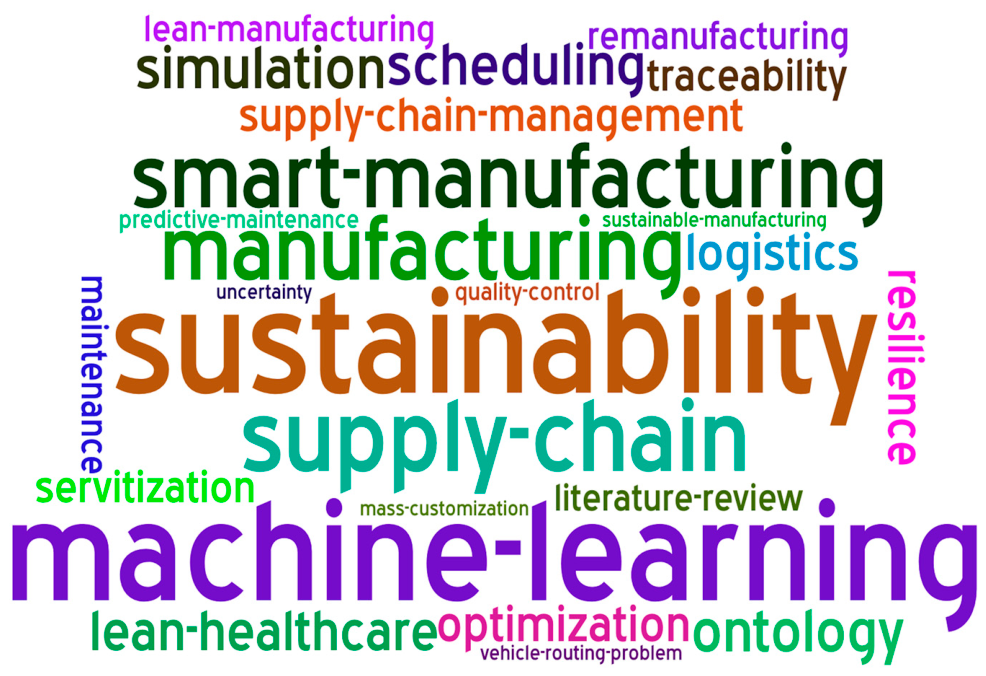
The word cloud presented in
Figure 7 below suggests that this literature is structured around a relatively stable core defined by sustainability, machine learning, manufacturing, smart manufacturing, and supply chain management. Among the 25 keywords included in the visualization, sustainability is the most prominent, with 26 occurrences (10.08%) of the total, followed closely by machine learning with 25 (9.69%). Other highly visible terms include supply chain with 18 occurrences (6.98%), manufacturing and smart manufacturing with 16 occurrences each (6.20%), and supply chain management with 15 occurrences (5.81%). Taken together, these terms indicate that the field is no longer centered only on efficiency or automation in a narrow sense. Instead, production management is increasingly framed as a problem of building systems that are simultaneously data-driven, resilient, connected, and environmentally responsible.
A second layer of keywords further clarifies the operational orientation of the field. Scheduling appears 14 times (5.43%), while optimization appears 12 times (4.65%). In addition, lean healthcare occurs 10 times (3.88%), and literature review, maintenance, and resilience each appear nine times (3.49%). These terms suggest that the literature remains strongly connected to classical production-management concerns, but increasingly revisits them through digital and sustainability-oriented approaches. At the same time, the presence of predictive maintenance and simulation, each with eight occurrences (3.10%), indicates that predictive, model-based, and scenario-driven thinking is becoming more central to the field.
A thematic reading of the dataset points to three main research directions. The first is sustainability-oriented and resilient production networks, where visibility, circularity, remanufacturing, logistics redesign, and sustainable supply chain governance are central. This direction is well aligned with the prominence of sustainability (10.08%), supply chain (6.98%), supply chain management (5.81%), remanufacturing (2.71%), and resilience (3.49%) in the word cloud. Representative studies in this stream examine supply chain visibility and environmental sustainability [
42], low-emission urban logistics and last-mile delivery redesign [
43], manufacturing network topologies for sustainable production [
44], value creation in remanufacturing and repair businesses [
45], institutional frameworks for closed-loop and sustainable food supply chains [
46], self-adaptive remanufacturing architectures [
47], and product–service-system practices linked to sustainability goals [
48]. Together, these studies show that sustainability is not treated as a rhetorical add-on, but as a structural concern tied to production networks, material flows, and long-term resilience.
The second direction is data-driven smart manufacturing and operational optimization. Here, the literature is strongly shaped by machine learning (9.69%), manufacturing (6.20%), smart manufacturing (6.20%), scheduling (5.43%), optimization (4.65%), predictive maintenance (3.10%), and quality control (2.33%). Representative studies include line-balancing optimization [
49], stochastic scheduling with maintenance considerations [
50], machine-learning-based health indicators for predictive maintenance [
51], survival-analysis approaches to predictive maintenance [
52], prescriptive maintenance integrated with production planning and scheduling [
53], digital-twin-based safety and risk prediction [
54], and AI-powered quality management through 8D reports [
55]. This body of work shows that AI in production management is increasingly operationalized through tools for prediction, monitoring, scheduling, and decision support rather than discussed only at a conceptual level.
The third direction is human-centered lean and digital transformation. This stream highlights that manufacturing transformation is not only technical, but also organizational and socio-cultural. It is reflected in the presence of lean healthcare (3.88%), lean manufacturing (1.94%), servitization (2.33%), ontology (2.33%), and uncertainty (1.94%), all of which point to more specialized but conceptually meaningful extensions of the field. Studies in this area address digital waste in automated lean systems [
56], organizational openness to lean implementation [
57], the strategic interaction between lean production and Industry 4.0 technologies [
58], human-centric smart factory roadmaps based on learning and leadership [
59], and digital–circular capability building through education and upskilling [
60]. Read together, these studies suggest that the field increasingly understands digital transformation as a socio-technical process in which technology adoption depends on people, organizational learning, and cultural readiness as much as on infrastructure alone, preparing by default for Industry 5.0.
Overall, the word cloud points to a literature that is becoming more integrated around three linked priorities: sustainable and resilient production networks, AI-enabled smart manufacturing and optimization, and human-centered digital transformation. Lower-frequency terms such as mass customization, sustainable manufacturing, and vehicle routing problem, each with 5 occurrences (1.94%), do not form dominant thematic streams on their own, but they do suggest that the field is expanding into more specialized and applied domains. Taken together, the results indicate that production management research is moving beyond a narrow concern with productivity alone and toward a broader agenda in which sustainability, intelligence, resilience, and human integration are studied together.
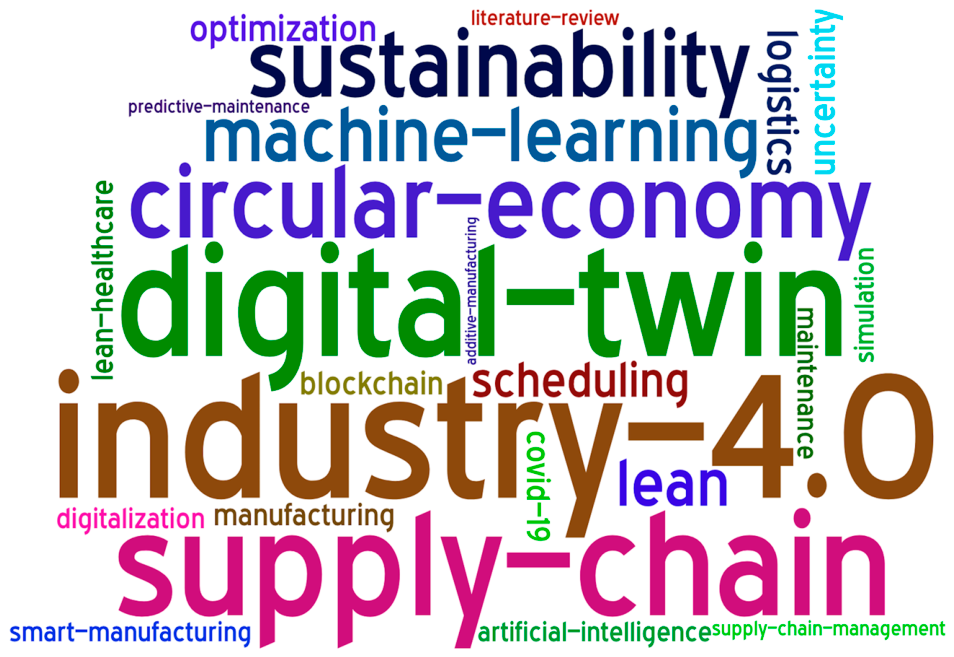
Moreover, the second word cloud offers a concise visual summary of the dominant themes shaping the literature and highlights a field organized around the intersection of Industry 4.0, digital twin, supply chain, circular economy, machine learning, and sustainability. Among the 24 keywords retained in the visualization (see
Figure 8 below), Industry 4.0 is the most prominent term, with 32 occurrences (13.06%) of the total keyword occurrences. It is followed by digital twin with 16 occurrences (6.53%), supply chain with 15 occurrences (6.12%), circular economy and machine learning with 14 occurrences each (5.71%), and sustainability with 13 occurrences (5.31%). This distribution suggests that the literature is increasingly structured around the integration of digital technologies with sustainable and circular production systems, rather than around isolated discussions of technological innovation alone.
A second layer of relevant terms further clarifies the operational orientation of the field. Scheduling appears 12 times (4.90%), while manufacturing and lean healthcare each appear 10 times (4.08%). In addition, artificial intelligence, lean, optimization, smart manufacturing, and supply chain management each occur nine times (3.67%), while blockchain and COVID-19 each appear eight times (3.27%). These frequencies indicate that the literature is not limited to broad conceptual debates about digital transformation, but is strongly concerned with the practical challenges of planning, coordination, monitoring, and organizational adaptation in production systems.
Through a thematic reading of representative studies in the dataset, three main research directions can be identified. The first is digital-twin-enabled planning, scheduling, and intelligent production control. This stream includes studies that position the digital twin as a core Industry 4.0 concept for smart production planning, predictive decision-making, and adaptive control. Representative contributions include research on the digital twin as a foundation for smart production planning [
61], prescriptive maintenance systems linked to cyber-physical production lines [
52], twin-driven engineering approaches [
62], AI-enhanced planning and scheduling in dynamic production systems [
63], machine-learning-based throughput estimation [
64], and active-learning smart assistants for manufacturing [
65]. This direction is also supported by more classical optimization studies on line balancing and scheduling with maintenance constraints, showing that digital control and optimization remain central concerns of the field [
48,
49].
The second direction is circular economy and sustainable supply chain transformation. This direction reflects the strong visibility of circular economy, sustainability, supply chain, supply chain management, and logistics in the word cloud. The studies in this stream examine how supply chains can become more transparent, circular, and sustainable through digital coordination and redesign. Representative examples include work on circular digital supply chain design [
66], blockchain-based supply chain management [
67], supply chain visibility and its links with environmental sustainability [
41], low-emission last-mile logistics models [
42], institutional approaches to food-waste reduction and closed-loop systems [
45], value creation in remanufacturing and repair businesses [
44], and digital upskilling for circular transition [
59]. Together, these studies show that sustainability is not framed as a purely normative objective, but as a concrete challenge of redesigning networks, material flows, and circular processes.
The third direction is lean, human-centered transformation, and resilient operational improvement. This stream helps explain the presence of lean, lean healthcare, machine learning, maintenance, and uncertainty among the visible keywords. Here, the literature moves beyond technical implementation and focuses on the socio-technical conditions under which Industry 4.0 actually creates value. Representative studies examine the relationship between lean production and Industry 4.0 technologies [
57], strategic roadmapping for Industry 4.0 adoption in manufacturing SMEs [
68], human-centric smart factory transformation through organizational learning and digital maturity [
58], the risk of digital waste in automated lean systems [
55], and predictive maintenance approaches grounded in machine learning and resilience logic [
50,
51]. Taken together, these studies indicate that digital transformation is increasingly treated as a socio-technical process in which technology must be aligned with people, learning, and organizational capability, drafting business strategies and shaping the business ecosystem.
Overall, the second word cloud reveals that the literature is becoming more integrated around three interrelated priorities: digital-twin-enabled control, circular and sustainable supply chain transformation, and human-centered digital operations. Lower-frequency terms such as additive manufacturing, simulation, and uncertainty appear to function more as specialized extensions of this core than as independent research streams. Taken together, the results indicate that the field is evolving toward a broader and more systemic understanding of production, in which digital intelligence, sustainability, resilience, and organizational adaptation are increasingly studied together rather than separately.
4. Discussion
The findings of this study show that artificial intelligence is no longer treated in the literature as a narrow technological tool used only for isolated production tasks. Instead, AI is increasingly discussed as part of broader production-management systems, though the extent of this integration varies across studies. It appears as a systemic component of production management, connecting data analysis, planning, scheduling, optimization, supply chain coordination, sustainability, resilience, and human–machine collaboration. This is one of the main insights of the present study. While previous research has already shown that AI and machine learning do support smart production, predictive maintenance, quality control, logistics, and energy efficiency [
20,
33], our results indicate that the literature shows signs of moving toward a more integrated discussion of AI-driven production management. Before any interpretation, it is important to note that the dataset is disproportionately shaped by conference proceedings, particularly APMS volumes. This concentration may amplify certain research directions, such as smart manufacturing, scheduling, and predictive maintenance, while underrepresenting others, which are more commonly published in journals. Therefore, the bibliometric signals observed here should be understood as reflective of a conference-driven research ecosystem rather than the entire scholarly landscape.
The keyword co-occurrence analysis confirms this transformation. Central concepts such as Industry 4.0, artificial intelligence, machine learning, digital twin, smart manufacturing, sustainability, and supply chain management show that the field is structured around both technological and managerial concerns. This finding is consistent with Zhou et al. [
20], who emphasized that intelligent manufacturing is shaped by integration, flexibility, autonomous decision-making, self-optimization, and proactive control. However, our results also show that the current literature goes beyond the classical Industry 4.0 framework. The presence of sustainability, circular economy, resilience, human–AI collaboration, ontology, Industry 5.0, and large language models suggests that AI is increasingly discussed not only as an automation mechanism, but also as part of a broader socio-technical and sustainability-oriented transformation. In practice, this indicates that generative AI and ontologies may benefit from being grounded in verified internal knowledge, such as maintenance manuals, safety instructions, and quality protocols, rather than deployed as unconstrained general-purpose systems, since this grounding is what enables such tools to reliably support operator training, troubleshooting, and decision explanation.
A particularly important finding is the strong visibility of sustainability in the analyzed literature. The connection between sustainability, circular economy, remanufacturing, additive manufacturing, blockchain, resilience, and supply chain management shows that AI is increasingly associated with long-term production viability, not only with productivity and cost reduction. This supports the view of Fahimnia and Jabbarzadeh [
5], who argued that sustainability and resilience should be considered together in supply chain design. Our results suggest that AI contributes to this integration by improving traceability, resource efficiency, adaptive planning, and disruption response. However, the sustainability discussion still appears mainly techno-managerial. Environmental and operational aspects are highly visible, while social sustainability, workforce implications, ethical governance, and organizational change remain less developed. This represents an important gap for future research. In practice, this points toward AI applications explicitly linked to sustainability indicators, such as energy-consumption forecasting, waste and scrap-rate prediction, material-flow optimization, remanufacturing planning, and component traceability, rather than AI being adopted for productivity gains alone.
The results also show that traditional production-management problems remain central, but they are being reinterpreted through AI-based approaches. Planning, scheduling, optimization, logistics, simulation, and supply chain coordination continue to be important research themes. The difference is that these issues are now increasingly addressed through predictive, adaptive, and data-driven systems. AI-based approaches may support more dynamic decision-making compared with traditional static planning models, its real-time data, simulations, and learning algorithms providing faster and more flexible responses to uncertainty. In this sense, AI does not replace the classical concerns of production management; rather, it changes the way these concerns are addressed. For production managers, this means first identifying where their systems actually lose value, whether through downtime, unstable schedules, high defect rates, or weak supplier visibility, and then prioritizing AI applications that combine efficiency with resilience: predictive maintenance should stabilize production flows and prevent delivery delays, not only cut equipment failure, while AI-based scheduling should improve responsiveness to breakdowns, supplier delays, and demand shocks, not only raise throughput.
Moreover, the presence of digital twin, simulation, computer vision, reinforcement learning, and production control further confirms the shift toward anticipatory production management. These concepts point to production environments in which physical processes are monitored, digitally mirrored, tested, and adjusted through intelligent systems. Compared with earlier studies that focused mainly on AI as a prediction or classification tool, the current literature increasingly frames AI as part of feedback-based production systems. This is especially relevant for predictive maintenance, quality control, adaptive scheduling, and real-time process optimization. For firms, this suggests that digital twins can be particularly useful in contexts where real-world experimentation is costly or risky, for instance, in testing production layouts, evaluating bottlenecks, planning maintenance windows, or assessing supplier-delay impacts before they disrupt production, particularly in high-complexity sectors such as automotive, aerospace, and advanced manufacturing.
Another important result concerns the human and managerial dimension of AI. The appearance of human–AI collaboration within the keyword structure suggests that the field is beginning to move away from a purely automation-centered perspective. Recent studies have already noted that AI may complement or replace human labor depending on the task and organizational context [
16]. Our findings suggest that the more relevant issue is not simple replacement, but reconfiguration. AI changes how decisions are made, who interprets data, how exceptions are handled, and how responsibility is distributed between managers, workers, and intelligent systems. Human judgment remains essential for contextual interpretation, ethical evaluation, strategic prioritization, and organizational coordination. This has direct governance implications: firms introducing AI into scheduling, maintenance, quality control, or supply chain decisions should define who validates AI recommendations, when human override applies, and how responsibility is distributed, while technology providers should prioritize explainable, interoperable systems that clarify why a recommendation was made rather than only what should be done.
In direct response to RQ1, the results show that the field shows signs of thematic maturation, although publication patterns remain uneven due to dataset composition. The publication pattern does not indicate a smooth, linear evolution; however, as discussed above, the two apparent peaks (2021 and 2026) are largely explained by the inclusion of two large, AI-themed APMS conference volumes rather than by a field-wide acceleration in research activity, so this unevenness should not be over-interpreted as a genuine growth trajectory. Therefore, the field’s maturity should be measured not only by publication volume but also by thematic complexity. The literature has moved from isolated technical applications toward integrated discussions of planning, optimization, resilience, sustainability, supply chains, and human–AI collaboration.
In response to RQ2, the findings show that AI occupies a prominent position within the identified keyword structure, though this prominence may reflect the APMS-driven dataset. The keyword network places AI in close proximity to Industry 4.0, machine learning, smart manufacturing, digital twins, sustainability, supply chain management, resilience, the circular economy, scheduling, and optimization. At the same time, the collaboration networks reveal an international but hierarchical research landscape. Overall, AI in production management appears to be organized around three interconnected layers: a technological-operational layer, focused on machine learning, digital twins, simulation, planning, scheduling, and optimization; a strategic-sustainability layer, focused on sustainability, circular economy, resilience, remanufacturing, blockchain, and supply chain management; and an emerging human-knowledge layer, focused on human–AI collaboration, ontology, Industry 5.0, and large language models. For policymakers, this suggests treating AI in production management as part of industrial modernization rather than a purely digital-innovation agenda, with funding prioritizing measurable outcomes such as reduced downtime or emissions, and with the field’s uneven, hub-concentrated collaboration structure addressed through partnerships that extend AI-production research capacity to underrepresented regions and smaller industrial economies.
Overall, this study shows that the literature increasingly conceptualizes AI as a systemic component of production management that changes how production data are collected and interpreted, how decisions are supported, how sustainability and resilience are integrated, and how human and machine roles are reorganized. However, several limitations should be acknowledged. The analysis is based on Web of Science records, which may exclude relevant publications indexed in other databases. In addition, the search strategy ensured thematic precision, but it may have omitted studies using related terms such as operations management, intelligent manufacturing, industrial AI, or smart factory. Finally, bibliometric analysis identifies intellectual structures and research patterns, but does not assess the practical effectiveness of individual AI applications.
Future research should therefore expand the analysis across multiple databases and examine how AI is implemented in specific production contexts, especially in small and medium-sized enterprises and in regions with lower digital readiness. More attention should also be given to the human, ethical, and organizational implications of AI adoption, including trust, accountability, skills, leadership, and the redistribution of decision authority. Emerging topics such as large language models, ontologies, and trustworthy AI should also be studied more deeply, as they may become essential for knowledge management, decision explanation, operator support, and human-centered production systems. In parallel, SMEs are better served by narrower, targeted AI applications, such as demand forecasting, failure prediction for critical equipment, or defect detection via computer vision, than by full-scale smart-factory transformations, with policymakers able to support this through AI vouchers, shared testing facilities, and regional digital-innovation hubs.
5. Conclusions
This study analyzed how artificial intelligence is reconfiguring production management through a bibliometric review of 439 Web of Science publications issued between 2016 and 2026. Using a PRISMA-guided selection process, VOSviewer network analysis, descriptive statistics, and keyword density analysis, the study examined the evolution of the field, its dominant intellectual structures, as well as its main collaboration patterns.
The most immediate effect of AI is operational. In production environments, AI can improve planning accuracy, stabilize schedules, identify bottlenecks, predict machine failures, detect quality problems, and support real-time process optimization. These effects are especially relevant for industries with complex production flows, high equipment dependency, variable demand, or strict quality requirements. Manufacturing, automotive, electronics, machinery, furniture production, agri-food processing, logistics, and warehouse operations are among the areas where the findings of this study can be directly applied.
A second effect is strategic. AI allows production management to move from reactive control toward anticipatory coordination. Instead of responding only after a machine failure, supplier delay, quality deviation, or demand change has occurred, AI-supported systems can help managers identify weak signals earlier and evaluate possible responses. This makes AI valuable not only for improving efficiency, but also for strengthening resilience. In practice, this means that AI can support better recovery after disruptions, more flexible production planning, and stronger coordination between production, procurement, logistics, and maintenance.
A third effect concerns sustainability. The findings show that AI is increasingly connected with circular economy, remanufacturing, resource efficiency, traceability, and sustainable manufacturing. This means that AI can be applied to reduce material waste, optimize energy consumption, monitor emissions-related indicators, improve component traceability, and support circular production strategies. These applications are important because production systems are increasingly expected to perform not only economically, but also environmentally. AI can therefore help firms integrate sustainability into daily production decisions rather than treating it as a separate reporting obligation.
A fourth effect is organizational. AI changes the relationship between human decision-makers and production systems. Managers, engineers, planners, and operators are no longer only users of production information; they increasingly work with systems that generate recommendations, warnings, forecasts, and alternative scenarios. This creates new responsibilities. Firms must decide how much authority AI systems should have, when human judgment should override algorithmic recommendations, and how accountability should be managed when AI-supported decisions lead to errors. For this reason, the successful use of AI in production management depends not only on technical performance, but also on trust, explainability, training, and organizational readiness.
The study also shows where future applications are likely to develop. Digital twins can be used to simulate production layouts, test scheduling scenarios, assess capacity constraints, and evaluate disruption responses before decisions are implemented in the real system. Computer vision can support defect detection, safety monitoring, and quality inspection. Machine learning can improve forecasting, maintenance planning, energy optimization, and supplier-risk analysis. Large language models, if connected to verified industrial knowledge, can support maintenance documentation, operator training, troubleshooting, reporting, and decision explanation. Ontologies can help structure production knowledge and improve communication between machines, software systems, and human users.
Beyond these established application areas, the trajectory of the field also points toward more autonomous forms of AI infrastructure. Agentic AI systems, in which multiple specialized software agents coordinate planning, procurement, scheduling, and maintenance decisions through interoperability protocols such as agent-to-agent and model-context-protocol communication, could allow production systems to replan and reallocate resources with limited human intervention, extending the anticipatory logic already visible in the digital-twin and reinforcement-learning literature identified here. At the same time, physical AI, in which foundation models are embedded in robots and other physical systems capable of perceiving, reasoning about, and acting within real production environments, is moving from research settings toward early commercial deployment in areas such as material handling, inspection, and hybrid human–robot assembly. Should these infrastructures mature as expected, production management would shift further from an operator-supervised system toward one in which humans set objectives, constraints, and boundaries within which increasingly autonomous agents and physical systems operate, reinforcing the organizational and governance questions raised throughout this study.
The broader implication is that AI should be understood as a production-management infrastructure, not only as a technological add-on. Its value appears when it connects machines, data, workers, suppliers, managers, and sustainability objectives into a more responsive system. However, this value will not emerge automatically. Firms need reliable data, interoperable systems, skilled employees, explainable AI tools, and clear governance rules. Without these conditions, AI adoption may remain fragmented, expensive, or difficult to translate into real production improvements.
The main limitation of this study is that it maps the scientific literature rather than measuring the actual performance of AI applications in firms. Moreover, 89.32% of the dataset comes from two thematic APMS volumes, which seems to significantly limit the generalizability of the conclusions; we must highlight that research on AI in production management (not the large field of management) needs more attention in the future. The conclusions indicate where AI is conceptually and practically expected to generate value, but they do not prove that all applications yield the same results across all industrial contexts. Future research should move from mapping the field toward empirical validation. More case studies, comparative industry analyses, and longitudinal studies are needed to examine how AI affects productivity, resilience, sustainability, workforce roles, and managerial decision-making in real production environments.
A second limitation concerns the composition of the underlying dataset. Because records were drawn exclusively from the Web of Science Core Collection, and because 93.85% of the 439 included documents are conference proceedings—89.32% of which originate from two thematic volumes of the Advances in Production Management Systems (APMS) series—the thematic and structural patterns reported here are disproportionately shaped by this single conference community. This source concentration may bias the identified clusters toward the specific research agendas, terminology, and editorial priorities of APMS, and it limits the extent to which the findings can be generalized to the broader, more heterogeneous body of AI-in-production-management research indexed in other databases (e.g., Scopus and IEEE Xplore) or published outside conference venues. Future bibliometric work should triangulate across multiple databases to verify whether the thematic structure identified here persists once this source imbalance is corrected.
Building on these prospective scenarios, several research directions appear particularly promising. First, empirical studies are needed to assess organizational readiness for agentic AI adoption, including the data infrastructure, interoperability standards, and governance capacity required to move such systems from pilot projects to reliable production use. Second, research should examine trust, oversight, and accountability in multi-agent and human–robot production settings, where decisions may be distributed across several autonomous components rather than concentrated in a single AI tool. Third, comparative studies across firm sizes and regions would help clarify whether agentic and physical AI infrastructures diffuse evenly or reproduce the same concentration observed in the bibliometric literature itself. Finally, longitudinal bibliometric replications, ideally spanning multiple databases, would help determine whether the thematic structure identified here evolves as these emerging infrastructures move from conceptual discussion to widespread industrial practice.
Overall, this study concludes that the literature increasingly discusses AI in relation to predictive, connected, adaptive, and sustainability-oriented production systems. Given the dataset’s strong reliance on APMS proceedings, the conclusions presented here should be interpreted as indicative rather than exhaustive, reflecting the dominant trajectories within a specific and influential publication ecosystem. However, its most important contribution is not the replacement of human decision-making, but the creation of new decision environments in which managers can act earlier, coordinate better, and evaluate more complex trade-offs. The future relevance of AI may depend on how firms and policymakers translate its potential into reliable, explainable, and responsible industrial practice.