
Article

Navigating the Green Innovation Path: The Role of AI Adoption in Green Product and Green Process Innovation

School of Business, Harbin Institute of Technology, Harbin 150000, China
*
Author to whom correspondence should be addressed.
Systems 2026, 14(7), 841; https://doi.org/10.3390/systems14070841

Submission received: 26 May 2026 / Revised: 11 July 2026 / Accepted: 12 July 2026 / Published: 15 July 2026
(This article belongs to the Topic Artificial Intelligence and Sustainable Development)

Abstract

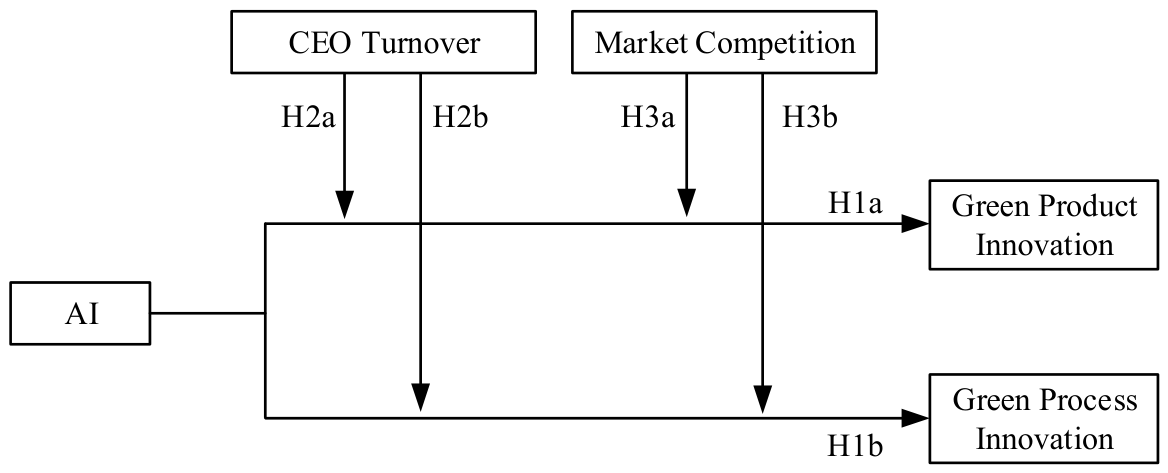
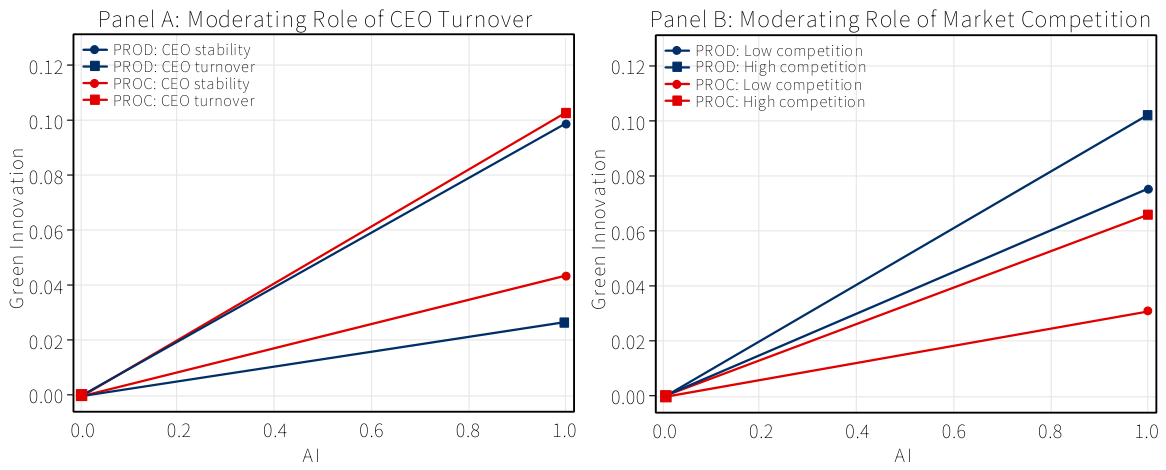
In response to intensifying environmental pressures and the rapid pace of digital transformation, firms are increasingly turning to artificial intelligence (AI) as a tool to support sustainable development. Using panel data from Chinese A-share-listed manufacturing firms from 2016 to 2023, this study examines the relationship between AI adoption and two forms of green innovation: green product innovation and green process innovation. The results reveal that AI adoption is positively associated with both forms of green innovation, with a stronger association observed for green product innovation. The relationship between AI adoption and green innovation also varies across organizational and market contexts. CEO turnover weakens the association between AI adoption and green product innovation but strengthens its association with green process innovation. Market competition further strengthens the positive association between AI adoption and both types of green innovation. Further heterogeneity tests indicate that these associations tend to be more pronounced among high-tech firms and smaller firms. This study provides new evidence on the relationship between AI adoption and different forms of green innovation. It further clarifies the organizational and market conditions under which AI is more closely linked to corporate green transformation.
Keywords: Artificial Intelligence (AI); green product innovation (PROD); green process innovation (PROC); CEO turnover; market competition Artificial Intelligence (AI); green product innovation (PROD); green process innovation (PROC); CEO turnover; market competition