1. Introduction
The widespread outbreak of the COVID-19 pandemic in late 2019 pressed the pause button for global socioeconomic activities. According to the World Bank [
1], the world GDP growth in 2020 fell to −3.3%, even lower than that after the world financial crisis in 2008, which is the lowest point in history since the new century. The emergence of issues such as a weak labor market [
2], an interrupted supply chain [
3], and rising inflation [
4], indirectly caused by the frequent recurrence of a pandemic, seriously hinders the growth of the world economy (SDG 8, i.e., to promote inclusive and sustainable economic growth) and challenges the sustainability of global cities (SDG 11, i.e., to make cities resilient and sustainable). In the face of such unforeseen events, the ability of cities to self-adjust and enhance their resilience has become a critical issue for global countries to achieve sustainable development goals. Therefore, in-depth exploration of typical cases with high economic resilience is of positive significance for understanding the connotation of sustainable development and formulating corresponding strategies for regional development.
As the most populous country in the world, the Chinese government and people have shown powerful collective cohesion in handling this global event that threatens global public health. In particular, China also became the only country with positive GDP growth among the top ten economies in 2020 [
1] and showed a continuous growth trend in the following three years (2021–2023). The uniqueness of China’s economy has more or less confirmed that cities in China are more resilient in carrying out economic and social affairs. For a large country including more than 300 prefecture-level administrative regions, of course, not all cities are rich in such excellent resilience to resist the impact of external interference. Differences in ability across regions are intuitively reflected in economic data. According to the official data of 2020 issued by the National Bureau of Statistics [
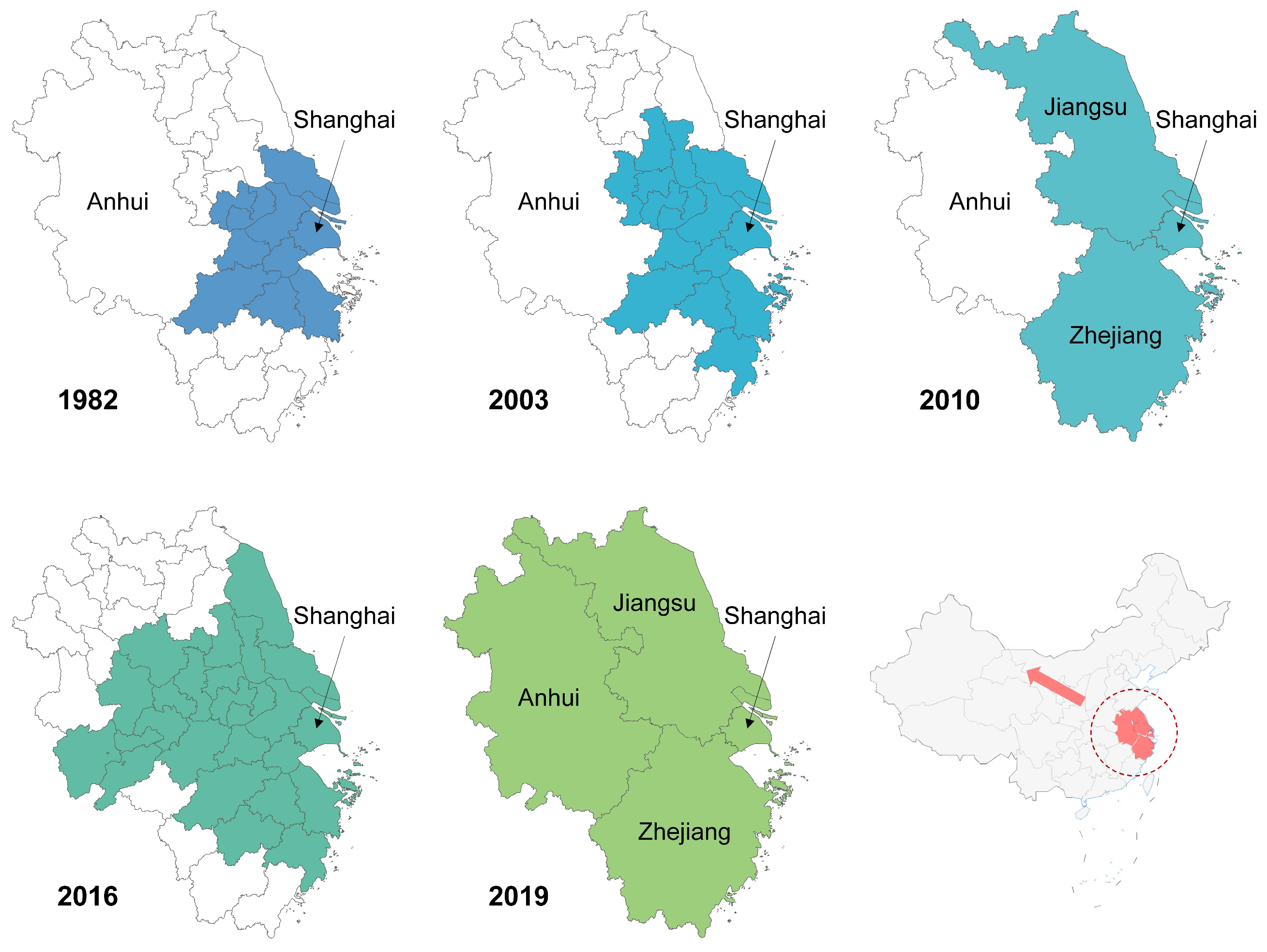
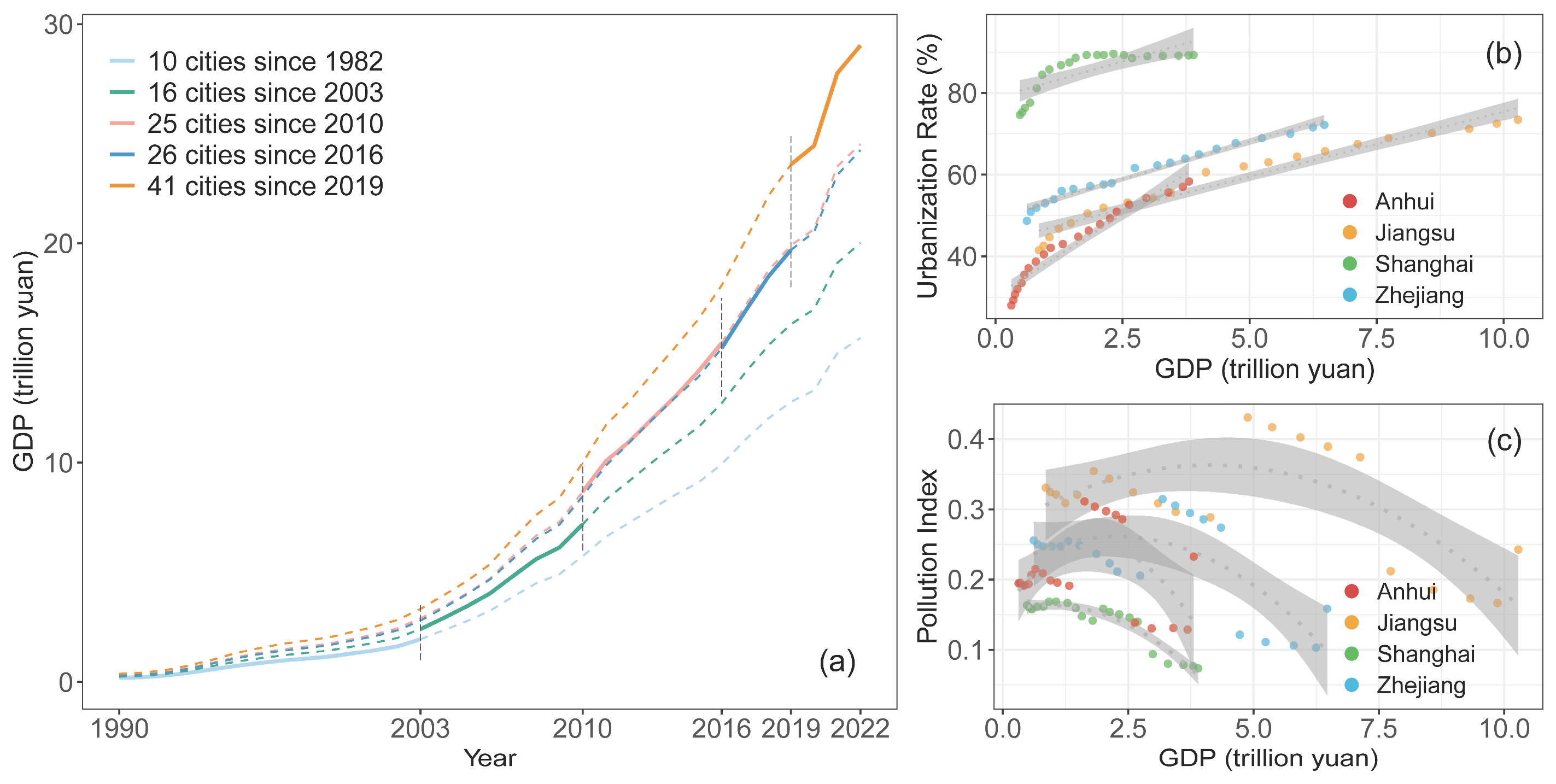
5], the overall performance of the YRD is relatively outstanding. The GDP growth of the YRD exceeded 3.5%, which was higher than the national average of 2.2%. As geographically adjacent and economically strong provinces, cities under jurisdiction have gradually developed into a modern urban agglomeration with a compact network and coordinated industry through active transition, forming the largest and most sustainable economic growth pole in China [
6]. The essence of the case in the YRD, so to speak, can not only deepen the theoretical understanding of economic resilience but also comprehensively convey the rich experience of China’s sustainable transition.
Resilience is a widely discussed topic today, with most research focusing on the characteristics or dimensions of resilience, its sources, and post-disaster reconstruction related to resilience recovery. Especially in recent years, affected by the continuous fluctuations of the COVID-19 pandemic, researchers are more inclined to find effective ways to bring cities back to normal development. In contrast, there is a lack of comprehensive and in-depth discussion on what enables a city to withstand the test of disasters and the sources of these capabilities. Overall, the existing literature on economic resilience mechanisms is mainly based on a normative framework for analyzing influencing factors, which is often static and lacks consideration for regional transition or evolutionary development. The YRD showed more positive achievements in both economic and social aspects during the COVID-19 pandemic, which is not a coincidence or a stroke of fortune but is inseparable from its early regional planning and governance. Compared with other regions in China, in the past two decades, the YRD has always been committed to the coordinated development of green integration in the process of urbanization, which may be one of the inexhaustible drivers for maintaining economic resilience. Rome was not built in a day, and improving resilience is a lasting and complex systematic project in sustainable urban construction [
7].
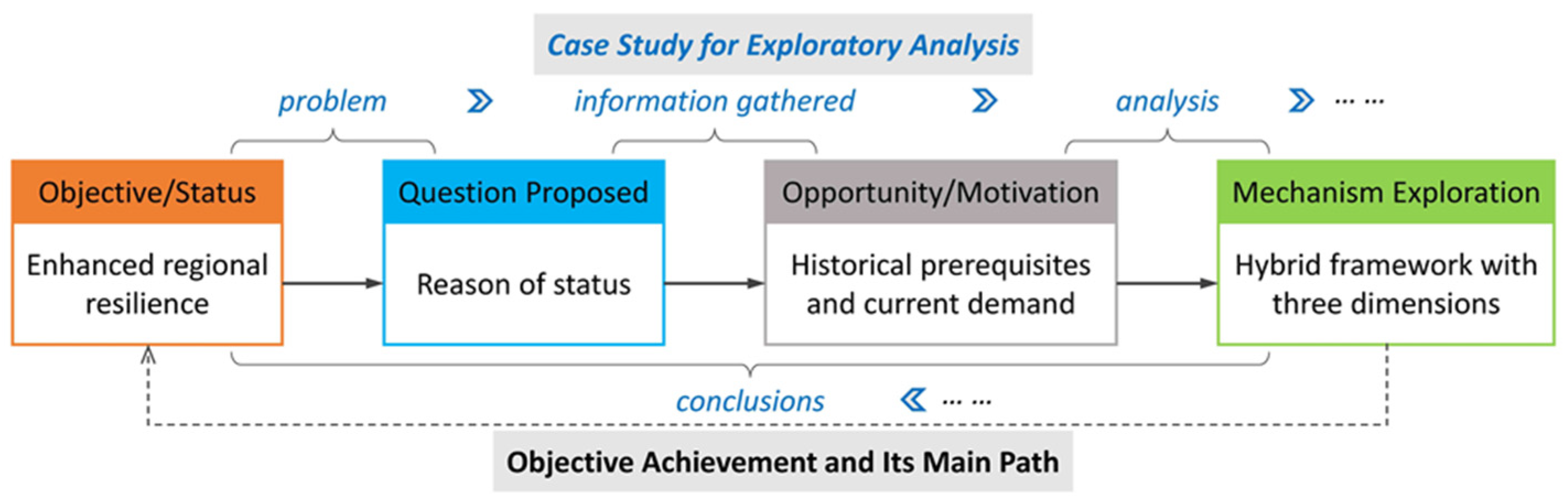
To more comprehensively and systematically present the source of economic resilience in the YRD against the background of the pandemic, this paper innovatively designs a multi-dimensional explanatory framework from an evolutionary perspective, expanding the breadth of the entire resilience mechanism explanation based on historical review, including refinement at both vertical and horizontal levels. It should be clarified that the COVID-19 pandemic is taken as the core observational scenario of external shocks in this study, as a typical exogenous sudden disturbance that can intuitively reflect the resistance and recovery capacity of regional economic systems. However, the analytical framework built in this paper is not confined to public health crises. The resilience accumulated through the long-term green transition also applies to coping with long-term gradual disturbances, including macroeconomic deceleration under China’s “New Normal”, industrial structural lock-in, and persistent ecological and environmental crises. In essence, this study reveals the general logic of how pre-shock evolutionary accumulation of green transition enhances regional economic resilience, which works for both abrupt, short-term shocks and sustained, long-term structural pressures. Compared with the existing literature, the marginal contributions of this study are specifically reflected in two dimensions. Grounded in evolutionary economic geography, it first shifts the research focus from post-shock recovery to pre-shock evolutionary processes, offering a complementary perspective for understanding the full formation process of regional economic resilience. Furthermore, by developing a multi-dimensional systematic analytical framework, it unpacks the internal collaborative logic through which green transition enhances economic resilience, thus enriching the theoretical interpretations of regional resilience formation. After reviewing the literature and introducing cases of the evolution in the YRD, these two key issues will be elaborated in detail.
2. Literature Review
The focus on economic resilience stems from the capability of emergency response and automatic adjustment needed by the city to cope with various risks [
8], typically including the ability to withstand external shocks, the ability to restore balance, the ability to restructure system functions, and the ability to change fixed structures. Just as the city itself is a complex adaptive system, the cognition of economic resilience is also a process of gradual accumulation and continuous integration, especially in the dimensions and criteria of resilience [
9]. Overall, related research can be summarized into two categories, one of which is related to scientific urban planning and design, including smart construction [
10], community resilience [
11], water systems [
12], and transportation networks [
13], to improve robustness, rapidity, redundancy, resourcefulness, and adaptability of urban systems [
14].
Another category focuses on the evaluation of economic resilience at the macro-level, exploring the root causes of economic resilience based on relevant theories [
15,
16], for instance, theories related to endogenous growth, inclusive growth, and evolutionary economic geography. These theories provide multiple directions for the sources of regional economic resilience, especially the embedding of evolutionary perspectives, which can further provide reliable explanations for the gradual emergence of economic resilience. As Sutton and Arku argue [
17], resilience arises during the evolution of regional systems, demonstrating a gradual adaptation to the external environment. This capability reflects the past heritage of a region or city, which can shape the possibilities of current and future change and transition [
18]. Therefore, capturing how to utilize this unique heritage to create opportunities from adversity at any given moment has gradually become the focus in discussing the evolution of regional economic resilience [
19,
20]. Following the four conventional stages of regional economic resilience [
21], namely, resistance, recovery, re-orientation, and renewal in sequence, related research typically constructs an analytical framework for resilience evolution from the perspectives of industrial structure, resource endowment, change awareness, technological progress, and follow-up policies of regional systems (or management entities), specifically involving cluster development [
22], (re-)production of space [
23], agency and institutions [
24], economic networks [
25], and global value chains [
26]. However, to date, the literature has focused mainly on the evolution of regional systems after critical events and major shocks, especially the factors or mechanisms for system recovery or transition, and far less on the complex process of mechanism generation. In other words, the historical evolution of regional systems before such “big events” is often overlooked.
Innovation capability [
27], environmental technology [
28], public awareness [
29], and some of the core factors mentioned above all play crucial roles. The systematic integration of these factors ultimately transforms into the ability of regional economy to self-renew and evolve, enabling regional economy to adapt to new environments and demands quickly by continuously adjusting and optimizing its own structure in the face of external shocks and uncertainties [
30]. It is worth mentioning that some of these key mechanisms intersect extensively with green actions, such as low carbon [
31], energy efficiency [
32], circular economy [
33], and green digitalization [
34], which are regarded as one of the vital edge tools for achieving sustainable development and resilience in urban communities. Speck and Zoboli underscore the imperative of long-term thinking and actions to achieve a green economy transition, necessitating profound changes in dominant structures and thinking [
35]. Samora-Arvela et al. delve into diversifying Mediterranean tourism as a strategic approach to bolstering regional resilience [
36]. Wang and Feng discuss the potential for achieving a mutually beneficial balance between environmental protection and economic development amidst China’s transitional phase, observing a positive trajectory in this regard [
37]. Montresor and Quatraro investigate the green diversification of regional technologies and its alignment with Smart Specialisation strategies [
38]. Hao et al. concentrate on the role of digitalization in green economic growth, highlighting the significance of industrial structure optimization and green innovation [
39]. In addition, the existing literature also discusses the lessons learned in cities from the COVID-19 pandemic, emphasizing the need for transformative urban planning and governance [
40]. Overall, these related studies collectively point to the fundamental fact that green transition can enhance regional sustainability. This not only contributes to understanding the complexities and opportunities of green transition and economic resilience in various sectors and regions but also provides key evidence for discussing the inevitable relationship between green transition and economic resilience in the YRD from an evolutionary perspective.
Given that current research has not fully presented the dynamic process of regional economic resilience formation, this paper introduces an evolutionary economic geography perspective. According to the core logic of path dependence and path creation, regional economic resilience is essentially the evolutionary result of their interaction [
21,
26]. The long-term accumulation of path dependence in regional endowments provides structural stability and basic resistance for the economic system to cope with shocks, while sustained path creation endows the system with the ability to break through development lock-in and adjust its adaptive structure. Therefore, this paper further proposes that regional economic resilience presents a two-stage logical chain, namely, pre-shock accumulation and in-shock activation. In the long-term stage before shocks, continuous green transition practices gradually shape a set of path-dependent regional assets, which are embedded in the regional economic and social structure as historical endowments. When external disturbances hit, these pre-accumulated assets are dynamically activated and transformed into active adaptive capacity: cross-regional cooperation mechanisms support the optimal reallocation of resources across administrative boundaries, diversified and low-carbon industrial structures provide flexible adjustment space for the economic system, and inclusive public services maintain social stability and consolidate the bottom line of people’s livelihood. It is through this transition process that long-term evolutionary accumulation is finally translated into observable economic resilience performance when facing shocks.
4. Opportunity and Power Source of Regional Green Transition
The YRD actively promotes the regional transition guided by “green philosophy”, which is due to both the natural evolution of cities and the political environment unique to China. Regarding green transition, it is usually linked internationally to the actions that shift from a brown economy to a green economy [
48], especially in the energy sector. However, the green transition has a broader connotation in the context of China, representing the advanced productive forces dominated by green technology, green production and lifestyle with energy conservation and carbon reduction, green governance and prevention measures, and green development institutional system. In the following, we present a discussion on the four dimensions of green transition opportunities from a historical perspective, namely, contradiction change, magnifying crises, economic stabilization, and policy steering. They are not independent causal mechanisms or individual explanatory variables but rather serve as mutually reinforcing driving conditions for green transition which can clearly demonstrate the efforts of developing countries in the later stage of industrialization towards sustainable development while also implying the historical inevitability of green transition actions in the YRD. Overall, these four dimensions are indispensable, as historical processes carry unique information [
49] that could aid in a better understanding of the nature of green transition and how it has become the motor of economic resilience in the YRD.
4.1. Contradiction Change Calls for Green Transition
The urgent need for regional green transition in China is based on the accurate judgment about the transformed main contradiction of society [
50]. The continuous competition between the two conflicting forces of agglomeration and diffusion is the basis for the steady progress of urbanization, which promotes both the accumulation of urban scale and qualitative changes in the urban development mode [
51]. Then, the city needs to make corresponding adjustments, that is, the transition, to accommodate the emergence of new contradictions and enter the next development cycle. Thus, it is necessary to identify the stage of urbanization to predict whether the primary aspect of the contradiction will change in essence and the possible impacts.
Urban expansion and sprawl present layout patterns with different forms, which are closely related to urban endowments and the knowledge reserves and leadership style of urban managers [
52]. Meanwhile, the urbanization level, measured by changes in urban population size, also exhibits some inherent features; that is, the trajectory of urbanization can be depicted as an S-shaped curve characterized by gentle slopes at its initial and terminal stages [
53]. According to the urbanization rate, this curve can be divided into three stages, namely, the initial, the accelerated, and the mature stages, which have obvious differences in industrial structure and population growth. In light of this rule, China’s urbanization rate exceeded 30% in 1994 [
1], entering the early stage of accelerated urbanization, after which the acceleration process was relatively smooth for a long period of time. It was not until 2004, when the rate of urbanization rose to 41.14%, that the speed of urbanization took a leap forward, achieving an urbanization rate exceeding 50% in 7 years and catching up with the world average in 9 years. A number of new modern cities emerged one after another in China, gradually forming a network system of large, medium, and small cities with different scales, diverse levels, and clear gradients, such as the YRD urban agglomerations. China’s urbanization is still accelerating, and by the end of 2019, the urbanization rate had reached 60.60%; according to the official forecast data of the United Nations, China’s urbanization rate will exceed 70% in 2030. In other words, most cities in China will enter the end of the accelerated urbanization stage in the next decade, facing frequent social contradictions, which requires the management wisdom of city leaders.
The urbanization rate curve in China presents a clear S-shaped track. However, it is significantly different from Western countries that have completed urbanization in the following aspects: First, even though the urbanization rate in China has exceeded the world average, it still has a large distance from developed countries, both at present and in the future. To narrow the gap, urban managers need to fully mobilize multiple resources to make the urban layout more compact, planning more advanced, and governance more effective, in addition to the necessary time accumulation. Second, historical experience shows that when the urbanization rate reaches 60%, social contradictions will also break out one after another [
54]. However, this seems different in China. Some unavoidable social phenomena and urban dilemmas have emerged in advance, and a series of important livelihood issues, such as medical care, education, housing, and employment, have become obstacles to healthy urban development [
55].
A large number of phenomena and affairs indicate that cities in China are still in rapid urbanization, wrapped by various socioeconomic issues, posing a potential threat to regional sustainable development. The 19th National Congress of the Communist Party of China (NCCPC) mentioned that “the principal contradiction facing Chinese society in the new era is that between unbalanced and inadequate development and the people’s ever-growing needs for a better life”. The so-called “unbalance and inadequacy”, used to understand the issues of regional development, essentially reflects the low efficiency and mismatch of productivity layout. At the micro-level, “land” urbanization is faster than “population” urbanization, resulting in a common tendency that “forests” of steel and cement bloom everywhere [
56]. At the macro-level, urban development in China seems to be extremely unbalanced in terms of economic volume and population structure, and the law of urban strength weakening successively in the east, central, and west regions is still prominent [
50,
57]. The majority of the world’s leading productivity is concentrated in cities along the southeast coast. However, even so, they still hold a large amount of traditional and underdeveloped productivity, with inferior overcapacity and insufficient quality supply. In addition, the “dual” economic structure is still significant in some regions [
58], rural development has yet to thoroughly join the construction framework of “urban–rural integration”, and social security, medical care, education, and other public resources are difficult to share equally between urban and rural areas.
With the change in the main social contradictions in China, the inherent pattern of cities should be gradually broken and re-examined. The new development philosophy, oriented by the high-quality development proposed at the 19th NCCPC, is gradually penetrating into various fields of the economy and society. Green development, as one of the most important dimensions, has also reached new heights. With the support of other dimensions (i.e., innovative, coordinated, open, and shared development), green development not only carries the bottom line of the ecological environment but also serves as a pioneer in transformative development. Through the deep green transition, more efficient, higher quality, and more equitable development can be achieved and thus the gradual realization of green development in cities, regions, and even countries.
4.2. Magnifying Crises Force Green Transition
Industrialization has laid a solid foundation for the modernization of cities. The urban form is more or less engraved with the deep imprint of industrial development and shows phased features. According to Chenery et al. [
59], the whole industrialization process can be divided into three stages, namely, pre-industrialization, industrialization, and post-industrialization. Again, the industrialization stage includes the early, middle, and late periods. Historical experience shows that mid- and late industrialization are often regarded as the periods when various crises emerge and accumulate [
60], which means that this stage will certainly be the critical period of economic and social transition. Accordingly, how to prevent a large-scale outbreak of crises has become the top priority of urban management in the industrialization stage.
China’s reform and opening-up has brought earth-shaking changes to economic society, making China the second-largest economy in the world. These achievements are inseparable from the modernization of industry. According to the Report on Chinese Industrialization [
61], China’s overall comprehensive index of industrialization was only 12 in 1995, indicating that the industrialization process had barely begun. However, this index crested at a massive 84 in 2015 (see
Table 1), which means that China has gradually achieved the magnificent goal of “basic industrialization” in only two decades. While these achievements are remarkable, it is undeniable that the “catch-up” growth has also created certain potential troubles for the urban sustainable future.
As early as the period of the “11th Five-Year Plan”, China vigorously advocated the new industrialization path with the theme of “informatization leads industrialization and industrialization promotes informatization” to systematically drive the optimization and upgrading of industrial structure. Judging from the overall effect, this strategy has indeed promoted the fundamental transition of China’s industrial structure. The industrial system led by equipment manufacturing, high-end consumer durables, and electronic information industries is driving the rapid development of the modern service industry in an all-round way. In particular, the leading cities in the southeast have achieved industrial replacement and upgrading quickly by virtue of the economic, technological, and talent advantages accumulated in the early years, as well as the flexible opening-up policy [
62]. However, there is a rather thorny problem that the eliminated capacity, due to the transition of industrial structure, was not only directly or indirectly transferred to the central and west regions of China but also absorbed by relatively underdeveloped cities in the southeast region. These underdeveloped capacities include processing industries with large land occupation, high energy consumption, and emissions, as well as labor-intensive industries that require considerable human resources, with the proliferation of pollution sources, which undoubtedly worsens these regions that are already seriously polluted.
Thereafter, the acceleration of China’s industrialization dropped significantly, and then the industrial economy gradually moved toward a new normality of slowing down. The fundamental adjustment of industrial structure is still imminent during this period. As one of the most important Chinese official regulations, the “Industrial Transition and Upgrading Plan (2011–2015)” regards improving quality and efficiency as the core mission of industrial development, aiming to accelerate the formation of a “two-oriented society” with resource-saving and environmentally friendly features, supplemented by the strictest punishment system of environmental protection, to address the climate and environmental issues at the source effectively. However, in the face of the challenge of balancing environmental pollution and the local economy, some enterprises and even some government departments still maintain a wait-and-see attitude. For partially polluting enterprises, the practice of “stopping if regulated and resuming if relaxed” often occurs, which is evident in the sub-indicator of the industrialization comprehensive index, where the contribution of economic growth consistently outweighs that of structural optimization. It is worth pondering that the universal phenomenon of emphasizing the economy and neglecting the environment has made the local ecological crisis gradually evolve into a comprehensive survival issue [
51]. Just as most of China has been shrouded in smog since 2013, and some cities continued to experience heavily polluted weather. The word “smog” once became the annual keyword and remains a focus of attention from time to time.
Thus, the ecological issues faced by China’s cities constitute a social crisis, which has formed an enormous barrier to socioeconomic development. The coexistence of explicit and invisible crises is the most prominent feature of industrialization; in other words, as a catching-up country, China’s industrialization is not only more vulnerable to the pressure of transnational resource competition derived from the “reindustrialization” strategy pursued by developed countries but also more complicated due to the subjective consciousness of human perceptions and cognition. To fundamentally address this social crisis, cities need to fully integrate the demands of all stakeholders and seek opportunities for a sustainable green transition.
4.3. Economic Stabilization Supports Green Transition
Although the survival of cities integrates multiple development goals of human society, economic purposes are usually regarded as the core of urban prosperity. The sustainability of the urban economy, to a large extent, benefits from industrial transition and upgrading, including the internal adjustment of industries, such as the deepening development of traditional industries and the gradual optimization and replacement of underdeveloped capacity, and the changes in the industrial sector, such as the incremental evolution of the industrial structure from manufacturing to service dominance [
62]. Through transition and upgrading, a new industrial system forms and drives the adjustment and optimization of urban functions, thus achieving urban transformative development. Many facts also confirm that the global cities monopolizing economic discourse have experienced a deep transition of industrial structure, especially the proportion of high-end service industries and advanced manufacturing industries dominating the total economic volume, which also enables these cities to quickly adapt and repair themselves after being hit by a major crisis [
63].
China’s successful transition from a planned to a socialist market economy has led to a radical change in the urban landscape, putting the economic development of the southeast coastal areas at the forefront in China. The economic reforms since then have made it easier for these regions to govern flexibly and seize the enormous released dividends, thereby revitalizing invalid resources, attracting capital and talent, eliminating underdeveloped capacity, and transforming the economic growth mode [
64]. The purpose of developing an economy for a city is to provide sufficient momentum for the transition and upgrading of industries and even cities and to improve the comprehensive strength of the city and enhance international competitiveness. When the city is thus in the trough of the development cycle, a good economic foundation means that the city has a stronger ability to resist risks and more easily crosses the development bottleneck through an economic transition [
15].
Since the turn of the century, China has maintained a relatively rapid economic growth momentum, especially in 2007, when the economic growth rate peaked at 14.2% in the history of this century. After that, the economy showed a clear downward trend due to the spreading impact of the international financial crisis in the second half of 2008, yet it still maintained a high growth rate of more than 9%. With the deep adjustment and rebalancing of the global economy, countries around the world have entered the low-growth phase of the economic cycle. China is also under tremendous pressure from the economic downturn, with the GDP growth rate declining from 9.5% in 2011 to below 7% for the first time in 2015. Thereafter, China’s economy entered a “new normal” stage, shifting from high to medium–high growth.
The 18th NCCPC put forward the goal of “basically realizing a moderately prosperous society and doubling the GDP and per capita income of residents by 2020 compared with 2010”. Despite the slowdown in economic growth with the arrival of the “new normal”, the goal of doubling GDP was achieved ahead of schedule. The evolution of global cities shows that industrialization and the economy have a roughly inverted U-shaped relationship [
65]. When the GDP per capita exceeds
$10,000, the shares of industrial value added and employment will continue to decline with the emergence of deindustrialization, and the urban economy will develop in the direction of high-end and service industries. The industrialization of the YRD experienced a high-speed development stage in the period of the “12th Five-Year Plan”, as well as a quality improvement stage in the period of the “13th Five-Year Plan”. The provinces also give full play to their advantages to create relevant industrial clusters to optimize industrial systems and improve their development quality, accumulating energy for industrial and regional transition. An increasing number of cities in the YRD have entered the ranks of
$10,000 in GDP per capita (see
Table 2), which already have the economic foundation for transition toward the top world industrial development and become the pioneers leading industrial transition and upgrading.
The economic foundation determines the direction of regional transition. Chinese cities need to accelerate the pace of establishing a modern industrial system by developing an innovative economy, achieving urbanization, industrialization, informatization, and greening synchronously. In turn, it is the “stabilization and normalization” of China’s economy that strongly supports cities to continuously integrate high-quality resources and move to the high end of the value chain. At the same time, future regional transition will focus not only on the growth of the total economic volume but also on the quality of urban development.
4.4. Policy Steering Promotes Green Transition
In 1979, the first World Climate Conference held in Geneva, Switzerland, brought the issue of climate change into the vision of the international community for the first time. Since then, countries around the world have gradually realized the far-reaching impact of climate change on human society and have taken a series of measures to actively address the problem of global warming, such as the United Nations Framework Convention on Climate Change, the Kyoto Protocol, the Copenhagen Accord, and the Paris Agreement. It is certain that not only climate issues but also topics related to environmental pollution and ecological degradation are attracting great attention all over the world, and it has thus become a global common mission to ensure that the ecological environment damage can be fully reduced under the normal operation of economic activities.
Since the end of the 20th century, the whole world has turned its attention to the path of green development and regarded it as a major strategy for regional development. Developed regions such as Europe, the United States, Japan, and South Korea have successively introduced the “Green New Deal” based on environmentally friendly policies [
66], becoming advocates and pioneers of “green” practices. As one of the parties to the United Nations Framework Convention on Climate Change, China has also actively joined the green development campaign and taken the initiative to shoulder the important responsibility of a large country, not only making every effort to fulfill its international commitments but also drawing a blueprint of green development suitable for its national conditions. As far back as 2003, Hu Jintao, then the general secretary of the Communist Party of China Central Committee, put forward the idea of the “Scientific Outlook on Development”, emphasizing the harmonious and sustainable development of human beings and nature. Thereafter, in the “11th Five-Year Plan”, resource conservation was listed as a long-term basic national policy for the circular economy, protecting the ecology and accelerating the construction of a resource-saving and environmentally friendly society. Moreover, the “two-oriented society” was placed at the 17th NCCPC as an important goal of ecological civilization construction. After that, the “12th Five-Year Plan” further expanded and refined the construction content and implementation method of the “two-oriented society”, and terms such as green, energy-saving, low-carbon, and environmental protection became the most frequently used words or phrases in this period. In particular, “green” has been elevated to one of the “Five Concepts for Development” and written into the party constitution of the Communist Party of China along with the other four development concepts. This is sufficient to show that the practice of “green development” reflects China’s national will to address sustainable issues and paves the way for regional high-quality development in the future.
After suffering from serious ecological and environmental crises due to long-term extensive development, the concept of green development has gradually evolved from a formulation and opinion to a guiding ideology that can serve national socioeconomic development. Facing the negative effects caused by environmental problems, China has successively issued a list of relevant laws, regulations, and policies, and local governments have formulated more specific enforcement measures in line with regional conditions. The advent of the Air Pollution Prevention and Control Action Plan, Action Plan for Prevention and Control of Water Pollution, and Action Plan for Soil Pollution Prevention and Control points the spearhead directly at the three areas that people are the most concerned about. Beijing, as one of the cities with the most severe smog, had an annual average concentration of PM 2.5 as high as 89.5 μg/m
3 in 2013, but this fell to 58 μg/m
3 in 2017, a decline of approximately 35%, showing that air quality had been significantly improved. According to the Water Resources Bulletin, 76.9% of the 235,000 km of rivers in China met water quality standards I, II, and III in 2016, and the proportion of rivers with poor quality at V dropped by 1.7%. In addition, the water qualification rate of centralized drinking water sources also reached 80%, which was further improved compared with 2015. In August 2018, Xi Jinping, general secretary of the Communist Party of China Central Committee, signed a presidential decree, namely, the Law of the People’s Republic of China on Prevention and Control of Soil Contamination, which became a milestone in the treatment of soil pollution. This law comprehensively deploys the responsible subject of soil pollution, pollution investigation, prevention and control measures, and technical standards. Meanwhile, the parallel of government inspection and public supervision provides a solid guarantee for the effective implementation of national and local policies and regulations and greatly enhances the effect of pollution control [
67]. It is particularly worth mentioning that on 11 March 2018, the “ecological civilization” was written into the Constitution, which has the highest legal status and the strongest legal effect. This will undoubtedly play an important role in promoting the popularity of the concept of green development and its implementation. Obviously, it is because of these laws, regulations, and related policies that the green, healthy, and stable operation of the national economy can be properly guided and fully guaranteed and a grand blueprint of “Beautiful China” can be gradually drawn.
5. Resilience Mechanism Implied in Regional Green Transition
Various perspectives indicate that both academically and practically, the prominence of economic resilience in the YRD benefits from a long-term and in-depth green transition [
68] and is also an inevitable result of the collision between the external environment and internal conditions. To date, China as a whole still has a relatively low urbanization rate. The coexisting social contradictions, although not thoroughly intensified, have become increasingly complex, especially in dealing with the reconciliation between industrial production and ecological environment in the process of urbanization. Many studies have shown that human activities relying on urbanization have brought devastating impacts to fragile ecological environments [
28,
69]. However, the social system and the Big Power’s responsibility jointly decided that China cannot extensively duplicate the unsustainable industrialization road of “pollution before treatment” adopted by some developed countries. In the face of dual pressures from both international and domestic sources, the mutual penetration of urbanization and green transition is bound to become the main tone of China’s regional development for a long time [
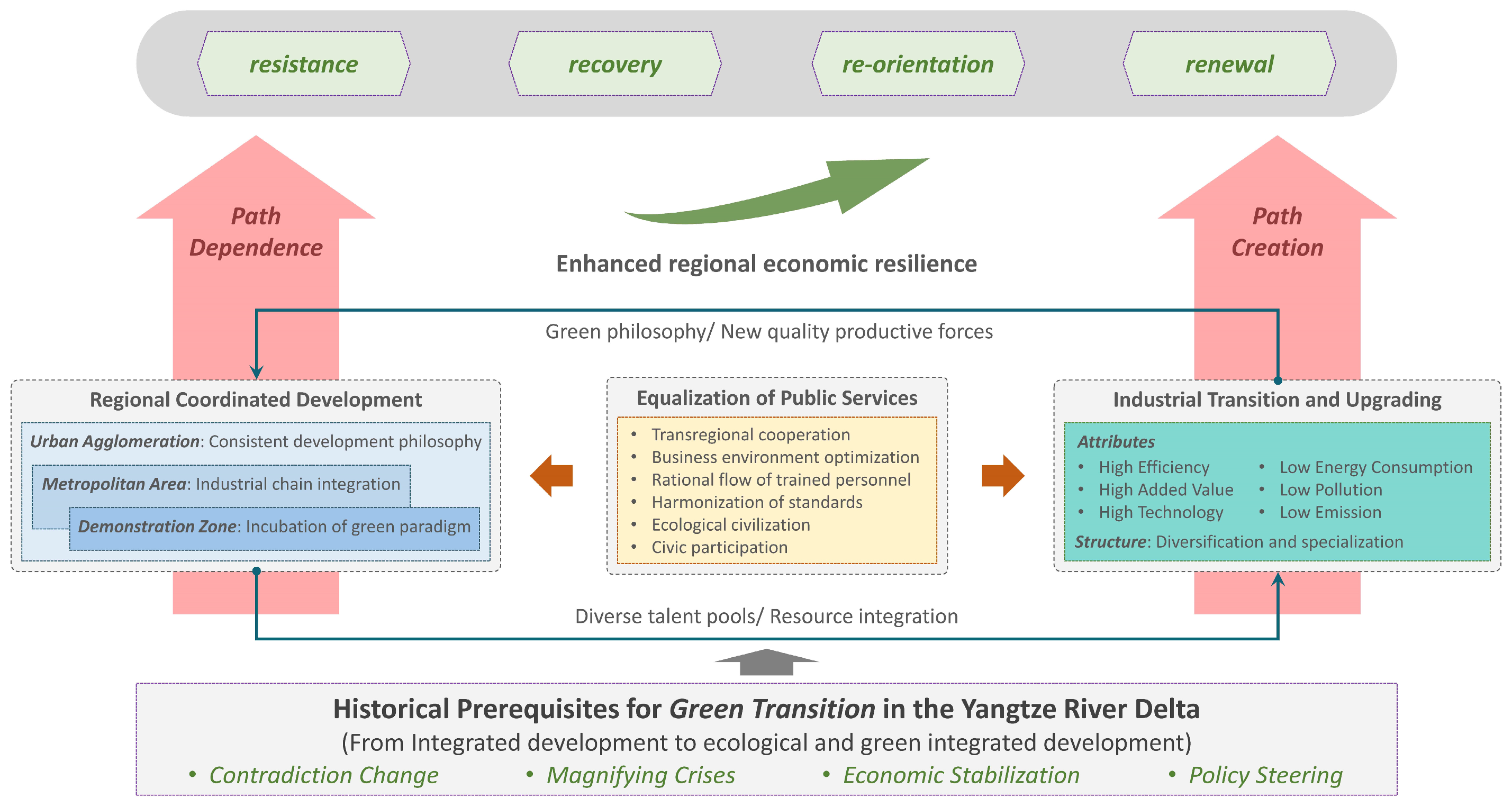
70] and, more importantly, the potentially crucial fountain of economic resilience that we are looking for. In this regard, this paper combines some significant research, policy reports, and key data resources, guided by core issues, to sort out the actual actions of the green transition in the YRD (i.e., regional coordinated development, green-oriented industrial transition and upgrading, and equalization of public services) and their interrelationships and then reveal the multiple mechanisms of economic resilience and discuss how they generate powerful effects (see
Figure 4).
In addition, it should be emphasized that the YRD is still in the stage of accelerating urbanization, which is not entirely caused by administrative intervention but a foregone conclusion of historical evolution. Hence, as a high-profile pilot ground for ecological and green integrated development in China, the extraction and summarization of urbanization experience in the YRD is not only conducive to a sufficient understanding of how green transition can accumulate a large amount of energy for the release of economic resilience but also provides intellectual support for latecomer cities to design forward-looking regional policies.
5.1. Regional Coordination Moving Toward Thorough Integration from Agglomeration
The dual structure in urban and rural economies has always been a key obstacle to China’s regional balanced development [
58], particularly when administrative barriers exist, and the urban–rural divide will be further widened due to the malignant competition for resources among top cities. One of the effective ways to break this block is to continue promoting urbanization to facilitate the fundamental transition of regional development logic. With the advantage of a unique geographical location and the guidance of the integration strategy, the YRD has made concentrated efforts to promote the construction of new urbanization and create a “multiply triangular and widely radiated” urban layout, which takes the strategic planning area, natural evolution area, and typical demonstration area as the mainstays [
71].
From the overall perspective of the national strategic planning area, one of the most prominent achievements or experiences of the YRD is that the understanding and cognition of regional integration has been highly unified from top to bottom at the level of governments, enterprises, scientific research institutions, and even ordinary citizens [
52,
72]. This special “cultural precipitation” stems from the collision and blending of regional layouts caused by the expansion of the YRD several times, and gradually becomes a stable dependence path that can “self-strengthen” regional development [
73]. The scope of “integration” is no longer limited to provincial economic cooperation, but has shifted to comprehensive coordination in multiple fields, such as education, medical care, tourism, environmental protection, technology, and talent service, which can maximize benefits in integrating resources, improving operational efficiency, and enhancing competitiveness [
74,
75]. The barriers to administrative divisions in the YRD have gradually weakened as a result, which provides a matchless “soft environment” for different cities in the region to jointly cultivate new industries and new business forms on a large scale and creates opportunities for more effective exploration of new economic growth paths.
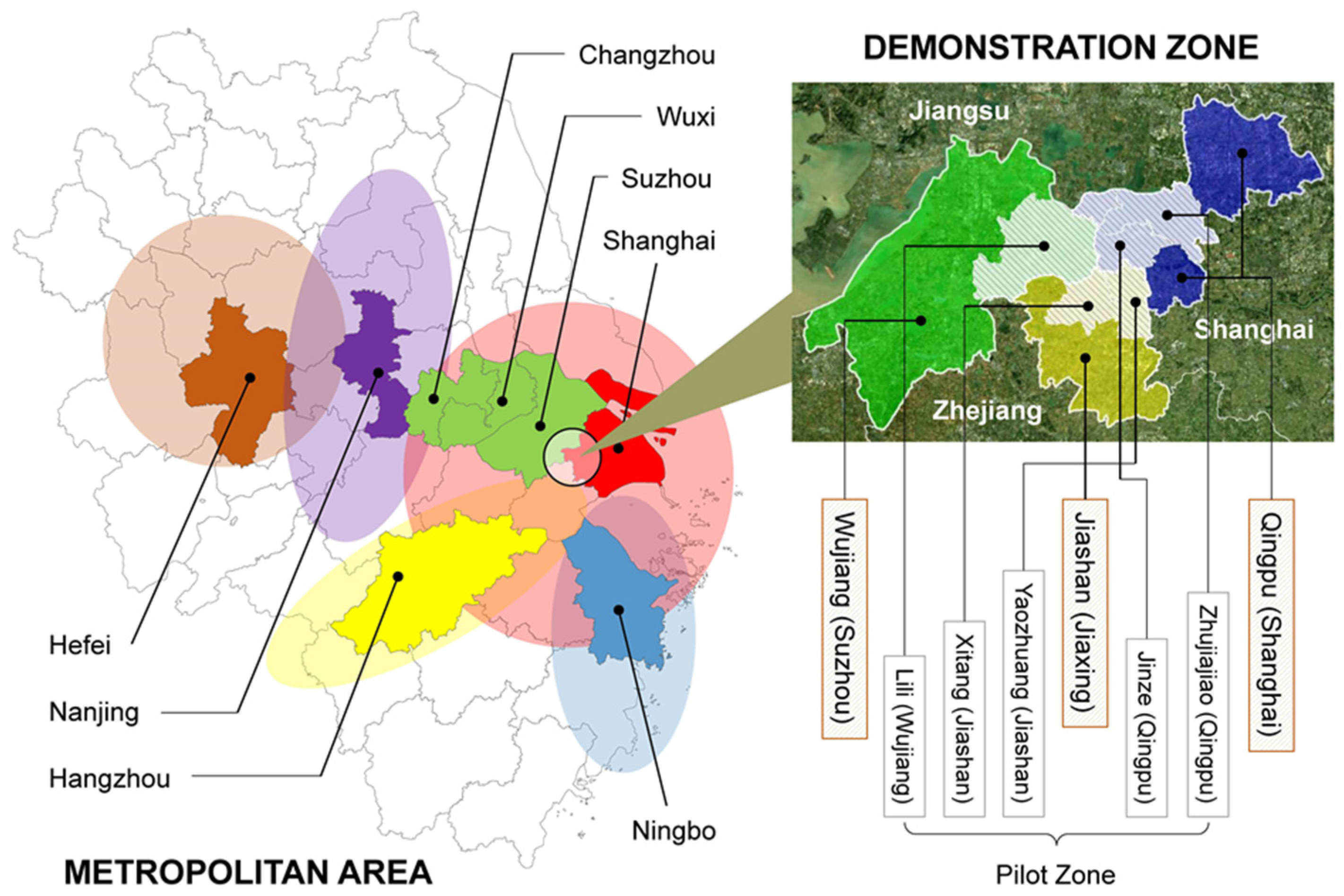
Although the integration quality of the YRD is superior to that of other regions in China, due to its vast territory, the real driving force of regional radical change should be attributed to the sustainable urbanization of the metropolitan area [
64,
76]. According to urban size and its radiation capacity to the hinterland, six metropolitan areas (see
Figure 5), namely, Shanghai, Nanjing, Hangzhou, Hefei, Ningbo, and Suzhou–Wuxi–Changzhou, have been generally recognized in the YRD and have maintained a strong momentum for a long time. The most prominent feature of these megalopolises is that the spatial correlation within the regional system tends toward natural evolution, with administrative intervention only playing an auxiliary role. In other words, the institutional barriers that restrict economic agglomeration in the metropolitan area are relatively weak, and the industrial sectors’ layout and integration are mainly driven by market mechanisms. Emerging industries can accurately position the industrial niche on the system value chain and thereby drive the transition and upgrading of related industries by improving total factor productivity [
76]. With the acceleration of urbanization, the economic growth pole within the YRD emerged.
The critical strategic position of the YRD determines its higher requirements for integrated planning. To this end, Shanghai, Jiangsu, and Zhejiang, with the approval of China’s State Council, jointly established a “demonstration zone of green and integrated ecological development of the YRD” needing cross-regional jurisdiction (see
Figure 5), aiming to make an eco-friendly pilot zone of integrated development and strive to accomplish the organic unity of green economy, high-quality life, and sustainable development. As a kind of strategic advanced planning, the demonstration zone continues to make efforts in the fields of carbon inclusion, land use, scientific and technological innovation, and business environment [
77]. At the same time, it also connects computing resources across regions and industries by actively promoting the integration of new information infrastructure, which offers support for cultivating knowledge innovation-based digital economy headquarters and building a pilot zone for digital transition. These series of combined actions provide a practical foundation for the comprehensive green integration of the YRD. At the same time, the cultivation and integration of new business models in the demonstration zone can overflow and drive the entire YRD to break through the development “lock-in” and switch to a new path. This is also a manifestation of the enhanced resilience of the regional economy.
5.2. The Green-Oriented Transition and Upgrading of the Industry and Value Chain Rebuilding
The YRD is one of China’s most active, open, and innovative regions. As aforementioned, however, the YRD still faces the inevitable development bottleneck that exists in the process of industrialization [
54,
60]. In terms of whole industrial sectors, despite being economically urgent, the structural transition should meet the underlying demand of sustainably improving the social ecology (at least not further deterioration). The YRD has two relatively obvious advantages that can be conducive to accomplishing this goal. First, the accelerated construction of new urbanization has attracted a large number of elements [
64,
70], from primary to advanced, including natural resources, investment capital, and human capital, pooling strengths to provide solid material foundations and sustained intellectual support for industrial transition. For example, the YRD has been vigorously introducing highly educated and skilled talent as long-term human capital reserves in recent years [
78], except for natural population growth and migration. Second, the philosophy of regional integration has greatly improved the cross-regional efficiency of resource allocation in a wider range [
72]. While advancing supply-side structural reform [
79], shutting down outdated production facilities, and scaling down overcapacity, it has effectively reduced the duplication of industrial infrastructure and avoided idle capacity and resource waste as much as possible. In this way, the originally inefficient resources, with the successful incubation and promotion of industrial demonstration projects, are more likely to flow to representative advanced manufacturing and producer services for selective replication based on location endowments. With the agglomeration of demonstration industries, the integration of the industrial value chain with the characteristics of high-tech, high added value, and cleaner production is accordingly stabilized and further strengthened, thus enabling the sustainable resilience of the regional economy.
The development concept of green integration has frozen the background color of industrial transition in the YRD. With the advent of global digitalization, the YRD took the lead in organizing and adjusting the industrial layout by virtue of its early accumulated capital, technology, and new infrastructure advantages, as well as longstanding, high-level openness. Digital technology and data elements are embedded in traditional industries, bringing about a qualitative leap in production efficiency and management performance [
39]. According to the Report on the Yangtze River Delta Digital Economy Development (2021 version) jointly issued by the Yangtze Delta Institute of Tsinghua University and China Academy of Information and Communications Technology (CAICT), the scale of the YRD’s digital economy reached up to 10.83 trillion in 2020 (see
Table 3), accounting for 44.26% of the total GDP of the region that year. The total digital economy in the YRD is almost the sum of the other three urban agglomerations, which may be the core reason why the YRD’s economy has not experienced significant fluctuations.
The multiplier effect released by the digital economy, to some extent, has alleviated a series of chain reactions caused by industrial stagnation with frequent contact of personnel during COVID-19 [
34], presenting significant resilience advantages over the real economy. On the one hand, the digital technology transforms traditional industries to spawn new industries and new business forms, which not only sets aside a buffer zone for hedging the short-term negative impact of COVID-19 but also indirectly contributes to a sustainable path to green and high-quality development for the regional economy due to its unique attribute of carbon reduction [
80]. On the other hand, the digital economy has accelerated the targeted flow of capital, technology, and talent in the YRD, thus driving the efficient convergence and rapid dissemination of innovation elements. The level of industrial specialization and diversification has been further enhanced accordingly [
81], which improves urban resilience against unexpected economic risks. In addition, the digital economy can break the restriction of geographical distance between cities [
82], affecting the sustainable resilience of urban agglomeration and metropolitan areas through the spatial spillover benefits of economic growth. In short, the digital economy is rapidly integrating into the entire industry chain of the YRD, accelerating industrial transition to achieve the improvement of both quality and efficiency, while indirectly driving the resilience of the regional economy and effectively resisting the impact of the pandemic.
5.3. System Guarantee of Sustainable Resilience Based on Equalization of Public Services
At present, the equalization of public services poses an enormous challenge to the YRD, due to crossing multiple administrative regions. Be that as it may, the implementation of relevant systems in some special economic regions, such as metropolitan areas and demonstration zones, has still achieved the desired results that reflect the improvement of regional economic resilience.
On the one hand, the equalization of public services is the inherent requirement of China’s new urbanization and an inexhaustible motivator for urban operation. The construction of new urbanization is the dual development of both the economy and society. The increase in urban population directly corresponds to the indicator characteristics of urbanization level, which is also an essential source of regional economic growth [
83]. Moreover, the improvement of urbanization level, to a certain extent, is beneficial to the balance of basic public services in the region [
84]. The essence of new urbanization construction is ultimately to focus on the overall development of human beings, and the equalization of public services conducive to social stability agrees with this goal [
85]. The long-term stability of society is the precondition for effectively carrying out all socioeconomic activities and the core embodiment of the city to resist sudden risks and improve resilience.
On the other hand, the equalization of public services can indirectly offer support for the transition and upgrading of industries. In May 2020, China proposed building a new dual-circulation development pattern, in which the strategic point of the domestic economy is still to stimulate domestic demand. Consumer spending is the most critical source of impetus. The equalization of public services positively affects the nonmonetary income of residents [
86], not only narrowing the income gap but also significantly improving overall social consumption [
87]. For example, an improved standard of compulsory education and an expanded scope of basic medical care are indirectly equivalent to an increase in nonmonetary income, thus reducing residents’ willingness to save. In other words, residents are most likely to use the saved medical and educational expenses for consumption. Furthermore, increasing investment in public services, such as Popular Science Education, has significantly raised public awareness of environmental protection and sustainable development. With the continuous penetration of the green lifestyle concept, domestic demand dominated by green consumption has forced enterprises to adopt green production modes [
88] and realize the green transition and upgrading of the entire industry.
Furthermore, it must be acknowledged that the imbalance of public services in the Yangtze River Delta region remains significant. For areas outside of metropolitan areas and demonstration zones, high-quality education, healthcare, and talent resources continue to be siphoned by central cities, resulting in a persistent gap in premium public service supply. To address this imbalance, a series of influential and targeted measures have been successively issued, involving the construction of a business environment, one-stop government services, and residents’ service cards. At the same time, active attempts have been made in sharing platforms, mutual assistance mechanisms, enclave economies, and flexible talent mobility. These efforts are gradually expanding the coverage of high-quality public resources and strengthening the interaction between regional economic systems and industrial development systems, which is an indispensable part of promoting regional green transition and enhancing economic resilience. At the same time, the embedding and support of digital technology will make this state more sustainable and stable.
6. Conclusions
In China, the economic status of the YRD is self-evident. The subtle changes in the YRD affect the direction of China’s development, both in terms of growth rate and economic aggregate. In general, since the 21st century, the economic planning of the YRD has been relatively successful. During the pandemic in particular, the economic system of the YRD has withstood many uncertainties and has kept the bottom line for China’s economic achievements under the general environment of global negative economic growth, which reflects strong and lasting economic resilience.
The robust economic resilience demonstrated by the YRD is not a random outcome but the cumulative result of two decades of continuous green transition. The combined forces of transformed principal social contradictions, escalating ecological crises, steady economic foundation, and top-down policy steering have jointly shaped the historical inevitability of China’s regional green transition, which has driven the formation of a stable triangular support structure in the YRD, consisting of coordinated regional development, green-oriented industrial upgrading, and equalized public services. This three-dimensional collaborative system serves as the core underpinning for the region to withstand external shocks and achieve rapid economic recovery, while the deepening consensus on green development further strengthens the sustainability and durability of economic resilience. These conclusions not only sharpen the understanding of green transition in the late industrialization of developing countries but also expand the research perspectives and the explanatory channels of regional economic resilience theory. Based on these results, we have concluded some inspiration for the future planning of other economic regions, including developing a diversified industrial structure dominated by high-end manufacturing and modern service industries, avoiding reliance on a single industry; establishing a close regional cooperation mechanism to promote the free flow and optimized allocation of resources, thereby forming a development paradigm of complementary advantages; emphasizing technological innovation and talent cultivation to improve the quality and efficiency of economic development; breaking down institutional barriers to unleash market vitality and create a favorable environment for economic development; and intensifying infrastructure construction to provide a solid foundation for economic development. Finally, it should be clarified that economic resilience comes from the continuous accumulation of progress in the regional green transition. Therefore, planning should focus on the long term and avoid hindering the emerging resilience due to short-sightedness.
Overall, through in-depth expansion of the spatial–temporal analytical scope, this paper unravels the evolutionary logic of economic resilience in the YRD with reasonable clarity and further enhances the theoretical explanatory power of regional economic resilience. However, this study also has certain limitations. As a qualitative single case study of the YRD, the generalizability of the findings to regions with different development foundations requires further verification. Future research may extend the analysis to more urban agglomerations for comparative study and adopt quantitative methods to examine further the relationship between green transition and regional economic resilience.