3. Bibliometric Information
In this section, a bibliometric assessment is conducted on the final set of 91 publications. The evaluation encompasses several dimensions, including the temporal evolution of research output, publication sources, co-authorship networks, citation performance, and the geographical distribution of contributing authors.
Table 2 presents a descriptive overview of the key bibliometric indicators characterizing the dataset of 91 publications included in this study. These indicators provide a quantitative foundation for assessing the structure, collaboration patterns, and scientific impact of the research field.
The dataset comprises 91 peer-reviewed papers published between 2001 and 2025, sourced from two major academic databases (Elsevier–Scopus and Clarivate–Web of Science), ensuring broad coverage and data reliability. A total of 339 authors contributed to these publications, distributed across 57 academic publications, highlighting the interdisciplinary nature of the field and its dissemination across multiple research domains.
Authorship patterns indicate a strong prevalence of collaborative research, with only six single-authored papers compared to 333 authors contributing to multi-authored publications. This is further reflected in the average of 3.72 authors per paper (indicator represents the average number of contributors per publication) and an average of 3 co-authors per article (indicator represents the average number of additional contributors per publication, excluding the lead author), suggesting that research in this domain is typically conducted within collaborative teams rather than by individual scholars.
The collaboration index is a standard bibliometric indicator that measures the average number of authors per multi-authored paper, reflecting the degree of research collaboration within a field. The collaboration index of 3.91 reinforces this definition, indicating a relatively high degree of co-authorship and network-based knowledge production. In this study, a collaboration index of 3.91 indicates a relatively high level of cooperative research activity, suggesting that EV after-sales and maintenance studies are predominantly conducted within collaborative and often interdisciplinary teams. This is consistent with the complex and multi-dimensional nature of the topic, which requires the integration of expertise from engineering, business, and policy domains.
The average citations per article represent the mean number of citations received by each publication in the dataset, serving as an indicator of the overall scientific impact and visibility of the research field. From an impact perspective, the average citation rate of 56.76 citations per article indicates a strong level of scholarly influence, suggesting that the field has attracted sustained academic attention and generated significant intellectual contributions. The observed average of 56.76 citations per article suggests a strong citation performance, meaning that the selected studies have contributed significantly to academic discourse and have been widely referenced in subsequent research. Within the context of EV after-sales systems, this relatively high citation rate reflects the growing importance and relevance of the topic, particularly in relation to sustainability transitions and technological innovation.
Together, these indicators provide insight into both the structural characteristics (collaboration patterns) and the intellectual influence (citation impact) of the research domain, supporting the conclusion that EV after-sales and maintenance research is a collaborative, impactful, and evolving field.
Overall, the bibliometric indicators presented in
Table 2 characterize the research domain as moderately mature, highly collaborative, and interdisciplinary, with a strong citation impact. These features suggest the existence of established research networks and a growing consolidation of knowledge while also reflecting the expanding relevance of EV-related after-sales and maintenance topics across multiple academic and applied disciplines.
In summary, the bibliometric indicators collectively suggest a collaborative, high-impact, and interdisciplinary research field that has evolved significantly over the past two decades.
3.1. The Evolution of Publications
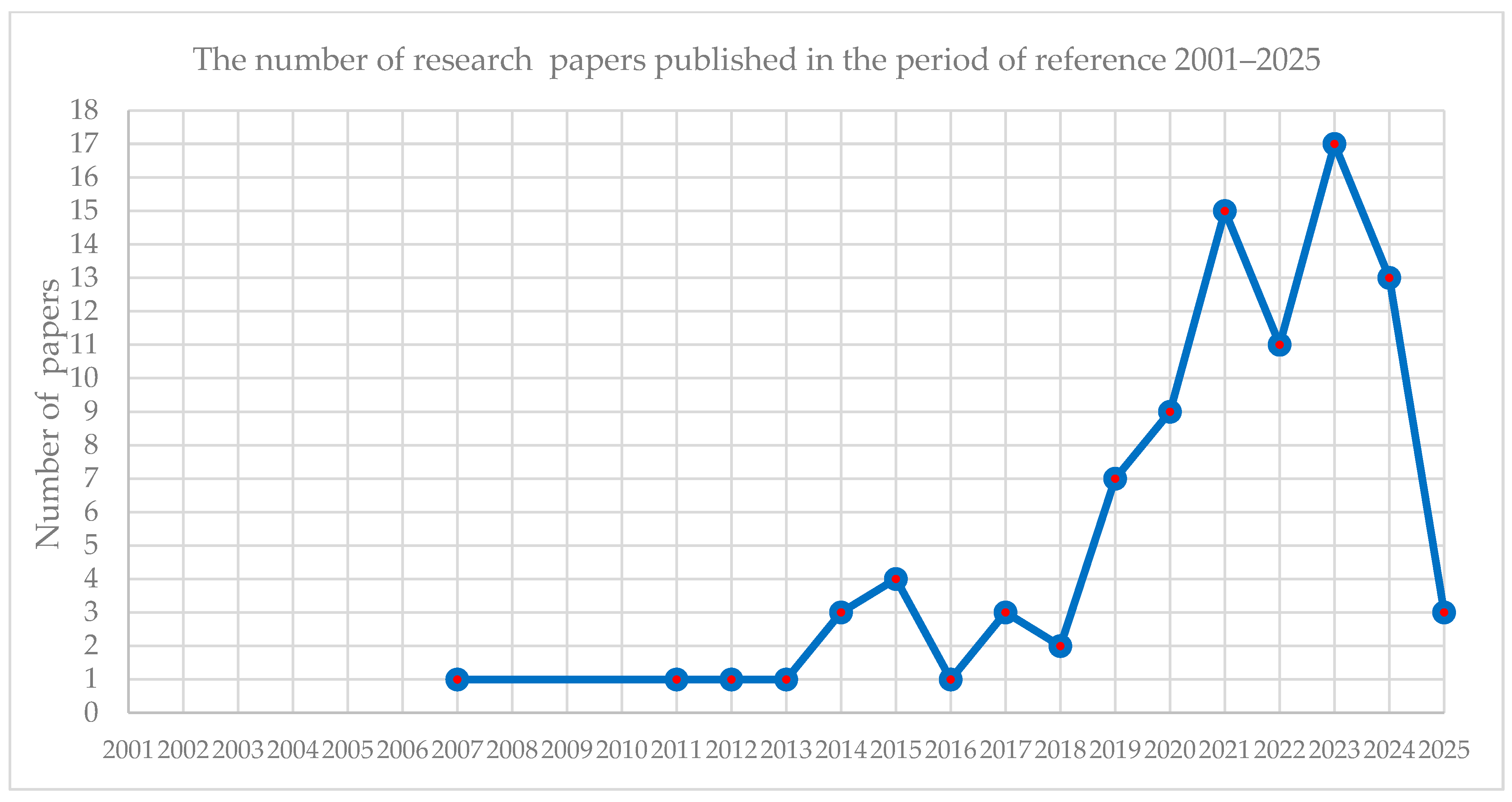
Research on electric vehicle (EV) adoption, maintenance, and after-sales services received limited academic attention prior to 2013. A noticeable surge in publications emerged after 2018, coinciding with global initiatives promoting sustainability, electric mobility, and low-carbon policies. The research activity peaked between 2021 and 2023, reflecting strong momentum and increasing relevance in both academic and policy contexts. As illustrated in
Figure 2, a slight decline in publication frequency is evident from 2024 onward, suggesting a temporary stabilization in research output.
3.2. Publication Distribution
The publication landscape reveals that EV-related research, especially in maintenance, after-sales, and adoption studies, is interdisciplinary but concentrated in sustainability and energy journals. The Journal of Cleaner Production dominates the field, while transportation and energy journals provide secondary strongholds. However, the dispersion across numerous smaller outlets highlights ongoing fragmentation and the potential for greater consolidation in dedicated EV-focused publication channels.
The transition to EVs introduces fundamentally new challenges in the automotive after-sales services, including different high-voltage safety requirements, software-driven diagnostics, data accessibility constraints, and the need for workforce reskilling. These transformations require interdisciplinary analysis that integrates engineering, business models, labor economics, and regulatory frameworks—making the topic particularly relevant for journals addressing complex socio-technical systems. Publishing research in this field contributes to bridging a critical gap between technological development and real-world implementation. It supports policymakers in designing effective regulatory frameworks, assists industry stakeholders in adapting business models and service operations, and provides a foundation for developing standardized training and certification systems; thus, research papers focusing on this topic must not be limited to sustainability and transportation publications. Given the increasing global emphasis on decarbonization and sustainable mobility, advancing knowledge on EV after-sales ecosystems is essential for ensuring that the transition is not only technologically feasible but also operationally sustainable, economically viable, and socially inclusive. Therefore, this research area holds significant value for high-impact academic journals seeking to promote interdisciplinary and systems-oriented contributions.
Table 3 provides an overview of the journals that have published multiple articles on after-sales services within the dataset, demonstrating sustained academic interest in this research area. Specifically, out of the 57 sources covering the 91 selected articles, a subset of journals has contributed more than one publication over the period 2007–2025, indicating the emergence of key dissemination channels within an otherwise fragmented and interdisciplinary field.
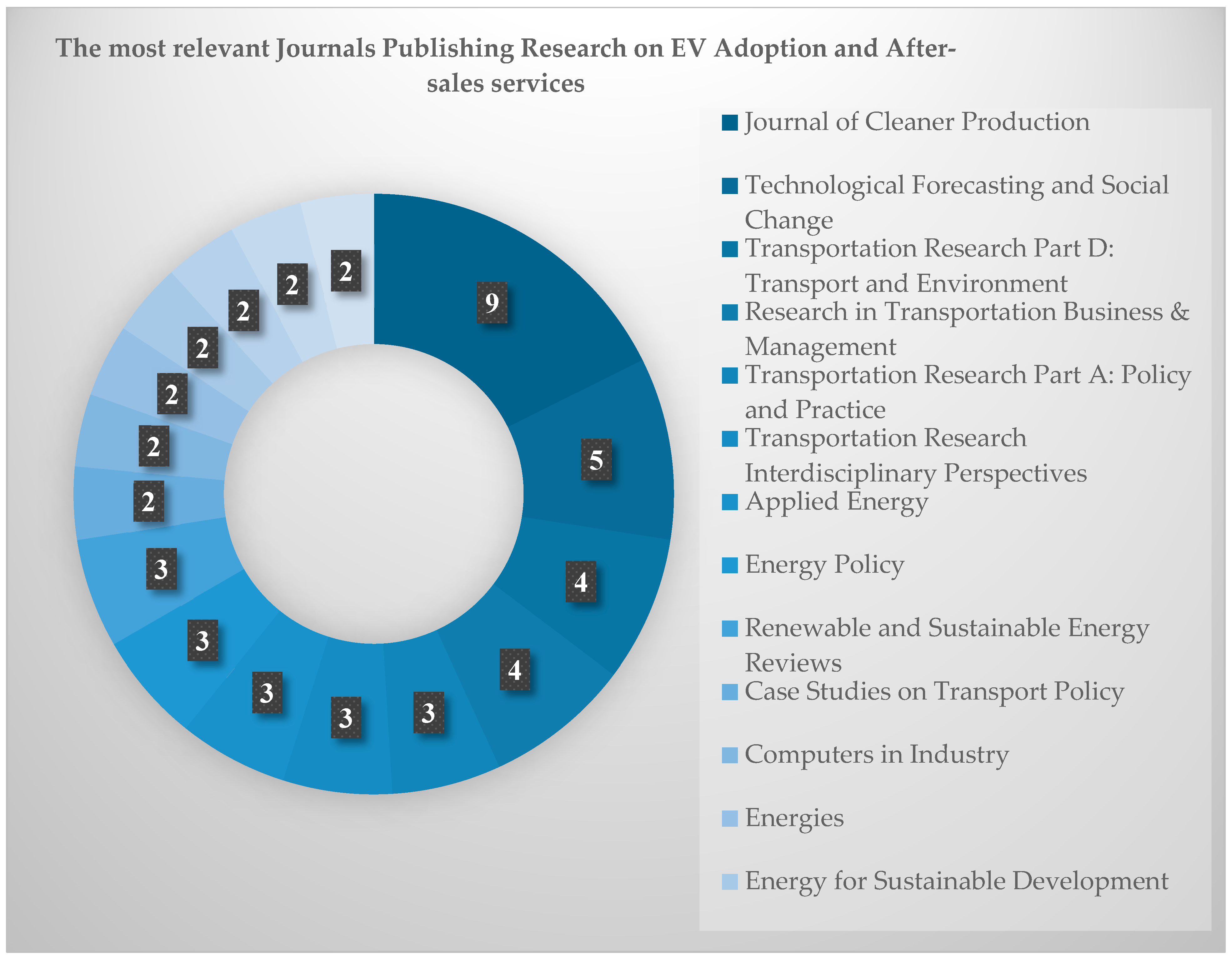
Figure 3 illustrates the distribution of 51 publications across the most active academic journals contributing to research on electric vehicle (EV) adoption, maintenance, and after-sales systems. Notably, these 51 papers—out of the total sample of 91—are concentrated within 16 journals, indicating a moderate level of publication clustering within a relatively limited number of outlets. The visualization demonstrates a moderate concentration of research output among a small group of high-impact journals, with the remaining studies dispersed across a diverse range of outlets.
The Journal of Cleaner Production emerges as the most prolific source, publishing nine articles on the topic. Its dominance reflects the strong environmental and sustainability orientation of EV research, aligning with the journal’s focus on sustainable production systems and green technologies. The Technological Forecasting and Social Change journal ranks second with five publications, highlighting the growing emphasis on forecasting, innovation diffusion, and socio-technical transitions toward electrified mobility. Other prominent outlets include Transportation Research Part D: Transport and Environment (four papers) and Research in Transportation Business & Management (four papers), both of which underscore the field’s applied and policy-oriented dimensions. A cluster of journals—including Transportation Research Part A, Transportation Research Interdisciplinary Perspectives, Applied Energy, Energy Policy, Renewable and Sustainable Energy Reviews, and Case Studies on Transport Policy—each contributed between two and three papers, indicating a diversified research landscape that spans energy systems, policy analysis, and transport management. The remaining 40 papers were published either in conference proceedings or in journals that featured only a single article on the topic.
Overall, the data suggest that scholarship on EV adoption and after-sales services is interdisciplinary, with strong representation in sustainability, transport, and energy journals. This cross-sectoral distribution reflects the multifaceted nature of EV research, bridging technological innovation, policy development, and business transformation.
3.3. Co-Authorship Analysis
Using a VOSviewer (version 1.6.20) network visualization, the co-authorship relationships among researchers working on electric vehicle [EV]-related topics were mapped and analyzed. In the visualization, each node [circle] represents an individual author, while the connecting lines indicate co-authorship links. The visualization reveals several collaboration clusters: From Italy, the authors Marco Giansoldati, Lucia Rotaris and Mariangela Scorrano form a tightly knit research group with frequent co-authorship ties. The authors Gerardo Zarazua de Rubens, Benjamin K. Sovacool, Lance Noel, and Johannes Kester represent another well-established and highly collaborative network between scholars in Denmark and the UK. In Austria, Melanie Pichler, Nora Krenmayr, and Ulrich Brand have a strong internal collaboration, and Krishnan and V. Vijai represent a solitary node, suggesting limited or no direct co-authorship connections within this particular dataset. Mainly, the co-authorship map highlights that research on EV adoption, maintenance, and after-sales services is fragmented into several distinct collaboration networks, with minimal cross-linkages between clusters, as observed in
Figure 4.
This pattern suggests the existence of isolated research communities rather than a single, highly integrated scholarly network within the field.
3.4. Citation Distribution and Country Affiliation
The bibliometric evidence reveals a highly unequal citation distribution, with a small subset of publications accounting for a disproportionate share of total citations. Prominent among these are the UK [
11], with 562 citations; [
12] a France/Netherlands collaboration, with 475 citations; and [
13] those from Spain, with 397 citations, which constitute cornerstone studies in the domain. These papers primarily examine consumer behavior in EV adoption, systemic transformation processes, and innovative business models, highlighting their central role in shaping scholarly discourse and theoretical advancement in the field.
The citation distribution reveals a strong geographical concentration of highly influential studies in Europe, particularly among publications exceeding 300 citations, which predominantly establish foundational frameworks on electric vehicle adoption, business models, and service systems. Mid-range citation groups (50–299 citations) exhibit increasing regional diversity, with growing contributions from Asia, North America, and cross-regional collaborations, reflecting the globalization of EV-related research. In contrast, the majority of papers fall within the low-citation and zero-citation categories, representing recent, specialized, or region-specific studies across Asia, Africa, the Middle East, and South America. This pattern indicates both the rapid expansion of the field and a temporal lag in citation accumulation for emerging topics such as digital maintenance, workforce reskilling, and EV after-sales services.
Table 4 presents a hierarchy of the papers, which are listed according to their influence in the field. Papers with more than 300 citations were considered the founding studies; between 299 and 100 citations, papers were considered highly influential; between 100 and 50 citations, papers were deemed influential; and those with under 50 citations were considered emerging contributions with highly relevant, recently published content.
The observed citation pattern highlights a structural imbalance in the literature: while highly cited, early studies focus on EV adoption, business models, and macro-level transitions, more recent and regionally diverse research addressing after-sales services, maintenance practices, workforce readiness, and organizational adaptation remains weakly cited and fragmented. This disparity suggests that knowledge production has prioritized technological performance and market diffusion over operational, human, and service-oriented dimensions, particularly in the context of electric vehicle maintenance. The concentration of low- and zero-citation studies in emerging regions further indicates that context-specific challenges related to skills, repair infrastructure, and service governance are underrepresented in dominant theoretical frameworks, reinforcing the need for integrated, cross-disciplinary research that bridges economic, technological, and ergonomic perspectives—an explicit gap addressed by the present study.
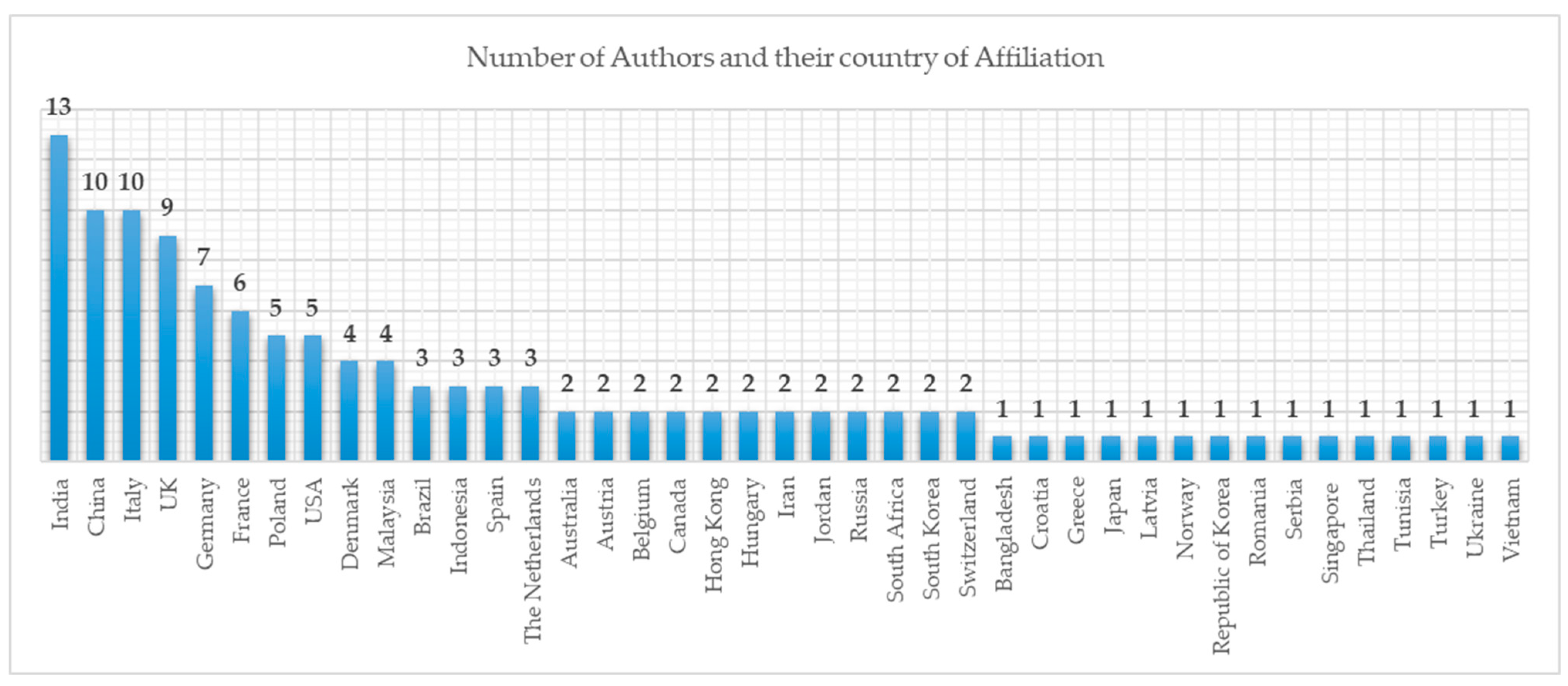
As far as the country of affiliation is concerned,
Figure 5 below illustrates the geographical distribution of authors’ institutional affiliations contributing to research on electric vehicle (EV) adoption, maintenance, and after-sales services.
The data indicate that India is the leading contributor with 13 affiliated authors, followed by China and Italy with 10 affiliated authors; the United Kingdom—7 and Germany—7 authors. This highlights the dominant role of Asian and European researchers in advancing EV-related scholarship.
Moderate contributions are observed from France, Poland, Denmark, and the USA, while a wider group of countries—including Brazil, Australia, Malaysia, and the Netherlands—show limited but notable participation. Representation from regions such as Africa, the Middle East, and Southeast Asia remains marginal, suggesting a geographically uneven distribution of research activity. Overall, the figure reflects a concentration of EV research expertise in a few industrialized and emerging economies, underscoring the need for broader international engagement in the field.
The bibliometric analysis provides a comprehensive overview of the research landscape on electric vehicle (EV) adoption, maintenance, and after-sales services, revealing a rapidly expanding yet unevenly distributed field. Scholarly output has increased significantly since 2019, driven by global sustainability initiatives and policy support for electric mobility. The analysis highlights strong collaboration networks, primarily concentrated in Europe and Asia, with China, India, and several European countries leading in publication volume and citation impact.
4. EV After-Sales and Maintenance Services—The Scientific Literature Approach
The global shift toward sustainable transportation has placed electric vehicles (EVs) at the center of both environmental and technological debates. As countries intensify efforts to reduce greenhouse gas emissions and decrease reliance on fossil fuels, EV adoption has emerged as a key strategy for advancing climate objectives and enhancing energy security. Nonetheless, the diffusion of EVs is influenced by a complex set of drivers and constraints that differ across socioeconomic, geographic, and infrastructural contexts. However, considering the global economy at the end of the year 2025, the constant war threats in Europe, the escalating conflict between Ukraine and Russia, the rise of the Chinese economy, and the equivocal foreign politics of the USA, it seems that the European Union is seriously considering delaying or lifting the 2035 ban on sales of new combustion engine cars [
102].
In their latest report, Ref. [
103] has ascertained the following relevant facts: less than 4% of EU cars are electrically chargeable and the average age of an EU car fleet is 12.5 years, with an upward trend; meanwhile, Ref. [
104] has reported that BEVs have recorded a minor setback, with sales dropping by 1.14% in 2024 in comparison with the previous year. Plug-in hybrid electric vehicles (PHEVs), which combine the environmental benefits of battery electric vehicles with the reliability of conventional gasoline engines, have not achieved the anticipated market success. After sales peaked in 2022, a steady decline followed in terms of their market share. Hybrid electric vehicles (HEVs) dominate the market for alternative propulsion systems. Their sales have increased steadily since 2020, and by 2024, they represented nearly one-third of all new cars sold in the European Union.
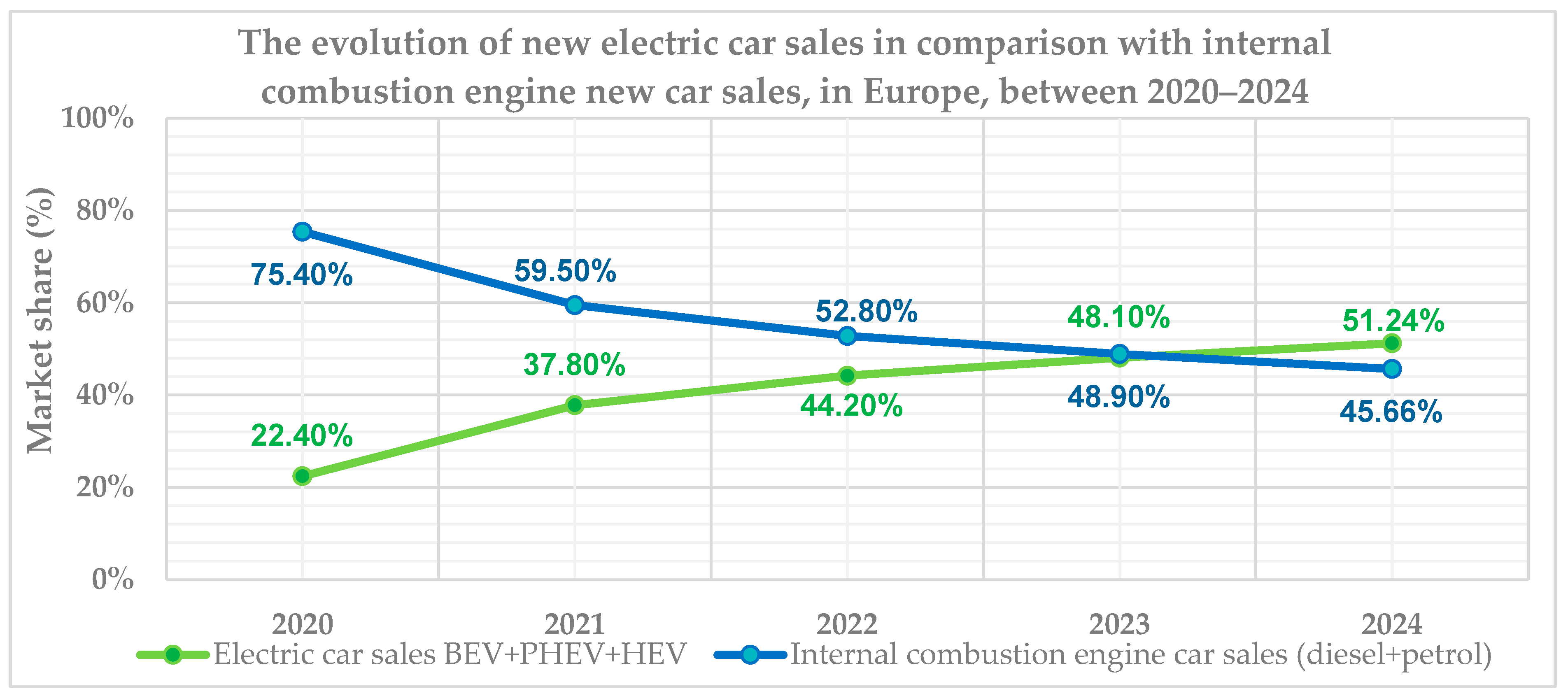
Data presented by ACEA (the European Automobile Manufacturers’ Association) have been further analyzed in
Figure 6, illustrating the comparative evolution of new electric vehicle (EV) sales—including battery electric vehicles (BEVs), plug-in hybrids (PHEVs), and hybrid electric vehicles (HEVs)—and internal combustion engine (ICE) car sales in Europe from 2020 to 2024. The data reveal a clear and sustained shift toward electrified mobility over the observed period.
In 2020, ICE vehicles dominated the market, accounting for 75.4% of new car sales, while electric vehicles represented only 22.4%. However, the trend shows a steady decline in ICE sales and a consistent increase in EV adoption, with the two market segments reaching near parity in 2023 (48.9% ICE vs. 48.1% EVs). By 2024, electric vehicles surpassed conventional models for the first time, achieving a market share of 51.24% compared to 45.66% for ICE vehicles.
This evolution, although less rapid than desired, underscores a structural transition in the European automotive market driven by policy incentives, technological advancements, and changing consumer preferences. The data suggest that Europe is approaching a tipping point in the decarbonization of road transport, with electric vehicles emerging as the new market norm rather than an alternative niche.
For the reasons mentioned above, it can be concluded that the number of electric cars (BEV, PHEV, HEV) is growing constantly—perhaps not at the pace envisaged by the EU authorities or required by the reversal of the climate change consequences, but advancing in the right direction. Considering the upward trend of all types of electric cars, it is reasonable to explore the readiness of the OEMs to deal with issues and challenges brought by the technology within electric cars.
The purpose of this systematic literature review is to ascertain whether the academic and scientific community has addressed the after-sales problems that have arisen from the use of electric cars in a quantitative and qualitative fashion. Only with thorough research and analysis has technological development progressed, and the limitations and the concerns addressed by the scientific work are the foundation on which evolution is achieved.
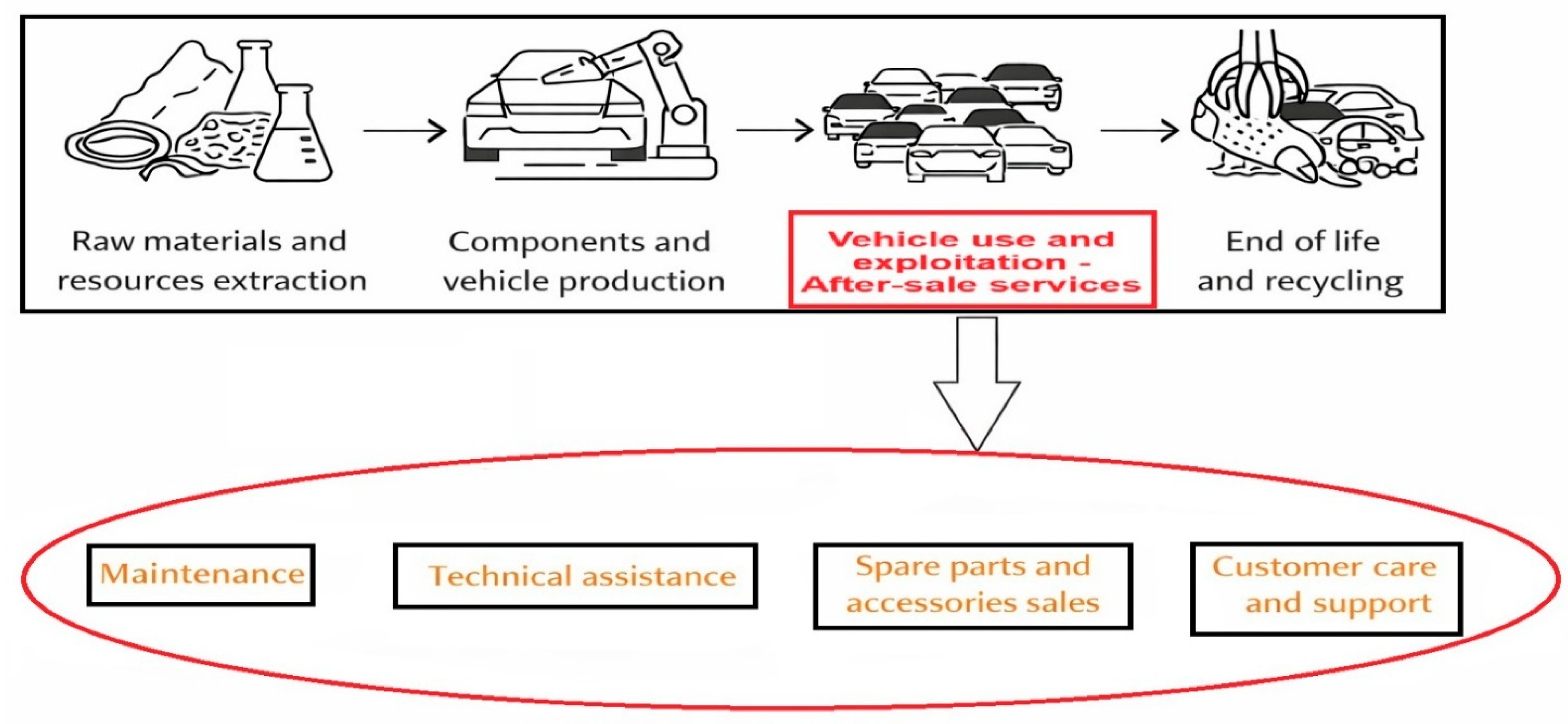
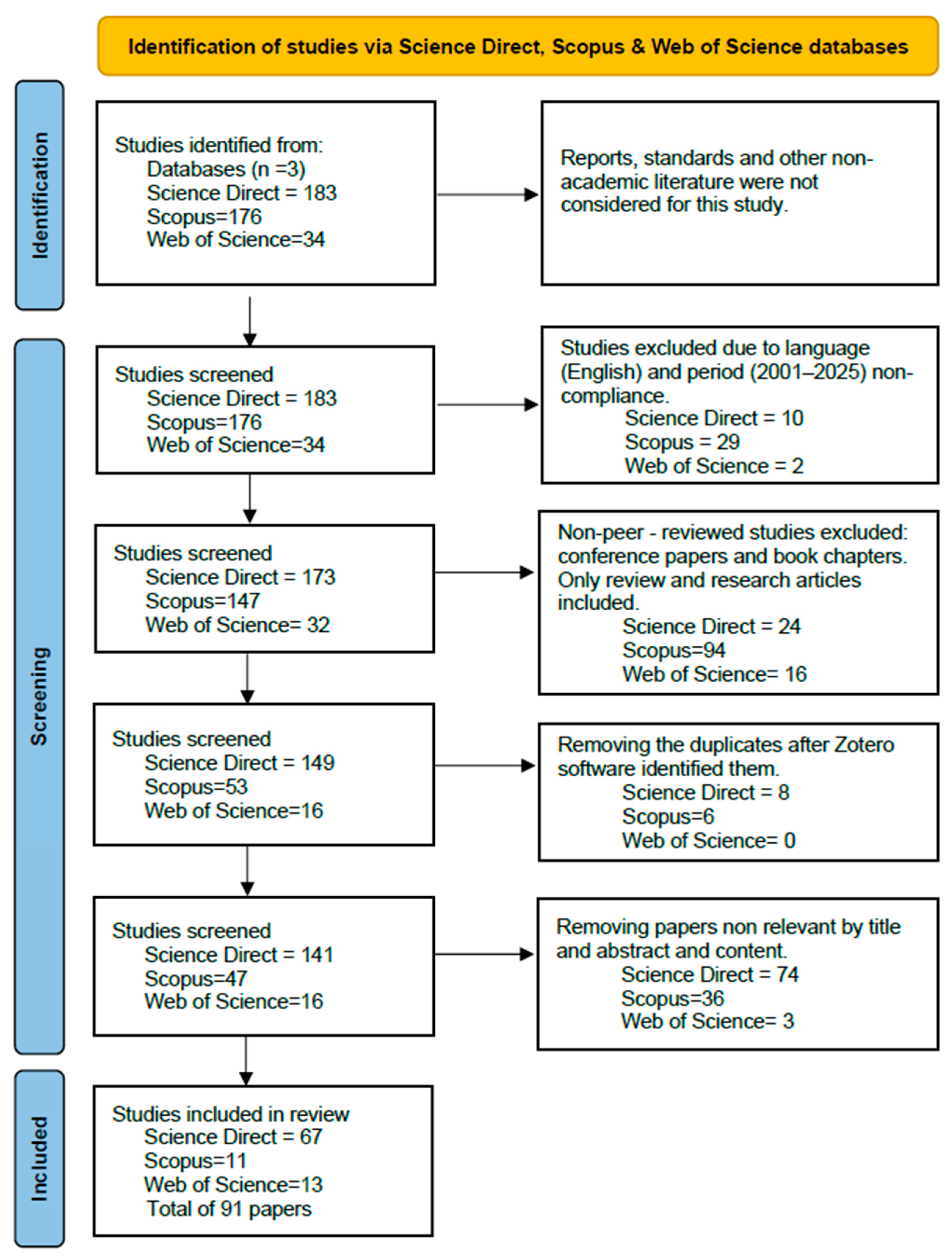
During the first stages of the literature review, while searching the databases, a lot of papers expressed interest in the three phases of a car’s lifecycle—raw material sourcing, production, and end of life—neglecting the ‘here and now’ phase (use and exploitation) [
105,
106], as shown in
Figure 7.
The papers [
107,
108] define the after-sales services as service activities performed during and after the warranty period, encompassing product maintenance, technical assistance, provision of spare parts and accessories, as well as customer care and support. After-sales services are critical for ensuring product reliability, customer satisfaction, and brand loyalty. These services extend the operational lifespan of products, reduce failure rates, and enhance perceived value, thereby influencing repurchase intentions and overall market competitiveness. Moreover, in the context of electric vehicles, effective after-sales management supports technological adaptation, user confidence, and the sustainability of the mobility ecosystem through efficient resource utilization and lifecycle management [
109].
In the context of this study, maintenance services are defined as the set of activities supporting the post-purchase lifecycle of electric vehicles, including repairs and physical and electronic diagnostics. To enhance conceptual precision, the scope explicitly incorporates digitally enabled service functions, such as over-the-air (OTA) software updates, remote diagnostics, and predictive maintenance systems, which are increasingly central to EV service operations as both corrective and predictive maintenance tools: they are commonly used to resolve software faults or recall issues without requiring physical intervention while also enabling proactive performance optimization and component monitoring to prevent potential failures.
Clearly, efficient and professional after-sales services can only be provided by qualified personnel, and despite the fact that out of 250,000,000 million passenger cars on European roads, approximately 7.1% are electric cars (HEVs, PHEVs, BEVs) [
103], it can reasonably be concluded that maintenance and repair workshops (either dealerships or independent) must be equipped with trained and skilled workers able to address issues regardless of the powertrain. The professional workforce problem, which is fundamental to all after-sales service, but, also, the optimization of after-sales services by balancing spare parts use and service quality, has been approached before in the scientific literature, but without the proper impact [
10,
110,
111,
112]. Given that, possibly, in 2014, it was too early to seriously research this matter, this paper aims to establish the current state of knowledge concerning after-sales services.
Selecting the relevant papers for this literature review was not an easy task due to the fact that there are few documents approaching this theme directly, with most merely mentioning it in other contexts.
VOSviewer was a very useful tool employed to facilitate the systematic organization of the literature. By generating co-authorship and co-occurrence, the tool enabled the identification of thematic clusters that represent major research streams within the field. These clusters provided a data-driven basis for grouping articles according to shared conceptual orientations and methodological approaches. Through this mapping process, the literature review was structured around interconnected areas of interest. Thus, VOSviewer played a major role in enhancing the objectivity, transparency, and coherence of the review’s analytical framework.
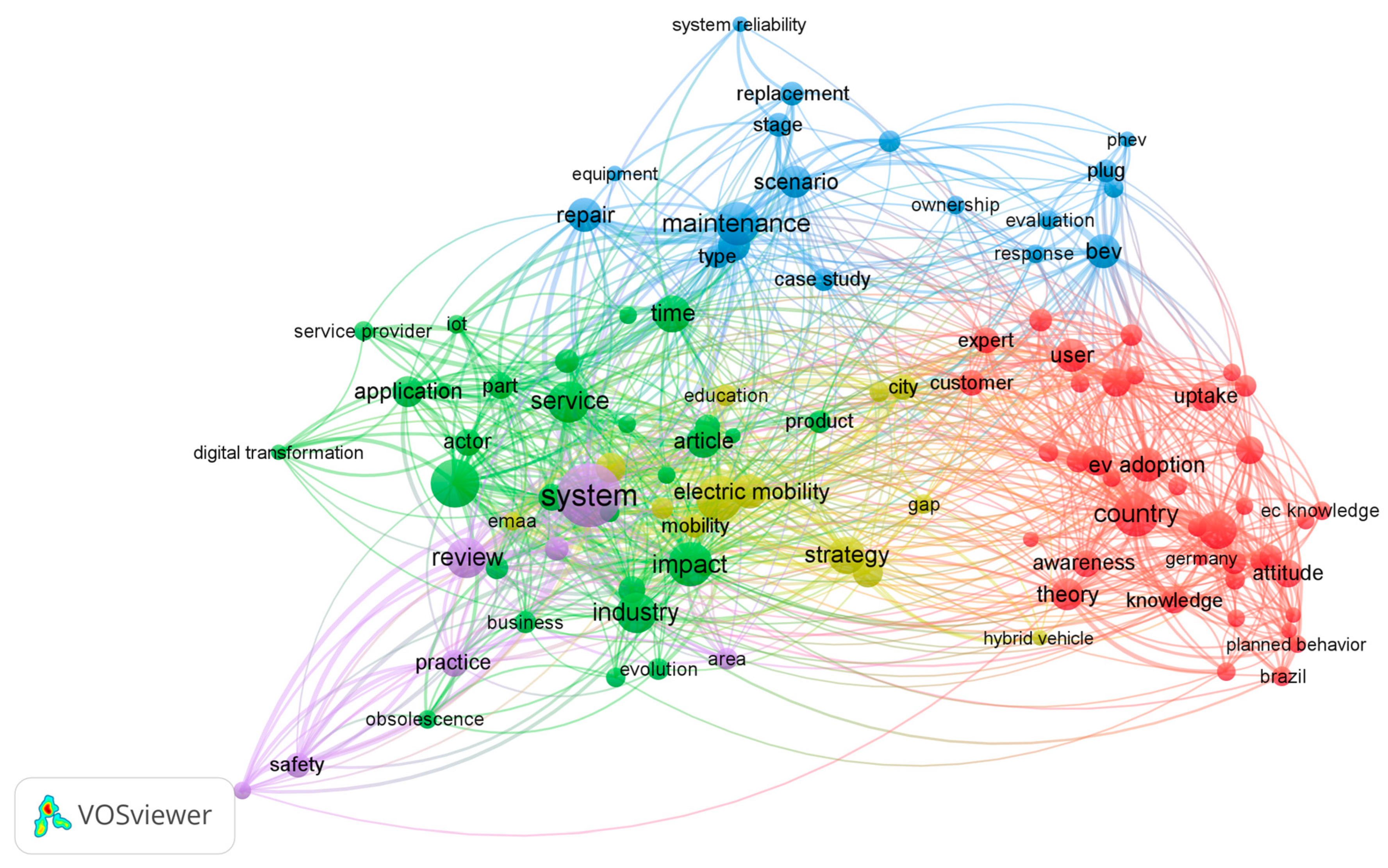
The interpretation of the keyword co-occurrence, clustering, and research evolution is explained in the following paragraphs. The keyword co-occurrence network presented in
Figure 8 reveals a structured yet unevenly integrated research landscape within the electric vehicle (EV) domain. The analysis identifies several distinct clusters, each representing a thematic concentration of research activity. The most prominent cluster is centered around core technological concepts such as ‘electric vehicle’, ‘battery’, ‘energy consumption’, and ‘powertrain’, indicating that the dominant focus of the literature remains on engineering performance and energy systems optimization. The high density and central positioning of these nodes suggest strong interconnections and a mature body of research within this domain.
A second cluster emerges around sustainability-oriented concepts, including ‘emissions’, ‘environmental impact’, and ‘sustainable development’, reflecting the growing importance of environmental considerations in EV research. However, while this cluster shows increasing prominence, its connections to operational and service-related themes remain relatively limited, indicating a partial integration of sustainability with practical implementation dimensions.
In contrast, keywords related to after-sales services—such as ‘maintenance’, ‘repair’, ‘service’, and ‘workforce’—are either weakly represented or located at the periphery of the network. Their limited co-occurrence with central technological terms highlights a significant gap in the literature, suggesting that the operational lifecycle of EVs has not been systematically incorporated into mainstream research. This peripheral positioning confirms that after-sales systems remain an underdeveloped and fragmented research area.
The clustering structure further reveals a lack of strong linkage between business-related concepts—such as ‘service models’, ‘digitalization’, and ‘Product–Service Systems’—and the technical and operational clusters. This fragmentation points to a disconnect between strategic-level research and the practical realities of EV servicing, particularly in the context of hybrid ICE–EV ecosystems. Similarly, governance-related keywords, including those associated with regulation, data access, and certification, are either sparsely distributed or weakly connected, indicating that institutional dimensions are not yet fully integrated into the research field.
From a temporal perspective, the evolution of the network suggests a transition from early research dominated by technical and energy-related themes toward a more diversified landscape incorporating sustainability and service-oriented concepts. However, this evolution remains incomplete, as evidenced by the weak integration of emerging themes with core technological clusters.
Overall, the co-occurrence analysis indicates that the EV research field is currently characterized by a technology-dominant paradigm, with after-sales services, workforce development, and governance representing emerging but insufficiently connected research fronts. This structural fragmentation underscores the need for more integrative, systems-oriented approaches that bridge technological innovation with operational, organizational, and institutional dimensions, particularly in the context of EV after-sales ecosystems.
The methodology used in order to obtain a relevant keyword co-occurrence analysis is briefly presented in the following passages.
Figure 8 was generated through a keyword co-occurrence analysis conducted using VOSviewer (version 1.6.20) to map the conceptual structure of the literature on electric vehicle (EV) systems. The analysis was based on a dataset of 91 peer-reviewed articles retrieved from ScienceDirect, Scopus and Web of Science, covering the period 2001–2025, as mentioned before.
Author keywords were selected as the unit of analysis, as they most directly reflect the thematic focus of each publication. A minimum occurrence threshold of 5 was applied, meaning that only keywords appearing at least five times in the dataset were included in the analysis. This resulted in a final set of 107 keywords forming the co-occurrence network. The network was constructed using the full counting method, where each co-occurrence of keywords within a document contributes equally to the link strength.
Normalization was performed using the association strength method, which adjusts for differences in keyword frequency and enhances the comparability of relationships between nodes. The clustering of keywords was carried out using VOSviewer’s modularity-based algorithm, resulting in five distinct clusters, each representing a thematic area of research. Cluster membership is indicated by color coding, enabling the identification of dominant research themes and their structural interconnections.
Cluster 1—“System”, color code—purple, occurred 70 times, with a total link strength of 898 and linked to 87 other items. These metrics indicate both high frequency and strong relational integration, positioning this cluster as a key conceptual hub within the research field. This structural centrality indicates that system-level thinking plays a critical integrative role, linking the technological, environmental, economic, and operational aspects of EV research. However, the broad and generic nature of the term ‘system’ may also mask a lack of conceptual specificity, as it is applied across diverse contexts without necessarily reflecting a coherent or unified analytical framework.
In the context of this study, the prominence of the ‘system’ cluster reinforces the argument that EV research increasingly adopts a systems-oriented perspective, yet the relatively weak integration of after-sales services and maintenance within this cluster suggests that these operational dimensions are not yet fully embedded within system-level analyses. Consequently, while the literature recognizes the systemic nature of electric mobility, it does not comprehensively incorporate the after-sales subsystem, highlighting a critical gap in the holistic understanding of EV ecosystems.
Cluster 2—“Country”, color code—red, occurred 37 times, with a total link strength of 668 and linked to 89 other items. This cluster underscores the fact that the transition to electric mobility is not uniform but varies considerably across countries, influenced by differences in governance models, economic conditions, and institutional capacity. As such, many studies adopt a case-based or comparative approach, analyzing EV diffusion, policy effectiveness, and market dynamics within specific national contexts.
However, the strong country-level orientation of the literature may also contribute to fragmentation, as findings are often context-dependent and not easily generalizable across regions. This is particularly relevant in the context of after-sales services and workforce development, where regulatory frameworks, certification systems, and industry structures differ significantly between countries. Consequently, the dominance of country-specific perspectives may hinder the development of standardized, globally applicable models for EV maintenance and service ecosystems.
In the context of this study, the ‘country’ cluster highlights both the importance and the limitation of geographically grounded research, reinforcing the need for more harmonized and transferable frameworks—particularly within the European Union—where cross-border standardization of skills, certification, and service systems is essential for the effective scaling of EV after-sales operations.
Cluster 3—“Business model”, color code—yellow, occurred 36 times, with a total link strength of 504 and linked to 54 other items. These values indicate that while the cluster is relatively well represented in the literature, its level of integration across the broader research landscape remains moderate compared to more dominant clusters. While it reflects increasing attention to innovation in value creation and service delivery, its relatively lower connectivity indicates limited integration with operational dimensions such as maintenance and after-sales services. This suggests a persistent gap between strategic business model discussions and their practical implementation within EV service ecosystems.
Cluster 4—“Maintenance”, color code—yellow, occurred 34 times, with a total link strength of 502 and linked to 72 other items. The frequency of occurrence indicates that maintenance-related topics are consistently present in the literature, suggesting a recognized relevance of this theme within the broader EV research field. The relatively high number of connections (72) further demonstrates that maintenance is linked to multiple domains, including technological systems; lifecycle considerations; and, to a lesser extent, sustainability and operational processes.
However, despite this level of connectivity, the cluster does not occupy a central position within the network, indicating that maintenance remains a secondary rather than a dominant research focus. The total link strength, while substantial, is lower than that of core technological clusters, reinforcing the observation that maintenance is not fully integrated into the primary research discourse. This suggests that maintenance is often treated as a supporting or derivative topic, rather than as a critical subsystem within the EV ecosystem. Moreover, the nature of its connections implies that maintenance is primarily linked to technical and lifecycle aspects, with weaker associations to business models, workforce competencies, and governance frameworks. This reflects a tendency in the literature to approach maintenance from a technical perspective without fully addressing its organizational, economic, and systemic implications. As a result, key dimensions such as repair complexity, service workflows, and workforce requirements remain insufficiently explored.
From a systems perspective, the positioning of this cluster highlights a structural gap between the recognition of maintenance activities and their comprehensive integration into EV system analysis. This fragmentation indicates that maintenance is not yet conceptualized as an integral component of the broader service ecosystem. Consequently, the cluster supports the argument that EV after-sales services, particularly maintenance and repair, remain underdeveloped and require more holistic, interdisciplinary research approaches.
Cluster 5—“Service”, color code—green, occurred 31 times, with a total link strength of 541 and linked to 75 other items, and represents a moderately developed and relatively well-connected thematic area within the EV research landscape. The occurrence level indicates a consistent recognition of service-related aspects, while the relatively high link strength and number of connections suggest that the concept is integrated across multiple domains. These connections likely span technological systems; maintenance activities; and, to some extent, business and operational considerations. However, despite this level of connectivity, the ‘service’ cluster does not appear as a dominant core theme, indicating that it remains secondary to technological and performance-focused research. This suggests that service-related topics are acknowledged but not yet systematically conceptualized within a comprehensive after-sales framework. Consequently, the cluster reflects an emerging but still insufficiently developed research area, highlighting the need for deeper integration of service system perspectives within the broader EV ecosystem.
In the visualization, nodes represent individual keywords, with node size proportional to their frequency of occurrence. Links between nodes indicate co-occurrence relationships, with link strength reflecting the frequency with which two keywords appear together. The spatial positioning of nodes reflects their relative association, with shorter distances indicating stronger relationships.
In summary, the thematic structure identified through the keyword co-occurrence analysis provides direct analytical support for the research questions. In relation to RQ1, which addresses occupational requirements for EV maintenance and repair, the results reveal that keywords associated with workforce competencies, skills, training, and safety are either weakly represented or positioned at the periphery of the network. This confirms that the human and occupational dimension of EV after-sales services remains underdeveloped and insufficiently integrated into the dominant research discourse, which is largely centered on technological and performance-related themes.
With respect to RQ2, concerning the coexistence and integration of ICEV and EV service ecosystems, the clustering results highlight a fragmentation between technological, business, and operational domains. While clusters related to core EV technologies and sustainability are well established, the limited co-occurrence between keywords associated with maintenance, service systems, and business models indicates that hybrid service configurations are not systematically addressed in the literature. In particular, the weak connectivity between operational terms (e.g., maintenance, repair) and strategic concepts (e.g., Product–Service Systems, digitalization) suggests a lack of integrated models capable of capturing the complexity of dual ICE–EV service environments.
Overall, the co-occurrence network demonstrates that both research questions correspond to structurally underrepresented areas within the field. The findings indicate that the existing literature has not yet achieved a coherent integration of workforce competencies and hybrid service system dynamics, thereby reinforcing the relevance and necessity of the present study’s focus.
Building on the VOSviewer clustering results, a more in-depth analysis of the 91 studies included in this systematic review required their further categorization according to the content approach of the electric vehicle maintenance.
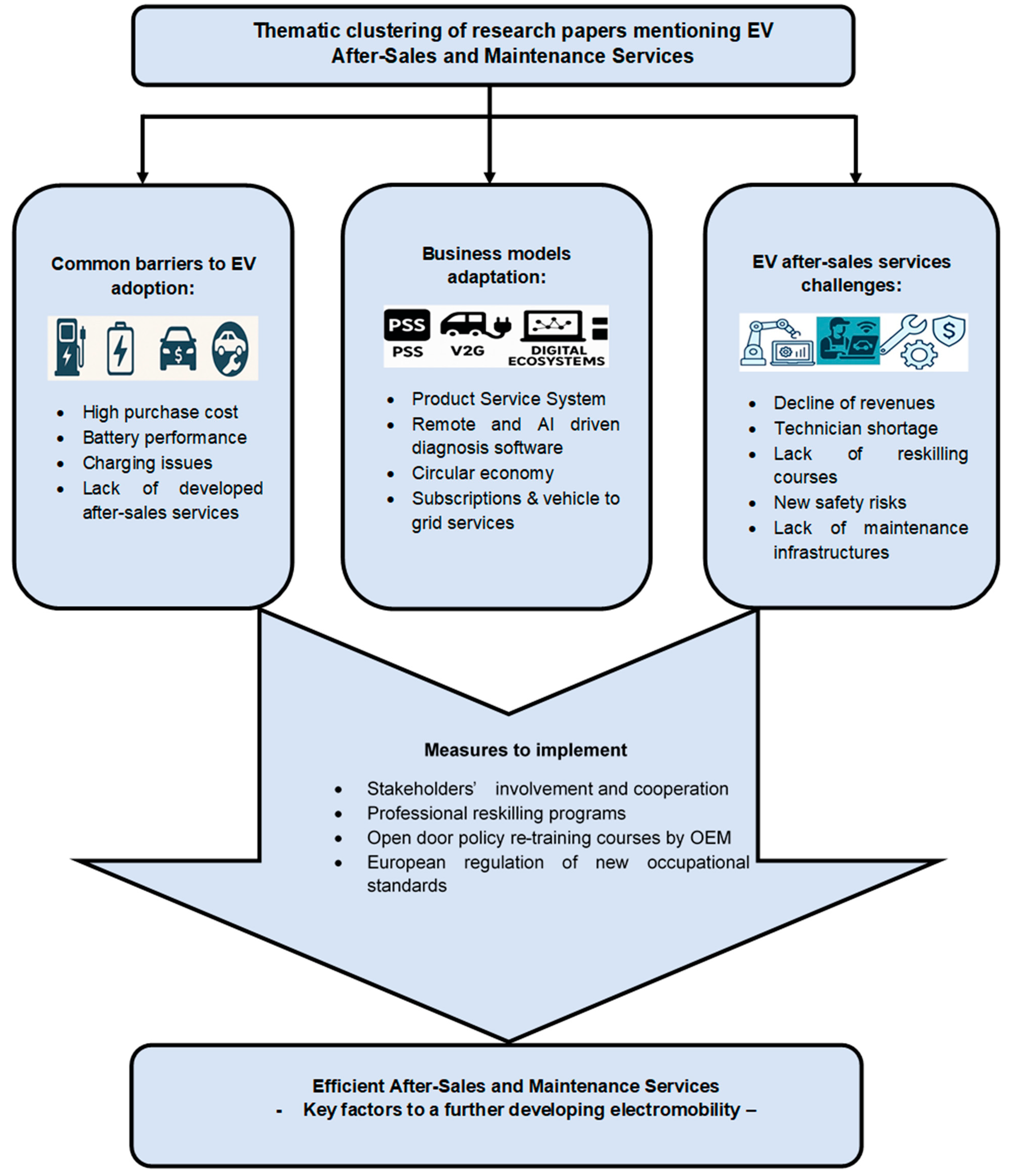
Figure 9 presents the thematic clustering of the 91 articles, illustrating how each study was classified according to its primary thematic focus. The clustering was performed through a qualitative content analysis, whereby each article was assigned to one of three major dimensions of EV after-sales and maintenance services based on its dominant research orientation.
The first cluster, ‘common barriers to EV adoption’, includes studies that primarily address external constraints influencing the diffusion of electric vehicles, expressly mentioning maintenance services, as an important barrier, along with purchase cost, battery performance, and infrastructure limitations. The second cluster, ‘business model adaptation’, encompasses articles that explore the transformation of value creation mechanisms, including Product–Service Systems, digitalization, and emerging service-based revenue models. The third cluster, ‘EV after-sales services challenges’, groups studies focusing on operational and organizational issues, such as workforce skill gaps, safety risks, and maintenance infrastructure limitations.
Each of the 91 articles was assigned to a single cluster based on its predominant thematic contribution, ensuring conceptual clarity and avoiding overlap between categories. This classification approach allows for a structured synthesis of the literature, highlighting the relative distribution of research efforts across the three domains and facilitating the identification of underexplored areas.
The lower section of the figure (‘measures to implement’) represents a synthesis of cross-cutting solutions derived from the analyzed studies and not a separate cluster. These measures reflect common recommendations identified across the literature, linking the three thematic domains to actionable strategies.
Overall, the figure serves as a conceptual aggregation of the reviewed literature, demonstrating how individual studies contribute to broader thematic patterns and enabling a system-level understanding of the EV after-sales and maintenance research landscape.
4.1. Factors That Hinder EV Adoption
In their literature review, Refs. [
15,
32,
34] mentions that consumer priorities increasingly center around safety, comfort, and maintenance issues associated with electric vehicles and after-sales service quality, in terms of readiness and presence, should be improved due to the fact that it has a considerable influence on the EV market.
In the papers [
16,
38,
68,
70,
71,
72,
77,
81,
84,
89,
90,
97,
98], the authors have classified the barriers to EV adoption in several categories, which are divided into sub-barriers: living with technology (four sub-barriers), lack of trust (five sub-barriers), sales conversion inability (two sub-barriers), and desirability (seven sub-barriers). Of course, the issue of maintenance could easily fall under three categories:
Living with technology—sub-barrier cost of purchase and ownership;
Sales conversion inability—dealers;
Desirability—repair and lack of fun and emotional attachment.
The authors introduce a unique perspective when considering the engagement in automobile maintenance and repair as a widely appreciated activity among individuals, with many deriving personal satisfaction from independently repairing and modifying vehicles. There exists a prevalent perception that conventional internal combustion engine (ICE) vehicles are less complex to repair compared to electric vehicles (EVs), leading consumers to favor vehicles that allow for self-maintenance and reduced dependence on professional service centers. A significant portion of vehicle owners advocate for the right to repair their own vehicles, a stance often at odds with the restrictive policies adopted by many EV manufacturers. These policies are viewed as strategic limitations on repairability intended to foster reliance on official service providers and, consequently, increase revenue streams to the detriment of the “I can do it myself” repair culture.
4.2. EV Era—Introducing New Business Models, New Technologies and Continuous Challenges
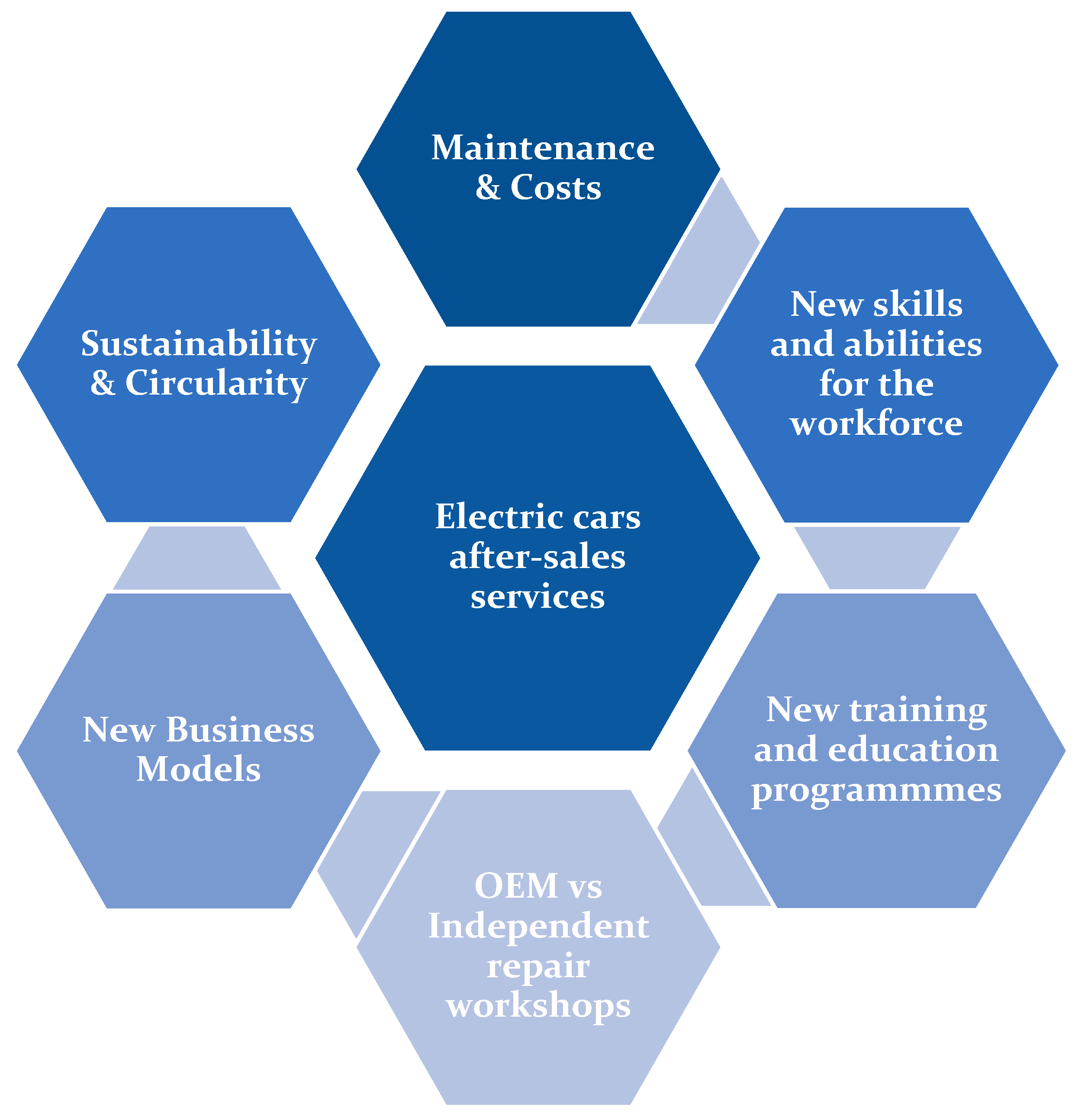
The automotive industry is undergoing a profound technological and organizational transformation driven by the global push for decarbonization and digitalization. Electric vehicles (EVs) have emerged as both a technological innovation and a socio-economic disruptor, reshaping production structures, labor requirements, and value chains. The after-sales services of electric cars entail multidisciplinary transformation and adaptation, which cannot be reinvented within themselves. A transition period that addresses all the challenges and clears the path for new business models must combine the old and the new practices and knowledge in order to make the EV adoption successful. The technological, digital, human, and institutional dimensions interact within a dynamic system in which technology provides the infrastructure, the digital dimension facilitates data exchange and analysis, the human component ensures skills and adaptability, and the institutional dimension establishes the regulatory and governance framework. Together, these dimensions reinforce one another, generating innovation and sustainable transformation within organizations and society. This interdependence becomes particularly evident when progress in one dimension (e.g., technological advancement) requires the alignment of values, policies, and behaviors across the others in order to produce a coherent impact.
Figure 10 illustrates the interdisciplinary dimension of electric cars after-sales.
The maintenance and lifecycle implications approached by several studies [
10,
39,
92,
96] converge on the finding that EVs entail lower maintenance costs than internal combustion engine vehicles (ICEVs) primarily due to their reduced number of moving parts, simpler drivetrains, and fewer consumables. However, this apparent efficiency conceals a growing complexity in diagnostic systems, electronic architectures, and battery management, creating new demands for specialized skills and technologies, leading to a major concern that ensuring the profitability of dealerships and related business units in the context of a transition toward electric vehicles; uncertainties also exist regarding activities carried out by sales and after-sales actors, such as traditional vehicle maintenance, which are expected to decline when electric vehicles are adopted on a larger scale [
13,
36,
66]. While the mechanical workload decreases, the cognitive and technical load increases—shifting the center of expertise from traditional mechanics to high-voltage, software, and systems engineers [
47,
85].
Across the literature, there is consensus that the transition to electric mobility demands substantial workforce adaptation. Refs. [
51,
52] noted limited research on vehicle maintenance modeling, calling for expanded study of environmental and operational impacts of EV servicing and proposed lifecycle optimization models for vehicle replacement, linking maintenance data with sustainability and resource management. Ref. [
58] pointed to deficits in formal education and safety training among repair workers. Studies from Asia [
60] and Europe [
61,
64,
65] underline a critical gap between existing technician skillsets and the emerging requirements of electrified and digitalized vehicle platforms. Ref. [
86] discussed requalification challenges as the workforce shifts from ICE to EV production and emphasized reskilling programs for job continuity. The scarcity of high-voltage qualified technicians, limited training capacity, and slow curriculum reform in vocational systems represent systemic bottlenecks. Universities and training centers are increasingly positioned as key actors in bridging these skill divides, yet current reskilling initiatives remain fragmented and reactive rather than strategic.
The emergence of electric cars has been closely linked to industrial reconfiguration and digital systems. EV architecture reduces the number of traditional mechanical components but introduces complex electronic control units (ECUs), IoT (Internet of Things)-based monitoring, and over-the-air (OTA) software updates [
35,
47]. This integration of digital technologies transforms maintenance into a data-driven process. A positive model of this kind of industrial evolution [
29] researched the rise of Tesla Motors and analyzed its electric vehicle commercialization strategy. Predictive maintenance models, enabled by artificial intelligence (AI), can anticipate component failures and minimize downtime, aligning with principles of cleaner production. However, these systems also increase dependency on OEM-controlled data and software platforms, reinforcing asymmetries between manufacturers and independent service providers.
Older research [
59], but also recent studies [
33,
62], emphasizes that although the automotive sector is integrating circular economy principles, these remain largely confined to recycling rather than holistic lifecycle management. Battery recycling, remanufacturing, and component reuse are underdeveloped, and sustainable maintenance practices—such as repairability and modular component design—are not yet systematically implemented. Also, Ref. [
48] explains that their E/IT components often have much shorter lifecycles than the vehicles themselves, making cars increasingly vulnerable to the obsolescence of these parts and, in the meantime, vulnerable to unpredictable failures. The limited institutional focus on workforce adaptation, end-of-life management, and local supply chain resilience continues to undermine the social and economic dimensions of sustainability.
Overall, the literature indicates that while technological progress in EV systems supports environmental objectives, it also generates new organizational and labor vulnerabilities. The skills gap, digital dependence, and uneven institutional readiness constitute major challenges for achieving a just and sustainable automotive transition.
The diffusion of electric mobility is not only transforming vehicle technology but also reconfiguring the business logic of the automotive industry. Traditional models centered on ownership, sales margins, and after-sales servicing are being replaced by service-based, digital, and platform-oriented paradigms.
The shift from product to service orientation reflects a fundamental transformation in industrial strategy, where value creation increasingly derives not from the physical product itself but from integrated, service-based solutions that enhance customer experience. Early frameworks [
12,
14,
42] anticipated the emergence of service-centric business models integrating mobility, charging, and energy services. Subsequent research [
22,
66] confirmed this trajectory, highlighting how reduced maintenance needs in EVs disrupt the traditional revenue streams of dealerships and independent garages. With maintenance representing up to half of dealership profits, electrification compels a strategic pivot toward subscription-based, digital, and value-added services such as mobility as a service (MaaS), vehicle-to-grid (V2G) integration [
18], and “functions on demand” [
82]. These business models identified in the literature can be differentiated based on their level of practical implementation. Mobility as a service (MaaS) is generally considered a partially implemented model, with several operational platforms already deployed in urban mobility systems, although its integration with EV after-sales ecosystems remains limited. Functions on demand are also partially implemented, particularly by OEMs (e.g., BMW has it functional, already) that offer software-based features and upgrades through digital platforms, though their application in service and maintenance contexts is still evolving. In contrast, Vehicle to Grid (V2G) is predominantly discussed as an emerging concept, with limited large-scale deployment and ongoing pilot projects, reflecting its early stage of technological and regulatory development.
The consumer’s requirements and the service reorientation subsequently led to the development of new business models. The transition to electric vehicles (EVs) necessitates the development of innovative business models that redefine value creation, delivery, and capture across the automotive ecosystem. These models increasingly emphasize digitalization, service integration, and sustainability, shifting profitability from traditional manufacturing and maintenance to data-driven services, mobility platforms, and circular economy solutions: Ref. [
26] identified subsystems (vehicle, infrastructure, electronics, energy) and critical success factors in PSS (Product–Service Systems) for EVs. Ref. [
87] found that free maintenance programs boost EV market share and tied maintenance strategy to pricing and adoption. Ref. [
74] proposed innovative warranty models balancing manufacturer–customer reliability risks. Ref. [
78] showed how production and pricing decisions depend on after-sales capacity; EV manufacturers like Tesla and BYD illustrate this dynamic.
The competition between OEM control and independent repair follows the electric car’s theme, as well. A recurring pattern across studies [
13,
36,
99] is the growing dominance of OEMs over repair and service networks. Through proprietary software, exclusive access to technical data, and standardized service protocols, manufacturers increasingly monopolize after-sales activities. Independent garages face declining access to diagnostic tools and technical documentation, limiting their ability to compete. This centralization enhances quality control and safety compliance for high-voltage systems but also raises concerns about market concentration and the erosion of small enterprise viability. Their rivalry also extends to the workforce and institutional adaptation. While OEMs invest heavily in digital and high-voltage training programs, smaller workshops lack the resources to retrain technicians or purchase specialized equipment. The literature identifies a widening gap between OEM-affiliated and independent repair networks—a divide that risks reinforcing inequalities in employment quality and regional economic resilience [
24,
64]. Despite these risks, few studies have proposed structured frameworks for managing this duality. Only a limited number of business model analyses [
19,
20] acknowledge maintenance as a key variable in sustainable business model design.
Emerging digital and platform models—such as e-Mobility as a Service (eMaaS) [
43] or subscription-based functionalities—offer new opportunities for profitability and customer engagement. However, they often externalize maintenance responsibilities or obscure them within bundled services, leaving gaps in liability, workforce inclusion, and sustainability measurement. This contradiction highlights a broader tension between technological innovation and social equity, underscoring the need for integrative approaches that connect product innovation with sustainable labor and service ecosystems.
In synthesis, the literature reveals a clear trend: EV-related business models are diversifying rapidly, yet the ownership, governance, and sustainability of after-sales services remain unresolved. The industry’s success will depend on its ability to balance digital control with open, fair, and adaptive service networks.
4.3. EV After-Sales Services—Old and New Concerns: Will Maintenance and Repairs Activities Be on the Verge of Extinction?
After-sales activities are increasingly recognized as central to competitiveness and long-term profitability. They influence customer trust, brand loyalty, and lifecycle sustainability [
20,
44,
95]. Paper [
63] highlighted the need for early integration of after-sales considerations in product design to optimize total cost of ownership (TCO). However, academic research continues to prioritize manufacturing and design, leaving maintenance and service systems underexplored. This oversight is critical, as the EV transition reshapes service demand, labor requirements, and safety standards.
The maintenance of EVs introduces new complexities, safety risks, and skill requirements and the development of new, improved occupational abilities, both theoretical and practical. Study [
53] distinguished between certified and self-service maintenance and stressed that EV maintenance must occur in authorized facilities due to its tools and HV knowledge requirements. Paper [
58] on maintenance risk identified high-voltage exposure, inadequate training, and data access limitations as primary safety challenges. Traditional mechanics, often trained through apprenticeships, are insufficiently prepared for HV systems and software diagnostics. The literature consistently calls for standardized qualification frameworks, safety guidelines and tiered certifications for EV maintenance personnel, because, no globally harmonized occupational standard currently defines competency for EV electricians. Paper [
93] developed a reliability model incorporating human error and repair imperfections, focusing on battery systems. Paper [
99] found that after-sales services generate 54% of profitability and identified the absence of maintenance standards for EVs, and Ref. [
100] reiterated the importance of skilled and competent technicians to repair electric and hybrid vehicles.
EVs’ reliance on electronic control systems and embedded software makes maintenance increasingly dependent on digital diagnostics and AI-based fault detection [
40,
47,
67]. Ref. [
80] investigated failure mechanisms in battery and charging systems, emphasizing environmental conditions and charge rate, while Ref. [
101] analyzed the costs, risks, and safety aspects across EVs, HEVs, and ICEVs and concluded that battery failure is the most frequent issue. Predictive maintenance enabled by condition-based monitoring and data analytics has emerged as a key pillar of sustainable service systems. Yet, integration between human technicians and digital maintenance platforms remains incomplete, limiting efficiency gains and worker agency.
Lower maintenance frequency reduces recurring revenues for dealerships and independent garages [
22,
54]. This decline pressures firms to compensate through extended warranties, digital subscriptions, or service packages embedded in the Product–Service System (PSS). Concurrently, cost structures evolve: while EVs reduce mechanical servicing, they increase costs related to battery diagnostics, software updates, and obsolescence management [
48].
Despite clear recognition of EVs’ transformative impact, major research gaps remain. Few studies quantify the long-term employment effects of reduced maintenance activity, and even fewer examine the sustainability of independent service networks. Environmental assessments often neglect the life-cycle impacts of maintenance and repair activities, focusing narrowly on battery recycling or production emissions [
51]. Furthermore, the absence of consistent policy frameworks for reskilling technicians and certifying EV service facilities constrains the sector’s readiness for large-scale electrification.
The reviewed literature portrays a sector at an inflection point: as mechanical complexity declines, digital and organizational complexity rise. After-sales services are transitioning from manual, component-based repair toward data-driven, predictive, and platform-managed ecosystems. This evolution aligns conceptually with cleaner production and circular economy objectives but remains hindered by institutional inertia, fragmented training standards, and unbalanced value capture between OEMs and independent actors. Despite significant advancements in electric vehicle (EV) technology, current research continues to prioritize technical performance while overlooking the equally vital human and organizational dimensions necessary for a sustainable transition. The lack of standardized maintenance protocols across countries further exacerbates disparities in service quality, safety, and workforce training, hindering the establishment of a cohesive global framework for EV after-sales services. Additionally, the literature reveals a scarcity of integrative approaches that combine economic, ergonomic, and technological perspectives, resulting in fragmented insights and insufficient guidance for aligning innovation with workforce readiness, operational efficiency, and long-term industry resilience.
4.4. Consumer Behaviour and Preferences—A Major Influencer on EV Markets
The transition to electric vehicles (EVs) represents one of the most transformative shifts in modern transportation, driven by global efforts to reduce emissions, improve energy efficiency, and promote sustainable mobility. In the EV era, customer satisfaction is increasingly shaped by service quality and experiential value, not just product performance [
56]. However, beyond technological innovation, consumer behavior and preferences play a decisive role in shaping the pace and scale of EV adoption. Ref. [
44] highlighted the fact that long-term relationships are sustained through consistent after-sales experiences. Factors such as purchase cost, range anxiety, charging accessibility, maintenance expectations, and environmental attitudes strongly influence decision-making [
17,
25,
37,
69,
73,
76,
79]. Understanding these behavioral dynamics is therefore essential for designing effective policies, business models, and educational strategies that support widespread EV acceptance and long-term sustainability in the automotive sector.
Research on electric vehicle adoption emphasizes the complex interplay between economic, psychological, and infrastructural factors shaping consumer decisions. Early studies [
11,
23,
39,
88] show that while EVs reduce CO
2 emissions and lifecycle impacts, high purchase prices and perceived technological immaturity deter mass adoption. Key barriers include range anxiety, charging convenience, and cost perception [
21,
27,
28,
41,
83], though first-hand experience tends to improve consumer attitudes toward EV reliability and maintenance savings [
55]. Studies highlight that environmental concern alone does not ensure adoption, as comfort, performance, and convenience remain dominant factors [
46]. Knowledge and education gaps persist across markets [
49,
91], with vocational training and early e-mobility education insufficient to meet workforce and consumer needs. Socioeconomic variables such as GDP per capita, energy costs, and policy incentives significantly influence adoption rates [
31,
57]. Recent works [
45,
50,
75,
94] underscore the role of personal norms, perceived usefulness, and financial risk in shaping purchase intentions, alongside the importance of trust and after-sales service quality in building long-term consumer confidence. Overall, the literature converges on the finding that maintenance accessibility, cost, and skilled service availability remain decisive for consumer trust and EV market expansion, while integrated policies and digital mobility models are essential to overcome behavioral and infrastructural barriers.
The reviewed literature in this sub-section demonstrates that while battery electric vehicles (BEVs) and plug-in hybrid electric vehicles (PHEVs) hold significant promise for reducing emissions and lowering ownership costs, their widespread adoption remains hindered by a multifaceted set of technical, economic, and behavioral barriers. Consumer decisions are primarily influenced by purchase cost, charging infrastructure, range anxiety, and after-sales service quality, as well as psychological factors such as habit, perceived usefulness, and social norms. Across studies, maintenance and after-sales services emerge as critical determinants of consumer confidence, with concerns centering on battery longevity, repair accessibility, and skilled labor availability. Ecological motivation alone is insufficient to drive adoption without parallel improvements in convenience and affordability.
At the policy level, the evidence suggests that financial incentives, infrastructure investment, and consumer education must be integrated to achieve large-scale diffusion. Emerging business models—such as e-mobility services, car-sharing, and digital maintenance platforms—offer new opportunities but require consumer trust and institutional coordination. Ultimately, the transition to electric mobility represents a technological, behavioral, and systemic transformation that demands coordinated action among industry, policymakers, and academia.
5. Discussion
Current academic research lacks an integrated, standardized framework defining occupational requirements for electric vehicle maintenance and repair technicians. While existing studies recognize emerging challenges, including high-voltage hazards, battery handling protocols, advanced diagnostics, and software-intensive architectures, the evidence base remains scattered and predominantly observational. Scholarly work tends to address isolated dimensions such as workplace safety risks, competency deficits, training inadequacies, or labor market transitions rather than synthesizing these elements into a cohesive, globally relevant standard that encompasses technical skills, credentialing pathways, certification tiers, ergonomic considerations, and occupational health safeguards. Furthermore, standardization initiatives vary widely by jurisdiction, and much existing guidance derives from industry conventions rather than rigorous academic consolidation. In sum, the literature identifies the challenge without delivering a unified solution, underscoring a significant knowledge gap. The clearest evidence of this trend is that studies on these topics have generated no subsequent research and zero citation impact.
To ensure alignment between the research objectives and the analytical approach, the bibliometric and thematic analyses were explicitly structured to address the two research questions. RQ1, which focuses on occupational requirements for EV maintenance and repair, is examined through the identification and clustering of keywords related to skills, training, safety, and workforce development. The co-occurrence network enables the assessment of the extent to which these themes are represented, interconnected, or fragmented within the existing literature.
RQ2, which addresses the coexistence and integration of ICEV and EV service ecosystems, is explored through the analysis of clusters associated with business models, service systems, and operational processes. The thematic structure of the literature, as revealed by the bibliometric mapping, allows for the evaluation of whether hybrid service configurations are conceptually and empirically addressed or whether the literature remains dominated by linear transition narratives.
By linking keyword clusters and thematic patterns directly to the research questions, the analysis provides a structured basis for identifying gaps in occupational standardization and dual-service system integration, thereby ensuring coherence between the research design and the presented findings.
The findings of this study provide a consistent explanation for the underdevelopment of EV after-sales services, which can be attributed to structural, technological, and institutional asymmetries within the broader electric mobility transition. In relation to RQ1, the results reveal a pronounced structural lag between rapidly evolving technological requirements and the existing skill base of the automotive workforce. The absence of standardized training frameworks, combined with fragmented and country-specific certification systems, has generated a systemic mismatch that constrains the scalability of EV maintenance and repair services. Importantly, this skills gap extends beyond technical roles to include administrative and customer-facing functions, which remain largely overlooked in the literature.
Regarding RQ2, the underdevelopment of after-sales services is closely linked to the transitional nature of the automotive market, characterized by the prolonged coexistence of internal combustion engine (ICE) and electric vehicle technologies. Existing research tends to conceptualize electrification as a linear, integral process, thereby neglecting the operational complexity and the progressive character of the hybrid service ecosystems. Consequently, there is a lack of robust and empirically grounded models addressing dual-service workflows, resource allocation, and revenue diversification across mixed vehicle fleets. Finally, the findings highlight the absence of coherent regulatory and institutional frameworks to support the evolution of EV after-sales systems. Persistent issues related to data access, right-to-repair legislation, and the increasing concentration of service capabilities within OEM-controlled ecosystems create structural barriers that limit competition and innovation.
Taken together, these findings demonstrate that the underdevelopment of EV after-sales services is not merely a consequence of technological novelty but rather the result of a systemic misalignment between innovation, workforce capabilities, business models, and governance structures. Addressing this misalignment requires integrated approaches that simultaneously target technical, organizational, and institutional dimensions of the automotive aftermarket.
In response to this gap, this study advances a Dual-Service Transition Model (DSTM) that conceptualizes the coexistence of ICEV and EV after-sales operations as a structured, multi-layered system rather than a linear replacement process. The model comprises five interdependent dimensions, as presented in
Table 5. The infrastructure layer addresses the physical configuration of workshops, including fully or partially segregated ICE and EV service zones, high-voltage equipment, safety isolation measures, and diagnostic stations. The workforce layer captures the composition and evolution of human resources, distinguishing between conventional technicians, high-voltage specialists, and hybrid roles while emphasizing structured upskilling and reskilling pathways. The workflow layer defines the operational sequence from vehicle intake and triage to high-voltage risk assessment, specialist allocation, software diagnostics, intervention, validation, and delivery. The business layer reflects the divergence of revenue streams, with ICE services centered on frequent maintenance and mechanical interventions, and EV services increasingly focused on diagnostics, software, battery systems, predictive maintenance, and service contracts. Finally, the governance layer encompasses data access, OEM–independent repair relationships, certification requirements, safety standards, and audit mechanisms.
Taken together, the proposed competency framework and the Dual-Service Transition Model provide a systemic and operational response to the limitations of the existing literature, offering both a structured approach to workforce qualification and a practical model for managing hybrid service ecosystems. These contributions shift the perspective from fragmented analysis toward integrated system design, thereby supporting a more coherent and sustainable transition of the automotive aftermarket in the context of electrification.
Nevertheless, this study presents several limitations that should be acknowledged. First, the research is based on a systematic and bibliometric review of the existing literature and is therefore constrained by the availability, scope, and quality of published studies. Given the fragmented and underdeveloped nature of research on EV after-sales services, particularly in relation to workforce requirements and repair activities, the findings are inherently limited by gaps in the existing evidence base.
Second, the analysis relies on a corpus of 91 peer-reviewed articles, which, despite a rigorous selection process, may not capture all relevant contributions. Important insights from the grey literature, industry reports, and proprietary OEM data may therefore be underrepresented.
Third, this study adopts a global perspective, which may overlook regional differences in regulatory frameworks, training systems, and market structures, potentially limiting the generalizability of the findings.
Fourth, the research is primarily conceptual and does not include empirical validation. As such, the proposed competency framework and Dual-Service Transition Model require further testing in real-world contexts.
These limitations highlight the need for future research incorporating empirical methods, regional analyses, and closer collaboration with industry stakeholders.
6. Conclusions
This article set out to assess the state of scientific knowledge on electric vehicle (EV) after-sales services, with a particular focus on maintenance and repair activities, workforce requirements, and emerging business models within the automotive aftermarket. By conducting a systematic literature review covering the period 2001–2025 and analyzing a final corpus of 91 peer-reviewed studies, this paper provides a structured synthesis of how this research field has evolved and where critical gaps persist. The findings of this study highlight that the transition to electric mobility is not solely a technological or market-driven process but one that is critically dependent on the capacity and adaptability of after-sales service systems. As EV adoption accelerates, the limitations of current maintenance, repairs, and service infrastructures may emerge as a significant bottleneck, constraining market expansion and undermining consumer confidence. At this moment, the misalignment between vehicle deployment and service system readiness risks becoming a structural constraint on the electrification transition, and these constraints may hinder consumer adoption of electric vehicles, reinforcing preference for established and more familiar internal combustion engine technologies.
By identifying critical gaps in occupational standardization and hybrid service system management, this study positions EV after-sales services as a strategic leverage point in the electrification transition. Addressing these challenges is not only of academic relevance but constitutes a pressing practical imperative for industry stakeholders and policymakers. Without coordinated efforts in workforce development, service infrastructure, and governance frameworks, the large-scale deployment of electric vehicles risks being hindered by systemic service constraints.
The findings indicate that the transition to electric mobility is profoundly reshaping after-sales services, yet academic research remains unevenly developed. While substantial attention has been devoted to technological performance, cost structures, and market diffusion of EVs, considerably less emphasis has been placed on human, organizational, and operational dimensions. In particular, the review demonstrates that the literature has not yet produced a comprehensive, standardized occupational framework defining the skills, qualifications, safety protocols, and ergonomic requirements for EV maintenance and repair personnel. Existing contributions are fragmented, often country-specific, and focus on isolated risks or training needs rather than integrated occupational standards.
Similarly, although numerous studies discuss Product–Service Systems (PSS), service-oriented strategies, and digital or subscription-based business models, there is limited empirical or conceptual work addressing how internal combustion engine (ICE) and battery electric vehicle (HEV, PHEV, BEV) service operations can coexist and be operationally integrated during the prolonged transition phase. Most business model research implicitly assumes a linear shift toward full electrification, overlooking the practical realities faced by dealerships, independent workshops, and OEM service networks that must simultaneously support heterogeneous vehicle fleets.
From a sustainability perspective, the review highlights that after-sales services play a critical role in extending vehicle lifecycles, enabling circular economy practices, and maintaining consumer trust in electric mobility. However, these potential benefits can only be realized if workforce reskilling, training systems, and governance structures evolve in parallel with technological change. The growing concentration of knowledge and resources within OEM-controlled service ecosystems further raises concerns regarding market access, competition, and the long-term viability of independent repair actors. The conclusion regarding the increasing dominance of OEMs in EV after-sales services is not derived solely from a limited number of highly cited studies but rather reflects a consistent pattern observed across the broader dataset. While several highly cited publications provide foundational insights into issues such as data access, proprietary software control, and service ecosystem transformation, similar findings are also present in more recent and lower-citation studies, indicating that this is an emerging and widely recognized trend within the literature.
The bibliometric and thematic analyses further support this interpretation, as keywords related to digitalization, data control, and service centralization frequently co-occur with discussions on business models and after-sales services. This suggests that the concentration of technical capabilities within OEM-controlled ecosystems is not an isolated observation, but a systemic development identified across multiple research streams.
Therefore, the conclusion should be understood as a generalized trend supported by the overall body of evidence rather than being exclusively driven by a small subset of influential studies. This interpretation aligns with the broader transformation of the automotive industry toward software-defined vehicles and data-driven service models.
Future research should move beyond general observations and address several specific operational and structural gaps identified in this study. First, the transition to electric vehicles requires a systematic reconfiguration of after-sales processes, including the redesign of spare parts logistics, the standardization of EV-specific diagnostic procedures, and the recalibration of flat rate units (FRU) to reflect software-intensive interventions. In addition, safety protocols must be formalized through harmonized high-voltage handling standards, while documentation systems and warranty management procedures should be adapted to accommodate software updates, battery systems, and OEM-controlled service architectures.
Second, research should explicitly address the reskilling requirements of non-technical personnel. Service advisors, parts managers, and customer service staff must be equipped to manage software-driven maintenance schedules, high-voltage compliance documentation, and complex OEM-specific service ecosystems. Developing competency frameworks for these roles represents a critical but currently neglected research priority.
Third, future studies must provide empirical evidence on EV repair operations, including the frequency, cost structure, and organizational impact of repair activities. This requires the development of standardized metrics and data collection frameworks capable of capturing battery-related repairs, electronic system failures, and software malfunctions, thereby enabling statistically robust analyses.
Finally, addressing the structural misalignment between evolving EV competency requirements and the existing automotive workforce necessitates the design of modular, competency-based training systems aligned with European qualification frameworks (e.g., EQF, ECVET, ESCO). Such systems should define measurable learning outcomes in high-voltage safety, advanced diagnostics, and software-enabled maintenance, ensuring both workforce adaptability and cross-border recognition of qualifications.
Addressing this gap requires the development of standardized, modular, and competency-based curricula aligned with established European skills and qualification frameworks, notably the European Qualifications Framework (EQF), the European Credit System for Vocational Education and Training (ECVET), and the European Skills, Competences, Qualifications and Occupations (ESCO) classification. Such curricula should support both the upskilling and reskilling of incumbent workers and the initial training of new entrants by clearly defining learning outcomes related to high-voltage safety, EV-specific diagnostics, software-enabled maintenance procedures, and occupational health and safety risks. Harmonization at the EU level would enhance transparency, portability, and mutual recognition of qualifications while facilitating workforce mobility and ensuring a consistent minimum standard of competence across the automotive aftermarket.
A holistic transition framework for electric vehicle after-sales services should integrate technological, digital, and human capital dimensions. The success of electrified mobility depends not only on innovation and infrastructure but also on the equitable distribution of technical skills and service capabilities across the entire automotive value chain. The transformation of after-sales and maintenance services must be regarded as a central pillar of the electrification strategy rather than a secondary activity. As the mechanical complexity of vehicles decreases, the cognitive and digital dimensions of automotive service activities become increasingly significant. If implemented coherently, this integrated approach will ensure that the transition to electric vehicles becomes not only a technological success but also socially, economically, and environmentally equitable, thereby supporting the long-term sustainability of the post-carbon automotive sector.
In conclusion, this study confirms that EV after-sales services constitute a strategic yet underexplored domain at the intersection of technology, labor, business models, and sustainability. By explicitly identifying unresolved gaps in occupational standardization and hybrid ICEV–HEV–PHEV–BEV service management, this article provides a clear rationale for future research and policy intervention. Advancing this field will require integrated frameworks that combine economic, ergonomic, technological, and organizational perspectives, as well as closer collaboration between academia, industry, and policymakers. Such efforts are essential to ensure that the automotive aftermarket remains resilient, inclusive, and aligned with broader sustainability and decarbonization objectives during the transition to electric mobility.