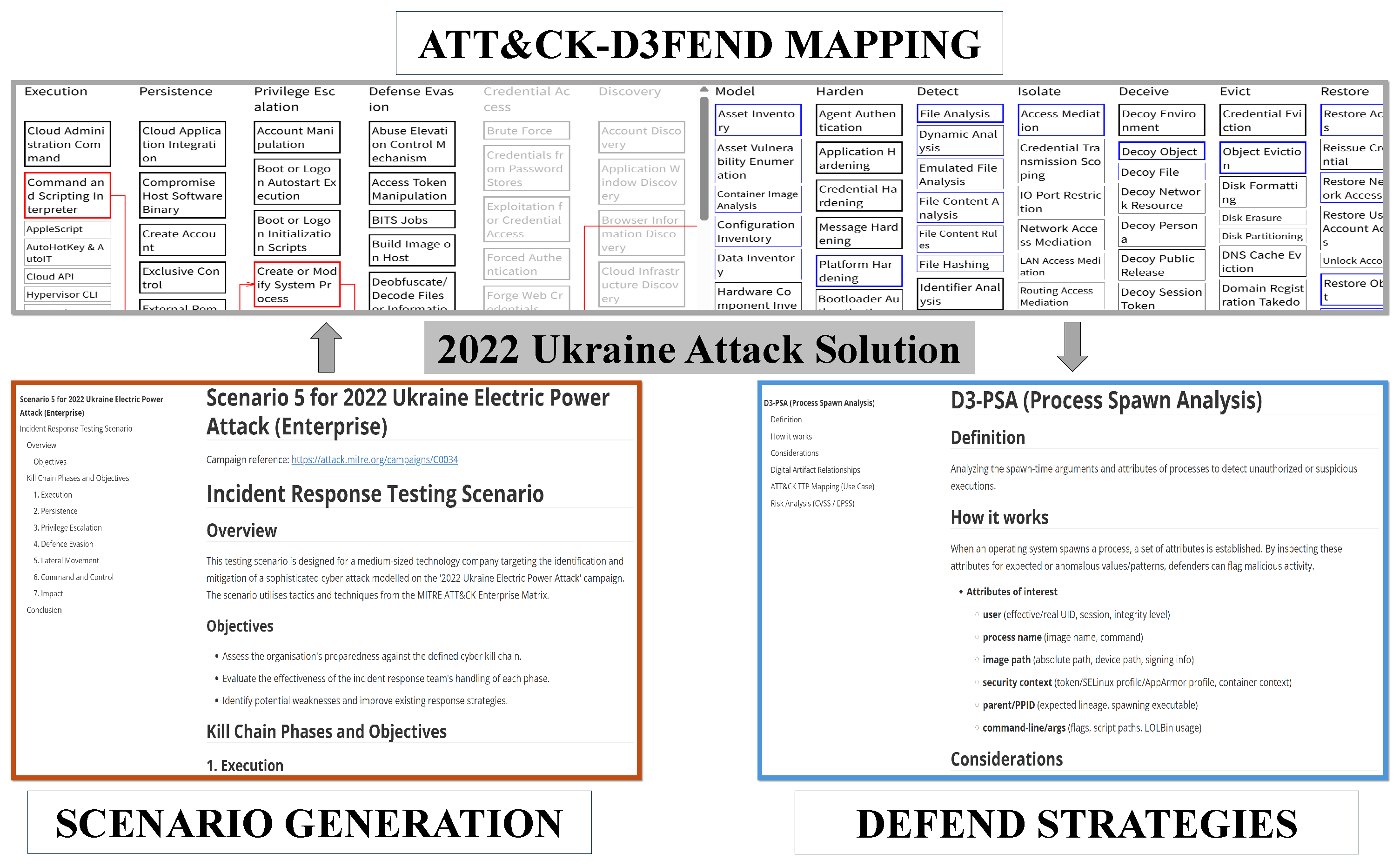
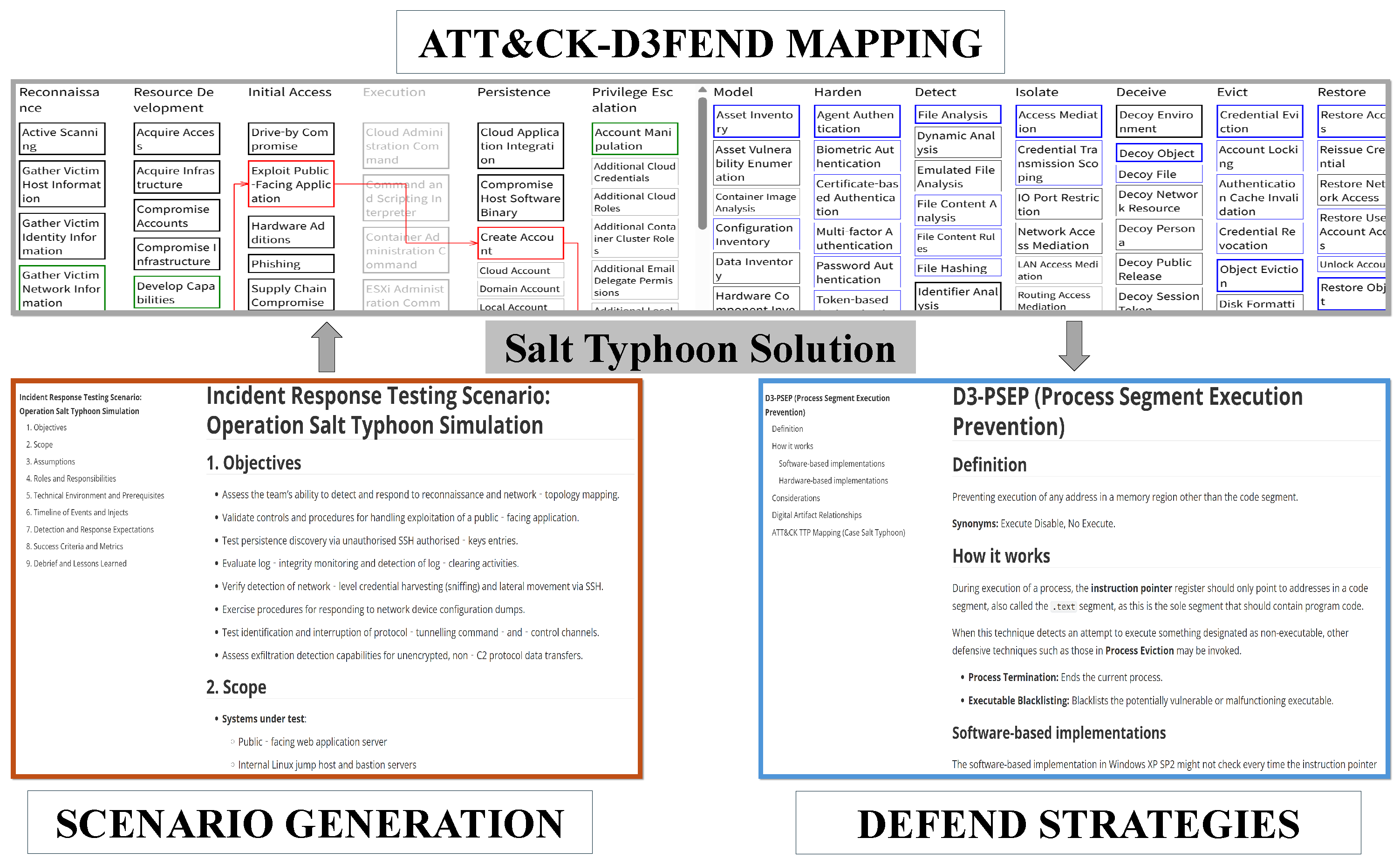
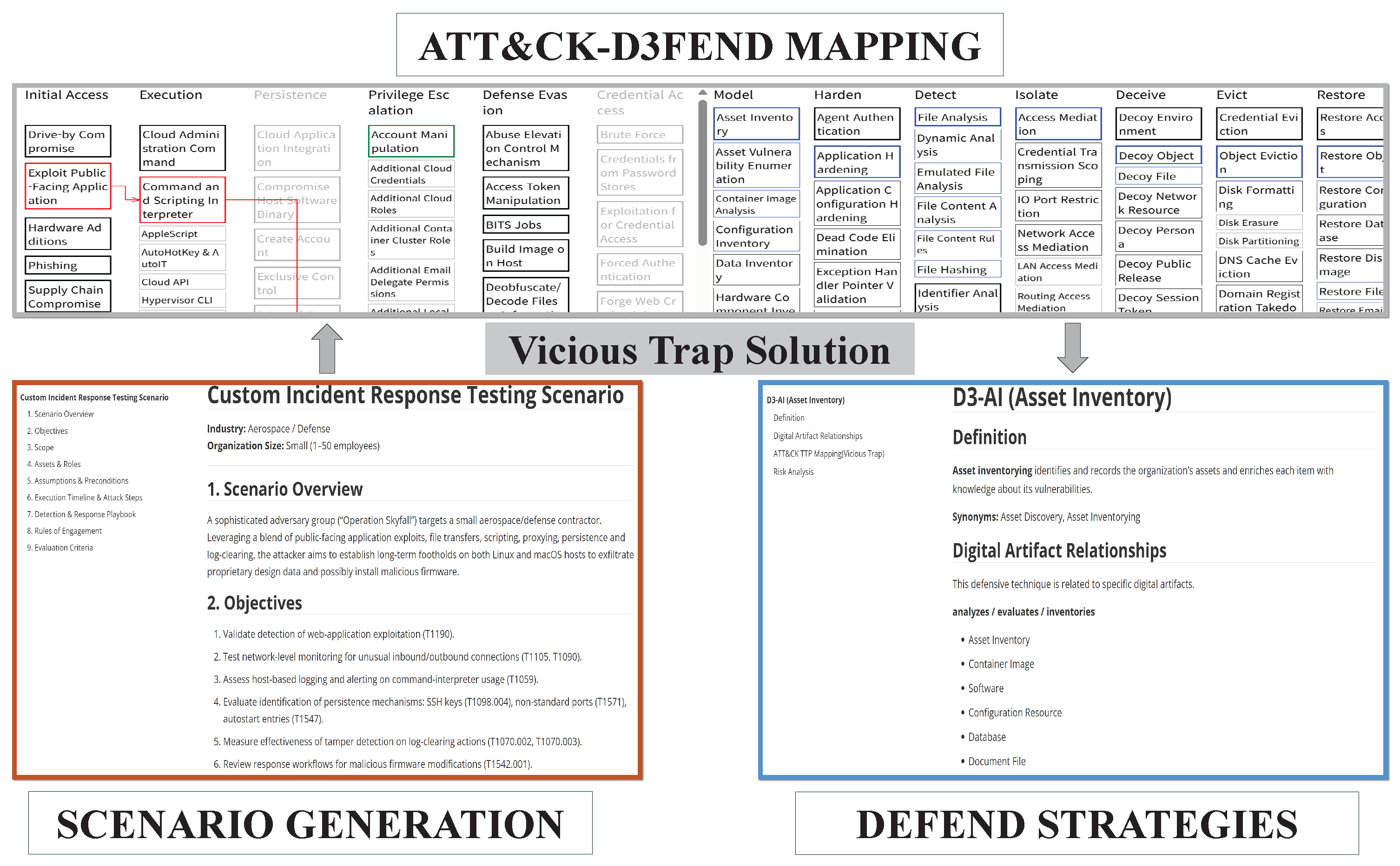
While the SKT intrusion incident is presented as the primary case study in the main text, additional validation cases, including the 2022 Ukraine Electric Power Attack, Salt Typhoon, and Vicious Trap, are provided in
Appendix A. On 18 April 2025, a Berkeley packet filter (BPF) backdoor was introduced through a wireless-charging data record system [
58]. This backdoor exploited the kernel-level BPF to respond only to externally triggered packets, masquerading as a legitimate process in the user space and evading logs and command histories, thereby making early detection difficult. After establishing a foothold in the internal network through a covert channel, the attacker further penetrated the management and service networks. After compromising the home subscriber server (HSS), the attacker extended their scope of influence to the home-location register (HLR) and equipment-identity register (EIR) through trust relationships. Consequently, a large volume of sensitive identification and authentication information, including the international mobile subscriber identity (IMSI), international mobile equipment identity (IMEI), and subscriber long-term keys, was confirmed to have been exfiltrated.
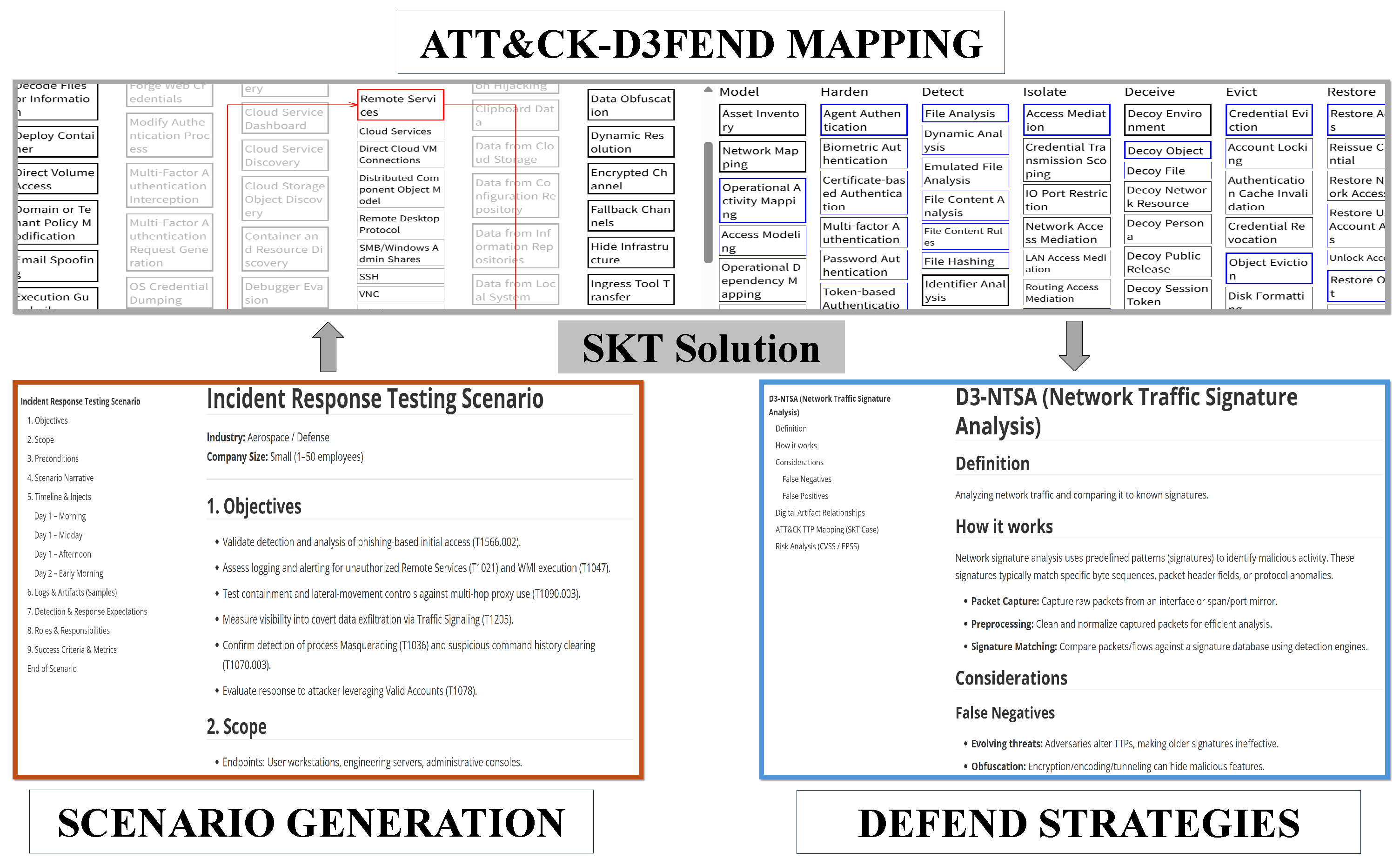
Table 2 presents the TTPs identified in the SK Telecom (SKT) incident, organized by ATT&CK TIDs.
Framework-Based Additional Defense-Strategy Proposal
Table 4 summarizes the official follow-up response measures announced by SKT after the intrusion incident [
58] and reorganizes them based on the corresponding MITRE D3FEND tactics and defensive techniques. Through this mapping, publicly disclosed countermeasures are systematically structured at both the tactical and technical levels, thereby providing a clearer view of how the post-incident actions of SKT can be interpreted within the D3FEND framework. However, this analysis was conducted based on the response measures and presentation materials officially disclosed by SKT; therefore, it does not fully reflect actual internal operational procedures or undisclosed measures. Accordingly, the mapping results presented in this study should be interpreted as an analytical assessment based on publicly available information and may differ in part from the full set of response mechanisms actually implemented in practice.
Because no widely standardized end-to-end benchmark currently exists for integrated CTI-driven scenario generation, ATT&CK–D3FEND mapping, and risk-based defense prioritization, the present study does not claim superiority over a common baseline. Instead, the official post-incident response measures announced by SKT, which were formulated by the company’s security team in conjunction with a joint public–private investigation, are used as a practical reference point for examining whether the proposed framework can derive additional structured defense options beyond the publicly disclosed response set.
Table 5 presents the results obtained after excluding all items that overlapped with the official follow-up response measures announced by SKT and selectively organizing only those D3FEND defensive techniques that, from the perspective of this study, were not included in the SKT response. Although SKT proposed several security enhancement plans as part of its recurrence-prevention measures, many remained at a relatively general level, such as strengthening account management, network segmentation, and access control, without providing sufficient specificity regarding which defensive technologies should be introduced in practice. In contrast, the application of the framework proposed in this study enables the reinterpretation of the same incident within the D3FEND tactic–technique structure and derivation of a refined list of additional measures not covered by SKT’s existing countermeasures. This demonstrates that defensive gap areas can be systematically supplemented. By comparing the framework’s output against this expert baseline, the analysis identified 15 additional D3FEND defensive techniques across five tactical categories that were not included in the officially disclosed measures.
First, from the perspective of the model tactic, although the environment involved highly complex structural and account dependencies among the HSS, management network, and customer network, no evidence was identified in the official materials that such dependencies had been systematically modeled and managed. Accordingly, the introduction of operational activity mapping (D3-OAM), which visualizes business functions in terms of their dependencies on servers, network segments, and accounts based on operational activities, and Access Modeling (D3-AM), which explicitly models the resources accessible to administrators, operators, and system accounts, is required. Although SKT mentioned strengthening account security and managing privileged accounts, such measures remain distant from a systematic privilege-structure design grounded in model-level tactics.
From the perspective of the Detect tactic, potential improvements were identified in both network- and command-and-control (C2)-level anomaly detection as well as account- and behavior-based detection. SKT allowed prolonged covert intrusion into the HSS and management network. However, earlier containment may have been possible if anomalous remote access, repeated connection attempts, and connection patterns similar to port scanning had been detected at an earlier stage. To this end, connection attempt analysis (D3-CAA), which analyzes repeated failed logins and exploratory connection attempts, and remote terminal session detection (D3-RTSD), which detects traffic between nodes that do not normally communicate, servers functioning as relay nodes, and unauthorized remote terminal sessions such as RDP or SSH after the formation of intermediate footholds and relay hosts using BPFDoor and web shells, are required. In addition, given the reported exfiltration of 9.82 GB of data and 26 million records, the upload pattern of a specific HSS server likely deviated substantially from normal behavior. Therefore, protocol metadata anomaly detection (D3-PMAD), which detects anomalies at the level of protocol metadata, and per-host download–upload ratio analysis (D3-PHDURA), which monitors changes in upload-to-download and download-to-upload ratios on a per-host basis, would be effective in preventing recurrence. Furthermore, considering that the joint public–private investigation team identified poor account-information management and the exploitation of long-unchanged accounts as key failures, the introduction of user and entity behavior analytics (UEBA)-type techniques is essential, including domain account monitoring (D3-DAM), which continuously monitors domain-account creation, privilege changes, and anomalous login events; local account monitoring (D3-LAM), which provides the same functionality for local accounts; user behavior analysis (D3-UBA); and user geolocation logon pattern analysis (D3-UGLPA), which detects login behavior that deviates from normal temporal, spatial, and behavioral patterns.
From the perspective of the Isolate tactic, SKT proposed follow-up measures, such as strengthened network segmentation and reinforced firewall policies; however, these remained at a relatively coarse level of isolation at the network-segment level. In the future, more fine-grained policies will be required to control which accounts or hosts access which services or files, at what times, from which locations, and through which access paths. This can be concretized through designs at the level of the network resource access mediation (D3-NRAM), which mediates access to network resources, and remote file access mediation (D3-RFAM), which precisely controls the access to remote files. These techniques move beyond merely separating networks by introducing an additional layer that finely mediates access rights down to the resource and file levels, thereby structurally constraining lateral movement and large-scale exfiltration by attackers.
For the Deceive tactic, the deployment of deceptive assets capable of immediately generating detection signals upon attacker access may be effective to compensate for the failure to detect signs of HSS compromise at an early stage when the initial indicators of compromise were first recognized in 2022. For example, fake HSS administrator account lists and forged Ki and IMSI lists can be deployed as decoy objects or files using the decoy file (D3-DF) technique. If any access, inspection, or copying attempts against them are elevated to high-risk events and immediately linked to alert and investigation processes, they may serve as effective early-detection triggers for future similar attacks.
From the perspective of the Restore tactic, SKT’s official materials describe post-incident actions, such as malware removal, strengthened firewall policies, and USIM replacement and reconfiguration, in relatively detailed terms; however, they do not provide information regarding the standards, procedures, or recovery points used to restore compromised servers, data, and configuration values from backup images. Accordingly, to prepare for similar incidents, procedures to systematically restore compromised servers, configurations, and data from integrity-verified baseline backups must be established. This can be concretized through policies and operational processes from the perspectives of the restore object (D3-RO), which defines restoration at the object level, and the restore file (D3-RF), which addresses restoration at the file level.
Overall, the additional D3FEND-based countermeasures proposed in this study are meaningful because they not only explain the causes of the SKT incident retrospectively but also provide concrete execution strategies regarding which defensive techniques should be reinforced at which tactical stages when an organization faces similar intrusion scenarios in the future. In particular, by decomposing the generally stated measures in the SKT follow-up plans, such as strengthening account management and reinforcing network segmentation, into specific D3FEND techniques, such as D3-OAM, D3-CAA, D3-NRAM, and D3-RO, the areas omitted from the existing defense framework may be clearly identified. Furthermore, these analytical results can provide a reusable reference model not only for telecommunications carriers but also for other infrastructure operators with similar network and account structures, thereby contributing to the post-incident response for a single case, the establishment of proactive defense strategies, and the improvement of security architecture.




 ,
,