1. Introduction
The global imperative to shift toward sustainable transportation systems has spurred unprecedented growth in electric vehicle (EV) adoption, a pivotal measure for curbing the environmental impact of conventional internal combustion engine (ICE) vehicles. As the transportation industry accounts for approximately 24% of global carbon dioxide (CO
2) emissions, primarily due to its dependence on fossil fuels, the imperative to decarbonize mobility is intensified by escalating climate disruptions and dwindling petroleum reserves [
1,
2]. EVs, which use renewable energy sources, offer a technologically feasible solution and have the potential to reduce greenhouse gas (GHG) emissions by 50–70% compared with ICE counterparts, thereby underscoring their centrality in international decarbonization agendas [
3,
4]. Market forecasts indicate that EVs will comprise 32% of new vehicle sales by 2030, rising to 75% by 2050, driven by innovations in battery technology, fiscal policy incentives, and the growing economic burden of fossil fuels [
2,
5]. Nevertheless, this accelerated growth introduces multifaceted challenges: the proliferation of EV models with heterogeneous specifications, ranging from battery capacities (100–600 kWh) to charging infrastructure interoperability, demands systematic decision-making frameworks to navigate competing technical, economic, and environmental priorities.
The European Union (EU) has institutionalized its climate mitigation ambitions through binding legislative mandates enshrined in the European Commission [
6] White Paper on Transport, which stipulates a 60% reduction in greenhouse gas (GHG) emissions by 2050 relative to 1990 levels. This regulatory architecture reflects the EU’s strategic alignment with international sustainability agendas, positioning EVs as a catalytic component of their decarbonization trajectory. Road transport, which contributes 70% of the industry’s GHG emissions [
7], is subject to rigorous benchmarks, including halving conventional fuel consumption in urban areas by 2030 and achieving a complete phase-out by 2050. These targets are operationalized through the Low-emission Mobility Strategy [
8], which prioritizes zero-emission vehicles to transform urban mobility systems. E-buses, characterized by zero tailpipe emissions, operational efficiency, and public health co-benefits (e.g., reduced airborne particulates and noise pollution), are increasingly framed as critical infrastructure for sustainable urban transitions.
The EU’s evolving policy ecosystem—exemplified by the Fit for 55 package [
7] and the Urban Mobility Initiative [
9]—highlights the dual imperative of mitigating emissions while addressing escalating mobility needs in rapidly urbanizing contexts. Istanbul, a paradigmatic megacity, illustrates this tension: its four million daily public transport users endure hazardous air quality, with PM
2.5 levels surpassing World Health Organization (WHO) guidelines by 300% [
10,
11]. Such cases underscore the global challenge of reconciling economic vitality with ecological resilience. With EVs projected to account for 75% of the automotive market by 2050, scalable decision-making frameworks are imperative for evaluating e-bus alternatives across technical, economic, and socio-ecological dimensions.
E-bus model selection entails balancing tradeoffs among energy storage capacity (100–600 kWh), charging infrastructure adaptability, and lifecycle emissions intensity. Conventional MCDM approaches, such as the Analytical Hierarchy Process (AHP) and Technique for Order of Preference by Similarity to Ideal Solution (TOPSIS), often rely on subjective expert judgments for criteria weighting, introducing bias in data-constrained environments. Recent advances in TOPSIS methodology—including fuzzy TOPSIS, hesitant fuzzy TOPSIS, and probabilistic approaches (e.g., cloud-f-divergence based probabilistic hesitant fuzzy multi-criteria sorting methods)—have extended TOPSIS applicability to capture uncertainty and vagueness inherent in real-world decision contexts [
12]. Despite these refinements, fuzzy and probabilistic TOPSIS variants introduce additional complexity through membership function definitions and probabilistic assumptions, which may be impractical in contexts where standardized, comparable data across manufacturers is limited or unavailable. Furthermore, these advanced TOPSIS approaches, while theoretically sophisticated, do not directly address the fundamental issue of determining objective weights from empirical data—a critical challenge in high-stakes public procurement decisions where transparency and replicability are paramount.
To address these limitations, this study introduces a hybrid Criteria Importance Through Intercriteria Correlation (CRITIC)-Measurement of Alternatives and Ranking according to Compromise Solution (MARCOS) framework that synergizes CRITIC, a method quantifying objective weights via statistical contrast intensity (standard deviation) and inter-criteria conflict (correlation coefficients) [
13], with the MARCOS, which ranks alternatives by their proximity to ideal and anti-ideal reference points using compromise programming [
14].
This study advances the literature on e-bus selection through three interrelated contributions. In contrast to previous research, this study assesses multiple objective weighting schemes under the same decision-making conditions, enabling direct methodological comparability and reducing uncertainty in ranking results.
First, it develops an integrated CRITIC-MARCOS and Entropy-MARCOS framework that systematically examines the consistency of rankings derived from alternative objective weighting schemes. By comparing different weighting logics under identical decision conditions, the study reduces subjectivity in MDCM and addresses methodological uncertainty in high-stakes public transport procurement.
Second, the proposed framework focuses deliberately on technical and operational criteria, reflecting the realistic constraints faced by public transport authorities in megacity contexts. Given the fragmented, non-standardized, and often confidential nature of economic and environmental data across manufacturers, this data-driven focus enhances transparency, replicability, and operational relevance while mitigating artificial bias in objective weighting processes.
Third, by incorporating TOPSIS-based sensitivity analysis and a consensus-ranking mechanism, the study evaluates the robustness of alternative rankings across varying methodological assumptions. The application of the framework to real-world e-bus alternatives at the megacity scale demonstrates its practical utility in aligning municipal fleet decisions with broader decarbonization objectives. Overall, the study offers a replicable and policy-relevant decision-support blueprint for cities navigating the dual pressures of climate commitments and urban mobility modernization. Beyond methodological robustness, the proposed framework also contributes to urban transport planning by supporting transparent, data-driven fleet procurement decisions in megacities.
Two significant gaps persist in the existing literature despite the increasing application of MCDM techniques in e-bus selection. First, the consistency of rankings produced by different objective weighting methods under identical decision-making conditions has received limited scholarly attention. Second, there remains a notable paucity of research on the methodological sensitivity of ranking outcomes across various MCDM approaches, particularly in high-capacity urban transportation systems.
This study develops an integrated CRITIC-MARCOS and Entropy-MARCOS framework to address these gaps and employs cross-method comparison to evaluate the robustness of ranking results systematically. Specifically, it examines how methodological choices influence decision outcomes and introduces a multi-method validation framework, in contrast to prior research that relies on a single weighting or ranking methodology. Additionally, this study explicitly assesses the consistency and robustness of alternative rankings under different objective weighting schemes within the same decision framework.
2. The Rise of E-Buses
In parallel with the United Nations Greening the Blue 2020 Report, 57% of global greenhouse gas emissions are attributable to the transportation industry [
15]. Within this context, buses, including city and school buses, account for approximately 5% of transportation-related CO
2 emissions worldwide [
16]. Although their share is modest, bus emissions remain a critical policy target given their intensive urban operations and direct impact on local air quality. Consequently, mitigating transportation greenhouse gas emissions has become an imperative for policymakers and transport operators. In response, a growing number of authorities and service providers have adopted measures, including transitioning public transport fleets to low- and zero-emission vehicles [
17].
Empirical evidence shows that large-scale fleet electrification is technically and operationally feasible. Notably, Shenzhen, China, became the first megacity to fully electrify its public bus fleet, with more than 16,000 e-buses operated by the Shenzhen Bus Group as early as 2017 [
18]. Similarly, in the Indian state of Andhra Pradesh, a retrofit initiative has been launched to convert existing diesel buses operating in Vidhyadharapuram, a suburb of Vijayawada, into e-buses. If successful, the program will be expanded to additional routes, alongside the planned deployment of 100 newly procured e-buses [
19]. In accordance with a 2025 report by the World Resources Institute, countries such as China, the Netherlands, Finland, Switzerland, and Denmark have rapidly decarbonized their public transport fleets by increasing the share of e-buses in total bus sales from below 6% to over 60% within six years. Among these, the Netherlands has taken a particularly ambitious stance by mandating that all public transport vehicles be fully zero-emission by 2030 and that all buses entering service from 2025 onward must be zero-emission, in accordance with the Regional Zero-Emission Public Transport Administrative Agreement signed in 2016 [
20]. In low-income and emerging economies, India has set a target to deploy 50,000 e-buses by 2027 [
21,
22].
Global market trends further underscore the accelerating adoption of e-buses. By 2024, worldwide e-bus sales are expected to increase by approximately 30%. China, the global market leader, records sales exceeding 70,000 units. In Europe, the second-largest e-bus market, sales grew by nearly 15% in 2024, raising the region’s market share to over 13%. The UK accounted for around 20% of regional sales and emerged as Europe’s leading national market. In the US, despite an average annual growth rate exceeding 70% between 2020 and 2024, e-bus sales have declined in 2024 after peaking the previous year. In contrast, India experiences rapid growth, with e-bus stock expanding from approximately 3000 units in 2020 to more than 11.500 by the end of 2024. In the same year, India and Korea, each recording sales of over 3200 and 2800 units, respectively, have surpassed the US, becoming the second and third-largest national e-bus markets. In Latin America, e-bus sales have increased from approximately 600 units in 2020 to over 2000 in 2024, accounting for nearly 40% of e-bus sales outside the major markets mentioned above [
21,
22].
These developments indicate that the electrification of public transport fleets is no longer driven solely by voluntary environmental commitments. Instead, it has increasingly become mandatory, shaped by legal regulations and public procurement policies. In 2016, the European Parliament and the Council of the European Union issued the Communication entitled “A European Strategy for Low-Emission Mobility”, emphasizing the need to accelerate the decarbonization of the transport industry and to reduce transport-related greenhouse gas and air pollutant emissions by 80–95% by mid-century. This strategic direction is further reinforced through the revised Clean Vehicles Directive (Directive (EU) 2019/1161) [
23], which underscores the importance of renewing public transport fleets with defined shares of “clean” and “zero-emission” vehicles within public procurement processes, while also extending vehicle lifecycles in alignment with circular economy principles. Similarly, in the US, the Innovative Clean Transit (ICT) Regulation mandates that all public transportation operators procure only zero-emission buses starting in 2029 and achieve a fully zero-emission fleet by 2040 [
24].
Collectively, these regulatory instruments form a comprehensive policy framework that not only accelerates the energy transition in public transportation but also supports the parallel development of enabling infrastructure and technical standards related to charging systems and battery technologies. This framework encompasses the European Union’s Clean Vehicles Directive (Directive (EU) 2019/1161) [
23], the Alternative Fuels Infrastructure Regulation (AFIR; Regulation (EU) 2023/1804) [
25], which specifies technical and spatial requirements for charging infrastructure, the proposed revision of the CO
2 Emission Standards for Heavy-Duty Vehicles (2023) [
26], and the EU Battery Regulation (Regulation (EU) 2023/1542) [
27], which governs battery safety, recycling, and environmental performance. Together, these policies establish an integrated regulatory environment that transforms e-buses from a mere technological innovation into a clearly defined legal and strategic necessity for public authorities and transport operators. Evaluated alongside complementary policy domains, including infrastructure planning, standardization, circular-economy practices, and energy security, the transition to e-buses has become a fundamental pillar of low-carbon public transport systems aligned with long-term climate objectives. Although buses are not the most significant contributors to transportation-related CO
2 emissions, their electrification delivers substantial co-benefits by mitigating climate impacts, improving urban air quality, reducing noise and congestion, and enhancing equitable access to urban mobility, particularly for low-income populations.
4. Methodology
Within the scope of this study, the methodology is structured as a data-driven, replicable, multi-criteria benefit–cost decision-making framework designed to support objective decision-making in e-bus procurement. In the first stage, six e-bus alternatives are represented within a decision matrix constructed using nine technical and operational criteria. For each criterion, its benefit- or cost-orientation is explicitly defined to ensure methodological consistency across subsequent analytical steps.
To minimize subjectivity in the weighting process, two objective weighting techniques are employed. First, the CRITIC method is applied to capture both the intensity of contrast for each criterion and the degree of interdependence among criteria. Second, the Entropy method is used to derive weights based on the informational diversity inherent in the data distribution. These two independently obtained weight sets are then integrated into the MARCOS method, yielding two distinct and comparable rankings.
To further assess the robustness of the results and examine the sensitivity of the rankings to methodological variation, a comparative analysis is conducted using the TOPSIS. To reconcile potential discrepancies in ranking outcomes across methods, a consensus-based final recommendation is generated using the Average Ranking Method (ARM). This integrated methodological design enables systematic validation of results for transparency, balance, and reliability, while avoiding reliance on a single algorithmic perspective. Consequently, the proposed framework provides a practical and robust decision-support tool for high-investment e-bus procurement decisions.
In this study, the decision-maker is conceptualized as a central public transportation authority responsible for fleet procurement in megacity transportation systems. The authority is assumed to operate under predefined technical specifications and regulatory constraints, and to avoid explicitly incorporating cost-based or environmental externalities into the decision model due to data availability limitations. Although economic and environmental indicators-such as total cost of ownership and life-cycle emissions- are commonly included in e-bus evaluation studies, their exclusion in the present analysis is deliberate. Cost and environmental data provided by manufacturers are often fragmented, non-standardized, and commercially sensitive, which can introduce artificial bias into objective weighting procedures. Future research may extend the proposed framework by incorporating hybrid life-cycle and cost-based indicators once reliable, standardized datasets become available.
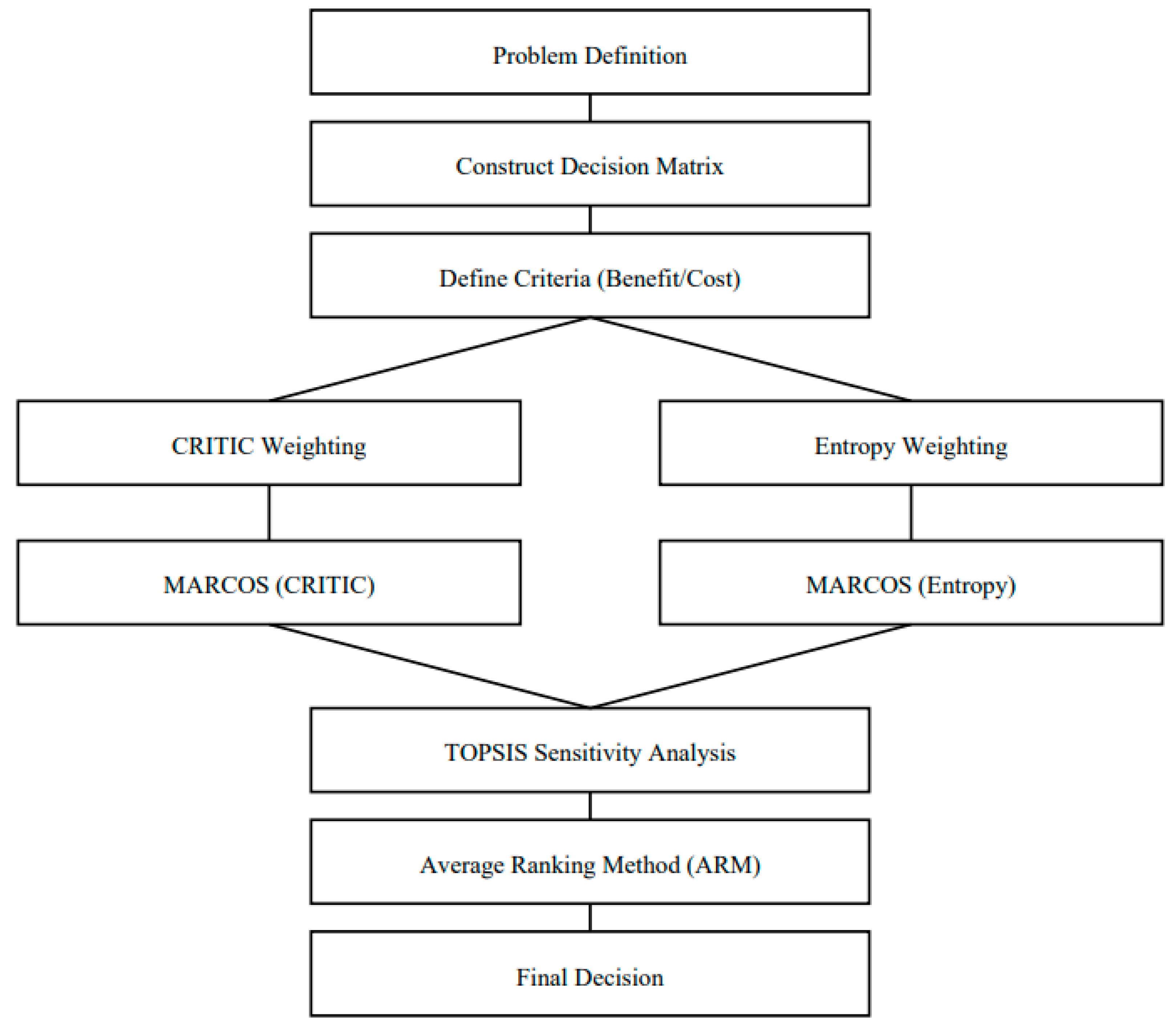
Figure 1 depicts this integrated methodological framework schematically, facilitating systematic tracking of the process flow. The multi-stage structure is clearly illustrated, commencing with the specification of the decision problem, progressing to the formation of the decision matrix and the evaluation of criteria costs and benefits, and subsequently diverging into two concurrent weighting procedures (CRITIC and Entropy). Comparing options under different objective-weighting logics is enabled by independently evaluating the generated weight sets using the MARCOS approach. The Average Ranking Method (ARM) consolidates these diverse outputs to derive the final ranking, while the subsequent TOPSIS-based sensitivity analysis examines the variation in rankings attributable to the methodological approach. Consequently,
Figure 1 demonstrates how the proposed method provides a framework grounded in multi-method validation and integrated decision-making logic that complements linear analysis. Additionally, the structure enhances transparency and traceability in multi-stage MCDM applications by serving as a repeatable decision pipeline.
4.1. Criteria Selection with Rationale
The proposed methodology in this study aims to identify the optimal alternative by systematically analyzing the criteria critical to e-bus selection. This objective is pursued through the evaluation of nine distinct criteria:
Charging time: This refers to the duration required to recharge an e-bus’s battery fully under optimal charging conditions.
Maximum weight: This denotes the e-bus’s maximum permissible weight, including its payload, passengers, and onboard systems.
Torque: This represents the maximum rotational force generated by the e-bus’s motor under optimal operating conditions, measured in Newton-meters (Nm).
Battery capacity: This quantifies the total energy storage capacity of the e-bus’s battery pack, typically measured in kilowatt-hours (kWh).
Engine power: This indicates the rated maximum power output of the e-bus’s motor, expressed in kilowatts (kW).
Range on a single charge: This defines the maximum distance an e-bus can travel on a single full charge under standardized testing conditions.
Passenger capacity: This specifies the maximum number of passengers the e-bus is designed to accommodate, including both seated and standing occupants.
Internal volume: This describes the total usable interior space of the e-bus, encompassing passenger seating areas and cargo compartments.
Warranty period: This refers to the duration of coverage provided by the manufacturer for specific e-bus components and systems against defects or failures.
The selection of these nine criteria is informed by both relevant academic literature and technical documentation from six e-bus manufacturers examined in this research. Criteria commonly employed in prior studies on e-bus selection are cross-referenced with technical data available on manufacturer websites. Consequently, the criteria are structured to align with scientific validity and the practical realities of the e-bus market in Türkiye. Additionally, both technical and operational dimensions are carefully considered during the criteria selection process. Emphasis is placed on ensuring that the criteria set provide realistic and meaningful information to decision-makers. The technical specifications and comparative data for the evaluated e-bus alternatives are presented in
Table A1 (Please see
Appendix A). For instance:
Technical criteria such as battery capacity, engine power, torque, and range on a single charge directly influence an e-bus’s energy efficiency, performance, and daily operational capacity.
The charging time determines operational continuity by affecting vehicle downtime.
The maximum weight impacts both payload capacity and energy consumption.
The passenger capacity and internal volume, as user-centric factors, are critical for passenger comfort and capacity management, directly affecting public transportation service quality.
The warranty period is of significance for financial sustainability due to its potential to reduce long-term maintenance costs.
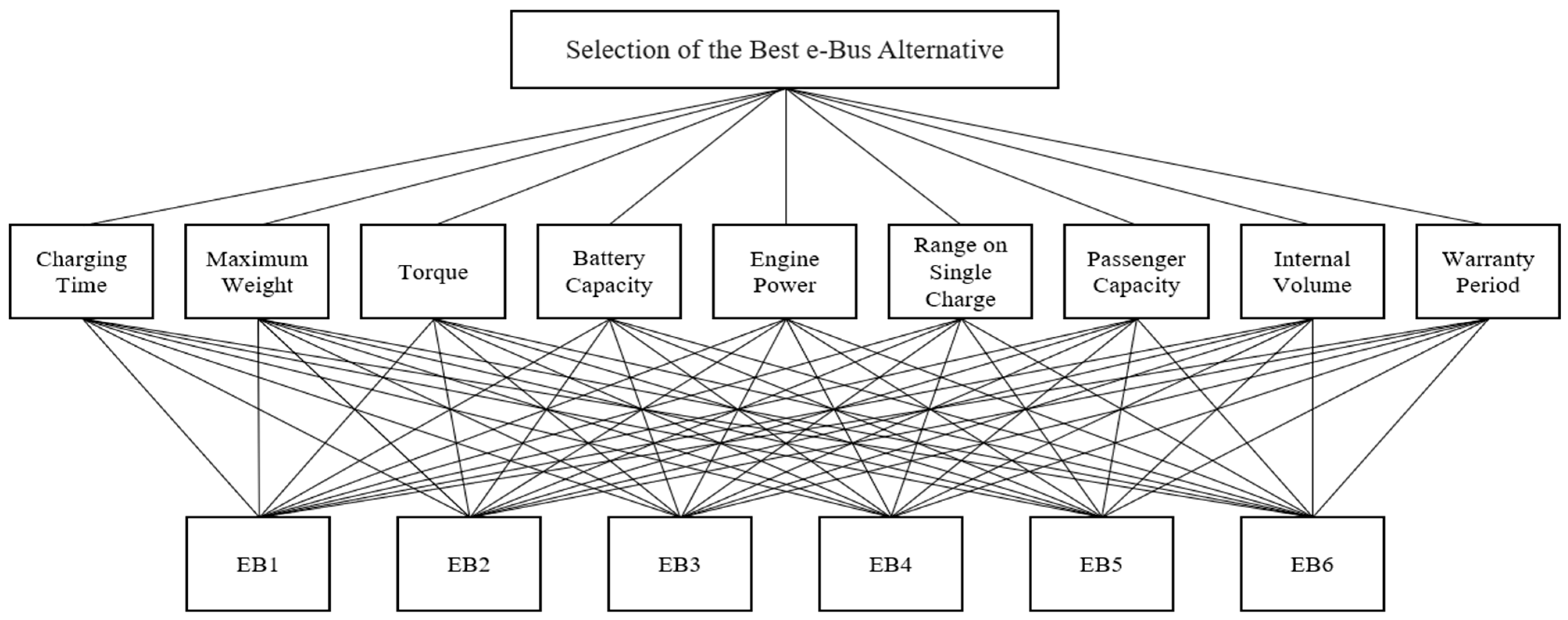
These criteria are systematically mapped to six e-bus alternatives (EB1–EB6), as illustrated in
Figure 2. The figure provides a schematic representation of the decision problem’s structure, demonstrating the relationship between the criteria and the evaluated alternatives. By synthesizing technical specifications, operational requirements, and financial considerations, this structured approach ensures a holistic evaluation tailored to the complexities of e-bus procurement in urban transit systems. Additionally, the scope of the analysis is limited solely to technical and operational criteria. The main reason is that the reliability and accessibility of data shared commercially by different manufacturers are limited to technical indicators. Criteria such as cost, maintenance frequency, or environmental impact have been excluded from the analysis. This is because these criteria may vary depending on the manufacturer, conditions of use, or local policy regulations, and cannot be measured in a standardized manner. Therefore, technical and operational indicators that are highly comparable and provide data integrity have been preferred.
4.2. Method Selection with Rationale
The proposed methodology aims to facilitate the adoption of electric urban transportation systems by providing decision-makers with an objective, transparent evaluation framework to identify optimal e-bus alternatives. To conclude, the study introduces an integrated CRITIC-MARCOS and Entropy-MARCOS approach to assess and rank the performance of e-bus options. The CRITIC, Entropy, and MARCOS methods are selected for their complementary strengths in ensuring objectivity, analytical comprehensiveness, and methodological robustness in MCDM environments.
The CRITIC method is employed because it evaluates the relative importance of criteria by simultaneously considering contrast intensity-measured through standard deviations-and inter-criterion conflict or independence-captured via correlation coefficients. As a result, criteria with higher discriminative power and lower redundancy receive greater weights. In contrast, the Entropy method derives criterion weights by quantifying information diversity in the dataset, assigning greater importance to criteria with higher variability. By minimizing reliance on subjective judgments, the Entropy approach enhances objectivity in the weighting process. The combined application of CRITIC and Entropy thus provides a dual-objective, data-driven weighting mechanism that strengthens the robustness and reliability of the evaluation framework. Their complementary characteristics yield a more balanced and stable weighting structure than single-method approaches, thereby enhancing the credibility of MARCOS-based ranking outcomes. Since CRITIC captures both contrast intensity and inter-criteria conflict without relying on subjective assessments, it is preferred over techniques such as AHP or BWM. MARCOS offers a compromise-based and proportionally balanced ranking structure, making it suitable for assessing alternatives relative to both ideal and anti-ideal solutions.
In summary, the selection of CRITIC, Entropy, and MARCOS is grounded in their complementary methodological characteristics rather than being arbitrary. CRITIC proves useful for identifying structurally significant criteria because it captures both variability and inter-criteria conflicts. Conversely, entropy emphasizes factors that effectively differentiate between options by focusing on the dispersion of information. MARCOS is preferred because it offers a balanced, compromise-based ranking framework that assesses alternatives relative to both ideal and anti-ideal solutions within a proportional utility context. Finally, due to its distance-based evaluation logic, which facilitates a clear comparison of methodological influences on ranking outcomes, TOPSIS serves as a benchmark in sensitivity analysis.
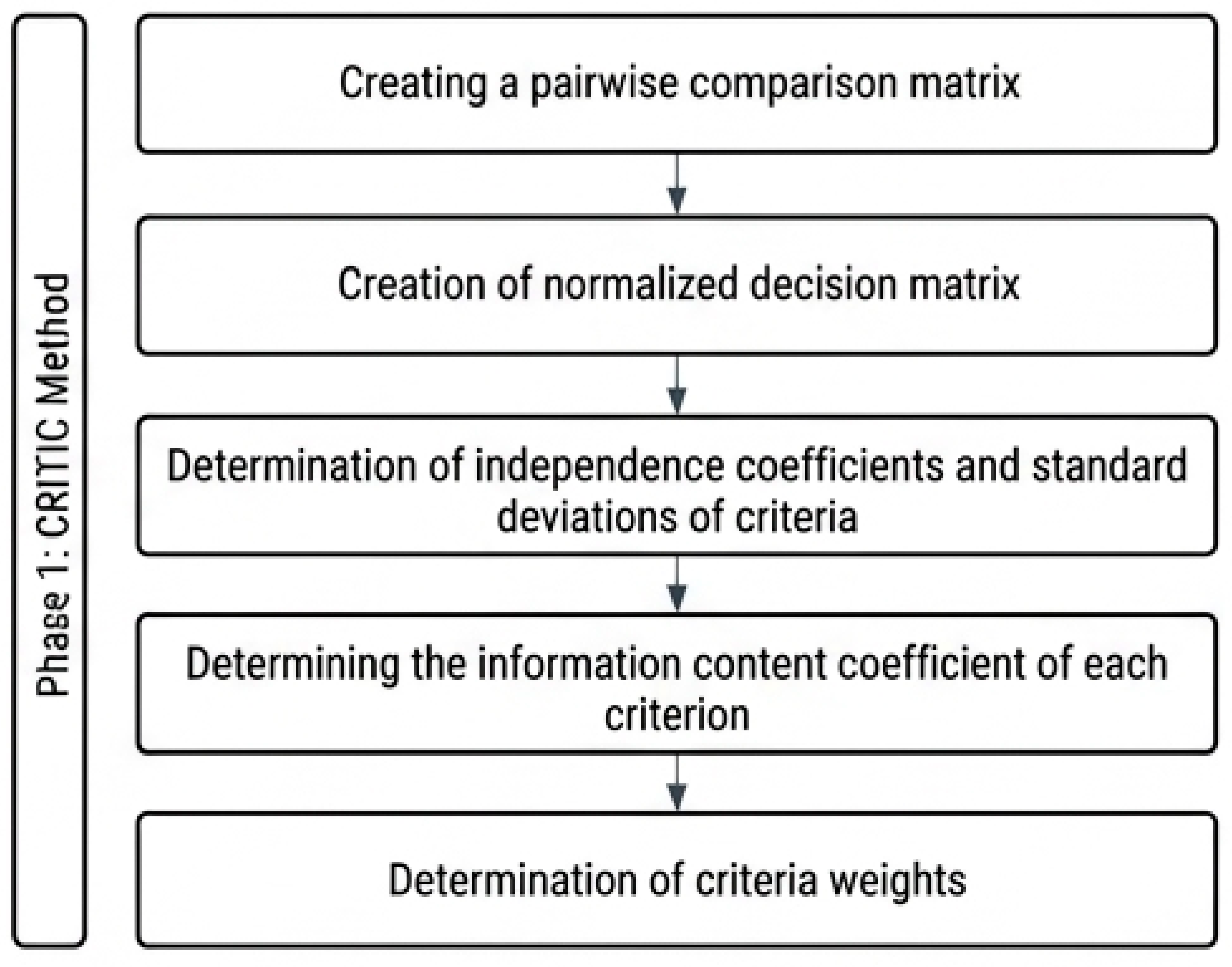
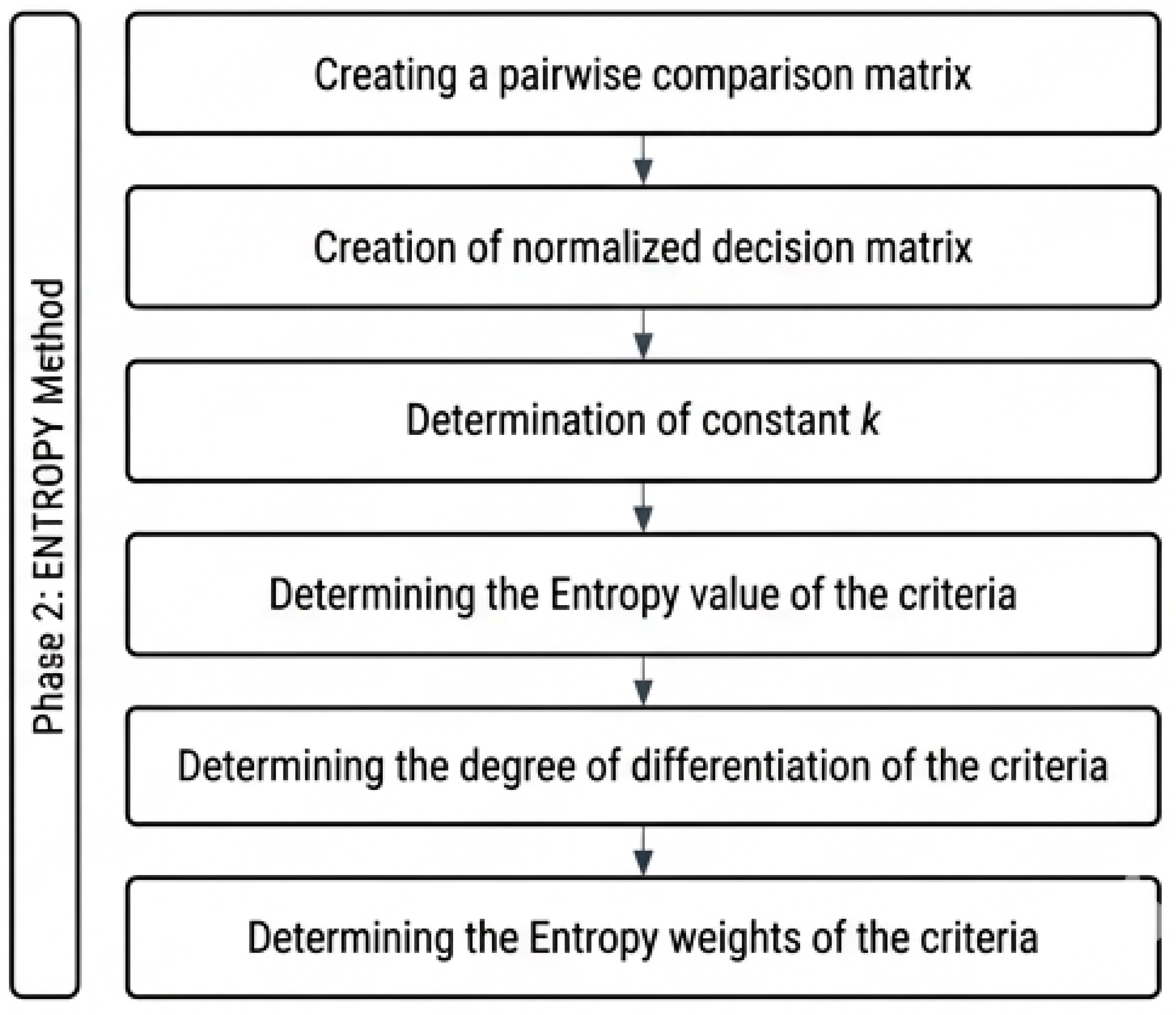
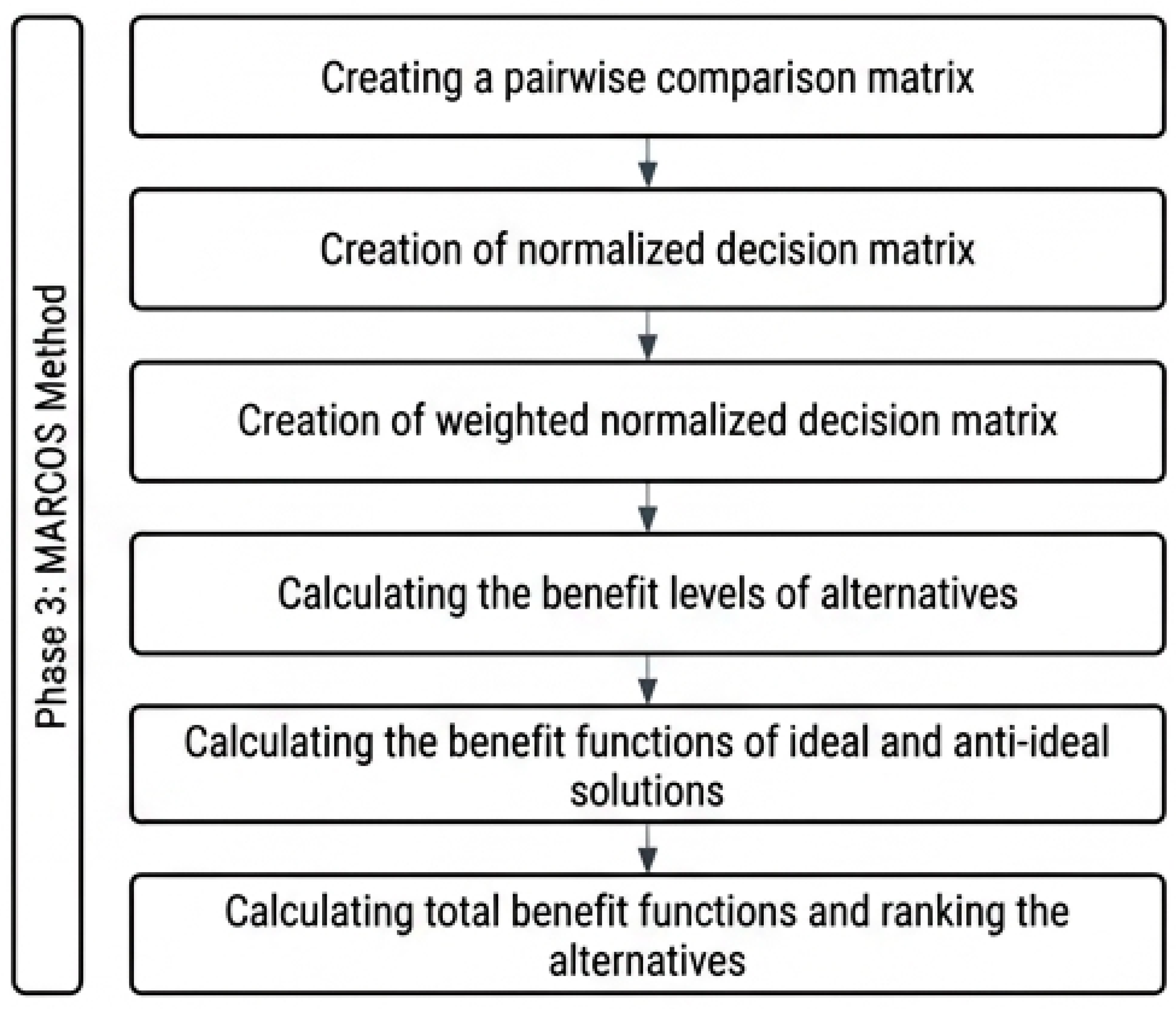
For ranking alternatives, the MARCOS method is adopted for its ability to determine utility levels in a proportional, systematic, and balanced manner. MARCOS evaluates alternatives relative to both ideal and anti-ideal reference solutions, enabling a comprehensive assessment of trade-offs across criteria. The integration of CRITIC, Entropy, and MARCOS aims to deliver a multidimensional, data-driven evaluation framework with high sensitivity to performance differences among e-bus alternatives. A schematic representation of the procedural steps for the proposed methods is provided in
Figure A1,
Figure A2,
Figure A3 and
Figure A4 (Please see
Appendix B).
Figure A1 illustrates the implementation phases of the CRITIC method, which consists of five key steps for objectively determining criterion importance. First, a decision matrix is constructed to represent the performance of the criteria. Second, the matrix is normalized to ensure comparability across heterogeneous measurement scales. Third, standard deviations and independence coefficients are calculated to capture both variability and inter-criteria relationships. Fourth, information coefficients are derived from the information contributed by each criterion. Finally, objective criterion weights are determined by integrating the effects of contrast intensity and correlation. This structured procedure explicitly accounts for interdependencies among criteria and enhances the reliability of the decision-making process, thereby aligning technical rigor with practical applicability in urban transport planning.
Figure A2 presents the procedural steps of the Entropy method, which is also used to determine criterion weights objectively. The process begins with constructing a decision matrix that represents alternative performance across criteria, followed by normalization to eliminate scale effects. Next, the normalization constant
is calculated to standardize Entropy values. Entropy values are then computed for each criterion, reflecting the degree of uncertainty or dispersion within the dataset. Based on these values, the degree of discrimination for each criterion is derived, indicating its ability to differentiate among alternatives. Finally, Entropy-based weights are assigned inversely proportional to Entropy values, ensuring that criteria with higher discriminative power receive greater importance. By quantifying inherent uncertainty in the data, the Entropy method enhances transparency and objectivity in the weighting process, consistent with the principles of information theory and statistical rigor.
Figure A3 summarizes the implementation steps of the MARCOS method. The process begins with constructing a decision matrix to represent alternative performance across criteria. The matrix is then normalized to standardize heterogeneous data. In the third step, criterion weights obtained from either the CRITIC or the entropy method are applied to generate a weighted, normalized decision matrix. Subsequently, the utility degree of each alternative is calculated to quantify its performance relative to both ideal and anti-ideal reference solutions. This reference-based evaluation enables a balanced assessment of trade-offs by considering proximity to optimal and worst-case scenarios. Finally, a total utility function is derived for each alternative, synthesizing overall performance across all criteria, and the alternatives are ranked accordingly to identify the optimal compromise solution.
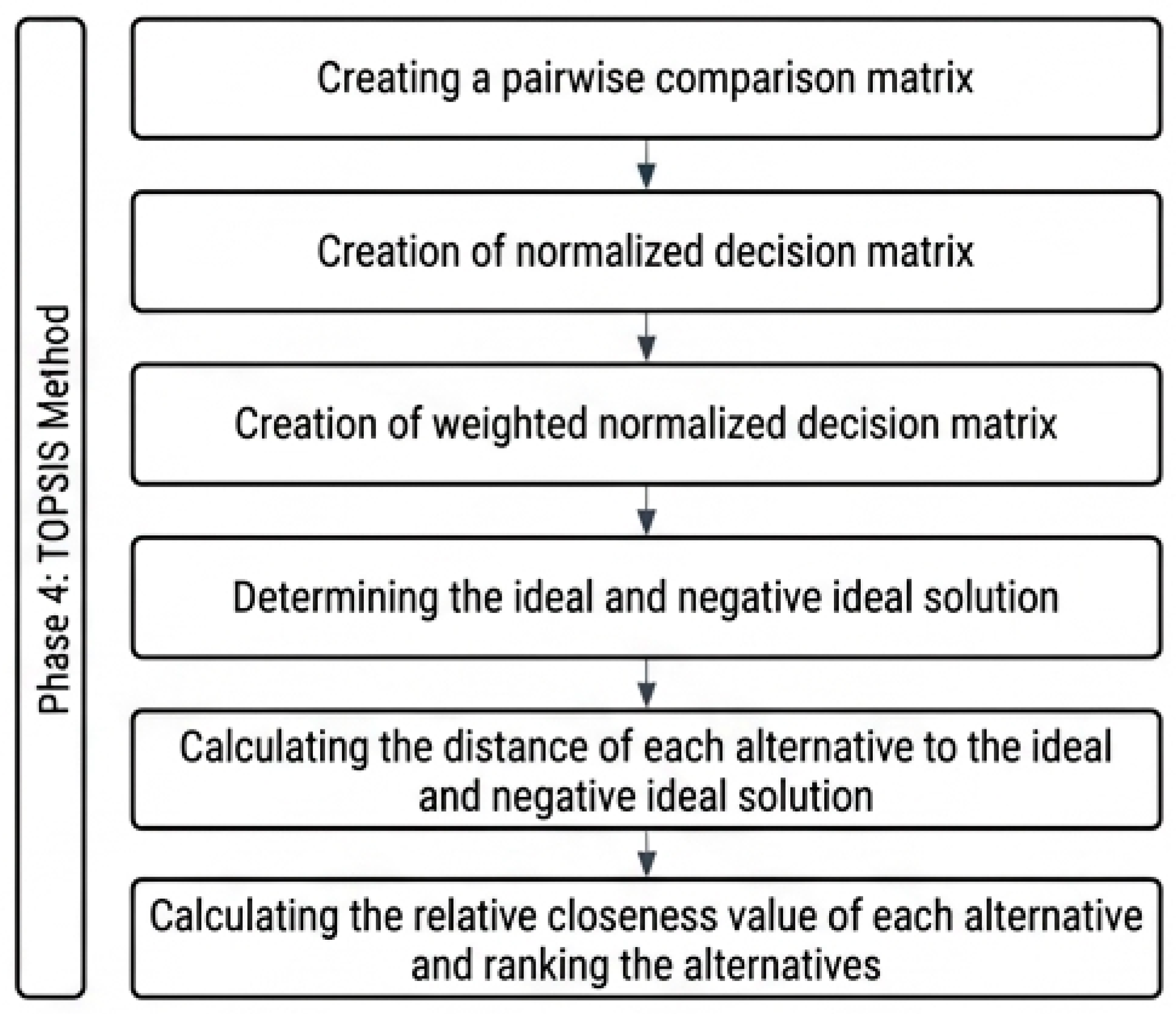
Figure A4 illustrates the implementation phases of the TOPSIS (Technique for Order Preference by Similarity to Ideal Solution) method, which is employed in this study for sensitivity and robustness analysis. TOPSIS is based on the principle that the optimal alternative should have the shortest distance to the ideal solution and the greatest distance to the anti-ideal solution. The procedure begins by constructing a decision matrix that represents each alternative’s performance across the selected evaluation criteria, followed by normalization to eliminate scale differences and ensure comparability across heterogeneous criteria. Criterion weights obtained from objective weighting methods, such as CRITIC or Entropy, are then applied to form a weighted, normalized decision matrix. Subsequently, positive-ideal and negative-anti-ideal solutions are determined for each criterion: maximum values represent ideal solutions for benefit-type criteria, and minimum values represent ideal solutions for cost-type criteria; the reverse applies to anti-ideal solutions. The Euclidean distances of each alternative from both reference solutions are calculated to quantify their relative proximity within the multi-dimensional criteria space. Based on these distances, a relative closeness coefficient is computed for each alternative, capturing its overall performance in relation to the ideal and anti-ideal benchmarks. Alternatives are then ranked in descending order according to these coefficients, with higher values indicating greater desirability. In this study, TOPSIS serves as a complementary and comparative tool to assess the stability of rankings derived from the CRITIC-MARCOS and Entropy-MARCOS frameworks, thereby enhancing the robustness, transparency, and credibility of the overall decision-making process in the context of e-bus procurement.
4.3. Methods with Steps
4.3.1. CRITIC Method and Steps
CRITIC is an objective MCDM method developed by Diakoulaki et al. (1995) [
13] to weigh criteria. The CRITIC method provides decision-makers with data-driven weights based on the standard deviations and correlations among criteria. In doing so, it reduces subjective bias, thereby ensuring more reliable and consistent results.
Step 1. The decision matrix
is created where
represents the performance of the ith alternative with respect to the jth criterion.
where
matrix,
the number of alternative e-bus,
the number of evaluation criteria,
: criterion value of e-bus alternatives, example charging time;
alternative e-buses;
criteria for selecting e-buses;
criterion j’s minimum value in column;
criterion j’s maximum value in column;
kth criterion;
normalized value of criteria;
: pearson correlation coefficient between jth and kth criterion;
standard deviation of criteria;
information content coefficient;
criteria weights;
total score of the alternatives.
Step 2. The decision matrix created is normalized through Equation (2) or Equation (3).
where
represents the maximum value of j and
represents the minimum value of j.
Step 3. Calculation of correlation coefficients between criteria as indicated in Equation (4):
where
represents the correlation coefficient between criteria j and k, and
indicates the independence between criteria. In contrast,
and
show the values of criteria j and k, respectively, and
demonstrates the correlation coefficient between these criteria.
Step 4. Calculation of independence coefficients and the standard deviation of the criteria using Equation (5) and Equation (6), respectively:
where
represents the independence between criteria j and k, and
denotes the standard deviation of the normalized values of criterion j; m is the number of alternatives
Step 5. Calculation of the information content coefficient of each criterion using Equation (7):
where
represents the information content coefficient of criterion j, integrating both the criterion’s variability
and its independence from other criteria.
Step 6. Calculation of criteria weights as explained in Equation (8):
where
represents the normalized weight of criterion j, ensuring that
.
4.3.2. Entropy Method and Steps
Entropy is first defined by Clausius (1866) [
59] as a measure of disorder and uncertainty in a system. Later, the Entropy method, developed by Shannon (1948) [
60], has been employed to quantify the amount of helpful information in a dataset [
61]. This approach reduces reliance on subjective judgments by deriving weights directly from the dataset’s inherent variability and information distribution. By measuring dispersion and relative contrasts among criteria, the Entropy method ensures an objective, statistically grounded weighting process, thereby enhancing the reliability of MCDM analyses. The Entropy method is implemented to calculate objective weights. The steps for applying the method are detailed below.
Step 1. The decision matrix is created where represents the performance of the ith alternative concerning the jth criterion as explained in the first step of the CRITIC method through Equation (1).
Step 2. A normalized decision matrix is created through Equation (9):
where
represents the normalized performance value, ensuring that each column sums to 1.
Step 3. Calculation of the
k constant related criteria is done using Equation (10):
Step 4. Calculation of Entropy values of related criteria is made through Equation (11):
where
represents the entropy value of criterion j.
Step 5. The degree of differentiation of the criteria is calculated using Equation (12):
Step 6. Entropy weights are computed by Equation (13):
where
represents the normalized weight of criterion j based on its information content.
4.3.3. MARCOS Method and Steps
The MARCOS method is an MDCM approach that focuses on ranking alternatives based on a compromise solution derived from various evaluation criteria (The implementation steps of the method are detailed below [
14].
Step 1. The decision matrix (including ideal and anti-ideal solutions) is created using Equations (14) and (15):
where
B denotes the set of benefit criteria, and
C denotes the set of cost criteria.
Step 2. The normalized decision matrix (including ideal and anti-ideal solutions) is formed through Equations (16) and (17):
where
denotes the ideal or anti-ideal solution for criterion j.
Step 3. Creation of a weighted normalized decision matrix (including ideal and anti-ideal solutions) is done with Equation (18):
where
represents the weighted normalized value of the ith alternative for the jth criterion.
Step 4. The benefit levels of alternatives are calculated using Equations (19)–(21):
where
represents the utility of the ith alternative relative to the ideal solution;
denotes the utility of the ith alternative relative to the anti-ideal solution;
Si is the total weighted score of the ith alternative;
and
are the total scores of the ideal and anti-ideal solutions, respectively.
Step 5. The benefit functions of ideal and anti-ideal solutions are computed using Equations (22) and (23):
where
and
demonstrate benefit functions that sum to 1.
Step 6. Total benefit functions and ranking the alternatives are made using Equation (24):
where
represents the final ranking score of the ith alternative, alternatives are ranked in descending order of
values.
4.3.4. TOPSIS Method and Steps
The TOPSIS method is a multi-criteria decision-making approach that effectively supports multi-criteria evaluation by identifying the best alternative through the measurement of distances to the positive and negative ideal solutions [
62].
Step 1. Creation of a decision matrix through Equation (25):
Step 2. Creation of a normalized decision matrix with Equation (26):
where
represents the normalized value of
, ensuring that each column is normalized to unit length.
Step 3. Formation of the weighted normalized decision matrix using Equation (27):
where
represents the weighted normalized value, with weights
obtained from either CRITIC or Entropy methods.
Step 4. Determining ideal and negative ideal solutions through Equations (28) and (29) one by one:
where
represents the positive ideal solution and
denotes the negative ideal solution.
Step 5. Determining the distances of the alternatives to the ideal and negative ideal solution with Equation (30) and Equation (31), respectively:
where
represents the Euclidean distance of the ith alternative to the positive ideal solution;
denotes the Euclidean distance of the ith alternative to the negative ideal solution.
Step 6. Calculating relative closeness value and ranking alternatives with Equation (32):
where
represents the relative closeness of the ith alternative to the ideal solution, alternatives are ranked in descending order of
values, with
= 1 indicating the ideal solution and
= 0 indicating the anti-ideal solution.
5. Findings
Based on the analysis where all computational procedures have been performed using Microsoft Excel (Microsoft Corp., Redmond, WA, USA), the EB1 and EB3 models consistently emerged as top-performing alternatives, while EB5 also demonstrated strong performance across several criteria. The CRITIC-based MARCOS method identified the EB3 model as the optimal alternative, while the Entropy-based analysis ranked the EB1 model first. The normalized values and weights of criteria presented in the tables demonstrate that technical specifications-particularly battery capacity, torque, and range- are decisive factors in the ranking of alternatives. EB2 and EB6 models, however, occupy lower positions in the overall ranking despite demonstrating high performance in specific criteria.
This outcome underscores the influence of objective weighting approaches on prioritization results, with CRITIC emphasizing statistical contrasts and Entropy focusing on information diversity within the dataset. The divergence in rankings between the two methods highlights the importance of selecting weighting techniques aligned with decision priorities, particularly in contexts where technical performance metrics dominate the evaluation framework.
Table 2 presents the decision matrix, which includes nine criteria for six e-bus models (EB1, EB2, EB3, EB4, EB5, EB6). The evaluation direction (maximization or minimization) for each criterion is also specified within the table.
This matrix serves as the foundational input for multi-criteria decision analysis, where maximization criteria (e.g., battery capacity, range) denote desirable higher values. In contrast, minimization criteria (e.g., charging time) prioritize lower values. By explicitly defining evaluation directions, the matrix ensures alignment with fundamental decision-making objectives and enables systematic comparison of alternatives. The structured representation of technical and economic parameters facilitates transparency in subsequent normalization, weighting, and ranking phases, such as those applied in the CRITIC- or Entropy-based MARCOS methodologies discussed earlier.
Table 3 presents the normalization procedure, which enhances the objectivity of the analysis process by enabling the evaluation of diverse criteria on a unified scale.
This step eliminates discrepancies arising from differing measurement units or scales (e.g., cost in dollars vs. range in kilometers), ensuring equitable comparability across criteria. By standardizing data, normalization mitigates scale-induced bias, allowing technical or economic parameters-whether maximized (e.g., torque) or minimized (e.g., charging time)-to contribute proportionally to the decision framework. The process is critical for subsequent phases, such as applying CRITIC or Entropy weighting methods, as it ensures that statistical contrasts and information entropy are derived from unbiased, scale-free inputs. This methodological rigor reinforces the reliability of rankings in approaches like MARCOS, where transparent, objective data treatment is paramount for credible outcomes.
Table 4 presents a correlation matrix illustrating the correlation coefficients between criteria. This matrix, calculated using the normalized decision matrix, reveals the relationships among the criteria. Positive correlation coefficients indicate a direct relationship between two criteria, whereas negative correlation coefficients indicate an inverse relationship. For instance, while battery capacity and charging time might intuitively be expected to increase together (e.g., larger batteries requiring longer charging times), the analysis reveals a negative correlation (−0.7053). This counterintuitive result can be explained by advancements in battery technology, where larger batteries now incorporate faster-charging capabilities. Similarly, a strong negative correlation (−0.8149) exists between maximum weight and interior volume, likely due to the trade-off between vehicle weight and cabin space: heavier components (e.g., reinforced chassis, larger battery packs) often reduce available interior volume. The negative correlation (−0.5135) between motor power and warranty period may indicate that vehicles with higher-pod motors experience greater mechanical wear, leading to shorter warranty periods or higher maintenance costs.
This matrix highlights the interdependencies and trade-offs among technical criteria, providing critical insights for weighting methods like CRITIC, which leverages correlation patterns to assign objective weights. By quantifying these relationships, the analysis ensures that conflicting criteria (e.g., performance vs. durability) are transparently addressed, enhancing the robustness of multi-criteria decision frameworks such as MARCOS. Such transparency is vital for interpreting ranking outcomes and justifying prioritization in complex evaluations like EV selection.
Table 5 presents the independence matrix calculated using the CRITIC method, which assesses the degree of independence among criteria in the decision model. This matrix assesses how distinct each criterion is from the others, with higher independence values indicating that a criterion provides unique information and may warrant greater weighting in the decision-making process. Within the CRITIC framework, criterion weights are determined by considering both their statistical variability (standard deviation) and their independence from other criteria, thereby ensuring efficient use of information.
For example, charging time and battery capacity exhibit a high independence value (1.7053), reflecting their complementary but counterintuitive relationship. While larger batteries might traditionally require longer charging times, advancements in fast-charging technologies enable higher-capacity batteries to charge more quickly, explaining this inverse dynamic. Conversely, motor power and torque show a low independence value (0.3170), aligning with their direct relationship; higher motor power typically correlates with increased torque. Similarly, the substantial independence value (1.4819) between range on a single charge and motor power underscores the trade-off where more powerful motors consume energy faster, reducing overall range.
This matrix quantifies the informational redundancy or uniqueness of the criteria, enabling CRITIC to assign weights that prioritize those offering distinct insights. By balancing statistical dispersion and inter-criteria independence, the method ensures robust, data-driven weighting, which is critical for transparent and objective prioritization in complex evaluations such as EV selection. The results reinforce the idea that technological interdependencies (e.g., battery innovation) can disrupt traditional assumptions, necessitating advanced weighting techniques to accurately capture fundamental operational performance dynamics.
As shown in
Table 6, battery capacity holds the highest weight among the criteria. This reflects its critical role in determining the range and operational duration of e-buses, making it the most decisive factor. Torque ranks second due to its direct impact on vehicle performance, while range on a single charge follows in third place, as it significantly influences daily operational efficiency. Motor power and torque, as well as charging time and battery capacity, received lower weights due to their interdependencies; redundant information from correlated criteria reduces their influence in the weighting process. Similarly, passenger capacity and warranty period, though important, are less decisive compared to technical performance metrics. The lowest weight assigned to Interior Volume reflects its variability, depending on bus design priorities, which may prioritize technical components (e.g., battery placement) over cabin space.
This weighting hierarchy underscores the prioritization of core technical specifications (e.g., energy storage, power output, and range) over secondary or design-dependent factors in e-bus procurement. The CRITIC method’s emphasis on statistical contrasts and criterion independence ensures that weights align with operational realities, such as the trade-off between high-capacity batteries and advanced charging technologies. By deprioritizing redundant or design-flexible criteria, the analysis focuses on parameters most critical to long-term performance and reliability, reinforcing the method’s applicability in data-driven, technically complex decision environments.
As shown in
Table 7, the normalized values of the criteria for alternative e-buses, derived using the Entropy method, are presented. Analysis of the table reveals that EB2 emerges as the most advantageous alternative in terms of charging time, EB3 excels in motor power and torque, and EB6 leads in warranty period.
While the normalization step ensures comparability across criteria, the Entropy method assigns weights based on the degree of variation in the data, giving more importance to criteria with higher informational diversity and reducing redundancy. EB2’s superior charging-time performance suggests optimized energy management or advanced charging technology, while EB3’s dominance in motor power and torque highlights its engineering focus on drivetrain efficiency and acceleration. EB6’s outstanding warranty period may reflect the manufacturer’s confidence in long-term reliability or cost-effectiveness.
These results illustrate how the Entropy method helps identify niche strengths across alternatives, even if they do not dominate overall rankings. By isolating the criteria under which specific models outperform others, the analysis provides granular insights for decision-makers balancing specialized requirements (e.g., rapid charging for urban routes vs. high torque for hilly terrain). This aligns with the method’s objective of leveraging data-driven variability to ensure that no critical performance aspect is overlooked in holistic evaluations.
As shown in
Table 8, the Entropy-related values derived from the normalized decision matrix are presented. The Entropy method assigns weights based on the variability of data across alternatives: low variability in a criterion’s values implies a lower informational contribution and thus a smaller weight, whereas high variability indicates greater informational value and thus a higher weight.
Accordingly, engine power and passenger capacity exhibit the highest variability among the criteria, reflecting substantial differences in performance characteristics across the e-bus alternatives. Torque and range on a single charge also demonstrate relatively high variability, indicating notable but comparatively moderate differentiation.
For instance, the pronounced variability in engine power suggests divergent engineering priorities among manufacturers—some emphasize high-performance drivetrains, while others focus on efficiency or cost optimization. Similarly, variability in passenger capacity may reflect different operational use cases, such as high-density urban transport versus lower-demand routes. In contrast, criteria such as battery capacity and interior volume display relatively lower variability, suggesting more standardized design approaches across manufacturers.
By quantifying these disparities, the Entropy method ensures that criteria with higher variability—and thus greater potential to differentiate alternatives—receive proportionally larger weights. This approach minimizes redundancy and enhances the objectivity of the weighting process by emphasizing data-driven distinctions among alternatives. Such granularity is particularly valuable in e-bus procurement contexts, where nuanced trade-offs among performance, capacity, and operational efficiency must be evaluated transparently.
As illustrated in
Table 9, the criterion weights and rankings obtained from the Entropy method indicate that charging time is the most influential criterion in e-bus selection, followed by warranty period and torque. In contrast, battery capacity is ranked as the least important criterion under the Entropy weighting scheme.
These findings suggest that criteria exhibiting greater variability across alternatives—such as charging time and warranty period—play a more significant role in differentiating e-bus options. Charging time is particularly critical in operational contexts where rapid turnaround and service continuity are essential. Similarly, variability in warranty period reflects differences in manufacturer confidence, lifecycle cost considerations, and after-sales strategies. Torque, ranked third, indicates the importance of vehicle performance for acceleration and handling, especially under varying driving conditions.
In contrast, battery capacity receives the lowest weight in the Entropy method, implying relatively lower variability across alternatives and, consequently, limited discriminative power within the dataset. This does not diminish its technical importance; rather, it indicates that within this specific dataset, battery capacity is more standardized across models.
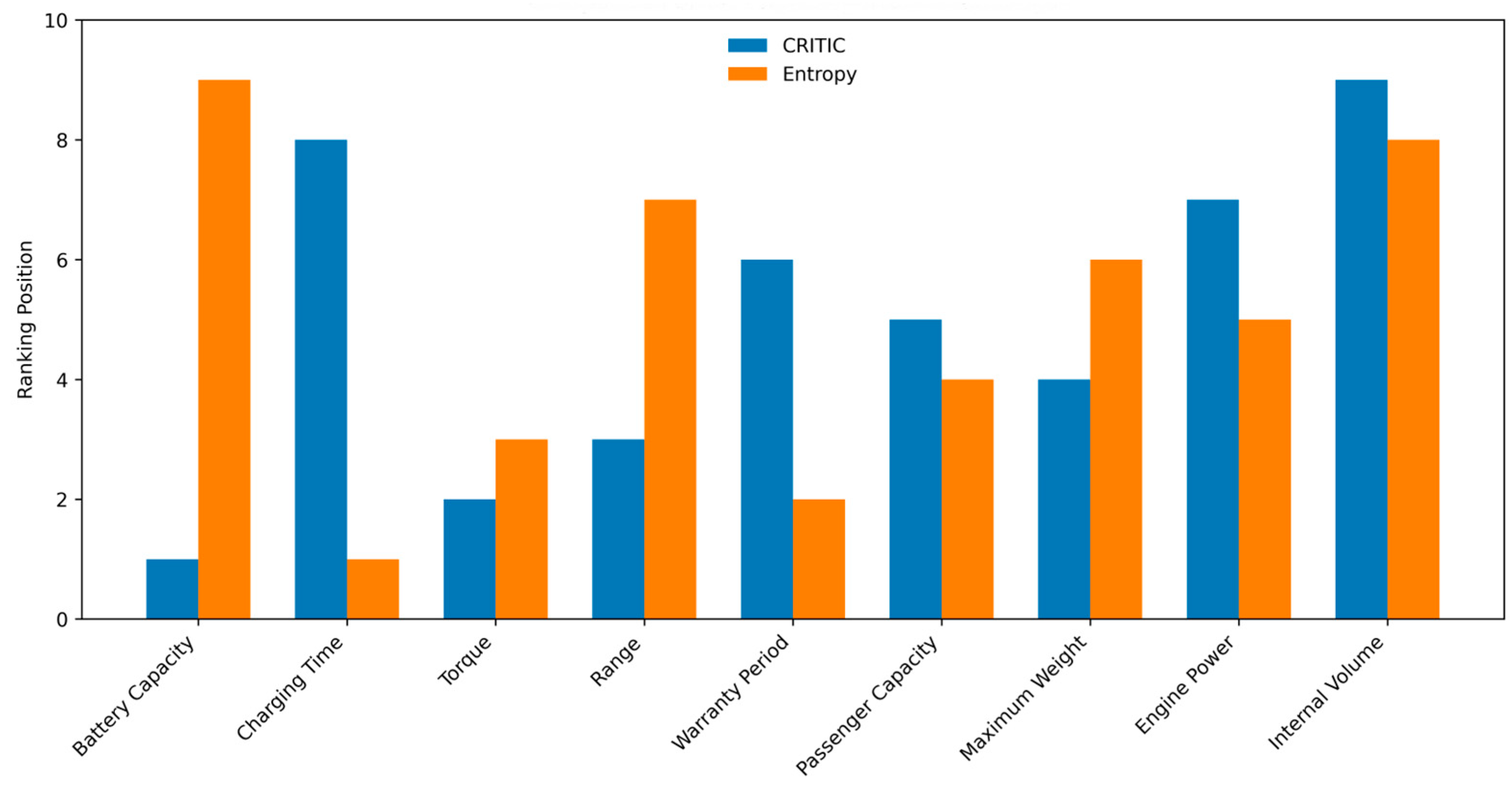
A comparison with the CRITIC method reveals notable differences in prioritization. While CRITIC identifies battery capacity as the most important criterion-emphasizing its central role in vehicle range and performance-the Entropy method assigns it the lowest importance due to its limited variability. Similarly, CRITIC prioritizes torque and range on a single charge, reflecting performance-driven considerations and inter-criteria relationships, whereas Entropy highlights charging time and warranty period, which exhibit greater dispersion across alternatives.
Figure 3 presents the importance rankings of the criteria obtained using the CRITIC and Entropy methods.
These differences stem from the underlying logic of the methods. The CRITIC approach considers both variability and correlation among criteria, thereby emphasizing structurally important performance indicators. In contrast, the Entropy method focuses solely on the degree of dispersion in the data, assigning higher weights to criteria that better differentiate alternatives. Together, these methods provide complementary perspectives: CRITIC captures the structural importance of performance-related criteria, while Entropy reveals which criteria most effectively distinguish among alternatives. This combined insight enhances the robustness of the decision-making process by balancing technical relevance with data-driven variability.
5.1. Ranking of Alternatives
The e-bus alternatives identified in the study are first evaluated using the CRITIC-based MARCOS method, followed by the Entropy-based MARCOS method.
As shown in
Table 10, the EB3 model ranks first with the highest utility value
(3.5023), indicating its superior overall performance under the CRITIC-based weighting scheme. It is followed by EB1 (3.3624), which also demonstrates strong overall performance but remains slightly below EB3 in aggregated utility. In contrast, EB6 ranks last (2.6711), reflecting comparatively weaker overall performance among the evaluated alternatives.
It should be noted that the MARCOS method evaluates alternatives based on their relative utility degrees with respect to ideal and anti-ideal solutions. Therefore, the rankings reflect the combined effect of all criteria and their associated weights, rather than the superiority of individual criteria. In this context, EB3’s leading position suggests a well-balanced performance across the most influential criteria determined by the CRITIC method, while EB1 also maintains a competitive profile. Conversely, the lower ranking of EB6 indicates that its overall performance remains limited when all criteria are considered simultaneously.
The Entropy-based MARCOS method ranks EB1 as the best e-bus alternative, followed by EB3 and EB5, with EB2 in last place, as shown in
Table 11. The significantly higher utility value of EB1 indicates its strong overall performance across the weighted criteria, making it the most favorable alternative within the evaluated set. EB3 and EB5 also demonstrate competitive performance, although their utility scores remain considerably lower than EB1’s, suggesting a more balanced but less dominant performance profile. In contrast, EB2 exhibits the lowest utility value, indicating comparatively weaker overall performance under the Entropy-based weighting scheme.
It is important to note that the MARCOS method evaluates alternatives based on their relative utility degrees with respect to both ideal and anti-ideal solutions. Therefore, the resulting rankings reflect the aggregated effect of all criteria rather than dominance in any single criterion. This highlights the robustness of EB1, which consistently performs well across multiple criteria, leading to its superior overall ranking.
A comparison with the CRITIC-based MARCOS results (
Table 10) reveals differences in ranking outcomes, indicating the sensitivity of results to the weighting scheme employed. While both approaches identify EB1 and EB3 among the top-performing alternatives, variations in the ranking of other alternatives suggest that the importance assigned to criteria significantly influences the final decision.
These differences stem from the underlying logic of the weighting methods. The CRITIC method incorporates both variability and inter-criteria correlation, emphasizing structurally important criteria, whereas the Entropy method relies solely on the dispersion of data, prioritizing criteria with higher variability. Consequently, the integration of different weighting methods with the MARCOS ranking framework provides a more comprehensive evaluation, allowing decision-makers to assess the robustness and consistency of alternative rankings under varying assumptions.
From a decision-making perspective, rather than selecting a single method, it is advisable to consider results obtained from multiple weighting schemes. This comparative approach enhances reliability and supports more informed and balanced decisions in e-bus selection processes.
5.2. Sensitivity Analysis
Sensitivity analysis is examined in three main categories: mathematical, statistical, and graphical. However, some classifications focus on the method’s applicability rather than on the methodological structure of specific techniques [
63]. It is performed to evaluate the robustness and stability of the proposed model and to analyze the impact of changes in model parameters or criterion weights on the results. Therefore, it helps determine the impact of potential uncertainties on decision-making processes by testing the model’s reliability [
64]. Hamurcu and Eren systematically compare the consistency of results generated by various MCDM methods, including TOPSIS, when applied to EV evaluation [
30]. Within the scope of the sensitivity analyses in this article, it has been shown that rankings change when different alternative ranking methods (TOPSIS) are used.
In parallel with the TOPSIS results using CRITIC-based weights in
Table 12, the ranking of the alternatives is EB6 > EB2 > EB1 > EB4 > EB3 > EB5. A notable finding here is that the EB6 alternative has the highest relative proximity coefficient with a value of
= 0.619. In contrast, the EB5 alternative is determined to be the lowest-performing, with
= 0.355. On the other hand, EB1 and EB3, which ranked highly in previous MARCOS analyses (
Table 10 and
Table 11), performed less well in the TOPSIS evaluation. This contrast demonstrates the sensitivity of ranking outcomes to the normalization and distance-based evaluation structure of TOPSIS.
In accordance with the results presented in
Table 13, the EB3 alternative ranks first as the closest option to the ideal solution, with a
= 0.530. It is followed by EB6 (0.517), which also demonstrates strong overall performance under the Entropy-based weighting scheme. EB1 ranks third (0.481), indicating a relatively high level of closeness to the ideal solution, while EB4 (0.456) ranks fourth. In contrast, EB2 (0.409) and EB5 (0.387) rank lower, reflecting comparatively weaker performance across the evaluated criteria.
Compared with the MARCOS-based results, notable differences in rankings are observed. For instance, while EB1 and EB3 performed strongly in the MARCOS analysis, EB6 achieves a higher relative position in the TOPSIS framework. These differences highlight the sensitivity of ranking outcomes to the methodological approach employed.
The Entropy-based weighting scheme, which assigns greater importance to criteria with higher variability, plays a significant role in shaping these results. As TOPSIS evaluates alternatives based on their relative distances to ideal and anti-ideal solutions, the influence of criteria weights becomes more pronounced, leading to shifts in the relative positioning of alternatives. This demonstrates that even when the same weighting method is used, different MCDM techniques may yield varying rankings due to their distinct computational structures.
5.3. Creating the Final Ranking Using the ARM
The ARM prioritizes options based on average rankings obtained from various MCDM methods. It facilitates consensus ranking of alternatives by aggregating results from different techniques to identify the most suitable options [
65].
The Average Ranking Method (ARM) applied in
Table 14 provides a consolidated evaluation by integrating the ranking results obtained from different MCDM methods. By averaging the rankings, ARM reduces the influence of method-specific variations and reflects the overall performance trend of each alternative. This enables a more stable and consistent interpretation of the results across multiple methodological perspectives.
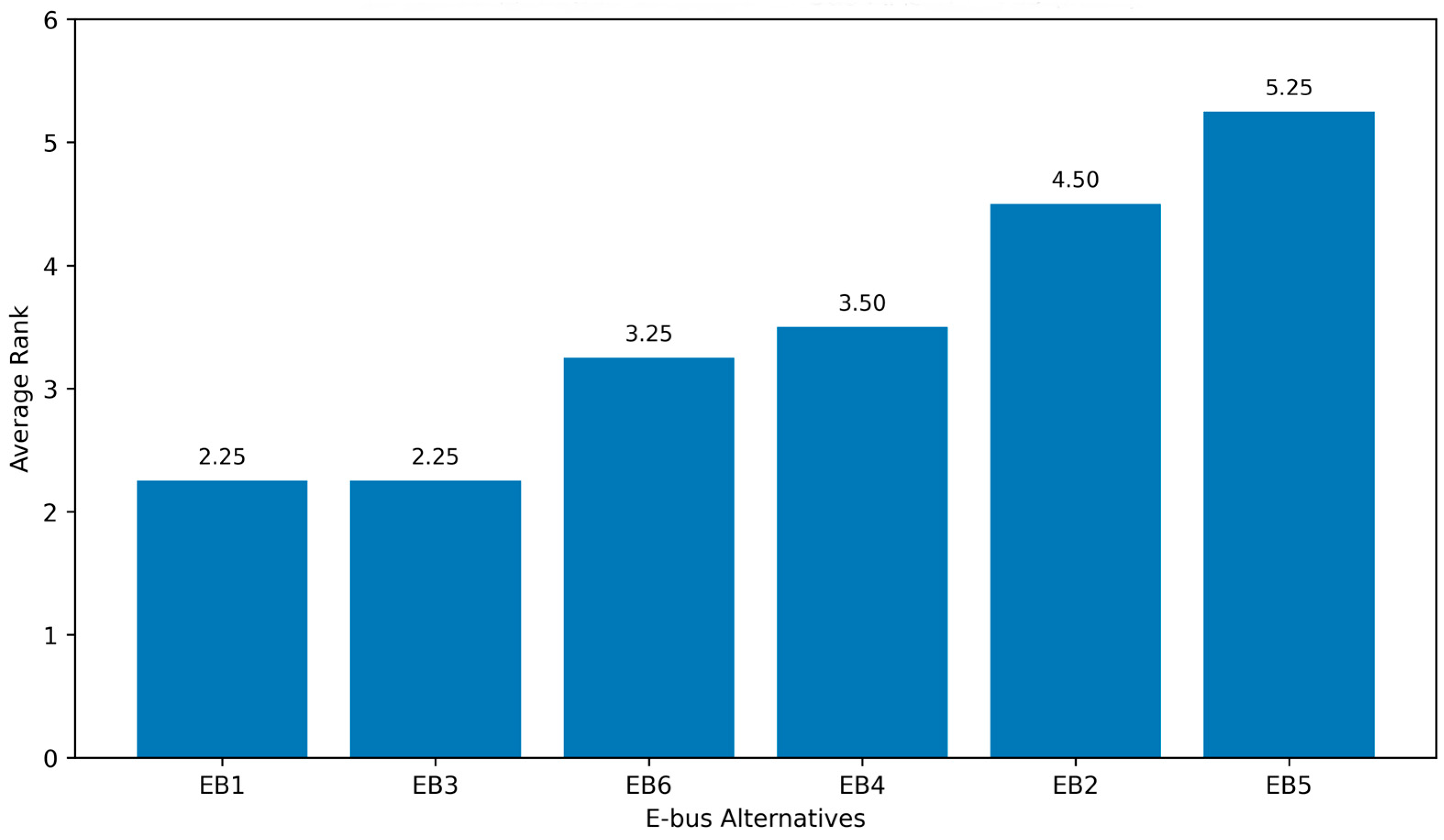
The final ranking of the options based on the Average Ranking Method (ARM) outcomes is shown in
Figure 4. Alternatives EB1 and EB3 consistently perform across methodologies, as evidenced by their lowest average rankings. This outcome unequivocally demonstrates that both options are the best choices for decision-makers.
In this study, voting-based aggregation approaches such as the Copeland and Borda methods have not been employed, as these techniques rely primarily on ordinal information and pairwise comparisons, which may overlook the relative magnitude of differences between alternatives. In contrast, the ARM approach maintains the ranking information derived from each method without introducing additional weighting structures or assumptions.
As a result, ARM serves as a transparent and straightforward aggregation tool, allowing decision-makers to synthesize multiple ranking outcomes while preserving methodological neutrality. This contributes to a more balanced assessment by highlighting alternatives that consistently perform well across different evaluation frameworks.
5.4. Robustness Analysis
Robustness analysis is also performed to assess the effects of the CRITIC and Entropy weighting methods on MARCOS and TOPSIS. The rankings obtained within this scope are compared using Spearman (rho) and Kendall (tau) correlation coefficients. The findings are presented in
Table 15.
When Spearman’s rank correlation and Kendall’s tau results are evaluated together, it becomes evident that both the choice of ranking method and the weighting scheme influence the stability of alternative rankings, though their effects vary by method combination.
When the same weighting method is used, the correlation between MARCOS and TOPSIS results differs substantially. For instance, under the CRITIC weighting scheme, a moderate negative correlation is observed between CRITIC-MARCOS and CRITIC-TOPSIS (ρ = −0.60), indicating that the ranking method significantly alters the relative positions of alternatives. In contrast, under Entropy weighting, the correlation between Entropy-MARCOS and Entropy-TOPSIS is strong and positive (ρ = 0.77), indicating greater agreement between the two ranking methods.
When the ranking method is held constant, the effect of the weighting scheme appears to be more moderate. For the MARCOS method, the correlation between CRITIC and Entropy weights is relatively high (ρ = 0.66; τ = 0.60), indicating that the general ranking trend is largely preserved despite differences in weighting. However, for the TOPSIS method, the correlation between CRITIC and Entropy-based rankings is low (ρ = 0.26; τ = 0.07), suggesting that TOPSIS results are more sensitive to changes in the weighting scheme.
In cross-comparisons where both the weighting and ranking methods differ (e.g., CRITIC-MARCOS vs. Entropy-TOPSIS; Entropy-MARCOS vs. CRITIC-TOPSIS), lower or inconsistent correlation values are observed, reflecting the combined effect of these methodological differences.
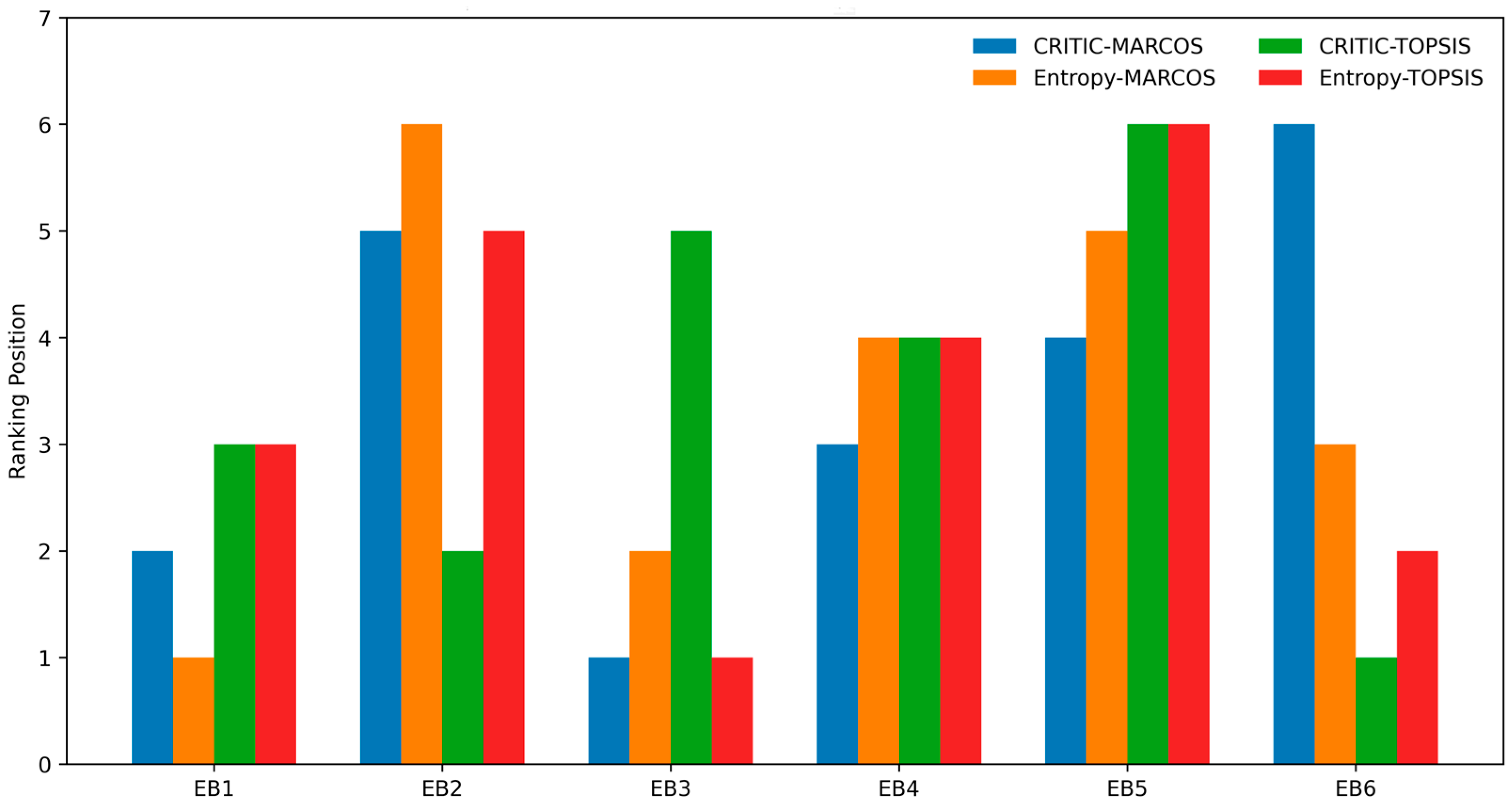
Figure 5 presents a comparative analysis of changes in alternative rankings across various MCDM methods. The graph shows that rankings vary by method and weighting approach; however, alternatives EB1 and EB3 consistently rank at the top. This indicates that although the results are sensitive to the choice of methodology, a strong consistency is observed for certain alternatives.
Overall, the findings indicate that ranking outcomes are sensitive to both the selected MCDM method and the weighting approach, and that this sensitivity varies depending on the specific method combination. Therefore, relying on a single method may lead to inconsistent conclusions. The use of multiple methods and comparative analysis enhances the robustness and reliability of decision-making processes by providing a more comprehensive evaluation framework.
5.5. Findings Regarding the Criteria
The evaluation criteria employed in this study are based on both the current literature and the availability of reliable, comparable technical data. Accordingly, the criteria focus exclusively on technical and operational performance indicators rather than on economic or environmental factors, due to the fragmented and non-standardized nature of such data across manufacturers.
In this context, nine criteria—including charging time, maximum weight, torque, battery capacity, engine power, range on a single charge, passenger capacity, internal volume, and warranty period—are used to comprehensively represent the operational and technical characteristics of e-buses.
The weighting analyses conducted using the CRITIC and Entropy methods enable the prioritization of criteria from two complementary perspectives. The CRITIC method, which considers both variability and inter-criteria correlations, identifies battery capacity as the most important criterion, followed by torque and range on a single charge. In contrast, the Entropy method, which is based solely on data dispersion, assigns the highest importance to charging time and warranty period, while battery capacity receives the lowest weight due to its relatively limited variability across alternatives.
These findings indicate that the importance of the criteria is highly sensitive to the underlying weighting logic. While battery capacity emerges as a structurally critical factor in the CRITIC-based analysis—reflecting its fundamental role in determining vehicle range and operational continuity—the Entropy results suggest that criteria with higher variability, such as charging time, are more effective in differentiating alternatives within the dataset.
Overall, the combined use of CRITIC and Entropy methods provides a more comprehensive understanding of criterion importance by simultaneously capturing structural relevance and data-driven variability. This dual perspective enhances the robustness of the evaluation process and supports more balanced and transparent decision-making in e-bus selection.
5.6. Methodological Differences and Interpretation of Findings
The MARCOS method evaluates the performance of alternatives relative to both ideal (positive) and anti-ideal (negative) reference solutions, ranking them based on their aggregated utility values. The results obtained in this study indicate that EB1 and EB3 consistently achieve high utility scores under the MARCOS framework, demonstrating strong overall performance across the evaluated criteria. In particular, EB3 ranks first under the CRITIC-based MARCOS approach, while EB1 attains the top position under the Entropy-based MARCOS, reflecting differences in the underlying weighting schemes.
In contrast, the TOPSIS method ranks alternatives according to their relative closeness to the ideal solution by calculating their geometric distances to both ideal and anti-ideal points. The TOPSIS results reveal that the highest-ranked alternative varies depending on the weighting method applied. Under CRITIC-based TOPSIS, EB6 emerges as the best-performing alternative, whereas under Entropy-based TOPSIS, EB3 ranks first.
These findings demonstrate that the choice of MCDM method and weighting approach can significantly influence ranking outcomes. While the MARCOS method evaluates alternatives based on proportional utility relative to reference solutions, TOPSIS emphasizes distance-based closeness to ideal conditions. As a result, alternatives that perform consistently across multiple criteria tend to be favored by MARCOS, whereas TOPSIS may prioritize alternatives that are closer to the ideal solution, even if their performance is uneven across criteria.
Upon examining
Table 16, it is observed that the importance of criteria varies depending on the weighting method used; however, battery capacity and charging time emerge as the most critical criteria when considered together. In terms of alternatives, it is understood that EB3 performs best in a performance-focused (CRITIC) evaluation, while EB1 performs best in a variation-focused (Entropy) evaluation. Ultimately, by evaluating different methods together, it is concluded that the EB1 and EB3 alternatives emerge as the most suitable options.
5.7. Relative Performance of Alternatives
EB1 and EB3 emerge as the most competitive alternatives, both achieving the highest position in the Average Ranking Method (ARM) with an average score of 2.25. This indicates that these two alternatives exhibit strong and relatively stable performance across different methods. EB3 ranks first in the CRITIC-based MARCOS and Entropy-based TOPSIS analyses, highlighting its strength under both performance-oriented (CRITIC) and variability-based (Entropy) weightings when evaluated across different ranking structures. Similarly, EB1 achieves the top position in the Entropy-based MARCOS method and maintains a strong overall position across other analyses, suggesting a balanced performance profile. EB6, with an average ranking of 3.25, represents another notable alternative. It ranks first under the CRITIC-based TOPSIS method and second under the Entropy-based TOPSIS method, indicating strong performance within the distance-based evaluation framework of TOPSIS. This suggests that EB6 performs well in terms of proximity to the ideal solution, although its overall ranking remains lower than that of EB1 and EB3 due to variations across other methods. EB4 occupies a middle position with an average ranking of 3.50, reflecting relatively consistent but moderate performance across all evaluation approaches. In contrast, EB2 and EB5 rank lower, with average values of 4.50 and 5.25, respectively, indicating comparatively weaker overall performance. The findings demonstrate that EB1 and EB3 stand out as the most reliable alternatives when multiple MCDM methods are considered simultaneously, while EB6 shows method-dependent strength, particularly within the TOPSIS framework. These results highlight the importance of evaluating alternatives across multiple analytical approaches to capture both consistent performance and method-specific advantages.
The results of the various MCDM methods employed in this study demonstrate that the choice of method significantly influences decision outcomes. While the MARCOS method is preferable for scenarios requiring multidimensional and balanced performance evaluation, the TOPSIS method is better suited to decision problems that prioritize identifying the alternative closest to the ideal solution. In this context, the study’s findings offer not only a ranking of alternatives but also practical guidance on selecting the most appropriate method for different decision-making contexts.
5.8. Contribution of Integrated Ranking
The ARM used in the study enabled the outputs of MCDM analyses to be converted into a comprehensive ranking. This method is based on the arithmetic mean of direct numerical ranking data rather than voting-based techniques such as Copeland, offering a more straightforward and computationally transparent integration. Thanks to this integrative approach, uncertainties arising from methodological differences have been minimized, and decision-makers have received a consistent, reliable final recommendation. Furthermore, this method can be easily integrated into decision support systems and ensures that numerical calculations are performed transparently.
6. Discussion
The findings of this study reveal that the importance of evaluation criteria varies significantly depending on the objective weighting method employed. While the CRITIC method identifies battery capacity as the most influential criterion—highlighting its structural importance in determining vehicle range and operational continuity—the Entropy method assigns the highest importance to charging time and warranty period, reflecting their higher variability across alternatives. This divergence underscores that the importance of criteria is not absolute but method-dependent, shaped by the underlying weighting logic. This finding emphasizes that decision-makers should interpret the importance of criteria not as fixed priorities, but as context-dependent outputs influenced by methodological assumptions.
The prominence of battery capacity in the CRITIC-based analysis indicates its critical role in supporting operational sustainability in large-scale urban transportation systems. In contexts characterized by long routes, high service frequency, and limited charging infrastructure, higher battery capacity enhances operational flexibility and reduces service interruptions. However, the Entropy-based results suggest that, within the given dataset, battery capacity is relatively standardized across alternatives and therefore contributes less to differentiating between options. Instead, criteria such as charging time become more decisive in distinguishing alternatives under variability-driven weighting.
In addition to energy-related criteria, performance indicators such as torque and engine power play an important role in shaping ranking outcomes. High torque and power values are particularly relevant in operational environments with steep gradients, high passenger demand, and frequent stop-and-go traffic. These findings indicate that e-bus selection should not be based solely on energy capacity but should also account for dynamic performance characteristics that directly influence service quality and operational efficiency.
The comparison of MARCOS-based results further demonstrates the sensitivity of rankings to weighting approaches. The EB3 alternative emerges as the best option under the CRITIC-based MARCOS method, reflecting its strong performance in structurally significant criteria. In contrast, the EB1 alternative ranks first under Entropy-based MARCOS, indicating more balanced performance across criteria with higher variability. This variation confirms that relying on a single evaluation framework may lead to partial or biased conclusions.
The sensitivity analysis conducted using TOPSIS further supports this observation. The change in ranking positions across MARCOS and TOPSIS results demonstrates that different MCDM methods, even when applied with the same weighting scheme, can produce different outcomes due to their distinct computational structures. This highlights the importance of evaluating decision problems through multiple analytical perspectives to ensure robustness and reliability. From a practical standpoint, the findings offer important implications for urban transportation planning. The integration of e-buses into public transport systems should be approached as a multi-dimensional decision problem that simultaneously considers technical performance, operational constraints, and infrastructure compatibility. Criteria such as range, charging time, and battery capacity are particularly critical for route planning, vehicle scheduling, and energy management.
Implications for Urban Transport Authorities and Manufacturers
The findings of this study demonstrate that the technical criteria used in e-bus selection not only influence vehicle performance but also directly affect the operational efficiency and planning of urban public transport systems. Therefore, e-bus procurement should be approached not merely as a technical evaluation process, but as a strategic decision-making activity that shapes the overall performance and sustainability of urban mobility systems.
From the perspective of public transport authorities, the results indicate that the relative importance of criteria varies with the weighting approach. While battery capacity emerges as a structurally critical factor under the CRITIC method—due to its direct impact on operational range and service continuity—criteria such as charging time become more decisive under the Entropy method, reflecting their higher variability across alternatives. This indicates that decision-makers should not rely on a single criterion or a single weighting logic, but should consider both structural importance and data-driven differentiation when evaluating alternatives.
In practical terms, battery capacity remains essential for ensuring operational continuity, particularly in large metropolitan systems characterized by long routes and high service frequency. However, charging time is equally critical for minimizing vehicle downtime and optimizing fleet rotation. Accordingly, procurement decisions should balance energy capacity with charging efficiency to enhance operational flexibility.
In addition, performance-related criteria such as torque and engine power play a significant role in determining service quality. High torque levels are particularly important for routes with steep gradients, heavy passenger loads, and frequent stop-and-go conditions typical of urban traffic. Therefore, e-bus selection should incorporate both energy-related and dynamic performance indicators to ensure compatibility with real-world operating conditions.
Another key implication is the sensitivity of ranking outcomes to methodological choices. The variation in results across CRITIC-MARCOS, Entropy-MARCOS, and TOPSIS analyses indicates that relying on a single MCDM method may lead to incomplete or potentially biased decisions. For high-cost, long-term public transport investments, it is therefore advisable to adopt multi-method evaluation frameworks and assess the consistency of results across different analytical approaches.
From the perspective of e-bus manufacturers, the findings suggest that competitiveness depends not only on maximizing individual technical specifications but also on achieving balanced performance across multiple criteria. While improvements in battery capacity and energy efficiency remain essential, advancements in fast-charging technologies can provide a critical competitive advantage under variability-sensitive evaluation frameworks. Moreover, incorporating user-oriented design factors, such as passenger capacity and interior volume, can enhance service quality and increase the practical appeal of e-bus models.
Overall, the results emphasize that e-bus selection requires an integrated evaluation of technical performance, operational requirements, and methodological robustness. The proposed multi-method MCDM framework provides a transparent, data-driven decision-support tool that enables public authorities to make more informed, balanced, and sustainable investment decisions for urban transport systems.
7. Conclusions and Recommendations
This study proposes a data-driven multi-criteria decision-making (MCDM) framework that integrates the CRITIC-MARCOS and Entropy-MARCOS methods to evaluate e-bus alternatives based on nine technical and operational criteria. By combining two objective weighting approaches with MARCOS ranking, the framework offers a systematic and transparent evaluation structure for e-bus selection in urban transportation systems.
A critical finding is that the importance of criteria varies significantly across different weighting methods. The CRITIC method identifies battery capacity as the most influential factor, reflecting its structural significance for range and operational continuity. Conversely, the Entropy method assigns greater importance to charging time and warranty period, owing to their higher variability across alternatives. This divergence illustrates that importance is method-dependent and highlights the necessity of considering both structural relevance and data-driven variability in decision-making.
Ranking results further confirm the sensitivity to methodological choices: EB3 emerges as the optimal alternative under CRITIC-based MARCOS, while EB1 ranks first under Entropy-based MARCOS. Sensitivity analysis using TOPSIS reinforces this finding, demonstrating that ranking positions vary across different methods. These differences highlight the importance of employing multi-method evaluation frameworks to ensure robustness and reliability in complex multi-criteria decision-making (MCDM) problems.
From a practical perspective, e-bus procurement is a multidimensional decision that integrates technical performance, operational requirements, and infrastructure constraints. Battery capacity, charging time, and range are essential for service continuity and fleet efficiency. Complementary indicators such as torque and engine power ensure quality under demanding conditions.
For policymakers and public transport authorities, this study recommends employing multiple analytical approaches to assess the consistency of results and inform investment decisions. For manufacturers, competitiveness depends on maintaining balanced performance across various criteria rather than optimizing individual attributes. Advancements in battery technology, fast-charging capabilities, and energy efficiency serve as key drivers of adoption.
By integrating multiple objective weighting methods within a unified MCDM framework, this study enhances transparency and reliability in e-bus selection. The approach offers a practical and replicable decision-support tool for urban transport planning, facilitating more rational, data-driven, and sustainable investment decisions in the transition toward low-carbon mobility systems.
7.1. Contributions of the Study to the Literature and Practice
Unlike prior studies that focus on individual MCDM frameworks, this research explicitly addresses methodological uncertainty by systematically comparing alternative combinations of weighting and ranking under identical conditions. This approach advances beyond conventional applications and enhances methodological transparency in transport planning. Four fundamental contributions emerge:
Methodological contribution: The integrated MCDM framework combines CRITIC and Entropy weighting with MARCOS ranking—distinguishing it from single-method approaches prevalent in existing literature. This combination facilitates data-driven determination of criteria and enables comprehensive evaluation of alternatives.
Analytical contribution: TOPSIS-based sensitivity analysis and the Alternative Ranking Method (ARM) are employed to assess the robustness of the results. This approach reveals how method choice influences outcomes and illustrates potential variations in rankings across methodologies, providing insights beyond simple rankings.
Contextual contribution: The study addresses e-bus selection within the operational context of megacities. High passenger demand, frequent service intervals, and extended routes are considered, directly impacting performance. By evaluating both technical and operational requirements specific to high-capacity urban systems, the analysis captures dynamics often overlooked in smaller-scale studies.
Practical contribution: A repeatable, data-driven decision-support framework is developed to enable public transport authorities to evaluate e-bus alternatives systematically. By integrating technical and operational criteria, it offers a practical assessment tool for local governments and transportation planners to facilitate e-bus integration.
Several limitations merit acknowledgment. First, the analysis centers on technical and operational criteria due to the limited availability of comparable cost and environmental data across manufacturers. Second, the evaluation of a specific market sample may vary as new technologies emerge. These constraints reflect real-world data availability rather than conceptual limitations.
7.2. Recommendations
The findings of this article not only contribute to academic discourse but also serve as a concrete guide for practitioners and producers. Accordingly, recommendations are presented for key stakeholder groups in the e-bus procurement process.
For local governments and public transport authorities, procurement decisions should employ multiple MCDM techniques rather than rely on a single evaluation method. Integrating objective weighting approaches, such as CRITIC and Entropy, with alternative ranking methods, such as MARCOS and TOPSIS, reduces methodological uncertainty and enhances decision reliability. This approach is particularly valuable for high-investment, irreversible public transport projects where ranking sensitivity has significant long-term implications. Although this study emphasizes technical and operational criteria, decision frameworks should progressively incorporate life-cycle costs, maintenance requirements, environmental impacts, and user satisfaction as data availability improves. To facilitate this transition, municipalities should require manufacturers to provide standardized, verifiable data formats during tender processes, enabling comprehensive comparisons. The adoption of e-buses follows a phased transition strategy that combines pilot deployments with investments in charging infrastructure, and procurement decisions are coordinated with infrastructure planning—including the spatial distribution of charging stations—to ensure operational feasibility and long-term system efficiency.
For e-bus manufacturers, competitive advantage is achieved through dual strategies: technical transparency and user-oriented innovation. Manufacturers must provide standardized, transparent, and verifiable technical data—especially regarding battery capacity, driving range, and charging time—in comparable formats to facilitate objective evaluation and foster trust in public tender processes. Simultaneously, competitiveness depends on user-oriented attributes such as interior volume, passenger capacity, and ride comfort—factors often undervalued in traditional evaluations but essential for service quality and user acceptance. The observed trade-off between battery capacity and charging time indicates that prioritizing fast-charging compatible battery technologies enhances operational flexibility. Manufacturers are further encouraged to offer region-specific vehicle configurations that reflect local operational priorities and regulatory requirements. At the same time, extended warranties and comprehensive maintenance packages support the long-term financial sustainability of municipal partners.
This study demonstrates that e-bus alternatives can be evaluated systematically, transparently, and “data-drivenly” using integrated MCDM approaches. However, key limitations—including restrictions imposed by technical and operational criteria due to the unavailability of standardized economic and environmental data, analysis limited to current market alternatives, and ranking sensitivity to both weighting and MCDM methods—indicate the need for more comprehensive and methodologically advanced models in future research. Future research should extend this work by integrating economic, environmental, and social indicators aligned with ESG frameworks. Advanced techniques—fuzzy logic, gray systems, and interval-based models—can more effectively capture real-world uncertainty. Since e-bus procurement involves multiple stakeholders, participatory and group decision-making models warrant exploration. Additionally, dynamic, simulation-based MCDM frameworks should account for time-dependent factors such as battery degradation, maintenance costs, and infrastructure evolution, thereby providing a more robust foundation for evidence-based decision-making in sustainable urban mobility.