
Article

Risk Management and Urban Resilience: Literature and Practice

by
Diletta Vito
1,*,
Daniele Tammaro
1,
Carlo Vermiglio
2 and
Vincenzo Zarone
1
1
Department of Economics and Management, University of Pisa, 56124 Pisa, Italy
2
Department of Economics, University of Messina, 98122 Messina, Italy
*
Author to whom correspondence should be addressed.
Systems 2026, 14(5), 459; https://doi.org/10.3390/systems14050459
Submission received: 19 December 2025 / Revised: 20 March 2026 / Accepted: 8 April 2026 / Published: 23 April 2026

Abstract

Cities are increasingly facing risks, leading to the proliferation of urban resilience analyses. Despite recognizing that decision-support frameworks could enhance resilience, it remains unclear how theory and practice have embraced them. Utilizing Gowin’s V structure, we conduct a dual analysis to explore the connection between risk management and urban resilience. Our findings indicate a partial integration of risk management in both academia and practice. By delineating these gaps, our research contributes to future public management studies, aiding city officials, policymakers, and communities in identifying and rectifying weaknesses within resilience plans.

1. Introduction

Over the past two decades, the concept of urban resilience has received increasing attention from academics and policymakers. It is generally defined as the ability of a city to anticipate and prepare for potential shocks, cope with them when they occur, return to functionality, and adapt in ways that improve future responses [1]. This formulation resonates with core processes of risk governance, such as anticipating threats, assessing vulnerabilities, implementing risk-reduction measures, and embedding learning mechanisms. The growing attention to urban resilience can be explained by the fact that city planning and management are influenced by increasing uncertainty due to the rise in critical environmental and socio-economic issues [2]. For example, 2021 was a year in which environmental issues reached unprecedented prominence on the global stage, mainly due to climate change concerns and their bidirectional relationship with cities [3]. In this context, cities and urbanization sit at the intersection of pressures and responses: urban areas contribute a substantial share of global emissions and energy demand [2], yet they can also act through measures such as scaling renewable electricity and electrification, deep retrofits of buildings, low-carbon and public transport, efficient urban planning, and nature-based solutions that reduce heat and flood risk. More broadly, this requires shifting urban development from a linear to a circular/regenerative metabolism—reducing resource inputs and waste outputs [4,5,6]. On the one hand, climate change is a global phenomenon that largely impacts urban life [7]. Rising global temperatures contribute to multiple climate-related issues: sea levels continue to climb, extreme phenomena such as floods, droughts, and intense storms become more frequent, and these conditions also create more favorable conditions for the transmission of tropical diseases. These factors collectively intensify the pressure on urban environments, compromising essential services, physical infrastructures, housing conditions, and overall residents’ welfare. At the same time, urban areas play a central role in driving climate change, since the high concentration of human and economic activities in cities generates a large share of greenhouse gas emissions. Specifically, current estimates indicate that roughly three-quarters of global CO2 emissions originate in cities, with the transport and building sectors representing two of the primary sources [8]. Thus, with cities inevitably contributing to the worsening of climate change, they must also play a role in mitigating and adapting to its impacts [9].
The growing awareness of climate change and natural hazards worldwide has led public administration scholars to analyze urban resilience issues [10,11,12]. However, most of the work has focused on measuring the vulnerability of urban systems, with only a limited number of studies that suggest methods, procedures, or frameworks to deal with it. Prior literature has increasingly emphasized the need for a more comprehensive and integrated understanding of urban resilience, including its formation mechanisms, assessment methods, tools, and optimization strategies [1,13]. It is also noted that literature remains fragmented and lacks an integrated knowledge map to guide future research. Specifically, prior evidence introduces risk management into this debate, suggesting its function as an effective decision-support framework that cities and local governments could apply to improve the identification and assessment of risks by selecting appropriate responses, especially in the case of natural hazards [14,15,16,17,18]. Indeed, recent studies suggest that the scholars’ interest in risk management has been growing in the last few years [19], bringing to an increasing number of studies analyzing the impact and diffusion of formal risk management practices and systems [20,21,22,23] as well as informal systems [24], the integration of risk management into organizational process [25] and contingency factors that impact on risk management [26]. However, the previous literature reviews [19,27] highlight that the theme of risk management has received only limited attention among public administration scholars. Additionally, prior research has analyzed risk allocation, crisis management, and disaster response from several perspectives, including the pragmatist approach [28]. However, to the best of our knowledge, few prior studies have analyzed the risk management framework in relation to urban resilience [29].
This study aims to fill these knowledge gaps. Specifically, to better understand how scholars and local authorities consider the risk management framework in relation to urban resilience, this study has the following objectives:
  • Reviewing, mapping, and discussing the existing literature on urban resilience and risk.
  • Analyzing and discussing a sample of City Resilience Strategies to identify the challenges and benefits associated with the application of the risk management framework to urban resilience decisions and strategies.
Adopting a research strategy based on the V structure developed by Gowin [30], this work combines studies on urban resilience and risk management with content analysis of a sample of eight City Resilience Strategies.
In the SLR, while most papers mention risk management in relation to urban resilience, only 14% extensively discuss the benefits of applying a risk management framework; consistent with this, our strategy analysis shows that cities often acknowledge risk management but operationalize it only partially. The key insight is that integration is uneven across the risk-management cycle: elements of risk identification and broad action planning are comparatively common, whereas structured risk assessment (e.g., prioritization, explicit consideration of likelihood/impact, and trade-offs) and monitoring/evaluation mechanisms (e.g., indicators, responsibilities, feedback loops) are frequently underspecified.
The integration of the risk management framework is considered partial when risk management is (i) addressed only for selected phases of the risk management cycle and/or (ii) referenced within one or more phases without sufficient operational deployment.
Our study has both theoretical and practical implications. First, our results offer an overview of the relationship between risk management and urban resilience. Second, our findings pave the way for future research by highlighting several gaps in the current literature. Finally, our study provides evidence to support decision-makers in developing policies and guidelines.
The paper is structured as follows: Section 2 presents an introductory chapter that embraces two major strands of research: urban resilience and risk management in the public sector; Section 3 includes the methodological approach adopted; Section 4 describes the results; Section 5 discusses this study’s findings and highlights potential gaps for future research.

2. Risk Management and Urban Resilience

Risk management can be defined as a structured approach widely used by both private companies and public organizations as a risk governance mechanism. The process generally consists of four stages and begins with a first step that consists of identifying potential sources of disruption. The second stage assesses the severity and scope of the crises and conducts a cost–benefit analysis to determine the preferred response option. The subsequent implementation phase involves mitigation and response actions, while the final stage focuses on monitoring and reporting on the evolution of the identified risks.
A central element of this approach is the recognition that decision-making processes implemented during periods of crisis are inevitably influenced by conditions of uncertainty. However, structured analytical processes that are supported by continuous interaction and communication with different stakeholders help organizations to make more informed choices and enhance the political and social acceptability of the decisions taken [31].
In the early twentieth century, Henri Fayol referred to risk management as one of the six core managerial functions, calling it the ‘security’ function [32]. Starting from the 2000s, scholars in the private sector began to speak of integrated risk management, which is defined as a structured and disciplined approach that aligns strategy, processes, people, technology, and knowledge with the purpose of evaluating and managing threats and opportunities that the enterprise faces as it creates value [33]. To date, ample literature on risk management in the private sector covers several fields of application (e.g., strategy risk management, finance risk management, enterprise risk management), and claims about the benefits of risk management are numerous [34,35]. Starting from the 1980s, risk management frameworks also became popular in the public sector, and this can be seen as part of the modernization drive under the New Public Management approach [19,36]. However, the adoption of risk management in the public sector appears more complex than its application in the private sector for several reasons [37,38].
For instance, public-sector organizations generally operate within large administrative structures that are often slowed down by high levels of bureaucratic complexity. These institutions are confronted with a broad spectrum of risks during their everyday activities and frequently assume responsibility for issues that, in principle, would pertain to private entities that may not possess the necessary capabilities or the incentives to manage them adequately [37]. Nevertheless, these difficulties have not prevented a growing academic and professional attention to the use of a risk management framework in public institutions.
For example, scholarly interest in the relationship between risk management and urban resilience is growing [39,40], as cities are increasingly required to manage heterogeneous risk portfolios—spanning natural hazards as well as financial, operational, and strategic disruptions—that may translate into high economic, environmental, and social costs. Furthermore, the concepts of urban resilience and risk management relate to one another [41,42]. While urban resilience is the ability of an urban system to maintain or rapidly return to desired functions in the face of a disturbance, adapt to change, and quickly transform systems that limit current or future adaptive capacity [1], risk management can be defined as a reference framework that enables organizations to handle risk and uncertainty [43]. However, at the city scale, the relevant bridge is not a direct equivalence between firm-level risk management and ‘the city’ as a whole, but the translation of risk-management logics into urban risk governance and local public decision-making. In other words, risk management becomes analytically relevant for urban resilience insofar as public authorities and governance networks use it to make uncertainty explicit, structure risk identification and assessment, prioritize actions and trade-offs, and institutionalize monitoring and learning across sectors and infrastructures [40,44]. A complementary engineering-systems perspective conceptualizes urban resilience as a socio-technical property emerging from interdependence between physical infrastructure networks and social systems, where disruptions and recovery propagate across domains [45]. In this literature, resilience is operationalized through explicit performance-and-time metrics (e.g., availability-based measures) and supported by quantitative decision models for maintenance and restoration under recurrent and dependent hazards [45,46].
The connection between resilience and risk management also appears clear to policymakers and governments. For example, the United Nations Office for Disaster Risk Reduction (UNDRR) introduces a risk management framework also in its official definition of resilience, emphasizing that communities exposed to hazards should be capable of absorbing shocks, adapting to changing conditions, and re-establishing essential functions within appropriate timeframes. In its documents, the UNDRR further stresses that only comprehensive and well-organized risk-management approaches can effectively address the wide range of crises that countries currently face and are likely to face in the future. This view places risks to human and environmental systems at the center of planning efforts, acknowledging the systemic and cross-sectoral nature of climate- and disaster-related challenges [47].
Interest in the connection between urban resilience and risk management also reflects an evolution in how public-sector scholars conceptualize risk. Risk was traditionally framed as a source of loss to be avoided through defensive compliance and ad hoc response. In a public administration context, a ‘proactive’ approach does not correspond to private-sector ‘risk-taking’ aimed at upside gains; rather, it refers to anticipatory governance that makes uncertainty explicit, invests in prevention and preparedness, and embeds risk-informed routines into planning and service delivery. In practice, this entails systematically identifying and prioritizing threats and vulnerabilities, linking actions to responsibilities and resources, and establishing monitoring and learning mechanisms so that policies can be updated as conditions change [18,48].
Therefore, evidence suggests that the two themes of risk management and urban resilience could be connected. Specifically, risk management could help organizations manage uncertain events that can impact the organization’s effort to achieve its objectives [49].
For example, more than a decade ago, Comfort [49] began to refer to the need to shift toward a more proactive approach to risk management. Analyzing the impact of Hurricane Katrina on New Orleans, Comfort [49] argued that one of the most critical challenges for cities is to create a new vision of vital and resilient communities that can assess and manage their own risk to limit cascading damage from extreme events.
More recently, Allen et al. [50], examining the risk-mitigating investment actions of state agencies, residents, and communities in Barrios Altos, Lima, Peru, suggest that the understanding of conditions of risk in urban contexts has significantly changed in the last two decades. In the same period, debates on disaster risk management shifted from a focus on the evaluation of hazards and impacts of disaster events to a focus on the analysis of vulnerabilities and capacities to act. Anguelovski et al. [51], studying the case of the Municipality of Medellín, Colombia, analyzed the Cinturón Verde greenbelt project and revealed that the city had started to apply an environmental risk management strategy to control growth and enhance climate adaptation using uneven enforcement of land-use regulations, relocation, and evictions. Birkmann et al. [52], showing the example of heat stress in Ludwigsburg, Germany, stated that a comprehensive risk management framework seemed to be the most useful for the identification of different parameters to characterize vulnerability and exposure to extreme heat in the city. Huck et al. [53] showed the negative effect of not connecting risk management to urban resilience. The authors analyzed the case of the metropolitan area of Greater Christchurch, New Zealand, which experienced a series of devastating earthquakes in 2010–2011. They found that the city council appeared to have made some decisions that did not follow the risk management framework. Specifically, the authors highlighted that due to information that rarely penetrated as far as spatial planning decisions in the city council, land-use decisions were often unjustifiable from a risk management perspective, with negative consequences for urban systems.
Despite previous evidence suggesting that the risk management framework applied to resilience issues is attracting the interest of both scholars and governments, literature lacks a comprehensive analysis of the connection between those two themes. Furthermore, there is scant empirical evidence on the adoption of risk management frameworks by local entities deciding resilience strategies. This study aims to fill these gaps.

3. Research Methodology

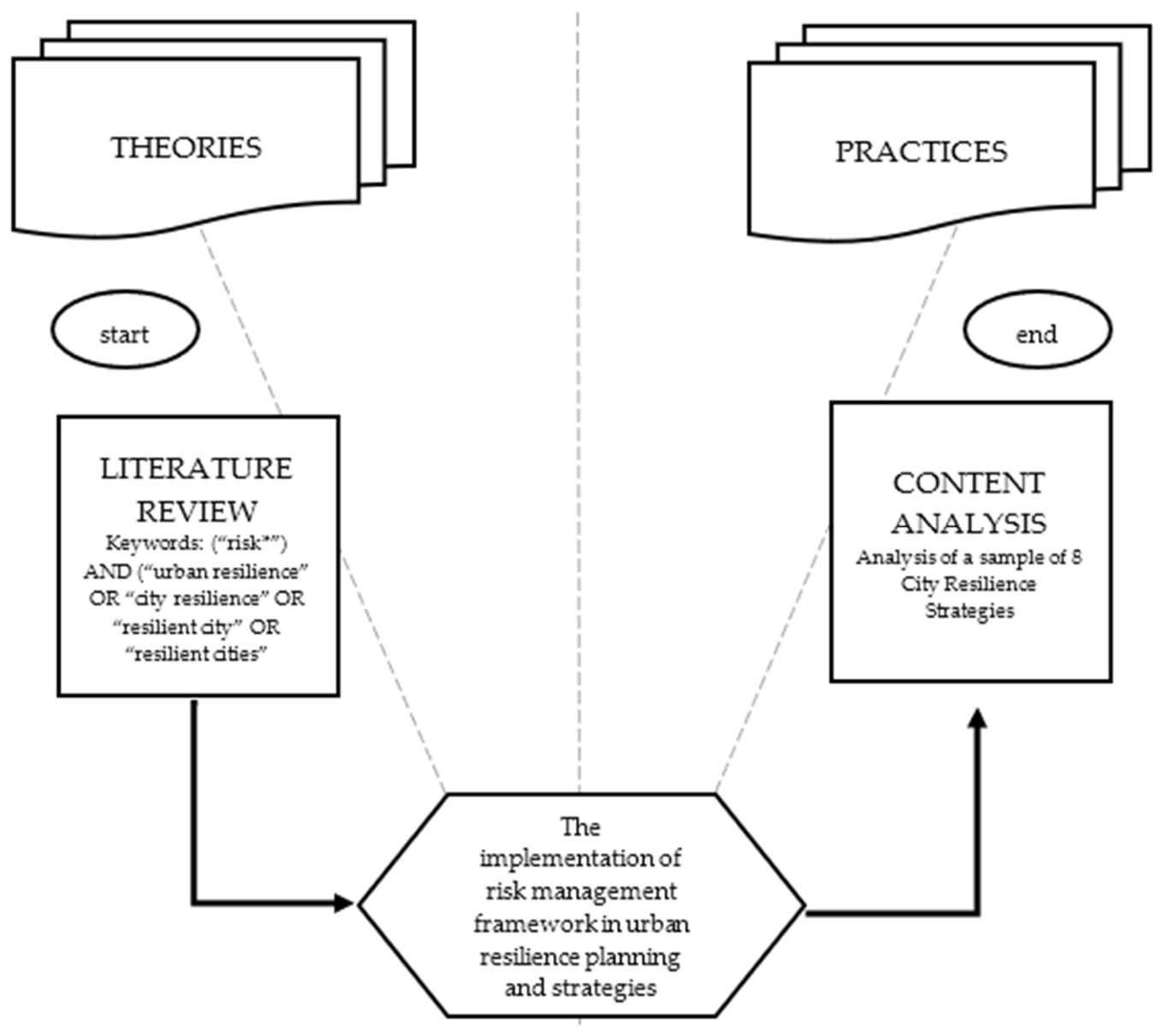
This study adopts Gowin’s V structure [30] because it offers a transparent logic to connect the ‘theories’ side of our study (risk-management concepts and the risk-management cycle) with the ‘practices’ side (data sources, coding decisions, and empirical claims). This is particularly suitable for our design, which combines a systematic literature review with a directed content analysis of eight City Resilience Strategies: The V structure makes explicit how conceptual constructs are translated into evaluation criteria and how evidence supports the resulting interpretations. Compared with presenting the SLR and the document analysis as two sequential but loosely connected workstreams, the V approach strengthens traceability, reduces ad hoc interpretation, and supports replicability of the theory-to-practice comparison. Consistent with prior applications in public administration risk assessment [54], this structured approach can also mitigate subjectivity in performance evaluation.
The lower section of the Gowin’s V structure contains our research aim (see Figure 1). Interactions between the two sides of the structure (theories and practices) merge concepts and methods to achieve our goal and answer our research questions [30,55].

3.1. Literature Review Protocol

The theoretical side provides a literature review of evidence on urban resilience among public management studies.
Given the cross-disciplinary popularity of urban resilience as a research theme and the multifaceted academic literature growing around it, in this study, we conducted a systematic literature review (SLR) to provide summary insights through theoretical synthesis into risk management and urban resilience relationships. In particular, the literature review is used to identify the key conceptual dimensions through which risk management is discussed in relation to urban resilience, which informs the criteria adopted in the empirical analysis.
The framework adopted here comprises five stages (Figure 2): (1) research question identification; (2) relevant studies identification; (3) study selection; (4) data charting; (5) results collection, summary, and reporting.
During the first step, we defined the questions to be addressed and on which the research strategy is built. This article will analyze the implementation of the risk management framework in urban resilience planning and strategy.
The second step aimed to define the search string used for retrieving the studies on the two selected electronic databases (Scopus and Web of Science). Specifically, we retrieved articles whose titles, abstracts, and keywords contain: (“risk*”) AND (“urban resilience” OR “city resilience” OR “resilient city” OR “resilient cities”).
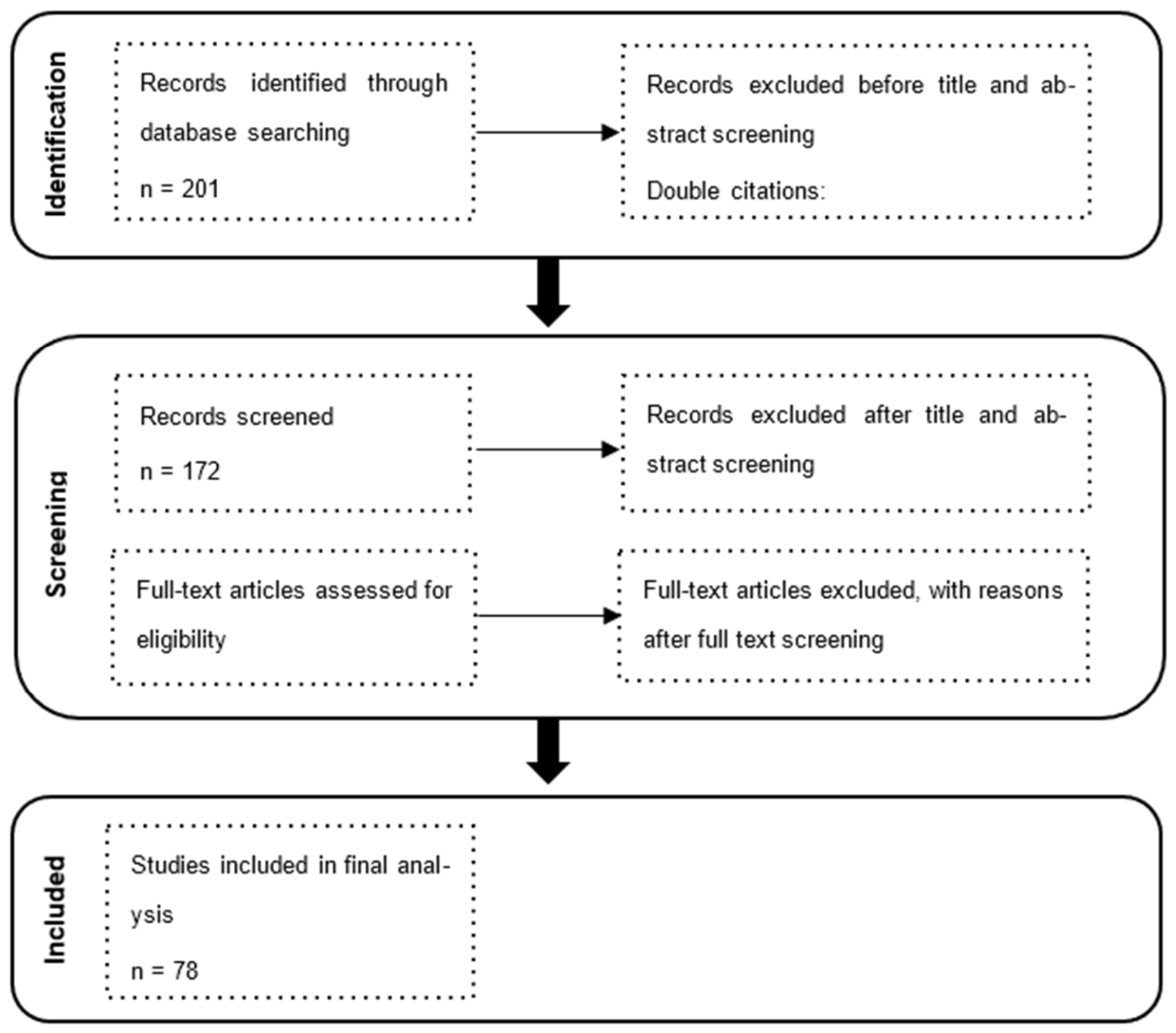
To collect the relevant studies (step 3), we applied some inclusion and exclusion criteria to select studies according to our research aim. Referring to the inclusion criteria, we included only (1) studies in the business, management, and accounting area to ensure consistency with the subject area, (2) peer-reviewed papers, and (3) English-only papers. Regarding the exclusion criteria, we excluded technical papers as they were not relevant to the purpose of our analysis. We did not apply restrictions on the time of publication for analyzing the development of the relationship between risk management and urban resilience over time. We collected a total of 201 records. Figure 3 reports the screening process from the initial sample (n = 201) to the final sample (n = 78). Appendix A lists the papers included in the final sample. The relatively high exclusion rate at the final stage mainly reflects scope misalignment in the initial retrieval: several papers discussed resilience without a city/urban-system focus, used ‘resilience’ in sector-specific or metaphorical ways unrelated to urban risk governance, or did not address risk management as a decision-support logic (e.g., phases, assessment/prioritization, monitoring/learning). A further subset was excluded because it was purely component-level technical/engineering work without an explicit link to system/community resilience, recovery objectives, or risk-informed decisions at an infrastructure/network or urban scale. Specifically, we excluded 29 duplicate records, 74 technical/component-level engineering papers (as defined above), 17 off-topic papers, two papers with missing full text, and one paper not written in English.
Moving to the fourth phase of the review (Figure 2), we organized the analytical work around an iterative interpretive process rather than a predefined coding grid. Each contribution was examined in depth to extract its core analytical focus, methodological orientation, and conceptual positioning. Instead of applying a rigid set of pre-established labels, categories progressively emerged through repeated cross-reading and comparison across studies.
During this phase, segments of text were analyzed in relation to their substantive content and assigned provisional analytical descriptors. These descriptors were continuously refined as new patterns surfaced, allowing the classification scheme to evolve inductively. This approach ensured coherence across the dataset while preserving sensitivity to heterogeneity among contributions and limiting distortions associated with strictly predetermined taxonomies.
Therefore, the final analytical framework (Table 1) reflects a structured but emergent system of classification developed directly from the literature examined:
(a)
drivers of urban resilience;
(b)
focus on risk management;
(c)
geographical location;
(d)
research method;
(e)
theoretical framework.
We selected the drivers of urban resilience (a) following the OECD—Resilient Framework, which identifies four categories of drivers to measure resilience (economy, society, environment, and governance). We then explored which ‘drivers of urban resilience’ were emphasized in the reviewed papers (a). In selecting these drivers, we relied on the OECD framework because it offers an accurate and policy-oriented articulation of resilience as a multi-dimensional phenomenon, organized around four interconnected drivers—economy, society, environment, and institutions/governance—that can be operationalized through indicators and used consistently across different empirical contexts [56]. This choice supports comparability between the literature and the city-strategy analysis by providing a common lens to classify which resilience dimensions are addressed. However, the OECD framework is not a technical risk-management framework: it does not specify which hazards to consider, how to estimate their likelihood and impacts, or how to design and implement monitoring and feedback mechanisms. Accordingly, it is used here only to code the ‘urban resilience drivers’ dimension (a). We then assessed whether—and how deeply—papers on urban resilience focused on risk management (b) by coding their engagement with the phases of the risk-management cycle (risk identification, assessment, treatment, and monitoring/learning). Finally, we mapped the geographical location of the country under study (c), the research method followed (d), the theoretical framework adopted or proposed (e), and the distribution over time.
The concluding phase of the review involved consolidating the insights generated during the analytical process and translating them into a structured representation of findings. Rather than merely aggregating coded data, this stage required synthesizing patterns across studies and clarifying how individual contributions related to the broader research objective.
The synthesis proceeded along three interrelated dimensions. First, we systematized the analytical outputs emerging from the interpretive examination of the articles. Second, we articulated the main thematic trajectories characterizing the literature, linking them explicitly to the overarching purpose of the study. Third, we evaluated the implications arising from these trajectories, identifying both consolidated areas of inquiry and unresolved tensions within the field.
This structured synthesis provides a coherent overview of the intellectual landscape while facilitating the identification of underexplored research directions.

3.2. Content Analysis

The ‘practices’ side of our V-structured research strategy (see Figure 1) conducts a content analysis of a sample of eight City Resilience Strategies.
We applied a rigorous process to select our sample, which relied on crossmatching two independent sources. First, we used the INFORM Risk Index 2023 to identify the 20 countries with the highest exposure to natural hazards. For this purpose, we considered exclusively the natural hazard dimension of the index, which aggregates exposure to earthquakes, floods, tsunamis, tropical cyclones, droughts, and epidemics. We did not use the human-induced or socio-economic components of the INFORM Index, as our aim was to focus on physical hazard exposure in line with the scope of City Resilience Strategies.
Among the identified countries, we took into consideration only countries with at least one city in the Resilient Cities Network (R-Cities) 3 that had published a Resilience Strategy by November 2022. Thus, we selected a final sample of eight countries. However, in some cases, the countries in the sample have more than one city meeting our inclusion criteria (i.e., the city is a member of the R-Cities network and has published its Resilience Strategy as of November 2022). In those cases, we selected the largest city by administrative area for each country.
The decision to examine R-Cities strategies is consistent with prior studies [57] and allowed us to conduct our analysis within a common theoretical background, assuming that the selected adopted a shared methodology for implementing their strategies.
Table 2 shows the list of City Resilience Strategies included in our final sample.
We conducted a directed content analysis to understand the extent to which each City Resilience Strategy applied risk management to develop its urban resilience. The direct content analysis uses a framework based on pre-determined criteria to evaluate the explicit content of a report [58]. In our study, this approach was beneficial for several reasons: it provided a high-level overview of the degree to which cities relied on risk management, it ensured a quantification of the results, and it facilitated the identification of patterns across the cities, allowing us to reach the study’s aim.
We started from the framework presented by Fitzgibbons and Mitchell [59] to build the approach adopted in the analysis (see Appendix C for the complete Evaluation Framework applied in this analysis). The Evaluation Framework consisted of 20 criteria (i.e., questions) that could be used to assign scores. We selected those criteria following the review of relevant literature exploring urban resilience and risk management [60,61,62,63]. Specifically, the criteria for our framework were designed to address the four main phases of risk management: (1) identification, (2) assessment, (3) management, and (4) monitoring and evaluation of risks. The 20 criteria that were used to score City Resilience Strategies reflected the degree to which the published reports explicitly incorporated risk-management concepts during the planning and development of the resilience strategy. Each of the 20 criteria could receive a full point (1), a partial point (0.5), or no points (0) depending on how thoroughly the strategy addressed the criteria (see Appendix C for more details).
Two independent raters used the framework to analyze and score the City Resilience Strategies in our sample. Table 3 shows the results. The initial overall average scores, before reconciling, were 92.5% similar between the two independent raters. To reconcile discrepancies in the scored observations, the two raters compared the results and validated the observations. Greater discrepancies in ratings (identified by a discrepancy of more than 10%) occurred in three City Resilience Strategies. Some of these discrepancies may reflect ambiguities in the strategy documents themselves, where risk-management activities are expressed in aspirational terms rather than operational procedures. In such cases, the absence of explicit methods, metrics, assigned responsibilities, or timelines can legitimately lead to different interpretations when applying the scoring rubric. Thus, the raters focused on identifying and reconciling discrepancies across the three strategies. Therefore, they re-analyzed the report and assigned a new score together. After reconciling, the new overall average scores between raters were 97.5% similar. Results are discussed in more detail in the following section.

4. Results

4.1. Literature Review Results

The use of a descriptive qualitative methodology allowed us to codify and classify papers in the categorical framework. Table 4 shows the six categories (and related subcategories) of the framework and identifies the distribution of papers. We worked in every single dimension below, starting from an overview of studies by year, source, and geographical location. Following, we analyzed the other categories of the classification. Coding rules vary across dimensions: categories B, D, and E are mutually exclusive (one primary label per paper), so subcategory totals sum to n = 78, whereas categories A and C allow multi-label coding, so their subcategory totals may exceed n = 78.

4.1.1. Distribution of Studies by Year, Source, and Geographical Location

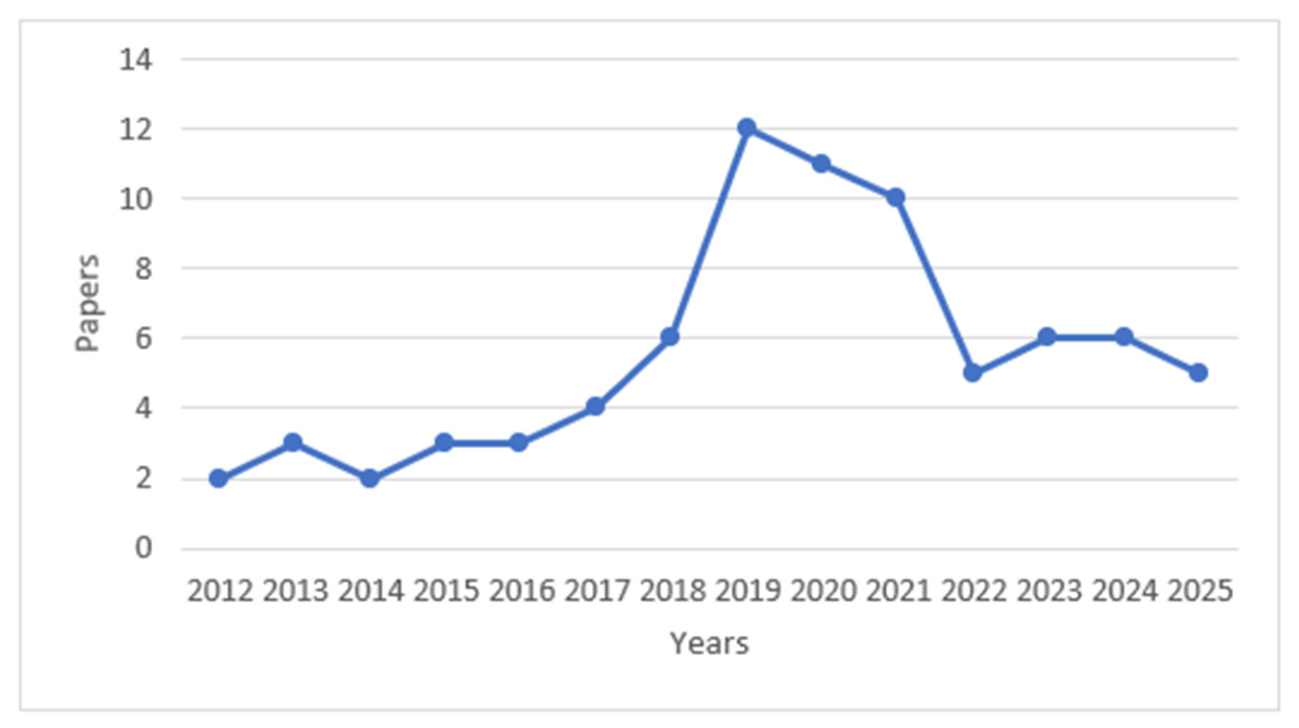
In recent years, the number of published papers on urban resilience in business, management, accounting, and urban studies has experienced high growth. Specifically, our results highlighted that scholars’ interest in urban resilience and risk started to increase in 2012. Furthermore, Figure 4 shows that 15% of the papers in the sample were published in just one year (2019). This data suggests that 2019 represented a “tipping point” for the field, driven by the release of fundamental operational tools and global reports that translated previous theoretical frameworks into measurable urban policies. Specifically, the peak coincides with the publication of the 2019 Global Assessment Report on Disaster Risk Reduction [56], which redefined “systemic risk” for urban environments, and the “Making Cities Resilient Report 2019” by the UNDRR, which provided the first global snapshot of local government progress in resilience implementation.
Although the following years did not reach the number of publications of 2019, our results indicate that the interest of public administration scholars in this theme remained quite high. The steady volume of research observed between 2021 and 2025 can be interpreted as a transition from a generalist approach toward the pursuit of targeted solutions tailored to specific territorial contexts and distinct types of crises [64]. This shift is further characterized by the emergence of operative paradigms that prioritize regenerative interventions such as nature-based solutions [65,66].
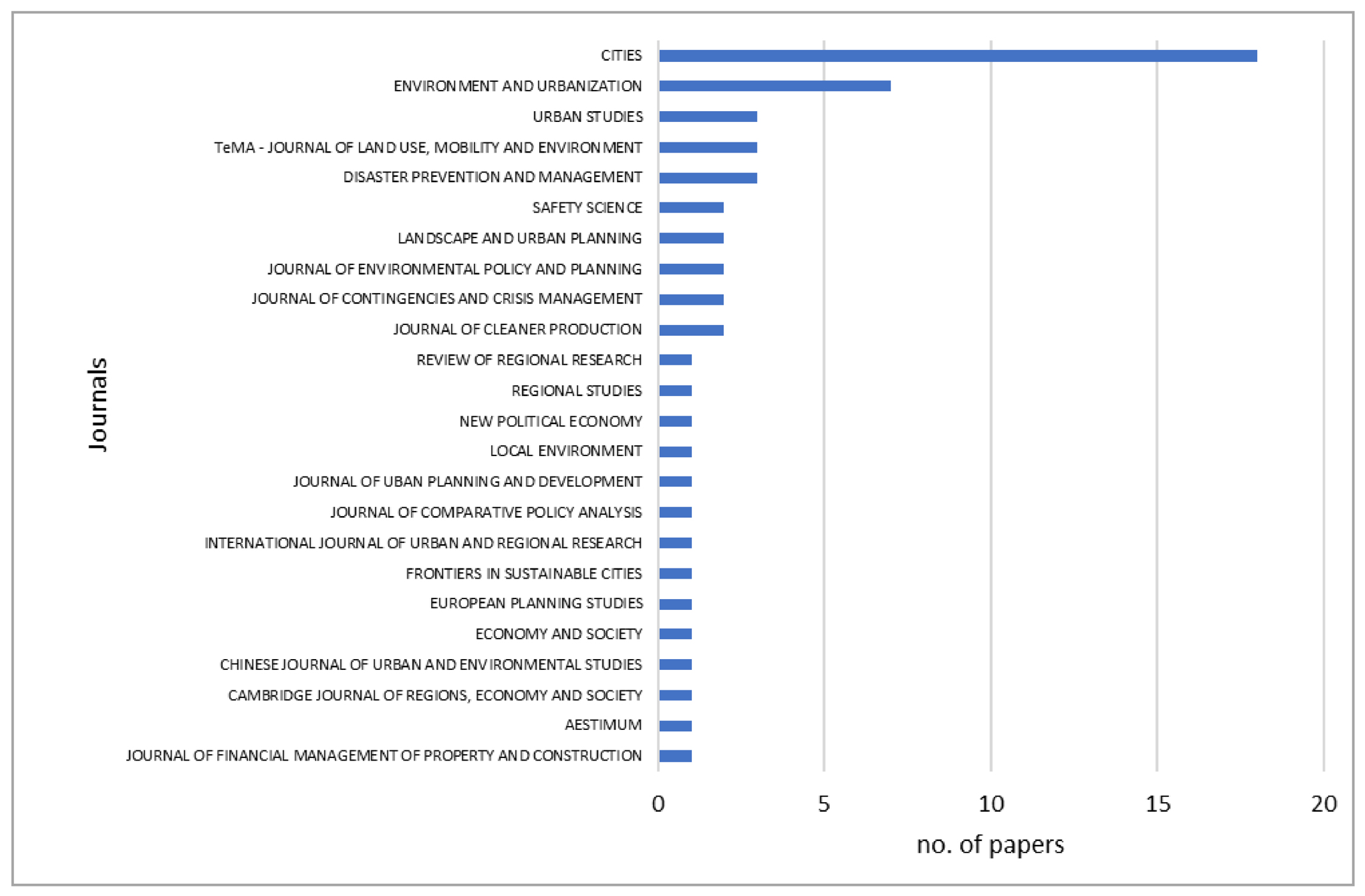
Following our protocol (see Section 3.1 of this article), our analysis was limited to journals classified in the business, management, and accounting fields of the electronic databases used to collect the sample. Furthermore, to get a clear understanding of the relationship between risk and urban resilience over time and sources, we did not apply any restrictions relating to the journal ranking. Even if our sample included 30 different sources (see Figure 5), results show that two sources published most of the papers in the sample (47% of the total), while the other 28 sources published fewer than four papers each.
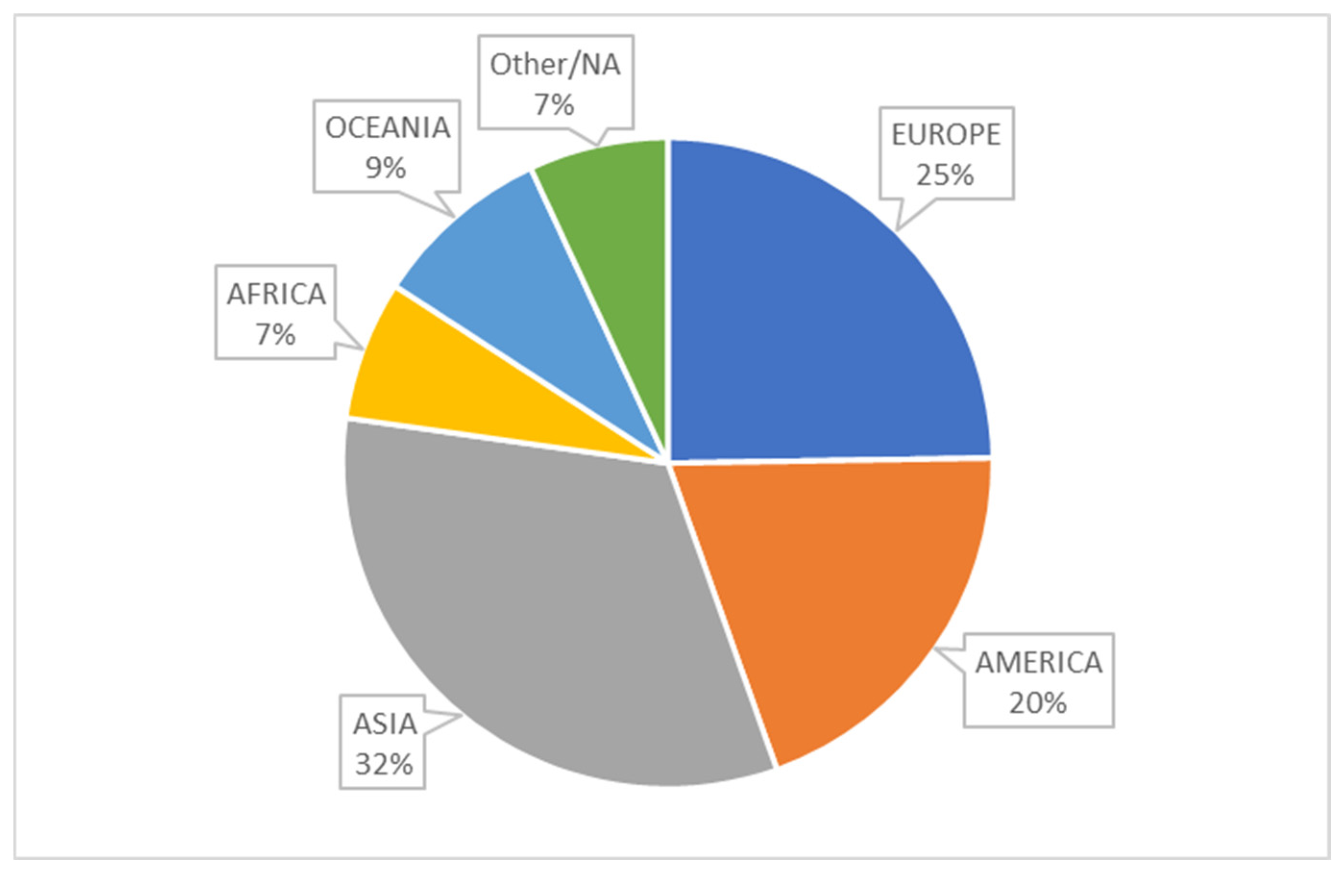
The sample is geographically diverse. Studies analyzing urban resilience and risk in Asian countries accounted for over 32% of the total, while those analyzing the European and American contexts were 25% and 20% of the total. According to our results, studies on countries of Oceania and Africa corresponded to 9% and 7% of the sample, respectively (Figure 6). However, the degree to which geographic clustering is expected may depend on the availability of data, countries’ vulnerability, and, above all, local concern for urban resilience issues.

4.1.2. Distribution of Studies by Category

According to the OECD Framework for Resilient Cities, cities are considered resilient if they can absorb, recover from, and prepare for future shocks. The framework identifies four drivers of resilience to clarify how resilience manifests in an urban context and to highlight the policy mechanisms that may support it. We use the OECD framework to map the studies included in our sample.
Our findings show that studies on urban resilience primarily focus on environmental issues (A3) to investigate cities’ ability to manage risk. In total, 72 studies consider environmental dimensions. The principal theme of this body of work is climate change and the need for effective urban planning [51,64,65,67]. For example, Anguelovski et al. [51] argued that cities must both adapt to and mitigate climate change and suggested that green infrastructure planning is often used to contain urban expansion and reintroduce nature into urban environments. Their study provides valuable knowledge to planners and decision-makers by defining urban design parameters that enhance cities’ resilience to climate-related impacts. Building on this perspective, the recent literature reflects a further evolution toward more specialized and operational strategies. Viljanen et al. [65] extended the debate on green infrastructures by focusing on Nature-based Solutions (NbS), interpreted not merely as aesthetic additions but as “transition pathways” essential for systemic urban transformation. Their work emphasizes that for NbS to be effective, they must be integrated into long-term circular economy frameworks, moving beyond the emergency-driven logic of the past. Among studies addressing climate change, many focus specifically on flood risk [67,68] or heat risk [52]. Birkmann et al. [52], for instance, examined the German cities of Bonn and Ludwigsburg, which face population growth pressures alongside high exposure to heat stress due to urbanization and climate change. Their analysis explored how vulnerability scenarios can be operationalized through specific indicators and how these indicators can inform urban planning decisions. In this context, Srirangam and Sheng [68] expanded the discussion on flood risk by proposing a comprehensive strategy that integrates environmental, social, and governance (ESG) domains. Unlike traditional approaches that rely solely on structural engineering, their study emphasizes the importance of combining technological disaster risk reduction with the ‘inherited knowledge’ of local communities.
With reference to the A2 category, 23% of the studies address social issues. The main themes include social inequality, health, and safety [69,70,71,72,73]. Fitzgibbons and Mitchell [69], for example, conducted a case study of Toronto (Canada) to examine whether and how principles of justice have been incorporated into the city’s resilience planning while De Andrade De Andrade Silva et al. [72] showed that Salvador’s resilience strategy explicitly confronts long-standing urban inequalities and social vulnerabilities, arguing that effective resilience must integrate disaster-risk prevention with broader social and environmental priorities. They also stressed that resilience and climate agendas should be pursued jointly through adaptation/mitigation actions and multi-stakeholder engagement, framing “inclusive resilience” as an ongoing learning process.
Only a limited number of studies (7% of the total) analyzed governance drivers (A4) as indicators of cities’ vulnerability to natural or human-made hazards. Bixler et al. [73], for instance, focused on network governance as a strategy for resilience planning and implementation, arguing that collaborative governance and network management are essential for mobilizing diverse forms of knowledge, navigating planning politics, and fostering learning processes that support transformative resilience pathways.
Economic drivers (A1) receive very limited attention, with only two studies explicitly addressing them. Brugmann [74] highlighted the need to mobilize substantial capital for adaptation and urban risk reduction, while Allen et al. [50] investigated the role of fragmented investments in risk mitigation. Their analysis of Lima (Peru) shows that the accumulation of fragmented investments ultimately eroded the city’s resilience.
Finally, several authors considered more than one resilience driver in their analysis. This applies to 27 papers in our sample [61,75,76,77,78].
The second category of our analysis groups studies according to their focus on risk management. Our results indicate that only 14% of papers propose frameworks or systems or provide explicit recommendations to leverage the relationship between risk management and urban resilience. Tang and Lai [78], for example, analyzed Shenzhen (China) and developed a framework for identifying, measuring, and analyzing public security risks and their interactions from a systems thinking perspective. While grounded in traditional risk management processes, their framework extends the conventional paradigm by emphasizing the integration of diversified risk mitigation strategies within a comprehensive risk management plan aimed at enhancing urban disaster resilience. Huck et al. [53] examined the metropolitan area of Greater Christchurch (New Zealand), which was affected by a sequence of earthquakes with severe and long-lasting impacts on social, built, economic, and natural environments. They showed that institutional reforms in risk management improved preparedness for future events, while also noting that awareness of the usefulness of management tools for resilience planning is still developing among city council members. Similarly, Zaidi and Pelling [79], in their study of extreme heat events in London, identified limitations in the city’s resilience approach, arguing that prevailing conceptual and policy frameworks emphasize post-disaster recovery and the maintenance of the status quo. They contended that cities should instead adopt a more proactive vision of resilience, embedding risk management principles into everyday urban development processes. More recently, Zhang et al. [80], in line with the idea of a more proactive approach, proposed a quantitative framework to assess heat risk from an urban resilience perspective. Specifically, focusing on Shenzhen (China), they developed an adaptation–resistance–response assessment system that allows for capturing spatial heterogeneity in heat risk and identifying disparities between urban and rural areas. Their approach moves beyond traditional vulnerability-based assessments by linking risk governance, spatial planning, and resilience capacities with the aim of providing concrete guidance for urban planning and resilience-oriented decision-making.
We then examined the methodological approaches adopted in literature. Most studies rely on case studies, fieldwork, or interviews (71%), while content or historical analyses (10%), surveys or other empirical methods (9%), and conceptual approaches (10%) are comparatively less common.
Finally, we analyzed the theoretical frameworks employed. As shown in Table 2, studies most often rely on existing models (55%), while a substantial share proposes new models (44%). Only one paper falls into the residual “other” category.
Appendix B provides the full list of references for all eligible papers by category.

4.2. Results of the Content Analysis of Resilience Strategies

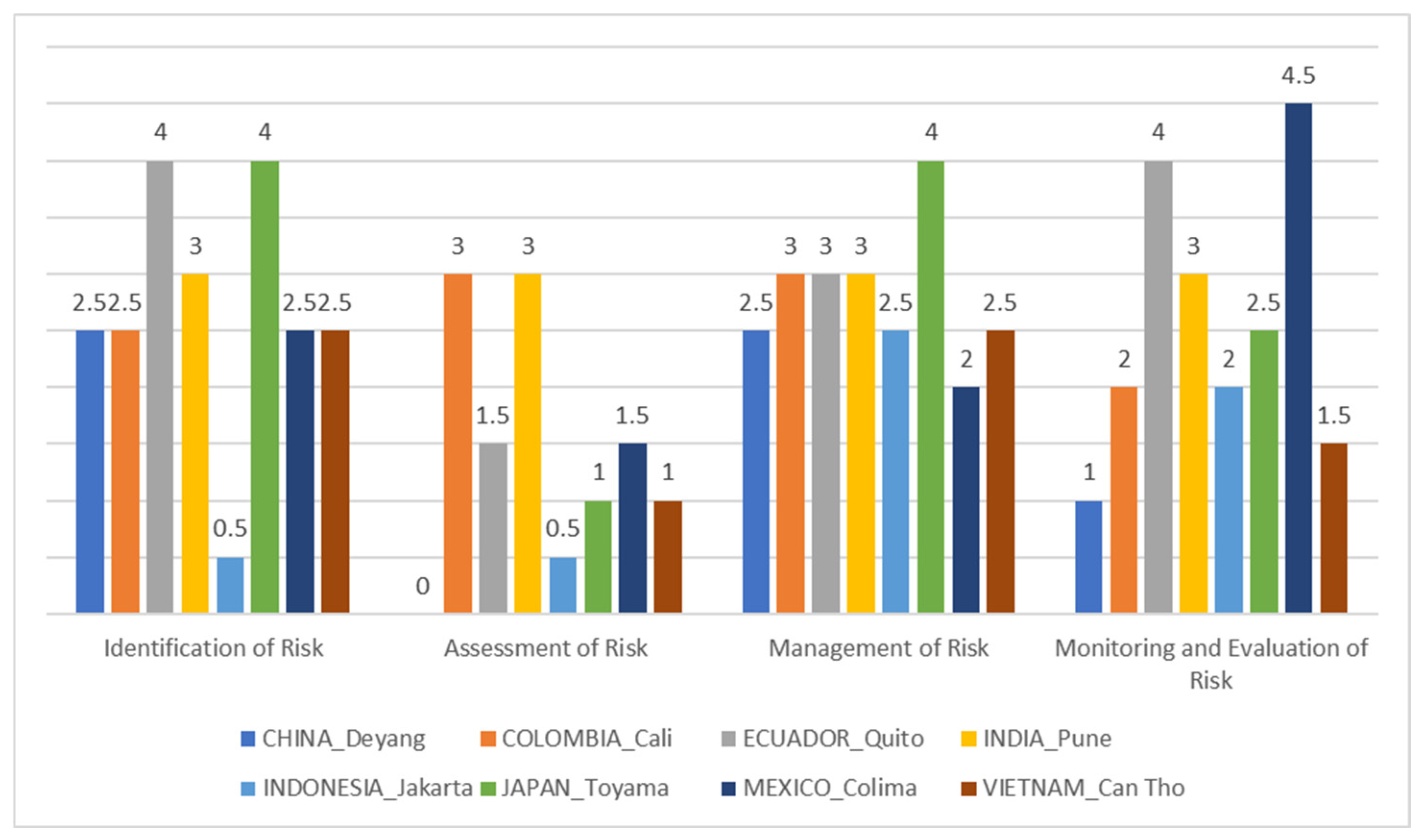
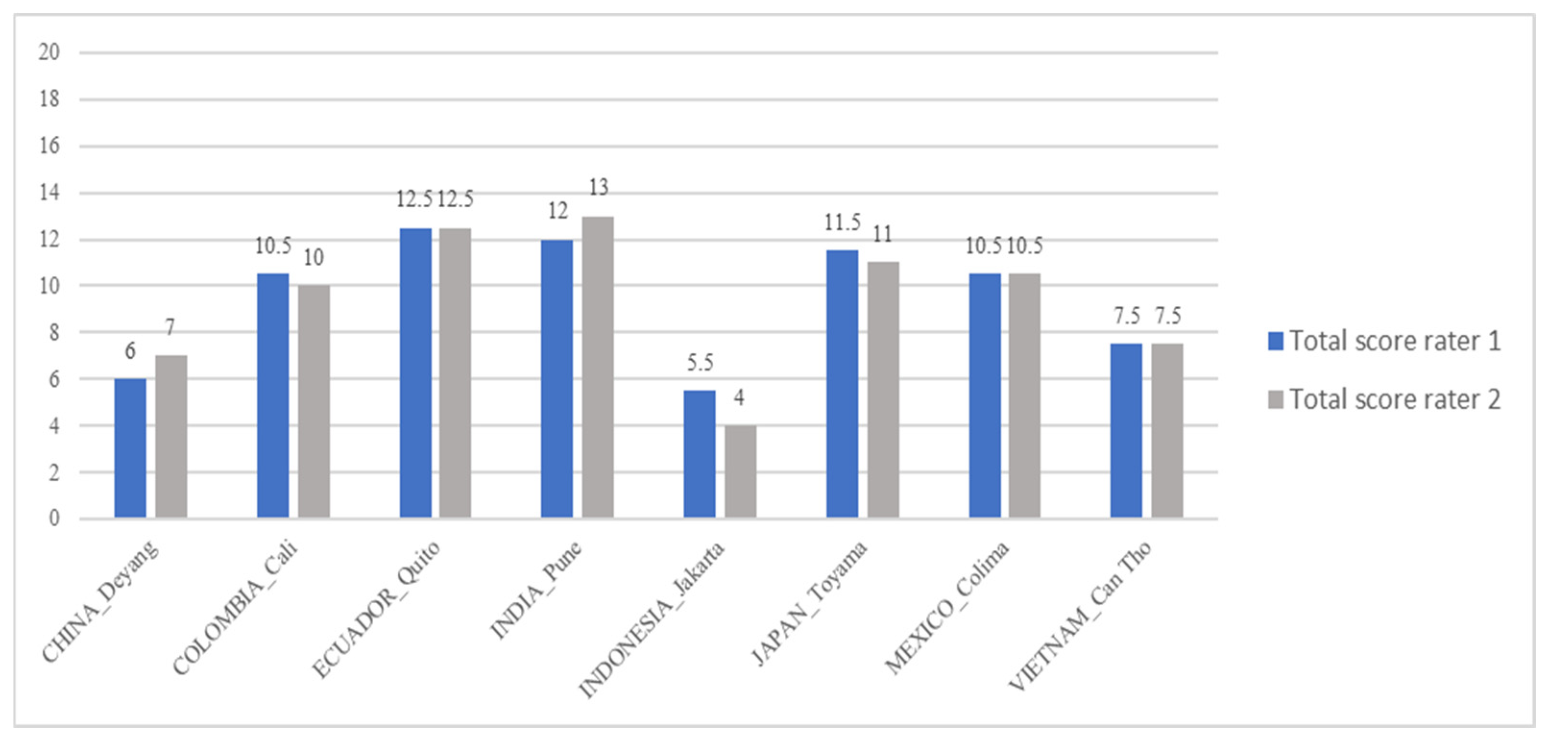
Analysis of the City Resilience Strategies through the application of our evaluation framework allowed us to obtain a total score for each city. After the data reconciliation process (see Section 3.2 for more details), we compared the total scores that two raters assigned (Figure 7) with a value scale (Figure 8) we developed following the literature [59,81]. The value scale indicates the degree to which a strategy is considered and incorporated into the principles of risk management within its narrative.
Overall, analysis of the total scores suggested that none of the reports in our sample deeply focused their narrative on principles of risk management. Figure 7 shows that strategies that obtained a high score (16–20 points) were absent, strategies placed in the medium-high score (11–15.5 points) accounted for 37.5% of the sample, while 50% of the sample scored in the low-medium value range (6–10.5 points). Notably, only in one case (Jakarta) did the resilience strategy obtain a low score (0–5.5 points).
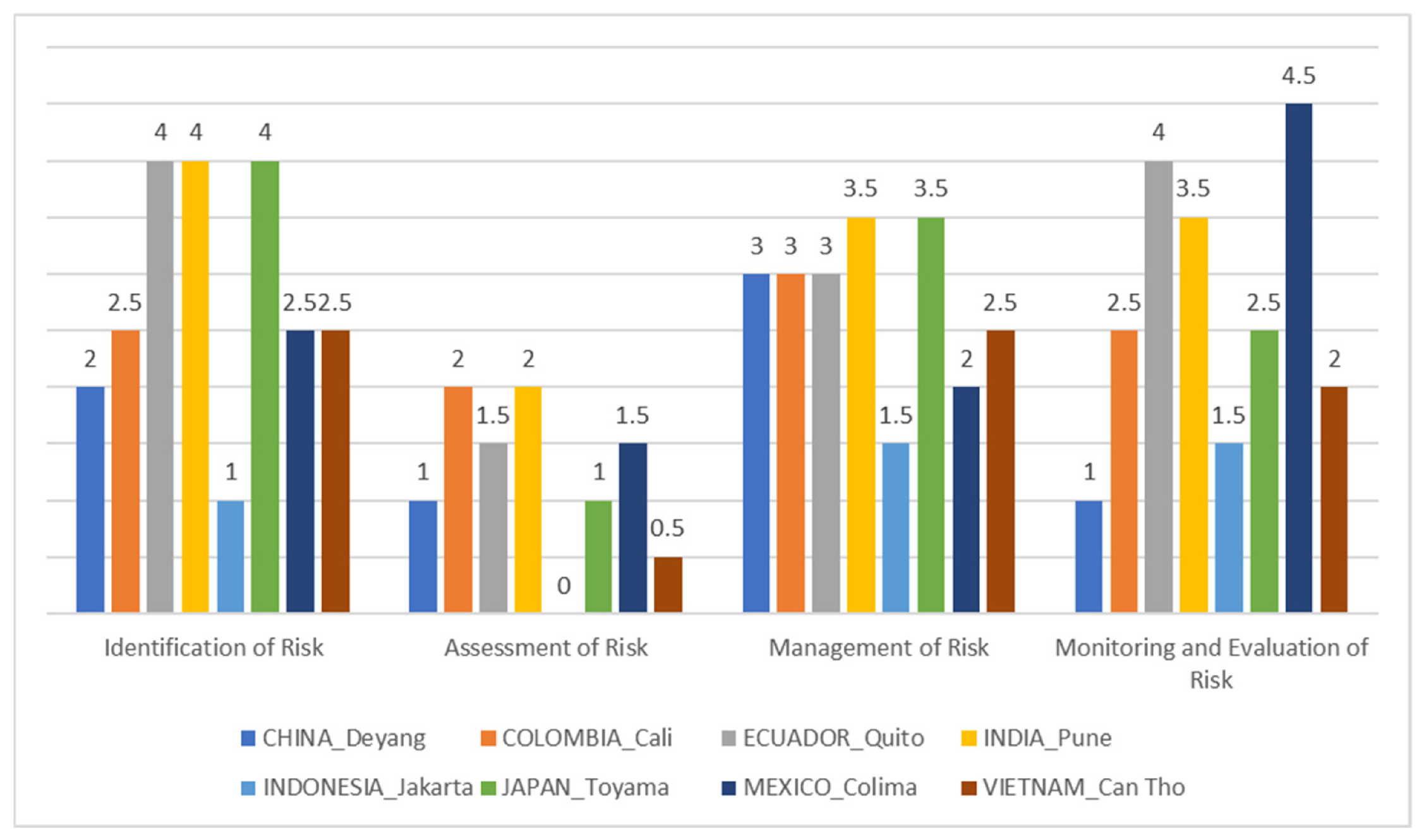
Figure 9 and Figure 10 show the scores of the two raters assigned to each city. We discuss findings regarding all four phases of our framework hereunder.

4.2.1. Identification of Risk

Risk identification is the process of recognizing and documenting existing and emerging organizational risks, as well as the conditions under which they arise. Through risk identification, an organization can examine the activities and contexts in which its resources are exposed [82]. This phase provides the foundation for subsequent steps and supports the overall effectiveness of the risk management process.
Based on the raters’ scores, all cities in our sample completed the identification phase by developing a risk map and providing an in-depth discussion of vulnerability for each identified risk. Accordingly, all cities received full scores on the first two criteria of our framework, except for Jakarta, which received 0.5 out of two from the first rater and one out of two from the second rater. Overall, cities treated risk mapping and vulnerability analysis as two fundamental components of resilience strategy development.
By contrast, the remaining three criteria in the identification phase (see Appendix C for details) received lower scores overall, suggesting more limited awareness among city officials of the potential benefits of (i) systematically analyzing factors that may exacerbate vulnerability; (ii) identifying and addressing root causes of vulnerability; and (iii) disclosing and assessing emerging risks.
Regarding the analysis of factors that could exacerbate the vulnerability of the urban system, the combined scores assigned by the two raters indicate that five out of eight cities discuss such factors. However, in four cases, the raters did not assign full scores, suggesting that these cities merely acknowledged the need to analyze vulnerability-amplifying factors without providing an operational assessment. Only one city fully meets this criterion. Quito (Ecuador) explicitly acknowledges that uncontrolled urban expansion is undermining the city’s capacity to function effectively and heightening its exposure to natural hazards, including seismic events, landslides, and wildfires (Quito Resilience Strategy, p. 20).
Turning to the identification and treatment of the root causes of a city’s vulnerability, our results show that six out of eight cities mention this aspect; however, in practice, they do not carry out a comprehensive analysis and do not adequately plan actions to address these root causes. One of the most developed strategies in this regard is Pune (India), which proposes actions aimed at reducing the susceptibility of local communities to climate-related and disaster-induced threats in the urban environment (Pune Resilience Strategy, p. 82).
Finally, the disclosure of emerging risks is the lowest-rated criterion within the risk-identification phase. Based on our results, only four out of eight cities mention potential emerging risks, and only superficially. Quito (Ecuador) is the only city that introduces a specific pillar addressing emerging risks and outlines actions intended to prevent the creation of new risks, although these actions are only partially specified (Quito Resilience Strategy, p. 98).

4.2.2. Assessment of Risk

The second phase of the risk management framework examined in our study is risk assessment. Risk assessment follows risk identification and provides the basis for deciding which actions to undertake to eliminate, reduce, or otherwise manage the risk under consideration. In other words, risk assessment is a key step that precedes the risk management phase [83]. Overall, our findings show that almost all cities in our sample did not conduct risk assessments in a thorough and systematic manner.
Based on our scoring, the total scores achieved in this second phase were largely driven by whether the resilience strategies described an explicit risk-assessment process (the first criterion of the risk-assessment phase). Specifically, five out of eight cities received full scores on this criterion, indicating that their strategy documents described the process used to assess risks identified in the preceding phase.
For example, Cali (Colombia) placed particular emphasis on the assessment phase, explaining that it involved a broad participatory effort. The process engaged more than four hundred stakeholders through interviews, focus groups, and consultations with a wide range of actors—including public safety agencies, academic representatives, journalists, vulnerable groups, business and community leaders, and municipal officials. Furthermore, the city incorporated findings from two large-scale resident surveys, which provided insights into residents’ perceptions of key dimensions of urban resilience, such as mobility, health, and economic conditions (Cali Resilience Strategy, p. 51). With respect to the second criterion, cities that described their risk-assessment process often listed multiple methods to be used either individually or in combination. Pune (India), for instance, reported that its assessment relied on citizen surveys, expert surveys, expert interviews, working groups, and steering committees (Pune Resilience Strategy, p. 41).
With respect to the third criterion, our results show that only three out of eight cities reported the relevance, priorities, and acceptance levels of risks: Cali (Colombia), Pune (India), and Toyama (Japan). Regarding impact assessment (fourth criterion), although the strategies generally lacked quantitative data and explicit methodologies, most nonetheless noted the potentially severe impacts that each identified risk could have on urban systems.
Finally, none of the eight cities met the last criterion of risk assessment: none of the resilience strategies reported the likelihood (i.e., probability) of risk occurrence. This pattern suggests that strategies tend to focus on risks perceived as more immediate or salient, while devoting less attention to low-probability risks.

4.2.3. Management of Risk

Management of the risk phase is closely related to policies and policy analysis. In the literature, policy is defined as a principle or plan to guide decisions and achieve desirable outcomes, and the term applies to international organizations, governments, private sector organizations and groups, as well as individuals [40].
The results show that management of risk is the second highest-rated phase by summing the scores of all cities in the sample (it obtained a total score of 22 points, only 0.5 points lower than ‘risk identification’, the highest-rated phase).
Discussing the five criteria of this phase, all cities in the sample seemed to include a proactive approach to managing risk. In other words, the cities included plans or actions in their resilience strategy aimed to address uncertainty before it turned into an issue or problem. Notably, almost all resilience strategies were well structured, including a clear list of planned actions organized by the issues they addressed. Furthermore, all the analyzed reports had a long-term time frame, indicating that the cities disclosed and planned actions to gain and preserve urban resilience in the present and the future. For example, Colima’s (Mexico) strategy covers a period of 40 years, from 2010 to 2050. As for the plan of action, Colima identified three estimated times for completion: the short term (less than 4 years), the medium term (5 to 8 years), and the long term (9 to 12 years), suggesting a long-term orientation toward environmental, social, and economic benefits.
The last two criteria are related to one another. They refer to the identification of alternative plans of action and their outcomes. According to our results, just two cities (Cali and Quito) provided a description of an alternative plan of action. Cali (Colombia) showed great awareness of the importance of being flexible. As reported in the Cali Resilience Strategy, flexibility is one of the most important resilience qualities that the city aimed to achieve with its strategic planning. Indeed, flexibility allows cities to adopt alternative strategies in response to changing circumstances or crises (Cali Resilience Strategy p. 40). However, while few cities identified alternative plans of action, none considered their potential outcomes and their consequences or assessed the costs and benefits of preferring one action to another. This finding suggested a general lack of planning flexibility and adaptability to potential changes in the current context.

4.2.4. Monitoring and Evaluation of Risk

Monitoring and evaluation of risks are crucial activities for effectively taking advantage of the benefits derived from risk management theory.
Cities in our sample seemed to be aware of the relevance of the monitoring and evaluation phase of risk management. In some cases (e.g., Colima), this is the phase where they reached the highest score.
However, the results suggested that resilience strategies in our sample generally did not describe a framework for evaluating the success of their actions. Raters assigned 0.5 points to 4 cities out of 8, and only Pune (India) received a full score from the first rater, as its Resilience Strategy outlined the success indicators for each planned action.
Similarly, our results suggested that cities did not focus on collaboratively designing a monitoring and evaluation protocol as a mechanism for stakeholders and community engagement. For example, Colima (Mexico) appears to be the only city meeting the second criterion of this final phase. In its resilience strategy, the city of Colima created an initiative that aimed to create monitoring and communications for risks associated with multiple threats faced by Colima’s population—threats that motivated the city’s resilience plan (Colima Resilience Strategy, p. 85). Although cities seemed to underestimate the benefits of developing protocols to monitor and evaluate their actions, almost all cities (except for Deyang, China) were aware of the value of public engagement for monitoring and evaluation. For example, the city of Pune highlights that engaging residents is a fundamental component of building urban resilience. Its strategy stresses the need to promote citizen participation and to develop communication and educational initiatives that can support the implementation of planned measures, and this contributes to the city’s goal of fostering resilient development sustained by an active and informed community (Pune Resilience Strategy, p. i). Following analysis of the criteria, results showed that cities tried to enhance public engagement also through open data platforms (5 cities out of 8). For example, the city of Pune created and promoted a platform for citizen participation to achieve this scope. The city of Quito (Ecuador) plans to create a digital platform to facilitate citizen participation by improving access to information, ensuring free expression, building social capital, facilitating the automation of citizen participation processes, and involving young people in public decision-making (Quito Resilience Strategy, p. 49).
Finally, five out of eight cities published their Resilience Strategy in the predominant local language (or, in some cases, a minority language). In doing so, cities made the report also available to residents interested in their city’s resilience strategy.

5. Discussion and Conclusions

Our study combines theory with practical applications to highlight the relationship between risk management and urban resilience. Overall, while scholars and experts seem to be aware of the benefits of considering the risk management framework while dealing with urban resilience issues. Our results show that the analysis and development of resilience strategies and plans only partially referred to or considered them.
Our findings shed light on some gaps in literature that could inspire future studies. First, combining information from the literature review and content analysis, our study highlights the need to develop guidance or a framework for properly adapting the risk management theory to the critical issues faced by public-sector organizations (e.g., natural disasters, climate change, environmental hazards). Our results show that there is little guidance informing public entities of possible choices available to them regarding the effective implementation of risk management in their urban resilience strategies. The study’s findings confirm prior study evidence [37,84], assuming that further academic research on this topic would be useful in tailoring risk management frameworks and procedures to support organizational resilience. Indeed, as risk management in the public sector seems to be a more challenging process than risk management in the private sector due to the high level of regulation, bureaucracy, and the wide range of involved stakeholders, future studies could suggest clear actions to overcome these complexities and effectively adapt risk management theory to local governments.
Second, through analysis of a sample of City Resilience Strategies, we noted that the use of digital technologies and big data in handling resilience issues is not widespread enough. For example, new technologies can process a large volume of data, which turns into a greater amount of information that is more quickly available to local government while deciding resilience practices, as big data provides a real-time picture of the urban system. This type of real-time information may help local governments in better understanding the changing nature of city life and making decisions on resource allocation in line with evolving scenarios [85]. Furthermore, previous studies on the adoption of emerging technologies for risk management in private companies [86] suggest that artificial intelligence, big data, and blockchain technology are suitable options to improve data-centric mechanisms to identify, analyze, and develop responses to risk and vulnerabilities. Research on the adoption of emerging technologies in risk management may be at an early stage, but recent evidence suggests that more innovative companies adopting these emerging technologies could obtain benefits that enhance resilience [86]. Future studies could investigate this topic also in relation to the public sector.
Third, analysis of City Resilience Strategies raises concerns about cooperation and collaboration between government agencies, non-governmental organizations, private businesses, and citizens to build an effective urban resilience strategy, even though prior research suggests that collaboration is a necessary foundation for dealing with both hazards and disasters [87]. Indeed, attempts to pursue urban resilience often led to trade-offs where improved resilience for some systems, scales, and periods may result in decreased resilience for others [88]. This assumption highlights important questions about whether this is a zero-sum game or whether there are ways to make Pareto improvements in resilience for multiple systems, scales, and periods [89]. Future research could analyze this topic in depth and propose answers to these questions.
Fourth, while our results showed that most cities in the sample have developed digital platforms as stakeholder engagement tools, they did not explicitly disclose information on stakeholder identification activity. Prior studies analyzing stakeholders’ engagement in public decision-making processes [90,91] suggest that, while involving stakeholders can be a challenging and difficult task, especially from a risk management perspective [92], it can be a rewarding experience, which enhances the decision-making process and the value of what is produced or implemented. However, the term ‘stakeholders’ covers a wide range of people and organizations that have an interest in a particular project. In this mixed scenario, the identification of stakeholders becomes a fundamental activity that must be carried out to properly plan an effective stakeholder engagement process and select the most effective technique of engagement to implement. Stakeholder identification is crucial to the success of the whole process, as the use of inappropriate techniques gives poor results and, in some circumstances, can create unnecessary barriers to a project. Often, the identification of stakeholders suggests adopting more than one engagement tool to reach each group of stakeholders. According to our results, cities do not properly conduct the identification of stakeholders while deciding on resilience strategies. Additional research can investigate this topic in relation to urban resilience. Further evidence can clarify the benefits related to the identification of stakeholders and analyze the way to effectively conduct this task. Table 5 summarizes the identified gaps and related call for future research.
Urban resilience and risk governance are inherently multi-scalar. While our unit of analysis is the city strategy document, resilience planning is shaped by national regulatory frameworks, intergovernmental arrangements, funding and data infrastructures, and broader environmental dynamics such as climate change and cascading risks [92]. These cross-scale conditions may constrain what cities can credibly assess, prioritize, and monitor, partly explaining why assessment and monitoring/evaluation are less explicit than risk identification and broad action planning in several strategies.
This study contributes to both literature and practice. By mapping and analyzing prior evidence on urban resilience and risk in the business, management, accounting, and urban fields, this analysis offers a concise overview of the state of the art, highlighting that there is still a need for increased awareness regarding risk management in the public sector worldwide.
Furthermore, the outcomes of this research suggest criteria for identifying the weaknesses of resilience planning for city officials, policymakers, and community leaders. Indeed, public administration could use the proposed framework as a simple and comprehensive checklist supporting the implementation of risk management into resilience strategies to ensure that each stage of the risk management cycle is made explicit rather than being addressed unevenly. Practitioners can apply the proposed criteria as a checklist across three concrete decision domains: (i) risk prioritization and resource allocation (moving from broad risk identification to explicit ranking, likelihood/impact reasoning); (ii) governance and implementation design (clarifying responsibilities, interdepartmental coordination routines, and linking actions to budgets and delivery timelines); and (iii) monitoring, evaluation, and learning (defining measurable indicators, review cycles, and feedback loops to update assumptions and plans).
In this respect, recent resilience-planning toolkits provide actionable templates and a shared language that can help translate ‘high-level’ resilience ambitions into a structured set of goals, priorities, and measurable outputs—for example, the updated City Resilience Framework [9] and related implementation guidance for strategy development and investment planning [9,93].
This research also has limits. Referring to the literature review process, we limited our analysis to two electronic databases (Scopus and Web of Science); thus, our results may have excluded part of the existing knowledge on urban resilience and risk. In addition, the literature review adopts a primarily descriptive and classificatory approach, aimed at mapping key dimensions of the literature and ensuring comparability with the empirical analysis. While this approach is consistent with the objective of this study, it does not provide an in-depth theory-driven synthesis of existing studies. Future research could extend this analysis by focusing more explicitly on the theoretical foundations of the relationship between risk management and urban resilience and using a larger number of sources.
Moreover, our content analysis data refer to eight City Resilience Strategies. Before generalizing our results, future studies could apply the proposed framework to all resilience strategies included in the Resilient Cities Network.
Furthermore, our research strategy led us to select and analyze only countries from South America and Asia. We did not analyze the resilience strategies of countries from Europe, North America, Oceania, and Africa. Notably, the environmental, social, economic, and legislative characteristics of each country are different; thus, our results cannot be generalized worldwide. Future research could conduct a similar analysis comparing cities with different characteristics from different continents.
Finally, the analysis does not account for political influence, which may hinder proactive and long-term resilience investments. Future research should examine this dimension to deepen our understanding of the determinants of resilience in public administration.

Author Contributions

Conceptualization, D.V., D.T., C.V. and V.Z.; methodology, D.V., D.T., C.V. and V.Z.; software, D.V. and D.T.; validation, D.V., D.T., C.V. and V.Z.; formal analysis, D.V. and D.T.; investigation, D.V., D.T., C.V. and V.Z.; resources, D.V., D.T., C.V. and V.Z.; data curation, D.V., D.T., C.V. and V.Z.; writing—original draft preparation, D.V., D.T., C.V. and V.Z.; writing—review and editing, D.V., D.T., C.V. and V.Z.; visualization, D.V., D.T., C.V. and V.Z.; supervision, C.V. and V.Z.; project administration, V.Z.; funding acquisition, V.Z. All authors have read and agreed to the published version of the manuscript.

Funding

This research received no external funding.

Data Availability Statement

The original contributions presented in this study are included in the article. Further inquiries can be directed to the corresponding author.

Conflicts of Interest

The authors declare no conflicts of interest.

Abbreviations

SLRSystematic Literature Review
PRISMAPreferred Reporting Items for Systematic Reviews and Meta-Analyses
OECDOrganization for Economic Co-operation and Development
IPCCIntergovernmental Panel on Climate Change
UNEPUnited Nations Environment Programme
UNDRRUnited Nations Office for Disaster Risk Reduction
UNDPUnited Nations Development Programme
INFORMINFORM Risk Index (Index for Risk Management)
MCR2030Making Cities Resilient 2030
R-CitiesResilient Cities Network
ESGEnvironmental, Social, and Governance
UN-HabitatUnited Nations Human Settlements Programme

Appendix A. List of Studies Analyzed in the Systematic Literature Review

Ahern, J., Cilliers, S., & Niemelä, J. (2014). The concept of ecosystem services in adaptive urban planning and design: A framework for supporting innovation. Landscape and Urban Planning, 125, 254–259. https://doi.org/10.1016/j.landurbplan.2014.01.020
Allen, A., Zilbert Soto, L., Wesely, J., Belkow, T., Ferro, V., Lambert, R., Langdown, I., & Samanamú, A. (2017). From state agencies to ordinary citizens: Reframing risk-mitigation investments and their impact to disrupt urban risk traps in Lima, Peru. Environment and Urbanization, 29(2), 477–502. https://doi.org/10.1177/0956247817706061
Anguelovski, I., Irazábal-Zurita, C., & Connolly, J. J. T. (2019). Grabbed Urban Landscapes: Socio-spatial Tensions in Green Infrastructure Planning in Medellín. International Journal of Urban and Regional Research, 43(1), 133–156. https://doi.org/10.1111/1468-2427.12725
Anelli, D., Tajani, F., & Ranieri, R. (2022). Urban resilience against natural disasters: Mapping the risk with an innovative indicators-based assessment approach. Journal of Cleaner Production, 371, 133496. https://doi.org/10.1016/j.jclepro.2022.133496
Baba, K., Amanuma, E., & Iwami, A. (2021). Perception and Attitude Changes of Stakeholders for Resilient City Policy by Online Deliberation. Frontiers in Sustainable Cities, 3. https://www.frontiersin.org/articles/10.3389/frsc.2021.763758
Bănică, A., Kourtit, K., & Nijkamp, P. (2020). Natural disasters as a development opportunity: A spatial economic resilience interpretation. Review of Regional Research, 40(2), 223–249. https://doi.org/10.1007/s10037-020-00141-8
Barbarossa, L., Pappalardo, V., & Greca, P. L. (2021). Water-related risk reduction in urban development plans. TeMA—Journal of Land Use, Mobility and Environment, 7–23. https://doi.org/10.6093/1970-9870/7680
Birkmann, J., Sauter, H., Jamshed, A., Sorg, L., Fleischhauer, M., Sandholz, S., Wannewitz, M., Greiving, S., Bueter, B., Schneider, M., & Garschagen, M. (2020). Strengthening risk-informed decision-making: Scenarios for human vulnerability and exposure to extreme events. Disaster Prevention and Management: An International Journal, 29(5), 663–679. https://doi.org/10.1108/DPM-05-2020-0147
Bixler, R. P., Lieberknecht, K., Atshan, S., Zutz, C. P., Richter, S. M., & Belaire, J. A. (2020). Reframing urban governance for resilience implementation: The role of network closure and other insights from a network approach. Cities, 103, 102726. https://doi.org/10.1016/j.cities.2020.102726
Brugmann, J. (2012). Financing the resilient city. Environment and Urbanization, 24(1), 215–232. https://doi.org/10.1177/0956247812437130
Champlin, C., Sirenko, M., & Comes, T. (2023). Measuring social resilience in cities: An exploratory spatio-temporal analysis of activity routines in urban spaces during Covid-19. Cities, 135, 104220. https://doi.org/10.1016/j.cities.2023.104220
Chelleri, L., Waters, J. J., Olazabal, M., & Minucci, G. (2015). Resilience trade-offs: Addressing multiple scales and temporal aspects of urban resilience. Environment and Urbanization, 27(1), 181–198. https://doi.org/10.1177/0956247814550780
Chmutina, K., Lizarralde, G., Dainty, A., & Bosher, L. (2016). Unpacking resilience policy discourse. Cities, 58, 70–79. https://doi.org/10.1016/j.cities.2016.05.017
Cho, M.-R. (2020). Urban resilience through progressive governance: The case of the ‘One Less Nuclear Power Plant’ policy, Seoul, Korea. Urban Studies, 57(7), 1434–1451. https://doi.org/10.1177/0042098019838965
Coaffee, J., Clarke, J., & Davis, P. T. (2016). A HARMONISE’d approach to building security-driven urban resilience: A call to arms. Journal of Financial Management of Property and Construction, 21(1), 73–80. https://doi.org/10.1108/JFMPC-01-2016-0003
Collier, S. J., & Cox, S. (2021). Governing urban resilience: Insurance and the problematization of climate change. Economy and Society, 50(2), 275–296. https://doi.org/10.1080/03085147.2021.1904621
Connelly, A., O’Hare, P., & White, I. (2020). “The best flood I ever had”: Contingent resilience and the (relative) success of adaptive technologies. Cities, 106, 102842. https://doi.org/10.1016/j.cities.2020.102842
Davidson, K., Nguyen, T. M. P., Beilin, R., & Briggs, J. (2019). The emerging addition of resilience as a component of sustainability in urban policy. Cities, 92, 1–9. https://doi.org/10.1016/j.cities.2019.03.012
De Andrade Silva, A. M., Lazaro, L. L. B., Andrade, J. C. S., Monteiro, B. A. L., & Prado, A. F. R. (2022). Salvador: Profile of a resilient city? Cities, 127, 103727. https://doi.org/10.1016/j.cities.2022.103727
De Toro, P. D., & Iodice, S. (2018). Ecosystem Health Assessment in urban contexts: A proposal for the Metropolitan Area of Naples (Italy). Aestimum, 39–59. https://doi.org/10.13128/Aestimum-23968
De Vries, J., Atun, F., & Koeva, M. N. (2023). Analysis of potential disruptions from earthquakes in Istanbul and 3D model based risk communication. Journal of Integrated Disaster Risk Management, 13(2), 60–89. https://doi.org/10.5595/001c.91439
Diaz-Sarachaga, J. M., & Jato-Espino, D. (2019). Do sustainable community rating systems address resilience? Cities, 93, 62–71. https://doi.org/10.1016/j.cities.2019.04.018
Elgendawy, A., Davies, P., & Chang, H.-C. (2020). Planning for cooler cities: A plan quality evaluation for Urban Heat Island consideration. Journal of Environmental Policy & Planning, 22(4), 531–553. https://doi.org/10.1080/1523908X.2020.1781605
Fitzgibbons, J., & Mitchell, C. L. (2021). Inclusive resilience: Examining a case study of equity-centred strategic planning in Toronto, Canada. Cities, 108, 102997. https://doi.org/10.1016/j.cities.2020.102997
Gao, L., Liu, Y., Yang, F. X., Liu, H., & Wang, Y. (2025). Perspectives of resilience in mega-event studies in the context of urban development: A systematic literature review. Cities, 163, 106058. https://doi.org/10.1016/j.cities.2025.106058
Gupta, M., Talankar, P., & Chavda, S. (2018). Citizens of Delhi lead resilience action. Disaster Prevention and Management: An International Journal, 28(1), 69–75. https://doi.org/10.1108/DPM-07-2018-0228
Heinzlef, C., Becue, V., & Serre, D. (2019). Operationalizing urban resilience to floods in embanked territories—Application in Avignon, Provence Alpes Côte d’azur region. Safety Science, 118, 181–193. https://doi.org/10.1016/j.ssci.2019.05.003
Heinzlef, C., Robert, B., Hémond, Y., & Serre, D. (2020). Operating urban resilience strategies to face climate change and associated risks: Some advances from theory to application in Canada and France. Cities, 104, 102762. https://doi.org/10.1016/j.cities.2020.102762
Henstra, D. (2012). Toward the Climate-Resilient City: Extreme Weather and Urban Climate Adaptation Policies in Two Canadian Provinces. Journal of Comparative Policy Analysis: Research and Practice, 14(2), 175–194. https://doi.org/10.1080/13876988.2012.665215
Hong, J., McArthur, D. P., & Lee, J. (2023). Neighbourhood deprivation, changes in walking attitudes during the COVID-19 pandemic and walking demand in the post-pandemic period. Cities, 141, 104517. https://doi.org/10.1016/j.cities.2023.104517
Huck, A., Monstadt, J., & Driessen, P. (2020). Building urban and infrastructure resilience through connectivity: An institutional perspective on disaster risk management in Christchurch, New Zealand. Cities, 98, 102573. https://doi.org/10.1016/j.cities.2019.102573
Huck, A., Monstadt, J., Driessen, P. P. J., & Rudolph-Cleff, A. (2021). Towards Resilient Rotterdam? Key conditions for a networked approach to managing urban infrastructure risks. Journal of Contingencies and Crisis Management, 29(1), 12–22. https://doi.org/10.1111/1468-5973.12295
Jabareen, Y. (2013). Planning the resilient city: Concepts and strategies for coping with climate change and environmental risk. Cities, 31, 220–229. https://doi.org/10.1016/j.cities.2012.05.004
Johnson, C., & Blackburn, S. (2014). Advocacy for urban resilience: UNISDR’s Making Cities Resilient Campaign. Environment and Urbanization, 26(1), 29–52. https://doi.org/10.1177/0956247813518684
Kavaarpuo, G., Oppong-Yeboah, N. Y., & Vuin, A. (2022). Darwin: Towards the sustainability of the Larrikin of Australian capital cities. Cities, 120, 103457. https://doi.org/10.1016/j.cities.2021.103457
Kosova, R., Qendraj, D. H., & Xhafaj, E. (2022). Meta-analysis ELECTRE III and AHP in evaluating and ranking the urban resilience. Journal of Environmental Management & Tourism, 13(3), 756–768. https://doi.org/10.14505/jemt.v13.3(59).15
Laeni, N., van den Brink, M., & Arts, J. (2019). Is Bangkok becoming more resilient to flooding? A framing analysis of Bangkok’s flood resilience policy combining insights from both insiders and outsiders. Cities, 90, 157–167. https://doi.org/10.1016/j.cities.2019.02.002
Lassa, J. A., & Nugraha, E. (2015). From shared learning to shared action in building resilience in the city of Bandar Lampung, Indonesia. Environment and Urbanization, 27(1), 161–180. https://doi.org/10.1177/0956247814552233
Li, S., Peng, L., Wang, X., Huang, K., & Tang, J. (2023). Do geohazards inhibit urban expansion at the regional scale? Evidence from a counterfactual analysis in Southwest China. Cities, 142, 104558. https://doi.org/10.1016/j.cities.2023.104558
Lowe, M., Bell, S., Ferguson, P., Morley, M., Morrice, H., & Foster, S. (2024). Building back healthier? The transformative potential and reality of city planning responses to COVID-19 in Melbourne, Australia. Cities, 155, 105479. https://doi.org/10.1016/j.cities.2024.105479
Lu, P., & Stead, D. (2013). Understanding the notion of resilience in spatial planning: A case study of Rotterdam, The Netherlands. Cities, 35, 200–212. https://doi.org/10.1016/j.cities.2013.06.001
Luo, X., Liu, Q., & Song, X. (2023). China’s strategies for promoting differentiated urban resilience measurement from the social ecosystem perspective. Systems Research and Behavioral Science, 40(1), 235–249. https://doi.org/10.1002/sres.2832
Mabon, L. (2019). Enhancing post-disaster resilience by ‘building back greener’: Evaluating the contribution of nature-based solutions to recovery planning in Futaba County, Fukushima Prefecture, Japan. Landscape and Urban Planning, 187, 105–118. https://doi.org/10.1016/j.landurbplan.2019.03.013
Malalgoda, C., Amaratunga, D., & Haigh, R. (2016). Overcoming challenges faced by local governments in creating a resilient built environment in cities. Disaster Prevention and Management: An International Journal, 25(5), 628–648. https://doi.org/10.1108/DPM-11-2015-0260
Marana, P., Labaka, L., & Sarriegi, J. M. (2018). A framework for public-private-people partnerships in the city resilience-building process. Safety Science, 110, 39–50. https://doi.org/10.1016/j.ssci.2017.12.011
Meerow, S., Pajouhesh, P., & Miller, T. R. (2019). Social equity in urban resilience planning. Local Environment, 24(9), 793–808. https://doi.org/10.1080/13549839.2019.1645103
Molavi, M. (2018). Measuring Urban Resilience to Natural Hazards. TeMA—Journal of Land Use, Mobility and Environment, 11(2), 195–212. https://doi.org/10.6092/1970-9870/5485
Monstadt, J., & Schmidt, M. (2019). Urban resilience in the making? The governance of critical infrastructures in German cities. Urban Studies, 56(11), 2353–2371. https://doi.org/10.1177/0042098018808483
Nhamo, L., Rwizi, L., Mpandeli, S., Botai, J., Magidi, J., Tazvinga, H., Sobratee, N., Liphadzi, S., Naidoo, D., Modi, A. T., Slotow, R., & Mabhaudhi, T. (2021). Urban nexus and transformative pathways towards a resilient Gauteng City-Region, South Africa. Cities, 116, 103266. https://doi.org/10.1016/j.cities.2021.103266
Oliva, S., & Lazzeretti, L. (2017). Adaptation, adaptability and resilience: The recovery of Kobe after the Great Hanshin Earthquake of 1995. European Planning Studies, 25(1), 67–87. https://doi.org/10.1080/09654313.2016.1260093
Osman, T. (2021). A framework for cities and environmental resilience assessment of local governments. Cities, 118, 103372. https://doi.org/10.1016/j.cities.2021.103372
Ou, L., & Song, M. (2025). Climate adaptation and response: Progress of research and planning strategies in China. Sustainable Futures, 10, 101245. https://doi.org/10.1016/j.sftr.2025.101245
Selby, J. D., & Desouza, K. C. (2019). Fragile cities in the developed world: A conceptual framework. Cities, 91, 180–192. https://doi.org/10.1016/j.cities.2018.11.018
Sharma, S., & Soederberg, S. (2020). Redesigning the business of development: The case of the World Economic Forum and global risk management. Review of International Political Economy, 27(4), 828–854. https://doi.org/10.1080/09692290.2019.1640125
Shi, S., Pain, K., & Chen, X. (2022). Looking into mobility in the Covid-19 ‘eye of the storm’: Simulating virus spread and urban resilience in the Wuhan city region travel flow network. Cities, 126, 103675. https://doi.org/10.1016/j.cities.2022.103675
Shi, Y., Zhai, G., Xu, L., Zhou, S., Lu, Y., Liu, H., & Huang, W. (2021). Assessment methods of urban system resilience: From the perspective of complex adaptive system theory. Cities, 112, 103141. https://doi.org/10.1016/j.cities.2021.103141
Shirgir, E., Kheyroddin, R., & Behzadfar, M. (2019). Defining urban green infrastructure role in analysis of climate resiliency in cities based on landscape ecology theories. TeMA—Journal of Land Use, Mobility and Environment, 12(3), 227–247. https://doi.org/10.6092/1970-9870/6250
Silva, A. M. de A., Lazaro, L. L. B., Andrade, J. C. S., Prado, A. F. R., Ventura, A. C., Campelo, A., & Tridello, V. (2022). Examining the Urban Resilience Strategy of Salvador, Bahia, Brazil: A Comparative Assessment of Predominant Sectors Within the Resilient Cities Network. Journal of Urban Planning and Development, 148(2), 05022002. https://doi.org/10.1061/(ASCE)UP.1943-5444.0000818
Srirangam, S., & Sheng, W. L. G. (2024). Elucidating the environmental, social and governance strategies towards urban resilience for flood disaster. Journal of Construction in Developing Countries, 29, 167–187. https://doi.org/10.21315/jcdc.2024.29.S1.9
Tang, P., & Lai, S. (2019). A framework for managing public security risks with complex interactions in cities and its application evidenced from Shenzhen City in China. Cities, 95, 102390. https://doi.org/10.1016/j.cities.2019.102390
Taylor, Z., Fitzgibbons, J., & Mitchell, C. L. (2021). Finding the future in policy discourse: An analysis of city resilience plans. Regional Studies, 55(5), 831–843. https://doi.org/10.1080/00343404.2020.1760235
Therrien, M.-C., & Normandin, J.-M. (2020). From Policy Challenge to Implementation Strategy: Enabling Strategies for Network Governance of Urban Resilience. Risk, Hazards & Crisis in Public Policy, 11(3), 320–341. https://doi.org/10.1002/rhc3.12192
Torabi, E., Dedekorkut-Howes, A., & Howes, M. (2018). Adapting or maladapting: Building resilience to climate-related disasters in coastal cities. Cities, 72, 295–309. https://doi.org/10.1016/j.cities.2017.09.008
Viljanen, A., Harju, C., Harmanen, J., Lähtinen, K., & Toppinen, A. (2025). Toward resilient urban environments: Transition pathways in nature-based solutions. Futures, 169, 103595. https://doi.org/10.1016/j.futures.2025.103595
Walker, R. H. (2021). Engineering gentrification: Urban redevelopment, sustainability policy, and green stormwater infrastructure in Minneapolis. Journal of Environmental Policy & Planning, 23(5), 646–664. https://doi.org/10.1080/1523908X.2021.1945917
Wamsler, C., Brink, E., & Rivera, C. (2013). Planning for climate change in urban areas: From theory to practice. Journal of Cleaner Production, 50, 68–81. https://doi.org/10.1016/j.jclepro.2012.12.008
Wang, D., & Chen, S. (2024). The effect of pilot climate-resilient city policies on urban climate resilience: Evidence from quasi-natural experiments. Cities, 153, 105316. https://doi.org/10.1016/j.cities.2024.105316
Wang, Z., Deng, X., Wong, C., Li, Z., & Chen, J. (2018). Learning urban resilience from a social-economic-ecological system perspective: A case study of Beijing from 1978 to 2015. Journal of Cleaner Production, 183, 343–357. https://doi.org/10.1016/j.jclepro.2018.02.128
Wardekker, A., Wilk, B., Brown, V., Uittenbroek, C., Mees, H., Driessen, P., Wassen, M., Molenaar, A., Walda, J., & Runhaar, H. (2020). A diagnostic tool for supporting policymaking on urban resilience. Cities, 101, 102691. https://doi.org/10.1016/j.cities.2020.102691
Williams, D. S., Máñez Costa, M., Sutherland, C., Celliers, L., & Scheffran, J. (2019). Vulnerability of informal settlements in the context of rapid urbanization and climate change. Environment and Urbanization, 31(1), 157–176. https://doi.org/10.1177/0956247818819694
Xie, X., & Zheng, Y. (2017). Research on the Evaluation Indicator System for Climate Adaptive Cities: A Case Study of Beijing. Chinese Journal of Urban and Environmental Studies, 05(01), 1750007. https://doi.org/10.1142/S2345748117500075
Yumagulova, L. (2020). Disrupting the riskscapes of inequities: A case study of planning for resilience in Canada’s Metro Vancouver region. Cambridge Journal of Regions, Economy and Society, 13(2), 293–318. https://doi.org/10.1093/cjres/rsaa029
Zaidi, R. Z., & Pelling, M. (2015). Institutionally configured risk: Assessing urban resilience and disaster risk reduction to heat wave risk in London. Urban Studies, 52(7), 1218–1233. https://doi.org/10.1177/0042098013510957
Zhang, J., Wang, T., Goh, Y. M., He, P., & Hua, L. (2024). The effects of long-term policies on urban resilience: A dynamic assessment framework. Cities, 153, 105294. https://doi.org/10.1016/j.cities.2024.105294
Zhang, P., Jin, T., Zhang, M., & Zhu, A. (2025). Spatial correlation networks characteristics and influence mechanisms of the resilience of Beijing–Tianjin–Hebei urban agglomeration: A complex network perspective. Humanities and Social Sciences Communications, 12(1), 1–15. https://doi.org/10.1057/s41599-025-05828-2
Zhang, T., Sun, Y., Wang, R., Yang, Y., Yin, L., Li, L., & Zhang, B. (2024). A new framework for assessing and dealing with heat risk from an urban resilience perspective. Journal of Cleaner Production, 479, 144008. https://doi.org/10.1016/j.jclepro.2024.144008
Zhao, H., Liu, Y., Yue, L., Gu, T., Tang, J., & Wang, Z. (2024). Unraveling the factors behind self-reported trapped incidents in the extraordinary urban flood disaster: A case study of Zhengzhou City, China. Cities, 155, 105444. https://doi.org/10.1016/j.cities.2024.105444
Ziervogel, G., Pelling, M., Cartwright, A., Chu, E., Deshpande, T., Harris, L., Hyams, K., Kaunda, J., Klaus, B., Michael, K., Pasquini, L., Pharoah, R., Rodina, L., Scott, D., & Zweig, P. (2017). Inserting rights and justice into urban resilience: A focus on everyday risk. Environment and Urbanization, 29(1), 123–138. https://doi.org/10.1177/0956247816686905

Appendix B. References to Eligible Papers per Category

A. Drivers of urban resilience
A1. Economy: Allen et al., 2017; Brugmann, 2012
A2. Society: Champlin et al., 2023; Chelleri et al., 2015; Chmutina et al., 2016; De Andrade Silva et al., 2022; De Toro and Iodice, 2018; Diaz-Sarachaga and Jato-Espino, 2019; Fitzgibbons and Mitchell, 2021; Gao et al., 2025; Gupta et al., 2018; Hong et al., 2023; Kavaarpuo et al., 2022; Lowe et al., 2024; Luo et al., 2023; Mabon, 2019; Meerow et al., 2019; Monstadt and Schmidt, 2019; Nhamo et al., 2021; Selby and Desouza, 2019; Silva et al., 2022; Srirangam and Sheng, 2024; Tang and Lai, 2019; Therrien and Normandin, 2020; Walker, 2021; Xie and Zheng, 2017
A3. Environmental: Anelli et al., 2022; Anguelovski et al., 2019; Baba et al., 2021; Bănică et al., 2020; Barbarossa et al., 2021; Birkmann et al., 2020; Bixler et al., 2020; Brugmann, 2012; Chelleri et al., 2015; Chmutina et al., 2016; Cho, 2020; Coaffee et al., 2016; Collier and Cox, 2021; Connelly et al., 2020; Davidson et al., 2019; De Andrade Silva et al., 2022; De Toro and Iodice, 2018; De Vries et al., 2023; Diaz-Sarachaga and Jato-Espino, 2019; Elgendawy et al., 2020; Fitzgibbons and Mitchell, 2021; Gupta et al., 2018; Heinzlef et al., 2019; Heinzlef et al., 2020; Henstra, 2012; Huck et al., 2020; Huck et al., 2021; Jabareen, 2013; Johnson and Blackburn, 2014; Kavaarpuo et al., 2022; Kosova et al., 2022; Laeni et al., 2019; Lassa and Nugraha, 2015; Li et al., 2023; Lowe et al., 2024; Lu and Stead, 2013; Luo et al., 2023; Mabon, 2019; Malalgoda et al., 2016; Marana et al., 2018; Meerow et al., 2019; Molavi, 2018; Monstadt and Schmidt, 2019; Nhamo et al., 2021; Oliva and Lazzeretti, 2017; Osman, 2021; Ou and Song, 2025; Selby and Desouza, 2019; Sharma and Soederberg, 2020; Shi et al., 2022; Shirgir et al., 2019; Silva et al., 2022; Srirangam and Sheng, 2024; Tang and Lai, 2019; Taylor et al., 2021; Therrien and Normandin, 2020; Torabi et al., 2018; Viljanen et al., 2025; Walker, 2021; Wamsler et al., 2013; Wang et al., 2018; Wang and Chen, 2024; Wardekker et al., 2020; Williams et al., 2019; Xinghua et al., 2025; Xie and Zheng, 2017; Yumagulova, 2020; Zaidi and Pelling, 2015; Zhang et al., 2024b; Zhang et al., 2025; Zhao et al., 2024; Ziervogel et al., 2017
A4. Governance: Bixler et al., 2020; Gao et al., 2025; Srirangam and Sheng, 2024; Therrien and Normandin, 2020; Wang et al., 2018; Xie and Zheng, 2017; Zhang et al., 2024a
B. Focus on risk management
B1. Extensive: Heinzlef et al., 2020; Henstra, 2012; Huck et al., 2020; Huck et al., 2021; Sharma and Soederberg, 2020; Srirangam and Sheng, 2024; Tang and Lai, 2019; Wang and Chen, 2024; Xie and Zheng, 2017; Zaidi and Pelling, 2015; Zhang et al., 2024b
B2. Partial: Allen et al., 2017; Anguelovski et al., 2019; Anelli et al., 2022; Barbarossa et al., 2021; Birkmann et al., 2020; Brugmann, 2012; Champlin et al., 2023; Chelleri et al., 2015; Collier and Cox, 2021; Connelly et al., 2020; De Toro and Iodice, 2018; Diaz-Sarachaga and Jato-Espino, 2019; Gao et al., 2025; Gupta et al., 2018; Heinzlef et al., 2019; Jabareen, 2013; Johnson and Blackburn, 2014; Laeni et al., 2019; Lu and Stead, 2013; Luo et al., 2023; Monstadt and Schmidt, 2019; Ou and Song, 2025; Therrien and Normandin, 2020; Torabi et al., 2018; Viljanen et al., 2025; Wamsler et al., 2013; Wardekker et al., 2020; Williams et al., 2019; Xinghua et al., 2025; Yumagulova, 2020; Zhang et al., 2024a; Ziervogel et al., 2017
B3. Absent: Ahern et al., 2014; Baba et al., 2021; Bănică et al., 2020; Bixler et al., 2020; Chmutina et al., 2016; Cho, 2020; Coaffee et al., 2016; Davidson et al., 2019; De Andrade Silva et al., 2022; Elgendawy et al., 2020; Fitzgibbons and Mitchell, 2021; Kavaarpuo et al., 2022; Lassa and Nugraha, 2015; Mabon, 2019; Malalgoda et al., 2016; Marana et al., 2018; Meerow et al., 2019; Molavi, 2018; Nhamo et al., 2021; Oliva and Lazzeretti, 2017; Osman, 2021; Selby and Desouza, 2019; Shirgir et al., 2019; Silva et al., 2022; Taylor et al., 2021; Walker, 2021; Wang et al., 2018; Kosova et al., 2022; Hong et al., 2023; De Vries et al., 2023; Zhao et al., 2024; Zhang et al., 2025; Lowe et al., 2024; Li et al., 2023; Shi et al., 2022
C. Geographical location
C1. Europe: Anelli et al., 2022; Barbarossa et al., 2021; Birkmann et al., 2020; Chelleri et al., 2015; Champlin et al., 2023; Chmutina et al., 2016; Coaffee et al., 2016; Connelly et al., 2020; De Toro and Iodice, 2018; De Vries et al., 2023; Diaz-Sarachaga and Jato-Espino, 2019; Elgendawy et al., 2020; Heinzlef et al., 2019; Heinzlef et al., 2020; Hong et al., 2023; Huck et al., 2021; Johnson and Blackburn, 2014; Kosova et al., 2022; Lu and Stead, 2013; Monstadt and Schmidt, 2019; Selby and Desouza, 2019; Silva et al., 2022; Viljanen et al., 2025; Wardekker et al., 2020; Zaidi and Pelling, 2015
C2. America: Allen et al., 2017; Anguelovski et al., 2019; Bănică et al., 2020; Bixler et al., 2020; Chelleri et al., 2015; Collier and Cox, 2021; Davidson et al., 2019; De Andrade Silva et al., 2022; Diaz-Sarachaga and Jato-Espino, 2019; Elgendawy et al., 2020; Fitzgibbons and Mitchell, 2021; Heinzlef et al., 2020; Henstra, 2012; Johnson and Blackburn, 2014; Meerow et al., 2019; Selby and Desouza, 2019; Silva et al., 2022; Walker, 2021; Wardekker et al., 2020; Yumagulova, 2020
C3. Asia: Baba et al., 2021; Bănică et al., 2020; Brugmann, 2012; Cho, 2020; De Vries et al., 2023; Diaz-Sarachaga and Jato-Espino, 2019; Gupta et al., 2018; Li et al., 2023; Johnson and Blackburn, 2014; Laeni et al., 2019; Lassa and Nugraha, 2015; Luo et al., 2023; Mabon, 2019; Malalgoda et al., 2016; Molavi, 2018; Oliva and Lazzeretti, 2017; Osman, 2021; Ou and Song, 2025; Selby and Desouza, 2019; Sharma and Soederberg, 2020; Shi et al., 2022; Shirgir et al., 2019; Silva et al., 2022; Srirangam and Sheng, 2024; Tang and Lai, 2019; Wang and Chen, 2024; Wang et al., 2018; Xie and Zheng, 2017; Xinghua et al., 2025; Zhang et al., 2024a; Zhang et al., 2024b; Zhang et al., 2025; Zhao et al., 2024
C4. Africa: Chelleri et al., 2015; Diaz-Sarachaga and Jato-Espino, 2019; Johnson and Blackburn, 2014; Nhamo et al., 2021; Silva et al., 2022; Williams et al., 2019; Ziervogel et al., 2017
C5. Oceania: Davidson et al., 2019; Diaz-Sarachaga and Jato-Espino, 2019; Elgendawy et al., 2020; Huck et al., 2020; Johnson and Blackburn, 2014; Kavaarpuo et al., 2022; Lowe et al., 2024; Silva et al., 2022; Torabi et al., 2018
C6. Other/NA: Ahern et al., 2014; Gao et al., 2025; Jabareen, 2013; Marana et al., 2018; Taylor et al., 2021; Therrien and Normandin, 2020; Wamsler et al., 2013
D. Research methods
D1. Case/field study/interviews: Allen et al., 2017; Anelli et al., 2022; Anguelovski et al., 2019; Bănică et al., 2020; Barbarossa et al., 2021; Birkmann et al., 2020; Champlin et al., 2023; Chelleri et al., 2015; Chmutina et al., 2016; Cho, 2020; Coaffee et al., 2016; Collier and Cox, 2021; Connelly et al., 2020; Davidson et al., 2019; De Andrade Silva et al., 2022; De Toro and Iodice, 2018; De Vries et al., 2023; Diaz-Sarachaga and Jato-Espino, 2019; Elgendawy et al., 2020; Fitzgibbons and Mitchell, 2021; Heinzlef et al., 2019, 2020; Henstra, 2012; Huck et al., 2020, 2021; Johnson and Blackburn, 2014; Kavaarpuo et al., 2022; Kosova et al., 2022; Laeni et al., 2019; Lassa and Nugraha, 2015; Lowe et al., 2024; Lu and Stead, 2013; Luo et al., 2023; Malalgoda et al., 2016; Monstadt and Schmidt, 2019; Nhamo et al., 2021; Oliva and Lazzeretti, 2017; Selby and Desouza, 2019; Silva et al., 2022; Srirangam and Sheng, 2024; Tang and Lai, 2019; Torabi et al., 2018; Viljanen et al., 2025; Walker, 2021; Wang et al., 2018; Williams et al., 2019; Xie and Zheng, 2017; Xinghua et al., 2025; Yumagulova, 2020; Zaidi and Pelling, 2015; Zhang et al., 2024a; Zhang et al., 2024b; Zhang et al., 2025; Zhao et al., 2024; Ziervogel et al., 2017
D2. Content analysis/Historical analysis: Gao et al., 2025; Li et al., 2023; Mabon, 2019; Meerow et al., 2019; Ou and Song, 2025; Sharma and Soederberg, 2020; Shi et al., 2022; Taylor et al., 2021
D3. Survey / Questionnaire / Other empirical: Ahern et al., 2014; Baba et al., 2021; Bixler et al., 2020; Gupta et al., 2018; Hong et al., 2023; Molavi, 2018; Wang and Chen, 2024
D4. Conceptual: Brugmann, 2012; Jabareen, 2013; Marana et al., 2018; Osman, 2021; Shirgir et al., 2019; Therrien and Normandin, 2020; Wamsler et al., 2013; Wardekker et al., 2020
D5. Other/NA: /
E. Theoretical frameworks
E1. No model proposed: /
E2. Applies previous models: Allen et al., 2017; Anguelovski et al., 2019; Baba et al., 2021; Birkmann et al., 2020; Bixler et al., 2020; Chelleri et al., 2015; Chmutina et al., 2016; Cho, 2020; Coaffee et al., 2016; Collier and Cox, 2021; Davidson et al., 2019; De Andrade Silva et al., 2022; Diaz-Sarachaga and Jato-Espino, 2019; Fitzgibbons and Mitchell, 2021; Gupta et al., 2018; Heinzlef et al., 2020; Henstra, 2012; Hong et al., 2023; Huck et al., 2021; Johnson and Blackburn, 2014; Kavaarpuo et al., 2022; Kosova et al., 2022; Lassa and Nugraha, 2015; Li et al., 2023; Lowe et al., 2024; Lu and Stead, 2013; Mabon, 2019; Malalgoda et al., 2016; Molavi, 2018; Monstadt and Schmidt, 2019; Oliva and Lazzeretti, 2017; Ou and Song, 2025; Sharma and Soederberg, 2020; Shi et al., 2022; Silva et al., 2022; Viljanen et al., 2025; Walker, 2021; Wamsler et al., 2013; Williams et al., 2019; Yumagulova, 2020; Zhang et al., 2025; Zhao et al., 2024; Ziervogel et al., 2017
E3. Proposes a new model: Ahern et al., 2014; Anelli et al., 2022; Bănică et al., 2020; Barbarossa et al., 2021; Brugmann, 2012; Champlin et al., 2023; Connelly et al., 2020; De Toro and Iodice, 2018; De Vries et al., 2023; Elgendawy et al., 2020; Gao et al., 2025; Heinzlef et al., 2019; Huck et al., 2020; Jabareen, 2013; Laeni et al., 2019; Luo et al., 2023; Marana et al., 2018; Meerow et al., 2019; Nhamo et al., 2021; Osman, 2021; Selby and Desouza, 2019; Shirgir et al., 2019; Srirangam and Sheng, 2024; Tang and Lai, 2019; Taylor et al., 2021; Torabi et al., 2018; Wang et al., 2018; Wang and Chen, 2024; Wardekker et al., 2020; Xie and Zheng, 2017; Xinghua et al., 2025; Zaidi and Pelling, 2015; Zhang et al., 2024a; Zhang et al., 2024
E4. Other/NA: Therrien and Normandin, 2020

Appendix C. Evaluation Framework

The first table, titled Point rubric, is used to interpret and assign points in the Evaluation Framework. The second table, Evaluation Framework, is the framework and list of indicators that were used to score the strategies based on strategy content. Each question represents a criterion for evaluating the application of the risk management framework of the City Resilience Strategies. Our analytical framework is composed of a set of 20 criteria that raters use to assign scores to each report in our sample. Table A1 shows the point rubric and Table A2 presents the evaluation framework.
Table A1. Point rubric.
MeaningPoints Assigned
There is evidence of proactive effort on these grounds. The criteria are clearly fulfilled.1
There is only a superficial mention of these criteria, or the answer is unclear, or the criteria are only partly fulfilled.0.5
The possibility of this issue is not acknowledged or discussed. The criteria are not fulfilled at all.0
Table A2. Evaluation Framework.
  Identification of risks
1
Does the strategy include a risk map?
2
If yes, is the vulnerability to each risk explicitly defined or explored in-depth? (e.g., historic or structural reasons for their vulnerability to that risk)
3
Does the strategy acknowledge how municipal/urban systems or processes might exacerbate vulnerabilities?
4
Are the root causes of vulnerability addressed in the actions, or do actions attempt to “treat” rather than prevent vulnerability?
5
Does the strategy disclose potential new risks?
  Assessment of risks
6
Does the strategy describe the risk assessment process?
7
Does the strategy provide alternative methods of risk assessment?
8
Does the strategy establish relevance, priorities, and acceptance level of risks?
9
Does the strategy provide an impact evaluation of the risk?
10
Does the strategy describe the probability of risk occurrence?
  Management of risks
11
Does the strategy include a proactive approach to managing the risks? (e.g., plans or actions aimed at facing uncertainty before it turns into an issue or a problem)
12
Does the strategy have a long-term time frame?
13
Does the strategy include a road map for facing the risks?
14
Does the strategy consider alternative plans of action?
15
If yes, does the strategy consider the alternative plans of action outcomes, estimate their consequences, and assess the costs and benefits of preferring one action to another?
  Monitoring and Evaluation
16
Does the strategy describe a framework for evaluating whether its actions have been successful?
17
Does the strategy mention that the monitoring and evaluation protocol will be collaboratively designed?
18
Is there an opportunity for public engagement in conducting monitoring and evaluation?
19
If yes, does the strategy include an open data platform that allows the real-time participation of the stakeholders?
20
Is the strategy available in the predominant local language and/or minority languages?

References

  1. Meerow, S.; Newell, J.P.; Stults, M. Defining urban resilience. Landsc. Urban Plan. 2016, 147, 38–49. [Google Scholar] [CrossRef]
  2. Intergovernmental Panel on Climate Change (IPCC). Climate Change 2021: The Physical Science Basis. Intergovernmental Panel on Climate Change. 2021. Available online: https://www.ipcc.ch/report/ar6/wg1/downloads/report/IPCC_AR6_WGI_FullReport.pdf (accessed on 20 November 2025).
  3. United Nations Environment Programme (UNEP). Annual Report. Available online: https://wedocs.unep.org/rest/api/core/bitstreams/943473b7-ee3f-46ae-8e91-ddc9c9f8866e/content (accessed on 20 November 2025).
  4. Girardet, H. Creating Regenerative Cities; Routledge: Philadelphia, PA, USA, 2014. [Google Scholar]
  5. United Nations Environment Programme (UNEP). Annual Report 2024. Available online: https://www.unep.org/resources/annual-report-2024 (accessed on 20 November 2025).
  6. UN-Habitat. World Cities Report 2024: Cities and Climate Action. 2024. Available online: https://unhabitat.org/sites/default/files/2024/11/wcr2024_-_full_report.pdf (accessed on 20 November 2025).
  7. Akinsanola, A.A.; Singhai, P.; Taguela, T.N.; Folorunsho, A.H.; Adeyeri, O.E.; Morakinyo, T.E.; Adebiyi, A.A. A review of urban resilience to weather and climate extremes. City Built Environ. 2025, 3, 24. [Google Scholar] [CrossRef]
  8. United Nations Environment Programme (UNEP). Cities and Climate Change. 2017. Available online: http://www.unep.org/explore-topics/resource-efficiency/what-we-do/cities/cities-and-climate-change (accessed on 20 November 2025).
  9. Arup. City Resilience Framework: 2024 Edition—Preparing for the Next Decade. Resilient Cities Network. 2024. Available online: https://resilientcitiesnetwork.org/downloadable_resources/Publications/City%20Resilience%20Framework%2024%20FINAL_.pdf (accessed on 20 November 2025).
  10. Desouza, K.C.; Flanery, T.H. Designing, planning, and managing resilient cities: A conceptual framework. Cities 2013, 35, 89–99. [Google Scholar] [CrossRef]
  11. Jabareen, Y. Planning the resilient city. Cities 2013, 31, 220–229. [Google Scholar] [CrossRef]
  12. Pontarollo, N.; Serpieri, C. A composite policy tool to measure territorial resilience capacity. Socio-Econ. Plan. Sci. 2020, 70, 100669. [Google Scholar] [CrossRef]
  13. Wang, L. Exploring a knowledge map for urban resilience. Cities 2022, 131, 104048. [Google Scholar] [CrossRef]
  14. Al-Humaiqani, M.M.; Al-Ghamdi, S.G. The built environment resilience qualities to climate change impact: Concepts, frameworks, and directions for future research. Sustain. Cities Soc. 2022, 80, 103797. [Google Scholar] [CrossRef]
  15. Marin, G.; Modica, M.; Paleari, S.; Zoboli, R. Assessing disaster risk. Socio-Econ. Plan. Sci. 2021, 77, 101032. [Google Scholar] [CrossRef]
  16. Noble, D.; Bruce, J.; Egener, M. Overview of the Risk Management Approach to Adaptation to Climate Change in Canada. 2005. Available online: https://www.osti.gov/etdeweb/biblio/20752056 (accessed on 20 November 2025).
  17. Salter, J. Risk Management in a Disaster Management Context. J. Contingencies Crisis Manag. 1997, 5, 60–65. [Google Scholar] [CrossRef]
  18. Stanganelli, M. A new pattern of risk management. Socio-Econ. Plan. Sci. 2008, 42, 92–111. [Google Scholar] [CrossRef]
  19. Bracci, E.; Tallaki, M.; Gobbo, G.; Papi, L. Risk management in the public sector: A structured literature review. Int. J. Public Sect. Manag. 2021, 34, 205–223. [Google Scholar] [CrossRef]
  20. Palermo, T. Accountability and Expertise in Public Sector Risk Management. Financ. Account. Manag. 2014, 30, 322–341. [Google Scholar] [CrossRef]
  21. Rocher, S. Re-Opening the Black Box. Financ. Account. Manag. 2011, 27, 63–82. [Google Scholar] [CrossRef]
  22. Vinnari, E.; Skærbæk, P. The uncertainties of risk management. Account. Audit. Account. J. 2014, 27, 489–526. [Google Scholar] [CrossRef]
  23. Woods, M. A contingency theory perspective on risk manasgement control systems. Manag. Account. Res. 2009, 20, 69–81. [Google Scholar] [CrossRef]
  24. Carlsson-Wall, M.; Kraus, K.; Meidell, A.; Tran, P. Managing risk in the public sector—The interaction between vernacular and formal risk management systems. Financ. Account. Manag. 2019, 35, 3–19. [Google Scholar] [CrossRef]
  25. Rana, T.; Wickramasinghe, D.; Bracci, E. Integrating risk management in management control systems. Public Money Manag. 2019, 39, 148–151. [Google Scholar] [CrossRef]
  26. Subramaniam, N.; Collier, P.; Phang, M.; Burke, G. Effects of perceived business uncertainty and risk management. J. Account. Organ. Change 2011, 7, 132–157. [Google Scholar] [CrossRef]
  27. Osborne, S.P.; Brown, L. Innovation, Public Policy and Public Services Delivery in the UK. Public Adm. 2011, 89, 1335–1350. [Google Scholar] [CrossRef]
  28. Ansell, C.; Boin, A. Taming Deep Uncertainty: The Potential of Pragmatist Principles for Understanding and Improving Strategic Crisis Management. Adm. Soc. 2019, 51, 1079–1112. [Google Scholar] [CrossRef]
  29. Caruson, K.; MacManus, S.A. Gauging Disaster Vulnerabilities at the Local Level: Divergence and Convergence in an “All-Hazards” System. Adm. Soc. 2011, 43, 346–371. [Google Scholar] [CrossRef]
  30. Novak, J.D.; Gowin, D.B. Learning How to Learn; Cambridge University Press: Cambridge, UK, 1984. [Google Scholar]
  31. Van Aalst, M.K.; Cannon, T.; Burton, I. Community level adaptation to climate change. Glob. Environ. Change 2008, 18, 165–179. [Google Scholar] [CrossRef]
  32. Fayol, H. Administration Industrielle et Générale; Dunod: Malakoff, France, 1931. [Google Scholar]
  33. DeLoach, J.W. Enterprise-Wide Risk Management: Strategies for Linking Risk and Opportunity; Financial Times Prentice Hall: Hoboken, NJ, USA, 2000. [Google Scholar]
  34. Fatemi, A.; Luft, C. Corporate risk management: Costs and benefits. Glob. Financ. J. 2002, 13, 29–38. [Google Scholar] [CrossRef]
  35. Power, M. The risk management of everything. J. Risk Financ. 2004, 5, 58–65. [Google Scholar] [CrossRef]
  36. Lapsley, I. New Public Management. Abacus 2009, 45, 1–21. [Google Scholar] [CrossRef]
  37. Bozeman, B.; Kingsley, G. Risk Culture in Public and Private Organizations. Public Adm. Rev. 1998, 58, 109–118. [Google Scholar] [CrossRef]
  38. Kudo, H.; D’Andreamatteo, A.; Sargiacomo, M.; Vermiglio, C.; Zarone, V. Smart and Resilient Cities: Best Practices from Disaster Risk Management Strategies. In Intellectual Capital, Smart Technologies and Digitalization: Emerging Issues and Opportunities; Springer International Publishing: Cham, Switzerland, 2021; pp. 183–200. [Google Scholar] [CrossRef]
  39. Blokus-Dziula, A.; Dziula, P. Risk Management Model of Urban Resilience Under a Changing Climate. Sustainability 2024, 17, 172. [Google Scholar] [CrossRef]
  40. Aven, T. Risk assessment and risk management: Review of recent advances on their foundation. Eur. J. Oper. Res. 2016, 253, 1–13. [Google Scholar] [CrossRef]
  41. Behrens, D.A.; Rauner, M.S.; Sommersguter-Reichmann, M. Why Resilience in Health Care Systems is More than Coping with Disasters: Implications for Health Care Policy. Schmalenbach J. Bus. Res. 2022, 74, 465–495. [Google Scholar] [CrossRef]
  42. Dionne, G. Risk Management: History, Definition, and Critique. Risk Manag. Insur. Rev. 2013, 16, 147–166. [Google Scholar] [CrossRef]
  43. Guidotti, R.; Gardoni, P.; Rosenheim, N. Integration of physical infrastructure and social systems in communities’ reliability and resilience analysis. Reliab. Eng. Syst. Saf. 2019, 185, 476–492. [Google Scholar] [CrossRef]
  44. United Nations Office for Disaster Risk Reduction. MCR2030 Europe and Central Asia. 2024. Available online: https://www.undrr.org/publication/mcr2030-europe-and-central-asia-partners-guide-local-disaster-risk-reduction-strategies (accessed on 20 November 2025).
  45. Wei, Y.; Cheng, Y.; Liao, H. Optimal resilience-based restoration. Reliab. Eng. Syst. Saf. 2024, 247, 110137. [Google Scholar] [CrossRef]
  46. United Nations Office for Disaster Risk Reduction. UNDRR Strategic Framework 2022–2025. 2021. Available online: https://www.undrr.org/publication/undrr-strategic-framework-2022-2025 (accessed on 20 November 2025).
  47. Collier, P.M. Fundamentals of Risk Management for Accountants and Managers: Tools & Techniques, 1st ed.; Routledge: Philadelphia, PA, USA, 2009. [Google Scholar] [CrossRef]
  48. Sobel, P.J.; Reding, K.F. Aligning corporate governance with enterprise risk management. Manag. Account. Q. 2004, 5, 29. [Google Scholar]
  49. Comfort, L. Cities at risk—Hurricane Katrina and the drowning of New Orleans. Urban Aff. Rev. 2006, 41, 501–516. [Google Scholar] [CrossRef]
  50. Allen, A.; Zilbert Soto, L.; Wesely, J.; Belkow, T.; Ferro, V.; Lambert, R.; Langdown, I.; Samanamú, A. From state agencies to ordinary citizens: Reframing risk-mitigation investments and their impact to disrupt urban risk traps in Lima, Peru. Environ. Urban. 2017, 29, 477–502. [Google Scholar] [CrossRef]
  51. Anguelovski, I.; Irazábal-Zurita, C.; Connolly, J.J.T. Grabbed Urban Landscapes: Socio-spatial Tensions in Green Infrastructure Planning in Medellín. Int. J. Urban Reg. Res. 2019, 43, 133–156. [Google Scholar] [CrossRef]
  52. Birkmann, J.; Sauter, H.; Jamshed, A.; Sorg, L.; Fleischhauer, M.; Sandholz, S.; Wannewitz, M.; Greiving, S.; Bueter, B.; Schneider, M.; et al. Strengthening risk-informed decision-making: Scenarios for human vulnerability and exposure to extreme events. Disaster Prev. Manag. 2020, 29, 663–679. [Google Scholar] [CrossRef]
  53. Huck, A.; Monstadt, J.; Driessen, P. Building urban and infrastructure resilience through connectivity. Cities 2020, 98, 102573. [Google Scholar] [CrossRef]
  54. Chang, S.-I.; Huang, S.-M.; Roan, J.; Chang, I.-C.; Liu, P.-J. Developing a risk management assessment framework for public administration in Taiwan. Risk Manag. 2014, 16, 164–194. [Google Scholar] [CrossRef]
  55. Levac, D.; Colquhoun, H.; O’Brien, K.K. Scoping studies: Advancing the methodology. Implement. Sci. 2010, 5, 69. [Google Scholar] [CrossRef] [PubMed]
  56. United Nations Office for Disaster Risk Reduction. Global Assessment Report on Disaster Risk Reduction 2019; United Nations: New York, NY, USA, 2019; Available online: https://gar.undrr.org/ (accessed on 20 November 2025).
  57. Vu, B.T.; Obaitor, O.S.; Grobusch, L.C.; Sett, D.; Hagenlocher, M.; Schinkel, U.; Nguyen, L.K.H.; Bachofer, F.; Ngo, S.T.; Garschagen, M. Disaster risk management and good governance. Int. J. Disaster Risk Reduct. 2025, 120, 105344. [Google Scholar] [CrossRef]
  58. Creswell, J.W. Research Design: Qualitative, Quantitative, and Mixed Methods Approaches, 4th ed.; SAGE Publications: Thousand Oaks, CA, USA, 2014. [Google Scholar]
  59. Fitzgibbons, J.; Mitchell, C.L. Just urban futures? Exploring equity in “100 Resilient Cities”. World Dev. 2019, 122, 648–659. [Google Scholar] [CrossRef]
  60. Baravikova, A.; Coppola, A.; Terenzi, A. Operationalizing urban resilience: Insights from the science-policy interface in the European Union. Eur. Plan. Stud. 2021, 29, 241–258. [Google Scholar] [CrossRef]
  61. Hopkin, P. Fundamentals of Risk Management; Kogan Page: London, UK, 2018. [Google Scholar]
  62. Muhlbauer, W.K. Pipeline Risk Management Manual; Elsevier: Amsterdam, The Netherlands, 2004. [Google Scholar]
  63. Rasmussen, J. Risk management in a dynamic society. Saf. Sci. 1997, 27, 183–213. [Google Scholar] [CrossRef]
  64. Ou, L.; Song, M. Climate adaptation and response. Sustain. Futures 2025, 10, 101245. [Google Scholar] [CrossRef]
  65. Viljanen, A.; Harju, C.; Harmanen, J.; Lähtinen, K.; Toppinen, A. Transition pathways in nature-based solutions. Futures 2025, 169, 103595. [Google Scholar] [CrossRef]
  66. Tozer, L.; Bulkeley, H.; van der Jagt, A.; Toxopeus, H.; Xie, L.; Runhaar, H. Navigating urban nature-based solutions in Europe. Glob. Environ. Change 2022, 74, 102521. [Google Scholar] [CrossRef]
  67. Collier, S.J.; Cox, S. Governing urban resilience: Insurance and the problematization of climate change. Econ. Soc. 2021, 50, 275–296. [Google Scholar] [CrossRef]
  68. Srirangam, S.; Sheng, W.L.G. ESG strategies towards urban resilience for flood disaster. J. Constr. Dev. Ctries. 2024, 29, 167–187. [Google Scholar] [CrossRef]
  69. Fitzgibbons, J.; Mitchell, C.L. Inclusive resilience: Examining a case study of equity-centred strategic planning in Toronto, Canada. Cities 2021, 108, 102997. [Google Scholar] [CrossRef]
  70. Meerow, S.; Pajouhesh, P.; Miller, T.R. Social equity in urban resilience planning. Local Environ. 2019, 24, 793–808. [Google Scholar] [CrossRef]
  71. Therrien, M.-C.; Normandin, J.-M. Network governance of urban resilience. Risk Hazards Crisis Public Policy 2020, 11, 320–341. [Google Scholar] [CrossRef]
  72. De Andrade Silva, A.M.; Lazaro, L.L.B.; Andrade, J.C.S.; Monteiro, B.A.L.; Prado, A.F.R. Salvador: Profile of a resilient city? Cities 2022, 127, 103727. [Google Scholar] [CrossRef]
  73. Bixler, R.P.; Lieberknecht, K.; Atshan, S.; Zutz, C.P.; Richter, S.M.; Belaire, J.A. Reframing urban governance for resilience implementation: The role of network closure and other insights from a network approach. Cities 2020, 103, 102726. [Google Scholar] [CrossRef]
  74. Brugmann, J. Financing the resilient city. Environ. Urban. 2012, 24, 215–232. [Google Scholar] [CrossRef]
  75. Diaz-Sarachaga, J.M.; Jato-Espino, D. Do sustainable community rating systems address resilience? Cities 2019, 93, 62–71. [Google Scholar] [CrossRef]
  76. Gupta, M.; Talankar, P.; Chavda, S. Citizens of Delhi lead resilience action. Disaster Prev. Manag. 2018, 28, 69–75. [Google Scholar] [CrossRef]
  77. Kavaarpuo, G.; Oppong-Yeboah, N.Y.; Vuin, A. Darwin: Towards the sustainability of the Larrikin of Australian capital cities. Cities 2022, 120, 103457. [Google Scholar] [CrossRef]
  78. Tang, P.; Lai, S. A framework for managing public security risks with complex interactions in cities and its application evidenced from Shenzhen City in China. Cities 2019, 95, 102390. [Google Scholar] [CrossRef]
  79. Zaidi, R.Z.; Pelling, M. Institutionally configured risk. Urban Stud. 2015, 52, 1218–1233. [Google Scholar] [CrossRef]
  80. Zhang, T.; Sun, Y.; Wang, R.; Yang, Y.; Yin, L.; Li, L.; Zhang, B. A new framework for assessing and dealing with heat risk. J. Clean. Prod. 2024, 479, 144008. [Google Scholar] [CrossRef]
  81. Hofmann, S.Z. 100 Resilient Cities program and the role of the Sendai framework and disaster risk reduction for resilient cities. Prog. Disaster Sci. 2021, 11, 100189. [Google Scholar] [CrossRef]
  82. Williams, C.A.; Smith, M.L.; Young, P.C. Risk Management and Insurance, 8th ed.; Irwin/McGraw-Hill: Columbus, OH, USA, 1998. [Google Scholar]
  83. Eduljee, G.H. Trends in risk assessment and risk management. Sci. Total Environ. 2000, 249, 13–23. [Google Scholar] [CrossRef] [PubMed]
  84. Rezvani, S.M.; Falcão, M.J.; Komljenovic, D.; de Almeida, N.M. Urban resilience enabled with asset and disaster risk management. Appl. Sci. 2023, 13, 2223. [Google Scholar] [CrossRef]
  85. Desouza, K.C.; Jacob, B. Big Data in the Public Sector: Lessons for Practitioners and Scholars. Adm. Soc. 2017, 49, 1043–1064. [Google Scholar] [CrossRef]
  86. Rodríguez-Espíndola, O.; Chowdhury, S.; Dey, P.K.; Albores, P.; Emrouznejad, A. Adoption of emergent technologies for risk management. Technol. Forecast. Soc. Change 2022, 178, 121562. [Google Scholar] [CrossRef]
  87. Waugh, W.L., Jr.; Streib, G. Collaboration and Leadership for Effective Emergency Management. Public Adm. Rev. 2006, 66, 131–140. [Google Scholar] [CrossRef]
  88. Chelleri, L.; Waters, J.J.; Olazabal, M.; Minucci, G. Resilience trade-offs: Addressing multiple scales and temporal aspects of urban resilience. Environ. Urban. 2015, 27, 181–198. [Google Scholar] [CrossRef]
  89. Shamsuddin, S. Resilience resistance. Cities 2020, 103, 102763. [Google Scholar] [CrossRef]
  90. Kim, B.J.; Kavanaugh, A.L.; Hult, K.M. Civic Engagement and Internet Use in Local Governance. Adm. Soc. 2011, 43, 807–835. [Google Scholar] [CrossRef]
  91. Eckerd, A. Risk Management and Risk Avoidance in Agency Decision Making. Public Adm. Rev. 2014, 74, 616–629. [Google Scholar] [CrossRef]
  92. OECD. Building Systemic Climate Resilience in Cities; OECD Publishing: Paris, France, 2023. [Google Scholar] [CrossRef]
  93. United Nations Development Programme. Urban Risk Management and Resilience Strategy; UNDP: New York, NY, USA, 2021; Available online: https://www.undp.org (accessed on 20 November 2025).
Figure 1. Research strategy—Gowin’s V structure.
Systems 14 00459 g001
Figure 2. Systematic literature review framework.
Systems 14 00459 g002
Figure 3. PRISMA flow diagram.
Systems 14 00459 g003
Figure 4. Distribution of studies per year.
Systems 14 00459 g004
Figure 5. Distribution of studies by source.
Systems 14 00459 g005
Figure 6. Distribution of studies by continent.
Systems 14 00459 g006
Figure 7. City Resilience Strategies total scores.
Systems 14 00459 g007
Figure 8. Value scale.
Systems 14 00459 g008
Figure 9. First rater’s scores.
Systems 14 00459 g009
Figure 10. Second rater’s scores.
Systems 14 00459 g010
Table 1. Classification system for analyzing papers.
A.
Drivers of urban resilience
              A1. Economy
              A2. Society
              A3. Environmental
              A4. Governance
B.
Focus on risk management
              B1. Extensive
              B2. Partial
              B3. Absent
C.
Geographical location
              C1. Europe
              C2. America
              C3. Asia
              C4. Africa
              C5. Oceania
              C6. Other/NA
D.
Research methods
              D1. Case/Field study/Interviews
              D2. Content analysis/Historical analysis;
              D3. Survey/Questionnaire/Other empirical
              D4. Conceptual
              D5. Other/NA
E.
Theoretical frameworks
              E1. No model proposed
              E2. Applies previous models
              E3. Proposes a new model
              E4. Other/NA
Table 2. City Resilience Strategies included in the sample.
CountryCity Resilient
Strategy
Publication
Year
JapanToyama 2017
IndiaPune2019
Viet NamCần Thơ2019
IndonesiaJakarta2019
ChinaDeyang2019
EcuadorQuito2017
MexicoColima2019
ColombiaCali2018
Table 3. Results by criteria and city.
First Rater’s ScoreAs
Percentage
Second Rater’s ScoreAs
Percentage
Difference (pts)Difference (%)Altered ScoreAfter Reconciling
CHINA
Deyang
630%735%−1−5% −5%
COLOMBIA
Cali
10.552.5%1050%0.52.5% 2.5%
ECUADOR
Quito
14.572.5%1260%2.512.5%12.50%
INDIA
Pune
1260%1365%−1−5% −5%
INDONESIA
Jakarta
5.527.5%420%1.57.5% 7.5%
JAPAN
Toyama
11.557.5%1155%0.52.5% 2.5%
MEXICO
Colima
9.547.5%1365%−3.5−17.5%10.50%
VIETNAM
Can Tho
945%735%210%7.50%
SUM/AVG78.5 (sum)49.06% (avg)77
(sum)
48.13% (avg)1.5 (sum)7.5% (sum) 2.5% (sum)
PERCENT
SIMILAR
92.5% 97.5%
Table 4. Analysis of papers per category.
A.
Drivers of urban resilience
              A1. Economy2
              A2. Society24
              A3. Environmental72
              A4. Governance7
              Total studies 78
B.
Focus on risk management
              B1. Extensive11
              B2. Partial32
              B3. Absent35
              Total studies78
C.
Geographical location
              C1. Europe25
              C2. America20
              C3. Asia33
              C4. Africa7
              C5. Oceania9
              C6. Other/NA7
              Total studies78
D.
Research methods
              D1. Case/field study/interviews55
              D2. Content analysis/Historical analysis;8
              D3. Survey/Questionnaire/Other empirical7
              D4. Conceptual8
              D5. Other/NA0
              Total studies78
E.
Theoretical frameworks
              E1. No model proposed0
              E2. Applies previous models43
              E3. Proposes a new model34
              E4. Other/NA1
              Total studies78
Table 5. Gaps and suggestions for future research.
Identified GapSuggestion for Future Research
Lack of structured guidance or operational frameworks for adapting risk management theory to the specific challenges faced by public-sector organizations in the context of urban resilience (e.g., natural disasters, climate change, environmental hazards).Develop tailored guidance and applied frameworks that translate risk management theory into operational tools for local governments. Future studies should propose concrete actions to address regulatory complexity, bureaucratic constraints, and multi-stakeholder environments, thereby facilitating effective adaptation of risk management practices in the public sector.
Limited and non-systematic adoption of digital technologies and big data in urban resilience strategies.Examine the adoption and impact of emerging technologies (e.g., artificial intelligence, big data analytics, blockchain) in public-sector risk management. Future research should assess how data-centric mechanisms can enhance risk identification, analysis, and response processes, and evaluate their contribution to strengthening organizational and urban resilience.
Insufficiently structured collaboration among government agencies, NGOs, private actors, and citizens, alongside unresolved trade-offs across systems, scales, and time horizons.Investigate governance models that foster effective multi-actor collaboration in urban resilience. Future studies should analyze whether resilience dynamics represent zero-sum trade-offs or allow for Pareto improvements across systems and temporal scales, and propose mechanisms to mitigate negative spillovers.
Absence of explicit and systematic stakeholder identification processes within resilience strategies, despite the presence of digital engagement platforms.Explore the role and benefits of formal stakeholder identification in urban resilience planning. Future research should develop and test methodologies for effective stakeholder mapping and assess how structured identification processes influence engagement techniques, decision quality, and implementation outcomes.
Disclaimer/Publisher’s Note: The statements, opinions and data contained in all publications are solely those of the individual author(s) and contributor(s) and not of MDPI and/or the editor(s). MDPI and/or the editor(s) disclaim responsibility for any injury to people or property resulting from any ideas, methods, instructions or products referred to in the content.