


Abstract
Wicked problems spanning systemic educational inequities, economic disparities, and environmental sustainability resist most traditional change efforts. This theory-building article advances a systems explanation that introduces complex conceptual systems theory which models collective conceptualizations as complex adaptive systems composed of densely interconnected ideas. These systems stabilize around attractor states that generate emergent potentials for what becomes sayable, seeable, doable, and valuable, thereby constraining the very practices needed for transformation. The article defines core constructs and articulates operational principles for diagnosis and intervention in complex social and socio-technical systems. It then specifies a first-generation analytical workflow, complex conceptual systems analysis (CCSA), that integrates qualitative coding with network-based modeling to map conceptual architectures, identify attractor states, and locate leverage points where sustained pressure can catalyze system reorganization. Empirical grounding is provided through a synthesis of a decade-long research program reported in prior publications across multiple domains, rather than through a single new empirical dataset. Accordingly, the manuscript is organized as a theory-development and methodology contribution, moving from conceptual architecture to operational principles, analytic workflow, and cross-domain exemplars. The theory offers systems science a pragmatic, justice-attentive approach for anticipatory, intervention-oriented change in entrenched wicked problems.
1. Introduction
The most persistent challenges facing society, such as educational inequity, economic disparity, climate change, and urban housing crises, exemplify what Rittel and Webber termed wicked problems [1]. Wicked problem dynamics have been examined in applied settings across diverse social and socio-technical domains, ranging from public education to metropolitan governance and transportation planning, shaped by institutional constraints, stakeholder fragmentation, and competing paradigms [2]. These challenges cannot be definitively formulated and have no stopping rule, so any apparent solution is always provisional within an open system, highlighting the limits of traditional social planning [1,3]. Well-intentioned interventions often fail because wicked problems are non-linear emergent phenomena arising from entrenched complex systems [4,5] and are usually linked to issues of equity and power [6]. Thus, policies aimed at addressing wicked problems are frequently absorbed or nullified by the very systems they seek to change, leaving the system unchanged. The persistent nature of these challenges reflects the need for theoretical development expanding upon rational, general systems-based approaches [3].
A rich intellectual history has deconstructed the linear model in which thought precedes action. Foundational frameworks like Bourdieu’s practice theory [7], Giddens’ structuration theory [8], and situated cognition [9,10] reveal that conceptual worlds and practical actions are mutually constitutive. While these theories offer indispensable descriptive accounts, they stop short of explaining the generative complexities that maintain stability or enable transformation [11]. Addressing this gap is central to calls for new frameworks that can guide transformative change toward regenerative social-material systems [12,13]. If a defining characteristic of wicked problems is that “the formulation of a wicked problem is the problem” [1] (p. 161), then a new theory must explain the dynamics of that formative process itself. This article presents such a framework, complex conceptual systems theory, which explains why conceptualizations become stable and give rise to delimited practices, offering a theory designed for fostering transformative change. It treats entrenched issues not as simple problems to be solved but as a “social mess” characterized by deep fragmentation in our collective understanding [14]. This fragmentation is precisely what paralyzes collective action on issues like decarbonization and circular economies, where competing conceptualizations of the problem prevent coherent, sustained intervention.
To orient the reader, the paper uses the following definitions: A complex conceptual system is a context-dependent, distributed, self-organizing network of ideas that gains stability through feedback and mutual reinforcement. An attractor state is a relatively stable configuration toward which the system tends to settle. Each distinct attractor state constitutes a conceptualization, the patterned configuration of ideas that frames what problems and solutions seem sensible. Emergent properties are system-level patterns arising from interactions among the elements. A leverage point is an idea or relation capable of triggering reorganization of many other ideas and practices. A phase transition is a reorganization in which the system settles into a new attractor state. Conceptual cartography is the practice of making these structures visible through qualitative analysis and network mapping. The theoretical foundations presented in Section 2 systematically define the core constructs of this framework, drawing on complex systems theory and theories of practice to establish the conceptual architecture before presenting the integrated theory in Section 2.3 and its seven operational principles in Section 2.4.
Complex conceptual systems theory offers three contributions to systems science. First, it extends the field’s theoretical foundations by treating collective conceptualizations as complex systems in their own right, with emergent properties, attractor states, and leverage points, rather than treating the conceptual dimension as an exogenous factor or a black box within broader system models. Second, it introduces an operational first-generation methodology that makes the internal architecture of these conceptual systems empirically tractable through network methods, addressing a long-standing gap between the recognition that paradigms and mental models matter and the ability to actually map their structure and function. This builds on systems thinking work showing that structured approaches can improve mental model accuracy and performance in complex tasks [15]. Third, it provides an anticipatory, complexity-informed approach to intervention design that identifies structural leverage points within conceptual systems, helping researchers and practitioners reconfigure the possibility spaces from which practices emerge and persist. This article therefore addresses the following core question: How can a complex conceptual systems theory explain the persistence of wicked problems and provide a tractable methodology for catalyzing transformative change?
The remainder of this article is organized as follows. Section 2 establishes the theoretical foundations, beginning with the analytical lens of complex systems theory (Section 2.1), then engaging the intellectual traditions that theorize the relationships between conceptualizations and practices (Section 2.2). Complex conceptual systems theory (Section 2.3) is then presented, with core arguments formalized as seven operational principles (Section 2.4). Section 3 provides general outlines of a first-generation complex conceptual systems analysis (CCSA) methodology, with more procedural detail provided in Appendix A. Section 4 synthesizes findings from across complex conceptual systems empirical studies to date, with an extended exemplar in Appendix B. Section 5 discusses implications for intervention, anticipatory science, and justice, and Section 6 concludes with opportunities and challenges for future work.
2. Theoretical Foundations
Complex conceptual systems theory was built upon the deliberate synthesis of two distinct but complementary intellectual traditions that, together, provide the necessary groundwork for its core claims. First, complex systems theory offers the essential paradigmatic and analytical lens for understanding non-linear, emergent, and self-organizing phenomena. Second, a rich history of scholarship on the relationship between thought and action, ranging from practice theory to embodied cognition, provides an understanding of the recursive link between our conceptual worlds and our material practices. These traditions provide the essential and complementary premises without which complex conceptual systems theory cannot function. Complex systems theory provides the how (the dynamic mechanics) while theories of practice provide the what in the form of the substance of the system’s elements and their link to action. The following sections detail these foundations which are synthesized and elaborated in complex conceptual systems theory.
2.1. Complex Systems Theory
Complex conceptual systems theory is built upon the analytical lens of complex systems theory which provides the logic for modeling conceptualizations as non-linear, emergent, and self-organizing phenomena. This represents a significant departure from mechanistic science and the very early closed-system focus of the groundbreaking classical general systems theory [16]. In contrast, complex systems theory examines open, dynamic, adaptive, and frequently unpredictable systems capable of producing novel outcomes unforeseen by studying components in isolation [17]. Social systems scientists have argued that the field must shift away from reductionist systems frameworks toward complex adaptive systems to meaningfully address wicked problems [4,18]. Others have highlighted the epistemological limits of classical linear models when confronted with the complex and non-linear realities of social systems [19]. Methodologically, this requires a holistic orientation where meaning and function are derived from the intricate web of interdependencies within the entire system.
A crucial distinction exists between complicated and complex systems [20]. A complicated system like a photocopier has many parts but operates deterministically as the sum of its parts. In contrast, a complex system like an ant colony operates without a central controller. Sophisticated colony-level behaviors are emergent, not designed by any single ant or a genetic blueprint. This distinction is necessary for complex conceptual systems because treating a complex conceptual system as a complicated one, for instance by attempting to change a policy domain by altering one isolated belief, is argued to be a primary reason for the failure of well-intentioned interventions.
A complex system is composed of a large number of interacting and interdependent elements, or agents [4,21]. Their defining characteristic is the richness of their interactions, not their individual complexity. Elements don’t follow linear causation but exist in relationships of systemic interdependence. Changes propagate through multiple pathways, creating system-wide effects that cannot be traced to single causes. Emergent phenomena are novel, system-level patterns not inherent in the individual agents [18]. For instance, practices like hiring discrimination emerge from the complex interplay of countless individual ideas about economics [22].
Emergence directly challenges “common sense” notions of cause and effect. Instead of a single input producing a proportional output, system-level phenomena arise from a dense network of interactions [17]. They create feedback loops that influence the subsequent interactions of the agents [11]. Positive feedback loops can amplify small changes, while negative feedback loops dampen perturbations to promote stability. Through these ongoing feedback processes, complex systems self-organize to create and sustain patterns. This means the system must be understood holistically and cannot be meaningfully decomposed into independent parts.
Complex systems exhibit emergence at two levels: emergent properties that represent the system’s structural capabilities and constraints and emergent phenomena that are the observable manifestations arising from those properties. The properties create possibility spaces, while the phenomena are what actually occurs within those spaces.
This capacity for self-organization leads to a tendency toward stability around particular patterns, or attractor states [17] defined as a state toward which the system will naturally evolve. An attractor can be thought of as a valley. The system, like a ball, naturally returns to the bottom. This resilience explains why complex systems are robust. If you kick a hole in an ant hill, the ants’ local rules guide the system to repair the damage and return to its stable attractor state. In a few weeks, the hole will be gone. This resilience is not passive but active, achieved through redundant feedback loops that compensate for disturbances, which explains why interventions targeting only one element of a robust complex system are often absorbed with little lasting effect [23]. This is essential in complex conceptual systems theory for understanding why conceptualizations exhibit robust resistance to change.
This stability is not absolute. Complex systems can be highly sensitive to changes at specific leverage points [24] which are critical nodes where sustained pressure can push the system past a tipping point into a rapid, system-wide reorganization often called a phase transition [25]. During a phase transition, the system’s fundamental structure is reconfigured as it settles into a new attractor state, leading to the emergence of radically different patterns and behaviors [26,27].
Changing a complex system is therefore different from repairing a complicated one. Instead of manipulating isolated variables, one must identify and apply sustained pressure on key leverage points to overcome the system’s self-stabilizing feedback loops. The pressure must be sustained until the system is pushed out of its current attractor basin. This pushes the system to a threshold (a tipping point), past which it undergoes a rapid, system-wide reorganization [28]. Complex conceptual systems theory argues that transformative change requires the strategic identification of and sustained pressure on these critical leverage points within the conceptual network.
This stability is analogous to a deeply entrenched paradigm, such as a conventional model focused only on mitigating harm, which resists the transition toward a more holistic, regenerative model aimed at creating thriving living systems [12]. The system’s resilience explains the well-documented phenomenon of path dependency, where past policy choices and the conceptualizations that justified them constrain future possibilities, even when they are known to be suboptimal [29,30].
Complex systems are also typically open and nested within hierarchies [31]. Their components are often emergent phenomena from lower-level systems, and their own phenomena become components of higher-level systems. Events at one level influence others, creating cross-scale interdependencies that require analytical methods like agent-based modeling and network analysis [18,32]. They sometimes have subsystem organization, where clusters of elements form semi-autonomous patterns that maintain internal coherence while participating in larger system dynamics [33].
Recognizing whether you are dealing with a complicated or a complex system is not simply an academic exercise. It has inescapable implications for how we solve problems. Our daily experience bombards us with examples of linear cause-and-effect, conditioning us to assume that all problems have a “root cause” that can be identified and fixed. This reliance on one-cause or root-cause thinking fails in the face of wicked problems because it ignores the incredibly complex interdependent webs of relationships that require simultaneous systemic interventions [1,24]. When organizations cling to these unquestioned reference narratives they develop a frame blindness that leaves them entirely unprepared for extreme or unexpected events [34]. However, the most intractable challenges facing society are wicked problems [1,35,36]. Wicked problems are emergent phenomena from complex social systems [2,5]. Addressing such crises requires moving beyond traditional linear models to account for both the ontological complexity of the real world and the conceptual complexity of diverse stakeholder perspectives. Continuing to apply analytical strategies designed for tame problems, such as isolating variables, is a recipe for failure because there is no opportunity to learn by trial-and-error when every intervention is a “one-shot operation” [1] (p. 163). The configuration of any complex system creates a “fitness landscape” resulting in a set of conditions that make some outcomes, behaviors, or elements more likely to survive and thrive than others. Therefore, a system’s stable state inherently advantages certain patterns while suppressing alternatives. The specific structure of the system determines what is possible, viable, or “fit” within it.
Beyond its analytical utility, the complex systems perspective constitutes a distinct scientific paradigm with unique ontological and epistemological assumptions [37,38,39]. This paradigm reconceives the purpose of inquiry in the face of wicked problems. Where positivist paradigms strive for prediction and control through the isolation of variables [40], a complex systems paradigm accepts that precise prediction is impossible and can be a mirage. The goal therefore shifts from prediction to anticipation.
This anticipatory stance does not seek to forecast a single outcome but to map a system’s fitness landscape. It does so by identifying attractor states and leverage points to foresee a range of plausible pathways [11,18,38,41]. The power of this approach lies not in offering certainty, but in providing clarity about the deep structural architecture of the problem itself. It answers a more foundational question: Why do certain problems and solutions seem inevitable or unthinkable within a given context? This structural clarity is the essential prerequisite for designing interventions that have a chance of producing sustained, systemic change in addressing wicked problems that are irreducible to isolated variables [42].
If we assume that policies and practices do not arise from simple, isolated ideas but emerge from within a complex system of social, historical, and material factors [43], then we must examine the nature of those systems. Complex conceptual systems theory leverages this logic by proposing that conceptualizations themselves function as complex systems [44,45]. It is from these dynamic, interdependent systems of ideas that human practices, and often the wicked problems they perpetuate, ultimately emerge. This approach answers the call for a framework that privileges anticipation and learning (e.g., mapping plausible trajectories and leverage points) over the pursuit of elusive point predictions [46]. It operates from a paradigm that views knowledge as situated, conceptual systems as emergent, and causality as non-linear. This aligns with calls to view challenges like urban development not as static, manageable problems, but as the emergent outcomes of a complex, dynamic system of interacting subsystems [47,48].
This complex systems paradigm, with its focus on emergence, attractors, and leverage points, provides the essential analytical engine for complex conceptual systems theory. However, we must first establish what constitutes the system by engaging with the intellectual traditions that have theorized the nature of conceptualizations themselves. The theory’s core insight is that to achieve meaningful change, we cannot merely address individual behaviors or isolated policy variables. We must instead transform the conceptual systems from which those behaviors and policies emerge.
2.2. Theorizing the Relationship Between Conceptualizations and Practices
A rich intellectual tradition that deconstructs the linear model of thought and action forms the second pillar of complex conceptual systems theory. These frameworks provide an indispensable descriptive account, which must be integrated with complexity science to explain the underlying generative dynamics that produce stability and enable transformation.
Across disciplines, conceptualizations are not neutral descriptions that sit apart from activity. They are generative structures that make some actions sensible, others unthinkable, and still others obligatory. Sensemaking is a constant process of constructing knowledge and interpreting ambiguous events to inform [34]. Practices, in turn, solidify and sometimes transform those structures. Concepts and practices are coupled through recursive feedback because people act in light of the concepts available to them, and those actions stabilize or shift the very conceptual systems that made them plausible [7,8,49]. This is central to a complex systems account because it locates the engines of change not in isolated beliefs or single behaviors by individuals but in patterned interactions among elements of a conceptual network and the practices they afford and constrain [11,27].
The intellectual journey away from linear models began with critiques of explicit knowledge, such as Ryle’s [50] distinction between knowing-that and knowing-how and Polanyi’s [51] tacit knowledge. Early cognitive science proposed internal schemas [52,53], reframed by sociocultural theory as socially derived [54]. The practice turn in social theory then moved the unit of analysis to routinized activities. Foundational theories like Bourdieu’s [7] habitus (a system of embodied dispositions) and Giddens’ [8] structuration theory revealed how social structures are recursively both the medium and outcome of the practices they shape. From a complexity perspective, Bourdieu’s habitus functions as a stable attractor state for an individual’s dispositions, recursively shaped by the larger social field.
Building on these insights, the embodied turn in cognitive science offered an even more radical reframing by grounding cognition in the body’s sensorimotor capacities and its real-time engagement with the world. This broad interdisciplinary program, often associated with 4E cognition (embodied, embedded, enactive, and extended), challenged the foundational mind–body dualism of Western thought [55,56]. Building on the philosophical work of phenomenologists like Merleau-Ponty [57], these theorists argued that cognition arises from bodily interactions with the world. For example, the conceptual metaphor theory of Lakoff and Johnson [58,59] demonstrated that abstract concepts are often understood through metaphors grounded in physical, embodied experience (e.g., “argument is war” or “more is up”). Systemic cognition explicitly breaks from Cartesian mind–body dualism to treat knowledge not as noun-like objects, but as a verb operating as an experience deeply embedded within sociotechnical environments [55,56]. Our ability to “grasp” an idea is framed by the physical practice of grasping. A concept is not a disembodied abstraction but a simulated practice, a re-enactment of the perceptual and motor states associated with action. As Heidegger [60] argued, our primary mode of being is not detached contemplation but practical engagement, where tools are “ready-to-hand” and we only stop to conceptualize them when our activity breaks down.
Contemporary theories of situated and distributed cognition extend this insight, demonstrating that thinking is not confined to the individual brain but is off-loaded onto the environment and distributed across systems of people and tools [9,10]. Conceptualization is not a prelude to practice but is itself a form of embodied and situated activity in the form of a continuous loop of perception and action. This view collapses the distinction between knowing and doing [61,62].
Three complementary strands of work ground a complexity science account. First, practice-theoretic accounts explain how taken-for-granted understandings become embodied dispositions that generate action. Bourdieu’s [7] habitus describes how durable, internalized schemas developed through social participation produce practices that reproduce those worlds. Giddens [8] makes a parallel claim through the duality of structure, where rules and resources are both the medium and outcome of action. Schatzki [49] treats practices themselves as organized doings and sayings patterned by practical understanding, rules, and teleo-affective orientations.
Second, work on framing and conceptual metaphor shows how language organizes perception and action. Frames highlight certain relations and hide others, cueing repertoires of practice [63]. Related work uses semantic frame theory and cognitive network science to show how public interpretations can be traced as networks of conceptual associations that also carry emotional content [64]. Conceptual metaphor theory details how abstract domains are understood via familiar source domains, making specific inferences and actions feel natural [58,59,65]. Schön’s [66] work on generative metaphors shows that reframing can reorganize possible actions without changing the facts. In complex systems terms, metaphors are high-leverage nodes in a conceptual network where adjustments can cascade through the system [17].
Third, scholarship on distributed and situated cognition displaces the notion that conceptualizations exist only inside individual heads. Communities of practice coordinate knowing-in-practice [10], and distributed cognition shows that what a system knows is often spread across people, artifacts, and environments, such as navigation on a ship [9].
The link between conceptual patterns and power is well-established. Scientific paradigms coordinate problems and methods, and shifts in the conceptual field usher in new practices [67]. Societies stabilize “common sense” through typifications enacted daily [68], and Foucault [69] showed that conceptual patterns are bound with power, as discourses authorize practices of surveillance and discipline. A complex systems view integrates these strands by treating conceptualizations as networks whose topology matters. Densely connected idea clusters stabilize practices by mutually reinforcing one another. This perspective emphasizes nonlinearity, where small shifts to central concepts can ripple disproportionately [38,70], and it focuses on attractors and tipping points. As alignments among ideas tighten, practices become more resistant to change, but when contradictions accumulate, well-placed interventions at leverage points can push the system toward a new basin of attraction [25,27].
The historical intellectual trajectory from internal schemas to socially embedded dispositions, embodied actions, and discursive formations situates the current theory-building work. This rich intellectual history problematizes the linear mind-to-action model with a movement towards a recursive, embodied, and socially distributed alternative. However, a fundamental ontological question remains: where, precisely, are these conceptualizations located? Are they best understood as internal networks of ideas within individual minds, as patterns evident in shared discourse, or as something more? Complex conceptual systems theory argues for the latter, most expansive view. It sees conceptual systems as extended systems, distributed across minds, language, and the material environment. A complex conceptual system is a network of interdependent ideational elements, including metaphors, narratives, propositions, and values, the dynamics of which are enacted and stabilized by, but ontologically distinct from, material arrangements and social practices. They self-organize around specific attractor states, making some ways of thinking and doing tangible and “real” while marginalizing others.
While complex conceptual systems theory foregrounds the conceptual, it does not discount material realities. Rather, it views material arrangements and conceptual systems are mutually constitutive, as emergent practices shape and are shaped by the material world. This socio-material commitment, aligning with the traditions of situated cognition [9], activity theory [71], and site ontology [49], provides the necessary foundation for a theory that seeks to explain not just how we think, but how our collective thinking becomes embedded in the world, giving rise to the persistent practices and wicked problems we seek to transform.
At the same time, these traditions stop short of theorizing collective conceptualizations themselves as empirically tractable complex systems with internal network architectures, attractor states, and leverage points. While these traditions describe the recursive link between thought and action, they lack a generative model to explain why specific configurations become stable or how they might undergo non-linear transformation. It is this explanatory gap that necessitates the integration of complex systems science. The synthesis of the two, therefore, is not just useful but necessary. This article answers the call in Rittel and Webber’s [1] original formulation by integrating their wicked problem lens with theories of reflective practice [72,73], policy frame analysis [63,74], and contemporary complexity science to advance a formal complex conceptual systems theory.
2.3. Toward a Complex Conceptual Systems Theory
Complex conceptual systems theory provides a contextual, problem-oriented approach essential for navigating the wicked problems inherent in social transitions [1,75]. It is important to note that this article presents the first formal synthesis of complex conceptual systems theory. This synthesis represents a distinct genre of scholarship focused on theory-building rather than empirical reporting. The theory itself was developed inductively through an eight-year research program involving empirical studies across domains including learning, economics, creativity, and academic work (e.g., [44,45]). These studies have been published separately and are cited throughout this article. The current article’s contribution is the formal articulation and synthesis of the theoretical framework emerging from that research program. As such, the purpose here is to present the theory’s conceptual architecture, its operational principles, and its methodological approach, with Section 4 providing synthesized findings that demonstrate the theory’s empirical grounding across contexts. Citation of the primary empirical studies is necessary to establish the theory’s warrant while maintaining focus on the theoretical contribution itself.
A clarification regarding citations is warranted. Because this article presents the theory’s first formal synthesis, the empirical studies grounding the theoretical claims are my own research program conducted over eight years. These citations are not self-promotion but rather the primary empirical evidence from which the theory emerged inductively. No other scholars have yet employed this framework because it is being introduced for the very first time here. This situation parallels other foundational theory-building works where the theorist necessarily cites their own empirical investigations as evidence. The extensive engagement with other systems theorists throughout Section 2 and Section 5 positions the theory within broader intellectual traditions while maintaining clarity that the specific theoretical constructs and methodology presented here emerge from a distinct research program.
The theory proposes that conceptualizations are vast, self-organizing networks of interdependent ideas from which our collective practices and the wicked problems they perpetuate emerge [44,45]. A complex conceptual system is the vast, distributed dynamic network of ideational elements, with tendencies toward self-organization and stability around particular configurations, or attractor states. These stable attractor states are distinct conceptualizations.
This theory makes visible the architecture of community-level collective thinking and identifies the structural leverage points where sustained pressure can catalyze system-wide transformation [45]. Rather than targeting surface practices, it enables us to map the deep conceptual infrastructure from which practices emerge, trace the interdependencies that maintain stability, and locate the critical nodes where disruption can trigger a phase transition toward more equitable configurations [76]. The epistemic stance aligns with constructivist and critical traditions where multiple perspectives are data for analysis.
This represents not just a new tool for analysis but contributes to an ongoing paradigm shift in how we understand and approach social change, one which insists on recognizing the complex, emergent nature of both problems and solutions [2,74]. It provides an analytical foundation to foster transformative change. By moving beyond descriptive accounts of what people think to a dynamic, structural explanation of how and why certain ideas become entrenched, this theory offers a diagnostic tool to reveal the specific leverage points within a conceptual system where interventions can be most strategically applied.
A conceptual system is a situated distributed dynamic system of interdependent elements (e.g., metaphors, non-metaphorical characterizations, paradigmatic commitments, worldview stances) that self-organize through recurrent use. Through their interdependence and self-organization, these elements generate classes of potentials (linguistic, action, perceptual, and valuation potentials) that together constrain and enable what is sayable, doable, seeable, and valuable, thereby leading to the community-level emergence of recurrent practices and other emergent phenomena. The theory anticipates stability around attractor states (conceptualizations), path dependence in trajectories, and sensitivity at leverage points such that targeted pressure on bridging elements can precipitate what can be understood as phase transitions and systemic self-reorganization around new attractor states. This dramatic shift can be modeled as reconfiguration toward a different attractor.
The theory builds on insights from practice theory, activity theory, conceptual metaphor theory, and embodied cognition, but it makes distinct theoretical contributions that extend beyond existing approaches. While practice theorists like Bourdieu and Giddens recognize that dispositions and structures emerge from social dynamics, they do not approach the conceptual networked structures that generate these dispositions as having their own complex system properties. Activity theorists examine tensions within activity systems but do not model the conceptual components as self-organizing networks, nor hypothesize identifiable attractor states or phase transitions.
While the distinctions, systems, relationships, and perspectives (DSRP) framework treats ideas as interacting systems capable of “conceptual chemistry” and stabilization through feedback, it is an excellent universal cognitive formalism designed to improve individual thinking through recursive application of four patterns [77]. Complex conceptual systems theory is distinct from DSRP theory’s four cognitive patterns, which function as a general grammar for systems thinking rather than as a typology of metaphors, stories, paradigms, and worldviews [77]. Complex conceptual systems theory, by contrast, is an empirically grounded, intervention-oriented framework that models community-level conceptualizations as distributed complex systems with identifiable attractor states, structural leverage points, and justice-attentive change mechanisms.
Other formal cognitive models have been developed to understand how individual concepts function as context-sensitive, self-organizing networks that can stabilize through autocatalytic closure and reorganize through phase transitions [78,79,80]. Complex conceptual systems theory shares commitments to dynamic self-organization and non-linear reconfiguration but operates at the community level. It models distributed conceptual networks as generators of collective practice and targets wicked problems through an empirical methodology with explicit attention to power, whereas other groundbreaking models address the cognitive architecture of individual minds and the evolutionary origins of culture.
Complex conceptual systems theory makes a unique contribution by modeling the internal, generative dynamics of conceptualizations. It expands on the advocacy coalition framework (ACF), which treats belief systems as static hierarchies changed by external shocks [81], by modeling them as dynamic networks where transformation can be catalyzed at endogenous leverage points. In doing so, it provides a structure for distinguishing between shallow interventions that treat symptoms and deep interventions that target the underlying mindset of the system, a crucial distinction for fostering transformative change [12,13]. Similarly, it elaborates punctuated equilibrium theory’s macro-level focus on institutional dynamics [29] to map the micro-level ideational components that give policy monopolies their coherence. Sharing Foucault’s [69] concern for how conceptual patterns are bound with power, it moves toward a replicable methodology for mapping the specific structures that uphold that power, shifting the analytical goal from description to intentional transformation. The theory also differs in emphasis from cognitive-affective mapping approaches to ideology [82,83], which treat belief systems as complex networks while anchoring them in individual neuronal dynamics and emotional coherence. Complex conceptual systems theory instead locates conceptualizations in distributed socio-material systems and foregrounds how structural interdependence among metaphors, paradigms, and worldviews generates the emergent potentials that govern collective practices and power dynamics. Rather than attributing change primarily to exogenous shocks or venue shifts, complex conceptual systems theory relocates explanatory weight to the internal network architecture of conceptualizations. Strategic pressure on structurally central ideas can endogenously precipitate change through reorganization and phase transitions.
Complex conceptual systems theory differs from established approaches in several key dimensions and is intended to offer a different analytical frame for examining the persistence and transformation of collective conceptualizations. Compared with the advocacy coalition framework [81], which emphasizes relatively stable hierarchies and change through exogenous shocks, complex conceptual systems theory foregrounds dynamic, self-organizing networks and the possibility of endogenous transformation through strategic pressure on internal leverage points. Complex conceptual systems theory addresses the generative gap in Section 2.2 by identifying specific systemic features such as attractor states and leverage points that govern these dynamics. In addition, this theory moves beyond classical cognitive models of semantic networks [84], which rely on linear spreading activation, by focusing instead on the non-linear, system-wide dynamics such as feedback loops, phase transitions, and emergent properties that characterize complex systems and explain the robust persistence and potential transformation of collective conceptual patterns.
Recent network-based models of belief dynamics share this commitment to emergent stability over latent variables. Causal attitude network models and networks of beliefs theories [85,86] represent attitudes and beliefs as interdependent networks that stabilize around attractor-like configurations, and belief network analysis [87,88] applies similar relational logic to political attitudes. Complex conceptual systems theory aligns with this rejection of latent-variable models but differs in three respects. First, its elements are not evaluative reactions or binary states but semantically rich constructs, including metaphors, narratives, paradigmatic commitments, and worldview stances. Second, it models community-level distributed systems enacted in discourse and practice, not internal cognitive networks that then interact socially. Third, it explains how conceptual configurations generate emergent potentials that constrain what is sayable, seeable, doable, and valuable, connecting ideational structure directly to the reproduction of practices and wicked problems rather than predicting individual belief trajectories or polarization patterns.
Similarly, efforts have been made to model individual beliefs as attractors stabilized by confirmation bias and social contagion, demonstrating that belief “traps” resist correction through mere exposure to counterevidence [89]. Complex conceptual systems theory shares this dynamical vocabulary of attractors, tipping points, and self-reinforcing feedback. It operates, however, at a different level of analysis. Rather than tracking how a single belief strengthens or weakens within an individual mind, it models the distributed conceptual infrastructure from which specific beliefs, along with the practices and persistent societal problems they sustain, arise as downstream phenomena.
Complex conceptual systems theory reframes the relationship between conceptualization and practice by locating practices as emergent phenomena arising from community-level situated conceptual system dynamics rather than as outcomes of individual beliefs or broad structural forces. This shifts the unit of analysis from individual cognition (cognitive approaches) or social structures (practice theory) to the distributed conceptual systems that generate possibility spaces for action. Complex conceptual systems theory interrogates the internal dynamics of conceptual networks and patterns of emergence while remaining sensitive to potential for targeted disruption at leverage points. A full description of the first-generation methodology is provided in Appendix A, and a synthesis of exemplar empirical studies grounding the theory is found in Appendix B. The following principles detail the core arguments of this theory.
2.4. Complex Conceptual Systems: Core Principles
This section responds, at a narrower scale, to calls in systems research for clearer systems principles grounded in cumulative systems science rather than as loose heuristics [90]. Complex conceptual systems theory operationalizes a contextual orientation within a holistic totality by providing a theoretical approach to mapping the vast, self-organizing networks of ideas that constitute that totality. Conceptualizations can be productively theorized and analyzed as community-level complex systems that stabilize around attractor states. The system’s emergent properties create potentials that constrain what participants can plausibly say, notice, value, and do. Practices are the situated phenomena that arise when these potentials are enacted in activity. They are therefore expressions of the system’s conceptual organization. They exhibit leverage points where interventions are most likely to succeed. Durable change requires sustained pressure at these points to move the system into a new attractor. Widening what the system allows as sayable, seeable, doable, and valuable is both a theoretical entailment and a justice imperative.
2.4.1. Principle 1: Many Interdependent Ideas
Conceptualizations are not isolated beliefs but are vast, distributed, dynamic systems of interconnected ideas that self-organize into coherent wholes [45,76]. Within this systemic view, a conceptualization is composed of interacting subsystems (see Figure 1). Studies to date suggest a potential set of four subsystems.
Figure 1.
Complex Conceptual Systems. The nested conceptual system elements and subsystems form the center. The center network is intentionally abstract. Moving outward in the nested system is a ring of emergent properties (potentials), followed by a ring of higher-level emergent phenomena. Circular arrows between the rings indicate feedback loops through which these layers mutually shape one another. The system is situated within the broader environment.
Drawing on conceptual metaphor theory, interdependent metaphors interact to form overarching conceptual metaphors that structure abstract thought [58,91,92]. Experiences and non-metaphorical characterizations self-organize into conceptual stories, the community-level narratives that frame phenomena. Interdependent epistemic and ontological stances coalesce into paradigms, which define fundamental assumptions about reality and knowledge. Drawing from Koltko-Rivera [93], worldviews consist of interacting beliefs and values regarding social structures and human interactions.
Conceptual interdependence distinguishes these systems from simple belief collections where individual beliefs can be changed without affecting others [86]. This interdependence means elements exist in relationships of mutual influence and are mutually constitutive, defining each other and creating the self-organizing dynamics that distinguish complex conceptual systems from mere collections of related ideas.
These elements and their subsystems are not confined within individual minds. The theory adopts a systems-based ontological and epistemological stance [38], framing conceptualizations as phenomena that are contextually, culturally, linguistically, and socially distributed [94,95]. Individuals participate to varying degrees within their own situated activity systems [71], contributing to either the reproduction and stabilization of a collective conceptualization or to its potential disruption and transformation. This distributed interdependence explains why wicked problems resist definitive formulation [1], as the information needed to understand any aspect of the problem depends upon one’s evolving understanding of the dynamic whole.
This principle establishes the fundamental unit of analysis not as a single belief, but as the dynamic system of ideas that constitutes a community’s way of understanding. For example, the persistence of housing unaffordability in many cities is not a simple market failure but a function of a powerful, self-reinforcing conceptual system. A dominant Housing-as-Market-Commodity conceptualization may function as a dense network of interdependent ideas. It could include conceptual metaphors like HOUSING-IS-INVESTMENT-VEHICLE, conceptual stories about individual responsibility and upward mobility through property ownership, a paradigm that treats land primarily as a speculative asset, and a worldview organized around the belief that markets self-correct. These elements mutually reinforce one another, making practices like exclusionary zoning and speculative development seem not just profitable but rational and necessary. To understand the persistence of the housing crisis, the systems scientist must analyze this entire conceptual system, not just a few of its constituent parts. The persistent failure to achieve affordable housing can be reframed not merely as a supply-and-demand problem but as the emergent outcome of a dominant conceptual system that frames Housing-as-Market-Commodity, privileging wealth accumulation through real estate and marginalizing alternative framings of housing as a human right.
The distribution of ideas within this system is not uniform. Certain voices and perspectives dominate while others are marginalized or silenced, making some ways of knowing more available than others. Consequently, the specific configuration of a dominant attractor state is never ideologically neutral; it typically reflects, reifies, and advantages the worldviews, values, interests, and practices of the most powerful groups within a community, while systematically marginalizing alternatives from less powerful groups. The stability of an attractor state (Principle 2) is therefore also a measure of its power to maintain a particular social and epistemic order.
2.4.2. Principle 2: Self-Organizing Tendency Toward Stability Around Attractor States
Conceptualizations self-organize and stabilize around distinct attractor states (center of Figure 1). For example, a multi-year research program on learning consistently identified two primary attractor states: a dominant Transfer-Acquisition conceptualization and an alternative Construction-Becoming conceptualization [45,76]. These attractors make conceptual systems robust and resistant to change, as systemic feedback loops counteract minor disruptions and pull the system back toward its established state. This provides a systemic explanation for resistance, where interventions targeting isolated elements are absorbed without lasting effect. The self-stabilizing nature of these attractor states illuminates why wicked problems have no stopping rule and no ultimate test [1], as the system’s tendency to return to equilibrium means that apparent solutions may generate new problems or reveal that the original intervention was insufficient.
An analyst might observe this phenomenon in wicked problems related to mental healthcare. A dominant Mental-Illness-as-Brain-Disease conceptualization, built around biomedical diagnosis and pharmaceutical intervention, likely functions as a powerful attractor state. This system can become a self-reinforcing configuration that maintains the status quo, consistently absorbing and neutralizing reforms that draw from alternative recovery-oriented or community-based conceptualizations [12,75]. For instance, programs promoting peer support and social determinants approaches are often reframed by the dominant system as supplementary “wellness: activities rather than as a fundamental reconceptualization of what mental health means, thereby absorbing the challenge without changing the system’s core logic.
This resilience explains why well-designed interventions often fail. The Mental-Illness-as-Brain-Disease attractor state treats symptoms of distress with the familiar logics of diagnosis and medication, which still operate within the same biomedical paradigm. The system consistently absorbs alternative approaches like the hearing voices movement or open dialogue, which attempt to address a different formulation of the problem altogether. The attractor state functions as the conceptual immune system that preserves the status quo, allowing the conceptualization to persist even in the face of growing evidence that social connection, housing stability, and community belonging are among the strongest predictors of recovery [14].
2.4.3. Principle 3: Emergent Structuring Properties as Fields of Possibility
Complex conceptual systems have self-organizing emergent properties called potentials (see the inner ring in Figure 1). These properties are irreducible to the system’s individual elements and arise from the network of interactions among them [4,11,17]. They arise from the dense network of interactions among interdependent ideas and create the conditions for emergence [11]. They are not outcomes in themselves. Rather, they are the structured possibility space from which observable actions, statements, and judgments materialize. These potentials function as both generative constraints and mechanisms of power that distribute agency and opportunity unevenly [96,97].
Linguistic potentials delimit the range of linguistic elements available when discussing things related to a particular conceptualization, shaping not only what can be said but what feels natural, appropriate, or meaningful within the conceptualization’s context. Action potentials delimit the range of actions deemed possible, relevant, or sensible [76,96], creating boundaries within which certain practices feel obvious or necessary while rendering others invisible or unthinkable. Perceptual potentials delimit what can be perceived, noticed, or made visible while simultaneously filtering out other aspects of phenomena. Valuation potentials delimit what is seen as valuable, useful, beneficial, or worth pursuing, establishing the criteria by which outcomes and approaches are evaluated and prioritized.
These potentials are the primary mechanisms through which a conceptual system exercises power. Consider urban transportation policy dominated by a Car-Centric-Mobility conceptualization. This system may generate linguistic potentials that make it natural to speak of “traffic flow,” “level of service,” and “congestion relief” while rarely producing terms like “access equity” or “mobility justice.” It may generate action potentials that render highway expansion, parking mandates, and signal optimization sensible and necessary while making investments in bus-only lanes or car-free districts feel impractical. It may generate perceptual potentials that shape what planners notice, where a street is perceived primarily as a conduit for vehicle throughput while its function as a public space or an economic corridor for local businesses becomes invisible. And it may generate valuation potentials that treat travel time savings for drivers as the primary metric of success, systematically marginalizing the mobility needs of people who walk, cycle, or depend on transit. In this way, the system makes alternative actions, such as removing a highway to create a public park, seem wasteful or absurd.
These emergent properties function as generative constraints that both enable and limit possibilities without deterministically causing specific phenomena, but rather create the landscape of possibilities from which emergent phenomena can arise [11]. The potentials are dynamic and self-reinforcing, as they guide selections that further strengthen and stabilize themselves, creating feedback loops that maintain system coherence [17]. This systematic delimiting of possibilities provides the generative mechanism behind the observation that wicked problems cannot have an enumerable set of potential solutions [1], since the conceptual system’s emergent properties continuously reshape what becomes thinkable and feasible. The shape and boundaries of the entire possibility space are inferred from the unifying pattern across the full constellation of emergent phenomena (Principle 4).
2.4.4. Principle 4: Emergent Phenomena
The possibility spaces from Principle 3 give rise to observable emergent phenomena (see outer ring in Figure 1) in the form of tangible, patterned manifestations of a conceptualization such as specific practices, linguistic expressions, or value stances [11,45]. These phenomena are enactments that materialize within the field of possibilities that the system makes available. This was demonstrated empirically in the conceptualizations of learning studies, where the Transfer-Acquisition attractor was shown to generate emergent practices like lectures and exams, while the Construction-Becoming attractor generated project-based learning and real-world impact work [45]. Principles 3 and 4 describe two facets of a unified emergence process. This parallels Gibson’s [98] distinction between affordances (possibilities for action) and effectivities (actions performed). Emergent properties (Principle 3) are the system’s conceptual affordances, structuring the possibility landscape. Emergent phenomena (Principle 4) are the conceptual effectivities—the actual practices and expressions observed when those affordances are taken up in activity. Both are necessary for a complete analysis: properties explain why certain phenomena emerge, while phenomena provide the empirical evidence from which we infer the properties’ existence and structure. This mutual shaping mirrors planning in which the image of the problem and the shape of the remedy emerge together through argument and practice rather than through a single decisive test [1].
Of these phenomena, emergent practices have been a central focus of this research program. Action potentials define a field from which a coherent set of practices becomes normative. Similarly, linguistic potentials guide characteristic vocabulary; perceptual potentials result in cognitive filtering; and valuation potentials manifest in value stances and judgments. These emergent phenomena can be understood as the tangible manifestations of interdependent policy functions (e.g., intelligence, promotion, appraisal) that operate in a complex, non-linear manner, rather than as rigid chronological stages [99]. These practices are not merely solutions but are what Rittel and Webber [1] would call “one-shot operations” that leave traces that cannot be undone. For instance, the potentials of a Housing-as-Market-Commodity conceptualization (described in Principle 1) may give rise to emergent practices such as exclusionary single-family zoning, speculative real estate investment, tax structures that reward property accumulation, and community opposition to affordable housing developments. These all become patterned, observable manifestations of an underlying conceptual system that privileges wealth-building through real estate over the provisioning of stable and affordable shelter.
While other complex systems approaches also identify practices as emergent phenomena [27,100], they often attribute this to the broader dynamics of activity systems. Complex conceptual systems theory extends this by demonstrating that practices emerge specifically from the self-organizing dynamics of the conceptual system itself, where interdependent elements make certain practices feel natural or obvious while rendering others unthinkable [11,17,96].
2.4.5. Principle 5: Leverage Points
Certain structurally critical ideas function as leverage points where small, sustained changes can trigger disproportionate, system-wide effects [24]. For instance, centrality analysis in the conceptualizations of learning study identified “competition is good” as a key leverage point for the Transfer-Acquisition attractor, whereas “learning is generative” served as the central hub for the Construction-Becoming conceptualization [45]. However, identifying a potential leverage point is not a panacea. For an intervention to be effective, it must be supported by other systemic factors, such as accountability mechanisms and shared standards [101]. This highlights the difference between shallow interventions that are easily absorbed and deep interventions that challenge the core logic of the system [13]. Studies have demonstrated this dynamic by showing how shallow leverage points fail to create systemic change in wicked problems while deep leverage points can cause fundamental shifts [13]. Identifying these deep leverage points requires a holistic view of the social environment [2,13]. Often foundational assumptions or root metaphors, these nodes are not necessarily the most prominent ideas but are essential to the system’s coherence. Challenging a high-leverage point, such as shifting from “efficient transportation is about vehicle speed” to “efficient transportation is about accessibility,” can force a cascade of re-evaluations across policy, funding, and infrastructure. In the Mental-Illness-as-Brain-Disease conceptualization (described in Principle 2), a high-leverage point may be the root metaphor of the MIND-AS-BROKEN-MECHANISM requiring repair. Challenging this by systematically reframing distress as a meaningful response to circumstances and relationships can potentially trigger a cascade of re-evaluations across clinical training, insurance reimbursement structures, and research funding priorities. Such a shift would open new conversations about what counts as evidence, who has expertise about their own experience, and how systems of care are designed and evaluated.
Verifying their structural importance, and their efficacy in change efforts, requires modes of inquiry such as longitudinal design-based research or participatory action research in which interventions targeting these potential leverage points are implemented and their non-linear impacts tracked over time. Interventions that fail to address these critical structural elements, or that focus on low-leverage elements, are likely to be absorbed by the system’s tendency toward its established attractor state [23]. These leverage points often represent the deeper structural issues of which a wicked problem is merely a symptom, making their identification essential for meaningful intervention [1].
2.4.6. Principle 6: Change in Complex Conceptual Systems
Drawing from complex systems theory informed by various change theories including communities of practice from situated learning theory [10] and cultural-historical activity theory (CHAT) [71], as well as inspiration from organizational and policy change models [29,30,81,102,103,104], complex conceptual systems research suggests that changing conceptualizations requires acknowledging the non-linear dynamics inherent in complex systems [4,17]. Change in complex conceptual systems is essential for human-centered change efforts. This process is inherently political, as disrupting leverage points means challenging the interests of those who benefit from current conceptual arrangements. Change work happens in conditions where every attempt counts and consequences have long half-lives, which makes responsibility to those impacted central and necessitates learning in the wild instead of safe trials [1].
In both problematic and empowering conceptualizations, focusing on these points guides the design of changes that can push or pull systems toward new attractors [23,28]. However, it is crucial to recognize that the process of transformation is in itself a wicked problem, fraught with uncertainty and conflict, requiring a critical and diagnostic approach rather than a prescriptive one [75]. Leverage points in problematic systems can be the focus of disruption efforts, engaging communities in questioning related assumptions. By applying sustained pressure to these critical nodes, it becomes possible to destabilize the entire attractor state and push the system toward a phase transition [25,28]. Leverage points in empowering systems can be the focus of generative efforts where communities explore and develop new frames of reference [63,105], acting as “magnets” to pull conceptualizations toward new attractor states.
Change requires sustained pressure on leverage points over prolonged periods. The system may show little discernible change until a tipping point is reached, at which point it can undergo a rapid phase transition [25]. This non-linear transformation appears dramatic as the system reorganizes around a new attractor, leading to the emergence of radically different practices [27]. The decades-long shift in public and policy conceptualizations of LGBTQ+ rights exemplifies this dynamic, where sustained pressure on legal, medical, and social leverage points eventually catalyzed a rapid phase transition in social norms [106]. Sustained pressure on legal and social leverage points eventually catalyzed a rapid phase transition in social norms and policy.
A phase transition represents a fundamental reorganization of power and agency. It represents a change in whose knowledge is validated, whose actions are deemed sensible, and whose ways of being are valued. The strategic application of pressure at leverage points is a political act seeking to disrupt the conceptual infrastructure that upholds an inequitable status quo and catalyze emergence of a new system configured around more equitable and empowering potentials.
This understanding challenges traditional linear models of intervention and requires sustained, systemic approaches that work with complex dynamics rather than against them [11,107]. This process is the work of the engaged scientist who, rather than simply introducing new evidence, seeks to introduce new metaphors, stories, or paradigmatic questions that disrupt the coherence of the dominant conceptualization, creating an opening for new practices to take hold [102]. The process is recursive. Applying pressure may reveal new leverage points, or small phase transitions in subsystems might be necessary before larger ones can occur. It requires patience, persistence, and strategic focus on the structural elements that maintain the system’s current configuration.
2.4.7. Principle 7: Justice in Conceptualizations
Because complex conceptual systems are non-neutral, their analysis requires an explicit focus on the ethical dimension. This involves a continuous analysis of who benefits or is harmed, whose experiences are rendered invisible, and which futures are made plausible by a system’s emergent potentials [10,63,93,96,105,108]. Because they configure what is sayable, doable, perceivable, and valuable, conceptualizations differentially distribute opportunities and consequences. Differential distribution of agency and possibility explains why planners have no right to be wrong [1], since interventions in conceptual systems inevitably privilege certain ways of knowing and being while constraining others. This analysis is accomplished by examining the content of leverage points. For example, analyzing a high-centrality idea like “knowledge is objective” can reveal how it may invalidate the lived experiences of marginalized communities and diminish their epistemic agency [109]. Conversely, transformative change in vulnerable communities is often fostered through the intentional co-production of knowledge, blending scientific, traditional, and experiential ways of knowing to challenge dominant narratives and increase community agency [110]. Therefore, remaining attuned to justice in complex conceptual systems work is not optional, but rather an ethical imperative [1].
Justice operates through the system’s potentials. Linguistic potentials authorize some framings while silencing others, action potentials normalize some practices, and valuation potentials codify what and who counts [9,10,58,63,93]. This makes participants, perspectives, and outcomes analytically legible. This is accomplished by examining the content of leverage points and analyzing how emergent potentials differentially distribute agency by mapping whose perspectives are central versus peripheral, whose actions are enabled versus constrained, and whose values are amplified versus silenced by the system’s structure.
As these potentials are enacted and institutionalized, they become “common sense,” often becoming entrenched through reification in policy, tradition, and material arrangements [11,68]. The system thus gains material force and actively polices its own boundaries. Practices and ideas emerging from alternative, more empowering conceptualizations are not simply ignored. They are often perceived as irrelevant, impractical, or even dangerous and are therefore subjected to censure or repression [96]. This constitutes a form of epistemic violence where ways of knowing that challenge the dominant conceptualization are systematically invalidated [109,111].
Because conceptualizations are distributed socio-cultural-historical-material systems, power circulates through positions, tools, and rules as much as through explicit beliefs [112]. Practice theories point out how dispositions and resources shape what is possible for differently situated actors, reproducing inequalities unless leverage points are intentionally shifted [7,8,49]. Activity-theoretical accounts demonstrate how contradictions within activity systems can be surfaced and worked through to enable more expansive forms of collective agency [71]. Justice, in this theory, involves designing for the emergence of more empowering conceptualizations that widen what can be said, done, perceived, and valued by those historically marginalized [105,108].
A justice-attentive approach requires mapping harms and benefits, identifying leverage points to reconfigure potentials, and co-designing interventions. This change work is dialogical and participatory. It seeks not to coerce individual beliefs but to reconfigure the conceptual field so that more equitable practices and valuations become intelligible and durable [10,105]. Because dominant conceptualizations are self-stabilizing, sustained pressure at leverage points is required to reach tipping points and reorganize the system around more just attractors [11,23,45]. A justice-attentive approach requires mapping how a dominant conceptualization of, for instance, public safety disproportionately affects marginalized communities. A Policing-as-Crime-Suppression conceptualization may generate practices that concentrate surveillance and enforcement in low-income communities of color while rendering the harms of over-policing invisible to those who benefit from the system’s protection. This analysis makes clear how the system’s structure can invalidate the experiential knowledge of communities who live with the daily consequences of these practices, treating their accounts of harm as anecdotal rather than as legitimate evidence about the system’s effects.
2.4.8. Generative Commitments
The theory’s core generative commitments can be stated explicitly. Complex conceptual systems do not influence wicked problem outcomes through a simple linear pathway from isolated ideas to behavior. Rather, interdependent ideational elements (metaphors, characterizations, paradigmatic stances, worldview stances) self-organize through recurrent use and socio-material interaction into stable configurations (attractor states). These configurations generate emergent potentials (linguistic, action, perceptual, and valuation) that structure what becomes sayable, seeable, doable, and valuable. Because these potentials are not uniformly distributed, they configure differentially in terms of agency, voice, and possibility across differently situated groups. Practices arise as emergent phenomena when these potentials are enacted in interaction with material arrangements and institutional conditions. Over time, those practices reproduce or perturb the conceptual system through recursive feedback, thereby stabilizing or transforming the attractor state. Disrupting this cycle is inherently political, as it requires challenging the conceptual infrastructure from which existing distributions of power and possibility emerge. This generative account (see Figure 2) rests on several key assumptions: (a) emergent potentials are properties of the system’s configuration, not reducible to individual elements; (b) practices emerge through the enactment of these potentials rather than causally produced by isolated ideas; (c) the leverage of a given idea derives from its structural position within the network rather than from its content alone; (d) phase transitions require sustained pressure at structurally critical points and do not arise from single perturbations; (e) the theory does not assume a direct or proportional relationship between the introduction of new evidence and behavioral change, nor that individual concepts can be interpreted independently of the broader conceptual configuration in which they are embedded; and (f) because the system’s potentials differentially distribute agency and possibility, analysis of whose ways of knowing are validated, whose actions are enabled, and whose values are amplified is treated as structurally integral to the theory.
Figure 2.
Generative Commitments in Complex Conceptual Systems Theory. The nested levels on the left represent the theory’s hierarchical structure, with each border style distinguishing a different level of organization (Principles 1 through 4). Green arrows along the left indicate emergence across levels. Multi-colored circular arrows across levels represent feedback loops that maintain system coherence. On the right, the upper box represents leverage points (Principle 5) and the lower box represents change dynamics (Principle 6), connected by sustained pressure that can trigger phase transitions. The dashed green curved lines indicate the relationships between the system’s foundational elements and the change process. The overarching frame represents justice as structural entailment (Principle 7), where systemic structures differentially distribute agency and possibility.
Together, the generative commitments in the seven principles provide more than a descriptive lens. They form an actionable theory for systemic intervention. They guide the change agent by shifting the focus from attempting to convince individuals toward restructuring the conceptual ecosystems they inhabit. Rather than asking “how do we change minds?” this theory equips us to ask more powerful questions such as: “How do we identify and apply sustained pressure to the leverage points of a problematic conceptual system to catalyze a phase transition toward a more empowering one?” The next section outlines concrete methods for diagnosis and intervention.
3. Complex Conceptual Systems Analysis (CCSA)
This section outlines the first-generation complex conceptual systems analysis (CCSA) methodology to show that the theory’s principles are operationalizable, rather than reporting on the methods of a single study. A full description of the methodology is provided in Appendix A. Its inclusion there rather than here is meant to emphasize the theory-building purpose of this article. The key takeaway is that the principles of complex conceptual systems theory are operationalizable and lead to replicable methods for generating testable hypotheses about a system’s structure. What follows is an overview of one such method, but the true potential will be realized with future dynamic methods.
While positivist paradigms prefer experimental designs with isolated variables and predictive outcomes, complex systems phenomena require methods that capture emergence, interdependence, and non-linear dynamics irreducible to independent parts. This approach shifts the goal to the anticipation of plausible patterns and leverage points, where precise prediction is neither possible nor theoretically appropriate. It investigates how emergence arises from the self-organizing dynamics of interconnected elements rather than seeking linear causality between discrete variables.
Because the dynamic properties of complex conceptual systems are not directly observable, a principled methodology is required to infer systemic structure from empirical data. This methodology can be seen as a form of conceptual cartography [46] that combines qualitative interpretation with quantitative network analysis to map traces of the structure, dynamics, and emergent properties of conceptual systems. Recent related work has combined qualitative synthesis with system dynamics mapping to identify deep leverage points in wicked problems while demonstrating that multimethodology approaches yield more nuanced insights than isolated methods [113]. This first-generation CCSA methodology creates a static map of the conceptual landscape that has emerged from dynamic, interdependent processes. This stance reflects a core challenge: ideal analytical methods for complex social phenomena rarely precede theoretical frameworks. Thus, this theory provides a foundation to guide the development of more sophisticated methods, whose insights will subsequently refine the theory itself.
The CCSA process (see Appendix A for details) begins with rich qualitative data (e.g., interviews, textual corpora) to capture nuanced community conceptualizations. Systematic open coding identifies constituent elements: interdependent metaphors, non-metaphorical characterizations, paradigmatic stances, and worldview stances. The explicit coding of paradigmatic and worldview stances responds to systems critiques that worldview work is often treated as implied rather than methodologically governed [90,93].
This coding distinguishes CCSA from related approaches. Unlike frame semantics [114], which analyzes static cognitive frames, CCSA attempts to model these structures as dynamic, self-organizing systems, focusing on the non-linear interactions between elements that generate emergent phenomena. It diverges from cognitive models of semantic networks reliant on linear spreading activation [84,115] by building the foundation for advanced analysis of system-wide dynamics (feedback loops and phase transitions) that explain the stability and transformation of collective conceptual patterns. CCSA also shares important methodological terrain with discourse network analysis [116], which uses qualitative coding and network construction with community detection algorithms to identify meaningful clusters in policy debates. The key difference is that discourse network analysis is actor-centered. It maps which political actors make which claims and projects those affiliations into coalitions and conflict networks. CCSA is idea-centered. It models the interdependencies among ideational elements themselves, treating the conceptual network as a complex adaptive system with emergent properties, attractor states, and leverage points rather than as a byproduct of actor behavior. CCSA also shares methodological commitments with convention-theoretic approaches that formalize qualitative-quantitative integration in policy inquiry by linking interpretive coding to systematic pattern analysis of shared evaluative frameworks [117]. Like those approaches, CCSA assumes that shared justificatory structures can be rendered analytically tractable through principled multi-method designs without collapsing meaning into individual attitudes or raw discourse frequencies. CCSA pursues a parallel objective at a different analytical target. Where convention analysis maps the orders of worth justifying stances in disputes, CCSA maps the conceptual network architectures from which justifications emerge.
A related family of approaches applies network methods to coded qualitative data. Forms of quantitative ethnography such as epistemic network analysis [118,119] map co-occurrence of codes within short temporal windows to characterize the epistemic frames of individuals or small groups. Another approach constructs directed networks from the chronological sequence of codes in interview transcripts to improve transparency of qualitative analysis [120]. Complex conceptual systems theory shares the premise that the structure of connections among ideas is analytically more important than the presence or absence of isolated themes. It differs by modeling community-level conceptual systems as complex adaptive systems exhibiting self-organization, attractor states, and leverage points, and by linking those structures to emergent potentials and justice-oriented intervention rather than to the comparison of individual epistemic frames or the visualization of coding patterns.
Following qualitative coding, the analysis maps traces of interdependence. Acknowledging the challenge of inferring a dynamic process from static data, this first-generation methodology uses statistical co-occurrence to model the relationships between conceptual elements. The map captures traces of structure through static, symmetrical co-occurrence, not the dynamic and often non-linear interdependence that the theory seeks to understand.
This stance treats discourse as a “fossil record” from which dynamic processes can be inferred. The core theoretical justification is that conceptual interdependence leaves a stable, observable trace in a community’s discursive practices. This is consistent with systems research that uses cognitive network science approaches to reconstruct collective perceptions from speeches, news, and social media corpora [64]. Ideas that are functionally coupled and mutually reinforcing are more likely to be co-activated and therefore co-expressed in speech and text, making their statistical co-occurrence a reliable if indirect indicator of systemic structure [84]. A network is constructed where ideas are nodes and significant correlations are edges [121], producing a static “map” of the landscape emerging from dynamic processes [17,122]. Related research supports the use of other network analyses such as causal maps serving as proxies for tracking the structural evolution of a system and confirmed that network mapping provides deep insights into how people understand interconnected concepts [123].
This network approach also provides a principled method for addressing the challenge of defining system boundaries. Complex systems have fluid and non-distinct boundaries [17]. CCSA addresses this by beginning with an intentionally expansive coding process to capture the richest possible field of ideational elements. The subsequent network analysis then functions as a boundary-finding tool. Densely interconnected ideas can be confidently identified as the system’s core [124]. Nodes with fewer connections represent the periphery, and elements not connected to the network can be critically examined as candidates for exclusion. This moves the boundary-setting process from a purely a priori decision to an empirically grounded inference.
This first-generation CCSA provides conceptual “cartography” as a static map of the landscape emerging from dynamic processes. While this map does not capture temporal change, it reveals traces of the stable architectural relationships governing system behavior at a given moment, providing a necessary foundation for future longitudinal “cinematographic” methods. To understand change, future efforts must move from conceptual cartography to conceptual cinematography. This requires longitudinal research with rolling or event-aligned network mapping to detect self-organizing patterns around attractor states, systemic tensions, and incipient phase changes. Advancing temporal network models, sequence-analytic approaches, information-theoretic measures, and new methods yet to be invented will be essential to move from static analyses to dynamic accounts of how systems approach tipping points and stabilize around new attractors [25,27].
Within this mapped structure, cluster analysis algorithms (e.g., [125,126]) identify distinct, densely interconnected communities of ideas theorized to represent the stable structural trace of an attractor state. Network metrics then locate potential leverage points. Betweenness centrality, for instance, identifies nodes that serve as crucial bridges connecting network parts, making them candidates for interventions aimed at disrupting or strengthening systemic coherence [17,124]. Other measures like eigenvector centrality also indicate structural importance [124]. These metrics generate theoretically grounded hypotheses about potential leverage points.
The analysis then links conceptual structures to real-world consequences by examining relationships between conceptualization clusters and practices. This allows description of the system’s emergent properties (linguistic, action, perceptual, and valuation potentials) that shape a community’s possibility space. A justice lens is applied throughout this process to evaluate how these potentials distribute agency and power, privileging some ways of knowing while marginalizing others. Taken as a whole, these analyses inform a change strategy, clarifying where to apply sustained pressure to leverage points [25,28] and cultivate new attractor states through generative, dialogical work [71,105].
These network maps should be treated as epistemic artifacts rather than ontological realities, consistent with systems science work that treats mapping as a way to externalize perspectives and make assumptions inspectable [123]. Critical complexity thinking makes a similar point by treating knowledge claims as provisional and tying boundary setting to ethical responsibility [127]. They are akin to hypotheses about the structural relationships within a conceptual system, providing a basis for targeted, theory-informed intervention and further inquiry.
The validation of such a theory, therefore, does not rest on positivist notions of falsifiability, which are often ill-suited for complex explanatory frameworks in the social and policy sciences [7,10,29,81]. Instead, the theory’s warrant is established through its explanatory power, its heuristic utility in revealing previously unseen systemic patterns, and ultimately, its generative capacity in guiding effective praxis [105]. Complex conceptual systems theory should provide a more coherent account for the persistence of wicked problems and offer new, actionable pathways for transformation that can be tested and refined through participatory, longitudinal engagement.
While maps do not capture temporal change, they reveals traces of the stable architectural relationships governing system behavior at a given moment, providing a necessary foundation for future longitudinal “cinematographic” methods and multi-systems analysis [128]. Rigor is established through an audit trail, intersubjective review, negative-case analysis, and participatory sensemaking. While future development is needed to capture temporal dynamics directly, this approach provides a robust, replicable method for operationalizing the theory’s core tenets.
In its current first-generation form (see Figure 3; see Appendix A detail), the CCSA workflow proceeds through eight stages: (1) Data collection: rich qualitative data such as interviews, policy documents, or reflective writings are gathered to capture the nuanced ways in which communities conceptualize complex phenomena; (2) Qualitative coding: open coding at the sentence level identifies metaphors, non-metaphorical characterizations, paradigmatic and worldview stances, and practices, producing comprehensive codebooks that preserve all possible codes rather than reducing to thematic categories; (3) Network mapping: correlation analysis across all code pairs produces a co-occurrence matrix that is transformed into a network, with nodes representing ideas and edges representing statistically significant co-occurrences, tested at multiple significance thresholds to identify the most robust structure; (4) Attractor state identification: community detection algorithms (e.g., Girvan-Newman) partition the network into clusters, each representing a distinct conceptualization functioning as an attractor state; (5) Leverage point identification: centrality analysis (e.g., betweenness, eigenvector) locates ideas that serve as critical structural bridges where reframing could generate cascading effects across the system; (6) Emergent phenomena analysis: correlation analysis between identified conceptualization clusters and coded practices reveals which practices emerge from which attractor states, along with their characteristic potentials; (7) Justice analysis: differential distributions of agency, voice, and authority across conceptualizations are examined to identify which attractor states widen or narrow possibility spaces for differently situated groups; and (8) Change strategy development: leverage points are targeted for sustained intervention designed to destabilize problematic attractor states and cultivate conditions for system reorganization.
Figure 3.
The Complex Conceptual Systems Analysis Process. Arrows between stages indicate the general process flow.
4. Synthesized Findings
This section synthesizes the findings from multiple complex conceptual systems studies published elsewhere. The theoretical principles of complex conceptual systems theory are best understood through application to concrete domains, with conceptualizations of learning serving as the first exemplar empirically grounding the theory. The theory was initially developed through a sustained research program analyzing conceptualizations of learning across diverse data sources, including educational policy documents, academic literature, and interviews with the public, faculty, and learning scientists [44,45,76,129,130,131,132,133,134,135,136,137]. This body of work, which is detailed further in Appendix B, consistently reveals two primary attractor states representing fundamentally different ways of understanding learning.
Studies found a dominant Transfer-Acquisition conceptualization (see Figure 4 for an example CCSA map from one of these studies), which frames learning as the acquisition of knowledge transferred from external sources into students’ minds, and a contrasting Construction-Becoming conceptualization which sees learning as an agentic process of constructing meaning while simultaneously becoming a different person. Each conceptualization was found to generate distinct emergent practices. The Transfer-Acquisition attractor state gave rise to practices like lectures and standardized exams that position learners as passive recipients. Conversely, the Construction-Becoming attractor led to the emergence of collaborative, project-based work that positions learners as active agents. Crucially, the analysis identified key structural leverage points for each attractor state, such as the idea that “competition is good” for Transfer-Acquisition and the core idea that “learning is generative” for Construction-Becoming. This illustrates how the theory can make the architecture of collective thinking visible and identify the specific nodes where interventions can be strategically applied to shift a system toward more empowering and equitable practices.
Figure 4.
Example CCSA map at p < 0.001 with Girvan-Newman clustering at Q = 0.623; node shape and color indicate cluster membership; node sizes indicate 2-local eigenvector centrality values; the cluster of green circles on the left is the Transfer-Acquisition attractor state; the cluster of red salmon diamonds on the right is the Construction-Becoming attractor state.
While many of the foundational complex conceptual systems studies focused on investigating conceptualizations of learning, the theory’s utility has been demonstrated across a diverse range of complex social domains. It has been applied to investigations of conceptualizations of economics [22], creativity [138], the academic roles of research, teaching, and service [136,139], and diversity, equity, and inclusion [140].
A study of economic thought analyzed the writings of economists from different demographic backgrounds [22]. A Change-Inclusion conceptualization, emphasizing equity and systemic change, was predominantly associated with minority economists, while a Workers-Struggle conceptualization was more aligned with white cisgender female economists, and an incomplete Risks-Individualism conceptualization was linked to white cisgender male economists [22]. These findings illustrate how different lived experiences can shape the very systems of ideas from which economic practices and policies emerge. Similarly, the theory has been applied to map the diverse and often conflicting conceptualizations of diversity, equity, and inclusion within higher education, revealing the underlying complexity that must be addressed to foster meaningful change [140].
In the domain of creativity, a study of graduate students tasked with developing creativity tests revealed three distinct conceptualizations of creativity: an Inherent-Individual, a Product-Interactive, and a Situated-Activity conceptualization [138]. Each was shown to comprise different combinations of paradigms (e.g., positivist), conceptual metaphors (e.g., Creativity is an Object), and conceptual stories (e.g., Process-Personality). The study demonstrated that different sets of practices were emergent from each conceptualization. For instance, practices like using divergent thinking tests emerged from the Inherent-Individual conceptualization, while practices related to fostering a creative mindset emerged from the Product-Interactive conceptualization.
An analysis of faculty impact statements submitted for promotion and tenure revealed multiple, distinct conceptualizations of academic work. For example, three conceptualizations of research were identified: a Grounded-Exploration-Construction conceptualization focused on theory development, a Real-World-Change-Progress view focused on creating societal change, and an Activity-Fight-Convergence conceptualization that framed research in terms of competitive sport [141]. Similarly, two primary conceptualizations of academic service emerged: a dominant Engagement-Contribution conceptualization and a much rarer Community Building conceptualization focused on cultivating a culture of trust [139]. These findings show how different attractor states in conceptual systems lead different communities of faculty to enact their professional roles in fundamentally different ways.
Leaving the world of academia, investigation into a professional community of software developers identified two distinct conceptualizations of development work functioning as complex conceptual systems [142]. The dominant conceptualization was termed Reductionist/Instrumentalist, characterized by a competitive and individualistic worldview, an objectivist static (non-dynamic) view of knowledge, and a “Lone Genius” conceptual story. In contrast, an emerging Transformational/Interdependent conceptualization was identified, composed of a cooperative and collaborative worldview, an interactionist and dynamic view of knowledge, and a “Nurturing Village” conceptual story. Anecdotally, it was observed that developers aligned with the Transformational/Interdependent conceptualization tended to move up quickly within their companies, while those aligned with the Reductionist/Instrumentalist conceptualization often stayed in their current positions for extended periods of time without promotion. This study provided an example of two distinct attractor states competing within a single professional domain, illustrating the power of this theory to map entire worldviews and their constituent, interacting elements. Together, these studies showcase the broad utility of complex conceptual systems theory as a transdisciplinary analytical tool.
5. Discussion
While sharing certain ontological commitments with other relational and systems approaches, complex conceptual systems theory offers unique contributions by focusing specifically on the conceptual dimension of social-material systems. Like critical realism [143], it acknowledges stratified reality with emergent properties irreducible to components, but it locates conceptualizations in dynamic, self-organizing networks distributed across people, artifacts, and practices rather than in transcendent structures [10,71,144]. The theory complements rather than competes with established systems approaches. The viable system model focuses on organizational structure and requisite variety for adaptation [145]. Soft systems methodology provides a process for stakeholder engagement around problematic situations [146]. Socio-technical systems theory examines the interaction between social and technical subsystems [147]. Institutional analysis frameworks such as Ostrom’s [112] map the rule configurations and incentive structures through which collective action is organized, including the ways in which configurations of incentives shape urban policy outcomes [148]. Complex conceptual systems theory addresses a different analytical target: the collective conceptual networks that make certain organizational structures seem natural, certain methodological interventions plausible, certain institutional configurations stable, and certain socio-technical configurations inevitable. Differentiating from actor–network theory [149], complex conceptual systems theory maintains that conceptual systems, while distributed, possess uniquely ideational properties that generate possibility spaces for human action. The theory resonates with assemblage theory [150] in viewing social formations as historically contingent and heterogeneous. It operationalizes these ontological commitments through empirical methods that can identify potential leverage points for transformation [23], thereby bridging the persistent gap between theory and practical intervention. Where these established approaches take conceptual patterns as given or as inputs to their analyses, complex conceptual systems theory makes those patterns the object of analysis.
This orientation reframes stability and change in social systems not as aggregations of individual beliefs or the imposition of external structures, but as emergent phenomena arising from the dynamic self-organization of distributed conceptual systems. The findings from domains like learning and economics suggest that CCSA can be directly applied to map the conceptual systems underpinning challenges, such as conflicting views on land use, energy policy, or circular economy transitions. Complex conceptual systems theory and CCSA were developed for contexts in which the wicked problems are persistent. Problems that are primarily technical (e.g., optimizing a supply chain), resource-driven (e.g., acute material scarcity), or well-structured in Rittel and Webber’s [1] sense (e.g., due to resource scarcity, technical constraints, or institutional rules alone) are better served by other established frameworks and methodologies.
Conventional paradigms often assume models should yield precise predictions [40,96], an assumption complex systems theory reveals as illusory in non-linear systems [11,18]. The theory instead embraces anticipatory science, which identifies attractor states, maps possibility spaces, and anticipates plausible outcomes without claiming to predict specific trajectories [11,18]. This is not a retreat from rigor but an advancement toward a more sophisticated understanding of causality. Instead of asking “what will happen?” it asks “what could happen, and how can we influence the probability landscape?” This shift means change agents must design for emergence rather than engineer outcomes, maintaining flexibility and evaluating interventions on their ability to strategically pressure systems toward desirable attractor states [38].
For practitioners and change agents, complex conceptual systems theory offers both realism and strategic hope. The realism lies in recognizing that quick fixes and surface interventions will inevitably be absorbed by resilient conceptual systems that self-organize back to their attractor states [45]. The strategic hope emerges from the theory’s identification of leverage points in the form of key ideas where sustained pressure can destabilize entire systems [23]. This suggests that transformative change requires what Freire [105] called praxis: the entanglement of reflection and action, theory and practice. Communities seeking change in this perspective engage in deep analytical work to map the conceptual landscapes before designing interventions, using new tools to reveal hidden assumptions, structural constraints, and opportunities for transformation.
Let’s explore a few examples. Many urban systems are organized around a car-centric conceptualization in which “efficiency” is equated with “speed.” This framing privileges roadway expansion, signal optimization, and level-of-service metrics that reduce delays for vehicles. On the other hand, an accessibility-centric conceptualization may treat “efficiency” as “access,” which centers the ability of people to reach opportunities within acceptable time and cost [151]. The candidate leverage point is the efficiency metaphor. Reframing efficiency from speed to access redirects design attention toward multimodal networks, transit frequency and reliability, fine-grained street connectivity, and land-use integration, which together alter emergent travel practices and potentially reduce auto dependence. These urban examples also highlight the multi-scalar, nested character of complex conceptual systems. A car-centric conceptualization does not operate at a single level but is enacted simultaneously across nested governance scales, from neighborhood planning committees to metropolitan transportation authorities to national infrastructure policy regimes. At each scale, local administrative cultures can function as attractor states in their own right, while simultaneously reproducing particular conceptualizations of mobility, poverty, and public service that reinforce one another across levels [148]. This territorial embeddedness means that a leverage point identified at one scale may be stabilized or disrupted at adjacent scales, underscoring the need for multi-level analysis in any serious application of complex conceptual systems theory to urban and regional wicked problems.
Another example can be seen in many energy discourses where “reliability” is defined by baseload thermal generation that supplies continuous output. This conceptualization stabilizes investments and operating practices around large centralized plants and long-distance transmission [152]. An alternative conceptualization may define the leverage point concept of “reliability” as portfolio resilience, where system performance depends on diversity, modularity, and coordination across resources and demand. The candidate leverage point is the reliability metaphor. Reframing reliability in terms of resilience potentially supports a shift in emergent practices toward distributed energy resources, flexible demand, storage orchestration, and advanced forecasting, with system operations organized around resource portfolios rather than single-plant continuity.
A final example is the tendency for prevailing production systems to often treat “waste” as an externality that is costly to manage only at the end of a process [153]. This conceptualization sustains end-of-pipe practices focused on disposal, compliance, and incremental efficiency. A circular reframing would treat materials as flows within nested systems where value can be preserved and regenerated. The candidate leverage point is the “waste” metaphor. Reframing waste as a managed material flow reorients emergent practices toward upstream design for durability and disassembly, secondary materials markets, product-service systems, and metrics that track material circulation rather than only disposal volumes.
By tracing how conceptual systems create differential possibility fields, making certain ways of being and knowing available while foreclosing others, complex conceptual systems theory makes visible the mechanisms through which inequality is reproduced at the most fundamental level of collective meaning-making [109]. It also reveals what Engeström [71] called the contradictions within activity systems, where conceptual tensions can become either sources of oppression or catalysts for expansive learning.
The path to justice, therefore, requires more than changing hearts and minds. It requires restructuring the conceptual systems themselves, disrupting the leverage points in self-organizing systems which maintain oppressive configurations, while cultivating new attractors around which more expansive possibilities can emerge. By making the conceptual systems that generate wicked problems visible and tractable, this theory aims to equip a new generation of scientists with the tools needed to pursue the realization of universal dignity.
6. Conclusions
Rittel and Webber [1] concluded that the most wicked condition was the absence of a theory to resolve problems of equity. Complex conceptual systems theory provides a complexity-informed response, not by offering a single theory of “goodness,” but by providing a distinct and rigorous approach for mapping the conceptual architectures that make certain futures seem achievable, inevitable, or unthinkable in the first place. This theoretical contribution advances systems science by adding an analytic layer that many system models treat as background or unknowable black boxes. Systems dynamics and causal loop diagramming model feedback loops among variables and can clarify why interventions produce unintended consequences [13,113]. Complex conceptual systems theory targets the conceptual architectures that determine which variables and relationships a community can even perceive—a set of generative commitments formalized in Section 2.4.7. Complex conceptual systems theory targets the conceptual architectures that determine which variables and relationships a community can even perceive. Unlike soft systems methodology that surfaces different worldviews to structure inquiry, this theory maps the internal dynamics of those worldviews as self-organizing networks with identifiable leverage points for transformation. Unlike socio-technical systems approaches that examine the joint optimization of social and technical subsystems, this theory reveals the conceptual layer that makes certain socio-technical configurations seem natural and alternatives unimaginable. Unlike actor-network theory, which traces associations between human and non-human actors, this theory models the generative conceptual dynamics from which those associations take shape. The theory does not replace these frameworks but provides a complementary analytical layer focused on the conceptual dimension that other approaches often take as given. By making collective conceptualizations tractable objects of analysis through network methods, the theory enables empirical investigation of dynamics that existing frameworks describe but cannot operationalize. This moves systems science from recognizing the importance of mindsets and paradigms to actually mapping their structure and dynamics. It shifts the goal from prediction to anticipation, aligning with calls for new, more holistic frameworks capable of guiding change efforts toward (re)generative futures [12,13,154].
The primary opportunity complex conceptual systems theory creates is the ability to reframe stubborn “wicked problems” [1] not as intractable behavioral issues, but as emergent expressions of an underlying conceptual system. This shifts the focus of intervention from managing surface symptoms to transforming the generative source. Recent work in justice-oriented education demonstrates how pedagogical frameworks like design thinking can operationalize this stance, supporting learners in developing capacities for systems sense-making while explicitly engaging the social and epistemic dimensions of a problem [155]. Complex conceptual systems theory aims not to prescribe new routines, but to expand what becomes sayable, seeable, doable, and valuable within a community or activity system, thereby shifting the entire ecology of practice.
Another opportunity lies in institutionalizing this work through participatory infrastructures that align inquiry with lived experience. Frameworks such as research-practice partnerships (RPPs) and networked improvement communities (NICs) offer models for building adaptive knowing systems in which diverse stakeholders can collectively map their assumptions, identify leverage points, and co-design interventions [156,157]. This logic underscores the importance of sustained engagement that treats community-level conceptualizations as attractor states and focuses evaluation on whether emergent potentials (rather than isolated behaviors) are shifting toward more expansive and empowering configurations [45,155,158]. The CCSA methodology provides an emerging first-generation pathway for this work.
This approach frames analysis not as an evaluative process focused on measuring program effectiveness, but as a diagnostic approach focused on understanding the generative conditions that produce both problems and solutions. Instead of beginning their work by defining problems and identifying solutions, analysts start by mapping the conceptual systems within which problems become intelligible and solutions become thinkable. Such analysis may reveal, for instance, why market-based education reforms consistently produce unintended consequences (they emerge from conceptual systems that treat knowledge as a commodity), why community policing initiatives often fail to reduce police violence (they may operate within conceptualizations that position police as external agents of control), or why evidence-based medicine struggles with implementation (perhaps it conflicts with conceptual systems that embed healing within technical rather than relational frameworks).
However, significant challenges must be addressed to realize this potential. The most critical priority for future work is to develop explicitly time-sensitive methods that can account for the temporal dynamics of complex conceptual systems. To understand change, future efforts must move from conceptual cartography to conceptual cinematography. This requires a longitudinal research program that uses rolling or event-aligned network mapping to detect self-organizing patterns around attractor states, systemic tensions, and incipient phase changes. Advancing temporal network models, sequence-analytic approaches, information-theoretic measures, and new methods yet to be invented will be essential to move from static analyses to dynamic accounts of how systems approach tipping points and stabilize around new attractors [25,27].
The methodology demands rigorous self-awareness. Because mapping is unavoidably interpretive, choices about coding and mapping can yield different structures. There is also a persistent risk of reification where researchers may experience pressure to treat conceptual maps as an ontological reality rather than an epistemic tool. Structural analytics should always be treated as a hypothesis about leverage, not its guarantee. Additionally, because the theory’s empirical grounding to date derives from a single research program, the patterns identified across studies in learning, economics, creativity, and academic work, while consistent, have not yet been independently studied by other research teams. Establishing external validity through independent application of CCSA across new research groups, cultural contexts, and problem domains is a critical priority for the theory’s maturation.
Because this theory explicitly aims to apply pressure to shift conceptual systems, its application carries inescapable ethical weight. The justice stakes of this work demand analytical, reflective, and collective practices commensurate with its transformative power. Interventions must be co-designed with those most affected by a given wicked problem, articulate normative aims, and anticipate unintended consequences. Such work entails treating epistemic justice and a relational ethic of care not as add-ons, but as methodological constraints on responsible practice [109,155]. The legitimacy of any intervention is tied to its capacity for participatory inquiry and its fair treatment of multiple ways of knowing and being. Pursued with these ethical and practical guardrails, complex conceptual systems theory is positioned to make transformative change in response to wicked problems more anticipatory, democratic, expansive, and ultimately, more achievable.
A defining characteristic of a wicked problem, as Rittel and Webber [1] established, is the absence of a “stopping rule.” Fifty years later, this article has argued that the search for such a rule is a mirage born from a misapplication of the sciences of the tame. Complex conceptual systems theory offers a different path forward. It does not promise a stopping rule but instead provides a sophisticated compass for contextual orientation and a dynamic map of the conceptual landscapes from which these problems endlessly emerge. It is a theory for the journey of change effort itself. With the analytical framework of complex conceptual systems theory and the methodological tools of CCSA, these tools [75] allow researchers and practitioners to map the conceptual terrain of a wicked problem, use network analysis to identify potential leverage points, and co-design interventions that target the generative roots of problematic practices, thus making visible the architectures of power and possibility that will ultimately shape our collective and planetary futures.
Funding
The author declare that no funds, grants, or other support were received during the preparation of this manuscript.
Data Availability Statement
No new data were created or analyzed in this study. Data sharing is not applicable to this article.
Conflicts of Interest
No funding was received for the research reported here, and the author reports there are no financial or non-financial competing interests to declare.
Appendix A. Complex Conceptual Systems Analysis
This appendix describes the complex conceptual systems analysis (CCSA) first-generation methodology.
Appendix A.1. Data Collection and Processing
Complex conceptual systems analysis typically employs qualitative data collection methods designed to capture the rich, nuanced ways in which people conceptualize complex phenomena. Primary data sources include in-depth semi-structured interviews with community members, analysis of written documents such as research articles, policy documents, or reflective writings, and sometimes observational data of practices in context.
The data analysis process begins with importing all collected materials into qualitative data analysis software. Open coding strategies at the sentence level are used to identify themes related to conceptualizations, with emergent codes developed within several key categories. Interdependent metaphors are coded to capture the metaphorical language used to understand and describe phenomena. Non-metaphorical characterizations include direct descriptions, definitions, and explanations that do not rely on metaphorical language. Paradigm stances encompass both epistemic stances (beliefs about the nature of knowledge and how it is constructed) and ontological stances (beliefs about the nature of reality). Worldview stances capture values, beliefs about social structures, and assumptions about human interactions and relationships. Additionally, practices endorsed by participants are coded, and when relevant to the research questions, practices that are explicitly condemned or rejected are also identified.
This process of qualitative coding distinguishes CCSA from related lexical search strategies aligned with other perspectives. While complex conceptual systems theory shares with Fillmore’s [114] frame semantics an interest in how clusters of ideas create meaning, it makes a fundamental departure. Frame semantics provides a powerful account of the static cognitive and linguistic structures that are evoked in communication. CCSA, however, models these structures as dynamic, distributed, and self-organizing systems. The focus shifts from the content of a frame to the non-linear interactions between its elements, which generate emergent phenomena that lie beyond the scope of traditional frame analysis. Similarly, CCSA must be differentiated from cognitive models of semantic networks [84,115]. While both approaches use a network metaphor of nodes and links, the underlying dynamics are different. The spreading activation of semantic networks describes a relatively linear and localized process of memory retrieval. CCSA, in contrast, is fundamentally concerned with the non-linear system-wide dynamics characteristic. It explains emergent phenomena that cannot be reduced to simple node-to-node activation, such as the self-maintenance of a conceptualization through feedback loops or reorganization around a new attractor state.
This coding process is robust, often producing many hundreds of codes in complex conceptual systems studies. The research team meets frequently throughout the coding process to negotiate differences in interpretation, ensure consistency in the codebook, and maintain inter-coder reliability. Coding of qualitative data by human researchers could introduce researcher-induced artifacts. This is minimized not only through collaborative teamwork and inter-coder reliability testing, but also through the comprehensiveness of the codebook. Other forms of qualitative research often have 30–50 codes, which are then reduced to around 20 codes, and subsequently reduced even further into about five to seven codes [159]. CCSA studies seek to identify and preserve all possible codes, with codebooks thus far reaching 600 codes. Rather than seeking to identify themes, the qualitative data coding stage in CCSA can be thought of as extensive data preparation.
Appendix A.2. Network Mapping
Following the qualitative coding phase, the analysis moves to mapping the architecture of the conceptual system. As a first-generation approach to mapping the vast territory of conceptual systems, correlation analysis is conducted to identify statistically significant relationships between ideas. These calculations are generally made at the document level, although other units of analysis such as the page or paragraph level can be used. Correlations are calculated for all possible combinations of pairs of codes within the conceptualization categories (metaphors, non-metaphorical characterizations, paradigm stances, and worldview stances), while excluding coded practices from this initial correlation matrix as they will be analyzed separately as emergent phenomena. The resulting correlation coefficients are used to construct symmetrical correlation matrices, which are then transformed into network databases suitable for network analysis software. Network maps are created using these databases, with nodes representing individual codes (ideas) and edges representing statistically significant correlations between them [121]. Constructing maps using different significance thresholds can help the researcher identify which map is most robust in terms of network structure. A good map will not have many disconnected nodes, dyads, triads, or small independent clusters, nor will all nodes be densely connected such that the network appears to be a monolithic blob.
A critical methodological question in CCSA concerns the use of correlation matrices to model systemic interdependence. While correlation captures statistical co-occurrence rather than the dynamic, causal relationships central to complex conceptual systems theory [18], this approach is adopted as a principled, first-generation method for mapping the structural traces of a conceptual system. This methodological stance rests on an important theoretical argument. The fundamental assumption is that the dynamic interdependence of ideas within a conceptual system produces observable and patterned regularities in discourse. The dynamic process of conceptual interdependence leaves a stable, observable trace within the discursive practices of a community. Concepts that are functionally and mutually constitutive are more likely to be co-invoked in speech and text. That is, ideas that are mutually reinforcing and functionally coupled are more likely to be co-activated and co-expressed, making their statistical co-occurrence a reliable, if indirect, indicator of their systemic linkage [84]. This stance acknowledges that while correlation indicates a stable structural relationship, it is a necessary but not sufficient condition for inferring the dynamic interdependence posited by the theory. The network topology derived from these co-occurrence patterns can reveal key structural properties of the underlying system which are analogous to features found in other complex networks [122]. Therefore, identifying densely interconnected clusters within this network provides a method for mapping the stable patterns of conceptual organization that function as attractor states [17].
This approach treats discourse as a metaphorical “geological record” of thought. CCSA, in its current form, functions as conceptual “cartography” by creating a static map of the conceptual landscape at a particular moment. The topology of a co-occurrence network does not map the process of interdependence directly, but it reveals the stable architecture of relationships that has emerged from that process. This structural map is an important step toward a future goal of developing methodologies to capture the system’s dynamics, tensions, and transformations over time. This initial cartographic approach provides insights into the architecture of a conceptual system, and the consistent emergence of meaningful patterns across multiple studies provides a strong validation of its utility as a powerful starting point. Across multiple studies, correlation-based clustering has consistently identified conceptual groupings that predict distinct patterns of emergent practices, suggesting that these structural patterns capture something meaningful about system organization. Current analytical tools for direct analysis of interdependencies in conceptual systems remain underdeveloped, but correlation-based approaches provide accessible, replicable methods that can generate actionable insights while more sophisticated techniques are developed. Future methodological development, which may diverge from (rather than building upon) this foundational mapping, will involve time-sensitive methods to move from static analysis to dynamic accounts. Exploring temporal network analysis [31] to capture directionality, information-theoretic measures [160] to identify non-linear dependencies, and other advanced approaches will be essential.
Appendix A.3. Identify Attractor States (Conceptualizations)
Cluster analysis is employed to identify distinct groupings of interconnected ideas within the network, representing different attractor states or conceptualizations. Due to its simplicity and ease of use, most complex conceptual systems studies to date have utilized the Girvan-Newman cluster analysis algorithm [125], which identifies community structure in networks by progressively removing edges with the highest betweenness centrality until distinct clusters emerge. While this has proven effective in these studies, there may be advantages to exploring newer clustering algorithms such as Louvain [161] or Leiden [126] that might better capture the nuanced structure of conceptual networks. This stage may require iterative cycles of going back to the network mapping stage. For example, if the initial map used correlations at the p < 0.001 level, but the modularity (Q-value) of Girvan-Newman clustering is low, a new map at p < 0.01 could be created to determine if the modularity increases. Each identified cluster represents a unique conceptualization in the form of a stable pattern of self-organized ideas that functions as an attractor state within the complex conceptual system.
Appendix A.4. Identify Leverage Points
Within complex conceptual systems theory, a leverage point is theorized as a conceptual element that plays a uniquely crucial role in maintaining the integrity and stability of the self-organized structure around an attractor state. Theoretically, these are ideas that: (a) act as connectors or “hubs,” holding together disparate groups of concepts within the network; (b) often function as root metaphors, foundational assumptions, or core values that are rarely questioned; and (c) when perturbed, challenged, or reframed, can generate cascading “ripple” effects throughout the conceptual system. It is this capacity for disproportionate systemic impact that defines their leverage. In the current first-generation methodological approach, when there are multiple proximal attractor states with multiple points of connection, the network metric of betweenness centrality serves as a powerful, quantifiable proxy for identifying these theoretically defined leverage points, as it mathematically identifies nodes that act as bridges between network communities, functioning as critical conduits for maintaining the system’s overall coherence [124]. When there are generally disconnected attractor states, or only one attractor state has been identified, eigenvector centrality measures can point to potential leverage point. These are indicators of a leverage point’s potential, rather than its definition. The theoretical construct is primary, while the methodological tools for identifying such points, including but not limited to betweenness centrality and eigenvector centrality, will continue to evolve in future studies. The theoretical rationale rests on the assumption that concepts with high centrality function as critical conceptual bridges that mediate the flow of influence and maintain coherence between otherwise disparate ideas. Disrupting such a node is therefore anticipated to have a disproportionate impact because it can isolate entire regions of the network, forcing a system-wide reorganization. While structural centrality does not guarantee change leverage, it provides a testable starting point for locating ideas whose reframing could have system-wide effects.
Within each identified conceptualization, leverage points have thus far been identified through betweenness or eigenvector centrality analysis. Betweenness centrality measures calculate how often a particular node (idea) lies on the shortest path between other nodes (ideas) in the network, identifying ideas that serve as critical connectors or “structural glue” holding the conceptualization together [17]. Eigenvector centrality [124] might identify concepts that are central to the most dominant, densely connected core of a conceptualization. Network visualizations are adjusted so that node sizes correspond to centrality values, where the largest nodes represent the highest centrality values and thus the most important leverage points within each conceptualization. These leverage points are particularly significant because they represent ideas that, if disrupted or strengthened, could have cascading effects throughout the entire conceptual system. While centrality provides a mathematically principled approach to identifying potential leverage points, structural centrality does not automatically equate to change leverage. The theoretical rationale rests on the premise that concepts with high betweenness or eigenvector centrality function as critical connectors that maintain system coherence by mediating relationships [124]. While these have proven to be the most effective measures for identifying leverage points thus far, more work is needed to explore alternative analytical techniques that might provide additional insights into the structural importance of different ideas within complex conceptual systems. Future work should also explore which form of structural leverage is most potent for catalyzing change.
Appendix A.5. Identify Emergent Phenomena and Properties
To understand the relationship between conceptualizations and their emergent phenomena, new correlation analyses are conducted between practices and the conceptualizations identified through cluster analysis. Thus far, this involves the overly simplistic approach of creating collapsed codes that represent each conceptualization cluster as a single entity, then calculating correlations between these conceptualization codes and all identified practices. The resulting clustered network maps reveal which practices are emergent from which conceptualizations. Through careful analysis of the nature of the codes within each conceptualization in relation to the practices that emerge from it, researchers can also describe the emergent properties that form the linguistic, action, perceptual, and valuation potentials characterizing each conceptualization. Again, innovations are needed in developing more advanced analytical approaches to identify and characterize emergence in these systems such as multi-level systems analyses [128].
Appendix A.6. Attend to Justice Issues
Justice considerations are woven throughout the analytical process rather than treated as a separate, final step. During the analysis of emergent properties and practices within each conceptualization, particular attention is paid to identifying who has agency, voice, and authority, and conversely, who has diminished agency, voice, and authority under different conceptual frameworks. This analysis examines how different conceptualizations may perpetuate or challenge existing power structures, whose knowledge is valued or marginalized, and what assumptions about human capabilities and worth are embedded within different conceptual systems. Evaluation of candidate conceptualizations is then conducted to determine attractor states that widen the possibility spaces for historically marginalized groups by measuring expansion of linguistic, action, perceptual, and valuation potentials across groups. To strengthen and validate these findings, researchers bring together members from different communities represented in the data to collaboratively refine the analysis and develop implications for action.
Appendix A.7. Create a Change Strategy
The final analytical step involves synthesizing findings to develop appropriate change strategies based on the identified conceptualizations and their emergent practices. If the practices emergent from all identified conceptualizations are equally acceptable and aligned with desired outcomes, no change strategy may be needed. However, if practices emergent from any of the conceptualizations are problematic or inadequate, this suggests the need for generative reconceptualization work to develop entirely new conceptual frameworks. Such work might be guided by expansive learning theory and cultural-historical activity theory (CHAT) [71], which provide frameworks for understanding how communities can collectively develop new tools, practices, and conceptual frameworks.
Often, this research reveals that practices emergent from some conceptualizations are more empowering or beneficial than those emerging from others. In such cases, the change strategy focuses on engaging communities in collaborative processes to identify, question, problematize, and reframe their assumptions, particularly those related to the leverage points identified in the network analysis. These change efforts draw on the understanding that sustained pressure applied to leverage points can eventually push complex conceptual systems through what can be understood as a phase transition toward more desirable attractor states [25,28].
Appendix B. Exemplar Studies of Conceptualizations of Learning
By examining the body of research investigating conceptualizations of learning [44,45,76,111,129,130,132,133,134,136,137,141,162], we can better understand how the core tenets of complex conceptual systems theory such conceptualizations identified through analysis of self-organized patterns around attractor states, emergent practices, and leverage points can be empirically identified and analyzed in a real-world context. To set the stage, we will look at the scope of research on complexity and conceptualizations in education, then narrow down further to look at related research on conceptualizations of learning, and finally go into a deep dive regarding complex conceptual systems research on conceptualizations of learning. After this deep dive we will briefly explore how the theory plays out in other domains ranging from economics to software development.
Appendix B.1. Related Research on Complexity and Conceptualizations in Education
Complex systems theory has been applied in educational research for several decades [163], though its adoption within the broader educational and learning sciences communities has been somewhat limited [11,164]. A key application has been in understanding the persistent challenges of educational change and policy implementation. Traditional, linear models of research use, which often assume a simple “research-to-practice” pipeline, have proven inadequate for addressing the dynamic and context-specific nature of educational issues [156]. A complex systems perspective reframes educational phenomena not as simple cause-and-effect chains, but as emergent outcomes of multi-layered, interconnected systems. This has supported a research agenda focused on defining these systems, analyzing their structures, investigating relationships between nested levels, and identifying leverage points for change [165,166]. This perspective has also informed the development of more systemic approaches to improvement, such as research-practice partnerships (RPPs) and networked improvement communities (NICs), which acknowledge and work within this complexity [157].
Beyond the macro level of policy and systems change, complexity perspectives have also been used to model cognition and conceptualization at a more micro level. Some scholars in psychology have described thoughts and actions as interdependent agents within a complex cognitive system, from which learning emerges as a self-organizing process [27,167]. Others have begun to describe conceptualizations themselves as complex systems involving interacting elements such as rules, relationships, and perspectives [77] or interest, desire, and creativity. These lines of inquiry provide an important precedent, suggesting that conceptual frameworks can be productively analyzed as dynamic systems rather than static belief structures.
Another robust body of literature investigates the influence of “teacher beliefs” on educational practice, but without complex systems perspectives. For decades, researchers have explored this relationship, with most studies suggesting that educators’ beliefs and folk theories impact their practices [100,168], while a few argue for the reverse causal direction [169]. Much of this research has focused on specific conceptualizations held by teachers about their students—such as having a “growth” versus a “fixed” mindset—and has demonstrated a clear link between these underlying beliefs and observable classroom outcomes [100]. While this body of research supports the link between conceptualization and practice, it has often treated beliefs as isolated constructs or assumed linear causality. Complex conceptual systems theory aims to build on this work by offering a more holistic and dynamic theory for understanding how these webs of interdependent ideas self-organize and give rise to emergent practices.
Appendix B.2. Related Research on Conceptualizations of Learning
The study of conceptualizations specific to learning has a long and rich history in educational research, often situated within the broader investigation of “teacher beliefs” [170]. This line of inquiry has long been complicated by what Pajares [171] famously described as a “messy construct,” where foundational concepts travel under a “bewildering array of terms” such as perspectives, implicit theories, preconceptions, and conceptual systems (p. 309). Despite this messiness, a core assumption unites this research: that the beliefs individuals hold are powerful filters for all new experiences and are among the most important predictors of their behavior and the decisions they make [171].
This line of inquiry has generally framed teacher beliefs as individual, internal mental constructs that function as filters for interpreting new information, frames for defining classroom problems, and guides for action [172]. Much of the early research sought to understand the relationship between these beliefs and observable teaching behaviors, often wrestling with the “messy construct” of belief itself and its distinction from knowledge [171,173].
A significant portion of this research has been organized around a dichotomous framework, contrasting “traditional” or “transmission-oriented” beliefs with “constructivist” or “student-centered” beliefs [172]. Teachers holding transmissionist beliefs are often described as viewing learning as the passive reception of information, where knowledge is a commodity to be delivered from the teacher to the student. In contrast, teachers with constructivist beliefs are said to view learning as an active process of meaning-making and knowledge construction [174]. While this dichotomy has been a useful heuristic, it has also been criticized for oversimplifying the nuanced and often contradictory belief systems that teachers hold [170,172].
More recent scholarship has moved toward more multifaceted models. For example, some studies have explored how teachers’ beliefs about learning are intertwined with their personal epistemologies—their beliefs about the nature of knowledge itself [175,176]. This research suggests that a teacher’s view on whether knowledge is simple or complex, certain or tentative, directly shapes their conceptualization of what it means to learn that knowledge.
Building on this epistemological foundation, research on conceptualizations of learning specifically has identified additional crucial elements. Schommer-Aikins [176] argued that an epistemological belief system must also include beliefs about the process of learning itself, such as the speed of learning (quick or not-at-all vs. gradual) and the ability to learn (fixed at birth vs. improvable). Other seminal work has revealed that conceptualizations of learning are powerfully grounded in deep-seated metaphors. For instance, Sfard [95] described the distinction between the “acquisition metaphor,” which frames learning as the reception and possession of a commodity-like knowledge, and the “participation metaphor,” which frames learning as the active process of becoming a member of a community. Similarly, other researchers have identified common folk theories that frame learning as filling an empty vessel, writing on a blank slate, or a process of apprenticeship [177]. These established lines of research demonstrate that conceptualizations of learning are not singular beliefs but are multifaceted constructs with identifiable structures, core dimensions, and powerful metaphorical underpinnings. However, despite these advances, the majority of research on teacher beliefs about learning has remained focused on the individual teacher as the unit of analysis. This approach, while valuable, has limitations in its ability to explain how conceptualizations of learning are socially and culturally situated, how they function at a community level, and how they operate as dynamic, self-organizing systems. This is a gap that complex conceptual systems theory is designed to address.
Appendix B.3. Complex Conceptual Systems Research on Conceptualizations of Learning
Complex conceptual systems theory was developed through a research program investigating conceptualizations of learning, which revealed problematic differences in fundamental assumptions between educators and learners [178,179,180,181]. Early studies using conceptual metaphor and network analysis revealed that conceptualizations are complex systems involving hundreds of interdependent ideas such as metaphors, stories, values, and paradigmatic stances [129,130,134,182] which were inextricably linked with justice issues [134,182].
There have been a number of studies in which complex conceptual systems theory was used and developed to investigate conceptualizations of learning. The initial studies in which complex conceptual systems theory started to take form analyzed conceptualizations of learning in academic journal articles. One study was conducted to compare conceptualizations in the fields of educational psychology and computer-supported collaborative learning [132]. Therein, a complex conceptual systems analysis of 289 articles between 2013 and 2017 in the Journal of Educational Psychology (JEP) and the International Journal of Computer-Supported Collaborative Learning (ijCSCL) found a Transfer-Acquisition conceptualization (to be described in greater detail in the next section) to be dominant in JEP (78.0%) and a Construction conceptualization in ijCSCL (53.6%). Another study of conceptualizations in educational research [135] analyzed 315 articles from the American Educational Research Journal (AERJ) and Educational Researcher (ER), finding that 49% indicated a Transfer-Acquisition conceptualization and 19% indicated a Construction conceptualization. A study focusing on educational psychology [44] analyzed 239 articles from Educational Psychologist (EP) and the Journal of Educational Psychology (JEP) found that a Transfer-Acquisition conceptualization was dominant in both (73.9% in EP; 97.6% in JEP), but indications of a Construction conceptualization were found more in EP (58.0%) than in JEP (16.5%).
The complex conceptual systems perspective was further developed in a study involving in-depth interviews with 10 prominent learning scientists and 10 STEM educators in higher education [76]. This study found that 96.7% of the data from STEM educators indicated a Transfer-Acquisition conceptualization, and 95.7% of the data from learning scientists indicated a Construction-Becoming conceptualization. An analysis of 142 applications for a university teaching grant [162] found that the Transfer-Acquisition conceptualization was correlated with low-impact practices (r = 0.34, p < 0.001) and the Construction-Becoming conceptualization was correlated with high-impact practices (r = 0.33, p < 0.001). A complex conceptual systems analysis of 226 promotion and tenure impact statements [136] found a Content-Processing and a Framing-Facilitation conceptualization. Both of these conceptualizations were aligned with the Transfer-Acquisition conceptualization found in prior studies, and there was no indication in the data of the Construction-Becoming conceptualization.
Appendix B.4. The Nature of Conceptualizations of Learning
The largest body of complex conceptual systems research investigated conceptualizations of learning, generally finding that there are at least two distinct conceptualizations of learning.
The exemplar research identified two primary stable conceptualizations functioning as complex systems. Figure 4 provides an example clustered network map from one of the studies [45]. The dominant Transfer-Acquisition conceptualization (circles on the left side of Figure 4) frames learning as acquisition of knowledge and skills transferred from external sources (teachers, textbooks) into student minds. The dominant Transfer-Acquisition conceptualization frames learning as acquisition of knowledge and skills which are transferred from external sources such as teachers and textbooks into the minds of students [44,45,76,162,177]. This conceptualization frames knowledge as external to students who are supposed to acquire it, and therefore positions students as not having agency, authority, or autonomy.
In contrast, the Construction-Becoming conceptualization (diamonds on the right side of Figure 4) frames learning as an agentic process of “becoming” resulting in a change in who you are while simultaneously constructing meaning, self, and world. The Construction-Becoming conceptualization of learning was found mostly in the learning sciences [44,45,76,136]. It frames learning as a highly agentic process of becoming—a change in who you are as a human being—while simultaneously constructing meaning, self, and the world. Each of these conceptualizations found in these studies involved hundreds of interdependent ideas, suggesting that there may be thousands that have yet to be identified.
The observed stability of the Transfer-Acquisition conceptualization, even in the face of introduction of ideas like “active learning,” demonstrates the system’s resilience and tendency to return to its attractor state. This suggests that a phase transition would require sustained pressure on identified leverage points. For instance, using 2-local eigenvector centrality (a measure of a node’s influence based on the summed connectivity of its immediate neighbors) we can locate critical structural hubs. In the Transfer-Acquisition conceptualization, the worldview stance that “competition is good” points to a key leverage point (large circle node, centrality value 457), while in the Construction-Becoming conceptualization, the idea that “learning is generative” serves as a similarly powerful hub (large diamond node, centrality value 447). Both of these centrality values are highly significant, placing them in the top quintile of the network where each is more influential than approximately 80% of all other nodes. This illustrates how core assumptions about values (competition) and process (making, creating) serve as the structural glue for their respective attractor states, making them critical targets for any change effort.
These studies have found that complex conceptual systems appear to involve subsystems of conceptual metaphors, conceptual stories, worldviews, and paradigms. Across multiple independent studies [44,45,76,135,136,137], there was evidence that the Transfer-Acquisition conceptualization of learning involves an Acquisition and Object Manipulation conceptual metaphor, an Object Possession conceptual story, an Individualist/Competition worldview, and a Positivist/Postpositivist paradigm. The Construction-Becoming conceptualization involves a Construction, Becoming, and Apprenticeship conceptual metaphor, a Situated Becoming conceptual story, a Collaborative/Cooperative worldview, and an Interpretivist/Constructivist paradigm.
Appendix B.5. Practices Emergent in Different Conceptualizations of Learning
In the Transfer-Acquisition conceptualization [44,45,76], the most common emergent practices were lectures, textbooks, and exams. Also emergent were teacher-directed problem solving, projects where the teacher determines all aspects and processes involved, cooperative learning, and drill-and-practice activities. The practices emergent in this conceptualization place emphasis on correctness, precision, and remembering facts. Learners have no agency except for occasional choice of essay topic. Power relations between learners, teachers, and schools are analogous to the hierarchical structures of entry-level workers, bosses, and corporations. Authority is external to the learner, with authority residing primarily in authoritative sources (textbooks) and teachers. The practices in this complex conceptual system can be interpreted as mechanisms through which oppression, marginalization, and epistemic injustices are reproduced and reinforced [44,45,111]. When the only valid knowledge is that which is curated and sanctioned by external authorities, the ways of knowing and knowledge constructed by learners are deemed acceptable only if they are aligned with officially accepted knowledge [183]. This form of epistemic injustice may be further exacerbated when identity markers such as race, ethnicity, religion, sexual orientation, and socioeconomic status situate learners as not having authority as knowers, and their communities as having invalid or dangerous ways of knowing [184].
The practices most frequently emergent in the Construction-Becoming conceptualization [44,45,76] included collaborative learning, learner-directed project-based learning, real-world impact work, identity exploration, reflective and metacognitive practices, and exploration/tinkering with an emphasis on productive failure. Learner agency, autonomy, and authority are important aspects of the practices emergent in this conceptualization. The practices in this conceptualization situate learners and teachers as co-equal in terms of agency, but with different roles. The core teacher practices involve roles related to designing learning experiences (or co-designing them with learners), mentoring learners, and orchestrating collective knowledge construction. Learner practices are characterized by roles related to individual and collaborative knowledge construction and are driven by learner interests or other intrinsic motivations, identities, interpersonal relationships and interactions, and group-determined goals. The practices emergent in this complex conceptual system can be interpreted as honoring the epistemic agency of learners, and conducive to empowerment and development of critical consciousness and praxis, although not necessarily so [44,45,111]. These practices minimize the potential for epistemic injustices due to their human-centeredness, learner agency, and collaborative nature [185]. However, they do not explicitly call for helping learners analyze power, problematize assumptions entrenched in society, or engage in work to alleviate human suffering and repair/re-mediate power relations.
Appendix B.6. Stability and Change in Conceptualizations of Learning
Conceptualizations tend toward stability around attractor states [45]. When a new idea—active learning, for instance—is introduced into the dominant conceptualization of learning, the idea is often assimilated in a modified form that does not threaten the equilibrium. This explains why we often see the term “active learning” used to describe minor modifications of practices emergent in the Transfer-Acquisition conceptualization such as use of clicker technologies while retaining a dominant modality of lecture-based instruction. The Construction-Becoming conceptualization of learning was evident in the original intention of the originators of the term “active learning” who argued that students should be engaged in generative learner-driven activities that replace traditional practices such as lectures [186,187]. However, this empowering formulation of the term “active learning” is a threat to the stability of the dominant system, and therefore cannot be adopted in this form in contexts where the Transfer-Acquisition conceptualization is used. Any ideas that situate students as having agency, autonomy, and epistemic authority on an equal level with educators and educational institutions are disruptive to this conceptualization. In the Construction-Becoming conceptualization, learning requires that learners do the hard work of constructing and reconstructing knowledge, self, and the world—work that depends on development of learner agency and authority. Work to address inequities, marginalization, and oppression also requires this development of learner agency and authority [96]. Educational practices for powerful learning and justice cannot emerge within the Transfer-Acquisition conceptualization, and therefore cannot emerge until we radically disrupt this conceptualization.
Appendix B.7. Research Practices and Change in Conceptualizations of Learning
Many common educational research practices may be emergent from a Transfer-Acquisition conceptualization of learning, particularly investigations of practices in teaching and design of learning. Research in this conceptualization is grounded in assumptions that could be problematic, such as assumptions that learning occurs inside individual student’s minds, that learning involves knowledge acquisition, that learning can be measured, and that it is appropriate and desirable for educators to prescribe learning objectives and outcomes without sharing the authority to do so with students. These research methods involve quantifying and evaluating individual student learning or methods that seek to manipulate individual variables, for instance through what is often perceived as “gold standard” studies with control groups and pre/post-tests. The Construction-Becoming conceptualization is more holistic, expansive, and complex. Researchers using this conceptualization tend to avoid using “what works” methods but use methods that seek to understand the complexity of what is occurring in learning contexts. These methods involve a completely different set of assumptions that may be incompatible with the dominant conceptualization, including assumptions that learning is complex and messy, that learning is contextually and socially distributed, that learning can only indirectly be evaluated (direct measurement is impossible), and that authority to determine learning outcomes and processes must be shared between educators and learners [188]. Emergent research practices may include established methods such as ethnography and phenomenology, as well as newer methodologies such as design-based research, interaction analysis, discourse analysis, agent-based modeling, and various kinds of network analysis including social network analysis and epistemic network analysis.
In work situated in a center for teaching and learning in a large research university, conceptual change efforts have started by building a community of professors from all colleges and campuses who collaboratively conducted scholarship of teaching and learning research studies investigating the learning activities within their own courses [189]. To support this community, a learning sciences lab was built in which students were co-equal collaborators with the professors in these research studies. The community, including the professors and lab members, had regular meetings in which they identified and questioned assumptions regarding conceptualizations of learning in their own contexts, accompanied by exploration of various perspectives on learning from the learning sciences. The design-based research studies within this community focused on particular types of learning activities such as reflection, game-based learning, peer feedback, and creating artifacts for authentic audiences, all of which involve aspects of critical pedagogy. For instance, in one of the studies, community members investigated learning activities which engaged students in design thinking as a structure for project-based collaborative learning. In this semester-long learning activity, students worked in groups to frame wicked problems, question assumptions, analyze power relationships, design solutions with a focus on the margins, and implement their designs in real-world contexts [155,190]. The community also worked with university leadership to investigate conceptualizations of learning within the institutional context and develop structural and policy recommendations [136], as well as develop and facilitate workshops for all faculty and leaders across the university. Such projects seek to translate findings from my complex conceptual systems research into strategies for changing conceptualizations.
This deep empirical work in the complex domain of learning provided the foundational evidence for a generalizable theory capable of analyzing the conceptual systems that underpin wicked problems in any change effort.
References
- Rittel, H.W.J.; Webber, M.M. Dilemmas in a general theory of planning. Policy Sci. 1973, 4, 155–169. [Google Scholar] [CrossRef] [Scilit]
- Head, B.W. Forty years of wicked problems literature: Forging closer links to policy studies. Policy Soc. 2018, 38, 180–197. [Google Scholar] [CrossRef] [Scilit]
- Crowley, K.; Head, B.W. The enduring challenge of ‘wicked problems’: Revisiting Rittel and Webber. Policy Sci. 2017, 50, 539–547. [Google Scholar] [CrossRef] [Scilit]
- Bar-Yam, Y. Dynamics of Complex Systems; Westview Press: Boulder, CO, USA, 2003. [Google Scholar]
- Zellner, M.; Campbell, S.D. Planning for deep-rooted problems: What can we learn from aligning complex systems and wicked problems? Plan. Theory Pract. 2015, 16, 457–478. [Google Scholar] [CrossRef] [Scilit]
- Guthrie, J.; Dumay, J. Wicked problems involve social justice, social change, climate change and the social economy. J. Behav. Econ. Soc. Syst. 2021, 3. [Google Scholar] [CrossRef]
- Bourdieu, P. Outline of a Theory of Practice; Cambridge University Press: Cambridge, UK, 1977. [Google Scholar]
- Giddens, A. The Constitution of Society: Outline of the Theory of Structuration; University of California Press: Berkeley, CA, USA, 1986. [Google Scholar]
- Hutchins, E. Cognition in the Wild; MIT Press: Cambridge, MA, USA, 1995. [Google Scholar]
- Lave, J.; Wenger, E. Situated Learning: Legitimate Peripheral Participation; Cambridge University Press: New York, NY, USA, 1991. [Google Scholar]
- Jacobson, M.J.; Wilensky, U. Complex Systems and the Learning Sciences: Educational, Theoretical, and Methodological Implications. In The Cambridge Handbook of the Learning Sciences, 3rd ed.; Sawyer, R.K., Ed.; Cambridge Handbooks in Psychology; Cambridge University Press: Cambridge, UK, 2022; pp. 504–522. [Google Scholar]
- Gibbons, L.V. Regenerative—The New Sustainable? Sustainability 2020, 12, 5483. [Google Scholar] [CrossRef] [Scilit]
- Liang, N.; Segalas, J. A Transition Intervention Point System: A Taoist-Inspired Multidimensional Framework for Sustainability Transitions. Sustainability 2025, 17, 5204. [Google Scholar] [CrossRef] [Scilit]
- Sun, J.; Yang, K. The Wicked Problem of Climate Change: A New Approach Based on Social Mess and Fragmentation. Sustainability 2016, 8, 1312. [Google Scholar] [CrossRef] [Scilit]
- Doyle, J.K.; Ford, D.N. Mental models concepts for system dynamics research. Syst. Dyn. Rev. 1998, 14, 3–29. [Google Scholar] [CrossRef] [Scilit]
- von Bertalanffy, L. Problems of general system theory. Hum. Biol. 1951, 23, 302–312. [Google Scholar]
- Thurner, S.; Klimek, P.; Hanel, R. Introduction to the Theory of Complex Systems; Oxford University Press: Oxford, UK, 2018. [Google Scholar]
- Holland, J.H. Complexity: A Very Short Introduction, 1st ed.; Oxford University Press: Oxford, UK, 2014. [Google Scholar]
- Byrne, D. Complexity, Configurations and Cases. Theory Cult. Soc. 2005, 22, 95–111. [Google Scholar] [CrossRef] [Scilit]
- Mason, M. Complexity Theory and the Philosophy of Education. In Complexity Theory and the Philosophy of Education; Mason, M., Ed.; Wiley-Blackwell: Hoboken, NJ, USA, 2008; pp. 1–15. [Google Scholar]
- Krakauer, D.C. The Complex World: An Introduction to the Foundations of Complexity Science; The Santa Fe Institute Press: Santa Fe, NM, USA, 2024. [Google Scholar]
- Alexander, E.N.; Donaldson, J.P. Economic thought and practice: A look into economic conceptualizations using complex systems theory. Econ. Sociol. 2025, 18, 77–90. [Google Scholar] [CrossRef] [Scilit]
- Morrison, K. Educational Philosophy and the Challenge of Complexity Theory. In Complexity Theory and the Philosophy of Education; Mason, M., Ed.; Wiley-Blackwell: Hoboken, NJ, USA, 2008; pp. 16–31. [Google Scholar]
- Meadows, D. Places to intervene in a system. Whole Earth 1997, 91, 78–84. [Google Scholar]
- Dakos, V.; Boulton, C.A.; Buxton, J.E.; Abrams, J.F.; Arellano-Nava, B.; Armstrong McKay, D.I.; Bathiany, S.; Blaschke, L.; Boers, N.; Dylewsky, D.; et al. Tipping point detection and early warnings in climate, ecological, and human systems. Earth Syst. Dyn. 2024, 15, 1117–1135. [Google Scholar] [CrossRef] [Scilit]
- Heino, M.T.J.; Proverbio, D.; Marchand, G.; Resnicow, K.; Hankonen, N. Attractor landscapes: A unifying conceptual model for understanding behaviour change across scales of observation. Health Psychol. Rev. 2022, 17, 655–672. [Google Scholar] [CrossRef] [Scilit]
- Steenbeek, H.; van Geert, P. The Emergence of Learning-Teaching Trajectories in Education: A Complex Dynamic Systems Approach. Nonlinear Dyn. Psychol. Life Sci. 2013, 17, 233–267. [Google Scholar]
- Bolton, M. A system leverage points approach to governance for sustainable development. Sustain. Sci. 2022, 17, 2427–2457. [Google Scholar] [CrossRef] [Scilit]
- Baumgartner, F.R.; Jones, B.D. Agendas and Instability in American Politics; University of Chicago Press: Chicago, IL, USA, 2010. [Google Scholar]
- Pierson, P. Increasing Returns, Path Dependence, and the Study of Politics. Am. Political Sci. Rev. 2000, 94, 251–267. [Google Scholar] [CrossRef] [Scilit]
- Lü, J.; Yu, X.; Chen, G.; Yu, W. Complex Systems and Networks: Dynamics, Controls and Applications; Springer: Berlin/Heidelberg, 2016. [Google Scholar]
- Hilpert, J.C.; Marchand, G.C. Complex Systems Research in Educational Psychology: Aligning Theory and Method. Educ. Psychol. 2018, 53, 185–202. [Google Scholar] [CrossRef] [Scilit]
- Stamovlasis, D.; Koopmans, M. Complexity in Education: The New Era is Growing. Int. J. Complex. Educ. 2021, 2, 1–2. [Google Scholar] [CrossRef]
- Weick, K.E.; Sutcliffe, K.M.; Obstfeld, D. Organizing and the Process of Sensemaking. Organ. Sci. 2005, 16, 409–421. [Google Scholar] [CrossRef] [Scilit]
- Century, J.; Cassata, A. Implementation Research: Finding Common Ground on What, How, Why, Where, and Who. Rev. Res. Educ. 2016, 40, 169–215. [Google Scholar] [CrossRef] [Scilit]
- Kessler, R.; Glasgow, R.E. A Proposal to Speed Translation of Healthcare Research Into Practice: Dramatic Change is Needed. Am. J. Prev. Med. 2011, 40, 637–644. [Google Scholar] [CrossRef] [Scilit] [PubMed]
- Horn, J. Human Research and Complexity Theory. In Complexity Theory and the Philosophy of Education; Mason, M., Ed.; Wiley-Blackwell: Hoboken, NJ, USA, 2008; pp. 124–136. [Google Scholar]
- Kaplan, A.; Garner, J.K. Steps for Applying the Complex Dynamical Systems Approach in Educational Research: A Guide for the Perplexed Scholar. J. Exp. Educ. 2020, 88, 486–502. [Google Scholar] [CrossRef] [Scilit]
- Nicolis, G.; Nicolis, C. Foundations of Complex Systems: Emergence, Information and Prediction; World Scientific Publishing Co. Pte. Ltd.: Singapore, 2012. [Google Scholar]
- Lincoln, Y.S.; Lynham, S.A.; Guba, E.G. Paradigmatic controversies, contradictions, and emerging confluences, revisited. In The Sage Handbook of Qualitative Research, 4th ed.; Denzin, N.K., Lincoln, Y.S., Eds.; Sage: Thousand Oaks, CA, USA, 2011; pp. 97–128. [Google Scholar]
- Kaplan, A.; Garner, J.K. A Complex Dynamic Systems Perspective on Identity and its Development: The Dynamic Systems Model of Role Identity. Dev. Psychol. 2017, 53, 2036–2051. [Google Scholar] [CrossRef] [Scilit]
- Waddock, S.; Meszoely, G.M.; Waddell, S.; Dentoni, D. The complexity of wicked problems in large scale change. J. Organ. Change Manag. 2015, 28, 993–1012. [Google Scholar] [CrossRef] [Scilit]
- Arthur, W.B.; Santa Fe Institute; Palo Alto Research Center. Complexity: A different way to look at the economy. In Worlds Hidden in Plain Sight: The Evolving Idea of Complexity at the Santa Fe Institute, 1984–2019; Krakauer, D.C., Ed.; SFI Press: Santa Fe, NM, USA, 2019; pp. 193–199. [Google Scholar]
- Donaldson, J.P.; Allen-Handy, A. The Nature and Power of Conceptualizations of Learning. Educ. Psychol. Rev. 2020, 32, 545–570. [Google Scholar] [CrossRef] [Scilit]
- Donaldson, J.P.; Allen-Handy, A. What is learning? A complex conceptual systems analysis of conceptualizations of learning. Int. J. Educ. Res. Open 2023, 4, 100254. [Google Scholar] [CrossRef] [Scilit]
- Pielke, R.A. What future for the policy sciences? Policy Sci. 2004, 37, 209–225. [Google Scholar] [CrossRef] [Scilit]
- Fistola, R. Ecosystem Services for the City as a Complex System: A Methodological Proposal. Sustainability 2023, 15, 9318. [Google Scholar] [CrossRef] [Scilit]
- Shen, T.; Gao, C. Sustainability in Community Building: Framing Design Thinking Using a Complex Adaptive Systems Perspective. Sustainability 2020, 12, 6679. [Google Scholar] [CrossRef] [Scilit]
- Schatzki, T.R. The Site of the Social: A Philosophical Account of the Constitution of Social Life and Change; The Pennsylvania State University Press: University Park, PA, USA, 2002. [Google Scholar]
- Ryle, G. The Concept of Mind; Routledge: New York, NY, USA, 2009. [Google Scholar]
- Polanyi, M. The logic of tacit inference. Philosophy 1966, 41, 1–18. [Google Scholar] [CrossRef] [Scilit]
- Bartlett, F.C. Remembering: A Study in Experimental and Social Psychology; first published in 1932; Cambridge University Press: Cambridge, UK, 1995. [Google Scholar]
- Piaget, J. The Origins of Intelligence in Children; W W Norton & Co.: New York, NY, USA, 1952. [Google Scholar]
- Vygotsky, L.S. Mind in Society: The Development of Higher Mental Process; Harvard University Press: Cambridge, MA, USA, 1978. [Google Scholar]
- Newen, A.; De Bruin, L.; Gallagher, S. (Eds.) The Oxford Handbook of 4E Cognition; Oxford University Press: Oxford, UK, 2018. [Google Scholar]
- Ward, D.; Silverman, D.; Villalobos, M. Introduction: The Varieties of Enactivism. Topoi 2017, 36, 365–375. [Google Scholar] [CrossRef] [Scilit]
- Merleau-Ponty, M.; Landes, D.A. Phenomenology of Perception; Routledge: Abingdon, UK, 2012. [Google Scholar]
- Lakoff, G.; Johnson, M. Metaphors We Live By; The University of Chicago Press: Chicago, IL, USA, 1980. [Google Scholar]
- Lakoff, G.; Johnson, M. Philosophy in the Flesh: The Embodied Mind and Its Challenge to Western Thought; Basic Books: New York, NY, USA, 1999. [Google Scholar]
- Heidegger, M. Being and Time; Harper: New York, NY, USA, 1962. [Google Scholar]
- Nesi, J.; dos Santos, R.L.; Benites, M. Exploring enactivism: A scoping review of its key concepts and theorical approach. Adv. Integr. Med. 2024, 11, 184–190. [Google Scholar] [CrossRef] [Scilit]
- Nathan, M.J.; Sawyer, R.K. Foundations of the Learning Sciences. In The Cambridge Handbook of the Learning Sciences, 3rd ed.; Sawyer, R.K., Ed.; Cambridge Handbooks in Psychology; Cambridge University Press: Cambridge, UK, 2022; pp. 27–52. [Google Scholar]
- Goffman, E. Frame Analysis: An Essay on the Organization of Experience; Northeastern University Press: York, PA, USA, 1986. [Google Scholar]
- Stella, M. Cognitive Network Science Reconstructs How Experts, News Outlets and Social Media Perceived the COVID-19 Pandemic. Systems 2020, 8, 38. [Google Scholar] [CrossRef] [Scilit]
- Gibbs, R.W., Jr. The Cambridge Handbook of Metaphor and Thought; Cambridge University Press: New York, NY, USA, 2008. [Google Scholar]
- Schön, D.A. Generative metaphor: A perspective on problem-setting in social policy. In Metaphor and Thought; Ortony, A., Ed.; Cambridge University Press: New York, NY, USA, 1979; pp. 137–163. [Google Scholar]
- Kuhn, T.S. The Structure of Scientific Revolutions, 3rd ed.; University of Chicago Press: Chicago, IL, USA, 1996. [Google Scholar]
- Berger, P.L.; Luckmann, T. The Social Construction of Reality: A Treatise in the Sociology of Knowledge; Anchor Books: Garden City, NY, USA, 1967. [Google Scholar]
- Foucault, M. Discipline and Punish: The Birth of the Prison; Vintage Books: New York, NY, USA, 1977. [Google Scholar]
- Fu, X.; Luo, J.-D.; Boos, M. Social Network Analysis: Interdisciplinary Approaches and Case Studies; CRC Press; Taylor & Francis Group: Boca Raton, FL, USA, 2017. [Google Scholar]
- Engeström, Y. Learning in Activity. In The Cambridge Handbook of the Learning Sciences, 3rd ed.; Sawyer, R.K., Ed.; Cambridge Handbooks in Psychology; Cambridge University Press: Cambridge, UK, 2022; pp. 134–155. [Google Scholar]
- Schön, D.A. The Reflective Practitioner: How Professionals Think in Action; Basic Books: New York, NY, USA, 1983. [Google Scholar]
- Schön, D.A.; Rein, M. Frame Reflection: Toward the Resolution of Intractable Policy Controversies; Basic Books: New York, NY, USA, 1994; pp. 965–968. [Google Scholar]
- Dodge, J.; Metze, T. Approaches to policy framing: Deepening a conversation across perspectives. Policy Sci. 2024, 57, 221–256. [Google Scholar] [CrossRef] [Scilit]
- Sediri, S.; Trommetter, M.; Frascaria-Lacoste, N.; Fernandez-Manjarrés, J. Transformability as a Wicked Problem: A Cautionary Tale? Sustainability 2020, 12, 5895. [Google Scholar] [CrossRef] [Scilit]
- Donaldson, J.P. Conceptualizations of Learning in the Learning Sciences and STEM Education. Ph.D. Thesis, Drexel University, Philadelphia, PA, USA, 2019. [Google Scholar]
- Cabrera, D.; Colosi, L. Distinctions, systems, relationships, and perspectives (DSRP): A theory of thinking and of things. Eval. Program Plan. 2008, 31, 311–317. [Google Scholar] [CrossRef] [Scilit]
- Gabora, L. Weaving, Bending, Patching, Mending the Fabric of Reality: A Cognitive Science Perspective on Worldview Inconsistency. Found. Sci. 1998, 3, 395–428. [Google Scholar] [CrossRef] [Scilit]
- Gabora, L.; Rosch, E.; Aerts, D. Toward an ecological theory of concepts. Ecol. Psychol. 2008, 20, 84–116. [Google Scholar] [CrossRef] [Scilit]
- Gabora, L.; Steel, M. Modeling a Cognitive Transition at the Origin of Cultural Evolution Using Autocatalytic Networks. Cogn. Sci. 2020, 44, e12878. [Google Scholar] [CrossRef] [Scilit] [PubMed]
- Weible, C.M.; Sabatier, P.A.; Jenkins-Smith, H.C.; Nohrstedt, D.; Henry, A.D.; deLeon, P. A Quarter Century of the Advocacy Coalition Framework: An Introduction to the Special Issue. Policy Stud. J. 2011, 39, 349–360. [Google Scholar] [CrossRef] [Scilit]
- Homer-Dixon, T.; Maynard, J.L.; Mildenberger, M.; Milkoreit, M.; Mock, S.J.; Quilley, S.; Schröder, T.; Thagard, P. A complex systems approach to the study of ideology: Cognitive-affective structures and the dynamics of belief systems. J. Soc. Political Psychol. 2013, 1, 337–363. [Google Scholar]
- Homer-Dixon, T.; Milkoreit, M.; Mock, S.J.; Schröder, T.; Thagard, P. The Conceptual Structure of Social Disputes: Cognitive-Affective Maps as a Tool for Conflict Analysis and Resolution. Sage Open 2014, 4, 2158244014526210. [Google Scholar] [CrossRef] [Scilit]
- Collins, A.M.; Loftus, E.F. A spreading-activation theory of semantic processing. Psychol. Rev. 1975, 82, 407. [Google Scholar] [CrossRef]
- Dalege, J.; Borsboom, D.; van Harreveld, F.; van den Berg, H.; Conner, M.; van der Maas, H.L.J. Toward a formalized account of attitudes: The Causal Attitude Network (CAN) model. Psychol. Rev. 2016, 123, 2–22. [Google Scholar] [CrossRef] [Scilit]
- Dalege, J.; Galesic, M.; Olsson, H. Networks of beliefs: An integrative theory of individual- and social-level belief dynamics. Psychol. Rev. 2025, 132, 253–290. [Google Scholar] [CrossRef] [Scilit]
- Boutyline, A.; Vaisey, S. Belief Network Analysis: A Relational Approach to Understanding the Structure of Attitudes. Am. J. Sociol. 2017, 122, 1371–1447. [Google Scholar] [CrossRef] [Scilit]
- Brandt, M.J.; Sleegers, W.W.A. Evaluating Belief System Networks as a Theory of Political Belief System Dynamics. Personal. Soc. Psychol. Rev. 2021, 25, 159–185. [Google Scholar] [CrossRef] [Scilit]
- Scheffer, M.; Borsboom, D.; Nieuwenhuis, S.; Westley, F. Belief traps: Tackling the inertia of harmful beliefs. Proc. Natl. Acad. Sci. USA 2022, 119, e2203149119. [Google Scholar] [CrossRef]
- Rousseau, D. Systems Research and the Quest for Scientific Systems Principles. Systems 2017, 5, 25. [Google Scholar] [CrossRef] [Scilit]
- Gibbs, R.W., Jr. Metaphor and thought: The state of the art. In The Cambridge Handbook of Metaphor and Thought; Gibbs, R.W., Jr., Ed.; Cambridge University Press: New York, NY, USA, 2008; pp. 3–13. [Google Scholar]
- Hofstadter, D.; Sander, E. Surfaces and Essences: Analogy as the Fuel and Fire of Thinking; Basic Books: New York, NY, USA, 2013. [Google Scholar]
- Koltko-Rivera, M.E. The psychology of worldviews. Rev. Gen. Psychol. 2004, 8, 3–58. [Google Scholar] [CrossRef] [Scilit]
- Greeno, J.G. The situativity of knowing, learning, and research. Am. Psychol. 1998, 53, 5–26. [Google Scholar] [CrossRef]
- Sfard, A. On two metaphors for learning and the dangers of choosing just one. Educ. Res. 1998, 27, 4–13. Available online: https://www.jstor.org/stable/1176193?seq=1 (accessed on 9 April 2026). [CrossRef]
- Kincheloe, J.L. Critical Pedagogy Primer, 2nd ed.; Peter Lang: New York, NY, USA, 2008. [Google Scholar]
- Vossoughi, S.; Marin, A.; Bang, M. Toward Just and Sustainable Futures: Human Learning and Relationality Within Socio-Ecological Systems. Rev. Res. Educ. 2023, 47, 218–273. [Google Scholar] [CrossRef] [Scilit]
- Gibson, J.J. The Ecological Approach to Visual Perception; Psychology Press: Hove, UK, 2014. [Google Scholar]
- Auer, M.R. Rescuing the decision process. Policy Sci. 2017, 50, 519–526. [Google Scholar] [CrossRef] [Scilit]
- Strom, K.J.; Martin, A.D.; Villegas, A.M. Clinging to the Edge of Chaos: The Emergence of Practice in the First Year of Teaching. Teach. Coll. Rec. 2018, 120, 1–32. [Google Scholar] [CrossRef] [Scilit]
- Gisladottir, J.; Sigurgeirsdottir, S.; Stjernquist, I.; Ragnarsdottir, K.V. Transparency and Leverage Points for Sustainable Resource Management. Sustainability 2022, 14, 16801. [Google Scholar] [CrossRef] [Scilit]
- Jones, M.D.; McBeth, M.K. A Narrative Policy Framework: Clear Enough to Be Wrong? Policy Stud. J. 2010, 38, 329–353. [Google Scholar] [CrossRef] [Scilit]
- Kotter, J.P. Leading Change, 2nd ed.; Harvard Business Review Press: Boston, MA, USA, 2012. [Google Scholar]
- Lewin, K. Frontiers in group dynamics: Concept, method and reality in social science; social equilibria and social change. Hum. Relat. 1947, 1, 5–41. [Google Scholar] [CrossRef] [Scilit]
- Freire, P. Pedagogy of the Oppressed, Thirtieth anniversary ed.; Continuum: New York, NY, USA, 2005. [Google Scholar]
- Frank, N. Awakening: How Gays and Lesbians Brought Marriage Equality to America; Harvard University Press: Harvard, MA, USA, 2017. [Google Scholar]
- Pahl-Wostl, C. Governance of the water-energy-food security nexus: A multi-level coordination challenge. Environ. Sci. Policy 2019, 92, 356–367. [Google Scholar] [CrossRef] [Scilit]
- Giroux, H.A. On Critical Pedagogy; Bloomsbury Academic & Professional: New York, NY, USA, 2013. [Google Scholar]
- Fricker, M. Epistemic Injustice: Power and the Ethics of Knowing; Oxford University Press: Oxford, UK, 2007. [Google Scholar]
- Gajdusek, M.F.; Szüdi, G. Fostering Transformative Change in Vulnerable Settings: How Knowledge Processes Unfold Across Pro-Environmental Initiatives. Sustainability 2025, 17, 7979. [Google Scholar] [CrossRef] [Scilit]
- Donaldson, J.P. Epistemic violence: Conceptualizations of learning for subjugation, marginalization, and compliance. In Proceedings of the American Educational Research Association Annual Meeting, San Franscisco, CA, USA, 17–21 April 2020. [Google Scholar]
- Ostrom, E. Understanding Institutional Diversity; Princeton University Press: Oxford, UK, 2005. [Google Scholar]
- Mabin, V.J.; Cavana, R.Y. A framework for using Theory of Constraints thinking processes and tools to complement qualitative system dynamics modelling. Syst. Dyn. Rev. 2024, 40, e1768. [Google Scholar] [CrossRef] [Scilit]
- Fillmore, C.J. Frame Semantics and the Nature of Language. Ann. N. Y. Acad. Sci. 1976, 280, 20–32. [Google Scholar] [CrossRef] [Scilit]
- Quillian, M.R. Word concepts: A theory and simulation of some basic semantic capabilities. Behav. Sci. 1967, 12, 410–430. [Google Scholar] [CrossRef] [Scilit]
- Leifeld, P. Discourse Network Analysis: Policy Debates as Dynamic Networks. In The Oxford Handbook of Political Networks; Oxford Academic: Oxford, UK, 2017. [Google Scholar] [CrossRef] [Scilit]
- Thévenot, L. The Plurality of Cognitive Formats and Engagements: Moving between the Familiar and the Public. Eur. J. Soc. Theory 2007, 10, 409–423. [Google Scholar] [CrossRef] [Scilit]
- Shaffer, D.W.; Collier, W.; Ruis, A.R. A Tutorial on Epistemic Network Analysis: Analyzing the Structure of Connections in Cognitive, Social, and Interaction Data. J. Learn. Anal. 2016, 3, 9–45. [Google Scholar] [CrossRef] [Scilit]
- Shaffer, D.W. Epistemic Network Analysis: Understanding Learning by Using Big Data for Thick Description. In International Handbook of the Learning Sciences; Fischer, F., Hmelo-Silver, C.E., Goldman, S.R., Reimann, P., Eds.; Routledge: New York, NY, USA, 2018; pp. 520–531. [Google Scholar]
- Pokorny, J.J.; Norman, A.; Zanesco, A.P.; Bauer-Wu, S.; Sahdra, B.K.; Saron, C.D. Network analysis for the visualization and analysis of qualitative data. Psychol. Methods 2018, 23, 169–183. [Google Scholar] [CrossRef] [Scilit]
- Dan, L.; Shunkun, Y. A survey of the analysis of complex systems based on complex network theory and deep learning. Int. J. Perform. Eng. 2022, 18, 241–250. [Google Scholar] [CrossRef] [Scilit]
- Newman, M.E. The structure and function of complex networks. SIAM Rev. 2003, 45, 167–256. [Google Scholar] [CrossRef] [Scilit]
- Giabbanelli, P.J.; Tawfik, A.A.; Wang, B. Designing the next generation of map assessment systems: Open questions and opportunities to automatically assess a student’s knowledge as a map. J. Res. Technol. Educ. 2023, 55, 79–93. [Google Scholar] [CrossRef] [Scilit]
- Scott, J. Social Network Analysis, 4th ed.; Sage Publications Ltd.: Thousand Oaks, CA, USA, 2017. [Google Scholar]
- Girvan, M.; Newman, M.E.J. Community structure in social and biological networks. Proc. Natl. Acad. Sci. USA 2002, 99, 7821. [Google Scholar] [CrossRef] [Scilit]
- Traag, V.A.; Waltman, L.; van Eck, N.J. From Louvain to Leiden: Guaranteeing well-connected communities. Sci. Rep. 2019, 9, 5233. [Google Scholar] [CrossRef] [Scilit] [PubMed]
- Cilliers, P. Complexity, Deconstruction and Relativism. Theory Cult. Soc. 2005, 22, 255–267. [Google Scholar] [CrossRef] [Scilit]
- Kivelä, M.; Arenas, A.; Barthelemy, M.; Gleeson, J.P.; Moreno, Y.; Porter, M.A. Multilayer networks. J. Complex Netw. 2014, 2, 203–271. [Google Scholar] [CrossRef] [Scilit]
- Donaldson, J.P. Metaphors, worldviews, and the every student succeeds act. In Proceedings of the 2017 American Educational Research Association Annual Meeting, San Antonio, TX, USA, 27 April–1 May 2017. [Google Scholar]
- Donaldson, J.P. Public education and public perceptions of learning. In Proceedings of the 2018 American Educational Research Association Annual Meeting, New York, NY, USA, 13–17 April 2018. [Google Scholar]
- Donaldson, J.P. The role of conceptualizations of learning in civic learning through inquiry. In Proceedings of the European Association for Research on Learning and Instruction SIG 20 and 26 Joint Meeting, Jerusalem, Israel, 9–12 October 2018. [Google Scholar]
- Donaldson, J.P. Conceptualizations of Learning in ijCSCL. In Proceedings of the 13th International Conference on Computer Supported Collaborative Learning, Lyon, France, 17–21 June 2019. [Google Scholar]
- Donaldson, J.P. Emergent Practices in Conceptualizations of Learning. In The Interdisciplinarity of the Learning Sciences, 14th International Conference of the Learning Sciences (ICLS) 2020; Gresalfi, M., Horn, I.S., Eds.; International Society of the Learning Sciences: Nashville, TN, USA, 2020; Volume 4, pp. 2331–2332. [Google Scholar]
- Donaldson, J.P.; Hammrich, P.L. Critical Pedagogy and Conceptual Metaphor. In Proceedings of the International Conference on Urban Education Annual Conference, Nassau, Bahamas, 8–10 November 2018. [Google Scholar]
- Donaldson, J.P.; Hammrich, P.L. Conceptual Metaphor, Critical Pedagogy, and Educational Research. In Proceedings of the 2019 American Educational Research Association Annual Meeting, Toronto, CA, USA, 5–9 April 2019. [Google Scholar]
- Donaldson, J.P.; Chowdhury, M.; Zowam, S. Complex Conceptual Systems in Impact Statements for Promotion and Tenure: Conceptualizations of Impact, Research, Service, and Teaching and Learning; Texas A&M University Office of the Dean of Faculties: College Station, TX, USA, 2021. [Google Scholar]
- Emmanuel, S.M.; Donaldson, J.P.; Chowdhury, M. From Conceptualization to Practice: Faculty Views of Learning and Emergent Practices. In Proceedings of the 18th International Conference of the Learning Sciences-ICLS 2024; Lindgren, R., Asino, T.I., Kyza, E.A., Looi, C.K., Keifert, D.T., Suárez, E., Eds.; International Society of the Learning Sciences: Bloomington, IL, USA, 2024; pp. 2049–2050. [Google Scholar]
- Woodward, J.; Donaldson, J.P. Conceptualizations of Creativity in Creativity Test Development. In Proceedings of the Southern Oregon University Creativity Conference, Ashland, OR, USA, 8–11 July 2021. [Google Scholar]
- Zowam, S.; Wallace, W.; Chowdhury, M.; Donaldson, J.P.; Larson, B. Research, Teaching and Service Conceptualizations Relationship to Practices. In Proceedings of the American Educational Research Association Annual Meeting, San Diego, CA, USA, 21–26 April 2022. [Google Scholar]
- Armenta, V.; Murray, I.; Donaldson, J.P. The Complexity of Diverse Conceptualizations of Diversity, Equity, and Inclusion in Higher Education. In Proceedings of the 2024 International Conference of the Learning Sciences; Lindgren, R., Asino, T.I., Kyza, E.A., Looi, C.K., Keifert, D.T., Suárez, E., Eds.; International Society of the Learning Sciences: Bloomington, IL, USA, 2024; pp. 2059–2060. [Google Scholar]
- Donaldson, J.P.; Chowdhury, M.; Zowam, S.; Lupiani, B.; Wilkinson, H.; Larson, B.; Wallace, W. Conceptualizations of Teaching and Learning in Impact Statements for Tenure and Promotion. In Proceedings of the 16th International Conference of the Learning Sciences-ICLS 2022; Chinn, C., Tan, E., Chan, C., Kali, Y., Eds.; International Society of the Learning Sciences: Hiroshima, Japan, 2021; pp. 1824–1825. [Google Scholar]
- Donaldson Jonan, P.; Bancroft, J. Leading Transformation in the Developer Community. In Proceedings of the American Educational Research Association Annual Meeting, San Franscisco, CA, USA, 17–21 April 2020. [Google Scholar]
- Archer, M.; Bhaskar, R.; Collier, A.; Lawson, T.; Norrie, A. (Eds.) Critical Realism: Essential Readings; Routledge: New York, NY, USA, 2013. [Google Scholar]
- Engeström, Y.; Sannino, A. From mediated actions to heterogenous coalitions: Four generations of activity-theoretical studies of work and learning. Mind Cult. Act. 2021, 28, 4–23. [Google Scholar] [CrossRef] [Scilit]
- Beer, S. The Viable System Model: Its Provenance, Development, Methodology and Pathology. J. Oper. Res. Soc. 1984, 35, 7–25. [Google Scholar] [CrossRef] [Scilit]
- Checkland, P.; Scholes, J. Soft Systems Methodology in Action; John Wiley & Sons: Hoboken, NJ, USA, 1999. [Google Scholar]
- Trist, E.L.; Bamforth, K.W. Some Social and Psychological Consequences of the Longwall Method of Coal-Getting: An Examination of the Psychological Situation and Defences of a Work Group in Relation to the Social Structure and Technological Content of the Work System. Hum. Relat. 1951, 4, 3–38. [Google Scholar] [CrossRef] [Scilit]
- Vitale, T. Regulation by Incentives, Regulation of the Incentives in Urban Policies. Transnatl. Corp. Rev. 2010, 2, 35–45. [Google Scholar] [CrossRef] [Scilit]
- Latour, B. Reassembling the Social: An Introduction to Actor-Network-Theory; Oxford University Press: Oxford, UK, 2005. [Google Scholar]
- DeLanda, M. Assemblage Theory; Edinburgh University Press: Edinburgh, UK, 2016. [Google Scholar]
- Merlin, L.A.; Levine, J.; Grengs, J. Accessibility analysis for transportation projects and plans. Transp. Policy 2018, 69, 35–48. [Google Scholar] [CrossRef] [Scilit]
- Sepulveda, N.A.; Jenkins, J.D.; de Sisternes, F.J.; Lester, R.K. The Role of Firm Low-Carbon Electricity Resources in Deep Decarbonization of Power Generation. Joule 2018, 2, 2403–2420. [Google Scholar] [CrossRef] [Scilit]
- Bocken, N.M.P.; de Pauw, I.; Bakker, C.; van der Grinten, B. Product design and business model strategies for a circular economy. J. Ind. Prod. Eng. 2016, 33, 308–320. [Google Scholar] [CrossRef] [Scilit]
- Sannino, A.; Engeström, Y.; Lemos, M. Formative interventions for expansive learning and transformative agency. J. Learn. Sci. 2016, 25, 599–633. [Google Scholar] [CrossRef] [Scilit]
- Donaldson, J.P.; Lee, S.; Jamal, T. Design-Thinking Praxis for Justice-Oriented Tourism Education: A Complex-Systems Ethic-of-Care Approach. J. Hosp. Tour. Educ. 2025, 1–19. [Google Scholar] [CrossRef] [Scilit]
- Ming, N. Building Evidence Systems to Integrate Implementation Research and Practice in Education; William T. Grant Foundation: New York, NY, USA, 2023. [Google Scholar]
- Tseng, V.; Coburn, C. Using Evidence in the US. In What Works Now: Evidence-Informed Policy and Practice; Boaz, A., Davies, H., Fraser, A., Nutley, S., Eds.; Policy Press: Bristol, UK, 2019; pp. 351–368. [Google Scholar]
- Nummijoki, J.; Engeström, Y.; Sannino, A. Defensive and expansive cycles of learning: A study of home care encounters. J. Learn. Sci. 2018, 27, 224–264. [Google Scholar] [CrossRef] [Scilit]
- Creswell, J.W.; Creswell Baez, J. 30 Essential Skills for the Qualitative Researcher, 2nd ed.; SAGE: Los Angeles, CA, USA, 2021. [Google Scholar]
- Hutchins, E. The cultural ecosystem of human cognition. Philos. Psychol. 2014, 27, 34–49. [Google Scholar] [CrossRef] [Scilit]
- Blondel, V.D.; Guillaume, J.-L.; Lambiotte, R.; Lefebvre, E. Fast unfolding of communities in large networks. J. Stat. Mech. Theory Exp. 2008, 2008, P10008. [Google Scholar] [CrossRef] [Scilit]
- Chowdhury, M.; Choi, D.; Donaldson, J.P. Relationships between conceptualizations and practices in teaching grant applications. In Proceedings of the American Educational Research Association Annual Meeting, Virtual, 8–12 April 2021. [Google Scholar]
- Davis, B.; Sumara, D. Complexity as a theory of education. Transnatl. Curric. Inq. 2008, 5, 33. [Google Scholar] [CrossRef]
- Marchand, G.C.; Hilpert, J.C. Complex Systems Approaches to Educational Research: Introduction to the Special Issue. J. Exp. Educ. 2020, 88, 351–357. [Google Scholar] [CrossRef] [Scilit]
- Lemke, J.; Kaput, J.; Bar-Yam, Y.; Jacobson, M.; Jakobsson, E.; Wilensky, U. Toward Systemic Educational Change: Questions from a Complex Systems Perspective; New England Complex Systems Institute: Cambridge, MA, USA, 1999. [Google Scholar]
- Lemke, J.L.; Sabelli, N.H. Complex Systems and Educational Change: Towards a new research agenda. Educ. Philos. Theory 2008, 40, 118–129. [Google Scholar] [CrossRef] [Scilit]
- Mascolo, M.F.; Fischer, K.W. Dynamic Development of Thinking, Feeling, and Acting. In Handbook of Child Psychology and Developmental Science, Theory and Method, 7th ed.; Lerner, R.M., Overton, W.F., Molenaar, P.C.M., Eds.; John Wiley & Sons: Somerset, UK, 2015; pp. 114–161. [Google Scholar]
- Basckin, C.; Strnadová, I.; Cumming, T.M. Teacher beliefs about evidence-based practice: A systematic review. Int. J. Educ. Res. 2021, 106, 101727. [Google Scholar] [CrossRef] [Scilit]
- Opfer, V.D.; Pedder, D. Conceptualizing Teacher Professional Learning. Rev. Educ. Res. 2011, 81, 376–407. [Google Scholar] [CrossRef] [Scilit]
- Fives, H.; Gill, M.G. (Eds.) International Handbook of Research on Teachers’ Beliefs; Routledge: New York, NY, USA, 2015. [Google Scholar]
- Pajares, M.F. Teachers’ Beliefs and Educational Research: Cleaning up a Messy Construct. Rev. Educ. Res. 1992, 62, 307–332. [Google Scholar] [CrossRef]
- Fives, H.; Buehl, M.M. Spring cleaning for the ‘messy’ construct of teachers’ beliefs: What are they? Which have been examined? What can they tell us? In APA Educational Psychology Handbook, Vol 2: Individual Differences and Cultural and Contextual Factors; Harris, K.R., Graham, S., Urdan, T., Graham, S., Royer, J.M., Zeidner, M., Eds.; APA Handbooks in Psychology; American Psychological Association: Washington, DC, USA, 2012; pp. 471–499. [Google Scholar]
- Kagan, D.M. Implication of Research on Teacher Belief. Educ. Psychol. 1992, 27, 65. [Google Scholar] [CrossRef] [Scilit]
- Prawat, R.S. Teachers’ Beliefs about Teaching and Learning: A Constructivist Perspective. Am. J. Educ. 1992, 100, 354–395. [Google Scholar] [CrossRef] [Scilit]
- Hofer, B.K.; Pintrich, P.R. The Development of Epistemological Theories: Beliefs about Knowledge and Knowing and Their Relation to Learning. Rev. Educ. Res. 1997, 67, 88–140. [Google Scholar] [CrossRef]
- Schommer-Aikins, M. Explaining the Epistemological Belief System: Introducing the Embedded Systemic Model and Coordinated Research Approach. Educ. Psychol. 2004, 39, 19–29. [Google Scholar] [CrossRef] [Scilit]
- Hager, P.; Hodkinson, P. Moving beyond the metaphor of transfer of learning. Br. Educ. Res. J. 2009, 35, 619–638. [Google Scholar] [CrossRef] [Scilit]
- Cellitti, J.; Donaldson, J.P.; Hammrich, P.L. Worldviews and conceptualizations of teaching, learning, and inquiry in two teacher education programs. In Proceedings of the Fifteenth Annual Hawaii International Conference on Education, Honolulu, HI, USA, 6 January 2017. [Google Scholar]
- Donaldson, J.P.; Barany, A. Design thinking for conceptual shift. In Proceedings of the Learning Sciences Graduate Student Conference (LSGS), Chicago, IL, USA, 20–21 October 2016; pp. 42–48. [Google Scholar]
- Donaldson, J.P.; Bucy, M. Motivation and engagement in authorship learning. Coll. Teach. 2016, 64, 130–138. [Google Scholar] [CrossRef] [Scilit]
- Donaldson, J.P.; Bucy, M. Constructionism and authorship learning. In Proceedings of the 2017 American Educational Research Association Annual Meeting, San Antonio, TX, USA, 27 April–1 May 2017. [Google Scholar]
- Donaldson, J.P. Conceptualizations of learning and the every student succeeds act. In Doctoral Student Research Briefs; Hammrich, P.L., Ghosh, R., Geller, K., Duvall, M., Gayolan, T., Eds.; Drexel University School of Education: Philadelphia, PA, USA, 2017; Volume 1, pp. 4–7. [Google Scholar]
- Apple, M.W. Official Knowledge: Democratic Education in A Conservative Age, 3rd ed.; Routledge: New York, NY, USA, 2014. [Google Scholar]
- Giroux, H.A. Dangerous Thinking in the Age of the New Authoritarianism; Routledge Ltd.: London, UK, 2015. [Google Scholar]
- Vossoughi, S.; Bevan, B. Making and Tinkering: A Review of the Literature; National Research Council Committee on Out of School Time STEM: Washington, DC, USA, 2014. [Google Scholar]
- Kyriacou, C.; Marshall, S. The nature of active learning in secondary schools. Eval. Res. Educ. 1989, 3, 1–5. [Google Scholar] [CrossRef] [Scilit]
- Schank, R.C.; Jona, M.Y. Empowering the student: New perspectives on the design of teaching systems. J. Learn. Sci. 1991, 1, 7–35. [Google Scholar] [CrossRef] [Scilit]
- Barab, S.A.; Kirshner, D. Guest Editors’ Introduction: Rethinking Methodology in the Learning Sciences. J. Learn. Sci. 2001, 10, 5–15. [Google Scholar] [CrossRef] [Scilit]
- Donaldson, J.P.; Bowhay, C.; Dulap, K.; Joseph, M.; Chowdhury, M. Development of a Faculty Community of Practice for Scholarship of Teaching and Learning. In Proceedings of the International Society of the Learning Sciences Annual Meeting, Bochum, Germany, 7–11 June 2021. [Google Scholar]
- Jamal, T.; Kircher, J.; Donaldson, J.P. Re-Visiting Design Thinking for Learning and Practice: Critical Pedagogy, Conative Empathy. Sustainability 2021, 13, 964. [Google Scholar] [CrossRef] [Scilit]
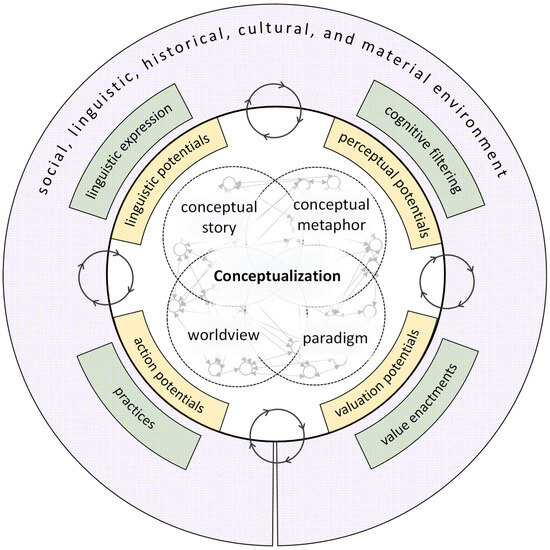
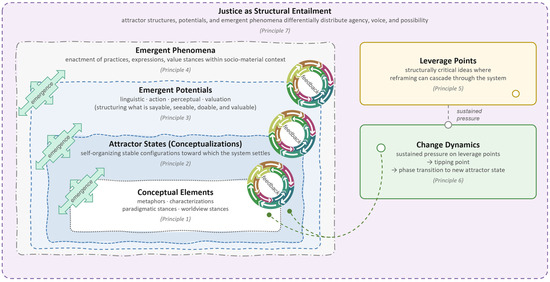
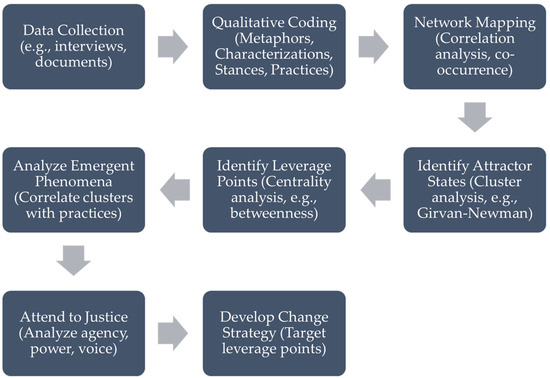
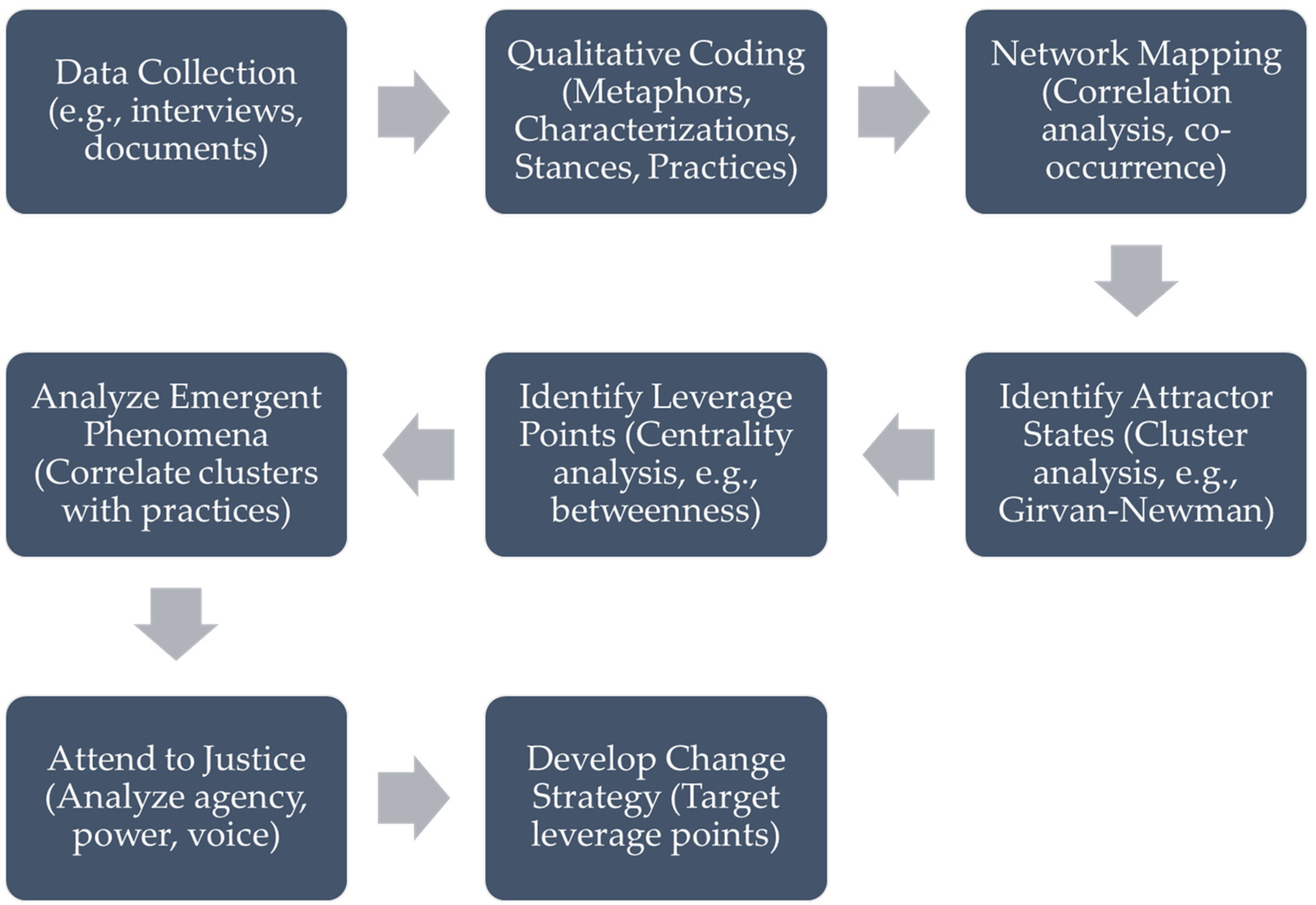
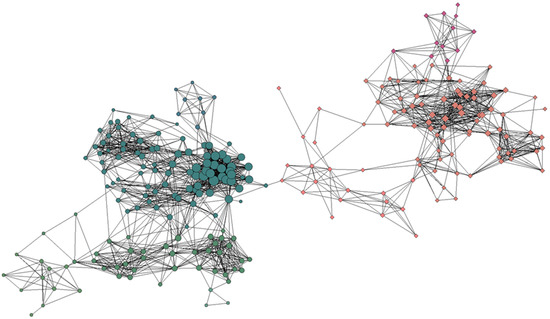
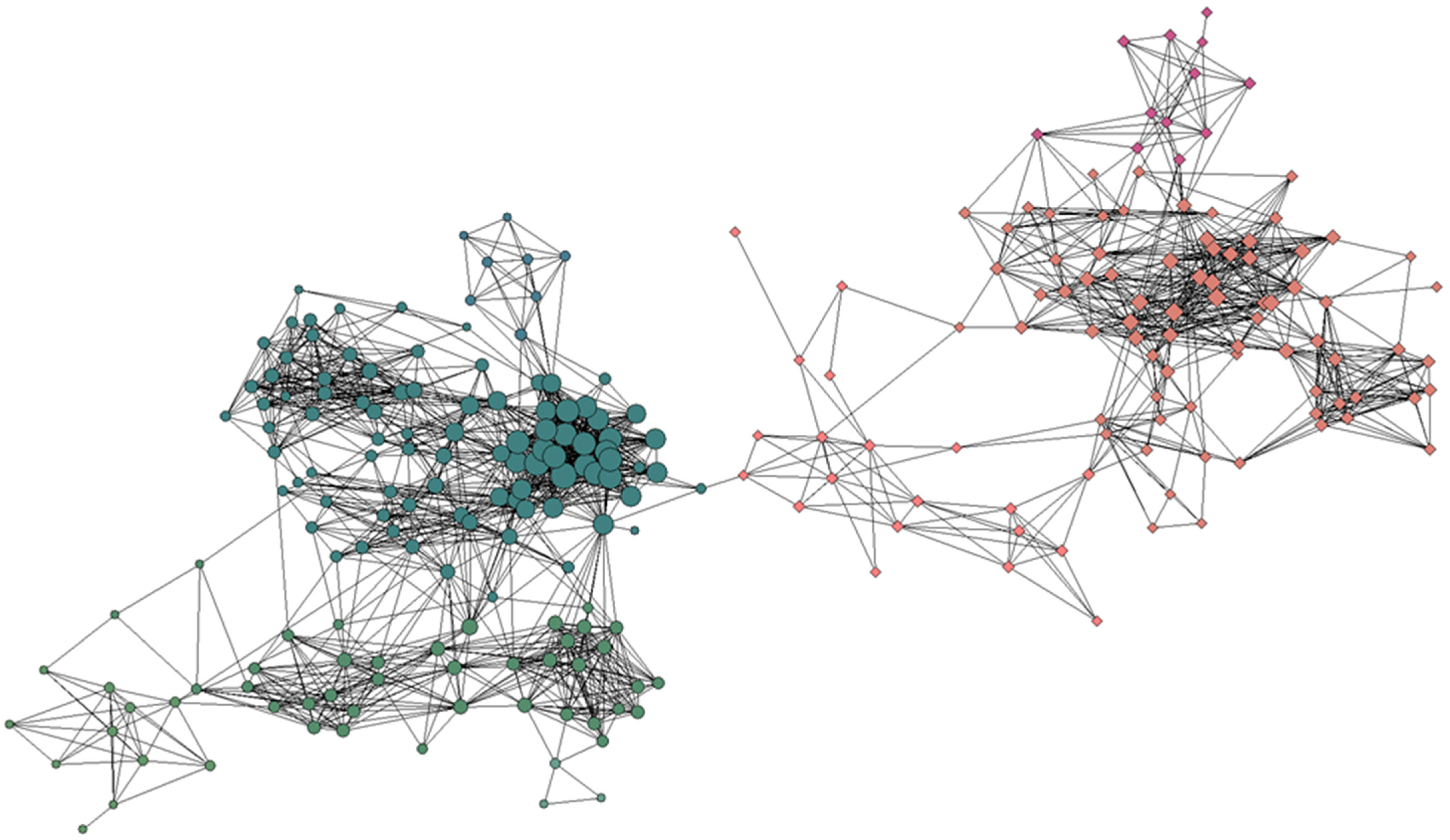
Disclaimer/Publisher’s Note: The statements, opinions and data contained in all publications are solely those of the individual author(s) and contributor(s) and not of MDPI and/or the editor(s). MDPI and/or the editor(s) disclaim responsibility for any injury to people or property resulting from any ideas, methods, instructions or products referred to in the content. |
© 2026 by the author. Licensee MDPI, Basel, Switzerland. This article is an open access article distributed under the terms and conditions of the Creative Commons Attribution (CC BY) license.