1. Introduction
Innovation is widely recognized as a key driver of economic growth across countries, and this conclusion is supported by extensive empirical evidence [
1]. The role of technological innovation in promoting sustainable development has also attracted growing attention in the literature [
2,
3]. As the world’s second-largest economy and a leading emerging market, China has consistently emphasized the central role of innovation and actively promoted innovation-driven entrepreneurship [
4]. Despite these efforts, innovation performance across the country continues to face significant challenges as global economic headwinds intensify and resource-dependent growth engines weaken in parts of China [
5]. Against this background, understanding how to enhance innovation capacity remains an important research goal. Urban innovation refers to a city’s capacity to generate inventions and realize innovative potential, including the ability to transform knowledge into technological outcomes [
6]. It is widely regarded as a key determinant of urban competitiveness and resilience, and it serves as a central catalyst for high-quality urban development driven by innovation [
7].
Digital technologies are reshaping innovation processes and creating new opportunities for economic growth, particularly in developing countries [
8,
9]. As the core foundation of digital technologies, digital infrastructure—through its level and scale—reflects the intensity of hardware investment and the extent of digital technology diffusion within an economy [
10,
11]. Digital infrastructure is also regarded as a core indicator of the digital economy, and its role in urban sustainability and carbon reduction targets has become a focal topic in recent studies [
12]. This raises the question of whether digital infrastructure development can enhance urban innovation capacity. Examining the relationship between infrastructure development and innovation capacity is therefore essential for achieving sustainable economic and environmental outcomes.
Digital infrastructure encompasses both the digital upgrading of traditional infrastructure and the use of newly emerging intelligent infrastructure enabled by advances in digital technologies [
13]. By relying on centralized communication systems, digital infrastructure supports data storage and exchange, thereby simplifying data transmission and coordination processes [
14]. These features help to overcome geographic barriers to information diffusion, facilitate knowledge spillovers, and reduce information search costs. Together, these effects create conditions that are conducive to increased innovation activity [
15]. Jiang found that digital infrastructure significantly enhances firms’ technological innovation capacity [
16]. Shao et al. showed that network infrastructure improves both the quantity and quality of digital technological innovation [
17]. Evidence from Indonesia suggests that increased public investment in digital infrastructure plays a critical role in enabling the implementation of digital innovation [
18]. When spatial effects are not explicitly considered, the development of digital infrastructure is found to significantly promote urban green innovation [
19].
However, uneven access to digital infrastructure may generate technological dependence, which obscures its overall impact on research and development activities [
20]. This uncertainty is likely to be more pronounced in countries such as China, with its vast territory and substantial urban disparities. Using city-level data from China, Li et al. (2024) showed that the effect of digital infrastructure on urban green innovation varies with factors such as city size, human capital, environmental regulation, and fiscal subsidies [
21]. Du and Wang (2024) found that when infrastructure levels in less developed regions fall below a critical threshold, gaps in digital infrastructure relative to that in developed regions exert a negative effect on local innovation [
22].
Existing studies have increasingly recognized the importance of innovation capacity for urban development and have begun to examine the factors that shape it. Against the backdrop of rapid advances in the digital economy and digital technologies, the role of urban digital infrastructure has attracted growing scholarly attention. Through both theoretical discussion and empirical analysis, this study investigates whether digital infrastructure development contributes to improvements in urban innovation capacity. To this end, this study focuses on the Yellow River Basin in China, employs the Broadband China policy as a proxy for digital infrastructure development, and adopts a staggered difference-in-differences framework to assess its effects on urban innovation and the underlying mechanisms.
This study makes three main contributions to the literature on urban innovation capacity. Adopting a regional perspective, this study uses city-level panel data for 77 cities in the Yellow River Basin from 2010 to 2021, thereby extending the empirical evidence on urban innovation capacity. By accounting for differences in economic development and city size, the analysis explores the heterogeneous effects of the Broadband China policy and reveals differentiated innovation responses across city types. In addition, by drawing on the knowledge spillover theory of entrepreneurship, this study further investigates the mechanism through which digital infrastructure affects urban innovation capacity, highlighting the complementary role of entrepreneurial activity in amplifying these effects.
The remainder of this paper is organized as follows: in
Section 2, we develop the analytical mechanisms and present the research hypotheses; in
Section 3, we outline the research design; in
Section 4, we report and discuss the empirical results; and in
Section 5, we present our conclusions.
Section 6 is limitations and future research of our study.
2. Theoretical Analysis and Research Hypotheses
According to neoclassical growth theory, economic growth stems not only from the accumulation of production factors such as labor and capital but also from improvements in total factor productivity [
23]. Digital infrastructure development contributes to this process by reducing economic costs and by generating data as a new factor of production [
24,
25].
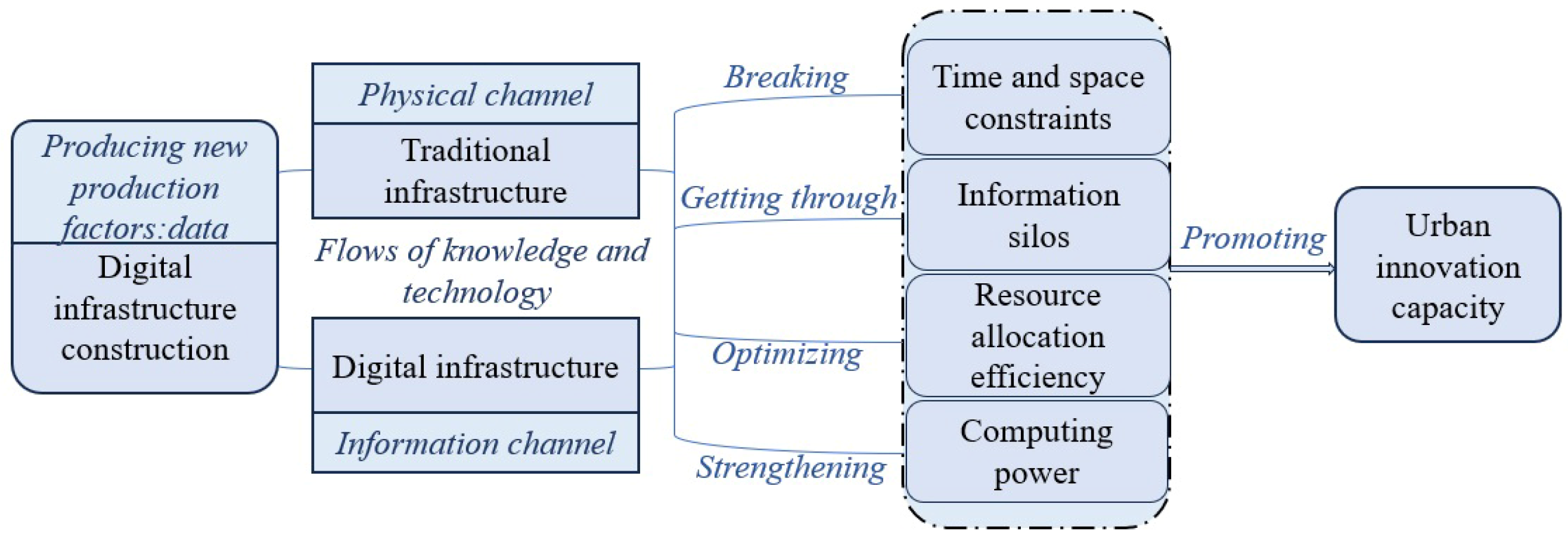
Innovation actors in cities primarily include research institutes, universities, and firms in various industries. Traditional transport infrastructure mainly provides physical channels for the spatial diffusion of knowledge and technology across different innovation actors. However, such diffusion is often constrained by geographic distance and coordination friction, giving rise to time and space barriers that limit the efficiency of innovation activities [
26]. Digital infrastructure, in contrast, functions as an information channel that enables rapid data transmission and real-time interaction, thereby breaking these time and space barriers [
27]. In data-intensive environments, information is frequently fragmented across isolated systems, leading to the problem of information silos [
28]. By providing high-capacity communication networks and advanced data processing capabilities, digital infrastructure helps to break down information silos and promote the efficient allocation of resources. Such cross-industry synergies establish a solid technological foundation for coordinated development and create favorable conditions for innovation breakthroughs [
29]. For innovation actors, digital infrastructure supplies computing power, data transmission capacity, and analytical tools that accelerate knowledge diffusion and reduce innovation costs [
30].
Digital infrastructure contributes to urban innovation capacity by generating data as a new factor of production and by operating through both physical and information channels. Compared with traditional infrastructure, digital infrastructure weakens time and space constraints, breaks information silos, improves resource allocation efficiency, and strengthens computing power. These outcomes jointly facilitate knowledge diffusion, cross-industry coordination, and innovation activities, ultimately enhancing urban innovation capacity. To clarify the influence of digital infrastructure on innovation capacity, this study illustrates these relationships in
Figure 1.
Based on the above theoretical analysis, the following hypothesis is proposed.
Hypothesis 1. Digital infrastructure development significantly enhances urban innovation capacity.
The digital economy is driven by data as a core production factor and is characterized by strong innovation potential, pronounced network effects, cross-sector integration, operational flexibility, and global openness. These features have reshaped economic models and industrial upgrading while also fostering entrepreneurial activity [
31]. As the foundation of the digital economy, digital infrastructure supports urban entrepreneurship in multiple ways. It enables new productive forces by embedding digital technologies into the local environment and provides technical support for potential entrepreneurs, thereby facilitating digital industrialization and start-up formation [
32]. At the same time, it accelerates the circulation of entrepreneurial resources, reduces information asymmetry, and lowers spatial and temporal barriers to information diffusion, which helps to generate new entrepreneurial opportunities [
33,
34]. Digital technologies stimulate entrepreneurial activity and enable entrepreneurs to identify new market opportunities. They also reduce operating costs and improve coordination efficiency with customers and suppliers, thereby strengthening entrepreneurship [
35].
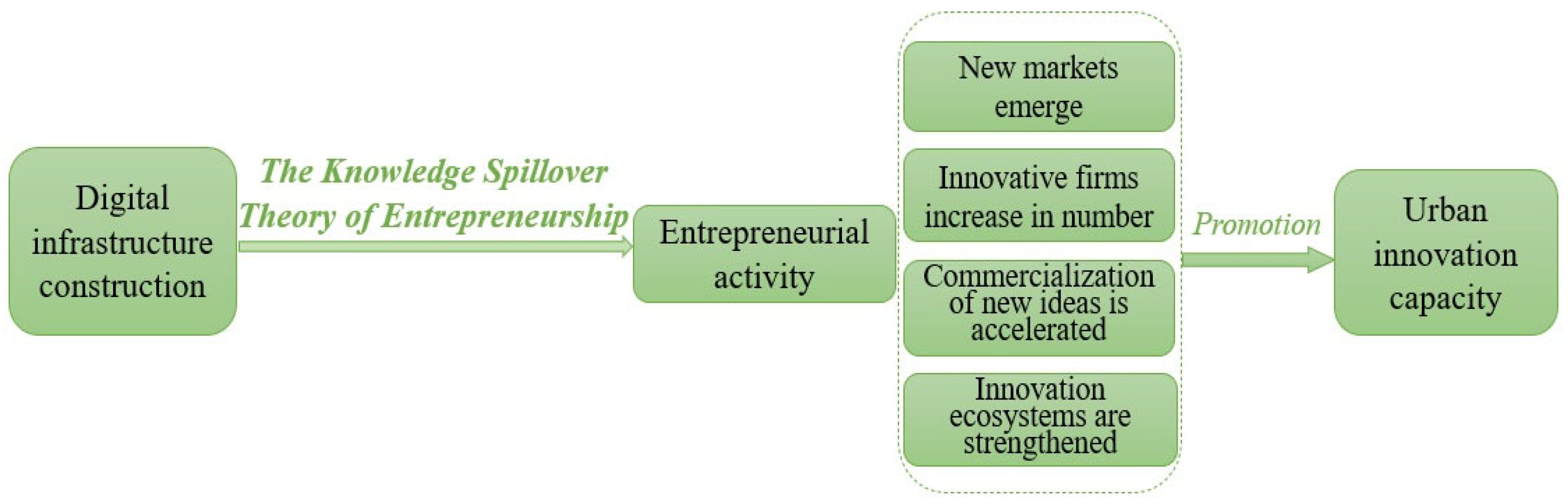
Based on the knowledge spillover theory of entrepreneurship, entrepreneurial activity serves as a key pathway through which knowledge is transformed into innovative outcomes [
36,
37]. Entrepreneurial activity not only improves employment, financing access, and firm growth but also strengthens local industrial structures and innovation ecosystems, thereby enhancing innovation capacity [
38]. By increasing the number of innovative firms and accelerating the commercialization of new ideas, entrepreneurial activity significantly enhances urban innovation capacity [
39,
40]. Digital infrastructure is expected to enhance innovation capacity, and this effect is strengthened by higher levels of entrepreneurial activity [
41]. The theoretical mechanism relating digital infrastructure, entrepreneurship activity, and innovation capacity is illustrated in
Figure 2.
Based on the foregoing analysis, higher levels of entrepreneurial activity are associated with a stronger positive effect of digital infrastructure on urban innovation capacity. Accordingly, the following hypothesis is proposed.
Hypothesis 2. The positive effect of digital infrastructure on urban innovation capacity is strengthened by entrepreneurial activity.
3. Methodology
3.1. Study Area
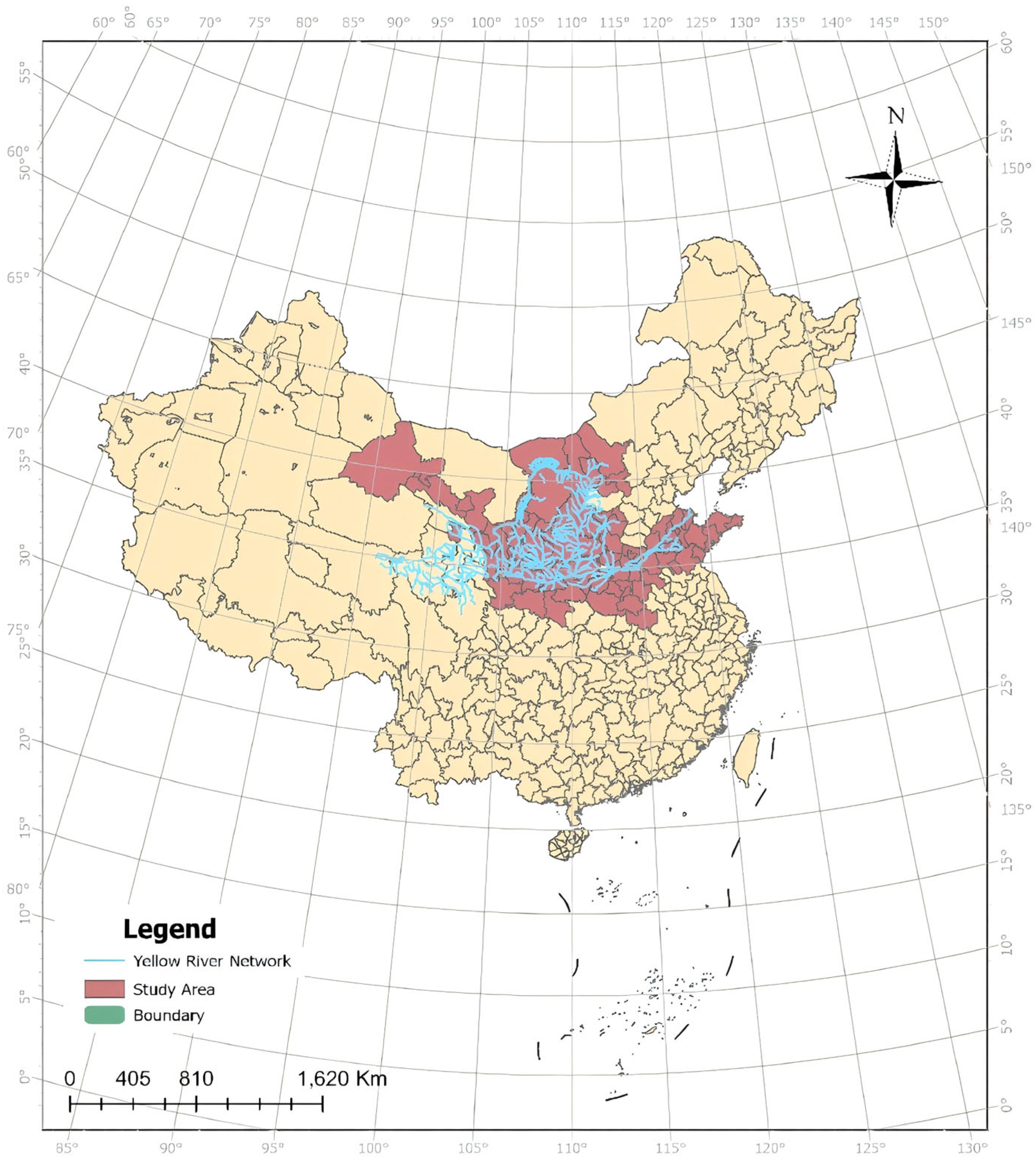
This study focused on prefecture-level cities located in provinces through which the Yellow River flows. After autonomous prefectures and cities with substantial data limitations were excluded, the final sample consisted of 77 cities. Originating from the Bayan Har Mountains in Qinghai Province, the Yellow River Basin spans approximately 96–119° E and 32–42° N and is characterized by relative water scarcity [
42]. The Yellow River Basin serves as a critical economic region, an energy and industrial corridor, and an important ecological barrier in China. More than 30% of China’s resource-based cities are concentrated in this basin, accounting for about half of all cities within the region [
43,
44]. This structural dependence underscores the need for a transition from resource-driven growth toward innovation-led development to meet sustainability objectives [
45]. The study area is illustrated in
Figure 3.
3.2. Study Design
The difference-in-differences model is widely regarded as one of the most suitable approaches for evaluating policy shocks in natural experiment settings [
46]. The Broadband China policy was implemented in selected cities over different years, creating a staggered policy environment for digital infrastructure development. Cities included in the pilot program form the treatment group, while non-participating cities serve as a comparison group. This staggered rollout offers a quasi-natural experimental setting. To account for differences in policy timing across cities, we adopt a staggered DID model rather than a traditional DID, which allows the analysis to capture dynamic policy effects over time.
Using panel data for 77 cities in the Yellow River Basin over the period 2010–2021, this study exploits the implementation of the Broadband China policy as a quasi-natural experiment to examine the effect of digital infrastructure development on urban innovation capacity. The Broadband China pilot was implemented in three waves, in 2014, 2015, and 2016. This staggered policy adoption allows for the use of a staggered difference-in-differences model, specified as follows:
In Equation (1), denotes the dependent variable, urban innovation capacity, measured for city i in year t. A dummy variable, was constructed to indicate whether a city was designated as a Broadband China pilot city, taking the value of 1 if city i was included in any of the pilot batches implemented in 2014, 2015, or 2016, and 0 otherwise. The variable equals 1 for a pilot city in the year of policy implementation and thereafter, and 0 otherwise. The treatment variable is defined as . represents a vector of control variables that may affect the innovation capacity of city i in year t. denotes the constant term, while and are coefficients to be estimated. is the city fixed effects, is the time fixed effects, and is the idiosyncratic error term.
3.3. Variable Selection
3.3.1. Dependent Variable
Innovation capacity is a key indicator of the overall performance of an urban innovation system. It reflects multiple dimensions, including the allocation and utilization of entrepreneurial resources, the efficiency and quality of innovation activities, the coordination of innovation structures, and the value creation and commercialization of innovative outputs. Granted patents, as a core form of intellectual property protection, capture both the protection of innovative outcomes and their potential for practical application and commercialization [
47,
48]. Accordingly, urban innovation capacity is measured as the total number of invention patents granted at the city level. In our baseline regression, we apply the transformation ln(1 + UIC) to patent counts. This log-transformation addresses the right-skewed distribution of patent data while preserving observations with zero patents, mitigates the influence of outliers, and yields coefficients that can be interpreted in percentage terms [
49].
3.3.2. Independent Variable
To accelerate the development of digital infrastructure, China introduced the Broadband China strategy in 2013. The policy focused on the expansion of network, communication, and data transmission infrastructure and has been widely used in the literature as a proxy for digital infrastructure development [
50,
51]. Between 2014 and 2016, China selected 117 cities in three batches as Broadband China pilot cities. The cities located in the Yellow River Basin that participated in the program are listed in
Table 1. To capture both pre- and post-policy dynamics and allow for potential lagged effects, the sample period was set from 2010 to 2021.
3.3.3. Control Variables
To account for other factors that may influence urban innovation capacity and to mitigate potential omitted-variable bias, this study included the following control variables.
- (1)
Economic development level (led). Economic development influences urban innovation capacity through channels such as capital availability, industrial upgrading, and institutional improvement [
52]. Higher GDP levels allow greater investment in R&D and knowledge creation, leading to increased technological innovation [
53].
- (2)
Population density (pop). Population concentration is an important driver of economic vitality and innovation. A higher population density reduces communication and labor-search costs, thereby improving the efficiency of knowledge diffusion and collaboration. Cities with stronger agglomeration effects are more likely to develop innovation hotspots [
54].
- (3)
Public education expenditure (edu). Government spending on education enhances human capital accumulation and expands the supply of innovation-oriented talent [
55]. It also supports the operation and upgrading of university laboratories, research platforms, and equipment, thereby increasing academic research output and patent generation [
56].
- (4)
Industrialization level (ind). Deeper industrialization strengthens the demand for technological upgrading within the industrial system, providing large-scale application scenarios and commercialization platforms for innovation. This process facilitates the transformation of innovative outcomes into patents [
57].
- (5)
Government support (gs). Government support plays a central role in innovation by shaping policy incentives, allocating resources, and mitigating risks. Beyond market mechanisms, effective fiscal allocation and institutional design enhance the conversion of innovative outputs. In this context, government R&D subsidies are found to stimulate patent applications [
58].
3.3.4. Mechanism Variable
Entrepreneurial activity (EA). Entrepreneurship serves as a key mechanism through which knowledge spillovers are transformed into innovative outputs. Higher levels of entrepreneurial activity enhance technological innovation through multiple channels, including intensified knowledge spillovers, stronger market competition, increased venture capital inflows, and improvements in the urban innovation ecosystem [
59,
60]. Digital infrastructure development significantly increases entrepreneurial activity by lowering entry barriers, improving access to market information and finance, fostering digital and technology-oriented start-ups, and strengthening innovation collaboration networks. These effects, in turn, contribute to higher urban innovation capacity [
61]. Accordingly, entrepreneurial activity may strengthen the effect of digital infrastructure on urban innovation capacity.
3.4. Data Description
3.4.1. Data Sources and Descriptive Statistics
This study covers 77 prefecture-level cities in the Yellow River Basin over the period 2010–2021, including 1 city in Qinghai Province, 12 in Gansu Province, 5 in Ningxia Hui Autonomous Region, 6 in Inner Mongolia Autonomous Region, 10 in Shanxi Province, 10 in Shaanxi Province, 17 in Henan Province, and 16 in Shandong Province. The data were primarily drawn from the
China City Statistical Yearbook, the
China Population and Employment Statistical Yearbook, the
China Urban Economic Statistical Yearbook, and provincial statistical yearbooks. Occasional missing observations for some variables were present in a few years of the panel data. To preserve sample continuity and estimation efficiency, these gaps were filled using linear interpolation applied to each city’s time series. Descriptive statistics for all variables are reported in
Table 2.
3.4.2. Propensity Score Matching (PSM)
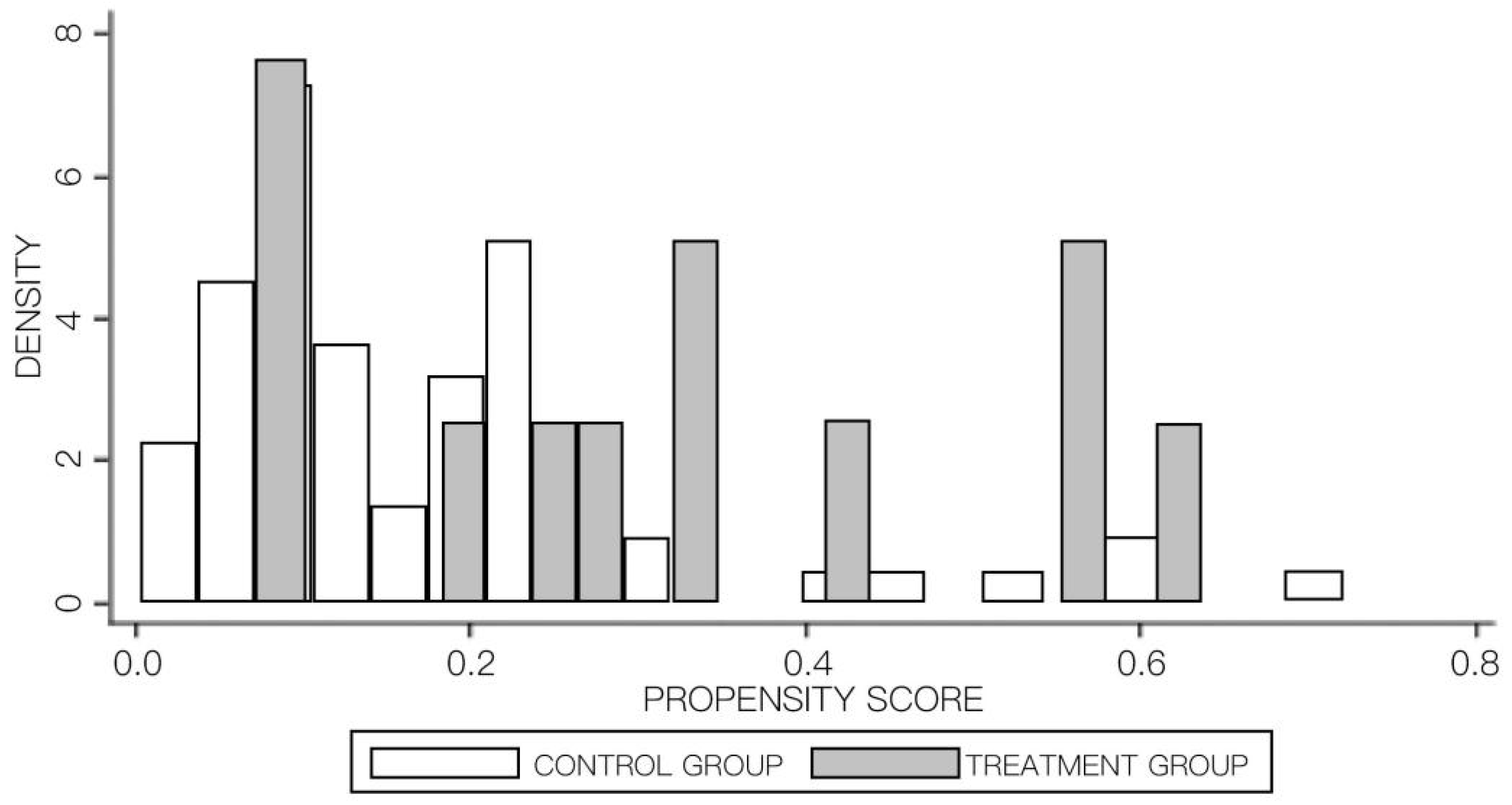
Propensity scores for city selection into the “Broadband China” pilot policy were estimated using a Logit model, with the covariates in the PSM matching those control variables included in the main DID specification. The selection of policy pilot cities followed the long-term planning of the national broadband strategy and was based on comprehensive considerations such as urban development foundations, urban location characteristics, and local government support capacity rather than random assignment, giving rise to potential self-selection bias. To address this concern, PSM was used prior to the empirical analysis. This study applied PSM through one-to-one nearest-neighbor matching performed with a caliper. We implemented one-to-one nearest neighbor matching without replacement, with a caliper width of 0.05. Observations whose propensity scores fell outside the common support region were excluded post-matching, 24 observations were excluded from the sample, and the matched sample consisted of 900 valid observations. To satisfy the common support condition, we trimmed treatment units whose propensity scores exceeded the maximum or fell below the minimum observed in the control group. This trimming ensures that all matched pairs share overlapping propensity scores, as illustrated in
Figure 4. The matched sample appeared adequate and well-balanced in its distributional properties.
As shown in
Table 3, the mean value of the core dependent variable, urban innovation capacity (UIC), was 508.9889 granted invention patents, with a standard deviation of 1554.5950, indicating substantial variation in innovation performance across cities in the Yellow River Basin. This variation provided sufficient identifying variation for subsequent policy effect estimation. Treated cities accounted for 18.67% of the matched sample, which is consistent with the actual distribution of Broadband China pilot cities. With respect to control variables, the average level of economic development was 50,967.6200 Yuan, public education expenditure accounted for 22.5041%, and the industrialization level averaged 45.9172%. The ranges and mean values of these variables are broadly representative of the economic and social conditions of cities in the Yellow River Basin.
3.4.3. Covariate Balance Tests After PSM
Propensity score matching substantially improved the covariate balance between the treated and control groups. The covariate balance test results reported in
Table 4 and
Table 5, before and after matching, provide supporting evidence for the effectiveness of the matching procedure and the credibility of the identification strategy. Before matching, significant differences were observed between the treated and control groups across several key covariates. Population density exhibited the most pronounced imbalance (t = −1.3290), while government support and economic development level also displayed notable intergroup differences. Such imbalances may induce selection bias and compromise the validity of causal inferences. After PSM, the t-statistics for all covariates were substantially reduced and became statistically insignificant, with
p-values exceeding the 0.10 threshold. This pattern suggests that observable selection bias was largely mitigated through the matching procedure. The mean difference in population density changed from 118.3670 before matching to 120.9480 after matching, while the corresponding t-statistic decreased from −1.3290 to −1.2700, indicating an improvement in statistical balance. Differences in other key control variables, including public education expenditure and industrialization level, were no longer statistically significant after matching. Overall, these results indicate that PSM achieved a high degree of balance in observable characteristics between the treated and control groups. This balance provided an important precondition for the subsequent staggered difference-in-differences analysis and strengthened the internal validity of the estimated policy effects.
3.4.4. Propensity Score Distribution
Figure 4 presents the distribution of propensity scores and provides graphical evidence for assessing the quality of PSM and the validity of the common support assumption. The white area represents the distribution of propensity scores for control cities, while the shaded area corresponds to that for treated cities. As shown in the figure, the propensity score distributions of the two groups exhibited substantial overlap, approximately ranging from 0.15 to 0.75, indicating that the common support condition was largely satisfied. The propensity scores of treated cities were mainly concentrated between 0.2 and 0.6 and displayed a relatively even distribution, suggesting that the probability of being selected as a pilot city was reasonably distributed across these observations. The distribution for control cities was slightly left-shifted, with a peak between 0.1 and 0.3, yet it still exhibited a high degree of overlap with the treated group. Overall, these distributional patterns suggest that the matching procedure successfully identified control cities with observable characteristics similar to those of treated cities, thereby reducing concerns about poor match quality arising from substantial covariate differences.
4. Results and Discussion
4.1. DID Model Results
The baseline regression results provide systematic evidence of the causal effect of the Broadband China policy on urban innovation capacity and allow us to assess the robustness of the estimates. As reported in
Table 6, the coefficient on the policy variable, broadband, remained positive and statistically significant across alternative model specifications, indicating robust results. In the parsimonious specification that included only the core variables, the estimated policy effect was 0.9810 and was highly significant at the 1% level. This indicates that, in the baseline specification without control variables, the estimated coefficient of 0.9810 implies that the Broadband China policy is associated with an approximate 167% increase in urban innovation capacity (since e
0.9810 − 1 ≈ 1.67), suggesting a strong positive impact. Clearly, the emphasis of the Broadband China policy on strengthening broadband infrastructure and promoting its widespread application in areas such as education, healthcare, and culture plays an important role in enhancing urban innovation capacity. Hypothesis 1 is thus verified.
As control variables were progressively added, the estimated coefficient decreased in magnitude but remained statistically significant, implying that part of the policy effect operates through the channels captured by the controls. In the fully specified model, the coefficient stabilized at 0.5233 and remained significant at the 1% level. This implies that the implementation of the Broadband China policy is associated with an approximately 68.8% (since e0.5233 − 1 ≈ 0.688) increase in urban innovation capacity, holding other factors constant. The coefficient on economic development is 0.8186 and highly significant, this implies that a one-unit increase in economic development is associated with an approximate 126.7% increase in urban innovation capacity. This result underscores the important role of economic fundamentals in fostering innovation. The coefficients on population density and public education expenditure were negative but statistically insignificant. One possible explanation for this is that population density does not necessarily reflect the concentration of innovative talent, as most residents are not directly engaged in innovation activities. Similarly, higher public education spending does not automatically translate into innovation outcomes, as education inputs may not immediately result in the formation of innovative human capital. The coefficient on government support was 0.3309 and statistically significant, suggesting that a one-unit increase in public support for science and technology is associated with an approximate 39.2% increase in urban innovation capacity. This finding highlights the positive contribution of government support to innovation outcomes. The adjusted R2 value increased from 0.0440 to 0.1610 as additional controls were introduced, indicating a reasonable improvement in explanatory power. Overall, these findings provide consistent evidence that digital infrastructure development plays an important role in enhancing urban innovation capacity.
4.2. Parallel Trends Test
The results of the parallel trends test provide essential empirical support for the validity of the staggered difference-in-differences approach. An event-study specification was employed to assess the parallel trends assumption. The equation is as follows:
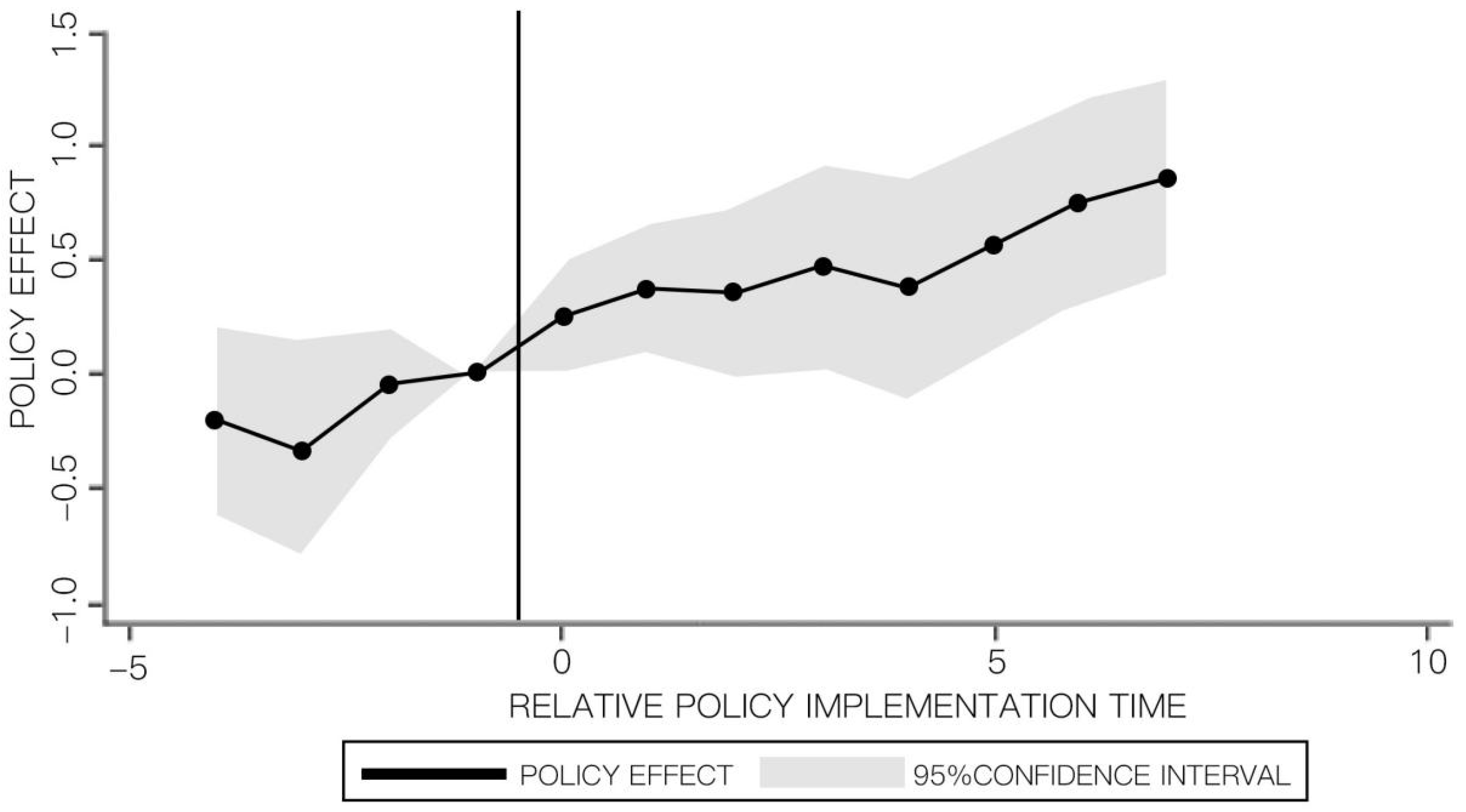
The results from the dynamic event-study specification provided evidence in support of the parallel trends assumption, as reported in
Table 7. The pre-treatment coefficients at event times event_m3 to event_m1 were −0.2090, −0.3240, and −0.0500, respectively, and none of them were statistically significant. This pattern indicates that the treated and control cities exhibited similar trends prior to policy implementation, consistent with the key identifying assumption of the staggered DID approach. Following policy implementation, the estimated effects displayed a clear dynamic pattern over time. In the year of implementation, event_0, the coefficient was 0.2440 and statistically significant at the 5% level, suggesting an immediate policy effect. The effect strengthened over time, increasing to 0.3710 in the first year after implementation, reaching 0.7540 by the sixth year and further rising to 0.8530 in the seventh year, with all estimates statistically significant at the 1% or 5% level.
In
Figure 5, the solid black line with circles depicts the estimated policy effects over the event time, while the shaded area represents the 95% confidence interval. The baseline period corresponds to one year prior to policy implementation, while the vertical line indicates the timing of its enactment. Prior to policy implementation, the estimated coefficients fluctuated around zero and the confidence intervals included zero, providing graphical support for the parallel trends assumption. After implementation, the estimated effects exhibited a clear upward trajectory, reflecting the gradual realization of the effects of digital infrastructure development. This dynamic pattern is consistent with the gradual and long-term nature of digital infrastructure investment and lends further support to the positive impact of the Broadband China policy on urban innovation capacity.
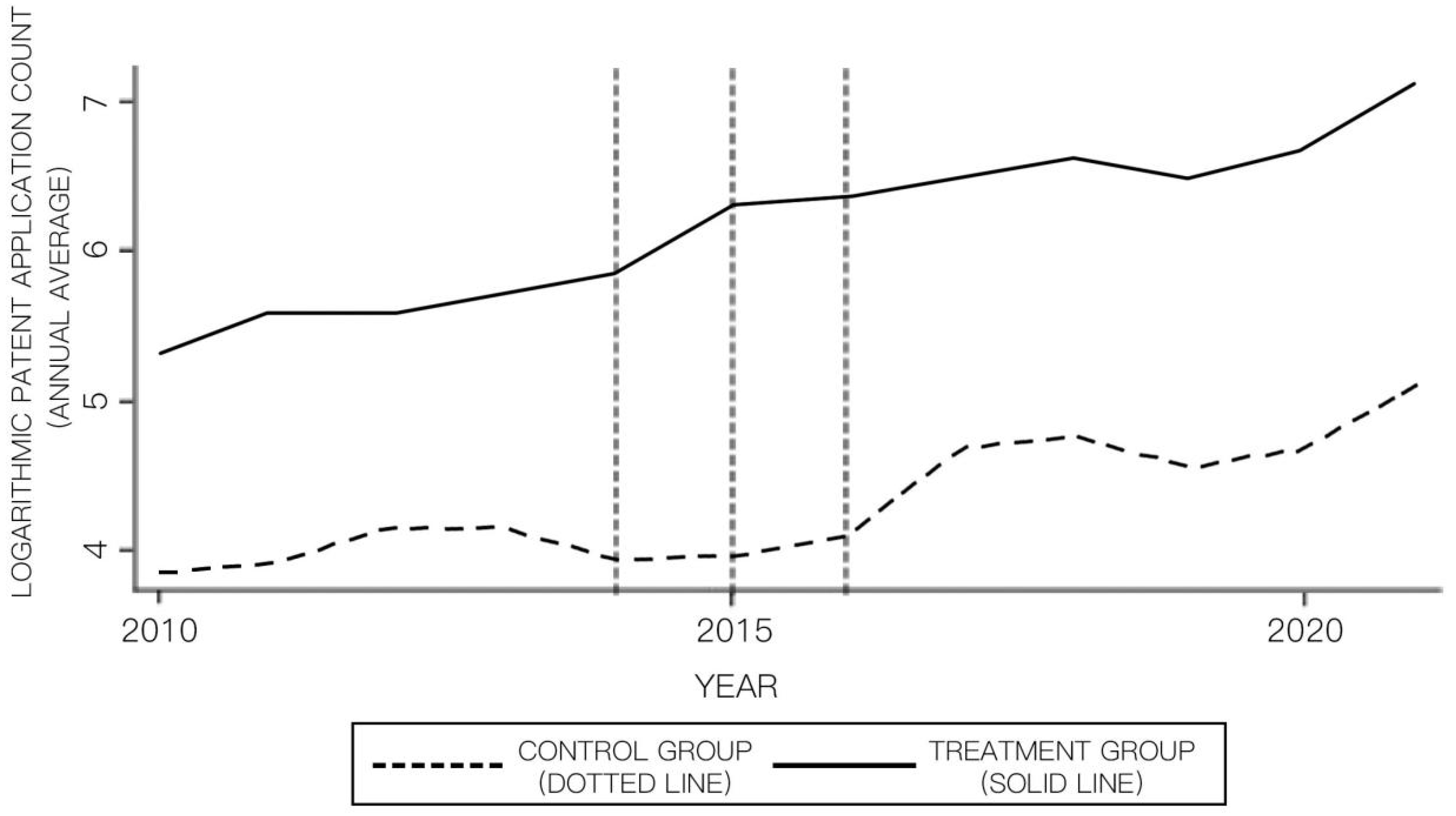
In
Figure 6, the solid line represents the innovation trajectory of treated cities, the dashed line corresponds to that of control cities, and the vertical dashed line marks the timing of policy implementation. Before the policy implementation years of 2014, 2015, and 2016, the two trajectories evolved in a largely parallel manner, with a relatively stable gap between treated and control cities, offering additional graphical evidence in favor of the parallel trends assumption. After policy implementation, the trajectories of the two groups began to diverge noticeably. Innovation capacity grew more rapidly in the treated cities, particularly after 2016, leading to a widening gap that persisted through to the end of the sample period, with treated cities exhibiting higher innovation levels than control cities. This divergence pattern is consistent with the theoretical predictions of the staggered difference-in-differences framework and visually illustrates the positive role of the Broadband China policy.
4.3. Placebo Test
A placebo test is used to assess the validity of estimated policy effects. A time-placebo test was conducted by assuming that the policy was implemented four years earlier, to examine whether the estimated effects reflect anticipation or underlying time trends. As shown in
Table 8, the coefficient on the placebo variable placebo_policy_early was −0.0690 and statistically insignificant, suggesting that the observed effects are tied to the actual timing of policy implementation rather than to generic time-related factors. A random assignment test further evaluated potential selection bias by randomly reallocating treatment status. The coefficient on the pseudo-policy variable fake_broadband_new was 0.7300 but statistically insignificant, indicating that the significant effects observed in the baseline regressions are unlikely to be driven by random assignment or omitted factors. In addition, both the time-placebo and spatial-placebo tests yielded insignificant results, further alleviating concerns about confounding from time fixed effects or spatial spillovers. Overall, these placebo exercises reinforced the reliability of the baseline findings by reducing concerns about omitted-variable bias, spurious correlations, and other confounding influences.
4.4. Robustness Tests
To ensure that the main conclusions were not driven by specific model specifications or sample selection, a series of robustness tests were performed. To mitigate potential data distortions caused by major events, the analysis excluded the COVID-19 period by restricting the sample to years prior to 2019. The estimated policy coefficient was 0.511 and remained significant at the 5% level, which is broadly consistent with the baseline results. In addition, the time window was extended by constructing the sample from 2012 onward, showing that the baseline results were not sensitive to the choice of the initial sample period. A further robustness test replaced the dependent variable with its logarithmic form without adding one, confirming that the results were robust to alternative log transformations. Robustness to alternative inference methods was also examined. Using both clustered and bootstrap standard errors, the estimated coefficient remained at 0.5840 and was significant at the 1% level, consistent with the baseline regression.
Our study’s sample selection, variable construction, model specification, and statistical inference consistently support the baseline findings. We may conclude that the observed positive effect of the Broadband China policy on urban innovation capacity is robust and not driven by specific technical choices. Detailed results are reported in
Table 9.
4.5. Heterogeneity Analysis
A heterogeneity analysis was conducted to examine how the effects of the Broadband China policy differ across types of cities. To examine heterogeneity in policy effects, we group cities by economic development and population size. Cities are classified as “high-GDP” or “low-GDP” based on whether their 2013 per capita GDP (led) exceeds the sample median. Similarly, “large” and “small” city groups are defined using the 2013 resident population (pop) median. These group assignments, determined prior to policy implementation, remain fixed throughout the study period. As reported in
Table 10, when cities were grouped by their economic development level, the policy effect was significantly positive for high-GDP cities (coefficient = 0.6050,
p < 0.01), which translates to about an 83.2% increase in innovation capacity. However, the estimate for low-GDP cities was positive but statistically insignificant. This pattern suggests that cities with stronger economic foundations are better positioned to benefit from digital infrastructure development.
The contrast was more pronounced when cities were grouped by size. The policy effect was significantly positive for large cities (coefficient = 0.9770,
p < 0.01), implying an increase of roughly 165.7%. whereas the estimate for small cities was negative. One possible explanation for this is that large cities possess stronger talent pools, more complete industrial systems, and more developed innovation ecosystems, contributing to more innovations per population and greater production [
62], which allow them to better exploit the agglomeration effects and economies of scale associated with digital infrastructure.
For small cities, digital infrastructure may generate adverse effects through channels such as talent siphoning and resource crowding-out. Digital infrastructure lowers mobility costs and can intensify the outflow of skilled labor from small cities to larger urban centers. Constraints on digital skills and innovation capacity limit the ability of small cities to effectively utilize digital infrastructure. At the same time, redirecting scarce fiscal resources toward digital infrastructure may crowd out investment in traditional sectors where small cities hold comparative advantages. Overall, these findings suggest that digitalization may exacerbate inter-city disparities. This highlights the importance of differentiated policy design to prevent digital infrastructure investment from widening existing development gaps.
4.6. Mechanism Analysis
This study examined the impact of the Broadband China policy on entrepreneurial activity. An interaction model (Equation (4)) was specified to examine whether entrepreneurial activity moderates the impact of digital infrastructure on urban innovation capacity under the Broadband China policy.
As shown in
Table 11, the coefficient on the interaction term between the Broadband China policy and urban entrepreneurial activity was 0.6420 and statistically significant at the 1% level. This indicates that higher levels of entrepreneurial activity significantly amplify the positive effect of digital infrastructure. For instance, a one-standard-deviation increase in EA would strengthen the policy’s impact on urban innovation capacity by approximately 90.1%. This result suggests a complementary relationship, rather than a substitutive one, between digital infrastructure and entrepreneurial activity in shaping urban innovation capacity. Higher levels of entrepreneurial activity amplify the innovation-enhancing effect of digital infrastructure. This result provides empirical support for Hypothesis 2.
The implementation of the Broadband China policy improves network connectivity and enables more flexible working arrangements, which help to reduce start-up costs and encourage entrepreneurial activity in cities. Higher levels of entrepreneurial activity may increase the number of innovative firms which, as key innovation actors, contribute to the development of urban innovation capacity.
5. Conclusions
Using panel data for 77 prefecture-level cities in the Yellow River Basin of China from 2010 to 2021, this study identified a positive impact of the Broadband China policy on urban innovation capacity through a staggered difference-in-differences approach. Parallel trend tests, placebo tests, and a range of robustness checks consistently supported the reliability of this finding. When economic development, population density, public education expenditure, industrialization level, and government support were controlled for, the estimated policy effect remained statistically significant. These results indicate that digital infrastructure development plays a meaningful role in enhancing urban innovation capacity. More broadly, these findings support the view that digital infrastructure, as a new factor of production, contributes to improvements in urban productivity. In addition, parallel trend tests revealed a gradual dynamic pattern of policy effects. The impact became significant from the second year after implementation and peaked in the seventh year, consistent with the long-term nature of digital infrastructure investment and the lagged response of innovation activities.
A heterogeneity analysis based on economic development level and city size revealed substantial variation in policy effects. Cities with higher GDP levels and larger populations benefit more strongly from digital infrastructure expansion. In contrast, the estimated effects for low-GDP cities are positive but statistically insignificant, while small cities exhibit negative but insignificant coefficients. This pattern suggests that digitalization may exacerbate existing urban disparities. These findings resonate with the digital divide theory. While the expansion of digital infrastructure enhances overall access opportunities, cities with stronger economic foundations and greater resource concentration are better equipped to translate this access into innovative outputs, potentially exacerbating regional disparities in innovation. Consequently, policymakers must look beyond the initial “access divide” to address the subsequent “usage divide” and “outcome divide”. A mechanism analysis indicated that higher levels of urban entrepreneurial activity strengthen the positive effect of the “Broadband China” policy on urban innovation capacity. This finding is consistent with the knowledge spillover theory of entrepreneurship.
Based on these findings, policymakers are advised to elevate digital infrastructure development in the Yellow River Basin to a strategic priority. Coordinated urban planning and the development of integrated digital platforms can help retain the population, improve the allocation of educational resources, and foster innovative and competitive firms, thereby providing both hardware and institutional support for urban innovation and entrepreneurship. Attention should also be paid to the heterogeneous nature of policy effects. Addressing the digital divide faced by small cities and guiding digital firms and innovation resources toward these areas may help mitigate imbalance while leveraging the demonstration and spillover effects of larger and more developed cities. Improving digital infrastructure can further strengthen the urban innovation environment by lowering entry barriers for entrepreneurship and encouraging greater participation by younger cohorts, thereby sustaining long-term innovation capacity.
6. Limitations and Future Research
This study employed a staggered difference-in-differences approach to examine the impact of digital infrastructure development on urban innovation capacity. Nevertheless, several methodological and measurement-related limitations remained. In particular, using the total number of invention patents as a proxy for urban innovation capacity may not have fully captured the multidimensional nature of innovation. Future research will address differences in patent quality, sector heterogeneity in patenting activity, and potential time lags between policy implementation and patent outcomes. After disaggregating innovation outputs by patent industry, type, and quality, we plan to adopt a Difference-in-Differences-in-Differences model (DDD) to identify heterogeneous policy effects across treatment groups. This approach will help to mitigate bias arising from unobserved, time-varying, city-level factors and allow for a more refined assessment of the structural and dynamic features of policy effects.
In addition, the staggered difference-in-differences design relies on relatively strong identifying assumptions, particularly the requirement that the parallel trends condition holds. As the scope of analysis expands in future work, we plan to employ the generalized synthetic control method as an alternative to staggered DID, thereby relaxing the parallel trends requirement.
Finally, although this study examines the linkages among digital infrastructure, entrepreneurial activity, and innovation capacity, a more granular analysis of their interactions lies beyond the scope of the current work. Future work may incorporate fieldwork to better understand how younger groups, such as early-career researchers and university students, perceive and engage with innovation and entrepreneurship.
Author Contributions
Conceptualization, R.Z.; Methodology, R.Z. and R.Y.; Software, R.Z., R.Y. and Y.Z.; Validation, R.Z. and R.Y.; Formal Analysis, R.Z. and R.Y.; Investigation, R.Z. and R.Y.; Resources, R.Z.; Data Curation, R.Z. and R.Y.; Writing—Original Draft Preparation, R.Z. and R.Y.; Writing—Review and Editing, R.Z. and Y.Z.; Visualization, R.Z. and Y.Z.; Supervision, R.Z.; Project Administration, R.Z.; Funding Acquisition, R.Z. All authors have read and agreed to the published version of the manuscript.
Funding
This study was supported by the Philosophy and Social Sciences Planning Project of Gansu Province (funding number: 2024YB062).
Institutional Review Board Statement
Not applicable.
Informed Consent Statement
Not applicable.
Data Availability Statement
The datasets used during the current study are available from the corresponding author on reasonable request.
Conflicts of Interest
The authors declare that they have no known competing financial interests or personal relationships that could have appeared to influence the work reported in this paper.
References
- Koç, Ş.; Uctu, R.; Essop, H.; Mercan, B. The Impact of Innovation on Economic Growth: A Dynamic Panel Data Analysis Using System GMM Approach. Int. J. Innov. Stud. 2026, 10, 20–30. [Google Scholar] [CrossRef]
- Rajkumar, J.; Nagarajan, C.D. Divergent Impact of Green and Non-Green Technological Innovations on the Dynamics Between Renewable Energy, Economic Growth, and the Environment. Sustain. Futures 2025, 10, 101156. [Google Scholar] [CrossRef]
- Chen, F.; Zhu, L.; Zhang, H.; Li, Y. Innovation-Driven Cities: Reconciling Economic Growth and Ecological Sustainability. Sustain. Cities Soc. 2025, 121, 106230. [Google Scholar] [CrossRef]
- Sun, H.; Shang, H. Cultural Intensity, Financial Openness, with Regional Innovation and Entrepreneurship Development. Financ. Res. Lett. 2025, 85, 108063. [Google Scholar] [CrossRef]
- Hui, P.; Zhao, H.; Liu, D.; Li, Y. How Does Digital Finance Affect Regional Innovation Capacity? A Spatial Econometric Analysis. Econ. Model. 2023, 122, 106250. [Google Scholar] [CrossRef]
- Pei, J.; Zhong, K.; Li, J.; Xu, J.; Wang, X. ECNN: Evaluating A Cluster-Neural Network Model for City Innovation Capability. Neural Comput. Appl. 2022, 34, 12331–12343. [Google Scholar] [CrossRef]
- Xie, Z.; Yang, X. How Can the Business Environment Promote Urban Innovation and High-Quality Development?—A Qualitative Comparative Analysis Based on the Perspective of Configuration. Sustainability 2025, 17, 463. [Google Scholar] [CrossRef]
- Kibinda, N.; Shao, D.; Mwogosi, A.; Mambile, C. Broadband Infrastructure Sharing as a Catalyst for Rural Digital Economy: A Systematic Review for Developing Countries. Telecommun. Policy 2025, 49, 103028. [Google Scholar] [CrossRef]
- Huo, D.; Chen, D.; Ma, Z. Kickstarting by Digitalizing: Evidence from Emerging Economies. Financ. Res. Lett. 2025, 86, 108791. [Google Scholar] [CrossRef]
- Jiang, Y.; Liu, H.; Wang, L. The Impacts of Digital Economy on The Industrial Chain Resilience: The Moderating Effect from Infrastructure Improvement and Factor Market Development. Sustain. Futures 2025, 10, 101242. [Google Scholar] [CrossRef]
- Iftikhar, H.; Guang, L.; Ullah, A. A Multi-Dimensional FinTech Composite Integrating Infrastructure, Access, Usage, Knowledge Transfer, and Governance-by-Technology: The Role of Digital Silk Road Policy in BRI Economies. Technol. Soc. 2026, 85, 103162. [Google Scholar] [CrossRef]
- Gao, X.; Jia, F. From Inequality to Sustainability: Digital Infrastructure’s Impact on Carbon Emission Dynamics. Appl. Econ. 2025, 11, 1–17. [Google Scholar] [CrossRef]
- Yao, L.; Li, A. Research on Digital Infrastructure Construction Empowering New Quality Productivity. Sci. Rep. 2025, 15, 6645. [Google Scholar] [CrossRef]
- Barker, E.; Barker, W.C. Guideline for Using Cryptographic Standards in the Federal Government: Directives, Mandates and Policies; NIST Special Publication 800-175A; NIST: Gaithersburg, MD, USA, 2016. [CrossRef]
- Wang, N.; Huang, Y.; Liao, R. Kill Two Birds with One Stone: How to Strengthen Digital New Infrastructure’s Impacts on Urban Green Innovation—The Channel of Factor Allocation. Int. Rev. Econ. Finance 2025, 98, 103853. [Google Scholar] [CrossRef]
- Jiang, H. Does Computing Infrastructure Deployment Drive Corporate Digital Technology Innovation? Financ. Res. Lett. 2025, 86, 108659. [Google Scholar] [CrossRef]
- Shao, X.; Ma, X. Network Infrastructure, Digital Technology Innovation and Enterprise Performance: Evidence from Chinese Listed Companies. Appl. Econ. 2025, 11, 1–15. [Google Scholar] [CrossRef]
- Purnamasari, R.; Hasanudin, A.I.; Zulfikar, R.; Yazid, H. Technological Infrastructure and Financial Resource Availability in Enhancing Public Services and Government Performance: The Role of Digital Innovation Adoption in Indonesia. Soc. Sci. Humanit. Open 2025, 11, 101621. [Google Scholar] [CrossRef]
- Zhang, H.; Zhang, K.; Yan, T.; Cao, X. The Impact of Digital Infrastructure on Regional Green Innovation Efficiency Through Industrial Agglomeration and Diversification. Humanit. Soc. Sci. Commun. 2025, 12, 220. [Google Scholar] [CrossRef]
- Tong, Y.; Han, Z. External Dependence on Digital Technology: How Does Tt Affect R&D Models? Technol. Soc. 2026, 84, 103097. [Google Scholar] [CrossRef]
- Li, C.; Wen, M.; Jiang, S.; Wang, H. Assessing the Effect of Urban Digital Infrastructure on Green Innovation: Mechanism Identification and Spatial-Temporal Characteristics. Humanit. Soc. Sci. Commun. 2024, 11, 320. [Google Scholar] [CrossRef]
- Du, Z.; Wang, Q. Digital Infrastructure and Innovation: Digital Divide or Digital Dividend? J. Innov. Knowl. 2024, 9, 100542. [Google Scholar] [CrossRef]
- Solow, R.M. Technical change and the aggregate production function. Rev. Econ. Stat. 1957, 39, 312–320. [Google Scholar] [CrossRef]
- Goldfarb, A.; Tucker, C. Digital economics. J. Econ. Lit. 2019, 57, 3–43. [Google Scholar] [CrossRef]
- Brynjolfsson, E.; Rock, D.; Syverson, C. The productivity J-curve: How intangibles complement general purpose technologies. Am. Econ. J. Macroecon. 2021, 13, 333–372. [Google Scholar] [CrossRef]
- Van der Wouden, F.; Youn, H. The Impact of Geographical Distance on Learning Through Collaboration. Res. Policy 2023, 52, 104698. [Google Scholar] [CrossRef]
- Wang, X.; Zhang, Y. The Impact of Digital Infrastructure on Urban Radical Innovation: Evidence from the ‘Broadband China’ Demonstration Policy. Int. Rev. Financ. Anal. 2025, 106, 104528. [Google Scholar] [CrossRef]
- Zhan, Y.; Tan, K.H. An Analytic Infrastructure for Harvesting Big Data to Enhance Supply Chain Performance. Eur. J. Oper. Res. 2020, 281, 559–574. [Google Scholar] [CrossRef]
- Sun, C.; Zuo, X.; Xue, J.; Wei, X. The Effect of Digital Infrastructure Development on Household Energy Consumption Expenditure-Taking Broadband China Strategy as an Example. J. Environ. Manag. 2025, 373, 123819. [Google Scholar] [CrossRef]
- Zhao, X.; Dong, F. Digital Infrastructure Construction and Corporate Innovation Efficiency: Evidence from Broadband China Strategy. Humanit. Soc. Sci. Commun. 2025, 12, 46. [Google Scholar] [CrossRef]
- Luo, Q.; Hu, H.; Feng, D. How Does Broadband Infrastructure Promote Entrepreneurship in China: Evidence from A Quasi-Natural Experiment. Telecommun. Policy 2022, 46, 102440. [Google Scholar] [CrossRef]
- Zhou, F.; Wen, H.; Lee, C. Broadband infrastructure and export growth. Telecommun. Policy 2022, 46, 102347. [Google Scholar] [CrossRef]
- Li, X.; Yang, G.; Shao, T.; Yang, D. Does Digital Infrastructure Promote Individual Entrepreneurship? Evidence From a Quasi-Natural Experiment on the ‘Broadband China’ Strategy. Technol. Forecast. Soc. Change 2024, 206, 123555. [Google Scholar] [CrossRef]
- Zhang, Y.; Su, Y.; Wang, S. Digital Economy and Entrepreneurial Vitality: Unveiling the Impact and Mechanisms Through the Lens of Amart Cities. Sci. Rep. 2025, 15, 14228. [Google Scholar] [CrossRef] [PubMed]
- Kreiterling, C. Digital innovation and entrepreneurship: A review of challenges in competitive markets. J. Innov. Entrep. 2023, 12, 49. [Google Scholar] [CrossRef]
- Audretsch, D.B. Innovation and Industry Evolution; MIT Press: Cambridge, MA, USA, 1995. [Google Scholar]
- Acs, Z.J.; Braunerhjelm, P.; Audretsch, D.B.; Carlsson, B. The knowledge spillover theory of entrepreneurship. Small Bus. Econ. 2009, 32, 15–30. [Google Scholar] [CrossRef]
- Madaleno, M.; Nathan, M.; Overman, H. Incubators, Accelerators and Urban Economic Development. Urban Stud. 2022, 59, 281–300. [Google Scholar] [CrossRef]
- Qian, H.; Acs, Z.J.; Stough, R.R. Regional systems of entrepreneurship: The nexus of human capital, knowledge and new firm formation. J. Econ. Geogr. 2013, 13, 559–587. [Google Scholar] [CrossRef]
- Kang, T.; Maliphol, S.; Kogler, D.F. Regional Knowledge Capabilities, Entrepreneurial Activity, And Productivity Growth: Evidence from Italian NUTS-3 Regions. Int. Reg. Sci. Rev. 2022, 45, 551–580. [Google Scholar] [CrossRef]
- Nambisan, S. Digital Entrepreneurship: Toward a Digital Technology Perspective of Entrepreneurship. Entrep. Theory Pract. 2017, 41, 1029–1055. [Google Scholar] [CrossRef]
- Li, C.; Lu, Z.; Yan, D.; Zhang, J.; Dong, Z.; Ma, Q. Assessing Spatiotemporal Dynamics of Water and Land Resources Matching Under Dynamic Environmental Conditions in the Yellow River Basin, China. J. Clean. Prod. 2025, 525, 146498. [Google Scholar] [CrossRef]
- Ju, X.; Liang, Q.; Yao, P. Water Resource Tax Reform Promotes the Green Transformation of Resource-Based Cities in the Yellow River Basin. Water Econ. Policy 2025, 11, 2540018. [Google Scholar] [CrossRef]
- Zhang, Y.; Wang, Z.; Peng, Y.; Wang, W. Spatial–Temporal Evolution and Influencing Mechanism of Coupling Coordination Level of Social–Ecological Systems in China’s Resource-Based Cities Under the Carbon Neutrality Goal. Land 2025, 14, 207. [Google Scholar] [CrossRef]
- Cui, X.; Fu, B.; Chen, Y.; Bai, S. Bridging Digital and Ecological Resilience: Spatiotemporal Dynamics and Coordinated Development Paths in the Yellow River Inverted U-Shaped Belt Metropolitan Area. J. Environ. Manag. 2025, 388, 125990. [Google Scholar] [CrossRef] [PubMed]
- Goodman-Bacon, A. Difference-in-Differences with Variation in Treatment Timing. J. Econom. 2021, 225, 254–277. [Google Scholar] [CrossRef]
- Dai, Y.; Hu, Y.; Ahmad, M.; Mou, Y. Innovation-Driven Growth: The Power of Technological Capability in Regional Development. J. Innov. Knowl. 2025, 10, 100763. [Google Scholar] [CrossRef]
- Zhou, R.; Zhang, Y.; Gao, X. The Spatial Interaction Effect of Environmental Regulation on Urban Innovation Capacity: Empirical Evidence from China. Int. J. Environ. Res. Public Health 2021, 18, 4470. [Google Scholar] [CrossRef]
- Acs, Z.J.; Anselin, L.; Varga, A. Patents and Innovation Counts as Measures of Regional Production of New Knowledge. Res. Policy 2002, 31, 1069–1085. [Google Scholar] [CrossRef]
- Li, M.; Liang, S.; Cheng, C.; Du, W. Digital Infrastructure Investment and Carbon Emissions Reduction Based on the Broadband China Policy. Util. Policy 2025, 95, 101964. [Google Scholar] [CrossRef]
- Xu, Q.; Li, X.; Dong, Y.; Guo, F. How Digital Infrastructure Development Affects Residents’ health: A Quasi-Natural Experiment Based on the ‘Broadband China’ Strategy. Cities 2025, 157, 105611. [Google Scholar] [CrossRef]
- Si, S.; Jiang, Y. Navigating Economic Growth Targets: The Role of Innovation-Driven Strategies in Regional Talent Allocation in China. Humanit. Soc. Sci. Commun. 2025, 12, 731. [Google Scholar] [CrossRef]
- Raghupathi, V.; Raghupathi, W. Innovation at Country-Level: Association Between Economic Development and Patents. J. Innov. Entrep. 2017, 6, 4. [Google Scholar] [CrossRef]
- Roper, S.; Jibril, H. Understanding the Geographical Distribution of Innovation in England: Density, Accessibility and Spillover Effects. Reg. Stud. 2024, 58, 1320–1338. [Google Scholar] [CrossRef]
- Liu, Z.; Chen, S.; Tang, T.; Luo, H. How Public Education Investment and Advanced Human Capital Structure Affect Regional Innovation: A Spatial Econometric Analysis from The Perspective of Innovation Value Chain. Socio-Econ. Plan. Sci. 2024, 91, 101800. [Google Scholar] [CrossRef]
- Zhou, G.; Luo, S. Higher Education Input, Technological Innovation, and Economic Growth in China. Sustainability 2018, 10, 2615. [Google Scholar] [CrossRef]
- Xu, L.; Shu, H.; Lu, X. Regional Technological Innovation and Industrial Upgrading in China: An Analysis Using Interprovincial Panel Data from 2008 to 2020. Financ. Res. Lett. 2024, 66, 105621. [Google Scholar] [CrossRef]
- Bai, Y.; Song, S.; Jiao, J.; Yang, R. The Impacts of Government R&D Subsidies on Green Innovation: Evidence from Chinese Energy-Intensive Firms. J. Clean. Prod. 2019, 233, 819–829. [Google Scholar] [CrossRef]
- Audretsch, D.B.; Belitski, M.; Caiazza, R. Start-Ups, Innovation and Knowledge Spillovers. J. Technol. Transf. 2021, 46, 1995–2016. [Google Scholar] [CrossRef]
- Fu, W.; Qian, G. Building Innovative Capacity in Regional Entrepreneurship and Innovation (Eco)Systems: Startups Versus Incumbent Firms. Growth Change 2023, 54, 771–793. [Google Scholar] [CrossRef]
- Huang, Z.; Tao, Y.; Zhang, Q. The Road to Entrepreneurship: The Effect of China’s Broadband Infrastructure Construction. Econ. Anal. Policy 2023, 80, 1831–1847. [Google Scholar] [CrossRef]
- Van Oort, F.G.; Bosma, N.S. Agglomeration Economies, Inventors and Entrepreneurs as Engines of European Regional Economic Development. Ann. Reg. Sci. 2013, 51, 213–244. [Google Scholar] [CrossRef]
| Disclaimer/Publisher’s Note: The statements, opinions and data contained in all publications are solely those of the individual author(s) and contributor(s) and not of MDPI and/or the editor(s). MDPI and/or the editor(s) disclaim responsibility for any injury to people or property resulting from any ideas, methods, instructions or products referred to in the content. |