

Article

Mapping Influencing Factors and Interactions in the Sustainable Development of the University Practice Education Community: A Social Network Analysis

1
School of Marxism, Southwest Jiaotong University, Chengdu 611756, China
2
School of Civil Engineering and Geomatics, Southwest Petroleum University, Chengdu 610500, China
3
School of Management Science and Real State, Chongqing University, Chongqing 400044, China
*
Author to whom correspondence should be addressed.
Systems 2026, 14(3), 252; https://doi.org/10.3390/systems14030252
Submission received: 15 January 2026 / Revised: 15 February 2026 / Accepted: 25 February 2026 / Published: 28 February 2026
(This article belongs to the Section Complex Systems and Cybernetics)

Abstract

With the ongoing reform of higher education, the University Practice Education Community (UPEC) has become a crucial platform for advancing collaborative education and innovating talent cultivation models. However, research remains insufficient on the influencing factors of UPEC’s sustainable development and, in particular, on how these factors interact with one another. From a complex systems perspective, this study conceptualizes UPEC as a dynamic and interconnected system in which multiple factors jointly shape sustainability outcomes. Accordingly, the overall objective is to (i) identify key influencing factors, (ii) model and quantify their interrelationships, and (iii) pinpoint critical factors and interaction pathways that structure UPEC sustainability. Adopting this holistic view, we integrate literature review, expert interviews, questionnaire surveys, and social network analysis (SNA) to systematically identify and analyze twenty influencing factors. SNA, as a systems-oriented analytical tool, enables the mapping of structural relationships and interaction pathways among factors, revealing how these interdependencies collectively form the governance ecosystem of UPEC. The results identify eight key factors—including willingness for multi-stakeholder collaboration, stability of cooperation mechanisms, policy and institutional support, effectiveness of communication and coordination mechanisms, feedback and improvement mechanisms, enthusiasm of industry and enterprise participation, local government support, and influence of public opinion—along with five critical paths linking subsystems through chain effects. Based on this diagnostic evidence, this study further outlines strategy implications to support practice-oriented improvement, while the primary contribution remains the identification of key factors and critical interaction structures underlying UPEC sustainability.

1. Introduction

Against the backdrop of global efforts to promote sustainable development, higher education has been given unprecedented strategic importance. The United Nations’ 2030 Agenda for sustainable development clearly states the goal to “ensure inclusive and equitable quality education and promote lifelong learning opportunities for all” (SDG 4), emphasizing that education should play a supporting role in the coordinated development of the economy, society, and environment [1]. China has actively responded to this global initiative. In recent years, the Ministry of Education and other departments have issued policy documents such as the “Action Plan for Building a Strong Education Nation,” continuously promoting the collaborative establishment of mechanisms such as industry-education integration and collaborative education among universities, governments, enterprises (refer to businesses/companies participating as industry partners), and social organizations, and exploring new models for integrated allocation of educational resources and collaborative talent cultivation [2].
Against this background, the University Practice Education Community (UPEC) has gradually evolved into an important organizational form for collaborative education in higher education, and its capacity for sustainable development has become a key indicator for assessing the quality and effectiveness of collaborative education [3]. UPEC refers to a deep collaborative network across organizations, domains, and systems, formed by universities, enterprises, government agencies, and social organizations based on shared educational goals. Centered on talent cultivation, innovation and entrepreneurship, and social service, UPEC organizes diverse practical activities such as joint curriculum development, co-construction of practice bases, and collaborative social research and public service projects [3,4,5]. This community breaks down barriers between campus and society, achieves joint resource building and sharing, coordinated task advancement, and collective evaluation of outcomes, and is guided by real-world scenarios and practical needs to promote students’ comprehensive development in knowledge, competence, and overall quality. Compared to the traditional practice education model, which is dominated by a single university and focused on classroom instruction, UPEC places greater emphasis on deep integration among multiple stakeholders and full-process collaboration in practical activities. Its main features include: (1) long-term collaboration among multiple stakeholders—including universities, enterprises, governments, and social organizations—to achieve benefit sharing and risk co-management; (2) open and shared resources—connecting on-campus and off-campus practice platforms to enable efficient allocation and complementarity of projects, faculty, and equipment; (3) shared responsibility throughout the entire process—from project initiation, curriculum development, and internship practice to outcome evaluation, all stages are jointly participated in and decided by multiple parties; and (4) achievement transformation and social service—through collaborative innovation and university-industry partnerships, student practical achievements are continuously transformed to meet real social needs, fostering a high-level ecosystem for industry-education integration and innovation [5,6,7].
However, there remain a series of practical challenges that constrain the sustainable operation of UPEC, such as insufficient negotiation of educational objectives, inadequate mechanisms for resource allocation, formalistic collaborative relationships, and a lack of incentive and restraint mechanisms [3,4,5,6]. These issues undermine both the stability and efficiency of the community and its long-term impact on practice-based education [8]. Importantly, these challenges signal that UPEC sustainability is shaped by a coupled governance system in which goal alignment, resource assurance, institutional arrangements, and external environment conditions jointly determine whether collaboration can operate steadily and effectively over time. In this sense, the influencing factors selected in this study are not merely descriptive labels but represent key operational conditions that directly affect UPEC’s sustainability and, more critically, interact with one another through reinforcing or constraining mechanisms. Although existing studies have conducted theoretical analyses or case studies on policy systems, collaborative mechanisms, and resource integration, there are two common shortcomings: first, most research focuses only on the impact of single factors on educational performance, neglecting the interactions among different factors; second, there is a lack of systematic quantitative methods to reveal the structural mechanisms of these factors, making it difficult to determine the relative influence, interaction paths, and key nodes with precision [8].
From a complex systems perspective, UPEC can be viewed as a dynamic, multi-level, and interconnected system in which diverse elements—such as governance structures, resource flows, institutional arrangements, and external environments—interact to shape its overall performance. Complex systems emphasize holism, interdependence, and feedback loops, providing a conceptual framework for analyzing how multiple subsystems collectively influence sustainable development. In this paper, we integrate principles from system science with theories and practices from educational science, thereby promoting interdisciplinary research that bridges methodological rigor with domain-specific relevance.
Within this framework, Social Network Analysis (SNA) is adopted as a systems-oriented analytical tool to map and quantify the relationships among influencing factors, identify key nodes and leverage points, and reveal critical pathways that underpin the governance ecosystem of UPEC. This approach not only addresses the limitations of traditional isolated evaluations but also operationalizes complex systems in a way that yields actionable insights for policy design and practical intervention.
Building on this perspective, this paper addresses three core questions: (1) What are the influencing factors affecting the sustainable development of UPEC? (2) From a SNA perspective, how are these factors structurally connected, and which factors and interaction conduits occupy key positions within the network? (3) Given the key factors and critical conduits identified through the network diagnosis, what targeted strategy implications can be formulated to improve UPEC sustainability?
The main innovations of this paper are threefold. First, by explicitly adopting complex systems perspective, we conceptualize the UPEC as a dynamic, multi-level system and reframe sustainable development as the outcome of interdependent subsystems, feedback loops, and adaptive coordination. This strengthens the conceptual framework for long-term, stable collaboration and enriches the sustainability discourse in practice-based education. Second, we operationalize complex systems through SNA, shifting from isolated factor lists to a structural diagnosis of inter-factor relations and leverage points, thereby overcoming the limitations of traditional independent evaluation methods. Third, the findings translate into system-level guidance: universities, enterprises, and governments can pinpoint key nodes and critical paths, design feedback-oriented interventions, and align policies and resources to enhance organizational resilience and systemic effectiveness in collaborative education. Collectively, this paper advances the integration of system science and educational research, deepens the theoretical understanding of UPEC’s sustainable development, and provides actionable strategies for optimizing policy design and practical mechanisms.

2. Literature Review

2.1. Influencing Factors of the Sustainable Development of UPEC

The sustainable development of UPEC has gradually become a key topic in higher education reform. UPEC refers to a cross-organizational, cross-departmental, and cross-disciplinary collaborative network jointly established by universities and diverse social stakeholders—such as enterprises, communities, governments, and NGOs—centered on cultivating students’ practical abilities. The core objective of UPEC is to enhance students’ overall competence and meet social needs through resource sharing and the co-construction of mechanisms [9]. As a cooperation-oriented network, UPEC is constituted around a shared practice-education objective and sustained through the pooling and coordinated use of scarce resources contributed by different members. These resources include not only tangible inputs (e.g., practice platforms and physical resources) but also institutional and intangible supports (e.g., policy, financial and organizational support, knowledge and cultural resources, social capital, and informational flows), which require explicit coordination and allocation arrangements to avoid fragmentation. Accordingly, collaborative governance in UPEC should be understood not merely as a normative principle, but as the institutionalized set of rules and routines that specify responsibilities, coordination processes, incentive and restraint arrangements, and feedback channels to maintain stable cooperation over time. From a complex systems perspective, UPEC can be conceptualized as a complex educational system composed of multiple interdependent subsystems—such as governance structures, resource platforms, institutional mechanisms, and external environment—whose sustainable development depends on the dynamic interactions and feedback loops among these subsystems. This concept emphasizes collaborative governance, open participation, and alignment of goals, making UPEC an important organizational form for education systems to adapt to complex external environments in the new era [10]. Incorporating “sustainable development” into the construction logic of UPEC is not only a response to UNESCO’s advocacy for sustainability in education—which requires educational systems to possess long-term orientation, synergy, and adaptability [11]—but also a practical choice for universities facing technological advancement, social differentiation, and global challenges. In systems terms, sustainability entails the system’s capacity to maintain stability, adapt to change, and evolve through continuous learning and structural adjustment. The sustainable development of UPEC essentially requires three core capabilities: (1) collaboration, meaning the ability to communicate, cooperate, and build consensus among multiple stakeholders [12]; (2) stability, referring to the long-term support provided by institutional, cultural, and resource foundations for the operation of the community [13]; and (3) adaptability, which is the capacity to sensitively and innovatively respond to changing social needs and external environments [14,15].
Nevertheless, UPECs in practice generally face persistent challenges such as difficulties in collaboration, institutional inertia, and resource fragmentation. Stephens et al. [9] pointed out that multi-party participation without a shared language or common mechanisms often leads to “collaborative breakdown”. Lal et al. [16] further noted that most universities lack stable and effective governance frameworks for practice-based education, with collaborative mechanisms often limited to project-based cooperation and failing to form institutional consensus. The problem of resource “islandization” is also widespread: Su et al. [10] found that, in the absence of effective resource integration mechanisms, repeated construction and inefficient investment across practice platforms frequently occur, severely constraining educational outcomes. From a systemic viewpoint, these problems represent structural weaknesses in the network, where insufficient connectivity or weak feedback channels can lead to performance bottlenecks or system fragility. In other words, sustainability gaps often arise not simply from the presence of multiple participants, but from the absence of shared mechanisms for goal alignment, resource coordination, and enforceable governance routines that enable the network to function as an integrated system.
In this study, the term “network” refers to UPEC as a stakeholder collaboration arrangement in conceptual terms, while the subsequent SNA models an influence network among sustainability-related factors to diagnose structural leverage points. According to the existing literature, the factors influencing the sustainable development of UPEC can generally be categorized into four groups. In line with complex systems, these groups can also be understood as functional subsystems of the overall UPEC system, each with distinct roles yet interconnected through multiple pathways: (1) Collaborative governance subsystem—Clear boundaries of rights and responsibilities, shared goals, and trust mechanisms are prerequisites for deep cooperation [17]. If participants have divergent goals or ambiguous roles, structural stagnation and “cooperation fatigue” are likely to occur. (2) Resource assurance subsystem—Efficiency of resource integration and allocation, including physical resources, knowledge, culture, and social capital. Luo et al. [18] pointed out that students’ social capital plays an important mediating role in shaping professional identity and practical effectiveness; strengthening this mechanism can enhance internal vitality within the community. (3) Institutional support subsystem—Policy, financial, and organizational support that determines the long-term viability and effectiveness of practical projects [19]. An effective institutional learning mechanism can also gradually improve participants’ abilities through multiple rounds of collaboration [20]. (4) External environment subsystem—Resilience to policy changes, market shifts, and societal trends. Inpin et al. [21] found that adaptive network structures—such as decentralized cooperation models—are better able to cope with policy changes and social shocks, thereby increasing the probability of system survival.
In addition, recent studies have highlighted the moderating effects of factors such as culture, gender, and digitalization on the sustainability of education. Grunwald et al. [12] found that gender differences significantly influence students’ perceptions and expectations of sustainable education, with female students showing greater concern for equity and inclusion. Kamaroellah and Anwar [22] pointed out that organizational culture and a climate of knowledge sharing are important “soft” elements for promoting the establishment of sustainable education mechanisms. Andrea and Kidindima [23] through research on the use of social network platforms, demonstrated that digital media can also constitute a vital part of the resource network for practice-based education. These findings suggest that the sustainable operation of university education communities is not only a structural issue but also involves cultural and ecological dimensions, which must be addressed through multidimensional and systemic collaboration. These findings indicate that UPEC’s sustainability is shaped not only by tangible structures and resources but also by intangible cultural and informational flows, which, in complex systems, form essential feedback channels for adaptive governance.
Overall, the sustainable development of UPEC should not be understood as a process driven by a single variable, but rather as a dynamic evolutionary system shaped by the joint action of institutional design, resource allocation, cultural structures, and behavioral networks. Future research needs to adopt diverse methodological approaches to explore its underlying logic, and organically combine the optimization of collaborative structures, enhancement of institutional supply, and the construction of cultural mechanisms, so as to provide pathways for building a more resilient and innovative educational ecosystem in Chinese universities.

2.2. Methods for Analyzing the Influencing Factors of the Sustainable Development of UPEC

As the concept of sustainable development has gradually become a core goal in higher education governance, the sustainable development of the UPEC has attracted increasing attention from researchers. Existing studies have empirically explored the influencing factors of this topic [13,24]; however, from a methodological perspective, most mainstream research still relies primarily on single-factor identification or linear path modeling, which makes it difficult to capture the interactive logic and systemic evolution among factors. From complex systems standpoint, such approaches often fragment the system into isolated components, overlooking the feedback loops, interdependencies, and emergent properties that shape overall system performance.
Most empirical studies employ Structural Equation Modeling (SEM) as the primary tool for path analysis, evaluating the direct or mediating effects of specific variables on student behavior, teacher attitudes, or organizational policies. For example, Sehar et al. [25] used SEM to analyze the effects of university teachers’ environmental awareness, knowledge level, and social influence on their ecological attitudes, revealing the impact of unidirectional mechanisms in educational interventions. Zhong et al. [26] used Chinese university students as a sample and confirmed the mediating effect of student cognition in the pathway of educational sustainability. Such methods contribute to the identification of key variables, especially in explaining individual psychological mechanisms and behavioral formation pathways. However, these studies often presuppose causal sequences among variables and tend to overlook the feedback and synergy among multiple stakeholders and variables within the education community. In system terms, they map causal chains but rarely examine the broader network architecture in which these chains are embedded.
Some studies have started to introduce Bayesian Networks (BNs) or fuzzy logic systems to capture more complex conditional probabilities and uncertainties among influencing factors. For instance, Xie et al. [27] developed a fuzzy Bayesian network-based evaluation model for university social responsibility, aiming to quantify the dynamic relationships among community practice, resource allocation, and educational objectives. While this method has certain advantages in expressing nonlinear relationships among variables, its results are still limited by dependence on expert knowledge and subjective data weighting, and it is difficult to completely overcome the static nature of path structures.
In addition, Liu et al. [28] conducted a systematic review of studies on organizational commitment among university teachers in China, pointing out that most of the existing literature lacks methodological depth—especially regarding how educational mechanisms evolve within organizations. Most studies are limited to questionnaire surveys and qualitative induction, with insufficient analysis of the interaction logic between teacher behavior and institutional structures. On this basis, some recent literature has sought to broaden the perspective by introducing variables such as socio-cultural context, psychological capital, and media environment, thereby enhancing the understanding of the complexity of education systems [29].
To facilitate mutual advancement of theory and practice, some studies have also reflected on the limitations of current mainstream methods. Lal et al. [22] pointed out that most research on educational practice in universities remains at the level of variable “component analysis,” without constructing a complete “structure–process–mechanism” system model. Consequently, some scholars advocate the adoption of Social Network Analysis (SNA) to reveal the density of relationships, bridging roles, and information flow paths among different actors—such as teachers, administrators, students, and external collaborators—within the university education community. In this context, SNA can be viewed as a quantitative tool that operationalizes complex systems, enabling researchers to capture the structural configuration, connectivity, and critical nodes that influence system behavior over time. Through indicators such as network centrality and structural holes, SNA can effectively demonstrate the strength and stability of collaborative mechanisms, providing a structural diagnostic tool for the construction of practice education communities.

2.3. Application of SNA in the Field of Sustainable Development in Higher Education

Social Network Analysis (SNA) is a method for quantitatively analyzing the relationships and structural characteristics among actors in a network [30]. It originated in sociology and graph theory but has since been widely applied in multiple fields, including education, public policy, and organizational management. From a complex systems perspective, SNA is particularly valuable because it enables researchers to visualize and measure the architecture of an entire system, identify the positions and functions of individual components, and assess how local changes may cascade through the network to influence overall system behavior.
The application of SNA in education is becoming increasingly diverse. Initially used to analyze student peer relationships [31], SNA has subsequently been applied to teacher collaboration networks, knowledge dissemination mechanisms [32], and research collaboration ecosystems [33], gradually becoming an effective tool for revealing the operational logic of educational systems [34]. For example, in virtual learning environments, SNA is used to identify interaction patterns among students, information silos, and points of collaboration breakdown, thereby optimizing teaching strategies and platform design [35]. Compared with traditional variable analysis methods such as SEM and FAHP (Fuzzy Analytic Hierarchy Process), SNA has greater advantages in identifying complex interactive structures. Through indicators such as degree centrality, structural holes, and clustering coefficients, SNA can reveal the “invisible power structures” and “points of collaborative tension” within educational systems [36]. Dalampira and Nastis [37] utilized SNA to demonstrate that multiple Sustainable Development Goals (SDGs) do not operate independently, but rather form an interactive network through a few key indicators, suggesting that educational governance should focus on structural collaboration rather than isolated performance. Courtney and Foster [38] noted that in the process of organizational reform and improvement, SNA can be used to identify key influential nodes and to plan targeted intervention pathways.
Specifically, for the sustainable development of UPEC, SNA offers a more precise analytical approach than traditional methods. Such communities are essentially educational collaborative networks composed of universities, enterprises, communities, governments, and other diverse stakeholders, characterized by typical network features such as “weak ties” and “cross-boundary collaboration” [11]. SNA enables researchers to identify highly connected nodes within the network (e.g., core faculty members, resource units), structural breakpoints (areas of collaborative stagnation), and bridging roles (policy transmitters, external liaison units), thereby enhancing the structural understanding of the collaboration and sustainability of education mechanisms [39]. At the practical level, Alonso-Cañadas et al. [40] analyzed the SNA of sustainability-related tweets from UK universities and found that organizational reputation and policy transparency significantly influence external participation, suggesting that “structural visibility” and “collaborative transparency” are also important variables for system stability in educational communities. Saqr and Alamro et al. [41] demonstrated that SNA can effectively monitor the quality of interactions among medical students in clinical teaching, validating its real-time feedback capabilities in dynamic educational systems. In green education projects, SNA has been used to identify the complementary roles of “knowledge creators” and “knowledge receivers” within networks, thus providing theoretical support for the functional division of labor in university education networks [42].
In summary, SNA, with its strong structural orientation and emphasis on relational networks and dynamic interactions, has become an important methodological tool for analyzing the influencing factors of the sustainable development of UPEC. Compared to traditional models that reveal only static relationships among variables, SNA enables deeper investigation of “who influences whom,” “which relationships constitute the basis for collaboration,” and “which structural factors contribute to or weaken community sustainability.” By identifying key nodes, core pathways, and areas of structural stagnation, SNA provides not only a structural perspective for evaluating the collaborative effectiveness and resource flow within educational networks but also an analytical foundation for uncovering the mechanisms behind institutional support, policy connections, and organizational resilience.

2.4. Research Gap

Although research on the sustainable development of UPEC has increased in recent years, the existing literature has identified numerous influencing factors in areas such as collaborative governance structures, resource allocation efficiency, institutional support, and external adaptation. However, overall, the literature is characterized by fragmented factor identification, single-track analytical approaches, and weak structural understanding. Most studies still focus on the “importance ranking” of variables, using methods such as Structural Equation Modeling (SEM) or Interpretive Structural Modeling (ISM) to explore influence pathways. From a complex systems perspective, such approaches tend to examine components in isolation, failing to capture the interdependencies, feedback loops, and emergent properties that arise when multiple subsystems interact within an education governance ecosystem. As a result, it is difficult to comprehensively reveal the dynamic interactions among factors, and there is still no well-developed system-oriented theoretical framework. Especially in the context of the new era, UPECs exhibit new characteristics such as the participation of multiple stakeholders, complex relational structures, and fragile collaborative mechanisms, which call for a reconstruction of the research framework grounded in systems science and oriented toward structural interaction analysis.
In addition, although the application of SNA has expanded in fields such as educational governance, knowledge flows, and collaborative mechanisms, its use in the paper of UPEC remains relatively scarce—particularly analyses focusing on the interactive relationships among influencing factors of sustainable development. Given that SNA can serve as a quantitative operationalization of complex systems—mapping the architecture of relationships, identifying key nodes, and diagnosing structural bottlenecks—it holds unique potential for advancing both the theoretical and methodological dimensions of UPEC research. Therefore, current research still has limitations in both theoretical frameworks and methodological approaches. This paper intends to adopt a system-level perspective based on network structure and interaction mechanisms, systematically identifying the influencing factors and their interaction pathways in the sustainable development of UPEC through the SNA method. The aim is to address the existing gaps of “unclear inter-factor relationships and lack of systematization” in the literature, and to provide theoretical support and practical guidance for constructing more stable, efficient, and collaborative mechanisms for the sustainable development of UPEC.

3. Research Methodology

To identify the key influencing factors for the sustainable development of UPEC and their interactions, this paper adopts a combination of literature review, expert interviews, questionnaire surveys, and SNA. From a complex systems perspective, these methods are integrated into a unified analytical framework to capture not only the individual effects of factors but also their interdependencies, feedback loops, and systemic influence paths. Figure 1 illustrates the research framework of this paper.
First, the influencing factors (i.e., the nodes in the network view) for the sustainable development of University Practice Education Communities (UPECs) were identified through a literature review and expert interviews. Relevant literature was systematically searched, as this approach enables the establishment of a relatively comprehensive factor system based on previous research findings [43]. Articles focusing on the influencing factors, success factors, barriers, drivers, or challenges related to the sustainable development of UPEC were retrieved from the Web of Science database. Studies addressing barriers, driving forces, or critical success factors for the sustainable development of UPEC can indirectly reflect its influencing factors. Expert interviews were conducted to address subjective and open-ended issues, as UPEC’s sustainable development involves specialized topics. These interviews were used to validate the factors identified from the literature and to supplement them with other factors not previously identified in the literature or with context-specific factors relevant to China, as well as to explore the interactions among influencing factors. In the language of complex systems, this step corresponds to defining the system boundaries and identifying the core subsystems and components that drive the overall system performance. As a qualitative strategy, expert interviews can obtain authentic and meaningful information based on experts’ statements, and have been widely used in factor analysis [44].
Second, the degree of interaction among the influencing factors was determined through questionnaire surveys. Questionnaire surveys serve as an effective empirical method for quantitatively obtaining real-world information and drawing valid conclusions across different projects [45]. The use of questionnaires to assess the degree of interaction among influencing factors has been widely adopted [43,44,46]. Within the complex systems framework, the questionnaire serves to quantify the strength of linkages between system components, allowing the construction of a relational map that reflects the structure of the whole system. An adjacency matrix was constructed based on the degree of interaction among influencing factors, serving as the data source for subsequent SNA.
Third, to identify the key influencing factors and their propagation pathways, this paper applies the SNA method to construct the network of influencing factors. The adjacency matrix was imported into UCINET6.0 software for subsequent SNA. SNA is a primary method for constructing the structure of influence networks, as it can quantitatively determine the priorities of influencing factors and their interactions based on their positions within the network [47]. Here, SNA operationalizes complex systems by translating complex interrelationships into a measurable network model, thereby revealing leverage points and feedback structures that shape system behavior. Several scholars have adopted SNA to explore key influencing factors and their interconnections [43,44,45]. In the constructed network of influencing factors, nodes represent the influencing factors and links describe the influence from one factor to another. The SNA metrics used in this paper are shown in Table 1.
The results of centrality analysis (degree centrality, closeness centrality, and node-betweenness centrality) were used to determine the key influencing factors. Link-betweenness centrality was measured to identify the critical links within the network. Different SNA indicators describe the importance of factors within the network from different perspectives. Scholars tend to consider the top five factors in each centrality ranking as key factors, since these factors play multiple triggering roles within the network. Therefore, this paper follows this principle to select the key influencing factors. Specifically, the top five factors in each of the three centrality analyses were identified, and their union was taken to maximize the identification of key influencing factors [44]. Similarly, the top five links ranked by edge-betweenness centrality were selected as key influencing relationships. From complex systems standpoint, these high-centrality nodes and links represent critical subsystems and pathways whose optimization can generate system-wide improvements in the sustainable development of UPEC.

4. Results

4.1. Identification Results of Influencing Factors for the Sustainable Development of UPEC

To investigate the influencing factors affecting the sustainable development of UPEC, this paper selected 12 authoritative articles from core journals that discuss influencing factors, success factors, barriers, and challenges related to UPEC sustainable development. Based on the literature review, 18 influencing factors were identified from these articles. Factors with similar meanings were merged into a single factor. To ensure consistency of results, the authors conducted this process independently and then discussed their findings until consensus was reached. Each influencing factor is denoted as F i .
Subsequently, 20 experts from China were invited to discuss the applicability of each influencing factor, add additional important factors based on their perspectives, examine the interactions among the factors, and propose potential mitigation strategies for the sustainable development of UPEC. The demographic characteristics of the experts is presented in Table 2. To reflect the multi-stakeholder nature of UPEC, the expert panel was composed of representatives from government departments, universities, enterprises, and the general public (Table 2). The panel also covered heterogeneous backgrounds in education level, UPEC-related work experience, and professional titles, which helped incorporate diverse practical perspectives when assessing factor applicability, supplementing missing factors, and interpreting inter-factor interactions.
The respondents’ extensive work and research experience ensured the quality and validity of the interview information. The interviews lasted for four hours and were conducted in a semi-structured format, which allowed for richer feedback [46]. After introducing the research objectives of the interview, each expert was first invited to express their opinions on the applicability of the 18 identified influencing factors for the sustainable development of UPEC. The structured questions were as follows:
Question 1: In your experience with the sustainable development of UPEC, which factors influence the sustainable development and outcomes of UPEC? What are the interactions among these influencing factors?
Question 2: What actions do you think should be taken to promote the sustainable development of UPEC?
Experts were encouraged to engage in in-depth discussions. Based on their practical experience with the sustainable development of UPEC, the 20 experts cited real cases to illustrate the rationality and practicality of the 18 influencing factors identified through literature analysis, thereby supporting the retention of these factors in this paper. Subsequently, four experts identified two additional important influencing factors that had not been clearly recognized in previous research, and the other experts agreed with their views. These are “effectiveness of feedback and improvement mechanisms” and “influence of public opinion.” The “effectiveness of feedback and improvement mechanisms” reflects the community’s ability to promptly identify problems, summarize experiences, and continuously optimize itself. This is fundamental for ensuring system resilience and innovative vitality in the dynamic and complex process of collaborative education. Although some literature mentions the importance of evaluation mechanisms, it often overlooks feedback and continuous improvement as the core drivers of systemic self-renewal. According to the experts, the absence of efficient feedback mechanisms is likely to result in information blockages, organizational inertia, and rigid governance, thus hindering the long-term sustainable development of the community. “Public opinion influence” emphasizes the soft regulatory role played by social opinion, media coverage, and public recognition in the operation of the community. With the development of new media and the ongoing public focus on the effectiveness of collaborative education in higher education, public opinion has become a critical external variable affecting policy formulation, resource flows, and the willingness of stakeholders to collaborate. Experts generally believe that positive public opinion can enhance the community’s social influence and attractiveness, while negative public sentiment may trigger crises and weaken the motivation for participation among various stakeholders.
Therefore, based on the consensus among the 20 experts, these two additional factors were included. The results from the literature review and expert interviews were discussed within the research team and repeatedly revised. In the end, 20 influencing factors were identified and classified into four categories: collaborative governance, resource assurance, institutional support, and external environment, as shown in Table 3. Collectively, these categories correspond to functional domains of the overall governance system, enabling later analysis to trace how internal mechanisms and external conditions jointly shape system performance through interaction.

4.2. Results of the Interactions Among Influencing Factors

After identifying the influencing factors for the sustainable development of UPEC, a questionnaire survey was conducted to determine the degree of interaction among these factors. To ensure the validity and accuracy of the results, the questionnaire was also distributed to the 20 experts involved in Table 2, which provided a sufficient sample size for the paper. The purpose of the questionnaire was to collect the experts’ subjective judgments regarding the “strength of influence” between any two influencing factors, thereby quantifying the degree of interaction among them [43,44,46].
To minimize subjective bias in scoring the influence strength between factor pairs, the survey applied a unified 0–4 anchored Likert scale, and each expert completed all pairwise ratings independently. For each directed pairwise relationship, scores were aggregated using the arithmetic mean across the 20 experts and then rounded. The first-round summarized matrix was subsequently returned to the panel for a second-round discussion to address disagreements and collect refinement suggestions. Ultimately, a 20 × 20 interaction (adjacency) matrix was constructed, with each element representing the effect strength of one influencing factor on another.
This matrix not only quantitatively reflects the direct relationships among factors but also provides a solid data foundation for subsequent SNA modeling and key path identification. In other words, the matrix encodes the topology of the governance system—who affects whom and to what extent—serving as a bridge from expert knowledge to a measurable representation of system structure.

4.3. Results of Key Influencing Factors and Key Factor Relationships

4.3.1. Results of Key Influencing Factors

(1)
Results of Node Centrality Analysis
Based on the results of degree centrality, closeness centrality, and node-betweenness centrality, the top five factors for each centrality measure were selected (see Table 4). Each centrality indicator reflects different structural positions and functional meanings within the network, and the roles and influence of key factors also show distinct differences and characteristics within the network.
In terms of degree centrality, F2 (stability of cooperation mechanisms) achieved the highest score, indicating that it has the most direct connections with other factors in the network and serves as the most “connected” node. This suggests that, within the network of influencing factors for the sustainable development of UPEC, the stability of cooperation mechanisms is directly related to multiple core aspects and serves as a crucial foundation for coordinating resources and information flow. F1 (willingness for multi-stakeholder collaboration), F15 (degree of policy and institutional support), F17 (enthusiasm of industry and enterprise participation), and F5 (effectiveness of communication and coordination mechanisms) also exhibit high degree centrality, reflecting their “hub” roles in the network. These factors can effectively connect and mobilize diverse stakeholders, thereby enhancing overall collaboration. At the system level, such high-degree nodes function as integrators that synchronize actions across subsystems and reduce coordination costs.
Closeness centrality emphasizes the average shortest path between a node and all other nodes in the network. The results show that F2 (stability of cooperation mechanisms) and F17 (enthusiasm of industry and enterprise participation) are tied for first place, meaning that these two factors occupy “central” positions within the network and can influence the vast majority of other factors via the shortest paths. They play a decisive role in the overall collaborative efficiency and resource flow of the system. F1, F5, and F18 (support from local government) also performed well, indicating that, in addition to internal mechanism development, participation from external resources and policy support are equally vital for the network’s overall connectivity and efficient collaboration. Practically, nodes with high closeness can disseminate improvements rapidly, making them priority entry points for timely interventions.
Node-betweenness centrality measures the extent to which a node acts as a “bridge” or “intermediary” between other nodes in the network. The analysis shows that F15 (degree of policy and institutional support) has the highest betweenness centrality, highlighting its “key intermediary” position in the network. Many influence pathways among other factors must pass through this node, making policy and institutional support irreplaceable for maintaining various relational chains. F20 (influence of public opinion) and F14 (effectiveness of feedback and improvement mechanisms) follow closely, reflecting that shaping the external environment and improving internal feedback mechanisms not only directly affect other nodes but also play vital roles in connecting and regulating the entire system. F17 and F5 also rank among the top five for this indicator, underscoring their importance in facilitating the transfer of information and resources across nodes. In a networked governance system, high-betweenness nodes behave like control valves along critical conduits; enhancing their functioning can prevent fragmentation and improve throughput.
(2)
Results of Key Influencing Factors
Based on the results of node centrality analysis in social network analysis, this paper comprehensively examined the rankings of degree centrality, closeness centrality, and node-betweenness centrality. Specifically, the top five influencing factors for each centrality indicator were selected, and the union of these three sets was taken to systematically identify the most influential key nodes within the network structure. Ultimately, eight key influencing factors were identified: F1 (willingness for multi-stakeholder collaboration), F2 (stability of cooperation mechanisms), F5 (effectiveness of communication and coordination mechanisms), F14 (effectiveness of feedback and improvement mechanisms), F15 (degree of policy and institutional support), F17 (enthusiasm of industry and enterprise participation), F18 (support from local government), and F20 (influence of public opinion).
These factors not only demonstrate high direct connectivity and information dissemination capacity in the influence network, but also serve as important bridges and hubs within the network structure. Notably, the identified key factors cover multiple dimensions, including collaborative governance, institutional support, resource integration, and the external environment, reflecting the multi-mechanism driving forces behind the sustainable development of UPEC. In addition, these key factors encompass both the improvement of internal mechanisms and the active support of external resources and environments, indicating that enhancing the sustainability of UPEC requires coordinated optimization of both internal and external elements, as well as the strengthening of multi-stakeholder collaboration. Taken together, they constitute actionable leverage points—improving any of them can propagate benefits across the system via established interaction pathways.

4.3.2. Results of Key Factor Relationships

Links with higher edge-betweenness centrality possess strong information dissemination and control capabilities within the influencing factor network. According to the calculated edge-betweenness centrality results (see Table 5), the top five key links were identified as F19 → F20, F16 → F15, F20 → F7, F20 → F14, and F14 → F10. Among them, the path from F19 (adaptability to changes in the external policy environment) to F20 (influence of public opinion) has the highest edge-betweenness centrality, indicating that this link plays a central hub role in the influencing factor network and serves as a critical channel for multiple information transmission pathways. The remaining key links also connect various important factors, reflecting the strong coupling relationships among policy adaptation, societal environment, public opinion guidance, resource integration, and feedback improvement mechanisms. These high-betweenness links can be viewed as structural conduits; targeted interventions along these conduits are likely to yield outsized system-wide effects. Overall, paying attention to the function of these high-centrality links helps to identify the key interactive mechanisms within the influence network, thereby enhancing the overall effectiveness and collaborative capacity of UPEC. Accordingly, network-level strategies should prioritize safeguarding these conduits (e.g., by strengthening transparency, coordination routines, and feedback capture) to maintain coherence and resilience across the collaborative system.

5. Discussion and Strategies

Based on the results of the SNA, eight key influencing factors and five key interactions were identified. This section discusses the different factors and proposes corresponding improvement strategies.

5.1. Discussion of Key Influencing Factors

F1 Willingness for Multi-Stakeholder Collaboration
The willingness for multi-stakeholder collaboration is the fundamental driving force behind the sustainable development of UPEC. Unlike traditional university management and teaching models, UPEC emphasizes “on- and off-campus collaboration and deep integration among multiple parties,” involving universities, government agencies, industry enterprises, community organizations, social groups, employers, students, and parents as diverse stakeholders. Only when all parties have a high level of willingness to participate and share collaborative goals can resource sharing, joint responsibility, and multi-level innovative practice be achieved, thus ensuring the stable operation and continuous evolution of the community. The core of willingness for collaboration lies in the strong recognition of all stakeholders for the goals of “practice-based education” and the shared values of the community, internalizing educational tasks as a common and practical need [48].
The results of node centrality analysis show that willingness for multi-stakeholder collaboration occupies a central hub position in the influence network, directly affecting the efficiency of project advancement and the continuity of cooperation. If willingness for collaboration is weak, even with external policy or financial support, cooperation is likely to become superficial, resulting in phenomena such as “university dominance, enterprise indifference, passive student participation, and government inaction,” making it difficult to achieve effective collaboration and sustainable development [49]. In practice, strong willingness for collaboration promotes resource integration and the scaling up of university–enterprise cooperation projects. For example, enterprises proactively open up project resources, governments actively support platform construction, and communities participate in social service courses—all of which depend on the stakeholders’ sense of belonging and desire to cooperate within the community [50]. Conversely, a lack of willingness is reflected in “working in silos and information barriers,” leading to duplicated platforms, wasted resources, and project discontinuity [51]. Moreover, willingness for collaboration is also the foundation for building internal trust and risk-sharing mechanisms. Only through institutional arrangements and ongoing feedback can all parties enhance mutual trust, respond to external shocks, and maintain the resilience of cooperation [52]. Currently, as collaborative education policies advance, many universities have established joint councils, university–enterprise mentor teams, and cross-sector communication mechanisms to continuously stimulate stakeholder engagement, break down traditional management barriers, and strengthen community cohesion [53]. The ongoing enhancement of willingness for collaboration is not only crucial for innovation in practice-based education systems, but also serves as an important strategic foundation for the transformation and upgrading of higher education and social collaborative governance models [54].
F2 Stability of Cooperation Mechanisms
While some UPEC initiatives may begin with informal collaboration, institutionalizing cooperation mechanisms is critical for transforming such early-stage arrangements into a stable and sustainable network. The stability of cooperation mechanisms is the institutional cornerstone for UPEC to shift from temporary, project-based cooperation to long-term collaboration. Importantly, such stability is not only an outcome of later optimization but also a foundational condition at the formation stage of a cooperation network. A minimally viable UPEC requires formalized arrangements—such as bylaws, long-term agreements, or jointly recognized operating rules—that specify shared objectives, decision rights, resource commitments, benefit–responsibility allocation, and basic entry/exit and dispute-resolution procedures. Without this formalization, collaboration tends to remain relationship-dependent and episodic, making the network structurally fragile and functionally uncertain. The scientific design and continuous optimization of these mechanisms directly determine whether resources can flow smoothly, goals can be aligned, and innovation can be continuously generated among all parties. For example, signing long-term cooperation agreements between universities and enterprises, establishing regular communication meetings, and introducing third-party evaluation and risk warning mechanisms can significantly improve the implementation rate and resilience of projects. Conversely, if cooperation mechanisms are unstable, disagreements in objectives, personnel turnover, or policy fluctuations can easily lead to “flash-in-the-pan” or abandoned collaborations, resulting in ineffective resource allocation, stalled project progress, and decreased participation enthusiasm [51].
Node centrality analysis indicates that stability of cooperation mechanisms occupies a highly central position in the network of influencing factors. It serves as both the prerequisite for successful implementation of collaborative governance measures and the guarantee for efficient system operation. The stability of cooperation mechanisms is mainly reflected in five aspects. First, formalization and clarity of rights, responsibilities, and resource commitments—specifying each party’s obligations and contributions (e.g., practice placements, mentoring time, platform access, funding or in-kind support) through bylaws and agreements, and clarifying benefit/responsibility boundaries to reduce shirking and conflicts of interest. Second, standardized processes—establishing standardized procedures for project application, implementation, evaluation, incentives, and exit to ensure orderly linkage of all processes. Third, dynamic adjustment—the ability of the mechanism to respond and adapt to changes in the external environment and internal needs, maintaining flexibility and adaptability. Fourth, tolerance for error and incentives—ensuring basic order while encouraging innovation, experimentation, and experience sharing to stimulate organizational vitality [55]. Fifth, accumulation of experience—summarizing best practices and innovative approaches to transform fragmented experience into shared institutional knowledge, facilitating the integration of new members. Stable cooperation mechanisms also help foster a culture of community. Through institutionalized cooperation, universities, enterprises, and communities establish a foundation of trust and long-term consensus, effectively overcoming traditional limitations such as “project-based governance” and reliance on personal relationships. Some universities have institutionalized collaborative governance by establishing joint university-government-enterprise councils, co-constructing practical platforms, and organizing joint evaluations and recognitions. Mechanism stability not only facilitates the replication and scaling-up of collaborative projects, but also strengthens the system’s resilience to external shocks, enabling sustained development even during economic crises or unexpected events such as pandemics [56,57].
Therefore, UPEC should focus on the stability of cooperation mechanisms, reinforcing the coupling between top-level institutional design and frontline practical exploration, to achieve efficient resource flow and continuous output of innovative models, thus providing a solid guarantee for sustainable community development.
F5 Effectiveness of Communication and Coordination Mechanisms
The effectiveness of communication and coordination mechanisms directly determines whether UPEC can achieve deep integration and efficient collaborative innovation. Due to the diversity of community members and their varied objectives, simple information transmission is no longer sufficient to support high-complexity collaborative governance. As a result, many universities have established joint coordination committees composed of internal and external experts, enterprise mentors, and student representatives, relying on digital platforms to enable progress sharing, issue feedback, and consultation. This approach promotes a combination of “point-to-point” and “face-to-face” information flow [58,59]. In addition, diverse communication mechanisms such as dual mentorship (university–enterprise), industry lectures, and field visits have significantly enhanced both the depth and breadth of information exchange.
A sound communication mechanism helps break down barriers between internal and external stakeholders, preventing issues such as “resource islands,” “information silos,” and “buck-passing.” For example, in university–enterprise collaborative curriculum development, universities actively invite enterprises to participate in curriculum standards formulation and teaching evaluation, while enterprises provide real-time feedback on job requirements and industry trends, greatly improving the relevance and foresight of the curriculum [60,61]. Effective communication mechanisms also enhance the sense of participation and belonging among all parties, providing solid support for improving the quality of collaborative governance. When responding to changes in the external environment or unexpected risks, the emergency response capacity of communication and coordination mechanisms is particularly critical. Universities can utilize online collaboration platforms, emergency communication groups, and project management systems to achieve full-process coordination in task allocation, issue warning, and decision notification, thereby improving the efficiency of information collection, consultation, and collaborative decision-making [62]. Practice has shown that the more robust the communication mechanisms are, the flatter the governance structure, the more diverse the feedback channels, and the more innovative the modes of collaboration—ultimately enhancing the system’s adaptability and sustainable development capacity.
F14 Effectiveness of Feedback and Improvement Mechanisms
The effectiveness of feedback and improvement mechanisms is a crucial safeguard for UPEC to achieve continuous optimization and systematic growth. In practice, facing diverse stakeholder needs, complex interests, and an ever-changing external environment, it is essential to establish scientific, efficient, and full-cycle feedback mechanisms. Only by promptly identifying problems, summarizing experiences, and correcting deviations can the goals of co-construction, sharing, and collaborative governance be realized [54,63]. Robust feedback mechanisms emphasize a dynamic closed loop involving “the whole process, all participants, and every stage.” Many universities form joint evaluation teams, regularly collect feedback from enterprises and students, introduce third-party assessments, and set up anonymous feedback channels to comprehensively gather operational data and user experiences from various projects. The feedback is analyzed and quickly conveyed to project leaders and decision-makers, ensuring timely adjustments to processes and policies and effectively preventing issues such as “overemphasizing project initiation while neglecting follow-up review” [64].
High-quality feedback mechanisms also stimulate members’ participation and innovation, helping to avoid organizational inertia and path dependence. In a rapidly changing environment, efficient feedback mechanisms are directly linked to the community’s ability to adjust strategy, update curricula, and achieve collaborative innovation. A well-developed feedback chain enables the community to “self-diagnose, self-correct, and self-improve,” significantly enhancing system resilience and sustainable innovative capacity [63].
F15 Degree of Policy and Institutional Support
The degree of policy and institutional support constitutes the fundamental external environment for the sustainable development of UPEC and is the underlying foundation for innovative collaborative governance in higher education. National and local policies on industry–education integration and collaborative education provide direction, define boundaries, and allocate resources for the community. These policies not only establish the operational bottom line and quality standards but also enhance stakeholder motivation through special funding, platform qualifications, and achievement incentives [57]. High-quality policy and institutional support require clear roles and responsibilities, standardized processes, and orderly cooperation. For example, some universities actively align with local policies, translating innovative policy guidance into co-built platforms and collaborative projects to improve governance effectiveness. Top-level design focuses on “guiding the overall direction,” while specific universities tailor collaborative models to their actual situations, achieving an organic integration of unified standards and differentiated innovation [55,56]. A sound policy and institutional framework also determines the capacity for resource integration and balancing interests, consistently attracting enterprises and social organizations to participate deeply. In contrast, communities lacking policy support often face fragmented resources and insufficient momentum, making it difficult to achieve ongoing innovation and broad influence [50,51]. As societal needs and technological changes accelerate, policy systems must also iterate dynamically, maintaining foresight and innovation to provide continuous support for UPEC.
F17 Enthusiasm of Industry and Enterprise Participation
The active participation of industry and enterprises is the core driving force for UPEC to achieve high-quality collaborative education and cultivate innovative talent. Deep involvement from enterprises not only brings the latest industry standards, technological trends, and real-world projects to universities, but also opens a seamless pathway for students’ transition “from classroom to workplace.” For instance, many universities have established strategic partnerships with leading local enterprises to jointly develop curricula, build internship bases, and promote project-based training, thus realizing “integrated university–enterprise education” [50,65]. The enthusiasm of enterprises for participation depends greatly on benefit alignment and incentive mechanisms. Enterprises will only continue to invest resources if they gain tangible returns in the form of innovation outcomes, brand enhancement, technological advancement, and talent reserves through collaborative education. To this end, local governments continuously lower the participation threshold and increase proactiveness through policies such as tax reductions, project prioritization, and recognition of innovative achievements [66]. In addition, enterprises’ trust in the quality of university education and their influence in project decision-making are key to their deep involvement. Only when universities genuinely respect enterprise needs and grant them leading roles in curriculum development, project approval, and talent evaluation can enterprises shift from being “collaborators” to true “partners.” Without active enterprise engagement, UPEC often faces issues such as project homogenization, resource underutilization, and mismatches between talent supply and demand, making sustained innovation and large-scale development difficult to achieve [67].
F18 Support from Local Government
The level of support from local government is a key variable in determining whether UPEC can achieve “systematic co-governance” rather than “fragmented cooperation.” With the advancement of higher education structural reform and regional innovation strategies, local governments have become the core force in driving collaborative integration among universities, enterprises, communities, and other stakeholders [68]. In practice, local governments facilitate communication and resource flows among universities, enterprises, and government agencies by introducing targeted policies, establishing collaborative education funds, building innovation platforms, and organizing cooperative alliances. For example, many regions have established “government–university–enterprise collaborative education alliances” led by local governments, which stimulate the enthusiasm and creativity of universities and enterprises through fiscal subsidies, project funding, performance evaluation, and other policy incentives [69]. Moreover, local governments promote third-party evaluation, project supervision, and the dissemination of best practices, thereby improving the transparency of community governance and the replicability of projects. Without proactive local government support, UPEC often struggles to obtain the necessary resources and institutional innovation space, resulting in disrupted cooperation, fragmented resources, and stifled innovation.
F20 Influence of Public Opinion
Public opinion serves as a critical regulatory force within the “ecosystem” of UPEC. A positive public opinion environment can attract social resources, increase stakeholder participation, and enhance the community’s social recognition [70]. With the widespread use of new media and social platforms, the visibility and social impact of collaborative education projects in universities have been significantly amplified. Positive public opinion helps shape the community’s brand and expand its influence, providing a “confidence spillover” for policy support, enterprise cooperation, and acceptance by parents and students. For example, widely publicized exemplary cases and innovative outcomes of collaborative education greatly strengthen stakeholders’ sense of honor and project appeal, driving model innovation and project promotion [70,71].
At the same time, public opinion also exerts a reverse pressure on project management and risk prevention. Media and social oversight can quickly expose irregularities in projects, promoting the improvement of mechanisms and the advancement of governance [71]. When facing negative public sentiment, the community must respond proactively by disclosing information and managing crises in a timely manner to resolve trust crises and ensure the healthy and stable development of the system.

5.2. Discussion of Key Relationships Among Influencing Factors

This section synthesizes the key directed relationships identified in the influence network and interprets how they jointly shape UPEC sustainability as a system. Rather than treating these links as isolated pairwise effects, we discuss them as chain mechanisms connecting subsystems and revealing leverage points for cooperation management. To keep the discussion grounded in the real-world challenges raised in the Introduction, we also clarify the actors implied by these pathways (e.g., government authorities, universities, enterprises and social organizations, media/public, and students) and restate the shared objective that anchors cooperation in UPEC: sustaining practice-based education through stable collaboration, continuous improvement, and meaningful outcomes in students’ practical competence while responding to social needs.
F16 → F15 (Social Environment Support → Degree of Policy and Institutional Support). Support from the social environment lays a solid foundation for the establishment and improvement of policy and institutional support by shaping a favorable external public opinion climate. When the general public, media, and other stakeholders widely recognize and actively pay attention to UPEC, governments and relevant authorities have greater motivation to introduce and implement supportive policies, which facilitates policy innovation and strengthens resource assurance [71]. Conversely, if social attention is lacking, policy formulation and implementation often become mere formalities and fail to generate substantial momentum. Therefore, continuously cultivating a positive social environment contributes to building a systematic and sustained policy support mechanism, laying the groundwork for the stable development of the community [57]. Taken together, this relationship highlights how external legitimacy and societal recognition can be translated into institutionalized support, which provides a governance foundation for subsequent coordination and resource mobilization.
F19 → F20 (Adaptability to Changes in the External Policy Environment → Influence of Public Opinion). UPEC’s adaptability to changes in the external policy environment directly affects its performance in the public opinion sphere. Communities with a high degree of adaptability can quickly adjust their strategies and mechanisms in response to policy changes, actively shaping a positive and open public image and gaining recognition from the media and the public [71]. Conversely, insufficient adaptability may lead to project delays and communication problems in the face of policy adjustments, triggering media skepticism, negative reporting, and even reputational loss. Therefore, enhancing policy adaptability not only helps to seize external opportunities but also strengthens positive influence in the arena of public opinion [70]. Importantly, this link also initiates a broader chain effect, in which public opinion becomes a conduit connecting external adaptation to internal resource integration and learning-oriented improvement.
F20 → F7 (Influence of Public Opinion → Capacity for Integrating Internal and External Resources). A positive orientation of public opinion can effectively facilitate UPEC’s attraction and integration of diverse resources. A favorable public opinion environment increases the social visibility of projects, strengthens the willingness of enterprises, social organizations, and alumni to participate, and promotes the efficient integration of internal and external resources [70]. At the same time, positive public opinion can create a virtuous cycle of resource flows and enhance the cooperation potential of innovation platforms. In contrast, negative public opinion may lead to fragmented resources and hinder collaboration, thereby affecting the community’s overall capacity for innovation and service delivery [58]. In this chain, resource inflows are not an end in themselves; they create conditions for improving internal mechanisms—especially feedback and continuous improvement—through which cooperation can be stabilized and refined.
F20 → F14 (Influence of Public Opinion → Effectiveness of Feedback and Improvement Mechanisms). Public opinion serves as both an external supervisory force and an important driver for improving feedback and improvement mechanisms within UPEC. Continuous public attention and societal evaluation prompt management to pay close attention to problem identification, the adoption of suggestions, and system adjustments, constantly optimizing feedback processes. A positive public opinion environment encourages members to proactively offer suggestions, driving mechanism innovation and governance enhancement [71]. Conversely, a lack of effective public opinion oversight may result in delayed feedback mechanisms and organizational rigidity, which is detrimental to the community’s self-renewal and sustainable development [63].
F14 → F10 (Effectiveness of Feedback and Improvement Mechanisms → Student Participation Enthusiasm). The efficient operation of feedback and improvement mechanisms can significantly enhance students’ enthusiasm for participation. When feedback channels are open and effective, students’ opinions and suggestions can be promptly adopted and reflected in project optimization and decision-making, strengthening their sense of belonging and achievement [63]. In practice, the effectiveness of feedback mechanisms is positively correlated with the level of student participation. Conversely, if feedback channels are blocked or implementation is lacking, students’ initiative and creativity will be suppressed, affecting the vitality and development potential of the community. Therefore, establishing sound feedback mechanisms is key to stimulating student agency and improving the effectiveness of collaborative education [57].
Overall, these key relationships form two interpretable chain mechanisms. The first shows how social environment support can be converted into policy and institutional support, highlighting the importance of external legitimacy for sustaining cooperation. The second depicts a pathway from policy adaptability to public opinion, and then to resource integration and feedback improvement, ultimately shaping student engagement. Together, they reflect a feedback-oriented governance logic in which external signals (media/public attention) and internal learning routines (feedback and continuous improvement) jointly influence whether UPEC can maintain stable collaboration and continuously generate educational value.
Taken together, the five critical pathways suggest that UPEC sustainability is shaped by “conduits” that transmit influence across subsystems rather than by isolated conditions. From a complex-systems perspective, the identified conduits indicate two complementary mechanisms. First, external legitimacy functions as an enabling channel: social environment support can be translated into policy and institutional support, which stabilizes the governance scaffold for long-term operation. Second, adaptive capacity functions as a resilience channel: the ability to respond to policy shifts helps shape public opinion signals, which in turn affects resource integration and the effectiveness of internal learning routines. In this sense, public opinion and social environment are not peripheral “context variables” but system-level feedback inputs that can amplify or dampen governance capacity through chain effects [57,70,71].
These pathways also yield practical implications for intervention design. Because influence concentrates in a small set of conduits, governance efforts are likely to be more effective when they target leverage points that bridge subsystems. For example, strengthening feedback and improvement mechanisms can improve student participation enthusiasm not only through direct enhancement of responsiveness, but also by reducing organizational rigidity and reinforcing self-renewal capacity; similarly, improving policy adaptability can reduce reputational risks and indirectly support resource mobilization by sustaining positive public engagement [57,63]. Therefore, the network findings support a governance logic that prioritizes cross-subsystem linkages (external legitimacy, policy responsiveness, feedback learning) as key entry points for sustaining UPEC performance over time.

5.3. Response Strategies

To achieve the sustainable development of UPEC, response strategies should be anchored in the shared objective of the cooperation network: sustaining practice-based education through stable multi-stakeholder collaboration, continuous improvement, and meaningful outcomes in students’ practical competence while responding to social needs. Building on the key influencing factors and their chain-like interaction mechanisms identified earlier, we propose a coherent and staged strategy package that emphasizes (i) external legitimacy and institutionalization, (ii) resource co-production and coordination, and (iii) feedback-driven learning and adaptive governance. In implementation, the strategies are designed to be operable across short-, medium-, and long-term horizons, with explicit attention to who acts, what resources and conditions are required, and how progress can be monitored through observable process and outcome signals.
(1)
Foster a Positive Social Environment and Strengthen Policy and Institutional Support (F20, F15, F16 → F15). This strategy aims to convert external legitimacy into stable policy and institutional supply, so that UPEC can move from episodic attention to sustained support. In the short term, universities should collaborate with industry associations, media, communities, and other stakeholders to conduct regular social needs assessments, communicate program outcomes, and organize outreach activities to strengthen recognition and attention [71]. In the medium term, participatory channels for public engagement should be institutionalized so that societal demands and suggestions can be fed back into institutional decision routines and gradually translated into policy innovation and resource mobilization [58]. Over the long term, the key is to maintain a stable linkage between social support and policy guarantees, reflected in the continuity and predictability of institutional arrangements. The main actors include universities as conveners, external stakeholders as co-participants, and relevant authorities as institutional supporters; the enabling condition is a workable interface that allows social signals to enter policy processes. Progress can be monitored through the regularity of needs assessments/outreach, the responsiveness of public engagement channels, and the stability of policy and institutional support over time.
(2)
Enhance Policy Adaptability and Strengthen the Effectiveness of Public Opinion Guidance (F2, F20, F19 → F20). This strategy targets network resilience under policy volatility by strengthening the capacity to sense, interpret, and respond to policy changes while maintaining transparent communication with society. In the short term, UPEC should establish routine policy scanning and rapid response arrangements by organizing cross-departmental teams to track national and local policy trends and conduct timely alignment analysis [70]. In the medium term, project layouts and resource allocation should be adjusted in a disciplined way when policy conditions shift, preventing delays and coordination failures that may trigger reputational loss. In the long term, adaptability should become an institutional capability rather than ad hoc reactions, supported by stable cooperation mechanisms and agreed coordination procedures. Operationally, universities lead with internal coordination teams and communication units, while policy liaison functions connect with external authorities; the key resource is the organizational capacity for coordinated adjustment and consistent messaging. Monitoring can focus on response timeliness to major policy shifts, consistency of public communication, and the trajectory of public attention and sentiment as a governance feedback input [71].
(3)
Improve Resource Integration Mechanisms and Activate Multi-Stakeholder Collaboration (F5, F7, F1, F20 → F7). This strategy aims to reduce resource fragmentation by enabling coordinated matching, sharing, and co-production of practice resources across partners. In the short term, an integrated online–offline platform for resource cataloguing, matching, and sharing should be built to open multi-level channels for resource circulation and to support day-to-day collaborative governance [58]. In the medium term, universities should routinize resource exchange and joint activity mechanisms with enterprises, local governments, social organizations, and alumni to stabilize partnership pipelines and improve utilization efficiency. In the long term, resource integration should evolve into a sustainable ecosystem in which high-quality contributors are retained and cooperation costs are reduced through standardized coordination routines. The core actors include universities as platform builders and coordinators, enterprises and social organizations as resource providers and co-producers, and local governments as facilitators; a necessary enabling condition is an agreed rule set for contribution and access that prevents free-riding and duplication. Progress can be tracked through the diversity and stability of resource providers, the continuity of matched practice opportunities, and signals of improved allocation efficiency (e.g., reduced repeated construction and higher utilization).
(4)
Establish Robust Communication and Feedback Loops to Improve Internal Governance Effectiveness (F5, F14, F10, F20 → F14, F14 → F10). This strategy focuses on strengthening internal learning routines so that feedback translates into timely improvement and sustained student engagement. In the short term, universities should build multi-channel and institutionalized communication arrangements—such as council meetings, joint evaluation teams, and digital feedback platforms—to collect, process, and respond to inputs from stakeholders in a timely manner [54,63]. In the medium term, third-party evaluation and anonymous feedback mechanisms can be introduced to increase rigor and transparency in problem identification, remediation, and decision routines [64]. In the long term, the goal is a closed-loop system covering processes, participants, and stages, enabling self-diagnosis and continuous optimization that stimulates student initiative and innovation capacity. The main actors are universities (as system integrators), stakeholder representatives (as feedback contributors), and evaluation teams (as quality assurance), and the enabling condition is a clear responsibility chain for who receives feedback, who decides, and who implements changes. Monitoring can rely on feedback response and resolution rates, the visibility of improvement actions, and stable trends in student participation enthusiasm [63].
(5)
Deepen Enterprise Participation and Government Support to Drive Collaborative Governance Innovation (F17, F18, F2, F15). This strategy aims to stabilize co-production capacity by aligning incentives, responsibilities, and resource support across enterprises, universities, and government authorities. In the short term, the roles and contribution boundaries of enterprise participation should be clarified and supported by benefit-sharing and incentive principles that reduce uncertainty and encourage deeper engagement [64,68]. In the medium term, enterprises can be encouraged to participate more substantively in curriculum development, project implementation, and talent evaluation, while local governments provide coordinated support through fiscal assistance, resource allocation, and innovation platform construction [70]. In the long term, the focus is to institutionalize co-governance routines—regular joint decision cycles, joint innovation and brand building, and stable supervision arrangements—so that participation is not limited to project-by-project cooperation. Operationally, enterprises and universities co-lead practice delivery, governments provide institutional and resource backing, and the enabling condition is a formalized cooperation mechanism that locks in obligations and contributions. Progress can be monitored through the depth and continuity of enterprise participation, the stability of government support measures, and the regularity of joint governance actions.
(6)
Strengthen Multi-Stakeholder Collaboration and Dynamic Digital Governance (holistically linking key factors). This strategy integrates the overall package into a system-level closed loop by enabling data-informed coordination, risk awareness, and iterative governance adjustment. In the short term, governance scope, data boundaries, and minimum monitoring items should be clearly defined so that digital tools support coordination rather than adding administrative burden. In the medium term, a joint governance platform can be developed to track project progress, resource allocation, and risk alerts in a timely manner, supporting cross-sector coordination and faster decision cycles [71]. In the long term, the aim is to embed dynamic governance routines—regular cross-sector interaction, collaborative decision-making, and iterative refinement of mechanisms—so that UPEC can adapt and improve continuously. Key actors include universities as conveners, cross-sector councils or co-governance committees as coordination vehicles, and partner stakeholders as data contributors and decision participants; enabling conditions include basic data governance rules, agreed coordination authority, and stable cooperation mechanisms that ensure interoperability. Monitoring can focus on the timeliness and completeness of shared information, the continuity of joint decision routines, and observable improvements in governance responsiveness over time.
Operationally, the strategy package should be adapted to different contexts rather than applied as a uniform checklist. For universities in resource-constrained regions or at an early stage of UPEC development, implementation can prioritize establishing stable cooperation mechanisms and basic resource integration capacity (e.g., formalized coordination routines, clear contribution and access rules, and minimum viable resource-matching arrangements), while leveraging local government support to reduce initial coordination costs [70]. By contrast, in more resource-rich regions or in mature communities where cooperation routines already exist, implementation can place greater emphasis on strengthening feedback and improvement loops and system-wide learning (e.g., routinized joint evaluation, transparent remediation, and continuous optimization across cycles) to prevent institutional inertia and sustain innovation [57,63]. Similarly, where policy environments are more volatile, enhancing policy adaptability and public communication routines becomes a practical priority to maintain legitimacy and stabilize participation expectations; whereas in relatively stable policy settings, efforts can focus on deepening enterprise participation and optimizing cross-sector co-production mechanisms to improve the quality and continuity of practice-based projects [64,68,70,71]. These contextualized priorities translate the identified leverage factors and pathways into implementable sequencing choices without changing the core strategy logic.

6. Conclusions

This paper aims to advance the understanding of UPEC sustainability by (i) systematically identifying its influencing factors, (ii) revealing how these factors interact as a structured system, and (iii) locating key leverage points and critical conduits that can inform collaborative governance in practice. To achieve this objective, we combined a literature review and expert interviews to identify and categorize 20 influencing factors, and then constructed an expert-elicited interaction network that was analyzed using social network analysis and centrality metrics.
The findings show that UPEC sustainability is not driven by isolated conditions but is shaped by an interaction structure in which governance, institutional support, resource integration, and the external environment jointly influence long-term viability. Within this structure, eight factors emerge as key leverage points, and five critical relational pathways capture chain-like effects that connect subsystems. These results provide an integrated explanation of why certain governance elements become system-wide bottlenecks or accelerators, and they offer an evidence-based basis for designing a closed-loop, dynamic, and collaborative strategy package that strengthens both internal governance mechanisms and external enabling conditions.
This paper contributes in three aligned ways. First, it conceptualizes UPEC sustainability as a complex system characterized by interdependence and feedback, thereby enriching how sustainability is interpreted in practice-based higher education settings. Second, by integrating SNA into the research design, the study moves beyond static factor listing to a structural analysis of inter-factor relationships, enabling the identification of key nodes and critical conduits that are difficult to capture through isolated-factor approaches. Third, by translating network findings into governance-oriented implications, the study supports more targeted and system-consistent interventions for universities and their partner stakeholders to optimize collaborative linkages and enhance resilience and adaptive capacity.
Despite these contributions, several limitations remain. First, the expert panel used for factor identification and interaction scoring was limited in size (n = 20), and the construction of the interaction matrix relied on expert judgment; although we adopted a structured two-round procedure, subjectivity may still affect the reliability of edge weights and the generalizability of the identified key factors and pathways. Second, the experts were drawn from a single national context, and regional and cross-cultural diversity in expert backgrounds was not sufficiently represented; therefore, the findings may not fully capture cross-cultural and regional variations in UPEC governance and sustainability conditions. Third, the current study is based on a cross-sectional elicitation of inter-factor relationships and does not include longitudinal observations, which limits our ability to examine how the factor network evolves over time and how strategies perform dynamically. Future research could expand both the size and diversity of expert panels by incorporating experts from multiple regions and cultural contexts, triangulate expert-elicited networks with multi-site empirical data, and build longitudinal datasets to analyze network evolution and the stability of key nodes and pathways across different university types and regional development stages.

Author Contributions

Conceptualization, F.W. and S.Y.; methodology, S.Y.; software, F.W. and S.Y.; validation, S.Y.; formal analysis, S.Y.; investigation, S.Y.; resources, S.Y.; data curation, F.W. and S.Y.; writing—original draft preparation, F.W. and S.Y.; writing—review and editing, F.W. and S.Y.; visualization, F.W. and S.Y.; supervision, S.Y.; project administration, F.W. and S.Y. All authors have read and agreed to the published version of the manuscript.

Funding

This research received no external funding.

Institutional Review Board Statement

This study was conducted in accordance with the Declaration of Helsinki. No approval by the Institutional Ethics Committee was necessary, as all data were collected anonymously from capable, consenting adults. The data are not traceable to participating individuals. The procedure complies with the general data protection regulation (GDPR).

Informed Consent Statement

Informed consent for participation was obtained from all subjects involved in the study.

Data Availability Statement

Some data, models, or codes generated or used during the paper are available from the corresponding author by request.

Conflicts of Interest

The authors declare no conflicts of interest.

References

  1. Ferguson, T.; Roofe, C.G. SDG 4 in higher education: Challenges and opportunities. Int. J. Sustain. High. Educ. 2020, 21, 959–975. [Google Scholar] [CrossRef]
  2. Zhu, Y. New National Initiatives of Modernizing Education in China. ECNU Rev. Educ. 2019, 2, 353–362. [Google Scholar] [CrossRef]
  3. Laksov, K.B.; Mann, S.; Dahlgren, L.O. Developing a community of practice around teaching: A case study. High. Educ. Res. Dev. 2008, 27, 121–132. [Google Scholar] [CrossRef]
  4. Ankrah, S.; AL-Tabbaa, O. Universities–industry collaboration: A systematic review. Scand. J. Manag. 2015, 31, 387–408. [Google Scholar] [CrossRef]
  5. Awasthy, R.; Flint, S.; Sankarnarayana, R.; Jones, R.L. A framework to improve university–industry collaboration. J. Ind.-Univ. Collab. 2020, 2, 49–62. [Google Scholar] [CrossRef]
  6. Rossoni, A.L.; de Vasconcellos, E.P.G.; de Castilho Rossoni, R.L. Barriers and facilitators of university-industry collaboration for research, development and innovation: A systematic review. Manag. Rev. Q. 2024, 74, 1841–1877. [Google Scholar] [CrossRef]
  7. Sjöö, K.; Hellström, T. University–industry collaboration: A literature review and synthesis. Ind. High. Educ. 2019, 33, 275–285. [Google Scholar] [CrossRef]
  8. Atta-Owusu, K.; Fitjar, R.D.; Rodríguez-Pose, A. What drives university-industry collaboration? Research excellence or firm collaboration strategy? Technol. Forecast. Soc. Change 2021, 173, 121084. [Google Scholar] [CrossRef]
  9. Stephens, J.C.; Hernandez, M.E.; Román, M.; Graham, A.C.; Scholz, R.W. Higher education as a change agent for sustainability in different cultures and contexts. Int. J. Sustain. High. Educ. 2008, 9, 317–338. [Google Scholar] [CrossRef]
  10. Su, X.; Bangkheow, P.; Pongpattanayothin, C.; Thaweethawornsawat, S. Development strategies for sustainable teacher leadership in Chinese higher education. Int. Educ. Stud. 2025, 18, 102. [Google Scholar] [CrossRef]
  11. UNESCO. Education for Sustainable Development: A Roadmap; United Nations Educational, Scientific and Cultural Organization: Paris, France, 2023; Available online: https://unesdoc.unesco.org/ark:/48223/pf0000374802 (accessed on 15 February 2026).
  12. Grunwald, G.; Kara, A.; Spillan, J.E. Gender influence on business students’ expectations for sustainability transformations in higher education. Int. J. Sustain. High. Educ. 2025, 27, 497–519. [Google Scholar] [CrossRef]
  13. Zhu, R.; Zhao, H.; Yun, Y.; Zhao, Y.; Wang, W.; Wang, L.; Hou, W.; Wang, F. Research on health information avoidance behavior and influencing factors of cancer patients—An empirical analysis based on structural equation modeling. BMC Public Health 2024, 24, 3617. [Google Scholar] [CrossRef]
  14. Dávila Díaz, M.E.; Olarte Ortiz, M.N.; Zamudio Misari, H. Socioformation and empathy for life: Training proposal towards Sustainable Development Goals. RGSA 2025, 19, e010935. [Google Scholar] [CrossRef]
  15. Mercieca, B. What is a community of practice? In Communities of Practice: Facilitating Social Learning in Higher Education; Springer: Berlin/Heidelberg, Germany, 2016; pp. 3–25. [Google Scholar]
  16. Mokski, E.; Leal Filho, W.; Sehnem, S.; Andrade Guerra, J.B.S.O.d. Education for sustainable development in higher education institutions: An approach for effective interdisciplinarity. Int. J. Sustain. High. Educ. 2022, 24, 96–117. [Google Scholar] [CrossRef]
  17. Vallez, M.; Lopezosa, C.; Pedraza-Jiménez, R. A study of the Web visibility of the SDGs and the 2030 Agenda on university websites. Int. J. Sustain. High. Educ. 2022, 23, 41–59. [Google Scholar] [CrossRef]
  18. Luo, X.; Jie, Y.; Zou, Y.; Liu, X.; Ma, W.; Deng, Y. Becoming a researcher: Chinese PhD students’ research career intentions. Behav. Sci. 2025, 15, 123. [Google Scholar] [CrossRef]
  19. Li, B.R.; Kang, C. Research on the contribution of higher education to the sustainable development of the economy in China. Sustainability 2025, 17, 1024. [Google Scholar] [CrossRef]
  20. Mahmud, S.N.D. Systems structure of education for sustainable development in higher education institution. Creat. Educ. 2017, 8, 1379–1400. [Google Scholar] [CrossRef][Green Version]
  21. Inpin, W.; Juwitasari, R.; Dania, M.; Miyake, Y.; Maki, T.; Takeuchi, Y. Actor-Network in Disaster Education: Mainstreaming the Role of Higher Education in Climate Resilience for Sustainable Development in Northern Thai School. J. Soc. Stud. Educ. Res. 2023, 14, 328–356. [Google Scholar]
  22. Kamaroellah, R.A.; Anwar, M.K. The role of technological media, knowledge sharing, and organizational culture in promoting sustainable development in the workplace. Stud. Media Commun. 2025, 13, 410–420. [Google Scholar] [CrossRef]
  23. Andrea, P.T.; Kidindima, J.M. Factors influencing social networks usage among university students: A case of Mzumbe University, Morogoro, Tanzania. Asian J. Adv. Res. Rep. 2025, 19, 52–63. [Google Scholar] [CrossRef]
  24. Dauletkaliyeva, Z.; Bolatova, Z.; Yerdessov, N.; Nukeshtayeva, K.; Zhamantayev, O. Health literacy and influencing factors in university students across educational fields in Kazakhstan. Sci. Rep. 2025, 15, 3197. [Google Scholar] [CrossRef]
  25. Sehar, A.; Orangzab, O.; Akbar, M.; Poulová, P.; Vasudevan, A.; Huang, T. Understanding the drivers of a pro-environmental attitude in higher education institutions. Front. Environ. Sci. 2025, 12, 1458698. [Google Scholar] [CrossRef]
  26. Zhong, F.; Ma, X.; Jiang, X.; Mao, Y.; Lyu, X. Sustainable development education’s pathways and influencing factors. Int. J. Sustain. High. Educ. 2024, 27, 74–93. [Google Scholar] [CrossRef]
  27. Xie, B.; Li, P.; Wang, Y.; Luo, F.; Wu, L. A fuzzy-Bayesian network approach based assessment of CoP system in forging higher education social responsibility. Systems 2024, 12, 540. [Google Scholar] [CrossRef]
  28. Liu, Y.; Alias, B.S.; Hamid, A.H.A. Exploring teacher organizational commitment for promoting sustainable development in higher education. J. Ecohumanism 2025, 4. [Google Scholar] [CrossRef]
  29. Kara, E.; Ceyhan, A.A. Psychological resilience, stress, coping styles, mindfulness and social support in student athletes: An explanatory sequential mixed research design. Int. J. Sport Psychol. 2025, 56, 136–178. [Google Scholar]
  30. Yüksel, A.O.; Somyürek, S. The use of social network analysis in educational sciences studies. J. Educ. Technol. Online Learn. 2023, 5, 110–130. [Google Scholar] [CrossRef]
  31. Steinert, Y.; Fontes, K.; Mortaz-Hejri, S.; Quaiattini, A.; Yousefi Nooraie, R. Social network analysis in undergraduate and postgraduate medical education. Acad. Med. 2024, 99, 452–465. [Google Scholar] [CrossRef] [PubMed]
  32. Chaudhuri, R.; Chatterjee, S.; Vrontis, D.; Begalli, D. Sustainability in education through collaborative learning using social media: An exploratory study with moderating role of “knowledge creator” and “knowledge seeker”. Int. J. Sustain. High. Educ. 2023, 26, 1008–1033. [Google Scholar] [CrossRef]
  33. Sun, Y.; Liang, L. A social network analysis of academic collaboration in translation studies. Perspectives 2023, 31, 48–66. [Google Scholar] [CrossRef]
  34. Zhang, J.; Cao, A. The Psychological Mechanisms of Education for Sustainable Development: Environmental Attitudes, Self-Efficacy, and Social Norms as Mediators of Pro-Environmental Behavior Among University Students. Sustainability 2025, 17, 933. [Google Scholar] [CrossRef]
  35. Díaz Guerra, D.D.; Pérez Gamboa, A.J.; Gómez Cano, C.A. Social network analysis in virtual educational environments. Awari 2023, 9, 74–92. [Google Scholar] [CrossRef]
  36. Kolleck, N. Uncovering influence through Social Network Analysis: The role of schools in Education for Sustainable Development. J. Educ. Policy 2016, 31, 308–329. [Google Scholar] [CrossRef]
  37. Dalampira, E.S.; Nastis, S.A. Mapping sustainable development goals: A network analysis framework. Sustain. Dev. 2020, 28, 46–55. [Google Scholar] [CrossRef]
  38. Courtney, M.; Foster, K. Social network analysis as a driver of continuous improvement. J. Sch. Adm. Res. Dev. 2023, 8, 109–116. [Google Scholar] [CrossRef]
  39. Filenta, P.; Kydros, D. The Application of Social Network Analysis to Economic and Regional Development: Tertiary Educational Attainment by Sex and NUTS 2 Regions. Stud. Bus. Econ. 2023, 18, 124–139. [Google Scholar] [CrossRef]
  40. Alonso-Cañadas, J.; Saraite-Sariene, L.; Galán-Valdivieso, F.; Caba-Pérez, M.d.C. Green Tweets or Not? The Sustainable Commitment of Higher Education Institutions. SAGE Open 2023, 13, 21582440231220097. [Google Scholar] [CrossRef]
  41. Saqr, M.; Alamro, A. The role of social network analysis as a learning analytics tool in online problem-based learning. BMC Med. Educ. 2019, 19, 160. [Google Scholar] [CrossRef]
  42. Hölbling, S.; Kirchengast, G.; Danzer, J. Unmasking mobility patterns: International travel behavior and emissions of scientists in a higher research institution. Int. J. Sustain. High. Educ. 2023, 24, 355–371. [Google Scholar] [CrossRef]
  43. Yang, S.; Xiang, P.; Wang, Y.; Zhang, X.; Qian, Y. Emphasizing cross-regional matters: Interpreting the critical risks of cross-regional mega infrastructure projects from an interactional perspective. Eng. Constr. Archit. Manag. 2025. [Google Scholar] [CrossRef]
  44. Chen, Z.; Zhao, Y.; Zhou, X.; Hao, S.; Li, J. Identifying the risk factors and their interactions of human–robot collaboration implementation during engineering project construction: Evidence from China. Eng. Constr. Archit. Manag. 2022, 30, 3073–3094. [Google Scholar] [CrossRef]
  45. Sun, G.; Zeng, H. Assessing Critical Risk Factors to Sustainable Housing in Urban Areas: Based on the NK-SNA Model. Sustainability 2025, 17, 6918. [Google Scholar] [CrossRef]
  46. Yang, S.; Xiang, P.; Zhao, X.; Wang, Y.; Hu, M.; Qian, Y. Identifying key influencing factors of cross-regional railway infrastructure interconnection: A fuzzy integrated MCDM framework. Humanit. Soc. Sci. Commun. 2025, 12, 169. [Google Scholar] [CrossRef]
  47. Yuan, L.; Chen, D.; Li, S.; Wang, G.; Li, Y.; Li, B.; Chen, M. Coupled analysis of risk factor for tailing pond dam failure accident based on N–K model and SNA. Sustainability 2024, 16, 8686. [Google Scholar] [CrossRef]
  48. Emerson, K.; Nabatchi, T.; Balogh, S. An integrative framework for collaborative governance. J. Public Adm. Res. Theory 2012, 22, 1–29. [Google Scholar] [CrossRef]
  49. Ansell, C.; Gash, A. Collaborative platforms as a governance strategy. J. Public Adm. Res. Theory 2018, 28, 16–32. [Google Scholar] [CrossRef]
  50. Lim, C.K.; Haufiku, M.S.; Tan, K.L.; Farid Ahmed, M.; Ng, T.F. Systematic Review of Education Sustainable Development in Higher Education Institutions. Sustainability 2022, 14, 13241. [Google Scholar] [CrossRef]
  51. Bryson, J.M.; Crosby, B.C.; Stone, M.M. Designing and implementing cross-sector collaborations: Needed and challenging. Public Adm. Rev. 2015, 75, 647–663. [Google Scholar] [CrossRef]
  52. Tijssen, R. Research Cooperation Between Universities and Local Firms: Comparing University Ecosystems in China and the USA. J. Knowl. Econ. 2025. [Google Scholar] [CrossRef]
  53. Lee, Y.S. The Sustainability of University-Industry Research Collaboration: An Empirical Assessment. J. Technol. Transf. 2000, 25, 111–133. [Google Scholar] [CrossRef]
  54. Bozeman, B.; Boardman, C. Research Collaboration and Team Science: A State-of-the-Art Review and Agenda; Springer: Berlin/Heidelberg, Germany, 2014. [Google Scholar] [CrossRef]
  55. Piperopoulos, P.; Wu, J.; Wang, C. Outward FDI, location choices and innovation performance of emerging market enterprises. Res. Policy 2018, 47, 232–240. [Google Scholar] [CrossRef]
  56. Kezar, A.; Holcombe, E.M. Shared leadership in higher education: Important lessons from research and practice. Leadersh. Exch. 2017, 15, 6–9. [Google Scholar]
  57. Perkmann, M.; Tartari, V.; McKelvey, M.; Autio, E.; Broström, A.; D’Este, P.; Fini, R.; Geuna, A.; Grimaldi, R.; Hughes, A.; et al. Academic engagement and commercialisation: A review of the literature on university–industry relations. Res. Policy 2013, 42, 423–442. [Google Scholar] [CrossRef]
  58. Heaton, S.; Siegel, D.S.; Teece, D.J. Universities and innovation ecosystems: A dynamic capabilities perspective. Ind. Corp. Change 2019, 28, 921–939. [Google Scholar] [CrossRef]
  59. D’Este, P.; Patel, P. University–industry linkages in the UK: What are the factors underlying the variety of interactions with industry? Res. Policy 2007, 36, 1295–1313. [Google Scholar] [CrossRef]
  60. Cesaroni, F. Technological outsourcing and product diversification: Do markets for technology affect firms’ strategies? Res. Policy 2004, 33, 1547–1564. [Google Scholar] [CrossRef]
  61. Groulx, M.; Nowak, N.; Levy, K.; Booth, A. Community needs and interests in university–community partnerships for sustainable development. Int. J. Sustain. High. Educ 2022, 22, 274–290. [Google Scholar] [CrossRef]
  62. Thomas, A.; Paul, J. Knowledge transfer and innovation through university-industry partnership: An integrated theoretical view. Knowl. Manag. Res. Pract. 2019, 17, 436–448. [Google Scholar] [CrossRef]
  63. O’Meara, K.; Jaeger, A.J. Preparing future faculty for community engagement: Barriers, facilitators, models, and recommendations. In Building the Field of Higher Education Engagement; Taylor & Francis: Oxfordshire, UK, 2023; pp. 111–131. [Google Scholar]
  64. Ding, R.; You, Z. Education Partnership Assistance to Promote the Balanced and Sustainable Development of Higher Education: Lessons from China. Sustainability 2022, 14, 8366. [Google Scholar] [CrossRef]
  65. Shi, X.; Wu, Y.; Fu, D. Does University-Industry collaboration improve innovation efficiency? Evidence from Chinese Firms. Economic Modelling 2020, 86, 39–53. [Google Scholar] [CrossRef]
  66. Sibhensana, B.; Maistry, S. Conceptualising Public-Private Partnerships For Social Innovation Through Community Engagement in Higher Education Institutions. S. Afr. J. High. Educ. 2023, 37, 185–205. [Google Scholar] [CrossRef]
  67. Zhong, Z.; Zong, J. Universities as cities of flows: Decoding cross-regional university partnerships for sustainable development in China. Int. J. Comp. Educ. Dev. 2024, 26, 208–225. [Google Scholar] [CrossRef]
  68. Prokop, D. University entrepreneurial ecosystems and spinoff companies: Configurations, developments and outcomes. Technovation 2021, 107, 102286. [Google Scholar] [CrossRef]
  69. Su, D.; Zhou, D.; Liu, C.; Kong, L. Government-driven university-industry linkages in an emerging country: The case of China. J. Sci. Technol. Policy Manag. 2015, 6, 263–282. [Google Scholar] [CrossRef]
  70. Zhimin, G.; Zhongpeng, C.; Jin, T. Empirical Study of the Role of Government Support and Success Factors in Industry-University-Institute Cooperation. Chin. Educ. Soc. 2016, 49, 166–181. [Google Scholar] [CrossRef]
  71. Wang, Y.; Hu, D.; Li, W.; Li, Y.; Li, Q. Collaboration strategies and effects on university research: Evidence from Chinese universities. Scientometrics 2015, 103, 725–749. [Google Scholar] [CrossRef]
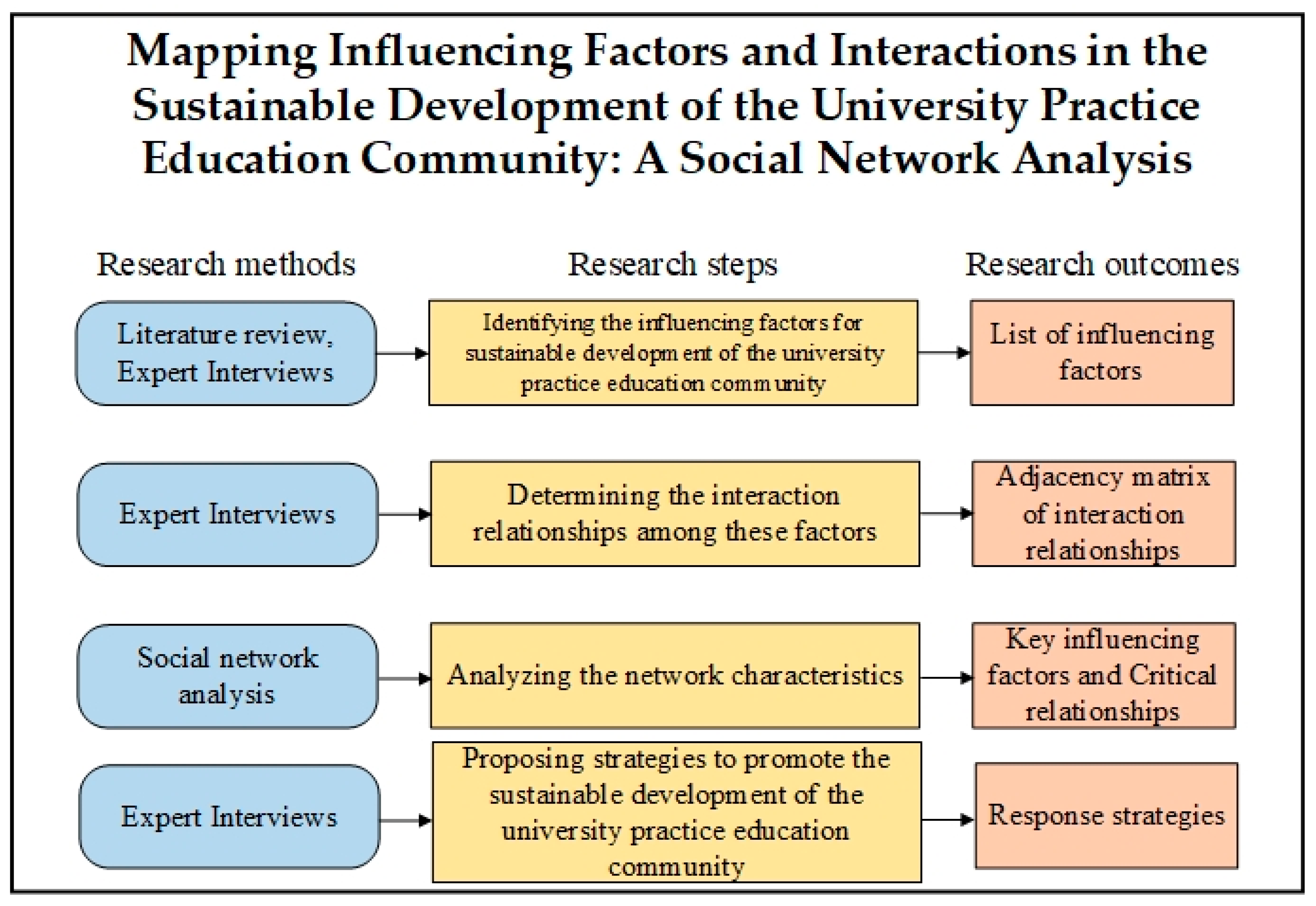
Figure 1. Research framework.
Systems 14 00252 g001
Table 1. Main SNA indicators used in this paper.
IndicatorFormulaExplanation
Degree Centrality C D ( i )   =   k i Measures the number of direct links a node has. A higher degree centrality indicates that the node is more active or important in terms of direct connections within the network.
where C D i is the degree centrality of node i ,   a n d   k i   is the number of direct connections (edges) for node i .
Closeness Centrality C c ( i )   = n 1 j i d ( i , j )   Reflects how close a node is to all other nodes in the network. A node with high closeness centrality can quickly interact with all others and may serve as an efficient information spreader within the network.
where C c ( i ) is the closeness centrality of node i , n   i s the total number of nodes in the network, and d ( i , j )   i s the shortest path length between node i and node j .
Node-Betweenness Centrality C B ( i )   = s j t σ s t ( i ) σ s t   Indicates the extent to which a node lies on the shortest paths between other nodes. A node with high betweenness centrality may play a bridging or controlling role, facilitating or blocking information flows within the network.
where C B ( i ) is the betweenness centrality of node i ,     σ s t is the total number of shortest paths from node s to node t, and σ s t i   i s the number of shortest paths from s to t passing through node i .
Edge-Betweenness Centrality C B ( e )   = s t σ s t ( e ) σ s t   Measures the importance of an edge (connection) in the shortest paths of the network. An edge with high edge-betweenness centrality is a key pathway for information or resource flow, and its removal may greatly disrupt network connectivity.
where C B ( e ) is the betweenness centrality of edge e ,     σ s t is the total number of shortest paths from node s to node t, and σ s t i   i s the number of shortest paths from s to t passing through edge e .
Table 2. The demographic characteristics of the experts.
Demographic CharacteristicCategoryFrequencyPercentage
GenderMale1470%
Female630%
Work UnitGovernment departments630%
Universities840%
Enterprises420%
General public210%
Education LevelBachelor525%
Master1050%
Doctorate210%
Other315%
UPEC Work Experience<5 years630%
5–10 years525%
11–20 years630%
>20 years315%
TitleJunior Title735%
Intermediate Title525%
Senior Title525%
Other315%
Table 3. List of influencing factors for the sustainable development of UPEC.
No.CategoryInfluencing FactorExplanation
F1Collaborative GovernanceWillingness for Multi-Stakeholder Collaboration
  • Refers to the willingness of multiple stakeholders—such as universities, enterprises, and governments—to actively participate in goal setting, task sharing, and resource allocation within the UPEC, proactively advancing collaborative projects. It is characterized by a high degree of alignment and initiative in cooperation intentions, shared responsibility, and collaborative engagement.
F2Collaborative GovernanceStability of Cooperation Mechanisms
  • Refers to the ability to maintain ongoing and regulated cooperative relationships among multiple stakeholders in the UPEC by establishing long-term cooperation agreements, regular meetings, process standards, and improved withdrawal and compensation mechanisms, effectively preventing cooperation from becoming merely formal or disrupted by external changes.
F3Collaborative GovernanceFoundation of Interorganizational Trust
  • Refers to the long-term trust relationships formed between universities and their partners through information sharing, mutual support, and joint problem-solving in past collaborations. It is evident when all parties trust each other, communicate openly, and share risks and responsibilities during project implementation.
F4Collaborative GovernanceClarity of Roles and Responsibilities
  • Refers to the clarity in the division of duties and authorities among all stakeholders during project design, organizational implementation, and performance evaluation in the process of collaborative governance, which helps improve efficiency and prevent the shirking of responsibility.
F5Collaborative GovernanceEffectiveness of Communication and Coordination Mechanisms
  • Refers to the establishment of efficient, regulated, and routine information channels and coordination mechanisms in the UPEC, enabling timely resolution of differences and emergencies. This is reflected in regular meetings, real-time information feedback, and quick response to problems.
F6Resource AssuranceLevel of Shared Resources on Practice Platforms
  • Refers to the ability of all stakeholders to open up and integrate their own resources in the construction and operation of practical education platforms, promoting unified allocation and shared access to resources such as infrastructure, data, and project opportunities.
F7Resource AssuranceCapacity for Integration of Internal and External Resources
  • Refers to the ability of universities and diverse social actors to effectively mobilize and integrate human, material, and intellectual resources in project cooperation and talent cultivation, realizing complementarity and optimal allocation of resources across organizations.
F8Resource AssuranceFinancial Support for Practice Projects
  • Refers to the UPEC’s ability to secure continuous funding from governments, enterprises, universities, and other sources during project advancement and platform construction, ensuring project implementation and platform stability.
F9Resource AssuranceStability of Supervising Teacher Teams
  • Refers to the stability of teacher teams responsible for practical education, in terms of professional capacity, staffing, and continuity, reflected by adequate sources, reasonable tenure, practical experience, and low turnover rates.
F10Resource AssuranceStudent Participation Enthusiasm
  • Refers to students’ willingness to actively engage in various practical projects, depth of participation, and satisfaction, reflected in high sign-up rates, strong involvement, a sense of achievement, and positive feedback.
F11Institutional SupportCompleteness of Incentive and Restraint Mechanisms
  • Refers to the establishment of a systematic incentive and restraint framework through institutional design, performance appraisal, rewards, and penalties, fully mobilizing stakeholder initiative and responsibility, and ensuring effective and continuous progress.
F12Institutional SupportStrength of Institutional Implementation
  • Refers to the extent to which established policies and management measures are strictly enforced in the UPEC, as evidenced by the willingness of stakeholders to comply, the effectiveness of supervision, and the timeliness of handling violations.
F13Institutional SupportMechanism for Collaborative Education Evaluation
  • Refers to the presence of an evaluation system that covers multi-stakeholder participation, process management, and result orientation, enabling scientific evaluation of project process and effectiveness, with clear standards, standardized procedures, and traceable improvements.
F14Institutional SupportEffectiveness of Feedback and Improvement Mechanisms
  • Refers to the community’s ability to collect suggestions and feedback, promptly identify and solve problems, and achieve dynamic optimization and continuous improvement of mechanisms and processes, reflected in high problem identification rates, timely feedback, and significant improvements.
F15Institutional SupportDegree of Policy and Institutional Support
  • Refers to the strength and scope of support provided by relevant national, local, or university-level policies and systems for the operation of the UPEC, as reflected in authoritative policy documents, comprehensive supporting measures, and timely implementation.
F16External EnvironmentLevel of Societal Support
  • Refers to the degree of recognition, attention, and support for UPEC from various social sectors (such as parents, communities, media, and industry organizations), as shown in resource contributions, public opinion, and the external environment for collaboration.
F17External EnvironmentEnthusiasm of Industry and Enterprise Participation
  • Refers to the proactivity and commitment of industry enterprises in collaborative education, as shown in their willingness to provide projects, resources, and training, as well as their positive response to and deep involvement in UPEC reforms.
F18External EnvironmentSupport from Local Government
  • Refers to the active promotion and support of UPEC development by local governments through policies, funding, and resources, as reflected in project guidance, resource allocation, and management services.
F19External EnvironmentAdaptability to Changes in the External Policy Environment
  • Refers to the UPEC’s ability to adjust its operational mechanisms and collaborative models in response to external policy and societal changes, maintaining continuity and stability through institutional flexibility and innovative adaptability.
F20External EnvironmentInfluence of Public Opinion
  • Refers to the attention, evaluation, and influence of mainstream media, online platforms, and the general public on the UPEC and related projects, as shown in the positive effect of favorable opinion on resource attraction and policy promotion, and the pressure and improvement triggered by negative opinion.
Table 4. Top 5 node centrality results.
RankFactor CodeDegree
Centrality
Factor CodeCloseness CentralityFactor CodeNode-Betweenness
Centrality
1F219F295.000F1526.180
2F118F1795.000F2017.667
3F1518F190.476F1413.982
4F1718F586.364F1713.585
5F517F1886.364F513.514
Table 5. Key influencing factor relationships.
Influencing Factor RelationshipBetweenness Centrality Value
F19 → F2013.778
F16 → F1513.509
F20 → F79.179
F20 → F148.312
F14 → F108.201
Disclaimer/Publisher’s Note: The statements, opinions and data contained in all publications are solely those of the individual author(s) and contributor(s) and not of MDPI and/or the editor(s). MDPI and/or the editor(s) disclaim responsibility for any injury to people or property resulting from any ideas, methods, instructions or products referred to in the content.


