
Research on Risk Measurement Methods of Scientific and Technological Innovation: A Dynamic Tension Model Based on Novelty and Adaptation



Abstract
1. Introduction
2. Related Research
2.1. Measurement Methodologies for STI Risks
2.2. The Endogenous Mechanisms Underlying STI Risk Formation
2.2.1. The Intrinsic Link Between Novelty and Innovation Risk
2.2.2. Adaptation-Level Risk Assessment in STI
2.3. Analyzing the Intrinsic Properties of Novelty and Adaptability in STI Risks
2.3.1. Novelty
2.3.2. Adaptation
3. Research Framework and Methods
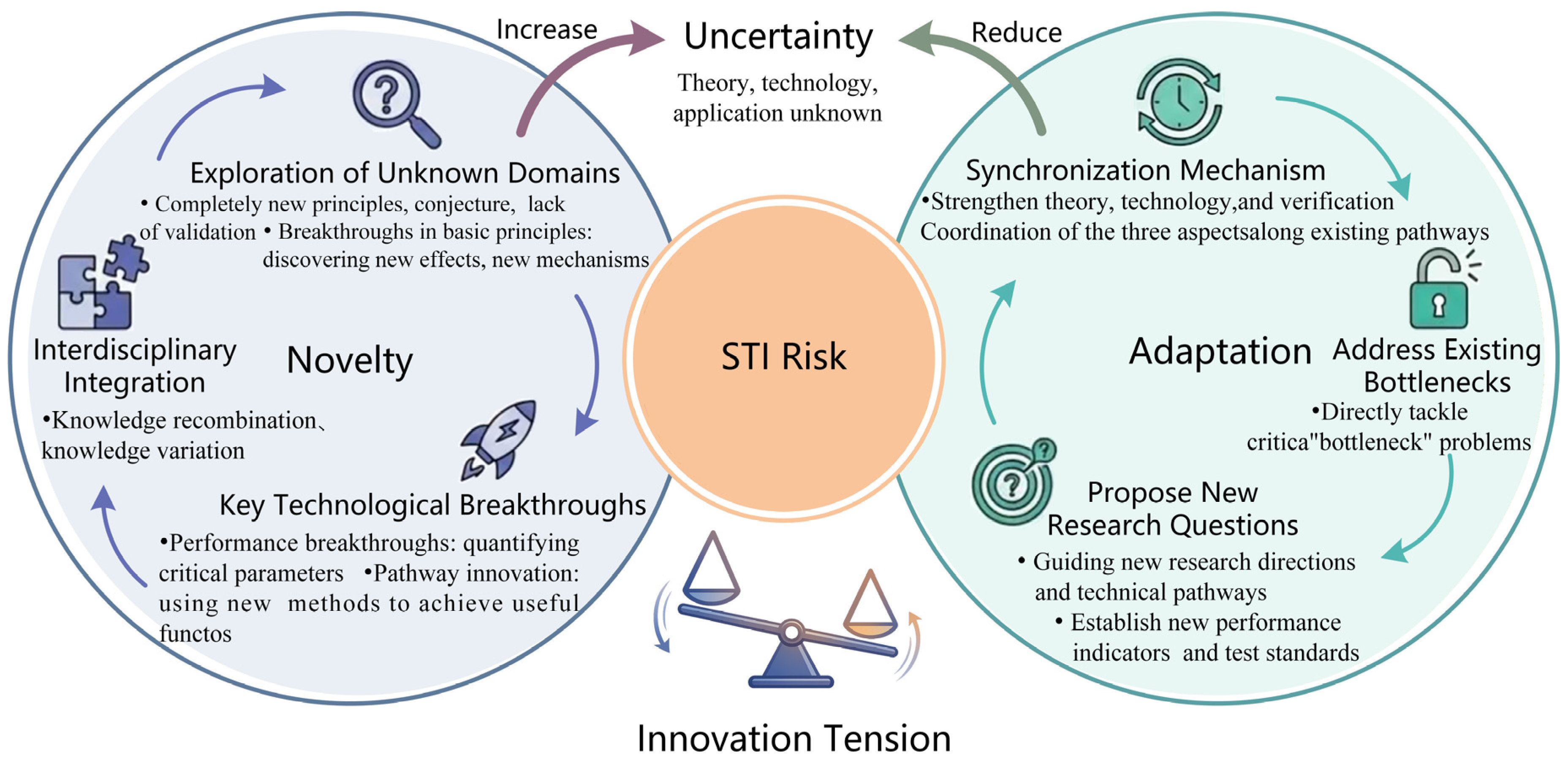
3.1. Theoretical Framework: A Dimensional Analysis of STI Risk
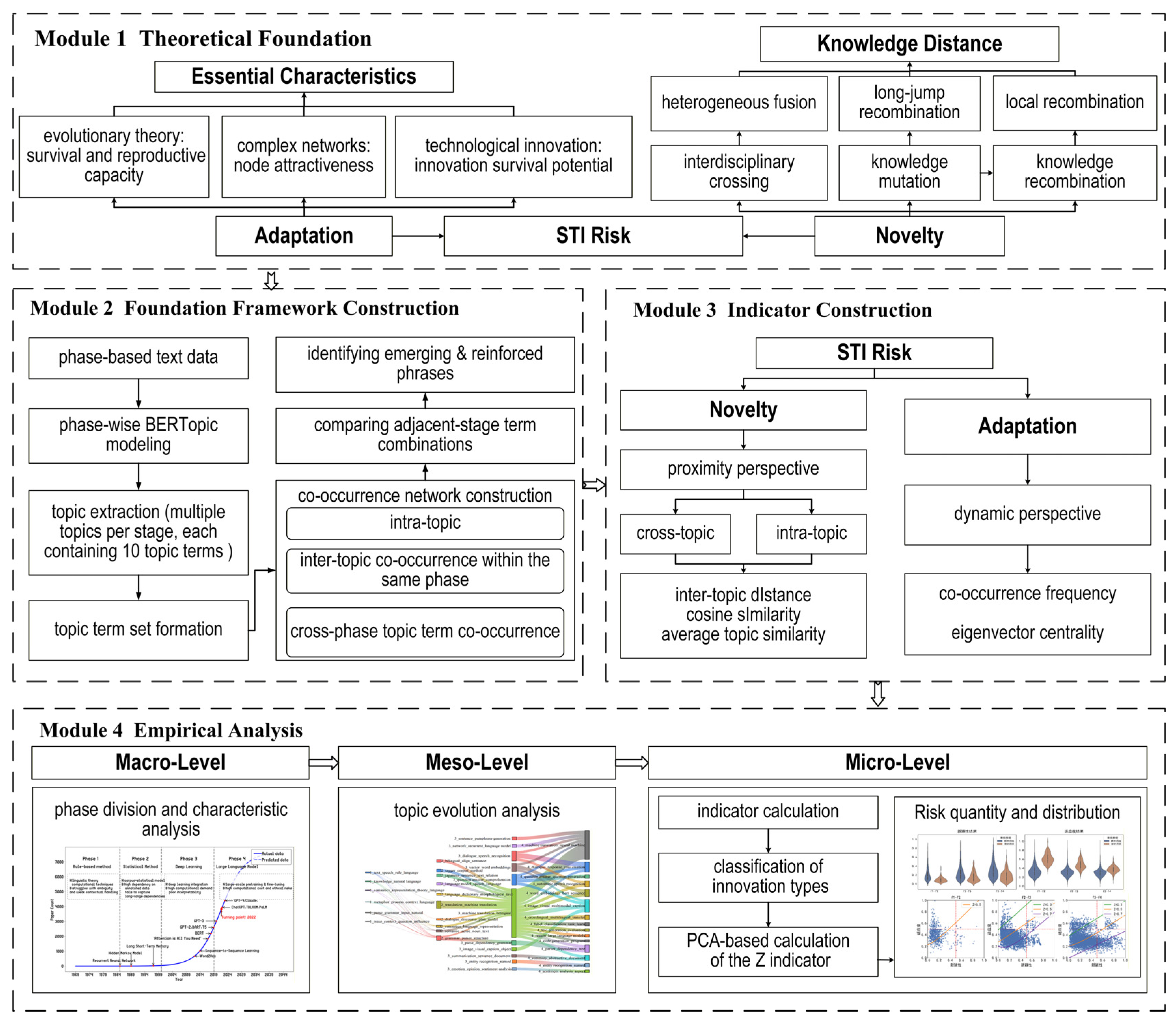
3.2. Framework Construction
3.3. Indicator Construction
3.3.1. Novelty Indicators
3.3.2. Adaptation Indicators
4. Empirical Analysis
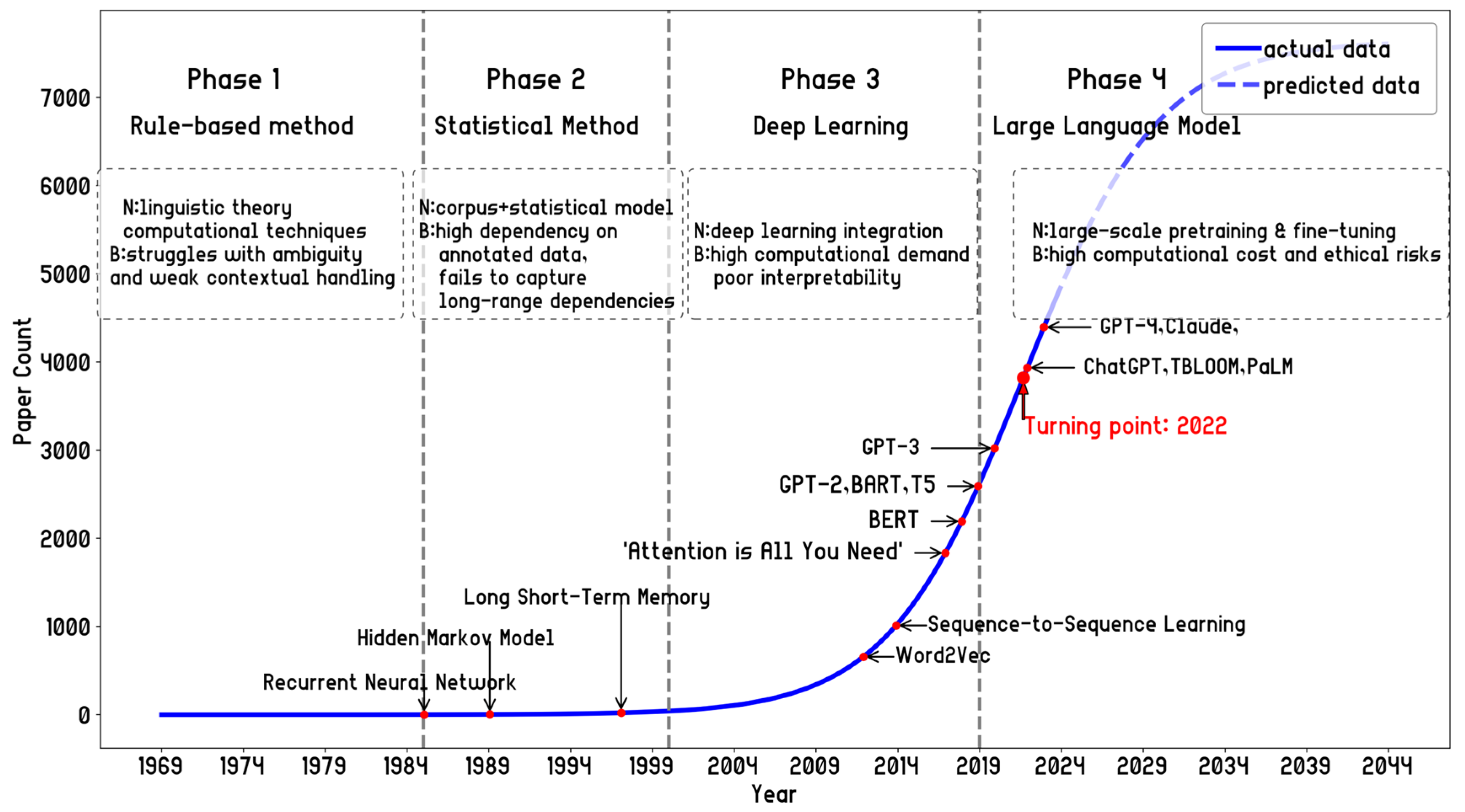
4.1. Data Collection and Preprocessing
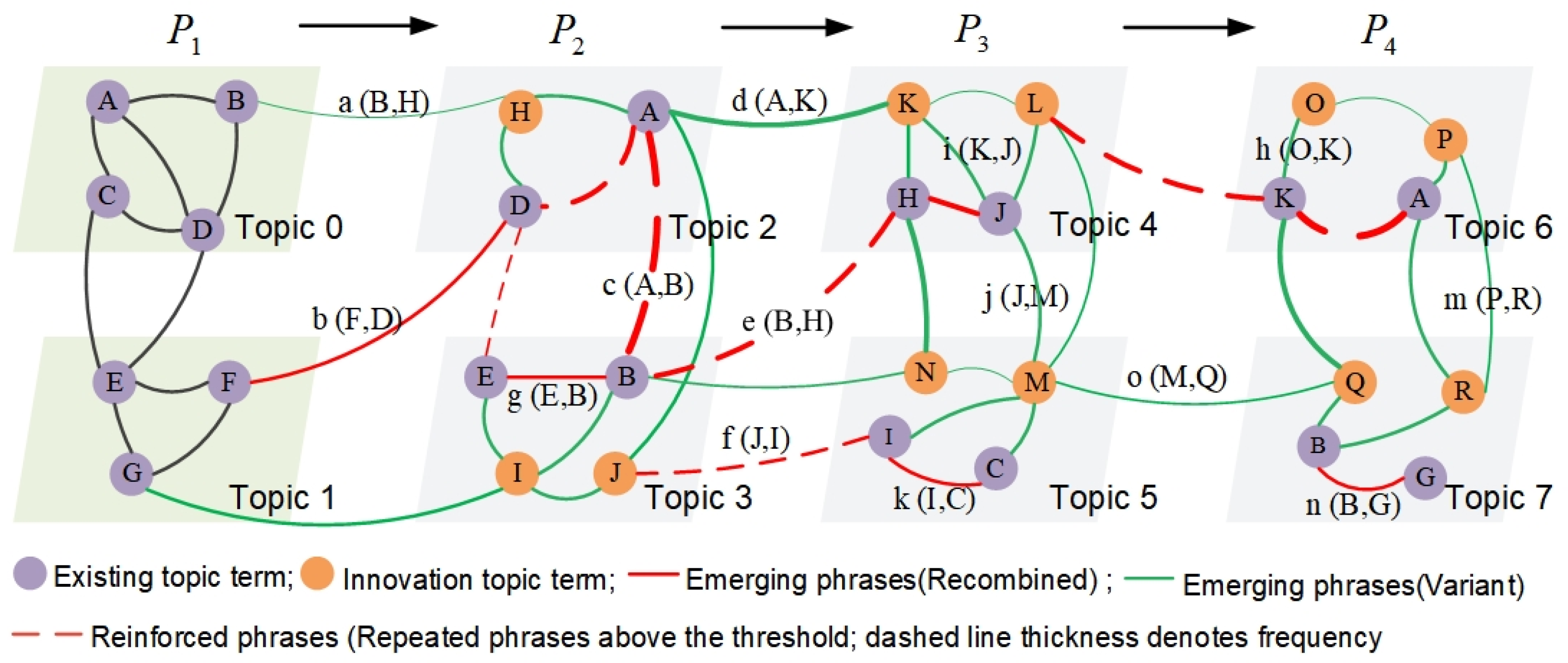
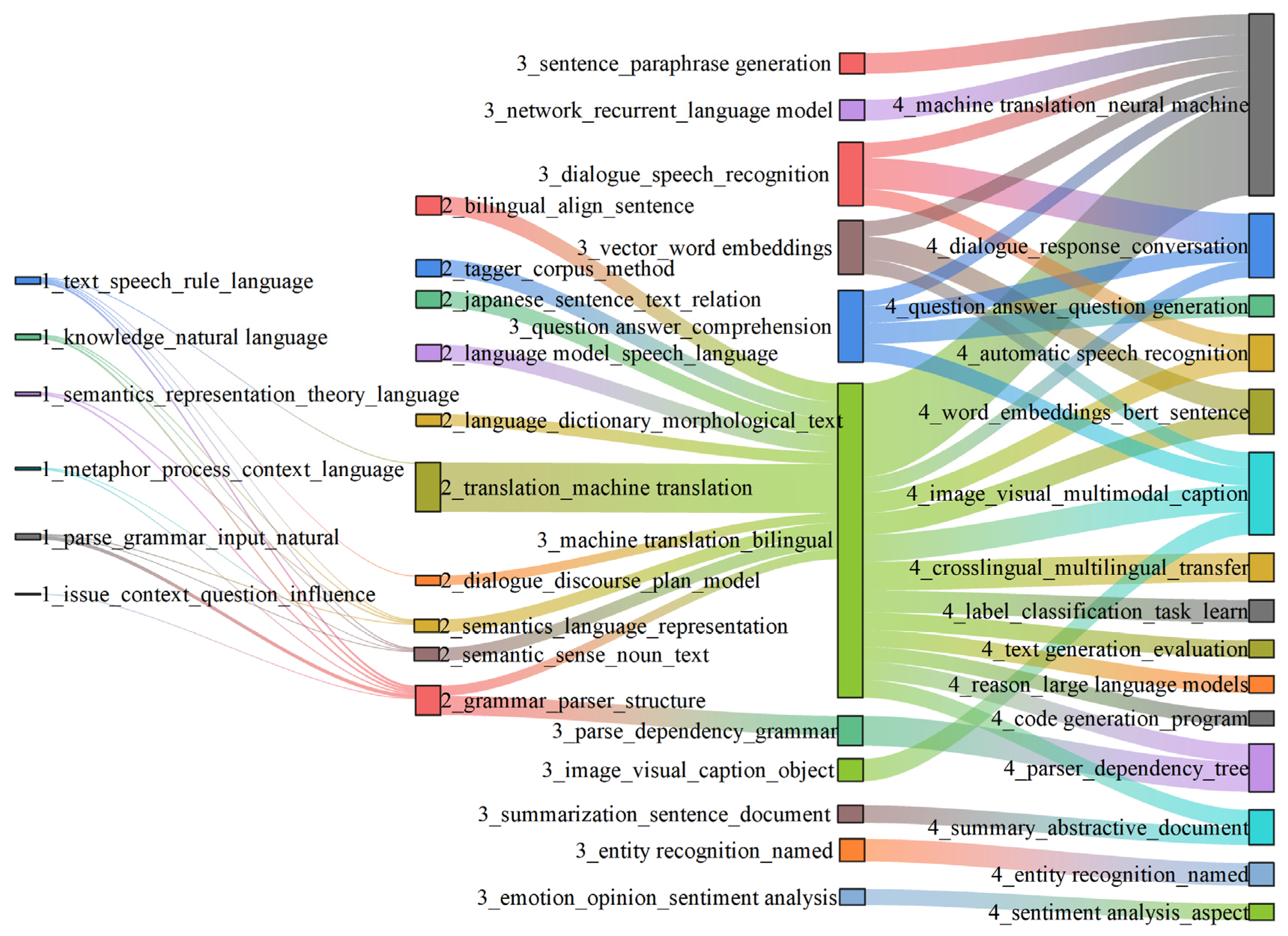
4.2. Identification of Topic Term Recombination in Knowledge Networks
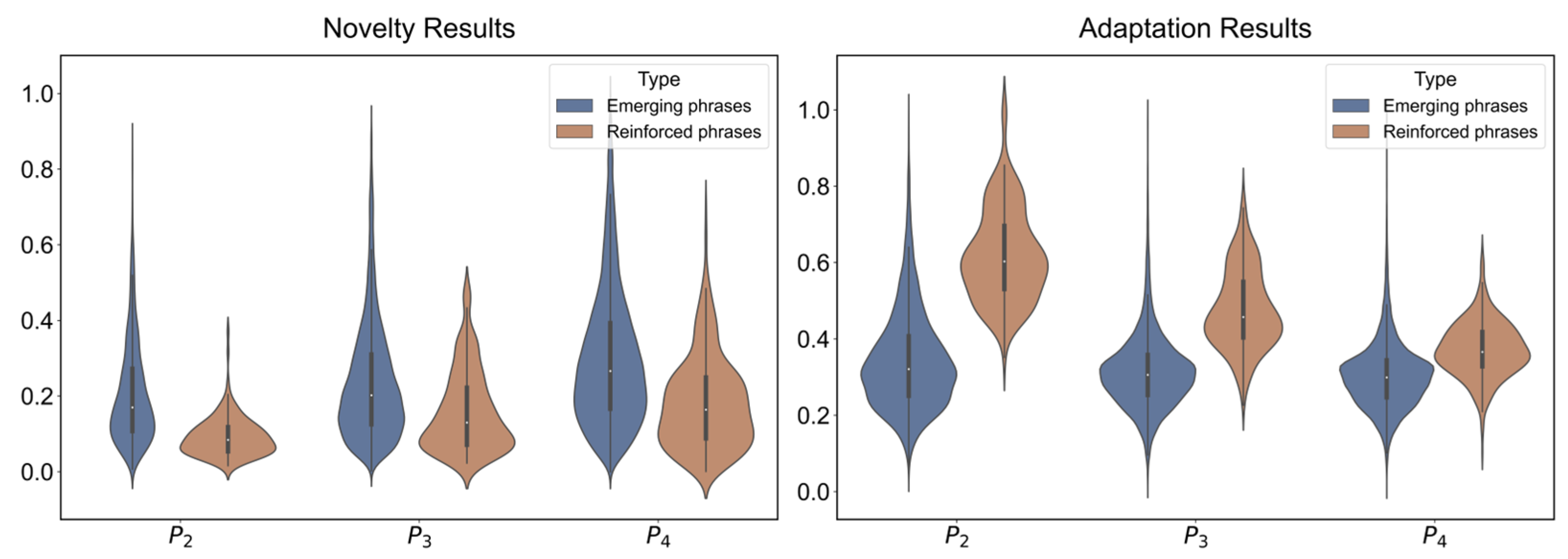
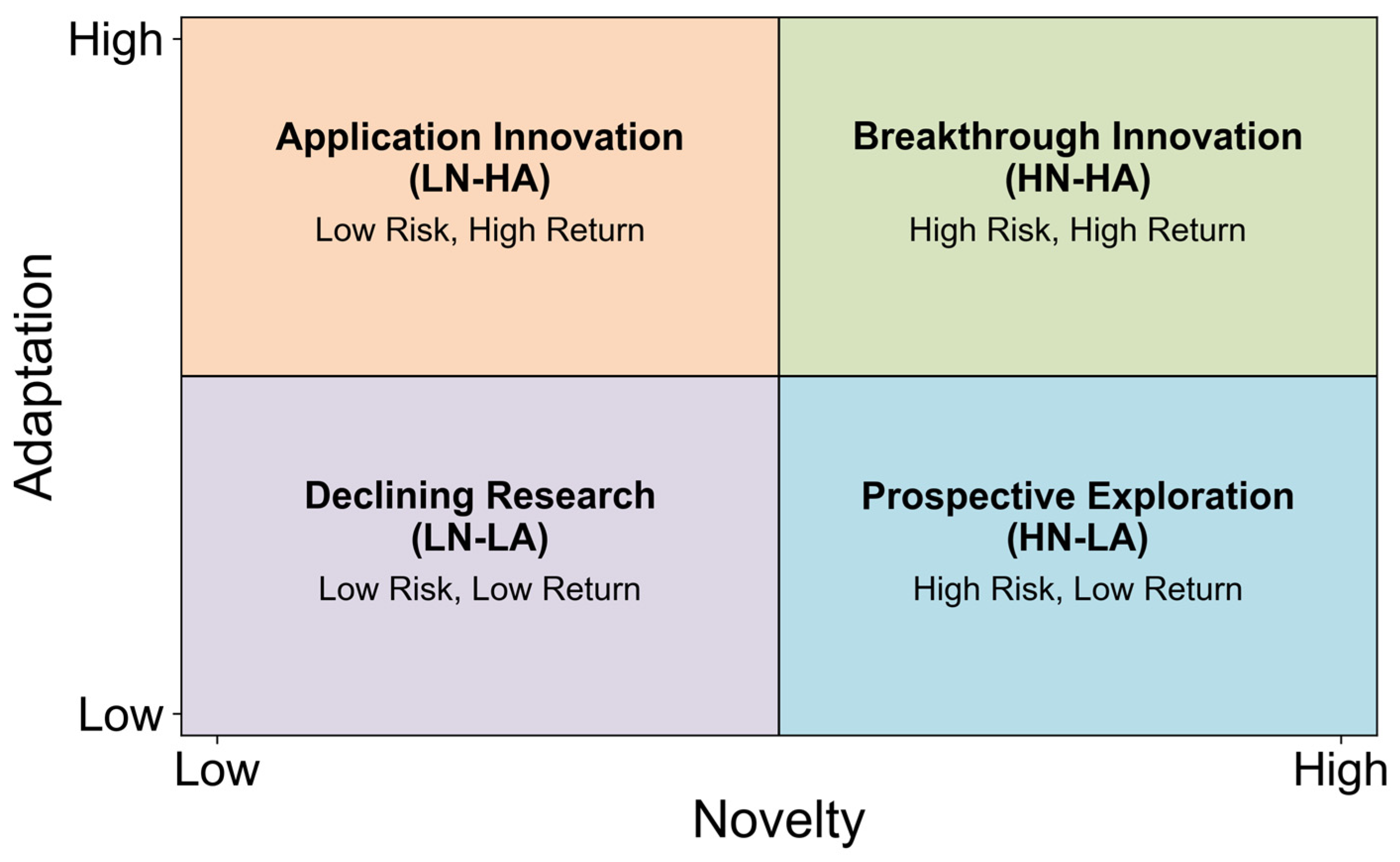
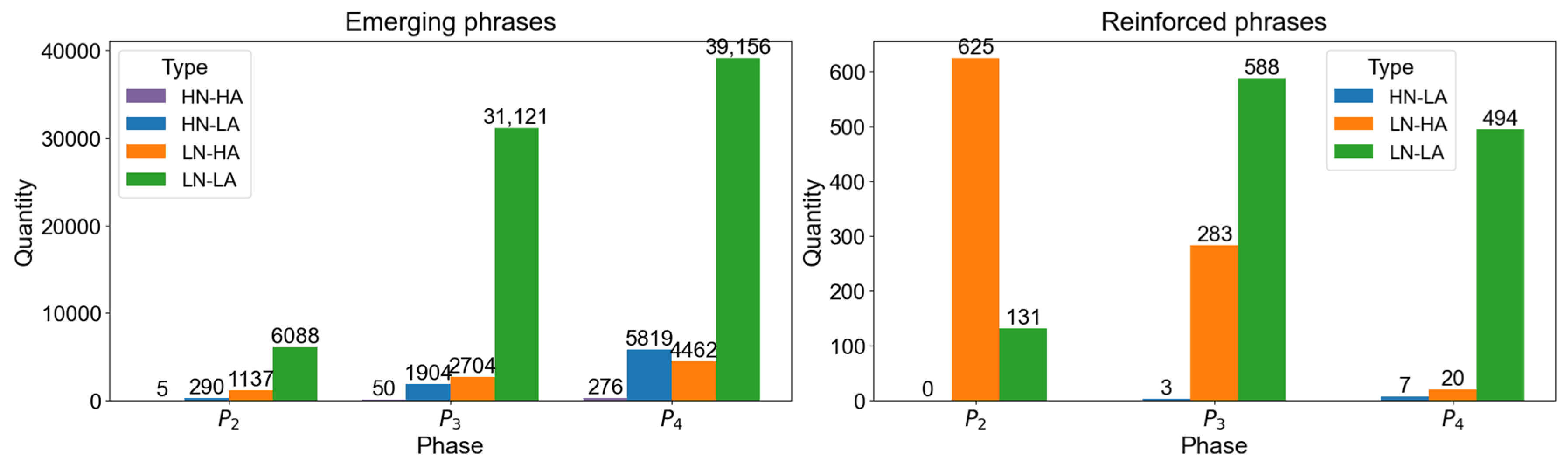
4.3. Novelty and Adaptation Calculation and Results Analysis
- (1)
- High Novelty-High Adaptation (HN-HA)—Breakthrough Innovation
- (2)
- High Novelty-Low Adaptation (HN-LA)—Prospective Exploration
- (3)
- Low Novelty-High Adaptation (LN-HA)—Applied Innovation
- (4)
- Low Novelty-Low Adaptation (LN-LA)—Declining Research
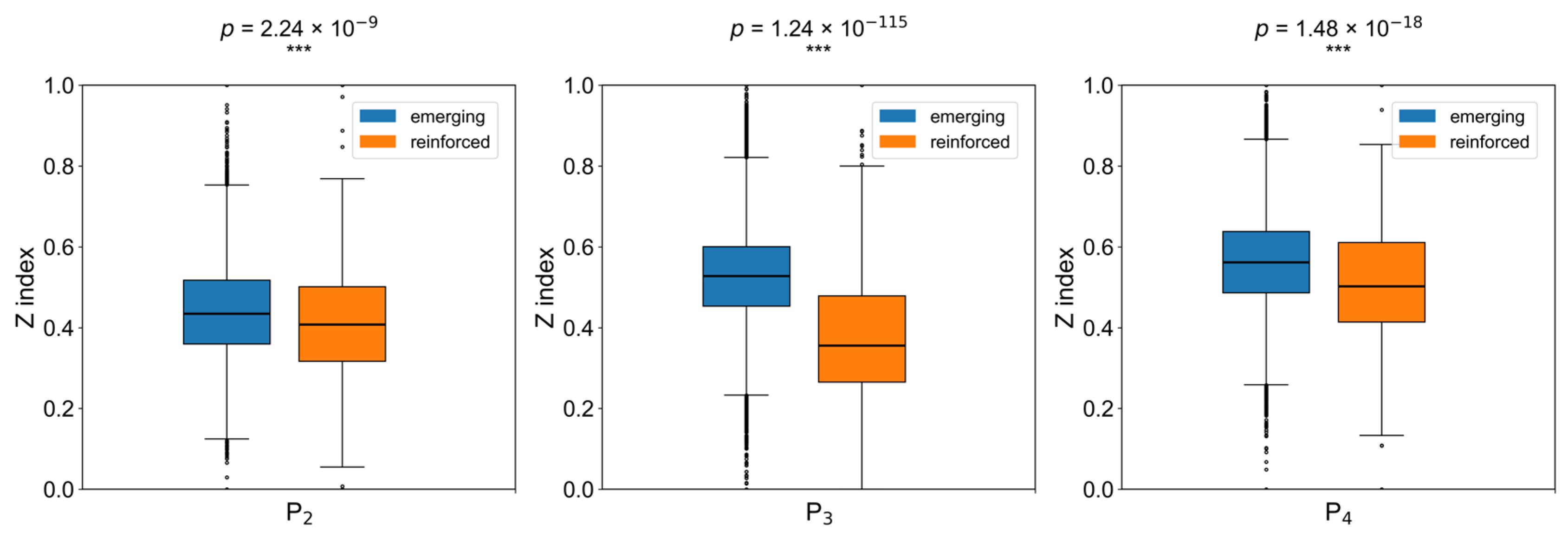
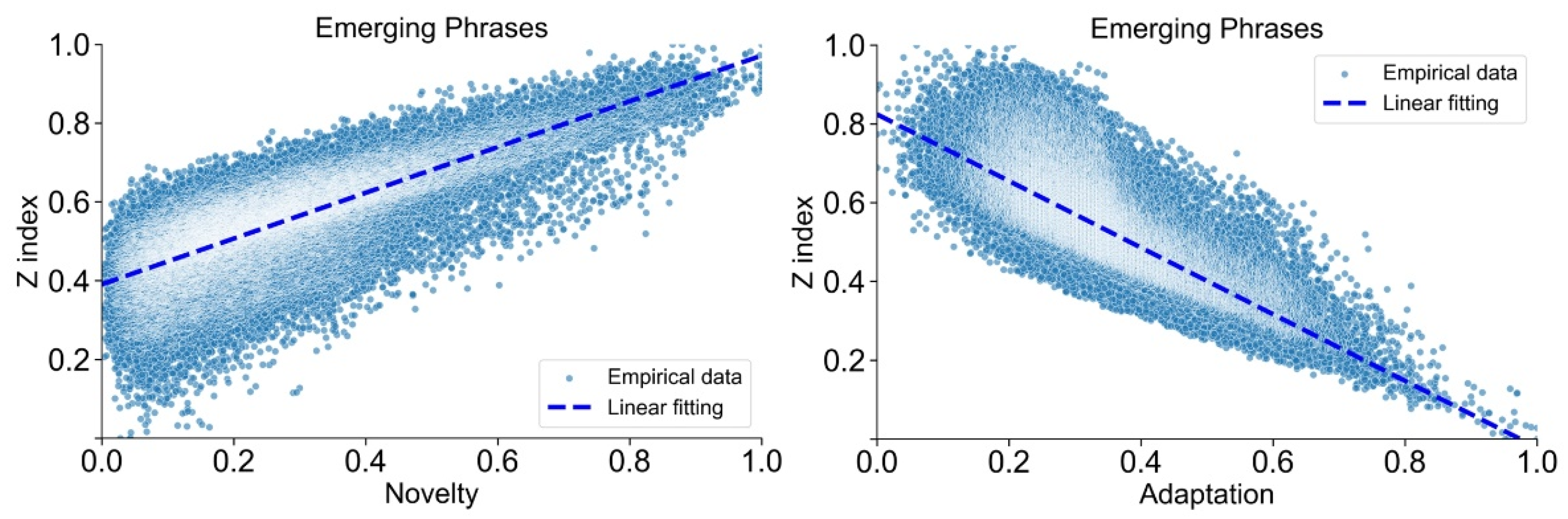
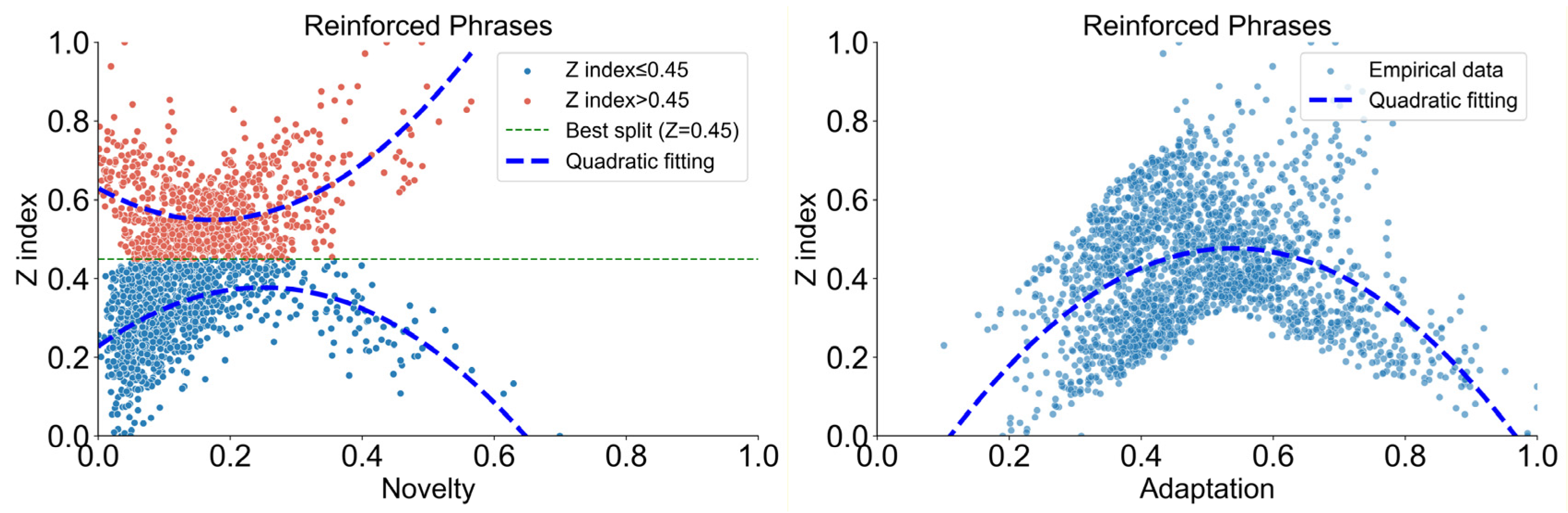
4.4. Effectiveness Validation
5. Discussion
5.1. Main Findings
5.2. Management Implications
5.3. Research Limitations and Future Prospects
Author Contributions
Funding
Data Availability Statement
Acknowledgments
Conflicts of Interest
Appendix A

| Index | Factor Loading Coefficient | Communality | |||||
|---|---|---|---|---|---|---|---|
| PC1 | PC2 | PC1 | PC2 | PC1 | PC2 | ||
| Novelty | 0.592 | 0.806 | 0.637 | −0.771 | 0.931 | 0.365 | 1.000 |
| Adaptation | 0.605 | −0.796 | 0.637 | 0.771 | −0.578 | 0.816 | 1.000 |
References
- Heidenreich, S.; Kraemer, T. Innovations—Doomed to Fail? Investigating Strategies to Overcome Passive Innovation Resistance. J. Prod. Innov. Manag. 2016, 33, 277–297. [Google Scholar] [CrossRef]
- Chen, J.; Wu, Z.; Dai, T. Research on Risk Identification Framework of Future Technology Based on the Perspective of Techno-Economic Security. Bull. Chin. Acad. Sci. 2023, 38, 570–579. [Google Scholar] [CrossRef]
- Luthfa, S. A Study of How Uncertainty Emerges in the Uncertainty-Embedded Innovation Process. J. Innov. Manag. 2019, 7, 46–79. [Google Scholar] [CrossRef]
- Foster, J.G.; Rzhetsky, A.; Evans, J.A. Tradition and Innovation in Scientists’ Research Strategies. Am. Sociol. Rev. 2015, 80, 875–908. [Google Scholar] [CrossRef]
- Wang, T. Toward an Understanding of Innovation Failure: The Timing of Failure Experience. Technovation 2023, 125, 102787. [Google Scholar] [CrossRef]
- Park, M.; Leahey, E.; Funk, R.J. Papers and Patents Are Becoming Less Disruptive over Time. Nature 2023, 613, 138–144. [Google Scholar] [CrossRef]
- Shibayama, S.; Yin, D.; Matsumoto, K. Measuring Novelty in Science with Word Embedding. PLoS ONE 2021, 16, e0254034. [Google Scholar] [CrossRef] [PubMed]
- D’Este, P.; Amara, N.; Olmos-Peñuela, J. Fostering Novelty While Reducing Failure: Balancing the Twin Challenges of Product Innovation. Technol. Forecast. Soc. Change 2016, 113, 280–292. [Google Scholar] [CrossRef]
- Barney, J.B.; Nelson, R.R.; Winter, S.G. An Evolutionary Theory of Economic Change. Adm. Sci. Q. 1987, 32, 315. [Google Scholar] [CrossRef]
- Uzzi, B.; Mukherjee, S.; Stringer, M.; Jones, B. Atypical Combinations and Scientific Impact. Science 2013, 342, 468–472. [Google Scholar] [CrossRef]
- Jumper, J.; Evans, R.; Pritzel, A.; Green, T.; Figurnov, M.; Ronneberger, O.; Tunyasuvunakool, K.; Bates, R.; Žídek, A.; Potapenko, A.; et al. Highly Accurate Protein Structure Prediction with AlphaFold. Nature 2021, 596, 583–589. [Google Scholar] [CrossRef]
- Bednorz, J.G.; Müller, K.A. Possible highTc Superconductivity in the Ba−La−Cu−O System. Z. Phys. B—Condens. Matter 1986, 64, 189–193. [Google Scholar] [CrossRef]
- Anderson, P.W. The Resonating Valence Bond State in La2CuO4 and Superconductivity. Science 1987, 235, 1196–1198. [Google Scholar] [CrossRef] [PubMed]
- Linton, J.D. Improving the Peer Review Process: Capturing More Information and Enabling High-Risk/High-Return Research. Res. Policy 2016, 45, 1936–1938. [Google Scholar] [CrossRef]
- McGoun, E.G. The History of Risk “Measurement”. Crit. Perspect. Account. 1995, 6, 511–532. [Google Scholar] [CrossRef]
- Machado, D. Quantitative Indicators for High-Risk/High-Reward Research. In OECD Science, Technology and Industry Working Papers; OECD: Paris, France, 2021; pp. 2–12. [Google Scholar]
- Veugelers, R.; Wang, J.; Stephan, P. Do Funding Agencies Select and Enable Novel Research: Evidence from ERC. Econ. Innov. New Technol. 2025, 1–18. [Google Scholar] [CrossRef]
- Yin, D.; Wu, Z.; Shibayama, S. Measuring Risk in Science. J. Informetr. 2023, 17, 101426. [Google Scholar] [CrossRef]
- Mueller, J.S.; Melwani, S.; Goncalo, J.A. The Bias Against Creativity: Why People Desire but Reject Creative Ideas. Psychol. Sci. 2012, 23, 13–17. [Google Scholar] [CrossRef]
- Criscuolo, P.; Dahlander, L.; Grohsjean, T.; Salter, A. Evaluating Novelty: The Role of Panels in the Selection of R&D Projects. Acad. Manag. J. 2017, 60, 433–460. [Google Scholar] [CrossRef]
- Nerkar, A. Old Is Gold? The Value of Temporal Exploration in the Creation of New Knowledge. Manag. Sci. 2003, 49, 211–229. [Google Scholar] [CrossRef]
- Kaplan, S.; Vakili, K. The Double-Edged Sword of Recombination in Breakthrough Innovation. Strateg. Manag. J. 2015, 36, 1435–1457. [Google Scholar] [CrossRef]
- Wang, C.-J.; Yan, L.; Cui, H. Unpacking the Essential Tension of Knowledge Recombination: Analyzing the Impact of Knowledge Spanning on Citation Impact and Disruptive Innovation. J. Informetr. 2023, 17, 101451. [Google Scholar] [CrossRef]
- Lin, Y.; Evans, J.A.; Wu, L. New Directions in Science Emerge from Disconnection and Discord. J. Informetr. 2022, 16, 101234. [Google Scholar] [CrossRef]
- Wang, J.; Veugelers, R.; Stephan, P. Bias against Novelty in Science: A Cautionary Tale for Users of Bibliometric Indicators. Res. Policy 2017, 46, 1416–1436. [Google Scholar] [CrossRef]
- Orr, H.A. Fitness and Its Role in Evolutionary Genetics. Nat. Rev. Genet. 2009, 10, 531–539. [Google Scholar] [CrossRef] [PubMed]
- Lillie, R.S. The Fitness of the Environment. An Inquiry into the Biological Significance of the Properties of Matter. Science 1913, 38, 337–342. [Google Scholar] [CrossRef]
- Spencer, H. The Principles of Biology; D. Appleton and Company: New York, NY, USA, 1914; pp. 51–53. [Google Scholar]
- Glor, E.D. Building Theory of Organizational Innovation, Change, Fitness and Survival. Innov. J. Public Sect. Innov. J. 2015, 20, 1–167. [Google Scholar]
- Fleischmann, M.; Pons, S. Electrochemically Induced Nuclear Fusion of Deuterium. J. Electroanal. Chem. Interfacial Electrochem. 1989, 261, 301–308. [Google Scholar] [CrossRef]
- Einstein, A. Zur Elektrodynamik Bewegter Körper. Ann. Der Phys. 1905, 322, 891–921. [Google Scholar] [CrossRef]
- Garud, R.; Gehman, J.; Kumaraswamy, A.; Tuertscher, P. From the Process of Innovation to Innovation as Process. In The SAGE Handbook of Process Organization Studies; Langley, A., Tsoukas, H., Eds.; SAGE: London, UK, 2017; pp. 451–465. [Google Scholar]
- Pettigrew, A.M.; Woodman, R.W.; Cameron, K.S. Studying Organizational Change and Development: Challenges for Future Research. Acad. Manag. J. 2001, 44, 697–713. [Google Scholar] [CrossRef]
- Planck, M. Zur Theorie Des Gesetzes Der Energieverteilung Im Normalspectrum. VhDPG 1900, 2, 238. [Google Scholar]
- Einstein, A. Über Einen Die Erzeugung Und Verwandlung Des Lichtes Betreffenden Heuristischen Gesichtspunkt. Ann. Der Phys. 1905, 322, 132–148. [Google Scholar] [CrossRef]
- Lane, J.N. The Subjective Expected Utility Approach and a Framework for Defining Project Risk in Terms of Novelty and Feasibility—A Response to Franzoni and Stephan (2023), ‘Uncertainty and Risk-Taking in Science’. Res. Policy 2023, 52, 104707. [Google Scholar] [CrossRef]
- Fleming, L. Recombinant Uncertainty in Technological Search. Manag. Sci. 2001, 47, 117–132. [Google Scholar] [CrossRef]
- Becker, M.C.; Knudsen, T.; March, J.G. Schumpeter, Winter, and the Sources of Novelty. Ind. Corp. Change 2006, 15, 353–371. [Google Scholar] [CrossRef]
- Ethiraj, S.K.; Levinthal, D. Modularity and Innovation in Complex Systems. Manag. Sci. 2004, 50, 159–173. [Google Scholar] [CrossRef]
- Gavetti, G.; Levinthal, D. Looking Forward and Looking Backward: Cognitive and Experiential Search. Adm. Sci. Q. 2000, 45, 113–137. [Google Scholar] [CrossRef]
- Leahey, E.; Lee, J.; Funk, R.J. What Types of Novelty Are Most Disruptive? Am. Sociol. Rev. 2023, 88, 562–597. [Google Scholar] [CrossRef]
- Moaniba, I.M.; Su, H.-N.; Lee, P.C. Knowledge Recombination and Technological Innovation: The Important Role of Cross-Disciplinary Knowledge. Innovation 2018, 20, 326–352. [Google Scholar] [CrossRef]
- Ma, R.K.; Wang, Y.T. Diversity and Novelty of Knowledge Combination and the Formation of Breakthrough Inventions. Stud. Sci. Sci. 2020, 38, 313–322. [Google Scholar] [CrossRef]
- Trapido, D. How Novelty in Knowledge Earns Recognition: The Role of Consistent Identities. Res. Policy 2015, 44, 1488–1500. [Google Scholar] [CrossRef]
- Yan, Y.; Tian, S.; Zhang, J. The Impact of a Paper’s New Combinations and New Components on Its Citation. Scientometrics 2020, 122, 895–913. [Google Scholar] [CrossRef]
- Luo, Z.; Lu, W.; He, J.; Wang, Y. Combination of Research Questions and Methods: A New Measurement of Scientific Novelty. J. Informetr. 2022, 16, 101282. [Google Scholar] [CrossRef]
- Li, J.; Yang, X. Multidimensional Measurement Characterization of Novelty Papers: An Example from the Field of Human–Computer Interaction. Inf. Sci. 2024, 43, 93–106. [Google Scholar]
- Rodgers, N.; Tiňo, P.; Johnson, S. Fitness-Based Growth of Directed Networks with Hierarchy. J. Phys. Complex. 2024, 5, 035013. [Google Scholar] [CrossRef]
- Smolyarenko, I.E.; Hoppe, K.; Rodgers, G.J. Network Growth Model with Intrinsic Vertex Fitness. Phys. Rev. 2013, 88, 012805. [Google Scholar] [CrossRef][Green Version]
- Pham, T.; Sheridan, P.; Shimodaira, H. Joint Estimation of Preferential Attachment and Node Fitness in Growing Complex Networks. Sci. Rep. 2016, 6, 32558. [Google Scholar] [CrossRef]
- Hoppe, K.; Rodgers, G.J. Percolation on Fitness-Dependent Networks with Heterogeneous Resilience. Phys. Rev. E 2014, 90, 012815. [Google Scholar] [CrossRef][Green Version]
- Xu, X.-J.; Zhang, L.-M.; Zhang, L.-J. Mutual Selection in Network Evolution: The Role of the Intrinsic Fitness. Int. J. Mod. Phys. C 2010, 21, 129–135. [Google Scholar] [CrossRef]
- Bianconi, G.; Barabási, A.-L. Competition and Multiscaling in Evolving Networks. Europhys. Lett. 2001, 54, 436. [Google Scholar] [CrossRef]
- Aspembitova, A.; Feng, L.; Melnikov, V.; Chew, L.Y. Fitness Preferential Attachment as a Driving Mechanism in Bitcoin Transaction Network. PLoS ONE 2019, 14, e0219346. [Google Scholar] [CrossRef] [PubMed]
- Memi, F.; Ntokou, A.; Papangeli, I. CRISPR/Cas9 Gene-Editing: Research Technologies, Clinical Applications and Ethical Considerations. Semin. Perinatol. 2018, 42, 487–500. [Google Scholar] [CrossRef]
- March, J.G. Exploration and Exploitation in Organizational Learning. Organ. Sci. 1991, 2, 71–87. [Google Scholar] [CrossRef]
- Funk, R.J.; Owen-Smith, J. A Dynamic Network Measure of Technological Change. Manag. Sci. 2017, 63, 791–817. [Google Scholar] [CrossRef]
- Cattani, G.; Deichmann, D.; Ferriani, S. Novelty: Searching for, Seeing, and Sustaining It. In The Generation, Recognition and Legitimation of Novelty; Emerald Publishing Limited: Leeds, UK, 2022; Volume 77, pp. 3–23. [Google Scholar]
- Bavato, D. Nothing New Under the Sun: Novelty Constructs and Measures in Social Studies. In The Generation, Recognition and Legitimation of Novelty; Cattani, G., Deichmann, D., Ferriani, S., Eds.; Emerald Publishing Limited: Leeds, UK, 2022; Volume 77, ISBN 978-1-80117-998-0. [Google Scholar]
- Newman, M. Networks: An Introduction; Oxford University Press: Oxford, UK, 2010; ISBN 978-0-19-920665-0. [Google Scholar]
- Bianconi, G.; Barabási, A.-L. Bose-Einstein Condensation in Complex Networks. Phys. Rev. Lett. 2001, 86, 5632–5635. [Google Scholar] [CrossRef] [PubMed]
- Liu, B.; Hu, M.; Cheng, J. Opinion Observer: Analyzing and Comparing Opinions on the Web. In Proceedings of the 14th International Conference on World Wide Web; Association for Computing Machinery: New York, NY, USA, 2005; pp. 342–351. [Google Scholar]
- Che, W.X.; Dou, Z.C.; Feng, Y.S.; Gui, T.; Han, X.P.; Hu, B.T.; Huang, M.L.; Huang, X.J.; Liu, K.; Liu, T.; et al. Towards a Comprehensive Understanding of the Impact of Large Language Models on Natural Language Processing: Challenges, Opportunities and Future Directions. Sci. Sin. Inf. 2023, 53, 1645–1687. [Google Scholar]
- Xie, Y.; Hu, Y.; Peng, W.; Bi, G.; Xing, L. COMMA: Modeling Relationship among Motivations, Emotions and Actions in Language-Based Human Activities. arXiv 2022, arXiv:2209.06470. [Google Scholar] [CrossRef]
- Brown, P.F.; Lai, J.C.; Mercer, R.L. Aligning Sentences in Parallel Corpora. In Proceedings of the 29th Annual Meeting on Association for Computational Linguistics; Association for Computational Linguistics: Berkeley, CA, USA, 1991; pp. 169–176. [Google Scholar]
- Dorr, B. Solving Thematic Divergences in Machine Translation. In Proceedings of the 28th Annual Meeting on Association for Computational Linguistics, Pittsburgh, PA, USA, 6–9 June 1990. [Google Scholar] [CrossRef]
- Pullum, G.K. Context-Freeness and the Computer Processing of Human Languages. In Proceedings of the 21st Annual Meeting on Association for Computational Linguistics; Association for Computational Linguistics: Cambridge, MA, USA, 1983; p. 1. [Google Scholar][Green Version]
- Vaswani, A.; Shazeer, N.; Parmar, N.; Uszkoreit, J.; Jones, L.; Gomez, A.N.; Kaiser, Ł.; Polosukhin, I. Attention Is All You Need. In Proceedings of the 31st International Conference on Neural Information Processing Systems; Curran Associates Inc.: Red Hook, NY, USA, 2017; pp. 6000–6010. [Google Scholar]


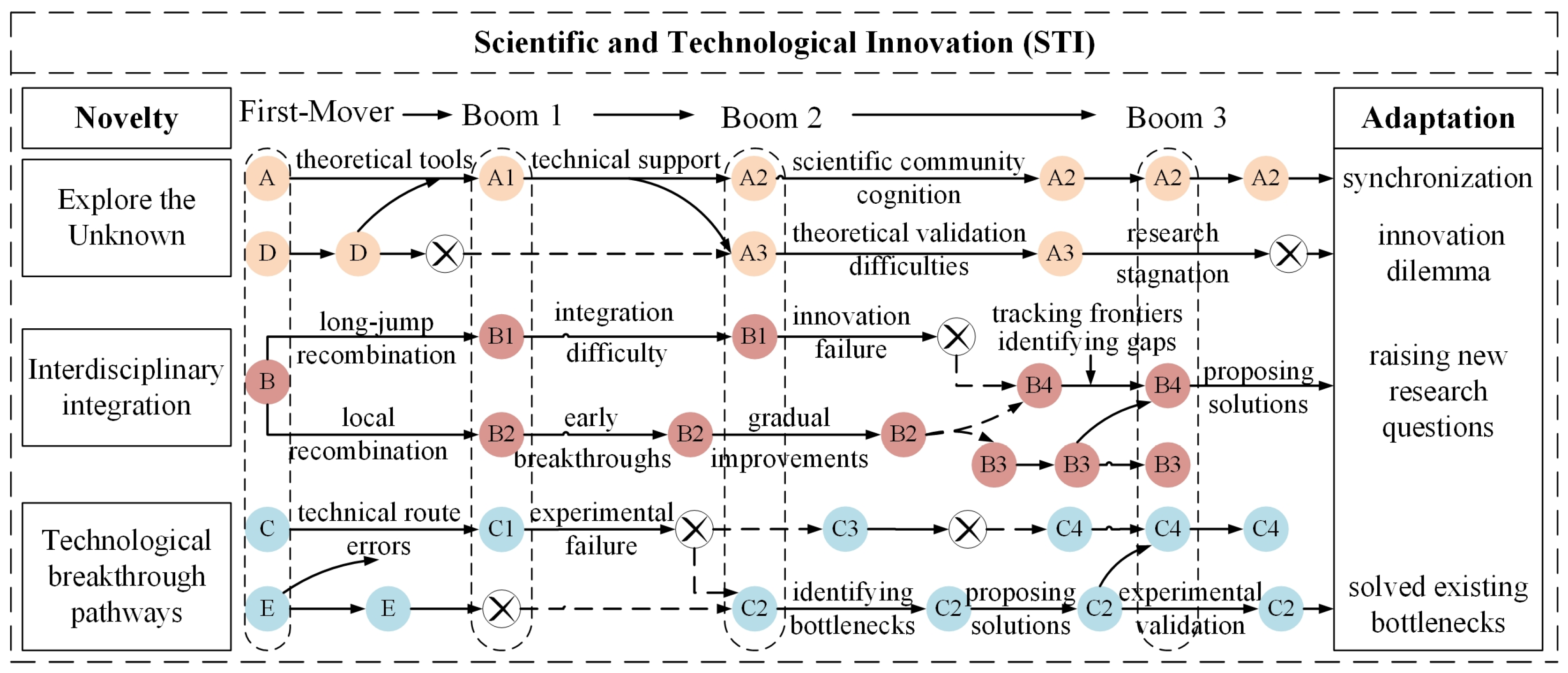
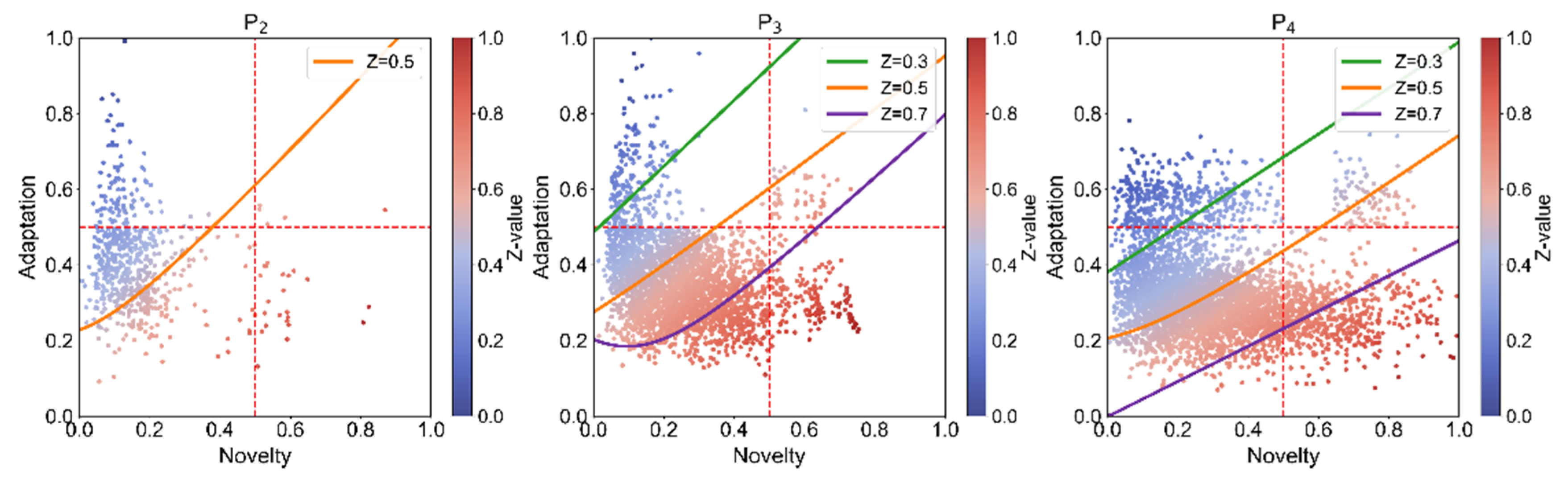
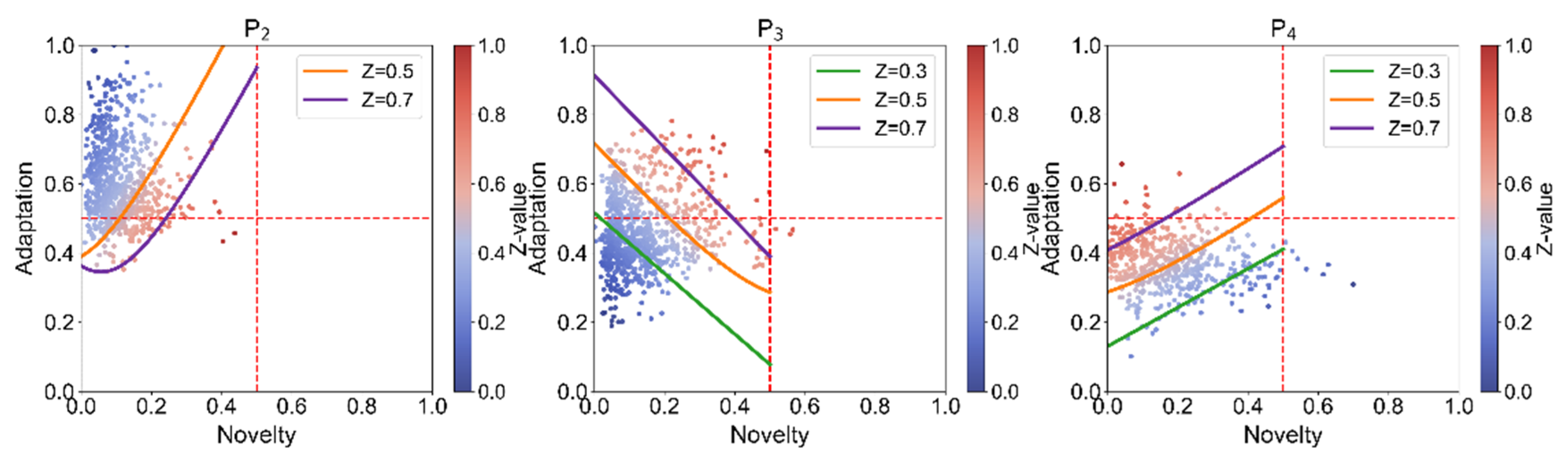
 indicates encountering innovation dilemmas.
indicates encountering innovation dilemmas.
indicates encountering innovation dilemmas.


| Phase | Emerging Phrases | Reinforced Phrases | ) | ||
|---|---|---|---|---|---|
| 7520 | 756 | < 10 | > 20 | ||
| 35,869 | 874 | < 20 | > 40 | ||
| 49,713 | 521 | < 20 | > 40 | ||
| Type | Phase | Topic Term Combination | Novelty | Adaptation |
|---|---|---|---|---|
| HN-HA | accent, intonation | 0.869 | 0.545 | |
| accent, discourse | 0.513 | 0.557 | ||
| image, language | 0.694 | 0.624 | ||
| latent dirichlet allocation, model | 0.655 | 0.563 | ||
| entity, recognition named | 0.602 | 0.809 | ||
| model, neural machine translation | 0.527 | 0.584 | ||
| empathetic, model | 0.860 | 0.646 | ||
| hate, speech | 0.824 | 0.740 | ||
| code generation, language | 0.695 | 0.618 | ||
| bias, model | 0.635 | 0.710 | ||
| HN-LA | intonation, sentence | 0.823 | 0.289 | |
| ellipsis, machine translation | 0.723 | 0.308 | ||
| corpus, plan | 0.715 | 0.162 | ||
| dirichlet, morphological | 0.927 | 0.281 | ||
| entity recognition, sentiment analysis | 0.906 | 0.281 | ||
| classification, named entity recognition | 0.894 | 0.333 | ||
| chinese, latent dirichlet allocation | 0.888 | 0.242 | ||
| semantic role label, topic | 0.838 | 0.153 | ||
| hate speech detection, recognition | 0.999 | 0.218 | ||
| hate speech, part of speech | 0.984 | 0.246 | ||
| audio, toxicity | 0.997 | 0.282 | ||
| neural machine translation, sentiment analysis | 0.934 | 0.306 | ||
| LN-HA | machine, translation | 0.129 | 0.991 | |
| corpus, text | 0.043 | 0.956 | ||
| disambiguation, word | 0.223 | 0.824 | ||
| answer, question | 0.163 | 1.000 | ||
| coreference, resolution | 0.152 | 0.983 | ||
| document, summarization | 0.295 | 0.970 | ||
| bert, model | 0.207 | 0.787 | ||
| automatic, speech recognition | 0.071 | 0.754 | ||
| analysis, aspect based sentiment | 0.129 | 0.744 | ||
| LN-LA | extension, rule | 0.026 | 0.294 | |
| document, natural language | 0.033 | 0.263 | ||
| bilingual, entity recognition | 0.022 | 0.261 | ||
| language, word sense disambiguation | 0.034 | 0.345 | ||
| extraction, text generation | 0.161 | 0.329 | ||
| method, transformer model | 0.161 | 0.352 |
| Quadrant Location | Core Characteristics & Risk-Return Profile | Case Examples from Sample Papers & Context | Strategic Recommendations for Reference |
|---|---|---|---|
| HN-HA | Breakthrough innovation: high return potential but high uncertainty. Solves foundational bottlenecks or creates new paradigms aligned with market needs. Primary risk: Unproven technological paths and high R&D failure rates. | Case (COMMA Framework 1): A pioneering cognitive framework that creates novel NLP tasks for modeling motivation, emotion, and action, with clear pathways for community adoption [64]. | Long-term, ecosystem strategy. Tolerate early failures; invest in IP and platform building. |
| HN-LA | Prospective exploration: forward-thinking yet poorly validated. Explores radical ideas lacking immediate application or support. Primary risk: Premature timing and unvalidated feasibility; most fail, but few may become disruptive. | Case (Sentence Alignment): A pioneering method using only sentence length statistics, highly innovative yet untested for complex language or broad applicability [65]. | Exploratory Incubation & Continuous Monitoring. Best supported by small-scale, exploratory projects. Establish rapid validation mechanisms and closely monitor the maturity of enabling technologies. |
| LN-HA | Applied innovation: stable returns with moderate risk. Optimizes and deploys mature technologies in new contexts. Primary risk: Intense competition in “red oceans” and diminishing marginal returns. | Case (UNITRAN System): A systematic engineering solution that maps lexical-conceptual to syntactic structures to solve the specific, practical problem of thematic divergence in translation [66]. | Agile execution & market focus. Compete on speed, incremental improvement, and user experience. |
| LN-LA | Declining research: low value with high opportunity cost. Repetitive, marginal work on outdated problems. Primary risk: Sunk costs and wasted resources that hinder progress. | Case (Theory of Context-Free Grammars): Tightens constraints within a mature theoretical framework. A purely theoretical discussion with minimal practical application [67]. | Identification & exit. Use metrics (e.g., low Z-score) to identify and reallocate resources promptly. |
| Recombination Type | Phase | PCA Variance Explained | Spearman Rank Correlation Coefficient | Random Forest Feature Importance | High-Risk Threshold | ||
|---|---|---|---|---|---|---|---|
| Novelty | Adaptation | Novelty | Adaptation | ||||
| emerging phrases | 64.17% | 0.766 | −0.806 | 0.580 | 0.420 | 0.541 | |
| 59.40% | 0.742 | −0.775 | 0.415 | 0.585 | 0.621 | ||
| 61.99% | 0.773 | −0.779 | 0.416 | 0.584 | 0.659 | ||
| reinforced phrases | 54.54% | 0.698 | −0.743 | 0.465 | 0.535 | 0.523 | |
| 57.68% | 0.694 | 0.767 | 0.587 | 0.414 | 0.509 | ||
| 55.07% | −0.710 | 0.752 | 0.429 | 0.571 | 0.639 | ||
Disclaimer/Publisher’s Note: The statements, opinions and data contained in all publications are solely those of the individual author(s) and contributor(s) and not of MDPI and/or the editor(s). MDPI and/or the editor(s) disclaim responsibility for any injury to people or property resulting from any ideas, methods, instructions or products referred to in the content. |
© 2026 by the authors. Licensee MDPI, Basel, Switzerland. This article is an open access article distributed under the terms and conditions of the Creative Commons Attribution (CC BY) license.
Share and Cite
Hu, X.; Xu, H.; Haunschild, R.; Liu, C.; Tan, X. Research on Risk Measurement Methods of Scientific and Technological Innovation: A Dynamic Tension Model Based on Novelty and Adaptation. Systems 2026, 14, 142. https://doi.org/10.3390/systems14020142
Hu X, Xu H, Haunschild R, Liu C, Tan X. Research on Risk Measurement Methods of Scientific and Technological Innovation: A Dynamic Tension Model Based on Novelty and Adaptation. Systems. 2026; 14(2):142. https://doi.org/10.3390/systems14020142
Chicago/Turabian StyleHu, Xiaoyang, Haiyun Xu, Robin Haunschild, Chunjiang Liu, and Xiao Tan. 2026. "Research on Risk Measurement Methods of Scientific and Technological Innovation: A Dynamic Tension Model Based on Novelty and Adaptation" Systems 14, no. 2: 142. https://doi.org/10.3390/systems14020142
APA StyleHu, X., Xu, H., Haunschild, R., Liu, C., & Tan, X. (2026). Research on Risk Measurement Methods of Scientific and Technological Innovation: A Dynamic Tension Model Based on Novelty and Adaptation. Systems, 14(2), 142. https://doi.org/10.3390/systems14020142