Article

Unraveling the Connection Between AI Adoption and E-Commerce Performance in the European Union: A Cross-Country Study

by
Claudiu George Bocean
Department of Management, Marketing and Business Administration, Faculty of Economics and Business Administration, University of Craiova, 13 AI Cuza Street, 200585 Craiova, Romania
Systems 2026, 14(1), 106; https://doi.org/10.3390/systems14010106
Submission received: 21 December 2025 / Revised: 11 January 2026 / Accepted: 17 January 2026 / Published: 19 January 2026

Abstract

The integration of artificial intelligence (AI) into marketing and sales has significantly reshaped the European digital economy, altering how companies engage with consumers and create online value. This research examines the impact of AI adoption on e-commerce performance across the 27 EU member states. Drawing on Eurostat data, it applies advanced statistical methods, including factor analysis, structural equation modeling (SEM), and cluster analysis, to examine the links among AI-powered business practices, digital engagement, and e-commerce outcomes. The results reveal a strong positive association between AI use in marketing and e-commerce sales, underscoring the mediating role of consumer digital behavior. Regional disparities are also evident: Northern and Western European economies lead in AI adoption and digital maturity, while Southern and Eastern nations show emerging potential for rapid growth. Overall, the study emphasizes that AI-driven marketing boosts e-commerce growth and digital competitiveness, aligning with the European Union’s broader goals of fostering innovation and technological integration.

1. Introduction

The swift digital transformation sweeping through Europe has fundamentally altered organizational operations, with profound implications for e-commerce and online consumer engagement strategies. Within this evolving environment, artificial intelligence (AI) has emerged as a potent catalyst for economic and business restructuring. Scholars are increasingly emphasizing AI’s capacity to enhance digital experiences, personalize interactions, and amplify user engagement on digital platforms, thereby highlighting its escalating significance in marketing and customer journey optimization [1,2]. Through the application of predictive analytics, sophisticated recommendation systems, conversational interfaces, and automation, AI now assumes a pivotal role in augmenting digital competitiveness. These technologies establish a robust correlation between AI adoption and enhanced e-commerce performance. Simultaneously, contemporary research indicates that AI’s scope extends well beyond a simple technical solution. Many researchers now view it as a socio-technical construct that affects user perceptions, trust, motivation, and purchase decisions, with measurable effects on business results [3,4].
However, the adoption of AI in Europe varies considerably. User behavior and each country’s economic conditions strongly shape how societies adopt digital technologies, leading to noticeable performance differences across countries that depend on their level of digitalization, infrastructure, and access to technology [5,6]. Moreover, studies show that AI improves performance primarily when it interacts with behavioral factors, including how often people use digital tools, their familiarity with online environments, and their active participation in online shopping. Economic conditions are also necessary, as they determine whether technological access translates into regular and meaningful commercial activity. In essence, AI operates within a complex system shaped by access, digital motivation, and e-commerce performance, aspects that the literature addresses only partially and that remain underexplored in cross-national comparative analyses.
This study explores how the use of artificial intelligence (AI) relates to e-commerce success in the European Union, emphasizing the mediating roles of digital behavior and e-commerce outcomes. It also considers the possible development of unique national typologies based on digital maturity.
The central objective of this study is to analyze the correlation between the implementation of artificial intelligence (AI) in marketing and sales strategies and the success of e-commerce across the 27 EU member states. More specifically, the research aims to: (O1) ascertain the relationship among AI adoption, digital accessibility, and contemporary online shopping behaviors, and their impact on e-commerce performance; (O2) assess the mediating role of digital behavior in the relationship between AI utilization and e-commerce outcomes; and (O3) identify diverse regional patterns of digital maturity within EU countries.
Building on these objectives, the study investigates the following questions: (RQ1) Does AI adoption in marketing and sales positively impact e-commerce performance in the EU? (RQ2) Does digital behavior mediate the relationship between AI adoption and e-commerce success? (RQ3) Are there distinct clusters among EU countries based on AI adoption, digital behavior, and e-commerce performance? These research questions are addressed through three working hypotheses, developed and examined in the following sections of the paper.
The technological perspective is represented by enterprise-level AI adoption, the behavioral perspective by digital access and online purchasing behavior, and the economic perspective by e-commerce performance, measured by enterprise participation and revenue intensity. These dimensions are integrated using factor analysis to assess latent coherence, structural equation modeling to test direct and mediated relationships, and cluster analysis to capture regional differences among EU member states.
Existing international literature offers valuable insights into artificial intelligence adoption, digital behavior, and e-commerce performance, often examining these dimensions separately or in partial combinations. Several studies adopt cross-country or macro-level perspectives, focusing on AI diffusion, digital infrastructure, or aggregate e-commerce indicators. However, these contributions typically do not integrate enterprise-level technological adoption, population-level digital behavior, and e-commerce performance outcomes within a single analytical framework that explicitly tests both direct and mediated relationships.
Moreover, while prior research includes comparative or regional analyses, most studies rely on bivariate or regression-based approaches or focus on specific sectors, countries, or limited regional groupings. There remains limited empirical work that jointly models AI adoption, digital behavior, and multiple dimensions of e-commerce performance using advanced multivariate techniques and harmonized EU-27 data. By combining factor analysis, structural equation modeling, and cluster analysis, the present study extends existing work by offering a unified, pan-European assessment of how these dimensions interact, thereby addressing a methodological and integrative gap rather than a lack of cross-country evidence.
The article is well-structured, guiding the reader from foundational concepts to empirical results. It comprises six parts: an introduction that sets the context and explains the study’s purpose; a literature review; an explanation of the methodology; a presentation of the findings; a discussion of the results; and a conclusion that addresses implications and suggests future research avenues.

2. Literature Review and Hypotheses Development

2.1. Artificial Intelligence in Marketing, Digital Behavior, Spending Capacity, and E-Commerce Performance in the EU Context

Recent research indicates growing agreement that artificial intelligence is a transformative driver of value creation in modern e-commerce. It shapes how organizations craft, optimize, and leverage their digital presence to achieve measurable commercial objectives [7,8,9,10,11,12,13,14]. Scholars view AI as both a technological and behavioral asset that fosters e-commerce growth through personalization, automation, and predictive analytics [1,2,3]. Tools such as intelligent recommendation engines, contextual filtering, and interactive digital experiences support the view that AI enhances online conversions by reducing cognitive effort, decision uncertainty, and transactional friction [4,15]. This perspective aligns with traditional technology adoption theories, which emphasize perceived usefulness and ease of use as key factors guiding digital behavior [16,17,18,19,20].
Trust and transparency are key moderators. AI reduces perceived uncertainty only when users trust data protection and algorithmic transparency [21,22]. Digital behaviors are driven not only by technology availability but also by cognition, experience, motivation, and adaptation to platform environments [23,24,25,26]. Consequently, indicators such as the frequency of accessing digital services and recent online purchasing habits serve as measures of digital maturity and readiness for commercial engagement.
The literature also highlights the economic dimension, showing that success in e-commerce depends on financial capability and digital infrastructure, which enable strategic AI investments and their practical implementation [27,28,29,30]. Regarding the broader connection among technology, digital habits, and economic assets, researchers agree that AI improves performance only when economies possess both technological maturity and adequate financial resources [31,32,33,34,35,36].
Based on this body of research, we formulated
Hypothesis 1 (H1).
Higher levels of AI adoption in marketing and sales, increased frequency of digital access, and more recent online purchasing behavior are positively linked to e-commerce performance among EU-27 enterprises, measured by both the share of online sales and the proportion of turnover generated from e-commerce.

2.2. The Mediating Role of Digital Behavior in the Relationship Between AI and E-Commerce Performance

Research increasingly indicates that AI impacts e-commerce performance primarily through psychological and behavioral mechanisms rather than direct technological effects. Therefore, AI encourages digital behavioral change rather than functioning solely as an isolated tool [37,38,39,40]. Successful adoption and sustained use depend on users’ familiarity with digital platforms, trust in automation, and financial capacity, all of which influence the conversion process.
Academic discussions highlight the significance of conversational technologies, especially chatbots, which exemplify the socio-digital nature of AI. These systems influence perceptions of authenticity, social closeness, and psychological comfort. By enhancing experiential motivations, conversational technologies demonstrate how AI can promote not only perceived usefulness but also digital attachment and satisfaction [41,42,43,44].
However, adoption faces several risks, including concerns about privacy and security, as well as opaque algorithms identified in the literature [45,46,47]. The socio-economic environment also plays a role; those with greater financial resources and advanced digital infrastructure tend to incorporate AI more effectively into their operations [48,49,50,51,52,53,54]. Organizational studies support these insights, showing that perceptions of system quality, usefulness, and digital security are critical intermediary factors that affect performance outcomes [17,55,56,57].
Beyond marketing and consumer-facing uses, recent economic studies emphasize that adopting AI has broader effects at the firm and macroeconomic levels, particularly on productivity and competitiveness. Evidence indicates that AI can promote productivity and value creation by enhancing data-driven decision-making, automation, and the expansion of digital business models, thereby influencing distribution and growth patterns [33]. Simultaneously, research on the digital economy shows that AI-enabled skills can boost e-commerce and digital performance when supported by suitable organizational and market environments [6].
A complementary analysis examines how AI affects labor markets and skills, showing that it changes task allocation, employment trends, and the demand for advanced digital skills. These impacts vary with institutional readiness and the pace of structural change [48,49,50]. Overall, current evidence indicates that AI’s economic effects are systemic and context-dependent, highlighting the need for integrated frameworks that account for technological adoption, digital practices, and measurable performance outcomes. This approach is beneficial for comparing different countries within the EU.
Building on these arguments, we formulated
Hypothesis 2 (H2).
The relationship between AI use in marketing and sales and e-commerce performance, measured by online sales share and the share of turnover from e-commerce, is mediated by digital behavior within EU-27 member states.

2.3. Regional Configurations and Differentiated Digital Maturity in the EU

Existing research emphasizes notable regional disparities within Europe’s e-commerce sector, shaped by digital infrastructure, innovation policies, digital skills, and investment levels. Multiple studies categorize European nations into different groups based on AI usage, digital habits, and e-commerce success [5,6,32]. Northern and Western European regions typically demonstrate high digital maturity, characterized by robust infrastructure, stable innovation systems, and well-established digital cultures. Conversely, Southern and Eastern European countries are still advancing their digital capabilities and display emerging trends [35,36].
These differences go beyond infrastructure, encompassing organizational models, management culture, and digital skills [56,58,59,60]. In some regions, ethical issues and stricter regulations may further influence innovation and the adoption of AI [61,62,63,64,65]. Moreover, the development of algorithms and cognitive systems varies across countries because of disparities in resources, human capital, and political strategies [40,66,67,68,69,70,71,72,73].
Given these consistent patterns, the literature supports the idea that regional clusters exist within the EU, influenced by digital maturity and economic capacity. Therefore, we formulated
Hypothesis 3 (H3).
EU-27 member states form distinct clusters based on AI adoption, digital behavior, spending capacity, and e-commerce performance, with Northern and Western Europe showing higher levels of digital maturity than Southern and Eastern Europe.

3. Materials and Methods

3.1. Research Design

This study employs a quantitative, cross-sectional, and comparative research design to examine the statistical relationships and explanatory mechanisms linking the use of artificial intelligence in marketing and sales, the population’s digital behaviors, economic capacity, and e-commerce performance across EU member states. The methodology is based on an inferential framework focused on causal links and the theoretical assumptions previously discussed in the literature, providing the study with both deductive and exploratory elements. This approach aims to map the complex connections among the variables and to interpret AI not solely as a technological feature but as a phenomenon rooted in economic, behavioral, and institutional contexts.
The study draws data exclusively from official, comparable, and publicly accessible sources that ensure scientific accuracy and replicability. In this context, the research model tests the pre-formulated hypotheses, assuming the existence of direct, indirect, and territorially distinct relationships. Detecting these relationships involves advanced statistical techniques such as factor analysis, structural equation modeling, and cluster analysis. This approach improves the study’s interpretive capabilities, enabling a statistically rigorous and detailed examination of how AI affects e-commerce performance in an economic union characterized by structural diversity and varying digital maturity levels.

3.2. Selected Data

The analysis is based on the most recent harmonized data from Eurostat for the period 2021–2024. This time frame captures the period when artificial intelligence tools became widely adopted and economically relevant in e-commerce and related business activities across the European Union. Using this period allows the study to reflect current digital and commercial dynamics while maintaining cross-country comparability and data consistency.
This study defines access based on the frequency of daily internet use (FIAD), measuring how widely the population accesses and interacts with online environments. Digital motivation is indicated by recent online purchasing behavior (LOP), which shows active participation and willingness to engage in digital commerce. E-commerce performance is assessed indirectly using two indicators: the share of enterprises involved in e-commerce sales (ECSAL) and the share of total enterprise revenue from e-commerce (ECTURN). These reflect the economic ability to convert digital activity into tangible commercial results. Alongside enterprise-level AI adoption (AIMS), these metrics collectively illustrate the empirical framework outlined earlier.
The study uses data from European statistical platforms that monitor digital, economic, and commercial trends. It selects indicators that reflect both national situations and transnational patterns within the EU-27. Since the goal is to create a multi-variable explanatory model, the data selection was based on criteria such as theoretical relevance, cross-country comparability, recency, and statistical validity. Selecting measurable, clearly defined, and consistently reported indicators was essential for making meaningful cross-country comparisons while maintaining analytical detail.
The variables reflect various factors—technological, behavioral, social, and economic—that shape the adoption and effective use of artificial intelligence within the digital marketplace. AIMS (Enterprises use AI technologies for marketing or sales), shown as a percentage, indicates the proportion of businesses utilizing AI for marketing or sales, revealing the degree of organizational adoption of new technologies. FIAD (Frequency of internet access: daily) measures the percentage of people who access the internet daily, offering insights into cultural and digital habits. LOP (Last online purchase in the last 3 months), expressed as a percentage, serves as a behavioral indicator of recent engagement in digital commerce.
ECTURN (Enterprises’ total turnover from e-commerce sales), the primary dependent variable in the study, quantifies the share of total revenue that enterprises generate through e-commerce, making it a reliable indicator of digital commercial success. ECSAL (E-commerce sales of enterprises), the second dependent variable, shows the proportion of enterprises involved in e-commerce, thereby reflecting the degree of organizational digitalization. These carefully selected variables are consistent with the theoretical framework and facilitate analysis of both direct and indirect effects among AI implementation, digital behavior, economic factors, and e-commerce performance.
Table 1 presents the study variables, the datasets employed, and the corresponding measurements.
The study intentionally uses a limited set of five indicators to ensure robustness, cross-country comparability, and coherence with theory. The choice was limited by the availability of harmonized, reliable, and recent data reported consistently across all EU-27 member states. Many relevant indicators, such as firm-level AI investment, algorithmic sophistication, organizational readiness, trust in AI, or platform-specific digital engagement, are either unavailable at the EU level or reported inconsistently, which would undermine statistical validity and comparability.
Methodologically, using a small, focused set of indicators reduces the risk of multicollinearity and model overfitting, which are crucial in cross-national analyses with few observations. The chosen indicators represent core dimensions to test the framework: AI adoption at the enterprise level, digital behavior at the population level, and two measures of e-commerce performance. They collectively offer a balanced view of technological, behavioral, and economic factors while ensuring model stability and clarity. Overall, the five-indicator approach balances conceptual thoroughness with empirical practicality and aligns with best practices in comparative digital economy research.

3.3. Methods

The methodology employs an inferential, exploratory, and validation-oriented approach, integrating four sophisticated statistical methods: factor analysis, structural equation modeling (SEM-PLS), and cluster analysis. This structure facilitates examination of the relational framework in which AI adoption in marketing and sales enhances e-commerce performance, particularly in its interplay with behavioral and economic factors across the European digital landscape.
Factor analysis identifies the underlying dimensions that organize and explain the correlations among observed indicators, reducing redundancy and enabling clear theoretical interpretation of the resulting constructs [79]. The general model is represented mathematically in Equation (1).
X = L F   +
  • X —observed variables (AIMS, FIAD, LOP, ECTURN, and ECSAL).
  • L —matrix of factor loadings.
  • F —latent factors.
  • —errors.
Factor analysis serves as an exploratory and diagnostic method to determine if the chosen indicators are sufficiently internally consistent to warrant their combined use in later multivariate analyses [80]. The resulting factor is not treated as a data-reduction tool or a higher-level latent variable in SEM or cluster analyses, which intentionally focus on the original observed variables to maintain clarity and theoretical meaning.
Structural equation modeling, using the Partial Least Squares variant (SEM-PLS), allows testing of direct and indirect relationships while examining the mediating roles of FIAD, LOP, and REPC in the link between AIMS and ECTURN [81,82,83]. The overall structural form is shown in Equation (2), enabling an exploration of a theoretical framework that has not yet been thoroughly studied in EU-27-focused empirical research.
η i = α η + B η i + Γ ξ i + ζ i
  • η, ξ—endogenous and exogenous variable vectors;
  • B—effects of the latent endogenous variables on each other;
  • Γ—effects of the latent exogenous variables on the latent endogenous variables;
  • ζ—disturbances;
  • i—cases.
In the final stage, cluster analysis sorts European countries into homogeneous groups based on multidimensional similarities among the chosen variables. The squared Euclidean distance served as the basis for the algorithm, enabling consistent spatial arrangements that reflect differences in digital and economic maturity [84,85]. The average linkage method, outlined in Equation (3), yielded the most suitable clustering solution.
d i j = 1 k l i = 1 k j = 1 l d ( X i , Y j )
  • X 1 , X 2 , , , X k —observations from cluster 1.
  • Y 1 , Y 2 , , , Y l —observations from cluster 2.
  • d(X,Y)—distance between a subject with observation vector x and a subject with observation vector.
  • k, l—cases (EU countries’ values for SDGi, HICP, FW, and RSF).
By integrating these analytical tools, the study achieves methodological consistency, inference accuracy, and interpretive depth, allowing for a thorough assessment of causal relationships and regional differences within the EU-27.

4. Results

The results of the factor analysis using principal axis factoring reveal a strong, cohesive internal structure among the model’s variables, which collectively represent different facets of a single underlying construct: digital commercial activity linked to AI use. The positive correlations among all variables confirm a systematic interplay between AI adoption (AIMS), daily digital access (FIAD), recent online purchasing behavior (LOP), and e-commerce outcomes, including online sales turnover (ECTURN) and the percentage of enterprises selling online (ECSAL). Notably, the strongest correlations are between FIAD and LOP (0.740) and between LOP and ECTURN (0.705), suggesting that increased internet use promotes more active digital commercial activities, which directly influence digital economic performance (Table 2).
The correlations between AIMS and the performance variables (ECTURN: 0.404; ECSAL: 0.481) indicate a moderate but meaningful relationship, suggesting that integrating AI into marketing and sales contributes to a more efficient operational environment. However, this advantage is only evident when frequent digital use and recent online business activities are paired with AI adoption.
The validity of the factor-analytic approach is supported by statistical indicators: the KMO value of 0.797 indicates good sampling adequacy, and Bartlett’s test (χ2 = 183.522; p < 0.001) confirms that the correlation matrix is sufficiently consistent to justify the extraction of a latent factor. Both statistical and theoretical reasons justify extracting one factor. Statistically, only one factor has an eigenvalue above 1 (λ = 3.191), meeting the Kaiser criterion and explaining 55.48% of the total variance, which surpasses typical thresholds in social science studies. Other factors have eigenvalues below one and contribute little to the explanation, suggesting they are of limited significance.
High factor loadings (0.629–0.890) indicate strong cohesion within the construct and highlight the importance of each variable, with behavioral and performance indicators contributing the most. This configuration illustrates the parallel evolution of digital consumption behaviors and business results (Table 3).
The factor loadings in Table 3 further support the decision to use a single factor, as all observed variables load firmly and consistently on the same factor (with loadings between 0.629 and 0.890). There is no evidence of cross-loadings or fragmentation, indicating a unified latent structure rather than multiple separate dimensions. From a theoretical perspective, the variables represent related aspects of a single construct that captures the combined effects of AI adoption, digital access, online purchasing behavior, and e-commerce performance. Considering these as different factors would contradict the integrated framework proposed in the literature and validated through subsequent SEM analyses. Hence, maintaining a single factor ensures both empirical strength and conceptual clarity.
The factor analysis shows that AI adoption, digital access, and online shopping behavior are interconnected rather than independent. While high factor loadings reflect strong internal consistency among these variables, the factor itself does not represent a fully developed stage or evolutionary process. Instead, it captures how closely technological adoption, digital activities, and commercial outcomes align across EU countries. These results support Hypothesis H1, indicating that higher levels of AI adoption in marketing and sales, greater digital access, and recent online purchasing habits are positively associated with e-commerce performance in the EU-27, both in online sales share and in the proportion of e-commerce revenue.
Building on these conclusions, which indicate that integrating AI into marketing and sales can lead to a more efficient operational environment, but its full commercial impact is only realized with frequent digital activity and recent online behavior, the analysis developed two distinct SEM models. The first model incorporates AIMS, FIAD, LOP, and ECTURN, and concentrates on e-commerce performance, measured by the proportion of turnover from e-commerce sales. The second model uses AIMS, FIAD, LOP, and ECSAL and shifts the focus to enterprise performance based on the percentage of sales made online. In both models, the mediating latent variable is digital customer engagement, derived from regular internet access and transaction recency.
The decision to employ two structural equation models is based on both methodological and theoretical reasons. E-commerce performance is a complex, multidimensional concept that a single measure cannot fully represent. Previous studies differentiate between performance outcomes driven by intensity, like the percentage of revenue from e-commerce, and adoption-based outcomes, such as the proportion of companies involved in online sales. These two dimensions reflect different phases of digital commercialization and levels of organizational maturity.
The first SEM model, with e-commerce turnover (ECTURN) as the dependent variable, measures the intensity and depth of digital commercial activity and illustrates how effectively businesses convert digital engagement into revenue. The second model, using the share of enterprises selling online (ECSAL), emphasizes market participation and breadth of adoption, showing how e-commerce practices spread among firms. Estimating both models helps assess whether AI adoption affects not just the scale of digital revenues but also the probability that firms engage in and maintain online commercial activities.
From a theoretical standpoint, the literature on digital transformation and technology acceptance highlights that adoption and performance outcomes develop sequentially, transitioning from initial adoption to extensive use. Employing two models allows for a more detailed analysis of AI’s direct and indirect effects at various digital maturity stages, ensuring robustness and preventing the underrepresentation of key constructs.
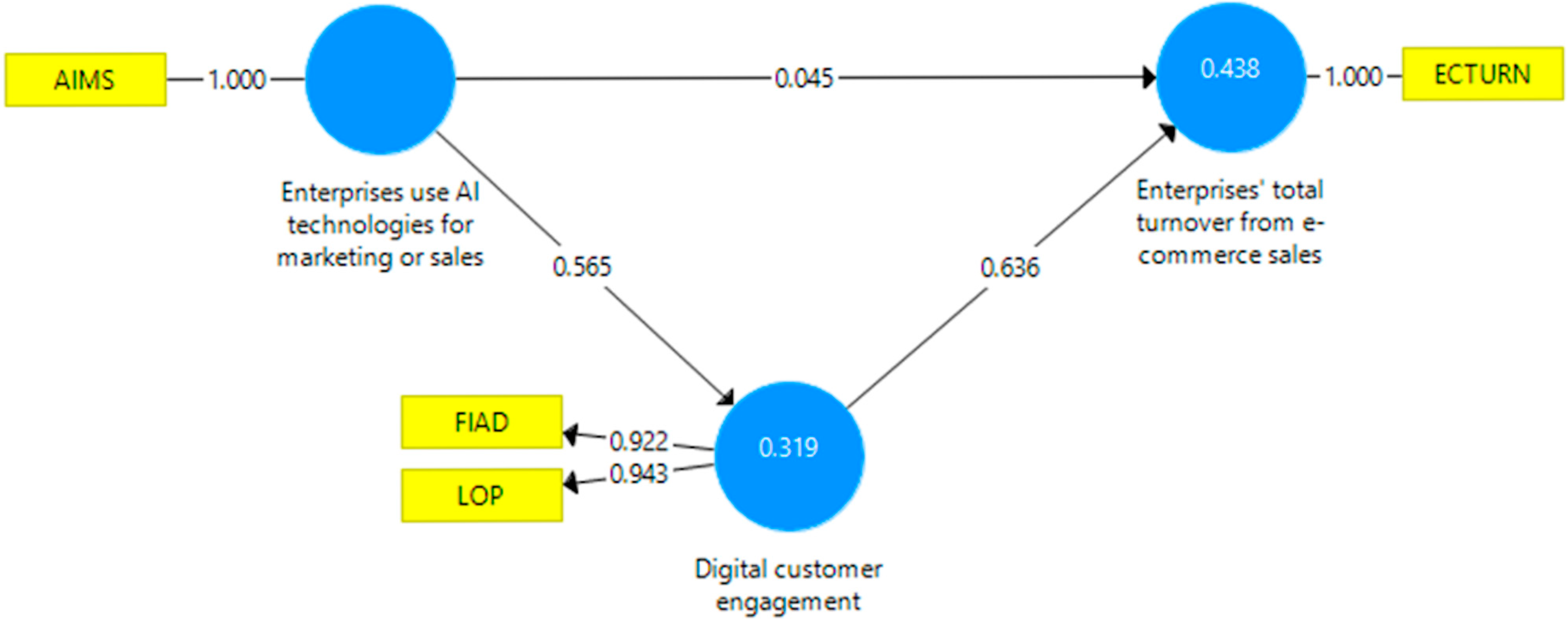
In the first SEM model, the conceptual framework integrates observable variables representing both enterprises’ technological capacity (AIMS) and consumers’ digital behaviors (FIAD and LOP). The FIAD and LOP variables constitute the latent construct of Digital Customer Engagement. At the same time, the total e-commerce turnover of enterprises is modeled as a separate latent variable, indicated by the e-commerce turnover share (ECTURN). Figure 1 displays the SEM model, highlighting the proportion of turnover from e-commerce.
In this model, the latent construct Digital customer engagement is specified as a reflective construct, measured by the frequency of daily internet access (FIAD) and the recency of online purchases (LOP). This specification assumes that the latent level of digital engagement drives observable digital behaviors, which are expected to covary and change consistently as manifestations of the underlying construct.
The model demonstrates a significant, statistically meaningful relationship. The R2 values reveal that the variables explain 31.9% of the variation in digital engagement and 43.8% of the variation in e-commerce performance, based on turnover. In a cross-national socio-economic context, where influences are complex and multidimensional, this degree of explained variation appears sufficient.
High values of Cronbach’s Alpha (0.851), Composite Reliability (0.930), and AVE (0.870) confirm the reliability of the constructs and show strong internal consistency. Discriminant validity is maintained, indicating the latent variables are conceptually distinct and do not significantly overlap; each captures a specific, measurable phenomenon. This model shows SRMR = 0.058, d_ULS = 0.034, d_G = 0.063, Chi-square = 33.879, and NFI = 0.905, suggesting the model fit is acceptable overall.
The path coefficient from AIMS to digital engagement (O = 0.565, p < 0.001), derived via bootstrapping, shows a strong direct link. This implies that AI integration in marketing and sales enhances digital customer engagement, probably by enabling personalization, automated communication, and predictive content curation (Table 4).
The link between digital customer engagement and total e-commerce revenue (O = 0.636, p < 0.001) underscores the importance of user behavior. Digital transformation succeeds only when technology leads to consistent, transaction-oriented digital practices.
Notably, there is no statistically significant direct link (p > 0.05) between companies using AI technologies for marketing or sales and their digital commercial performance. This indicates that simply adopting technology does not inherently generate economic value; a behavioral driver is necessary to convert technology into commercial outcomes. The significant indirect effect (O = 0.359, p < 0.001) illustrates this process, showing that digital engagement acts as a key transmission channel that converts technological benefits into economic results.
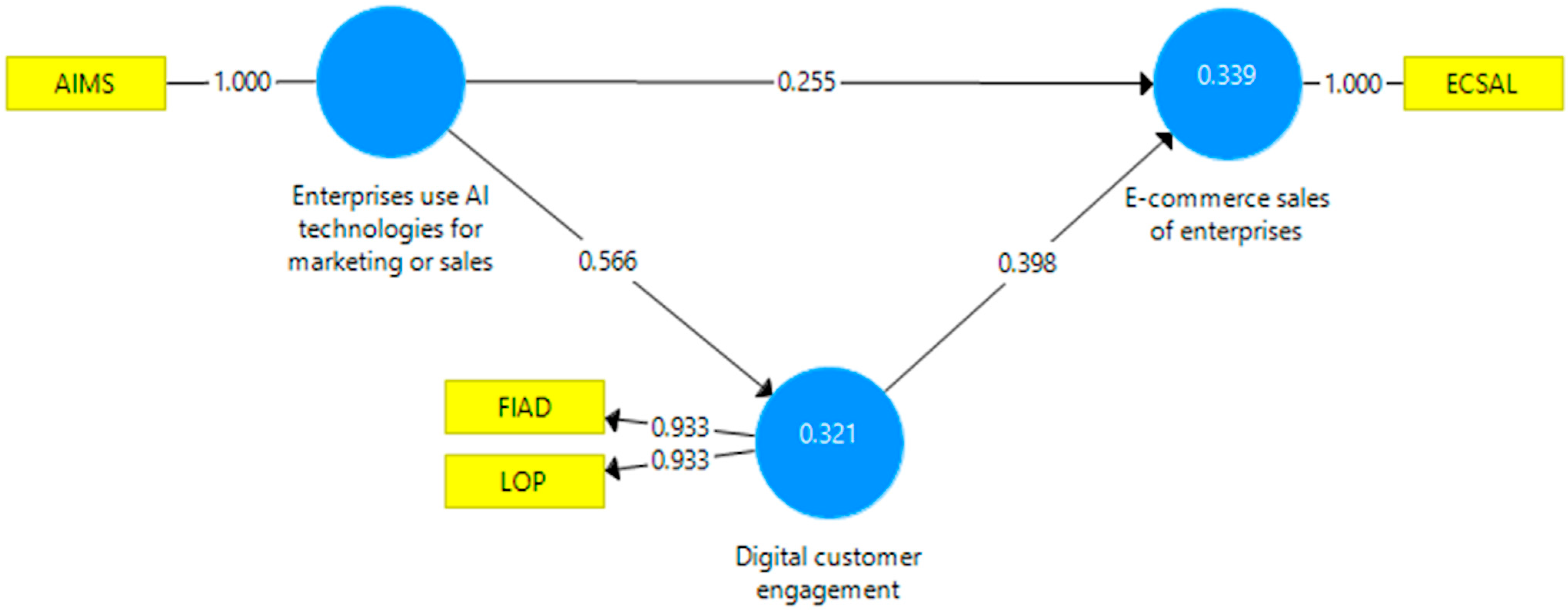
In the second SEM model, the structure of observable and latent variables stays the same as in the first model, but the way e-commerce is operationalized has changed. Here, e-commerce is evaluated by the proportion of businesses actively engaged in online sales (ECSAL), rather than by the turnover generated from these sales. The latent construct Digital Customer Engagement is still formed by FIAD (frequency of digital access) and LOP (recency of online purchases). Meanwhile, e-commerce is now measured as the share of businesses involved in online commercial activities (see Figure 2).
This second model also shows considerable explanatory power, though to a slightly lesser extent than the first. The R2 values are 32.1% for digital engagement and 33.9% for e-commerce sales for enterprises, based on the proportion of businesses that sell online.
High values of Cronbach’s Alpha (0.851), Composite Reliability (0.931), and AVE (0.870) confirm the constructs’ reliability and indicate excellent internal consistency. Discriminant validity is also evident, meaning the latent variables are conceptually distinct and do not overlap significantly; each captures a specific, measurable phenomenon. The model’s fit indices include SRMR = 0.043, d_ULS = 0.018, d_G = 0.048, Chi-square = 25.987, and NFI = 0.918, all suggesting a good fit between the data and the structural model.
The path coefficient from enterprises using AI technologies for marketing or sales to digital customer engagement (O = 0.566, p < 0.001) remains essentially unchanged from the first model. This reinforces the notion that AI has a consistent direct effect on digital engagement, regardless of the method used to measure commercial performance (see Table 5).
The link between digital customer engagement and e-commerce sales (O = 0.398, p = 0.001) remains significant, though weaker than in the initial model. This suggests that the transition from high digital activity to genuine enterprise-level engagement in online commerce occurs more slowly and likely requires investments, managerial capabilities, infrastructure, and organizational culture.
A key aspect of this second model is that the direct link between enterprises using AI technologies for marketing or sales and their e-commerce sales is now statistically significant (O = 0.255, p < 0.01). This indicates that AI adoption can directly affect enterprises’ decisions to engage in digital markets, although its effect is weaker than the mediated effect through digital engagement. The indirect effect (O = 0.225, p = 0.002) further emphasizes the crucial role of digital customer engagement as a communication channel. It demonstrates that online commercial performance cannot be fully understood without accounting for user behavior. The total effect (O = 0.481, p < 0.001) shows a significant overall influence of AI technology use in marketing or sales on e-commerce sales. This underscores a structural pattern in which digital transformation in the EU-27 results from both technological and behavioral factors, with economic success depending on tech adoption and user participation in digital transactions.
This second SEM model further supports and builds upon the results of the first. AI influences e-commerce sales in companies through two routes: directly, by enabling firms to access and operate in digital markets, and indirectly, by stimulating and reinforcing users’ digital behavior. These two pathways strengthen the idea that the European digital ecosystem evolves through the combined forces of technological innovation and socio-behavioral transformation.
Using two SEM models offers a clearer view of e-commerce performance by separating market participation from performance intensity. The first model (ECTURN) measures the depth of digital commercial success, showing how well firms turn digital engagement into revenue. The second model (ECSAL) assesses the extent of e-commerce adoption, indicating whether or not companies are involved in online markets.
The differences in how AI adoption affects the two models highlight a key structural contrast. The lack of a significant direct link from AI adoption (AIMS) to e-commerce turnover (ECTURN) indicates that AI alone does not immediately boost revenue shares. Instead, its influence on performance depth primarily stems from fostering and stabilizing digital customer engagement. Conversely, the notable direct impact of AI adoption on enterprise participation in e-commerce (ECSAL) indicates that AI facilitates market entry by reducing operational hurdles, enabling automation, and supporting the initial launch of online sales channels.
Overall, the two SEM models demonstrate both theoretical alignment and empirical reliability. They indicate that AI’s impact on enterprise e-commerce sales and overall e-commerce turnover primarily hinges on the activation, stabilization, and growth of users’ digital behaviors, rather than on technology alone. These results support Hypothesis H2. The relationship between artificial intelligence in marketing and sales and e-commerce performance, as measured by the share of online sales and the percentage of turnover from e-commerce, is mediated by digital behavior across the EU-27 countries.
Before describing the individual country clusters, it is essential to interpret the clustering outcomes in light of the causal mechanisms identified in the SEM analysis. The two SEM models demonstrate a dual-path process: AI adoption initially enables market entry into e-commerce. At the same time, the expansion of commercial performance mainly relies on ongoing digital customer engagement. The cluster analysis offers a spatial and structural perspective on this process by categorizing EU member states based on their location along these two pathways.
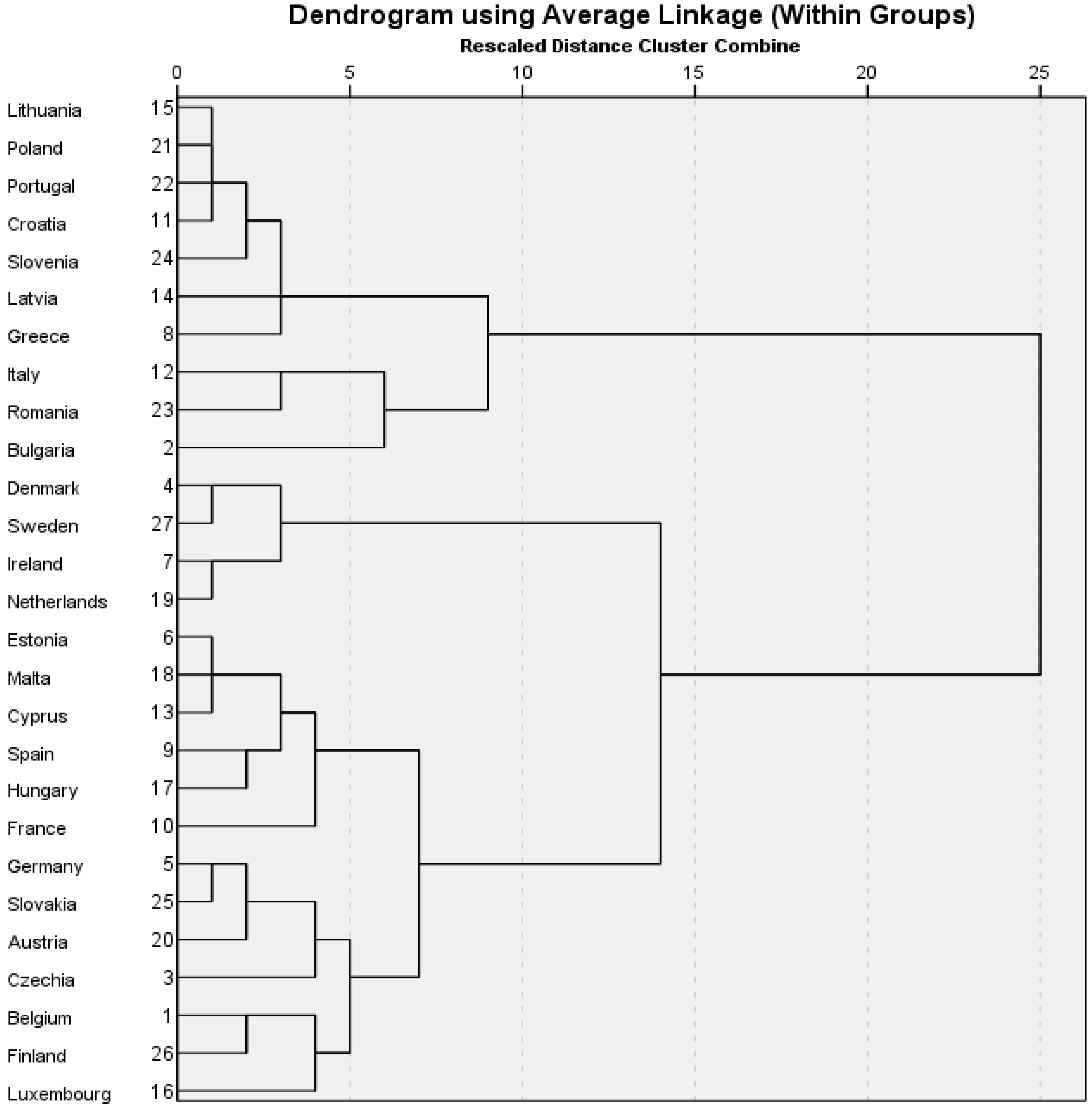
Cluster analysis reveals different patterns of digital and commercial growth among EU countries, forming a structural map that shows levels of AI integration, digital engagement, and their impact on economic performance via e-commerce. The division into two primary clusters, each with two subclusters, suggests that digital development is uneven and not linear (see Figure 3 and Table A1 in the Appendix A). It advances at different rates and intensities, shaped by factors like socio-economic conditions, cultural norms, institutions, and infrastructure.
The first cluster (Cluster A) consists of countries with low to moderate levels of AI adoption, digital purchasing, and online commercial performance, but with notable emerging potential, indicating a stage of growing maturity. Subcluster A1 includes Lithuania, Poland, Portugal, Croatia, Slovenia, Latvia, Greece, Italy, Romania, and Bulgaria. These countries have low to moderate scores in AIMS (average = 2.93%), FIAD, and LOP. Meanwhile, ECTURN and ECSAL show an intermediate phase of e-commerce, still dependent on investments and structural adjustments. Romania and Bulgaria are at the lower end, with limited AI usage and online trade, pointing to ongoing hurdles related to infrastructure, trust, and digital literacy. Subcluster A2 features Denmark, Sweden, Ireland, and the Netherlands, which are on a different trajectory. These nations demonstrate high AI adoption (average AIMS = 8.50%), robust digital purchasing (average LOP = 83.40%), and strong e-commerce performance. Together, these characteristics denote a fully developed digital ecosystem driven by innovation, with a mature digital culture and coherent public policies.
The second cluster (Cluster B) includes countries with relatively high digital and commercial capacity but exhibiting more diverse AI usage patterns. Subcluster B1 comprises Estonia, Malta, Cyprus, Spain, Hungary, and France. These nations show high digital engagement levels (average LOP = 61.95%) but exhibit uneven economic outcomes, indicating a stage at which digital activities have not fully translated into commercial success. France exemplifies this, with high internet use but modest commercial results, likely due to complex socio-economic, cultural, or structural factors. Subcluster B2 features Germany, Slovakia, Austria, the Czech Republic, Belgium, Finland, and Luxembourg. These countries maintain a stable balance between digital adoption, online commercial activity, and overall performance. Their profiles suggest mature, cohesive digital systems that are well established while still evolving through ongoing innovation and technology adoption.
This configuration shows that EU-27 member states do not progress uniformly in AI integration, digital engagement, and the conversion of digital behaviors into e-commerce success. Instead, they cluster into groups with differing levels of technological and commercial maturity. The two main clusters and their four subclusters indicate that Europe is gradually moving toward digital convergence but continues to face significant regional structural differences. Northern and Western European countries stand out with high AI adoption, active digital participation, and strong commercial results. They represent a mature digital ecosystem backed by advanced infrastructure, proactive technology policies, and well-developed human capital for digital transformation. In contrast, many Southern and Eastern European countries remain in an emerging stage. While showing progress in digital use, they still face challenges in converting these behaviors into significant economic outcomes, due to barriers such as infrastructure, investment, digital literacy, trust in online transactions, and the slow adoption of intelligent technologies.
From this perspective, clusters illustrate various phases of AI-driven digital transformation rather than distinct regional types. Countries with higher AI adoption but moderate revenue levels are in an earlier phase where AI primarily facilitates participation in online markets. Conversely, clusters led by Northern and Western European economies exhibit high AI adoption and active digital engagement, indicating a more advanced stage in which AI capabilities are enhanced by user activity, leading to better e-commerce outcomes. This interpretation connects the causal insights from the SEM models with regional patterns identified through clustering.
The analysis reveals that digital and commercial success rely on a mix of technological capabilities, user behavior, and an organization’s ability to convert digital interactions into tangible business outcomes. Countries in high-performing subclusters can act as practical benchmarks for those at middle or emerging levels by showcasing effective technology policies, AI adoption strategies, and integrated digital development models. These insights support Hypothesis H3. EU-27 countries cluster into groups based on their AI use, digital habits, spending ability, and e-commerce achievements, with Northern and Western Europe showing higher digital maturity than Southern and Eastern Europe.

5. Discussion

The empirical results indicate a staged, multi-path process through which artificial intelligence impacts e-commerce outcomes. The initial path occurs at the market entry stage, where adopting AI directly influences an enterprise’s e-commerce involvement by reducing operational hurdles, enabling automation, and supporting the adoption of digital sales channels. This process accounts for the strong direct link between AI implementation and the proportion of enterprises participating in online sales.
The second path focuses on performance depth, where adopting AI alone does not immediately lead to increased e-commerce revenue. Instead, its economic benefits are entirely mediated by digital customer engagement, implying that ongoing digital behavior is essential to scale performance and achieve revenue-driven results. At this stage, AI serves as enabling infrastructure, with its returns driven by behavioral activation and consistent digital interactions.
These two paths together create a dual-stage model of AI-driven digital transformation. Initially, AI helps firms enter digital markets, and later it aids in scaling performance, but only when supported by digital engagement. This framework combines the results from both SEM models and offers a clear theoretical explanation for the differences seen in direct and indirect effects.
The factor analysis shows that variables such as AI adoption, digital access, recent purchasing behavior, and performance indicators form a shared construct. This indicates that e-commerce success results from an interconnected digital ecosystem rather than isolated tech efforts. It supports the first hypothesis (H1), which posits that AI use in marketing and sales, digital access frequency, and recent online purchases are positively associated with e-commerce performance. The strong correlations align with Gao and Liu [1], Rahmani et al. [3], and Ameen et al. [4], who suggest AI boosts digital commercial success only when combined with active user engagement and consistent digital exposure. This empirical and theoretical agreement shows that performance does not automatically follow tech access; instead, it emerges through continuous integration into daily life, affirming the views of Ye et al. [18] and Kelly et al. [19] on the importance of digital acceptance and familiarity for transforming technology into economic value.
The SEM-based analysis of causal processes offers a deeper insight into how AI adoption impacts economic performance. It demonstrates that merely linking technological use to marketing and e-commerce outcomes is insufficient for achieving strong results. The mediating role of digital engagement confirms hypothesis (H2) and indicates that AI influences through a gradual psycho-behavioral process rather than an immediate commercial effect. This is consistent with recent studies emphasizing that AI benefits surface when users adopt recurring digital behaviors, driven by personalization, conversational interactions, and optimized online experiences [24,26,42]. The fact that the direct AIMS→ECTURN relationship is not statistically significant in the first model but becomes substantial in the second suggests AI both promotes user behavior and facilitates firms’ entry into digital markets, roles also observed in research on automation and internal operational improvements [30,58].
The different outcomes of the two SEM models have important implications for how companies approach AI investments. For those entering or expanding into e-commerce, AI offers immediate benefits like improved operational efficiency and reduced entry costs. Meanwhile, companies focused on increasing digital sales and profitability should integrate AI with strategies that boost digital customer engagement, such as personalization, trust-building, and user experience enhancement. Thus, AI should be seen not just as the primary driver of performance but as a core capability whose economic value relies on behavioral and organizational factors.
From an interpretive view, these findings support the concept that economic digitalization unfolds in phases. Initially, organizations adopt technology internally, leading to changes in access and buying habits. Only after these changes stabilize do the commercial impacts become fully evident. This incremental pattern aligns with technology acceptance theories [16,17] and digital maturity models like those by He and Zhang [25]. This study adds to the contextualization of this process within the EU-27 and provides statistical measurements.
Validating the third hypothesis (H3) with cluster analysis highlights another critical aspect: Europe’s digital development is uneven and layered. The data indicate that EU-27 countries cluster based on technological adoption, digital habits, and economic performance, supporting previous findings by Gogonea et al. [5], Dumiter and Schebesch [6], and Lazic et al. [32]. The cluster patterns also show a transparent gradient of digital maturity, extending from north and west to east and south, consistent with research on infrastructure, digital culture, and investment capabilities [35,36]. These subclusters do more than depict the present situation; they provide a roadmap for regional knowledge exchange and imply that EU digital convergence strategies must be tailored to each country’s cultural and organizational maturity.
These results reaffirm the perspective on digitalization as a systemic process, in which AI serves as an integrative component rather than replacing other forms of digital or economic capital. They also reinforce the idea that digital performance relies on the interplay among technology, behavior, and organizational policy, as described by Akter et al. [56], Bawack et al. [60], and Brendel et al. [63]. Additionally, the comparison between high-performing countries and those still transitioning indicates that existing gaps are primarily due to differences in the pace of cultural adoption of technology and in levels of human digital capital—dimensions emphasized as critical by several studies [58,86,87,88,89].
This study’s findings align with recent evidence indicating that the economic effects of artificial intelligence primarily arise from complementary factors such as digital skills, organizational preparedness, and ongoing user engagement, rather than from technology adoption alone [33,56,60]. Recent research in the digital economy shows that AI-related productivity and performance improvements rely on how well intelligent technologies are integrated into organizational routines and market activities, especially in digitally intensive sectors [35,36,56].
Apart from the e-commerce context, these findings have broader relevance across multiple research areas. In labor economics, the mediating role of digital behavior aligns with recent research on skill-biased technological change, which highlights that workforce digital readiness influences the employment and productivity impacts of AI adoption [37,38,86,87,88,89]. In innovation and industrial economics, the clustering of EU countries by AI use and digital maturity supports studies that point to regional disparities in technological convergence and competitiveness [32,35]. Additionally, from a public policy and development economics perspective, these results offer a transferable analytical framework for exploring how AI adoption interacts with behavioral and economic factors to drive performance, with potential applications in finance, logistics, tourism, and public services [33,56,61]. By viewing AI as part of a broader socio-economic system rather than an isolated technology, the study’s insights can be extended to various fields concerned with digital transformation, platform economies, and technology-driven growth [56,60].

5.1. Theoretical Implications

This study enhances the existing literature by confirming a nuanced understanding of how artificial intelligence influences e-commerce performance across the EU-27. It moves beyond isolated approaches that view technology and behavior separately. A core insight is that AI serves not only as a technological tool but also as a transformative element within a socio-technical system, where users, organizations, and digital infrastructure evolve together. The research highlights the mediating effect of digital behavior, demonstrating that e-commerce success is not solely attributable to AI adoption. Instead, it occurs through stages in which digital access, familiarity, and trust create essential conditions for technological advantages to translate into economic benefits.
This interpretation expands traditional technology-acceptance models by linking them to a systemic view of digital maturity. It also highlights the existence of coherent regional structures across the EU, suggesting that theories of digital convergence should be reconsidered from cultural, economic, and institutional angles. Furthermore, the study indicates that the advantages of AI are limited without strong behavioral internalization. This insight could lead to new models explaining non-linear processes and diverse digital development trajectories.

5.2. Practical Implications

In practice, these findings offer valuable guidance for policymakers, companies, and institutions aiming to craft digitalization strategies focused on sustainable outcomes rather than merely technology adoption. The data show that investing in AI is more effective when combined with efforts to foster digital behaviors, such as providing technology training, enhancing online experiences, and building trust in automated systems. Organizations can improve their performance by embedding AI into personalized and intuitive interactions that boost loyalty and encourage continuous digital engagement.
At the institutional level, the study calls for creating customized public policies that reflect each country’s stage of digital development. Such policies can help bridge regional disparities, particularly in Southern and Eastern Europe, where digital habits and online business success are still developing. In the business sector, the findings highlight the significance of combining technological investments with the growth of digital skills. This involves cultivating a robust digital culture and adopting a strategic approach to data and user engagement. For entrepreneurs, the results guide investment decisions, focusing on market relevance and consumer acceptance rather than on technology alone, as e-commerce success relies heavily on consumer readiness and the overall digital environment.

5.3. Limitations and Further Research

Although the study has methodological strengths and consistent findings, it also presents certain limitations that suggest directions for future research. One such limitation is its exclusive reliance on cross-sectional data, which, although statistically valid, fails to capture long-term behavioral or structural changes. This underscores the importance of conducting longitudinal studies to monitor the evolution of digital maturity. Furthermore, the research uses only macro-level indicators, neglecting micro-level, motivational, and emotional factors that could provide a more nuanced understanding of the cognitive processes involved in AI interaction.
Future research could benefit from integrating mixed methods, including qualitative and quantitative approaches, experimental designs, or cross-regional comparisons beyond Europe to understand whether observed patterns are universal or specific. Researchers can also incorporate additional variables such as perceptions of algorithmic transparency, technological resilience, organizational support, and ethical and regulatory factors. In cluster analysis, future studies might explore how cluster membership affects international competitiveness or shapes educational, strategic, and investment policies. Moreover, including emerging technologies such as blockchain and IoT could help assess broader digital interactions within business ecosystems.


6. Conclusions

This study significantly advances understanding of how artificial intelligence influences e-commerce performance in modern Europe. The results show that digital transformation arises from the interplay between technology and human actions, with value creation only happening when these components align well. E-commerce success does not automatically follow the adoption of smart technologies. Instead, it results from a combined process in which technological skills, user involvement, and socio-economic aspects mutually reinforce one another, changing the idea of digital maturity.
The SEM analysis and cluster results reveal Europe’s complex digital landscape, with countries differing in their speed, capability, infrastructure, and digital resources. These disparities emphasize the need to customize strategies and public policies to fit specific national or regional contexts, rather than applying generic solutions. Overall, the study confirms that digital competitiveness relies not only on technological access but also on cultural, social, and economic factors that enable the transformation of technological potential into sustainable value.

Funding

This research received no external funding.

Data Availability Statement

Conflicts of Interest

The authors declare no conflicts of interest.

Abbreviations

The following abbreviations are used in this manuscript:
AIMSEnterprises use AI technologies for marketing or sales.
FIADFrequency of internet access: daily
LOPLast online purchase: in the previous 3 months
ECTURNEnterprises’ total turnover from e-commerce sales
ECSALE-commerce sales of enterprises

Appendix A

Table A1. Cluster data.
CountryAIMSFIADLOPECTURNECSAL
Lithuania2.8585.1151.0616.1342.07
Poland2.4083.9153.9216.8817.80
Portugal2.8684.2248.9419.5021.23
Croatia3.1079.9652.4818.6232.03
Slovenia6.8487.3454.0817.9126.38
Latvia3.3989.3848.8911.7219.50
Greece1.6882.5354.178.3823.25
Italy2.9387.3741.8616.9320.41
Romania1.1385.3135.6912.3614.74
Bulgaria2.1178.7933.347.8615.05
Subcluster A1 mean2.9384.3947.4414.6323.25
Denmark9.4896.5281.7929.8238.76
Sweden10.0295.9279.2226.3836.50
Ireland5.6398.2685.9424.2239.57
Netherlands8.8698.3086.6620.9230.26
Subcluster A2 mean8.5097.2583.4025.3436.27
Cluster A mean4.9688.9759.5618.1826.94
Estonia6.9788.6461.9915.6724.83
Malta6.5191.6561.6813.3434.51
Cyprus3.5693.9260.2613.6823.55
Spain3.2591.5456.7019.5232.22
Hungary2.3290.3661.7321.7722.76
France1.1687.8769.3112.2618.34
Subcluster B1 mean3.9690.6661.9516.0426.04
Germany6.5588.0066.7620.6722.97
Slovakia3.4684.9866.3824.0016.74
Austria9.6484.4664.0719.0630.77
Czechia5.9586.5874.3824.6923.72
Belgium5.9792.5565.3328.7733.16
Finland9.2587.6664.4728.8734.07
Luxembourg4.2794.1969.6322.6212.20
Subcluster B2 mean6.4488.3567.2924.1024.80
Cluster B mean5.3089.4264.8220.3825.37
EU mean4.8988.7261.1418.9826.20
Source: author’s design with SPSS v.27.0.

References

  1. Gao, Y.; Liu, H. Artificial Intelligence-Enabled Personalization in Interactive Marketing: A Customer Journey Perspective. J. Res. Interact. Mark. 2023, 17, 663–680. [Google Scholar] [CrossRef]
  2. Bhagat, R.; Chauhan, V.; Bhagat, P. Investigating the Impact of Artificial Intelligence on Consumer’s Purchase Intention in E-Retailing. Foresight 2023, 25, 249–263. [Google Scholar] [CrossRef]
  3. Rahmani, A.M.; Azhir, E.; Ali, S.; Mohammadi, M.; Ahmed, O.H.; Ghafour, M.Y.; Ahmed, S.H.; Hosseinzadeh, M. Artificial Intelligence Approaches and Mechanisms for Big Data Analytics: A Systematic Study. PeerJ Comput. Sci. 2021, 7, e488. [Google Scholar] [CrossRef]
  4. Ameen, N.; Tarhini, A.; Reppel, A.; Anand, A. Customer Experiences in the Age of Artificial Intelligence. Comput. Hum. Behav. 2021, 114, 106548. [Google Scholar] [CrossRef]
  5. Gogonea, R.M.; Moraru, L.C.; Bodislav, D.A.; Păunescu, L.M.; Vlăsceanu, C.F. Similarities and Disparities of E-Commerce in the European Union and Post-Pandemic Period. J. Theor. Appl. Electron. Commer. Res. 2024, 19, 340–361. [Google Scholar] [CrossRef]
  6. Dumiter, F.C.; Schebesch, K.B. Using Artificial Intelligence to Determine the Impact of E-Commerce on the Digital Economy. J. Theor. Appl. Electron. Commer. Res. 2025, 20, 219. [Google Scholar] [CrossRef]
  7. Soni, N.; Sharma, E.; Singh, N.; Kapoor, A. Impact of Artificial Intelligence on Businesses: From Research, Innovation, Market Deployment to Future Shifts in Business Models. arXiv 2019, arXiv:1905.02092. [Google Scholar] [CrossRef]
  8. Song, X.; Yang, S.; Huang, Z.; Huang, T. The Application of Artificial Intelligence in Electronic Commerce. J. Phys. Conf. Ser. 2019, 1302, 032030. [Google Scholar] [CrossRef]
  9. Verma, S.; Sharma, R.; Deb, S.; Maitra, D. Artificial Intelligence in Marketing: Systematic Review and Future Research Direction. Int. J. Inf. Manag. Data Insights 2021, 1, 100002. [Google Scholar] [CrossRef]
  10. Pallathadka, H.; Ramirez-Asis, E.H.; Loli-Poma, T.P.; Kaliyaperumal, K.; Ventayen, R.J.M.; Naved, M. Applications of Artificial Intelligence in Business Management, E-Commerce and Finance. Mater. Today Proc. 2021, 80, 2610–2613. [Google Scholar] [CrossRef]
  11. Castillo, M.J.; Taherdoost, H. The Impact of AI Technologies on E-Business. Encyclopedia 2023, 3, 107–121. [Google Scholar] [CrossRef]
  12. Erdogan, U. A Systematic Review on the Use of Artificial Intelligence in E-Commerce. J. Soc. Econ. Manag. 2023, 4, 184–197. [Google Scholar] [CrossRef]
  13. Alqudah, A.M.A.; Jaradat, Y.M.; AlObaydi, B.A.A.; Alquadah, D.; Al Qudah, E.A.; Jarah, B.A.F. Artificial Intelligence in Design and Impact of Electronic Marketing in Companies. J. Ecohumanism 2024, 3, 170–179. [Google Scholar] [CrossRef]
  14. Shabankareh, M.; Kalantari Daronkola, H.; Sarhadi, A.; Thaichon, P.; Nazarian, A. The influence of artificial intelligence quality on business-to-business relationships on E-commerce platforms: Unveiling the nexus. International Journal of Advertising. Int. J. Advert. 2025, 44, 1483–1522. [Google Scholar] [CrossRef]
  15. Li, C.; Pan, R.; Xin, H.; Deng, Z. Research on AI Customer Service Impact on Consumer Attitude and Its Impact during Online Shopping. J. Phys. Conf. Ser. 2020, 1575, 012192. [Google Scholar] [CrossRef]
  16. Ajzen, I. The Theory of Planned Behavior. Organ. Behav. Hum. Decis. Process. 1991, 50, 179–211. [Google Scholar] [CrossRef]
  17. Davis, F.D. Perceived Usefulness, Perceived Ease of Use, and User Acceptance of Information Technology. MIS Q. 1989, 13, 319–340. [Google Scholar] [CrossRef]
  18. Ye, T.; Xue, J.; He, M.; Gu, J.; Lin, H.; Xu, B.; Cheng, Y. Psychosocial Factors Affecting Artificial Intelligence Adoption in Health Care in China: Cross-Sectional Study. J. Med. Internet Res. 2019, 21, e14316. [Google Scholar] [CrossRef]
  19. Kelly, S.; Kaye, S.-A.; Oviedo-Trespalacios, O. What Factors Contribute to the Acceptance of Artificial Intelligence?A systematic review. Telemat. Inform. 2023, 77, 101925. [Google Scholar] [CrossRef]
  20. Vărzaru, A.A. Assessing Digital Transformation Acceptance in Public Organizations’ Marketing. Sustainability 2023, 15, 265. [Google Scholar] [CrossRef]
  21. Schmidt, P.; Biessmann, F.; Teubner, T. Transparency and Trust in Artificial Intelligence Systems. J. Decis. Syst. 2020, 29, 260–278. [Google Scholar] [CrossRef]
  22. Alzaidi, M.S.; Agag, G. The Role of Trust and Privacy Concerns in Using Social Media for E-Retail Services. The Moderating Role of COVID-19. J. Retail. Consum. Serv. 2022, 68, 103042. [Google Scholar] [CrossRef]
  23. Oh, J.; Yoon, S.-J. Validation of Haptic Enabling Technology Acceptance Model. Telemat. Inform. 2014, 31, 585–596. [Google Scholar] [CrossRef]
  24. Ruan, Y.; Mezei, J. When do AI chatbots lead to higher customer satisfaction than human frontline employees in online shopping assistance? Considering product attribute type. J. Retail. Consum. Serv. 2022, 68, 103059. [Google Scholar] [CrossRef]
  25. He, A.-Z.; Zhang, Y. AI-Powered Touch Points in the Consumer Journey: A Systematic Literature Review and Research Agenda. J. Res. Interact. Mark. 2023, 17, 620–639. [Google Scholar] [CrossRef]
  26. Subbaiah, P.V.; Jyothsna, M.; Manjushree, P.; Kondamudi, S.G. Exploring the Influence of Artificial Intelligence (AI) on Online Purchase Decisions: In Case of Consumer’s Prospective. Int. J. Intell. Syst. Appl. Eng. 2024, 12, 13–20. [Google Scholar]
  27. Brzozowska, A.; Bubel, D. E-Business as a New Trend in the Economy. Procedia Comput. Sci. 2015, 65, 1095–1104. [Google Scholar] [CrossRef]
  28. Andonov, A.; Dimitrov, G.P.; Totev, V. Impact of E-Commerce on Business Performance. TEM J. 2021, 10, 1558–1564. [Google Scholar] [CrossRef]
  29. Wilburn, K.M.; Wilburn, H. The Impact of Technology on Business and Society. Glob. J. Bus. Res. 2018, 12, 23–39. [Google Scholar]
  30. Huang, M.-H.; Rust, R.T. A Strategic Framework for Artificial Intelligence in Marketing. J. Acad. Mark. Sci. 2021, 49, 30–50. [Google Scholar] [CrossRef]
  31. Zhang, Y.; Liu, C. Unlocking the Potential of Artificial Intelligence in Fashion Design and E-Commerce Applications: The Case of Midjourney. J. Theor. Appl. Electron. Commer. Res. 2024, 19, 654–670. [Google Scholar] [CrossRef]
  32. Lazic, A.; Milic, S.; Vukmirovic, D. The Future of Electronic Commerce in the IoT Environment. J. Theor. Appl. Electron. Commer. Res. 2024, 19, 172–187. [Google Scholar] [CrossRef]
  33. Filippucci, F.; Gal, P.; Jona-Lasinio, C.; Leandro, A.; Nicoletti, G. The Impact of Artificial Intelligence on Productivity, Distribution and Growth. OECD Artificial Intelligence Papers. 2024. Available online: https://www.oecd.org/content/dam/oecd/en/publications/reports/2024/04/the-impact-of-artificial-intelligence-on-productivity-distribution-and-growth_d54e2842/8d900037-en.pdf (accessed on 9 November 2025).
  34. Damioli, G.; Roy, V.V.; Vertesy, D. The Impact of Artificial Intelligence on Labor Productivity. Eurasian Bus. Rev. 2021, 11, 1–25. [Google Scholar] [CrossRef]
  35. Liang, Y. The Impact of Artificial Intelligence on Employment and Income Distribution. J. Educ. Humanit. Soc. Sci. 2024, 27, 166–171. [Google Scholar] [CrossRef]
  36. Wen, H.; Qiu, A.; Huang, Y. Impact of E-Commerce Development on Rural Income: Evidence from Countries in Revolutionary Old Areas of China. Econ. Labour Relat. Rev. 2024, 35, 345–367. [Google Scholar] [CrossRef]
  37. Li, C.; Hao, R.; Li, N.; Zhang, C. Measuring Customer Experience in AI Contexts: A Scale Development. J. Theor. Appl. Electron. Commer. Res. 2025, 20, 31. [Google Scholar] [CrossRef]
  38. Esmeli, R.; Gokce, A. An Analysis of Consumer Purchase Behavior Following Cart Addition in E-Commerce Utilizing Explainable Artificial Intelligence. J. Theor. Appl. Electron. Commer. Res. 2025, 20, 28. [Google Scholar] [CrossRef]
  39. Esfahani, H.J.; Tavasoli, K.; Jabbarzadeh, A. Big Data and Social Media: A Scientometrics Analysis. Int. J. Data Netw. Sci. 2019, 3, 145–164. [Google Scholar] [CrossRef]
  40. Fang, H.; Zhang, J.; Sensoy, M. A Generalized Stereotype Learning Approach and Its Instantiation in Trust Modeling. Electron. Commer. Res. Appl. 2018, 30, 149–158. [Google Scholar] [CrossRef]
  41. Marjerison, R.K.; Zhang, Y.; Zheng, H. AI in E-Commerce: Application of the Use and Gratification Model to The Acceptance of Chatbots. Sustainability 2022, 14, 14270. [Google Scholar] [CrossRef]
  42. Adamopoulou, E.; Moussiades, L. Chatbots: History, Technology, and Applications. Mach. Learn. Appl. 2020, 2, 100006. [Google Scholar] [CrossRef]
  43. Blut, M.; Wang, C.; Wünderlich, N.; Brock, C. Understanding anthropomorphism in service provision: A meta-analysis of physical robots, chatbots, and other AI. J. Acad. Mark. Sci. 2021, 49, 632–658. [Google Scholar] [CrossRef]
  44. Adam, M.; Wessel, M.; Benlian, A. AI-Based Chatbots in Customer Service and Their Effects on User Compliance. Electron. Mark. 2021, 31, 427–445. [Google Scholar] [CrossRef]
  45. Ng, M.; Coopamootoo, K.; Toreini, E.; Aitken, M.; Elliot, K.; van Moorsel, A. Simulating Social Presence in Automated Bots for Finance. In Proceedings of the 2020 IEEE European Symposium on Security and Privacy Workshops (EuroS&PW), Genoa, Italy, 7–11 September 2020; pp. 190–199. [Google Scholar] [CrossRef]
  46. Lin, X.; Shao, B.; Wang, X. Employees’ Perceptions of Chatbots in B2B Marketing: Affordances vs. Disaffordances. Ind. Mark. Manag. 2022, 101, 45–56. [Google Scholar] [CrossRef]
  47. Vărzaru, A.A. Assessing the Impact of AI Solutions’ Ethical Issues on Performance in Managerial Accounting. Electronics 2022, 11, 2221. [Google Scholar] [CrossRef]
  48. Zarifhonarvar, A. Economics of ChatGPT: A Labor Market View on the Occupational Impact of Artificial Intelligence. J. Electron. Bus. Digit. Econ. 2024, 3, 100–116. [Google Scholar] [CrossRef]
  49. Zhang, Z. The Impact of the Artificial Intelligence Industry on the Number and Structure of Employment in the Digital Economy Environment. Technol. Forecast. Soc. Change 2023, 197, 122881. [Google Scholar] [CrossRef]
  50. Carbonero, F.; Davies, J.; Ernst, E.; Fossen, F.M.; Samman, D.; Sorgner, A. The Impact of Artificial Intelligence on Labor Markets in Developing Countries. J. Evol. Econ. 2023, 33, 707–736. [Google Scholar] [CrossRef]
  51. Agrawal, A.; Gans, J.S.; Goldfarb, A. Artificial Intelligence: The Ambiguous Labor Market Impact of Automating Prediction. J. Econ. Perspect. 2019, 33, 31–50. [Google Scholar] [CrossRef]
  52. Gu, T.T.; Zhang, S.F.; Cai, R. Can Artificial Intelligence Boost Employment in Service Industries? Appl. Artif. Intell. 2022, 36, 2080336. [Google Scholar] [CrossRef]
  53. Green, A. Artificial Intelligence and the Changing Demand for Skills in the Labour Market. OECD Artificial Intelligence Papers. 2024. Available online: https://www.oecd.org/content/dam/oecd/en/publications/reports/2024/04/artificial-intelligence-and-the-changing-demand-for-skills-in-the-labour-market_861a23ea/88684e36-en.pdf (accessed on 10 November 2025).
  54. Bosch, J.M.A.; Blandon, J.G.; Ravenda, D. Cost Behavior in E-Commerce Firms. Electron. Commer. Res. 2023, 23, 2101–2134. [Google Scholar] [CrossRef]
  55. Mehdi, Z.S.; Rahman, S. The Impact of Artificial Intelligence and Emerging Technologies on International Electronic Commerce. SSRN 2024, 337. [Google Scholar] [CrossRef]
  56. Akter, S.; Fosso Wamba, S.; Mariani, M.; Hani, U. How to Build an AI Climate-Driven Service Analytics Capability for Innovation and Performance in Industrial Markets? Ind. Mark. Manag. 2021, 97, 258–273. [Google Scholar] [CrossRef]
  57. Kaplan, A.; Haenlein, M. Siri, Siri, in My Hand: Who’s the Fairest in the Land? On the Interpretations, Illustrations, and Implications of Artificial Intelligence. Bus. Horiz. 2019, 62, 15–25. [Google Scholar] [CrossRef]
  58. Mikalef, P.; Gupta, M. Artificial Intelligence Capability: Conceptualization, Measurement Calibration, and Empirical Study on its Impact on Organizational Creativity and Firm Performance. Inf. Manag. 2021, 58, 103434. [Google Scholar] [CrossRef]
  59. Gupta, S.; Modgil, S.; Bhattacharyya, S.; Bose, I. Artificial Intelligence for Decision Support Systems in the Field of Operations Research: Review and Future Scope of Research. Ann. Oper. Res. 2021, 308, 215–274. [Google Scholar] [CrossRef]
  60. Bawack, R.E.; Wamba, S.F.; Carillo, K.D.A.; Akter, S. Artificial intelligence in E-Commerce: A bibliometric study and literature review. Electron Mark. 2022, 32, 297–338. [Google Scholar] [CrossRef] [PubMed]
  61. Adabi, A.; Berrada, M. Peeking Inside the Black-Box: A Survey on Explainable Artificial Intelligence. IEEE Access 2018, 6, 52138–52160. [Google Scholar] [CrossRef]
  62. Pedreschi, D.; Miliou, I. Artificial Intelligence (AI): New Developments and Innovations Applied to E-Commerce. European Parliament Think Tank, Luxembourg. 2020. Available online: https://www.europarl.europa.eu/RegData/etudes/IDAN/2020/648791/IPOL_IDA(2020)648791_EN.pdf (accessed on 10 November 2025).
  63. Brendel, A.; Mirbabaie, M.; Lembcke, T.-B.; Hofeditz, L. Ethical Management of Artificial Intelligence. Sustainability 2021, 13, 1974. [Google Scholar] [CrossRef]
  64. Lyytinen, K.; Nickerson, J.V.; King, J.L. Metahuman Systems = Humans + Machines That Learn. J. Inf. Technol. 2020, 36, 427–445. [Google Scholar] [CrossRef]
  65. Marabelli, M.; Newell, S.; Handunge, V. The Lifecycle of Algorithmic Decision-Making Systems: Organizational Choices and Ethical Challenges. J. Strateg. Inf. Syst. 2021, 30, 101683. [Google Scholar] [CrossRef]
  66. Linden, G.; Smith, B.; York, J. Amazon.com Recommendations: Item-to-Item Collaborative Filtering. IEEE Internet Comput. 2003, 7, 76–80. [Google Scholar] [CrossRef]
  67. Manvi, S.S.; Venkataram, P. An Intelligent Product-Information Presentation in E-Commerce. Electron. Commer. Res. Appl. 2005, 4, 220–239. [Google Scholar] [CrossRef]
  68. Martinez-Cruz, C.; Porcel, C.; Bernabé-Moreno, J.; Herrera-Viedma, E. A Model to Represent Users’ Trust in Recommender Systems Using Ontologies and Fuzzy Linguistic Modelling. Inf. Sci. 2015, 311, 102–118. [Google Scholar] [CrossRef]
  69. Lu, J.; Wu, D.; Mao, M.; Wang, W.; Zhang, G. Recommender System Application Developments: A Survey. Decis. Support Syst. 2015, 74, 12–32. [Google Scholar] [CrossRef]
  70. Makridakis, S. The Forthcoming Artificial Intelligence (AI) Revolution: Its Impact on Society and Firms. Futures 2017, 90, 46–60. [Google Scholar] [CrossRef]
  71. Manthiou, A.; Klaus, P.; Kuppelwieser, V.G.; Reeves, W. Man vs Machine: Examining the Three Themes of Service Robotics in Tourism and Hospitality. Electron. Mark. 2021, 31, 511–527. [Google Scholar] [CrossRef]
  72. Mao, M.; Lu, J.; Han, J.; Zhang, G. Multiobjective E-Commerce Recommendations Based on Hypergraph Ranking. Inf. Sci. 2019, 471, 269–287. [Google Scholar] [CrossRef]
  73. Fiore, U.; De Santis, A.; Perla, F.; Zanetti, P.; Palmieri, F. Using Generative Adversarial Networks for Improving Classification Effectiveness in Credit Card Fraud Detection. Inf. Sci. 2019, 479, 448–455. [Google Scholar] [CrossRef]
  74. Eurostat. Artificial Intelligence by Size Class of Enterprise. Available online: https://ec.europa.eu/eurostat/databrowser/view/isoc_eb_ai__custom_18813336/default/table (accessed on 12 November 2025).
  75. Eurostat. Individuals—Frequency of Internet Use. Available online: https://ec.europa.eu/eurostat/databrowser/view/isoc_ci_ifp_fu__custom_18813758/default/table (accessed on 12 November 2025).
  76. Eurostat. Internet Purchases by Individuals. Available online: https://ec.europa.eu/eurostat/databrowser/view/isoc_ec_ib20/default/table?lang=en&category=isoc.isoc_i.isoc_iec (accessed on 12 November 2025).
  77. Eurostat. Value of E-Commerce Sales by Size Class of Enterprise. Available online: https://ec.europa.eu/eurostat/databrowser/view/isoc_ec_evals__custom_18814065/default/table (accessed on 12 November 2025).
  78. Eurostat. E-Commerce Sales of Enterprises by NACE Rev. 2 Activity. Available online: https://ec.europa.eu/eurostat/databrowser/view/isoc_ec_eseln2/default/table?lang=en&category=isoc.isoc_e.isoc_ec (accessed on 12 November 2025).
  79. Field, A. Discovering Statistics Using IBM SPSS Statistics, 6th ed.; SAGE Publications: New York, NY, USA, 2024. [Google Scholar]
  80. Aldrich, J.O. Using IBM SPSS Statistics: An Interactive Hands-On Approach, 3rd ed.; SAGE Publications: New York, NY, USA, 2018. [Google Scholar]
  81. Hair, J.F.; Hult, G.T.M.; Ringle, C.M.; Sarstedt, M.; Ray, S. A Primer on Partial Least Squares Structural Equation Modeling (PLS-SEM), 3rd ed.; Sage: Thousand Oaks, CA, USA, 2022. [Google Scholar]
  82. Garson, D. Partial Least Squares (PLS-SEM). Available online: https://www.smartpls.com/resources/ebook_on_pls-sem.pdf (accessed on 14 November 2025).
  83. Ringle, C.M.; Wende, S.; Becker, J.-M. SmartPLS 4. Bönningstedt: SmartPLS. Available online: https://www.smartpls.com (accessed on 2 November 2025).
  84. Penn State, Eberly College of Science. Agglomerative Hierarchical Clustering. Available online: https://online.stat.psu.edu/stat505/lesson/14/14.4 (accessed on 30 November 2025).
  85. Jain, A.K.; Murty, M.N.; Flynn, P.J. Data clustering: A review. ACM Comput. Surv. 1996, 31, 264–323. [Google Scholar] [CrossRef]
  86. Wang, X.; Chen, M.; Chen, N. How Artificial Intelligence Affects the Labour Force Employment Structure from the Perspective of Industrial Structure Optimisation. Heliyon 2024, 10, e26686. [Google Scholar] [CrossRef]
  87. Xue, X.; Chen, J.; Xiao, W.; Wang, C. How Does Artificial Intelligence Technology Influence Labor Share: The Role of Labor Structure Upgrading. Systems 2025, 13, 586. [Google Scholar] [CrossRef]
  88. Mäkelä, E.; Stephany, F. Complement or substitute? How AI increases the demand for human skills. arXiv 2024, arXiv:2412.19754. [Google Scholar] [CrossRef]
  89. Huang, Y.; Tu, Y.; Zhu, Q. Corporate Artificial Intelligence Investment and Employment Structure Adjustment: A Heterogeneity Analysis from the Perspective of Financial Constraints. Int. Rev. Financ. Anal. 2026, 109, 104818. [Google Scholar] [CrossRef]
Figure 1. SEM model for enterprises’ total turnover from e-commerce sales. Source: author’s design with SmartPLS v3.0 (SmartPLS GmbH, Bönningstedt, Germany).
Systems 14 00106 g001
Figure 2. SEM Model on the e-commerce sales of enterprises. Source: author’s design with SmartPLS v3.0 (SmartPLS GmbH, Bönningstedt, Germany).
Systems 14 00106 g002
Figure 3. Dendogram. Source: author’s design with SPSS v.27.0 (IBM Corporation, Armonk, NY, USA).
Systems 14 00106 g003
Table 1. Variables used, measures, and sources.
VariableDataMeasuresSources
AIMSEnterprises use AI technologies for marketing or salesPercentage of enterprises[74]
FIADFrequency of internet access: dailyPercentage of individuals[75]
LOPLast online purchase: in the previous 3 monthsPercentage of individuals[76]
ECTURNEnterprises’ total turnover from e-commerce salesPercentage of turnover[77]
ECSALE-commerce sales of enterprisesPercentage of enterprises[78]
Source: author’s design based on Eurostat [74,75,76,77,78].
Table 2. Correlation Matrix.
AIMSFIADLOPECTURNECSAL
CorrelationAIMS1.0000.5470.5100.4040.481
FIAD0.5471.0000.7400.5150.486
LOP0.5100.7401.0000.7050.526
ECTURN0.4040.5150.7051.0000.528
ECSAL0.4810.4860.5260.5281.000
Sig. (1-tailed)AIMS 0.0000.0000.0000.000
FIAD0.000 0.0000.0000.000
LOP0.0000.000 0.0000.000
ECTURN0.0000.0000.000 0.000
ECSAL0.0000.0000.0000.000
Source: author’s design with SPSS v.27.0 (IBM Corporation, Armonk, NY, USA).
Table 3. Communalities and factor matrix.
InitialExtractionFactor 1
AIMS0.3680.3950.629
FIAD0.5920.6230.789
LOP0.6960.7920.890
ECTURN0.5340.5320.729
ECSAL0.3860.4320.657
Source: author’s design with SPSS v.27.0 (IBM Corporation, Armonk, NY, USA).
Table 4. Effects of the SEM Model on the enterprises’ total turnover from e-commerce sales.
Original Sample Sample MeanStandard DeviationT Statistics p Values
Path coefficientsDigital customer engagement → Enterprises’ total turnover from e-commerce sales0.6360.6370.0837.6490.000
Enterprises use AI technologies for marketing or sales → Digital customer engagement0.5650.5670.0629.1250.000
Enterprises use AI technologies for marketing or sales → Enterprises’ total turnover from e-commerce sales0.0450.0440.1130.3970.691
Specific indirect effectsEnterprises use AI technologies for marketing or sales → Digital customer engagement → Enterprises’ total turnover from e-commerce sales0.3590.3620.0665.4470.000
Total effectsDigital customer engagement → Enterprises’ total turnover from e-commerce sales0.6360.6370.0837.6490.000
Enterprises use AI technologies for marketing or sales → Digital customer engagement0.5650.5670.0629.1250.000
Enterprises use AI technologies for marketing or sales → Enterprises’ total turnover from e-commerce sales0.4040.4050.0904.4960.000
Source: author’s design with SmartPLS v3.0 (SmartPLS GmbH, Bönningstedt, Germany).
Table 5. Effects of the SEM model on e-commerce sales for enterprises.
Original SampleSample MeanStandard Deviation T Statisticsp Values
Path coefficientsDigital customer engagement → E-commerce sales of enterprises0.3980.3970.1173.4110.001
Enterprises use AI technologies for marketing or sales → Digital customer engagement0.5660.5700.0619.2350.000
Enterprises use AI technologies for marketing or sales → E-commerce sales of enterprises0.2550.2530.0912.8030.005
Specific indirect effectsEnterprises use AI technologies for marketing or sales → Digital customer engagement → E-commerce sales of enterprises0.2250.2270.0733.0780.002
Total effectsDigital customer engagement → E-commerce sales of enterprises0.3980.3970.1173.4110.001
Enterprises use AI technologies for marketing or sales → Digital customer engagement0.5660.5700.0619.2350.000
Enterprises use AI technologies for marketing or sales → E-commerce sales of enterprises0.4810.4800.0756.4460.000
Source: author’s design with SmartPLS v3.0 (SmartPLS GmbH, Bönningstedt, Germany).
Disclaimer/Publisher’s Note: The statements, opinions and data contained in all publications are solely those of the individual author(s) and contributor(s) and not of MDPI and/or the editor(s). MDPI and/or the editor(s) disclaim responsibility for any injury to people or property resulting from any ideas, methods, instructions or products referred to in the content.