Article

Digital Oasis: How Green Infrastructure Is Reshaping China’s Energy Resilience Landscape

1
School of Management, Shanghai University, Shanghai 200444, China
2
School of Economics and Management, Qingdao Agricultural University, Qingdao 266109, China
3
School of Accounting, Zhongnan University of Economics and Law, Wuhan 430073, China
*
Author to whom correspondence should be addressed.
Systems 2025, 13(5), 306; https://doi.org/10.3390/systems13050306

Submission received: 17 March 2025 / Revised: 17 April 2025 / Accepted: 20 April 2025 / Published: 22 April 2025
(This article belongs to the Special Issue Technological Innovation Systems and Energy Transitions)

Abstract

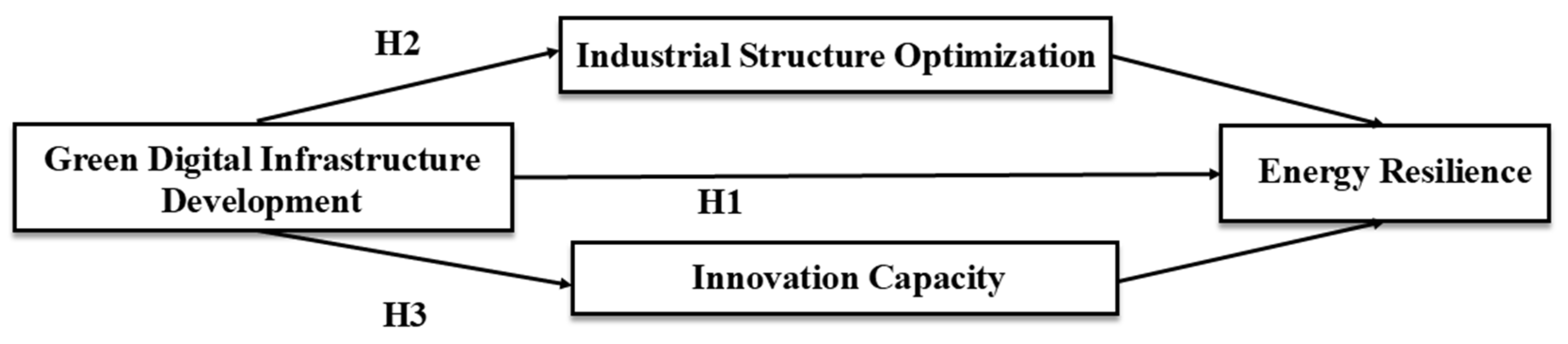
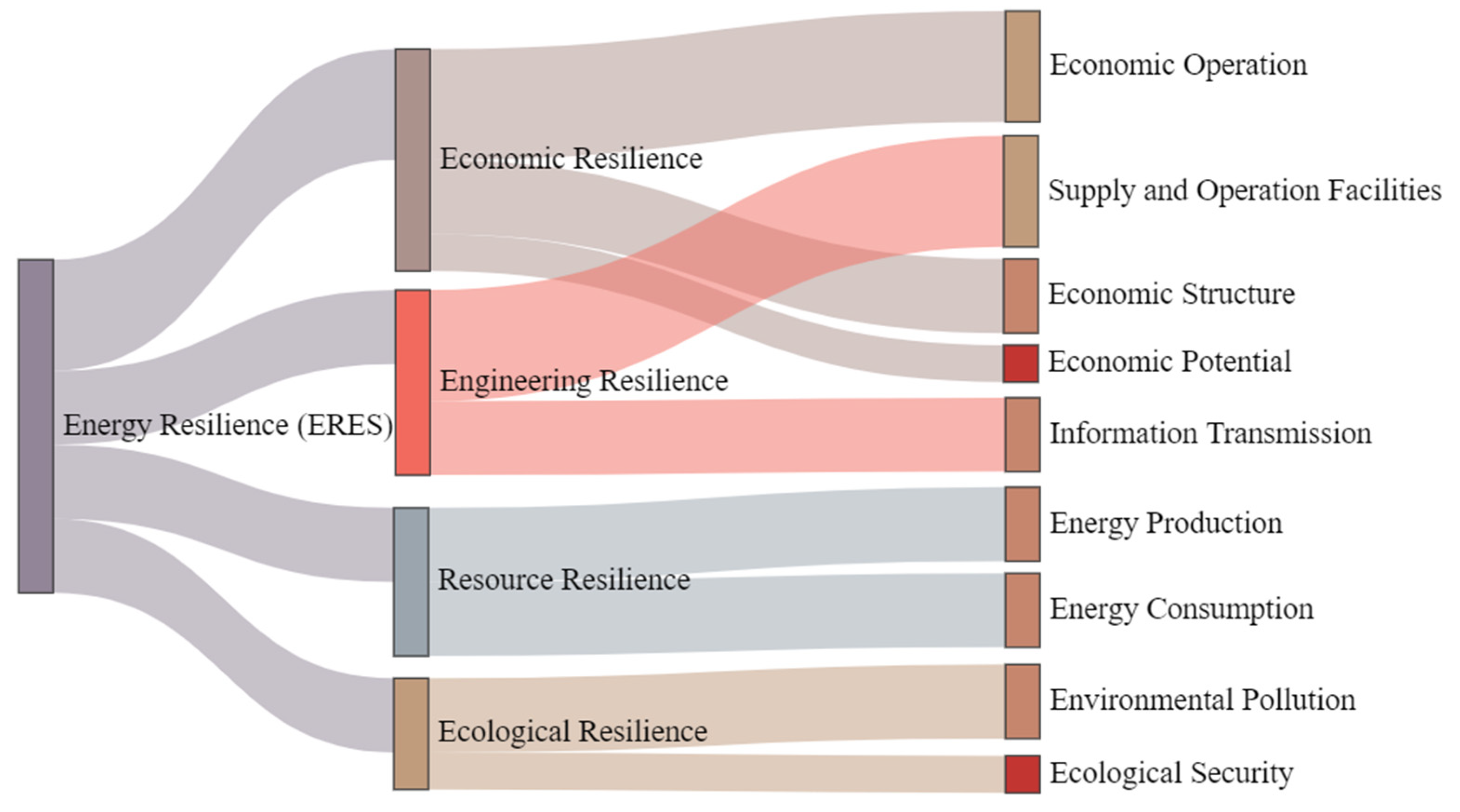
In the context of global energy transition and climate change, energy system resilience has become critical for countries worldwide. While green digital infrastructure—emerging from the integration of digitalization and low-carbon development—shows theoretical potential to strengthen energy resilience, empirical evidence remains limited. This study utilizes China’s 2015 Green Data Center Pilot Policy as a quasi-natural experiment to examine this relationship through comprehensive panel data from 30 Chinese provinces spanning 2011–2021. We developed an integrated energy resilience evaluation framework across four dimensions: economic resilience, engineering resilience, resource resilience, and ecological resilience, applying the CRITIC method to determine objective indicator weights. Our difference-in-differences analysis demonstrates that green digital infrastructure significantly enhances regional energy resilience, with pilot regions experiencing a 2.83% improvement compared to non-pilot areas. This impact shows regional heterogeneity, with stronger effects in economically developed areas with better digital foundations. We identify two primary mechanisms through which green digital infrastructure influences energy resilience: industrial structure optimization (particularly through service industry growth) and enhanced innovation capacity. These findings provide robust empirical support for green digital infrastructure’s role in strengthening energy system stability and adaptability, offering valuable policy insights for promoting both digitalization and low-carbon transition under global climate governance.
Keywords: green digital infrastructure; energy resilience; industrial structure optimization; innovation capacity green digital infrastructure; energy resilience; industrial structure optimization; innovation capacity