Review

Sensors of Infection: Viral Nucleic Acid PRRs in Fish
1
Department of Biology, Wilfrid Laurier University, 75 University Ave W, Waterloo, ON N2L 3C5, Canada
2
Department of Biology, University of Waterloo, 200 University Ave W, Waterloo, ON N2L 3G1, Canada
*
Author to whom correspondence should be addressed.
Biology 2015, 4(3), 460-493; https://doi.org/10.3390/biology4030460

Submission received: 22 May 2015 / Revised: 19 June 2015 / Accepted: 19 June 2015 / Published: 8 July 2015
(This article belongs to the Special Issue Current Understanding of Fish Immune Systems)

Abstract

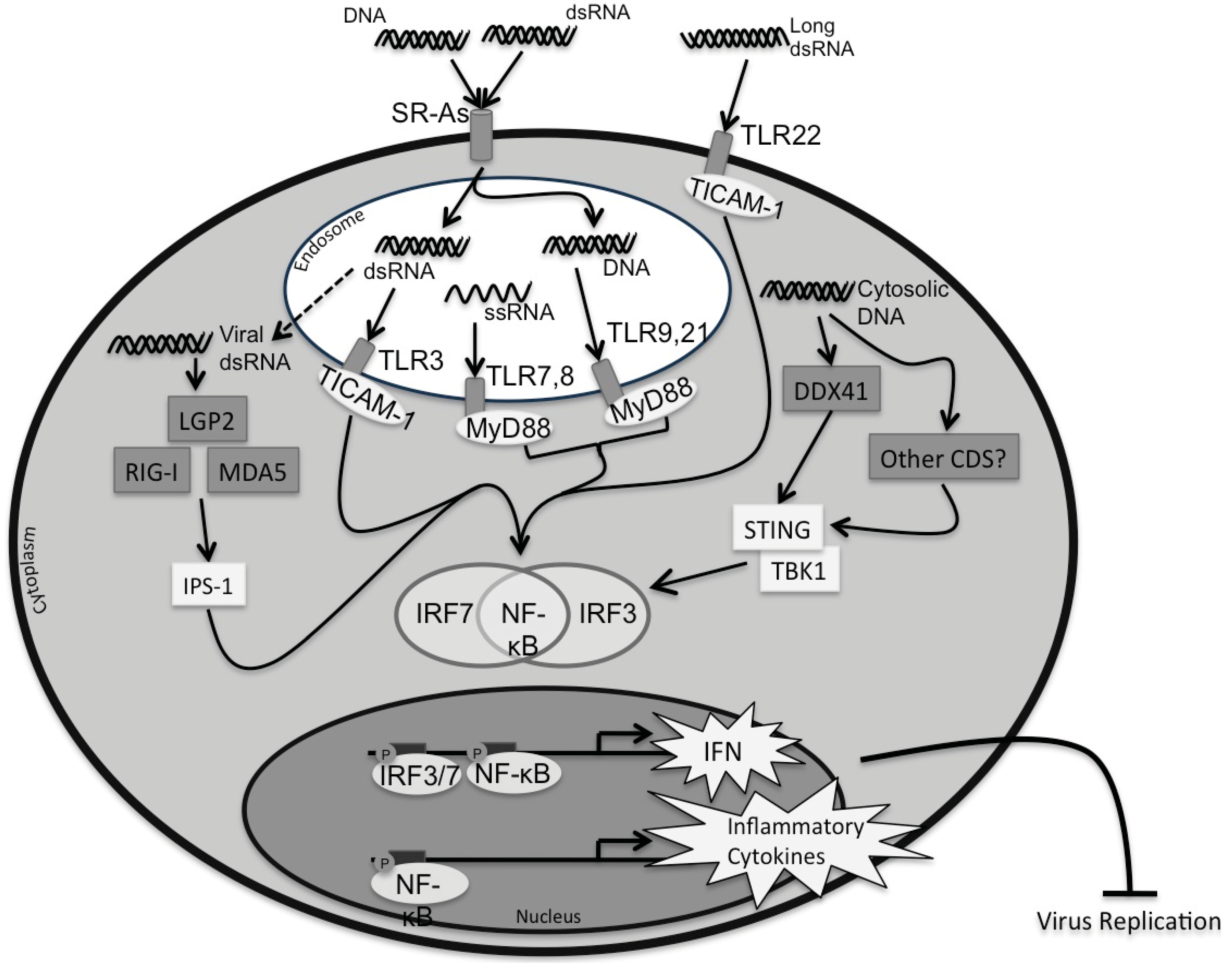
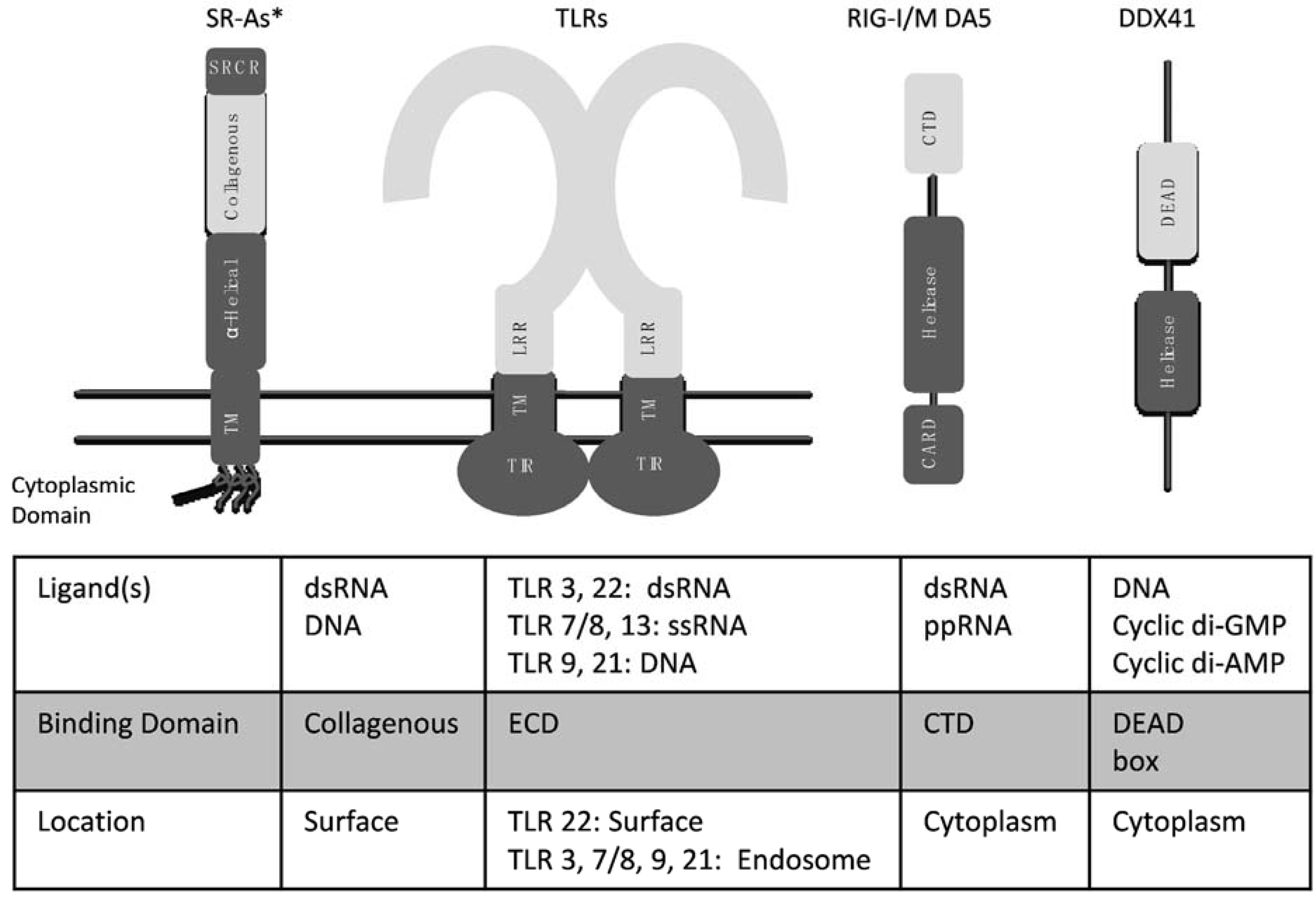
Viruses produce nucleic acids during their replication, either during genomic replication or transcription. These nucleic acids are present in the cytoplasm or endosome of an infected cell, or in the extracellular space to be sensed by neighboring cells during lytic infections. Cells have mechanisms of sensing virus-generated nucleic acids; these nucleic acids act as flags to the cell, indicating an infection requiring defense mechanisms. The viral nucleic acids are called pathogen-associated molecular patterns (PAMPs) and the sensors that bind them are called pattern recognition receptors (PRRs). This review article focuses on the most recent findings regarding nucleic acids PRRs in fish, including: Toll-like receptors (TLRs), RIG-I-like receptors (RLRs), cytoplasmic DNA sensors (CDSs) and class A scavenger receptors (SR-As). It also discusses what is currently known of the downstream signaling molecules for each PRR family and the resulting antiviral response, either type I interferons (IFNs) or pro-inflammatory cytokine production. The review highlights what is known but also defines what still requires elucidation in this economically important animal. Understanding innate immune systems to virus infections will aid in the development of better antiviral therapies and vaccines for the future.
Keywords: pattern recognition receptors; fish; nucleic acids; dsRNA; PAMPs; type I interferon; inflammation; toll-like receptors; RIG-I; SR-A pattern recognition receptors; fish; nucleic acids; dsRNA; PAMPs; type I interferon; inflammation; toll-like receptors; RIG-I; SR-A