Repositioning of Fluoroquinolones: A New Approach in Antitumor Therapy
 , and
, and 
Simple Summary
Abstract
1. Introduction
2. Cancer
3. Drug Repositioning
4. Antibiotics with Antitumor Potential
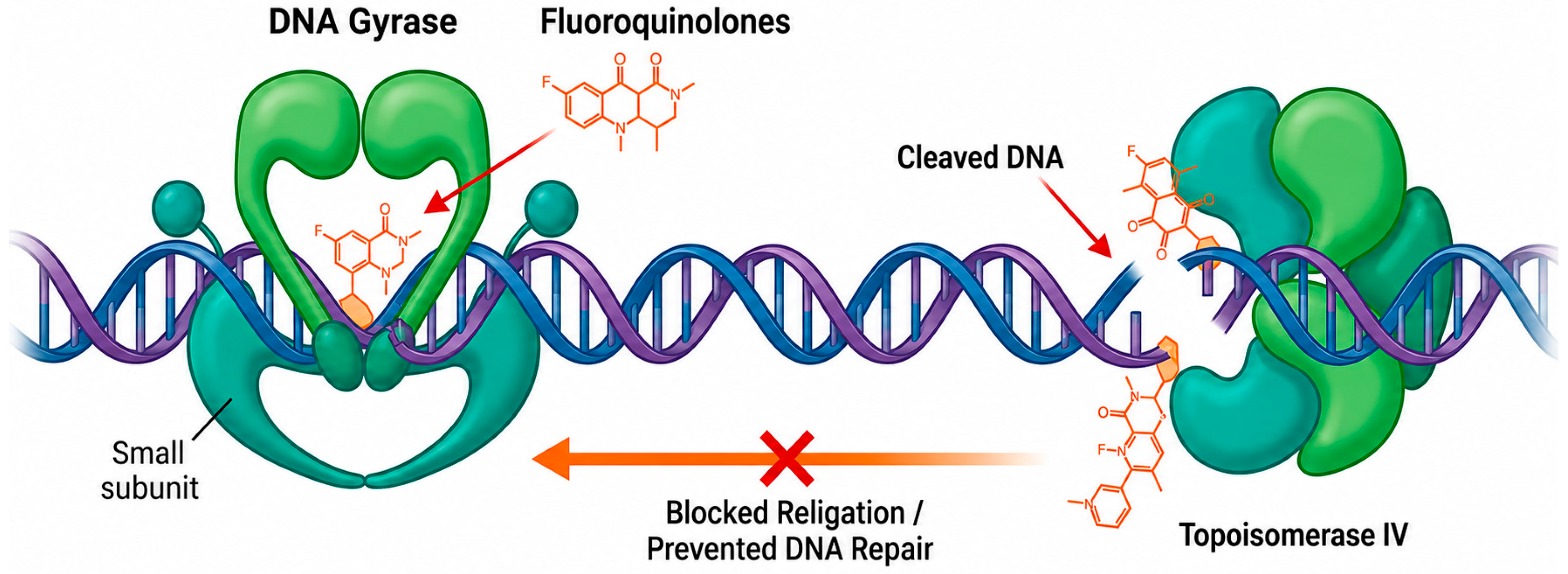
5. Fluoroquinolones
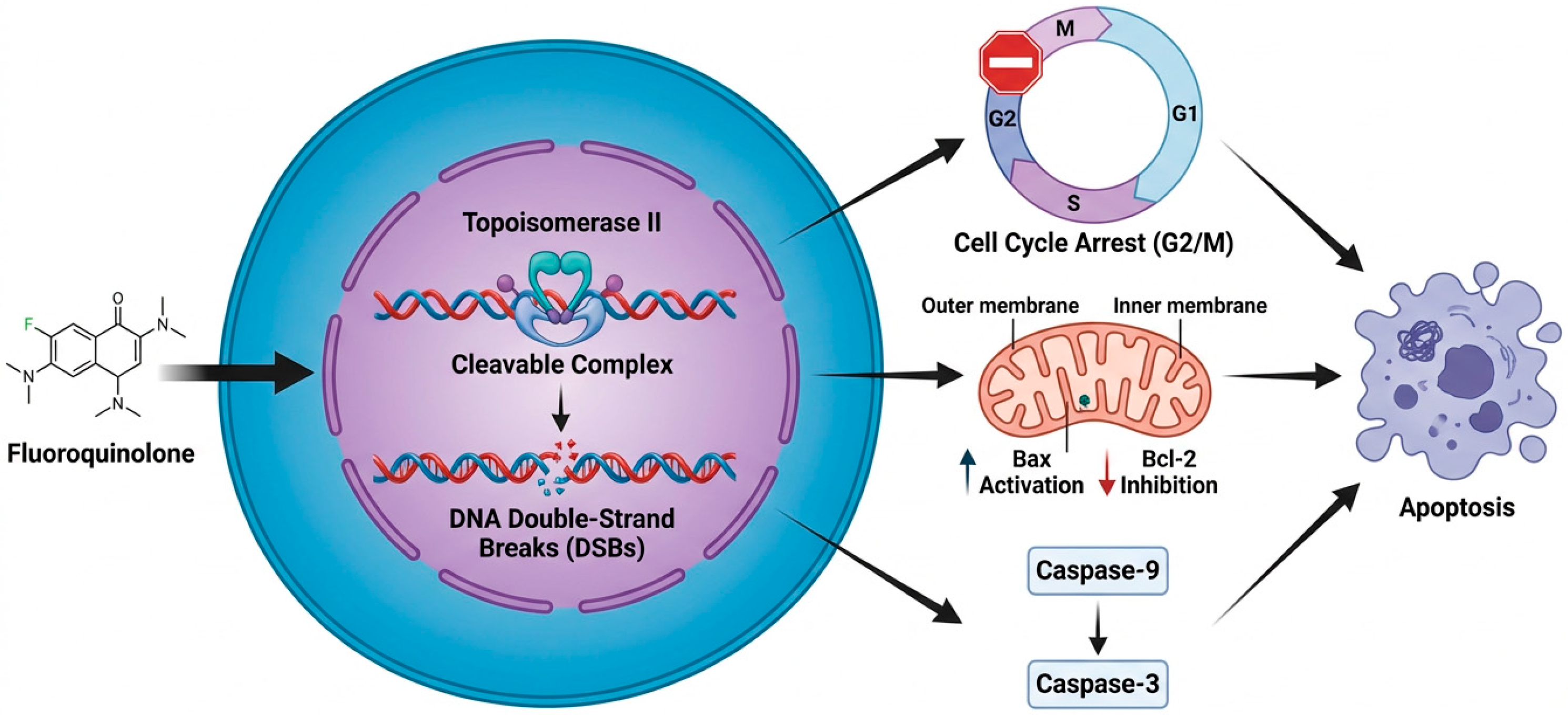
6. Fluoroquinolones with Antitumor Activity
6.1. FQs in Combined Use in Antitumor Therapy
6.2. Nanoencapsulated FQs
7. Conclusions
Author Contributions
Funding
Institutional Review Board Statement
Informed Consent Statement
Data Availability Statement
Acknowledgments
Conflicts of Interest
References
- Ahmad, A. Nanomedicine as potential cancer therapy via targeting dysregulated transcription factors. Semin. Cancer Biol. 2021, 107, 104629. [Google Scholar] [CrossRef]
- Wall, N.R. Pancreatic Cancer Health Disparity: Pharmacologic Anthropology. Cancers 2021, 15, 5070. [Google Scholar] [CrossRef]
- Deo, S.V.S. GLOBOCAN 2020 Report on Global Cancer Burden: Challenges and Opportunities for Surgical Oncologists. Ann. Surg. Oncol. 2022, 29, 6497–6500. [Google Scholar] [CrossRef]
- Xu, J. MYCT1 in cancer development: Gene structure, regulation, and biological implications for diagnosis and treatment. Biomed. Pharmacother. 2023, 165, 115208. [Google Scholar] [CrossRef]
- Cao, W. Changing profiles of cancer burden worldwide and in China: A secondary analysis of the global cancer statistics 2020. Chin. Med. J. 2020, 134, 783–791. [Google Scholar] [CrossRef] [PubMed]
- Pan, H. Immunogenic cell stress and death in the treatment of cancer. Semin. Cell Dev. Biol. 2021, 156, 11–21. [Google Scholar] [CrossRef] [PubMed]
- Kale, M. Drug Repositioning: A Unique Approach to Refurbish Drug Discovery. Curr. Drug Discov. Technol. 2021, 19, e140122192307. [Google Scholar] [CrossRef] [PubMed]
- Cavalluzzi, M.M. Drug Repositioning for Ovarian Cancer Treatment: An Update. Anticancer Agents Med. Chem. 2024, 24, 637–647. [Google Scholar] [CrossRef]
- Kloskowski, T. Effect of four fluoroquinolones on the viability of bladder cancer cells in 2D and 3D cultures. Front. Oncol. 2023, 13, 1222411. [Google Scholar] [CrossRef]
- Ren, B.X. The antibiotic drug trimethoprim suppresses tumour growth and metastasis via targeting Snail. Br. J. Pharmacol. 2022, 179, 2659–2677. [Google Scholar] [CrossRef]
- Wang, S. Oxidative stress induced by Etoposide anticancer chemotherapy drives the emergence of tumor-associated bacteria resistance to fluoroquinolones. J. Adv. Res. 2022, 55, 2659–2677. [Google Scholar]
- Kloskowski, T. Quinolones as a Potential Drug in Genitourinary Cancer Treatment-A Literature Review. Front. Oncol. 2022, 12, 890337. [Google Scholar] [CrossRef]
- Fawzy, M.A. In vitro anticancer activity of novel ciprofloxacin mannich base in lung adenocarcinoma and high-grade serous ovarian cancer cell lines via attenuating mapk signaling pathway. Molecules 2023, 28, 1137. [Google Scholar] [CrossRef]
- Pilleron, S. Global cancer incidence in older adults, 2012 and 2035: A population-based study. Molecules 2019, 144, 49–58. [Google Scholar] [CrossRef]
- Jardim, S.R. The rise of gastrointestinal cancers as a global phenomenon: Unhealthy behavior or progress? Int. J. Environ. Res. Public Health 2023, 20, 3640. [Google Scholar] [CrossRef] [PubMed]
- Sung, H. Global Cancer Statistics 2020: GLOBOCAN Estimates of Incidence and Mortality Worldwide for 36 Cancers in 185 Countries. CA Cancer J. Clin. 2021, 20, 3640. [Google Scholar] [CrossRef] [PubMed]
- Bizuayehu, H.M. Global burden of 34 cancers among women in 2020 and projections to 2040: Population-based data from 185 countries/territories. Int. J. Cancer 2023, 154, 1377–1393. [Google Scholar] [CrossRef]
- Hanahan, D. Hallmarks of Cancer: New Dimensions. Cancer Discov. 2022, 12, 31–46. [Google Scholar] [CrossRef]
- Senga, S.S. Hallmarks of cancer-the new testament. Open Biol. 2021, 11, 200358. [Google Scholar] [CrossRef]
- Guan, W.L. Gastric cancer treatment: Recent progress and future perspectives. J. Hematol. Oncol. 2021, 16, 57. [Google Scholar] [CrossRef]
- Lahiri, A. Lung cancer immunotherapy: Progress, pitfalls, and promises. Mol. Cancer 2023, 22, 40. [Google Scholar] [CrossRef]
- Weth, F.R. Unlocking hidden potential: Advancements, approaches, and obstacles in repurposing drugs for cancer therapy. Mol. Cancer 2023, 130, 703–715. [Google Scholar] [CrossRef]
- Hua, Y. Drug repositioning: Progress and challenges in drug discovery for various diseases. Eur. J. Med. Chem. 2022, 234, 114239. [Google Scholar] [CrossRef]
- Vora, L.K. Artificial intelligence in pharmaceutical technology and drug delivery design. Pharmaceutics 2023, 15, 1916. [Google Scholar] [CrossRef]
- Yadav, V. Repositioning of fluoroquinolones from antibiotic to anticancer agents: An underestimated truth. Biomed. Pharmacother. 2019, 111, 934–946. [Google Scholar] [CrossRef]
- Elzahhar, P.A. Inclusion of nitrofurantoin into the realm of cancer chemotherapy via biology-oriented synthesis and drug repurposing. Biomed. Pharmacother. 2020, 66, 4565–4587. [Google Scholar] [CrossRef] [PubMed]
- Ballard, C. Drug repositioning and repurposing for Alzheimer disease. Nat. Rev. Neurol. 2020, 16, 661–673. [Google Scholar] [CrossRef]
- Ajmeera, D.; Ajumeera, R. Drug repurposing: A novel strategy to target cancer stem cells and therapeutic resistance. Genes Dis. 2024, 11, 148–175. [Google Scholar] [CrossRef] [PubMed]
- Ioakeim-Skoufa, I. Drug repurposing in oncology: A systematic review of randomized controlled clinical trials. Cancers 2023, 11, 2972. [Google Scholar] [CrossRef] [PubMed]
- Bailly, C. Toward a repositioning of the antibacterial drug nifuroxazide for cancer treatment. Drug Discov. Today 2019, 24, 1930–1936. [Google Scholar] [CrossRef]
- Takano, N. Azithromycin, a potent autophagy inhibitor for cancer therapy, perturbs cytoskeletal protein dynamics. Drug Discov. Today 2023, 128, 1838–1849. [Google Scholar] [CrossRef]
- Halawa, E.M. Antibiotic action and resistance: Updated review of mechanisms, spread, influencing factors, and alternative approaches for combating resistance. Front. Pharmacol. 2024, 14, 1305294. [Google Scholar] [CrossRef]
- Zhou, J. The impact of antibiotic use on clinical features and survival outcomes of cancer patients treated with immune checkpoint inhibitors. Front. Immunol. 2022, 13, 968729. [Google Scholar] [CrossRef]
- Metselaar-Albers, M. No detrimental association between antibiotic use and immune checkpoint inhibitor therapy: An observational cohort study comparing patients with ICI-treated and TKI-treated melanoma and NSCLC. J. Immunother. Cancer 2024, 12, e008269. [Google Scholar] [CrossRef] [PubMed]
- Gonugunta, A.S. Antibiotic Prescriptions in Lung Cancer and Melanoma Populations: Differences With Potential Clinical Implications in the Immunotherapy Era. Clin. Lung Cancer 2023, 24, 11–17. [Google Scholar] [CrossRef]
- Kim, H.Y. Anti-tumor activity of trimethoprim-sulfamethoxazole against melanoma skin cancer through triggering allergic reaction and promoting immunity. Int. Immunopharmacol. 2023, 123, 110742. [Google Scholar] [CrossRef] [PubMed]
- Fiorillo, M. Doxycycline, Azithromycin and Vitamin C (DAV): A potent combination therapy for targeting mitochondria and eradicating cancer stem cells (CSCs). Aging 2019, 11, 111810. [Google Scholar] [CrossRef]
- Chrzanowska, A. Anticancer and antimicrobial effects of novel ciprofloxacin fatty acids conjugates. Eur. J. Med. Chem. 2019, 185, 111810. [Google Scholar] [CrossRef]
- Chrzanowska, A. The Effect of Conjugation of Ciprofloxacin and Moxifloxacin with Fatty Acids on Their Antibacterial and Anticancer Activity. Int. J. Mol. Sci. 2022, 23, 6261. [Google Scholar] [CrossRef]
- Suaifan, G. Fluoroquinolones’ Biological Activities against Laboratory Microbes and Cancer Cell Lines. Molecules 2022, 27, 1658. [Google Scholar] [CrossRef] [PubMed]
- Alhaj-Suliman, S.O. A ciprofloxacin derivative with four mechanisms of action overcomes paclitaxel resistance in p53-mutant and MDR1 gene-expressing type II human endometrial cancer. Biomaterials 2023, 296, 122093. [Google Scholar] [CrossRef] [PubMed]
- Fan, Y.L. Fluoroquinolone derivatives and their anti-tubercular activities. Eur. J. Med. Chem. 2018, 146, 554–563. [Google Scholar] [CrossRef]
- Ruiz, J. Unusual and Unconsidered Mechanisms of Bacterial Resilience and Resistance to Quinolones. Life 2020, 14, 383. [Google Scholar] [CrossRef]
- Bush, N.G. Quinolones: Mechanism, Lethality and Their Contributions to Antibiotic Resistance. Molecules 2020, 25, 5662. [Google Scholar] [CrossRef]
- Dube, P.S. Quinolone: A versatile therapeutic compound class. Mol. Divers. 2022, 27, 1501–1526. [Google Scholar] [CrossRef]
- Yadav, V. Moxifloxacin and ciprofloxacin induces S-phase arrest and augments apoptotic effects of cisplatin in human pancreatic cancer cells via ERK activation. BMC Cancer 2015, 15, 581. [Google Scholar] [CrossRef] [PubMed]
- Hussen, N.H.A. Long-term toxicity of fluoroquinolones: A comprehensive review. Drug Chem. Toxicol. 2024, 47, 795–806. [Google Scholar] [CrossRef] [PubMed]
- Bhatt, S. Fluoroquinolone antibiotics: Occurrence, mode of action, resistance, environmental detection, and remediation—A comprehensive review. Environ. Pollut. 2022, 315, 120440. [Google Scholar] [CrossRef]
- Ghweil, A.A. Fluoroquinolone-resistant strains in cirrhotic patients with spontaneous bacterial peritonitis: Microbiological and molecular aspects. Eur. J. Gastroenterol. Hepatol. 2022, 34, 64–68. [Google Scholar] [CrossRef]
- Nibell, O. Oral Fluoroquinolone Use and the Risk of Acute Liver Injury: A Nationwide Cohort Study. Clin. Infect. Dis. 2022, 74, 2152–2158. [Google Scholar] [CrossRef]
- Bhattacharya, P. Fluoroquinolone antibiotics show genotoxic effect through DNA-binding and oxidative damage. Spectrochim. Acta A Mol. Biomol. Spectrosc. 2020, 227, 117634. [Google Scholar] [CrossRef]
- Kozsup, M. Synthesis, characterization and biological evaluation of Co(III) complexes with quinolone drugs. J. Inorg. Biochem. 2019, 193, 94–105. [Google Scholar] [CrossRef] [PubMed]
- Alaaeldin, R. Cell cycle arrest and apoptotic effect of 7-(4-(N-substituted carbamoylmethyl) piperazin-1-yl) ciprofloxacin-derivative on HCT 116 and A549 cancer cells. Anticancer Res. 2019, 40, 2739–2749. [Google Scholar] [CrossRef] [PubMed]
- Phiboonchaiyanan, P.P. Ciprofloxacin mediates cancer stem cell phenotypes in lung cancer cells through caveolin-1-dependent mechanism. Chem. Biol. Interact. 2016, 250, 1–11. [Google Scholar] [CrossRef]
- Beberok, A. Ciprofloxacin-mediated induction of S-phase cell cycle arrest and apoptosis in COLO829 melanoma cells. Pharmacol. Rep. 2016, 70, 6–13. [Google Scholar] [CrossRef]
- Beberok, A. Ciprofloxacin triggers the apoptosis of human triple-negative breast cancer MDA-MB-231 cells via the p53/Bax/Bcl-2 signaling pathway. Int. J. Oncol. 2018, 50, 1727–1737. [Google Scholar] [CrossRef]
- Fathy, M. A New Ciprofloxacin-derivative inhibits proliferation and suppresses the migration ability of HeLa cells. Anticancer Res. 2020, 40, 5025–5033. [Google Scholar] [CrossRef]
- Abdel-Rahman, I.M. Novel mannich bases of ciprofloxacin with improved physicochemical properties, antibacterial, anticancer activities and caspase-3 mediated apoptosis. Bioorg. Chem. 2021, 107, 104629. [Google Scholar] [CrossRef]
- Chrzanowska, A. The Effect of Fatty Acids on Ciprofloxacin Cytotoxic Activity in Prostate Cancer Cell Lines-Does Lipid Component Enhance Anticancer Ciprofloxacin Potential? Cancers 2022, 14, 409. [Google Scholar] [CrossRef] [PubMed]
- Souza, E. Enoxacin inhibits growth of prostate cancer cells and effectively restores microRNA processing. Epigenetics 2013, 8, 548–558. [Google Scholar] [CrossRef]
- Nishi, K. Enoxacin with UVA irradiation induces apoptosis in the aspc1 human pancreatic cancer cell line through ROS generation. Anticancer Res. 2017, 37, 6211–6217. [Google Scholar]
- Xu, H. Enoxacin exerts anti-tumor effects against prostate cancer through inducing apoptosis. Technol. Cancer Res. Treat. 2021, 20, 1533033821995284. [Google Scholar] [CrossRef]
- Kan, J.Y. Gemifloxacin, a fluoroquinolone antimicrobial drug, inhibits migration and invasion of human colon cancer cells. BioMed Res. Int. 2013, 2013, 159786. [Google Scholar] [CrossRef]
- Chen, T.C. Gemifloxacin inhibits migration and invasion and induces mesenchymal-epithelial transition in human breast adenocarcinoma cells. J. Mol. Med. 2014, 92, 3–64. [Google Scholar] [CrossRef] [PubMed]
- Song, M. Antibiotic drug levofloxacin inhibits proliferation and induces apoptosis of lung cancer cells through inducing mitochondrial dysfunction and oxidative damage. Biomed. Pharmacother. 2016, 84, 1137–1143. [Google Scholar] [CrossRef]
- Beberok, A. lomefloxacin induces oxidative stress and apoptosis in COLO829 melanoma cells. Int. J. Mol. Sci. 2017, 18, 2194. [Google Scholar] [CrossRef] [PubMed]
- Yu, M. Repositioning of antibiotic levofloxacin as a mitochondrial biogenesis inhibitor to target breast cancer. Biochem. Biophys. Res. Commun. 2016, 471, 639–645. [Google Scholar] [CrossRef]
- Nakay, S. Photodynamically-induced apoptosis due to ultraviolet a in the presence of lomefloxacin in human promyelocytic leukemia cells. Anticancer Res. 2017, 37, 6407–6413. [Google Scholar]
- Beberok, A. GSH depletion, mitochondrial membrane breakdown, caspase-3/7 activation and DNA fragmentation in U87MG glioblastoma cells: New insight into the mechanism of cytotoxicity induced by fluoroquinolones. Eur. J. Pharmacol. 2018, 835, 94–107. [Google Scholar] [CrossRef]
- Barnum, K.J. Cell cycle regulation by checkpoints. Methods Mol. Biol. 2018, 835, 94–107. [Google Scholar]
- Lee, J.H. Cell Cycle-Dependent Control and Roles of DNA Topoisomerase II. Genes 2019, 10, 859. [Google Scholar] [CrossRef]
- Fan, M. Ciprofloxacin promotes polarization of CD86+CD206- macrophages to suppress liver cancer. Oncol. Rep. 2020, 44, 91–102. [Google Scholar] [CrossRef] [PubMed]
- Xu, X. Apoptosis and apoptotic body: Disease message and therapeutic target potentials. Biosci. Rep. 2019, 39, BSR20180992. [Google Scholar] [CrossRef] [PubMed]
- Jałbrzykowska, K. The New Face of a Well-Known Antibiotic: A Review of the Anticancer Activity of Enoxacin and Its Derivatives. Cancers 2022, 14, 3056. [Google Scholar] [CrossRef]
- Valianatos, G. A small molecule drug promoting miRNA processing induces alternative splicing of MdmX transcript and rescues p53 activity in human cancer cells overexpressing MdmX protein. PLoS ONE 2017, 12, e0185801. [Google Scholar] [CrossRef]
- Felicetti, T. Modulating microRNA Processing: Enoxacin, the Progenitor of a New Class of Drugs. J. Med. Chem. 2020, 63, 12275–12289. [Google Scholar] [CrossRef] [PubMed]
- Aydemir, L. Levofloxacin might be safe to use for OSCC patients. Med. Oncol. 2021, 38, 87. [Google Scholar] [CrossRef]
- Cornaz-buros, S. Targeting cancer stem-like cells as an approach to defeating cellular heterogeneity in Ewing sarcoma. Cancer Res. 2014, 74, 6610–6622. [Google Scholar] [CrossRef]
- Juan, L.S. DNA damage triggers squamous metaplasia in human lung and mammary cells via mitotic checkpoints. Cell Death Discov. 2023, 9, 21. [Google Scholar] [CrossRef]
- Maciuca, A.M. Rare-Earth Metal Complexes of the Antibacterial Drug Oxolinic Acid: Synthesis, Characterization, DNA/Protein Binding and Cytotoxicity Studies. Molecules 2020, 25, 5418. [Google Scholar] [CrossRef]
- Kumar, M. Structure, DNA/proteins binding, docking and cytotoxicity studies of copper(II) complexes with the first quinolone drug nalidixic acid and 2,2′-dipyridylamine. Spectrochim. Acta A Mol. Biomol. Spectrosc. 2019, 212, 94–104. [Google Scholar] [CrossRef]
- Liu, Q.Y. Sparfloxacin - Cu(II) - aromatic heterocyclic complexes: Synthesis, characterization and in vitro anticancer evaluation. Dalton Trans. 2022, 51, 9878–9887. [Google Scholar] [CrossRef] [PubMed]
- Han, L. Hitchhiking on Controlled-Release Drug Delivery Systems: Opportunities and Challenges for Cancer Vaccines. Front. Pharmacol. 2021, 12, 679602. [Google Scholar] [CrossRef] [PubMed]
- Alimoradi, H. Controlled Delivery of Nitric Oxide for Cancer Therapy. Pharm. Nanotechnol. 2017, 12, 679602. [Google Scholar] [CrossRef]
- Lee, Y. Stimuli-responsive liposomes for drug delivery. Wiley Interdiscip. Rev. Nanomed. Nanobiotechnol. 2017, 9, 10. [Google Scholar] [CrossRef]
- Yee-Kuen, C. Chitosan Nanoparticle-Based System: A New Insight into the Promising Controlled Release System for Lung Cancer Treatment. Molecules 2022, 27, 473. [Google Scholar] [CrossRef]
- Hanus, M. Immune System, Microbiota, and Microbial Metabolites: The Unresolved Triad in Colorectal Cancer Microenvironment. Front. Immunol. 2021, 12, 612826. [Google Scholar] [CrossRef]
- Zella, D. Viruses and Bacteria Associated with Cancer: An Overview. Viruses 2021, 13, 1039. [Google Scholar] [CrossRef] [PubMed]
- Sepich-Poore, G.D. The microbiome and human cancer. Science 2021, 371, 6536. [Google Scholar] [CrossRef]



| Drug | Mechanism of Action | Cell Line | In Vivo/In Vitro | IC50 | Reference |
|---|---|---|---|---|---|
| Ciprofloxacin | apoptosis induction | NCI-H460 (Lung cancer) | in vitro | 30.2 µM | [54] |
| Ciprofloxacin | Cell cycle arrest and apoptosis | COLO829 (Melanoma) | in vitro | 100 µM | [55] |
| Ciprofloxacin | Induces apoptosis via p53/BAX/BCL-2 | MDA-MB-231 (Breast cancer) | In Vitro | 4.4 μM | [56] |
| Ciprofloxacin | Cell cycle arrest and apoptosis | HCT116 (colorectal cancer) and A549 (non-small cell lung carcinoma) | in vitro | 0.97 µM | [53] |
| Ciprofloxacin | apoptosis induction | HeLa (cervical cancer) | in vitro | 16.5 µM | [57] |
| Ciprofloxacin | Induces apoptosis via caspase-3 | HOP-92 (Colon cancer) | in vitro | [58] | |
| Ciprofloxacin | apoptosis induction | SW480 (primary colon cancer) SW620 (metastatic colon cancer), PC3 (prostate cancer) | in vitro | - | [59] |
| Enoxacin | TRBP- mediated miRNA biogenesis | LNCaP, 22Rv1, VCaP, DU145 and PC-3 (prostate cancer cells) | in vitro | 124 μM | [60] |
| Enoxacin | Apoptosis mediated by ROS pathway activation | AsPC1 (Pancreatic cancer) | in vitro | - | [61] |
| Enoxacin | apoptosis induction | PC-3 (prostate adenocarcinoma) | in vitro and in vivo | 20.2 ± 2.3 − 176.6 ± 16.1 μM | [62] |
| Gemifloxacin | Reduction in Snail concentration—EMT | SW620 and LoVo (colon cancer) | in vitro | 51.4 µM | [63] |
| Gemifloxacin | Reduction in Snail concentration—EMT | MDA-MB-231 and MDA-MB-453 (Human breast adenocarcinoma) | in vitro and in vivo | 51.4 µM | [64] |
| Levofloxacin | Apoptosis/Inhibition of cell proliferation/Induction of mitochondrial dysfunction and oxidative stress | A549, H3255, NCL-69 and H460 (Lung cancer) | in vitro and in vivo | - | [65] |
| Levofloxacin | Inhibition of mitochondrial biogenesis | MCF-7, MDA-MB-231, MDA-MB-468, and SkBr (Breast Cancer) | in vitro and in vivo | - | [66] |
| Lomefloxacin | Apoptosis and Oxidative Stress | COLO829 (Melanoma) | in vitro | 250 µM | [67] |
| Lomefloxacin | Apoptosis and Oxidative Stress | HL-60 (promyelocytic leukemia) | in vitro | - | [68] |
Disclaimer/Publisher’s Note: The statements, opinions and data contained in all publications are solely those of the individual author(s) and contributor(s) and not of MDPI and/or the editor(s). MDPI and/or the editor(s) disclaim responsibility for any injury to people or property resulting from any ideas, methods, instructions or products referred to in the content. |
© 2026 by the authors. Licensee MDPI, Basel, Switzerland. This article is an open access article distributed under the terms and conditions of the Creative Commons Attribution (CC BY) license.
Share and Cite
da Silva, J.R.; de Souza, J.B.; de Oliveira, L.L.; de Almeida Campos, L.A.; Cavalcanti, I.M.F. Repositioning of Fluoroquinolones: A New Approach in Antitumor Therapy. Biology 2026, 15, 717. https://doi.org/10.3390/biology15090717
da Silva JR, de Souza JB, de Oliveira LL, de Almeida Campos LA, Cavalcanti IMF. Repositioning of Fluoroquinolones: A New Approach in Antitumor Therapy. Biology. 2026; 15(9):717. https://doi.org/10.3390/biology15090717
Chicago/Turabian Styleda Silva, Jeferson Ricardo, Jaqueline Barbosa de Souza, Lara Limeira de Oliveira, Luís André de Almeida Campos, and Isabella Macário Ferro Cavalcanti. 2026. "Repositioning of Fluoroquinolones: A New Approach in Antitumor Therapy" Biology 15, no. 9: 717. https://doi.org/10.3390/biology15090717
APA Styleda Silva, J. R., de Souza, J. B., de Oliveira, L. L., de Almeida Campos, L. A., & Cavalcanti, I. M. F. (2026). Repositioning of Fluoroquinolones: A New Approach in Antitumor Therapy. Biology, 15(9), 717. https://doi.org/10.3390/biology15090717