Article

Sublethal Abamectin as a Population Suppressant: Decoding the Transgenerational Impact on the Asian Citrus Psyllid for Sustainable Management

1
Hunan Provincial Key Laboratory for Biology and Control of Plant Diseases and Insect Pests, College of Plant Protection, Hunan Agricultural University, Changsha 410128, China
2
Horticultural Research Institute, Hunan Academy of Agricultural Sciences, Changsha 410125, China
3
Yuelushan Laboratory, Changsha 410125, China
*
Authors to whom correspondence should be addressed.
These authors contributed equally to this work.
Biology 2026, 15(9), 683; https://doi.org/10.3390/biology15090683
Submission received: 9 March 2026 / Revised: 21 April 2026 / Accepted: 21 April 2026 / Published: 27 April 2026
(This article belongs to the Section Toxicology)

Simple Summary

Diaphorina citri is the primary vector of huanglongbing (HLB). As field populations are frequently exposed to sublethal insecticide residues rather than acute lethal doses, we evaluated the transgenerational effects of abamectin at Lethal Concentration 25% (LC25) and Lethal Concentration 50% (LC50) on D. citri over two consecutive generations. Using age–stage, two-sex life-table, and population projection analyses, we found that abamectin significantly delayed nymphal development, shortened adult longevity, and reduced egg hatching, resulting in sustained declines in key population growth parameters across both generations. These findings indicate that abamectin can exert pronounced transgenerational population suppression under sublethal exposure scenarios, thereby potentially lowering the risk of HLB outbreaks in citrus orchards. The study supports field-oriented dose optimization, application timing, and resistance management strategies within integrated pest management (IPM) programs.

Abstract

Investigating the effects of sublethal pesticide doses on pest population succession and physiological metabolism is crucial for IPM and resistance delaying. This study evaluated sublethal effects of abamectin on Diaphorina citri using two-sex life tables, population modeling, and measurements of hormone levels, energy reserves, and gene expression to reveal its transgenerational impacts. Results showed dose-dependent and transgenerational effects: both F0 and F1 generations experienced prolonged development and reduced longevity under LC25/LC50 stress. Life-table parameters (r, λ, R0, GRR, T) declined, and the model predicted a sharp population decrease after 60 days (from 10,357 to 1711 and 372 individuals under LC25 and LC50, respectively). The findings indicated that abamectin suppresses population growth by delaying development and limiting adult recruitment. Following abamectin treatment, hormone levels (20E and JH) showed dynamic fluctuations with delayed peaks in the treated groups, while energy reserves (glycogen and triglycerides) were generally reduced. Vitellogenin gene expression was mostly suppressed, except for a transient increase in Vg-1 and Vg-A1 (LC25, day 9), whereas VgR was generally up-regulated except in the LC25 group. Both LC25 and LC50 treatments suppressed D. citri development and reproduction by disrupting hormone balance and energy metabolism, without inducing hormesis. These findings provide a theoretical basis for optimizing field application strategies and support the use of abamectin in IPM programs to reduce outbreak risk and delay resistance development.

1. Introduction

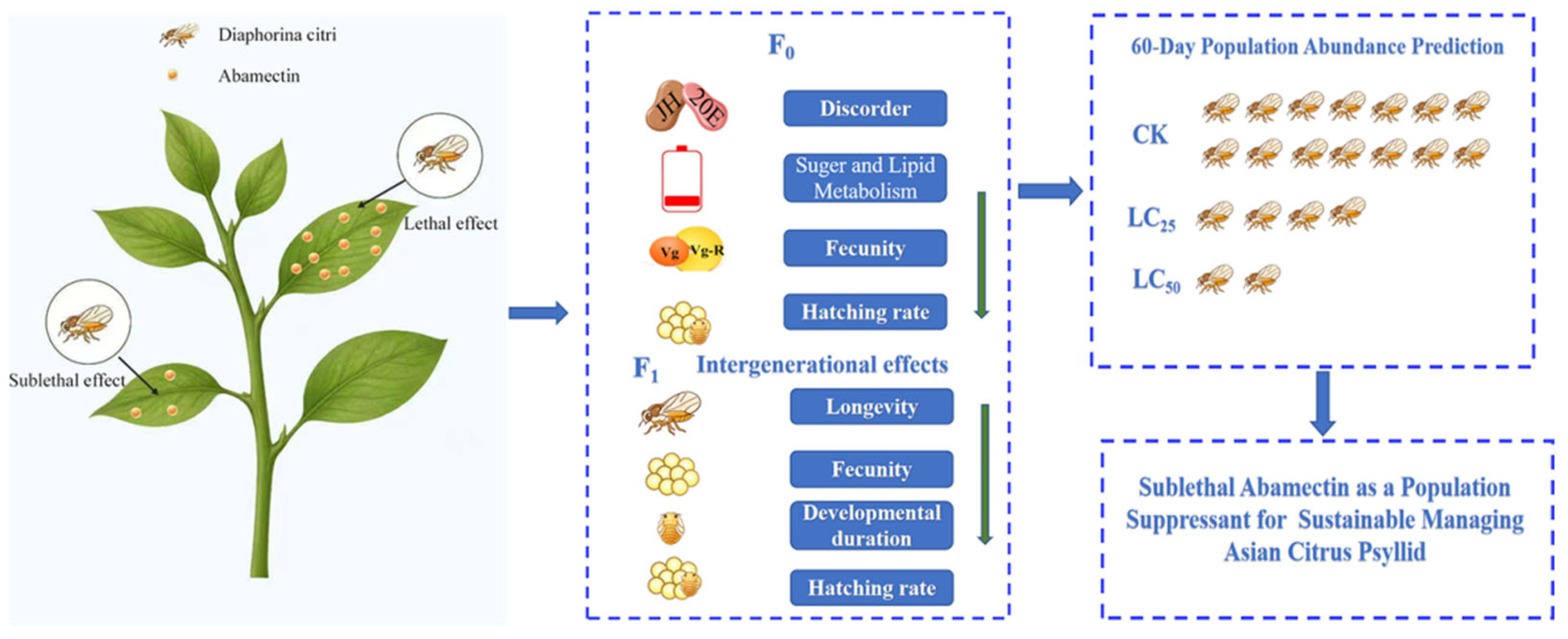
The efficacy of insecticides is often evaluated based on mortality rates at specific time points. However, under field conditions, due to the spatial and temporal heterogeneity in the absorption, translocation, and degradation of chemicals within leaves and phloem, pests are frequently exposed to a series of varying low concentrations, often existing in a state of “sublethal exposure” rather than experiencing a single high dose with acute lethal effects [1]. Sublethal doses of insecticides can significantly alter the insect development rate, longevity, fecundity, sex ratio, feeding and migratory behavior, as well as learning and memory capabilities, without causing direct mortality [2,3,4,5]. Nevertheless, these sublethal effects are frequently overlooked in traditional efficacy assessments (Figure 1). Consequently, conventional evaluations based solely on mortality rates fail to accurately reflect the true impact of insecticides on pest population growth and their potential for sustained damage [6].
The Asian citrus psyllid, Diaphorina citri Kuwayama, is the primary vector of citrus huanglongbing (HLB) and is considered the most devastating pest of citrus crops. It inflicts damage by sucking phloem sap from shoots and young leaves, not only causing direct harm but also, more critically, by acquiring and transmitting the pathogen Candidatus Liberibacter asiaticus (CLas). This leads to disease symptoms such as leaf mottling, yellowing, root decline, and ultimately tree death [7,8].
Abamectin is a fermentation product derived from Streptomyces avermitilis and belongs to the macrocyclic lactone class of biopesticides. It exhibits both stomach and contact toxicity and is widely used for controlling a variety of agricultural and forestry pests [9,10,11]. The compound primarily acts on glutamate-gated chloride channels (GluCls) and certain gamma-aminobutyric acid (GABA) receptors in invertebrates. By enhancing chloride ion influx, it induces neuronal hyperpolarization, leading to paralysis and eventual death of insects or mites [12]. Due to its unique mode of action and favorable physicochemical properties (abamectin can be used in combination with most pesticides), abamectin serves as a key component in resistance management and insecticide rotation strategies in many cropping systems.
Exposure to abamectin stress, whether at lethal or sublethal doses, disrupts fundamental metabolic processes in insects [13]. Moreover, the stress induced by these doses can be observed in transgenerational offspring even in the absence of further chemical exposure [14,15,16]. For example, the fecundity and wing morph of the F1 generation in the brown planthopper and the green peach aphid were significantly altered after parental exposure to abamectin [17,18]. However, some insecticides can induce hormesis at low doses, leading to increased fecundity and population growth. For instance, sublethal doses of abamectin have been shown to cause mild stimulatory effects in the brown planthopper [17]. Therefore, understanding the transgenerational effects of insecticides on pests is crucial for optimizing their application within integrated pest management (IPM) programs.
This study systematically evaluates the comprehensive effects of both sublethal and lethal doses from multiple perspectives, including parental phenotypes, offspring life-table parameters, as well as metabolic and reproductive regulation. It helps clarify why citrus psyllid populations can be effectively suppressed under conventional field application conditions and also reveals the potential risk of low-dose residues in inducing reproductive compensation or population rebound [1].
The related findings not only provide a scientific basis for optimizing field application doses and timing but also offer theoretical support for shifting the control strategy from “rapid individual mortality” to “long-term suppression of reproduction and population growth.” This is of significant importance for reducing the density of citrus psyllids and delaying the evolution of resistance.

2. Materials and Methods

2.1. Insects and Insecticides

A population of the Asian citrus psyllid, Diaphorina citri, was collected in September 2022 from a citrus orchard located in Wantouzhou Village, Yanglin Town, Hengdong County, Hunan Province, China (113°07′ E, 26°59′ N). The population was maintained under laboratory conditions on orange jasmine (Murraya paniculata) plants. Rearing conditions were set at 25 ± 1 °C, 60 ± 10% relative humidity, and a photoperiod of L:D = 16:8 h. Host plants were regularly pruned to ensure a continuous supply of fresh flushes for psyllid reproduction. The colony had been maintained indoors for more than 3 years (>18 generations) without exposure to any insecticides.
Abamectin (95.8% purity) was kindly presented by Shenzhen Noposion Agrochemical Co., Ltd. (Shenzhen, Guangdong, China).

2.2. Bioassay of Abamectin Toxicity Against D. citri

The toxicity of abamectin to D. citri was evaluated using the leaf-dip method under laboratory conditions [19]. Abamectin was first dissolved in acetone to prepare a high-concentration stock solution, which was then diluted with 0.1% Tween-20 aqueous solution to obtain a series of concentrations. Acetone diluted with Tween-20 solution served as the control. Citrus leaves were dipped into the corresponding test solutions for 20 s, allowed to air-dry on plastic film, then wrapped with aluminum foil at the petiole to maintain moisture before being placed into plastic cups.
Thirty 2-day-old adult psyllids, starved for 3 h prior to the experiment, were placed into each cup. The cups were then sealed with ventilated lids. Each treatment included three replicates. Mortality was assessed 48 h after exposure.
Based on the probit analysis of 48 h mortality, the LC25 and LC50 values of abamectin against 2-day-old adult D. citri were determined to be 0.594 mg/L and 2.184 mg/L, respectively. Detailed bioassay results are provided in Supplementary Table S2.

2.3. Effects of Abamectin Stress on the Biological Characteristics of D. citri

Two-day-old adult psyllids were exposed to citrus leaves treated with abamectin at either LC25 or LC50 concentrations. Control insects received leaves treated with acetone only, following the same treatment procedure described in Section 2.2. For each treatment group, 30 pairs of adults were subsequently used in the experiments.
All experiments were performed using specialized insect-rearing tubes. Each tube contained a red mandarin (Citrus reticulata) seedling with 4–6 leaves inserted at the base. The tubes were maintained in a climate-controlled incubator set at 25 ± 1 °C, 65 ± 5% relative humidity, and a 16 h:8 h light:dark photoperiod. Adult survival and fecundity were monitored daily. Following each 24 h oviposition period, the seedlings were removed, appropriately labeled, and replaced with fresh ones. Egg hatchability was recorded, and any deceased males were promptly replaced with live counterparts to ensure continuous mating availability until the death of all adult insects.
Eggs laid during the peak oviposition period of the F0 generation were collected for further experiments. After hatching, 120 first-instar nymphs were individually transferred to new seedlings and reared in isolation. The developmental duration and survival of each nymph instar were assessed at 24 h intervals. Upon adult emergence, one male and one female were paired in the same rearing tube, and their fecundity as well as egg hatchability were recorded daily until all adults had died.

2.4. Effects of Abamectin Stress on Reproduction of D. citri

2.4.1. Determination of JH and 20E Titers

Following exposure to sublethal and lethal concentrations of abamectin, adult D. citri were sampled at 1, 3, 5, 7, and 9 days post-treatment, with 30 adults collected per treatment and time point. The samples were homogenized on ice in a 1:9 (w/v) ratio of body to PBS and then centrifuged at 5000× g for 10 min at 4 °C. The resulting supernatant was carefully collected for subsequent hormonal analysis. Juvenile hormone (JH) and 20-hydroxyecdysone (20E) titers were quantified using commercial enzyme-linked immunosorbent assay (ELISA) kits (Fankew, Shanghai, China), strictly according to the manufacturer’s protocols.

2.4.2. Measurement of Glycogen and Triglyceride Contents

At 1, 3, 5, 7, and 9 days post-exposure, 30 adults were collected from each treatment group. The samples were homogenized on ice in a 1:1 (w/v) ratio of body to extraction buffer and centrifuged at 8000× g for 10 min at 4 °C. The resulting supernatant was collected, and the contents of triglyceride and glycogen were determined using commercial assay kits (Solarbio, Beijing, China) in strict accordance with the manufacturer’s instructions.

2.4.3. Analysis of Vitellogenin-Related Gene Expression

Following exposure to sublethal and lethal concentrations of abamectin, adults were sampled at 5, 7, and 9 days post-treatment, with seven individuals collected per treatment group at each time point. The total RNA was isolated using the TRIzol reagent (Invitrogen, Carlsbad, CA, USA) according to the manufacturer’s instructions. First-strand cDNA was synthesized using HiScript® II Q RT SuperMix for qPCR (+gDNA wiper) (Vazyme, Nanjing, China). Quantitative real-time PCR (qPCR) was performed using a Thermo Fisher QuantStudio™ 1 Real-Time PCR System (Thermo Fisher Scientific, Waltham, MA, USA). The β-actin gene (GenBank: DQ675553) was used as the internal reference gene. Gene expression levels were calculated using the 2−ΔΔCt method. All primer sequences and detailed reaction conditions are provided in Supplementary Table S1.

2.5. Data Analysis

Probit analysis was performed using statistical software to determine the dose–effect relationship and to calculate the LC25 and LC50 values of abamectin against D. citri. Prior to comparative analysis, all data were checked for normality using the Shapiro–Wilk test and for homogeneity of variances using Levene’s test; datasets meeting the assumptions (p > 0.05 for both tests) were retained for further analysis. Differences among the three treatment groups were evaluated by one-way analysis of variance (ANOVA). Where ANOVA indicated significant effects, followed by pairwise t-tests (p < 0.05) for multiple comparisons. All results are expressed as the means ± standard error (SE). Age–stage, two-sex life-table parameters—including survival, developmental duration, and fecundity of D. citri under abamectin exposure—were analyzed with the TWOSEX-MSChart software (version 2.00.2823) [20,21,22,23]. All figures were generated using GraphPad Prism 8 (version 8.4.3) for graphical presentation of the data.

3. Results

3.1. Effects of Abamectin Stress on Reproduction and Longevity of D. citri

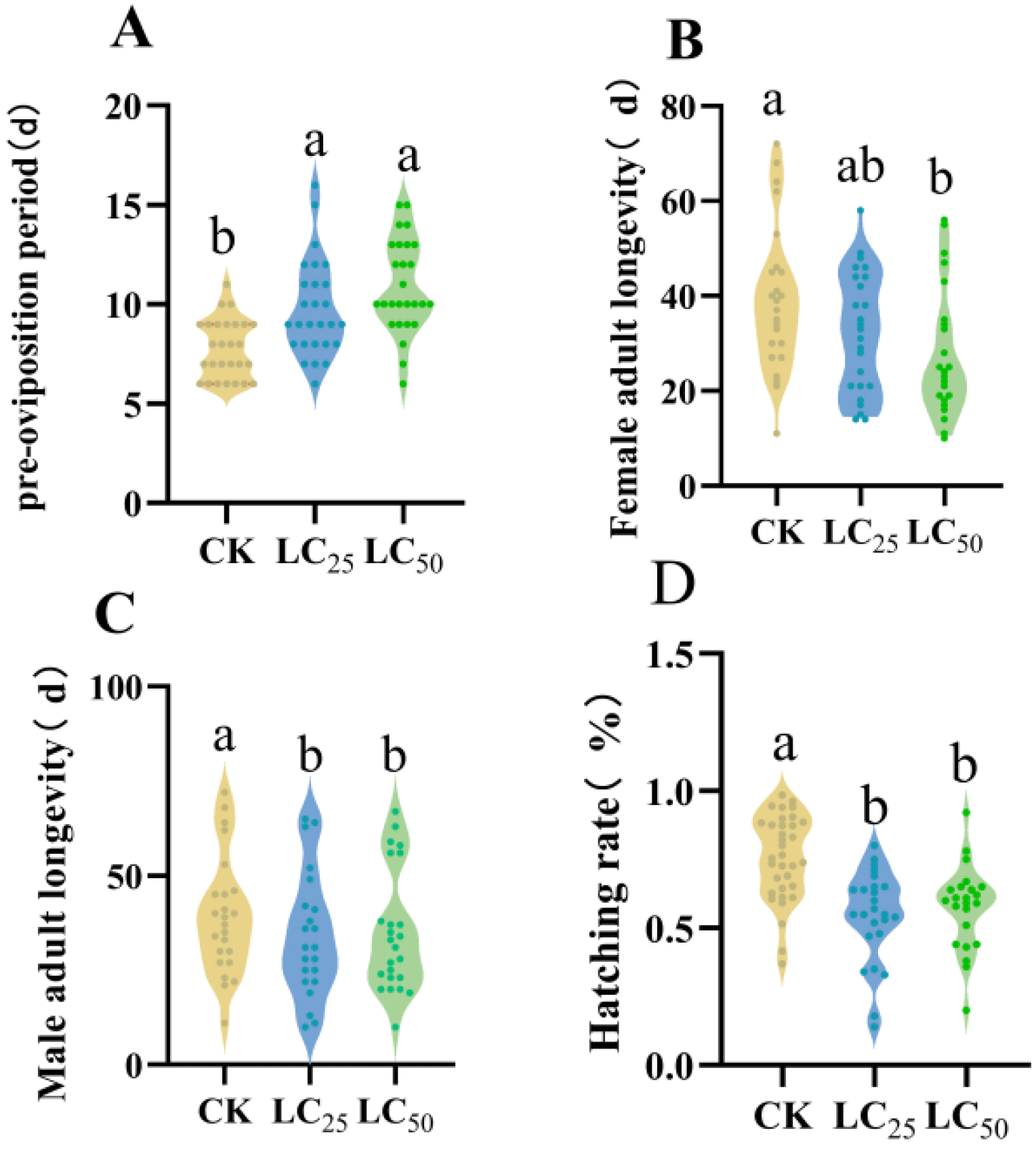
Compared to the control (CK) group, exposure to abamectin significantly altered key biological traits of D. citri. The adult pre-oviposition period was notably prolonged under abamectin stress. While no statistically significant difference was observed between the LC25 and LC50 treatments, the pre-oviposition period exhibited a dose-dependent lengthening trend: 7.63 d in CK, 10.00 d in LC25, and 10.89 d in LC50 (Figure 2A).
Abamectin exposure also significantly reduced the longevity of both female and male adults (Figure 2B,C). Additionally, egg hatchability was markedly lower in treated groups compared with the control (Figure 2D).
Collectively, these results demonstrate that abamectin exposure substantially impaired the reproductive performance of the F0 generation of D. citri.

3.2. Effects of Abamectin Stress on the Biological Fitness of Offspring of D. citri

In the F1 generation, exposure to abamectin significantly extended the developmental duration of D. citri, with the effect progressively magnifying at higher insecticide concentrations and in later nymphal instars. Under LC25 and LC50 treatments, the developmental duration of first-instar nymphs was prolonged by 0.57 d and 1.05 d under LC25 and LC50 treatments respectively, compared to the control. This prolongation was sustained from the second through the fourth instar. Notably, in fifth-instar nymphs, developmental duration under the LC50 treatment was extended by 1.12 d relative to the LC25 group and by 2.08 d relative to the control.
Although adult longevity did not differ significantly between the LC25 and LC50 groups, both treatments resulted in substantially shorter lifespans than the control reductions of 4.43 d and 2.00 d, respectively. Consequently, the total longevity (from nymph to adult death) was reduced by 4.29 d in the LC25 group and by 2.44 d in the LC50 group (Table 1).
These findings demonstrate that abamectin, even at sublethal concentrations, induces marked transgenerational inhibition in D. citri, primarily by delaying development and shortening the adult lifespan. The effects exhibited a clear dose-dependent pattern and a cumulatively intensifying trend.
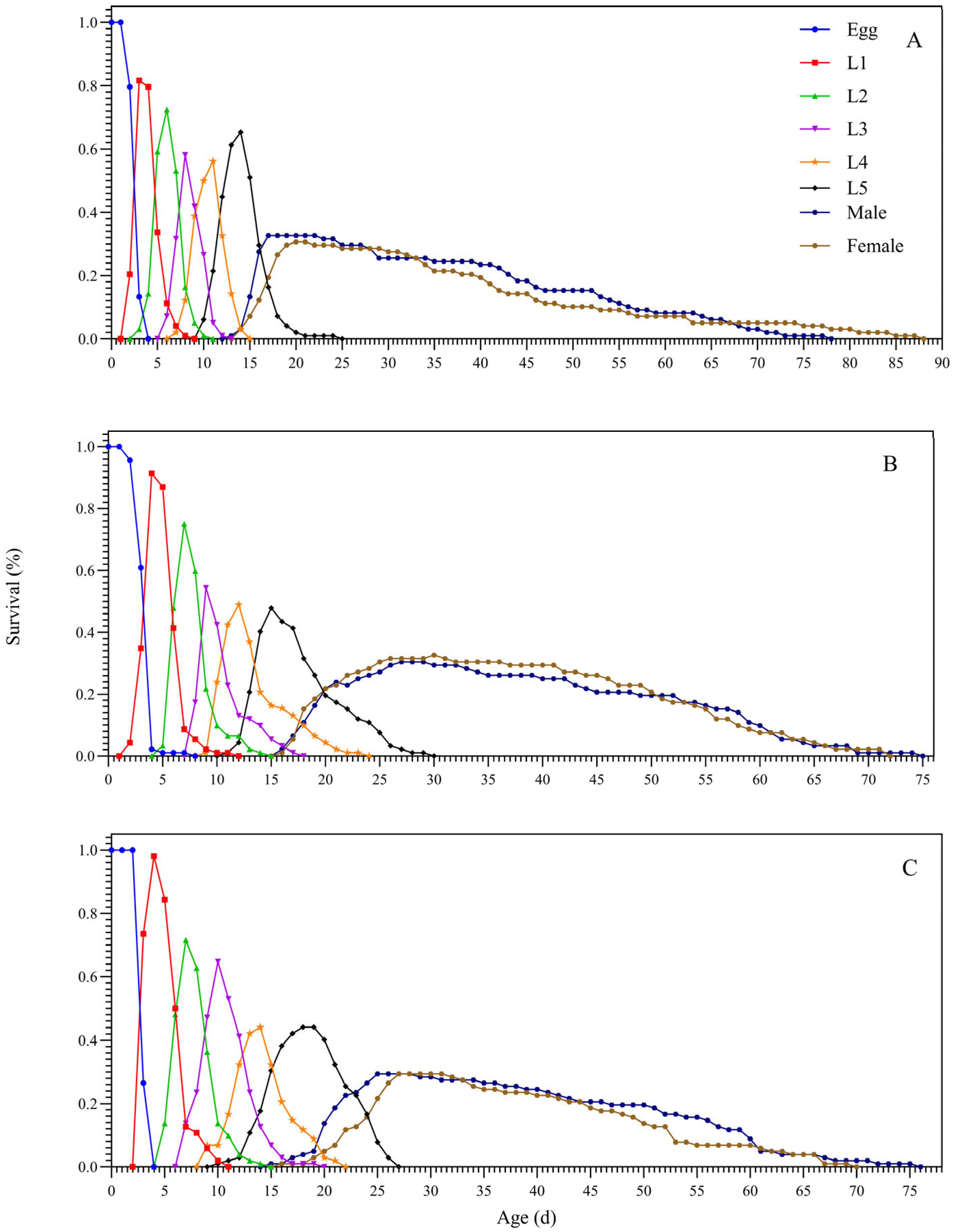
The age–stage-specific survival rates of the F1 generation of D. citri are presented in Figure 3. Considerable developmental plasticity among individuals led to a substantial overlap in the survival curves across nymphal stages. Compared to the LC25 and control (CK) groups, nymphal survival was significantly lower in the LC50 treatment. Furthermore, the developmental duration was markedly prolonged, and the total longevity was significantly shortened under LC50 exposure. These findings indicate that both sublethal and lethal doses of abamectin not only delay developmental progression but also reduce survival and compress the life cycle of the F1 generation of D. citri.
Table 2 summarizes the effects of different abamectin concentrations on the population parameters of D. citri. Both the intrinsic rate of increase (r) and the finite rate of increase (λ) varied significantly across treatments, with the lethal dose (LC50) exerting a more pronounced negative impact on the offspring’s reproductive performance. Accordingly, the net reproductive rate (R0) and the gross reproductive rate (GRR) in the LC50 group were notably lower than those in the control and LC25 groups.
Furthermore, abamectin exposure shortened the mean generation time (T) of the offspring population values, which were 39.78 d in the control, 36.82 d in the LC25 group, and 31.95 d in the LC50 group.
Together, these results demonstrate that abamectin suppresses the population growth potential of D. citri by simultaneously reducing reproductive output and accelerating generational turnover.
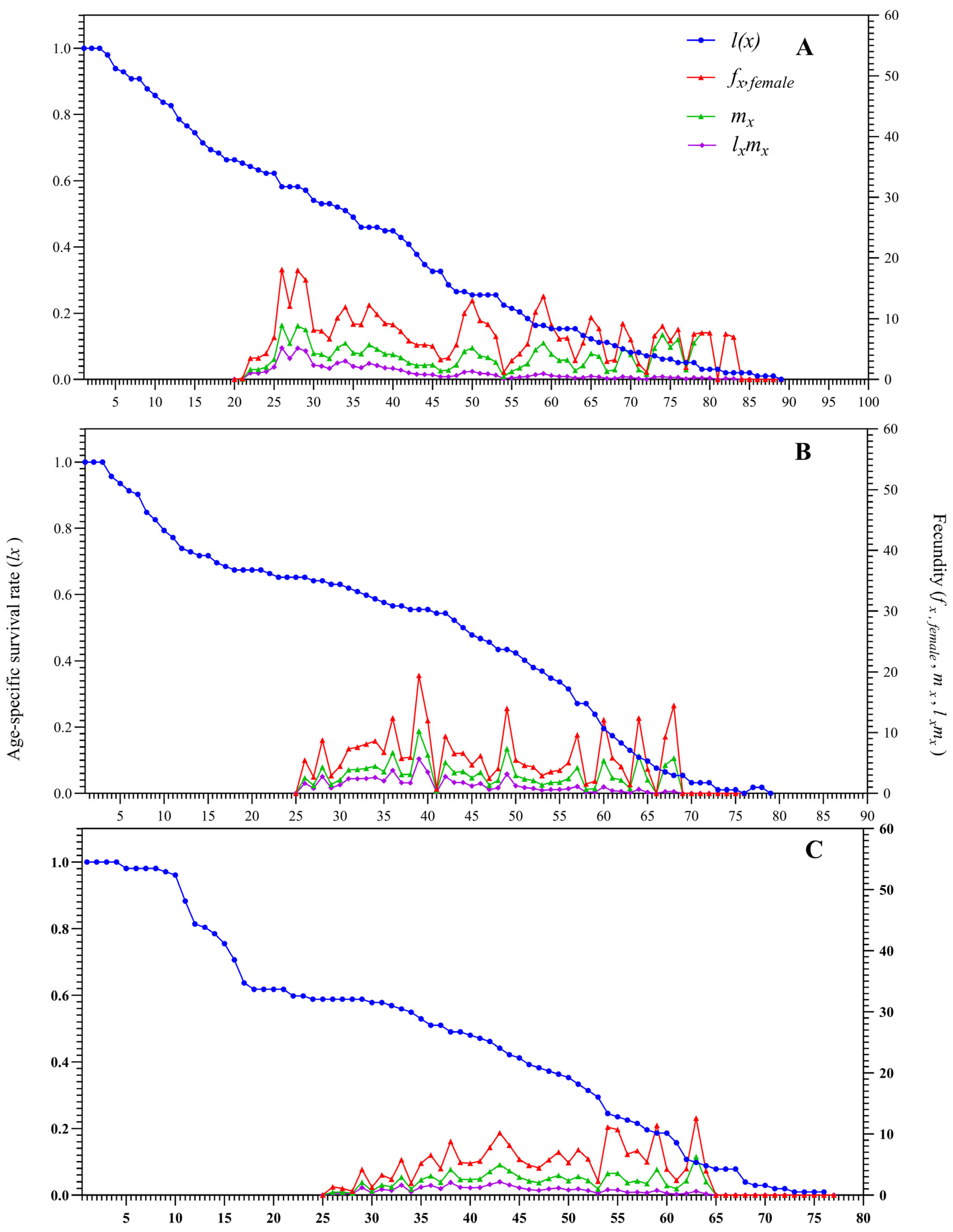
The female age-specific fecundity (fx,female), age-specific survival rate (lx), age-specific fecundity (mx), and age-specific net maternity (lxmx) of the offspring population were presented in Figure 4. Abamectin exposure markedly delayed the onset of oviposition by approximately 5–6 days relative to the control. The peak daily fecundity of the offspring in the LC50 group was significantly lower than that in the LC25 and CK groups.
While survival in the control and LC25 groups declined gradually over time, the LC50 group exhibited a sharp drop in survival—approximately 40—between 10 and 20 d after emergence.
These results demonstrate that abamectin stress shortens the lifespan and impairs the reproductive output of the offspring population of D. citri.
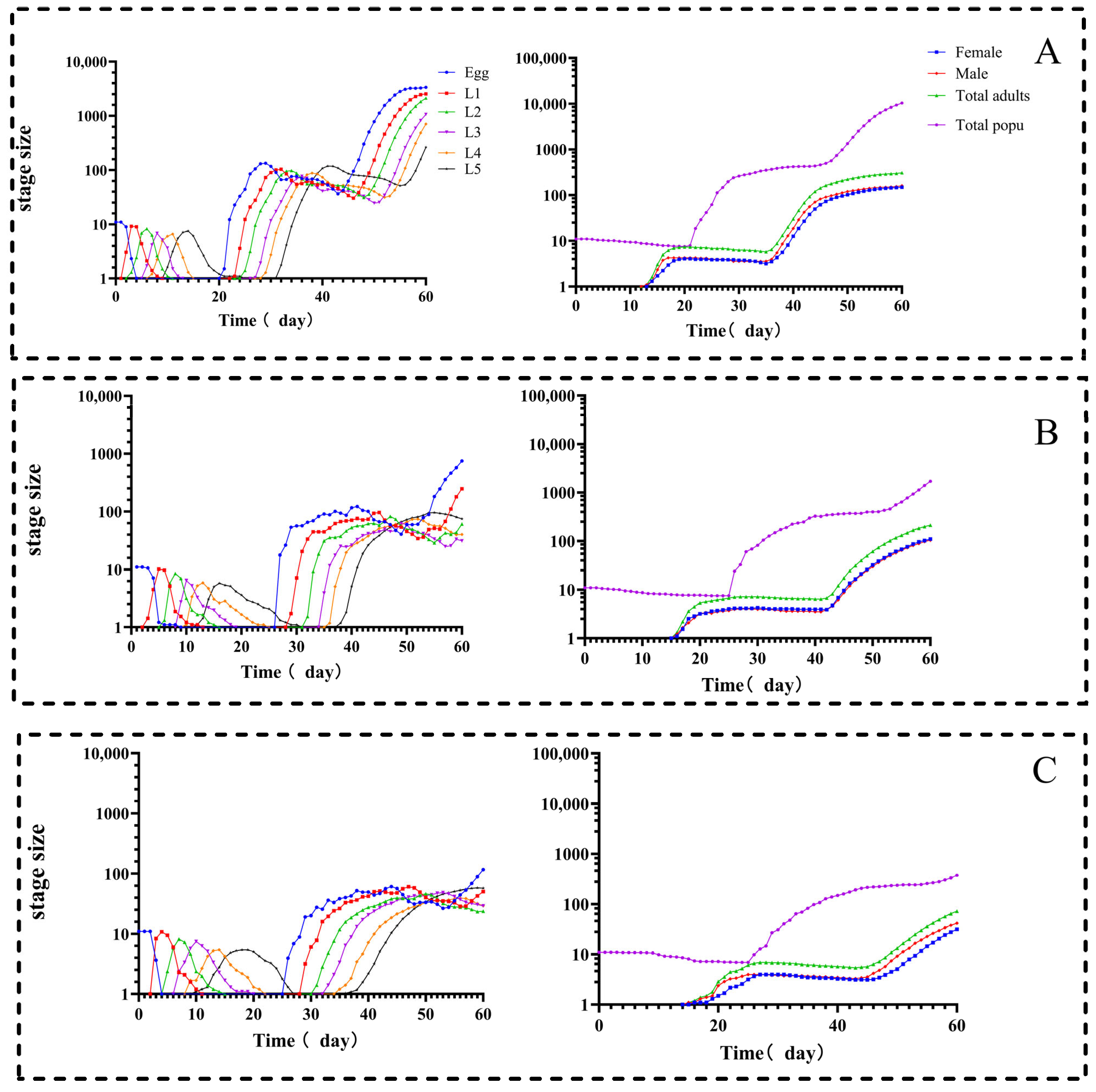
The projected population dynamics of D. citri over the subsequent 60-day period under abamectin stress were illustrated in Figure 5. The population growth progressed substantially faster in the control group, which exhibited a shorter developmental duration compared to both the LC25 and LC50 treatment groups. In the control group, fifth-instar nymphs of the first generation completed adult emergence by day 22, whereas emergence was delayed until day 30 in the LC25 group and day 28 in the LC50 group.
Figure 5 further demonstrates that by day 60, the number of fifth-instar nymphs in the control group peaked at 264 individuals, markedly exceeding those in the LC25 (74) and LC50 (57) groups. Differences in adult abundance were even more pronounced. The control group contained 308 adults, compared to 212 and 72 adults in the LC25 and LC50 groups, respectively. Overall, the total population size after 60 days reached 10,357 individuals in the control group, far surpassing those in the LC25 (1711 individuals) and LC50 (372 individuals) groups.
These findings demonstrate that abamectin can substantially curb the population growth of D. citri by retarding development and limiting adult recruitment. Moreover, the inhibitory effect was concentration-dependent, demonstrating that abamectin exerts a sustained and strong regulatory effect at the population level and effectively diminishes the outbreak potential of D. citri.

3.3. Impact of Abamectin Stress on Hormonal Balance, Energy Metabolism, and Vg Expression in D. citri

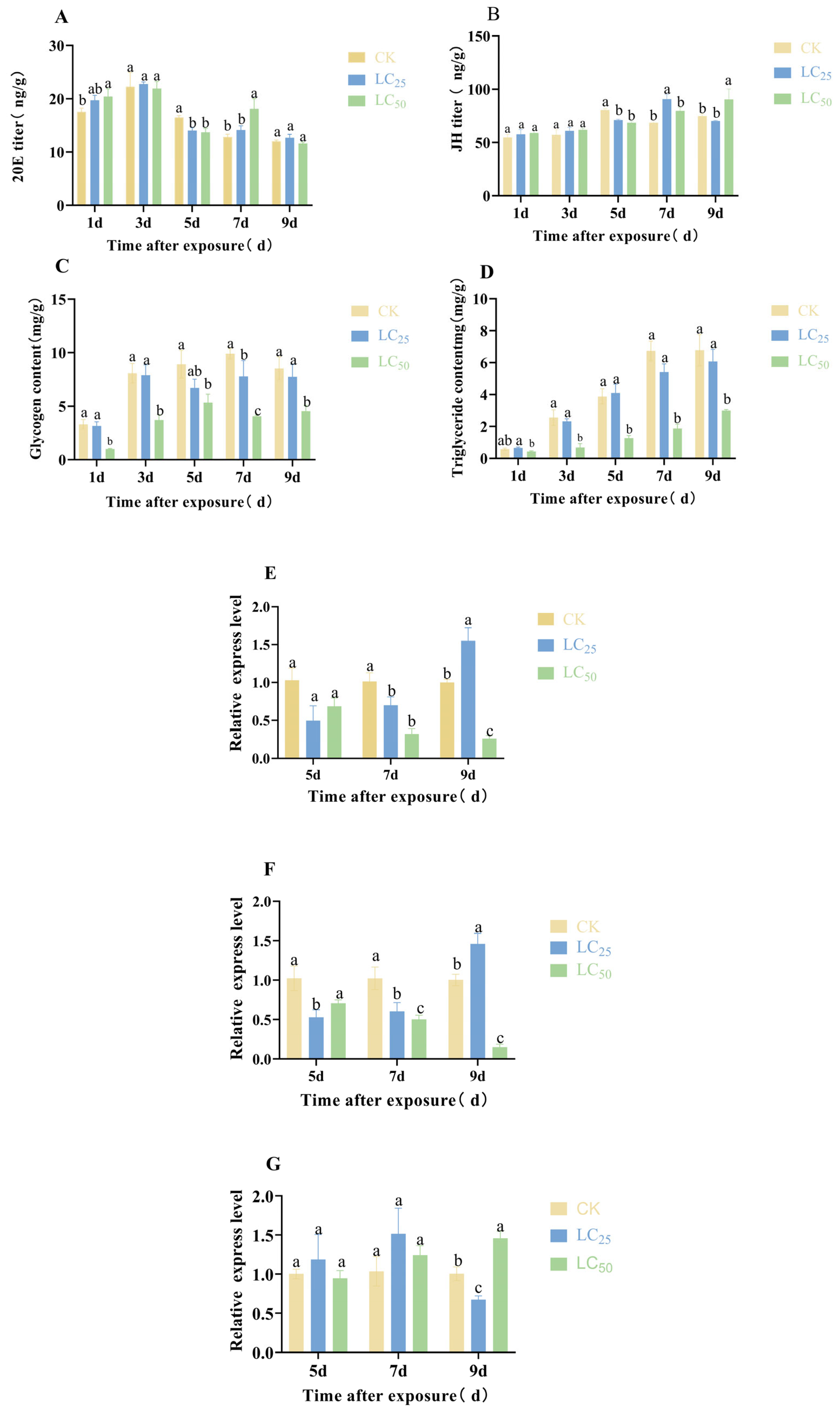
Abamectin induced significant changes in hormone titers, energy reserves, and the expression of vitellogenesis-related genes in the F0 generation of D. citri (Figure 6). Notably, the dynamics of 20-hydroxyecdysone (20E) were disrupted. While 20E titers in the LC50 group exceeded those of the control on days 1 and 7, a reversal occurred on day 5, with the control group showing the highest levels (Figure 6A).
The temporal peak of juvenile hormone (JH) titers shifted progressively later with increasing abamectin concentration, with the increase occurring at day 5 in the control, day 7 in the LC25 group, and day 9 in the LC50 group (Figure 6B). Furthermore, both glycogen and triglyceride levels remained significantly lower in the LC25 and LC50 groups compared to the control at all measured time points from 1 to 9 days post-exposure.
Overall, abamectin treatment downregulated the expression of vitellogenin-related genes Vg-1 and Vg-A1. However, their expression was transiently elevated in the LC25 group on day 9. In contrast, VgR expression was generally upregulated in treated groups, except in the LC25 group at day 9, where it was suppressed.
Collectively, abamectin exposure triggered a cascade of effects in F0 D. citri: it disrupted the 20E and JH equilibrium, led to a persistent deficit in energy reserves, and ultimately inhibited the expression of vitellogenesis-related genes (Vg-1, Vg-A1). The transient rebound of these genes in the LC25 group at day 9 indicates a degree of physiological compensation under sublethal stress. This interpretation is also supported by the temporal response pattern in the LC25 group, in which JH showed an initial increase followed by a decline, whereas 20E continued to rise over time; glycogen tended to stabilize after 3 d, triglyceride as well as Vg-1 and Vg-A1 gradually increased, while VgR showed a downward trend, suggesting a dynamic adjustment of endocrine, energetic, and reproductive processes under sublethal stress (Figure S1). Notably, the elevated VgR expression in the LC50 group at the same time point appears to be a feedback response that was insufficient to counteract the overarching suppression of reproductive synthesis.

4. Discussion

In practice, factors such as insecticide degradation, plant uptake, and uneven spray coverage often lead to the continuous exposure of D. citri to residual or sublethal doses, rather than to a single, acutely lethal dose [11,24,25]. Consequently, conventional assessments based primarily on short-term mortality likely underestimate the long-term regulatory impact of insecticides on pest populations under field conditions.
By integrating age–stage, two-sex life-table analysis with population dynamic simulations, this study systematically assessed the sublethal and lethal impacts of abamectin (LC25 and LC50) on the individual fecundity and population growth potential of D. citri. The results revealed a cumulative inhibitory effect across generations: in the F0 generation, abamectin prolonged the pre-oviposition period, shortened adult longevity, lowered egg hatchability, and reduced offspring survival (Figure 2, Figure 3, Figure 4 and Figure 5). In the F1 generation, exposure extended nymphal development across all instars, decreased survival rates, and shortened the total lifespan (Table 1, Figure 3). Consequently, key population parameters—including the intrinsic rate of increase (r), finite rate of increase (λ), net reproductive rate (R0), and gross reproductive rate (GRR)—declined in a dose-dependent manner (Table 2; Figure 4).
These findings demonstrate that the influence of abamectin on D. citri extends beyond acute mortality; it exerts sustained, population-level suppression by simultaneously disrupting multiple life-history traits, thereby markedly diminishing the pest’s outbreak potential.
In insects, glycogen and triglycerides serve as essential energy and material reserves sustaining basal metabolism, flight activity, and vitellogenesis [26,27,28]. In this study, abamectin exposure at LC50 led to a sustained reduction in both glycogen and triglyceride levels over the 1–9-day period, displaying an overall pattern of “sustained depletion under high stress and localized fluctuation under low stress” (Figure 6). These findings suggest that the abamectin-induced depletion of carbohydrate and lipid reserves likely restricts the energy available for reproductive allocation, thereby impairing ovarian development and ultimately suppressing oviposition capacity.
In insects, juvenile hormone (JH) and 20-hydroxyecdysone (20E) jointly orchestrate growth, development, and reproduction [29,30]. JH maintains high titers during juvenile stages to inhibit metamorphosis and promotes ovarian maturation and vitellogenesis in adults, while 20E primarily triggers molting and metamorphosis and participates in ovarian development and vitellogenesis [31], acting synergistically or antagonistically with JH to finely regulate reproduction [28,29,32,33]. In this study, abamectin disrupted this balance: under LC50, 20E titers rose transiently at 1–3 days but fell below control levels thereafter. JH titers exhibited complex temporal dynamics during mid to late stages: at 5 d, treated groups showed lower levels than the control; at 7 d, a transient increase was observed in the LC25 group; and a marked elevation in the LC50 group at 9 days. These bidirectional, time-dependent fluctuations indicate a significant dysregulation of the JH-20E axis. Importantly, these shifts more likely reflect a stress-induced constraint on energy allocation for reproduction than a true adaptive or hormetic response [34,35].
Vitellogenin (Vg) is a well-established biomarker of female reproductive investment in insects [36,37]. In this study, following LC25 exposure, relative expression levels of Vg-1 and Vg-A1 exhibited partial rebound at certain time points (e.g., 9 d), which coincided with a transient rise in JH titers during the mid-to-late experimental period (Figure 6). Phenotypically, this pattern resembles a localized and limited compensatory endocrine adjustment under mild stress, similar to reports of mild reproductive stimulation induced by sublethal doses of neonicotinoids in some insect pests [38]. This indicates that low-dose abamectin exposure may trigger a restricted compensatory endocrine response. Crucially, however, life-table analyses confirm that this transient molecular and endocrine rebound was insufficient to offset the overarching suppression of development and survival. Consequently, population-level outcomes were consistently characterized by a net reduction in growth potential.
These findings are strongly corroborated by the population projection models. As shown in Figure 5, abamectin treatment resulted in a substantially lower total population size over a 60-day projection compared to the control, with the suppression exhibiting a clear dose dependence (e.g., 10,357 individuals in the control vs. 1711 in LC25 and 372 in LC50 at 60 days). This demonstrates that the impact of abamectin extends beyond direct mortality to include a sustained, transgenerational suppression of population growth—mediated through inhibited reproduction and delayed development—thereby effectively diminishing the long-term outbreak potential of D. citri.
From a field-management perspective, the present results are particularly important because D. citri in citrus orchards is often exposed to residual or declining insecticide concentrations rather than uniformly lethal doses under field conditions. In such situations, the significance of sublethal effects lies less in immediate mortality and more in their contribution to long-term population regulation. Even when insecticide exposure does not cause complete mortality, sublethal effects can still delay development, reduce adult reproductive capacity, and slow population growth, which postpones the establishment of the next generation [39,40]. These responses are highly relevant in citrus orchards because they can suppress population resurgence during the interval between insecticide applications, reduce reinfestation on newly emerged flush, and lower cumulative psyllid pressure over time. As a result, sublethal effects provide a more realistic indicator of insecticide performance than mortality alone, especially under field conditions where management success depends not only on rapid knockdown but also on preventing the recovery of the population after treatment. This information is therefore valuable for optimizing spray intervals, improving spray timing based on flush phenology and orchard monitoring, and integrating abamectin into broader IPM programs [41,42]. In addition, by slowing population recovery between applications, sublethal effects may help reduce the need for overly frequent spraying, thereby lowering selection pressure and delaying the development of resistance. Therefore, in practical orchard systems, abamectin should be regarded not only as a compound for direct suppression but also as a tool for longer-term population regulation and the more sustainable management of D. citri [43,44].

5. Conclusions

This study elucidated the inhibitory and transgenerational effects of abamectin on the citrus psyllid, Diaphorina citri, integrating age–stage, two-sex life-table analysis, population dynamics simulation, and molecular regulation. Upon exposure to abamectin, the parental generation (F0) showed a significantly prolonged pre-oviposition period, shortened adult female and male longevity, and reduced egg hatchability. These effects extended to the offspring generation (F1), resulting in delayed nymphal development, decreased survival rates, and a compressed lifespan. Key demographic parameters—including the intrinsic rate of increase (r), finite rate of increase (λ), net reproductive rate (R0), and gross reproductive rate (GRR)—were consistently reduced, and 60-day projections indicated a substantial decline in population size. Mechanistically, abamectin disrupted the titers of juvenile hormone (JH) and 20-hydroxyecdysone (20E), induced long-term depletion of energy reserves (glycogen and triglycerides), and broadly suppressed the expression of vitellogenin-related genes, thereby constraining ovarian development. Although transient, low-dose compensatory responses were observed locally, they were insufficient to offset the overall reduction in lifespan and population suppression, with no clear evidence of hormesis. Collectively, these findings support the rotation of abamectin with insecticides of distinct modes of action, adherence to recommended rates and residual intervals, and dynamic optimization of application timing and frequency based on field monitoring (psyllid density and flush phenology). Such an approach may reduce the HLB outbreak risk and delay resistance evolution within integrated pest management (IPM) programs.

Supplementary Materials

The following supporting information can be downloaded at https://www.mdpi.com/article/10.3390/biology15090683/s1, Figure S1: Sublethal and lethal concentrations of abamectin stress on 20-hydroxy ecdysone (20E); Juvenile hormone (JH); Glycogen and lipid metabolism; Relative expression levels of Vg-1, Vg-A1 and VgR in F0 generation of D. citri; Table S1: Primer list used for qRT-PCR, Related to Method details; Table S2: Abamectin resistance in the Asian citrus psyllid.

Author Contributions

Q.H.: conceptualization, data curation, visualization, writing—original draft; M.X.: validation, formal analysis; Z.Y. (Zhaoquan Yuan): methodology, formal analysis; H.L. and B.G.: investigation, software; Z.Y. (Zhongxia Yang): review and editing, supervision, project administration, funding acquisition. All authors have read and agreed to the published version of the manuscript.

Funding

This study was supported by Hunan Agricultural Science and Technology Innovation Fund Project, Grant No: 2025CX19.

Institutional Review Board Statement

Not applicable.

Informed Consent Statement

Not applicable.

Data Availability Statement

The original data presented in the study are openly available in FigShare at https://doi.org/10.6084/m9.figshare.31610326 (accessed on 18 February 2025).

Conflicts of Interest

The authors declare no conflicts of interest.

References

  1. Li, Z.; Wang, X.; Ren, M.; Li, Z.; Xi, Y.; Su, L.; Song, Q.; Zhang, G.; An, S.; Yin, X. Sublethal and lethal effects of avermectin on reproductive success, hormonal regulation, and population dynamics of the oriental fruit fly, Bactrocera dorsalis. Pest Manag. Sci. 2025, 81, 5458–5469. [Google Scholar] [CrossRef]
  2. Pradhan, P.P.; Gadratagi, B.G.; Nayak, U.; Ray, A.; Adak, T.; Govindharaj, G.P.P.; Patil, N.B.; Sasmal, A.; Mohapatra, S.D. Sublethal acephate concentrations alter the demographic and behavioral traits of the non-target larval parasitoid, Habrobracon hebetor (Say). Environ. Sci. Pollut. Res. Int. 2025, 32, 26765–26778. [Google Scholar] [CrossRef]
  3. Valizadeh, B.; Zhu, Y.C.; Caren, J.; Huang, L.; Amiri, E. Indirect effects of insecticides on honey bee queens and their eggs via workers exposed to sublethal doses. Ecotoxicol. Environ. Saf. 2025, 307, 119403. [Google Scholar] [CrossRef] [PubMed]
  4. Dessart, M.; Lazzari, C.R.; Guerrieri, F.J. Acute and chronic sublethal chemical pollution affects activity, learning and memory in mosquito larvae. J. Exp. Biol. 2025, 228, jeb250493. [Google Scholar] [CrossRef] [PubMed]
  5. Mahdavi, R.; Rasekh, A.; Jam, N.A.; Rakhshani, E.; Farsi, A. Evaluation of sublethal and intergenerational effects of three insecticides on life table parameters of currant lettuce aphid, Nasonovia ribisnigri (Mosely) (Hemiptera: Aphididae). J. Asia-Pac. Entomol. 2025, 28, 102500. [Google Scholar] [CrossRef]
  6. Desneux, N.; Decourtye, A.; Delpuech, J.-M. The Sublethal Effects of Pesticides on Beneficial Arthropods. Annu. Rev. Entomol. 2007, 52, 81–106. [Google Scholar] [CrossRef]
  7. Grafton-Cardwell, E.E.; Stelinski, L.L.; Stansly, P.A. Biology and Management of Asian Citrus Psyllid, Vector of the Huanglongbing Pathogens. Annu. Rev. Entomol. 2013, 58, 413–432. [Google Scholar] [CrossRef]
  8. Santos-Ortega, Y.; Killiny, N. The Chorion Proteome of Diaphorina citri, the Vector of Huanglongbing Disease in Citrus. Insects 2021, 12, 959. [Google Scholar] [CrossRef]
  9. Gorji, N.; Jahanshahi, M.; Shahavi, M.H.; Ayrilmis, N. Ethylcellulose microparticles as green encapsulation for slow release of microspherical abamectin pesticide for agricultural applications: Improvement of process parameters. Int. J. Biol. Macromol. 2025, 321, 146336. [Google Scholar] [CrossRef]
  10. Tortop, G.B.; Yorulmaz, S.; Birgücü, A.K.; Tosun, H.Ş.; İkten, C. Abamectin Resistance in Tetranychus urticae Koch (Acari: Tetranychidae): Evaluation of Resistance Ratio, G326E mutation, Enzyme Activity and fitness costs. Syst. Appl. Acarol. 2025, 30, 1038–1051. [Google Scholar] [CrossRef]
  11. Vanaclocha, P.; Jones, M.M.; Tansey, J.A.; Monzó, C.; Chen, X.; Stansly, P.A. Residual toxicity of insecticides used against the Asian citrus psyllid and resistance management strategies with thiamethoxam and abamectin. J. Pest Sci. 2019, 92, 871–883. [Google Scholar] [CrossRef]
  12. Sun, X.; Hua, W.; Wang, K.; Song, J.; Zhu, B.; Gao, X.; Liang, P. A novel V263I mutation in the glutamate-gated chloride channel of Plutella xylostella (L.) confers a high level of resistance to abamectin. Int. J. Biol. Macromol. 2023, 230, 123389. [Google Scholar] [CrossRef] [PubMed]
  13. He, F.; Sun, S.; Tan, H.; Sun, X.; Qin, C.; Ji, S.; Li, X.; Zhang, J.; Jiang, X. Chlorantraniliprole against the black cutworm Agrotis ipsilon (Lepidoptera: Noctuidae): From biochemical/physiological to demographic responses. Sci. Rep. 2019, 9, 10328. [Google Scholar] [CrossRef]
  14. Boina, D.R.; Onagbola, E.O.; Salyani, M.; Stelinski, L.L. Antifeedant and sublethal effects of imidacloprid on Asian citrus psyllid, Diaphorina citri. Pest Manag. Sci. 2009, 65, 870–877. [Google Scholar] [CrossRef] [PubMed]
  15. Chen, X.D.; George, J.; Diepenbrock, L.M.; Gossett, H.; Liu, G.; Qureshi, J.A.; Stelinski, L.L. Feeding behavior and hormoligosis associated with imidacloprid resistance in Asian citrus psyllid, Diaphorina citri. Insect Sci. 2023, 31, 1211–1221. [Google Scholar] [CrossRef]
  16. Chen, X.D.; Seo, M.; Ebert, T.A.; Ashfaq, M.; Qin, W.; Stelinski, L.L. Hormesis in the Brown Citrus Aphid, Toxoptera citricida (Kirkaldy) (Hemiptera: Aphididae) Exposed to Sublethal Doses of Imidacloprid. Fla. Entomol. 2020, 103, 337–343. [Google Scholar] [CrossRef]
  17. Yang, H.; Zhou, C.; Jin, D.C.; Gong, M.F.; Wang, Z.; Long, G.Y. Sublethal effects of abamectin on the development, fecundity, and wing morphs of the brown planthopper Nilaparvata lugens. J. Asia-Pac. Entomol. 2019, 22, 1180–1186. [Google Scholar] [CrossRef]
  18. Wang, X.Y.; Yang, Z.Q.; Shen, Z.R.; Lu, J.; Xu, W.B. Sublethal effects of selected insecticides on fecundity and wing dimorphism of green peach aphid (Hom., Aphididae). J. Appl. Entomol. 2008, 132, 135–142. [Google Scholar] [CrossRef]
  19. Nage, S.M.; Kulkarni, U.S.; Undirwade, D.B.; Sant, S.S. Relative Toxicity of Different Insecticides to Asian Citrus Psylla (Diaphorina citri Kuwayama). Int. J. Environ. Clim. Change 2023, 13, 3635–3641. [Google Scholar] [CrossRef]
  20. Chi, H.; You, M.S.; Atlihan, R.; Smith, C.L.; Kavousi, A.; Özgökçe, M.S.; Güncan, A.; Tuan, S.J.; Fu, J.W.; Xu, Y.Y.; et al. Age-Stage, two-sex life table: An introduction to theory, data analysis, and application. Entomol. Gen. 2020, 40, 103–124. [Google Scholar] [CrossRef]
  21. Chi, H.; Liu, H. Two new methods for the study of insect population ecology. Bull. Inst. Zool. Acad. Sin. 1985, 24, 225–240. [Google Scholar]
  22. Chi, H. Life-table analysis incorporating both sexes and variable development rates among individuals. Environ. Entomol. 1988, 17, 26–34. [Google Scholar] [CrossRef]
  23. Chi, H. TWOSEX-MSChart: A Computer Program for the Age-Stage, Two-Sex Life Table Analysis, version 2.00.2823; National Chung Hsing University: Taichung, Taiwan, 2025; Available online: https://zenodo.org/records/7480305 (accessed on 18 February 2025).
  24. Yan, Y.; Lan, Y.; Wang, G.; Hussain, M.; Wang, H.; Yu, X.; Shan, C.; Wang, B.; Song, C. Evaluation of the deposition and distribution of spray droplets in citrus orchards by plant protection drones. Front. Plant Sci. 2023, 14, 1303669. [Google Scholar] [CrossRef] [PubMed]
  25. Demard, E.; Schumann, R.; van Santen, E.; Diepenbrock, L. Degradation and residual efficacy of insecticides in Citrus Under Protective Screen (CUPS) differ from traditional citrus orchard. J. Econ. Entomol. 2025, 118, 3103–3117. [Google Scholar] [CrossRef]
  26. Su, Z.; Jiang, S.; Xu, W.H. AMPK regulates pupal diapause by modulating glucose metabolism in the brain of the cotton bollworm, Helicoverpa armigera. Pest Manag. Sci. 2025, 81, 7244–7255. [Google Scholar] [CrossRef]
  27. Kaufmann, C.; Reim, C.; Blanckenhorn, W.U. Size-dependent insect flight energetics at different sugar supplies. Biol. J. Linn. Soc. 2013, 108, 565–578. [Google Scholar] [CrossRef]
  28. Zhang, L.J.; Liu, T.; Gao, R.; Xu, H.; Wang, R.; Zheng, H.; Zhou, S. Juvenile hormone and energy metabolism shape the optimal timing of flight to reproduction transition in migratory locusts. Insect Sci. 2025. Online ahead of print. [Google Scholar] [CrossRef]
  29. Riddiford, L.M. How does juvenile hormone control insect metamorphosis and reproduction? Gen. Comp. Endocrinol. 2012, 179, 477–484. [Google Scholar] [CrossRef]
  30. Zhu, J.; Li, Y.; Tang, Y.Y.; Liu, J.Q.; Chen, Y.Y.; Lv, Z.; Liu, F. Juvenile hormone-mediated reproduction induced by a sublethal concentration of imidacloprid in Cyrtorhinus lividipennis (Hemiptera: Miridae). J. Asia-Pac. Entomol. 2020, 23, 98–106. [Google Scholar] [CrossRef]
  31. Belles, X.; Piulachs, M.-D. Ecdysone signalling and ovarian development in insects: From stem cells to ovarian follicle formation. BBA Gene Regul. Mech. 2015, 1849, 181–186. [Google Scholar] [CrossRef]
  32. Brar, G.S.; Meyer, W.; Stelinski, L.L. Effects of methoprene, a juvenile hormone analog, on survival of various developmental stages, adult emergence, reproduction and behavior of Asian citrus psyllid, Diaphorina citri Kuwayama. Pest Manag. Sci. 2015, 71, 1657–1665. [Google Scholar] [CrossRef]
  33. Santos, C.G.; Humann, F.C.; Hartfelder, K. Juvenile hormone signaling in insect oogenesis. Curr. Opin. Insect Sci. 2019, 31, 43–48. [Google Scholar] [CrossRef] [PubMed]
  34. Leyria, J. Endocrine factors modulating vitellogenesis and oogenesis in insects: An update. Mol. Cell. Endocrinol. 2024, 587, 112211. [Google Scholar] [CrossRef] [PubMed]
  35. Wu, Z.; Yang, L.; He, Q.; Zhou, S. Regulatory Mechanisms of Vitellogenesis in Insects. Front. Cell Dev. Biol. 2021, 8, 593613. [Google Scholar] [CrossRef] [PubMed]
  36. Huang, L.; Lu, M.; Han, G.; Du, Y.; Wang, J. Sublethal effects of chlorantraniliprole on development, reproduction and vitellogenin gene (CsVg) expression in the rice stem borer, Chilo suppressalis. Pest Manag. Sci. 2016, 72, 2280–2286. [Google Scholar] [CrossRef]
  37. Yao, Q.; Xu, S.; Dong, Y.; Que, Y.; Quan, L.; Chen, B. Characterization of Vitellogenin and Vitellogenin Receptor of Conopomorpha sinensis Bradley and Their Responses to Sublethal Concentrations of Insecticide. Front. Physiol. 2018, 9, 1250. [Google Scholar] [CrossRef]
  38. Li, Z.; Li, Z.; Xi, Y.; Wang, X.; Peng, H.; An, S.; Yin, X. Clothianidin exposure enhances fecundity in Bactrocera dorsalis via metabolic activation and endocrine modulation: Implications for pest resurgence. Pestic. Biochem. Physiol. 2025, 215, 106672. [Google Scholar] [CrossRef]
  39. Gottwald, T.R. Current Epidemiological Understanding of Citrus Huanglongbing. Annu. Rev. Phytopathol. 2010, 48, 119–139. [Google Scholar] [CrossRef]
  40. Boina, D.R.; Bloomquist, J.R. Chemical control of the Asian citrus psyllid and of huanglongbing disease in citrus. Pest Manag. Sci. 2015, 71, 808–823. [Google Scholar] [CrossRef]
  41. Chen, X.D.; Stelinski, L.L. Resistance Management for Asian Citrus Psyllid, Diaphorina citri Kuwayama, in Florida. Insects 2017, 8, 103. [Google Scholar] [CrossRef]
  42. Chen, X.D.; Neupane, S.; Gossett, H.; Pelz-Stelinski, K.S.; Stelinski, L.L. Insecticide rotation scheme restores insecticide susceptibility in thiamethoxam-resistant field populations of Asian citrus psyllid, Diaphorina citri Kuwayama (Hemiptera: Liviidae) in Florida. Pest Manag. Sci. 2020, 77, 464–473. [Google Scholar] [CrossRef]
  43. Ju, D.; Liu, Y.X.; Liu, X.; Dewer, Y.; Mota-Sanchez, D.; Yang, X.Q. Exposure to lambda-cyhalothrin and abamectin drives sublethal and transgenerational effects on the development and reproduction of Cydia pomonella. Ecotoxicol. Environ. Saf. 2023, 252, 114581. [Google Scholar] [CrossRef]
  44. Su, S.; Jian, C.; Zhang, X.; Fang, S.; Peng, X.; Piñero, J.C.; Chen, M. Sublethal Effects of Abamectin on the Development, Reproduction, Detoxification Enzyme Activity, and Related Gene Expression of the Oriental Fruit Moth (Lepidoptera: Tortricidae). J. Econ. Entomol. 2021, 114, 2430–2438. [Google Scholar] [CrossRef]
Figure 1. Transgenerational impact of sublethal Abamectin on the D. citri.
Biology 15 00683 g001
Figure 2. The abamectin stress on parental D. citri. Note: (A) the pre-oviposition period of female adults; (B) the longevity of female adults; (C) adult male longevity; and (D) the egg hatching rate. (Mean ± SD; the different letters in the figure indicate the significant differences; p < 0.05; one-way ANOVA with Duncan’s test).
Biology 15 00683 g002
Figure 3. Age–instar survival rate of offspring of D. citri after sublethal and lethal concentrations of abamectin treatment. Note: (A) CK; (B) LC25; (C) LC50.
Biology 15 00683 g003
Figure 4. The sublethal and lethal concentrations of abamectin stress on the age-specific survival rate (lx), female fecundity (fx,female), age-specific fecundity (mx), and age-specific net reproductive rate (lxmx) of the F1 generation of D. citri. Note: (A) CK; (B) LC25; and (C) LC50.
Biology 15 00683 g004
Figure 5. The prediction of population dynamics of D. citri in the 60d after sublethal and lethal concentrations of abamectin stress. Note: (A) CK; (B) LC25; and (C) LC50.
Biology 15 00683 g005
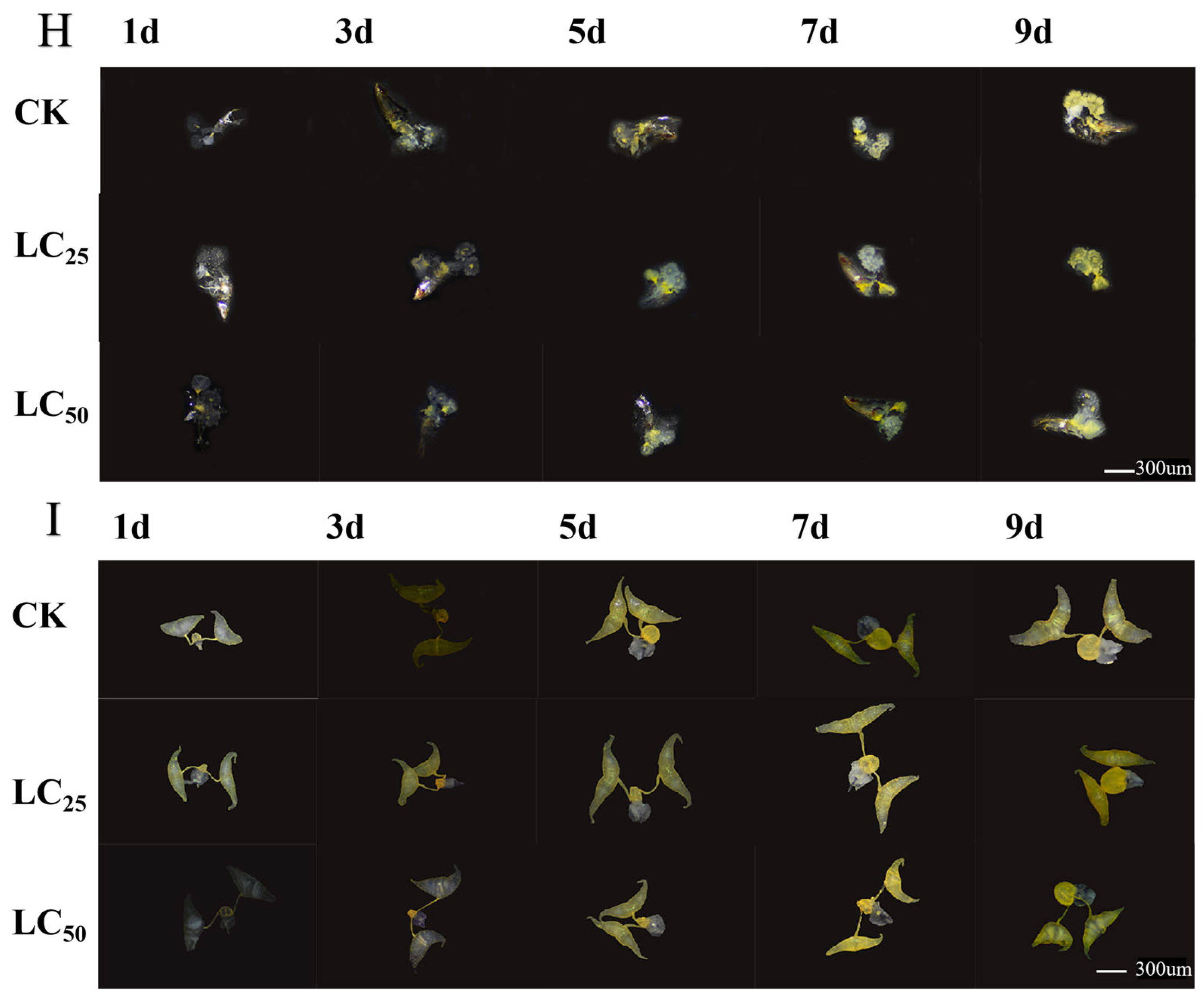
Figure 6. The sublethal and lethal concentrations of abamectin stress on 20-hydroxy ecdysone (20E), juvenile hormone (JH), glycogen and lipid metabolism, and the relative expression levels of Vg-1, Vg-A1, and VgR in the F0 generation of D. citri. Note: (A) 20-hydroxy ecdysone (20E); (B) juvenile hormone (JH); (C) glycogen content; (D) triglyceride content; (EG) relative expression of Vg-1, Vg-A1, and VgR; (H) anatomical photograph of the ovary after treatment; and (I) anatomical photograph of the testis after treatment. (Mean ± SD. The lowercase letters indicate significant differences among different treatments at the same time point; p < 0.05; one-way ANOVA with Duncan’s test).
Biology 15 00683 g006aBiology 15 00683 g006b
Table 1. The offspring developmental duration following parental abamectin stress.
StageDevelopmental Time/Longevity (d) (Mean ± SE)
CKnLC25nLC50n
Egg2.93 ± 0.058 b983.62 ± 0.079 a923.26 ± 0.044 a102
L12.37 ± 0.107 b912.94 ± 0.115 a843.42 ± 0.126 a100
L22.42 ± 0.104 b852.77 ± 0.113 a742.7 ± 0.099 a99
L32.01 ± 0.086 b822.33 ± 0.139 a703.4 ± 0.159 a83
L42.53 ± 0.103 b763.42 ± 0.181 a653.48 ± 0.187 a66
L54.3 ± 0.2 c675.16 ± 0.19 b616.38 ± 0.243 a60
Adult33.7 ± 2.169 a6731.7 ± 1.593 ab6129.27 ± 1.592 b60
Total longevity39.94 ± 2.288 a9837.5 ± 2.401 b9235.64 ± 2.092 b102
Abbreviations: CK, control; LC25, lethal concentration of abamectin causing 25% mortality; LC50, lethal concentration of abamectin causing 50% mortality; L1–L5, the first to fifth instar nymph stages. Note: Means within a row followed by different lowercase letters are significantly different at p < 0.05.
Table 2. Effect of sublethal and lethal concentrations of abamectin on the life parameters of the F1 generation of D. citri.
Population Parameters (Means ± SE)Conditions
CKLC25LC50
Intrinsic rate of increase r0.1333 ± 0.0069 a0.1116 ± 0.0062 b0.0089 ± 0.0067 c
Finite rate of increase λ1.1143 ± 0.0079 a1.1180 ± 0.0070 b1.0936 ± 0.0074 c
Net reproduction rate R070.74 ± 13.56 a60.80 ± 11.59 a35.18 ± 8.82 b
Gross reproductive rate GRR246.37 ± 43.34 a141.46 ± 29.09 a96.93 ± 23.34 b
Mean generation time T (d)39.78 ± 0.82 a36.816 ± 0.97 b31.95 ± 0.94 c
Abbreviations: CK, control; LC25, lethal concentration of abamectin causing 25% mortality; and LC50, lethal concentration of abamectin causing 50% mortality. Note: Means within a row followed by different lowercase letters are significantly different at p < 0.05 based on the bootstrap test with 100,000 re-samplings.
Disclaimer/Publisher’s Note: The statements, opinions and data contained in all publications are solely those of the individual author(s) and contributor(s) and not of MDPI and/or the editor(s). MDPI and/or the editor(s) disclaim responsibility for any injury to people or property resulting from any ideas, methods, instructions or products referred to in the content.