Probiotics and the Human Microbiome: Classical Functions, Emerging Systemic Roles, and Future Therapeutic Frontiers
Simple Summary
Abstract
1. Introduction
2. Classical Roles of Probiotics
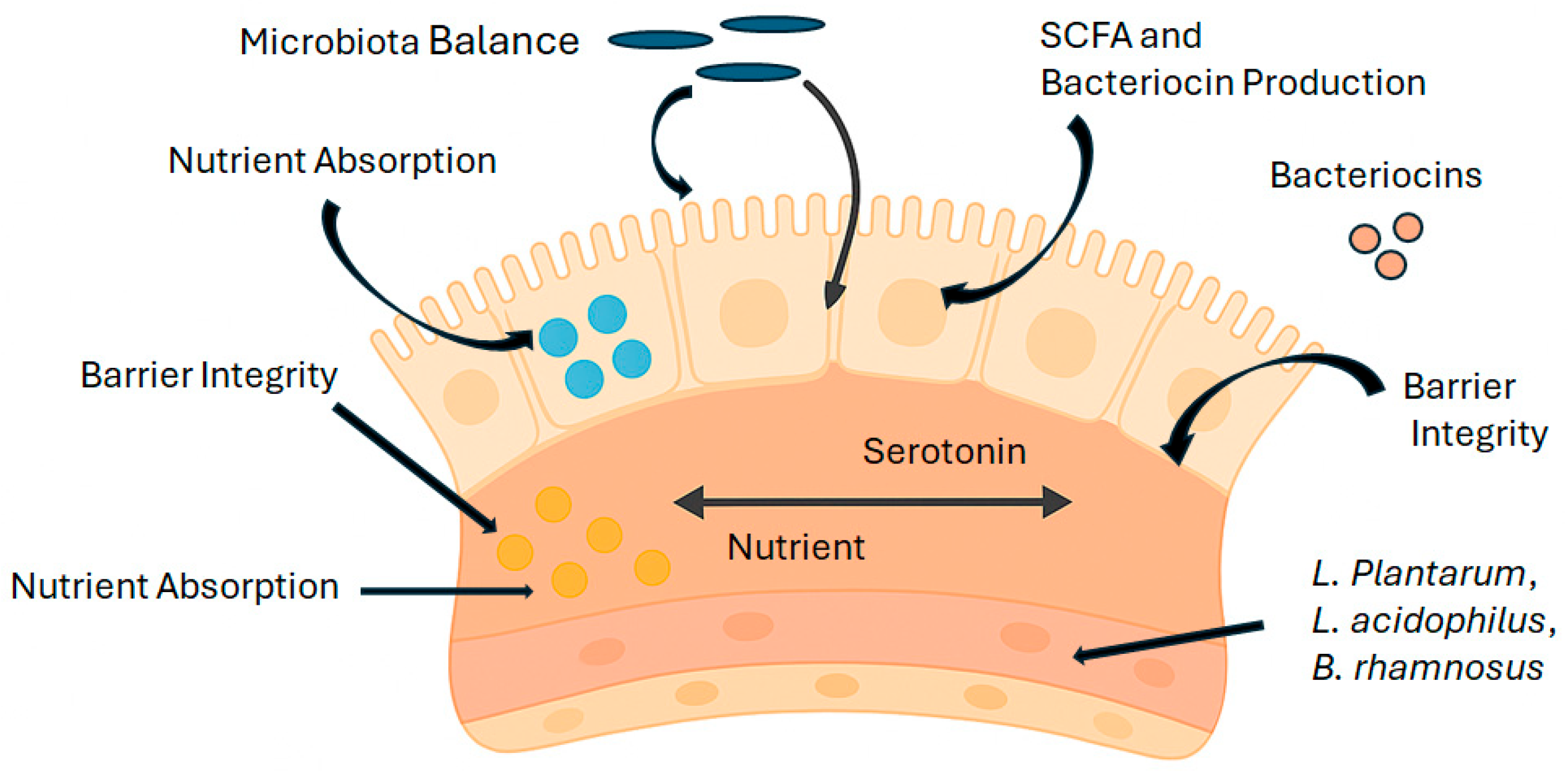
2.1. Gut Health and Digestion
2.2. Immune System Modulation
2.3. Prevention of Gastrointestinal Infections
3. Emerging Systemic Roles
3.1. Neuroprobiotics and the Gut–Brain Axis
3.2. Influence on Mood, Anxiety, Depression, and Neurodegenerative Diseases
3.3. Skin Microbiome and Dermatological Health
3.4. Role in Acne, Eczema, and Wound Healing
3.5. Oral Microbiome and Probiotic Interventions in Dental and Periodontal Health
3.6. Metabolic Health
3.7. Impact on Obesity, Diabetes, and Lipid Metabolism
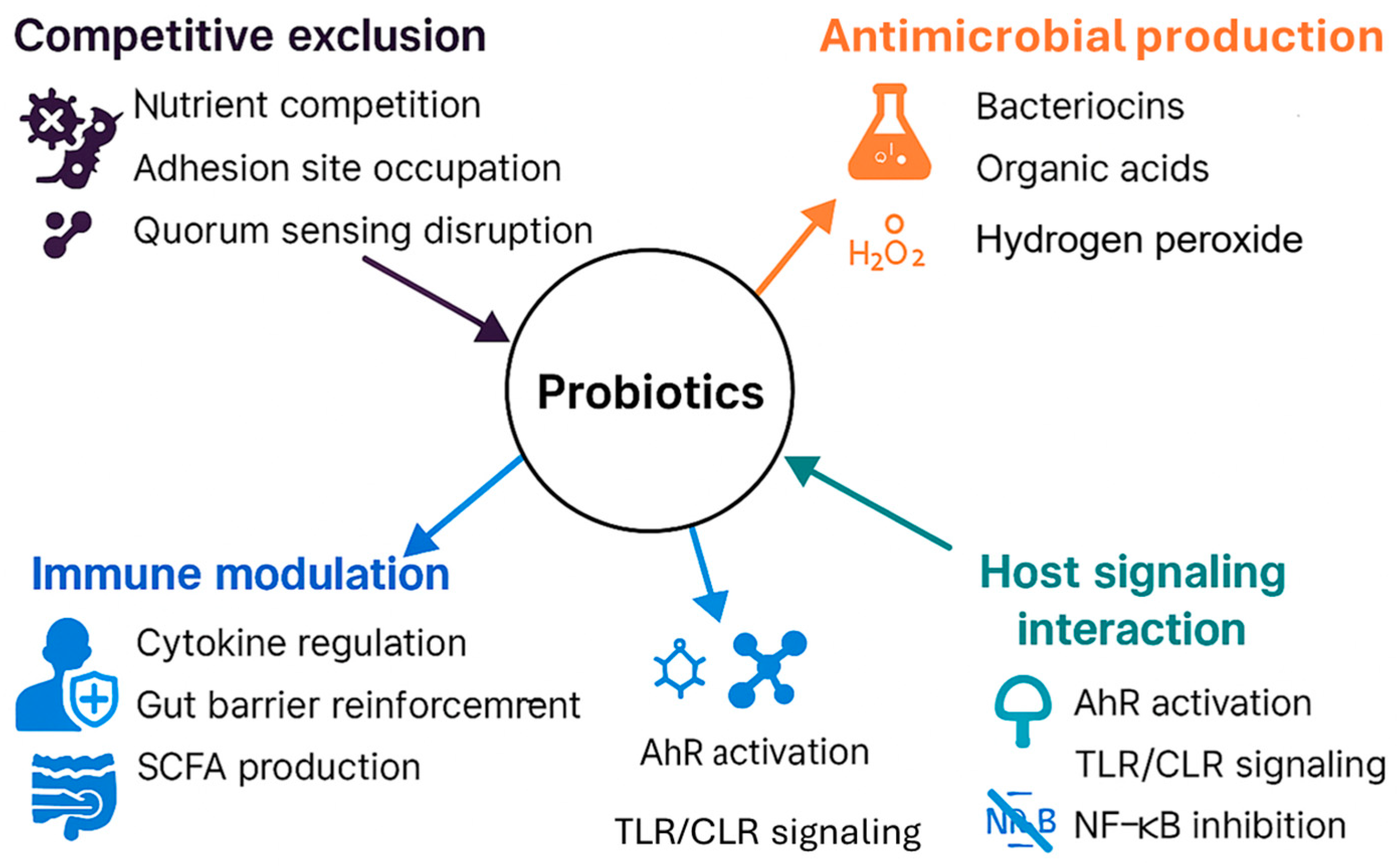
4. Mechanisms of Action
4.1. Competitive Exclusion of Pathogens
4.2. Production of Antimicrobial Substances
4.3. Modulation of Host Immune Responses
4.4. Interaction with Host Signaling Pathways
5. Novel Probiotic Sources, Delivery Systems, and Engineering Strategies
5.1. Fermented Foods vs. Pharmaceutical Formulations
5.2. Encapsulation Technologies
5.3. Genetically Engineered Probiotics
6. Challenges and Controversies
6.1. Regulatory Issues and Labeling
6.2. Strain Specificity and Reproducibility
6.3. Safety Concerns Regarding Susceptible Individuals
6.4. Lack of Standardization in Clinical Trials
7. Future Directions
7.1. Personalized Probiotics and Microbiome-Based Therapies
7.2. Synthetic Biology and Designer Probiotics
7.3. Integration with AI and Big Data for Microbiome Analysis
8. Conclusions
Author Contributions
Funding
Institutional Review Board Statement
Informed Consent Statement
Data Availability Statement
Conflicts of Interest
References
- Chen, L.A.; Sears, C.L. Prebiotics, Probiotics, and Synbiotics. In Mandell, Douglas, and Bennett’s Principles and Practice of Infectious Diseases; Elsevier: Amsterdam, The Netherlands, 2015; pp. 19–25.e1. [Google Scholar]
- Yang, W.; Cong, Y. Gut Microbiota-Derived Metabolites in the Regulation of Host Immune Responses and Immune-Related Inflammatory Diseases. Cell. Mol. Immunol. 2021, 18, 866–877. [Google Scholar] [CrossRef]
- Paul, J.K.; Azmal, M.; Haque, A.S.N.B.; Meem, M.; Talukder, O.F.; Ghosh, A. Unlocking the Secrets of the Human Gut Microbiota: Comprehensive Review on Its Role in Different Diseases. World J. Gastroenterol. 2025, 31, 99913. [Google Scholar] [CrossRef] [PubMed]
- Smolinska, S.; Popescu, F.-D.; Zemelka-Wiacek, M. A Review of the Influence of Prebiotics, Probiotics, Synbiotics, and Postbiotics on the Human Gut Microbiome and Intestinal Integrity. J. Clin. Med. 2025, 14, 3673. [Google Scholar] [CrossRef]
- Rastogi, S.; Singh, A. Gut Microbiome and Human Health: Exploring How the Probiotic Genus Lactobacillus Modulate Immune Responses. Front. Pharmacol. 2022, 13, 1042189. [Google Scholar] [CrossRef] [PubMed]
- Mackowiak, P.A. Recycling Metchnikoff: Probiotics, the Intestinal Microbiome and the Quest for Long Life. Front. Public Health 2013, 1, 52. [Google Scholar] [CrossRef]
- Afrc, R.F. Probiotics in Man and Animals. J. Appl. Bacteriol. 1989, 66, 365–378. [Google Scholar] [CrossRef]
- Choi, J.H.; Song, S.; Jang, M.J.; Haque, M.A.; Lee, H.E.; Kim, D.H.; Kim, Y.J.; Cho, J.W.; Moon, J.S.; Heo, K.; et al. A Randomized, Double-Blind, Placebo-Controlled Study on Probiotic Treatment for Halitosis: Novel Insights into Glucose and Phosphorus Metabolism. Probiotics Antimicrob. Proteins 2025, 18, 1722–1735. [Google Scholar] [CrossRef]
- Parhizkar, E.; Vosough, P.; Baneshi, M.; Keshavarzi, A.; Lohrasbi, P.; Taghizadeh, S.; Savardashtaki, A. Probiotics and Gut Microbiota Modulation: Implications for Skin Health and Disease Management. Arch. Microbiol. 2025, 207, 68. [Google Scholar] [CrossRef]
- Kiran, N.S.; Chatterjee, A.; Yashaswini, C.; Deshmukh, R.; Alsaidan, O.A.; Bhattacharya, S.; Prajapati, B.G. The Gastrointestinal Mycobiome in Inflammation and Cancer: Unraveling Fungal Dysbiosis, Pathogenesis, and Therapeutic Potential. Med. Oncol. 2025, 42, 195. [Google Scholar] [CrossRef] [PubMed]
- Deng, X.; Gong, X.; Zhou, D.; Hong, Z. Perturbations in Gut Microbiota Composition in Patients with Autoimmune Neurological Diseases: A Systematic Review and Meta-Analysis. Front. Immunol. 2025, 16, 1513599. [Google Scholar] [CrossRef]
- Zalila-Kolsi, I.; Al-Barazie, R. Advancing Sustainable Practices with Paenibacillus polymyxa: From Soil Health to Medical Applications and Molecular Engineering. AIMS Microbiol. 2025, 11, 338–368. [Google Scholar] [CrossRef]
- Kandari, A.; Odat, M.A.; Alzaid, F.; Scott, K.P. Biotics and Bacterial Function: Impact on Gut and Host Health. ISME J. 2024, 18, wrae226. [Google Scholar] [CrossRef]
- Shah, A.B.; Baiseitova, A.; Zahoor, M.; Ahmad, I.; Ikram, M.; Bakhsh, A.; Shah, M.A.; Ali, I.; Idress, M.; Ullah, R.; et al. Probiotic Significance of Lactobacillus Strains: A Comprehensive Review on Health Impacts, Research Gaps, and Future Prospects. Gut Microbes 2024, 16, 2431643. [Google Scholar] [CrossRef]
- Sarita, B.; Samadhan, D.; Hassan, M.Z.; Kovaleva, E.G. A Comprehensive Review of Probiotics and Human Health-Current Prospective and Applications. Front. Microbiol. 2025, 15, 1487641. [Google Scholar] [CrossRef]
- Zheng, Y.; Zhang, Z.; Tang, P.; Wu, Y.; Zhang, A.; Li, D.; Wang, C.-Z.; Wan, J.-Y.; Yao, H.; Yuan, C.-S. Probiotics Fortify Intestinal Barrier Function: A Systematic Review and Meta-Analysis of Randomized Trials. Front. Immunol. 2023, 14, 1143548. [Google Scholar] [CrossRef] [PubMed]
- Tursi, A.; Brandimarte, G.; Papa, A.; Giglio, A.; Elisei, W.; Giorgetti, G.M.; Forti, G.; Morini, S.; Hassan, C.; Pistoia, M.A.; et al. Treatment of Relapsing Mild-to-Moderate Ulcerative Colitis with the Probiotic VSL#3 as Adjunctive to a Standard Pharmaceutical Treatment: A Double-Blind, Randomized, Placebo-Controlled Study. Am. J. Gastroenterol. 2010, 105, 2218–2227. [Google Scholar] [CrossRef] [PubMed]
- Kruis, W.; Frič, P.; Pokrotnieks, J.; Lukáš, M.; Fixa, B.; Kaščák, M.; Kamm, M.A.; Weismueller, J.; Beglinger, C.; Stolte, M.; et al. Maintaining Remission of Ulcerative Colitis with the Probiotic Escherichia coli Nissle 1917 Is as Effective as with Standard Mesalazine. Gut 2004, 53, 1617–1623. [Google Scholar] [CrossRef] [PubMed]
- Bjarnason, I.; Sission, G.; Hayee, B. A Randomised, Double-Blind, Placebo-Controlled Trial of a Multi-Strain Probiotic in Patients with Asymptomatic Ulcerative Colitis and Crohn’s Disease. Inflammopharmacology 2019, 27, 465–473. [Google Scholar] [CrossRef]
- Agraib, L.M.; Yamani, M.I.; Tayyem, R.; Abu-Sneineh, A.T.; Rayyan, Y.M. Probiotic Supplementation Induces Remission and Changes in the Immunoglobulins and Inflammatory Response in Active Ulcerative Colitis Patients: A Pilot, Randomized, Double-Blind, Placebo-Controlled Study. Clin. Nutr. ESPEN 2022, 51, 83–91. [Google Scholar] [CrossRef]
- Estevinho, M.M.; Yuan, Y.; Rodríguez-Lago, I.; Sousa-Pimenta, M.; Dias, C.C.; Barreiro-de Acosta, M.; Jairath, V.; Magro, F. Efficacy and Safety of Probiotics in IBD: An Overview of Systematic Reviews and Updated Meta-analysis of Randomized Controlled Trials. United Eur. Gastroenterol. J. 2024, 12, 960–981. [Google Scholar] [CrossRef]
- Mazziotta, C.; Tognon, M.; Martini, F.; Torreggiani, E.; Rotondo, J.C. Probiotics Mechanism of Action on Immune Cells and Beneficial Effects on Human Health. Cells 2023, 12, 184. [Google Scholar] [CrossRef]
- Singh, D.; Singh, A.; Kumar, S. Probiotics: Friend or Foe to the Human Immune System. Bull. Natl. Res. Cent. 2023, 47, 126. [Google Scholar] [CrossRef]
- Li, W.; Liu, L.; Tian, H.; Luo, X.; Liu, S. Encapsulation of Lactobacillus plantarum in Cellulose Based Microgel with Controlled Release Behavior and Increased Long-Term Storage Stability. Carbohydr. Polym. 2019, 223, 115065. [Google Scholar] [CrossRef]
- Vinayamohan, P.; Joseph, D.; Viju, L.S.; Baskaran, S.A.; Venkitanarayanan, K. Efficacy of Probiotics in Reducing Pathogenic Potential of Infectious Agents. Fermentation 2024, 10, 599. [Google Scholar] [CrossRef]
- Zeng, Q.; Li, P.; Wu, H.; Zhuang, Y.; Zhang, Y.; Asemani, S.; Jamilian, P.; Jamali, M.; Yu, H. Probiotics and Gastrointestinal Disorders: An Umbrella Meta-Analysis of Therapeutic Efficacy. Eur. J. Med. Res. 2025, 30, 515. [Google Scholar] [CrossRef]
- Goodman, C.; Keating, G.; Georgousopoulou, E.; Hespe, C.; Levett, K. Probiotics for the Prevention of Antibiotic-Associated Diarrhoea: A Systematic Review and Meta-Analysis. BMJ Open 2021, 11, e043054. [Google Scholar] [CrossRef] [PubMed]
- El Far, M.S.; Zakaria, A.S.; Kassem, M.A.; Wedn, A.; Guimei, M.; Edward, E.A. Promising Biotherapeutic Prospects of Different Probiotics and Their Derived Postbiotic Metabolites: In-Vitro and Histopathological Investigation. BMC Microbiol. 2023, 23, 122. [Google Scholar] [CrossRef] [PubMed]
- Zhu, J.; Chen, Y.; Imre, K.; Arslan-Acaroz, D.; Istanbullugil, F.R.; Fang, Y.; Ros, G.; Zhu, K.; Acaroz, U. Mechanisms of Probiotic Bacillus against Enteric Bacterial Infections. One Health Adv. 2023, 1, 21. [Google Scholar] [CrossRef]
- Milner, E.; Stevens, B.; An, M.; Lam, V.; Ainsworth, M.; Dihle, P.; Stearns, J.; Dombrowski, A.; Rego, D.; Segars, K. Utilizing Probiotics for the Prevention and Treatment of Gastrointestinal Diseases. Front. Microbiol. 2021, 12, 689958. [Google Scholar] [CrossRef]
- Hodzhev, V.; Dzhambazov, K.; Sapundziev, N.; Encheva, M.; Todorov, S.; Youroukova, V.; Benchev, R.; Nikolov, R.; Bogov, B.; Momekov, G.; et al. High-Dose Probiotic Mix of Lactobacillus Spp., Bifidobacterium Spp., Bacillus coagulans, and Saccharomyces boulardii to Prevent Antibiotic-Associated Diarrhea in Adults: A Multicenter, Randomized, Double-Blind, Placebo-Controlled Trial (SPAADA). Open Forum Infect. Dis. 2024, 11, ofae615. [Google Scholar] [CrossRef] [PubMed]
- Chitapanarux, T.; Wiracha, U.; Winichakoon, P.; Salee, P.; Traisathit, P. Efficacy and Safety of Saccharomyces boulardii as Adjunct Therapy with Vancomycin in Treating Clostridioides difficile Infection: A Randomized Controlled Trial. Sci. Rep. 2025, 15, 19326. [Google Scholar] [CrossRef]
- Waitzberg, D.; Guarner, F.; Hojsak, I.; Ianiro, G.; Polk, D.B.; Sokol, H. Can the Evidence-Based Use of Probiotics (Notably Saccharomyces boulardii CNCM I-745 and Lactobacillus rhamnosus GG) Mitigate the Clinical Effects of Antibiotic-Associated Dysbiosis? Adv. Ther. 2024, 41, 901–914. [Google Scholar] [CrossRef]
- Nardone, G.P.; Cicero, A.F.G.; Gallelli, L.; Berni Canani, R. Managing Gut Dysbiosis: Clinical Evidence and Perspectives on Saccharomyces boulardii CNCM I-745 for Diarrhoeal Conditions in Adults and Children. Microorganisms 2026, 14, 150. [Google Scholar] [CrossRef] [PubMed]
- Rosas-Sánchez, G.U.; Germán-Ponciano, L.J.; Puga-Olguín, A.; Soto, M.E.F.; Medina, A.Y.N.; Muñoz-Carillo, J.L.; Rodríguez-Landa, J.F.; Soria-Fregozo, C. Gut–Brain Axis in Mood Disorders: A Narrative Review of Neurobiological Insights and Probiotic Interventions. Biomedicines 2025, 13, 1831. [Google Scholar] [CrossRef]
- Crocetta, A.; Liloia, D.; Costa, T.; Duca, S.; Cauda, F.; Manuello, J. From Gut to Brain: Unveiling Probiotic Effects through a Neuroimaging Perspective—A Systematic Review of Randomized Controlled Trials. Front. Nutr. 2024, 11, 1446854. [Google Scholar] [CrossRef] [PubMed]
- Cryan, J.F.; Dinan, T.G. Mind-Altering Microorganisms: The Impact of the Gut Microbiota on Brain and Behaviour. Nat. Rev. Neurosci. 2012, 13, 701–712. [Google Scholar] [CrossRef] [PubMed]
- O’Riordan, K.J.; Moloney, G.M.; Keane, L.; Clarke, G.; Cryan, J.F. The Gut Microbiota-Immune-Brain Axis: Therapeutic Implications. Cell Rep. Med. 2025, 6, 101982. [Google Scholar] [CrossRef]
- Rahmannia, M.; Poudineh, M.; Mirzaei, R.; Aalipour, M.A.; Shahidi Bonjar, A.H.; Goudarzi, M.; Kheradmand, A.; Aslani, H.R.; Sadeghian, M.; Nasiri, M.J.; et al. Strain-Specific Effects of Probiotics on Depression and Anxiety: A Meta-Analysis. Gut Pathog. 2024, 16, 46. [Google Scholar] [CrossRef]
- Strandwitz, P.; Kim, K.H.; Terekhova, D.; Liu, J.K.; Sharma, A.; Levering, J.; McDonald, D.; Dietrich, D.; Ramadhar, T.R.; Lekbua, A.; et al. GABA-Modulating Bacteria of the Human Gut Microbiota. Nat. Microbiol. 2018, 4, 396–403. [Google Scholar] [CrossRef]
- Mörkl, S.; Butler, M.I.; Holl, A.; Cryan, J.F.; Dinan, T.G. Probiotics and the Microbiota-Gut-Brain Axis: Focus on Psychiatry. Curr. Nutr. Rep. 2020, 9, 171–182. [Google Scholar] [CrossRef]
- Hashemi, R.; Raouf, M.M.H.M.; Salih, T.S.; Feyzpour, M.; Eskandarioun, M.; Nezamabadipour, N.; Gandomkar, H. Impact of Probiotic Supplementation on Serum Levels of Brain-Derived Neurotrophic Factor: GRADE-Based Dose-Response Meta-Analysis. BMC Nutr. 2025, 11, 161. [Google Scholar] [CrossRef] [PubMed]
- Singh, B.; Mal, G.; Kalra, R.S.; Marotta, F. Probiotics as Live Biotherapeutics for Veterinary and Human Health, Volume 2: Functional Foods and Post-Genomics, 1st ed.; Springer Nature: Cham, Switzerland, 2024. [Google Scholar]
- Dacaya, P.; Sarapis, K.; Moschonis, G. The Role and Mechanisms of Probiotic Supplementation on Depressive Symptoms: A Narrative Review. Curr. Nutr. Rep. 2025, 14, 53. [Google Scholar] [CrossRef] [PubMed]
- Kumar, A.; Sivamaruthi, B.S.; Dey, S.; Kumar, Y.; Malviya, R.; Prajapati, B.G.; Chaiyasut, C. Probiotics as Modulators of Gut-Brain Axis for Cognitive Development. Front. Pharmacol. 2024, 15, 1348297. [Google Scholar] [CrossRef]
- Johnson, A.L.; George, D.R.; Matthews, K.R.W.; Iltis, A.S. The Regulatory Landscape for Synthetic Biology; Baker Institute for Public Policy, Rice University: Houston, TX, USA, 2025. [Google Scholar]
- Ojha, S.; Patil, N.; Jain, M.; Kole, C.; Kaushik, P. Probiotics for Neurodegenerative Diseases: A Systemic Review. Microorganisms 2023, 11, 1083. [Google Scholar] [CrossRef] [PubMed]
- Lee, C.H.; Min, M.; Jin, S.S.; Sivamani, R.K. Skin Microbiome Shifts in Various Dermatological Conditions. J. Clin. Med. 2025, 14, 6137. [Google Scholar] [CrossRef]
- Prajapati, S.K.; Lekkala, L.; Yadav, D.; Jain, S.; Yadav, H. Microbiome and Postbiotics in Skin Health. Biomedicines 2025, 13, 791. [Google Scholar] [CrossRef]
- Rušanac, A.; Škibola, Z.; Matijašić, M.; Čipčić Paljetak, H.; Perić, M. Microbiome-Based Products: Therapeutic Potential for Inflammatory Skin Diseases. Int. J. Mol. Sci. 2025, 26, 6745. [Google Scholar] [CrossRef]
- Whiting, C.; Abdel Azim, S.; Friedman, A. The Skin Microbiome and Its Significance for Dermatologists. Am. J. Clin. Dermatol. 2024, 25, 169–177. [Google Scholar] [CrossRef]
- Cymbiotics Biopharma. Condition-Specific Microbial Alterations and Innovative Delivery Techniques. 2025. Available online: https://www.cymbiotics.com (accessed on 15 April 2025).
- Deng, K.; Fan, X.; Yuan, Z.; Li, D. Probiotic Effects on Skin Health: Comprehensive Visual Analysis and Perspectives. Front. Microbiol. 2024, 15, 1453755. [Google Scholar] [CrossRef]
- França, K. Topical Probiotics in Dermatological Therapy and Skincare: A Concise Review. Dermatol. Ther. 2021, 11, 71–77. [Google Scholar] [CrossRef]
- Boby, A.; Lee, G.; Natarelli, N.; Correa, L. Using Probiotics to Treat Acne Vulgaris: Systematic Review. Arch. Dermatol. Res. 2024, 316, 101. [Google Scholar] [CrossRef]
- National Institutes of Health. NIH Guidelines for Research Involving Recombinant or Synthetic Nucleic Acid Molecules; National Institutes of Health: Bethesda, MD, USA, 2024. [Google Scholar]
- Bădăluță, V.A.; Curuțiu, C.; Dițu, L.M.; Holban, A.M.; Lazăr, V. Probiotics in Wound Healing. Int. J. Mol. Sci. 2024, 25, 5723. [Google Scholar] [CrossRef]
- Zhang, S.; Elbs-Glatz, Y.; Tao, S.; Schmitt, S.; Li, Z.; Rottmar, M.; Maniura-Weber, K.; Ren, Q. Probiotics Promote Cellular Wound Healing Responses by Modulating the PI3K and TGF-β/Smad Signaling Pathways. Cell Commun. Signal. 2025, 23, 195. [Google Scholar] [CrossRef]
- Beattie, R.E. Probiotics for Oral Health: A Critical Evaluation of Bacterial Strains. Front. Microbiol. 2024, 15, 1430810. [Google Scholar] [CrossRef] [PubMed]
- Yu, X.; Devine, D.A.; Vernon, J.J. Manipulating the Diseased Oral Microbiome: The Power of Probiotics and Prebiotics. J. Oral Microbiol. 2024, 16, 2307416. [Google Scholar] [CrossRef] [PubMed]
- British Dental Association. Probiotics and Oral Health—Current Understanding and Latest Evidence. Br. Dent. J. 2025, 238, 953. [Google Scholar] [CrossRef]
- Nanavati, G.; Prasanth, T.; Kosala, M.; Bhandari, S.K.; Banotra, P. Effect of Probiotics and Prebiotics on Oral Health. Dent. J. Adv. Stud. 2021, 9, 01–06. [Google Scholar] [CrossRef]
- Zhang, J.; Wang, Q.; Duan, Z. Preventive Effects of Probiotics on Dental Caries In Vitro and In Vivo. BMC Oral Health 2024, 24, 915. [Google Scholar] [CrossRef]
- Sachelarie, L.; Scrobota, I.; Romanul, I.; Iurcov, R.; Potra Cicalau, G.I.; Todor, L. Probiotic Therapy as an Adjuvant in the Treatment of Periodontal Disease: An Innovative Approach. Medicina 2025, 61, 126. [Google Scholar] [CrossRef]
- Li, G.; Feng, H.; Mao, X.-L.; Deng, Y.-J.; Wang, X.-B.; Zhang, Q.; Guo, Y.; Xiao, S.-M. The Effects of Probiotics Supplementation on Glycaemic Control among Adults with Type 2 Diabetes Mellitus: A Systematic Review and Meta-Analysis of Randomised Clinical Trials. J. Transl. Med. 2023, 21, 442. [Google Scholar] [CrossRef] [PubMed]
- Paquette, S.; Thomas, S.C.; Venkataraman, K.; Appanna, V.D.; Tharmalingam, S. The Effects of Oral Probiotics on Type 2 Diabetes Mellitus (T2DM): A Clinical Trial Systematic Literature Review. Nutrients 2023, 15, 4690. [Google Scholar] [CrossRef] [PubMed]
- Ribeiro, D.A.D.S.; De Araújo, A.C.; Do Nascimento, P.K.D.S.B.; Da Rocha, I.M.G.; Rezende, A.A.D. Effects of Probiotic Supplementation on the Anthropometric Nutritional Status of Patients with Type 2 Diabetes Mellitus: A Systematic Review and Meta-Analysis Protocol. PLoS ONE 2024, 19, e0314971. [Google Scholar] [CrossRef] [PubMed]
- Allam, A.R.; Helal, M.B.; Alhateem, M.S.; Shehab, M.A.; Elshaar, A.G.; Saeda, M.A.; Ibrahim, F.M.; Khalil, A.M.; Mahmoud, A.M. Network Meta-Analysis of Randomized Control Trials Evaluating the Effectiveness of Various Probiotic Formulations in Patients with Type 2 Diabetes Mellitus. Diabetol. Metab. Syndr. 2025, 17, 265. [Google Scholar] [CrossRef]
- Maqsood, S.; Asif, M.; Alvi, T.; Shakoor, S.; Zahir, A. Probiotics and Functional Foods in Metabolic Disease: Emerging Solutions for Obesity and Diabetes. J. Diabetes Metab. Disord. 2025, 24, 185. [Google Scholar] [CrossRef] [PubMed]
- Li, Y.; Yao, Y.; Zhang, Z.; Gan, Y. Research Status and Development Trends of Probiotics in Clinical Applications. Front. Nutr. 2025, 12, 1650883. [Google Scholar] [CrossRef]
- Salles, B.I.M.; Cioffi, D.; Ferreira, S.R.G. Probiotics Supplementation and Insulin Resistance: A Systematic Review. Diabetol. Metab. Syndr. 2020, 12, 98. [Google Scholar] [CrossRef]
- Sadeghi, A.; Daroudi, R.; Davari, M.; Gharib-Naseri, Z.; Jafarzadeh, J.; Tajvar, M. Efficacy of Probiotics in Overweight and Obesity Control: An Umbrella Review and Subgroup Meta-Analysis. Probiotics Antimicrob. Proteins 2024, 16, 2316–2328. [Google Scholar] [CrossRef]
- Wang, H.; Ma, C.; Li, Y.; Zhang, L.; A, L.; Yang, C.; Zhao, F.; Han, H.; Shang, D.; Yang, F.; et al. Probio-X Relieves Symptoms of Hyperlipidemia by Regulating Patients’ Gut Microbiome, Blood Lipid Metabolism, and Lifestyle Habits. Microbiol. Spectr. 2023, 11, e04440-22. [Google Scholar] [CrossRef]
- Carolak, E.; Czajkowska, J.; Stypułkowska, A.; Waszczuk, W.; Dutkiewicz, A.; Grzymajlo, K. Being a Better Version of Yourself: Genetically Engineered Probiotic Bacteria as Host Defense Enhancers in the Control of Intestinal Pathogens. Gut Microbes 2025, 17, 2519696. [Google Scholar] [CrossRef]
- Ezeanya-Bakpa, C.; Omorinbola, O. Probiotics: Current Trend in Combating Antimicrobial Resistance. Int. J. Health Sci. Res. 2024, 14, 43–50. [Google Scholar] [CrossRef]
- Li, W.; Zeng, Y.; Zhong, J.; Hu, Y.; Xiong, X.; Zhou, Y.; Fu, L. Probiotics Exert Gut Immunomodulatory Effects by Regulating the Expression of Host miRNAs. Probiotics Antimicrob. Proteins 2025, 17, 557–568. [Google Scholar] [CrossRef]
- Mousa, W.K.; Mousa, S.; Ghemrawi, R.; Obaid, D.; Sarfraz, M.; Chehadeh, F.; Husband, S. Probiotics Modulate Host Immune Response and Interact with the Gut Microbiota: Shaping Their Composition and Mediating Antibiotic Resistance. Int. J. Mol. Sci. 2023, 24, 13783. [Google Scholar] [CrossRef]
- Thoda, C.; Touraki, M. Immunomodulatory Properties of Probiotics and Their Derived Bioactive Compounds. Appl. Sci. 2023, 13, 4726. [Google Scholar] [CrossRef]
- Ashaolu, T.J.; Greff, B.; Varga, L. Action and Immunomodulatory Mechanisms, Formulations, and Safety Concerns of Probiotics. Biosci. Microbiota Food Health 2025, 44, 4–15. [Google Scholar] [CrossRef]
- Hsu, C.-Y.; Mustafa, M.A.; Moath Omar, T.; Taher, S.G.; Ubaid, M.; Gilmanova, N.S.; Nasrat Abdulraheem, M.; Saadh, M.J.; Athab, A.H.; Mirzaei, R.; et al. Gut Instinct: Harnessing the Power of Probiotics to Tame Pathogenic Signaling Pathways in Ulcerative Colitis. Front. Med. 2024, 11, 1396789. [Google Scholar] [CrossRef]
- Thuy, T.T.D.; Lu, H.-F.; Bregente, C.J.B.; Huang, F.-C.A.; Tu, P.-C.; Kao, C.-Y. Characterization of the Broad-Spectrum Antibacterial Activity of Bacteriocin-like Inhibitory Substance-Producing Probiotics Isolated from Fermented Foods. BMC Microbiol. 2024, 24, 85. [Google Scholar] [CrossRef]
- De La Rosa González, A.; Guerra-Ojeda, S.; Camacho-Villa, M.A.; Valls, A.; Alegre, E.; Quintero-Bernal, R.; Martorell, P.; Chenoll, E.; Serna-García, M.; Mauricio, M.D.; et al. Effect of Probiotics on Gastrointestinal Health Through the Aryl Hydrocarbon Receptor Pathway: A Systematic Review. Foods 2024, 13, 3479. [Google Scholar] [CrossRef] [PubMed]
- Lee, C.-G.; Cha, K.H.; Kim, G.-C.; Im, S.-H.; Kwon, H.-K. Exploring Probiotic Effector Molecules and Their Mode of Action in Gut–Immune Interactions. FEMS Microbiol. Rev. 2023, 47, fuad046. [Google Scholar] [CrossRef] [PubMed]
- Zhang, X.; Wang, Y.; E, Q.; Naveed, M.; Wang, X.; Liu, Y.; Li, M. The Biological Activity and Potential of Probiotics-Derived Extracellular Vesicles as Postbiotics in Modulating Microbiota-Host Communication. J. Nanobiotechnology 2025, 23, 349. [Google Scholar] [CrossRef]
- Putta, S.; Yarla, N.S.; Lakkappa, D.B.; Imandi, S.B.; Malla, R.R.; Chaitanya, A.K.; Chari, B.P.V.; Saka, S.; Vechalapu, R.R.; Kamal, M.A.; et al. Chapter 2—Probiotics: Supplements, Food, Pharmaceutical Industry. In Therapeutic, Probiotic, and Unconventional Foods; Grumezescu, A.M., Holban, A.M., Eds.; Academic Press: Cambridge, MA, USA, 2018; pp. 15–25. [Google Scholar]
- Wang, G.; Chen, Y.; Xia, Y.; Song, X.; Ai, L. Characteristics of Probiotic Preparations and Their Applications. Foods 2022, 11, 2472. [Google Scholar] [CrossRef]
- Dahiya, D.; Nigam, P.S. Probiotics, Prebiotics, Synbiotics, and Fermented Foods as Potential Biotics in Nutrition Improving Health via Microbiome-Gut-Brain Axis. Fermentation 2022, 8, 303. [Google Scholar] [CrossRef]
- Górska-Warsewicz, H.; Rejman, K.; Laskowski, W.; Czeczotko, M. Milk and Dairy Products and Their Nutritional Contribution to the Average Polish Diet. Nutrients 2019, 11, 1771. [Google Scholar] [CrossRef]
- Widyastuti, Y.; Febrisiantosa, A.; Tidona, F. Health-Promoting Properties of Lactobacilli in Fermented Dairy Products. Front. Microbiol. 2021, 12, 673890. [Google Scholar] [CrossRef]
- Pyo, Y.; Kwon, K.H.; Jung, Y.J. Probiotic Functions in Fermented Foods: Anti-Viral, Immunomodulatory, and Anti-Cancer Benefits. Foods 2024, 13, 2386. [Google Scholar] [CrossRef]
- Syiemlieh, I.; Morya, S. Dairy and Non-Dairy Based Probiotics: A Review. Pharma Innov. 2022, 11, 2956–2964. [Google Scholar] [CrossRef]
- Rajalakshmi, R.; Melians, M.A.; Pon, F.F.; Cosio, D.S.; Buvarahamurthy, V.; Jayakumar, A.R.; Paidas, M.J. Advantages and Disadvantages of Nutraceuticals. In Nutraceuticals for Alzheimer’s Disease: A Promising Therapeutic Approach; Thenmozhi, A.J., Manivasagam, T., Eds.; Springer Nature: Singapore, 2023; pp. 245–286. [Google Scholar]
- Kim, J.; Muhammad, N.; Jhun, B.H.; Yoo, J.-W. Probiotic Delivery Systems: A Brief Overview. J. Pharm. Investig. 2016, 46, 377–386. [Google Scholar] [CrossRef]
- Singh, S.; Gupta, R.; Chawla, S.; Gauba, P.; Singh, M.; Tiwari, R.K.; Upadhyay, S.; Sharma, S.; Chanda, S.; Gaur, S. Natural Sources and Encapsulating Materials for Probiotics Delivery Systems: Recent Applications and Challenges in Functional Food Development. Front. Nutr. 2022, 9, 971784. [Google Scholar] [CrossRef]
- Barajas-Álvarez, P.; González-Ávila, M.; Espinosa-Andrews, H. Recent Advances in Probiotic Encapsulation to Improve Viability under Storage and Gastrointestinal Conditions and Their Impact on Functional Food Formulation. Food Rev. Int. 2023, 39, 992–1013. [Google Scholar] [CrossRef]
- Latif, A.; Shehzad, A.; Niazi, S.; Zahid, A.; Ashraf, W.; Iqbal, M.W.; Rehman, A.; Riaz, T.; Aadil, R.M.; Khan, I.M.; et al. Probiotics: Mechanism of Action, Health Benefits and Their Application in Food Industries. Front. Microbiol. 2023, 14, 1216674. [Google Scholar] [CrossRef]
- Garcia-Brand, A.J.; Quezada, V.; Gonzalez-Melo, C.; Bolaños-Barbosa, A.D.; Cruz, J.C.; Reyes, L.H. Novel Developments on Stimuli-Responsive Probiotic Encapsulates: From Smart Hydrogels to Nanostructured Platforms. Fermentation 2022, 8, 117. [Google Scholar] [CrossRef]
- Mojaveri, S.J.; Hosseini, S.F.; Gharsallaoui, A. Viability Improvement of Bifidobacterium animalis Bb12 by Encapsulation in Chitosan/Poly(Vinyl Alcohol) Hybrid Electrospun Fiber Mats. Carbohydr. Polym. 2020, 241, 116278. [Google Scholar] [CrossRef]
- Hosseini, S.F.; Ansari, B.; Gharsallaoui, A. Polyelectrolytes-Stabilized Liposomes for Efficient Encapsulation of Lactobacillus rhamnosus and Improvement of Its Survivability under Adverse Conditions. Food Chem. 2022, 372, 131358. [Google Scholar] [CrossRef]
- Zalila-Kolsi, I. Engineered Bacteria as Living Therapeutics: Next-Generation Precision Tools for Health, Industry, Environment, and Agriculture. AIMS Microbiol. 2025, 11, 946–962. [Google Scholar] [CrossRef]
- Mazhar, S.F.; Afzal, M.; Almatroudi, A.; Munir, S.; Ashfaq, U.A.; Rasool, M.; Raza, H.; Munir, H.M.W.; Rajoka, M.S.R.; Khurshid, M. The Prospects for the Therapeutic Implications of Genetically Engineered Probiotics. J. Food Qual. 2020, 2020, 9676452. [Google Scholar] [CrossRef]
- Steidler, L. Genetically Engineered Probiotics. Best Pract. Res. Clin. Gastroenterol. 2003, 17, 861–876. [Google Scholar] [CrossRef] [PubMed]
- Bravo, D.; Landete, J.M. Genetic Engineering as a Powerful Tool to Improve Probiotic Strains. Biotechnol. Genet. Eng. Rev. 2017, 33, 173–189. [Google Scholar] [CrossRef]
- Ma, J.; Lyu, Y.; Liu, X.; Jia, X.; Cui, F.; Wu, X.; Deng, S.; Yue, C. Engineered Probiotics. Microb. Cell Factories 2022, 21, 72. [Google Scholar] [CrossRef] [PubMed]
- Kohl, H.M.; Castillo, A.R.; Ochoa-Repáraz, J. The Microbiome as a Therapeutic Target for Multiple Sclerosis: Can Genetically Engineered Probiotics Treat the Disease? Diseases 2020, 8, 33. [Google Scholar] [CrossRef]
- Asai, T.; Yoshikawa, S.; Ikeda, Y.; Taniguchi, K.; Sawamura, H.; Tsuji, A.; Matsuda, S. Encouraging Tactics with Genetically Modified Probiotics to Improve Immunity for the Prevention of Immune-Related Diseases Including Cardio-Metabolic Disorders. Biomolecules 2023, 13, 10. [Google Scholar] [CrossRef]
- Zhang, T.; Zhang, J.; Duan, L. The Role of Genetically Engineered Probiotics for Treatment of Inflammatory Bowel Disease: A Systematic Review. Nutrients 2023, 15, 1566. [Google Scholar] [CrossRef]
- Chen, X.; Li, P.; Xie, S.; Yang, X.; Luo, B.; Hu, J. Genetically Engineered Probiotics for an Optical Imaging-Guided Tumor Photothermal Therapy/Immunotherapy. Biomater. Sci. 2024, 12, 402–412. [Google Scholar] [CrossRef] [PubMed]
- Ji, P.; An, B.; Jie, Z.; Wang, L.; Qiu, S.; Ge, C.; Wu, Q.; Shi, J.; Huo, M. Genetically Engineered Probiotics as Catalytic Glucose Depriver for Tumor Starvation Therapy. Mater. Today Bio 2023, 18, 100515. [Google Scholar] [CrossRef]
- Rezaie, M.; Mohammadifar, M.; Choi, S. Dissolvable Probiotic-Powered Biobatteries: A Safe and Biocompatible Energy Solution for Transient Applications. Small 2025, 21, 2502633. [Google Scholar] [CrossRef]
- Chieffi, D.; Fanelli, F.; Fusco, V. Chapter 2—Legislation of Probiotic Foods and Supplements. In Probiotics for Human Nutrition in Health and Disease; Leite de Souza, E., de Brito Alves, J.L., Fusco, V., Eds.; Academic Press: Cambridge, MA, USA, 2022; pp. 25–44. [Google Scholar]
- Garg, V.; Velumani, D.; Lin, Y.-C.; Haye, A. A Comprehensive Review of Probiotic Claims Regulations: Updates from Asia-Pacific, United States, and Europe. PharmaNutrition 2024, 30, 100423. [Google Scholar] [CrossRef]
- Szajewska, H.; Vinderola, G. Current Regulatory Issues for the Use of Probiotics. In Probiotics and Child Gastrointestinal Health: Advances in Microbiology, Infectious Diseases and Public Health Volume 19; Guandalini, S., Indrio, F., Eds.; Springer International Publishing: Cham, Switzerland, 2024; pp. 187–193. [Google Scholar]
- Fredua-Agyeman, M.; Larbi, E.A. Inaccurate Labelling Practices in Probiotic Products: A Regulatory Shortfall in Accra, Ghana. PLoS ONE 2025, 20, e0322194. [Google Scholar] [CrossRef]
- de Simone, C. The Unregulated Probiotic Market. Clin. Gastroenterol. Hepatol. 2019, 17, 809–817. [Google Scholar] [CrossRef]
- da Silva, T.F.; Glória, R.d.A.; Americo, M.F.; Freitas, A.d.S.; de Jesus, L.C.L.; Barroso, F.A.L.; Laguna, J.G.; Coelho-Rocha, N.D.; Tavares, L.M.; le Loir, Y.; et al. Unlocking the Potential of Probiotics: A Comprehensive Review on Research, Production, and Regulation of Probiotics. Probiotics Antimicrob. Proteins 2024, 16, 1687–1723. [Google Scholar] [CrossRef]
- Mazzantini, D.; Calvigioni, M.; Celandroni, F.; Lupetti, A.; Ghelardi, E. Spotlight on the Compositional Quality of Probiotic Formulations Marketed Worldwide. Front. Microbiol. 2021, 12, 693973. [Google Scholar] [CrossRef]
- Zhang, T.; Zhang, W.; Feng, C.; Kwok, L.-Y.; He, Q.; Sun, Z. Stronger Gut Microbiome Modulatory Effects by Postbiotics than Probiotics in a Mouse Colitis Model. Npj Sci. Food 2022, 6, 53. [Google Scholar] [CrossRef]
- Vecchione, A.; Celandroni, F.; Mazzantini, D.; Senesi, S.; Lupetti, A.; Ghelardi, E. Compositional Quality and Potential Gastrointestinal Behavior of Probiotic Products Commercialized in Italy. Front. Med. 2018, 5, 59. [Google Scholar] [CrossRef] [PubMed]
- Mora, D.; Filardi, R.; Arioli, S.; Boeren, S.; Aalvink, S.; de Vos, W.M. Development of Omics-Based Protocols for the Microbiological Characterization of Multi-Strain Formulations Marketed as Probiotics: The Case of VSL#3. Microb. Biotechnol. 2019, 12, 1371–1386. [Google Scholar] [CrossRef]
- Weitzel, M.L.J.; Vegge, C.S.; Pane, M.; Goldman, V.S.; Koshy, B.; Porsby, C.H.; Burguière, P.; Schoeni, J.L. Improving and Comparing Probiotic Plate Count Methods by Analytical Procedure Lifecycle Management. Front. Microbiol. 2021, 12, 693066. [Google Scholar] [CrossRef]
- Dudek-Wicher, R.; Junka, A.; Paleczny, J.; Bartoszewicz, M. Clinical Trials of Probiotic Strains in Selected Disease Entities. Int. J. Microbiol. 2020, 2020, 8854119. [Google Scholar] [CrossRef]
- Borase, H.; Dwivedi, M.K.; Krishnamurthy, R.; Patil, S. Chapter 30—Probiotics: Health Safety Considerations. In Probiotics in the Prevention and Management of Human Diseases; Dwivedi, M.K., Amaresan, N., Sankaranarayanan, A., Kemp, E.H., Eds.; Academic Press: Cambridge, MA, USA, 2022; pp. 449–463. [Google Scholar]
- Doern, C.D.; Nguyen, S.T.; Afolabi, F.; Burnham, C.-A.D. Probiotic-Associated Aspiration Pneumonia Due to Lactobacillus rhamnosus. J. Clin. Microbiol. 2014, 52, 3124–3126. [Google Scholar] [CrossRef]
- Encarnacion, C.O.; Loranger, A.M.; Bharatkumar, A.G.; Almassi, G.H. Bacterial Endocarditis Caused by Lactobacillus acidophilus Leading to Rupture of Sinus of Valsalva Aneurysm. Tex. Heart Inst. J. 2016, 43, 161–164. [Google Scholar] [CrossRef]
- Boumis, E.; Capone, A.; Galati, V.; Venditti, C.; Petrosillo, N. Probiotics and Infective Endocarditis in Patients with Hereditary Hemorrhagic Telangiectasia: A Clinical Case and a Review of the Literature. BMC Infect. Dis. 2018, 18, 65. [Google Scholar] [CrossRef] [PubMed]
- Machchhar, R.; Hernandez, A.T.; Meusburger, C.; Godavarthy, P.K.; Vennapusa, J.R.; Grant, C.; Hasan, B.; Rothberg, M. Good Bacteria Gone Awry: Probiotic-Induced Bacteremia in a Vulnerable Patient—A Unique Case Report. Infect. Dis. Herb. Med. 2025, 6, 583. [Google Scholar] [CrossRef]
- Eze, U.J.; Lal, A.; Elkoush, M.I.; Halytska, M.; Atif, S. Recurrent Lactobacillus rhamnoses Bacteremia and Complications in an Immunocompromised Patient with History of Probiotic Use: A Case Report. Cureus 2024, 16, e54879. [Google Scholar] [CrossRef] [PubMed]
- Hradicka, P.; Adamkova, P.; Lenhardt, L.; Gancarcikova, S.; Iannaccone, S.F.; Demeckova, V. Addressing Safety Concerns of Long-Term Probiotic Use: In Vivo Evidence from a Rat Model. J. Funct. Foods 2023, 104, 105521. [Google Scholar] [CrossRef]
- Parigi, T.L.; Vieujean, S.; Paridaens, K.; Dalgaard, K.; Peyrin-Biroulet, L.; Danese, S. Efficacy, Safety, and Concerns on Microbiota Modulation, Antibiotics, Probiotics, and Fecal Microbial Transplant for Inflammatory Bowel Disease and Other Gastrointestinal Conditions: Results from an International Survey. Microorganisms 2023, 11, 2806. [Google Scholar] [CrossRef]
- Merenstein, D.; Pot, B.; Leyer, G.; Ouwehand, A.C.; Preidis, G.A.; Elkins, C.A.; Hill, C.; Lewis, Z.T.; Shane, A.L.; Zmora, N.; et al. Emerging Issues in Probiotic Safety: 2023 Perspectives. Gut Microbes 2023, 15, 2185034. [Google Scholar] [CrossRef] [PubMed]
- Merkouris, E.; Mavroudi, T.; Miliotas, D.; Tsiptsios, D.; Serdari, A.; Christidi, F.; Doskas, T.K.; Mueller, C.; Tsamakis, K. Probiotics’ Effects in the Treatment of Anxiety and Depression: A Comprehensive Review of 2014–2023 Clinical Trials. Microorganisms 2024, 12, 411. [Google Scholar] [CrossRef] [PubMed]
- Konstantis, G.; Efstathiou, S.; Pourzitaki, C.; Kitsikidou, E.; Germanidis, G.; Chourdakis, M. Efficacy and Safety of Probiotics in the Treatment of Irritable Bowel Syndrome: A Systematic Review and Meta-Analysis of Randomised Clinical Trials Using ROME IV Criteria. Clin. Nutr. 2023, 42, 800–809. [Google Scholar] [CrossRef]
- He, X.; Liu, W.; Tang, F.; Chen, X.; Song, G. Effects of Probiotics on Autism Spectrum Disorder in Children: A Systematic Review and Meta-Analysis of Clinical Trials. Nutrients 2023, 15, 1415. [Google Scholar] [CrossRef] [PubMed]
- Shukla, V.; Singh, S.; Verma, S.; Verma, S.; Rizvi, A.A.; Abbas, M. Targeting the Microbiome to Improve Human Health with the Approach of Personalized Medicine: Latest Aspects and Current Updates. Clin. Nutr. ESPEN 2024, 63, 813–820. [Google Scholar] [CrossRef]
- Moinul, D.; Hao, C.; Dimitropoulos, G.; Taylor, V.H. Patient Perceptions of Microbiome-Based Therapies as Novel Treatments for Mood Disorders: A Mixed Methods Study: Perceptions Des Patients Sur Les Thérapies Basées Sur Le Microbiome Pour Les Troubles de l’humeur: Une Étude à Méthodes Mixtes. Can. J. Psychiatry Rev. Can. Psychiatr. 2024, 69, 503–512. [Google Scholar] [CrossRef]
- Fu, J.; Liu, X.; Cui, Z.; Zheng, Y.; Jiang, H.; Zhang, Y.; Li, Z.; Liang, Y.; Zhu, S.; Chu, P.K.; et al. Probiotic-Based Nanoparticles for Targeted Microbiota Modulation and Immune Restoration in Bacterial Pneumonia. Natl. Sci. Rev. 2023, 10, nwac221. [Google Scholar] [CrossRef] [PubMed]
- D’Urso, F.; Broccolo, F. Applications of Artificial Intelligence in Microbiome Analysis and Probiotic Interventions—An Overview and Perspective Based on the Current State of the Art. Appl. Sci. 2024, 14, 8627. [Google Scholar] [CrossRef]
- Bakker, E.; Starokozhko, V.; Kraaijvanger, J.W.M.; Heerspink, H.J.L.; Mol, P.G.M. Precision Medicine in Regulatory Decision Making: Biomarkers Used for Patient Selection in European Public Assessment Reports from 2018 to 2020. Clin. Transl. Sci. 2023, 16, 2394–2412. [Google Scholar] [CrossRef]
- Zhang, Y.; Lee, G.; Li, S.; Hu, Z.; Zhao, K.; Rogers, J.A. Advances in Bioresorbable Materials and Electronics. Chem. Rev. 2023, 123, 11722–11773. [Google Scholar] [CrossRef]
- Yu, X.; Shou, W.; Mahajan, B.K.; Huang, X.; Pan, H. Materials, Processes, and Facile Manufacturing for Bioresorbable Electronics: A Review. Adv. Mater. Deerfield Beach Fla. 2018, 30, e1707624. [Google Scholar] [CrossRef]
- Knights, D.; Costello, E.K.; Knight, R. Supervised Classification of Human Microbiota. FEMS Microbiol. Rev. 2011, 35, 343–359. [Google Scholar] [CrossRef]
- Marcos-Zambrano, L.J.; Karaduzovic-Hadziabdic, K.; Loncar Turukalo, T.; Przymus, P.; Trajkovik, V.; Aasmets, O.; Berland, M.; Gruca, A.; Hasic, J.; Hron, K.; et al. Applications of Machine Learning in Human Microbiome Studies: A Review on Feature Selection, Biomarker Identification, Disease Prediction and Treatment. Front. Microbiol. 2021, 12, 634511. [Google Scholar] [CrossRef]
- Oh, M.; Zhang, L. DeepMicro: Deep Representation Learning for Disease Prediction Based on Microbiome Data. Sci. Rep. 2020, 10, 6026. [Google Scholar] [CrossRef]
- Mallick, H.; Franzosa, E.A.; Mclver, L.J.; Banerjee, S.; Sirota-Madi, A.; Kostic, A.D.; Clish, C.B.; Vlamakis, H.; Xavier, R.J.; Huttenhower, C. Predictive Metabolomic Profiling of Microbial Communities Using Amplicon or Metagenomic Sequences. Nat. Commun. 2019, 10, 3136. [Google Scholar] [CrossRef] [PubMed]
- Heshiki, Y.; Vazquez-Uribe, R.; Li, J.; Ni, Y.; Quainoo, S.; Imamovic, L.; Li, J.; Sørensen, M.; Chow, B.K.C.; Weiss, G.J.; et al. Predictable Modulation of Cancer Treatment Outcomes by the Gut Microbiota. Microbiome 2020, 8, 28. [Google Scholar] [CrossRef] [PubMed]
- Pasolli, E.; Truong, D.T.; Malik, F.; Waldron, L.; Segata, N. Machine Learning Meta-Analysis of Large Metagenomic Datasets: Tools and Biological Insights. PLoS Comput. Biol. 2016, 12, e1004977. [Google Scholar] [CrossRef] [PubMed]



| Function | Mechanism/Effect | Associated Strains | References |
|---|---|---|---|
| Microbiota Balance | Maintains gut flora and mucosal integrity | Lactobacillus, Bifidobacterium | [13,14] |
| Antimicrobial Action | Produces bacteriocins and SCFAs to inhibit pathogens | General strains from Lactobacillus and Bifidobacterium | [15] |
| Digestive Support | Enhances nutrient absorption, regulates motility, improves lactose digestion | L. plantarum, L. acidophilus, L. rhamnosus | [14] |
| Barrier Reinforcement | Increases tight junction proteins, reduces zonulin levels | Multiple strains from Lactobacillus and Bifidobacterium | [16] |
| Inflammation Control | Reduces CRP and TNF-α levels | Multiple strains from Lactobacillus and Bifidobacterium | [16] |
| IBD Management | Reduces disease activity, promotes remission | VSL#3, E. coli Nissle 1917 | [21] |
| Function | Mechanism/Effect | Associated Strains | References |
|---|---|---|---|
| Immune Cell Interaction | Modulates dendritic cells, macrophages, lymphocytes | Lactobacillus, Bifidobacterium | [22] |
| Treg Activation | Promotes IL-10 and TGF-β production | Lactobacillus, Bifidobacterium | [22] |
| Mucosal Immunity | Increases secretory IgA production | Lactobacillus, Bifidobacterium | [16] |
| Inflammation Reduction | Lowers CRP, IL-6, TNF-α | Lactobacillus, Bifidobacterium | [16,23] |
| Immune Homeostasis | Rebalances immune responses in dysbiosis and autoimmune conditions | General strains | [23] |
| Signal Pathway Modulation | Influences NF-κB and MAPK pathways | L. acidophilus, B. animalis subsp. lactis | [24] |
| Function | Mechanism/Effect | Associated Strains | References |
|---|---|---|---|
| Pathogen Exclusion | Competes for adhesion sites and nutrients | Lactobacillus, Bifidobacterium | [25] |
| Barrier Enhancement | Strengthens mucosal defenses and gut integrity | Multi-strain formulations | [26] |
| Antimicrobial Production | Secretes organic acids, hydrogen peroxide, bacteriocins | Bacillus spp., Lactobacillus spp. | [28] |
| Antibiotic-Associated Diarrhea | Reduces incidence by 37% | Lactobacillus, Bifidobacterium | [27] |
| Drug-Resistant Pathogen Defense | Produces targeted metabolites, supports immunity | Bacillus spp. | [29] |
| Pathogen Inhibition | Suppresses E. coli, Shigella, C. difficile | L. rhamnosus, B. lactis, S. boulardii | [30] |
| Category | Key Features | Examples/Techniques | Advantages | Challenges | References |
|---|---|---|---|---|---|
| Fermented Foods | Natural dietary sources of probiotics | Yogurt, kefir, kimchi, sauerkraut | Affordable, accessible, culturally accepted | Lactose intolerance, allergies, strain variability | [86,90,91] |
| Pharmaceutical Formulations | Controlled dosing | Capsules, powders, sprays, liquids | Precise dosing, longer shelf life | Stability loss during storage and GI transit | [85,86] |
| Encapsulation Technologies | Protection during GI transit | Spray-drying, freeze-drying, emulsification, extrusion; hydrogels; nanofibers | Enhanced viability and controlled release | Expensive and complex manufacturing | [95,97,98,99] |
| Prebiotic Integration | Probiotic + prebiotic synergy | Inulin, FOS | Enhances growth of beneficial bacteria | Requires precise formulation | [62,94] |
| Genetically Engineered Probiotics | Modified strains for improved function | CRISPR, TALEN, ZFNs, homologous recombination | Targeted delivery and enhanced activity | Ethical and regulatory concerns | [101,104,107] |
| Novel Delivery Platforms | Innovative carriers | Polyelectrolyte-coated liposomes; cellulose microgels; bioresorbable electronics | Controlled, site-specific delivery | High cost; safety validation needed | [99,110] |
Disclaimer/Publisher’s Note: The statements, opinions and data contained in all publications are solely those of the individual author(s) and contributor(s) and not of MDPI and/or the editor(s). MDPI and/or the editor(s) disclaim responsibility for any injury to people or property resulting from any ideas, methods, instructions or products referred to in the content. |
© 2026 by the authors. Licensee MDPI, Basel, Switzerland. This article is an open access article distributed under the terms and conditions of the Creative Commons Attribution (CC BY) license.
Share and Cite
Zalila-Kolsi, I.; Al-Barazie, R. Probiotics and the Human Microbiome: Classical Functions, Emerging Systemic Roles, and Future Therapeutic Frontiers. Biology 2026, 15, 665. https://doi.org/10.3390/biology15090665
Zalila-Kolsi I, Al-Barazie R. Probiotics and the Human Microbiome: Classical Functions, Emerging Systemic Roles, and Future Therapeutic Frontiers. Biology. 2026; 15(9):665. https://doi.org/10.3390/biology15090665
Chicago/Turabian StyleZalila-Kolsi, Imen, and Ray Al-Barazie. 2026. "Probiotics and the Human Microbiome: Classical Functions, Emerging Systemic Roles, and Future Therapeutic Frontiers" Biology 15, no. 9: 665. https://doi.org/10.3390/biology15090665
APA StyleZalila-Kolsi, I., & Al-Barazie, R. (2026). Probiotics and the Human Microbiome: Classical Functions, Emerging Systemic Roles, and Future Therapeutic Frontiers. Biology, 15(9), 665. https://doi.org/10.3390/biology15090665