4.1. Basic Environment Conditions
Generally, the growth of
S. trutta is profoundly influenced by a complex interplay of abiotic and biotic factors, including water temperature [
36,
37], dissolved oxygen levels [
38,
39], prey availability [
40,
41], competition for food and shelter [
42,
43,
44,
45], and genetic lineage [
46,
47,
48]. The two streams investigated in this study exhibited similarities in catchment area, mean annual flow, and hydrological regime. Furthermore, the genetic background of the
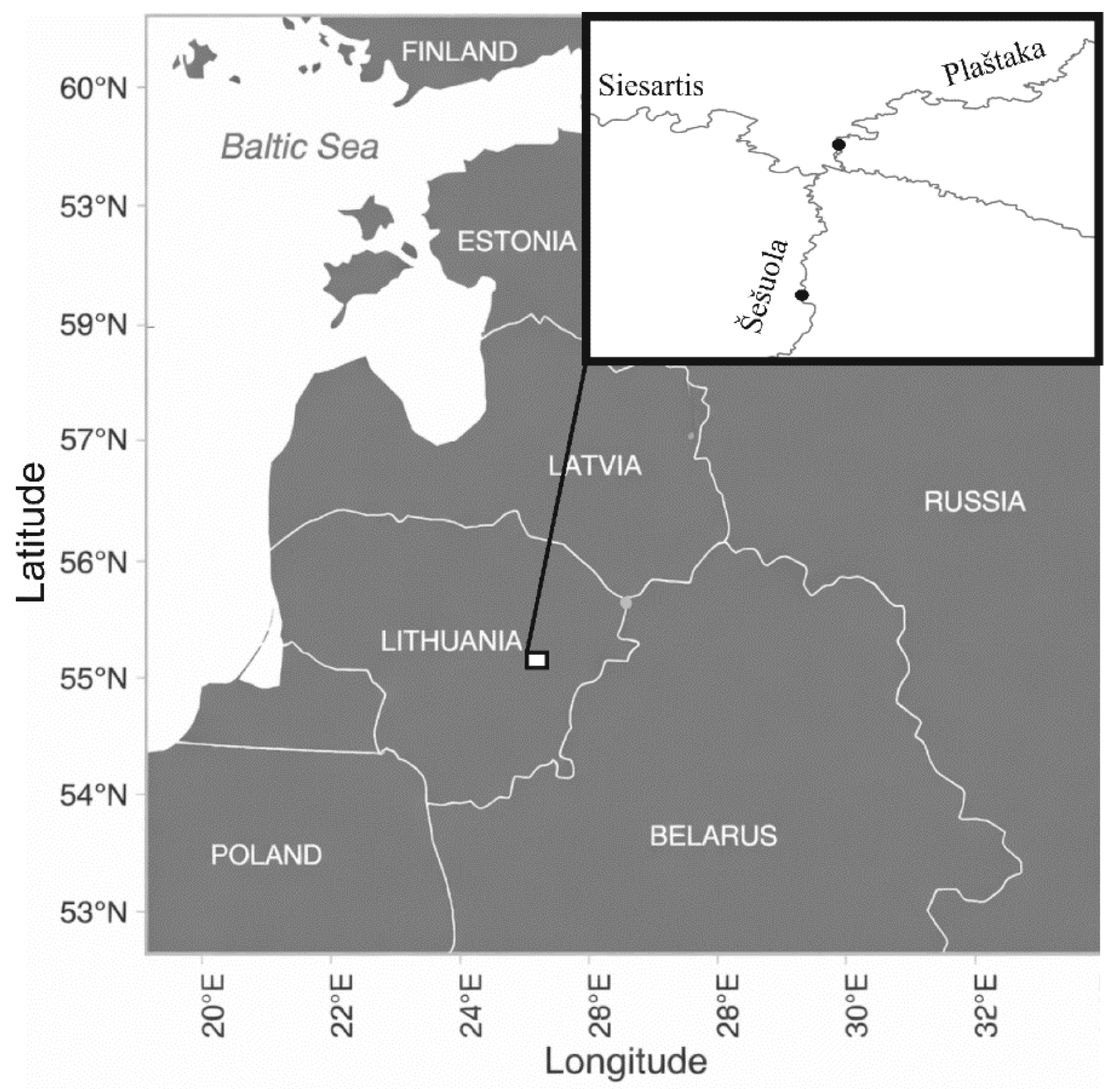
S. trutta juveniles was likely comparable, as the streams are geographically proximate and belong to the same population within the Siesartis River basin; notably, the parental stock for the artificially reared fry was also sourced from the Siesartis River. Despite these commonalities, the streams differed significantly in their thermal profiles and biological productivity. The Šešuola Stream was characterised by higher mean temperatures and a three-fold increase in overall fish abundance and biomass compared to the Plaštaka Stream, suggesting a higher trophic status. Conversely, the Plaštaka Stream maintained a significantly higher number of days within the optimal temperature range for
S. trutta growth throughout the study period. Additionally, interspecific competition was likely less intense in the Plaštaka Stream. These environmental and community disparities may account for the observed differences in S. trutta juvenile growth between the two sites.
4.2. Fins Damage
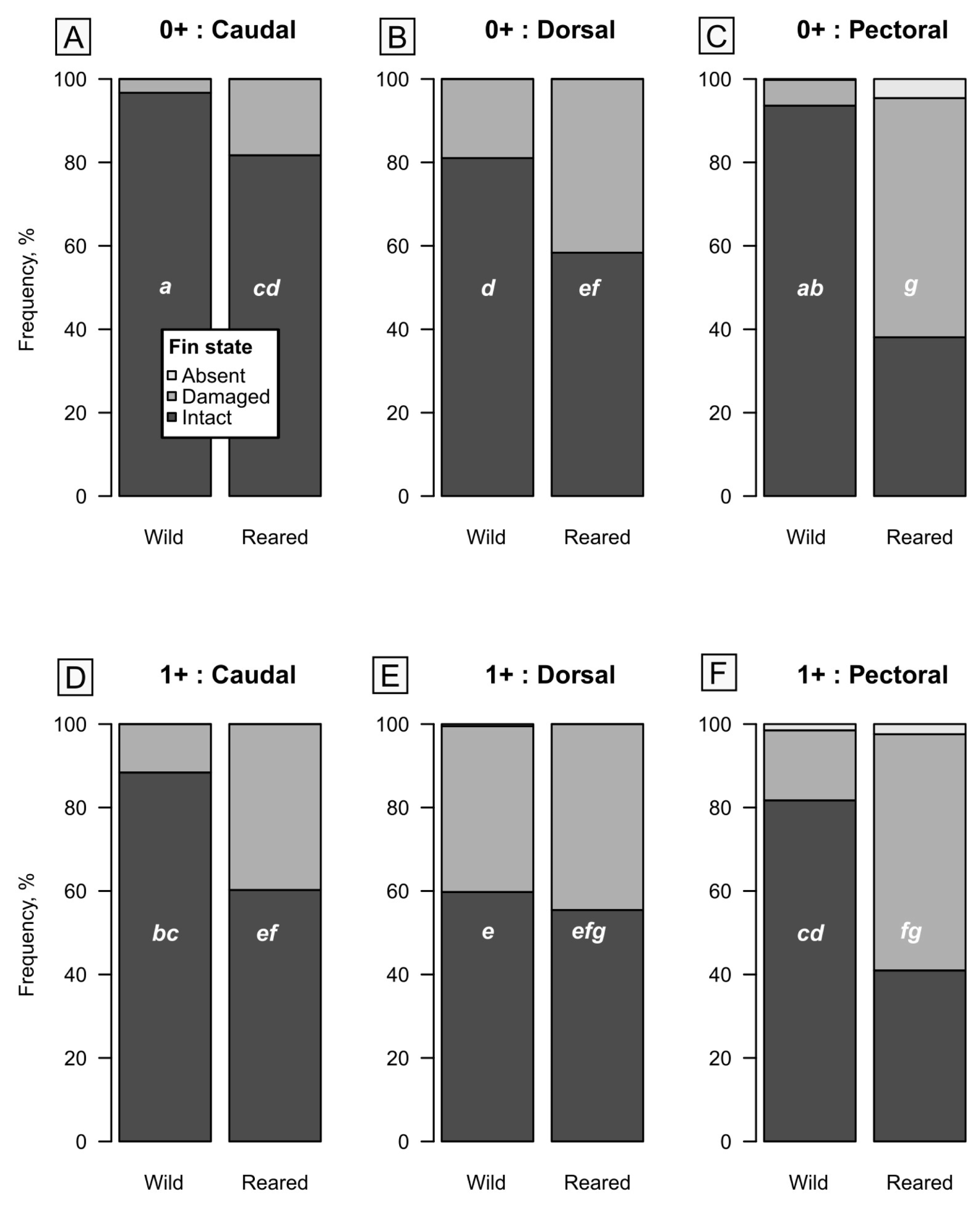
A significant increase in fin damage was observed among hatchery-reared
S. trutta specimens compared to their wild counterparts. Such a high prevalence of fin erosion is a well-documented phenomenon in artificially reared salmonids [
49,
50,
51,
52,
53], with some researchers even suggesting that fin degradation may serve as a reliable indicator of hatchery origin [
54]. However, our findings demonstrate that fin damage also occurs in wild populations, albeit to a lesser extent. Generally, fin injuries arise from a variety of stressors, including abrasive surfaces, agonistic interactions, nutritional imbalances, high stocking densities, poor water quality, and bacterial infections [
55,
56,
57]. Specifically, dorsal fins are most frequently injured during aggressive encounters, whereas pectoral fin damage predominantly results from contact with tank walls. In contrast, anal and pelvic fins are less prone to agonistic damage but remain susceptible to abrasion from benthic substrates [
56,
57]. The primary concerns regarding fin degradation involve the subsequent survival and performance of fish in natural environments [
51]. Severe fin damage impairs swimming ability, potentially reducing a fish’s capacity to adapt and survive in the wild, and is often correlated with diminished growth and higher mortality rates [
58,
59].
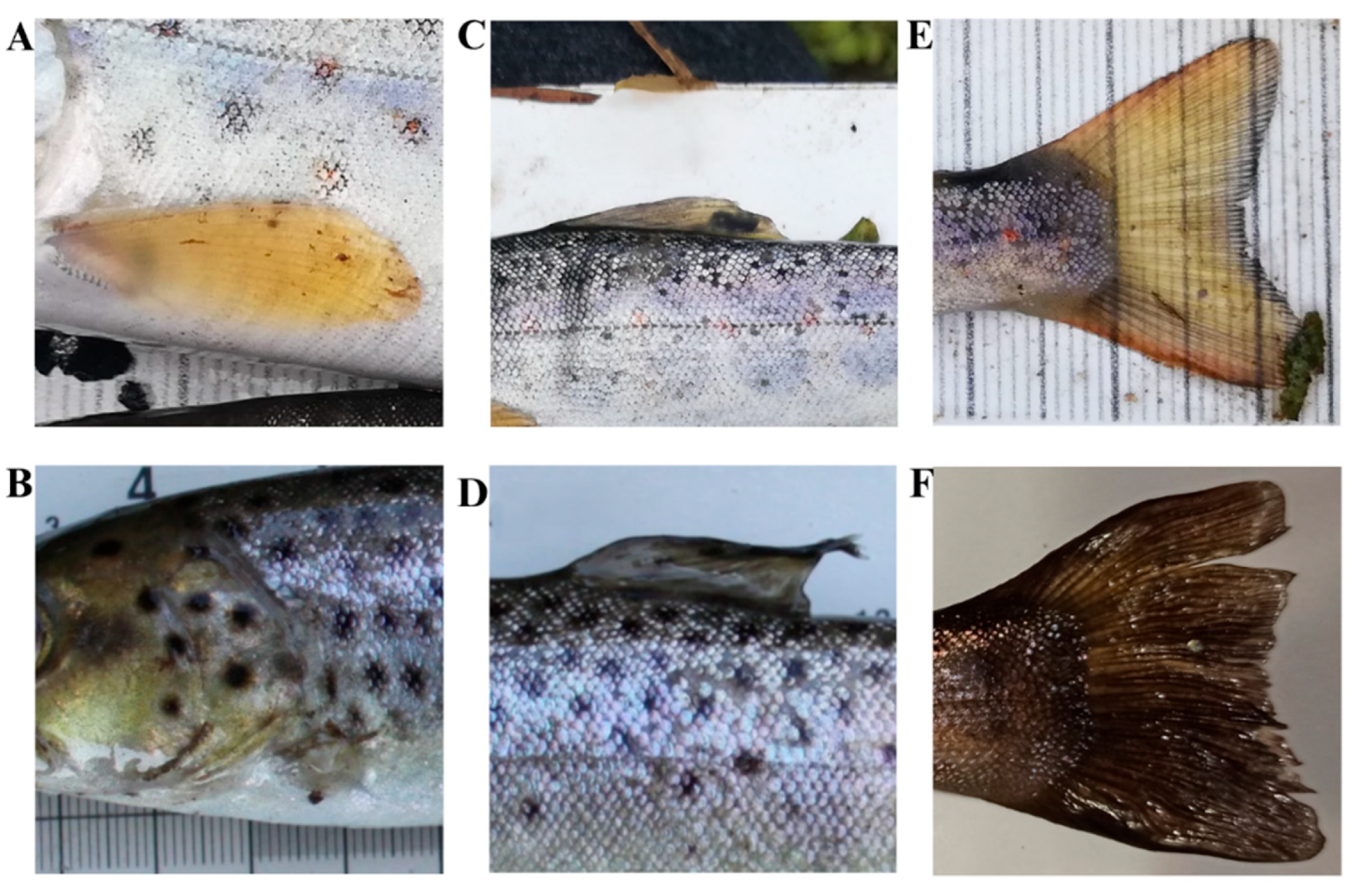
Our findings indicate that pectoral fin damage was the most prevalent injury among hatchery-reared juveniles, whereas dorsal fin damage was most frequent in wild individuals, albeit with a significantly lower overall prevalence compared to the hatchery group. Caudal fin injuries were the least common in both cohorts. This pattern of fin degradation aligns with the established understanding that pectoral fin trauma primarily results from abrasion against tank walls in artificial environments, while dorsal fin damage typically occurs during agonistic interactions in the wild [
56,
57].
In summary, fin damage in
S. trutta juveniles likely impairs foraging efficiency, increases metabolic costs associated with tissue repair, and facilitates secondary infections, all of which contribute to reduced growth rates [
60,
61,
62]. Consequently, substantial fin erosion or loss may be a critical factor limiting the migratory capacity and, ultimately, the long-term reproductive success of hatchery-reared
S. trutta juveniles.
4.3. Fish Growth
It is well-established that hatchery-reared fish may initially retain a size advantage upon introduction into natural environments, despite potential physiological maladaptation, impaired swimming performance, or behavioural deficits often associated with a high prevalence of fin damage. Indeed, some studies suggest that the combination of greater body length and mass, alongside characteristic fin erosion, serves as a reliable metric for distinguishing aquaculture-reared salmonids from their wild counterparts [
54,
63]. However, this initial advantage in size and weight is frequently transient; evidence suggests that reared individuals often lose their competitive edge over time when subjected to the rigours of natural environments [
64].
Our results demonstrate that hatchery-reared
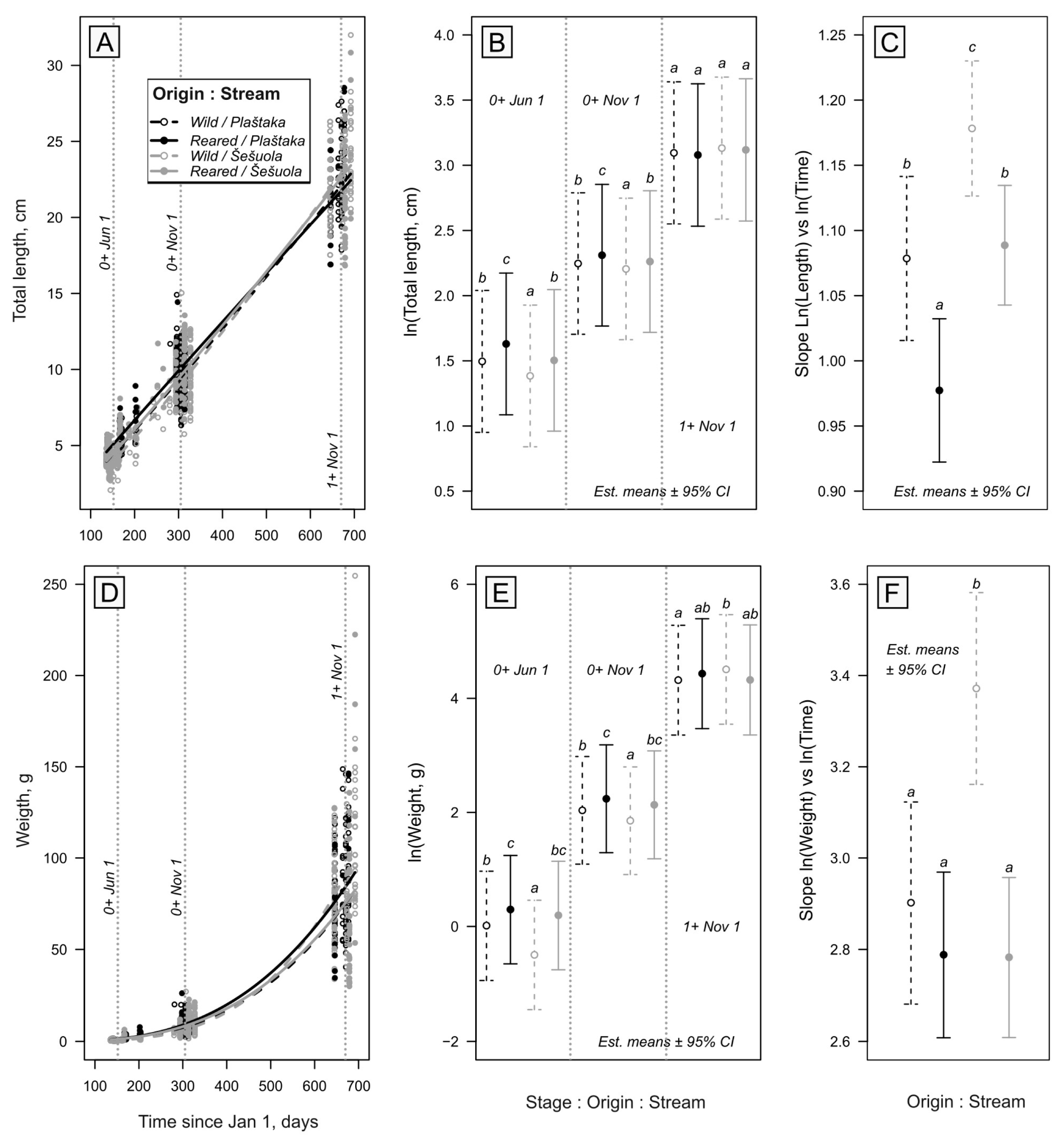
S. trutta juveniles were considerably larger than naturally hatched individuals during their first year. This initial disparity stems from the fact that the reared fry was significantly larger (up to 36% longer) than their wild counterparts at the time of stocking, a result of the stable, optimal thermal conditions and consistent food availability provided during artificial rearing. This pattern aligns with documented trends in aquaculture, where reared fish typically exhibit accelerated growth and reach greater sizes than wild fish of the same age [
63]. However, our findings indicate that these individuals lost this initial size and weight advantage over time following their release. By the end of the second year, immediately prior to smoltification and seaward migration, the previously observed size differences had dissipated in both streams (
Figure 4), regardless of variations in thermal regimes or productivity. This suggests that hatchery-reared
S. trutta juveniles exhibit slower growth rates than naturally hatched individuals under wild conditions. Several factors may contribute to this growth retardation. Post-stocking, artificially reared fry may face significant challenges in adapting to natural environments [
8,
9,
10,
11,
12,
13], potentially losing the competition for critical resources, such as food and habitat, to naturally spawned residents [
14,
15]. Furthermore, the high prevalence of fin damage observed in this study likely exerted a negative influence on the growth performance of the reared fish.
Overall, within a two-year period, the wild S. trutta juveniles—despite their significantly smaller initial size—attained dimensions comparable to those of their hatchery-reared counterparts. By the onset of their primary seaward migration to the Baltic Sea, no significant disparities in size or physiological fitness were observed between the two groups. These findings indicate that the post-release growth rate of hatchery-reared juveniles is markedly lower than that of wild individuals under natural conditions. Should this suboptimal growth trajectory persist into later life stages, it may suggest that artificially reared specimens possess a reduced probability of reaching maturity and achieving successful recruitment.
When interpreting these results, it is crucial to consider the genetic architecture of the stocked cohorts. Notably, within each study year, the artificially reared individuals originated from a single breeding pair, a factor that may have constrained genetic variability and, consequently, adaptive potential. However, as the study spanned four consecutive years and utilised different parental pairs for each annual release, the observed phenotypic patterns remained consistent across multiple independent cohorts. This longitudinal consistency suggests that the disparities between reared and wild juveniles likely reflect the synergistic effects of artificial rearing environments and cohort-specific genetic constraints, rather than being an artefact of a single parental effect.
These findings are consistent with recent literature indicating that hatchery-reared salmonids frequently exhibit altered growth trajectories and diminished ecological performance upon introduction to natural environments. Previous syntheses have demonstrated that such disparities typically arise from a synergy of genetic and environmental factors inherent to hatchery rearing [
16]. Furthermore, the efficacy of stocking programmes has proven to be highly variable, contingent upon both the specific ecological context and the overarching management strategies employed [
18]. Experimental evidence further suggests that environmental conditions during early life stages can exert long-lasting effects on the growth, behaviour, and adaptive capacity of salmonids [
65]. This supports the interpretation that the differences observed in the present study reflect complex developmental and ecological processes, rather than being attributable to a single causal factor.
4.4. Physiological Condition
Generally, haematological parameters—including red blood cell count (RBC), mean corpuscular volume (MCV), glucose (GLU) concentration, and haematocrit (HCT) levels—serve as robust indicators of overall fish health and physiological fitness [
66,
67]. Even subtle haematological fluctuations can function as early warning signals of subclinical stress, particularly in environments characterised by complex stressors [
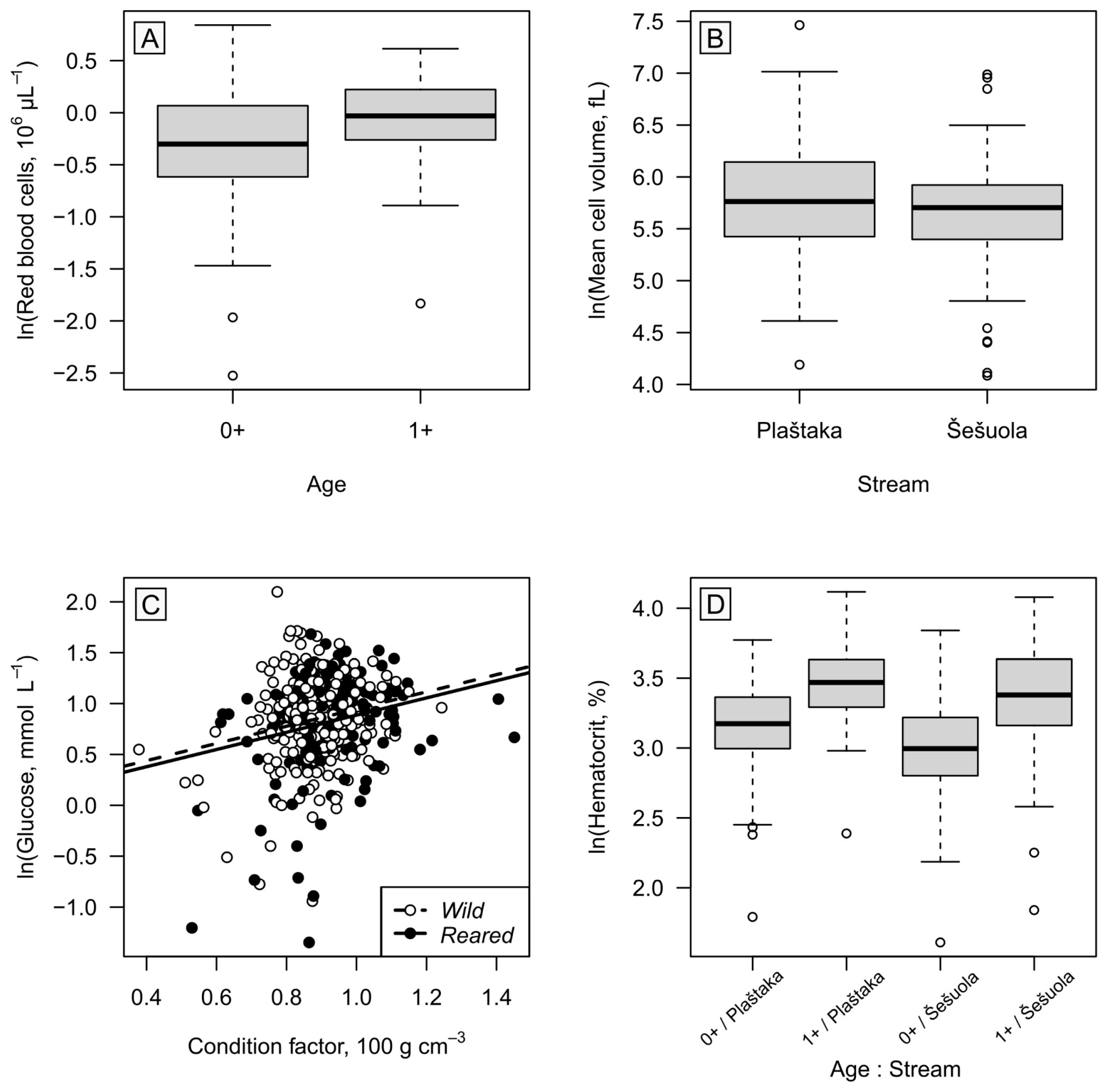
68]. The results of this study demonstrate that the selected blood parameters were primarily influenced by the age of the
S. trutta juveniles and the specific characteristics of their stream habitat. Notably, fish origin (wild versus hatchery-reared) had a significant impact only on GLU concentration, suggesting that while growth and morphology differ between the cohorts, their broader physiological profiles are largely shaped by shared environmental conditions.
Glucose is one of the most rapidly responding and frequently measured indicators of physiological stress in fish. However, there is a lack of data comparing GLU levels in reared and wild fish. Typically, glucose levels are investigated in farmed fish. Han et al. [
69] demonstrated that
O. niloticus fed high-starch diets exhibited concurrent increases in fitness and GLU. Similarly, Callet et al. [
70] showed that rainbow trout fed low-protein, high-carbohydrate diets developed altered GLU metabolism, including increased glycogen storage and hyperglycaemia. Furthermore, GLU levels vary by species, environment, toxicant type, and exposure duration, complicating interpretation [
71]. Acute stressors such as handling, hypoxia, or pollutants have been shown to rapidly induce hyperglycaemia by activating secondary stress pathways [
72,
73]. Ma et al. [
74] and Biswal et al. [
72] demonstrated that the presence of stress-induced increases in GLU activates glycolytic and other stress-related metabolic pathways. Glucose is widely used as an indicator of physiological stress and energy status; however, Witeska et al. [
75] noted that it should be interpreted within a broader haematological context to avoid false positives. Similarly, Krishnan and Rohner [
76] emphasise that teleost models of hyperglycaemia demonstrate high plasticity in GLU regulation, particularly under nutritional or environmental stress. In our study, elevated GLU levels were observed in reared juveniles compared to wild individuals, without corresponding changes in RBC or haematocrit. This pattern suggests differences in metabolic status between reared and wild juveniles, potentially related to rearing history. However, given the non-specific nature of glucose as a biomarker, these differences cannot be attributed to a single underlying cause.
It is well-established that fish erythrocyte indices serve as sensitive indicators of changes in water quality and environmental factors. Studies have shown that MCV, RBC parameters, and HCT vary under different environmental conditions [
77,
78]. MCV reflects erythrocyte size and is commonly associated with oxygen transport capacity and metabolic activity in fish [
75,
78]. Lower MCV values were observed in fish from the Plaštaka Stream than in fish from the Šešuola Stream. This inter-river difference may be related to environmental variability, including differences in temperature regimes, oxygen availability, and metabolic demands. Variations in MCV have been linked to environmental conditions and physiological adjustments in fish, although the underlying mechanisms are often complex and species-specific [
66,
76,
78,
79]. Therefore, while the observed differences in MCV are plausibly linked to environmental variation between streams, their physiological significance remains complex and likely reflects multiple interacting environmental and biological factors.
The HCT values observed in this study are consistent with those previously reported in the literature for salmonid species. For example, Nabi et al. [
80] reported HCT values ranging from 29% to 40% in
Oncorhynchus mykiss reared under standardised Himalayan aquaculture conditions. Sheikha et al. [
81] found average HCT levels of 35% in
S. trutta, with no significant difference between the sexes. The age-related increase in HCT observed in our study aligns with well-documented physiological changes that occur during salmonid growth [
78]. As fish grow, HCT increases due to rising metabolic demands and increased erythrocyte production [
82,
83]. This trend is reflected in haematological reference values for
O. mykiss; juvenile fish typically have a lower HCT (31%) than adult fish (37%) [
80]. Additionally, differences in HCT values may be determined by habitat-specific metabolic demands [
83,
84]. The significant stream effect observed in our study may be explained by differences in environmental oxygen availability, water temperature, or cumulative exposure to stressors. These factors influence erythropoietic output and blood viscosity regulation.
Our haematological analysis provides novel insights by comparing wild and hatchery-origin juveniles under natural conditions, demonstrating that physiological indicators, such as glucose, may not directly correspond to growth trajectories or overall fitness outcomes. Consistent with this, our findings indicate that both environmental variables and rearing origin contribute to observed physiological disparities, with their respective influences being modulated by stream-specific conditions. Collectively, these results underscore the necessity of interpreting haematological responses within a broader ecological context, as physiological markers are shaped by a complex interplay between an individual’s ontogeny and its immediate environment.
4.5. Cultivable Gut Bacteria
The fish gut microbiota is fundamental to host health, facilitating nutrient degradation and absorption, modulating immune system development, and synthesising essential vitamins and bioactive molecules. Furthermore, it serves as a critical line of defence against pathogens by maintaining intestinal barrier integrity [
85,
86,
87]. Previous research has identified statistically significant disparities in microbiota composition between wild and hatchery-reared fish [
88,
89,
90,
91]. Interestingly, species richness and diversity in the gut microbiota of wild
Salmo salar juveniles have been found to be significantly lower than in hatchery-reared individuals [
88,
92]. Given that hatchery-origin fish often exhibit lower post-stocking survival rates [
93,
94,
95], the transition to natural environments likely imposes significant physiological stress. Such environmental stressors can detrimentally impact the health and fitness of salmonid fry by inducing dysbiosis in the gut microbiome [
96,
97]. Longitudinal studies (e.g., two months post-release) comparing
S. salar parr from the same genetic population have shown that gut microbiota remains significantly different and is strongly influenced by the early rearing environment [
92]. Our own preliminary findings align with this, revealing significant differences in the gut microbiota of
S. trutta juveniles between wild and hatchery-reared groups. Five months post-release, the abundance of culturable (viable) bacteria in the gut of hatchery-reared fish remained significantly higher than in their wild counterparts across both studied streams. These microbial disparities could potentially confer phenotypic disadvantages, such as reduced disease resistance and impaired metabolic efficiency [
98,
99,
100]. However, further research is required to characterise the predominant bacterial taxa in hatchery-reared
S. trutta over longer post-stocking periods and to evaluate their specific impact on juvenile growth and overall fitness.



 ,
,