Review

Potential of Lecanicillium uredinophilum as a Biocontrol Agent of Hemileia vastatrix: A Review Compared with Other Biological Control Agents


by
Jose Luis Pinedo-Mas
,
Eyner Huaman
,
Amilcar Valle-Lopez
,
Jamil Delgado Rafael
,
Raúl Vargas
,
Robin Oblitas-Delgado
,
Jhon Edler Lopez-Merino
and
Manuel Oliva-Cruz
*
Instituto de Investigación para el Desarrollo Sustentable de Ceja de Selva (INDES-CES), Universidad Nacional Toribio Rodríguez de Mendoza (UNTRM), Chachapoyas 01001, Peru
*
Author to whom correspondence should be addressed.
Biology 2026, 15(7), 589; https://doi.org/10.3390/biology15070589
Submission received: 5 March 2026 / Revised: 3 April 2026 / Accepted: 4 April 2026 / Published: 7 April 2026
(This article belongs to the Section Microbiology)

Simple Summary

Coffee leaf rust is one of the most damaging diseases affecting coffee production worldwide. It is commonly managed with chemical fungicides, but these products may create environmental problems and can become less effective over time. This review examines whether Lecanicillium uredinophilum, a fungus naturally associated with rust fungi, could be used as a safer biological alternative to help manage coffee leaf rust. The available studies show that this fungus can attack rust spores and other fungal structures under controlled conditions, which suggests that it has real potential as a biological control agent. However, most of the current evidence comes from laboratory and greenhouse studies, and there is still little proof that it works consistently under field conditions. Compared with other biocontrol agents already studied for coffee leaf rust, L. uredinophilum appears promising but remains at an early stage of development. More research is needed to confirm its effectiveness in coffee plantations, understand how it works in greater detail, and develop stable formulations that can be used by farmers. This information may support more sustainable coffee disease management in the future.

Abstract

Coffee leaf rust (Hemileia vastatrix) is a major constraint on coffee production, while reliance on chemical fungicides raises environmental concerns and may become less sustainable over time. This review critically analyzes the available evidence on the potential of Lecanicillium uredinophilum as a biological control agent against H. vastatrix, with comparative consideration of other microbial agents evaluated for coffee leaf rust management. A structured literature review was conducted using searches in Scopus and PubMed, complemented by manual searches and reference screening. The available evidence indicates that L. uredinophilum shows affinity for urediniospore structures and exhibits mycoparasitic activity against rust fungi under controlled conditions. However, direct evidence against H. vastatrix remains limited and is still concentrated mainly in laboratory and greenhouse studies. In comparison with more established biocontrol agents, L. uredinophilum should be regarded as a promising but still early-stage candidate whose practical relevance has not yet been validated. Future progress will depend on robust field-based studies, improved understanding of its mechanisms of action, evaluation of its environmental stability, and the development of viable formulations compatible with integrated disease management strategies.

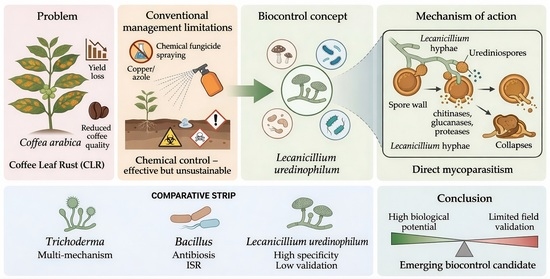
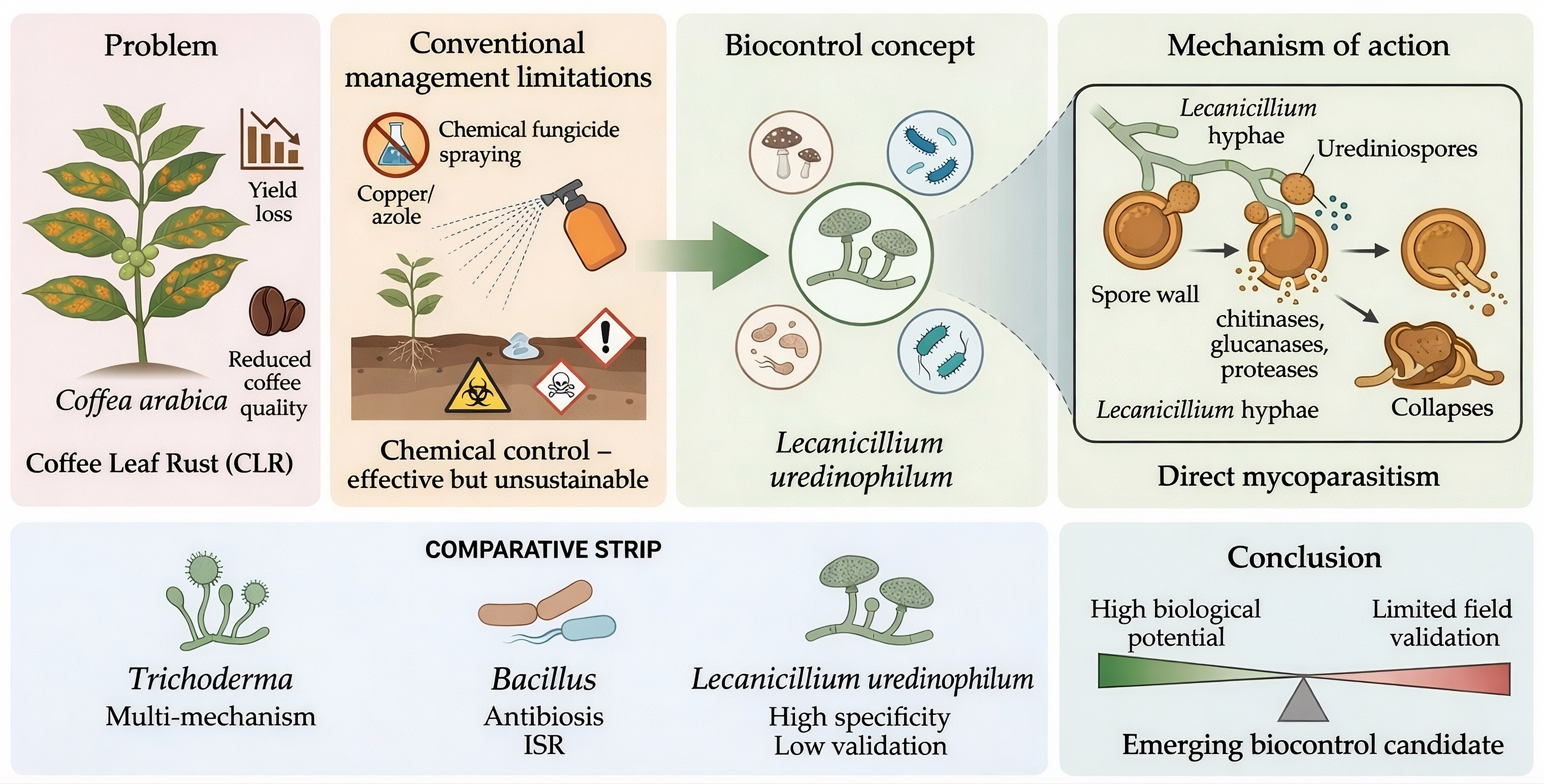
Graphical Abstract

1. Introduction

Coffee is cultivated on approximately 10 million hectares distributed across about 12.5 million agricultural holdings worldwide, making it one of the most relevant crops in economic and social terms [1]. The coffee production chain provides direct and indirect livelihoods for more than 100 million people globally [2,3].
In recent years, the international coffee market has experienced sustained growth driven by its global productive and commercial expansion, with Brazil remaining the world’s leading producer [4]. Global coffee consumption is projected to increase at an annual rate of 1–2% in the coming years, while consumption in Latin America has risen significantly over the past decade [5]. In parallel, coffee has been consolidated as a product of high social and cultural value through global promotional strategies that reinforce consumer perceptions of quality, diversity, and production systems [6].
Nevertheless, the sustainability of coffee production is seriously threatened by the incidence of pests and diseases. At the global level, plant pathogens can reduce agricultural yields by 20–40%, depending on crop, region, and year [7]. In the particular case of coffee, rust caused by H. vastatrix represents one of the most destructive phytopathogens, capable of causing yield reductions that can reach ~35% in widespread epidemics, and may exceed 70% under severe local scenarios associated with heavy defoliation and compounding (polyetic) effects [8,9,10]. Beyond its productive impact, this disease significantly affects coffee cup quality, compromising the commercial value of the final product [11]. For example, in Tanzania, it has been estimated that nearly 50% of production costs can be directly associated with chemical control strategies targeting the two main fungal diseases of the crop, coffee leaf rust (CLR) and coffee berry disease [12].
Conventional management of CLR is primarily based on the use of preventive copper-based fungicides and systemic fungicides from the azole group, which have proven effective in controlling the disease [3]. However, their intensive and prolonged application can generate adverse effects, such as copper accumulation in soils and phytotoxicity in plants [13]. Additionally, many agrochemicals exhibit low biodegradability, leading to the persistence of toxic residues in soils and associated risks to human, animal, and soil ecosystem health [14]. Moreover, repeated applications can promote the selection of resistant pathogen populations and disrupt beneficial microbial and natural enemy communities, thereby compromising long-term control efficacy and increasing management costs [15]. In this context, the increasing incidence and severity of economically important plant diseases, together with the strong dependence on chemical pesticides, represent critical challenges for environmental sustainability at a global scale [16,17].
Biological control has emerged as a promising and more sustainable alternative for managing CLR, based on the use of living organisms or their metabolites through mechanisms such as parasitism, antibiosis, niche competition, and induction of plant resistance [18,19,20]. In response to the limitations of chemical control, interest has grown in the use of microorganisms and bioactive compounds with antifungal activity as alternative strategies against H. vastatrix [21]. Santiago et al. reported the existence of biological agents capable of inhibiting the pathogen or inducing systemic resistance in coffee crops, with laboratory and greenhouse conditions efficacies ranging from 50% to 100% [22]. However, despite promising results under controlled conditions, well-replicated field evaluations and multi-site validations remain comparatively limited, which constrains practical recommendations [23]. Species of the genus Lecanicillium have been reported to exhibit mycoparasitic activity against H. vastatrix, as evidenced by their colonization of rust sori shortly after inoculation [24]. Likewise, experimental studies have shown that Lecanicillium spp. can reduce urediniospore germination of the pathogen and decrease disease severity when applied before infection, highlighting their potential as biological control agents [25]. Additionally, isolates of L. uredinophilum have been documented to display hyperparasitic activity against urediniospores of Phakopsora pachyrhizi, the causal agent of Asian soybean rust, further reinforcing the mycoparasitic potential of the genus Lecanicillium against rust fungi [26].
The genus Lecanicillium has been extensively studied over the past decade through multilocus phylogenetic analyses based on markers such as LSU, TEF1, RPB1, and RPB2. Synthesis studies within the family Cordycipitaceae have established criteria of priority and monophyly, resolving nomenclatural duplications between sexual and asexual morphs and laying the foundations for the current circumscription of the genus [27].
Despite these advances, evidence specifically addressing the role of L. uredinophilum against H. vastatrix remains limited and dispersed across experimental and observational studies. This hinders a clear assessment of whether this fungus represents a robust biocontrol option relative to other agents previously evaluated for CLR management. Accordingly, this review addresses the following question: What is the potential of L. uredinophilum as a biocontrol agent of H. vastatrix compared with other previously evaluated species?
Accordingly, the objective of this review article is to critically analyze the available evidence on the potential of L. uredinophilum as a biocontrol agent against H. vastatrix, identifying the main advances, limitations, and research gaps, and evaluating its current status as an emerging biological agent from a comparative perspective grounded in the strength of existing scientific evidence.

2. Methodology

This review was conducted as a structured literature review guided by the general principles of the PRISMA 2020 framework to ensure a transparent and reproducible study identification and selection process [28]. The primary database search was performed on 15 January 2026 in Scopus and PubMed, selected for their broad coverage of peer-reviewed literature in plant pathology, microbiology, and biological control. The database search covered publications indexed between 2015 and January 2026 and used combinations of English keywords related to Hemileia vastatrix, coffee leaf rust, Lecanicillium uredinophilum (syn. Akanthomyces uredinophilum), mycoparasitism, antagonistic fungi, and biological control agents. Additional targeted terms associated with other fungal biocontrol agents, including Lecanicillium lecanii and Trichoderma spp., were included to support the comparative scope of the review. To complement the database search, relevant publications were also identified through manual screening of reference lists and citation tracking, enabling the incorporation of seminal studies published before 2015 that were directly relevant to the review objective.
A total of 162 records were initially identified through database searching, of which 2 were removed before eligibility assessment for reasons unrelated to duplication. Thirty-two reports were retrieved and assessed in full text, and 21 were excluded because they addressed different fungal species (n = 13) or were not sufficiently aligned with the main topic of the review (n = 8). Consequently, 24 studies from the database search met the eligibility criteria. An additional 76 relevant publications were incorporated through complementary sources, including citation tracking and targeted manual searches, resulting in a final corpus of 100 studies included in the qualitative synthesis. The selected literature was analyzed comparatively according to its relevance to the biology and epidemiology of H. vastatrix, mechanisms of fungal biocontrol, evidence related to Lecanicillium spp., specific information on L. uredinophilum, and comparisons with other biological control agents.

3. Integrated Analysis of the Evidence on Biological Control Agents

3.1. Coffee Leaf Rust (Hemileia vastatrix)

Understanding the epidemiology and infection biology of H. vastatrix is essential to identify critical stages susceptible to biological control interventions, particularly those involving mycoparasitic fungi. The epidemiology of H. vastatrix is strongly influenced by climatic factors, mainly temperature and precipitation. Maximum disease development usually occurs between October and March, under conditions of high humidity and temperatures ranging from 21.1 to 23.4 °C, following an annual cycle characterized by a slow growth phase (March–June), an accelerated phase (June–September), and an epidemic peak associated with increased inoculum dispersal [29]. Although H. vastatrix exhibits low genetic variability at the global scale, its genome, estimated at approximately 797 Mbp, harbors more than 50 physiological races and shows early activation of signaling and effector genes from germ tube formation, reflecting a highly specialized molecular interaction with its host [3]. In Peruvian coffee plantations, seven races of the pathogen have been identified, including two novel races, while Timor hybrid-derived varieties have shown persistent susceptibility, highlighting the pathogen’s adaptive capacity and the need for continuous monitoring before the introduction of new resistant varieties [30].
From a reproductive perspective, meiosis in the teliospores of H. vastatrix differs from that of most basidiomycetes, as the basidium is external and the chromosome number is higher; these irregularities observed under natural conditions suggest alterations during a critical phase of its life cycle [31]. The resulting basidiospores are not capable of infecting coffee plants, and no alternative host has been identified to date [3,32]. Consequently, urediniospores constitute the main unit of pathogen dissemination and reinfection and represent a critical target for mycoparasitic fungi capable of affecting their viability or germination.
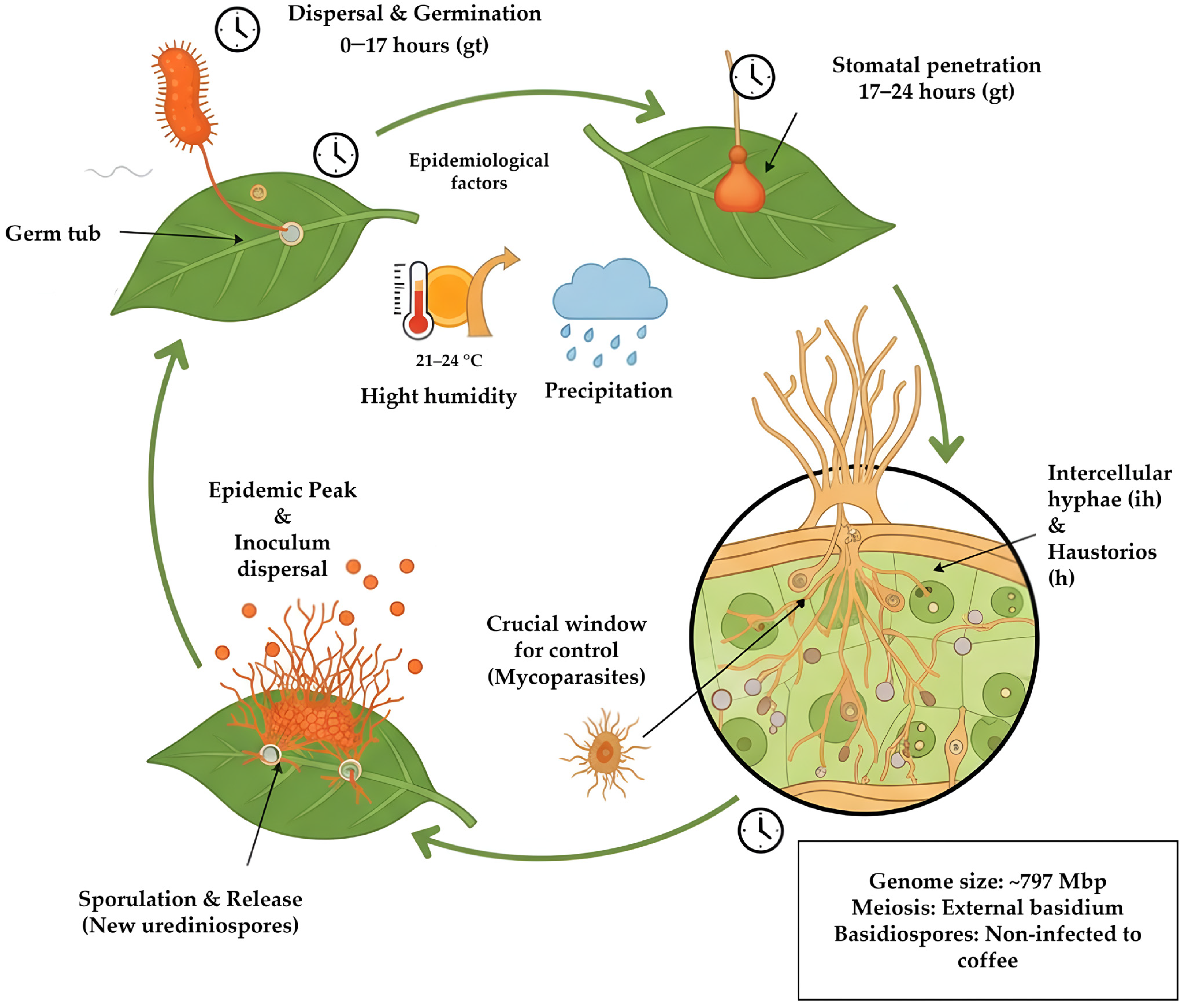
The infection process of H. vastatrix in coffee leaves, similar to that of other rust fungi, begins with adhesion to the host surface, followed by urediniospore germination, appressorium formation over stomata, penetration, and subsequent intercellular and intracellular colonization of plant tissues (Figure 1) [3,33].
During this process, the fungal cell wall, mainly composed of glucans and chitin, becomes particularly relevant from a biological control perspective because these structural polymers may serve as targets for hydrolytic enzymes produced by antagonistic fungi [34]. Haustorium formation is a key step in successful infection establishment, as these structures facilitate nutrient exchange between the pathogen and the host [35]. At advanced infection stages, haustoria become encapsulated by material reacting positively to compounds such as callose and glucans, which has been interpreted as a plant defense response; however, this reaction occurs too late to prevent fungal growth and sporulation [36].

3.2. Biological Control of Phytopathogenic Fungi

Biological control of plant diseases is based on the use of living organisms or their metabolites through mechanisms such as parasitism, antibiosis, niche competition, and induction of plant resistance [18,19]. Its implementation in disease management programs requires careful evaluation, as efficacy often differs between controlled and field conditions. In this context, biological control represents a sustainable alternative to chemical fungicides by reducing chemical residues and toxicological risks [20]. Among fungal biocontrol agents, Trichoderma spp. are widely recognized as a model genus due to their ability to integrate multiple mechanisms of action, including mycoparasitism, antibiosis, competition, and induction of plant defense responses [37,38,39]. However, variability in performance under field conditions highlights the need for a deeper mechanistic understanding of these interactions [40,41,42].
In fungal antagonists, these mechanisms operate as part of an integrated sequence involving host recognition, adhesion, and penetration of the pathogen, followed by degradation of fungal structures. This process is mediated by extracellular hydrolytic enzymes such as chitinases, β-1,3-glucanases, proteases, and N-acetylglucosaminidases, which target key components of fungal cell walls and interfere with spore viability, germination, and early infection stages [43,44,45]. Antibiosis further contributes through the production of secondary metabolites with antifungal activity, including gliotoxin, gliovirin, peptaibols (e.g., alamethicin), 6-pentyl-2H-pyran-2-one (6-PP), harzianic acid, and harzianolide, which can disrupt membrane integrity, induce oxidative stress, and inhibit fungal growth [45,46,47]. These mechanisms often act synergistically, enhancing overall antagonistic effectiveness [44,46].
Competition for nutrients and space is particularly relevant on plant surfaces, where environmental constraints such as UV radiation, fluctuating humidity, and nutrient limitation influence microbial establishment and persistence [43]. In addition, some fungal biocontrol agents interact with plant tissues as endophytes or rhizosphere-associated microorganisms, inducing systemic resistance through signaling pathways commonly associated with jasmonic acid and ethylene, and in some cases salicylic acid [48]. These responses involve activation of defense-related genes, reactive oxygen species production, and structural barriers such as callose deposition, contributing to reduced disease development [49,50,51].

3.3. The Genus Lecanicillium spp.

Recent phylogenetic studies analyzing the Akanthomyces sensu lato complex have demonstrated that it comprises several independent lineages within the family Cordycipitaceae. These analyses have led to taxonomic reorganization, including the redefinition of Lecanicillium for specific clades, to better reflect evolutionary relationships among these fungi [52]. Representative species such as Lecanicillium muscarium (formerly Akanthomyces muscarius) have shown dual biocontrol potential, combining entomopathogenic activity against insect pests with antagonistic effects against phytopathogenic fungi, supporting their relevance in integrated pest and disease management strategies [53].
Consistent with the general mechanisms described above, Lecanicillium spp. comprise fungi with broad potential as biological control agents. Their mode of action involves both mechanical penetration and the production of hydrolytic enzymes, enabling them to infect insect hosts or parasitize other fungi. These mechanisms may operate in conjunction with the induction of systemic resistance responses in plants, highlighting their multifunctional role in plant protection [54]. This interaction typically follows a sequential process involving adhesion to the host surface, germination, localized penetration, and enzymatic degradation of structural components.
Hydrolytic enzymes such as chitinases, β-1,3-glucanases, and proteases play a central role in this process by specifically targeting structural polymers of fungal cell walls, including chitin and glucans. This enzymatic activity weakens cell wall integrity, facilitating penetration and leading to lysis of infective structures such as urediniospores, thereby directly impairing pathogen viability and infection capacity [55,56].
In addition to enzymatic degradation, Lecanicillium spp. may produce secondary metabolites that contribute to antibiosis. Although less characterized than in Trichoderma, metabolite profiling studies indicate that species within the genus can synthesize bioactive compounds, including cyclic depsipeptides and other low-molecular-weight metabolites with antimicrobial properties [57,58]. These compounds may interfere with spore germination, membrane integrity, or hyphal development, reinforcing antagonistic activity.
Beyond direct antagonism, some species of Lecanicillium may also interact with plant tissues as endophytes or epiphytes, expanding their functional role in plant protection systems [54,59]. In this context, their contribution to disease suppression may include mechanisms consistent with induced systemic resistance, as described for other fungal biocontrol agents, potentially enhancing the plant’s ability to restrict pathogen establishment during early infection stages. However, compared to direct mycoparasitism, this indirect mechanism remains less well characterized in coffee leaf rust.
Species of the genus Lecanicillium are primarily recognized as entomopathogenic fungi; however, their association with CLR has also been documented. Observational studies conducted in coffee plantations in Indonesia reported the presence of Lecanicillium spp. associated with H. vastatrix infections, suggesting a potential ecological interaction under natural conditions [60].
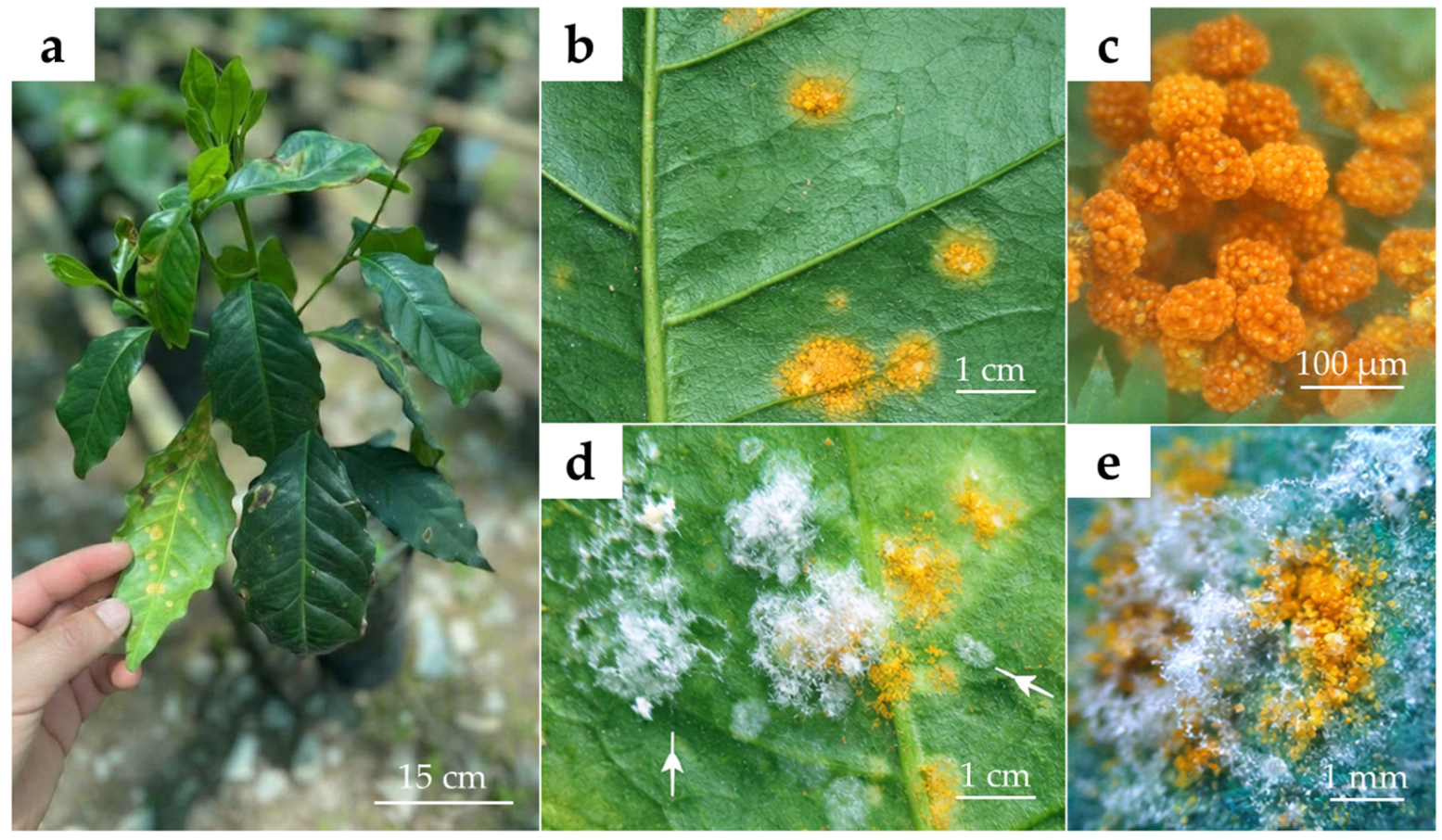
Evidence from field observations indicates that fungi belonging to the Lecanicillium lecanii complex are frequently found colonizing rust lesions, where they reduce urediniospore viability and suggest the occurrence of natural mycoparasitism in coffee agroecosystems [61,62,63] (Figure 2). At the plot level, increased incidence of these fungi has been associated with reduced urediniospore germination and visible colonization of rust pustules [64]. In agreement with these findings, L. uredinophilum was originally isolated from rust sori and described as a fungicolous species associated with uredinal fungi, providing direct evidence of its interaction with H. vastatrix [65].
Experimental evidence supports these field observations. Lecanicillium spp. have been reported to exhibit mycoparasitism on H. vastatrix, reaching up to 68% parasitism of urediniospores at 120 h post-inoculation, although further validation under field conditions is required [24]. Similarly, controlled assays have shown that L. psalliotae significantly reduces urediniospore germination, while its own germination increases in the presence of the pathogen. Under in vivo conditions, application before pathogen inoculation resulted in the greatest reduction in disease severity, indicating a preventive effect [25]. Additional studies evaluating multiple Lecanicillium isolates have revealed variability in mycoparasitic capacity; nevertheless, several strains were able to penetrate and degrade urediniospores effectively, supporting the potential of the genus as a biological control agent against CLR [66].
The accumulation of evidence from field studies, laboratory assays, and molecular analyses indicates that species of the genus Lecanicillium are plausible mycoparasites of H. vastatrix and represent promising candidates for biological control strategies. However, current evidence remains limited in terms of consistency, field validation, and mechanistic understanding, highlighting the need for further research focused on efficacy under field conditions, strain selection, and formulation development [57,58,66,67,68].

3.4. Mycoparasitic Activity of Lecanicillium uredinophilum

The species was first described as L. uredinophilum based on isolates obtained from rust pustules in Korea; colonial morphology allowed its diagnosis as a new fungicolous species associated with fungi of the order Uredinales [65]. In culture, colonies typically exhibit a whitish appearance, with mycelium partially immersed in the host sori and hyaline conidia of cylindrical to oblong or narrowly ellipsoid shape, traits that have been confirmed both in the original description and in subsequent morphological revisions [65].
Although L. uredinophilum was initially reported as a mycoparasite of urediniospores, later studies have shown that genetically equivalent strains can also be isolated from insects, suggesting a broad ecological range that includes both fungicolous and entomopathogenic forms [69]. Experimental assays have indicated optimal growth temperatures around 21–24 °C and the ability to develop on standard culture media, information that is relevant for the production and formulation of experimental strains. In addition, its metabolite production and insecticidal activity have been explored in bioassays against various pests, revealing additional applied potential [70].
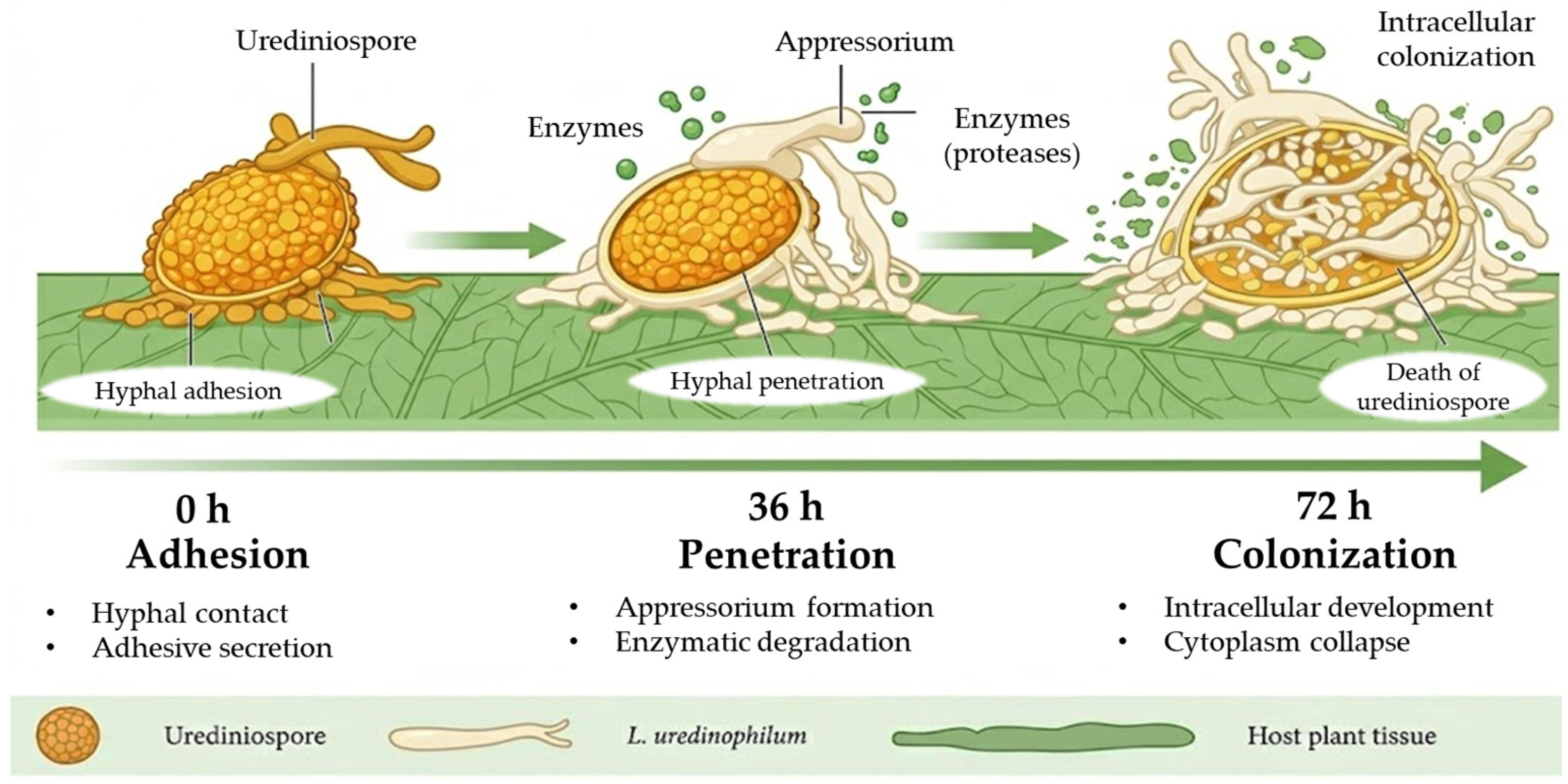
L. uredinophilum exhibits a high mycoparasitic capacity against P. pachyrhizi, showing through confocal microscopy and electron microscopy the active penetration and colonization of urediniospores within approximately 36 h, accompanied by degradation of the cell wall and collapse of internal structures [26]. These findings confirm a mode of action based on direct mycoparasitism and support its high potential as a biocontrol agent of Asian soybean rust [24]. A schematic representation of this proposed mycoparasitic mechanism is shown in Figure 3.
From a broader ecological perspective, some microorganisms can temporarily inhabit plant tissues without causing disease symptoms and that, in many cases, provides benefits to the host plant [71]. The concept of endophytic fungi was introduced by De Bary in 1866, who initially described them as neutral organisms with no evident harmful or beneficial effects on their plant hosts [72]. In the case of L. uredinophilum, studies on its endophytic behavior in coffee remain limited; however, assays conducted on coffee cv. Caturra showed that three out of fourteen evaluated strains achieved high levels of internal colonization, and two of them stood out for their endophytic stability, demonstrating a persistent interaction with the host. Although species such as Trichoderma promoted plant growth to a greater extent, L. uredinophilum was notable for its capacity for internal colonization and stability, traits relevant to biological control [73]. Nevertheless, these studies did not assess its direct action against H. vastatrix, and therefore, an information gap persists regarding its specific efficacy as a biocontrol agent of CLR, highlighting the need for further research aimed at determining whether its endophytic colonization can be translated into antagonistic mechanisms or the induction of resistance against this highly relevant pathogen in coffee production.

3.5. Comparison with Other Biocontrol Agents for Coffee Leaf Rust

Recent literature reports a broad spectrum of microbial agents with biocontrol potential against H. vastatrix, including mycoparasitic fungi, such as Trichoderma spp., Calonectria hemileiae, and Lecanicillium/Akanthomyces-like taxa, as well as antagonistic bacteria belonging mainly to Bacillus, Pseudomonas, and Paenibacillus. Their efficacy is highly context-dependent, being influenced by strain identity, formulation, application timing, and environmental conditions; therefore, most strategies emphasize their integration within broader coffee leaf rust (CLR) management programs [3,22,74,75].
Among fungal agents, Trichoderma spp. are the most extensively studied and operationally versatile, combining multiple mechanisms such as mycoparasitism, antibiosis, competition, and induction of plant defenses, along with reported association with rust pustules and endophytic colonization of Coffea tissues [76,77]. Although reductions in disease severity have been documented, their effectiveness remains variable and dependent on local conditions and application strategies [78,79].
In contrast, Calonectria hemileiae exhibits a more specialized interaction with CLR, including strong inhibition of urediniospore germination, confirmation of mycoparasitism through Koch’s postulates, and reductions in disease severity of up to 70–90% under controlled conditions [80]. Additionally, its activity has been associated with increased plant defense responses. Nevertheless, evidence remains largely confined to controlled environments, limiting its field-level validation (Table 1).
The Lecanicillium complex shows greater variability. Previous and recent studies have reported hyperparasitism of coffee rust and identified Lecanicillium-like taxa, including L. uredinophilum, associated with H. vastatrix [63,65,81]. Despite its biological plausibility, L. uredinophilum remains less validated than other fungal agents, with evidence still limited in scope and scale.
Bacterial antagonists provide a complementary perspective. Field studies have shown that Bacillus isolates can achieve reductions in rust intensity comparable to copper-based treatments, while Pseudomonas shows intermediate effects [75,82]. More recently, Paenibacillus sp. demonstrated high efficacy under greenhouse conditions, significantly reducing urediniospore germination, incidence, and severity [21]. These findings suggest that bacterial agents may offer effective preventive strategies, although environmental and operational factors also influence their performance.

3.6. Current Limitations

Despite multiple records documenting the colonization of rust sori by L. uredinophilum [26,65,69], direct, reproducible, and conclusive evidence supporting its efficacy against H. vastatrix under field conditions remains scarce. Most available information derives from laboratory assays or isolated observations, which do not fully capture the complexity of ecological interactions present in commercial coffee plantations. Environmental variability, microclimatic conditions, pathogen genetic diversity, and interactions with other associated organisms may significantly influence the effectiveness of this fungus, highlighting the need for controlled, replicated, multi-location trials to validate its performance under real agricultural conditions. In contrast, other microbial agents for CLR, including Trichoderma spp. and bacterial antagonists such as Bacillus and Paenibacillus, have been evaluated under greenhouse or field-oriented conditions [21,79]. Additionally, entomopathogenic fungi such as Beauveria bassiana have demonstrated the ability to establish as endophytes in coffee tissues, supporting the broader concept that fungal colonization of plant tissues may be achievable, although this does not constitute direct evidence of CLR control by L. uredinophilum [84].
In addition to the limited field evidence, important constraints remain regarding inoculant production and formulation. The availability of stable L. uredinophilum inoculants is currently restricted, as most studies have been conducted at laboratory or small experimental scales without standardized protocols for mass production [66,67]. Challenges related to long-term viability, tolerance to storage conditions, and maintenance of biocontrol activity after application further complicate its practical use. Moreover, the absence of optimized application strategies, such as dosage, frequency, and delivery methods limits its integration into commercial production systems. These limitations are consistent with broader challenges reported for microbial biocontrol agents, whose performance is often affected by environmental factors such as UV radiation, temperature, and humidity [85,86].
Another critical limitation is the lack of information regarding the interaction of L. uredinophilum with common agronomic practices, including fertilization, pruning, agrochemical use, irrigation, and pest management. These practices can alter foliar microflora, surface moisture, and the microclimate surrounding leaves, thereby influencing fungal colonization, persistence, and efficacy on H. vastatrix sori. Consequently, evaluating the compatibility of this biocontrol agent within real production systems is essential to determine its practical applicability [86,87,88].
Finally, gaps remain in genomic and functional characterization. Although studies in related species have identified genes associated with lytic enzymes and secondary metabolites with biocontrol potential [89], specific functional analyses for L. uredinophilum are still lacking to directly link these molecular determinants with its mycoparasitic activity against H. vastatrix. This limitation is particularly relevant given its ecological versatility and ongoing taxonomic refinement within Lecanicillium/Akanthomyces-like taxa, which may obscure strain-level functional differences [69,90]. Addressing these gaps will be essential for improving strain selection and developing more effective and biologically consistent formulations.

4. Critical Discussion of the Biocontrol Potential of L. uredinophilum Against H. vastatrix

The evidence analyzed in this review suggests that L. uredinophilum should be interpreted as a biologically coherent candidate, yet still at an early stage of technological development and insufficiently validated under field conditions for the management of coffee leaf rust (CLR). Its main strength lies in its affinity for rust fungi, particularly its ability to associate with uredinial structures and parasitize urediniospores, which are key elements in the dispersal and reinfection cycle of H. vastatrix [24,27,61]. This correspondence with the pathogen’s biology supports its functional plausibility. However, this biological coherence contrasts with a still limited experimental basis, largely supported by studies conducted under controlled conditions and extrapolations from related species rather than robust field-based evidence [24,63].
The dependence of H. vastatrix on viable urediniospores for dissemination and reinfection reinforces the relevance of strategies targeting these structures. The infection process involves specialized structures such as appressoria and haustoria, as well as intercellular development closely associated with host foliar tissues, making urediniospores a critical point in the pathogen’s life cycle [3,30,91]. In this context, the ability of L. uredinophilum to establish direct contact with these structures is consistent with a mode of action targeting early and highly vulnerable stages of infection.
When compared with other microbial agents evaluated for CLR management, its position becomes clearer. Species of the genus Trichoderma exhibit a clear advantage in terms of mechanistic versatility and experimental validation, supported by the integration of multiple modes of action, including mycoparasitism, antibiosis, competition for resources, and plant growth promotion [76]. Similarly, bacterial genera such as Bacillus and Paenibacillus have demonstrated consistent performance through the production of antifungal lipopeptides, inhibition of urediniospore germination, and induction of systemic resistance in the host [64,92]. In particular, Paenibacillus sp. has been reported to significantly reduce urediniospore germination, disease incidence, and severity of CLR under experimental conditions, indicating that some bacterial agents have already reached a functional level within the CLR pathosystem [21].
Against this background, L. uredinophilum appears to occupy a more specialized niche, characterized by direct interaction with pathogen structures. This specialization may confer an advantage in terms of biological precision; however, it also implies lower versatility and a more limited body of evidence, which currently restricts its competitiveness relative to more established, generalist agents. This difference becomes even more evident when compared with specialized fungal antagonists such as Calonectria hemileiae, which has demonstrated reductions in rust severity of up to 70–90% under experimental conditions [80]. These contrasts indicate that the main limitation of L. uredinophilum is primarily translational rather than conceptual, as its biological relevance is evident but not yet supported by sufficient validation for practical implementation [93].
The mechanisms described for species of the genus Lecanicillium are primarily associated with direct mycoparasitism, mediated by extracellular hydrolytic enzymes such as chitinases, β-1,3-glucanases, and proteases, which target the structural components of fungal cell walls [25,94]. Evidence from related species indicates that these enzymatic systems play a decisive role in the degradation of urediniospores and in disrupting the infection process, supporting the plausibility of a similar mechanism in L. uredinophilum [95]. These enzymes likely compromise cell wall integrity, leading to reduced spore viability and interference with germination and penetration processes, which are critical for successful host colonization.
The potential role of antifungal secondary metabolites adds another relevant dimension. In Bacillus, compounds such as surfactins, iturins, and fengycins act directly on fungal membrane integrity [92], while in Trichoderma, these metabolites complement mycoparasitic and competitive interactions [76,96]. In the case of L. uredinophilum, however, information on the production and function of such compounds remains limited, representing a major mechanistic gap. These metabolites may interfere with membrane stability or early hyphal development, potentially acting in synergy with enzymatic mechanisms, although their role in this specific pathosystem remains unclear [92]. Additionally, endophytic colonization has been reported in species of the genus Lecanicillium; its contribution to CLR suppression through induced resistance or modification of the foliar microenvironment has not been conclusively demonstrated [97]. Consequently, direct mycoparasitism remains the most strongly supported mechanism, while indirect effects remain hypothetical.
A major limitation for the validation of L. uredinophilum as a biological control agent is the scarcity of field-based studies. Most of the available evidence derives from laboratory or greenhouse experiments, making it difficult to assess its stability, persistence, and efficacy under the environmental variability characteristic of coffee-growing systems. Factors such as UV radiation, temperature, humidity, and interactions with native microbiota can significantly influence both rust development and the performance of microbial antagonists [30,98].
Advancing L. uredinophilum toward practical applications requires a research agenda focused on addressing these gaps. Priority should be given to multi-site field trials, deeper molecular and biochemical characterization of its interaction with H. vastatrix, and the integration of omics approaches to identify key genes, enzymes, and metabolites [99]. Furthermore, evaluating intraspecific variability will be essential to identify strains with higher biotechnological potential in terms of efficacy, stability, and environmental adaptability.
The transition from an experimental candidate to a functional biopesticide also involves challenges related to mass production, formulation development, product stability, and shelf life [43,100]. In addition, regulatory frameworks require rigorous assessments of safety, environmental impact, and effects on non-target organisms, aspects that have not yet been specifically addressed for this species [43].

5. Conclusions

The available evidence indicates that L. uredinophilum exhibits a consistent and biologically coherent mycoparasitic potential against rust fungi, particularly through its ability to target urediniospores, a critical component in the infection cycle of H. vastatrix. This functional alignment supports its consideration as an emerging candidate for the biological control of coffee leaf rust.
However, despite this promising biological foundation, the current level of evidence remains insufficient to support its practical implementation. Most studies have been conducted under controlled conditions, and key aspects such as field efficacy, environmental stability, formulation development, and regulatory evaluation remain largely unexplored. In comparison with more established biocontrol agents, L. uredinophilum is still positioned at an early stage of technological development.
Future progress will depend on the generation of robust field-based evidence, the clarification of its mechanisms of action beyond mycoparasitism, and its successful integration into viable formulations compatible with integrated disease management strategies. Thus, rather than being considered a consolidated solution, L. uredinophilum should be viewed as a promising but still developing biological agent whose practical relevance will ultimately depend on its successful translation from experimental systems to real agricultural conditions.

Author Contributions

Conceptualization, J.L.P.-M. and E.H.; methodology, J.L.P.-M., R.V. and A.V.-L.; software, J.L.P.-M. and A.V.-L.; validation, J.D.R. and E.H.; formal analysis, J.D.R., R.O.-D. and J.L.P.-M.; resources, E.H. and M.O.-C.; data curation, R.V., R.O.-D. and A.V.-L. writing—original draft preparation, J.L.P.-M., A.V.-L., J.E.L.-M. and J.D.R.; writing—review and editing, J.D.R., J.E.L.-M. and J.L.P.-M.; visualization, J.L.P.-M. and R.O.-D.; supervision, E.H. and M.O.-C.; project administration, E.H. and M.O.-C.; funding acquisition, M.O.-C. All authors have read and agreed to the published version of the manuscript.

Funding

The research was funded by the project SNIP No. 352439/CUI No. 2314883, “Creación de los Servicios del Centro de Investigación, Innovación y Transferencia Tecnológica de Café—CEINCAFE”, executed by the Instituto de Investigación para el Desarrollo Sustentable de Ceja de Selva (INDES-CES) at the Universidad Nacional Toribio Rodríguez de Mendoza, Peru. In addition, we had the support of the Vice-Rectorate for Research of the Universidad Nacional Toribio Rodríguez de Mendoza (UNTRM).

Institutional Review Board Statement

Not applicable.

Informed Consent Statement

Not applicable.

Data Availability Statement

No new data were created or analyzed in this study. All data discussed are derived from previously published studies, which are cited within the article. Data sharing is therefore not applicable.

Conflicts of Interest

The authors declare no conflicts of interest.

References

  1. Wright, D.R.; Bekessy, S.A.; Lentini, P.E.; Garrard, G.E.; Gordon, A.; Rodewald, A.D.; Bennett, R.E.; Selinske, M.J. Sustainable Coffee: A Review of the Diverse Initiatives and Governance Dimensions of Global Coffee Supply Chains. Ambio 2024, 53, 984–1001. [Google Scholar] [CrossRef] [PubMed]
  2. Adhikari, M.; Isaac, E.L.; Paterson, R.R.M.; Maslin, M.A. A Review of Potential Impacts of Climate Change on Coffee Cultivation and Mycotoxigenic Fungi. Microorganisms 2020, 8, 1625. [Google Scholar] [CrossRef] [PubMed]
  3. Talhinhas, P.; Batista, D.; Diniz, I.; Vieira, A.; Silva, D.N.; Loureiro, A.; Tavares, S.; Pereira, A.P.; Azinheira, H.G.; Guerra-Guimarães, L.; et al. The Coffee Leaf Rust Pathogen Hemileia vastatrix: One and a Half Centuries around the Tropics. Mol. Plant Pathol. 2017, 18, 1039–1051. [Google Scholar] [CrossRef] [PubMed]
  4. Freitas, V.V.; Borges, L.L.R.; Vidigal, M.C.T.R.; Dos Santos, M.H.; Stringheta, P.C. Coffee: A Comprehensive Overview of Origin, Market, and the Quality Process. Trends Food Sci. Technol. 2024, 146, 104411. [Google Scholar] [CrossRef]
  5. International Coffee Organization (ICO). Coffee Market Report—Statistics Section. Available online: https://ico.org/es/resources/coffee-market-report-statistics-section/ (accessed on 26 February 2026).
  6. Camara Peruana de Cafe y Cacao. El Consumidor de Café Peruano. Available online: https://camcafeperu.com.pe/ES/cafe-peruano-destacados-nota.php?id=2 (accessed on 26 February 2026).
  7. Savary, S.; Willocquet, L.; Pethybridge, S.J.; Esker, P.; McRoberts, N.; Nelson, A. The Global Burden of Pathogens and Pests on Major Food Crops. Nat. Ecol. Evol. 2019, 3, 430–439. [Google Scholar] [CrossRef]
  8. Bebber, D.P.; Castillo, Á.D.; Gurr, S.J. Modelling Coffee Leaf Rust Risk in Colombia with Climate Reanalysis Data. Philos. Trans. R. Soc. Lond. B Biol. Sci. 2016, 371, 20150458. [Google Scholar] [CrossRef]
  9. McCook, S. Global Rust Belt: Hemileia vastatrix and the Ecological Integration of World Coffee Production Since 1850. J. Glob. Hist. 2006, 1, 177–195. [Google Scholar] [CrossRef]
  10. Koutouleas, A. Coffee Leaf Rust: Wreaking Havoc in Coffee Production Areas Across the Tropics. Plant Health Cases 2023, 2023, phcs20230005. [Google Scholar] [CrossRef]
  11. Salazar Navarro, A.; Ruíz-Valdiviezo, V.; Joya Dávila, G.; Gonzalez-Mendoza, D. Coffee Leaf Rust (Hemileia vastatrix) Disease in Coffee Plants and Perspectives by the Disease Control. Phyton-Int. J. Exp. Bot. 2024, 93, 923–949. [Google Scholar] [CrossRef]
  12. Kilambo, D.; Reuben, S.; Mamiro, D. Responses of Compact Coffee Clones Against Coffee Berry and Coffee Leaf Rust Diseases in Tanzania. J. Plant Stud. 2013, 2, 81. [Google Scholar] [CrossRef]
  13. Loland, J.Ø.; Singh, B.R. Copper Contamination of Soil and Vegetation in Coffee Orchards after Long Use of Cu Fungicides. Nutr. Cycl. Agroecosyst. 2004, 69, 203–211. [Google Scholar] [CrossRef]
  14. Gilden, R.C.; Huffling, K.; Sattler, B. Pesticides and Health Risks. J. Obstet. Gynecol. Neonatal Nurs. JOGNN 2010, 39, 103–110. [Google Scholar] [CrossRef] [PubMed]
  15. Lamichhane, J.R.; Osdaghi, E.; Behlau, F.; Köhl, J.; Jones, J.B.; Aubertot, J.-N. Thirteen Decades of Antimicrobial Copper Compounds Applied in Agriculture. A Review. Agron. Sustain. Dev. 2018, 38, 28. [Google Scholar] [CrossRef]
  16. Fones, H.N.; Bebber, D.P.; Chaloner, T.M.; Kay, W.T.; Steinberg, G.; Gurr, S.J. Threats to Global Food Security from Emerging Fungal and Oomycete Crop Pathogens. Nat. Food 2020, 1, 332–342. [Google Scholar] [CrossRef] [PubMed]
  17. El-Saadony, M.T.; Saad, A.M.; Soliman, S.M.; Salem, H.M.; Ahmed, A.I.; Mahmood, M.; El-Tahan, A.M.; Ebrahim, A.A.M.; Abd El-Mageed, T.A.; Negm, S.H.; et al. Plant Growth-Promoting Microorganisms as Biocontrol Agents of Plant Diseases: Mechanisms, Challenges and Future Perspectives. Front. Plant Sci. 2022, 13, 923880. [Google Scholar] [CrossRef] [PubMed]
  18. Lahlali, R.; Ezrari, S.; Radouane, N.; Kenfaoui, J.; Esmaeel, Q.; El Hamss, H.; Belabess, Z.; Barka, E.A. Biological Control of Plant Pathogens: A Global Perspective. Microorganisms 2022, 10, 596. [Google Scholar] [CrossRef]
  19. Pandit, M.A.; Kumar, J.; Gulati, S.; Bhandari, N.; Mehta, P.; Katyal, R.; Rawat, C.D.; Mishra, V.; Kaur, J. Major Biological Control Strategies for Plant Pathogens. Pathogens 2022, 11, 273. [Google Scholar] [CrossRef]
  20. He, D.-C.; He, M.-H.; Amalin, D.M.; Liu, W.; Alvindia, D.G.; Zhan, J. Biological Control of Plant Diseases: An Evolutionary and Eco-Economic Consideration. Pathogens 2021, 10, 1311. [Google Scholar] [CrossRef]
  21. Gómez-de la Cruz, I.; Martínez-Bolaños, M.; Chávez-Ramírez, B.; Estrada-de los Santos, P. Biocontrol of Hemileia vastatrix, the Causal Agent of Coffee Leaf Rust, by Paenibacillus sp. NMA1017. Plant Dis. 2024, 108, 3163–3169. [Google Scholar] [CrossRef]
  22. Santiago-Santiago, M.; Sánchez-Viveros, G.; Hernández-Adame, L.; Chiquito-Contreras, C.J.; Salinas-Castro, A.; Chiquito-Contreras, R.G.; Hernández-Montiel, L.G. Essential Oils and Antagonistic Microorganisms as Eco-Friendly Alternatives for Coffee Leaf Rust Control. Plants 2023, 12, 3519. [Google Scholar] [CrossRef]
  23. Hernández, C.; López Escobar, L.; Sánchez-Tafolla, L. Agentes de Control Biológico de La Roya Del Café ¿Cómo Funcionan y Qué Tan Efectivos Son? BioTecnología 2021, 25, 21–30. [Google Scholar]
  24. Gómez-De La Cruz, I.; Pérez-Portilla, E.; Escamilla-Prado, E.; Martínez-Bolaños, M.; Carrión-Villarnovo, G.L.L.; Hernández-Leal, T.I. Selección in vitro de micoparásitos con potencial de control biológico sobre roya del café (Hemileia vastatrix). Rev. Mex. Fitopatol. 2018, 36, 172–183. [Google Scholar] [CrossRef]
  25. Mahfud, M.C.; Mior Ahmad, Z.A.; Meon, S.; Kadir, J. In Vitro and In Vivo Tests for Parasitism of Verticillium psalliotae Treschow on Hemileia vastatrix BERK. and BR. Malays. J. Microbiol. 2006, 2, 46–50. [Google Scholar]
  26. Mwelasi, P.P.; Laing, M.D.; Ibaba, J.D.; Rogers, R.; Németh, M.Z.; Yobo, K.S. Ultrastructural Examination of the Fungus-To-Fungus Interactions of Lecanicillium uredinophilum and Phakopsora pachyrhizi. Plant-Environ. Interact. 2025, 6, e70082. [Google Scholar] [CrossRef]
  27. Kepler, R.M.; Luangsa-ard, J.J.; Hywel-Jones, N.L.; Quandt, C.A.; Sung, G.-H.; Rehner, S.A.; Aime, M.C.; Henkel, T.W.; Sanjuan, T.; Zare, R.; et al. A Phylogenetically-Based Nomenclature for Cordycipitaceae (Hypocreales). IMA Fungus 2017, 8, 335–353. [Google Scholar] [CrossRef]
  28. Haddaway, N.R.; Page, M.J.; Pritchard, C.C.; McGuinness, L.A. PRISMA2020: An R Package and Shiny App for Producing PRISMA 2020-Compliant Flow Diagrams, with Interactivity for Optimised Digital Transparency and Open Synthesis. Campbell Syst. Rev. 2022, 18, e1230. [Google Scholar] [CrossRef]
  29. Araño-Leyva, L.; Prieto-García, D.; Rodríguez-Patterson, F. Situación epidemiológica de la roya del cafeto (Hemileia vastatrix Berkeley & Broome) en las condiciones agroecológicas de Tercer Frente, Cuba. Café Cacao 2017, 16, 44–49. [Google Scholar]
  30. Julca-Otiniano, A.; Alvarado-Huamán, L.; Castro-Cepero, V.; Borjas-Ventura, R.; Gómez-Pando, L.; Pereira, A.P.; Nielen, S.; Ingelbrecht, I.; Silva, M.d.C.; Várzea, V. New Races of Hemileia vastatrix Detected in Peruvian Coffee Fields. Agronomy 2024, 14, 1811. [Google Scholar] [CrossRef]
  31. Chinnappa, C.; Sreenivasan, M. Cytological Studies on Germinating Teliospores of Hemileia vastatrix. Caryologia 1965, 18, 625–631. [Google Scholar] [CrossRef]
  32. Kushalappa, A.C.; Eskes, A.B. Advances in Coffee Rust Research. Annu. Rev. Phytopathol. 1989, 27, 503–531. [Google Scholar] [CrossRef]
  33. Assante, G.; Maffi, D.; Saracchi, M.; Farina, G.; Moricca, S.; Ragazzi, A. Histological Studies on the Mycoparasitism of Cladosporium tenuissimum on Urediniospores of Uromyees appendiculatus. Mycol. Res. 2004, 108, 170–182. [Google Scholar] [CrossRef] [PubMed]
  34. Karlsson, M.; Atanasova, L.; Jensen, D.F.; Zeilinger, S. Necrotrophic Mycoparasites and Their Genomes. Microbiol. Spectr. 2017, 5, FUNK-0016-2016. [Google Scholar] [CrossRef] [PubMed]
  35. Mapuranga, J.; Zhang, L.; Zhang, N.; Yang, W. The Haustorium: The Root of Biotrophic Fungal Pathogens. Front. Plant Sci. 2022, 13, 963705. [Google Scholar] [CrossRef] [PubMed]
  36. Silva, M.C.; Nicole, M.; Rijo, L.; Geiger, J.P.; Rodrigues, C.J., Jr. Cytochemical Aspects of the Plant–Rust Fungus Interface during the Compatible Interaction Coffea arabica (Cv. Caturra)–Hemileia vastatrix (Race III). Int. J. Plant Sci. 1999, 160, 79–91. [Google Scholar] [CrossRef]
  37. Yao, X.; Guo, H.; Zhang, K.; Zhao, M.; Ruan, J.; Chen, J. Trichoderma and Its Role in Biological Control of Plant Fungal and Nematode Disease. Front. Microbiol. 2023, 14, 1160551. [Google Scholar] [CrossRef]
  38. Keswani, C.; Mishra, S.; Sarma, B.K.; Singh, S.P.; Singh, H.B. Unraveling the Efficient Applications of Secondary Metabolites of Various Trichoderma Spp. Appl. Microbiol. Biotechnol. 2014, 98, 533–544. [Google Scholar] [CrossRef]
  39. Dutta, P.; Mahanta, M.; Singh, S.B.; Thakuria, D.; Deb, L.; Kumari, A.; Upamanya, G.K.; Boruah, S.; Dey, U.; Mishra, A.K.; et al. Molecular Interaction between Plants and Trichoderma Species against Soil-Borne Plant Pathogens. Front. Plant Sci. 2023, 14, 1145715. [Google Scholar] [CrossRef]
  40. Alfiky, A.; Weisskopf, L. Deciphering Trichoderma–Plant–Pathogen Interactions for Better Development of Biocontrol Applications. J. Fungi 2021, 7, 61. [Google Scholar] [CrossRef]
  41. Spadaro, D.; Droby, S. Development of Biocontrol Products for Postharvest Diseases of Fruit: The Importance of Elucidating the Mechanisms of Action of Yeast Antagonists. Trends Food Sci. Technol. 2016, 47, 39–49. [Google Scholar] [CrossRef]
  42. Freimoser, F.M.; Rueda-Mejia, M.P.; Tilocca, B.; Migheli, Q. Biocontrol Yeasts: Mechanisms and Applications. World J. Microbiol. Biotechnol. 2019, 35, 154. [Google Scholar] [CrossRef]
  43. Köhl, J.; Kolnaar, R.; Ravensberg, W.J. Mode of Action of Microbial Biological Control Agents Against Plant Diseases: Relevance Beyond Efficacy. Front. Plant Sci. 2019, 10, 845. [Google Scholar] [CrossRef] [PubMed]
  44. Kubicek, C.P.; Herrera-Estrella, A.; Seidl-Seiboth, V.; Martinez, D.A.; Druzhinina, I.S.; Thon, M.; Zeilinger, S.; Casas-Flores, S.; Horwitz, B.A.; Mukherjee, P.K.; et al. Comparative Genome Sequence Analysis Underscores Mycoparasitism as the Ancestral Life Style of Trichoderma. Genome Biol. 2011, 12, R40. [Google Scholar] [CrossRef] [PubMed]
  45. Sood, M.; Kapoor, D.; Kumar, V.; Sheteiwy, M.S.; Ramakrishnan, M.; Landi, M.; Araniti, F.; Sharma, A. Trichoderma: The “Secrets” of a Multitalented Biocontrol Agent. Plants 2020, 9, 762. [Google Scholar] [CrossRef] [PubMed]
  46. Vinale, F.; Sivasithamparam, K.; Ghisalberti, E.L.; Marra, R.; Woo, S.L.; Lorito, M. Trichoderma–Plant–Pathogen Interactions. Soil Biol. Biochem. 2008, 40, 1–10. [Google Scholar] [CrossRef]
  47. Mendoza-Mendoza, A.; Esquivel-Naranjo, E.U.; Soth, S.; Whelan, H.; Alizadeh, H.; Echaide-Aquino, J.F.; Kandula, D.; Hampton, J.G. Uncovering the Multifaceted Properties of 6-Pentyl-Alpha-Pyrone for Control of Plant Pathogens. Front. Plant Sci. 2024, 15, 1420068. [Google Scholar] [CrossRef]
  48. Shoresh, M.; Yedidia, I.; Chet, I. Involvement of Jasmonic Acid/Ethylene Signaling Pathway in the Systemic Resistance Induced in Cucumber by Trichoderma asperellum T203. Phytopathology 2005, 95, 76–84. [Google Scholar] [CrossRef]
  49. Martínez-Medina, A.; Fernández, I.; Sánchez-Guzmán, M.J.; Jung, S.C.; Pascual, J.A.; Pozo, M.J. Deciphering the Hormonal Signalling Network behind the Systemic Resistance Induced by Trichoderma harzianum in Tomato. Front. Plant Sci. 2013, 4, 206. [Google Scholar] [CrossRef]
  50. Yu, Y.; Gui, Y.; Li, Z.; Jiang, C.; Guo, J.; Niu, D. Induced Systemic Resistance for Improving Plant Immunity by Beneficial Microbes. Plants 2022, 11, 386. [Google Scholar] [CrossRef]
  51. Mengistu, A.A. Endophytes: Colonization, Behaviour, and Their Role in Defense Mechanism. Int. J. Microbiol. 2020, 2020, 6927219. [Google Scholar] [CrossRef]
  52. Khonsanit, A.; Thanakitpipattana, D.; Mongkolsamrit, S.; Kobmoo, N.; Phosrithong, N.; Samson, R.A.; Crous, P.W.; Luangsa-Ard, J.J. A Phylogenetic Assessment of Akanthomyces sensu lato in Cordycipitaceae (Hypocreales, Sordariomycetes): Introduction of New Genera, and the Resurrection of Lecanicillium. Fungal Syst. Evol. 2024, 14, 271–305. [Google Scholar] [CrossRef]
  53. Saidi, A.; Mebdoua, S.; Mecelem, D.; Al-Hoshani, N.; Sadrati, N.; Boufahja, F.; Bendif, H. Dual Biocontrol Potential of the Entomopathogenic Fungus Akanthomyces muscarius against Thaumetopoea pityocampa and Plant Pathogenic Fungi. Saudi J. Biol. Sci. 2023, 30, 103719. [Google Scholar] [CrossRef] [PubMed]
  54. Goettel, M.S.; Koike, M.; Kim, J.J.; Aiuchi, D.; Shinya, R.; Brodeur, J. Potential of Lecanicillium spp. for Management of Insects, Nematodes and Plant Diseases. J. Invertebr. Pathol. 2008, 98, 256–261. [Google Scholar] [CrossRef] [PubMed]
  55. Gan, Z.; Yang, J.; Tao, N.; Liang, L.; Mi, Q.; Li, J.; Zhang, K.-Q. Cloning of the Gene Lecanicillium psalliotae Chitinase Lpchi1 and Identification of Its Potential Role in the Biocontrol of Root-Knot Nematode Meloidogyne Incognita. Appl. Microbiol. Biotechnol. 2007, 76, 1309–1317. [Google Scholar] [CrossRef] [PubMed]
  56. Nguyen, H.; Quyen, D.; Nguyen, S.; Vu, V. An Extracellular Antifungal Chitinase from Lecanicillium lecanii: Purification, Properties, and Application in Biocontrol against Plant Pathogenic Fungi. Turk. J. Biol. 2015, 39, 6–14. [Google Scholar] [CrossRef]
  57. Błaszczyk, L.; Waśkiewicz, A.; Gromadzka, K.; Mikołajczak, K.; Chełkowski, J. Sarocladium and Lecanicillium Associated with Maize Seeds and Their Potential to Form Selected Secondary Metabolites. Biomolecules 2021, 11, 98. [Google Scholar] [CrossRef]
  58. Berestetskiy, A.; Hu, Q. The Chemical Ecology Approach to Reveal Fungal Metabolites for Arthropod Pest Management. Microorganisms 2021, 9, 1379. [Google Scholar] [CrossRef]
  59. Shoresh, M.; Harman, G.E.; Mastouri, F. Induced Systemic Resistance and Plant Responses to Fungal Biocontrol Agents. Annu. Rev. Phytopathol. 2010, 48, 21–43. [Google Scholar] [CrossRef]
  60. Kholida, N.; Prihatiningsih, N.; Mugiastuti, E.; Nurchasanah, S. Correlation of Various Environmental Factors to Coffee Leaf Rust Disease and Its Natural Control. IRAQI J. Agric. Sci. 2025, 56, 546–553. [Google Scholar] [CrossRef]
  61. Das, D.K.; Machenahalli, S.; Giri, M.S.; Ranjini, A.P.; Rao, N.S.; Shivanna, M.B. Efficacy of Biological Agent Lecanicillium lecanii for the Management of Coffee Leaf Rust in India. Indian Phytopathol. 2024, 77, 755–762. [Google Scholar] [CrossRef]
  62. Cruz, D.; Jaramillo-Riofrío, A.; Herrera, P.; Aguinsaca, R.; Chamba, M. Fungal Diversity Detected by ITS-5.8S from Coffea arabica Leaves Infected by Rust (Hemileia vastatrix) in Southern Ecuador. Diversity 2024, 16, 633. [Google Scholar] [CrossRef]
  63. Colmán, A.A.; Araújo, J.P.M.; Evans, H.C.; Mansur, P.S.C.; Salcedo-Sarmiento, S.; Silva, A.L.; Kapeua-Ndacnou, M.; Belachew-Bekele, B.K.; Pereira, C.M.; Crous, P.W.; et al. Hidden Diversity behind the Lecanicillium—Like White Colony-Forming Mycoparasites on Hemileia vastatrix (Coffee Leaf Rust). Persoonia-Mol. Phylogeny Evol. Fungi 2025, 55, 239–276. [Google Scholar] [CrossRef]
  64. Vandermeer, J.; Perfecto, I.; Liere, H. Evidence for Hyperparasitism of Coffee Rust (Hemileia vastatrix) by the Entomogenous Fungus, Lecanicillium lecanii, through a Complex Ecological Web. Plant Pathol. 2009, 58, 636–641. [Google Scholar] [CrossRef]
  65. Park, M.-J.; Hong, S.-B.; Shin, H.-D. Lecanicillium uredinophilum sp. Nov. Associated with Rust Fungi from Korea. Mycotaxon 2016, 130, 997–1005. [Google Scholar] [CrossRef]
  66. Setiawati, R.; Widiastuti, A.; Wibowo, A.; Priyatmojo, A. Variability of Lecanicillium Spp. Mycoparasite of Coffee Leaf Rust Pathogen (Hemileia vastatrix) in Indonesia. Pak. J. Biol. Sci. PJBS 2021, 24, 588–598. [Google Scholar] [CrossRef] [PubMed]
  67. Berlanga-Padilla, A.M.; Lino-López, G.J.; Ayala-Zermeño, M.A.; Muñiz-Paredes, F.; Montesinos-Matías, R.; Sánchez-González, J.A. Fungi Associated with Coffee Rust Hemileia vastatrix and the Description of Two New Species. Fungal Biol. 2025, 129, 101692. [Google Scholar] [CrossRef]
  68. Nicoletti, R.; Becchimanzi, A. Endophytism of Lecanicillium and Akanthomyces. Agriculture 2020, 10, 205. [Google Scholar] [CrossRef]
  69. Deping, W. Lecanicillium uredinophilum Known from Rusts, Also Occurs on Animal Hosts with Chitinous Bodies. Asian J. Mycol. 2018, 1, 63–73. [Google Scholar] [CrossRef]
  70. Meng, Y.; Wellabada Hewage Don, P.I.D.; Wang, D. A New Strain of Lecanicillium uredinophilum Isolated from Tibetan Plateau and Its Insecticidal Activity. Microorganisms 2022, 10, 1832. [Google Scholar] [CrossRef]
  71. Arnold, A.E. Understanding the Diversity of Foliar Endophytic Fungi: Progress, Challenges, and Frontiers. Fungal Biol. Rev. 2007, 21, 51–66. [Google Scholar] [CrossRef]
  72. de Bary, A. Morphologie und Physiologie der Pilze, Flechten und Myxomyceten; W. Engelmann: Leipzig, Germany, 1866. [Google Scholar]
  73. Martínez-de-Jesús, J. Strains of Akanthomyces uredinophilum, Simplicillium lanosoniveum, and Trichoderma Spp. Exhibit High Endophytic Activity and Induce Improved Growth of Coffee Plants. Sci. Agropecu. 2025, 16, 385–395. [Google Scholar] [CrossRef]
  74. de Resende, M.L.V.; Pozza, E.A.; Reichel, T.; Botelho, D.M.S. Strategies for Coffee Leaf Rust Management in Organic Crop Systems. Agronomy 2021, 11, 1865. [Google Scholar] [CrossRef]
  75. Haddad, F.; Maffia, L.A.; Mizubuti, E.S.G.; Teixeira, H. Biological Control of Coffee Rust by Antagonistic Bacteria under Field Conditions in Brazil. Biol. Control 2009, 49, 114–119. [Google Scholar] [CrossRef]
  76. Harman, G.E.; Howell, C.R.; Viterbo, A.; Chet, I.; Lorito, M. Trichoderma Species—Opportunistic, Avirulent Plant Symbionts. Nat. Rev. Microbiol. 2004, 2, 43–56. [Google Scholar] [CrossRef] [PubMed]
  77. Del Carmen H Rodríguez, M.; Evans, H.C.; de Abreu, L.M.; de Macedo, D.M.; Ndacnou, M.K.; Bekele, K.B.; Barreto, R.W. New Species and Records of Trichoderma Isolated as Mycoparasites and Endophytes from Cultivated and Wild Coffee in Africa. Sci. Rep. 2021, 11, 5671. [Google Scholar] [CrossRef] [PubMed]
  78. Mamani-Huayhua, G.; Leon-Ttacca, B.; Palao-Iturregui, L.A.; Borja-Loza, Y.R.; Mamani-Huayhua, G.; Leon-Ttacca, B.; Palao-Iturregui, L.A.; Borja-Loza, Y.R. Biocontrol de La Roya Amarilla Del Cafeto (Hemileia vastatrix Berk. & Br.) Con Cepas de Trichoderma Sp. Endófito. Cultiv. Trop. 2021, 42, e01. [Google Scholar]
  79. Enríquez-López, S.L.; Alvarado-Castillo, G.; Cerdán-Cabrera, C.R.; Argumedo-Delira, R.; Escamilla-Prado, E. Control de la roya del café (Hemileia vastatrix) con Trichoderma spp.: Evaluación cuantitativa mediante el paquete Pliman. Rev. Mex. Fitopatol. 2025, 43, 95. [Google Scholar] [CrossRef]
  80. Salcedo-Sarmiento, S.; Aucique-Pérez, C.E.; Silveira, P.R.; Colmán, A.A.; Silva, A.L.; Corrêa Mansur, P.S.; Rodrigues, F.Á.; Evans, H.C.; Barreto, R.W. Elucidating the Interactions between the Rust Hemileia vastatrix and a Calonectria Mycoparasite and the Coffee Plant. iScience 2021, 24, 102352. [Google Scholar] [CrossRef]
  81. Jackson, D.; Skillman, J.; Vandermeer, J. Indirect Biological Control of the Coffee Leaf Rust, Hemileia vastatrix, by the Entomogenous Fungus Lecanicillium lecanii in a Complex Coffee Agroecosystem. Biol. Control 2012, 61, 89–97. [Google Scholar] [CrossRef]
  82. Subramani, D.; Rajanaika, R. Biological Control of Coffee Leaf Rust Pathogen, Hemileia vastatrix Berkeley and Broome, Using Bacillus subtiles and Pseudomonas fluorescens. J. Biopestic. 2009, 02, 94–98. [Google Scholar] [CrossRef]
  83. Fajardo-Franco, M.L.; Aguilar-Tlatelpa, M.; Guzmán-Plazola, R.A.; Fajardo-Franco, M.L.; Aguilar-Tlatelpa, M.; Guzmán-Plazola, R.A. Biofungicides Evaluation in Two Coffee Cultivars for Hemileia vastatrix Control. Rev. Mex. Fitopatol. 2020, 38, 293–306. [Google Scholar] [CrossRef]
  84. Alves, J.R.; Celestino, F.N.; Moraes, A.G.d.; Reis, R.A.d.; Grecco, E.D. Growth Promoting Fungi Increase the Quality of Coffea canephora Seedlings Pierre Ex a. Froehner. Coffee Sci. 2023, 18, e182089. [Google Scholar] [CrossRef]
  85. Abbaszadeh, G.; Dhillon, M.; Srivastava, C.; Gautam, R. Effect of Climatic Factors on Bioefficacy of Biopesticides in Insect Pest Management. Biopestic. Int. 2011, 7, 1–14. [Google Scholar]
  86. Nguyen, H.-T.; Pham, T.-T.; Nguyen, P.-T.; Dinh, N.-C.-G.; Le, M.-T.; Nguyen, T.-D.; Nguyen, T.-T.; Nguyen, V.-B. Microbial Biocontrol in Agriculture: From Mechanistic Understanding to Field Application. Discov. Plants 2025, 2, 334. [Google Scholar] [CrossRef]
  87. Wei, Z.; Huang, J.; Yang, T.; Jousset, A.; Xu, Y.; Shen, Q.; Friman, V.-P. Seasonal Variation in the Biocontrol Efficiency of Bacterial Wilt Is Driven by Temperature-Mediated Changes in Bacterial Competitive Interactions. J. Appl. Ecol. 2017, 54, 1440–1448. [Google Scholar] [CrossRef]
  88. Koutouleas, A.; Collinge, D.B.; Ræbild, A. Alternative Plant Protection Strategies for Tomorrow’s Coffee. Plant Pathol. 2023, 72, 409–429. [Google Scholar] [CrossRef]
  89. Fenice, M. The Psychrotolerant Antarctic Fungus Lecanicillium muscarium CCFEE 5003: A Powerful Producer of Cold-Tolerant Chitinolytic Enzymes. Molecules 2016, 21, 447. [Google Scholar] [CrossRef]
  90. Manfrino, R.; Gutierrez, A.; Diez del Valle, F.; Schuster, C.; Ben Gharsa, H.; López Lastra, C.; Leclerque, A. First Description of Akanthomyces uredinophilus Comb. Nov. from Hemipteran Insects in America. Diversity 2022, 14, 1118. [Google Scholar] [CrossRef]
  91. Silva, M.d.C.; Guerra-Guimarães, L.; Diniz, I.; Loureiro, A.; Azinheira, H.; Pereira, A.P.; Tavares, S.; Batista, D.; Várzea, V. An Overview of the Mechanisms Involved in Coffee-Hemileia vastatrix Interactions: Plant and Pathogen Perspectives. Agronomy 2022, 12, 326. [Google Scholar] [CrossRef]
  92. Ongena, M.; Jacques, P. Bacillus Lipopeptides: Versatile Weapons for Plant Disease Biocontrol. Trends Microbiol. 2008, 16, 115–125. [Google Scholar] [CrossRef]
  93. Teixidó, N.; Usall, J.; Torres, R. Insight into a Successful Development of Biocontrol Agents: Production, Formulation, Packaging, and Shelf Life as Key Aspects. Horticulturae 2022, 8, 305. [Google Scholar] [CrossRef]
  94. Askary, H.; Benhamou, N.; Brodeur, J. Ultrastructural and Cytochemical Characterization of Aphid Invasion by the Hyphomycete Verticillium lecanii. J. Invertebr. Pathol. 1999, 74, 1–13. [Google Scholar] [CrossRef]
  95. Chen, C.; Li, M.; Gao, R.; Yan, M.; Zhou, T.; Tang, Y.; Li, J. Functional Study of the Chitinase CaChi93 Gene from the Mycoparasitic Cladosporium sp. SYC23. J. Fungi 2026, 12, 237. [Google Scholar] [CrossRef]
  96. Adnan, M.; Islam, W.; Shabbir, A.; Khan, K.A.; Ghramh, H.A.; Huang, Z.; Chen, H.Y.H.; Lu, G. Plant Defense against Fungal Pathogens by Antagonistic Fungi with Trichoderma in Focus. Microb. Pathog. 2019, 129, 7–18. [Google Scholar] [CrossRef]
  97. Rabbee, M.F.; Ali, M.S.; Islam, M.N.; Rahman, M.M.; Hasan, M.M.; Baek, K.H. Endophyte Mediated Biocontrol Mechanisms of Phytopathogens in Agriculture. Res. Microbiol. 2024, 175, 104229. [Google Scholar] [CrossRef]
  98. Ayalew, B.; Hylander, K.; Adugna, G.; Zewdie, B.; Tack, A.J.M. Impact of Climate on a Host–Hyperparasite Interaction on Arabica Coffee in Its Native Range. J. Appl. Ecol. 2024, 61, 538–550. [Google Scholar] [CrossRef]
  99. Perazzolli, M. Impact of the Omic Technologies for Understanding the Modes of Action of Biological Control Agents against Plant Pathogens. BioControl 2015, 60, 725–746. [Google Scholar] [CrossRef]
  100. Velivelli, S.L.S.; Vos, P.D.; Kromann, P.; Declerck, S.; Prestwich, B.D. Biological Control Agents: From Field to Market, Problems, and Challenges. Trends Biotechnol. 2014, 32, 493–496. [Google Scholar] [CrossRef]
Figure 1. Infection process of H. vastatrix. Germinated urediniospore with germ tube and appressorium on coffee leaf stomata. Appressorium on stomata and penetration hypha (arrow). Appressorium on stomata and intercellular hyphae (ih) with haustorium (h) inside a subsidiary cell, LM. Intercellular hyphae (arrows) and haustoria (h) within epidermal and mesophyll cells. Haustorium within a spongy parenchyma cell. Intercellular hyphae (arrows) in the spongy parenchyma. Urediniosporic sorus protruding through stomata in a clustered form. Orange structures represent fungal structures, while green structures correspond to host plant tissues.
Biology 15 00589 g001
Figure 2. Interaction between Lecanicillium spp. and coffee leaf rust (Hemileia vastatrix). (a) Symptomatic coffee plant under nursery conditions. (b) Uredinia of H. vastatrix on the abaxial leaf surface. (c) Uredinial structures of H. vastatrix. (d) Hyperparasitic colonization of rust pustules by Lecanicillium spp.; white arrows indicate areas of fungal colonization. (e) Stereomicroscopic detail of partially colonized uredinia.
Biology 15 00589 g002
Figure 3. Proposed mechanism of mycoparasitism by Lecanicillium uredinophilum on rust urediniospores.
Biology 15 00589 g003
Table 1. Comparative overview of biological control agents evaluated against CLR.
Biocontrol Agent/GroupRepresentative Taxa/StrainsMain MechanismsEvidence Against CLRComparative InterpretationRepresentative References
Trichoderma spp.T. harzianum, T. asperellum, consortiaMycoparasitism, antibiosis, competition, induced resistance, endophytismAssociation with rust pustules; field reductions in severity, stronger in preventive applicationsMost versatile and operationally mature fungal platform; performance remains context-dependent[22,76,79]
Calonectria hemileiaeC. hemileiaeSpecialized mycoparasitism; inhibition of spore germination; host defense activation>80% inhibition of germination; 70–90% reduction in severity (controlled conditions)Strongest specialized fungal antagonist under controlled conditions; limited field validation[11,22,80]
Lecanicillium/Akanthomyces-like taxaL. lecanii, L. uredinophilumHyperparasitism of sori and urediniospores; possible ecological/endophytic effectsRecurrent detection in CLR systems; hyperparasitism documented; limited field-scale validationRust-oriented but heterogeneous group; less mature than Trichoderma; L. uredinophilum remains in the early stage[24,63,64,65,81]
Bacillus spp.Bacillus sp. B157, B. subtilisAntibiosis, lipopeptides, induced resistanceField performance comparable to copper; reduction in incidence and spore growthMost consistent bacterial option; still strain- and context-dependent[22,75,82,83]
Pseudomonas spp.Pseudomonas sp. P286, P. fluorescensAntibiosis, competition and induced resistanceModerate field performance; inhibition of urediniospore growthSecondary bacterial option; weaker evidence than Bacillus[22,75,82]
Paenibacillus spp.Paenibacillus sp. NMA1017Antibiosis; inhibition of germinationUp to 94% germination inhibition; strong reductions in incidence and severity (greenhouse)Promising recent candidate; requires independent and field validation[11,21,22]
Disclaimer/Publisher’s Note: The statements, opinions and data contained in all publications are solely those of the individual author(s) and contributor(s) and not of MDPI and/or the editor(s). MDPI and/or the editor(s) disclaim responsibility for any injury to people or property resulting from any ideas, methods, instructions or products referred to in the content.