DNMT/TET Imbalance and Network-Level DNA Methylation Remodeling in Ovarian Aging: Mechanistic Perspectives
by
Miaofang Lin
1,†, 
Sheng Yang
1,†,
Fengwen Huang
2,
Xiaoyifan Deng
1,
Chengwan Shen
1,
Xiangkai Zhen
3,* and
Aikebaier Reheman
1,* 1
Fujian Key Laboratory of Toxicant and Drug Toxicology, Medical College, Ningde Normal University, Ningde 352100, China
2
Department of Ophthalmology, Stanford University, Palo Alto, CA 94303, USA
3
College of Life Sciences, Fujian Normal University, Fuzhou 350117, China
*
Authors to whom correspondence should be addressed.
†
These authors contributed equally to this work.
Biology 2026, 15(7), 577; https://doi.org/10.3390/biology15070577
Submission received: 23 February 2026
/
Revised: 1 April 2026
/
Accepted: 2 April 2026
/
Published: 3 April 2026
(This article belongs to the Special Issue Genetic and Epigenetic Regulation of Gene Expression)
Simple Summary
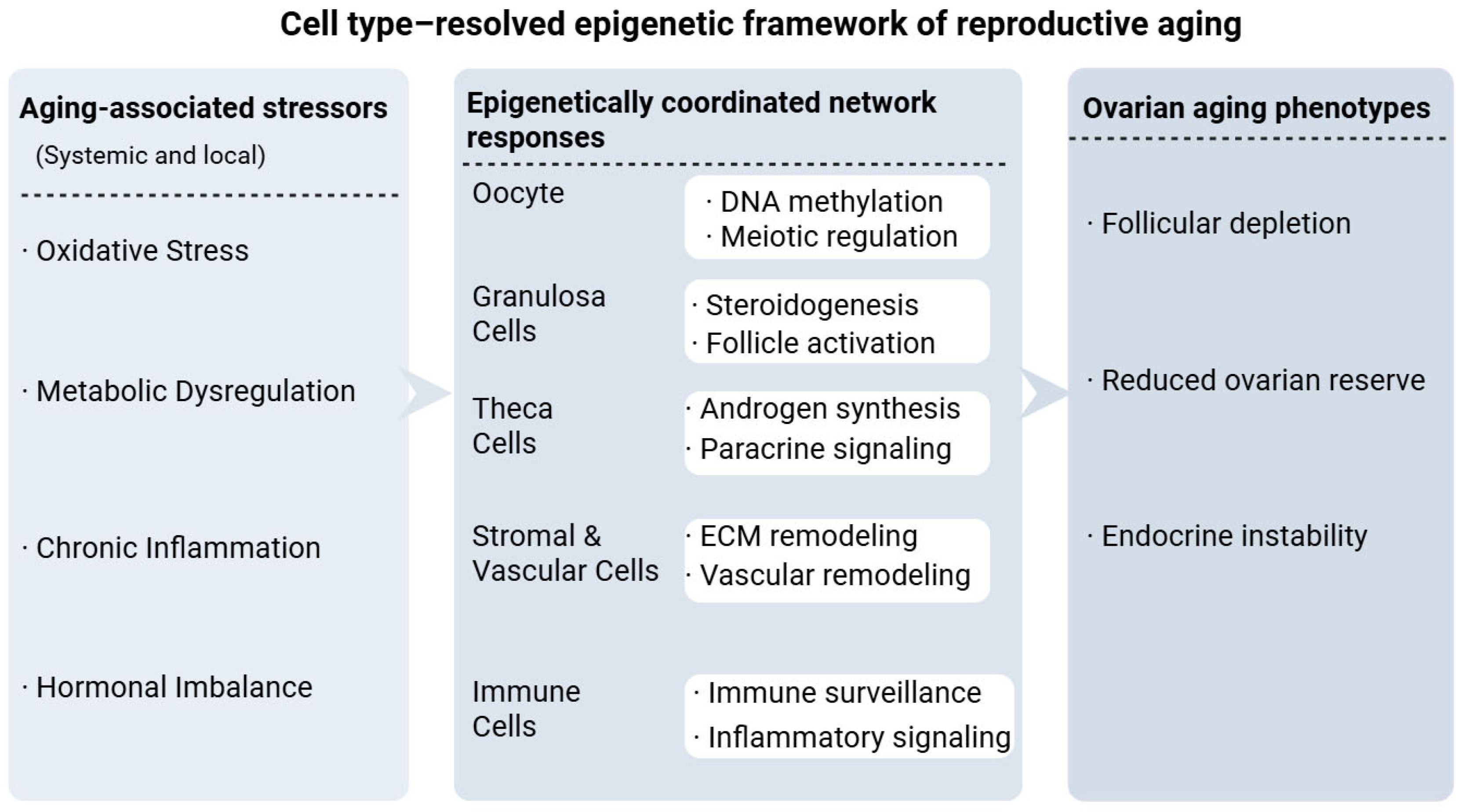
Reproductive aging is marked by a gradual decline in ovarian reserve and oocyte quality, ultimately leading to reduced fertility. While hormonal changes have long been recognized, increasing evidence suggests that epigenetic regulation—particularly DNA methylation—may play an important integrative role in this process. Rather than reflecting isolated gene-specific changes, age-associated methylation alterations appear to involve the broader remodeling of interconnected signaling pathways that regulate follicle activation, metabolic balance, and genome stability. This review proposes that progressive imbalance between DNA methyltransferases (DNMTs) and TET demethylases may contribute to distributed regulatory instability across ovarian cell types. We summarize current evidence linking stress-related signaling to methylation remodeling and discuss the emerging potential of methylation-based biomarkers for assessing ovarian aging. At the same time, we highlight the need for cell type-resolved and longitudinal studies to clarify causal relationships. Although the field has made rapid progress, many mechanistic links remain unresolved, underscoring the need for cautious interpretation.
Abstract
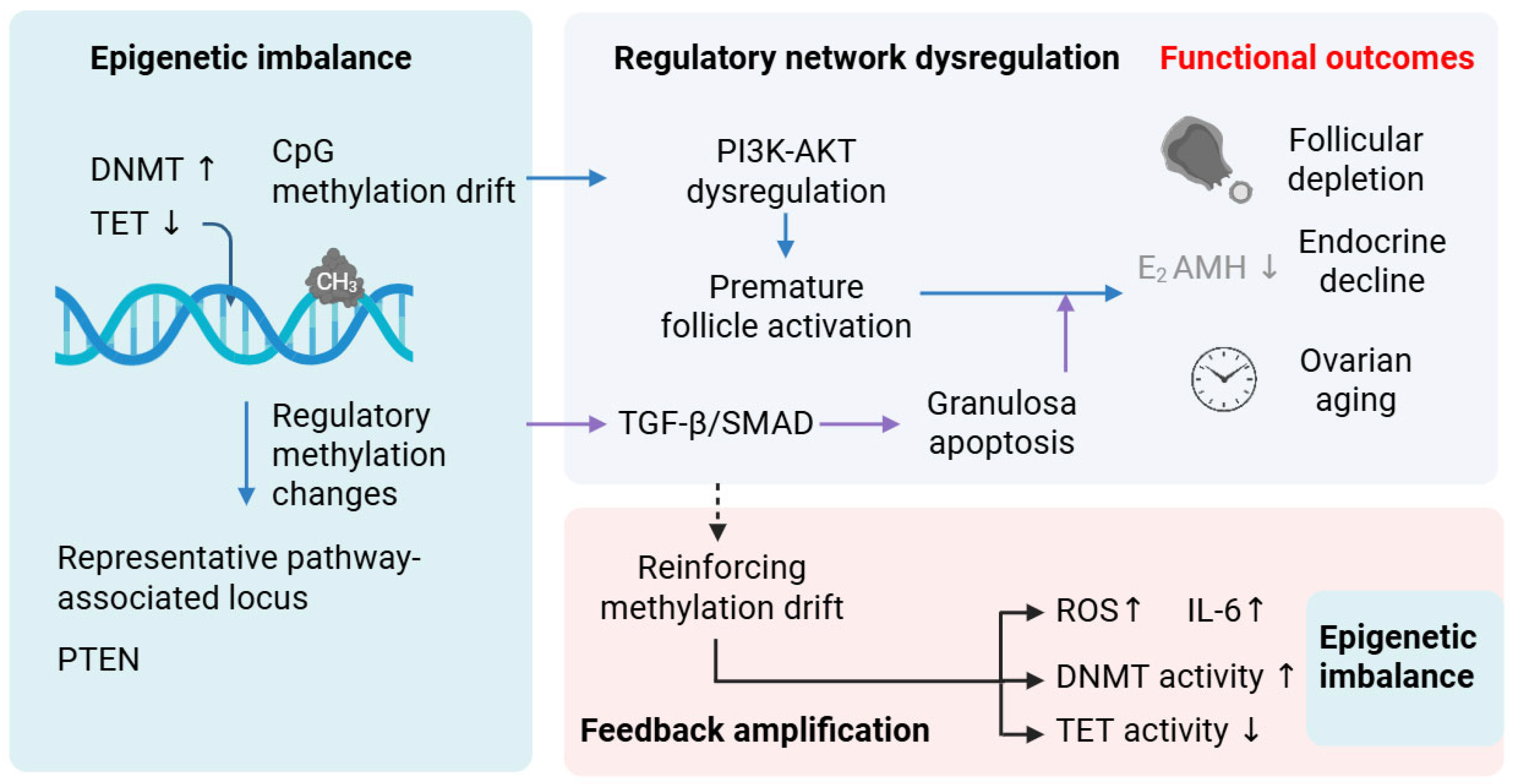
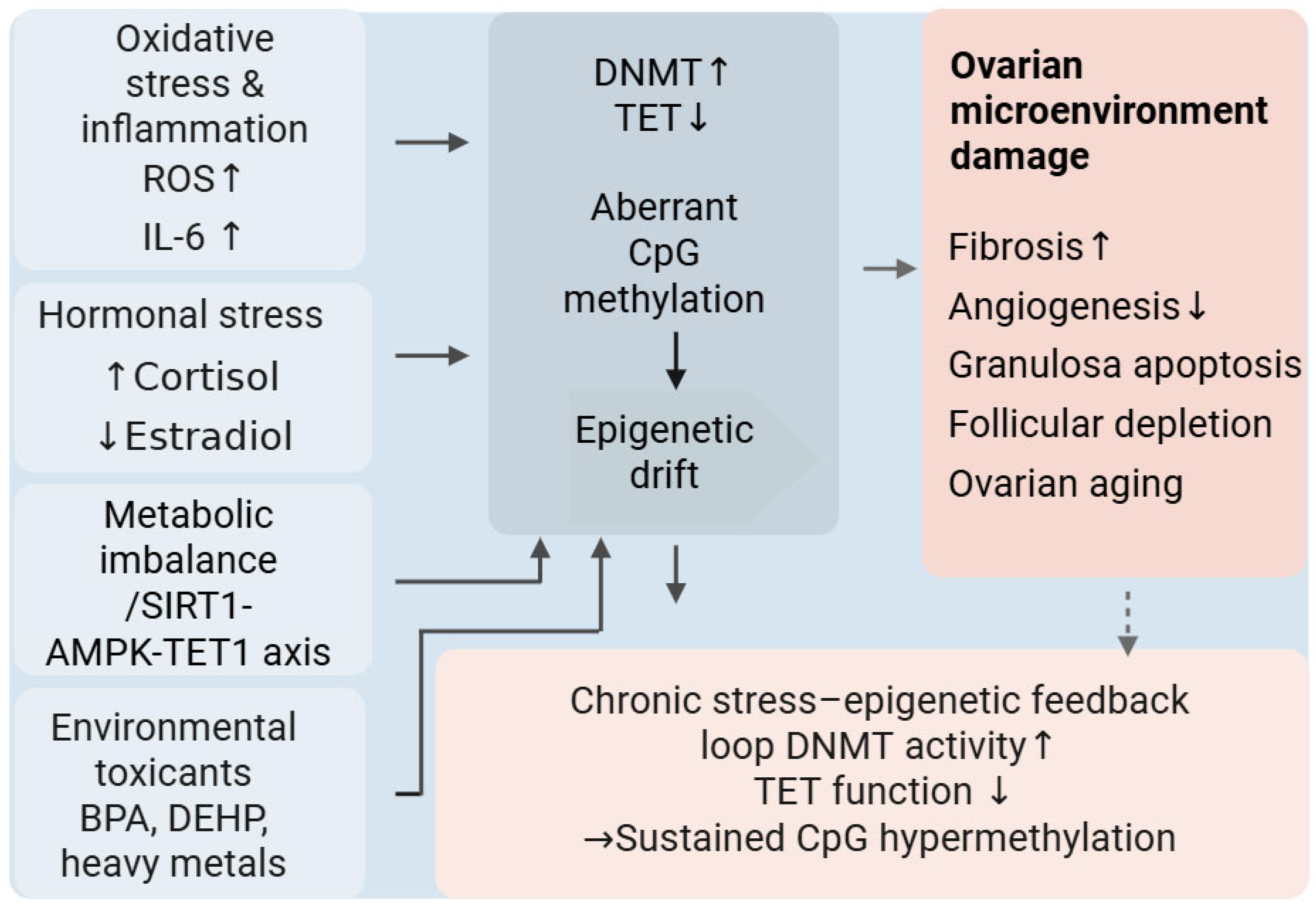
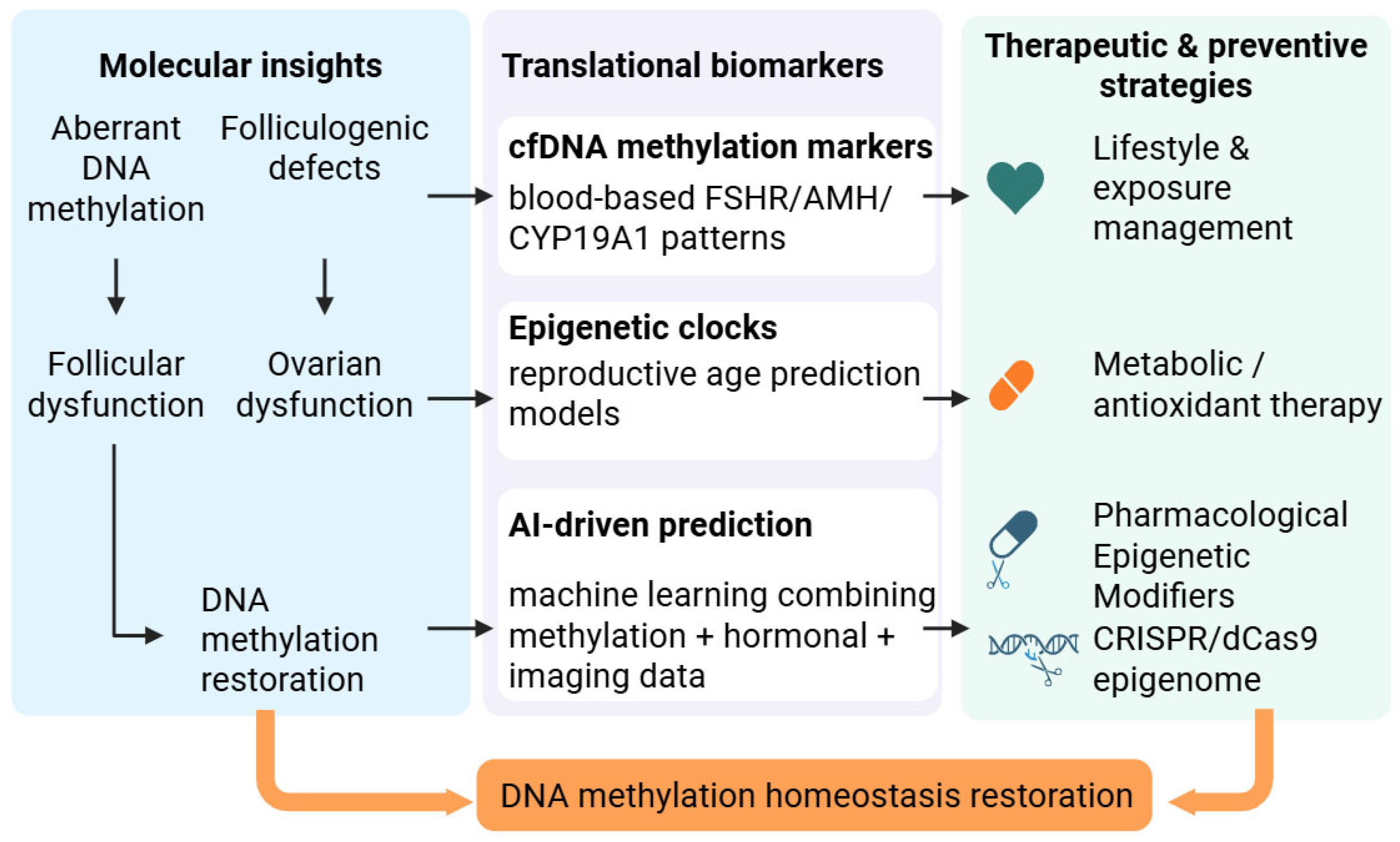
Reproductive aging is characterized by progressive decline in ovarian reserve, reduced oocyte competence, and impaired endocrine coordination. Although these phenotypic changes are well documented, the molecular mechanisms that integrate aging-associated stress signals into coordinated ovarian dysfunction remain incompletely understood. Increasing evidence indicates that DNA methylation remodeling is closely associated with ovarian aging. Rather than representing isolated promoter-specific events, age-related methylation alterations may reflect progressive imbalance between DNA methyltransferases (DNMTs) and TET-mediated demethylation. Stress-responsive DNMT/TET dysregulation has been linked to distributed epigenetic remodeling across regulatory elements governing PI3K–AKT, TGF-β/SMAD, metabolic, and DNA damage response pathways in ovarian cell populations. We propose a network-level framework in which methylation drift preferentially affects highly connected regulatory hubs, potentially reducing transcriptional robustness and intercellular coordination within the follicular microenvironment. However, current human data remain largely correlative, and functional validation is required to determine whether methylation remodeling acts as a driver, amplifier, or biomarker of ovarian aging. Finally, we discuss translational implications, including circulating cell-free DNA signatures and epigenetic clock models, while emphasizing the importance of cell type-resolved and longitudinal studies. Collectively, the available evidence supports a model in which progressive DNMT/TET imbalance is associated with distributed pathway-level regulatory instability during ovarian aging.