Laryngeal Transcriptomic Insights into Echolocation Call Frequency Divergence in Closely Related Rhinolophus Species

 and
and
Simple Summary
Abstract
1. Introduction
2. Materials and Methods
2.1. Field Sampling and Phenotypic Analysis
2.2. Tissue Collection and RNA Extraction
2.3. Library Preparation and Sequencing
2.4. Data Quality Control and Quantification
2.5. Differential Expression and Enrichment Analysis
2.6. Weighted Gene Co-Expression Network Analysis
2.7. Protein–Protein Interaction Network and Evolutionary Analysis
3. Results
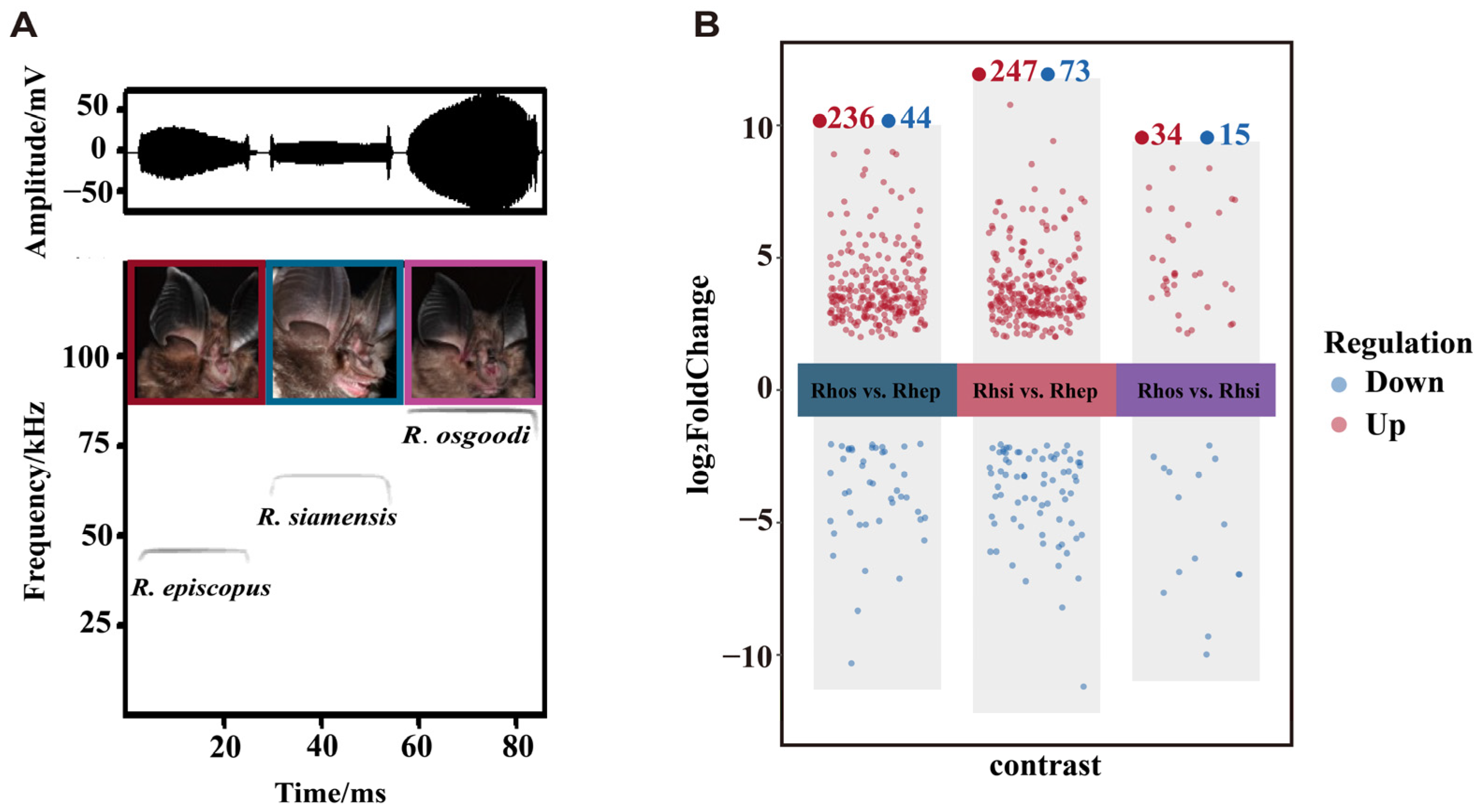
3.1. Phenotypic Variation and Transcriptomic Data
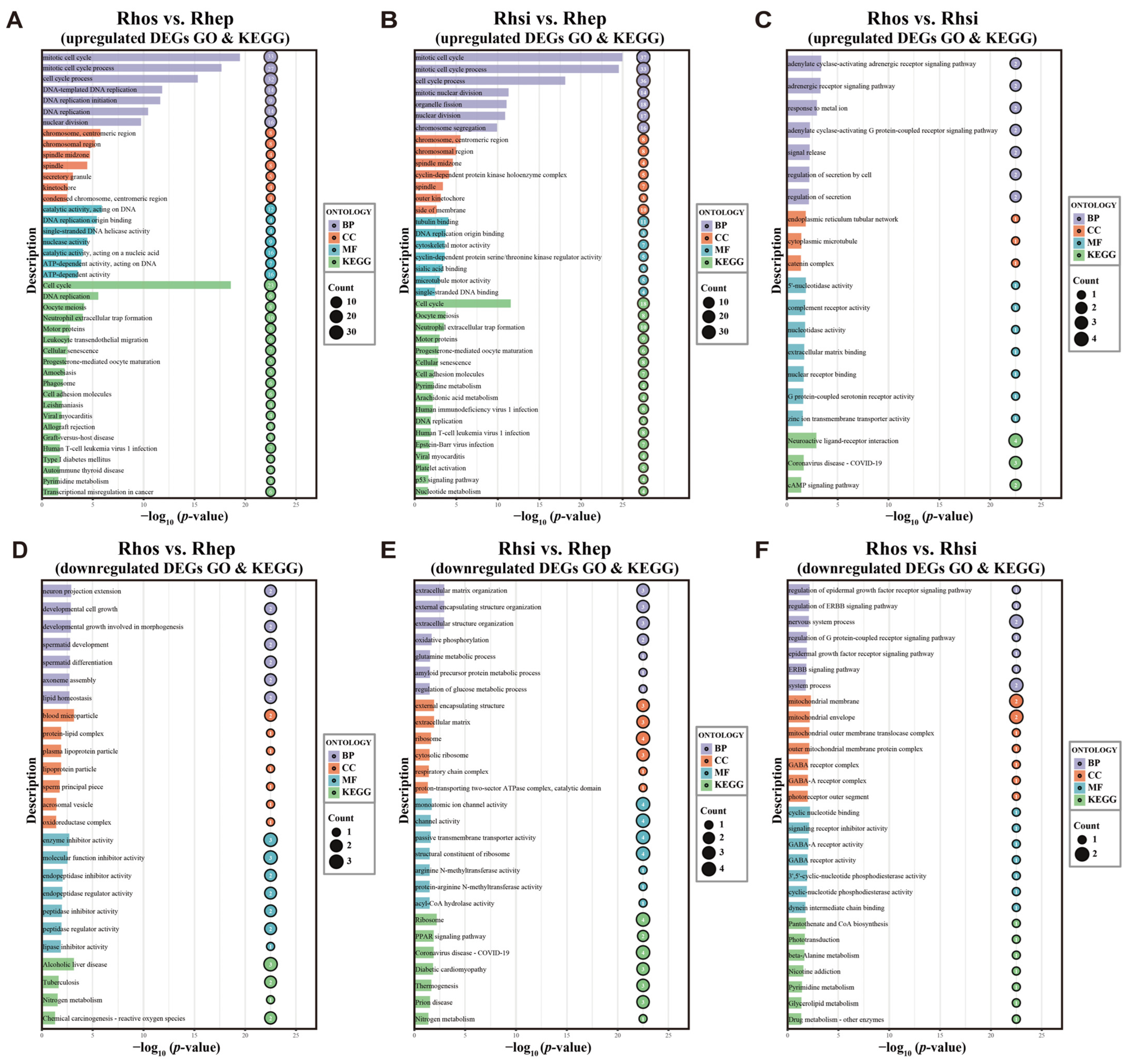
3.2. Identification of Differentially Expressed Genes and Functional Enrichment
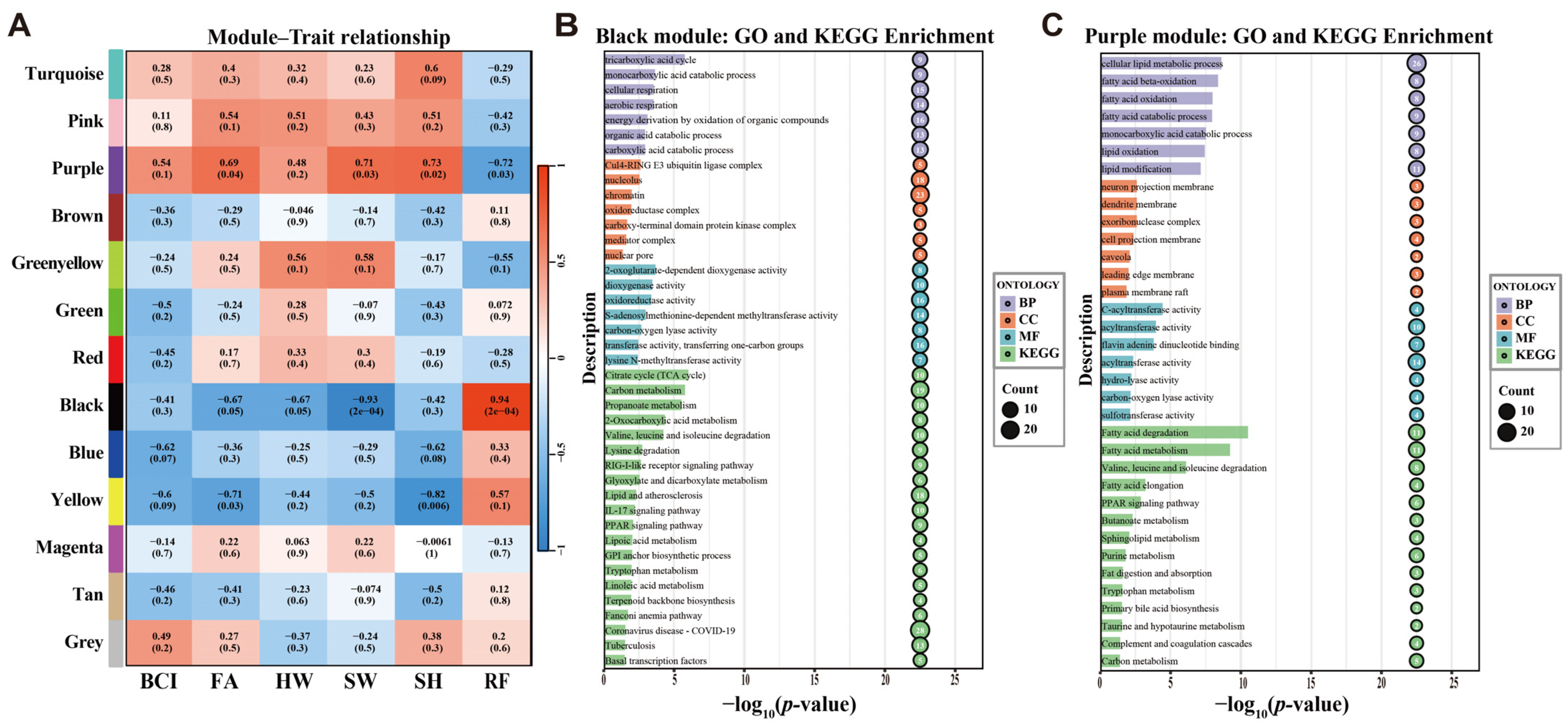
3.3. Co-Expression Modules Correlated with Echolocation Frequency
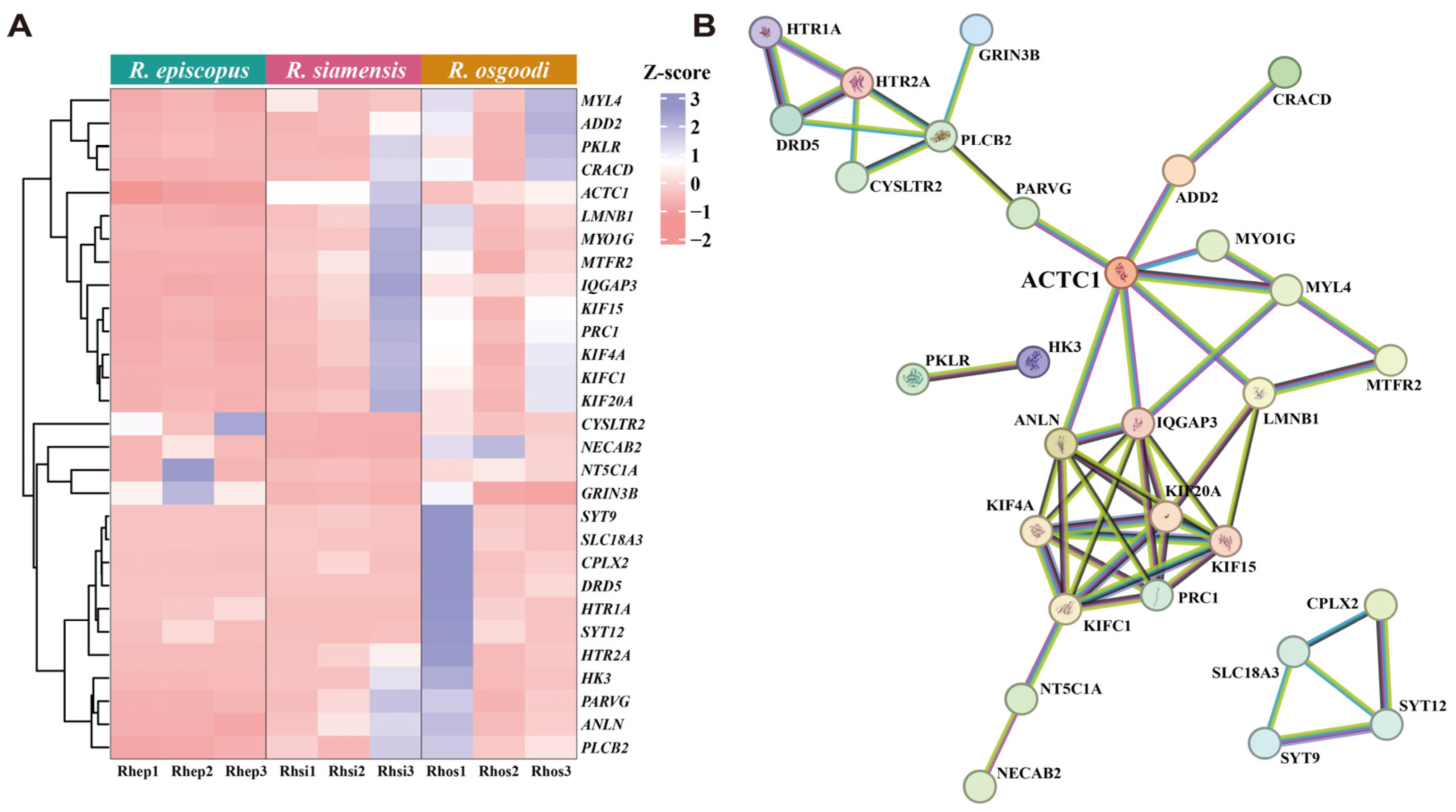
3.4. Identification and Evolutionary Conservation of the Hub Gene ACTC1
4. Discussion
4.1. Transcriptional Signatures of Laryngeal Contractile and Structural Adaptations
4.2. Energy Metabolism Trade-Offs Across Echolocation Frequencies
4.3. Regulatory Role and Evolutionary Constraints of ACTC1
4.4. Limitations and Future Directions
5. Conclusions
Supplementary Materials
Author Contributions
Funding
Institutional Review Board Statement
Informed Consent Statement
Data Availability Statement
Acknowledgments
Conflicts of Interest
References
- Chen, Z.; Wiens, J.J. The origins of acoustic communication in vertebrates. Nat. Commun. 2020, 11, 369. [Google Scholar] [CrossRef] [Scilit]
- Wilkins, M.R.; Seddon, N.; Safran, R.J. Evolutionary divergence in acoustic signals: Causes and consequences. Trends Ecol. Evol. 2013, 28, 156–166. [Google Scholar] [CrossRef] [Scilit] [PubMed]
- Buck, E.J.; Brown, T.; Zwicky, G.; Derryberry, E.P.; Lipshutz, S.E. Species and sex differences in vocalizations between sex-role reversed shorebirds, Northern Jacana (Jacana spinosa) and Wattled Jacana (J. jacana). Wilson J. Ornithol. 2020, 132, 343–351. [Google Scholar] [CrossRef] [Scilit]
- Pitchers, W.R.; Klingenberg, C.P.; Tregenza, T.; Hunt, J.; Dworkin, I. The potential influence of morphology on the evolutionary divergence of an acoustic signal. J. Evol. Biol. 2014, 27, 2163–2176. [Google Scholar] [CrossRef] [Scilit]
- James, L.S.; Ryan, M.J. Time and place affect the acoustic structure of frog advertisement calls. Curr. Zool. 2025, 71, 196–204. [Google Scholar] [CrossRef] [Scilit]
- Slabbekoorn, H.; Smith, T.B. Bird song, ecology and speciation. Philos. Trans. R. Soc. Lond. Philos. Trans. R. Soc. B 2002, 357, 493–503. [Google Scholar] [CrossRef] [Scilit] [PubMed]
- Braune, P.; Schmidt, S.; Zimmermann, E. Acoustic divergence in the communication of cryptic species of nocturnal primates (Microcebus ssp.). BMC Biol. 2008, 6, 19. [Google Scholar] [CrossRef] [Scilit] [PubMed]
- Teeling, E.C.; Vernes, S.C.; Dávalos, L.M.; Ray, D.A.; Gilbert, M.T.P.; Myers, E.; Consortium, B.K. Bat biology, genomes, and the Bat1K project: To generate chromosome-level genomes for all living bat species. Annu. Rev. Anim. Biosci. 2018, 6, 23–46. [Google Scholar] [CrossRef] [Scilit]
- Rayner, J.M. The evolution of vertebrate flight. Biol. J. Linn. Soc. 1988, 34, 269–287. [Google Scholar] [CrossRef] [Scilit]
- Griffin, D.R. Echolocation by blind men, bats and radar. Science 1944, 100, 589–590. [Google Scholar] [CrossRef] [Scilit]
- Thomas, J.A.; Moss, C.F.; Vater, M. Echolocation in Bats and Dolphins; University of Chicago Press: Chicago, IL, USA, 2004. [Google Scholar]
- Voigt-Heucke, S.L.; Taborsky, M.; Dechmann, D.K. A dual function of echolocation: Bats use echolocation calls to identify familiar and unfamiliar individuals. Anim. Behav. 2010, 80, 59–67. [Google Scholar] [CrossRef] [Scilit]
- Jones, G.; Siemers, B.M. The communicative potential of bat echolocation pulses. J. Comp. Physiol. A 2011, 197, 447–457. [Google Scholar] [CrossRef] [Scilit]
- Fenton, M.B. Echolocation: Implications for ecology and evolution of bats. Q. Rev. Biol. 1984, 59, 33–53. [Google Scholar] [CrossRef] [Scilit]
- Luo, B.; Leiser-Miller, L.; Santana, S.E.; Zhang, L.; Liu, T.; Xiao, Y.; Liu, Y.; Feng, J. Echolocation call divergence in bats: A comparative analysis. Behav. Ecol. Sociobiol. 2019, 73, 154. [Google Scholar] [CrossRef] [Scilit]
- Jones, G.; Holderied, M.W. Bat echolocation calls: Adaptation and convergent evolution. Proc. R. Soc. B 2007, 274, 905–912. [Google Scholar] [CrossRef] [Scilit]
- Russo, D.; Mucedda, M.; Bello, M.; Biscardi, S.; Pidinchedda, E.; Jones, G. Divergent echolocation call frequencies in insular rhinolophids (Chiroptera): A case of character displacement? J. Biogeogr. 2007, 34, 2129–2138. [Google Scholar] [CrossRef] [Scilit]
- Brualla, N.L.; Wilson, L.A.; Doube, M.; Carter, R.T.; McElligott, A.G.; Koyabu, D. The vocal apparatus: An understudied tool to reconstruct the evolutionary history of echolocation in bats? J. Mammal. Evol. 2023, 30, 79–94. [Google Scholar] [CrossRef] [Scilit]
- Teeling, E.C. Hear, hear: The convergent evolution of echolocation in bats? Trends Ecol. Evol. 2009, 24, 351–354. [Google Scholar] [CrossRef] [Scilit] [PubMed]
- Baron, G.; Stephan, H.; Frahm, H.D. Comparative Neurobiology in Chiroptera: Brain Characteristics in Functional Systems, Ecoethological Adaptation, Adaptive Radiation, and Evolution; Birkhäuser Verlag: Basel, Switzerland, 1996; Volume 3. [Google Scholar]
- Hutcheon, J.M.; Kirsch, J.A.; Garland, T., Jr. A comparative analysis of brain size in relation to foraging ecology and phylogeny in the Chiroptera. Brain Behav. Evol. 2002, 60, 165–180. [Google Scholar] [CrossRef] [Scilit]
- Davies, K.T.; Maryanto, I.; Rossiter, S.J. Evolutionary origins of ultrasonic hearing and laryngeal echolocation in bats inferred from morphological analyses of the inner ear. Front. Zool. 2013, 10, 2. [Google Scholar] [CrossRef] [Scilit]
- Wang, Z.; Zhu, T.; Xue, H.; Fang, N.; Zhang, J.; Zhang, L.; Pang, J.; Teeling, E.C.; Zhang, S. Prenatal development supports a single origin of laryngeal echolocation in bats. Nat. Ecol. Evol. 2017, 1, 0021. [Google Scholar] [CrossRef] [Scilit]
- Nojiri, T.; Fukui, D.; Werneburg, I.; Saitoh, T.; Endo, H.; Koyabu, D. Embryonic staging of bats with special reference to Vespertilio sinensis and its cochlear development. Dev. Dyn. 2021, 250, 1140–1159. [Google Scholar] [CrossRef] [Scilit]
- Sulser, R.B.; Patterson, B.D.; Urban, D.J.; Neander, A.I.; Luo, Z.-X. Evolution of inner ear neuroanatomy of bats and implications for echolocation. Nature 2022, 602, 449–454. [Google Scholar] [CrossRef] [Scilit]
- Elemans, C.P.; Mead, A.F.; Jakobsen, L.; Ratcliffe, J.M. Superfast muscles set maximum call rate in echolocating bats. Science 2011, 333, 1885–1888. [Google Scholar] [CrossRef] [Scilit] [PubMed]
- Reger, J.F. A comparative study on the fine structure of tongue and cricothyroid muscle of the bat, Myotis grisescens, as revealed by thin section and freeze-fracture techniques. J. Ultrastruct. Res. 1978, 63, 275–286. [Google Scholar] [CrossRef] [Scilit]
- Revel, J. The sarcoplasmic reticulum of the bat cricothyroid muscle. J. Cell Biol. 1962, 12, 571–588. [Google Scholar] [CrossRef] [Scilit]
- Lee, J.-H.; Lewis, K.M.; Moural, T.W.; Kirilenko, B.; Borgonovo, B.; Prange, G.; Koessl, M.; Huggenberger, S.; Kang, C.; Hiller, M. Molecular parallelism in fast-twitch muscle proteins in echolocating mammals. Sci. Adv. 2018, 4, eaat9660. [Google Scholar] [CrossRef] [Scilit]
- Yang, S.; Zhang, H.; Xie, J.; Mao, X. Phylogenomics Resolves Deep Phylogenetic Uncertainties and Hybridization in Rapidly Radiated Horseshoe Bats (Rhinolophus). Mol. Ecol. 2025, 34, e70184. [Google Scholar] [CrossRef] [Scilit]
- Stoffberg, S.; Jacobs, D.S.; Matthee, C.A. The divergence of echolocation frequency in horseshoe bats: Moth hearing, body size or habitat? J. Mammal. Evol. 2011, 18, 117–129. [Google Scholar] [CrossRef] [Scilit]
- Russo, D.; Jones, G.; Mucedda, M. Influence of age, sex and body size on echolocation calls of Mediterranean and Mehely’s horseshoe bats, Rhinolophus euryale and R. mehelyi (Chiroptera: Rhinolophidae). Mammalia 2001, 65, 429–436. [Google Scholar] [CrossRef] [Scilit]
- Zhuang, Q.; Müller, R. Numerical study of the effect of the noseleaf on biosonar beamforming in a horseshoe bat. Phys. Rev. E 2007, 76, 051902. [Google Scholar] [CrossRef] [Scilit]
- Zhuang, Q.; Müller, R. Noseleaf furrows in a horseshoe bat act as resonance cavities shaping the biosonar beam. Phys. Rev. Lett. 2006, 97, 218701. [Google Scholar] [CrossRef] [Scilit]
- Wu, H.; Jiang, T.L.; Müller, R.; Feng, J. The allometry of echolocation call frequencies in horseshoe bats: Nasal capsule and pinna size are the better predictors than forearm length. J. Zool. 2015, 297, 211–219. [Google Scholar] [CrossRef] [Scilit]
- Schnitzler, H.-U.; Denzinger, A. Auditory fovea and Doppler shift compensation: Adaptations for flutter detection in echolocating bats using CF-FM signals. J. Comp. Physiol. A 2011, 197, 541–559. [Google Scholar] [CrossRef] [Scilit] [PubMed]
- Pavey, C.R. Comparative echolocation and foraging ecology of horseshoe bats (Rhinolophidae) and Old World leaf-nosed bats (Hipposideridae) 1. Aust. J. Zool. 2021, 68, 382–392. [Google Scholar] [CrossRef] [Scilit]
- Schuchmann, M.; Siemers, B.M. Variability in echolocation call intensity in a community of horseshoe bats: A role for resource partitioning or communication? PLoS ONE 2010, 5, e12842. [Google Scholar] [CrossRef] [Scilit]
- Hinchcliffe, R.; Harrison, D.F.N. Scientific Foundations of Otolaryngology; William Heinemann Medical Books Ltd.: London, UK, 1976; p. 562. [Google Scholar]
- Säugetier-Kehlkopfes, B. Zur Anatomie des Kehlkopfes der Mikrochiropteren. Gegenb. Morphol. Jahrb. 1908, 37, 70. [Google Scholar]
- Griffiths, T.; Smith, A. Systematics of emballonuroid bats (Chiroptera, Emballonuridae and Rhinopomatidae), based on hyoid morphology. Bull. Am. Mus. Nat. Hist. 1991, 39, 62–83. [Google Scholar]
- Harrison, D.F.N. The Anatomy and Physiology of the Mammalian Larynx; Cambridge University Press: Cambridge, UK, 1995. [Google Scholar]
- Brualla, N.L.; Wilson, L.A.; Tu, V.T.; Nojiri, T.; Carter, R.T.; Ngamprasertwong, T.; Wannaprasert, T.; Doube, M.; Fukui, D.; Koyabu, D. Comparative anatomy of the vocal apparatus in bats and implications for the diversity of laryngeal echolocation. Zool. J. Linn. Soc. 2024, 202, zlad180. [Google Scholar] [CrossRef] [Scilit]
- R Core Team. R Language Definition; R Foundation for Statistical Computing: Vienna, Austria, 2000; Volume 3, p. 116. [Google Scholar]
- Yohe, L.R.; Devanna, P.; Davies, K.T.; Potter, J.H.; Rossiter, S.J.; Teeling, E.C.; Vernes, S.C.; Dávalos, L.M. Tissue collection of bats for-omics analyses and primary cell culture. J. Vis. Exp. 2019, 152, e59505. [Google Scholar]
- Mullineaux, E.; Keeble, E. BSAVA Manual of Wildlife Casualties; British Small Animal Veterinary Association: Gloucester, UK, 2016. [Google Scholar]
- Brown, J.; Pirrung, M.; McCue, L.A. FQC Dashboard: Integrates FastQC results into a web-based, interactive, and extensible FASTQ quality control tool. Bioinformatics 2017, 33, 3137–3139. [Google Scholar] [CrossRef] [Scilit] [PubMed]
- Bolger, A.M.; Lohse, M.; Usadel, B. Trimmomatic: A flexible trimmer for Illumina sequence data. Bioinformatics 2014, 30, 2114–2120. [Google Scholar] [CrossRef] [Scilit]
- Patro, R.; Duggal, G.; Love, M.I.; Irizarry, R.A.; Kingsford, C. Salmon provides fast and bias-aware quantification of transcript expression. Nat. Methods 2017, 14, 417–419. [Google Scholar] [CrossRef] [Scilit]
- Soneson, C.; Love, M.I.; Robinson, M.D. Differential analyses for RNA-seq: Transcript-level estimates improve gene-level inferences. F1000Research 2016, 4, 1521. [Google Scholar] [CrossRef] [Scilit] [PubMed]
- Lê, S.; Josse, J.; Husson, F. FactoMineR: An R package for multivariate analysis. J. Stat. Softw. 2008, 25, 1–18. [Google Scholar] [CrossRef] [Scilit]
- Beck, M.W. Ggord: Ordination Plots with ggplot2; R Package Version; R Foundation for Statistical Computing: Vienna, Austria, 2017; Volume 1, p. 595. [Google Scholar]
- Kassambara, A. Rstatix: Pipe-Friendly Framework for Basic Statistical Tests. CRAN: Contributed Packages. 2019. Available online: https://cran.r-project.org/web/packages/rstatix/index.html (accessed on 17 March 2026).
- Kolde, R.; Kolde, M.R. Package ‘pheatmap’; R Package; R Foundation for Statistical Computing: Vienna, Austria, 2015; Volume 1, p. 790. [Google Scholar]
- Love, M.I.; Huber, W.; Anders, S. Moderated estimation of fold change and dispersion for RNA-seq data with DESeq2. Genome Biol. 2014, 15, 550. [Google Scholar] [CrossRef] [Scilit]
- Wickham, H.; Averick, M.; Bryan, J.; Chang, W.; McGowan, L.D.A.; François, R.; Grolemund, G.; Hayes, A.; Henry, L.; Hester, J. Welcome to the Tidyverse. J. Open Source Softw. 2019, 4, 1686. [Google Scholar] [CrossRef] [Scilit]
- Hadley Wickham, R.F.; Henry, L.; Müller, K.; Vaughan, D. dplyr: A Grammar of Data Manipulation; The R Foundation: Vienna, Austria, 2014. [Google Scholar]
- Wickham, H. Data analysis. In ggplot2: Elegant Graphics for Data Analysis; Springer: Cham, Switzerland, 2016; pp. 189–201. [Google Scholar]
- Botstein, D.; Cherry, J.M.; Ashburner, M.; Ball, C.A.; Blake, J.A.; Butler, H.; Davis, A.P.; Dolinski, K.; Dwight, S.S.; Eppig, J.T. Gene Ontology: Tool for the unification of biology. Nat. Genet. 2000, 25, 25–29. [Google Scholar] [CrossRef] [Scilit]
- Kanehisa, M.; Goto, S. KEGG: Kyoto encyclopedia of genes and genomes. Nucleic Acids Res. 2000, 28, 27–30. [Google Scholar] [CrossRef] [Scilit] [PubMed]
- Yu, G. clusterProfiler: An universal enrichment tool for functional and comparative study. bioRxiv 2018, 256784. [Google Scholar] [CrossRef] [Scilit]
- Elizarraras, J.M.; Liao, Y.; Shi, Z.; Zhu, Q.; Pico, A.R.; Zhang, B. WebGestalt 2024: Faster gene set analysis and new support for metabolomics and multi-omics. Nucleic Acids Res. 2024, 52, W415–W421. [Google Scholar] [CrossRef] [Scilit]
- Langfelder, P.; Horvath, S. WGCNA: An R package for weighted correlation network analysis. BMC Bioinform. 2008, 9, 559. [Google Scholar] [CrossRef] [Scilit]
- Teeling, E.C.; Springer, M.S.; Madsen, O.; Bates, P.; O’brien, S.J.; Murphy, W.J. A molecular phylogeny for bats illuminates biogeography and the fossil record. Science 2005, 307, 580–584. [Google Scholar] [CrossRef] [Scilit]
- Murphy, W.J.; Eizirik, E.; Johnson, W.E.; Zhang, Y.P.; Ryder, O.A.; O’Brien, S.J. Molecular phylogenetics and the origins of placental mammals. Nature 2001, 409, 614–618. [Google Scholar] [CrossRef] [Scilit]
- Tamura, K.; Stecher, G.; Kumar, S. MEGA11: Molecular evolutionary genetics analysis version 11. Mol. Biol. Evol. 2021, 38, 3022–3027. [Google Scholar] [CrossRef] [Scilit]
- Yang, Z. PAML 4: Phylogenetic analysis by maximum likelihood. Mol. Biol. Evol. 2007, 24, 1586–1591. [Google Scholar] [CrossRef] [Scilit] [PubMed]
- Jacobs, D.S.; Barclay, R.M.; Walker, M.H. The allometry of echolocation call frequencies of insectivorous bats: Why do some species deviate from the pattern? Oecologia 2007, 152, 583–594. [Google Scholar] [CrossRef] [Scilit] [PubMed]
- Sweeney, H.L.; Holzbaur, E.L. Motor proteins. Cold Spring Harb. Perspect. Biol. 2018, 10, a021931. [Google Scholar] [CrossRef] [Scilit] [PubMed]
- Mead, A.F.; Osinalde, N.; Ørtenblad, N.; Nielsen, J.; Brewer, J.; Vellema, M.; Adam, I.; Scharff, C.; Song, Y.; Frandsen, U. Fundamental constraints in synchronous muscle limit superfast motor control in vertebrates. eLife 2017, 6, e29425. [Google Scholar] [CrossRef] [Scilit]
- Rome, L.C.; Syme, D.A.; Hollingworth, S.; Lindstedt, S.L.; Baylor, S.M. The whistle and the rattle: The design of sound producing muscles. Proc. Natl. Acad. Sci. USA 1996, 93, 8095–8100. [Google Scholar] [CrossRef] [Scilit]
- Taylor, L.; Wankell, M.; Saxena, P.; McFarlane, C.; Hebbard, L. Cell adhesion an important determinant of myogenesis and satellite cell activity. Biochim. Biophys. Acta Mol. Cell Res. 2022, 1869, 119170. [Google Scholar] [CrossRef] [Scilit]
- Edelman, G.M. Cell adhesion molecules. Science 1983, 219, 450–457. [Google Scholar] [CrossRef] [Scilit] [PubMed]
- Costa, M.L. Cytoskeleton and adhesion in myogenesis. Int. Sch. Res. Not. 2014, 2014, 713631. [Google Scholar] [CrossRef] [Scilit]
- Hargreaves, M.; Spriet, L.L. Skeletal muscle energy metabolism during exercise. Nat. Metab. 2020, 2, 817–828. [Google Scholar] [CrossRef] [Scilit] [PubMed]
- Rigoulet, M. Cellular energy metabolism and integrated oxidative phosphorylation. In Molecular System Bioenergetics: Energy for Life; Saks, V., Ed.; Wiley-VCH: Weinheim, Germany, 2007; Volume 11. [Google Scholar]
- Roberts, T.J.; Weber, J.-M.; Hoppeler, H.; Weibel, E.R.; Taylor, C.R. Design of the oxygen and substrate pathways: II. Defining the upper limits of carbohydrate and fat oxidation. J. Exp. Biol. 1996, 199, 1651–1658. [Google Scholar] [CrossRef] [Scilit]
- Spriet, L.L.; Watt, M.J. Regulatory mechanisms in the interaction between carbohydrate and lipid oxidation during exercise. Acta Physiol. Scand. 2003, 178, 443–452. [Google Scholar] [CrossRef] [Scilit] [PubMed]
- Shen, Y.-Y.; Liang, L.; Zhu, Z.-H.; Zhou, W.-P.; Irwin, D.M.; Zhang, Y.-P. Adaptive evolution of energy metabolism genes and the origin of flight in bats. Proc. Natl. Acad. Sci. USA 2010, 107, 8666–8671. [Google Scholar] [CrossRef] [Scilit] [PubMed]
- Currie, S.E.; Boonman, A.; Troxell, S.; Yovel, Y.; Voigt, C.C. Echolocation at high intensity imposes metabolic costs on flying bats. Nat. Ecol. Evol. 2020, 4, 1174–1177. [Google Scholar] [CrossRef] [Scilit]
- Voigt, C.; Speakman, J. Nectar-feeding bats fuel their high metabolism directly with exogenous carbohydrates. Funct. Ecol. 2007, 21, 913–921. [Google Scholar] [CrossRef] [Scilit]
- Voigt, C.C.; Sörgel, K.; Dechmann, D.K. Refueling while flying: Foraging bats combust food rapidly and directly to power flight. Ecology 2010, 91, 2908–2917. [Google Scholar] [CrossRef]
- Acosta-Luzuriaga, E.D.; Medina-Bello, K.I.; Ayala-Berdon, J. Linking energy metabolism and echolocation: The relationship between basal metabolic rate and peak frequency in bats. Bioacoustics 2026, 35, 203–219. [Google Scholar] [CrossRef] [Scilit]
- Frank, D.; Rangrez, A.Y.; Friedrich, C.; Dittmann, S.; Stallmeyer, B.; Yadav, P.; Bernt, A.; Schulze-Bahr, E.; Borlepawar, A.; Zimmermann, W.-H. A cardiac α-Actin (Actc1) gene mutation causes atrial-septal defects associated with dilated cardiomyopathy. J. Am. Coll. Cardiol. 2019, 73, 963. [Google Scholar] [CrossRef] [Scilit]
- Ilkovski, B.; Clement, S.; Sewry, C.; North, K.N.; Cooper, S.T. Defining α-skeletal and α-cardiac actin expression in human heart and skeletal muscle explains the absence of cardiac involvement in ACTA1 nemaline myopathy. Neuromuscul. Disord. 2005, 15, 829–835. [Google Scholar] [CrossRef] [Scilit]
- Chong, J.X.; Childers, M.C.; Marvin, C.T.; Marcello, A.J.; Gonorazky, H.; Hazrati, L.-N.; Dowling, J.J.; Al Amrani, F.; Alanay, Y.; Nieto, Y. Variants in ACTC1 underlie distal arthrogryposis accompanied by congenital heart defects. Hum. Genet. Genom. Adv. 2023, 4, 100213. [Google Scholar] [CrossRef] [Scilit] [PubMed]
- Li, A.; Su, X.; Tian, Y.; Song, G.; Zan, L.; Wang, H. Effect of actin alpha cardiac muscle 1 on the proliferation and differentiation of bovine myoblasts and preadipocytes. Animals 2021, 11, 3468. [Google Scholar] [CrossRef] [Scilit] [PubMed]
- Ampe, C.; Van Troys, M. Mammalian actins: Isoform-specific functions and diseases. In The Actin Cytoskeleton; Springer: Cham, Switzerland, 2016; pp. 1–37. [Google Scholar]
- King, M.-C.; Wilson, A.C. Evolution at two levels in humans and chimpanzees: Their macromolecules are so alike that regulatory mutations may account for their biological differences. Science 1975, 188, 107–116. [Google Scholar] [CrossRef] [Scilit]
- Carroll, S.B. Evolution at two levels: On genes and form. PLoS Biol. 2005, 3, e245. [Google Scholar] [CrossRef] [Scilit] [PubMed]
- Gaertner, K.; Michell, C.; Tapanainen, R.; Goffart, S.; Saari, S.; Soininmäki, M.; Dufour, E.; Pohjoismäki, J.L. Molecular phenotyping uncovers differences in basic housekeeping functions among closely related species of hares (Lepus spp., Lagomorpha: Leporidae). Mol. Ecol. 2023, 32, 4097–4117. [Google Scholar] [CrossRef] [Scilit]
- Baik, B.; Yoon, S.; Nam, D. Benchmarking RNA-seq differential expression analysis methods using spike-in and simulation data. PLoS ONE 2020, 15, e0232271. [Google Scholar] [CrossRef] [Scilit]
- Yan, J.; He, J.; Li, J.a.; Ren, S.; Wang, Y.; Zhou, J.; Tan, X. Analysis of Camellia oleifera transcriptome reveals key pathways and hub genes involved during different photoperiods. BMC Plant Biol. 2022, 22, 435. [Google Scholar] [CrossRef] [Scilit]
- Vijay, N.; Poelstra, J.W.; Künstner, A.; Wolf, J.B. Challenges and strategies in transcriptome assembly and differential gene expression quantification. A comprehensive in silico assessment of RNA-seq experiments. Mol. Ecol. 2013, 22, 620–634. [Google Scholar] [CrossRef] [Scilit]
- Hölzer, M.; Marz, M. De novo transcriptome assembly: A comprehensive cross-species comparison of short-read RNA-Seq assemblers. Gigascience 2019, 8, giz039. [Google Scholar] [CrossRef] [Scilit] [PubMed]
- Grabherr, M.G.; Haas, B.J.; Yassour, M.; Levin, J.Z.; Thompson, D.A.; Amit, I.; Adiconis, X.; Fan, L.; Raychowdhury, R.; Zeng, Q. Trinity: Reconstructing a full-length transcriptome without a genome from RNA-Seq data. Nat. Biotechnol. 2011, 29, 644. [Google Scholar] [CrossRef] [Scilit] [PubMed]

Disclaimer/Publisher’s Note: The statements, opinions and data contained in all publications are solely those of the individual author(s) and contributor(s) and not of MDPI and/or the editor(s). MDPI and/or the editor(s) disclaim responsibility for any injury to people or property resulting from any ideas, methods, instructions or products referred to in the content. |
© 2026 by the authors. Licensee MDPI, Basel, Switzerland. This article is an open access article distributed under the terms and conditions of the Creative Commons Attribution (CC BY) license.
Share and Cite
Miao, G.; Cong, J.; Lei, J.; Quan, S.; Li, J.; Li, Y.; Zhang, K.; Liu, T. Laryngeal Transcriptomic Insights into Echolocation Call Frequency Divergence in Closely Related Rhinolophus Species. Biology 2026, 15, 548. https://doi.org/10.3390/biology15070548
Miao G, Cong J, Lei J, Quan S, Li J, Li Y, Zhang K, Liu T. Laryngeal Transcriptomic Insights into Echolocation Call Frequency Divergence in Closely Related Rhinolophus Species. Biology. 2026; 15(7):548. https://doi.org/10.3390/biology15070548
Chicago/Turabian StyleMiao, Guiyin, Jinhua Cong, Jinhong Lei, Sirui Quan, Jiqian Li, Yannan Li, Kangkang Zhang, and Tong Liu. 2026. "Laryngeal Transcriptomic Insights into Echolocation Call Frequency Divergence in Closely Related Rhinolophus Species" Biology 15, no. 7: 548. https://doi.org/10.3390/biology15070548
APA StyleMiao, G., Cong, J., Lei, J., Quan, S., Li, J., Li, Y., Zhang, K., & Liu, T. (2026). Laryngeal Transcriptomic Insights into Echolocation Call Frequency Divergence in Closely Related Rhinolophus Species. Biology, 15(7), 548. https://doi.org/10.3390/biology15070548