


Simple Summary
Listeria monocytogenes is a foodborne bacterium that can cause serious and sometimes fatal infections. The host employs a defense mechanism called the inflammasome, which triggers inflammation when it detects harmful bacterial components helping to fight infection. However, an overactive inflammasome can release excessive interleukin-1β, causing tissue damage and worsening disease. Thus, while essential for controlling bacterial growth, it can also contribute to harm if not regulated. L. monocytogenes has evolved strategies to evade this immune response. Understanding how the bacteria and inflammasome interact is crucial for uncovering infection mechanisms and developing targeted therapies. This review explains inflammasome activation during Listeria infection, highlights its dual protective and damaging roles, and discusses potential therapies aimed at modulating inflammasome activity.
Abstract
Listeria monocytogenes (L. monocytogenes) is a significant zoonotic pathogen responsible for listeriosis, a foodborne infection with high mortality. The inflammasome, an innate immune complex, plays a critical role in controlling pathogenic infections through its rapid inflammatory output. During L. monocytogenes infection, pore-forming toxins such as listeriolysin-O and flagellin are quickly recognized by pattern recognition receptors (PRRs), triggering inflammatory responses and activating the host’s anti-infection immunity. However, excessive or chronic inflammasome activation and subsequent interleukin-1β (IL-1β) release are implicated in the pathogenesis of L. monocytogenes. Although inflammasome activation is an effective defense against L. monocytogenes, the bacterium has evolved multiple mechanisms to inhibit this immune pathway. Hence, research on inflammasomes activation is crucial for better understanding the pathogenic mechanism of L. monocytogenes. In this review, we highlight recent advances in the understanding of the molecular mechanisms of inflammasome activation by L. monocytogenes infection. We then discuss advances in the role of the inflammasome pathway in the pathogenesis of L. monocytogenes, along with an overview of the applications of inflammasome inhibitors. Extensive studies into the mechanisms by which L. monocytogenes activates the inflammasome could lead to the discovery of novel therapeutic targets and strategies to fight L. monocytogenes infections.
1. Introduction
L. monocytogenes is a Gram-positive facultative anaerobic pathogen with strong tolerance to external environmental conditions and is widely present in the environment [1], causing infection in humans and various animals. Under the influence of various virulence factors, L. monocytogenes can cross the intestinal barrier, placental barrier, and blood–brain barrier, which allows the bacteria to cause disorders such as sepsis, meningitis, and miscarriages in both humans and animals, with a mortality rate of up to 30% [2]. Epidemiological data indicate that the incidence of listeriosis varies markedly across regions, with the highest reported incidence observed in European countries. For example, a study from northern Spain reported an average annual incidence of 1.55 cases per 100,000 population for non-pregnancy-associated cases [3], whereas an estimated incidence of 0.77 cases per 100,000 population was reported for central Italy using a capture–recapture approach [4]. In Central European countries such as the Czech Republic, the reported incidence was 0.33 cases per 100,000 population, with regional variation reaching as high as 0.6 cases per 100,000 [5]. These figures are clearly higher than the EU average incidence, highlighting the substantial disease burden borne by European populations. However, the pathogenicity of L. monocytogenes remains unclear. Therefore, by clarifying the pathogenicity of monocytic proliferative Listeria, new adjuvant therapeutic techniques can be discovered to prevent and control listeriosis.
The inflammasome is an innate immune complex that plays a critical role in controlling pathogenic infections through rapid inflammatory responses. Its activation is essential for effective host immunity against both pathogens and sterile insults; however, excessive activation can be detrimental to the host [6]. To date, L. monocytogenes can activate a variety of inflammasomes via its pore-forming toxin listeriolysin-O, flagellin, or DNA released through bacteriolysis, which are recognized by a distinct pattern of recognition receptors (PRRs) including NOD-like receptors, RIG-I-like receptors, and AIM2-like receptors [7,8]. By self-oligomerization, these receptors create inflammasomes that mediate pyroptosis and release proinflammatory cytokines, including IL-1β and IL-18, which initiate a series of inflammatory immunological responses [9]. Hence, inflammasomes are essential to the process by which L. monocytogenes survives and multiplies within host cells after infection, leading to a strong immunological response and pathological consequences in the host. Thus, a better understanding of the relationship between L. monocytogenes and inflammasomes not only offers novel insights into the prevention of listeriosis but also promotes the sustainable growth of animal husbandry and protects the health of the public.
2. Overview of L. monocytogenes
L. monocytogenes is an intracellular pathogenic bacterium that invades macrophages and non-phagocytic cells, which infect humans and animals and causes listeriosis characterized by a high mortality rate (up to 30%). The ability to survive unfavorable conditions determines the ubiquitous nature of L. monocytogenes in the environment. High virulence and ubiquitous nature of L. monocytogenes may pose a relevant public health problem because of some genomic and pathogenicity islands.
2.1. Pathogenicity of L. monocytogenes
L. monocytogenes is a food-borne pathogen that can penetrate the intestinal barrier and spread into the bloodstream and lymphatic system, subsequently reaching the liver and spleen for replication. Animals infected with L. monocytogenes can have sepsis, encephalitis, meningitis, miscarriage, stillbirth, and gastroenteritis as their main symptoms (Figure 1) [10]. L. monocytogenes can cross the placental and blood–brain barriers in immunocompromised people, especially elderly and pregnant women, leading to neurological listeriosis and maternal–fetal listeriosis (Figure 1) [11]. Although the incidence of listeriosis is relatively low [12], the mortality rate is quite high [13], posing a significant threat to livestock production.
Figure 1.
The hazards of L. monocytogenes.
L. monocytogenes is a zoonotic pathogen, which can infect various animals and especially elderly and pregnant women. Hosts infected with L. monocytogenes can experience septicemia, gastroenteritis, myocarditis, encephalitis, miscarriage, and stillbirth, as it can cross the gastrointestinal mucosal, placental and blood–brain barriers.
2.2. Infectious Life Cycle of L. monocytogenes
L. monocytogenes is an intracellular parasite, and its pathogenicity is associated with various virulence genes. Bacteria are phagocytosed by epithelial cells to transmigrate across the mucosal barrier, where it enters the bloodstream and disseminates throughout the body. The nervous system and placenta are the most affected infection sites. The infection cycle of L. monocytogenes mainly consists of three stages, invasion and adhesion to host cells, intracellular proliferation within host cells, and intercellular dissemination, all of which require the involvement of specific factors [14]. The coordinated action of particular virulence factors, including listeriolysin O (LLO), internalins (InlA and InlB), actin assembly inducing protein (ActA), and phospholipases (PlcA and PlcB), is necessary for the successful completion of each stage [15]. One of the main virulence factors of L. monocytogenes is LLO, a pore-forming toxin that is encoded by the hly gene. It disrupts the phagocytic vacuole membrane, allowing bacteria to enter the cytoplasm and proliferate. This process is essential for lysis and escape from the phagosome [16]. InlA is essential for L. monocytogenes to pass through the intestinal epithelium and placental barrier [17], whereas InlB allows L. monocytogenes to evade immune monitoring and infect liver cells. ActA mediates actin polymerization-driven bacterial motility, promoting the spread of L. monocytogenes between cells and within host tissues [18]. PlcA facilitates the escape of the pathogen from the phagosome, whereas PlcB aids in the evasion of the host’s autophagic defences (Figure 2) [2,19].
Figure 2.
Intracellular life history of L. monocytogenes infection.
The innate immune system is activated first after L. monocytogenes infection. The host’s initial line of defence against pathogens is the innate immune response, which uses germline-encoded pattern recognition receptors to identify bacteria and viruses. A key function of the innate immune system is the activation of inflammasomes [20], which can mediate the activation of caspase-1, leading to the secretion of the proinflammatory cytokines IL-1β and IL-18 and initiating the process of “pyroptosis” [21]. Activation of the inflammasome induced by L. monocytogenes infection exacerbates the host’s pathological condition.
L. monocytogenes is engulfed by phagocytic cells or uptaken through binding E-cad and C-Met in non-phagocytic cells. It can transcytose across the cell within a vacuole in goblet cells or replicate in spacious Listeria-containing phagosomes (SLAPs) in some macrophages. Some bacteria escape from the vacuole by the action of virulence factor Listeriolysin O (LLO), phospholipase A (PlcA) and PlcB. Upon vacuolar escape, L. monocytogenes subsequently polymerizes actin and can spread from cell to cell. During infection, NLRs, AIM2 and RIG-1 inflammasomes are activated by L. monocytogenes PAMPs, which result in the production of IL-1β and IL-18 and mount an antibacterial response. NLRs, NOD-like Receptors, AIM2, Absent in melanoma 2, RIG-1, Retinoic acid-inducible gene-1, SLAP, spacious Listeria-containing phagosome, E-cad, E-cadherin, C-Met, hepatocyte growth factor receptor, PAMPs, pathogen-associated molecular patterns. (InlA: Internalin A; InlB: Internalin B; InlC: Internalin C; PlcA/PlcB: Phosphatidylinositol-specific phospholipase C; ActA: Actin assembly-inducing protein; E-cad: E-cadherin; c-Met: Hepatocyte growth factor receptor; SLAP: Spacious Listeria-containing vacuoles; LTA: Lipoteichoic acid; LLO: Listeriolysin O; NLRs: NOD-like receptors; IL-1β: Interleukin-1 beta; IL-18: Interleukin-18; AIM2: Absent in melanoma 2; RIG-1: Retinoic acid-inducible gene-1).
3. The Role and Function of Inflammation in Pathogen Infections
Inflammasomes play crucial roles in the innate immune response, forming multiprotein complexes in response to various physiological and pathogenic stimuli [22]. Typically, an inflammasome consists of three components: a sensor molecule, the adapter ASC, and the effector caspase-1 [23]. The N-terminus of the sensor molecule contains either a CARD domain or a PYD domain. ASC is composed of a PYD and a CARD, and caspase-1 also has a CARD [24]. Both PYD and CARD can cause oligomerization. The ASC protein promotes the binding of receptor proteins and adaptor proteins via CARD-CARD or PYD-PYD interactions, allowing the inflammasome complex to be assembled and activated [25]. Multiple inflammasome types have been identified, and each inflammasome is associated with a distinct pattern of recognition receptors (PRRs). These receptors can identify different damage-associated molecular patterns (DAMPs) or pathogen-associated molecular patterns (PAMPs) and react appropriately. The PRR family includes NOD-like receptors, RIG-I-like receptors, and AIM2-like receptors (Table 1).
Table 1.
Classification of Common Inflammasomes and Activation Mechanisms.
Inflammasome activation is an important innate immune defense mechanism against bacterial infection; conversely, bacteria express virulence determinants that counteract inflammasome activation. Bacteria encode multiple effectors to directly inhibit components of the inflammasome pathway, from inhibition of sensing mechanisms to inhibition of GSDMD pore formation. Pseudomonas aeruginosa can cause both acute and chronic infections. The secretory structural protein VgrG2b from P. aeruginosa is recognized and cleaved by caspase-11, releasing a free C-terminal fragment. This VgrG2b C-terminus binds to NLRP3, inhibiting NLRP3 inflammasome activation by blocking the interaction between NEK7 and NLRP3 [14]. Taken together, inflammation is a double-edged sword. Dysregulation of pro-inflammatory or anti-inflammatory responses may result in pathological complications—excessive inflammation causing tissue damage, or uncontrolled fibrosis due to prolonged anti-inflammatory signaling.
4. Activation of Inflammasomes Induced by L. monocytogenes Infection
4.1. NOD-like Receptors
NOD-like receptor proteins are intracellular pattern recognition receptors, and 22 human NLR family proteins and 34 mouse NLR family proteins have been identified [43].
These receptors are generally classified into five subfamilies based on their N-terminal structures: NLRA, NLRB, NLRC, NLRP, and NLRX. Among these, NLRP3, NLRC4, NLRC5, NLRP1, and NLRC5 are the most extensively studied.
4.1.1. NLRP3 Inflammasome
The NLRP3 inflammasome is the most extensively studied member of the NOD-like receptor family and is capable of activating caspase-1 and inducing inflammation in response to both endogenous and exogenous stimuli [44,45]. The NLRP3 inflammasome is activated by a variety of agonists, including PAMPs and DAMPs, and its activation mechanism is quite complex [46]. The activation of the typical NLRP3 inflammasome requires two steps: in the priming phase, TLRs and cytokine receptors that identify PAMPs or DAMPs upregulate NLRP3 and IL-1β transcription. Subsequently, PAMPs and DAMPs facilitate the assembly of the NLRP3 inflammasome, leading to the maturation and release of inflammasome-mediated cytokines via caspase-1 [47]. The activation phase includes several critical processes: (1) Ion flux. The efflux of K+, efflux of Cl−, influx of Na+, and mobilization of Ca2+ are essential for NLRP3 activation [26,27]. (2) Lysosomal rupture by a series of microparticles [27]. (3) NLRP3 inflammasome activation is closely associated with ROS; inhibiting ROS suppresses the activation of the NLRP3–caspase 1–IL 1β pathway [28]. (4) Release of mitochondrial DNA [27]. (5) A serine/threonine kinase involved in mitosis, NEK7 [29]. Notably, the activation of the NLRP3 inflammasome does not always adhere to the two-step activation model. During infections with Gram-negative bacteria, intracellular lipopolysaccharides (LPSs) can be sensed by human caspase-4, caspase-5, and mouse caspase-11, leading to atypical NLRP3 inflammasome activation [30].
L. monocytogenes enters the phagosomes of infected cells and lyses the phagosomal membrane with its released LLO, which spares the bacteria from death by allowing them to escape the acidic environment. Inflammasomes are triggered by germs that break free into the cytoplasm, with the NLRP3 inflammasome being activated initially [48]. Infection with L. monocytogenes can trigger the formation of the NLRP3 inflammasome in trophoblasts and RAW264.7 macrophages and activate the NLRP3 inflammasome in microglia through the NF-κB pathway [49,50,51]. The mechanism by which L. monocytogenes activates the NLRP3 inflammasome is relatively complex and involves multiple components. L. monocytogenes triggers NLRP3 inflammasome activation in an ASC-dependent manner [52], which is primarily associated with LLO [53]. Following L. monocytogenes infection of LLO-deficient B6 cells, there was a significant decrease in the release of IL-1β, caspase-1 maturation, and activation of apoptosis. Subsequent tests revealed that IL-1β release was significantly reduced, indicating the critical role of LLO in stimulating the formation of the NLRP3 inflammasome in macrophages during L. monocytogenes infection. Further studies indicated that LLO-induced NLRP3 inflammasome activation plays a key role in L. monocytogenes induced pregnancy failure. How does LLO activate the NLRP3 inflammasome? L. monocytogenes may internalize and then quickly rupture the phagosomal membrane via the virulence factor LLO, which allows the germs to escape into the cytoplasm. As a result, phagosomal disruption-induced events may cause NLRP3 activation [54]. When L. monocytogenes infects human peripheral blood monolayer cells (PBMCs), the bacteria secreted LLO that damages phagosome or lysosome membranes and releases cathepsin B. Both the release of cathepsin B and the rupture of the phagosome caused by LLO are detectable by NLRP3 [55]. Extracellular LLO can increase cell membrane permeability [56], causing potassium (K+) to efflux through the cell membrane, which in turn induces NLRP3 activation. Notably, the activation of NLRP3 by extracellular LLO is independent of cathepsin B release and is solely related to K+ efflux [57]. The activation of the NLRP3 inflammasome is induced by the threonine residue T223 in domain 3 of LLO, and this mechanism is independent of its pore-forming activity. The amino acid residue T223 of LLO is necessary for optimal interaction between LLO and lipid rafts, facilitating the phosphorylation of ASC at the Y144 residue through Lyn-Syk signaling, thus triggering the activation of the Lyn-Syk signaling cascade [58]. In addition to LLO, the NLRP3 inflammasome can also be triggered by the RNA of L. monocytogenes and the released virulence component P60 [8]. Research has demonstrated that the P60 protein secreted by L. monocytogenes can cause significant reactive oxygen species production in host cells, which in turn triggers the NLRP3 inflammasome [57]. The activation of the inflammasome involves the transcriptional upregulation of NLRP3, which is mediated by the expression of IL-1β, IL-18, and the inactive form of caspase-1 through the NF-κB pathway, as well as the ubiquitination and phosphorylation of ASC [59]. Both NLRP3 and pro-IL-1β are elevated because the NF-κB transcriptional pathway is activated [60]. TLR2 identifies L. monocytogenes lipoproteins on the cell surface during the activation phase [48]. Early in the course of infection, L. monocytogenes can quickly activate the NLRP3 inflammasome as long as the TLR pathway is intact [8]. Most TLRs, IL-1β, and IL-18 receptors receive downstream signals via the adapter molecule MyD88 [48]. Interleukin-1 receptor-associated kinase 1 (IRAK1) is a crucial mediator in the fast activation process of the inflammasome and is necessary for the inflammasome-dependent early warning response to pathogen infection. The MyD88-IRAK4-IRAK1 pathway can activate the NLRP3 inflammasome in macrophages infected with L. monocytogenes in as little as 60 min [7]. The activation of MST1/2 and ALK mediates this induced inflammatory response. Specifically, MST1/2-ALK promotes NEK7 binding to NLRP3 through JNK, mediating the activation of the NLRP3 inflammasome and increasing the maturation and release of the proinflammatory cytokine IL-1β (Figure 3) [61]. NLRP3 inflammasome activation produces active caspase-1, whcih cleaves pro-IL-1β and pro-IL-18 and gasdermin D to produce active gasdermin D-N. Gasdermin D-N forms pores, leading to membrane rupture, and IL-1β and IL-18 are secreted outside the cell through these pores. IL-1β and IL-18 not only amplify local inflammatory responses, but also play important roles in adaptive immunity. For instance, IL-1β is involved in the differentiation of naïve CD4+ T cells into inflammation-associated subsets, whereas IL-18 contributes to the promotion of Th1-related immune responses. In addition, inflammasome signaling can influence the maturation and functional polarization of antigen-presenting cells and other myeloid populations, thereby further shaping the broader immune microenvironment. These data indicate that some virulence factor from L. monocytogenes can activate NLRP3 inflammasome, which play a crucial role in the pathogenesis of L. monocytogenes.
Figure 3.
NLRP3-mediated activation of the inflammasome by L. monocytogenes.
Upon infection, L. monocytogenes PAMPs are sensed on the surface of cells by Toll-like receptors (TLRs), which sense bacteria in the phagosome, leading to nuclear factor-κB (NF-κB) activation and the upregulation of pro-IL-1β transcription. Some bacteria escape from the vacuole by the action of virulence factor Listeriolysin O (LLO), phospholipase A (PlcA) and PlcB. NLRP3 inflammasome is activated by L. monocytogenes PAMPs (LLO, its own RNA and P60 protein) in the cytoplasm. Such as LLO activates NLRP3 inflammasome by causing the release of cathepsin B and K+ efflux through lysosomal rupture and promoting the phosphorylation of ASC Y144 through the Lyn-Sky pathway. NLRP3 inflammasome activation produces active caspase-1, whcih cleaves pro-IL-1β and pro-IL-18 and Gasdermin D to produce active Gasdermin D-N. Gasdermin D-N forms pores, leading to membrane rupture, and IL-1β and IL-18 are secreted outside the cell through these pores. After the addition of inhibitors, MCC950 and BHB effectively suppress ASC oligomerization. Oridonin and licochalcone B exert their inhibitory effects by disrupting the interaction between NLRP3 and NEK7. In addition, BHB can block potassium efflux, thereby inhibiting activation of the NLRP3 inflammasome. (TLR2: Toll-like receptor 2; MyD88: Myeloid differentiation primary response 88; IRAK1: Interleukin-1 receptor–associated kinase 1; PAMPs: Pathogen-associated molecular patterns; NF-κB: Nuclear factor-κB; LLO: listeriolysin O; Lyn: Lyn proto-oncogene, Src family tyrosine kinase; Syk: spleen tyrosine kinase; ROS: Reactive Oxygen Species; NEK7: NIMA-related kinase 7; Pro-IL-1β: Pro-Interleukin-1 beta; Pro-IL-18: Pro-Interleukin-18; IL-1β: Interleukin-1 beta; IL-18: Interleukin-18; LRR: Leucine-Rich Repeat(s); PYD: Pyrin domain; CARD: Caspase Activation and Recruitment Domain; NOD: Nucleotide-binding and Oligomerization Domain; Caspase-1: Cysteine-dependent aspartate-directed protease-1; NLRP3: NOD-like receptor family, pyrin domain containing 3; BHB: Beta-hydroxybutyrate).
4.1.2. NLRC4 Inflammasome
NLRC4 is a cytoplasmic member of the NOD-like receptor family. The NLRC4 inflammasome can detect two flagellar proteins and type III secretion system (T3SS) components, the rod and needle proteins, which act as ligands for NLR family apoptosis-inhibiting proteins (NAIPs). Both flagellins from Legionella pneumophila, a Gram-negative bacterium, and Salmonella Typhimurium can activate NLRC4, which in turn activates caspase-1. The specificity of the NLRC4 inflammasome is dictated by NAIP; NAIP1 interacts with the T3SS needle protein, NAIP2 works as the T3SS rod protein’s particular receptor [31], and NAIP5 and NAIP6 react exclusively to bacterial flagellin [62]. Nevertheless, human NLRC4 inflammasome only recognizes the T3SS needle protein, and there is only one family member in humans, hNAIP. In mouse and human macrophages, NLRC4 inflammasome can be activated by the T3SS needle protein [63]. Furthermore, serine 533 phosphorylation is thought to be essential for NLRC4 function. Procaspase-1 cannot be recruited, and inflammasome specks cannot be assembled by the phosphorylation-deficient NLRC4 mutant S533A. The activation of the NLRC4 inflammasome and the induction of conformational changes required for host innate immunity may be caused by the phosphorylation of NLRC4 at S533 [64].
In NLRC4−/− cells infected with L. monocytogenes, the levels of caspase-1 activation and IL-1β secretion are reduced [57]. Furthermore, a recombinant strain of L. monocytogenes was constructed to express Legionella pneumophila flagellin ectopically by linking the flagellin protein to the actA regulatory element, allowing expression of the flagellin protein after it entered the cytoplasm. Compared with the wild-type L. monocytogenes strain, the recombinant strain that secretes flagellin specifically activates the NLRC4 inflammasome, leading to increased IL-1β secretion and promoting host cell death [65,66]. However, virulence of Listeria mutants expressing Legionella pneumophila flagellin is lower than that of wild-type LMs in bone marrow-derived macrophages and intravenous injection-infected mice. This decrease in virulence in vivo is attributed to the suppressed expression of the NLRC4 inflammasome [7]. The specific reason is that temperature plays an important role in the expression level of flagella in L. monocytogenes. At 22~25 °C, the bacteria may create four flagella; however, only one flagellum forms at 32 °C, suggesting that flagellum expression is repressed. In vivo, L. monocytogenes may use the transcriptional repressor MogR to restrict the expression of its flagellin protein under physiological conditions at 37 °C, which would prevent NLRC4 activation and reduce the recombinant strain’s pathogenicity (Figure 4) [8]. The results indicate that flagellin by activating NLRC4 participates in the pathogenesis of L. monocytogenes.
Figure 4.
NLRC4-mediated activation of the inflammasome by L. monocytogenes.
L. monocytogenes escape from the vacuole by the action of virulence factor Listeriolysin O (LLO), phospholipase A (PlcA) and PlcB. Listeria flagellin is recognized by NLRC4 inflammasome sensor localized in the cytosol to trigger inflammasome activation. But NLRC4 activation is inhibited because MogR (Motility Regulator G) inhibits the expression of flagellin at 37 °C. NLRC4 inflammasome activation cause the production and release of IL-1β and IL-18 and cell pyroptosis. (Pro-IL-1β: Pro-Interleukin-1 beta; Pro-IL-18: Pro-Interleukin-18; IL-1β: Interleukin-1 beta; IL-18: Interleukin-18; LRR: Leucine-Rich Repeat(s); PYD: Pyrin domain; CARD: Caspase Activation and Recruitment Domain; NOD: Nucleotide-binding and Oligomerization Domain; Caspase-1: Cysteine-dependent aspartate-directed protease-1; NLRC4: NOD-like receptor family, CARD domain containing 4).
4.1.3. NLRC5 Inflammasome
NLRC5, the largest member of the NOD-like receptor family, is expressed primarily in the bone marrow and lymphoid cells and plays a crucial role in innate immune signaling and antiviral immune responses [67,68]. NLRC5 activates the NF-κB pathway in LPS-stimulated microglia, regulating the production of proinflammatory cytokines. Reducing NLRC5 expression inhibits the release of proinflammatory cytokines (IL-1β, IL-6, and TNF-α) in LPS-induced microglia and cell lines [36]. The activation of NLRC5 by LPS is inhibited by the lack of STAT1, and the expression of NLRC5 caused by LPS is dependent on STAT1 signaling [68]. Studies have demonstrated that NLRC5 inhibits NF-κB activation by interacting with IKKα and IKKβ and interacts with RIG-I through its CARD domain to suppress its signaling, thereby weakening RLR-mediated innate antiviral immune responses. However, some studies have indicated that NLRC5 strengthens RLR-mediated antiviral innate immune responses by increasing the activation of IFN-β and the NF-κB promoter. This finding implies that RLR-mediated signaling pathways can be bidirectionally regulated by NLRC5 [69]. Furthermore, the activation of NLRP3-mediated inflammasomes is also partially impaired in NLRC5-deficient mice, suggesting a shared activation process between NLRC5 and NLRP3 that eventually results in NLRP3 activation and promotes the formation of inflammasomes. While NLRC5 binds to NLRP3 via its NACHT domain, it is still unclear how NLRC5 promotes NLRP3 inflammasome activation [70].
When L. monocytogenes is injected into NLRC5−/− mice, infection results in decreased caspase-1 processing and IL-1β secretion and increased bacterial burdens [8]. Additionally, NLRC5 promotes the maturation of IL-1β mediated by NLRP3 and enhances innate immunity against LM infection by modulating neutrophil influx in vivo studies [70]. NLRC5 regulates MHC class I antigen presentation when LM infect CD8+ T cells, and NLRP3-mediated inflammasome activation is partly suppressed in NLRC5−/− mice. Taken together, the results have shown once again that NLRC5 may be closely related to the activation of the NLRP3 inflammasome in L. monocytogenes infection [57].
4.1.4. NLRP6 Inflammasome
NLRP6 is a novel member of the NLR family, highly expressed in the intestine and liver. Early studies generally suggested that the activation of the NLRP6 inflammasome depends on the recognition of specific pathogen-associated molecular patterns (PAMPs) [71,72].
Following infection of cells by L. monocytogenes, NLRP6 senses the released lipoteichoic acid (LTA) signal and subsequently recruits and activates both caspase-1 and caspase-11 via the adaptor protein ASC in macrophages. Although caspase-11 cannot directly process the precursors of IL-1β/IL-18, it can enhance the inflammatory response by promoting the activation of caspase-1 [7]. It is noteworthy that LTA itself possesses complex structural modifications (such as D-alanylation and glycosylation), which may influence its immunogenicity and are associated with the virulence of different bacterial strains [73,74,75]. It has been proposed that such modifications might also affect the binding efficiency of LTA to NLRP6, thereby modulating the intensity of downstream signaling; however, this has not been directly validated in the context of NLRP6 activation. A key piece of evidence from early research is that the glycerophosphate repeat backbone of LTA is essential for its ability to activate NLRP6 [37,72]. However, the most recent research has revealed a more fundamental activation mechanism, challenging the aforementioned “specific ligand” model. New evidence indicates that NLRP6 essentially functions as a general sensor for the homeostasis of the intracellular endolysosomal system. In intestinal epithelial cells, the core mechanism by which L. monocytogenes activates NLRP6 is not the direct binding of LTA or other PAMPs, but rather is mediated by endolysosomal damage—particularly secondary damage to double-membrane vacuoles—elicited during bacterial cytosolic survival, replication, and cell-to-cell spread. This damage generates an as-yet-undefined signal, which is sensed by the NACHT domain of NLRP6. Dependent on its ATP-binding and hydrolysis activity, this sensing drives receptor oligomerization, leading to the assembly of the canonical NLRP6–ASC–caspase-1 inflammasome and ultimately resulting in GSDMD-dependent pyroptosis and IL-1β release [76] (Figure 5).
Figure 5.
NLRP6-mediated activation of the inflammasome by L. monocytogenes.
Currently, there are two distinct models regarding the activation mechanism of NLRP6: one is the traditional model of specific PAMP recognition (e.g., LTA), and the other is the newly proposed model of endolysosomal damage sensing. This divergence in understanding may stem from differences in cell types, experimental systems, or stages of pathogen infection. Future research urgently needs to integrate these two perspectives, focusing on: (1) validating the new mechanism in physiological, endogenously expressing systems; (2) identifying the specific molecular signal directly sensed by NLRP6 during endolysosomal damage; (3) clarifying under which pathophysiological contexts one mechanism predominates over the other. Addressing these questions will be crucial for understanding the complex functions of NLRP6 in infection, inflammation, and related diseases.
Studies have shown that NLRP6−/− mice infected with L. monocytogenes via oral gavage are largely protected from bacterial infection and exhibit lower bacterial loads in the spleen and liver, with a survival rate of 75% [8]. Overall, these findings indicate that NLRP6 plays a crucial role in L. monocytogenes infection.
NLRP6 recognizes LTA (lipoteichoic acid) releases from L. monocytogenes, and the NLRP6 inflammasome induces the processing of caspase-11 and caspase-1, which promotes the production of activated caspase-1. The activated caspase-1 cleaves Gasdermin D to produce active Gasdermin D-N, which causes the production and release of IL-1β and IL-18 and cell pyroptosis. Additionally, in intestinal epithelial cells, L. monocytogenes induces endolysosomal damage, which generates a signal that is sensed by the NACHT domain of NLRP6; this triggers ATP-dependent NLRP6 oligomerization and canonical inflammasome assembly, culminating in Gasdermin D-mediated pyroptosis and IL-1β release. (LTA: lipoteichoic acid; Pro-IL-1β: Pro-Interleukin-1 beta; Pro-IL-18: Pro-Interleukin-18; IL-1β: Interleukin-1 beta; IL-18: Interleukin-18; LRR: Leucine-Rich Repeat(s); PYD: Pyrin domain; CARD: Caspase Activation and Recruitment Domain; NACHT/NOD: Nucleotide-binding and Oligomerization Domain; Caspase-1: Cysteine-dependent aspartate-directed protease-1; Caspase-11: Cysteine-dependent aspartate-directed protease 11; NLRP6: NOD-like receptor family, pyrin domain containing 6).
4.1.5. NLRP1 Inflammasome
NLRP1 is a NOD-like receptor that oligomerizes to form a pro-caspase-1 activation plat form for inflammasome assembly [77]. The NLRP1 inflammasome cannot be activated without self-cleavage of the FIND domain [32], whereas disrupting the FIND domain blocks the activation of the NLRP1 inflammasome [78]. The lethal factor of anthrax toxin (LeTx) can activate NLRP1 owing to the self-hydrolysis of LeTx’s lethal factor (LF) protease subunit, which can activate NLRP1 via the N-terminal-mediated proteasome degradation pathway, completing inflammasome assembly and downstream activation [33,79]. Moreover, NLRP1 is activated when cells are deprived of glucose or treated with metabolic inhibitors [34]. The specific reason may be related to ATP levels linked to inflammasome activation; hypoxia and glucose starvation cause ATP levels to decrease, which in turn triggers the activation of the mouse NLRP1 inflammasome [35].
L. monocytogenes activates the NLRP1 inflammasome by causing metabolic stress depend on the expression of LLO, which decreases the amount of cytosolic ATP [7]. Additionally, since mutations in the FIND domain prevent inflammasome activation, the N-terminal region of NLRP1 is necessary for the activation caused by L. monocytogenes (Figure 6) [80]. Furthermore, L. monocytogenes-induced activation of NLRP1 plays a role in the pathogen-induced immune response [81].
Figure 6.
NLRP1-mediated activation of the inflammasome by L. monocytogenes.
L. monocytogenes releases LLO and activates the NLRP1 inflammasome by reducing ATP levels. The NLRP1 inflammasome activated by metabolic stress induced L. monocytogenes infection, resulting in the production of IL-1β and IL-18 and mounting an antibacterial response. Furthermore, FIND domain plays a key role in the activation of NLRP1 inflammasome. (LLO: Listeriolysin O; Pro-IL-1β: Pro-Interleukin-1 beta; Pro-IL-18: Pro-Interleukin-18; IL-1β: Interleukin-1 beta; IL-18: Interleukin-18; LRR: Leucine-Rich Repeat(s); PYD: Pyrin domain; CARD: Caspase Activation and Recruitment Domain; NOD: Nucleotide-binding and Oligomerization Domain; FIND: Function to Find domain; Caspase-1: Cysteine-dependent aspartate-directed protease-1; NLRP1: NLR family pyrin domain containing 1).
4.1.6. NLRC2 Inflammasome
NLRC2 in the cytoplasm recognizes the degradation product of L. monocytogenes peptidoglycan, MDP, and results in the production of antimicrobial peptides and proinflammatory factors, which depends on NF-κB, p38 mitogen-activated protein kinase, and receptor-interacting protein 2 (Rip-2) (Figure 7). As a result, mice deficient in Rip-2 are more vulnerable to infection by L. monocytogenes [57]. Additionally, research has demonstrated that NLRC2−/− mice are more susceptible to infection than wild-type mice by oral gavage inoculation of L. monocytogenes. Furthermore, bacterial clearance compromised, and survival rates decrease in NLRC2−/− mice treated with medicine, suggesting a critical function for NLRC2 in the pathogenic process of L. monocytogenes [82].
Figure 7.
NLRC2-mediated activation of the inflammasome by L. monocytogenes.
NLRC2 in the cytoplasm recognize muramyl dipeptide (MDP), the degradation product of L. monocytogenes peptidoglycan, NLRC2 inflammasome activation produces active caspase-1, and promotes release of IL-1β and IL-18 and cell pyroptosis. The addition of the inhibitor GSK669 suppresses MDP-induced stimulation, thereby inhibiting NLRC2 activation. (MDP: muramyl dipeptide; Pro-IL-1β: Pro-Interleukin-1 beta; Pro-IL-18: Pro-Interleukin-18; IL-1β: Interleukin-1 beta; IL-18: Interleukin-18; LRR: Leucine-Rich Repeat(s); CARD: Caspase Activation and Recruitment Domain; NOD: Nucleotide-binding and Oligomerization Domain; Caspase-1: Cysteine-dependent aspartate-directed protease-1; NLRC2: NOD-like receptor family, CARD domain containing 2).
4.2. AIM2 Inflammasome
AIM2 belongs to the PYHIN family and is composed of two structural domains: the N-terminal pyrin domain and the C-terminal HIN-200 domain. AIM2 attaches to double-stranded DNA (dsDNA) via its C-terminal HIN domain, which subsequently releases the N-terminal PYD domain and interacts with ASC. ASC then recruits procaspase-1, which forms the AIM2 inflammasome. The activation mechanism of AIM2 is a protein that senses dsDNA in the cytoplasm, regardless of the source—bacteria, viruses, or host cells [39,40,41]. Double-stranded DNA stimulation of macrophages can greatly increase the level of intracellular AIM2, which in turn can cause an inflammatory response [83]. DNA not only activates the AIM2 inflammasome but also induces type I interferon (IFN) through the cGAS-STING pathway, mediating the transcriptional upregulation of AIM2 [84,85]. In THP-1β human monocytes, RNA-mediated interference inhibits the production of IL-1β elicited by DNA, resulting in a decrease in AIM2 expression, which suggests that endogenous AIM2 is required for DNA recognition (Figure 8) [83].
Figure 8.
AIM2 and RIG-I inflammasomes activation in L. monocytogenes.
The discovery that the ΔflaA mutant of L. monocytogenes could still cause caspase-1 activation in the absence of NLRP3 provided the initial indication that AIM2 was involved in L. monocytogenes infection. Furthermore, caspase-1 activation was inhibited in AIM2−/− cells, suggesting that the AIM2 inflammasome could also promote caspase-1 expression [8,52]. In NLRP3−/− macrophages treated with AIM2 siRNA during L. monocytogenes infection, the activation of caspase-1 was completely suppressed [57], providing clear evidence that L. monocytogenes can activate the expression of the AIM2 inflammasome. How does L. monocytogenes activate the AIM2 inflammasome? The co-localization of L. monocytogenes DNA with AIM2 and ASC specks in the cytoplasm of host cells indicates that DNA release from L. monocytogenes escapes into the cytoplasm of infected macrophages, triggering AIM2 oligomerization, caspase-1 activation, and pyroptosis [48,60], as well as inducing the secretion of IL-1β and IL-18 [7]. AIM2 is an interferon-inducible factor, and L. monocytogenes induces the expression of type I interferon in host macrophages, which may upregulate AIM2 expression following infection with this pathogen [86]. In addition to L. monocytogenes DNA activating AIM2, the amino acid residue threonine at position 223 in the domain 3 of LLO (LLO T223) can promote ASC phosphorylation, activating the AIM2 inflammasome through Lyn-Syk signaling and interactions with membrane rafts, with the phosphorylation of ASC at the Y144 site being crucial for AIM2 inflammasome activation [58].
4.3. RIG-I Inflammasome
RIG-I is a cytoplasmic pattern recognition receptor with two CARD domains, an RNA helicase domain and a C-terminal domain [87]. RIG-I serves as a sensor for RNA, detecting double-stranded RNA and differentiating between self- and non-self RNA, which is crucial for antiviral immunity [42,88]. The way that double-stranded DNA activates the AIM2 inflammasome is comparable to how RIG-I activates the inflammasome. RIG-I can form a protein complex containing ASC, which can interact with other components to induce the secretion of IL-1β [89].
In mice, RIG-I expression can be upregulated in splenic reticular cells and hepatic Kupffer cells following L. monocytogenes infection. RAW264.7 cells express RIG-I in response to both heat-inactivated and live L. monocytogenes, indicating a potential function for RIG-I in the host’s innate immune response to L. monocytogenes infection [90]. How does the L. monocytogenes activate RIG-I expression? Studies have demonstrated that L. monocytogenes activates RIG-I by recognizing RNA produced by bacteria in the cytoplasm and that the signaling molecule CARD9 promotes the production of IL-1β (Figure 8) [57,91]. Moreover, research results imply that RIG-I sensing of L. monocytogenes RNA represents a non-redundant cytosolic immunorecognition route in non-immune cells without functioning in STING-dependent signaling pathway [92].
During infection, L. monocytogenes invades the cytoplasm through the action of LLO. LLO is crucial for the phosphorylation of the AIM2 inflammasome adaptor ASC at amino acid residue Y144 through Lyn-Syk signaling. L. monocytogenes releases double-stranded DNA induces AIM2 inflammasome activation via HIN-200 domain. L. monocytogenes secreted single-stranded RNA caused RIG-I-dependent IL-1β production and inflammasome activation via signaling molecule CARD9 domain. (LLO: Listeriolysin O; Lyn: Lyn proto-oncogene, Src family tyrosine kinase; Syk: spleen tyrosine kinase; Pro-IL-1β: Pro-Interleukin-1 beta; Pro-IL-18: Pro-Interleukin-18; IL-1β: Interleukin-1 beta; IL-18: Interleukin-18; HIN-200: Hematopoietic Interferon-inducible Nuclear proteins with a 200-amino-acid repeat; PYD: Pyrin domain; CARD: Caspase Activation and Recruitment Domain; Caspase-1: Cysteine-dependent aspartate-directed protease-1; AIM2: Absent in melanoma 2; RIG-1: Retinoic acid-inducible gene-1).
5. Some Promising Inflammasome Inhibitors for Inflammatory Diseases
Inflammasomes are activated in response to dangerous stimuli, leading to caspase-1 activation, proinflammatory cytokine release, and pyroptotic cell death, thereby playing a critical role in the pathogenesis of inflammatory diseases. Accordingly, inflammasome inhibitor therapy has a therapeutic benefit in these diseases. To date, many inhibitors can target different structural sites of the inflammasome, such as ASC inhibitors, caspase inhibitors, GSDMD inhibitors, anti-IL-8, IL-1β inhibitors, etc., which are related to the structure of the inflammasome (Table 2). Among them, biological agents targeting IL-1β are currently the only drugs approved for clinical use as inflammasome blockers [93].
The development of targeted medicines that act on NLRP3 or other component proteins is an inflammasome inhibitor due to the thorough investigation of the activation mechanisms of the NLRP3 inflammasome. Currently, several NLRP3 inflammasome inhibitors, including MCC950, OLT1177, oridonin, CY-09, and tranilast, have shown promise as treatment agents for a range of illnesses. MCC950 has been widely investigated, especially in relation to disorders related to NLRP3. L. monocytogenes induces inflammatory responses in the brains of mice through NLRP3 inflammasome activation; treatment with MCC950 in infected mice leads to the normalization of neuronal morphology and reduced inflammatory responses [51]. The function of MCC950 implies that NLRP3 may be a viable alternative target for the management of listeriosis (seen in Table 3). Additionally, in murine S. suis-infection model, MCC950 reduced the bacterial load and the excessive inflammatory response in mice brains [94].
OLT1177, a novel NLRP3 inhibitor, has completed Phase II clinical trials for the treatment of arthritis, acute gout attacks, and heart failure [95]. It has also been shown to inhibit the neutrophil NETosis response induced by the dengue virus envelope protein domain III (EIII) [96]. Oridonin has therapeutic effects on peritonitis, gouty arthritis, and type 2 diabetes and infectious diseases [97]. Tranilast reduces intestinal barrier and visceral pain by blocking the NLRP3 inflammasome in a rat model of irritable bowel syndrome (IBS) [98]. Britannin is a new NLRP3 inhibitor that inhibits human and murine macrophages from undergoing NLRP3-mediated cell pyroptosis [99].
In addition to the widely used NLRP3 inhibitors, other inflammasome inhibitors are being discovered and utilized. Among the identified NLRC4 inhibitors, which include genipin and the novel compound CS 82, genipin notably confers protective effects against pulmonary inflammation [100]. NLRC2 inhibitors such as aryl-Cr(CO)3 and GSK669 can treat serious inflammatory diseases associated with NLRC2 dysfunction, such as Crohn’s disease (CD), Blau syndrome (BS), and early-onset sarcoidosis (EOS) [101,102]. AIM2 inhibitors such as quercetin and andrographolide exhibit notable anti-inflammatory properties. Quercetin has been shown to mitigate inflammatory responses associated with skin diseases [103], while andrographolide significantly ameliorates radiation-induced lung injury, reducing the incidence of radiation pneumonitis and pulmonary fibrosis [104]. In conclusion, inflammasome inhibitors represent a significant frontier in immunology and drug development, owing to their broad therapeutic potential in modulating inflammatory responses, treating inflammatory diseases, and enabling novel treatment strategies.
Table 2.
Some pharmacological inhibitors of inflammasomes.
Table 3.
Examples of inflammasome inhibitors used in L. monocytogenes infection.
6. Conclusions
L. monocytogenes is a widely distributed zoonotic pathogen capable of causing severe infections such as encephalitis, meningitis, sepsis, abscesses, and miscarriage. Concurrently, prolonged or high-dose antibiotic use readily induces drug resistance, posing a serious challenge to clinical prevention and treatment. Therefore, there is an urgent need to develop novel adjuvant therapeutic strategies for the effective control and management of listeriosis. Within the host innate immune system, the inflammasome plays a critical defensive role by recognizing virulence factors and nucleic acid components released by the bacteria during infection. Integrating the latest research advances, this review systematically summarizes the molecular mechanisms by which L. monocytogenes activates various inflammasomes, with a focus on elucidating their role in the pathogenic process. It further confirms that modulating inflammasome activity with inhibitors can significantly alleviate infection-induced pathological damage. In conclusion, inflammasome activation is crucial in the pathogenic mechanism of L. monocytogenes. Delineating its activation pathways and targeting this signaling axis not only provides a theoretical basis for mitigating associated inflammatory injury but also points to new directions for developing more effective intervention strategies.
7. Future Perspectives
In the future, in-depth exploration of the association between inflammasome inhibitors and disease targets will provide important ideas for the treatment of inflammation related diseases. For interventions targeting the inflammasome pathway, it is necessary to distinguish between “therapeutic inhibition” and “preventive immune enhancement”. At the therapeutic level, inflammasome inhibitors mainly target the high inflammatory infection stage, such as MCC950, which can effectively regulate the excessive inflammatory response caused by Listeria monocytogenes infection, thereby reducing tissue damage. At the prevention level, vaccine development is closely related to host immune regulation. We can use the activation mechanism of inflammasomes to explore more effective vaccine adjuvants and enhance the body’s immune response against Listeria infection.
Unlike inhibitors, the core of vaccine development lies in acquired immunity, which establishes immune memory by inducing antigen-specific T cell or antibody responses, thereby clearing pathogens faster and stronger upon exposure or reinfection. As a key innate immune hub, inflammasomes trigger cytokine responses that regulate adaptive immunity, specifically by affecting antigen presentation and T cell subpopulation differentiation. Recent studies have reported a novel inflammasome-activating nanovaccine platform (PAI), which can self-assemble into stable nanoparticles and enhance dendritic cell antigen processing as well as antigen-specific CD8+ T-cell responses through localized activation of the NLRP3 inflammasome. Animal studies further demonstrated that PAI significantly improves the antitumor efficacy of neoantigen vaccines while reducing systemic inflammation and off-target toxicity, highlighting its promising translational potential [113]. In addition, vaccine adjuvants can enhance immunogenicity through activation of the NLRP3 inflammasome, whose key role is to bridge innate and adaptive immunity. Specifically, activation of the NLRP3 inflammasome promotes the maturation of antigen-presenting cells (APCs), enabling more efficient loading of antigens onto major histocompatibility complex (MHC) molecules and upregulation of the costimulatory molecules CD80 and CD86. Meanwhile, dendritic cells increase the production and release of stimulatory cytokines such as IL-12, thereby promoting the polarization of naïve T cells and their subsequent differentiation into effector and memory T cells, ultimately initiating T cell-mediated adaptive immune responses [114]. Therefore, in the future application of inflammasomes in vaccine development, their activity should not be simply simulated, but their related innate immune signals should be used as clues for adjuvant design. On the basis of ensuring safety, the immune effect of antigens should be enhanced and the immune response optimized.
At the mechanistic level, in addition to the known inflammasome receptors NLRP1, NLRC2, NLRP3, NLRC4, and NLRP6, some new NLR members have been discovered in recent years. For example, studies have shown that NLRP9 may play a role in infection and inflammation; although the function of NLRP12 is not completely clear, there is recent evidence that it may be involved in the identification of Yersinia pestis. However, it is currently unclear whether infection with L. monocytogenes can activate NLRP9 or other less studied NLRs. It is worth noting that L. monocytogenes infection does not simply activate a certain inflammasome, but may induce complex “dialogue” mechanisms between multiple inflammasomes. However, further research is needed on how different types of inflammasomes collaborate or antagonize each other, as well as the specific signaling pathways involved. Therefore, how L. monocytogenes regulates the network mechanisms of various inflammasomes will be the focus of future research and will help us to better understand its pathogenic process. In summary, further clarifying the intricate interactions between L. monocytogenes and inflammasomes can not only provide new clues for the development of vaccines and drugs for L. monocytogenes, but also lay an important foundation for the prevention and control strategies of other infectious or inflammatory diseases.
Author Contributions
Conceptualization, Y.J. and S.C.; data curation, Y.J.; writing—original draft preparation, Y.J. and K.Y.; writing—review and editing, K.Y., R.G., K.D., S.W. and S.C.; project administration and funding acquisition, Y.J. All authors have read and agreed to the published version of the manuscript.
Funding
This study was supported by grants from the National Natural Science Foundation of China (31702219), Cultivation project of the Provincial and Ministerial Scientific and Technological Innovation Platform of Henan University of Science and Technology (2015SPT004) and Natural Science Foundation of Henan province (252300421414).
Institutional Review Board Statement
Not applicable.
Informed Consent Statement
Not applicable.
Data Availability Statement
No data were created or analysed during this study. Data sharing is not applicable.
Conflicts of Interest
The authors declare no conflicts of interest.
Abbreviations
The following abbreviations are used in this manuscript:
| PRRs | Pattern recognition receptors |
| LM | L. monocytogenes |
| LLO | listeriolysin O |
| PlcA | Phospholipase A |
| SLAPs | Spacious Listeria-containing phagosomes |
| NLRs | NOD-like Receptors |
| AIM2 | Absent in melanoma 2 |
| RIG-1 | Retinoic acid-inducible gene-1 |
| C-Met | Hepatocyte growth factor receptor |
| PAMPs | Pathogen-associated molecular patterns |
| DAMPs | Damage-associated molecular patterns |
| LPSs | Lipopolysaccharides |
| PBMCs | Peripheral blood monolayer cells |
| IRAK1 | Interleukin-1 receptor-associated kinase 1 |
| TLRs | Toll-like receptors |
| NF-κB | Nuclear factor-κB |
| NAIPs | NLR family apoptosis-inhibiting proteins |
| T3SS | Type III secretion system |
| LTA | Lipoteichoic acid |
| Rip-2 | Receptor-interacting protein 2 |
| MDP | Muramyl dipeptide |
References
- Vaziri, M.; Abedini Baghbadorani, M.; Khandaee Ghamsari, M.; Handali, S. The prospect of using nanotechnology to prevent and treat infections caused by Listeria monocytogenes. Crit. Rev. Microbiol. 2025, 51, 966–974. [Google Scholar] [CrossRef] [Scilit]
- Quereda, J.J.; Morón-García, A.; Palacios-Gorba, C.; Dessaux, C.; García-Del Portillo, F.; Pucciarelli, M.G.; Ortega, A.D. Pathogenicity and virulence of Listeria monocytogenes: A trip from environmental to medical microbiology. Virulence 2021, 12, 2509–2545. [Google Scholar] [CrossRef] [Scilit] [PubMed]
- Vallejo, P.; Cilla, G.; Lopez-Olaizola, M.; Vicente, D.; Marimón, J.M. Epidemiology and Clinical Features of Listeriosis in Gipuzkoa, Spain, 2010–2020. Front. Microbiol. 2022, 13, 894334. [Google Scholar] [CrossRef] [Scilit]
- Ponzio, E.; Di Biagio, K.; Dolcini, J.; Sarti, D.; Pompili, M.; Fiacchini, D.; Cerioni, C.; Ciavattini, A.; Gasperini, B.; Prospero, E. Epidemiology of listeriosis in a region in central Italy from 2010 to 2019: Estimating the real incidence and space-time analysis for detecting cluster of cases. J. Infect. Public Health 2023, 16, 1904–1910. [Google Scholar] [CrossRef] [Scilit]
- Spackova, M.; Gasparek, M.; Stejskal, F. Listeriosis—An analysis of human cases in the Czech Republic in 2008–2018. Epidemiol. Mikrobiol. Imunol. 2021, 70, 42–51. [Google Scholar]
- Xu, T.; Guo, Y.; Qi, X. Ubiquitination-Mediated Inflammasome Activation during Bacterial Infection. Int. J. Mol. Sci. 2019, 20, 2110. [Google Scholar] [CrossRef] [Scilit] [PubMed]
- Matsuda, Y.; Yamauchi, H.; Hara, H. Activation of inflammasomes and mechanisms for intracellular recognition of Listeria monocytogenes. Microbiol. Immunol. 2023, 67, 429–437. [Google Scholar] [CrossRef] [Scilit] [PubMed]
- Theisen, E.; Sauer, J.D. Listeria monocytogenes and the inflammasome: From cytosolic bacteriolysis to tumor immunotherapy. Curr. Top. Microbiol. Immunol. 2016, 397, 133–160. [Google Scholar]
- Jastrab, J.B.; Kagan, J.C. Strategies of bacterial detection by inflammasomes. Cell Chem. Biol. 2024, 31, 835–850. [Google Scholar] [CrossRef] [Scilit]
- Radoshevich, L.; Cossart, P. Listeria monocytogenes: Towards a complete picture of its physiology and pathogenesis. Nat. Rev. Microbiol. 2018, 16, 32–46. [Google Scholar] [CrossRef] [Scilit]
- Roero, S.; Peila, C.; Arduino, S.; Deantoni, S.; Coscia, A.; Revelli, A. Listeria monocytogenes infection during monochorionic twin pregnancy: Case report and review of the literature. J. Clin. Med. 2024, 13, 6061. [Google Scholar] [CrossRef] [Scilit]
- Meireles, D.; Pombinho, R.; Cabanes, D. Signals behind Listeria monocytogenes virulence mechanisms. Gut Microbes 2024, 16, 2369564. [Google Scholar] [CrossRef] [Scilit]
- Yang, Y.; Kong, X.; Yang, J.; Xue, J.; Niu, B.; Chen, Q. Rapid Nucleic Acid Detection of Listeria monocytogenes Based on RAA-CRISPR Cas12a System. Int. J. Mol. Sci. 2024, 25, 3477. [Google Scholar] [CrossRef] [Scilit]
- Fang, X.; Yuan, M.; Zheng, M.; Guo, Q.; Yang, Y.; Yang, Y.; Liang, X.; Liu, J.; Fang, C. Deletion of glycosyltransferase galE impairs the InlB anchoring and pathogenicity of Listeria monocytogenes. Virulence 2024, 15, 2422539. [Google Scholar] [CrossRef] [Scilit] [PubMed]
- Kannan, S.; Balakrishnan, J.; Govindasamy, A. Listeria monocytogens-Amended understanding of its pathogenesis with a complete picture of its membrane vesicles, quorum sensing, biofilm and invasion. Microb. Pathog. 2020, 149, 104575. [Google Scholar] [CrossRef] [Scilit]
- Nguyen, B.N.; Peterson, B.N.; Portnoy, D.A. Listeriolysin O: A phagosome-specific cytolysin revisited. Cell. Microbiol. 2019, 21, e12988. [Google Scholar] [CrossRef] [Scilit] [PubMed]
- Yamazaki, T.; Kosugi, Y.; Makibe, F.; Matsuo, J. Molecular Characterization of Virulence-Related Genes in Listeria monocytogenes Isolated from Retail Meats in Sapporo, Japan. Curr. Microbiol. 2025, 82, 139. [Google Scholar] [CrossRef] [Scilit]
- Feltham, L.; Moran, J.; Goldrick, M.; Lord, E.; Spiller, D.G.; Cavet, J.S.; Muldoon, M.; Roberts, I.S.; Paszek, P. Bacterial aggregation facilitates internalin-mediated invasion of Listeria monocytogenes. Front. Cell. Infect. Microbiol. 2024, 14, 1411124. [Google Scholar] [CrossRef] [Scilit] [PubMed]
- Shahid, A.D.; Lu, Y.; Iqbal, M.A.; Lin, L.; Huang, S.; Jiang, X.; Chen, S. Listeria monocytogenes crosses blood brain barrier through Rho GTPases induced migration of macrophages and inflammatory interleukin expression. Microb. Pathog. 2021, 159, 105143. [Google Scholar] [CrossRef] [Scilit]
- Zhuang, Y.; Fischer, J.B.; Nishanth, G.; Schlueter, D. Cross-regulation of Listeria monocytogenes and the host ubiquitin system in listeriosis. Eur. J. Cell Biol. 2024, 103, 151401. [Google Scholar] [CrossRef] [Scilit]
- Shi, Y.; Hu, Y.; Li, J.; Chen, H.; Zhong, Q.; Ma, X.; Li, X.; Zhang, S.; Zhuang, S.; Liu, N. Inhibition of caspase-1 suppresses GSDMD-mediated peritoneal mesothelial cell pyroptosis and inflammation in peritoneal fibrosis. Small 2025, 21, e2409362. [Google Scholar] [CrossRef] [Scilit]
- Albakova, Z. Inflammasomes in lymphocytes as therapeutic targets. Transl. Oncol. 2025, 54, 102342. [Google Scholar] [CrossRef] [Scilit]
- Flower, L.; Vozza, E.G.; Bryant, C.E.; Summers, C. Role of inflammasomes in acute respiratory distress syndrome. Thorax 2025, 80, 255–263. [Google Scholar] [CrossRef] [Scilit]
- Bai, B.; Yang, Y.; Wang, Q.; Li, M.; Tian, C.; Liu, Y.; Aung, L.H.H.; Li, P.F.; Yu, T.; Chu, X.M. NLRP3 inflammasome in endothelial dysfunction. Cell Death Dis. 2020, 11, 776. [Google Scholar] [CrossRef] [Scilit] [PubMed]
- Ren, L.; Yang, H.; Wang, H.; Qin, S.; Zhan, X.; Li, H.; Wei, Z.; Fang, Z.; Li, Q.; Liu, T.; et al. Tryptanthrin suppresses multiple inflammasome activation to regulate NASH progression by targeting ASC protein. Phytomedicine 2024, 131, 155758. [Google Scholar] [CrossRef] [Scilit]
- Wang, H.H.; Huang, C.R.; Lin, H.C.; Lin, H.A.; Chen, Y.J.; Tsai, K.J.; Shih, C.T.; Huang, K.Y.; Ojcius, D.M.; Tsai, M.H.; et al. Magnesium-enriched deep-sea water inhibits NLRP3 inflammasome activation and dampens inflammation. Heliyon 2024, 10, e35136. [Google Scholar] [CrossRef] [Scilit]
- Ma, Q. Pharmacological inhibition of the NLRP3 inflammasome: Structure, molecular activation, and inhibitor-NLRP3 interaction. Pharmacol. Rev. 2023, 75, 487–520. [Google Scholar] [CrossRef] [Scilit]
- Chen, C.S.; Zhang, Y.G.; Wang, H.J.; Fan, H.N. Effect and mechanism of reactive oxygen species-mediated NOD-like receptor family pyrin domain-containing 3 inflammasome activation in hepatic alveolar echinococcosis. World J. Gastroenterol. 2023, 29, 2153–2171. [Google Scholar] [CrossRef] [Scilit] [PubMed]
- Fu, J.; Wu, H. Structural mechanisms of NLRP3 inflammasome assembly and activation. Annu. Rev. Immunol. 2023, 41, 301–316. [Google Scholar] [CrossRef] [Scilit] [PubMed]
- Zhu, F.; Ma, J.; Li, W.; Liu, Q.; Qin, X.; Qian, Y.; Wang, C.; Zhang, Y.; Li, Y.; Jiang, D.; et al. The orphan receptor Nur77 binds cytoplasmic LPS to activate the non-canonical NLRP3 inflammasome. Immunity 2023, 56, 753–767e8. [Google Scholar] [CrossRef] [Scilit] [PubMed]
- Sundaram, B.; Kanneganti, T.D. Advances in Understanding Activation and Function of the NLRC4 Inflammasome. Int. J. Mol. Sci. 2021, 22, 1048. [Google Scholar] [CrossRef] [Scilit]
- Gong, Q.; Robinson, K.; Xu, C.; Huynh, P.T.; Chong, K.H.C.; Tan, E.Y.J.; Zhang, J.; Boo, Z.Z.; Teo, D.E.T.; Lay, K.; et al. Structural basis for distinct inflammasome complex assembly by human NLRP1 and CARD8. Nat. Commun. 2021, 12, 188. [Google Scholar] [CrossRef] [Scilit]
- Jenster, L.M.; Lange, K.E.; Normann, S.; vom Hemdt, A.; Wuerth, J.D.; Schiffelers, L.D.J.; Tesfamariam, Y.M.; Gohr, F.N.; Klein, L.; Kaltheuner, I.H.; et al. P38 kinases mediate NLRP1 inflammasome activation after ribotoxic stress response and virus infection. J. Exp. Med. 2023, 220, e20220837. [Google Scholar] [CrossRef] [Scilit]
- Meade, J.J.; Stuart, S.; Neiman-Zenevich, J.; Krustev, C.; Girardin, S.E.; Mogridge, J. Activation of the NLRP1B inflammasome by caspase-8. Commun. Biol. 2024, 7, 1164. [Google Scholar] [CrossRef] [Scilit] [PubMed]
- Liao, K.C.; Mogridge, J. Activation of the Nlrp1b inflammasome by reduction of cytosolic ATP. Infect. Immun. 2013, 81, 570–579. [Google Scholar] [CrossRef] [Scilit]
- Sun, C.; Shen, Y.; Liu, P.; Shen, Y.; Hu, Y.; Li, P.; Zhang, Y.; Miao, F.; Zhang, J. NLRC5 deficiency reduces LPS-induced microglial activation via inhibition of NF-κB signaling and ameliorates mice’s depressive-like behavior. Int. J. Mol. Sci. 2023, 24, 13265. [Google Scholar] [CrossRef] [Scilit]
- Hara, H.; Seregin, S.S.; Yang, D.; Fukase, K.; Chamaillard, M.; Alnemri, E.S.; Inohara, N.; Chen, G.Y.; Núñez, G. The NLRP6 inflammasome recognizes lipoteichoic acid and regulates Gram-positive pathogen infection. Cell 2018, 175, 1651–1664.e14. [Google Scholar] [CrossRef] [Scilit]
- Sun, L.; Huang, K.; Deng, Q.; Zhu, Y.; Cao, Y.; Dong, K.; Yang, S.; Li, Y.; Wu, S.; Huang, R. REV-ERBα negatively regulates NLRP6 transcription and reduces the severity of Salmonella infection in mice. Heliyon 2024, 10, e28432. [Google Scholar] [CrossRef] [Scilit]
- Yang, K.; Wang, X.; Pan, H.; Wang, X.; Hu, Y.; Yao, Y.; Zhao, X.; Sun, T. The roles of AIM2 in neurodegenerative diseases: Insights and therapeutic implications. Front. Immunol. 2024, 15, 1441385. [Google Scholar] [CrossRef] [Scilit] [PubMed]
- Wang, B.; Bhattacharya, M.; Roy, S.; Tian, Y.; Yin, Q. Immunobiology and structural biology of AIM2 inflammasome. Mol. Asp. Med. 2020, 76, 100869. [Google Scholar] [CrossRef] [Scilit] [PubMed]
- Cui, J.Z.; Chew, Z.H.; Lim, L.H.K. New insights into nucleic acid sensor AIM2: The potential benefit in targeted therapy for cancer. Pharmacol. Res. 2024, 200, 107079. [Google Scholar] [CrossRef] [Scilit] [PubMed]
- Ye, S.; Liang, Y.; Chang, Y.; Lai, B.; Zhong, J. Dengue virus replicative-form dsRNA is recognized by both RIG-I and MDA5 to activate innate immunity. J. Med. Virol. 2025, 97, e70194. [Google Scholar] [CrossRef] [Scilit]
- Huang, S.; Li, E.; Jia, F.; Han, Z.; Chai, J. Assembly and functional mechanisms of plant NLR resistosomes. Curr. Opin. Struct. Biol. 2025, 90, 102977. [Google Scholar] [CrossRef] [Scilit]
- Zuo, Z.; Wang, Y.; Fang, Y.; Zhao, M.; Wang, Z.; Yang, Z.; Jia, B.; Sun, Y. A novel regulator of NLRP3 inflammasome: Peptides. Peptides 2025, 187, 171381. [Google Scholar] [CrossRef] [Scilit]
- Kelley, N.; He, Y. Assessment of NLRP3 inflammasome activation and NLRP3-NEK7 complex assembly. Methods Mol. Biol. 2023, 2641, 17–26. [Google Scholar]
- Pandey, A.; Li, Z.; Gautam, M.; Ghosh, A.; Man, S.M. Molecular mechanisms of emerging inflammasome complexes and their activation and signaling in inflammation and pyroptosis. Immunol. Rev. 2025, 329, e13406. [Google Scholar] [CrossRef] [Scilit]
- Sharma, B.R.; Kanneganti, T.D. NLRP3 inflammasome in cancer and metabolic diseases. Nat. Immunol. 2021, 22, 550–559. [Google Scholar] [CrossRef] [Scilit] [PubMed]
- Eitel, J.; Suttorp, N.; Opitz, B. Innate immune recognition and inflammasome activation in Listeria monocytogenes infection. Front. Microbiol. 2011, 1, 149. [Google Scholar] [CrossRef] [Scilit] [PubMed]
- Cervantes, J.; Nagata, T.; Uchijima, M.; Shibata, K.; Koide, Y. Intracytosolic Listeria monocytogenes induces cell death through caspase-1 activation in murine macrophages. Cell. Microbiol. 2008, 10, 41–52. [Google Scholar] [CrossRef] [Scilit]
- Gao, Y.; Zhou, M.; Zhang, W.; Jiang, J.; Ouyang, Z.; Zhu, Y.; Li, N. NLRP3 mediates trophoblastic inflammasome activation and protects against Listeria monocytogenes infection during pregnancy. Ann. Transl. Med. 2022, 10, 1202. [Google Scholar] [CrossRef] [Scilit] [PubMed]
- Yuan, L.; Zhu, Y.; Huang, S.; Lin, L.; Jiang, X.; Chen, S. NF-κB/ROS and ERK pathways regulate NLRP3 inflammasome activation in Listeria monocytogenes infected BV2 microglia cells. J. Microbiol. 2021, 59, 771–781. [Google Scholar] [CrossRef] [Scilit]
- Kim, S.; Bauernfeind, F.; Ablasser, A.; Hartmann, G.; Fitzgerald, K.A.; Latz, E.; Hornung, V. Listeria monocytogenes is sensed by the NLRP3 and AIM2 inflammasome. Eur. J. Immunol. 2010, 40, 1545–1551. [Google Scholar] [CrossRef] [Scilit]
- Li, W.; Chang, Y.; Liang, S.; Zhong, Z.; Li, X.; Wen, J.; Zhang, Y.; Zhang, J.; Wang, L.; Lin, H.; et al. NLRP3 inflammasome activation contributes to Listeria monocytogenes-induced animal pregnancy failure. BMC Vet. Res. 2016, 12, 36. [Google Scholar] [CrossRef] [Scilit]
- Warren, S.E.; Mao, D.P.; Rodriguez, A.E.; Miao, E.A.; Aderem, A. Multiple Nod-like receptors activate caspase 1 during Listeria monocytogenes infection. J. Immunol. 2008, 180, 7558–7564. [Google Scholar] [CrossRef] [Scilit]
- Meixenberger, K.; Pache, F.; Eitel, J.; Schmeck, B.; Hippenstiel, S.; Slevogt, H.; N’Guessan, P.; Witzenrath, M.; Netea, M.G.; Chakraborty, T.; et al. Listeria monocytogenes-infected human peripheral blood mononuclear cells produce IL-1beta, depending on listeriolysin O and NLRP3. J. Immunol. 2010, 184, 922–930. [Google Scholar] [CrossRef] [Scilit]
- Kühbacher, A.; Novy, K.; Quereda, J.J.; Sachse, M.; Moya-Nilges, M.; Wollscheid, B.; Cossart, P.; Pizarro-Cerdá, J. Listeriolysin O-dependent host surfaceome remodeling modulates Listeria monocytogenes invasion. Pathog. Dis. 2018, 76, fty082. [Google Scholar] [CrossRef] [Scilit] [PubMed]
- Li, W.; Dong, M.; Wang, Y.; Shao, Q.; Guan, Y. Research progress on inflammasome activation during Listeria monocytogenes infection. Microbiol. Bull. 2016, 43, 634–639. [Google Scholar]
- Tanishita, Y.; Sekiya, H.; Inohara, N.; Tsuchiya, K.; Mitsuyama, M.; Núñez, G.; Hara, H. Listeria toxin promotes phosphorylation of the inflammasome adaptor ASC through Lyn and Syk to exacerbate pathogen expansion. Cell Rep. 2022, 38, 110414. [Google Scholar] [CrossRef] [Scilit] [PubMed]
- Megli, C.; Morosky, S.; Rajasundaram, D.; Coyne, C.B. Inflammasome signaling in human placental trophoblasts regulates immune defense against Listeria monocytogenes infection. J. Exp. Med. 2021, 218, e20200649. [Google Scholar] [CrossRef] [Scilit]
- Wu, J.; Fernandes-Alnemri, T.; Alnemri, E.S. Involvement of the AIM2, NLRC4, and NLRP3 inflammasomes in caspase-1 activation by Listeria monocytogenes. J. Clin. Immunol. 2010, 30, 693–702. [Google Scholar] [CrossRef] [Scilit]
- Gao, A.; Tang, H.; Zhang, Q.; Liu, R.; Wang, L.; Liu, Y.; Qi, Z.; Shen, Y. Mst1/2-ALK promotes NLRP3 inflammasome activation and cell apoptosis during Listeria monocytogenes infection. J. Microbiol. 2021, 59, 681–692. [Google Scholar] [CrossRef] [Scilit]
- Kofoed, E.M.; Vance, R.E. Innate immune recognition of bacterial ligands by NAIPs determines inflammasome specificity. Nature 2011, 477, 592–595. [Google Scholar] [CrossRef] [Scilit]
- Grandjean, T.; Boucher, A.; Thepaut, M.; Monlezun, L.; Guery, B.; Faudry, E.; Kipnis, E.; Dessein, R. The human NAIP-NLRC4-inflammasome senses the Pseudomonas aeruginosa T3SS inner-rod protein. Int. Immunol. 2017, 29, 377–384. [Google Scholar] [CrossRef] [Scilit] [PubMed]
- Turcotte, E.A.; Kim, K.; Eislmayr, K.D.; Goers, L.; Mitchell, P.S.; Lesser, C.F.; Vance, R.E. Shigella OspF blocks rapid p38-dependent priming of the NAIP-NLRC4 inflammasome. Proc. Natl. Acad. Sci. USA 2026, 123, e2510950123. [Google Scholar] [CrossRef] [Scilit]
- Sauer, J.D.; Pereyre, S.; Archer, K.A.; Burke, T.P.; Hanson, B.; Lauer, P.; Portnoy, D.A. Listeria monocytogenes engineered to activate the Nlrc4 inflammasome are severely attenuated and are poor inducers of protective immunity. Proc. Natl. Acad. Sci. USA 2011, 108, 12419–12424. [Google Scholar] [CrossRef] [Scilit]
- Williams, C.R.; Dustin, M.L.; Sauer, J.D. Inflammasome-mediated inhibition of Listeria monocytogenes-stimulated immunity is independent of myelomonocytic function. PLoS ONE 2013, 8, e83191. [Google Scholar] [CrossRef] [Scilit] [PubMed]
- Zhu, H.; Xiao, C.; Chen, J.; Guo, B.; Wang, W.; Tang, Z.; Cao, Y.; Zhan, L.; Zhang, J.H. New insights into the structure domain and function of NLR family CARD domain containing 5. Cell Commun. Signal. 2025, 23, 42. [Google Scholar] [CrossRef] [Scilit]
- Yoo, J.S.; Sasaki, M.; Cho, S.X.; Kasuga, Y.; Zhu, B.; Ouda, R.; Orba, Y.; de Figueiredo, P.; Sawa, H.; Kobayashi, K.S. SARS-CoV-2 inhibits induction of the MHC class I pathway by targeting the STAT1-IRF1-NLRC5 axis. Nat. Commun. 2021, 12, 6602. [Google Scholar] [CrossRef] [Scilit]
- Ren, Y.; Cui, S.; Hong, Q.; Shen, W.; Li, Q.; Wu, L.; Fu, B.; Wang, X.; Ma, Q.; Liu, J.; et al. Role of NOD-Like receptors in a miniature pig model of diabetic renal injuries. Mediat. Inflamm. 2022, 2022, 5515305. [Google Scholar] [CrossRef] [Scilit] [PubMed]
- Yao, Y.; Wang, Y.; Chen, F.; Huang, Y.; Zhu, S.; Leng, Q.; Wang, H.; Shi, Y.; Qian, Y. NLRC5 regulates MHC class I antigen presentation in host defense against intracellular pathogens. Cell Res. 2012, 22, 836–847. [Google Scholar] [CrossRef] [Scilit]
- Li, R.; Zan, Y.; Wang, D.; Chen, X.; Wang, A.; Tan, H.; Zhang, G.; Ding, S.; Shen, C.; Wu, H.; et al. A mouse model to distinguish NLRP6-mediated inflammasome-dependent and -independent functions. Proc. Natl. Acad. Sci. USA 2024, 121, e2321419121. [Google Scholar] [CrossRef] [Scilit] [PubMed]
- Hu, X.; Lu, Y.; Yu, X.; Jia, K.; Xiong, Q.; Fang, R. The suppressive role of NLRP6 in host defense against Streptococcus suis infection. Vet. Microbiol. 2024, 296, 110166. [Google Scholar] [CrossRef] [Scilit] [PubMed]
- Dehus, O.; Pfitzenmaier, M.; Stuebs, G.; Fischer, N.; Schwaeble, W.; Morath, S.; Hartung, T.; Geyer, A.; Hermann, C. Growth temperature-dependent expression of structural variants of Listeria monocytogenes lipoteichoic acid. Immunobiology 2011, 216, 24–31. [Google Scholar] [CrossRef] [Scilit] [PubMed]
- Abachin, E.; Poyart, C.; Pellegrini, E.; Milohanic, E.; Fiedler, F.; Berche, P.; Trieu-Cuot, P. Formation of D-alanyl-lipoteichoic acid is required for adhesion and virulence of Listeria monocytogenes. Mol. Microbiol. 2002, 43, 1–14. [Google Scholar] [CrossRef] [Scilit]
- Rismondo, J.; Haddad, T.; Shen, Y.; Loessner, M.J.; Gründling, A. GtcA is required for LTA glycosylation in Listeria monocytogenes serovar 1/2a and Bacillus subtilis. Cell Surf. 2020, 19, 100038. [Google Scholar] [CrossRef] [Scilit]
- Boegli, A.; Bernard, E.; Lacante, L.; Majeux, G.; Hartenian, E.; Mack, V.; Broz, P. The NLRP6 inflammasome is activated by sterile or pathogen-induced endolysosomal damage. EMBO J. 2026, 45, 30–63. [Google Scholar] [CrossRef] [Scilit]
- Yang, X.; Zhou, J.; Liu, C.; Qu, Y.; Wang, W.; Xiao, M.Z.X.; Zhu, F.; Liu, Z.; Liang, Q. KSHV-encoded ORF45 activates human NLRP1 inflammasome. Nat. Immunol. 2022, 23, 916–926. [Google Scholar] [CrossRef] [Scilit]
- Sandstrom, A.; Mitchell, P.S.; Goers, L.; Mu, E.W.; Lesser, C.F.; Vance, R.E. Functional degradation: A mechanism of NLRP1 inflammasome activation by diverse pathogen enzymes. Science 2019, 364, eaau1330. [Google Scholar] [CrossRef] [Scilit]
- Tsu, B.V.; Beierschmitt, C.; Ryan, A.P.; Agarwal, R.; Mitchell, P.S.; Daugherty, M.D. Diverse viral proteases activate the NLRP1 inflammasome. Elife 2021, 10, e60609. [Google Scholar] [CrossRef] [Scilit]
- Neiman-Zenevich, J.; Stuart, S.; Abdel-Nour, M.; Girardin, S.E.; Mogridge, J. Listeria monocytogenes and Shigella flexneri activate the NLRP1B inflammasome. Infect. Immun. 2017, 85, e00338-17. [Google Scholar] [CrossRef] [Scilit]
- Walsh, M.C.; Jeong, Y.H.; Choi, Y. Response to comment on “Mice lacking the purinergic receptor P2X5 exhibit defective inflammasome activation and early susceptibility to Listeria monocytogenes”. J. Immunol. 2021, 206, 667–668. [Google Scholar] [CrossRef] [Scilit]
- Mosa, A.; Trumstedt, C.; Eriksson, E.; Soehnlein, O.; Heuts, F.; Janik, K.; Klos, A.; Dittrich-Breiholz, O.; Kracht, M.; Hidmark, A.; et al. Nonhematopoietic cells control the outcome of infection with Listeria monocytogenes in a nucleotide oligomerization domain 1-dependent manner. Infect. Immun. 2009, 77, 2908–2918. [Google Scholar] [CrossRef] [Scilit]
- Bürckstümmer, T.; Baumann, C.; Blüml, S.; Dixit, E.; Dürnberger, G.; Jahn, H.; Planyavsky, M.; Bilban, M.; Colinge, J.; Bennett, K.L.; et al. An orthogonal proteomic-genomic screen identifies AIM2 as a cytoplasmic DNA sensor for the inflammasome. Nat. Immunol. 2009, 10, 266–272. [Google Scholar] [CrossRef] [Scilit]
- Hong, Y.; Lee, S.O.; Oh, C.; Kang, K.; Ryoo, J.; Kim, D.; Ahn, K. USP21 Deubiquitinase regulates AIM2 inflammasome activation. J. Immunol. 2021, 207, 1926–1936. [Google Scholar] [CrossRef] [Scilit]
- Ma, Z.; Lou, Y.; Wang, N.; Zhao, Y.; Zhang, S.; Zhang, M.; Li, J.; Xu, Q.; He, A.; Yu, S. Absent in Melanoma 2 mediates inflammasome signaling activation against Clostridium perfringens infection. Int. J. Mol. Sci. 2024, 25, 6571. [Google Scholar] [CrossRef] [Scilit]
- Tsuchiya, K.; Hara, H.; Kawamura, I.; Nomura, T.; Yamamoto, T.; Daim, S.; Dewamitta, S.R.; Shen, Y.; Fang, R.; Mitsuyama, M. Involvement of absent in melanoma 2 in inflammasome activation in macrophages infected with Listeria monocytogenes. J. Immunol. 2010, 185, 1186–1195. [Google Scholar] [CrossRef] [Scilit]
- Wang, H.; Yin, J.; Gu, X.; Shao, W.; Jia, Z.; Chen, H.; Xia, W. Immune regulator Retinoic acid-inducible gene I (RIG-I) in the pathogenesis of cardiovascular disease. Front. Immunol. 2022, 13, 893204. [Google Scholar] [CrossRef] [Scilit] [PubMed]
- Solstad, A.; Hogaboam, O.; Forero, A.; Hemann, E.A. RIG-I-like receptor regulation of immune cell function and therapeutic implications. J. Immunol. 2022, 209, 845–854. [Google Scholar] [CrossRef] [Scilit]
- Ulloa, B.S.; Barber-Axthelm, I.; Berube, B.; Duthie, M.; Reed, S.; Savan, R.; Gale, M., Jr. Synthetic RIG-I-agonist RNA induces death of hepatocellular carcinoma cells. J. Interferon Cytokine Res. 2025, 45, 119–132. [Google Scholar] [CrossRef] [Scilit] [PubMed]
- Imaizumi, T.; Sashinami, H.; Mori, F.; Matsumiya, T.; Yoshida, H.; Nakane, A.; Wakabayashi, K.; Oyama, C.; Satoh, K. Listeria monocytogenes induces the expression of retinoic acid-inducible gene-I. Microbiol. Immunol. 2006, 50, 811–815. [Google Scholar] [CrossRef] [Scilit] [PubMed]
- Abdullah, Z.; Schlee, M.; Roth, S.; Mraheil, M.A.; Barchet, W.; Böttcher, J.; Hain, T.; Geiger, S.; Hayakawa, Y.; Fritz, J.H.; et al. RIG-I detects infection with live Listeria by sensing secreted bacterial nucleic acids. EMBO J. 2012, 31, 4153–4164. [Google Scholar] [CrossRef] [Scilit]
- Hagmann, C.A.; Herzner, A.M.; Abdullah, Z.; Zillinger, T.; Jakobs, C.; Schuberth, C.; Coch, C.; Higgins, P.G.; Wisplinghoff, H.; Barchet, W.; et al. RIG-I detects triphosphorylated RNA of Listeria monocytogenes during infection in non-immune cells. PLoS ONE 2013, 8, e62872. [Google Scholar] [CrossRef] [Scilit] [PubMed]
- Coll, R.C.; Schroder, K. Inflammasome components as new therapeutic targets in inflammatory disease. Nat. Rev. Immunol. 2025, 25, 22–41. [Google Scholar] [CrossRef] [Scilit] [PubMed]
- Cao, X.; Jia, K.; Liu, Q.; Yin, H.; Yu, X.; Hu, X.; Ye, C.; Peng, L.; Fang, R. The critical role of NLRP3 inflammasome activation in Streptococcus suis-induced blood-brain barrier disruption. Vet. Microbiol. 2024, 295, 110161. [Google Scholar] [CrossRef] [Scilit]
- Zhan, X.; Li, Q.; Xu, G.; Xiao, X.; Bai, Z. The mechanism of NLRP3 inflammasome activation and its pharmacological inhibitors. Front. Immunol. 2023, 13, 1109938. [Google Scholar] [CrossRef] [Scilit] [PubMed]
- Lien, T.S.; Sun, D.S.; Hung, S.C.; Wu, W.S.; Chang, H.H. Dengue Virus Envelope Protein Domain III Induces Nlrp3 Inflammasome-Dependent NETosis-Mediated Inflammation in Mice. Front. Immunol. 2021, 12, 618577. [Google Scholar] [CrossRef] [Scilit]
- Zhang, Y.; Pan, T.; Yang, Y.; Xu, X.; Liu, Y. Oridonin attenuates diabetic retinopathy progression by suppressing NLRP3 inflammasome pathway. Mol. Cell. Endocrinol. 2025, 596, 112419. [Google Scholar] [CrossRef] [Scilit]
- Nozu, T.; Arie, H.; Miyagishi, S.; Ishioh, M.; Takakusaki, K.; Okumura, T. Tranilast alleviates visceral hypersensitivity and colonic hyperpermeability by suppressing NLRP3 inflammasome activation in irritable bowel syndrome rat models. Int. Immunopharmacol. 2024, 133, 112099. [Google Scholar] [CrossRef] [Scilit]
- Shao, J.J.; Li, W.F.; Sun, J.F.; Zhuang, Z.S.; Min, J.L.; Long, X.H.; Wu, G.J.; Xu, H.W.; Liang, G. Britannin as a novel NLRP3 inhibitor, suppresses inflammasome activation in macrophages and alleviates NLRP3-related diseases in mice. Acta Pharmacol. Sin. 2024, 45, 803–814. [Google Scholar] [CrossRef] [Scilit]
- Zhu, Y.S.; Shah, S.A.A.; Yang, B.Y.; Fan, S.S.; He, L.; Sun, Y.R.; Shang, W.B.; Qian, Y.; Zhang, X. Gen-17, a beta-methyl derivative of Genipin, attenuates LPS-induced ALI by regulating Keap1-Nrf2/HO-1 and suppressing NF-κB and MAPK-dependent signaling pathways. Biochim. Biophys. Acta Mol. Basis Dis. 2025, 1871, 167770. [Google Scholar] [CrossRef] [Scilit]
- Bielig, H.; Velder, J.; Saiai, A.; Menning, M.; Meemboor, S.; Kalka-Moll, W.; Krönke, M.; Schmalz, H.G.; Kufer, T.A. Anti-inflammatory arene--chromium complexes acting as specific inhibitors of NOD2 signalling. ChemMedChem 2010, 5, 2065–2071. [Google Scholar] [CrossRef] [Scilit]
- Rickard, D.J.; Sehon, C.A.; Kasparcova, V.; Kallal, L.A.; Zeng, X.; Montoute, M.N.; Chordia, T.; Poore, D.D.; Li, H.; Wu, Z.; et al. Identification of benzimidazole diamides as selective inhibitors of the nucleotide-binding oligomerization domain 2 (NOD2) signaling pathway. PLoS ONE 2013, 8, e69619. [Google Scholar] [CrossRef] [Scilit]
- Lee, K.M.; Kang, J.H.; Yun, M.; Lee, S.B. Quercetin inhibits the poly(dA:dT)-induced secretion of IL-18 via down-regulation of the expressions of AIM2 and pro-caspase-1 by inhibiting the JAK2/STAT1 pathway in IFN-γ-primed human keratinocytes. Biochem. Biophys. Res. Commun. 2018, 503, 116–122. [Google Scholar] [CrossRef] [Scilit] [PubMed]
- Gao, J.; Peng, S.; Shan, X.; Deng, G.; Shen, L.; Sun, J.; Jiang, C.; Yang, X.; Chang, Z.; Sun, X.; et al. Inhibition of AIM2 inflammasome-mediated pyroptosis by Andrographolide contributes to amelioration of radiation-induced lung inflammation and fibrosis. Cell Death Dis. 2019, 10, 957. [Google Scholar] [CrossRef] [Scilit]
- Lin, H.B.; Wei, G.S.; Li, F.X.; Guo, W.J.; Hong, P.; Weng, Y.Q.; Zhang, Q.Q.; Xu, S.Y.; Liang, W.B.; You, Z.J.; et al. Macrophage-NLRP3 inflammasome activation exacerbates cardiac dysfunction after ischemic stroke in a mouse model of diabetes. Neurosci. Bull. 2020, 36, 1035–1045. [Google Scholar] [CrossRef] [Scilit] [PubMed]
- Marchetti, C.; Swartzwelter, B.; Gamboni, F.; Neff, C.P.; Richter, K.; Azam, T.; Carta, S.; Tengesdal, I.; Nemkov, T.; D’Alessandro, A.; et al. OLT1177, a β-sulfonyl nitrile compound, safe in humans, inhibits the NLRP3 inflammasome and reverses the metabolic cost of inflammation. Proc. Natl. Acad. Sci. USA 2018, 115, E1530–E1539. [Google Scholar] [CrossRef] [Scilit] [PubMed]
- He, H.; Jiang, H.; Chen, Y.; Ye, J.; Wang, A.; Wang, C.; Liu, Q.; Liang, G.; Deng, X.; Jiang, W.; et al. Oridonin is a covalent NLRP3 inhibitor with strong anti-inflammasome activity. Nat. Commun. 2018, 9, 2550. [Google Scholar] [CrossRef] [Scilit]
- Huang, Y.; Jiang, H.; Chen, Y.; Wang, X.; Yang, Y.; Tao, J.; Deng, X.; Liang, G.; Zhang, H.; Jiang, W.; et al. Tranilast directly targets NLRP3 to treat inflammasome-driven diseases. EMBO Mol. Med. 2018, 10, e8689. [Google Scholar] [CrossRef] [Scilit]
- Li, Q.; Feng, H.; Wang, H.; Wang, Y.; Mou, W.; Xu, G.; Zhang, P.; Li, R.; Shi, W.; Wang, Z.; et al. Licochalcone B specifically inhibits the NLRP3 inflammasome by disrupting NEK7-NLRP3 interaction. EMBO Rep. 2022, 23, e53499. [Google Scholar] [CrossRef] [Scilit]
- Zhang, M.J.; Zhao, Q.C.; Xia, M.X.; Chen, J.; Chen, Y.T.; Cao, X.; Liu, Y.; Yuan, Z.Q.; Wang, X.Y.; Xu, Y. The HDAC3 inhibitor RGFP966 ameliorated ischemic brain damage by downregulating the AIM2 inflammasome. FASEB J. 2020, 34, 648–662. [Google Scholar] [CrossRef] [Scilit]
- Zhang, E.; Chen, J.; Liu, W.; Cai, T.; Niu, S.; Gao, Z.; Li, W. Baicalin inhibits Listeria monocytogenes-induced embryonic loss through the JNK/NEK7-NLRP3/GSDMD pathway. Int. Immunopharmacol. 2026, 168, 115921. [Google Scholar] [CrossRef] [Scilit] [PubMed]
- Kou, L. Effect of Listeria monocytogenes LIPI-4 on HCMEC/D3 and Brain Tissue NLRP3/Caspase-1/IL-1β Pathway. Master’s Thesis, Shihezi University, Shihezi, China, 2023. [Google Scholar]
- Manna, S.; Mait, S.; Shen, J.; Weiss, A.; Mulder, E.; Du, W.; Esser-Kahn, A.P. Nanovaccine that activates the NLRP3 inflammasome enhances tumor specific activation of anti-cancer immunity. Biomaterials 2023, 296, 122062. [Google Scholar] [CrossRef] [Scilit] [PubMed]
- Ahmed, M.; Kurungottu, P.; Swetha, K.; Atla, S.; Ashok, N.; Nagamalleswari, E.; Bonam, S.R.; Sahu, B.D.; Kurapati, R. Role of NLRP3 inflammasome in nanoparticle adjuvant-mediated immune response. Biomater. Sci. 2025, 13, 2164–2178. [Google Scholar] [CrossRef] [Scilit] [PubMed]
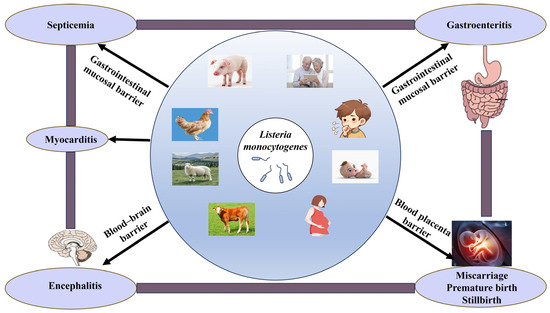
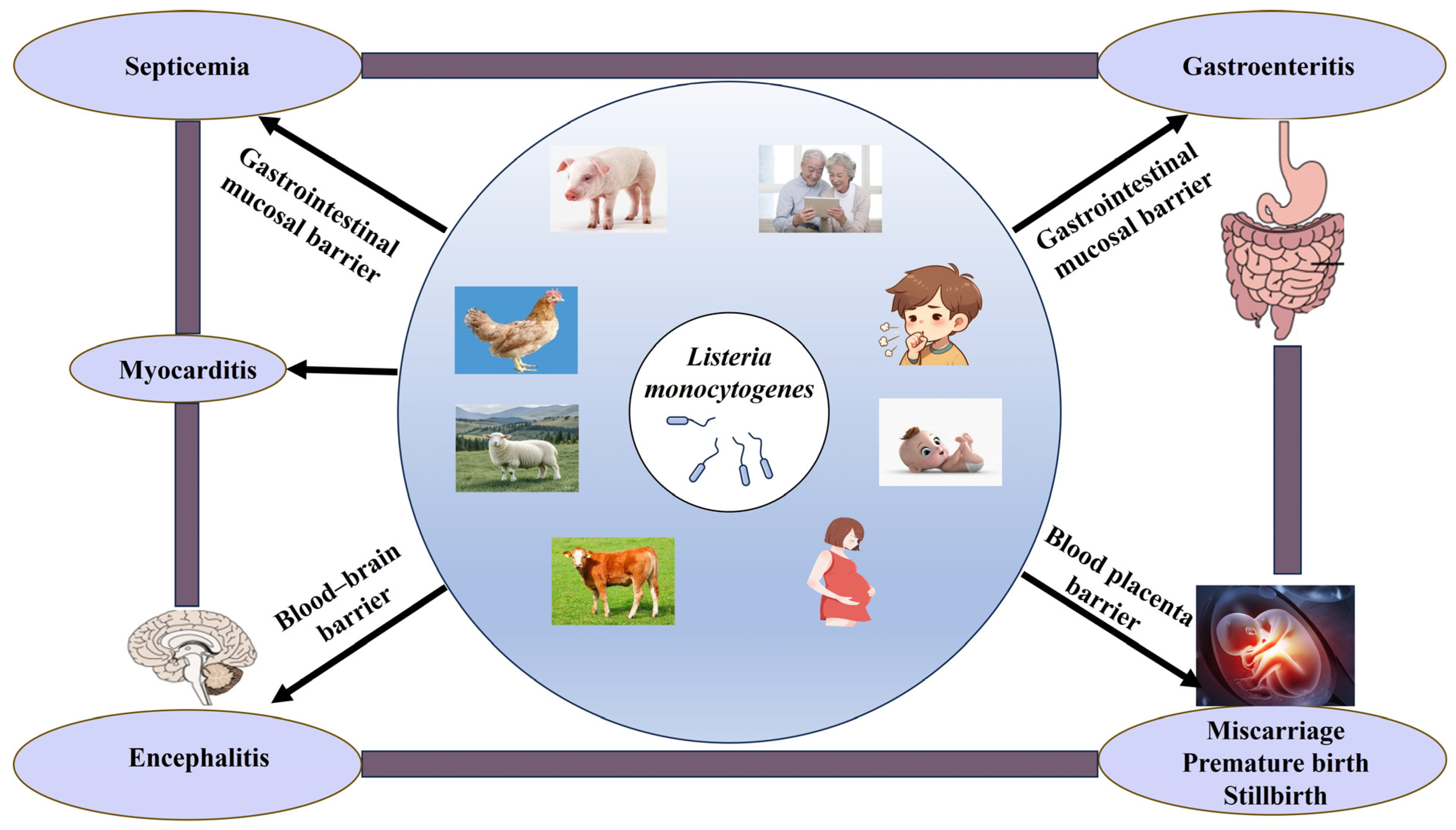
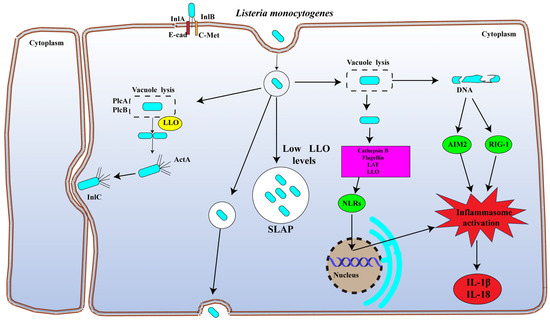
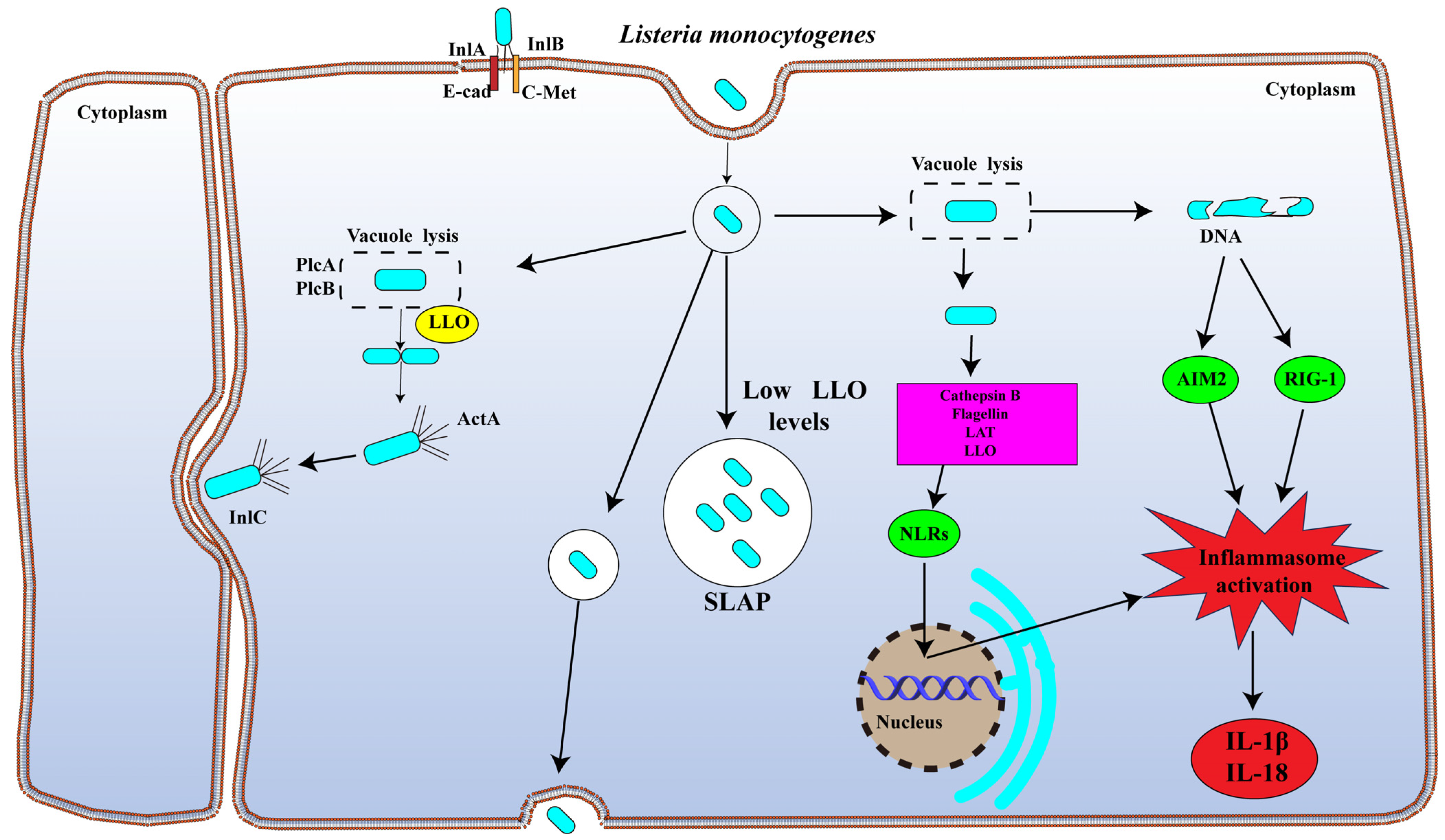
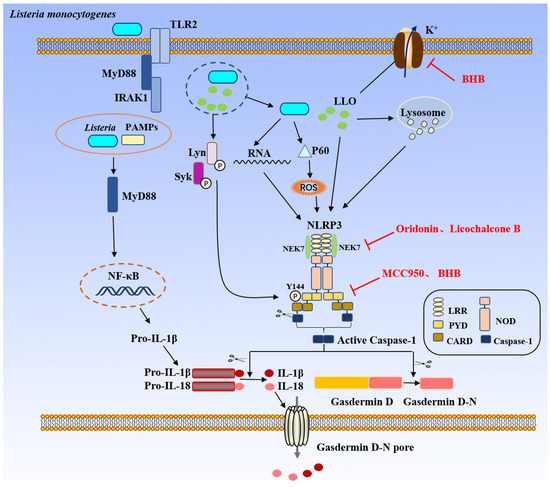
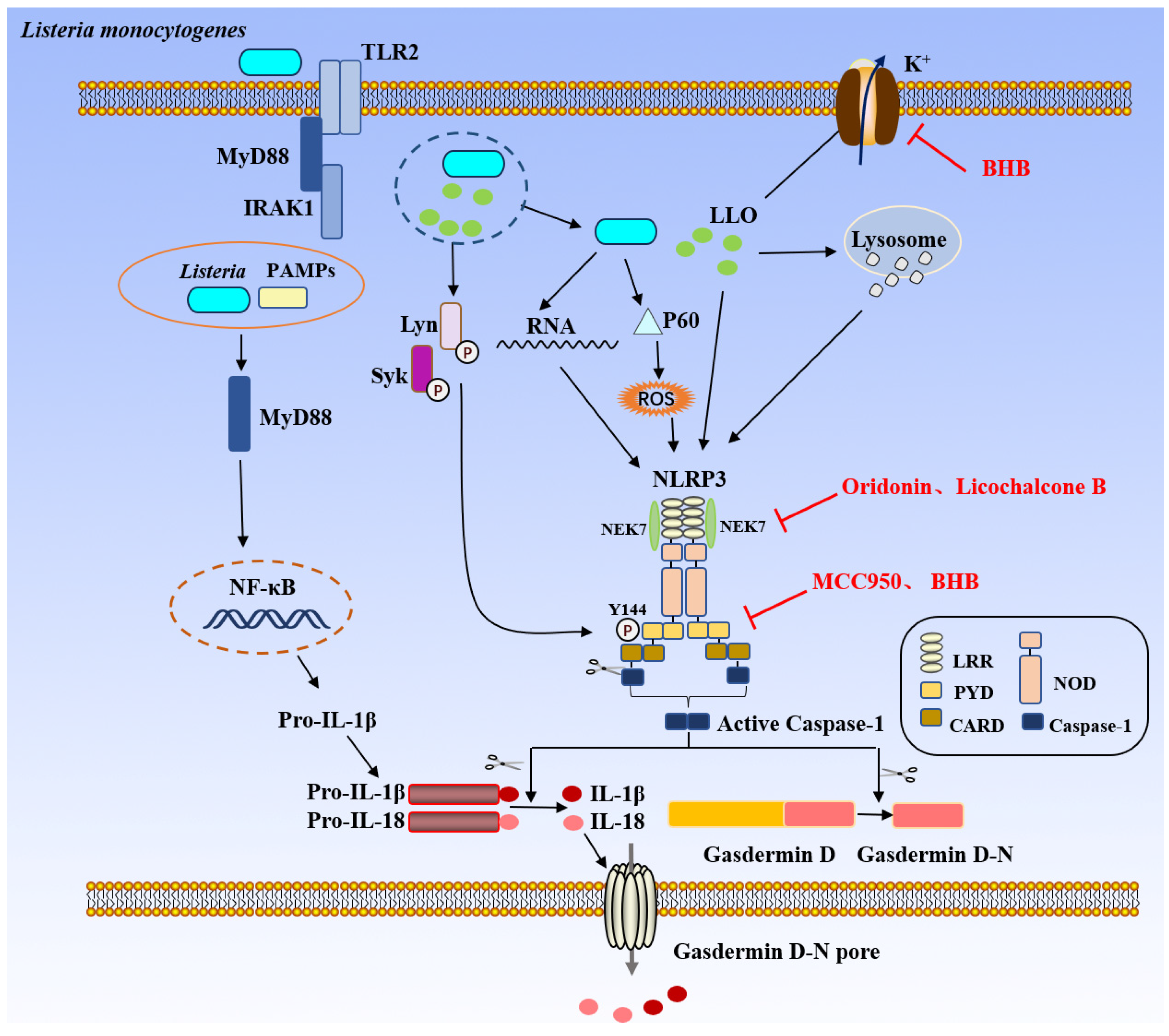
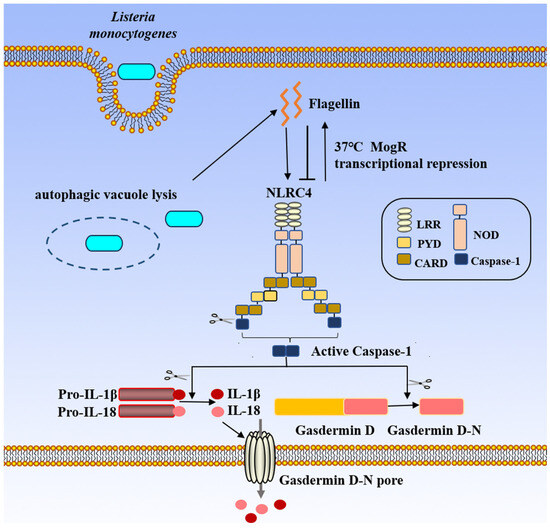
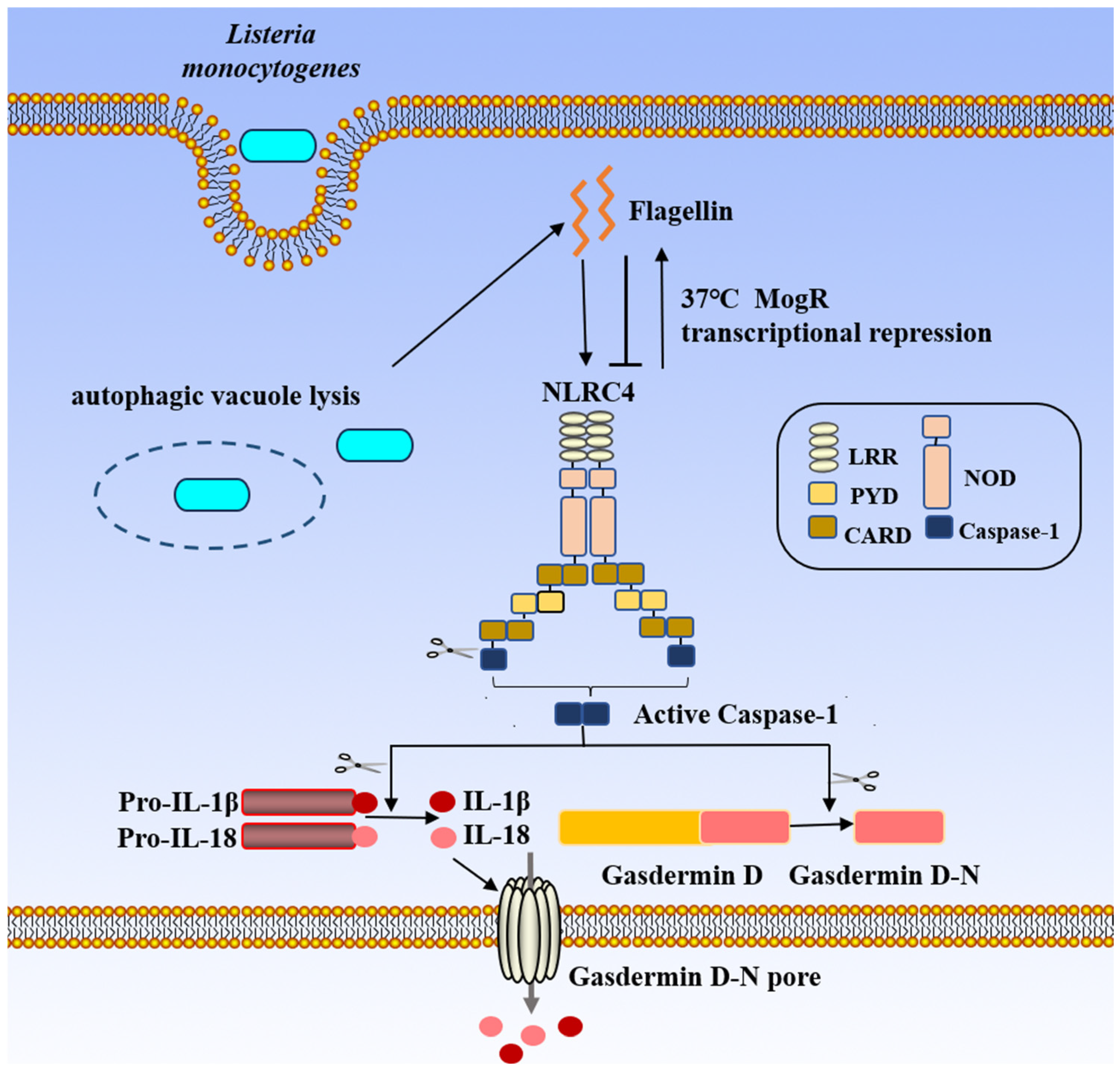
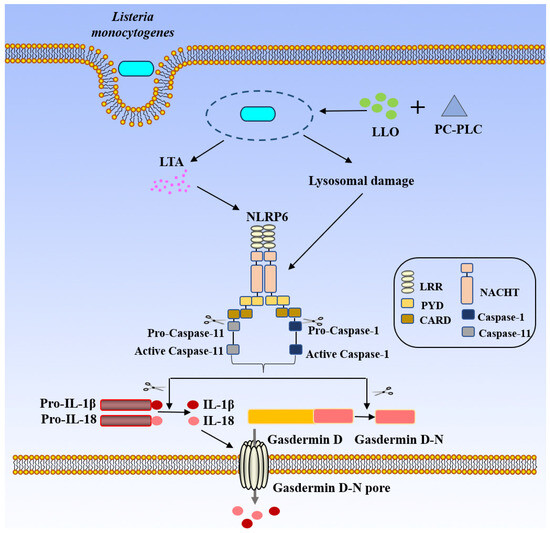
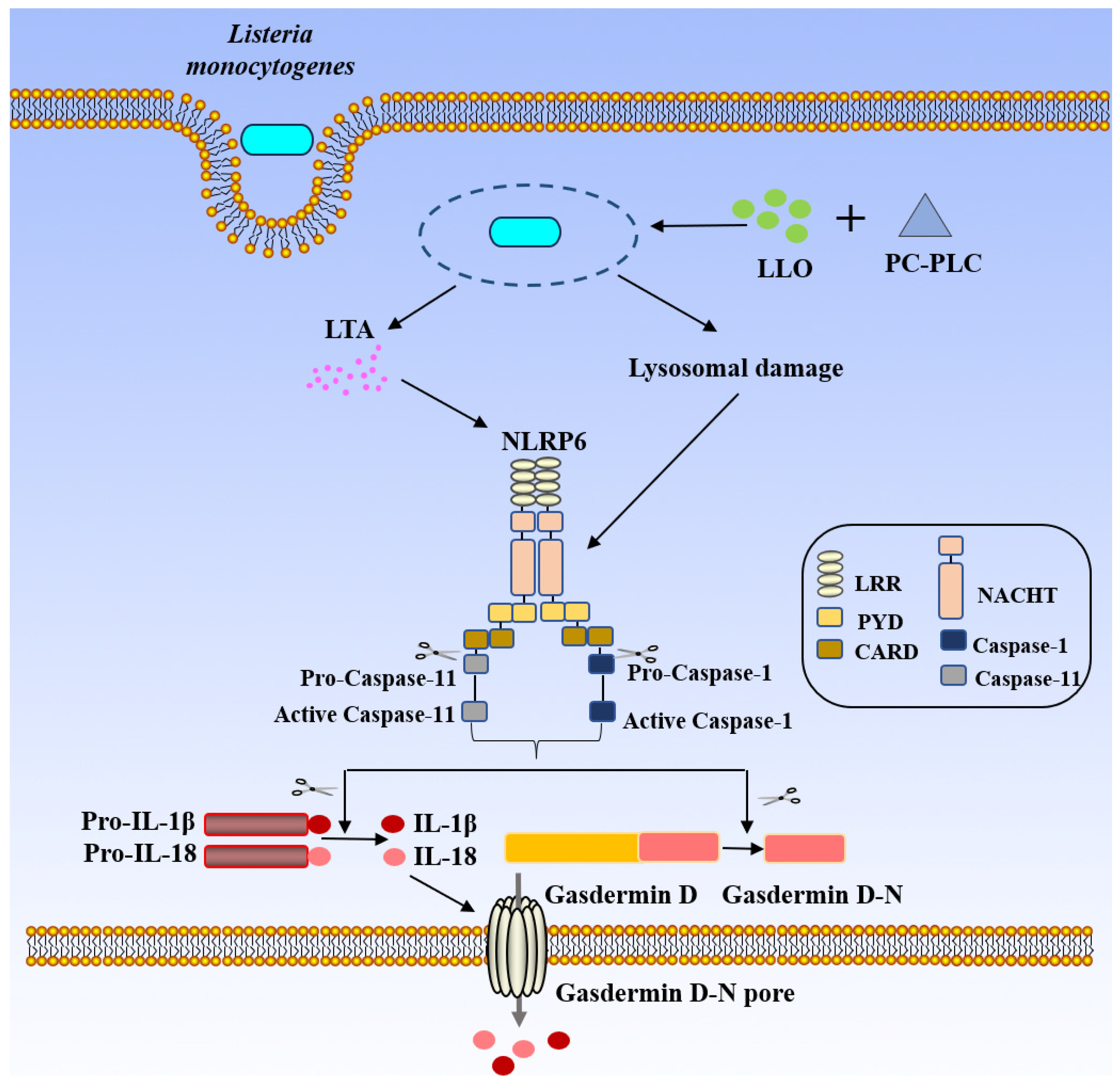
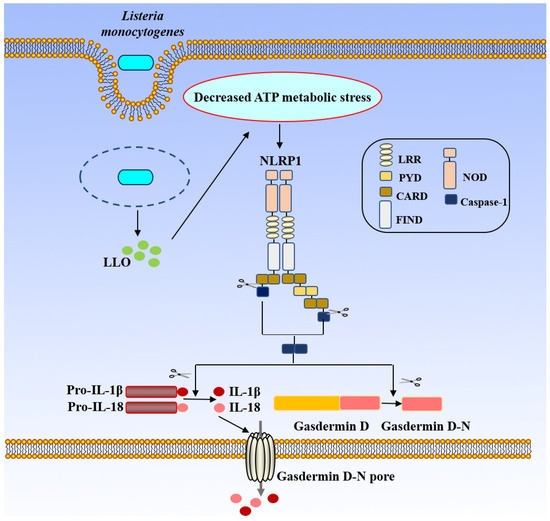
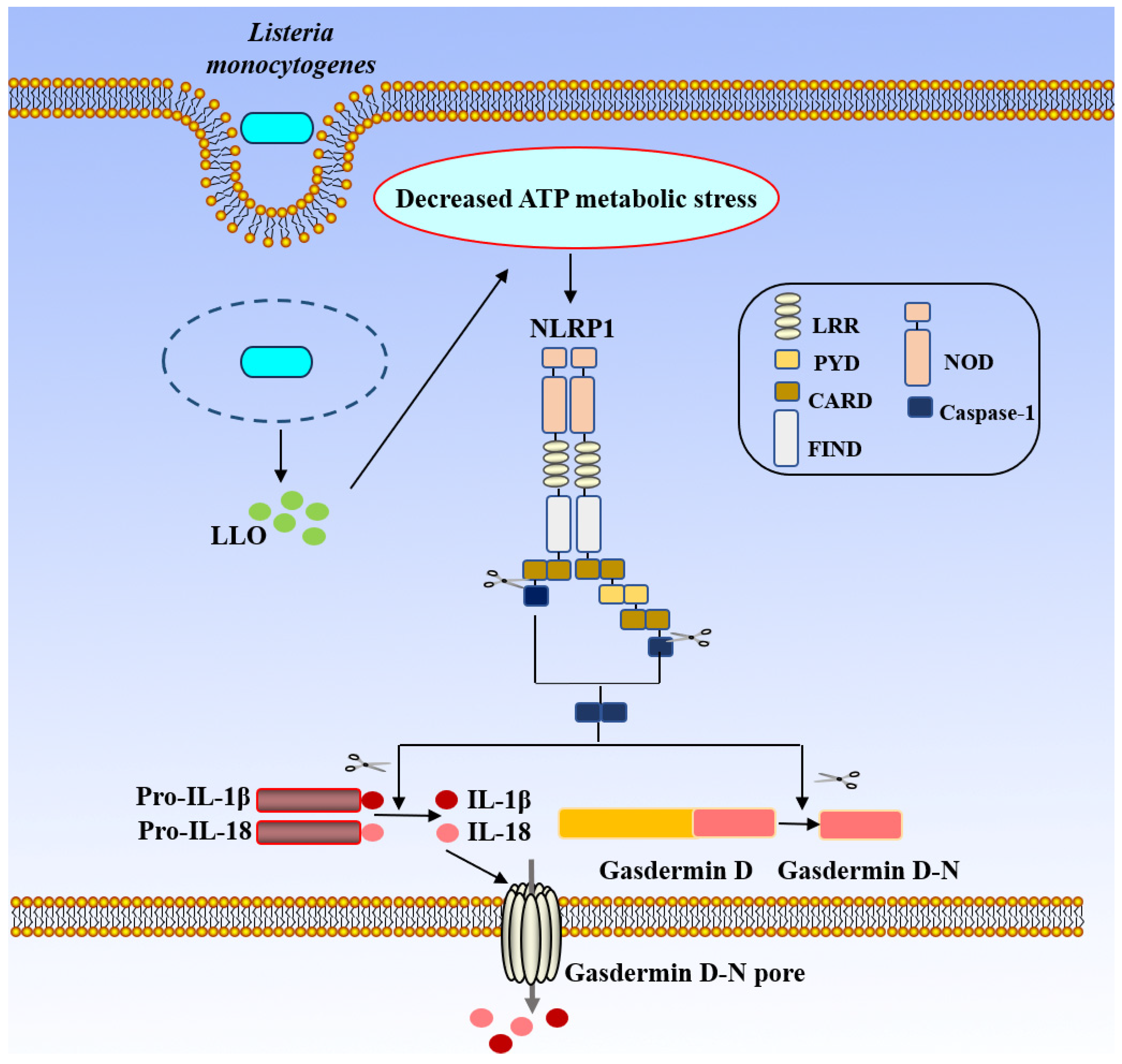
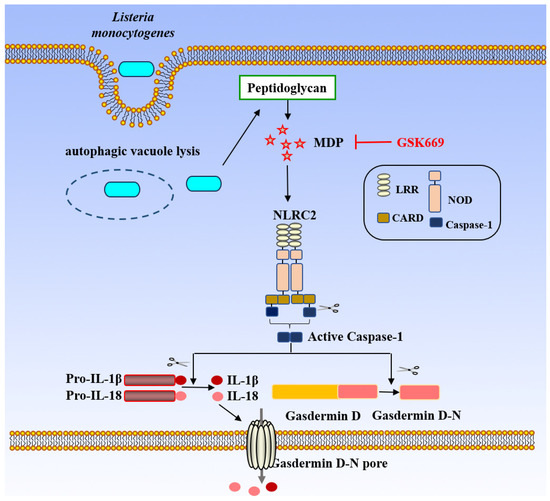
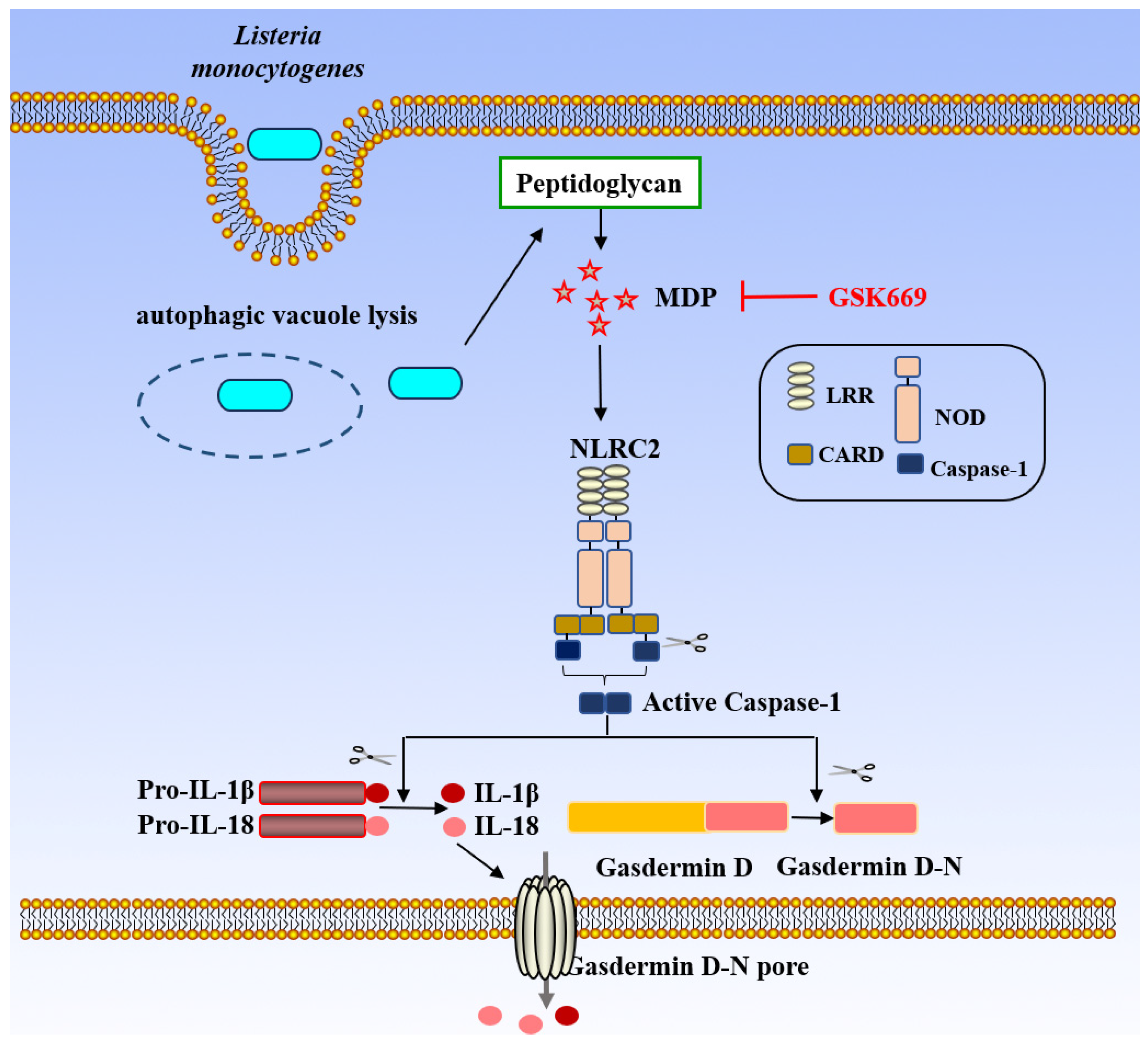
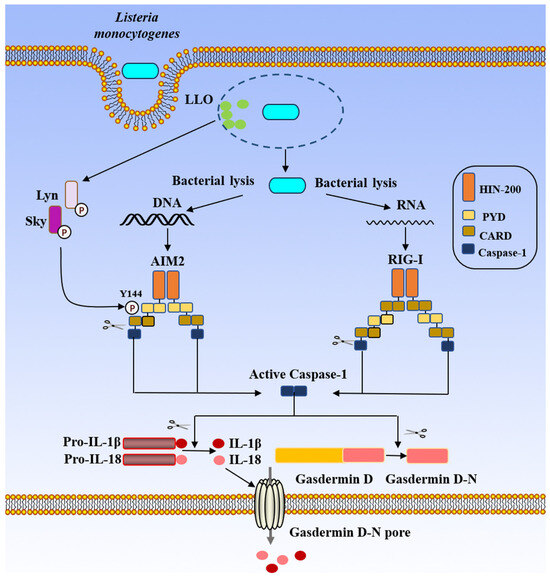
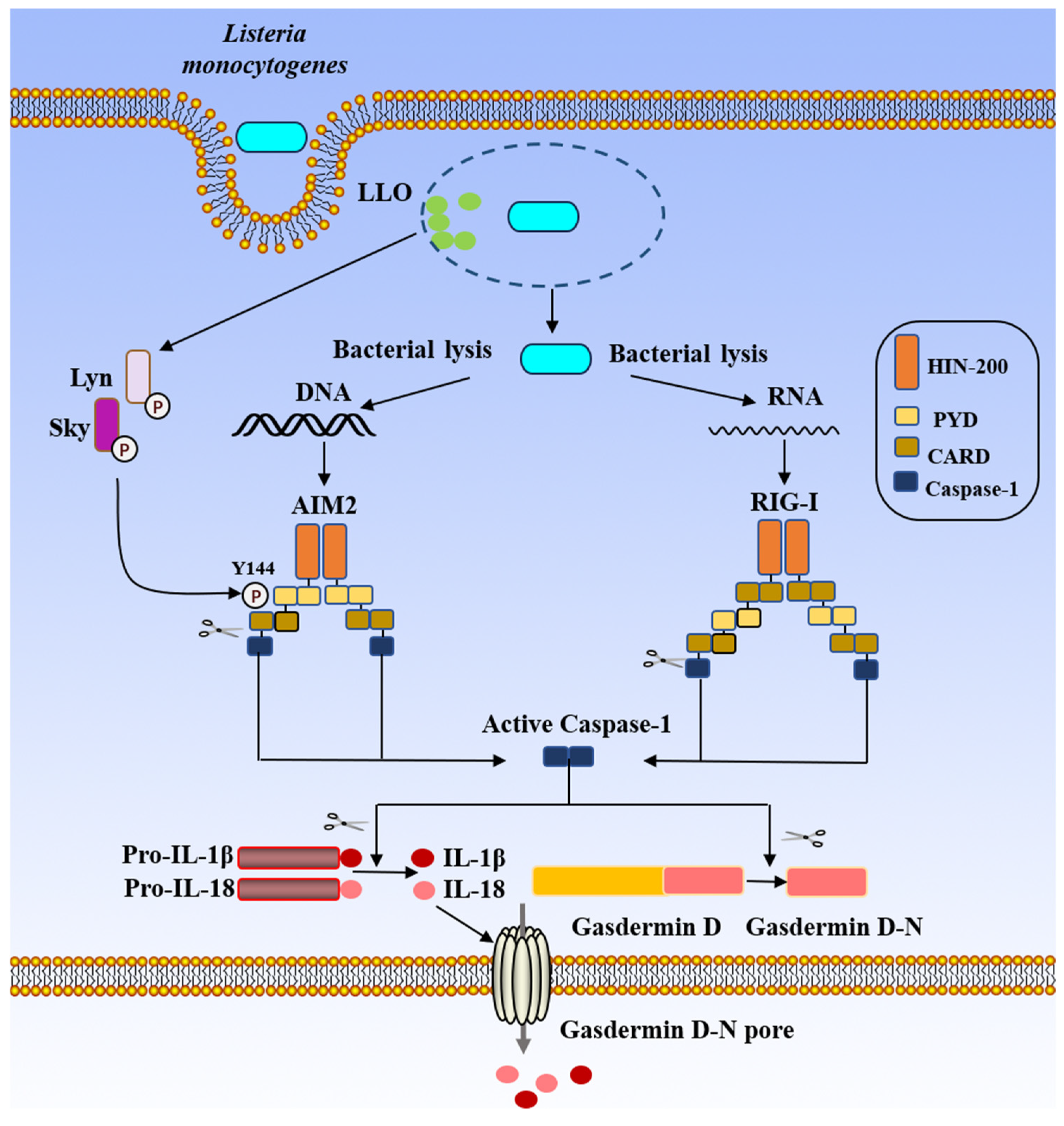

Disclaimer/Publisher’s Note: The statements, opinions and data contained in all publications are solely those of the individual author(s) and contributor(s) and not of MDPI and/or the editor(s). MDPI and/or the editor(s) disclaim responsibility for any injury to people or property resulting from any ideas, methods, instructions or products referred to in the content. |
© 2026 by the authors. Licensee MDPI, Basel, Switzerland. This article is an open access article distributed under the terms and conditions of the Creative Commons Attribution (CC BY) license.