
Inhibin Immunization to Enhance Reproductive Performance in Livestock: A Review


Simple Summary
Abstract
1. Introduction
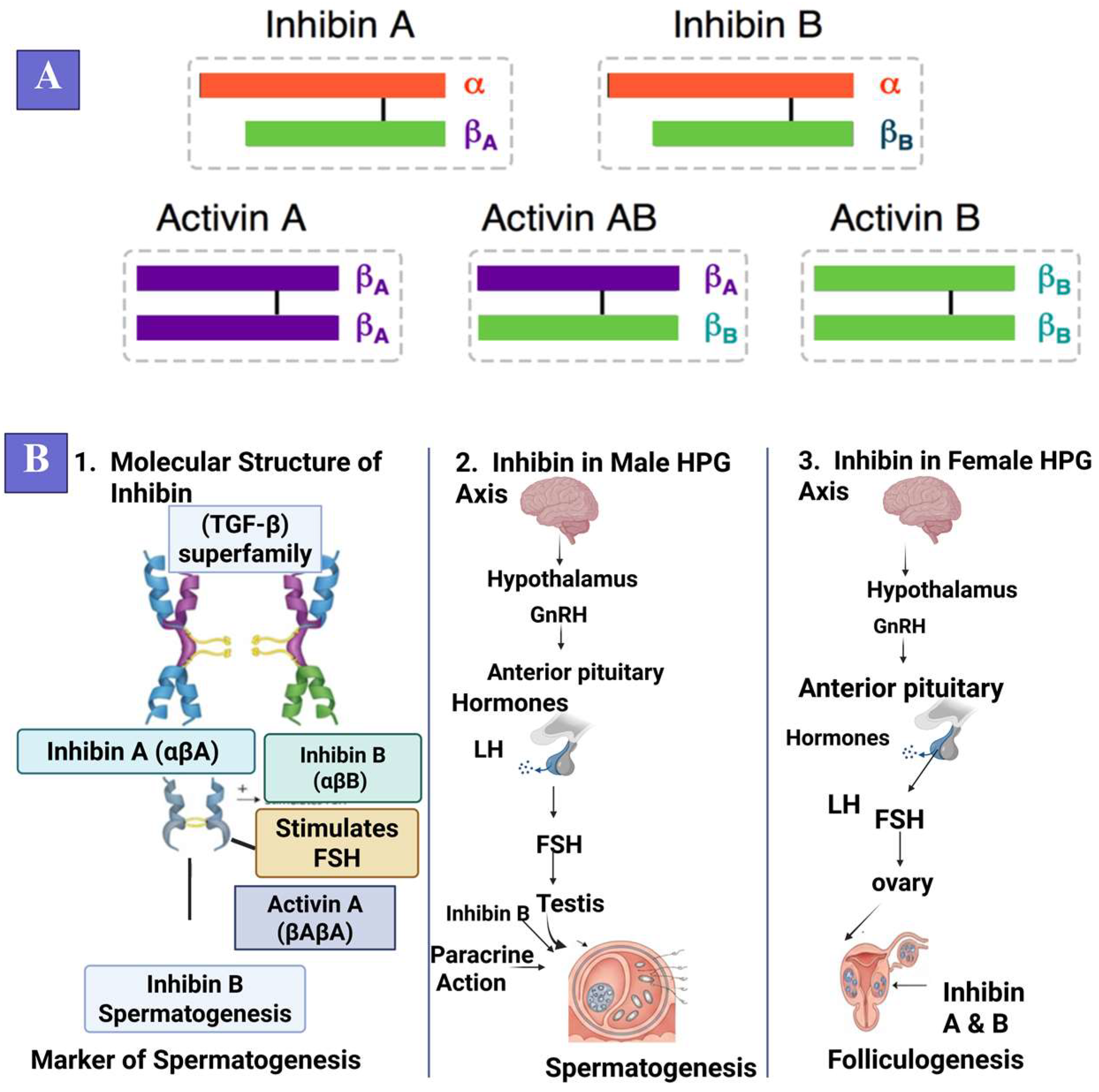
2. Inhibin Biology and Reproductive Regulation
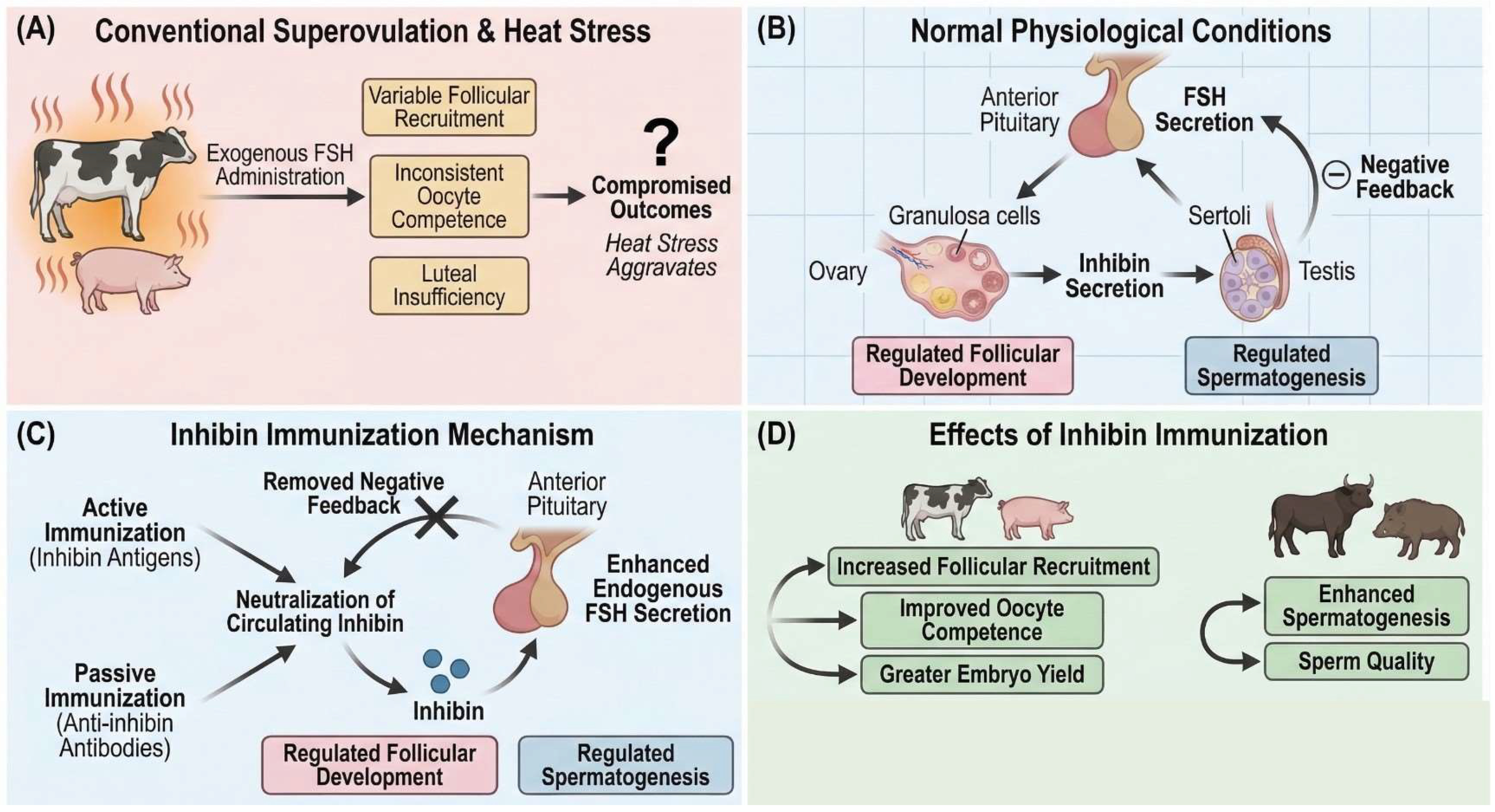
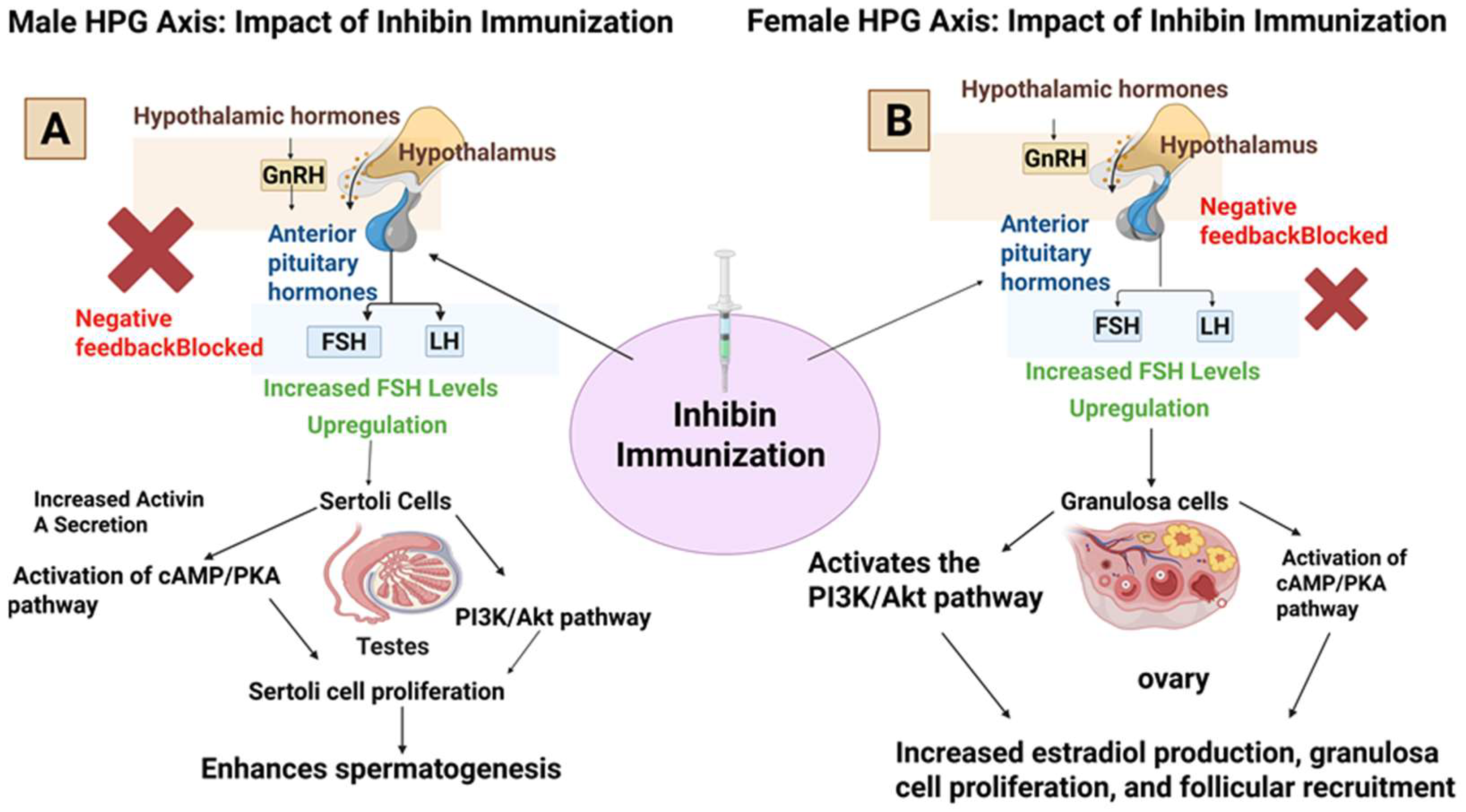
3. Mechanism of Inhibin Immunization
4. Reproductive Responses to Inhibin in Livestock
4.1. Reproductive Responses in Female Ruminants
4.1.1. Cattle
4.1.2. Sheep and Goats
4.1.3. Camels

| Species | Immunogen Type | Antibody Titer/FSH Change | Reproductive Outcome | Key Findings | Reference |
|---|---|---|---|---|---|
| Cattle (Japanese beef heifers) | Recombinant ovine inhibin α-subunit vaccine in oil emulsion; three boosters (one year after primary immunization) | Rapid high anti-inhibin antibody titers within 9 days; sustained titers; FSH ↑, LH ↔ | ↑ Estradiol (3–4×), ↑ progesterone, ↑ follicles (all sizes), ovulation rate ≈5 vs. 1 control, earlier estrus post-PGF2α. | Re-immunization induces repeatable superovulation without exogenous FSH; enhances oocyte supply for IVF and embryo transfer | [14] |
| Holstein cows | Recombinant porcine inhibin α-subunit protein (0.5 mg and 1 mg doses) | Dose-dependent increase in anti-inhibin antibody titers, elevated FSH, E2, and activin A | Increased conception rates (high-dose: 45.5%, low-dose: 40%) | Immunization improved conception rates, stimulated follicular development, and increased FSH, E2, and activin A levels; however, it compromised luteal function, as indicated by reduced P4 levels. | [15] |
| Cattle (Japanese black cows) | Active immunization with porcine inhibin α-subunit fragment (1–26) conjugated to rabbit serum albumin, with boosters at 35 and 70 days | High anti-inhibin antibody titers; enhanced FSH responsiveness | ↑ Follicles and corpora lutea; total embryos 12.1 ± 1.2 vs. 8.2 ± 1.0; transferable embryos 5.7 ± 1.1 vs. 3.1 ± 0.7 (control) | Immunization amplified ovarian response to exogenous FSH, improving superovulation and embryo yield. | [55] |
| Sheep (Tan ewes) | DNA vaccines encoding inhibin (1–32) alone (p-SINH) or fused with RFRP-3 (p-TPA-SINH/TPA-SRFRP, p-SINH/SRFRP); three i.m. injections 20 d apart | All vaccine groups developed strong anti-INH (and, where applicable, anti-RFRP-3) IgG; FSH and LH significantly ↑ in fusion-vaccine groups vs. control | Twinning rate numerically ↑ (37.5%, 37.5%, 12.5% vs. 0%) but not statistically significant | Fusion INH(1–32)/RFRP-3 DNA vaccines successfully neutralized endogenous INH and RFRP-3 and elevated FSH, LH, and E2. | [59] |
| Kazakh sheep | Camel-derived anti-INHα polyclonal antibody; recombinant INHα protein | Group A (anti-INHα antibody): FSH and estradiol significantly increased; endogenous inhibin decreased; LH and progesterone unchanged. Group B (recombinant INHα): no significant hormonal change vs. control. | Direct fertility indices not measured; study conducted during anestrus | Neutralization of inhibin-α effectively elevates FSH and E2 without disrupting LH, P4, or blood biochemical parameters, demonstrating its potential as an immunological approach to improve fecundity in Kazakh sheep. | [60] |
| Sheep (Awassi ewes) | Active: synthetic inhibin-α peptide conjugated to ovalbumin; passive: steroid-free bovine follicular fluid antiserum (SFBFF) | Inhibin neutralized; FSH not directly measured, but increased endogenous FSH secretion inferred via removal of inhibin negative feedback | ↑ Embryo number (≈2.2 vs. 1.0–0.6 in controls), ↑ lambs per ewe, ↑ progesterone and ↓ estradiol during gestation in SI and AI groups vs. controls | Both active (synthetic inhibin) and passive (SFBFF antiserum) immunization during the non-breeding season enhanced ovulation rate and litter size in Awassi ewes, indicating that inhibin immunoneutralization can augment fecundity without exogenous gonadotropins. | [62] |
| Goat (Boer does) | Recombinant ovine inhibin α-subunit (primary + booster, oil-based adjuvant) | Strong antibody response; peak titer 2 weeks after booster; increased follicular recruitment independent of exogenous gonadotropins | ≈22 large follicles, ≈9 ovulations per doe; embryo yield ≈5.7 per doe; all does show estrus post-immunization even with saline treatment. | Inhibin immunization alone induced robust superovulation; exogenous eCG or pFSH no longer increased the response; suggests dominant intra-ovarian paracrine role of inhibin; viable alternative to conventional gonadotropin superovulation | [63] |
| Goat (Shiba, Japan) | Passive i.v. inhibin antiserum (10 mL), evaluated under subluteal vs. normal luteal P4 | Inhibin binding ↑ in both groups; LH and E2 ↑ under subluteal P4; FSH similar | Sub-luteal P4 markedly ↑ follicle number, follicle size, and ovulation rate (13.9 vs. 5.7) | Sub-luteal progesterone greatly enhances the superovulatory response to inhibin neutralization. | [68] |
| Beetal goats | Active immunization with recombinant inhibin α-subunit (0, 0.5, or 1 mg; two doses before estrus induction) | Effective immune response; 0.5 mg dose increased follicle size, pre-ovulatory follicle diameter, CL size, and post-breeding P4 | Pregnancy rate unchanged; prolificacy and twinning rate higher in 0.5 mg group; fetal/embryonic loss unchanged; kid birth weight lower in immunized groups | 0.5 mg dose optimizes ovarian dynamics and prolificacy during progestin-induced estrus in non-breeding season; no benefit of 1 mg dose; supports inhibin immunization as an adjunct to reproductive management | [69] |
| Dromedary camel | Active immunization against recombinant bovine inhibin A; 1 mL initial dose + two boosters at 14-day intervals | ↑ FSH (≈3.3× control), ↑ estradiol (≈2.6× control), ↓ circulating inhibin A | ↑ Total follicle number (≈3.5× control), ↑ dominant follicle size, sustained follicular growth throughout transition period | Inhibin immunization enhances ovarian activity and helps override seasonal anestrus. | [75] |
| Camel (dromedary females) | Recombinant bovine inhibin A vaccine (100 μg s.c. + two 50 μg boosters; evaluated 5 months later under timed-ovulation protocol) | Higher FSH than eCG-treated and control camels; circulating inhibin A and E2 ↑ in immunized group | ↑ Total follicles (9.0 ± 1.0 vs. 3.0 ± 0.7 control); triple-ovulation rate 100% (vs. 0% control); dominant follicle size ↔ | Immunization produced prolonged ovarian hyperactivity and enabled reliable timed ovulation; effective alternative to eCG-based superovulation in camels | [72] |
4.2. Reproductive Responses in Male Ruminants
4.2.1. Bulls
4.2.2. Rams and Bucks
4.2.3. Male Camels
| Species | Immunogen Type | Hormonal Change | Testicular Response | Semen Quality | Reference |
|---|---|---|---|---|---|
| Goat (male, Shiba breed) | Passive i.v. immunization with 10 mL inhibin antiserum (raised in castrated goats against N-terminal α-chain of porcine inhibin) | Significant ↑ FSH from 60–144 h post-treatment; ↑ estradiol (E2) at 6, 12, and 36 h; no significant change in LH and testosterone | ↓ Resistive index (RI) and pulsatility index (PI) in supratesticular and marginal testicular arteries at 24–120 h, indicating increased testicular blood flow/perfusion | Not evaluated/not reported in this study | [78] |
| Beetal bucks | Active immunization against inhibin α-subunit (0.5 mg primary + booster at day 28) | ↑ Semen volume, ↑ sperm concentration, ↑ motility, ↑ viability, ↑ plasma membrane & acrosome integrity | ↑ total & progressive motility, ↑ sperm kinetics, ↑ morphology; strong carry-over effect from LBS → PBS | Immunization improved fresh and post-thaw semen quality across seasons; reduced seasonal infertility effects | [77] |
| Ram lambs | α-inhibin peptide-ovalbumin conjugate (PTC), α-inhibin subunit (SUB) | Increased α-inhibin antibody titer (p < 0.0001) by day 14; plasma FSH increased (p = 0.02) in SUB-immunized group; LH and testosterone levels remained similar across all groups | Daily sperm production (DSP/g) increased by 26% (p < 0.01); total DSP per ram lamb did not differ; testes | No increase in total sperm production per ram | [86] |
| Bull calves | Immunization against inhibin α-subunit peptide (a-(1–25)-ha-G) | Plasma FSH concentrations increased significantly after inhibin immunization, especially at 60 and 120 days (p < 0.05). | inhibin production localized to Sertoli cells in seminiferous tubules. Testicular inhibin production detectable by Western blot at 7, 21, 60, and 120 days. | No significant change in scrotal circumference (SC) and sperm quality at pubertal onset | [87] |
| Bulls | Methimazole (antithyroid drug) | Decreased thyroid hormones (T3 and T4) | Increased Sertoli cell number (~2×), larger testes | Similar sperm motility, morphology, cryopreservation survival | [88] |
| Bulls | Transient hypothyroidism (Methimazole) | Decreased T3 and T4 levels | 30–180% more sperm per ejaculate, 2.3-fold increase in Sertoli cells, higher testicular and epididymal weight | No effect on sperm motility, morphology, cryopreservation survival, or IVF success | [89] |
| Camel | Synthetic peptide (α-subunit 1–33 of porcine inhibin) conjugated to rabbit serum albumin; Freund’s complete adjuvant; 4 booster doses (weeks 0, 4, 8, 12) | ↑ Anti-inhibin antibody titer; ↑ FSH; ↑ estradiol (E2); ↑ nitric oxide (NO); ↔ LH; ↔ testosterone (T) | ↓ Pulsatility and resistive indices; ↑ testicular blood flow volume; ↑ testicular length and volume; ↓ echogenicity → active spermatogenesis | ↑ Sperm concentration and viability | [30] |
5. Reproductive Responses in Female Non-Ruminants
5.1. Sows
5.2. Mares and Jennies
| Species | Immunogen Type | Antibody Titer/FSH Change | Reproductive Outcome | Key Findings | Reference |
|---|---|---|---|---|---|
| Pig (sows) | Pre-weaning immunization with recombinant inhibin-α (7 days before weaning); subset received 1000 IU hCG on day 5 post-insemination | Activin suppresses P4 synthesis; hCG stimulates P4 and reverses activin-induced inhibition of StAR, Cyp11a1, and 3β-HSDII in luteinized granulosa cells | Inhibin immunization ↑ live litter size but slightly ↓ farrowing rate; adding hCG tended to restore farrowing rate and sustain improved litter size | Inhibin immunization enhances follicular development, while post-insemination hCG rescues luteal progesterone production and supports early pregnancy. | [95] |
| Mare | Passive immunization (inhibin antiserum raised in castrated goat) | Significant increase in plasma FSH concentrations (dose-dependent) | Multiple ovulations (100 mL: 3.75 ± 0.63; 200 mL: 4.50 ± 0.65), increased follicular development | Inhibin neutralization enhanced FSH secretion, increased follicle growth, and resulted in multiple ovulations. Higher doses of inhibin antiserum resulted in more ovulations and increased estradiol-17β levels. | [98] |
| Sows | Inhibin (α-IF) fragment | Significant dose-dependent increase in antibody titer (p < 0.001); | Wean-to-service interval: reduced in higher dosages | Inhibin regulates FSH secretion post-weaning; blocking the acute FSH decrease had little effect on reproductive performance. | [102] |
| Pony mare (Equus caballus) | Recombinant porcine inhibin α-subunit (active immunization; three injections at 39-day intervals) | Significant increase in anti-inhibin antibody titer; plasma FSH and estradiol-17β concentrations significantly increased | Significant increase in small, medium, and large ovarian follicles; ovulation rate unchanged | Immunization stimulated follicular development during the estrous cycle, confirming the role of inhibin in regulating FSH secretion and follicular growth. | [100] |
| Dezhou jennies | Active immunization with inhibin (1.5 mg or 3 mg; primary + booster on days 1 and 23) | 1.5 mg increased plasma FSH; 3 mg showed no significant effect on FSH, progesterone, AMH, or estradiol. | Limited endocrine response; no clear improvement in female reproductive hormones beyond FSH elevation at 1.5 mg | Active inhibin immunization in female donkeys produced a modest hormonal response, with 1.5 mg being more responsive than 3 mg. | [101] |
5.3. Reproductive Responses in Male Non-Ruminants
5.3.1. Boars
5.3.2. Jacks
5.3.3. Male Rabbits
| Species | Immunogen Type | Hormonal Change | Testicular Response | Semen Quality | Reference |
|---|---|---|---|---|---|
| Boar | GnRH tandem-dimer peptide vaccine (immunocastration) vs. surgical castration | GnRH vaccine: ↓ LH, FSH, testosterone, inhibin B; surgical castration: ↑ LH, FSH, testosterone & inhibin B undetectable | Severe testicular atrophy; arrested spermatogenesis in both groups; reduced pituitary weight after GnRH vaccine, increased after surgical castration | Not evaluated; both interventions induce functional castration and infertility | [104] |
| Donkey (adult Dezhou jacks, non-breeding season) | Recombinant porcine inhibin α-subunit protein (3 mg or 1.5 mg; primary + booster; mineral oil adjuvant) | Slight ↑ FSH, ↑ LH, ↑ AMH, ↑ activin A; testosterone and progesterone largely unchanged | Transient ↑ spermatogonia and elongated spermatids (day 28); Sertoli cell vacuolation, empty lumina, apoptosis; seminiferous tubule diameter mostly unchanged | Not evaluated (study focused on plasma hormones and testicular histology) | [40] |
| Donkey (Dezhou jacks & jennies, non-breeding season) | Recombinant porcine inhibin α-subunit protein; 3 mg or 1.5 mg; primary + booster (days 1 and 23) | Males: 3 mg ↑ FSH, ↑ LH, ↑ testosterone, ↑ AMH. Females: 1.5 mg ↑ FSH; P4, AMH, E2 unaffected. | Males: endocrine activation only; no structural data reported. Females: ovarian hormones largely unchanged. | Semen quality not evaluated; study focused on plasma hormones only. | [101] |
| Rex rabbit | Recombinant porcine inhibin-α (0.05 mg/kg and 0.125 mg/kg; s.c.; 3 injections) | Significant rise in anti-inhibin antibody titers after second immunization | Likely relief of FSH suppression, improving spermatogenic activity | ↑ Sperm concentration and motility during heat stress (p < 0.05); partial recovery of semen quality | [105] |
| Rabbit | Testosterone–3(O-carboxymethyl) oxime–BSA conjugate, 1 mg per rabbit s.c.; primary + booster at 4-week interval | Strong and sustained antitestosterone antibody response; ↑ LH and ↑ total testosterone; transient ↑ FSH after booster | ↑ Testis weight and volume; Leydig cell hyperplasia and hypertrophy; ↑ testicular P450scc, P450c17, 3β-HSD protein and mRNA; ↑ testicular AR, inhibin-α and inhibin-βA; normal seminiferous tubules and spermatogenesis | Direct semen traits not measured; data indicate increased steroidogenic and spermatogenic capacity and likely improved sperm production later in life | [106] |
6. In Vitro Embryo Production and Integration with ARTs
7. Challenges and Future Perspectives
7.1. Species-Specific Challenges
7.2. Key Safety Concerns
8. Conclusions
Author Contributions
Funding
Data Availability Statement
Conflicts of Interest
References
- Cardoso Consentini, C.E.; Wiltbank, M.C.; Sartori, R. Factors that optimize reproductive efficiency in dairy herds with an emphasis on timed artificial insemination programs. Animals 2021, 11, 301. [Google Scholar] [CrossRef] [PubMed]
- Weigel, K.A. Prospects for improving reproductive performance through genetic selection. Anim. Reprod. Sci. 2006, 96, 323–330. [Google Scholar] [CrossRef] [PubMed]
- Rutledge, J. Use of embryo transfer and IVF to bypass effects of heat stress. Theriogenology 2001, 55, 105–111. [Google Scholar] [CrossRef]
- Roth, Z. Heat stress, the follicle, and its enclosed oocyte: Mechanisms and potential strategies to improve fertility in dairy cows. Reprod. Domest. Anim. 2008, 43, 238–244. [Google Scholar] [CrossRef] [PubMed]
- Merton, J.; De Roos, A.; Mullaart, E.; De Ruigh, L.; Kaal, L.; Vos, P.; Dieleman, S. Factors affecting oocyte quality and quantity in commercial application of embryo technologies in the cattle breeding industry. Theriogenology 2003, 59, 651–674. [Google Scholar] [CrossRef]
- Wu, B.; Zan, L. Enhance beef cattle improvement by embryo biotechnologies. Reprod. Domest. Anim. 2012, 47, 865–871. [Google Scholar] [CrossRef]
- Dahlen, C.; Larson, J.; Lamb, G.C. Impacts of reproductive technologies on beef production in the United States. In Current and Future Reproductive Technologies and World Food Production; Springer: Berlin/Heidelberg, Germany, 2013; Volume 752, pp. 97–114. [Google Scholar]
- Li, L.; Lin, W.; Wang, Z.; Huang, R.; Xia, H.; Li, Z.; Deng, J.; Ye, T.; Huang, Y.; Yang, Y. Hormone regulation in testicular development and function. Int. J. Mol. Sci. 2024, 25, 5805. [Google Scholar] [CrossRef]
- You, X.; Chen, Q.; Yuan, D.; Zhang, C.; Zhao, H. Common markers of testicular Sertoli cells. Expert Rev. Mol. Diagn. 2021, 21, 613–626. [Google Scholar]
- Akhtar, M.F.; Ahmad, E.; Ali, I.; Shafiq, M.; Chen, Z. The effect of inhibin immunization in seminiferous epithelium of Yangzhou goose ganders: A histological study. Animals 2021, 11, 2801. [Google Scholar] [CrossRef]
- Knight, P. Roles of inhibins, activins, and follistatin in the female reproductive system. Front. Neuroendocrinol. 1996, 17, 476–509. [Google Scholar]
- Li, Y.; Fortin, J.; Ongaro, L.; Zhou, X.; Boehm, U.; Schneyer, A.; Bernard, D.J.; Lin, H.Y. Betaglycan (TGFBR3) functions as an inhibin A, but not inhibin B, coreceptor in pituitary gonadotrope cells in mice. Endocrinology 2018, 159, 4077–4091. [Google Scholar] [CrossRef]
- Ma, L.; Li, Z.; Ma, Z.; Ma, J.; Zhao, F. Immunization against inhibin promotes fertility in cattle: A meta-analysis and quality assessment. Front. Vet. Sci. 2021, 8, 687923. [Google Scholar] [CrossRef]
- Medan, M.; Akagi, S.; Kaneko, H.; Watanabe, G.; Tsonis, C.; Taya, K. Effects of re-immunization of heifers against inhibin on hormonal profiles and ovulation rate. Reproduction 2004, 128, 475–482. [Google Scholar] [CrossRef]
- Guo, R.; Chen, F.; Mei, C.; Dai, Z.; Yan, L.; Shi, Z. Conception rate and reproductive hormone secretion in Holstein cows immunized against inhibin and subjected to the ovsynch protocol. Animals 2020, 10, 313. [Google Scholar] [CrossRef]
- Bingol, M.; Daskiran, I.; Cedden, F.; Demır, A.O.; Yılmaz, A. Inhibin immunization in Norduz sheep. Arch. Anim. Breed. 2012, 55, 179–183. [Google Scholar] [CrossRef]
- Bernard, D.J.; Chapman, S.C.; Woodruff, T.K. Mechanisms of inhibin signal transduction. Recent Prog. Horm. Res. 2001, 56, 417–450. [Google Scholar] [CrossRef] [PubMed]
- Yan, L.; Li, H.; Shi, Z. Immunization against inhibin improves in vivo and in vitro embryo production. Anim. Reprod. Sci. 2015, 163, 1–9. [Google Scholar] [CrossRef]
- Farnworth, P.G.; Harrison, C.A.; Leembruggen, P.; Chan, K.L.; Stanton, P.G.; Ooi, G.T.; Rahman, N.A.; Huhtaniemi, I.T.; Findlay, J.K.; Robertson, D.M. Inhibin binding sites and proteins in pituitary, gonadal, adrenal and bone cells. Mol. Cell. Endocrinol. 2001, 180, 63–71. [Google Scholar] [CrossRef]
- Harrison, C.A.; Farnworth, P.G.; Chan, K.L.; Stanton, P.G.; Ooi, G.T.; Findlay, J.K.; Robertson, D.M. Identification of specific inhibin A-binding proteins on mouse Leydig (TM3) and sertoli (TM4) cell lines. Endocrinology 2001, 142, 1393–1402. [Google Scholar] [CrossRef][Green Version]
- Cook, R.W.; Thompson, T.B.; Jardetzky, T.S.; Woodruff, T.K. Molecular biology of inhibin action. Semin. Reprod. Med. 2004, 22, 269–276. [Google Scholar] [CrossRef] [PubMed]
- Ando, H. Inhibin. In Handbook of Hormones, 2nd ed.; Elsevier: Amsterdam, The Netherlands, 2021; Volume 1, pp. 555–558. [Google Scholar] [CrossRef]
- Meng, J.; Feng, J.H.; Xiao, L.; Zhou, W.; Zhang, H.; Lan, X.; Wang, S. Active immunization with inhibin DNA vaccine promotes spermatogenesis and testicular development in rats. J. Appl. Anim. Res. 2024, 52, 2360408. [Google Scholar] [CrossRef]
- Liu, Y.; Mao, X.; Wei, Y.; Yu, J.; Li, H.; Chen, R.; Shi, Z. Studies on enhancing embryo quantity and quality by immunization against inhibin in repeatedly superovulated Holstein heifers and the associated endocrine mechanisms. Anim. Reprod. Sci. 2013, 142, 10–18. [Google Scholar] [CrossRef]
- O’Donnell, L.; Whiley, P.A.; Loveland, K.L. Activin A and sertoli cells: Key to fetal testis steroidogenesis. Front. Endocrinol. 2022, 13, 898876. [Google Scholar] [CrossRef]
- Rodriguez, K.F.; Brown, P.R.; Amato, C.M.; Nicol, B.; Liu, C.-F.; Xu, X.; Yao, H.H.-C. Somatic cell fate maintenance in mouse fetal testes via autocrine/paracrine action of AMH and activin B. Nat. Commun. 2022, 13, 4130. [Google Scholar] [CrossRef]
- Han, Y.; Cao, G.; Chen, W.; Wang, C.; Khan, M.Z. The role of TGF-β signaling pathway in determining small ruminant litter size. Biology 2025, 14, 786. [Google Scholar] [CrossRef]
- Chen, W.; Han, Y.; Chen, Y.; Liu, X.; Liang, H.; Wang, C.; Khan, M.Z. Potential candidate genes associated with litter size in goats: A review. Animals 2025, 15, 82. [Google Scholar] [CrossRef]
- Han, Y.; Jiang, T.; Shi, J.a.; Liu, A.; Liu, L. Role and regulatory mechanism of inhibin in animal reproductive system. Theriogenology 2023, 202, 10–20. [Google Scholar] [CrossRef] [PubMed]
- Abdelnaby, E.A.; El-Sherbiny, H.R.; Alhaider, A.K.; Marzok, M.; Emam, I.A. Effect of immunization against inhibin on camel testicular Morphometry, echotexture Analysis, semen Quality, and vascularization in relation to hormonal aspect. Vet. Sci. 2025, 12, 896. [Google Scholar] [CrossRef] [PubMed]
- Li, D.; Qin, G.; Wei, Y.; Lu, F.; Huang, Q.; Jiang, H.; Shi, D.; Shi, Z. Immunisation against inhibin enhances follicular development, oocyte maturation and superovulatory response in water buffaloes. Reprod. Fertil. Dev. 2011, 23, 788–797. [Google Scholar] [CrossRef] [PubMed]
- Gloaguen, P.; Crépieux, P.; Heitzler, D.; Poupon, A.; Reiter, E. Mapping the follicle-stimulating hormone-induced signaling networks. Front. Endocrinol. 2011, 2, 45. [Google Scholar] [CrossRef]
- Ulloa-Aguirre, A.; Reiter, E.; Crépieux, P. FSH receptor signaling: Complexity of interactions and signal diversity. Endocrinology 2018, 159, 3020–3035. [Google Scholar] [CrossRef] [PubMed]
- Wang, J.-M.; Li, Z.-F.; Yang, W.-X.; Tan, F.-Q. Follicle-stimulating hormone signaling in Sertoli cells: A licence to the early stages of spermatogenesis. Reprod. Biol. Endocrinol. 2022, 20, 97. [Google Scholar] [CrossRef] [PubMed]
- Godmann, M.; Kosan, C.; Behr, R. Krüppel-like factor 4 is widely expressed in the mouse male and female reproductive tract and responds as an immediate early gene to activation of the protein kinase A in TM4 Sertoli cells. Reproduction 2010, 139, 771–782. [Google Scholar] [CrossRef]
- Bhattacharya, I.; Pradhan, B.S.; Sarda, K.; Gautam, M.; Basu, S.; Majumdar, S.S. A switch in Sertoli cell responsiveness to FSH may be responsible for robust onset of germ cell differentiation during prepubartal testicular maturation in rats. Am. J. Physiol.-Endocrinol. Metab. 2012, 303, E886–E898. [Google Scholar] [CrossRef] [PubMed]
- Jabarpour, M.; Tajik, P. Evaluation of the effect of follicular stimulating hormone on the in vitro bovine spermatogonial stem cells self-renewal: An experimental study. Int. J. Reprod. Biomed. 2017, 15, 795. [Google Scholar] [CrossRef]
- Olsen, O.E.; Hella, H.; Elsaadi, S.; Jacobi, C.; Martinez-Hackert, E.; Holien, T. Activins as dual specificity TGF-β family molecules: SMAD-activation via activin-and BMP-type 1 receptors. Biomolecules 2020, 10, 519. [Google Scholar]
- Jiang, L.; Liu, B.; Qi, Y.; Zhu, L.; Cui, X.; Liu, Z. Antagonistic effects of activin A and TNF-α on the activation of L929 fibroblast cells via Smad3-independent signaling. Sci. Rep. 2020, 10, 20623. [Google Scholar] [CrossRef]
- Akhtar, M.F.; Umar, M.; Chai, W.; Li, L.; Ahmad, E.; Wang, C. Effect of inhibin immunization on reproductive hormones and testicular morphology of Dezhou donkeys during the non-breeding season. Animals 2025, 15, 813. [Google Scholar] [CrossRef]
- Kaneko, H.; Nakanishi, Y.; Akagi, S.; Arai, K.; Taya, K.; Watanabe, G.; Sasamoto, S.; Hasegawa, Y. Immunoneutralization of inhibin and estradiol during the follicular phase of the estrous cycle in cows. Biol. Reprod. 1995, 53, 931–939. [Google Scholar] [CrossRef]
- Al-Suhaimi, E.A.; Khan, F.A.; Homeida, A. Regulation of male and female reproductive functions. In Emerging Concepts in Endocrine Structure and Functions; Springer: Berlin/Heidelberg, Germany, 2022; pp. 287–347. [Google Scholar]
- Chrousos, G.P.; Torpy, D.J.; Gold, P.W. Interactions between the hypothalamic-pituitary-adrenal axis and the female reproductive system: Clinical implications. Ann. Intern. Med. 1998, 129, 229–240. [Google Scholar] [CrossRef]
- Recchia, K.; Jorge, A.S.; Pessôa, L.V.d.F.; Botigelli, R.C.; Zugaib, V.C.; de Souza, A.F.; Martins, D.d.S.; Ambrosio, C.E.; Bressan, F.F.; Pieri, N.C.G. Actions and roles of FSH in germinative cells. Int. J. Mol. Sci. 2021, 22, 10110. [Google Scholar] [CrossRef]
- Casarini, L.; Crépieux, P. Molecular mechanisms of action of FSH. Front. Endocrinol. 2019, 10, 305. [Google Scholar] [CrossRef]
- Verma, P.; Jain, A.K.; Mishra, A.; Jesse, D.D.; Mandal, S.; Gattani, A.; Patel, P.; Singh, P.; Jatav, M. Role of inhibin hormone: An update. Pharma J. 2023, SP-12, 1162–1167. [Google Scholar]
- Liguori, I.; Russo, G.; Curcio, F.; Bulli, G.; Aran, L.; Della-Morte, D.; Gargiulo, G.; Testa, G.; Cacciatore, F.; Bonaduce, D. Oxidative stress, aging, and diseases. Clin. Interv. Aging 2018, 13, 757–772. [Google Scholar] [CrossRef]
- Abdelnaby, E.A.; Fathi, M.; Salem, N.Y.; Ramadan, E.S.; Yehia, S.G.; Emam, I.A.; Salama, A.; Samir, H.; El-Sherbiny, H.R. Outcomes of dietary alpha-lipoic acid on testicular vascularization, steroid hormones, and seminal quality in aged Baladi bucks. BMC Vet. Res. 2024, 20, 293. [Google Scholar] [CrossRef] [PubMed]
- Abdelnaby, E.A.; Alhaider, A.K.; Emam, I.A. Effect of repeated injection of human chorionic gonadotropin on semen quality, testicular hemodynamics and hormonal profile of senile camel. Vet. Res. Commun. 2025, 49, 301. [Google Scholar] [CrossRef]
- O’shaughnessy, P.; Monteiro, A.; Verhoeven, G.; De Gendt, K.; Abel, M. Effect of FSH on testicular morphology and spermatogenesis in gonadotrophin-deficient hypogonadal mice lacking androgen receptors. Reproduction 2010, 139, 177. [Google Scholar] [CrossRef]
- Kato, T.; Mizuno, K.; Matsumoto, D.; Nishio, H.; Nakane, A.; Kurokawa, S.; Kamisawa, H.; Maruyama, T.; Iwatsuki, S.; Umemoto, Y. Low serum inhibin B/follicle-stimulating hormones and anti-müllerian hormone/follicle-stimulating hormones ratios as markers of decreased germ cells in infants with bilateral cryptorchidism. J. Urol. 2022, 207, 701–709. [Google Scholar] [CrossRef] [PubMed]
- Iliadou, P.K.; Tsametis, C.; Kaprara, A.; Papadimas, I.; Goulis, D.G. The Sertoli cell: Novel clinical potentiality. Hormones 2015, 14, 504–514. [Google Scholar] [CrossRef] [PubMed]
- Main, K.M.; Toppari, J.; Suomi, A.-M.; Kaleva, M.; Chellakooty, M.; Schmidt, I.M.; Virtanen, H.E.; Boisen, K.A.; Kai, C.M.; Damgaard, I.N. Larger testes and higher inhibin B levels in Finnish than in Danish newborn boys. J. Clin. Endocrinol. Metab. 2006, 91, 2732–2737. [Google Scholar] [CrossRef]
- Ni, F.-D.; Hao, S.-L.; Yang, W.-X. Molecular insights into hormone regulation via signaling pathways in Sertoli cells: With discussion on infertility and testicular tumor. Gene 2020, 753, 144812. [Google Scholar] [CrossRef]
- Takedomi, T.; Kishi, H.; Medan, M.S.; Aoyagi, Y.; Konishi, M.; Itoh, T.; Yazawa, S.; Watanabe, G.; Taya, K. Active immunization against inhibin improves superovulatory response to exogenous FSH in cattle. J. Reprod. Dev. 2005, 51, 341–346. [Google Scholar] [CrossRef] [PubMed]
- Mei, C.; Li, M.; Zhong, S.; Lei, Y.; Shi, Z. Enhancing embryo yield in superovulated holstein heifers by immunization against inhibin. Reprod. Domest. Anim. 2009, 44, 735–739. [Google Scholar] [CrossRef]
- Medan, M.S.; Takedom, T.; Aoyagi, Y.; Konishi, M.; Yazawa, S.; Watanabe, G.; Taya, K. The effect of active immunization against inhibin on gonadotropin secretions and follicular dynamics during the estrous cycle in cows. J. Reprod. Dev. 2006, 52, 107–113. [Google Scholar] [CrossRef][Green Version]
- Bahareldin-Ali, A.; Tsigkou, A.; Huang, J.; Li, H. Endocrine and ovarian responses in water buffalo cows immunized against inhibin and subjected to the Ovsynch protocol. J. Integr. Agric. 2015, 14, 1827–1837. [Google Scholar] [CrossRef]
- Dan, X.; Liu, X.; Han, Y.; Liu, Q.; Yang, L. Effect of the novel DNA vaccine fusing inhibin α (1-32) and the RF-amide related peptide-3 genes on immune response, hormone levels and fertility in Tan sheep. Anim. Reprod. Sci. 2016, 164, 105–110. [Google Scholar] [CrossRef]
- Bakhet, B.; Lina, S.; Kanat, T.; Rizabek, K.; Gulmira, Y.; Bibigul, S.; Yang, H.; Jiang, Q.; Xie, J.; Oralhazi, H. Effects of inhibin-α and anti-inhibin-α immunization on the reproductive hormones in Kazakh sheep. JAPS J. Anim. Plant Sci. 2022, 32, 1239. [Google Scholar] [CrossRef]
- D’alessandro, A.; Martemucci, G.; Iaffaldano, N. Active immunization with a synthetic fragment of pig inhibin α-subunit increases ovulation rate and embryo production in superovulated ewes but season affects its efficiency. Reproduction 1999, 115, 185–191. [Google Scholar] [CrossRef] [PubMed][Green Version]
- Al-Sa’aidi, J.A.A.; Khudair, K.K.; Khafaji, S.S. Reproductive fecundity of Iraqi Awassi ewes immunized against synthetic inhibin-α subunit or steroid-free bovine follicular fluid. Asian-Australas. J. Anim. Sci. 2018, 31, 1169. [Google Scholar] [CrossRef]
- Holtz, W.; Wang, X.; El-Gayar, M.; Knight, P. The effect of exogenous gonadotropins on ovarian function in goats actively immunized against inhibin. Theriogenology 2012, 77, 253–259. [Google Scholar] [CrossRef]
- Wang, X.; El-Gayar, M.; Knight, P.; Holtz, W. The long-term effect of active immunization against inhibin in goats. Theriogenology 2009, 71, 318–322. [Google Scholar] [CrossRef] [PubMed]
- Padilla, G.; Knight, P.; Holtz, W. Superovulation and embryo collection in nulliparous Boer goat does immunized against a recombinant ovine α-subunit inhibin. Small Rumin. Res. 2008, 74, 159–164. [Google Scholar] [CrossRef]
- Abecia, J.; Forcada, F.; González-Bulnes, A. Hormonal control of reproduction in small ruminants. Anim. Reprod. Sci. 2012, 130, 173–179. [Google Scholar] [CrossRef]
- Hameed, N.; Khan, M.I.-u.-R.; Ahmad, W.; Abbas, M.; Murtaza, A.; Shahzad, M.; Ahmad, N. Follicular dynamics, estrous response and pregnancy rate following GnRH and progesterone priming with or without eCG during non-breeding season in anestrous Beetal goats. Small Rumin. Res. 2020, 182, 73–77. [Google Scholar]
- Samir, H.; Nagaoka, K.; Watanabe, G. The stimulatory effect of subluteal progesterone environment on the superovulatory response of passive immunization against inhibin in goats. Theriogenology 2018, 121, 188–195. [Google Scholar] [CrossRef]
- Rehman, A.; Ahmad, E.; Arshad, U.; Riaz, A.; Akhtar, M.S.; Ahmad, T.; Khan, J.A.; Mohsin, I.; Shi, Z.; Sattar, A. Effects of immunization against inhibin α-subunit on ovarian structures, pregnancy rate, embryonic and fetal losses, and prolificacy rate in goats where estrus was induced during the non-breeding season. Anim. Reprod. Sci. 2021, 224, 106654. [Google Scholar] [CrossRef]
- Skidmore, J.A. Reproductive physiology in female old world camelids. Anim. Reprod. Sci. 2011, 124, 148–154. [Google Scholar] [CrossRef]
- Zeitoun, M.; Derar, D.; Ali, A.; Alharbi, Y. Expression of hormones, cytokines, and antioxidants in heatstressed subfertile female dromedaries. Animals 2022, 12, 2125. [Google Scholar] [CrossRef] [PubMed]
- Rateb, S.A.; El-Bahrawy, K.A.; Khalifa, M.A. The prolonged reproductive response to immunization against inhibin and manipulating ovarian hyperactivity for timed ovulation in camels. Small Rumin. Res. 2016, 137, 53–58. [Google Scholar] [CrossRef]
- Dalmau, A.; Velarde, A.; Rodríguez, P.; Pedernera, C.; Llonch, P.; Fàbrega, E.; Casal, N.; Mainau, E.; Gispert, M.; King, V. Use of an anti-GnRF vaccine to suppress estrus in crossbred Iberian female pigs. Theriogenology 2015, 84, 342–347. [Google Scholar] [CrossRef]
- Madej, A.; Brandt, Y.; Einarsson, S. Endocrine dynamics associated with follicle development in pigs: A review. Anim. Reprod. 2018, 6, 135–143. [Google Scholar]
- Rateb, S.A.; Khalifa, M.; El-Bahrawy, K. The influence of active immunization against inhibin on dromedary camel ovarian and hormonal dynamics. Small Rumin. Res. 2015, 132, 32–36. [Google Scholar] [CrossRef]
- Waqas, M.-S.; Anouassi, A.; Tibary, A. Manipulation of ovarian activity in camelids. Clin. Theriogenology 2025, 17, 36–48. [Google Scholar] [CrossRef]
- Rehman, A.; Ahmad, E.; Sattar, A.; Riaz, A.; Khan, J.A.; Naseer, Z.; Akhtar, M.F.; Abbas, M.; Shi, Z. Long term effects of immunization against inhibin on fresh and post-thawed semen quality and sperm kinematics during low and peak breeding seasons in Beetal bucks. Small Rumin. Res. 2021, 201, 106442. [Google Scholar] [CrossRef]
- Samir, H.; El Sayed, M.A.; Nagaoka, K.; Sasaki, K.; El-Maaty, A.M.A.; Karen, A.; Abou-Ahmed, M.M.; Watanabe, G. Passive immunization against inhibin increases testicular blood flow in male goats. Theriogenology 2020, 147, 85–91. [Google Scholar] [CrossRef] [PubMed]
- Schanbacher, B. Pituitary and testicular responses of beef bulls to active immunization against inhibin alpha. J. Anim. Sci. 1991, 69, 252–257. [Google Scholar] [CrossRef][Green Version]
- Bame, J.; Dalton, J.; Degelos, S.; Good, T.; Ireland, J.; Jimenez-Krassel, F.; Sweeney, T.; Saacke, R.; Ireland, J. Effect of long-term immunization against inhibin on sperm output in bulls. Biol. Reprod. 1999, 60, 1360–1366. [Google Scholar] [CrossRef]
- Martin, T.; Williams, G.; Lunstra, D.; Ireland, J. Immunoneutralization of inhibin modifies hormone secretion and sperm production in bulls. Biol. Reprod. 1991, 45, 73–77. [Google Scholar] [CrossRef]
- Medan, M.; Watanabe, G.; Nagura, Y.; Fujita, M.; Taya, K. Effect of active immunization against inhibin on hormonal concentrations and semen characteristics in Shiba bucks. Theriogenology 2006, 65, 691–702. [Google Scholar] [CrossRef] [PubMed]
- Di, M.; Gong, X.; Zhu, Y.; Guo, S.; Pan, Z.; Li, M.; Wu, Z.; Zhang, W.; Liu, X.; Liu, Y. Active immunization with a novel recombinant GnRH vaccine inhibits reproductive function in male goats. Domest. Anim. Endocrinol. 2025, 91, 106908. [Google Scholar] [CrossRef] [PubMed]
- Ghoneim, I.; Waheed, M.; Al-Eknah, M.; El-Bahr, S. Immunization against GnRH in the male camel (Camelus dromedarius): Effects on sexual behavior, testicular volume, semen characteristics and serum testosterone concentrations. Theriogenology 2012, 78, 1102–1109. [Google Scholar] [CrossRef]
- Ali, A.; Derar, D.R.; Zeitoun, M.M.; Al-Sobayil, F. Impotentia generandi in male dromedary camels: FSH, LH and testosterone profiles and their association with clinical findings and semen analysis data. Theriogenology 2018, 120, 98–104. [Google Scholar] [CrossRef] [PubMed]
- Voge, J.; Wheaton, J. Effects of immunization against two inhibin antigens on daily sperm production and hormone concentrations in ram lambs. J. Anim. Sci. 2007, 85, 3249–3255. [Google Scholar] [CrossRef]
- Kaneko, H.; Noguchi, J.; Kikuchi, K.; Akagi, S.; Shimada, A.; Taya, K.; Watanabe, G.; Hasegawa, Y. Production and endocrine role of inhibin during the early development of bull calves. Biol. Reprod. 2001, 65, 209–215. [Google Scholar] [CrossRef]
- Waqas, M.S.; Ciccarelli, M.; Oatley, M.J.; Kaucher, A.V.; Tibary, A.; Oatley, J.M. Enhanced sperm production in bulls following transient induction of hypothyroidism during prepubertal development. J. Anim. Sci. 2019, 97, 1468–1477. [Google Scholar] [PubMed]
- Tibary, A.; Waqas, M.; Ciccarelli, M.; Patino, C. Bull reproductive development and sperm production enhancement. Clin. Theriogenology 2020, 12, 245–251. [Google Scholar]
- Cai, L.; Sun, A.; Li, H.; Tsinkgou, A.; Yu, J.; Ying, S.; Chen, Z.; Shi, Z. Molecular mechanisms of enhancing porcine granulosa cell proliferation and function by treatment in vitro with anti-inhibin alpha subunit antibody. Reprod. Biol. Endocrinol. 2015, 13, 26. [Google Scholar] [CrossRef] [PubMed]
- Li, W.; Li, C.; Chen, S.; Sun, L.; Li, H.; Chen, L.; Zhou, X. Effect of inhibin A on proliferation of porcine granulosa cells in vitro. Theriogenology 2018, 114, 136–142. [Google Scholar] [CrossRef]
- Li, W.; Chen, S.; Li, H.; Liu, Z.; Zhao, Y.; Chen, L.; Zhou, X.; Li, C. A new insertion/deletion fragment polymorphism of inhibin-α gene associated with follicular cysts in Large White sows. J. Vet. Med. Sci. 2016, 78, 473–476. [Google Scholar][Green Version]
- Li, W.; Sun, L.; Chen, S.; Chen, L.; Liu, Z.; Hou, X.; Chen, C.; Han, Y.; Wang, C.; Li, C. Association of inhibin-α gene polymorphisms with follicular cysts in large white sows. Theriogenology 2015, 84, 839–845. [Google Scholar] [CrossRef]
- Wang, C.; Li, C.; Li, H.; Ma, W.; Chen, S.; Zhao, Y.; Rao, J.; Zhou, X. Downregulation of the expression of inhibin α subunit and betaglycan in porcine cystic follicles. J. Vet. Med. Sci. 2015, 77, 1419–1425. [Google Scholar] [PubMed][Green Version]
- Fang, C. A novel method to improve sow reproductive performance: Combination of pre-weaning immunization against inhibin and post-insemination hCG treatment. J. Integr. Agric. 2020, 19, 2286–2293. [Google Scholar]
- Lei, M.; Cai, L.; Li, H.; Chen, Z.; Shi, Z. Transcriptome sequencing analysis of porcine granulosa cells treated with an anti-inhibin antibody. Reprod. Biol. 2017, 17, 79–88. [Google Scholar] [CrossRef] [PubMed]
- Bołzan, E.; Andronowska, A.; Bodek, G.; Morawska-Pucińska, E.; Krawczyński, K.; Dąbrowski, A.; Zięcik, A. The novel effect of hCG administration on luteal function maintenance during the estrous cycle/pregnancy and early embryo development in the pig. Pol. J. Vet. Sci. 2013, 16, 323–332. [Google Scholar] [CrossRef]
- Nambo, Y.; Kaneko, H.; Nagata, S.; Oikawa, M.; Yoshihara, T.; Nagamine, N.; Watanabe, G.; Taya, K. Effect of passive immunization against inhibin on FSH secretion, folliculogenesis and ovulation rate during the follicular phase of the estrous cycle in mares. Theriogenology 1998, 50, 545–557. [Google Scholar] [CrossRef]
- McCue, P.; Carney, N.; Hughes, J.; Rivier, J.; Vale, W.; Lasley, B. Ovulation and embryo recovery rates following immunization of mares against an inhibin alpha-subunit fragment. Theriogenology 1992, 38, 823–831. [Google Scholar] [CrossRef]
- Derar, R.I.; Maeda, Y.; HOQUE, M.S.; Osawa, T.; Watanabe, G.; Taya, K.; Miyake, Y.-I. Effect of active immunization of pony mares against recombinant porcine inhibin α subunit on ovarian follicular development and plasma steroids and gonadotropins. J. Vet. Med. Sci. 2004, 66, 31–35. [Google Scholar] [CrossRef]
- Akhtar, M.; Wang, C. Effect of active immunization against inhibin on plasma reproductive hormones in Dezhou donkeys. J. Equine Vet. Sci. 2025, 145, 105261. [Google Scholar]
- Wheaton, J.; Meyer, R.; Jones, R.; Kramer, A. Effects of passive immunization using antibody against an α-inhibin peptide on follicle-stimulating hormone concentrations and litter size in sows. Theriogenology 1998, 49, 813–822. [Google Scholar] [CrossRef]
- Metz, C.; Hohl, K.; Waidelich, S.; Drochner, W.; Claus, R. Active immunization of boars against GnRH at an early age: Consequences for testicular function, boar taint accumulation and N-retention. Livest. Prod. Sci. 2002, 74, 147–157. [Google Scholar] [CrossRef]
- Han, X.; Zhou, Y.; Zeng, Y.; Sui, F.; Liu, Y.; Tan, Y.; Cao, X.; Du, X.; Meng, F.; Zeng, X. Effects of active immunization against GnRH versus surgical castration on hypothalamic-pituitary function in boars. Theriogenology 2017, 97, 89–97. [Google Scholar] [CrossRef] [PubMed]
- Wang, F.F.; Wu, Y.J.; Qin, Y.H. Effects of immunization against inhibin on the semen quality in Rex rabbits in summer. In Proceedings of the 11th World Rabbit Congress, Qingdao, China, 15–18 June 2016; World Rabbit Science Association: Qingdao, China, 2016; pp. 233–236. [Google Scholar]
- Han, X.; Cheng, W.; Chen, Z.; Du, X.; Cao, X.; Zeng, X. Initiation of active immunization against testosterone during early puberty alters negative feedback regulation of the hypothalamic-pituitary-testicular axis in rabbits. Domest. Anim. Endocrinol. 2014, 48, 126–135. [Google Scholar] [PubMed]
- Li, C.; Zhu, Y.; Xue, J.; Zhang, S.; Ma, Z.; Shi, Z. Immunization against inhibin enhances both embryo quantity and quality in Holstein heifers after superovulation and insemination with sex-sorted semen. Theriogenology 2009, 71, 1011–1017. [Google Scholar] [CrossRef]
- Kempisty, B.; Piotrowska, H.; Rybska, M.; Woźna, M.; Antosik, P.; Bukowska, D.; Zawierucha, P.; Ciesiółka, S.; Jaśkowski, J.M.; Nowicki, M. Expression of INHβA and INHβB proteins in porcine oocytes cultured in vitro is dependent on the follicle size. Zygote 2015, 23, 205–211. [Google Scholar] [CrossRef]
- Rateb, S.A.; El-Bahrawy, K.A.; Khalifa, M.A.; Abd El-Hamid, I.; Zaghloul, A.; Kamel, A.; El-Hassanein, E. Recent achievements for improving reproductive efficiency of dromedary camels in Egypt. Egypt. J. Anim. Prod. 2020, 57, 61–65. [Google Scholar]
- Aalilouch, K.; Sabeur, K.; El Berbri, I.; Kichou, F.; Elharrak, M.; Safini, N.; Fihri, O.F. Effects of Anti-inhibin Free α Immunization on Ovulation, in Vitro Fertilization, and Embryo Development in Mice. World 2024, 14, 516–528. [Google Scholar]


| Outcome | Species | Evidence Quality |
|---|---|---|
| Ovulation rate | Cattle, Sheep, Goats | Moderate |
| Embryo yield | Cattle | Moderate |
| Sperm quality | Bulls, Bucks | Low—moderate |
| Spermatogenesis | Donkeys, Rabbits | Low |
| Fertility outcomes | Camels | Very low |
Disclaimer/Publisher’s Note: The statements, opinions and data contained in all publications are solely those of the individual author(s) and contributor(s) and not of MDPI and/or the editor(s). MDPI and/or the editor(s) disclaim responsibility for any injury to people or property resulting from any ideas, methods, instructions or products referred to in the content. |
© 2026 by the authors. Licensee MDPI, Basel, Switzerland. This article is an open access article distributed under the terms and conditions of the Creative Commons Attribution (CC BY) license.
Share and Cite
Ullah, A.; Khan, M.Z.; Wang, C. Inhibin Immunization to Enhance Reproductive Performance in Livestock: A Review. Biology 2026, 15, 528. https://doi.org/10.3390/biology15070528
Ullah A, Khan MZ, Wang C. Inhibin Immunization to Enhance Reproductive Performance in Livestock: A Review. Biology. 2026; 15(7):528. https://doi.org/10.3390/biology15070528
Chicago/Turabian StyleUllah, Abd, Muhammad Zahoor Khan, and Changfa Wang. 2026. "Inhibin Immunization to Enhance Reproductive Performance in Livestock: A Review" Biology 15, no. 7: 528. https://doi.org/10.3390/biology15070528
APA StyleUllah, A., Khan, M. Z., & Wang, C. (2026). Inhibin Immunization to Enhance Reproductive Performance in Livestock: A Review. Biology, 15(7), 528. https://doi.org/10.3390/biology15070528