Study on the Driving Factors of Plankton Community and Water Health Under the Terrain Barrier: A Case Study of Xinjiang
 ,
,
Simple Summary
Abstract
1. Introduction
2. Materials and Methods
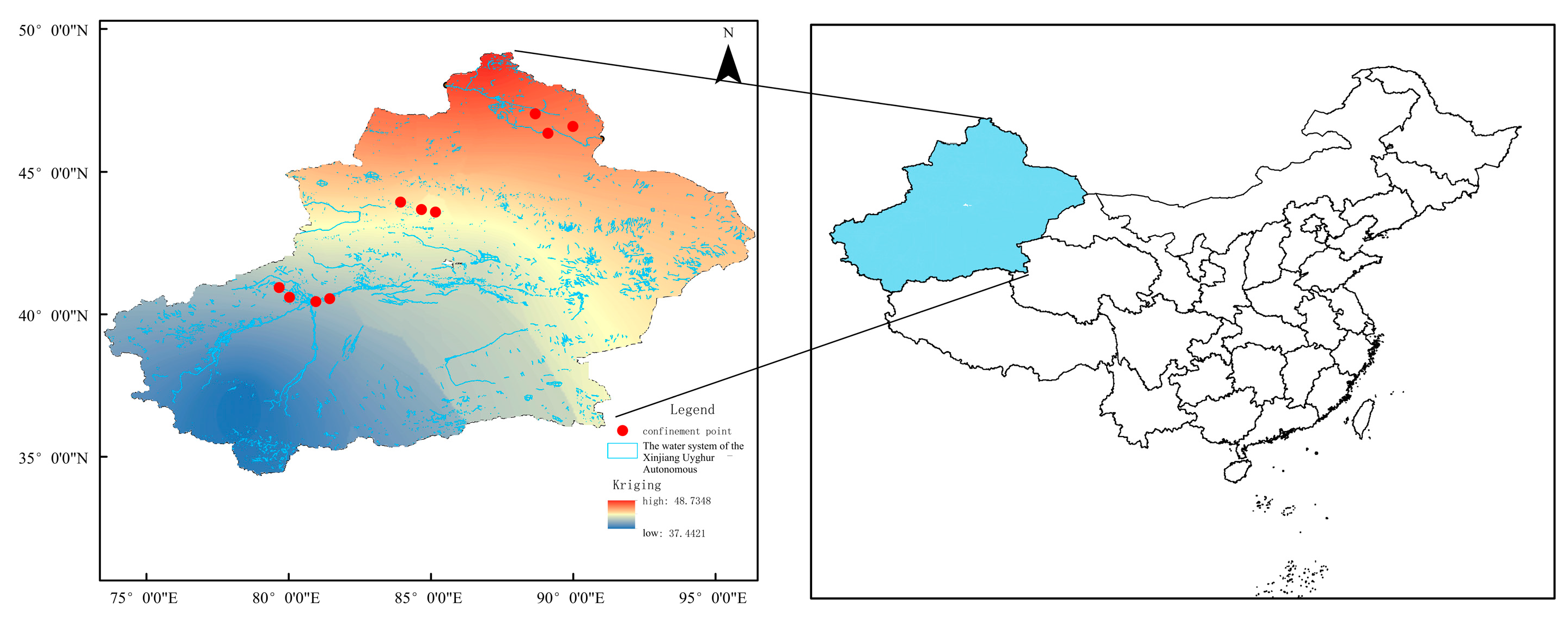
2.1. Study Area
2.2. Sample Collection and Determination Methods
2.2.1. Physicochemical Indices of the Water
2.2.2. Zooplankton
2.3. Division of Zooplankton Functional Groups
2.4. Data Processing and Analysis
2.4.1. Calculation of Dominant Species
2.4.2. Biodiversity
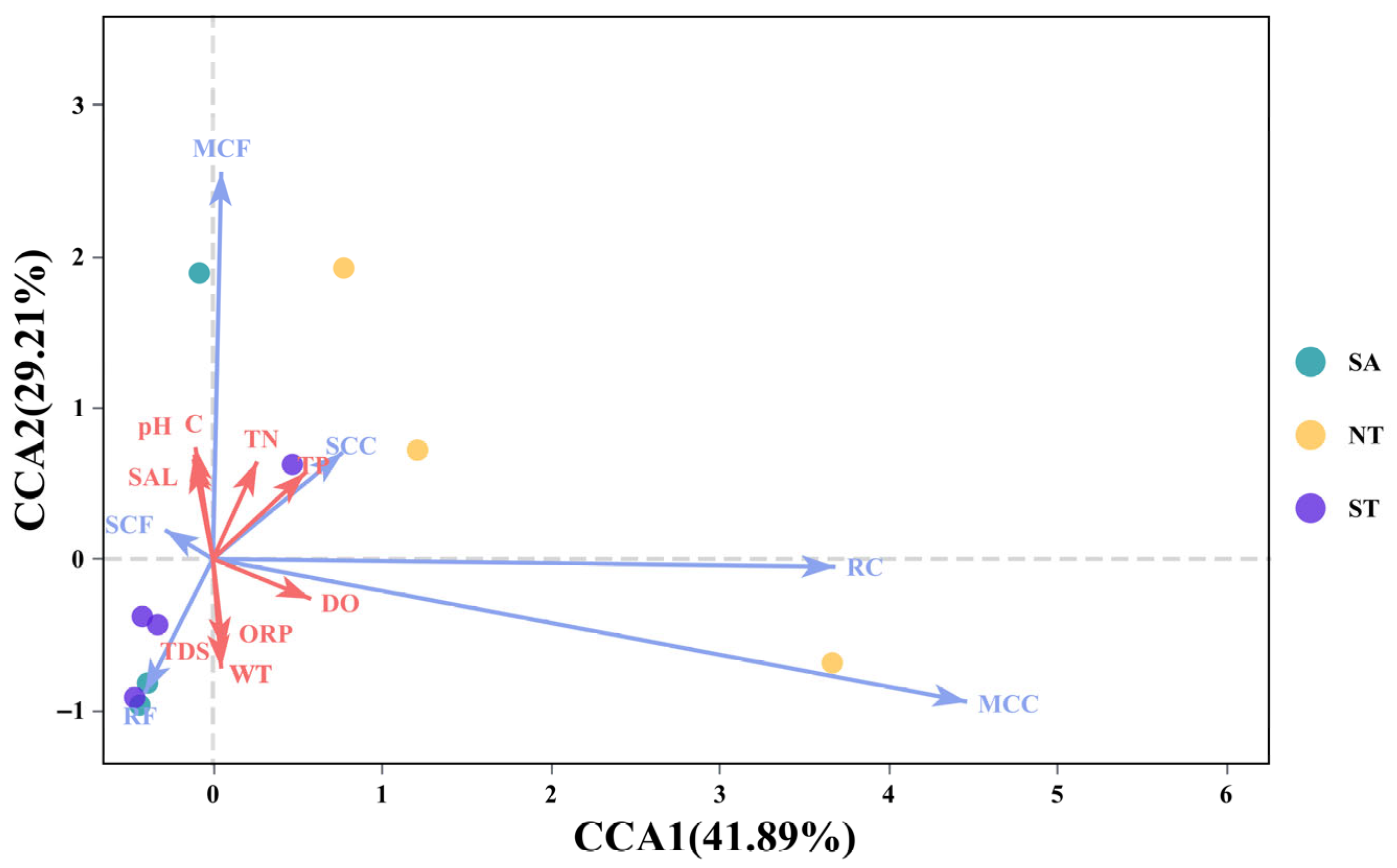
2.4.3. Canonical Correspondence Analysis (CCA)
2.4.4. Bray–Curtis Similarity Analysis
2.4.5. NMDS + PERMANOVA Analysis
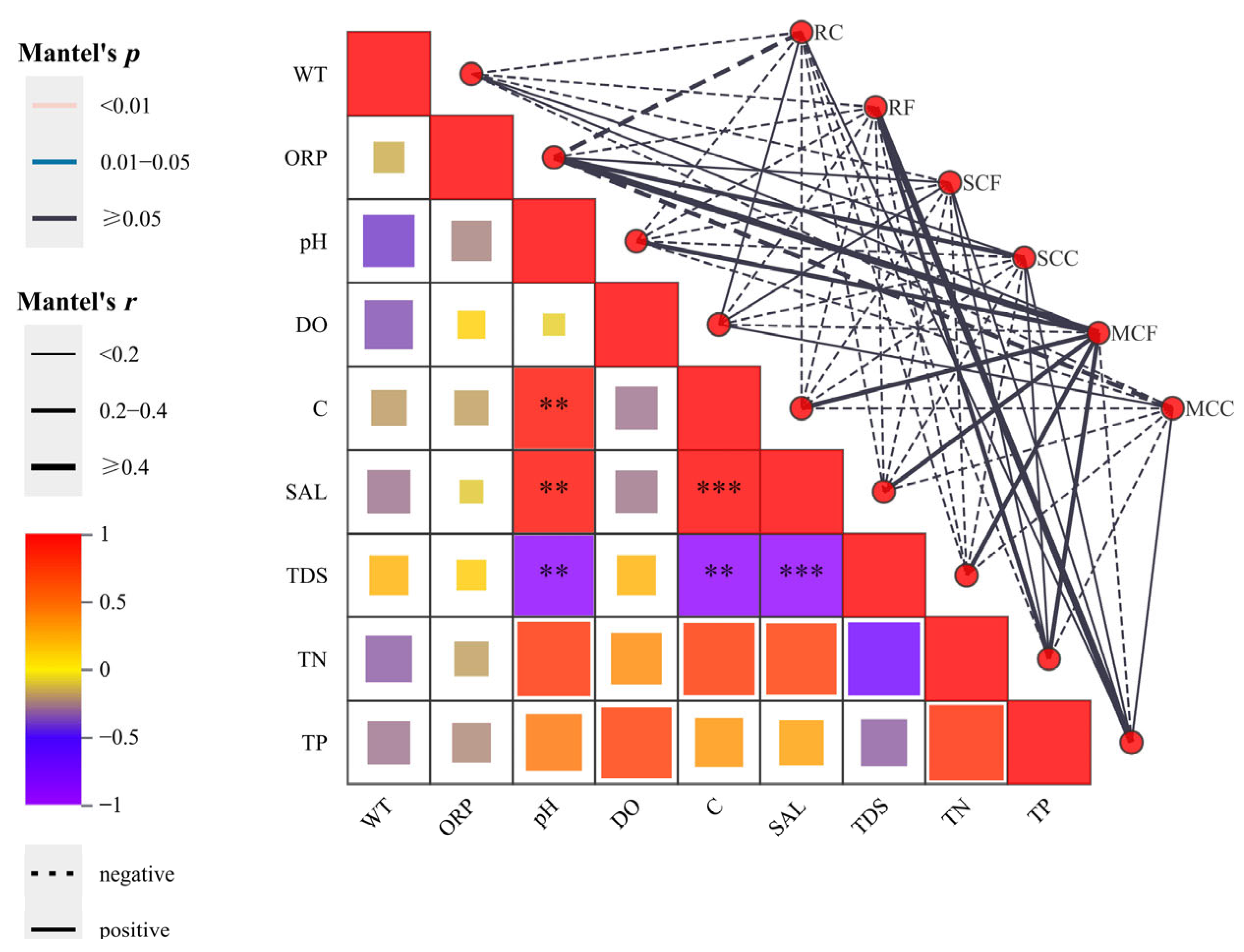
2.4.6. Correlation Analysis and Mantel Test Correlation Test
3. Results
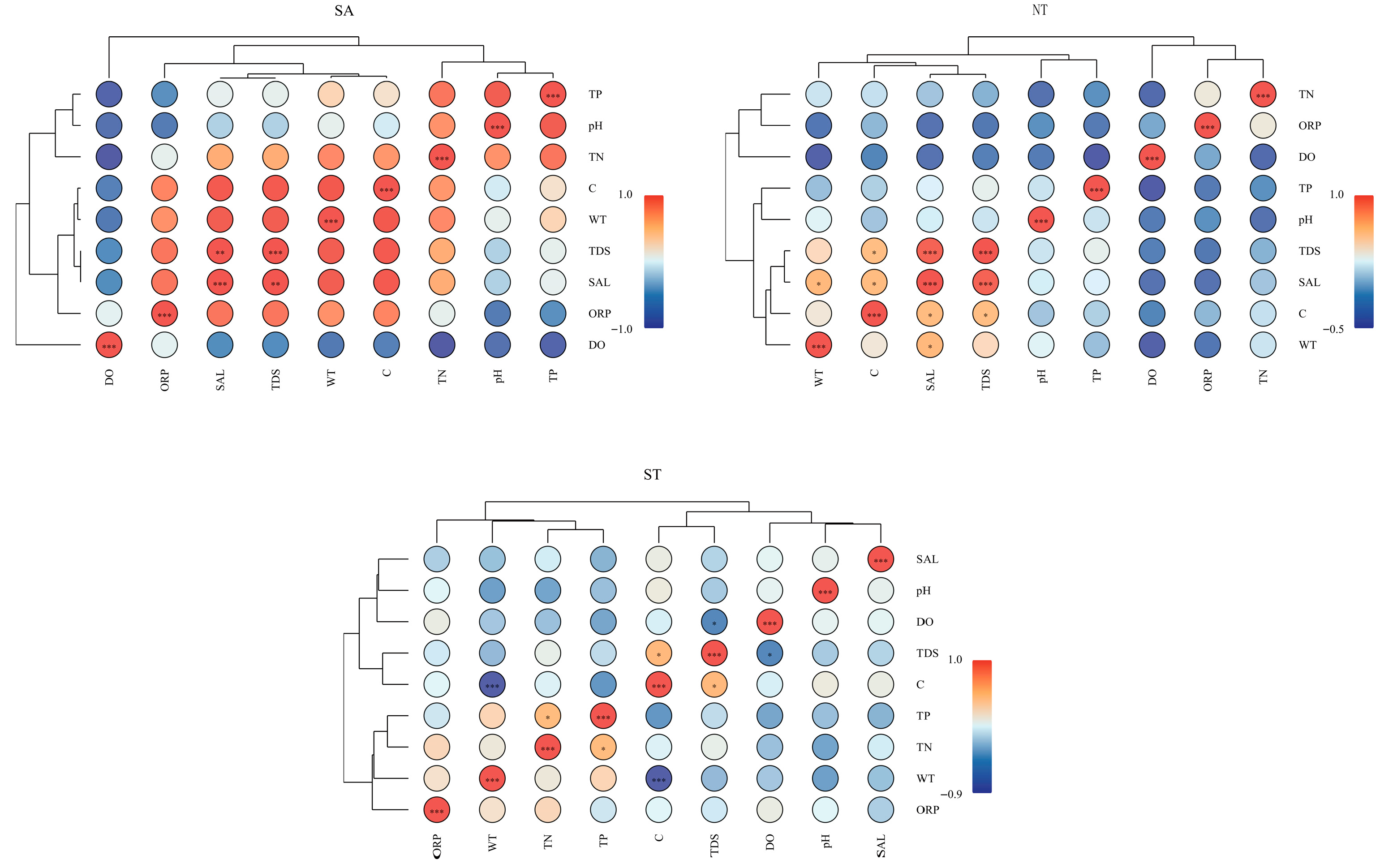
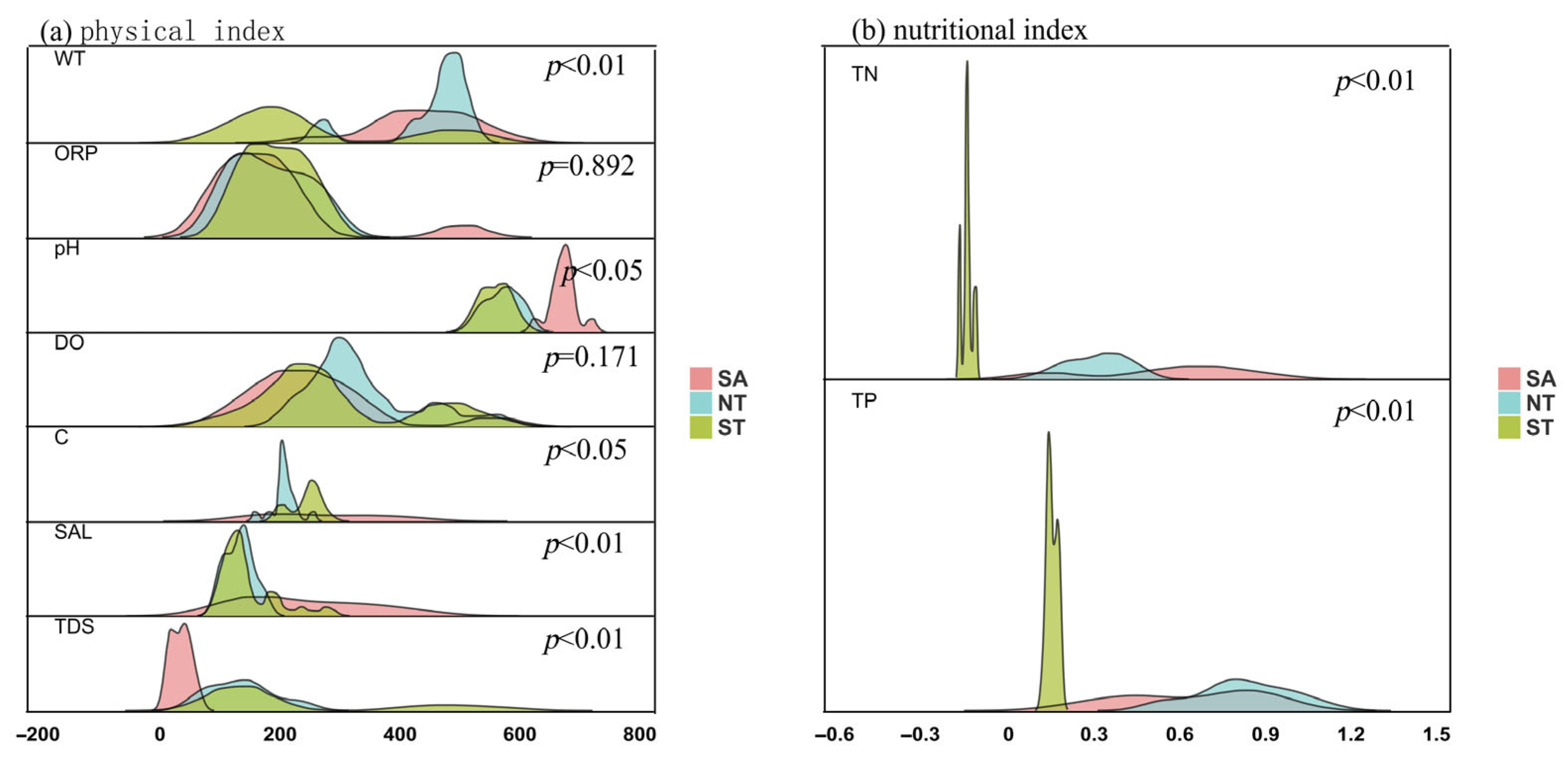
3.1. Distribution Characteristics and Correlation of Water Environment Factors
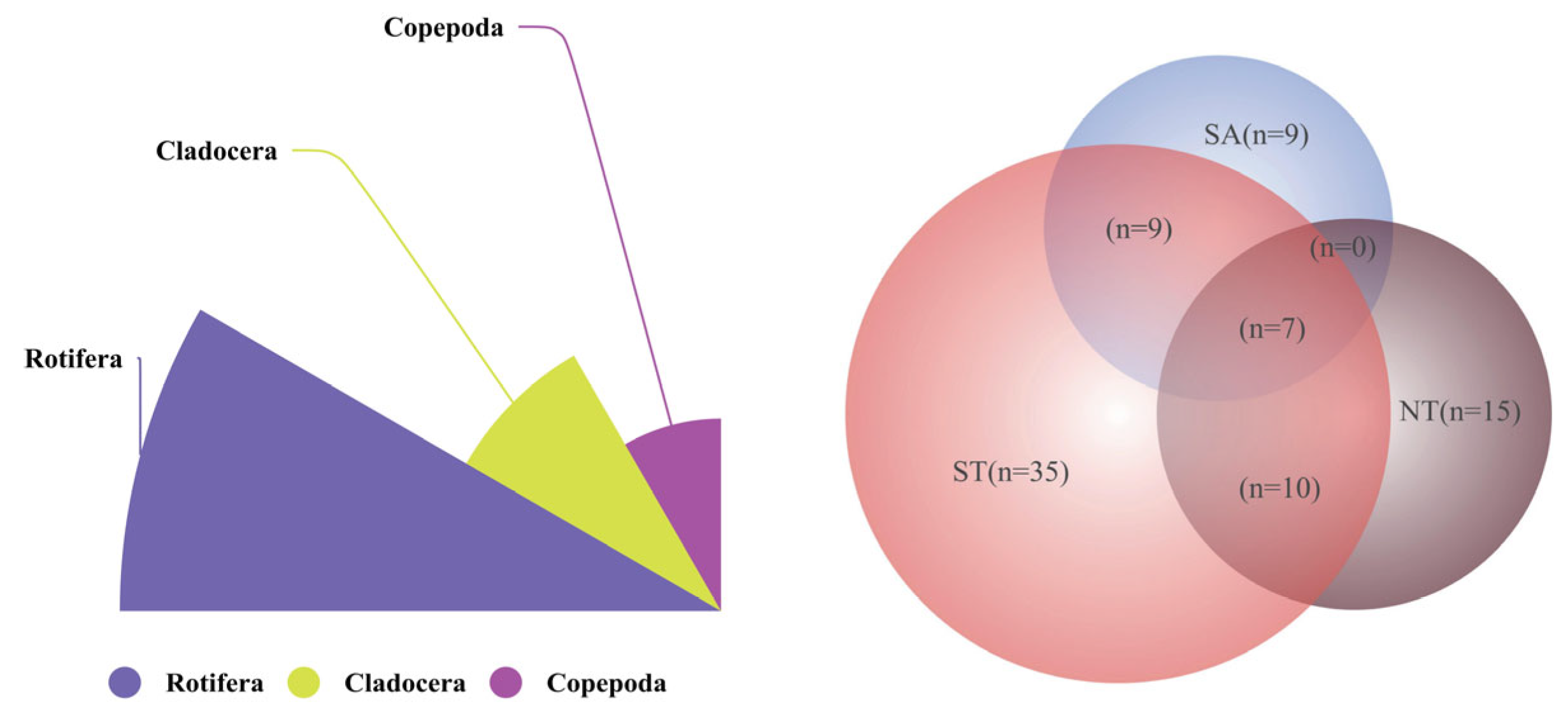
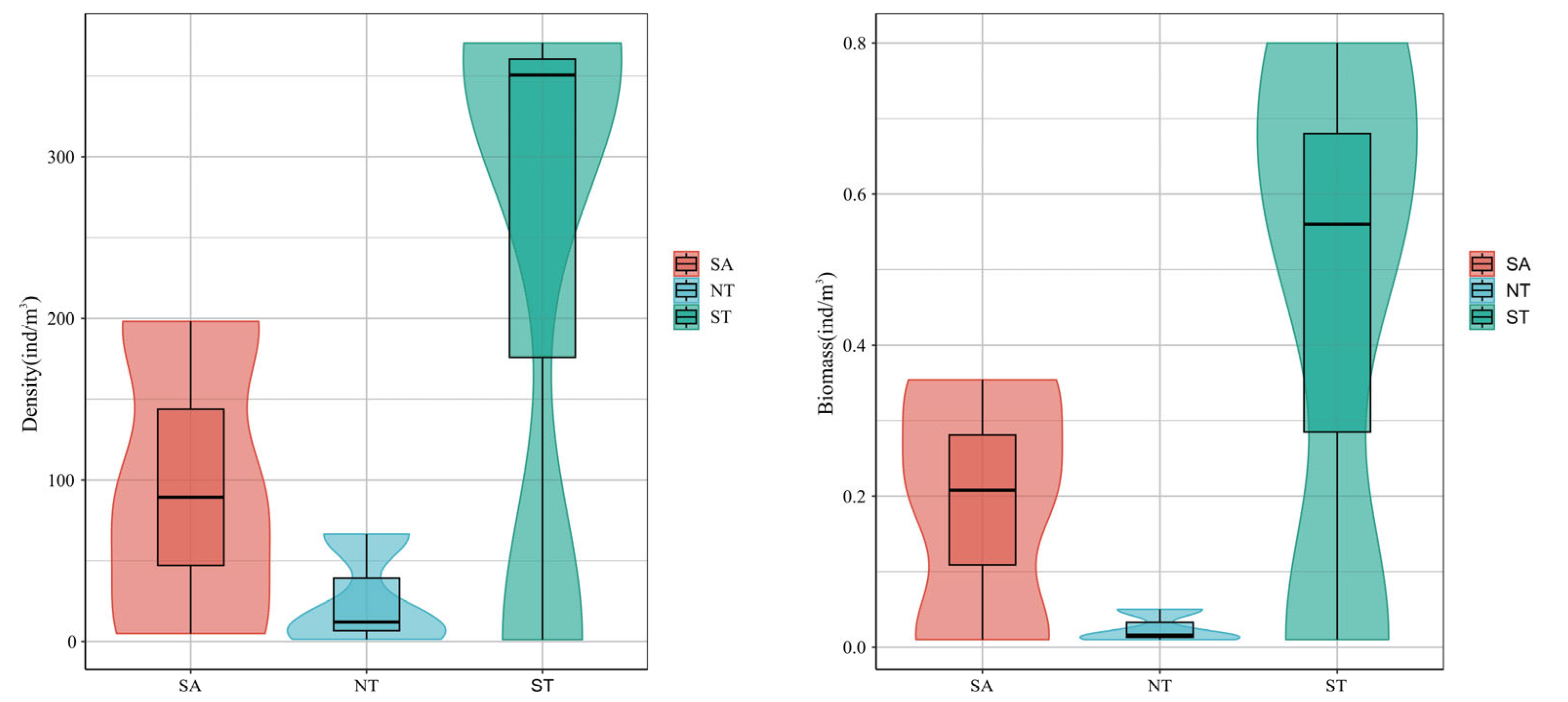
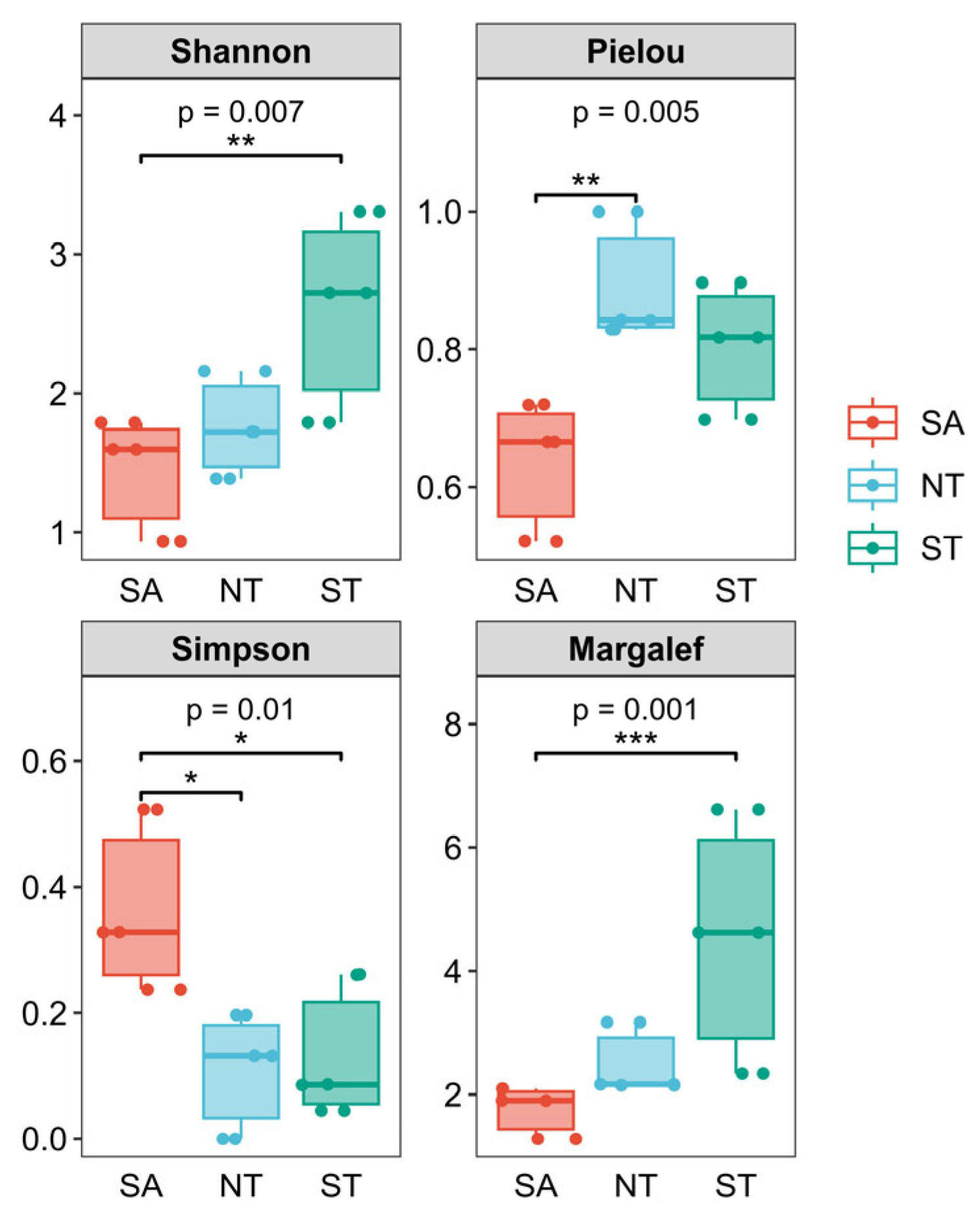
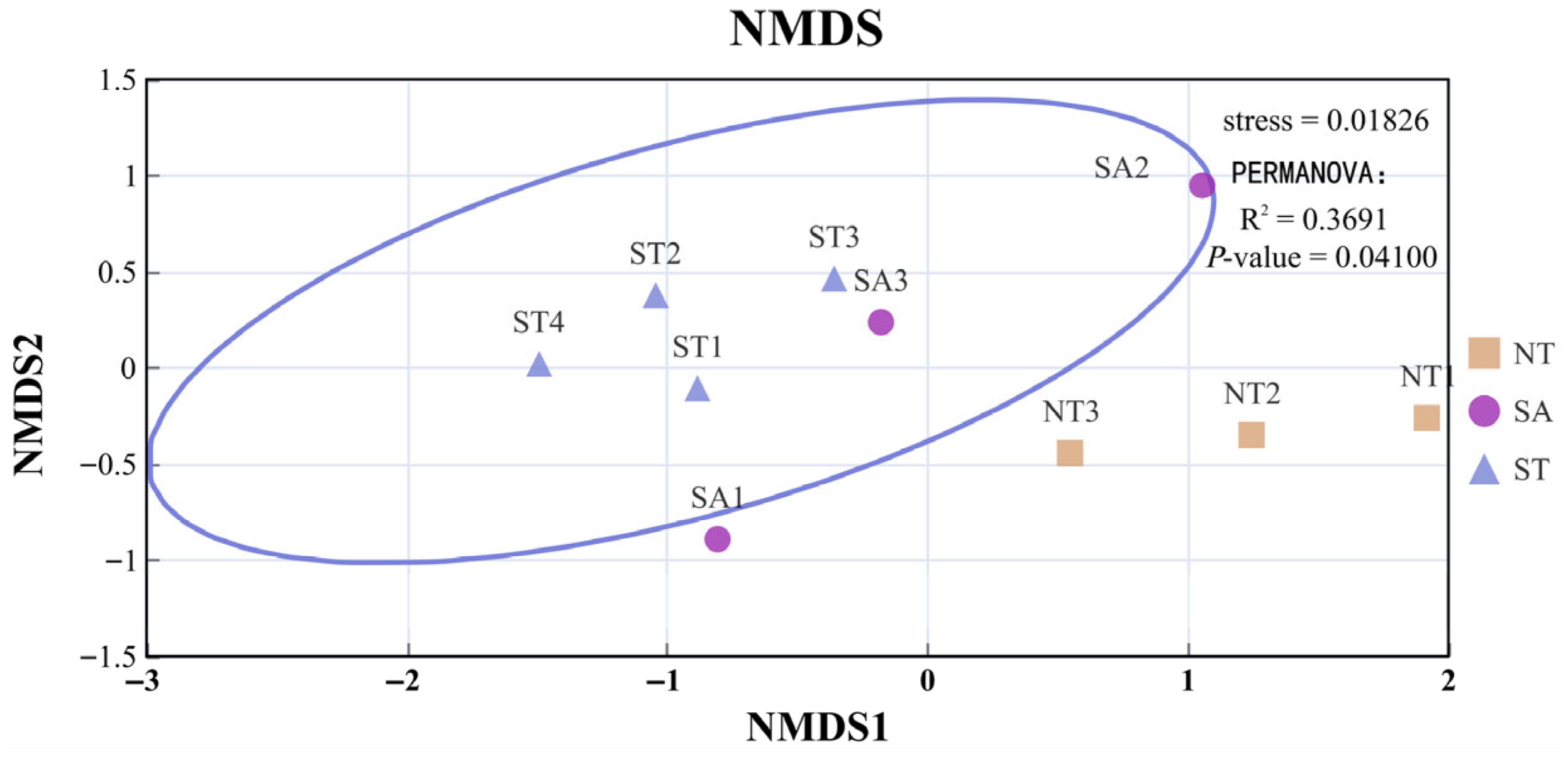
3.2. Differences in Zooplankton Community Structure in Different Geographical Regions
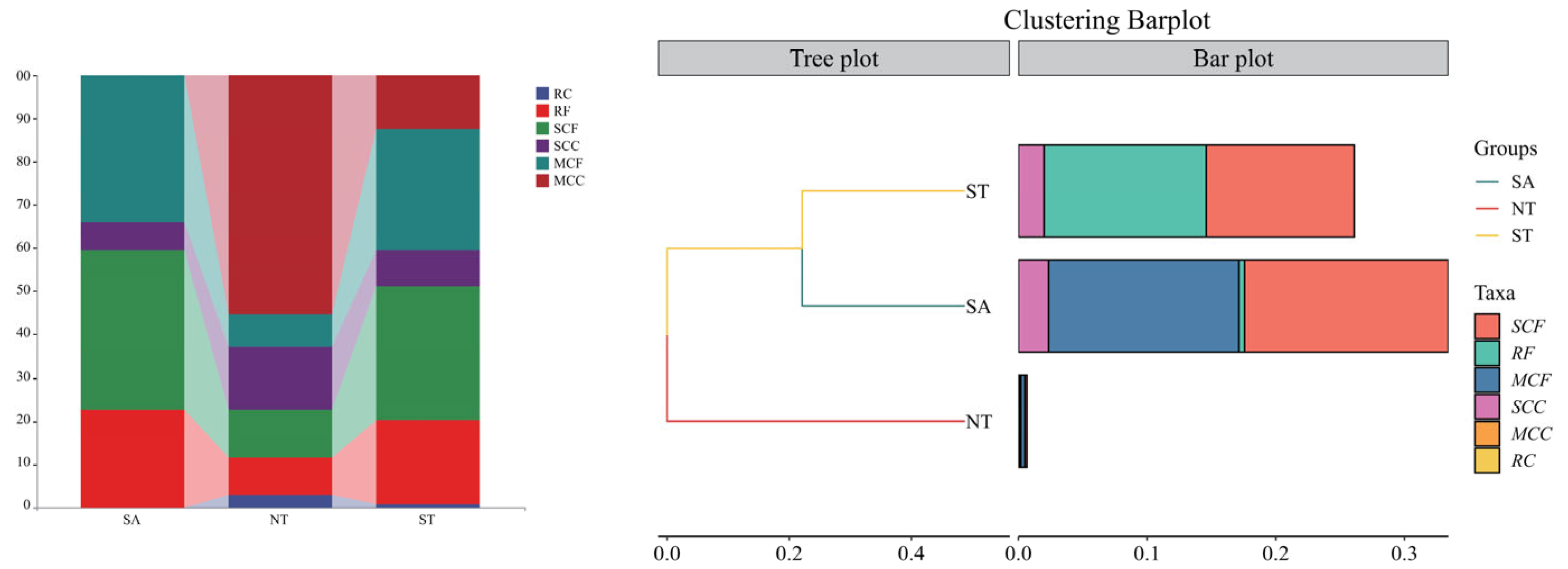
3.3. Species Composition and Water Environment Analysis of Zooplankton Functional Groups in Different Regions
4. Discussion
4.1. Correlation Analysis of Ecosystem State and Water Environment Parameters in Watershed
4.2. Community Composition and Diversity of Zooplankton in the River Basin
4.3. Correlation Between Zooplankton Functional Groups and Water Environmental Factors
5. Conclusions
Author Contributions
Funding
Institutional Review Board Statement
Informed Consent Statement
Data Availability Statement
Conflicts of Interest
References
- Jeppesen, E.; Nõges, P.; Davidson, T.A.; Haberman, J.; Nõges, T.; Blank, K.; Lauridsen, T.L.; Søndergaard, M.; Sayer, C.; Laugaste, R.; et al. Zooplankton as indicators in lake: A scientific-based plea for including zooplankton in the ecological quality assessment of lakes according to the European Water Framework Directive (WFD). Hydrobiologia 2011, 676, 279–297. [Google Scholar] [CrossRef]
- Hou, E.G.; Shang, S.Q.; Guan, S.S. Spatial-temporal distribution and functional group characteristics of plankton communities in Jixi Wetland, Jinan City. J. Dalian Ocean Univ. 2023, 38, 482–493. [Google Scholar]
- Van Egeren, S.J.; Dodson, S.I.; Torke, B.; Maxted, J.T. The relative significance of environmental and anthropogenic factors affecting zooplankton community structure in southeast wisconsin till plain lakes. Hydrobiologia 2011, 668, 137–146. [Google Scholar] [CrossRef]
- Zhang, Y.; Bai, K.; Shi, L.P.; Li, J.H.; Wang, Y.N.; Zhao, X.M.; Liu, C.; Chen, H.B.; Jiang, S.; Hu, Y.Q.; et al. Spatial-temporal distribution characteristics and driving factors of zooplankton communities in Hulun Lake. Fish. Sci. China 2025, 38, 71–78. [Google Scholar]
- Gao, H.L.; Qian, X.; Wu, H.F.; Li, H.; Pan, H.; Han, C. Combined effects of submerged macrophytes and aquatic animals on the restoration of a eutrophic water body: A case study of Gonghu bay, Lake Taihu. Ecol. Eng. 2017, 102, 15–23. [Google Scholar] [CrossRef]
- Zhang, L.; Zhang, S.P.; Su, K. Spatial structure of zooplankton communities and their relationships with environmental factors in the adjacent waters of the Xiaoqing River Estuary, Laizhou Bay in spring. Trans. Oceanol. Limnol. 2025, 47, 129–137. [Google Scholar]
- Monahan, W.B.; Pereira, R.J.; Wake, D.B. Ring distributions leading to species formation: A global topographic analysis of geographic barriers associated with ring species. BMC Biol. 2012, 10, 20. [Google Scholar] [CrossRef]
- Xiong, L.; Li, S.; Tang, G. Geomorphometry and terrain analysis: Data, methods, platforms and applications. Earth Sci. Rev. 2022, 233, 104191. [Google Scholar] [CrossRef]
- Contina, A.; Magozzi, S.; Van Zanden, H.B. Optimizing stable isotope sampling design in terrestrial movement ecology research. Methods Ecol. Evol. 2022, 13, 1237–1249. [Google Scholar] [CrossRef]
- Stojilkovic, B.; Gray, M. Geodiversification: The evolution of geodiversity through time. Geoheritage 2024, 3, 16. [Google Scholar] [CrossRef]
- Bacon, C.D.; Look, S.L. Species limits, geographical distribution and genetic diversity in Johannesteijsmannia (Arecaceae). Bot. J. Linn. Soc. 2016, 182, 318–347. [Google Scholar] [CrossRef]
- Juračka, P.J.; Declerck, S.A.; Vondrák, D.; Beran, L.; Černý, M.; Petrusek, A. A naturally heterogeneous landscape can effectively slow down the dispersal of aquatic microcrustaceans. Oecologia 2016, 180, 785–796. [Google Scholar] [CrossRef] [PubMed]
- Aarflot, J.M.; Aksnes, D.L.; Opdal, A.F.; Skjoldal, H.R.; Fiksen, Ø. Caught in broad daylight: Topographic constraints of zooplankton depth distributions. Limnol. Oceanogr. 2018, 64, 849–859. [Google Scholar] [CrossRef]
- Aarflot, J.M.; Dalpadado, P.; Fiksen, O. Foraging success in planktivorous fish increases with topographic blockage of prey distributions. Mar. Ecol. Prog. Ser. 2020, 644, 129–142. [Google Scholar] [CrossRef]
- Ji, L.; Zhang, H.; Wang, Z.; Tian, Y.; Tian, W.; Liu, Z. Trace Elements and Temperature Combined to Regulate Zooplankton Community Structures in Mountain Streams. Biology 2025, 14, 183. [Google Scholar] [CrossRef]
- Stefanoudis, P.V.; Rivers, M.; Ford, H.; Yashayaev, I.M.; Rogers, A.D.; Woodall, L.C. Changes in zooplankton communities from epipelagic to lower mesopelagic waters. Mar. Environ. Res. 2019, 146, 1–11. [Google Scholar] [CrossRef]
- Bennett, K.F.P.; Bolton, P.E.; Brumfield, R.T.; Wilkinson, G.S.; Braun, M.J. Impact of a putative riverine barrier on genomic population structure and gene flow in the presence of sexual selection. Evolution 2025, 79, 2181–2192. [Google Scholar] [CrossRef]
- Naka, L.N.; Pil, M.W. Moving beyond the riverine barrier vicariant paradigm. Mol. Ecol. 2020, 29, 2129–2132. [Google Scholar] [CrossRef]
- Editorial Board of “Geomorphology and Environmental Effects of Xinjiang”. Official publication of “Geomorphology and Environmental Effects of Xinjiang”. Arid Land Geogr. 2011, 34, 1038. [Google Scholar]
- Yuan, F.C.; Yang, F.X. Basic characteristics of geomorphology in Xinjiang. Arid Land Geogr. 1990, 13, 1–5. [Google Scholar]
- Wang, J.H.; Liu, J.H.; Shang, Y.Z.; Jiang, D.; Xiao, W.H. China’s campaign to create artificial water surfaces in drought-affected regions must consider prevention measures for ecological problems. Environ. Earth Sci. 2015, 74, 5457–5462. [Google Scholar] [CrossRef]
- Mineeva, N.M. Reservoir as a habitat for hydrobionts. Inland Water Biol. 2023, 16, S217–S227. [Google Scholar] [CrossRef]
- Miao, H.C.; Zheng, W.T.; Chen, X.P.; Yu, G.Y.; Li, X.Y.; Chu, Y.S.; Xu, P.F.; Bokhari, A.K.; Wang, F.S. Development of subsurface chlorophyll maximum layer and its contribution to the primary productivity of water column in a large subtropical reservoir. Environ. Res. 2023, 231, 116118. [Google Scholar] [CrossRef] [PubMed]
- Westberry, T.K.; Behrenfeld, M.J.; Shi, Y.R.; Yu, H.; Remer, L.A.; Bian, H. Atmospheric nourishment of global ocean ecosystems. Science 2023, 380, 515–519. [Google Scholar] [CrossRef]
- Lin, Q.Q. Zooplankton distribution in tropical reservoirs, South China. Int. Rev. Hydrobiol. 2003, 88, 602–613. [Google Scholar] [CrossRef]
- Hu, M.H. Do physicochemical variables regulate the distribution of zooplankton communities in reservoirs dominated by filter-feeding carp? Chin. J. Oceanol. Limnol. 2014, 32, 765–773. [Google Scholar] [CrossRef]
- Li, H.; Gu, Y.; Cai, Q.; Dong, X.; Ye, L. Zooplankton size structure in relation to environmental factors in the Xiangxi Bay of Three Gorges Reservoir, China. Front. Ecol. Evol. 2022, 10, 800025. [Google Scholar] [CrossRef]
- Wei, F. Water and Wastewater Monitoring and Analysis Methods. China Environ. Sci. Press 2002, 4, 88–124. [Google Scholar]
- Jiang, X.; Du, N. Funa Sinica CRUSTACEA Freshwater Copepoda, 1st ed.; Science Press: Beijing, China, 1979; pp. 53–418. [Google Scholar]
- Jiang, X.; Du, N. Funa Sinica CRUSTACEA Freshwater Cladocera, 1st ed.; Science Press: Beijing, China, 1979; pp. 80–271. [Google Scholar]
- Wang, J. Chinese Freshwater Rotifers, 1st ed.; Science Press: Beijing, China, 1961; pp. 22–282. [Google Scholar]
- PEDRÓS-ALIÓ, C.; Brock, T.D. The impact of zooplankton feeding on the epilimnetic bacteria of a eutrophic lake. Freshw. Biol. 1983, 13, 227–239. [Google Scholar] [CrossRef]
- Huang, X. Application of a simple weighing method to common rotifer species in Lake Donghu, Wuhan. Acta Hydrobiol. Sin. 1981, 3, 409–416. [Google Scholar]
- Chen, X. Measurement of freshwater copepod biomass. Acta Hydrobiol. Sin. 1981, 3, 397–408. [Google Scholar]
- Barnett, A.; Finlay, K.; Beisner, B. Functional diversity of crustacean zooplankton communities: Towards a trait-based classification. Freshw. Biol. 2013, 52, 796–813. [Google Scholar] [CrossRef]
- Ma, L. Characteristics of zooplankton functional groups and their environmental factors in the Harbin section of the Songhua River, China. Appl. Ecol. Environ. Res. 2020, 18, 7457–7471. [Google Scholar] [CrossRef]
- Pinto-Coelho, R.; Pinel-Alloul, B.; Methot, G.; Havens, K.E. Crustacean zooplankton in lakes and reservoirs of temperate and tropical regions: Variation with trophic status. Can. J. Fish. Aquat. 2005, 62, 348–361. [Google Scholar] [CrossRef]
- Shannon, C.E. A mathematical theory of communication. Bell Syst. Tech. J. 1948, 27, 379–423. [Google Scholar] [CrossRef]
- Margalef, R. Information theory in ecology. Gen. Systems 1973, 3, 36–71. [Google Scholar]
- Pielou, E.C. The measurement of diversity in different types of biological collections. J. Theor. Biol. 1966, 13, 131–144. [Google Scholar] [CrossRef]
- Simpson, E.H. Measurement of diversity. Nature 1949, 163, 688. [Google Scholar] [CrossRef]
- Lai, J. Canoco 5: A new version of an ecological multivariate data ordination program. Biodivers. Sci. 2013, 21, 4. [Google Scholar] [CrossRef]
- Bray, J.R.; Curtis, J.T. An ordination of the upland forest communities of southern Wisconsin. Ecol. Monogr. 1957, 27, 326–349. [Google Scholar] [CrossRef]
- Lai, J.; Zou, Y.; Zhang, J.; Peres-Neto, P.R. Generalizing hierarchical and variation partitioning in multiple regression and canonical analyses using the rdacca.hp R package. Methods Ecol. Evol. 2022, 13, 782–788. [Google Scholar] [CrossRef]
- Chainho, P.; Costa, J.L.; Chaves, M.L.; Dauer, D.M.; Costa, M.J. Influence of seasonal variability in benthic invertebrate community structure on the use of biotic indices to assess the ecological status of a Portuguese estuary. Mar. Pollut. Bull. 2007, 54, 1586–1597. [Google Scholar] [CrossRef] [PubMed]
- Chen, X.; Cui, Z.; Zhang, Y.; Zhang, X.; Chen, J.; Wei, Y. Contrasting effects of river inflow and seawater intrusion on zooplankton community structure in Jiaozhou bay, the Yellow Sea. Mar. Environ. Res. 2023, 192, 106194. [Google Scholar] [CrossRef] [PubMed]
- Morales-Baquero, R.; Carrillo, P.; Barea-Arco, J. Climate-driven changes on phytoplankton–zooplankton coupling and nutrient availability in high mountain lakes of southern Europe. Freshw. Biol. 2006, 51, 989–998. [Google Scholar] [CrossRef]
- Zhang, X.H.; Zhou, Y.; Long, H. Investigation on zooplankton in Nanji Marine Protected Area (MPA). Chin. J. Zool. 2006, 41, 83–86. [Google Scholar]
- Balazy, K.; Trudnowska, E.; Wichorowski, M.; Błachowiak-Samołyk, K. Large versus small zooplankton in relation to temperature in the Arctic shelf region. Polar Res. 2018, 37, 1427409. [Google Scholar] [CrossRef]
- Simoncelli, S.; Thackeray, S.J.; Wain, D.J. Effect of temperature on zooplankton vertical migration velocity. Hydrobiologia 2019, 829, 143–166. [Google Scholar] [CrossRef]
- Laspoumaderes, C.; Modenutti, B.; Souza, M.S. Glacier melting and stoichiometric implications for lake community structure: Zooplankton species distributions across a natural light gradient. Glob. Change Biol. 2013, 19, 316–326. [Google Scholar] [CrossRef]
- Sommaruga, R. When glaciers and ice sheets melt: Consequences for planktonic organisms. J. Plankton Res. 2015, 37, 509–518. [Google Scholar] [CrossRef]
- Moody, E.K.; Wilkinson, G.M. Functional shifts in lake zooplankton communities with hypereutrophication. Freshw. Biol. 2019, 64, 608–616. [Google Scholar] [CrossRef]
- Sommaruga, R.; Kandolf, G. Negative consequences of glacial turbidity for the survival of freshwater planktonic heterotrophic flagellates. Sci. Rep. 2014, 4, 4113. [Google Scholar] [CrossRef]
- Henley, W.F.; Patterson, M.A.; Neves, R.J.; Lemly, A.D. Effects of sedimentation and turbidity on lotic food webs: A concise review for natural resource managers. Rev. Fish. Sci. 2000, 8, 125–139. [Google Scholar] [CrossRef]
- Schaafsma, F.L.; Cherel, Y.; Flores, H.; van Franeker, J.A.; Lea, M.-A.; Raymond, B.; van de Putte, A.P. Review: The energetic value of zooplankton and nekton species of the Southern Ocean. Mar. Biol. 2018, 165, 129. [Google Scholar] [CrossRef] [PubMed]
- De los Ríos-Escalante, P.R.; Woelfl, S. A review of zooplankton research in Chile. Limnologica 2023, 100, 126079. [Google Scholar] [CrossRef]
- Rippey, B.; Macintosh, K.A.; McElarney, Y.; Douglas, R. A method to choose water depths for zooplankton samples in lakes. Limnol. Oceanogr. Methods 2021, 19, 355–367. [Google Scholar] [CrossRef]
- Mbandzi, N.; Wasserman, R.J.; Deyzel, S.H.P. River flow, zooplankton and dominant zooplanktivorous fish dynamics in a warm-temperate South African estuary. J. Fish Biol. 2018, 92, 1671–1686. [Google Scholar] [CrossRef]
- Chiba, S.; Batten, S.; Martin, C.S.; Ivory, S.; Miloslavich, P.; Weatherdon, L.V. Zooplankton monitoring to contribute towards addressing global biodiversity conservation challenges. J. Plankton Res. 2018, 40, 729–740. [Google Scholar] [CrossRef]
- Bogacka-Kapusta, E.; Kapusta, A. Epilimnetic zooplankton communities in soft-water lakes with isoetids in northern Poland. Ecohydrol. Hydrobiol. 2023, 2, 281–288. [Google Scholar] [CrossRef]
- Xue, J.Z.; Sun, L.S.; Fang, W.; Zhu, X.; Li, Z.; Wu, H. Ecological characteristics of rotifer communities in Fuhai Reservoir, Xinjiang. Arid Land Geogr. 2011, 34, 996–1001. [Google Scholar]
- Gao, Y.; Zhang, Y.D.; Hu, W.G. Community characteristics and trophic status assessment of zooplankton in Mogu Lake Reservoir, Shihezi City, Xinjiang. Chin. Zool. 2018, 53, 890–898. [Google Scholar]
- Yuan, L.; Sun, L.S.; Zhu, X.Y. Community structure characteristics of zooplankton in Hongshan Reservoir, Xinjiang. Arid Land Geogr. 2011, 34, 1002–1008. [Google Scholar]
- Hu, B.; Hu, X.; Nie, X.; Zhang, X.; Wu, N.; Hong, Y.; Qin, H.M. Seasonal and inter-annual community structure characteristics of zooplankton driven by water environment factors in a sub-lake of Lake Poyang, China. PeerJ 2019, 7, e7590. [Google Scholar] [CrossRef] [PubMed]
- Chen, F.; Xie, P. The effects of fresh and decomposed Microcystis aeruginosa on cladocerans from a subtropic Chinese lake. J. Freshw. Ecol. 2003, 18, 97–104. [Google Scholar] [CrossRef]
- Zhou, J.; Yang, G.; Qin, B.; Zhang, G.; Wang, L.; Gao, Y.; Zhong, C. Effect of the ingestion of metazooplankton on the formation of Microcystis blooms in summer in Lake Taihu. Lake Sci. 2013, 25, 398–405. [Google Scholar]
- Josué, I.I.; Sodré, E.O.; Setubal, R.B.; Cardoso, S.J.; Roland, F.; Figueiredo-Barros, M.P.; Bozelli, R.L. Zooplankton functional diversity as an indicator of a long-term aquatic restoration in an Amazonian lake. Restor. Ecol. 2021, 29, e13365. [Google Scholar] [CrossRef]
- Minutoli, R.; Bonanno, A.; Guglielmo, L.; Bergamasco, A.; Grillo, M.; Schiaparelli, S.; Barra, M.; Bergamasco, A.; Remirens, A.; Genovese, S.; et al. Biodiversity and functioning of mesozooplankton in a changing Ross Sea. Deep Sea Res. Part II 2024, 217, 13. [Google Scholar] [CrossRef]
- Guermazi, W.; El-Khateeb, M.; Abu-Dalo, M. Assessment of the Zooplankton Community and Water Quality in an Artificial Freshwater Lake from a Semi-Arid Area (Irbid, Jordan). Water 2023, 15, 2796. [Google Scholar] [CrossRef]
- Wang, T.; Yang, Z. Study on the permeability of the four plain reservoirs in Xinjiang Production and Construction Corps the first division. Tarim Univ. 2009, 21, 110–116. [Google Scholar]
- Thirunavukkarasu, S.; Dahms, H.U.; Rajendran, P. Shallow hydrothermal vent meso-zooplankton: A systematic review of species composition and community structure. Sci. Total Environ. 2025, 1004, 180779. [Google Scholar] [CrossRef]
- Horn, W.; Horn, H. Interrelationships between crustacean zooplankton and phytoplankton: Results from 15 years of field observations at the mesotrophic Saidenbach Reservoir (Germany). Hydrobiologia 1995, 307, 231–238. [Google Scholar] [CrossRef]
- Yang, Z.; Pan, B.; Liu, X. Niche processes shape zooplankton community structure in a sediment-laden river basin. Hydrobiologia 2024, 851, 1353–1370. [Google Scholar] [CrossRef]
- Roman, M.R.; Brandt, S.B.; Houde, E.D. Interactive effects of hypoxia and temperature on coastal pelagic zooplankton and fish. Front. Mar. Sci. 2019, 6, 139. [Google Scholar] [CrossRef]
- Zhang, D.; Xu, Z.; Gao, Q.; Chen, J. Effects of tide and water masses on the distribution of zooplankton in different parts of Hangzhou Bay. Acta Ecol. Sin. 2016, 36, 133–140. [Google Scholar] [CrossRef]
- Bi, R.; Liu, H. Effects of variability among individuals on zooplankton population dynamics under environmental conditions. Mar. Ecol. Prog. Ser. 2017, 564, 9–28. [Google Scholar] [CrossRef]
- Shen, Y.Y.; Cheng, J.X.; Xu, L.G.; Li, R.Y.; You, H.L.; Yang, H. Community structure characteristics and influencing factors of zooplankton in Poyang Lake under extreme hydrological drought. Acta Ecol. Sin. 2023, 43, 10399–10412. [Google Scholar]
- Zi, F.; Song, T.; Liu, J. Environmental and climatic drivers of phytoplankton communities in central Asia. Biology 2024, 13, 717. [Google Scholar] [CrossRef]
- Song, Q.R.; Xiao, X.; Su, H.; Qiu, W.; Zhao, R.; Shi, Y.; Guo, T.; Guo, Z. Effects of temperature on benthic algae community. J. Jiaying Univ. 2024, 6, 37–45. [Google Scholar]
- Li, Y.; Chen, F. Are zooplankton useful indicators of water quality in subtropical lakes with high human impacts? Ecol. Indic. 2020, 113, 106167. [Google Scholar] [CrossRef]
- Sherman, R.E.; Chowdhury, P.R.; Baker, K.D. Genotype-specific relationships among phosphorus use, growth and abundance in Daphnia pulicaria. R. Soc. Open Sci. 2017, 4, 170305. [Google Scholar] [CrossRef]



| Reservoir | Longitude | Latitude |
|---|---|---|
| DL | 80°46′43.261″ | 40°40′51.024″ |
| SL | 80°1′38.956″ | 40°35′56.352″ |
| SY | 79°39′48.349″ | 40°56′4.166″ |
| XJZ | 81°3′20.35″ | 40°28′0.079″ |
| LG | 83°55′45.152″ | 43°56′41.659″ |
| DQG | 84°40′0.630″ | 43°40′37.977″ |
| MGH | 85°9′27.38″ | 43°34′55.335″ |
| AKDL | 88°39′39.624″ | 47°1′34.476″ |
| NGQ | 89°7′57.417″ | 46°19′12.07″ |
| KZS | 89°59′21.199″ | 46°35′28.601″ |
| Functional Group | Size/mm | Feeding Habits |
|---|---|---|
| Rotifer filter feeders, RF * | - | They feed on bacteria, algae, and organic matter |
| Rotifer carnivora, RC * | - | They feed on protozoa, other rotifers, and small crustaceans |
| Rotifer predators, RP | - | They feed mainly on algae |
| Small copepods and cladocera filter feeders, SCF * | <0.7 | They feed on bacteria, algae, organic matter, and protozoa |
| Small copepods and cladocera carnivora, SCC * | <0.7 | They feed on rotifers, cladocera, dipteran insects (larvae of mosquitoes), and oligochaetes |
| Middle copepods and cladocera filter feeders, MCF * | 0.7~1.5 | They feed on bacteria, algae, organic matter, and protozoa |
| Middle copepods and cladocera carnivora, MCC * | 0.7~1.5 | They feed on rotifers, cladocera, dipteran insects (larvae of mosquitoes), and oligochaetes |
| Large copepods and cladocera filter feeders, LCF | >1.5 | They feed on bacteria, algae, organic matter, and protozoa |
| Large copepods and cladocera carnivora, LCC | >1.5 | They feed on rotifers, cladocera, dipterans (larvae of midges), and oligochaetes |
| Classifications | Diversity Index (H′) | Richness Index (d) |
|---|---|---|
| High | >4.0 | >4.0 |
| Good | 3.0~4.0 | >4.0 |
| Moderate | 2.0~3.0 | 2.5~4.0 |
| Poor | 1.0~2.0 | <2.5 |
| Bad | 0.0~1.0 | <2.5 |
| Species | SA | NT | ST |
|---|---|---|---|
| Brachionus plicatilis | 0.291 | / | / |
| Nauplius copepoda | 0.264 | / | 0.045 |
| Keratella quadrata | 0.264 | / | / |
| Cyclopoida larva | 0.039 | 0.086 | 0.243 |
| Synchaeta stylata | 0.038 | / | / |
| Daphnia galeata | 0.023 | / | / |
| Trichocerca pusilla | / | 0.257 | / |
| Asplanchna priodonta | / | 0.196 | 0.092 |
| Bosmina longirostris | / | 0.187 | 0.082 |
| Diaphanosoma brachyurum | / | 0.147 | / |
| Thermocyclops taihokuensis | / | 0.111 | / |
| Brachionus calyciflorus | / | 0.103 | 0.245 |
| Polyarthra trigla | / | 0.091 | 0.448 |
| Brachionus calyciflorus | / | / | 0.210 |
| Keratella valga | / | / | 0.169 |
| Bosmina fatalis | / | / | 0.137 |
| Brachionus quadridentatus | / | / | 0.096 |
| Bosmina coregoni | / | / | 0.087 |
| Keratella cochlearis | / | / | 0.075 |
| Environmental Factor | SA | NT | ST |
|---|---|---|---|
| WT (°C) | 21.98 ± 4.11 | 22.56 ± 3.89 | 12.77 ± 4.17 |
| pH | 8.72 ± 0.22 | 7.72 ± 0.28 | 7.60 ± 0.25 |
| SAL (‰) | 0.21 ± 0.15 | 0.07 ± 0.03 | 0.08 ± 0.07 |
| TDS (mg/L) | 34.55 ± 16.33 | 136.07 ± 52.96 | 222.25 ± 164.19 |
| C (mg/L) | 416.66 ± 296.36 | 222.07 ± 62.29 | 328.35 ± 77.84 |
| DO (mg/L) | 5.22 ± 1.99 | 6.69 ± 1.66 | 5.85 ± 2.30 |
| ORP (mg/L) | 91.77 ± 53.46 | 91.14 ± 30.91 | 96.55 ± 25.95 |
| TN (mg/L) | 0.87 ± 0.32 | 0.58 ± 0.12 | 0.15 ± 0.02 |
| TP (mg/L) | 0.64 ± 0.24 | 0.82 ± 0.16 | 0.08 ± 0.07 |
| Types of Water Pollution | Diversity Index (H′) | Richness Index (d) |
|---|---|---|
| Oligosaprobic | >4.0 | >4.0 |
| Lightly polluted | >3.0~4.0 | >3~4.0 |
| β-Mesosaprobic | >1.0~3.0 | 2~3 |
| α-Mesosaprobic to polysaprobic | 0~1 | 0~2 |
Disclaimer/Publisher’s Note: The statements, opinions and data contained in all publications are solely those of the individual author(s) and contributor(s) and not of MDPI and/or the editor(s). MDPI and/or the editor(s) disclaim responsibility for any injury to people or property resulting from any ideas, methods, instructions or products referred to in the content. |
© 2026 by the authors. Licensee MDPI, Basel, Switzerland. This article is an open access article distributed under the terms and conditions of the Creative Commons Attribution (CC BY) license.
Share and Cite
Yun, L.; Liu, C.; Qiu, X.; Zi, F.; Cai, W.; Yang, L.; Song, Y.; Chen, S. Study on the Driving Factors of Plankton Community and Water Health Under the Terrain Barrier: A Case Study of Xinjiang. Biology 2026, 15, 238. https://doi.org/10.3390/biology15030238
Yun L, Liu C, Qiu X, Zi F, Cai W, Yang L, Song Y, Chen S. Study on the Driving Factors of Plankton Community and Water Health Under the Terrain Barrier: A Case Study of Xinjiang. Biology. 2026; 15(3):238. https://doi.org/10.3390/biology15030238
Chicago/Turabian StyleYun, Long, Changcai Liu, Xuelian Qiu, Fangze Zi, Wenxia Cai, Liting Yang, Yong Song, and Shengao Chen. 2026. "Study on the Driving Factors of Plankton Community and Water Health Under the Terrain Barrier: A Case Study of Xinjiang" Biology 15, no. 3: 238. https://doi.org/10.3390/biology15030238
APA StyleYun, L., Liu, C., Qiu, X., Zi, F., Cai, W., Yang, L., Song, Y., & Chen, S. (2026). Study on the Driving Factors of Plankton Community and Water Health Under the Terrain Barrier: A Case Study of Xinjiang. Biology, 15(3), 238. https://doi.org/10.3390/biology15030238