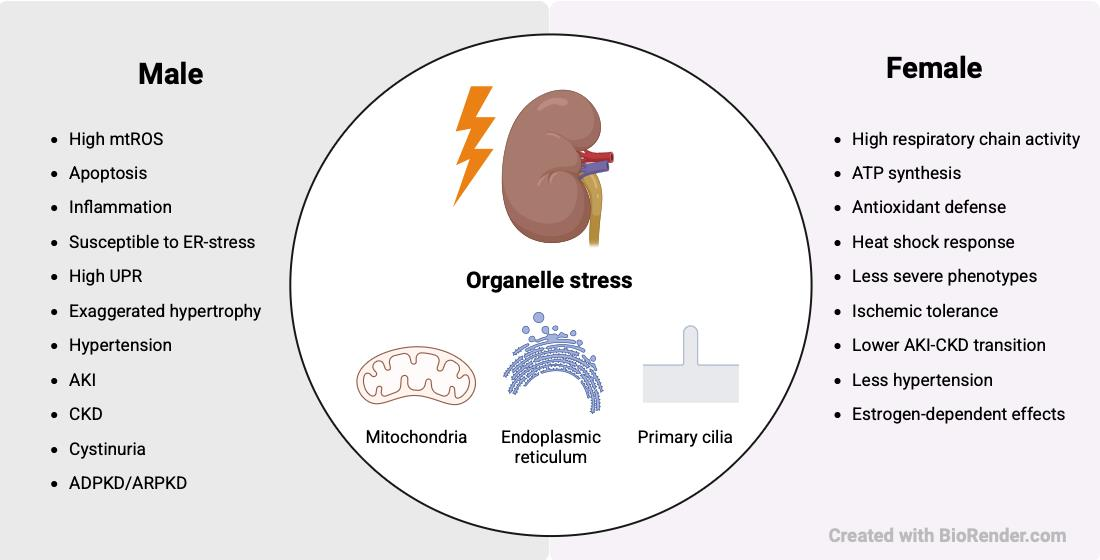
The Influence of Sex and Hormones on Organelle Stress in Kidney Injury: Insights from Preclinical Models


Simple Summary
Abstract
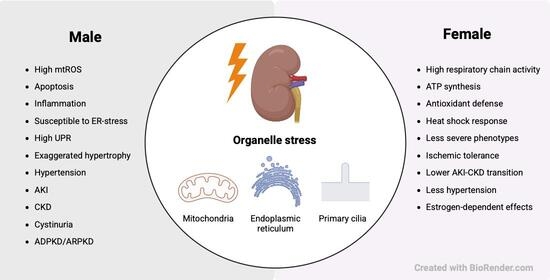
1. Introduction
2. Organelle Stress in Kidney Injury
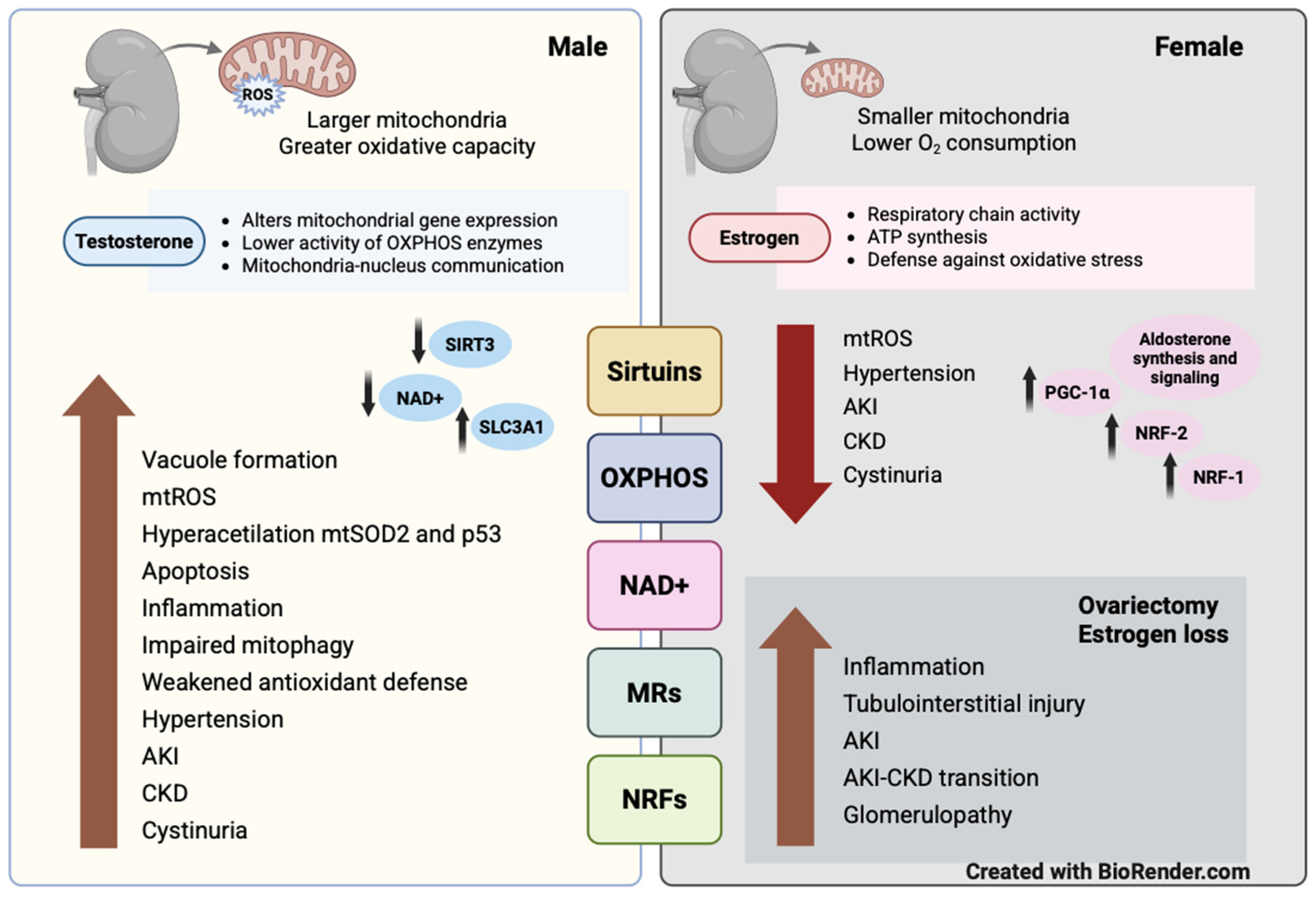
2.1. Mitochondria
2.1.1. Sirtuins
2.1.2. OXPHOS
2.1.3. NAD+
2.1.4. MRs and Aldosterone
2.1.5. NRF-1 and NRF-2
2.1.6. Oxidative Status
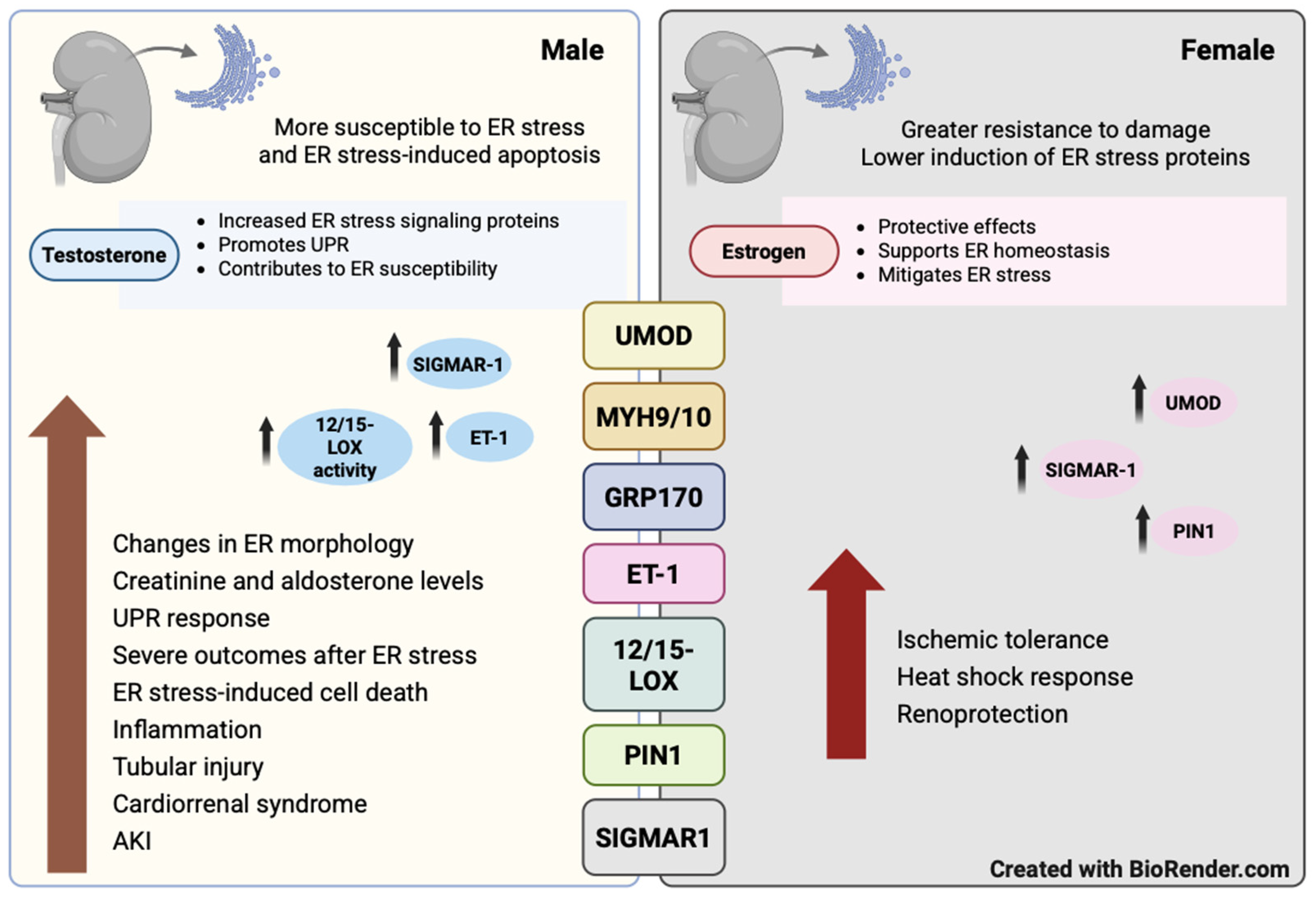
2.2. Endoplasmic Reticulum
2.2.1. NM2 Motor Proteins and UMOD
2.2.2. GRP170
2.2.3. ET-1
2.2.4. 12/15-LOX
2.2.5. SIGMAR1
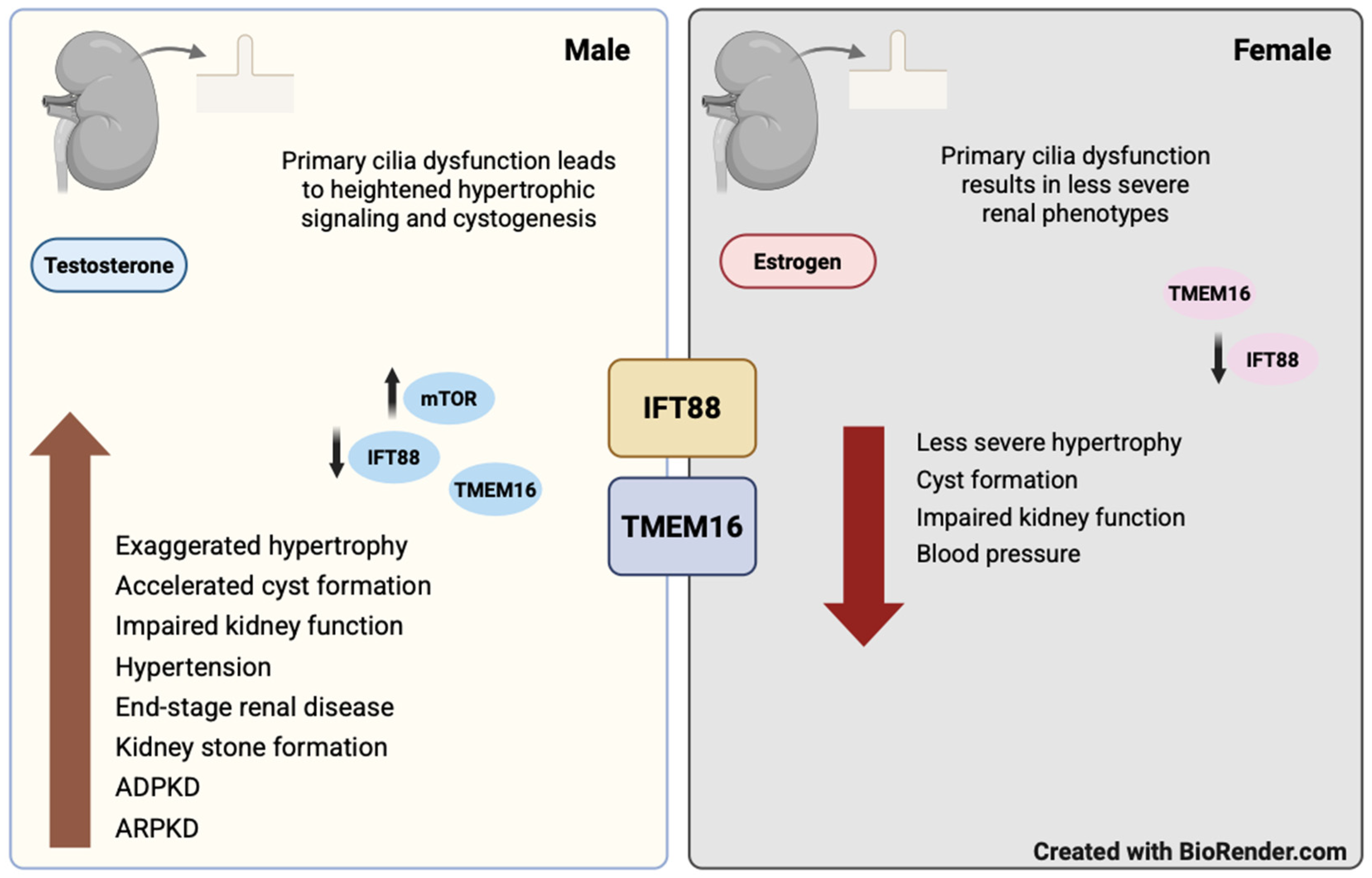
2.3. Primary Cilium
2.3.1. IFT88
2.3.2. TMEM16A
2.4. Organelle Crosstalk
3. Methodological Considerations and Existing Knowledge Gaps
4. Translational Implications and Future Directions
5. Conclusions
Supplementary Materials
Author Contributions
Funding
Institutional Review Board Statement
Informed Consent Statement
Data Availability Statement
Acknowledgments
Conflicts of Interest
Abbreviations
| 12/15-LOX | 12/15-lipoxygenase |
| ATF4 | Activating transcription factor 4 |
| AKI | Acute kidney injury |
| AR | Androgen receptor |
| ADPKD | Autosomal dominant polycystic kidney disease |
| ARPKD | Autosomal recessive polycystic kidney disease |
| CHOP | C/EBP homologous protein |
| TMEM16A | Calcium-activated chloride channel |
| CKD | Chronic kidney disease |
| ET-1 | Endothelin 1 |
| ER | Endoplasmic reticulum |
| ERα | Estrogen receptor alpha |
| ERβ | Estrogen receptor beta |
| ETAR | Endothelin type A receptor |
| ETBR | Endothelin type B receptor |
| GPER1 | G protein-coupled estrogen receptor 1 |
| GRP170 | Glucose-regulated protein 170 |
| HETEs | Hydroxyeicosatetraenoic acids |
| IFT88 | Intraflagellar transport protein 88 |
| IRI | Ischemia–reperfusion injury |
| MRs | Mineralocorticoid receptors |
| MAMs | Mitochondria-associated ER membranes |
| mtROS | Mitochondrial reactive oxygen species |
| mtDNA | Mitochondrial DNA |
| NAD+ | Nicotinamide adenine dinucleotide |
| NMN | Nicotinamide mononucleotide |
| NM2 | Non-muscle myosin II |
| MYH9 | Non-muscle myosin heavy chains IIA |
| MYH10 | Non-muscle myosin heavy chains IIB |
| NRF-1 | Nuclear factor erythroid 1 |
| NRF-2 | Nuclear factor erythroid 2 |
| OXPHOS | Oxidative phosphorylation |
| PIN1 | Peptidyl-prolyl cis/trans isomerase NIMA-interacting 1 |
| PGC-1α | Peroxisome proliferator-activated receptor-γ coactivator-1α |
| PKD1/PC1 | Polycystin 1 |
| PKD2/PC2 | Polycystin 2 |
| PERK | Protein kinase RNA-like ER kinase |
| SIGMAR1 | Sigma-1 receptor |
| SIRT1 | Sirtuin 1 |
| SIRT2 | Sirtuin 2 |
| SIRT3 | Sirtuin 3 |
| SLC3A1 | Solute carrier family 3 member 1 |
| SOD2 | Superoxide dismutase 2 |
| NKCC2 | Na+-K+-2Cl− cotransporter |
| TAL | Thick ascending limb |
| UPR | Unfolded protein response |
| UMOD | Uromodulin |
| XBP-1 | X-box binding protein 1 |
References
- Balzer, M.S.; Rohacs, T.; Susztak, K. How Many Cell Types Are in the Kidney and What Do They Do? Annu. Rev. Physiol. 2022, 84, 507–531. [Google Scholar] [CrossRef]
- Scott, R.P.; Quaggin, S.E. Review series: The cell biology of renal filtration. J. Cell Biol. 2015, 209, 199–210. [Google Scholar] [CrossRef]
- Chen, L.; Clark, J.Z.; Nelson, J.W.; Kaissling, B.; Ellison, D.H.; Knepper, M.A. Renal-Tubule Epithelial Cell Nomenclature for Single-Cell RNA-Sequencing Studies. J. Am. Soc. Nephrol. 2019, 30, 1358–1364. [Google Scholar] [CrossRef]
- Li, Z.; Liu, Z.; Luo, M.; Li, X.; Chen, H.; Gong, S.; Zhang, M.; Zhang, Y.; Liu, H.; Li, X. The pathological role of damaged organelles in renal tubular epithelial cells in the progression of acute kidney injury. Cell Death Discov. 2022, 8, 239. [Google Scholar] [CrossRef] [PubMed]
- Amiri, F.S. Intracellular organelles in health and kidney disease. Nephrol. Ther. 2019, 15, 9–21. [Google Scholar] [CrossRef] [PubMed]
- Inoue, T.; Maekawa, H.; Inagi, R. Organelle crosstalk in the kidney. Kidney Int. 2019, 95, 1318–1325. [Google Scholar] [CrossRef]
- Hasegawa, S.; Inagi, R. Organelle Stress and Crosstalk in Kidney Disease. Kidney360 2020, 1, 1157–1164. [Google Scholar] [CrossRef]
- Bikbov, B.; Purcell, C.A.; Levey, A.S.; Smith, M.; Abdoli, A.; Abebe, M.; Adebayo, O.M.; Afarideh, M.; Agarwal, S.K.; Agudelo-Botero, M.; et al. Global, regional, and national burden of chronic kidney disease, 1990–2017: A systematic analysis for the Global Burden of Disease Study 2017. Lancet 2020, 395, 709–733. [Google Scholar] [CrossRef] [PubMed]
- Herrington, W.G.; Judge, P.K.; Grams, M.E.; Wanner, C. Chronic kidney disease. Lancet 2026, 407, 90–104. [Google Scholar] [CrossRef]
- Stevens, P.E.; Ahmed, S.B.; Carrero, J.J.; Foster, B.; Francis, A.; Hall, R.K.; Herrington, W.G.; Hill, G.; Inker, L.A.; Kazancıoğlu, R.; et al. KDIGO 2024 Clinical Practice Guideline for the Evaluation and Management of Chronic Kidney Disease. Kidney Int. 2024, 105, S117–S314. [Google Scholar] [CrossRef]
- Khwaja, A. KDIGO clinical practice guidelines for acute kidney injury. Nephron Clin. Pract. 2012, 120, c179–c184. [Google Scholar] [CrossRef]
- Hapca, S.; Siddiqui, M.K.; Kwan, R.S.Y.; Lim, M.; Matthew, S.; Doney, A.S.F.; Pearson, E.R.; Palmer, C.N.A.; Bell, S.; Consortium, B.E.-D. The Relationship between AKI and CKD in Patients with Type 2 Diabetes: An Observational Cohort Study. J. Am. Soc. Nephrol. 2021, 32, 138–150. [Google Scholar] [CrossRef]
- Mallamaci, F.; Tripepi, G. Risk Factors of Chronic Kidney Disease Progression: Between Old and New Concepts. J. Clin. Med. 2024, 13, 678. [Google Scholar] [CrossRef]
- Li, G.; Xu, Z.; Yang, H.; Zhang, D.; Liu, B.; Song, Y.; Li, Q.; Zhang, Y.; Zhou, H.; Wang, Y. Sex-specific mechanisms in the pathogenesis and progression of chronic kidney disease. Autoimmun. Rev. 2025, 25, 103938. [Google Scholar] [CrossRef] [PubMed]
- Quinlan, C.; Rheault, M.N. X-Linked Kidney Disorders in Women. Semin. Nephrol. 2022, 42, 114–121. [Google Scholar] [CrossRef]
- Chawla, L.S.; Eggers, P.W.; Star, R.A.; Kimmel, P.L. Acute kidney injury and chronic kidney disease as interconnected syndromes. N. Engl. J. Med. 2014, 371, 58–66. [Google Scholar] [CrossRef] [PubMed]
- Lima-Posada, I.; Portas-Cortes, C.; Perez-Villalva, R.; Fontana, F.; Rodriguez-Romo, R.; Prieto, R.; Sanchez-Navarro, A.; Rodriguez-Gonzalez, G.L.; Gamba, G.; Zambrano, E.; et al. Gender Differences in the Acute Kidney Injury to Chronic Kidney Disease Transition. Sci. Rep. 2017, 7, 12270. [Google Scholar] [CrossRef]
- Zhu, W.; Han, M.; Wang, Y.; Wang, G. Trend analysis and prediction of the incidence and mortality of CKD in China and the US. BMC Nephrol. 2024, 25, 76. [Google Scholar] [CrossRef] [PubMed]
- Hill, N.R.; Fatoba, S.T.; Oke, J.L.; Hirst, J.A.; O’Callaghan, C.A.; Lasserson, D.S.; Hobbs, F.D. Global Prevalence of Chronic Kidney Disease-A Systematic Review and Meta-Analysis. PLoS ONE 2016, 11, e0158765. [Google Scholar] [CrossRef]
- Eriksen, B.O.; Ingebretsen, O.C. The progression of chronic kidney disease: A 10-year population-based study of the effects of gender and age. Kidney Int. 2006, 69, 375–382. [Google Scholar] [CrossRef]
- Evans, M.; Fryzek, J.P.; Elinder, C.G.; Cohen, S.S.; McLaughlin, J.K.; Nyren, O.; Fored, C.M. The natural history of chronic renal failure: Results from an unselected, population-based, inception cohort in Sweden. Am. J. Kidney Dis. 2005, 46, 863–870. [Google Scholar] [CrossRef] [PubMed]
- Wiles, K.; Lightstone, L. Glomerular Disease in Women. Kidney Int. Rep. 2018, 3, 258–270. [Google Scholar] [CrossRef] [PubMed]
- Lewandowski, M.J.; Krenn, S.; Kurnikowski, A.; Bretschneider, P.; Sattler, M.; Schwaiger, E.; Antlanger, M.; Gauckler, P.; Pirklbauer, M.; Brunner, M.; et al. Chronic kidney disease is more prevalent among women but more men than women are under nephrological care: Analysis from six outpatient clinics in Austria 2019. Wien. Klin. Wochenschr. 2023, 135, 89–96. [Google Scholar] [CrossRef]
- Shankar, M.; Shah, S. Sex and Gender Disparities in Kidney Transplantation. Adv. Kidney Dis. Health 2025, 32, 249–256. [Google Scholar] [CrossRef]
- Ahmed, S.B.; Ramesh, S. Sex hormones in women with kidney disease. Nephrol. Dial. Transplant. 2016, 31, 1787–1795. [Google Scholar] [CrossRef] [PubMed]
- Qian, D.; Wang, Z.F.; Cheng, Y.C.; Luo, R.; Ge, S.W.; Xu, G. Early Menopause May Associate with a Higher Risk of CKD and All-Cause Mortality in Postmenopausal Women: An Analysis of NHANES, 1999–2014. Front. Med. 2022, 9, 823835. [Google Scholar] [CrossRef]
- Kattah, A.G.; Smith, C.Y.; Rocca, L.G.; Grossardt, B.R.; Garovic, V.D.; Rocca, W.A. CKD in Patients with Bilateral Oophorectomy. Clin. J. Am. Soc. Nephrol. 2018, 13, 1649–1658. [Google Scholar] [CrossRef]
- Ahmed, S.B.; Culleton, B.F.; Tonelli, M.; Klarenbach, S.W.; Macrae, J.M.; Zhang, J.; Hemmelgarn, B.R.; Alberta Kidney Disease, N. Oral estrogen therapy in postmenopausal women is associated with loss of kidney function. Kidney Int. 2008, 74, 370–376. [Google Scholar] [CrossRef]
- Ardissino, G.; Testa, S.; Dacco, V.; Paglialonga, F.; Vigano, S.; Felice-Civitillo, C.; Battaglino, F.; Bettinelli, A.; Bordugo, A.; Cecchetti, V.; et al. Puberty is associated with increased deterioration of renal function in patients with CKD: Data from the ItalKid Project. Arch. Dis. Child. 2012, 97, 885–888. [Google Scholar] [CrossRef]
- Inagi, R. Organelle Stress and Metabolic Derangement in Kidney Disease. Int. J. Mol. Sci. 2022, 23, 1723. [Google Scholar] [CrossRef]
- Bhargava, P.; Schnellmann, R.G. Mitochondrial energetics in the kidney. Nat. Rev. Nephrol. 2017, 13, 629–646. [Google Scholar] [CrossRef]
- Jia, X.; Zhu, L.; Zhu, Q.; Zhang, J. The role of mitochondrial dysfunction in kidney injury and disease. Autoimmun. Rev. 2024, 23, 103576. [Google Scholar] [CrossRef]
- Zhang, X.; Agborbesong, E.; Li, X. The Role of Mitochondria in Acute Kidney Injury and Chronic Kidney Disease and Its Therapeutic Potential. Int. J. Mol. Sci. 2021, 22, 11253. [Google Scholar] [CrossRef] [PubMed]
- Sultanova, R.F.; Schibalski, R.; Yankelevich, I.A.; Stadler, K.; Ilatovskaya, D.V. Sex differences in renal mitochondrial function: A hormone-gous opportunity for research. Am. J. Physiol. Ren. Physiol. 2020, 319, F1117–F1124. [Google Scholar] [CrossRef] [PubMed]
- Huang, X.; Pan, C.H.; Yin, F.; Peng, J.; Yang, L. The Role of Estrogen in Mitochondrial Disease. Cell. Mol. Neurobiol. 2025, 45, 68. [Google Scholar] [CrossRef]
- Andrianova, N.V.; Brezgunova, A.A.; Buyan, M.I.; Makievskaya, C.I.; Buyan, A.I.; Cherkesova, K.S.; Pevzner, I.B.; Zorova, L.D.; Zorov, D.B.; Plotnikov, E.Y.; et al. Sex-Specific Effects of Estradiol and Progesterone in Ischemic Kidney Injury. Int. J. Mol. Sci. 2024, 25, 3155. [Google Scholar] [CrossRef] [PubMed]
- Stevenson, F.T.; Wheeldon, C.M.; Gades, M.D.; Kaysen, G.A.; Stern, J.S.; van Goor, H. Estrogen worsens incipient hypertriglyceridemic glomerular injury in the obese Zucker rat. Kidney Int. 2000, 57, 1927–1935. [Google Scholar] [CrossRef]
- Gades, M.D.; Stern, J.S.; van Goor, H.; Nguyen, D.; Johnson, P.R.; Kaysen, G.A. Estrogen accelerates the development of renal disease in female obese Zucker rats. Kidney Int. 1998, 53, 130–135. [Google Scholar] [CrossRef]
- Gerald, T.; Raj, G. Testosterone and the Androgen Receptor. Urol. Clin. N. Am. 2022, 49, 603–614. [Google Scholar] [CrossRef]
- Bajpai, P.; Koc, E.; Sonpavde, G.; Singh, R.; Singh, K.K. Mitochondrial localization, import, and mitochondrial function of the androgen receptor. J. Biol. Chem. 2019, 294, 6621–6634. [Google Scholar] [CrossRef]
- Valdivielso, J.M.; Jacobs-Cacha, C.; Soler, M.J. Sex hormones and their influence on chronic kidney disease. Curr. Opin. Nephrol. Hypertens. 2019, 28, 1–9. [Google Scholar] [CrossRef] [PubMed]
- Filler, G.; Ramsaroop, A.; Stein, R.; Grant, C.; Marants, R.; So, A.; McIntyre, C. Is Testosterone Detrimental to Renal Function? Kidney Int. Rep. 2016, 1, 306–310. [Google Scholar] [CrossRef]
- Luetic, M.; Kretzschmar, G.; Grobe, M.; Jercic, L.; Bota, I.; Ivic, V.; Balog, M.; Zjalic, M.; Vitlov Uljevic, M.; Heffer, M.; et al. Sex-specific effects of metformin and liraglutide on renal pathology and expression of connexin 45 and pannexin 1 following long-term high-fat high-sugar diet. Acta Histochem. 2021, 123, 151817. [Google Scholar] [CrossRef]
- Al-Diab, O.; Sunkel, C.; Blanc, E.; Catar, R.A.; Ashraf, M.I.; Zhao, H.; Wang, P.; Rinschen, M.M.; Fritsche-Guenther, R.; Grahammer, F.; et al. Sex-specific molecular signature of mouse podocytes in homeostasis and in response to pharmacological challenge with rapamycin. Biol. Sex Differ. 2024, 15, 72. [Google Scholar] [CrossRef]
- Ali, R.A.H.; Altimimi, M.; Hadi, N.R. The potential renoprotective effect of Raloxifene in renal ischemia-reperfusion injury in a male rat model. J. Med. Life 2023, 16, 1274–1281. [Google Scholar] [CrossRef]
- Siddiqui, H.F.; Ali, D.; Sajid, M.; Qureshi, S.; Siddiqui, H.; Hasan, A.; Ripley, D.; Ahmed, R.; Waqas, S.A. Sex differences in the efficacy of GLP-1 receptor agonists: A systematic review and meta-analysis of cardiovascular and renal outcome trials. Diabetes Obes. Metab. 2025, 27, 6847–6856. [Google Scholar] [CrossRef] [PubMed]
- Vodosek Hojs, N.; Bevc, S.; Ekart, R.; Piko, N.; Petreski, T.; Hojs, R. Mineralocorticoid Receptor Antagonists in Diabetic Kidney Disease. Pharmaceuticals 2021, 14, 561. [Google Scholar] [CrossRef] [PubMed]
- He, R.; Ai, L.; Zhang, D.; Wan, L.; Zheng, T.; Yin, J.; Lu, H.; Lu, J.; Lu, F.; Liu, F.; et al. Different effect of testosterone and oestrogen on urinary excretion of metformin via regulating OCTs and MATEs expression in the kidney of mice. J. Cell. Mol. Med. 2016, 20, 2309–2317. [Google Scholar] [CrossRef]
- Wu, Q.J.; Zhang, T.N.; Chen, H.H.; Yu, X.F.; Lv, J.L.; Liu, Y.Y.; Liu, Y.S.; Zheng, G.; Zhao, J.Q.; Wei, Y.F.; et al. The sirtuin family in health and disease. Signal Transduct. Target. Ther. 2022, 7, 402. [Google Scholar] [CrossRef]
- Nguyen, L.T.; Chen, H.; Pollock, C.; Saad, S. SIRT1 reduction is associated with sex-specific dysregulation of renal lipid metabolism and stress responses in offspring by maternal high-fat diet. Sci. Rep. 2017, 7, 8982. [Google Scholar] [CrossRef]
- Darvishzadeh Mahani, F.; Raji-Amirhasani, A.; Khaksari, M.; Mousavi, M.S.; Bashiri, H.; Hajializadeh, Z.; Alavi, S.S. Caloric and time restriction diets improve acute kidney injury in experimental menopausal rats: Role of silent information regulator 2 homolog 1 and transforming growth factor beta 1. Mol. Biol. Rep. 2024, 51, 812. [Google Scholar] [CrossRef]
- Zeng, Y.; Guo, M.; Wu, Q.; Tan, X.; Jiang, C.; Teng, F.; Chen, J.; Zhang, F.; Ma, X.; Li, X.; et al. Gut microbiota-derived indole-3-propionic acid alleviates diabetic kidney disease through its mitochondrial protective effect via reducing ubiquitination mediated-degradation of SIRT1. J. Adv. Res. 2025, 73, 607–630. [Google Scholar] [CrossRef]
- Zhang, R.; Chang, R.; Wang, H.; Chen, J.; Lu, C.; Fan, K.; Zhang, Y.; Li, L.; Yan, S.; Dong, H. Untargeted metabolomic and proteomic analysis implicates SIRT2 as a novel therapeutic target for diabetic nephropathy. Sci. Rep. 2025, 15, 4236. [Google Scholar] [CrossRef]
- Shen, H.; Holliday, M.; Sheikh-Hamad, D.; Li, Q.; Tong, Q.; Hamad, C.D.; Pan, J.S. Sirtuin-3 mediates sex differences in kidney ischemia-reperfusion injury. Transl. Res. 2021, 235, 15–31. [Google Scholar] [CrossRef]
- Tanno, M.; Sakamoto, J.; Miura, T.; Shimamoto, K.; Horio, Y. Nucleocytoplasmic shuttling of the NAD+-dependent histone deacetylase SIRT1. J. Biol. Chem. 2007, 282, 6823–6832. [Google Scholar] [CrossRef]
- Eldridge, M.J.G.; Pereira, J.M.; Impens, F.; Hamon, M.A. Active nuclear import of the deacetylase Sirtuin-2 is controlled by its C-terminus and importins. Sci. Rep. 2020, 10, 2034. [Google Scholar] [CrossRef] [PubMed]
- Zhang, Y.; Wen, P.; Luo, J.; Ding, H.; Cao, H.; He, W.; Zen, K.; Zhou, Y.; Yang, J.; Jiang, L. Sirtuin 3 regulates mitochondrial protein acetylation and metabolism in tubular epithelial cells during renal fibrosis. Cell Death Dis. 2021, 12, 847. [Google Scholar] [CrossRef] [PubMed]
- Feng, J.; Feng, L.; Yan, Y.; Ye, H.; Tang, K.; Guo, X.; Ma, Y. SIRT3 deficiency aggravates mitochondrial metabolic disorder and podocyte injury in DKD via MPC2 acetylation. Cell. Signal. 2025, 135, 112029. [Google Scholar] [CrossRef]
- Yang, W.; Nagasawa, K.; Munch, C.; Xu, Y.; Satterstrom, K.; Jeong, S.; Hayes, S.D.; Jedrychowski, M.P.; Vyas, F.S.; Zaganjor, E.; et al. Mitochondrial Sirtuin Network Reveals Dynamic SIRT3-Dependent Deacetylation in Response to Membrane Depolarization. Cell 2016, 167, 985–1000.E21. [Google Scholar] [CrossRef]
- Peng, X.; Ni, H.; Kuang, B.; Wang, Z.; Hou, S.; Gu, S.; Gong, N. Sirtuin 3 in renal diseases and aging: From mechanisms to potential therapies. Pharmacol. Res. 2024, 206, 107261. [Google Scholar] [CrossRef] [PubMed]
- Ouyang, J.; Zeng, Z.; Fang, H.; Li, F.; Zhang, X.; Tan, W. SIRT3 Inactivation Promotes Acute Kidney Injury Through Elevated Acetylation of SOD2 and p53. J. Surg. Res. 2019, 233, 221–230. [Google Scholar] [CrossRef]
- Dikalova, A.E.; Pandey, A.; Xiao, L.; Arslanbaeva, L.; Sidorova, T.; Lopez, M.G.; Billings, F.T.t.; Verdin, E.; Auwerx, J.; Harrison, D.G.; et al. Mitochondrial Deacetylase Sirt3 Reduces Vascular Dysfunction and Hypertension While Sirt3 Depletion in Essential Hypertension Is Linked to Vascular Inflammation and Oxidative Stress. Circ. Res. 2020, 126, 439–452. [Google Scholar] [CrossRef]
- Xu, S.; Gao, Y.; Zhang, Q.; Wei, S.; Chen, Z.; Dai, X.; Zeng, Z.; Zhao, K.S. SIRT1/3 Activation by Resveratrol Attenuates Acute Kidney Injury in a Septic Rat Model. Oxidative Med. Cell. Longev. 2016, 2016, 7296092. [Google Scholar] [CrossRef] [PubMed]
- Feng, H.; Wang, J.Y.; Yu, B.; Cong, X.; Zhang, W.G.; Li, L.; Liu, L.M.; Zhou, Y.; Zhang, C.L.; Gu, P.L.; et al. Peroxisome Proliferator-Activated Receptor-gamma Coactivator-1alpha Inhibits Vascular Calcification Through Sirtuin 3-Mediated Reduction of Mitochondrial Oxidative Stress. Antioxid. Redox Signal. 2019, 31, 75–91. [Google Scholar] [CrossRef]
- Kang, K.P.; Lee, J.E.; Lee, A.S.; Jung, Y.J.; Kim, D.; Lee, S.; Hwang, H.P.; Kim, W.; Park, S.K. Effect of gender differences on the regulation of renal ischemia-reperfusion-induced inflammation in mice. Mol. Med. Rep. 2014, 9, 2061–2068. [Google Scholar] [CrossRef]
- Lima-Posada, I.; Bobadilla, N.A. Understanding the opposite effects of sex hormones in mediating renal injury. Nephrology 2021, 26, 217–226. [Google Scholar] [CrossRef]
- Cheng, L.; Yang, X.; Jian, Y.; Liu, J.; Ke, X.; Chen, S.; Yang, D.; Yang, D. SIRT3 deficiency exacerbates early-stage fibrosis after ischaemia-reperfusion-induced AKI. Cell. Signal. 2022, 93, 110284. [Google Scholar] [CrossRef] [PubMed]
- Yao, H.; Zhao, H.; Du, Y.; Zhang, Y.; Li, Y.; Zhu, H. Sex-related differences in SIRT3-mediated mitochondrial dynamics in renal ischemia/reperfusion injury. Transl. Res. 2024, 270, 1–12. [Google Scholar] [CrossRef] [PubMed]
- Li, H.; Wang, X.; Deng, D.; Lv, S.; Huang, L.; Wang, X. Advances in understanding the role of mitochondria in renal ischemia-reperfusion injury. Clin. Exp. Nephrol. 2025, 29, 1685–1698. [Google Scholar] [CrossRef] [PubMed]
- Hoenig, M.P.; Brooks, C.R.; Hoorn, E.J.; Hall, A.M. Biology of the proximal tubule in body homeostasis and kidney disease. Nephrol. Dial. Transplant. 2025, 40, 234–243. [Google Scholar] [CrossRef]
- Wang, Z.; Sun, Q.; Sun, N.; Liang, M.; Tian, Z. Mitochondrial Dysfunction and Altered Renal Metabolism in Dahl Salt-Sensitive Rats. Kidney Blood Press. Res. 2017, 42, 587–597. [Google Scholar] [CrossRef]
- Yang, C.; Dave, D.D.; Boovarahan, S.R.; Shimada, S.; Geurts, A.; Dash, R.K.; Cowley, A.W., Jr. Sex Differences in Renal Mitochondrial Respiration and H2O2 Emission in Young Dahl Salt-Sensitive Rats. Function 2025, 6, zqaf045. [Google Scholar] [CrossRef] [PubMed]
- Eggermann, T.; Venghaus, A.; Zerres, K. Cystinuria: An inborn cause of urolithiasis. Orphanet J. Rare Dis. 2012, 7, 19. [Google Scholar] [CrossRef] [PubMed]
- Su, J.; Pan, Y.; Zhong, F.; Zhong, Y.; Huang, J.; Liu, S.; Wang, K.; Lin, K.; Gu, X.; Li, D.; et al. Mitochondrial SLC3A1 regulates sexual dimorphism in cystinuria. Genes Dis. 2025, 12, 101472. [Google Scholar] [CrossRef]
- Clyne, N.; Anding-Rost, K. Exercise training in chronic kidney disease-effects, expectations and adherence. Clin. Kidney J. 2021, 14, ii3–ii14. [Google Scholar] [CrossRef] [PubMed]
- Queiroz, A.L.F.; Garcia, C.B.; Silva, J.; Cavalini, D.F.A.; Alexandrino, A.V.; Cunha, A.F.; Vercesi, A.E.; Castilho, R.F.; Shiguemoto, G.E. Preventive Effects of Resistance Training on Hemodynamics and Kidney Mitochondrial Bioenergetic Function in Ovariectomized Rats. Int. J. Mol. Sci. 2024, 26, 266. [Google Scholar] [CrossRef]
- Yusri, K.; Jose, S.; Vermeulen, K.S.; Tan, T.C.M.; Sorrentino, V. The role of NAD+ metabolism and its modulation of mitochondria in aging and disease. NPJ Metab. Health Dis. 2025, 3, 26. [Google Scholar] [CrossRef]
- Morevati, M.; Fang, E.F.; Mace, M.L.; Kanbay, M.; Gravesen, E.; Nordholm, A.; Egstrand, S.; Hornum, M. Roles of NAD+ in Acute and Chronic Kidney Diseases. Int. J. Mol. Sci. 2022, 24, 137. [Google Scholar] [CrossRef]
- Clark, A.J.; Saade, M.C.; Parikh, S.M. The Significance of NAD+ Biosynthesis Alterations in Acute Kidney Injury. Semin. Nephrol. 2022, 42, 151287. [Google Scholar] [CrossRef]
- Liu, X.; Luo, D.; Huang, S.; Liu, S.; Zhang, B.; Wang, F.; Lu, J.; Chen, J.; Li, S. Impaired Nicotinamide Adenine Dinucleotide Biosynthesis in the Kidney of Chronic Kidney Disease. Front. Physiol. 2021, 12, 723690. [Google Scholar] [CrossRef]
- Faivre, A.; Katsyuba, E.; Verissimo, T.; Lindenmeyer, M.; Rajaram, R.D.; Naesens, M.; Heckenmeyer, C.; Mottis, A.; Feraille, E.; Cippa, P.; et al. Differential role of nicotinamide adenine dinucleotide deficiency in acute and chronic kidney disease. Nephrol. Dial. Transplant. 2021, 36, 60–68. [Google Scholar] [CrossRef]
- Jones, B.A.; Gisch, D.L.; Myakala, K.; Sadiq, A.; Cheng, Y.H.; Taranenko, E.; Panov, J.; Korolowicz, K.; Ferreira, R.M.; Yang, X.; et al. NAD+ prevents chronic kidney disease by activating renal tubular metabolism. JCI Insight 2025, 10, e181443. [Google Scholar] [CrossRef] [PubMed]
- Elmorsy, E.A.; Khodeir, M.M.; Kamal, M.M.; El-Sayed, M.; Alharbi, M.S.; Alsaykhan, H.; Hamad, R.S.; Abdel-Reheim, M.A.; Eissa, H.; Gabr, A.M.; et al. Activation of nicotinamide phosphoribosyltransferase protects against unilateral renal ischemia-reperfusion injury via the NAD+/SIRT1/PGC-1alpha signaling pathway and modulation of NFkappaB/TNF-alpha/IL-6. Eur. J. Pharm. Sci. 2025, 214, 107302. [Google Scholar] [CrossRef] [PubMed]
- Morevati, M.; Egstrand, S.; Nordholm, A.; Mace, M.L.; Andersen, C.B.; Salmani, R.; Olgaard, K.; Lewin, E. Effect of NAD+ boosting on kidney ischemia-reperfusion injury. PLoS ONE 2021, 16, e0252554. [Google Scholar] [CrossRef]
- Tran, M.T.; Zsengeller, Z.K.; Berg, A.H.; Khankin, E.V.; Bhasin, M.K.; Kim, W.; Clish, C.B.; Stillman, I.E.; Karumanchi, S.A.; Rhee, E.P.; et al. PGC1alpha drives NAD biosynthesis linking oxidative metabolism to renal protection. Nature 2016, 531, 528–532. [Google Scholar] [CrossRef]
- Lefranc, C.; Friederich-Persson, M.; Foufelle, F.; Nguyen Dinh Cat, A.; Jaisser, F. Adipocyte-Mineralocorticoid Receptor Alters Mitochondrial Quality Control Leading to Mitochondrial Dysfunction and Senescence of Visceral Adipose Tissue. Int. J. Mol. Sci. 2021, 22, 2881. [Google Scholar] [CrossRef]
- Shibata, H.; Itoh, H. Mineralocorticoid receptor-associated hypertension and its organ damage: Clinical relevance for resistant hypertension. Am. J. Hypertens. 2012, 25, 514–523. [Google Scholar] [CrossRef]
- Jia, G.; Lastra, G.; Bostick, B.P.; LahamKaram, N.; Laakkonen, J.P.; Yla-Herttuala, S.; Whaley-Connell, A. The mineralocorticoid receptor in diabetic kidney disease. Am. J. Physiol. Ren. Physiol. 2024, 327, F519–F531. [Google Scholar] [CrossRef]
- Myakala, K.; Wang, X.X.; Shults, N.; Hughes, E.P.; de Carvalho Ribeiro, P.; Penjweini, R.; Link, K.; Barton, K.; Krawczyk, E.; Clarkson Paredes, C.; et al. The nonsteroidal MR antagonist finerenone reverses Western diet-induced kidney disease by regulating mitochondrial and lipid metabolism and inflammation. Am. J. Physiol. Ren. Physiol. 2025, 329, F724–F743. [Google Scholar] [CrossRef] [PubMed]
- Fields, E.; Schiffrin, E.L. Interplay Between the Mineralocorticoid System, Inflammation, Hypertension, and Kidney Disease. Kidney360 2025, 6, 2017–2027. [Google Scholar] [CrossRef]
- Bauersachs, J.; Jaisser, F.; Toto, R. Mineralocorticoid receptor activation and mineralocorticoid receptor antagonist treatment in cardiac and renal diseases. Hypertension 2015, 65, 257–263. [Google Scholar] [CrossRef]
- Daza-Arnedo, R.; Rico-Fontalvo, J.; Aroca-Martinez, G.; Rodriguez-Yanez, T.; Martinez-Avila, M.C.; Almanza-Hurtado, A.; Cardona-Blanco, M.; Henao-Velasquez, C.; Fernandez-Franco, J.; Unigarro-Palacios, M.; et al. Insulin and the kidneys: A contemporary view on the molecular basis. Front. Nephrol. 2023, 3, 1133352. [Google Scholar] [CrossRef]
- Lay, A.C.; Hurcombe, J.A.; Betin, V.M.S.; Barrington, F.; Rollason, R.; Ni, L.; Gillam, L.; Pearson, G.M.E.; Ostergaard, M.V.; Hamidi, H.; et al. Prolonged exposure of mouse and human podocytes to insulin induces insulin resistance through lysosomal and proteasomal degradation of the insulin receptor. Diabetologia 2017, 60, 2299–2311. [Google Scholar] [CrossRef]
- Vecchiola, A.; Uslar, T.; Friedrich, I.; Aguirre, J.; Sandoval, A.; Carvajal, C.A.; Tapia-Castillo, A.; Martinez-Garcia, A.; Fardella, C.E. The role of sex hormones in aldosterone biosynthesis and their potential impact on its mineralocorticoid receptor. Cardiovasc. Endocrinol. Metab. 2024, 13, e0305. [Google Scholar] [CrossRef] [PubMed]
- Gersh, F.L.; O’Keefe, J.H.; Lavie, C.J.; Henry, B.M. The Renin-Angiotensin-Aldosterone System in Postmenopausal Women: The Promise of Hormone Therapy. Mayo Clin. Proc. 2021, 96, 3130–3141. [Google Scholar] [CrossRef]
- Blasi, E.R.; Rocha, R.; Rudolph, A.E.; Blomme, E.A.; Polly, M.L.; McMahon, E.G. Aldosterone/salt induces renal inflammation and fibrosis in hypertensive rats. Kidney Int. 2003, 63, 1791–1800. [Google Scholar] [CrossRef] [PubMed]
- Rocha, R.; Chander, P.N.; Zuckerman, A.; Stier, C.T., Jr. Role of aldosterone in renal vascular injury in stroke-prone hypertensive rats. Hypertension 1999, 33, 232–237. [Google Scholar] [CrossRef]
- Peng, H.; Carretero, O.A.; Raij, L.; Yang, F.; Kapke, A.; Rhaleb, N.E. Antifibrotic effects of N-acetyl-seryl-aspartyl-Lysyl-proline on the heart and kidney in aldosterone-salt hypertensive rats. Hypertension 2001, 37, 794–800. [Google Scholar] [CrossRef]
- Arias-Loza, P.A.; Muehlfelder, M.; Elmore, S.A.; Maronpot, R.; Hu, K.; Blode, H.; Hegele-Hartung, C.; Fritzemeier, K.H.; Ertl, G.; Pelzer, T. Differential effects of 17beta-estradiol and of synthetic progestins on aldosterone-salt-induced kidney disease. Toxicol. Pathol. 2009, 37, 969–982. [Google Scholar] [CrossRef]
- Ohtsuji, M.; Katsuoka, F.; Kobayashi, A.; Aburatani, H.; Hayes, J.D.; Yamamoto, M. Nrf1 and Nrf2 play distinct roles in activation of antioxidant response element-dependent genes. J. Biol. Chem. 2008, 283, 33554–33562. [Google Scholar] [CrossRef] [PubMed]
- Li, J.; Yan, J.; Tu, G.; Jiang, W.; Qiu, Y.; Su, Y.; Miao, C.; Luo, Z.; Horng, T. NRF1 coordinates mitochondrial adaptations to dampen intracellular ROS and inflammatory responses during ischemia reperfusion. Cell Death Discov. 2025, 11, 236. [Google Scholar] [CrossRef] [PubMed]
- Zhuang, Y.; Hu, L.; Wu, Y.; Yang, C.; Li, S.; Jing, K.; Liu, H. Regulation of Mitochondrial Homeostasis and Nrf2 in Kidney Disease: Timing Is Critical. Oxidative Med. Cell. Longev. 2022, 2022, 9275056. [Google Scholar] [CrossRef]
- Psarra, A.M.; Solakidi, S.; Sekeris, C.E. The mitochondrion as a primary site of action of steroid and thyroid hormones: Presence and action of steroid and thyroid hormone receptors in mitochondria of animal cells. Mol. Cell. Endocrinol. 2006, 246, 21–33. [Google Scholar] [CrossRef]
- Fontecha-Barriuso, M.; Martin-Sanchez, D.; Martinez-Moreno, J.M.; Monsalve, M.; Ramos, A.M.; Sanchez-Nino, M.D.; Ruiz-Ortega, M.; Ortiz, A.; Sanz, A.B. The Role of PGC-1alpha and Mitochondrial Biogenesis in Kidney Diseases. Biomolecules 2020, 10, 347. [Google Scholar] [CrossRef]
- Fontecha-Barriuso, M.; Martin-Sanchez, D.; Martinez-Moreno, J.M.; Carrasco, S.; Ruiz-Andres, O.; Monsalve, M.; Sanchez-Ramos, C.; Gomez, M.J.; Ruiz-Ortega, M.; Sanchez-Nino, M.D.; et al. PGC-1alpha deficiency causes spontaneous kidney inflammation and increases the severity of nephrotoxic AKI. J. Pathol. 2019, 249, 65–78. [Google Scholar] [CrossRef]
- Xu, X.; Pang, Y.; Fan, X. Mitochondria in oxidative stress, inflammation and aging: From mechanisms to therapeutic advances. Signal Transduct. Target. Ther. 2025, 10, 190. [Google Scholar] [CrossRef]
- Vina, J.; Gambini, J.; Lopez-Grueso, R.; Abdelaziz, K.M.; Jove, M.; Borras, C. Females live longer than males: Role of oxidative stress. Curr. Pharm. Des. 2011, 17, 3959–3965. [Google Scholar] [CrossRef] [PubMed]
- Iseki, K.; Ikemiya, Y.; Iseki, C.; Takishita, S. Proteinuria and the risk of developing end-stage renal disease. Kidney Int. 2003, 63, 1468–1474. [Google Scholar] [CrossRef] [PubMed]
- Nishi, Y.; Satoh, M.; Nagasu, H.; Kadoya, H.; Ihoriya, C.; Kidokoro, K.; Sasaki, T.; Kashihara, N. Selective estrogen receptor modulation attenuates proteinuria-induced renal tubular damage by modulating mitochondrial oxidative status. Kidney Int. 2013, 83, 662–673. [Google Scholar] [CrossRef]
- Dong, W.; Peng, Q.; Liu, Z.; Xie, Z.; Guo, X.; Li, Y.; Chen, C. Estrogen plays an important role by influencing the NLRP3 inflammasome. Biomed. Pharmacother. 2023, 167, 115554. [Google Scholar] [CrossRef]
- Hayashi, S.; Hajiro-Nakanishi, K.; Makino, Y.; Eguchi, H.; Yodoi, J.; Tanaka, H. Functional modulation of estrogen receptor by redox state with reference to thioredoxin as a mediator. Nucleic Acids Res. 1997, 25, 4035–4040. [Google Scholar] [CrossRef] [PubMed]
- Pereira-Simon, S.; Xia, X.; Catanuto, P.; Elliot, S. Oxidant stress and mitochondrial signaling regulate reversible changes of ERalpha expression and apoptosis in aging mouse glomeruli and mesangial cells. Endocrinology 2012, 153, 5491–5499. [Google Scholar] [CrossRef]
- Chen, S.; Novick, P.; Ferro-Novick, S. ER structure and function. Curr. Opin. Cell Biol. 2013, 25, 428–433. [Google Scholar] [CrossRef]
- Wu, D.; Huang, L.F.; Chen, X.C.; Huang, X.R.; Li, H.Y.; An, N.; Tang, J.X.; Liu, H.F.; Yang, C. Research progress on endoplasmic reticulum homeostasis in kidney diseases. Cell Death Dis. 2023, 14, 473. [Google Scholar] [CrossRef]
- Fan, Y.; Xiao, W.; Lee, K.; Salem, F.; Wen, J.; He, L.; Zhang, J.; Fei, Y.; Cheng, D.; Bao, H.; et al. Inhibition of Reticulon-1A-Mediated Endoplasmic Reticulum Stress in Early AKI Attenuates Renal Fibrosis Development. J. Am. Soc. Nephrol. 2017, 28, 2007–2021. [Google Scholar] [CrossRef] [PubMed]
- Habshi, T.; Shelke, V.; Kale, A.; Anders, H.J.; Gaikwad, A.B. Role of endoplasmic reticulum stress and autophagy in the transition from acute kidney injury to chronic kidney disease. J. Cell. Physiol. 2023, 238, 82–93. [Google Scholar] [CrossRef] [PubMed]
- Wu, J.; Zhang, R.; Torreggiani, M.; Ting, A.; Xiong, H.; Striker, G.E.; Vlassara, H.; Zheng, F. Induction of diabetes in aged C57B6 mice results in severe nephropathy: An association with oxidative stress, endoplasmic reticulum stress, and inflammation. Am. J. Pathol. 2010, 176, 2163–2176. [Google Scholar] [CrossRef] [PubMed]
- Lv, J.; Yu, H.; Du, S.; Xu, P.; Zhao, Y.; Qi, W.; Wang, X. Targeting endoplasmic reticulum stress: An innovative therapeutic strategy for podocyte-related kidney diseases. J. Transl. Med. 2025, 23, 95. [Google Scholar] [CrossRef] [PubMed]
- Ohse, T.; Inagi, R.; Tanaka, T.; Ota, T.; Miyata, T.; Kojima, I.; Ingelfinger, J.R.; Ogawa, S.; Fujita, T.; Nangaku, M. Albumin induces endoplasmic reticulum stress and apoptosis in renal proximal tubular cells. Kidney Int. 2006, 70, 1447–1455. [Google Scholar] [CrossRef]
- Cybulsky, A.V. The intersecting roles of endoplasmic reticulum stress, ubiquitin- proteasome system, and autophagy in the pathogenesis of proteinuric kidney disease. Kidney Int. 2013, 84, 25–33. [Google Scholar] [CrossRef]
- Noh, M.R.; Kim, J.I.; Han, S.J.; Lee, T.J.; Park, K.M. C/EBP homologous protein (CHOP) gene deficiency attenuates renal ischemia/reperfusion injury in mice. Biochim. Biophys. Acta 2015, 1852, 1895–1901. [Google Scholar] [CrossRef]
- Carlisle, R.E.; Brimble, E.; Werner, K.E.; Cruz, G.L.; Ask, K.; Ingram, A.J.; Dickhout, J.G. 4-Phenylbutyrate inhibits tunicamycin-induced acute kidney injury via CHOP/GADD153 repression. PLoS ONE 2014, 9, e84663. [Google Scholar] [CrossRef]
- Pushpakumar, S.; Juin, S.K.; Almarshood, H.; Gondim, D.D.; Ouseph, R.; Sen, U. Diallyl Trisulfide Attenuates Ischemia-Reperfusion-Induced ER Stress and Kidney Dysfunction in Aged Female Mice. Cells 2025, 14, 420. [Google Scholar] [CrossRef]
- Liu, J.; Yang, J.R.; Chen, X.M.; Cai, G.Y.; Lin, L.R.; He, Y.N. Impact of ER stress-regulated ATF4/p16 signaling on the premature senescence of renal tubular epithelial cells in diabetic nephropathy. Am. J. Physiol. Cell Physiol. 2015, 308, C621–C630. [Google Scholar] [CrossRef]
- Hodeify, R.; Megyesi, J.; Tarcsafalvi, A.; Mustafa, H.I.; Hti Lar Seng, N.S.; Price, P.M. Gender differences control the susceptibility to ER stress-induced acute kidney injury. Am. J. Physiol. Ren. Physiol. 2013, 304, F875–F882. [Google Scholar] [CrossRef]
- Chen, J.; Liu, Y.; Pan, D.; Xu, T.; Luo, Y.; Wu, W.; Wu, P.; Zhu, H.; Li, D. Estrogen inhibits endoplasmic reticulum stress and ameliorates myocardial ischemia/reperfusion injury in rats by upregulating SERCA2a. Cell Commun. Signal. 2022, 20, 38. [Google Scholar] [CrossRef]
- Liu, L.; Zhang, Y.; Wang, Y.; Peng, W.; Zhang, N.; Ye, Y. Progesterone inhibited endoplasmic reticulum stress associated apoptosis induced by interleukin-1beta via the GRP78/PERK/CHOP pathway in BeWo cells. J. Obstet. Gynaecol. Res. 2018, 44, 463–473. [Google Scholar] [CrossRef]
- Sekine, T.; Konno, M.; Sasaki, S.; Moritani, S.; Miura, T.; Wong, W.S.; Nishio, H.; Nishiguchi, T.; Ohuchi, M.Y.; Tsuchiya, S.; et al. Patients with Epstein-Fechtner syndromes owing to MYH9 R702 mutations develop progressive proteinuric renal disease. Kidney Int. 2010, 78, 207–214. [Google Scholar] [CrossRef]
- Otterpohl, K.L.; Hart, R.G.; Evans, C.; Surendran, K.; Chandrasekar, I. Nonmuscle myosin 2 proteins encoded by Myh9, Myh10, and Myh14 are uniquely distributed in the tubular segments of murine kidney. Physiol. Rep. 2017, 5, e13513. [Google Scholar] [CrossRef]
- Otterpohl, K.L.; Busselman, B.W.; Ratnayake, I.; Hart, R.G.; Hart, K.R.; Evans, C.M.; Phillips, C.L.; Beach, J.R.; Ahrenkiel, P.; Molitoris, B.A.; et al. Conditional Myh9 and Myh10 inactivation in adult mouse renal epithelium results in progressive kidney disease. JCI Insight 2020, 5, e138530. [Google Scholar] [CrossRef]
- Otterpohl, K.L.; Busselman, B.W.; Zimmerman, J.L.; Mukherjee, M.; Evans, C.; Graber, K.; Thakkar, V.P.; Johnston, J.G.; Ilyas, A.; Gumz, M.L.; et al. Thick Ascending Limb Specific Inactivation of Myh9 and Myh10 Myosin Motors Results in Progressive Kidney Disease and Drives Sex-specific Cellular Adaptation in the Distal Nephron and Collecting Duct. Function 2025, 6, zqae048. [Google Scholar] [CrossRef]
- Johnson, B.G.; Dang, L.T.; Marsh, G.; Roach, A.M.; Levine, Z.G.; Monti, A.; Reyon, D.; Feigenbaum, L.; Duffield, J.S. Uromodulin p.Cys147Trp mutation drives kidney disease by activating ER stress and apoptosis. J. Clin. Investig. 2017, 127, 3954–3969. [Google Scholar] [CrossRef]
- Trudu, M.; Schaeffer, C.; Riba, M.; Ikehata, M.; Brambilla, P.; Messa, P.; Martinelli-Boneschi, F.; Rastaldi, M.P.; Rampoldi, L. Early involvement of cellular stress and inflammatory signals in the pathogenesis of tubulointerstitial kidney disease due to UMOD mutations. Sci. Rep. 2017, 7, 7383. [Google Scholar] [CrossRef]
- Nanamatsu, A.; Micanovic, R.; Khan, S.; El-Achkar, T.M.; LaFavers, K.A. Healthy Women Have Higher Systemic Uromodulin Levels: Identification of Uromodulin as an Estrogen Responsive Gene. Kidney360 2023, 4, e1302–e1307. [Google Scholar] [CrossRef]
- Pruijm, M.; Ponte, B.; Ackermann, D.; Paccaud, F.; Guessous, I.; Ehret, G.; Pechere-Bertschi, A.; Vogt, B.; Mohaupt, M.G.; Martin, P.Y.; et al. Associations of Urinary Uromodulin with Clinical Characteristics and Markers of Tubular Function in the General Population. Clin. J. Am. Soc. Nephrol. 2016, 11, 70–80. [Google Scholar] [CrossRef]
- Wang, H.; Pezeshki, A.M.; Yu, X.; Guo, C.; Subjeck, J.R.; Wang, X.Y. The Endoplasmic Reticulum Chaperone GRP170: From Immunobiology to Cancer Therapeutics. Front. Oncol. 2014, 4, 377. [Google Scholar] [CrossRef]
- Inagi, R.; Kumagai, T.; Nishi, H.; Kawakami, T.; Miyata, T.; Fujita, T.; Nangaku, M. Preconditioning with endoplasmic reticulum stress ameliorates mesangioproliferative glomerulonephritis. J. Am. Soc. Nephrol. 2008, 19, 915–922. [Google Scholar] [CrossRef]
- Wu, X.; He, Y.; Jing, Y.; Li, K.; Zhang, J. Albumin overload induces apoptosis in renal tubular epithelial cells through a CHOP-dependent pathway. OMICS 2010, 14, 61–73. [Google Scholar] [CrossRef]
- Hama, T.; Nakanishi, K.; Mukaiyama, H.; Shima, Y.; Togawa, H.; Sako, M.; Nozu, K.; Iijima, K.; Yoshikawa, N. Endoplasmic reticulum stress with low-dose cyclosporine in frequently relapsing nephrotic syndrome. Pediatr. Nephrol. 2013, 28, 903–909. [Google Scholar] [CrossRef]
- Mann, M.J.; Melendez-Suchi, C.; Vorndran, H.E.; Sukhoplyasova, M.; Flory, A.R.; Irvine, M.C.; Iyer, A.R.; Guerriero, C.J.; Brodsky, J.L.; Hendershot, L.M.; et al. Loss of Grp170 results in catastrophic disruption of endoplasmic reticulum function. Mol. Biol. Cell 2024, 35, ar59. [Google Scholar] [CrossRef]
- Porter, A.W.; Nguyen, D.N.; Clayton, D.R.; Ruiz, W.G.; Mutchler, S.M.; Ray, E.C.; Marciszyn, A.L.; Nkashama, L.J.; Subramanya, A.R.; Gingras, S.; et al. The molecular chaperone GRP170 protects against ER stress and acute kidney injury in mice. JCI Insight 2022, 7, e151869. [Google Scholar] [CrossRef]
- Porter, A.W.; Vorndran, H.E.; Marciszyn, A.; Mutchler, S.M.; Subramanya, A.R.; Kleyman, T.R.; Hendershot, L.M.; Brodsky, J.L.; Buck, T.M. Excess dietary sodium restores electrolyte and water homeostasis caused by loss of the endoplasmic reticulum molecular chaperone, GRP170, in the mouse nephron. Am. J. Physiol. Ren. Physiol. 2025, 328, F173–F189. [Google Scholar] [CrossRef]
- De Miguel, C.; Speed, J.S.; Kasztan, M.; Gohar, E.Y.; Pollock, D.M. Endothelin-1 and the kidney: New perspectives and recent findings. Curr. Opin. Nephrol. Hypertens. 2016, 25, 35–41. [Google Scholar] [CrossRef]
- Kohan, D.E.; Rossi, N.F.; Inscho, E.W.; Pollock, D.M. Regulation of blood pressure and salt homeostasis by endothelin. Physiol. Rev. 2011, 91, 1–77. [Google Scholar] [CrossRef]
- De Miguel, C.; Pollock, J.S. Does endoplasmic reticulum stress mediate endothelin-1-induced renal inflammation? Am. J. Physiol. Regul. Integr. Comp. Physiol. 2013, 305, R107–R109. [Google Scholar] [CrossRef]
- Hocher, B.; Thone-Reineke, C.; Rohmeiss, P.; Schmager, F.; Slowinski, T.; Burst, V.; Siegmund, F.; Quertermous, T.; Bauer, C.; Neumayer, H.H.; et al. Endothelin-1 transgenic mice develop glomerulosclerosis, interstitial fibrosis, and renal cysts but not hypertension. J. Clin. Investig. 1997, 99, 1380–1389. [Google Scholar] [CrossRef]
- Neuhofer, W.; Pittrow, D. Endothelin receptor selectivity in chronic kidney disease: Rationale and review of recent evidence. Eur. J. Clin. Investig. 2009, 39, 50–67. [Google Scholar] [CrossRef]
- De Miguel, C.; Hamrick, W.C.; Hobbs, J.L.; Pollock, D.M.; Carmines, P.K.; Pollock, J.S. Endothelin receptor-specific control of endoplasmic reticulum stress and apoptosis in the kidney. Sci. Rep. 2017, 7, 43152. [Google Scholar] [CrossRef]
- Kittikulsuth, W.; Sullivan, J.C.; Pollock, D.M. ET-1 actions in the kidney: Evidence for sex differences. Br. J. Pharmacol. 2013, 168, 318–326. [Google Scholar] [CrossRef]
- Kuczmarski, A.V.; Welti, L.M.; Moreau, K.L.; Wenner, M.M. ET-1 as a Sex-Specific Mechanism Impacting Age-Related Changes in Vascular Function. Front. Aging 2021, 2, 727416. [Google Scholar] [CrossRef]
- Gohar, E.Y.; Cook, A.K.; Pollock, D.M.; Inscho, E.W. Afferent arteriole responsiveness to endothelin receptor activation: Does sex matter? Biol. Sex Differ. 2019, 10, 1. [Google Scholar] [CrossRef]
- Intapad, S.; Ojeda, N.B.; Varney, E.; Royals, T.P.; Alexander, B.T. Sex-Specific Effect of Endothelin in the Blood Pressure Response to Acute Angiotensin II in Growth-Restricted Rats. Hypertension 2015, 66, 1260–1266. [Google Scholar] [CrossRef]
- Nakano, D.; Pollock, D.M. Contribution of endothelin A receptors in endothelin 1-dependent natriuresis in female rats. Hypertension 2009, 53, 324–330. [Google Scholar] [CrossRef]
- Muller, V.; Losonczy, G.; Heemann, U.; Vannay, A.; Fekete, A.; Reusz, G.; Tulassay, T.; Szabo, A.J. Sexual dimorphism in renal ischemia-reperfusion injury in rats: Possible role of endothelin. Kidney Int. 2002, 62, 1364–1371. [Google Scholar] [CrossRef]
- Lee, D.H.; Kain, V.; Wang, D.Z.; Rokosh, D.G.; Prabhu, S.D.; Halade, G.V. Genetic deletion of 12/15 lipoxygenase delays vascular remodeling and limits cardiorenal dysfunction after pressure overload. J. Mol. Cell. Cardiol. Plus 2023, 5, 100046. [Google Scholar] [CrossRef]
- Klawitter, J.; Klawitter, J.; McFann, K.; Pennington, A.T.; Abebe, K.Z.; Brosnahan, G.; Cadnapaphornchai, M.A.; Chonchol, M.; Gitomer, B.; Christians, U.; et al. Bioactive lipid mediators in polycystic kidney disease. J. Lipid Res. 2014, 55, 1139–1149. [Google Scholar] [CrossRef]
- Mohamed, R.; Sullivan, J.C. Sustained activation of 12/15 lipoxygenase (12/15 LOX) contributes to impaired renal recovery post ischemic injury in male SHR compared to females. Mol. Med. 2023, 29, 163. [Google Scholar] [CrossRef]
- Li, Q.; Cheon, Y.P.; Kannan, A.; Shanker, S.; Bagchi, I.C.; Bagchi, M.K. A novel pathway involving progesterone receptor, 12/15-lipoxygenase-derived eicosanoids, and peroxisome proliferator-activated receptor gamma regulates implantation in mice. J. Biol. Chem. 2004, 279, 11570–11581. [Google Scholar] [CrossRef]
- Munguia-Galaviz, F.J.; Miranda-Diaz, A.G.; Cardenas-Sosa, M.A.; Echavarria, R. Sigma-1 Receptor Signaling: In Search of New Therapeutic Alternatives for Cardiovascular and Renal Diseases. Int. J. Mol. Sci. 2023, 24, 1997. [Google Scholar] [CrossRef]
- Hosszu, A.; Antal, Z.; Lenart, L.; Hodrea, J.; Koszegi, S.; Balogh, D.B.; Banki, N.F.; Wagner, L.; Denes, A.; Hamar, P.; et al. sigma1-Receptor Agonism Protects against Renal Ischemia-Reperfusion Injury. J. Am. Soc. Nephrol. 2017, 28, 152–165. [Google Scholar] [CrossRef]
- Hosszu, A.; Antal, Z.; Veres-Szekely, A.; Lenart, L.; Balogh, D.B.; Szkibinszkij, E.; Illesy, L.; Hodrea, J.; Banki, N.F.; Wagner, L.; et al. The role of Sigma-1 receptor in sex-specific heat shock response in an experimental rat model of renal ischaemia/reperfusion injury. Transpl. Int. 2018, 31, 1268–1278. [Google Scholar] [CrossRef]
- Wilbert-Lampen, U.; Seliger, C.; Trapp, A.; Straube, F.; Plasse, A. Female sex hormones decrease constitutive endothelin-1 release via endothelial sigma-1/cocaine receptors: An action independent of the steroid hormone receptors. Endothelium 2005, 12, 185–191. [Google Scholar] [CrossRef]
- Munguia-Galaviz, F.J.; Miranda-Diaz, A.G.; Gutierrez-Mercado, Y.K.; Ku-Centurion, M.; Gonzalez-Gonzalez, R.A.; Portilla-de Buen, E.; Echavarria, R. The Sigma-1 Receptor Exacerbates Cardiac Dysfunction Induced by Obstructive Nephropathy: A Role for Sexual Dimorphism. Biomedicines 2024, 12, 1908. [Google Scholar] [CrossRef]
- Bai, Y.; Wei, C.; Li, P.; Sun, X.; Cai, G.; Chen, X.; Hong, Q. Primary cilium in kidney development, function and disease. Front. Endocrinol. 2022, 13, 952055. [Google Scholar] [CrossRef]
- Buqaileh, R.; Alshriem, L.A.; AbouAlaiwi, W. Ciliary G-Protein Coupled Receptor Signaling in Polycystic Kidney Disease. Int. J. Mol. Sci. 2025, 26, 4971. [Google Scholar] [CrossRef]
- Verghese, E.; Ricardo, S.D.; Weidenfeld, R.; Zhuang, J.; Hill, P.A.; Langham, R.G.; Deane, J.A. Renal primary cilia lengthen after acute tubular necrosis. J. Am. Soc. Nephrol. 2009, 20, 2147–2153. [Google Scholar] [CrossRef]
- Solic, I.; Racetin, A.; Filipovic, N.; Mardesic, S.; Bocina, I.; Galesic-Ljubanovic, D.; Glavina Durdov, M.; Saraga-Babic, M.; Vukojevic, K. Expression Pattern of alpha-Tubulin, Inversin and Its Target Dishevelled-1 and Morphology of Primary Cilia in Normal Human Kidney Development and Diseases. Int. J. Mol. Sci. 2021, 22, 3500. [Google Scholar] [CrossRef]
- Saraga, M.; Vukojevic, K.; Krzelj, V.; Puretic, Z.; Bocina, I.; Durdov, M.G.; Weber, S.; Dworniczak, B.; Ljubanovic, D.G.; Saraga-Babic, M. Mechanism of cystogenesis in nephrotic kidneys: A histopathological study. BMC Nephrol. 2014, 15, 3. [Google Scholar] [CrossRef]
- Sas, K.M.; Yin, H.; Fitzgibbon, W.R.; Baicu, C.F.; Zile, M.R.; Steele, S.L.; Amria, M.; Saigusa, T.; Funk, J.; Bunni, M.A.; et al. Hyperglycemia in the absence of cilia accelerates cystogenesis and induces renal damage. Am. J. Physiol. Ren. Physiol. 2015, 309, F79–F87. [Google Scholar] [CrossRef]
- Wang, X.; Yin, G.; Yang, Y.; Tian, X. Ciliary and Non-Ciliary Roles of IFT88 in Development and Diseases. Int. J. Mol. Sci. 2025, 26, 2110. [Google Scholar] [CrossRef]
- Chen, J.K.; Chen, J.; Thomas, G.; Kozma, S.C.; Harris, R.C. S6 kinase 1 knockout inhibits uninephrectomy- or diabetes-induced renal hypertrophy. Am. J. Physiol. Ren. Physiol. 2009, 297, F585–F593. [Google Scholar] [CrossRef]
- Bell, P.D.; Fitzgibbon, W.; Sas, K.; Stenbit, A.E.; Amria, M.; Houston, A.; Reichert, R.; Gilley, S.; Siegal, G.P.; Bissler, J.; et al. Loss of primary cilia upregulates renal hypertrophic signaling and promotes cystogenesis. J. Am. Soc. Nephrol. 2011, 22, 839–848. [Google Scholar] [CrossRef]
- Hu, C.; Lakshmipathi, J.; Stuart, D.; Kohan, D.E. Profiling renal sodium transporters in mice with nephron Ift88 disruption: Association with sex, cysts, and blood pressure. Physiol. Rep. 2022, 10, e15206. [Google Scholar] [CrossRef]
- Buchholz, B.; Faria, D.; Schley, G.; Schreiber, R.; Eckardt, K.U.; Kunzelmann, K. Anoctamin 1 induces calcium-activated chloride secretion and proliferation of renal cyst-forming epithelial cells. Kidney Int. 2014, 85, 1058–1067. [Google Scholar] [CrossRef] [PubMed]
- Cabrita, I.; Buchholz, B.; Schreiber, R.; Kunzelmann, K. TMEM16A drives renal cyst growth by augmenting Ca2+ signaling in M1 cells. J. Mol. Med. 2020, 98, 659–671. [Google Scholar] [CrossRef]
- Petrone, M.; Catania, M.; De Rosa, L.I.; Degliuomini, R.S.; Kola, K.; Lupi, C.; Brambilla Pisoni, M.; Salvatore, S.; Candiani, M.; Vezzoli, G.; et al. Role of Female Sex Hormones in ADPKD Progression and a Personalized Approach to Contraception and Hormonal Therapy. J. Clin. Med. 2024, 13, 1257. [Google Scholar] [CrossRef] [PubMed]
- Talbi, K.; Cabrita, I.; Schreiber, R.; Kunzelmann, K. Gender-Dependent Phenotype in Polycystic Kidney Disease Is Determined by Differential Intracellular Ca2+ Signals. Int. J. Mol. Sci. 2021, 22, 6019. [Google Scholar] [CrossRef]
- Elwakiel, A.; Mathew, A.; Isermann, B. The role of endoplasmic reticulum-mitochondria-associated membranes in diabetic kidney disease. Cardiovasc. Res. 2024, 119, 2875–2883. [Google Scholar] [CrossRef] [PubMed]
- Gao, P.; Yang, W.; Sun, L. Mitochondria-Associated Endoplasmic Reticulum Membranes (MAMs) and Their Prospective Roles in Kidney Disease. Oxidative Med. Cell. Longev. 2020, 2020, 3120539. [Google Scholar] [CrossRef]
- Miceli, C.; Roccio, F.; Penalva-Mousset, L.; Burtin, M.; Leroy, C.; Nemazanyy, I.; Kuperwasser, N.; Pontoglio, M.; Friedlander, G.; Morel, E.; et al. The primary cilium and lipophagy translate mechanical forces to direct metabolic adaptation of kidney epithelial cells. Nat. Cell Biol. 2020, 22, 1091–1102. [Google Scholar] [CrossRef]
- Bai, Y.; Li, P.; Liu, J.; Zhang, L.; Cui, S.; Wei, C.; Fu, B.; Sun, X.; Cai, G.; Hong, Q.; et al. Renal primary cilia lengthen in the progression of diabetic kidney disease. Front. Endocrinol. 2022, 13, 984452. [Google Scholar] [CrossRef]
- Zuo, X.; Winkler, B.; Lerner, K.; Ilatovskaya, D.V.; Zamaro, A.S.; Dang, Y.; Su, Y.; Deng, P.; Fitzgibbon, W.; Hartman, J.; et al. Cilia-deficient renal tubule cells are primed for injury with mitochondrial defects and aberrant tryptophan metabolism. Am. J. Physiol. Ren. Physiol. 2024, 327, F61–F76. [Google Scholar] [CrossRef] [PubMed]
- Alshriem, L.A.; Buqaileh, R.; Alorjani, Q.; AbouAlaiwi, W. Ciliary Ion Channels in Polycystic Kidney Disease. Cells 2025, 14, 459. [Google Scholar] [CrossRef]
- Ma, M.; Gallagher, A.R.; Somlo, S. Ciliary Mechanisms of Cyst Formation in Polycystic Kidney Disease. Cold Spring Harb. Perspect. Biol. 2017, 9, a028209. [Google Scholar] [CrossRef] [PubMed]
- Nauli, S.M.; Alenghat, F.J.; Luo, Y.; Williams, E.; Vassilev, P.; Li, X.; Elia, A.E.; Lu, W.; Brown, E.M.; Quinn, S.J.; et al. Polycystins 1 and 2 mediate mechanosensation in the primary cilium of kidney cells. Nat. Genet. 2003, 33, 129–137. [Google Scholar] [CrossRef] [PubMed]
- Koulen, P.; Cai, Y.; Geng, L.; Maeda, Y.; Nishimura, S.; Witzgall, R.; Ehrlich, B.E.; Somlo, S. Polycystin-2 is an intracellular calcium release channel. Nat. Cell Biol. 2002, 4, 191–197. [Google Scholar] [CrossRef]
- Itabashi, T.; Hosoba, K.; Morita, T.; Kimura, S.; Yamaoka, K.; Hirosawa, M.; Kobayashi, D.; Kishi, H.; Kume, K.; Itoh, H.; et al. Cholesterol ensures ciliary polycystin-2 localization to prevent polycystic kidney disease. Life Sci. Alliance 2025, 8, e202403063. [Google Scholar] [CrossRef]
- Brignardello-Petersen, R.; Santesso, N.; Guyatt, G.H. Systematic reviews of the literature: An introduction to current methods. Am. J. Epidemiol. 2025, 194, 536–542. [Google Scholar] [CrossRef]
- Melo, Z.; Gutierrez-Mercado, Y.K.; Garcia-Martinez, D.; Portilla-de-Buen, E.; Canales-Aguirre, A.A.; Gonzalez-Gonzalez, R.; Franco-Acevedo, A.; Palomino, J.; Echavarria, R. Sex-dependent mechanisms involved in renal tolerance to ischemia-reperfusion: Role of inflammation and histone H3 citrullination. Transpl. Immunol. 2020, 63, 101331. [Google Scholar] [CrossRef]


Disclaimer/Publisher’s Note: The statements, opinions and data contained in all publications are solely those of the individual author(s) and contributor(s) and not of MDPI and/or the editor(s). MDPI and/or the editor(s) disclaim responsibility for any injury to people or property resulting from any ideas, methods, instructions or products referred to in the content. |
© 2026 by the authors. Licensee MDPI, Basel, Switzerland. This article is an open access article distributed under the terms and conditions of the Creative Commons Attribution (CC BY) license.
Share and Cite
Salazar-Gonzalez, H.; Gutierrez-Mercado, Y.K.; Echavarria, R. The Influence of Sex and Hormones on Organelle Stress in Kidney Injury: Insights from Preclinical Models. Biology 2026, 15, 173. https://doi.org/10.3390/biology15020173
Salazar-Gonzalez H, Gutierrez-Mercado YK, Echavarria R. The Influence of Sex and Hormones on Organelle Stress in Kidney Injury: Insights from Preclinical Models. Biology. 2026; 15(2):173. https://doi.org/10.3390/biology15020173
Chicago/Turabian StyleSalazar-Gonzalez, Hector, Yanet Karina Gutierrez-Mercado, and Raquel Echavarria. 2026. "The Influence of Sex and Hormones on Organelle Stress in Kidney Injury: Insights from Preclinical Models" Biology 15, no. 2: 173. https://doi.org/10.3390/biology15020173
APA StyleSalazar-Gonzalez, H., Gutierrez-Mercado, Y. K., & Echavarria, R. (2026). The Influence of Sex and Hormones on Organelle Stress in Kidney Injury: Insights from Preclinical Models. Biology, 15(2), 173. https://doi.org/10.3390/biology15020173