Epigenetic Regulation of Uterine Smooth Muscle Tumors: Histone Modifications in Uterine Fibroids and Leiomyosarcoma


Simple Summary
Abstract
1. Introduction
1.1. Uterine Smooth Muscle Tumors
1.1.1. Uterine Fibroids
1.1.2. Uterine Leiomyosarcoma
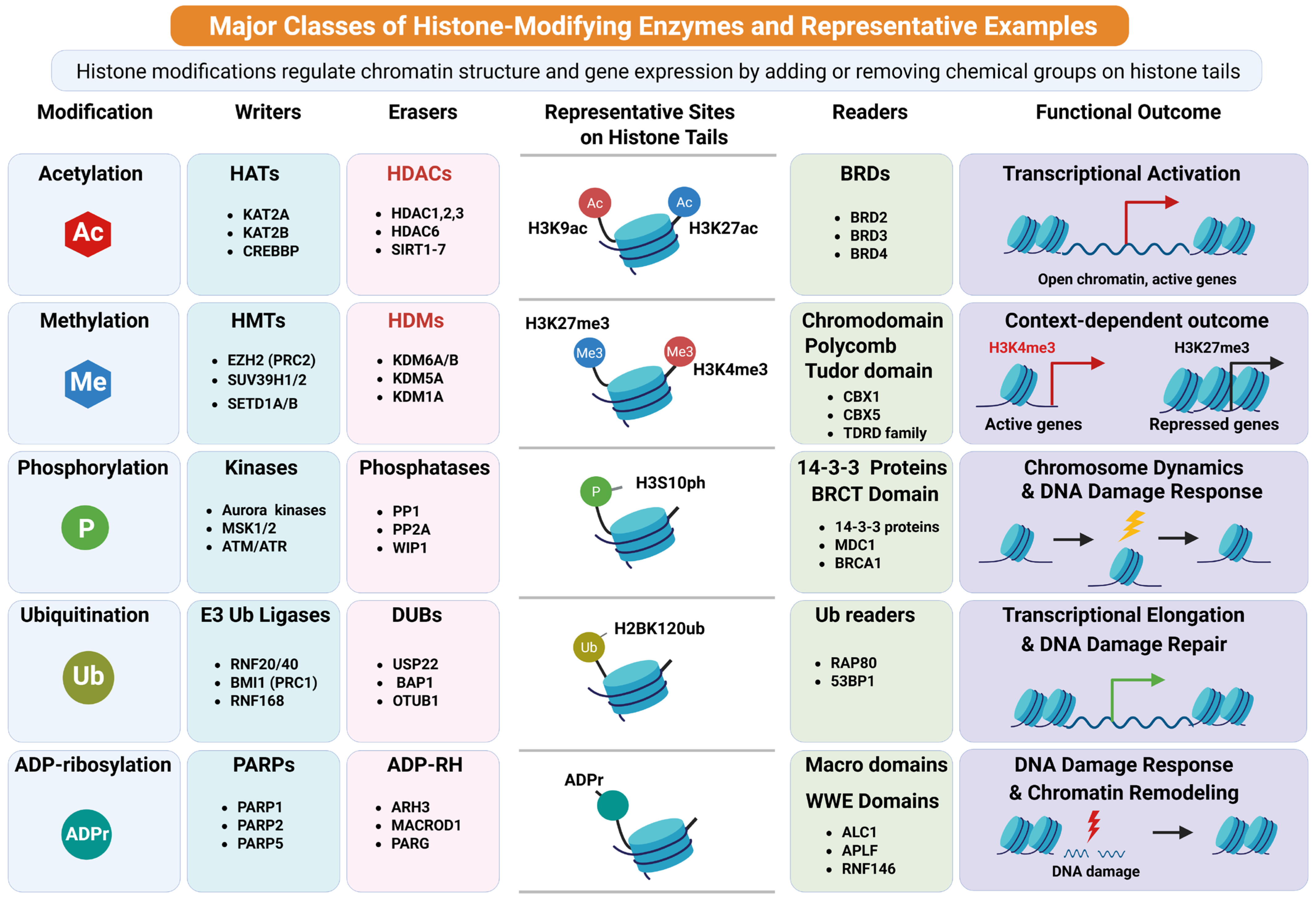
1.2. Histone Modifications
1.2.1. Writers That Deposit Histone Modifications
1.2.2. Erasers That Remove Histone Modifications
1.2.3. Readers (e.g., Bromodomain and Chromodomain Proteins) That Interpret These Marks
1.3. Rationale for Reviewing Histone Modifications in USMTs
1.4. Knowledge Gaps and Purpose of the Review
2. Histone Modifications in Uterine Fibroids
2.1. Histone Modifications: Writers in Uterine Fibroids
2.2. Histone Deacetylases: Erasers in Uterine Fibroids
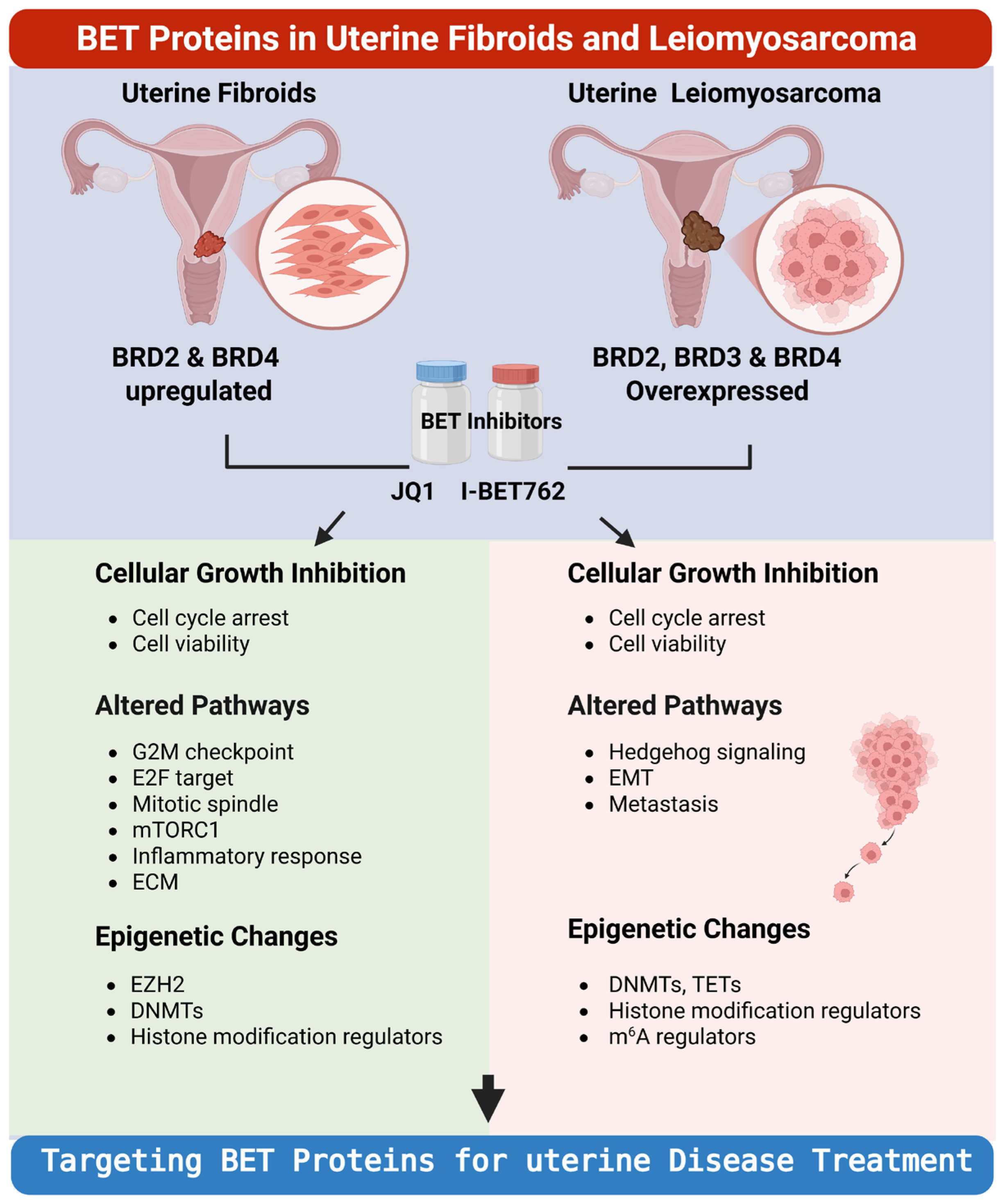
2.3. Histone Modifications: Readers in Uterine Fibroids
2.4. Integrated Crosstalk Between Histone Modifications, Epigenetic Regulation, Signaling Pathways, and Epitranscriptomic Mechanisms in UFs
3. Histone Modifications in Uterine Leiomyosarcoma
3.1. Histone Modification Writers in uLMS
3.2. Histone Modification Erasers in uLMS
3.3. Histone Modification Readers in uLMS
3.4. Crosstalk Between Histone Modifications and Other Epitranscriptomic Regulation in uLMS
3.4.1. Crosstalk Between Histone Modifications and DNA Methylation and microRNA Regulation in uLMS
3.4.2. Crosstalk Between Histone Modifications and RNA Epitranscriptomic Regulation in uLMS
4. Clinical Implications and Therapeutic Potential
4.1. Histone Modification Inhibitors
4.2. Epigenetic Biomarkers for Diagnosis, Prognosis, and Treatment Stratification
4.3. Challenges and Limitations of Translating Epigenetic Therapies
5. Future Directions
5.1. Epigenomic Profiling in Uterine Leiomyosarcoma
5.2. Multi-Omics Integration to Understand Histone Regulation in USMTs
5.3. Advanced Technologies: Single-Cell Epigenomics and CRISPR-Based Epigenetic Editing
5.4. Personalized Therapy Approaches Targeting Epigenetic Modifications
6. Conclusions
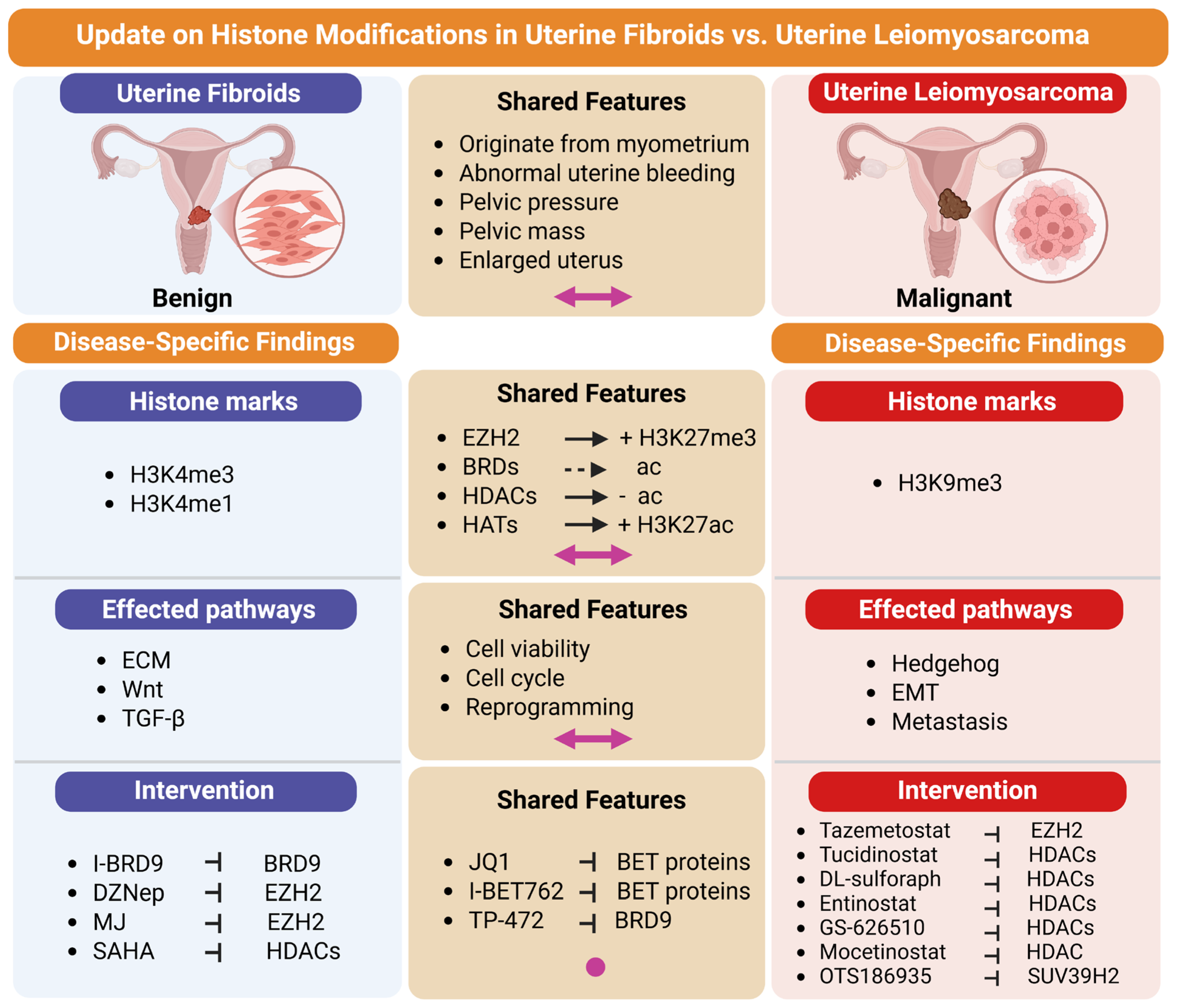
6.1. Shared and Divergent Histone Modification Landscapes in Uterine Fibroids and Leiomyosarcoma
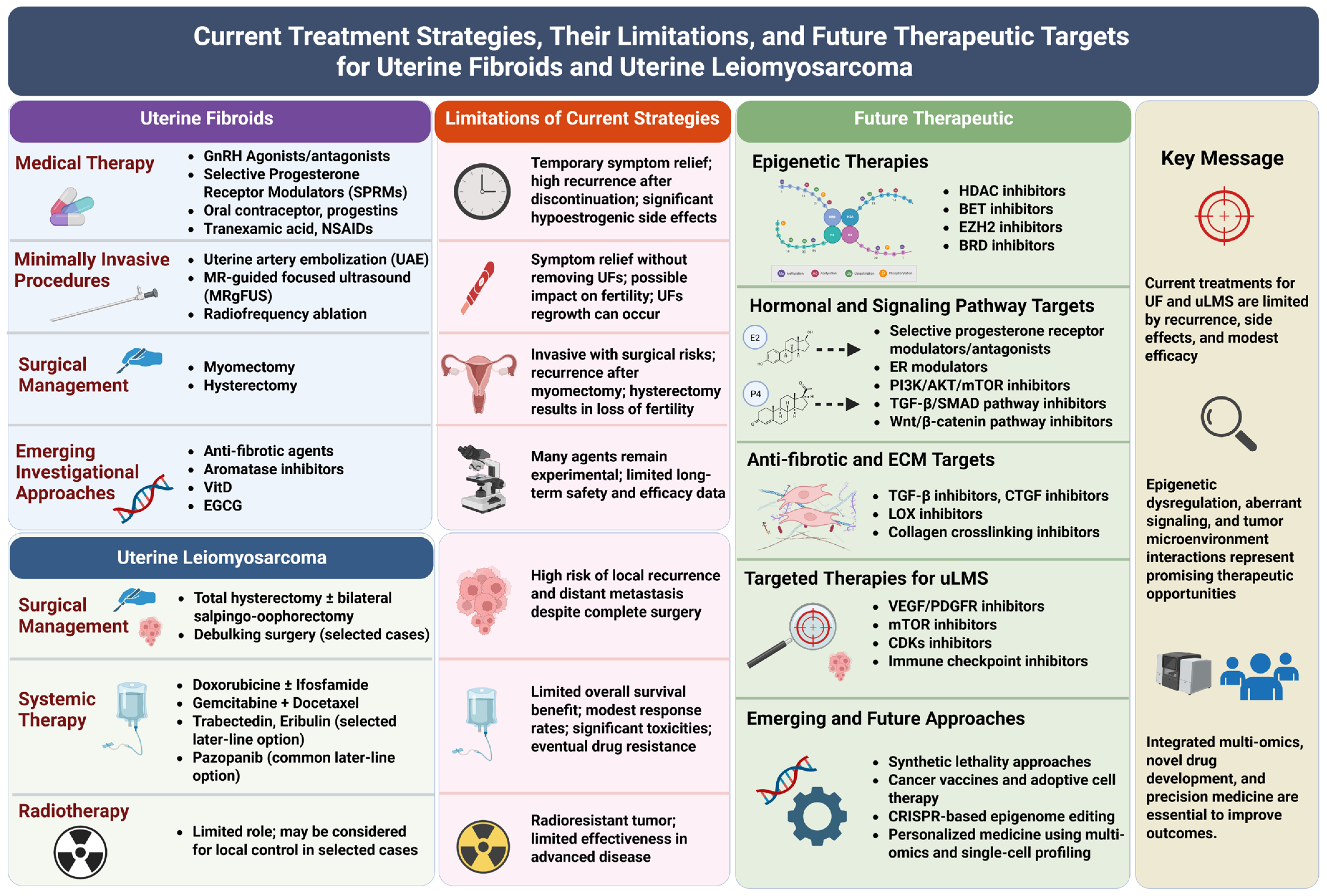
6.2. Epigenetic Regulation and Therapeutic Implications of Histone Modifications in Uterine Smooth Muscle Tumors
Funding
Institutional Review Board Statement
Informed Consent Statement
Data Availability Statement
Acknowledgments
Conflicts of Interest
Abbreviations
| ADP-RH | ADP-ribosylhydrolases |
| ATAC-seq | Assay for Transposase-Accessible Chromatin sequencing |
| BET | Bromodomain and Extra-Terminal domain |
| BRCA1 | Breast Cancer Gene 1 |
| BRD2/3/4/9 | Bromodomain-containing proteins 2/3/4/9 |
| ChIP-PCR | Chromatin Immunoprecipitation PCR |
| ChIP-seq | Chromatin Immunoprecipitation sequencing |
| CLOCK | Circadian Locomotor Output Cycles Kaput |
| CRISP1 | Cysteine Rich Secretory Protein 1 |
| CTGF | Connective Tissue Growth Factor |
| DeCET | Deconvolution-based Chromatin Epigenetic Tool |
| DES | Diethylstilbestrol |
| DNMT | DNA Methyltransferase |
| DUBs | Deubiquitinases |
| DZNep | 3-Deazaneplanocin A |
| ECM | Extracellular Matrix |
| EGCG | Epigallocatechin-3-gallate |
| ELISA | Enzyme-Linked Immunosorbent Assay |
| ELT-3 | Eker Leiomyoma Tumor Cell Line |
| EMT | Epithelial–Mesenchymal Transition |
| ERα/ESR1 | Estrogen Receptor Alpha |
| ERG | Estrogen-Responsive Gene |
| ERV | Endogenous Retrovirus |
| ERV1 | Endogenous Retrovirus 1 |
| EZH2 | Enhancer of Zeste Homolog 2 |
| FASN | Fatty Acid Synthase |
| GSEA | Gene Set Enrichment Analysis |
| H2A.Z | Histone Variant H2A.Z |
| H2AK119ub | Histone H2A Lysine 119 Ubiquitination |
| H2BK120ub | Histone H2B Lysine 120 Ubiquitination |
| H3K27ac | Histone H3 Lysine 27 Acetylation |
| H3K27me3 | Histone H3 Lysine 27 Trimethylation |
| H3K4me1 | Histone H3 Lysine 4 Monomethylation |
| H3K4me3 | Histone H3 Lysine 4 Trimethylation |
| H3K9me3 | Histone H3 Lysine 9 Trimethylation |
| HAT | Histone Acetyltransferase |
| HAT1 | Histone Acetyltransferase 1 |
| HCL | Highly Cellular Leiomyoma |
| HDAC | Histone Deacetylase |
| HDACI | Histone Deacetylase Inhibitor |
| HDM | Histone Demethylase |
| HiChIP | High-throughput Chromatin Conformation Capture with Immunoprecipitation |
| HMGA2 | High Mobility Group AT-hook 2 |
| HOXA13 | Homeobox A13 |
| I-BET762/JQ1 | BET Inhibitors |
| I-BRD9/TP-472 | BRD9 Inhibitors |
| IHC | Immunohistochemistry |
| IRG | Inflammatory-Responsive Gene |
| KRAS | Kirsten Rat Sarcoma Viral Oncogene |
| KD | Knockdown |
| LMS | Leiomyosarcoma |
| LTR12 | Long Terminal Repeat 12 |
| MED12 | Mediator Complex Subunit 12 |
| MJ | Methyl Jasmonate |
| MMP9 | Matrix Metallopeptidase 9 |
| MM | Myometrium |
| MMSC | Myometrial Stem Cell |
| mTORC1 | Mechanistic Target of Rapamycin Complex 1 |
| MYC/c-Myc | MYC Proto-Oncogene |
| NF-κB | Nuclear Factor Kappa B |
| OE | Overexpression |
| PARP | Poly (ADP-ribose) Polymerase |
| PTMs | Post-Translational Modifications |
| qRT-PCR | Quantitative Real-Time Polymerase Chain Reaction |
| RAD51 | RAD51 Recombinase |
| RNA-seq | RNA Sequencing |
| RRBS | Reduced Representation Bisulfite Sequencing |
| SAHA | Suberoylanilide Hydroxamic Acid |
| siRNA | Small Interfering RNA |
| SMT | Smooth Muscle Tumor |
| SRCAP | SNF2-related CREBBP Activator Protein |
| SUV39H2 | Suppressor of Variegation 3–9 Homolog 2 |
| TE | Transposable Element |
| TGF-β/TGFB3 | Transforming Growth Factor Beta/Isoform 3 |
| UF | Uterine Fibroid |
| uLMS | Uterine Leiomyosarcoma |
| US | Uterine Sarcoma |
| USMTs | Uterine Smooth Muscle Tumors |
| VitD | Vitamin D |
| YEATS4 | YEATS Domain Containing 4 |
| ZNHIT1 | Zinc Finger HIT-Type Containing 1 |
| γH2AX | Phosphorylated H2A Histone Family Member X |
References
- Oliva, E. Practical issues in uterine pathology from banal to bewildering: The remarkable spectrum of smooth muscle neoplasia. Mod. Pathol. 2016, 29, S104–S120. [Google Scholar] [CrossRef]
- Yang, Q.; Madueke-Laveaux, O.S.; Cun, H.; Wlodarczyk, M.; Garcia, N.; Carvalho, K.C.; Al-Hendy, A. Comprehensive Review of Uterine Leiomyosarcoma: Pathogenesis, Diagnosis, Prognosis, and Targeted Therapy. Cells 2024, 13, 1106. [Google Scholar] [CrossRef]
- Bulun, S.E. Uterine fibroids. N. Engl. J. Med. 2013, 369, 1344–1355. [Google Scholar] [CrossRef]
- Satala, C.B.; Patrichi, G.; Gurau, A.M.; Toma, A.; Popazu, C.; Mihalache, D. An Update on Uterine Smooth Muscle Tumors: Is It a Leiomyoma, a STUMP, or a Leiomyosarcoma? Biomedicines 2026, 14, 285. [Google Scholar] [CrossRef] [PubMed]
- Ricci, S.; Stone, R.L.; Fader, A.N. Uterine leiomyosarcoma: Epidemiology, contemporary treatment strategies and the impact of uterine morcellation. Gynecol. Oncol. 2017, 145, 208–216. [Google Scholar] [CrossRef]
- Makinen, N.; Mehine, M.; Tolvanen, J.; Kaasinen, E.; Li, Y.; Lehtonen, H.J.; Gentile, M.; Yan, J.; Enge, M.; Taipale, M.; et al. MED12, the mediator complex subunit 12 gene, is mutated at high frequency in uterine leiomyomas. Science 2011, 334, 252–255. [Google Scholar] [CrossRef]
- Kim, K.; Kim, S.; Ahn, T.; Kim, H.; Shin, S.J.; Choi, C.H.; Park, S.; Kim, Y.B.; No, J.H.; Suh, D.H. A differential diagnosis between uterine leiomyoma and leiomyosarcoma using transcriptome analysis. BMC Cancer 2023, 23, 1215. [Google Scholar] [CrossRef] [PubMed]
- Yang, Q.; Ciebiera, M.; Bariani, M.V.; Ali, M.; Elkafas, H.; Boyer, T.G.; Al-Hendy, A. Comprehensive Review of Uterine Fibroids: Developmental Origin, Pathogenesis, and Treatment. Endocr. Rev. 2022, 43, 678–719. [Google Scholar] [CrossRef] [PubMed]
- Stewart, E.A. Uterine fibroids. Lancet 2001, 357, 293–298. [Google Scholar] [CrossRef]
- Flake, G.P.; Andersen, J.; Dixon, D. Etiology and pathogenesis of uterine leiomyomas: A review. Environ. Health Perspect. 2003, 111, 1037–1054. [Google Scholar] [CrossRef]
- Yang, Q.; Al-Hendy, A. Update on the Role and Regulatory Mechanism of Extracellular Matrix in the Pathogenesis of Uterine Fibroids. Int. J. Mol. Sci. 2023, 24, 5778. [Google Scholar] [CrossRef]
- Ishikawa, H.; Ishi, K.; Serna, V.A.; Kakazu, R.; Bulun, S.E.; Kurita, T. Progesterone is essential for maintenance and growth of uterine leiomyoma. Endocrinology 2010, 151, 2433–2442. [Google Scholar] [CrossRef] [PubMed]
- Maruo, T.; Ohara, N.; Wang, J.; Matsuo, H. Sex steroidal regulation of uterine leiomyoma growth and apoptosis. Hum. Reprod. Update 2004, 10, 207–220. [Google Scholar] [CrossRef]
- Baird, D.D.; Dunson, D.B.; Hill, M.C.; Cousins, D.; Schectman, J.M. High cumulative incidence of uterine leiomyoma in black and white women: Ultrasound evidence. Am. J. Obstet. Gynecol. 2003, 188, 100–107. [Google Scholar] [CrossRef] [PubMed]
- Mehine, M.; Kaasinen, E.; Makinen, N.; Katainen, R.; Kampjarvi, K.; Pitkanen, E.; Heinonen, H.R.; Butzow, R.; Kilpivaara, O.; Kuosmanen, A.; et al. Characterization of uterine leiomyomas by whole-genome sequencing. N. Engl. J. Med. 2013, 369, 43–53. [Google Scholar] [CrossRef]
- Tomlinson, I.P.; Alam, N.A.; Rowan, A.J.; Barclay, E.; Jaeger, E.E.; Kelsell, D.; Leigh, I.; Gorman, P.; Lamlum, H.; Rahman, S.; et al. Germline mutations in FH predispose to dominantly inherited uterine fibroids, skin leiomyomata and papillary renal cell cancer. Nat. Genet. 2002, 30, 406–410. [Google Scholar] [CrossRef]
- Ponomarenko, M.; Reshetnikov, E.; Churnosova, M.; Aristova, I.; Abramova, M.; Novakov, V.; Churnosov, V.; Polonikov, A.; Plotnikov, D.; Churnosov, M.; et al. Genetic Variants Linked with the Concentration of Sex Hormone-Binding Globulin Correlate with Uterine Fibroid Risk. Life 2025, 15, 1150. [Google Scholar] [CrossRef] [PubMed]
- Ponomarenko, M.; Reshetnikov, E.; Churnosova, M.; Aristova, I.; Abramova, M.; Novakov, V.; Churnosov, V.; Polonikov, A.; Churnosov, M.; Ponomarenko, I. Obesity/Overweight as a Meaningful Modifier of Associations Between Gene Polymorphisms Affecting the Sex Hormone-Binding Globulin Content and Uterine Myoma. Life 2025, 15, 1459. [Google Scholar] [CrossRef]
- Ponomareva, L.; Dorofeeva, A.; Samoylenko, J.; Kobzeva, K.; Bushueva, O. Uterine Fibroids-Associated GWAS Loci and the Risk of Arterial Hypertension: A Pilot Study. Front. Biosci. 2025, 17, 42728. [Google Scholar] [CrossRef]
- Ponomarenko, I.; Reshetnikov, E.; Polonikov, A.; Verzilina, I.; Sorokina, I.; Yermachenko, A.; Dvornyk, V.; Churnosov, M. Candidate Genes for Age at Menarche Are Associated With Uterine Leiomyoma. Front. Genet. 2020, 11, 512940. [Google Scholar] [CrossRef]
- Hazimeh, D.; Coco, A.; Casubhoy, I.; Segars, J.; Singh, B. The Annual Economic Burden of Uterine Fibroids in the United States (2010 Versus 2022): A Comparative Cost-Analysis. Reprod. Sci. 2024, 31, 3743–3756. [Google Scholar] [CrossRef] [PubMed]
- George, S.; Serrano, C.; Hensley, M.L.; Ray-Coquard, I. Soft Tissue and Uterine Leiomyosarcoma. J. Clin. Oncol. 2018, 36, 144–150. [Google Scholar] [CrossRef] [PubMed]
- Bell, S.W.; Kempson, R.L.; Hendrickson, M.R. Problematic uterine smooth muscle neoplasms. A clinicopathologic study of 213 cases. Am. J. Surg. Pathol. 1994, 18, 535–558. [Google Scholar] [CrossRef] [PubMed]
- Bannister, A.J.; Kouzarides, T. Regulation of chromatin by histone modifications. Cell Res. 2011, 21, 381–395. [Google Scholar] [CrossRef]
- Kouzarides, T. Chromatin modifications and their function. Cell 2007, 128, 693–705. [Google Scholar] [CrossRef]
- Allis, C.D.; Jenuwein, T. The molecular hallmarks of epigenetic control. Nat. Rev. Genet. 2016, 17, 487–500. [Google Scholar] [CrossRef]
- Rothbart, S.B.; Strahl, B.D. Interpreting the language of histone and DNA modifications. Biochim. Biophys. Acta 2014, 1839, 627–643. [Google Scholar] [CrossRef]
- Marmorstein, R.; Zhou, M.M. Writers and readers of histone acetylation: Structure, mechanism, and inhibition. Cold Spring Harb. Perspect. Biol. 2014, 6, a018762. [Google Scholar] [CrossRef]
- Lee, K.K.; Workman, J.L. Histone acetyltransferase complexes: One size doesn’t fit all. Nat. Rev. Mol. Cell Biol. 2007, 8, 284–295. [Google Scholar] [CrossRef]
- Shogren-Knaak, M.; Ishii, H.; Sun, J.M.; Pazin, M.J.; Davie, J.R.; Peterson, C.L. Histone H4-K16 acetylation controls chromatin structure and protein interactions. Science 2006, 311, 844–847. [Google Scholar] [CrossRef]
- Raisner, R.; Kharbanda, S.; Jin, L.; Jeng, E.; Chan, E.; Merchant, M.; Haverty, P.M.; Bainer, R.; Cheung, T.; Arnott, D.; et al. Enhancer Activity Requires CBP/P300 Bromodomain-Dependent Histone H3K27 Acetylation. Cell Rep. 2018, 24, 1722–1729. [Google Scholar] [CrossRef]
- Black, J.C.; Van Rechem, C.; Whetstine, J.R. Histone lysine methylation dynamics: Establishment, regulation, and biological impact. Mol. Cell 2012, 48, 491–507. [Google Scholar] [CrossRef]
- Hyun, K.; Jeon, J.; Park, K.; Kim, J. Writing, erasing and reading histone lysine methylations. Exp. Mol. Med. 2017, 49, e324. [Google Scholar] [CrossRef] [PubMed]
- Ruthenburg, A.J.; Allis, C.D.; Wysocka, J. Methylation of lysine 4 on histone H3: Intricacy of writing and reading a single epigenetic mark. Mol. Cell 2007, 25, 15–30. [Google Scholar] [CrossRef]
- Margueron, R.; Reinberg, D. The Polycomb complex PRC2 and its mark in life. Nature 2011, 469, 343–349. [Google Scholar] [CrossRef]
- Li, J.; Duns, G.; Westers, H.; Sijmons, R.; van den Berg, A.; Kok, K. SETD2: An epigenetic modifier with tumor suppressor functionality. Oncotarget 2016, 7, 50719–50734. [Google Scholar] [CrossRef] [PubMed]
- Peters, A.H.; O’Carroll, D.; Scherthan, H.; Mechtler, K.; Sauer, S.; Schofer, C.; Weipoltshammer, K.; Pagani, M.; Lachner, M.; Kohlmaier, A.; et al. Loss of the Suv39h histone methyltransferases impairs mammalian heterochromatin and genome stability. Cell 2001, 107, 323–337. [Google Scholar] [CrossRef]
- Rossetto, D.; Avvakumov, N.; Cote, J. Histone phosphorylation: A chromatin modification involved in diverse nuclear events. Epigenetics 2012, 7, 1098–1108. [Google Scholar] [CrossRef] [PubMed]
- Nowak, S.J.; Corces, V.G. Phosphorylation of histone H3: A balancing act between chromosome condensation and transcriptional activation. Trends Genet. 2004, 20, 214–220. [Google Scholar] [CrossRef]
- Crosio, C.; Fimia, G.M.; Loury, R.; Kimura, M.; Okano, Y.; Zhou, H.; Sen, S.; Allis, C.D.; Sassone-Corsi, P. Mitotic phosphorylation of histone H3: Spatio-temporal regulation by mammalian Aurora kinases. Mol. Cell. Biol. 2002, 22, 874–885. [Google Scholar] [CrossRef]
- Rogakou, E.P.; Pilch, D.R.; Orr, A.H.; Ivanova, V.S.; Bonner, W.M. DNA double-stranded breaks induce histone H2AX phosphorylation on serine 139. J. Biol. Chem. 1998, 273, 5858–5868. [Google Scholar] [CrossRef]
- Burma, S.; Chen, B.P.; Murphy, M.; Kurimasa, A.; Chen, D.J. ATM phosphorylates histone H2AX in response to DNA double-strand breaks. J. Biol. Chem. 2001, 276, 42462–42467. [Google Scholar] [CrossRef]
- Ward, I.M.; Chen, J. Histone H2AX is phosphorylated in an ATR-dependent manner in response to replicational stress. J. Biol. Chem. 2001, 276, 47759–47762. [Google Scholar] [CrossRef]
- Weake, V.M.; Workman, J.L. Histone ubiquitination: Triggering gene activity. Mol. Cell 2008, 29, 653–663. [Google Scholar] [CrossRef]
- Fuchs, G.; Oren, M. Writing and reading H2B monoubiquitylation. Biochim. Biophys. Acta 2014, 1839, 694–701. [Google Scholar] [CrossRef]
- Wang, H.; Wang, L.; Erdjument-Bromage, H.; Vidal, M.; Tempst, P.; Jones, R.S.; Zhang, Y. Role of histone H2A ubiquitination in Polycomb silencing. Nature 2004, 431, 873–878. [Google Scholar] [CrossRef]
- Blackledge, N.P.; Rose, N.R.; Klose, R.J. Targeting Polycomb systems to regulate gene expression: Modifications to a complex story. Nat. Rev. Mol. Cell Biol. 2015, 16, 643–649. [Google Scholar] [CrossRef]
- Messner, S.; Hottiger, M.O. Histone ADP-ribosylation in DNA repair, replication and transcription. Trends Cell Biol. 2011, 21, 534–542. [Google Scholar] [CrossRef] [PubMed]
- Ryu, H.Y.; Hochstrasser, M. Histone sumoylation and chromatin dynamics. Nucleic Acids Res. 2021, 49, 6043–6052. [Google Scholar] [CrossRef] [PubMed]
- Shiio, Y.; Eisenman, R.N. Histone sumoylation is associated with transcriptional repression. Proc. Natl. Acad. Sci. USA 2003, 100, 13225–13230. [Google Scholar] [CrossRef] [PubMed]
- Smith, R.; Zentout, S.; Rother, M.; Bigot, N.; Chapuis, C.; Mihut, A.; Zobel, F.F.; Ahel, I.; van Attikum, H.; Timinszky, G.; et al. HPF1-dependent histone ADP-ribosylation triggers chromatin relaxation to promote the recruitment of repair factors at sites of DNA damage. Nat. Struct. Mol. Biol. 2023, 30, 678–691. [Google Scholar] [CrossRef]
- Ozdemir, C.; Purkey, L.R.; Sanchez, A.; Miller, K.M. PARticular MARks: Histone ADP-ribosylation and the DNA damage response. DNA Repair 2024, 140, 103711. [Google Scholar] [CrossRef]
- Shi, Y.; Whetstine, J.R. Dynamic regulation of histone lysine methylation by demethylases. Mol. Cell 2007, 25, 1–14. [Google Scholar] [CrossRef]
- Pedersen, M.T.; Helin, K. Histone demethylases in development and disease. Trends Cell Biol. 2010, 20, 662–671. [Google Scholar] [CrossRef]
- Seto, E.; Yoshida, M. Erasers of histone acetylation: The histone deacetylase enzymes. Cold Spring Harb. Perspect. Biol. 2014, 6, a018713. [Google Scholar] [CrossRef]
- Hojfeldt, J.W.; Agger, K.; Helin, K. Histone lysine demethylases as targets for anticancer therapy. Nat. Rev. Drug Discov. 2013, 12, 917–930. [Google Scholar] [CrossRef]
- de Ruijter, A.J.; van Gennip, A.H.; Caron, H.N.; Kemp, S.; van Kuilenburg, A.B. Histone deacetylases (HDACs): Characterization of the classical HDAC family. Biochem. J. 2003, 370, 737–749. [Google Scholar] [CrossRef]
- Yang, X.J.; Seto, E. The Rpd3/Hda1 family of lysine deacetylases: From bacteria and yeast to mice and men. Nat. Rev. Mol. Cell Biol. 2008, 9, 206–218. [Google Scholar] [CrossRef]
- Haberland, M.; Montgomery, R.L.; Olson, E.N. The many roles of histone deacetylases in development and physiology: Implications for disease and therapy. Nat. Rev. Genet. 2009, 10, 32–42. [Google Scholar] [CrossRef]
- Haigis, M.C.; Sinclair, D.A. Mammalian sirtuins: Biological insights and disease relevance. Annu. Rev. Pathol. 2010, 5, 253–295. [Google Scholar] [CrossRef]
- Imai, S.I.; Guarente, L. It takes two to tango: NAD(+) and sirtuins in aging/longevity control. NPJ Aging Mech. Dis. 2016, 2, 16017. [Google Scholar] [CrossRef]
- Shi, Y.; Lan, F.; Matson, C.; Mulligan, P.; Whetstine, J.R.; Cole, P.A.; Casero, R.A.; Shi, Y. Histone demethylation mediated by the nuclear amine oxidase homolog LSD1. Cell 2004, 119, 941–953. [Google Scholar] [CrossRef]
- Klose, R.J.; Kallin, E.M.; Zhang, Y. JmjC-domain-containing proteins and histone demethylation. Nat. Rev. Genet. 2006, 7, 715–727. [Google Scholar] [CrossRef]
- Berry, W.L.; Janknecht, R. KDM4/JMJD2 histone demethylases: Epigenetic regulators in cancer cells. Cancer Res. 2013, 73, 2936–2942. [Google Scholar] [CrossRef]
- Agger, K.; Cloos, P.A.; Christensen, J.; Pasini, D.; Rose, S.; Rappsilber, J.; Issaeva, I.; Canaani, E.; Salcini, A.E.; Helin, K. UTX and JMJD3 are histone H3K27 demethylases involved in HOX gene regulation and development. Nature 2007, 449, 731–734. [Google Scholar] [CrossRef]
- Cloos, P.A.; Christensen, J.; Agger, K.; Helin, K. Erasing the methyl mark: Histone demethylases at the center of cellular differentiation and disease. Genes Dev. 2008, 22, 1115–1140. [Google Scholar] [CrossRef] [PubMed]
- Atanassov, B.S.; Dent, S.Y. USP22 regulates cell proliferation by deubiquitinating the transcriptional regulator FBP1. EMBO Rep. 2011, 12, 924–930. [Google Scholar] [CrossRef]
- Scheuermann, J.C.; de Ayala Alonso, A.G.; Oktaba, K.; Ly-Hartig, N.; McGinty, R.K.; Fraterman, S.; Wilm, M.; Muir, T.W.; Muller, J. Histone H2A deubiquitinase activity of the Polycomb repressive complex PR-DUB. Nature 2010, 465, 243–247. [Google Scholar] [CrossRef] [PubMed]
- Sahtoe, D.D.; van Dijk, W.J.; Ekkebus, R.; Ovaa, H.; Sixma, T.K. BAP1/ASXL1 recruitment and activation for H2A deubiquitination. Nat. Commun. 2016, 7, 10292. [Google Scholar] [CrossRef] [PubMed]
- Peng, A.; Maller, J.L. Serine/threonine phosphatases in the DNA damage response and cancer. Oncogene 2010, 29, 5977–5988. [Google Scholar] [CrossRef]
- Hickey, C.M.; Wilson, N.R.; Hochstrasser, M. Function and regulation of SUMO proteases. Nat. Rev. Mol. Cell Biol. 2012, 13, 755–766. [Google Scholar] [CrossRef] [PubMed]
- Haince, J.F.; McDonald, D.; Rodrigue, A.; Dery, U.; Masson, J.Y.; Hendzel, M.J.; Poirier, G.G. PARP1-dependent kinetics of recruitment of MRE11 and NBS1 proteins to multiple DNA damage sites. J. Biol. Chem. 2008, 283, 1197–1208. [Google Scholar] [CrossRef]
- Alemasova, E.E.; Lavrik, O.I. Poly(ADP-ribosyl)ation by PARP1: Reaction mechanism and regulatory proteins. Nucleic Acids Res. 2019, 47, 3811–3827. [Google Scholar] [CrossRef] [PubMed]
- Mortusewicz, O.; Ame, J.C.; Schreiber, V.; Leonhardt, H. Feedback-regulated poly(ADP-ribosyl)ation by PARP-1 is required for rapid response to DNA damage in living cells. Nucleic Acids Res. 2007, 35, 7665–7675. [Google Scholar] [CrossRef]
- Taverna, S.D.; Li, H.; Ruthenburg, A.J.; Allis, C.D.; Patel, D.J. How chromatin-binding modules interpret histone modifications: Lessons from professional pocket pickers. Nat. Struct. Mol. Biol. 2007, 14, 1025–1040. [Google Scholar] [CrossRef] [PubMed]
- Strahl, B.D.; Allis, C.D. The language of covalent histone modifications. Nature 2000, 403, 41–45. [Google Scholar] [CrossRef]
- Jenuwein, T.; Allis, C.D. Translating the histone code. Science 2001, 293, 1074–1080. [Google Scholar] [CrossRef]
- Musselman, C.A.; Lalonde, M.E.; Cote, J.; Kutateladze, T.G. Perceiving the epigenetic landscape through histone readers. Nat. Struct. Mol. Biol. 2012, 19, 1218–1227. [Google Scholar] [CrossRef]
- Yun, M.; Wu, J.; Workman, J.L.; Li, B. Readers of histone modifications. Cell Res. 2011, 21, 564–578. [Google Scholar] [CrossRef]
- Suganuma, T.; Workman, J.L. Signals and combinatorial functions of histone modifications. Annu. Rev. Biochem. 2011, 80, 473–499. [Google Scholar] [CrossRef]
- Filippakopoulos, P.; Knapp, S. Targeting bromodomains: Epigenetic readers of lysine acetylation. Nat. Rev. Drug Discov. 2014, 13, 337–356. [Google Scholar] [CrossRef]
- Dhalluin, C.; Carlson, J.E.; Zeng, L.; He, C.; Aggarwal, A.K.; Zhou, M.M. Structure and ligand of a histone acetyltransferase bromodomain. Nature 1999, 399, 491–496. [Google Scholar] [CrossRef]
- Zeng, L.; Zhou, M.M. Bromodomain: An acetyl-lysine binding domain. FEBS Lett. 2002, 513, 124–128. [Google Scholar] [CrossRef]
- Dey, A.; Chitsaz, F.; Abbasi, A.; Misteli, T.; Ozato, K. The double bromodomain protein Brd4 binds to acetylated chromatin during interphase and mitosis. Proc. Natl. Acad. Sci. USA 2003, 100, 8758–8763. [Google Scholar] [CrossRef]
- Filippakopoulos, P.; Picaud, S.; Mangos, M.; Keates, T.; Lambert, J.P.; Barsyte-Lovejoy, D.; Felletar, I.; Volkmer, R.; Muller, S.; Pawson, T.; et al. Histone recognition and large-scale structural analysis of the human bromodomain family. Cell 2012, 149, 214–231. [Google Scholar] [CrossRef]
- Saunders, A.; Core, L.J.; Lis, J.T. Breaking barriers to transcription elongation. Nat. Rev. Mol. Cell Biol. 2006, 7, 557–567. [Google Scholar] [CrossRef]
- Bannister, A.J.; Zegerman, P.; Partridge, J.F.; Miska, E.A.; Thomas, J.O.; Allshire, R.C.; Kouzarides, T. Selective recognition of methylated lysine 9 on histone H3 by the HP1 chromo domain. Nature 2001, 410, 120–124. [Google Scholar] [CrossRef]
- Lachner, M.; O’Carroll, D.; Rea, S.; Mechtler, K.; Jenuwein, T. Methylation of histone H3 lysine 9 creates a binding site for HP1 proteins. Nature 2001, 410, 116–120. [Google Scholar] [CrossRef]
- Nielsen, P.R.; Nietlispach, D.; Mott, H.R.; Callaghan, J.; Bannister, A.; Kouzarides, T.; Murzin, A.G.; Murzina, N.V.; Laue, E.D. Structure of the HP1 chromodomain bound to histone H3 methylated at lysine 9. Nature 2002, 416, 103–107. [Google Scholar] [CrossRef]
- Min, J.; Zhang, Y.; Xu, R.M. Structural basis for specific binding of Polycomb chromodomain to histone H3 methylated at Lys 27. Genes Dev. 2003, 17, 1823–1828. [Google Scholar] [CrossRef]
- Simon, J.A.; Kingston, R.E. Mechanisms of polycomb gene silencing: Knowns and unknowns. Nat. Rev. Mol. Cell Biol. 2009, 10, 697–708. [Google Scholar] [CrossRef]
- Wysocka, J.; Swigut, T.; Xiao, H.; Milne, T.A.; Kwon, S.Y.; Landry, J.; Kauer, M.; Tackett, A.J.; Chait, B.T.; Badenhorst, P.; et al. A PHD finger of NURF couples histone H3 lysine 4 trimethylation with chromatin remodelling. Nature 2006, 442, 86–90. [Google Scholar] [CrossRef]
- Vermeulen, M.; Mulder, K.W.; Denissov, S.; Pijnappel, W.W.; van Schaik, F.M.; Varier, R.A.; Baltissen, M.P.; Stunnenberg, H.G.; Mann, M.; Timmers, H.T. Selective anchoring of TFIID to nucleosomes by trimethylation of histone H3 lysine 4. Cell 2007, 131, 58–69. [Google Scholar] [CrossRef]
- Huang, Y.; Fang, J.; Bedford, M.T.; Zhang, Y.; Xu, R.M. Recognition of histone H3 lysine-4 methylation by the double tudor domain of JMJD2A. Science 2006, 312, 748–751. [Google Scholar] [CrossRef]
- Margueron, R.; Justin, N.; Ohno, K.; Sharpe, M.L.; Son, J.; Drury, W.J., 3rd; Voigt, P.; Martin, S.R.; Taylor, W.R.; De Marco, V.; et al. Role of the polycomb protein EED in the propagation of repressive histone marks. Nature 2009, 461, 762–767. [Google Scholar] [CrossRef]
- Musselman, C.A.; Kutateladze, T.G. Handpicking epigenetic marks with PHD fingers. Nucleic Acids Res. 2011, 39, 9061–9071. [Google Scholar] [CrossRef]
- West, A.C.; Johnstone, R.W. New and emerging HDAC inhibitors for cancer treatment. J. Clin. Investig. 2014, 124, 30–39. [Google Scholar] [CrossRef]
- French, C.A. Small-Molecule Targeting of BET Proteins in Cancer. Adv. Cancer Res. 2016, 131, 21–58. [Google Scholar] [CrossRef]
- Kim, K.H.; Roberts, C.W. Targeting EZH2 in cancer. Nat. Med. 2016, 22, 128–134. [Google Scholar] [CrossRef]
- Yang, Q.; Nair, S.; Laknaur, A.; Ismail, N.; Diamond, M.P.; Al-Hendy, A. The Polycomb Group Protein EZH2 Impairs DNA Damage Repair Gene Expression in Human Uterine Fibroids. Biol. Reprod. 2016, 94, 69. [Google Scholar] [CrossRef]
- Yang, Q.; Ali, M.; Trevino, L.S.; Mas, A.; Ismail, N.; Al-Hendy, A. Epigenetic Modulation of Inflammatory Pathways in Myometrial Stem Cells and Risk of Uterine Fibroids. Int. J. Mol. Sci. 2023, 24, 11641. [Google Scholar] [CrossRef]
- Ali, M.; Stone, D.; Laknaur, A.; Yang, Q.; Al-Hendy, A. EZH2 activates Wnt/beta-catenin signaling in human uterine fibroids, which is inhibited by the natural compound methyl jasmonate. F&S Sci. 2023, 4, 239–256. [Google Scholar] [CrossRef]
- Yang, Q.; Ali, M.; Trevino, L.S.; Mas, A.; Al-Hendy, A. Developmental reprogramming of myometrial stem cells by endocrine disruptor linking to risk of uterine fibroids. Cell. Mol. Life Sci. 2023, 80, 274. [Google Scholar] [CrossRef] [PubMed]
- Berta, D.G.; Kuisma, H.; Valimaki, N.; Raisanen, M.; Jantti, M.; Pasanen, A.; Karhu, A.; Kaukomaa, J.; Taira, A.; Cajuso, T.; et al. Deficient H2A.Z deposition is associated with genesis of uterine leiomyoma. Nature 2021, 596, 398–403. [Google Scholar] [CrossRef]
- Leistico, J.R.; Saini, P.; Futtner, C.R.; Hejna, M.; Omura, Y.; Soni, P.N.; Sandlesh, P.; Milad, M.; Wei, J.J.; Bulun, S.; et al. Epigenomic tensor predicts disease subtypes and reveals constrained tumor evolution. Cell Rep. 2021, 34, 108927. [Google Scholar] [CrossRef]
- Moyo, M.B.; Parker, J.B.; Chakravarti, D. Altered chromatin landscape and enhancer engagement underlie transcriptional dysregulation in MED12 mutant uterine leiomyomas. Nat. Commun. 2020, 11, 1019. [Google Scholar] [CrossRef]
- Carbajo-Garcia, M.C.; de Miguel-Gomez, L.; Juarez-Barber, E.; Trelis, A.; Monleon, J.; Pellicer, A.; Flanagan, J.M.; Ferrero, H. Deciphering the Role of Histone Modifications in Uterine Leiomyoma: Acetylation of H3K27 Regulates the Expression of Genes Involved in Proliferation, Cell Signaling, Cell Transport, Angiogenesis and Extracellular Matrix Formation. Biomedicines 2022, 10, 1279. [Google Scholar] [CrossRef]
- Carbajo-Garcia, M.C.; Juarez-Barber, E.; Segura-Benitez, M.; Faus, A.; Trelis, A.; Monleon, J.; Carmona-Antonanzas, G.; Pellicer, A.; Flanagan, J.M.; Ferrero, H. H3K4me3 mediates uterine leiomyoma pathogenesis via neuronal processes, synapsis components, proliferation, and Wnt/beta-catenin and TGF-beta pathways. Reprod. Biol. Endocrinol. 2023, 21, 9. [Google Scholar] [CrossRef] [PubMed]
- Wei, L.H.; Torng, P.L.; Hsiao, S.M.; Jeng, Y.M.; Chen, M.W.; Chen, C.A. Histone deacetylase 6 regulates estrogen receptor alpha in uterine leiomyoma. Reprod. Sci. 2011, 18, 755–762. [Google Scholar] [CrossRef]
- Ali, M.; Shahin, S.M.; Sabri, N.A.; Al-Hendy, A.; Yang, Q. Activation of beta-Catenin Signaling and its Crosstalk With Estrogen and Histone Deacetylases in Human Uterine Fibroids. J. Clin. Endocrinol. Metab. 2020, 105, e1517–e1535. [Google Scholar] [CrossRef]
- Carbajo-Garcia, M.C.; Garcia-Alcazar, Z.; Corachan, A.; Monleon, J.; Trelis, A.; Faus, A.; Pellicer, A.; Ferrero, H. Histone deacetylase inhibition by suberoylanilide hydroxamic acid: A therapeutic approach to treat human uterine leiomyoma. Fertil. Steril. 2022, 117, 433–443. [Google Scholar] [CrossRef] [PubMed]
- Yang, Q.; Laknaur, A.; Elam, L.; Ismail, N.; Gavrilova-Jordan, L.; Lue, J.; Diamond, M.P.; Al-Hendy, A. Identification of Polycomb Group Protein EZH2-Mediated DNA Mismatch Repair Gene MSH2 in Human Uterine Fibroids. Reprod. Sci. 2016, 23, 1314–1325. [Google Scholar] [CrossRef][Green Version]
- Yang, Q.; Vafaei, S.; Falahati, A.; Khosh, A.; Bariani, M.V.; Omran, M.M.; Bai, T.; Siblini, H.; Ali, M.; He, C.; et al. Bromodomain-Containing Protein 9 Regulates Signaling Pathways and Reprograms the Epigenome in Immortalized Human Uterine Fibroid Cells. Int. J. Mol. Sci. 2024, 25, 905. [Google Scholar] [CrossRef]
- Yang, Q.; Falahati, A.; Khosh, A.; Vafaei, S.; Al-Hendy, A. Targeting Bromodomain-Containing Protein 9 in Human Uterine Fibroid Cells. Reprod. Sci. 2025, 32, 103–115. [Google Scholar] [CrossRef]
- Yang, Q.; Vafaei, S.; Falahati, A.; Khosh, A.; Omran, M.M.; Bai, T.; Bariani, M.V.; Ali, M.; Boyer, T.G.; Al-Hendy, A. Decoding Bromodomain and Extra-Terminal Domain Protein-Mediated Epigenetic Mechanisms in Human Uterine Fibroids. Int. J. Mol. Sci. 2025, 26, 12144. [Google Scholar] [CrossRef]
- Yang, Q.; Falahati, A.; Khosh, A.; Lastra, R.R.; Boyer, T.G.; Al-Hendy, A. Unraveling the Role of Bromodomain and Extra-Terminal Proteins in Human Uterine Leiomyosarcoma. Cells 2024, 13, 1443. [Google Scholar] [CrossRef]
- Xiang, Y.; Chang, H.-M.; Leung, P.C.K.; Bai, L.; Zhu, Y. RNA modifications in female reproductive physiology and disease: Emerging roles and clinical implications. Hum. Reprod. Updat. 2025, 31, 333–360. [Google Scholar] [CrossRef] [PubMed]
- Yang, Q.; Al-Hendy, A.; Boyer, T.G. Molecular Insights into Widespread Pseudouridine RNA Modifications: Implications for Women’s Health and Disease. Biology 2026, 15, 142. [Google Scholar] [CrossRef]
- Yang, Q.; Salih, S.M.; Wu, R.; Arora, I.; Mousa, M.; Al-Hendy, A.; Boyer, T.G. 5-Methylcytidine RNA Epitranscriptomics in Women’s Health and Disease: Mechanisms and Clinical Implications. Cells 2026, 15, 847. [Google Scholar] [CrossRef] [PubMed]
- Bove, G.; Amin, S.; Babaei, M.; Benedetti, R.; Nebbioso, A.; Altucci, L.; Del Gaudio, N. Interplay between m(6) A epitranscriptome and epigenome in cancer: Current knowledge and therapeutic perspectives. Int. J. Cancer 2023, 153, 464–475. [Google Scholar] [CrossRef]
- Willbanks, A.; Wood, S.; Cheng, J.X. RNA Epigenetics: Fine-Tuning Chromatin Plasticity and Transcriptional Regulation, and the Implications in Human Diseases. Genes 2021, 12, 627. [Google Scholar] [CrossRef]
- Deng, X.; Wu, D.; Zhao, Y.; Qing, Y.; Wu, H.; Chen, J. Epitranscriptomic control of cancer hallmarks: Functions, mechanisms, and therapeutics of RNA modifications. Cancer Cell 2026, 44, 50–76. [Google Scholar] [CrossRef]
- Yang, Q.; Boyer, T.G.; Al-Hendy, A. Pseudouridine Synthase 7 in Cancer: Functions, Mechanisms, and Therapeutic Potential. Cells 2025, 14, 1380. [Google Scholar] [CrossRef]
- Yang, Q.; Diamond, M.P.; Al-Hendy, A. Early Life Adverse Environmental Exposures Increase the Risk of Uterine Fibroid Development: Role of Epigenetic Regulation. Front. Pharmacol. 2016, 7, 40. [Google Scholar] [CrossRef]
- Katz, T.A.; Yang, Q.; Trevino, L.S.; Walker, C.L.; Al-Hendy, A. Endocrine-disrupting chemicals and uterine fibroids. Fertil. Steril. 2016, 106, 967–977. [Google Scholar] [CrossRef]
- Bariani, M.V.; Rangaswamy, R.; Siblini, H.; Yang, Q.; Al-Hendy, A.; Zota, A.R. The role of endocrine-disrupting chemicals in uterine fibroid pathogenesis. Curr. Opin. Endocrinol. Diabetes Obes. 2020, 27, 380–387. [Google Scholar] [CrossRef]
- Yang, Q.; Ali, M.; Bariani, M.V.; Vafaei, S.; Al-Hendy, A. Endocrine-disrupting chemicals and epigenetic reprogramming in developmental origin of uterine fibroids. Sci. Prog. 2023, 106, 368504231215601. [Google Scholar] [CrossRef]
- Lin, C.Y.; Chao, A.; Wu, R.C.; Lee, L.Y.; Ueng, S.H.; Tsai, C.L.; Lee, Y.S.; Peng, M.T.; Yang, L.Y.; Huang, H.J.; et al. Synergistic effects of pazopanib and hyperthermia against uterine leiomyosarcoma growth mediated by downregulation of histone acetyltransferase 1. J. Mol. Med. 2020, 98, 1175–1188. [Google Scholar] [CrossRef] [PubMed]
- Toyohara, Y.; Sone, K.; Kumegawa, K.; Yamamoto, Y.; Hachijo, R.; Kukita, A.; Taguchi, A.; Ikemura, M.; Miyamoto, Y.; Tanikawa, M.; et al. Synthetic lethality from the combination of a histone methyltransferase SUV39H2 inhibitor and a poly (ADP-ribose) polymerase inhibitor for uterine leiomyosarcoma. BMC Cancer 2025, 25, 1873. [Google Scholar] [CrossRef] [PubMed]
- Guan, M.; Wu, X.; Chu, P.; Chow, W.A. Fatty acid synthase reprograms the epigenome in uterine leiomyosarcomas. PLoS ONE 2017, 12, e0179692. [Google Scholar] [CrossRef] [PubMed]
- Omran, M.M.; Vafaei, S.; Alkhrait, S.; Yang, Q.; Al-Hendy, A. Dual Targeting EZH2 and Histone Deacetylases in Human Uterine Sarcoma Cells Under Both 2D and 3D Culture Conditions. J. Cell. Mol. Med. 2025, 29, e70626. [Google Scholar] [CrossRef]
- de Leval, L.; Waltregny, D.; Boniver, J.; Young, R.H.; Castronovo, V.; Oliva, E. Use of histone deacetylase 8 (HDAC8), a new marker of smooth muscle differentiation, in the classification of mesenchymal tumors of the uterus. Am. J. Surg. Pathol. 2006, 30, 319–327. [Google Scholar] [CrossRef]
- Baek, M.H.; Park, J.Y.; Park, Y.; Kim, K.R.; Kim, D.Y.; Suh, D.S.; Kim, J.H.; Kim, Y.M.; Kim, Y.T.; Nam, J.H. The combination of histone deacetylase and p53 expressions and histological subtype has prognostic implication in uterine leiomyosarcoma. Jpn. J. Clin. Oncol. 2019, 49, 719–726. [Google Scholar] [CrossRef]
- Yang, Q.; Bariani, M.V.; Falahati, A.; Khosh, A.; Lastra, R.R.; Siblini, H.; Boyer, T.G.; Al-Hendy, A. The Functional Role and Regulatory Mechanism of Bromodomain-Containing Protein 9 in Human Uterine Leiomyosarcoma. Cells 2022, 11, 2160. [Google Scholar] [CrossRef]
- Yang, Q.; Falahati, A.; Khosh, A.; Mohammed, H.; Kang, W.; Corachan, A.; Bariani, M.V.; Boyer, T.G.; Al-Hendy, A. Targeting Class I Histone Deacetylases in Human Uterine Leiomyosarcoma. Cells 2022, 11, 3801. [Google Scholar] [CrossRef]
- Gualandi, N.; Minisini, M.; Bertozzo, A.; Brancolini, C. Dissecting transposable elements and endogenous retroviruses upregulation by HDAC inhibitors in leiomyosarcoma cells: Implications for the interferon response. Genomics 2024, 116, 110909. [Google Scholar] [CrossRef] [PubMed]
- Choy, E.; Ballman, K.; Chen, J.; Dickson, M.A.; Chugh, R.; George, S.; Okuno, S.; Pollock, R.; Patel, R.M.; Hoering, A.; et al. SARC018_SPORE02: Phase II Study of Mocetinostat Administered with Gemcitabine for Patients with Metastatic Leiomyosarcoma with Progression or Relapse following Prior Treatment with Gemcitabine-Containing Therapy. Sarcoma 2018, 2018, 2068517, Correction in Sarcoma 2019, 2019, 7608743. https://doi.org/10.1155/2019/7608743. [Google Scholar] [CrossRef] [PubMed]
- Makinen, N.; Aavikko, M.; Heikkinen, T.; Taipale, M.; Taipale, J.; Koivisto-Korander, R.; Butzow, R.; Vahteristo, P. Exome Sequencing of Uterine Leiomyosarcomas Identifies Frequent Mutations in TP53, ATRX, and MED12. PLoS Genet. 2016, 12, e1005850. [Google Scholar] [CrossRef]
- Ahvenainen, T.V.; Makinen, N.M.; von Nandelstadh, P.; Vahteristo, M.E.A.; Pasanen, A.M.; Butzow, R.C.; Vahteristo, P.M. Loss of ATRX/DAXX expression and alternative lengthening of telomeres in uterine leiomyomas. Cancer 2018, 124, 4650–4656. [Google Scholar] [CrossRef] [PubMed]
- Goldberg, A.D.; Banaszynski, L.A.; Noh, K.M.; Lewis, P.W.; Elsaesser, S.J.; Stadler, S.; Dewell, S.; Law, M.; Guo, X.; Li, X.; et al. Distinct factors control histone variant H3.3 localization at specific genomic regions. Cell 2010, 140, 678–691. [Google Scholar] [CrossRef]
- Pang, Y.; Chen, X.; Ji, T.; Cheng, M.; Wang, R.; Zhang, C.; Liu, M.; Zhang, J.; Zhong, C. The Chromatin Remodeler ATRX: Role and Mechanism in Biology and Cancer. Cancers 2023, 15, 2228. [Google Scholar] [CrossRef]
- Voon, H.P.; Hughes, J.R.; Rode, C.; De La Rosa-Velazquez, I.A.; Jenuwein, T.; Feil, R.; Higgs, D.R.; Gibbons, R.J. ATRX Plays a Key Role in Maintaining Silencing at Interstitial Heterochromatic Loci and Imprinted Genes. Cell Rep. 2015, 11, 405–418. [Google Scholar] [CrossRef]
- Eustermann, S.; Yang, J.C.; Law, M.J.; Amos, R.; Chapman, L.M.; Jelinska, C.; Garrick, D.; Clynes, D.; Gibbons, R.J.; Rhodes, D.; et al. Combinatorial readout of histone H3 modifications specifies localization of ATRX to heterochromatin. Nat. Struct. Mol. Biol. 2011, 18, 777–782. [Google Scholar] [CrossRef]
- Pfaff, M.; Costa, P.; Tang, H.; Sailo, B.; Sharma, A.; Ahuja, N. Decoding the Epigenome: Comparative Analysis of Uterine Leiomyosarcoma and Leiomyoma. Cancers 2025, 17, 2610. [Google Scholar] [CrossRef]
- Sato, F.; Tsuchiya, S.; Meltzer, S.J.; Shimizu, K. MicroRNAs and epigenetics. FEBS J. 2011, 278, 1598–1609. [Google Scholar] [CrossRef]
- Esteller, M. Non-coding RNAs in human disease. Nat. Rev. Genet. 2011, 12, 861–874. [Google Scholar] [CrossRef]
- Hanahan, D. Hallmarks of Cancer: New Dimensions. Cancer Discov. 2022, 12, 31–46. [Google Scholar] [CrossRef]
- de Almeida, B.C.; Dos Anjos, L.G.; Dobroff, A.S.; Baracat, E.C.; Yang, Q.; Al-Hendy, A.; Carvalho, K.C. Epigenetic Features in Uterine Leiomyosarcoma and Endometrial Stromal Sarcomas: An Overview of the Literature. Biomedicines 2022, 10, 2567. [Google Scholar] [CrossRef] [PubMed]
- Yang, Q.; Al-Hendy, A. The Functional Role and Regulatory Mechanism of FTO m(6)A RNA Demethylase in Human Uterine Leiomyosarcoma. Int. J. Mol. Sci. 2023, 24, 7957. [Google Scholar] [CrossRef]
- Choi, J.; Manzano, A.; Dong, W.; Bellone, S.; Bonazzoli, E.; Zammataro, L.; Yao, X.; Deshpande, A.; Zaidi, S.; Guglielmi, A.; et al. Integrated mutational landscape analysis of uterine leiomyosarcomas. Proc. Natl. Acad. Sci. USA 2021, 118, e2025182118. [Google Scholar] [CrossRef] [PubMed]
- Hu, Y.; Shen, F.; Yang, X.; Han, T.; Long, Z.; Wen, J.; Huang, J.; Shen, J.; Guo, Q. Single-cell sequencing technology applied to epigenetics for the study of tumor heterogeneity. Clin. Epigenetics 2023, 15, 161. [Google Scholar] [CrossRef]
- Casado-Pelaez, M.; Bueno-Costa, A.; Esteller, M. Single cell cancer epigenetics. Trends Cancer 2022, 8, 820–838. [Google Scholar] [CrossRef]
- Litzenburger, U.M.; Buenrostro, J.D.; Wu, B.; Shen, Y.; Sheffield, N.C.; Kathiria, A.; Greenleaf, W.J.; Chang, H.Y. Single-cell epigenomic variability reveals functional cancer heterogeneity. Genome Biol. 2017, 18, 15. [Google Scholar] [CrossRef]
- Goad, J.; Rajkovic, A. Uterine fibroids at single-cell resolution: Unveiling cellular heterogeneity to improve understanding of pathogenesis and guide future therapies. Am. J. Obstet. Gynecol. 2025, 232, S124–S134. [Google Scholar] [CrossRef]
- Goad, J.; Rudolph, J.; Zandigohar, M.; Tae, M.; Dai, Y.; Wei, J.J.; Bulun, S.E.; Chakravarti, D.; Rajkovic, A. Single-cell sequencing reveals novel cellular heterogeneity in uterine leiomyomas. Hum. Reprod. 2022, 37, 2334–2349. [Google Scholar] [CrossRef]
- Buyukcelebi, K.; Duval, A.J.; Abdula, F.; Elkafas, H.; Seker-Polat, F.; Adli, M. Integrating leiomyoma genetics, epigenomics, and single-cell transcriptomics reveals causal genetic variants, genes, and cell types. Nat. Commun. 2024, 15, 1169. [Google Scholar] [CrossRef]
- Guo, Y.; Shen, D.; Xiao, Y.; Wu, C.; Chen, M.; Yang, L.; Li, H.; Tong, X.; Chen, R.; Li, F. Single-cell profiling delineates the tumor microenvironment and immunological networks in patient-derived uterine leiomyosarcoma. Front. Immunol. 2025, 16, 1653096. [Google Scholar] [CrossRef]
- Sundaram, L.; Kumar, A.; Zatzman, M.; Salcedo, A.; Ravindra, N.; Shams, S.; Louie, B.H.; Bagdatli, S.T.; Myers, M.A.; Sarmashghi, S.; et al. Single-cell chromatin accessibility reveals malignant regulatory programs in primary human cancers. Science 2024, 385, eadk9217. [Google Scholar] [CrossRef]
- Han, Y.; Zhang, L.; Sun, D.; Cao, G.; Wang, Y.; Yue, J.; Hu, J.; Dong, Z.; Li, F.; Li, T.; et al. Spatiotemporal analyses of the pan-cancer single-cell landscape reveal widespread profibrotic ecotypes associated with tumor immunity. Nat. Cancer 2025, 6, 1880–1898. [Google Scholar] [CrossRef]
- Le, J.; Dian, Y.; Zhao, D.; Guo, Z.; Luo, Z.; Chen, X.; Zeng, F.; Deng, G. Single-cell multi-omics in cancer immunotherapy: From tumor heterogeneity to personalized precision treatment. Mol. Cancer 2025, 24, 221. [Google Scholar] [CrossRef]
- Enriquez, P. CRISPR-Mediated Epigenome Editing. Yale J. Biol. Med. 2016, 89, 471–486. [Google Scholar]
- Thakore, P.I.; D’Ippolito, A.M.; Song, L.; Safi, A.; Shivakumar, N.K.; Kabadi, A.M.; Reddy, T.E.; Crawford, G.E.; Gersbach, C.A. Highly specific epigenome editing by CRISPR-Cas9 repressors for silencing of distal regulatory elements. Nat. Methods 2015, 12, 1143–1149. [Google Scholar] [CrossRef]
- Klann, T.S.; Black, J.B.; Chellappan, M.; Safi, A.; Song, L.; Hilton, I.B.; Crawford, G.E.; Reddy, T.E.; Gersbach, C.A. CRISPR-Cas9 epigenome editing enables high-throughput screening for functional regulatory elements in the human genome. Nat. Biotechnol. 2017, 35, 561–568. [Google Scholar] [CrossRef]
- Kearns, N.A.; Pham, H.; Tabak, B.; Genga, R.M.; Silverstein, N.J.; Garber, M.; Maehr, R. Functional annotation of native enhancers with a Cas9-histone demethylase fusion. Nat. Methods 2015, 12, 401–403. [Google Scholar] [CrossRef]
- Nakamura, M.; Gao, Y.; Dominguez, A.A.; Qi, L.S. CRISPR technologies for precise epigenome editing. Nat. Cell Biol. 2021, 23, 11–22. [Google Scholar] [CrossRef]



| Disease | Sample Type | Approach | Mechanism | Biological Effect | Publication Date | Ref. |
|---|---|---|---|---|---|---|
| Uterine fibroids | Human UF and matched normal myometrium tissues, and ELT-3 cells | Expression analysis of HDAC6 and estrogen receptor α in tissues; correlation analysis between gene expression levels; gene silencing of HDAC6 in ELT-3 cells to evaluate effects on estrogen signaling and cell proliferation | Upregulation of HDAC6 enhances stability and signaling of ESR1 (estrogen receptor α), linking histone deacetylase activity with estrogen signaling pathways that regulate UF growth. | HDAC6 expression correlates strongly with ERα levels in UF tissues, and silencing HDAC6 reduces ERα expression, weakens estrogen responsiveness, and suppresses UF cell proliferation | August 2011 | [109] |
| Uterine fibroids | Human UF and matched adjacent MM tissues, and UF-derived cell cultures | Analysis of RAD51, BRCA1, and EZH2 protein levels using IHC and Western blot; pharmacologic inhibition of EZH2 in UF cells to examine effects on gene expression, histone modification, and cell proliferation | f EZH2 OE promotes H3K27me3 at promoters of DNA repair genes (RAD51 and BRCA1), suppressing their transcription and impairing DNA repair capacity in UF cells. | Reduced DNA repair activity contributes to UF development, while EZH2 inhibition restores RAD51 and BRCA1 expression, suppresses UF cell proliferation, and induces cell-cycle arrest. | March 2016 | [100] |
| Uterine fibroids | Human UF tissues and matched MM, and primary UF/MM cell populations | Protein and RNA analyses; chemical inhibition/activation and genetic knockdown (KD) of β-catenin; treatment with estradiol and HDAC inhibitors to evaluate effects on UF cell phenotype | Enhanced nuclear β-catenin signaling in UFs activates downstream genes. This pathway shows crosstalk with estrogen signaling and HDACs, where estradiol promotes β-catenin nuclear translocation and HDAC activity supports pathway activation. | Activation of β-catenin signaling promotes UF cell proliferation, whereas inhibition of β-catenin or HDACs reduces proliferation markers, induces apoptosis, and causes cell-cycle arrest, thereby suppressing UF growth. | April 2020 | [110] |
| Uterine fibroids | Matched MM and UF tissues | ChIP-seq of H3K27ac, promoter Capture Hi-C, RNA-seq, functional validation | AP-1 acts as a chromatin-associated regulator of enhancer activity | H3K27ac ChIP-seq data suggests enhancer dysfunction as a defining feature of UF transcriptional dysregulation | February 2020 | [106] |
| Uterine fibroids | UF and MM tissues and primary cells | ChIP-seq, RNA-seq, ATAC-seq, Mutation analysis, KD or OE assay, IHC, DeCET method | Epigenetic changes in H3K27ac, H3K4me3, and H3K4me1 alter promoter and enhancer activity, mainly at distal enhancers forming large chromatin domains. These changes affect UF-related gene expression | These epigenetic alterations in UFs promote excess ECM and collagen deposition, dysregulate HOX developmental genes, and alter smooth-muscle cell phenotype and signaling pathways, including repression of the TGF-β signaling pathway. | March 2021 | [105] |
| Uterine fibroids | Primary human UF tissues | DNA and RNA sequencing, ATAC-seq, ChIP-seq, and HiChIP to study chromatin interactions and epigenomic regulation in UF tissues. | Somatic and germline mutations in components of the SRCAP complex, including YEATS4 and ZNHIT1, impair deposition of the histone variant H2A.Z, altering the relationship between chromatin accessibility, DNA methylation, and transcriptional regulation. | Defective H2A.Z deposition leads to increased chromatin accessibility at transcription start sites, upregulation of gene expression, and activation of embryonic stem cell–like genes, resulting in epigenetic instability and aberrant cellular differentiation programs that contribute to UF tumorigenesis. | August 2021 | [104] |
| Uterine fibroids | Human UF tissues and adjacent MM, and human UF primary cells collected from women undergoing myomectomy or hysterectomy | ELISA and gene expression analysis by q- PCR and Western blot; pharmacologic inhibition of HDACs; cell viability, proliferation markers, cell-cycle regulators, ECM proteins | Upregulation of HDACs increases histone deacetylation in UF cells, promoting transcription of genes involved in cell-cycle progression, ECM production, and TGFB3 signaling. HDAC inhibition by SAHA suppresses these transcriptional programs. | HDAC inhibition reduces UF cell proliferation, induces cell-cycle suppression, decreases ECM components (fibronectin and collagen I), and downregulates TGF-β3 and MMP9 expression, leading to inhibition of UF growth and matrix accumulation. | February 2022 | [111] |
| Uterine fibroids | Human UF and matched MM tissues; primary UF cells treated with drug | Integrated RNA-seq (n = 48), H3K27ac ChIP-seq (n = 19), and qRT-PCR validation in SAHA-treated UF cells (n = 10); functional enrichment and differential gene expression analysis | Reduced H3K27ac levels in UFs compared with MM alters gene transcription, with hyperacetylation activating oncogenes and hypoacetylation repressing tumor-suppressor genes, affecting immune regulation, metabolism, and the TGF-β signaling pathway. | Dysregulation of cell proliferation, cell signaling, transport, angiogenesis, and ECM remodeling, contributing to UF development and maintenance | May 2022 | [107] |
| Uterine fibroids | Human UF tissues and matched adjacent MM (RNA-seq n = 48; H3K4me3 ChIP-seq n = 19) | Integrated RNA-seq and H3K4me3 ChIP-seq analysis; differential histone methylation analysis; functional enrichment analysis | Epigenetic regulation via H3K4me3 affecting transcriptional regulation of oncogenes and tumor suppressor genes. Global suppression and gene-specific alterations of H3K4me3 modulate gene expression. | Dysregulated gene expression leading to aberrant cell proliferation, tumorigenesis, and activation of Wnt/β-catenin and TGF-β signaling pathways; altered neuronal/synapse-related gene programs; promotion of UF progression. | January 2023 | [108] |
| Uterine fibroids | Human UF tissues and matched adjacent MM primary human UF cell cultures | RNA expression analysis, protein expression analysis, pharmacologic inhibition, adenoviral overexpression of EZH2, and chromatin immunoprecipitation (ChIP) assays | EZH2 regulates the DNA mismatch repair gene MSH2 via H3K27me3. Increased EZH2 activity suppresses MSH2 expression by promoting H3K27me3 enrichment at its promoter, while EZH2 inhibition reduces H3K27me3 levels and restores MSH2 expression. | Dysregulation of MSH2 expression contributes to altered DNA mismatch repair capacity in UFs, potentially promoting genomic instability and tumor development; MSH2 may also serve as a potential biomarker for early detection of UFs | July 2023 | [112] |
| Uterine fibroids | MMSCs and MM tissues from the Eker rat model exposed during development to the endocrine-disrupting chemical DES | Integrated epigenomic and transcriptomic analyses including RNA-seq, ChIP-seq, and RRBS, along with gain- and loss-of-function experiments, luciferase reporter assays, and pharmacologic inhibition of MLL1 and HDACs to assess regulation of estrogen-responsive and inflammatory genes. | Developmental exposure to DES epigenetically reprograms MMSCs via activation of MLL1 and DNA hypomethylation, leading to persistent activation of estrogen-responsive genes (ERGs) and inflammatory-responsive genes (IRGs). MLL1-dependent chromatin remodeling and HDAC-create a hyper-estrogenic and pro-inflammatory cellular state | Reprogrammed MMSCs display enhanced estrogen responsiveness and inflammatory signaling, and their secretome induces pro-inflammatory and immune-suppressive gene expression in neighboring myometrial cells via paracrine signaling, increasing susceptibility to hormone-dependent UF development later in life | July 2023, August 2023 | [101,103] |
| Uterine fibroids | Human UF cells, and MM cells | EZH2 was modulated in UF cells via adenoviral overexpression or pharmacological EZH2 inhibition. qRT-PCR and immunoblot were used. Proliferation and apoptosis were evaluated. | EZH2 activates Wnt/β-catenin signaling by upregulating Wnt ligands, promoting β-catenin nuclear translocation and proliferation. Inhibition of EZH2, suppresses Wnt/β-catenin signaling, upregulates tumor suppressors and apoptotic markers, and selectively induces apoptosis in UF cells. | EZH2 overexpression promotes UF cell proliferation, while its inhibition suppresses proliferation and Wnt/β-catenin signaling. Methyl jasmonate selectively inhibits UF growth, reduces ECM proteins, induces apoptosis, and downregulates Wnt target genes, suggesting its potential as a nonhormonal therapy for UFs. | August 2023 | [102] |
| Uterine fibroids | Human UF and matched MM, and primary UF cells treated with BRD9 inhibitors | Expression analysis of BRD9 in UF vs. MM; pharmacologic inhibition of BRD9; cell proliferation, apoptosis, and cell-cycle assays combined with high-throughput transcriptomic and bioinformatic pathway analysis | Upregulated BRD9 drives epigenetic transcriptional programs in UFs. BRD9 inhibition reprograms the epigenome and epitranscriptome, altering pathways related to cell-cycle progression, E2F targets, inflammatory response, ECM regulation, and m6A RNA modification | BRD9 inhibition induces apoptosis, causes cell-cycle arrest, suppresses cell proliferation, and reduces ECM deposition, thereby limiting UF growth and progression. | January 2024, January 2025 | [113,114] |
| Uterine fibroids | Human UF and matched MM, and primary UF cells treated with inhibitors | Expression analysis of BET proteins in UF vs. MM; pharmacologic inhibition using BET inhibitors; cell viability and cell-cycle assays, plus transcriptomic profiling and bioinformatic pathway analysis | Dysregulated BET epigenetic regulators alter transcriptional programs controlling cell- cycle and signaling pathways. BET inhibition reprograms gene expression affecting multiple cellular pathways | BET inhibition reduces UF cell viability, induces cell-cycle arrest, and decreases ECM gene expression, suggesting suppression of UF growth and ECM accumulation. | December 2025 | [115] |
| Diseases | Sample Type | Approaches | Mechanism | Biological Effect | Publication Date | Ref. |
|---|---|---|---|---|---|---|
| uLMS | Human uterine tumor tissue samples, including UFs, HCLs, SMTs, LMSs, and ESTs | Immunohistochemical staining to assess expression of HDAC8 and compare it with established smooth muscle markers to evaluate diagnostic utility in differentiating uterine mesenchymal tumors | HDAC8 associated with smooth muscle differentiation, is selectively expressed in tumors with smooth muscle lineage, distinguishing them from stromal tumors that lack this differentiation. | HDAC8 expression is consistently detected in smooth muscle tumors and in areas of smooth muscle differentiation, while it is absent in conventional stromal tumor regions. This pattern supports its role as a specific marker of smooth muscle differentiation in uterine tumors. | March 2006 | [132] |
| uLMS | Human LMS cell lines (SK-UT-1 and SK-LMS-1) | Retroviral FASN overexpression, siRNA KD, palmitate treatment, chromatin analysis including ChIP-seq, ChIP-PCR, and assessment of histone modifications | FASN drives the lipogenic phenotype of cancer and epigenomic reprogramming by altering histone modification enzymes, leading to changes in histone marks. | FASN overexpression enhances proliferation, migration, and cellular motility of uLMS cells. Epigenetic remodeling leads to chromatin changes and gene regulation (e.g., CRISP1 repression via H3K9me3), promoting a malignant phenotype. | June 2017 | [130] |
| uLMS | Human tumor tissue samples from 42 patients analyzed using tissue microarray | IHC to evaluate expression of HDACs and p53, combined with analysis of histological subtype and survival outcomes | Dysregulated HDAC expression affecting epigenetic regulation in ULMS; interaction of HDAC5, HDAC7, and HDAC9 expression with p53 status and histological subtype in determining prognosis | HDACs show high and prevalent expression in tumors; lower expression of HDACs combined with p53 positivity or non-epithelioid subtype is associated with better disease-free survival; HDAC5 + epithelioid subtype identified as an independent predictor of poorer disease-free survival; HDACs may serve as prognostic biomarkers and potential therapeutic targets in uLMS. | August 2019 | [133] |
| uLMS | uLMS cell lines, xenograft tumor models, and human uterine LMS and UF tissue samples analyzed by IHC | Evaluation of combined treatment with the tyrosine kinase inhibitor Pazopanib and hyperthermia; cell growth assays, xenograft tumor experiments, gene silencing of HAT1, promoter analysis of CLOCK, and IHC to assess expression levels and clinical correlations | Combined pazopanib and hyperthermia treatment suppresses the transcription factor CLOCK, leading to downregulation of HAT1. Reduced HAT1 levels decrease HAT1-mediated histone acetylation, thereby altering epigenetic regulation of gene expression in LMS cells. | Inhibition of HAT1 results in reduced uLMS cell proliferation and tumor growth, with the pazopanib–hyperthermia combination showing synergistic antitumor activity. High HAT1 expression is associated with more aggressive disease and poorer clinical outcomes in uLMS patients. | August 2020 | [128] |
| uLMS | Human uLMS tumor and adjacent MM tissues; uLMS cell lines compared with benign UF and MM cell lines for functional and molecular analyses. | Expression analysis of BRD9 in tissues and cell lines; pharmacological inhibition of BRD9, cell proliferation, apoptosis, and cell-cycle assays; RNA-seq comparing; bioinformatics analyses for histone modifications and microRNA targets. | BRD9 is overexpressed in uLMS. Inhibition of BRD9 reprograms the oncogenic epigenome and alters transcriptional networks. BRD9 inhibition altered key pathways and also influences microRNA-mediated gene regulation and histone modification–associated gene sets. | Pharmacological inhibition of BRD9 suppresses uLMS cell proliferation, induces apoptosis, and causes cell-cycle arrest. Transcriptomic changes indicate disruption of oncogenic signaling networks and epigenetic regulatory programs, highlighting BRD9 as a therapeutic vulnerability and potential epigenetic target in uLMS. | July 2022 | [134] |
| uLMS | Human uLMS tumor tissues, adjacent MM, and uterine tumor cell lines representing normal, benign, and malignant states | IHC and immunoblot analysis; pharmacological inhibition using Tucidinostat; gene expression profiling and gene set enrichment analysis (GSEA); epigenetic and transcriptomic analyses to examine changes in oncogenic pathways and microRNA–target interactions | Aberrant upregulation of Class I HDACs contributes to oncogenic epigenetic regulation in uLMS by promoting histone deacetylation and altering gene transcription. HDAC inhibition reprograms the oncogenic epigenome and modifies microRNA–gene regulatory networks. | Increased HDAC expression is associated with tumor progression from normal to malignant uterine cells, while HDAC inhibition suppresses uLMS cell proliferation and alters key oncogenic signaling pathways, suggesting therapeutic potential for HDAC-targeted treatments. | November 2022 | [135] |
| uLMS | Human uLMS tumor tissues compared with MM tissues; functional studies performed in uLMS cellular models treated with BET inhibitors. | IHC used to evaluate expression of BET proteins; pharmacological inhibition using BET inhibitors; cell proliferation assays and cell-cycle analysis; RNA sequencing (RNA-seq) to identify pathway changes following BET inhibition. | BRD2-4 are overexpressed in uLMS and regulate transcriptional programs. Inhibition of BET proteins disrupts transcriptional regulation and alters multiple signaling pathways. BET inhibition also affects epigenetic regulatory networks. | BET protein inhibition suppresses uLMS cell proliferation and induces dose-dependent cell-cycle arrest. It also reprograms multiple oncogenic signaling and epigenetic pathways, suggesting that targeting BET proteins could be a potential epigenetic therapeutic strategy for uLMS. | August 2024 | [116] |
| uLMS | LMS cell lines treated with HDAC inhibitors | Targeted inhibition of HDAC1, HDAC2, and HDAC3; analysis of TE and endogenous retrovirus expression; evaluation of interferon response signaling; investigation of A-to-I RNA editing mediated by ADAR; and assessment of histone modification levels | HDAC inhibition enhances chromatin accessibility and upregulates transposable elements, especially ERV1, producing dsRNAs that would typically trigger interferon signaling. However, elevated A-to-I editing by ADAR reduces dsRNA immunogenicity, dampening this response. Concurrently, HDAC inhibition increases H3K27ac at LTR12 regions, potentially activating pro-apoptotic genes. | HDAC inhibitors upregulate ERVs and transposable elements in LMS cells and modify chromatin activation marks. Despite increased dsRNA production, interferon signaling is not activated due to ADAR-mediated RNA editing. The epigenetic changes may enhance expression of pro-apoptotic genes, suggesting that combining HDAC inhibitors with ADAR inhibitors could promote tumor cell death and improve immunotherapy responses. | September 2024 | [136] |
| uLMS | ULMS cell line (MES-SA) cultured in 2D monolayers and 3D matrigel-based spheroids | Treatment with EZH2 inhibitor (tazemetostat) and HDAC1/HDAC3 inhibitor (entinostat); cell proliferation, apoptosis, and cell- cycle assays; wound healing assay; RNA expression analysis, IHC; DNMT and HDAC activity measurements | EZH2 inhibition disrupts H3K27me3, reducing epigenetic silencing; HDAC inhibition by entinostat disrupts histone deacetylation and transcriptional repression; dual inhibition synergistically alters chromatin states, leading to cell-cycle arrest and apoptosis | Both single inhibitors suppressed cell proliferation, induced apoptosis, and caused cell-cycle arrest; entinostat additionally inhibited cell migration in 2D cultures; combination treatment enhanced all anti-tumor effects, demonstrating superior cytotoxicity against uterine sarcoma cells | June 2025 | [131] |
| uLMS | Clinical tissues including uLMS tumors, normal MM, and UFs; human uLMS cell lines (SK-LMS-1 and SK-UT-1); and in vivo mouse xenograft tumors generated by subcutaneous implantation of uLMS cells in nude mice. | Real-time PCR and IHC; drug sensitivity assays using the SUV39H2 inhibitor OTS186935 and the PARP inhibitor olaparib; ChIP-seq | SUV39H2 inhibition regulates DNA double-strand break repair by recruiting γH2AX. Inhibition of SUV39H2 by OTS186935 reduces γH2AX accumulation and impairs DNA repair. When combined with the PARP inhibitor Olaparib, this defect produces a synthetic lethality effect, further compromising DNA repair pathways in uLMS cells. | SUV39H2 is overexpressed in uLMS compared with MM and UFs. OTS186935 reduces uLMS cell viability and inhibits double-strand DNA break repair. Combination therapy with OTS186935 and olaparib enhances antitumor activity and induces synthetic lethality, showing stronger tumor suppression both in vitro and in vivo. | December 2025 | [129] |
| Metastatic LMS | Multicenter Phase II trial (NCT02303262); including a subset of uLMS patients | Oral mocetinostat at 70 mg three times weekly (escalated to 90 mg if tolerated) combined with intravenous gemcitabine at 1000 mg/m2 on days 5 and 12 of a 21-day cycle | HDAC inhibition with proposed reversal of gemcitabine resistance | The combination of mocetinostat and gemcitabine demonstrated modest clinical activity. | October 2018 | [137] |
| Target | Inhibitors | Disease Context | Mechanism | Biological Effect | Publication Date | Ref. |
|---|---|---|---|---|---|---|
| HDACs | SAHA | UFs | Inhibit histone deacetylation | Upregulates the expression of tumor suppressor genes | May 2022 | [107] |
| BRD9 | TP-472, I-BRD9 | UFs | Disrupts recognition of acetylated histones and BRD9-dependent transcriptional programs | Reduces proliferation, induces apoptosis, decreases ECM deposition; reprograms epigenome and epitranscriptome | January 2024, January 2025 | [113,114] |
| EZH2 | DZNep | UFs | Disrupts EZH2 activity | Epigenetic reprogramming of UF cells | October 2016 | [112] |
| EZH2 | Methyl jasmonate | UFs | Decreases EZH2 expression | Suppress cell proliferation | August 2023 | [102] |
| BET proteins | JQ1, I-BET762 | UFs | Inhibits binding to acetylated histones, suppressing oncogenic transcriptional programs | Promotes cell proliferation, survival, inflammatory signaling, and ECM accumulation. | December 2025 | [115] |
| BET proteins | GS-626510 | uLMS | Inhibits HDACs activity | Inhibits cell proliferation in uLMS PDX model | April 2021 | [150] |
| BET proteins | JQ1, I-BET762 | uLMS | Inhibits binding to acetylated histones, suppressing oncogenic transcriptional programs | Downregulates transcriptional addiction pathways and RNA modification regulators (e.g., FTO, YTHDC2, IGF2BP1) | August 2024 | [116] |
| BRD9 | TP-472 | uLMS | Inhibits BRD9 | Inhibits cell viability, and induces transcriptomic and epigenetic reprogramming | July 2022 | [134] |
| EZH2 | Tazemetostat | US | Inhibits H3K27me3, relieving transcriptional repression | Induce apoptosis and cell-cycle arrest | June 2025 | [131] |
| HDACs | Tucidinostat, DL-sulforaph | uLMS | Inhibit HDAC activity | Reduces cell proliferation, and induce transcriptomic and epigenomic reprogramming | November 2022 | [135] |
| HDACs | Entinostat | US | Block HDACs to increase histone acetylation, relaxes chromatin structure | Induce apoptosis and cell-cycle arrest, suppressed wound healing | June 2025 | [131] |
| SUV39H2 | OTS186935 | uLMS | Blocks SUV39H2 activity | Decreases cell viability, and impairs DNA damage repair, and loss of H3K9me3-mediated chromatin repression. These effects sensitize tumor cells to PARP inhibition, resulting in synthetic lethality and enhanced antitumor efficacy both in vitro and in vivo. | December 2025 | [129] |
Disclaimer/Publisher’s Note: The statements, opinions and data contained in all publications are solely those of the individual author(s) and contributor(s) and not of MDPI and/or the editor(s). MDPI and/or the editor(s) disclaim responsibility for any injury to people or property resulting from any ideas, methods, instructions or products referred to in the content. |
© 2026 by the author. Licensee MDPI, Basel, Switzerland. This article is an open access article distributed under the terms and conditions of the Creative Commons Attribution (CC BY) license.
Share and Cite
Yang, Q. Epigenetic Regulation of Uterine Smooth Muscle Tumors: Histone Modifications in Uterine Fibroids and Leiomyosarcoma. Biology 2026, 15, 838. https://doi.org/10.3390/biology15110838
Yang Q. Epigenetic Regulation of Uterine Smooth Muscle Tumors: Histone Modifications in Uterine Fibroids and Leiomyosarcoma. Biology. 2026; 15(11):838. https://doi.org/10.3390/biology15110838
Chicago/Turabian StyleYang, Qiwei. 2026. "Epigenetic Regulation of Uterine Smooth Muscle Tumors: Histone Modifications in Uterine Fibroids and Leiomyosarcoma" Biology 15, no. 11: 838. https://doi.org/10.3390/biology15110838
APA StyleYang, Q. (2026). Epigenetic Regulation of Uterine Smooth Muscle Tumors: Histone Modifications in Uterine Fibroids and Leiomyosarcoma. Biology, 15(11), 838. https://doi.org/10.3390/biology15110838