Synergistic Integration of Enzyme and Microbial Platforms for Sustainable Management of Pharmaceutical Pollutants: Towards a Greener Pharmaceutical Lifecycle


Simple Summary
Abstract
1. Dilemmas in Pharmaceutical Pollution Control: From Conventional Shortcomings to the Inevitability of Biological Synergy
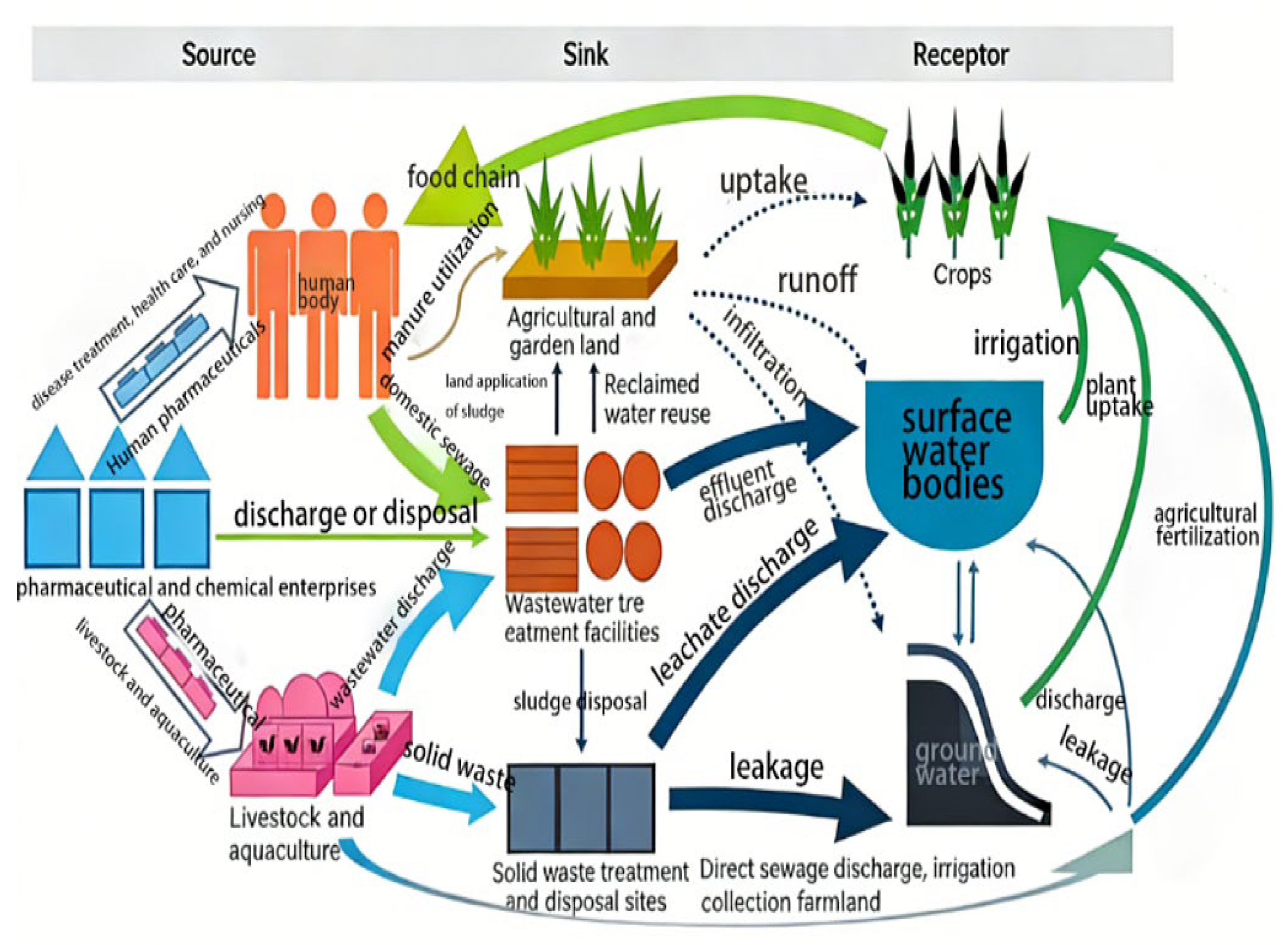
1.1. Environmental Fate and Ecological Risks of Pharmaceutical Pollutants
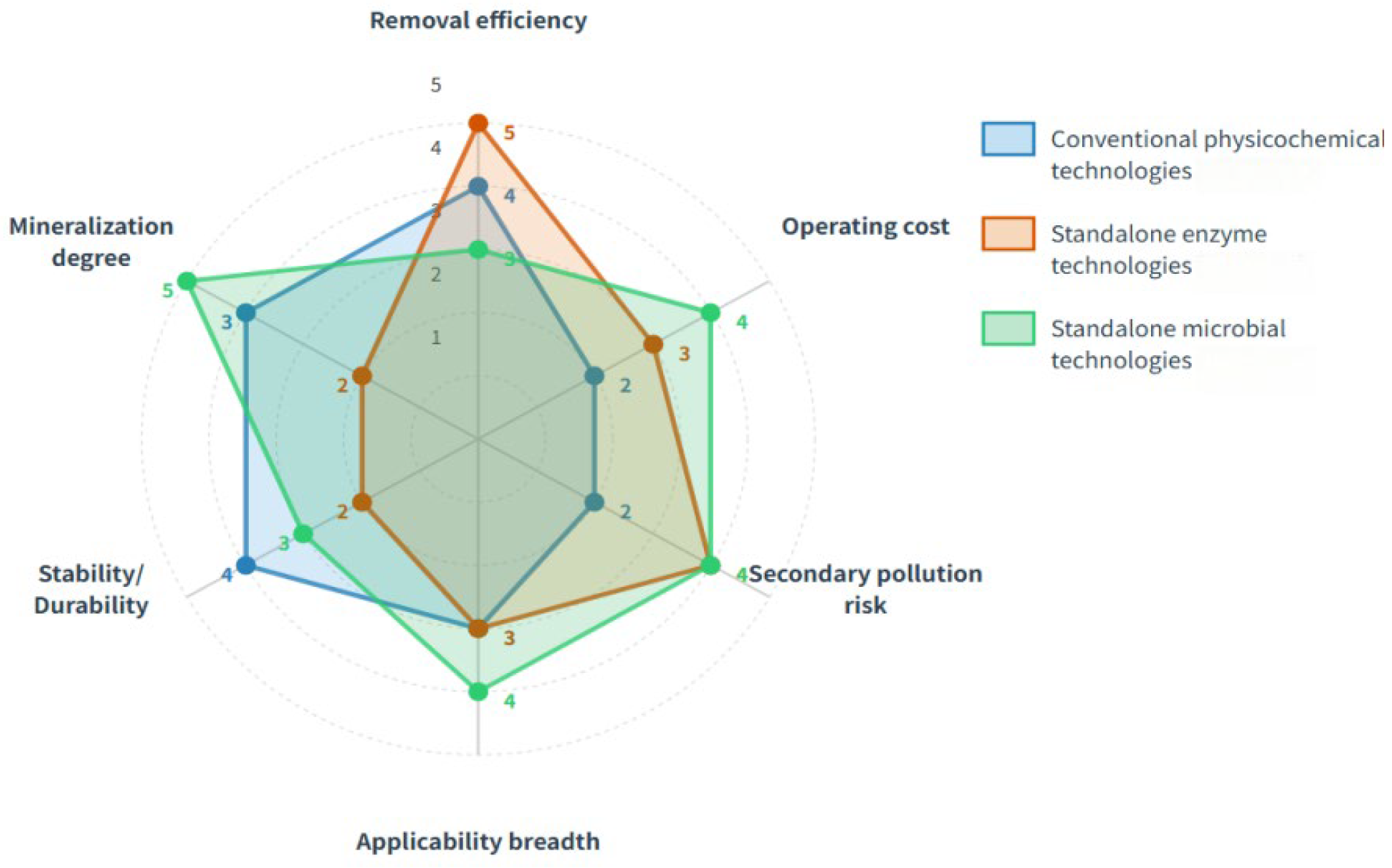
1.2. Applicability Boundaries and Limitations of Conventional Treatment Technologies
1.3. Limitations of Single Biotechnology: Respective Dilemmas of Enzymatic Catalysis and Microbial Degradation
1.4. Synergistic Integration: The Inevitable Direction to Break Through Bottlenecks
2. Deconstruction of Synergistic Mechanisms: Complementarity and Enhancement of Enzyme and Microbial Platforms
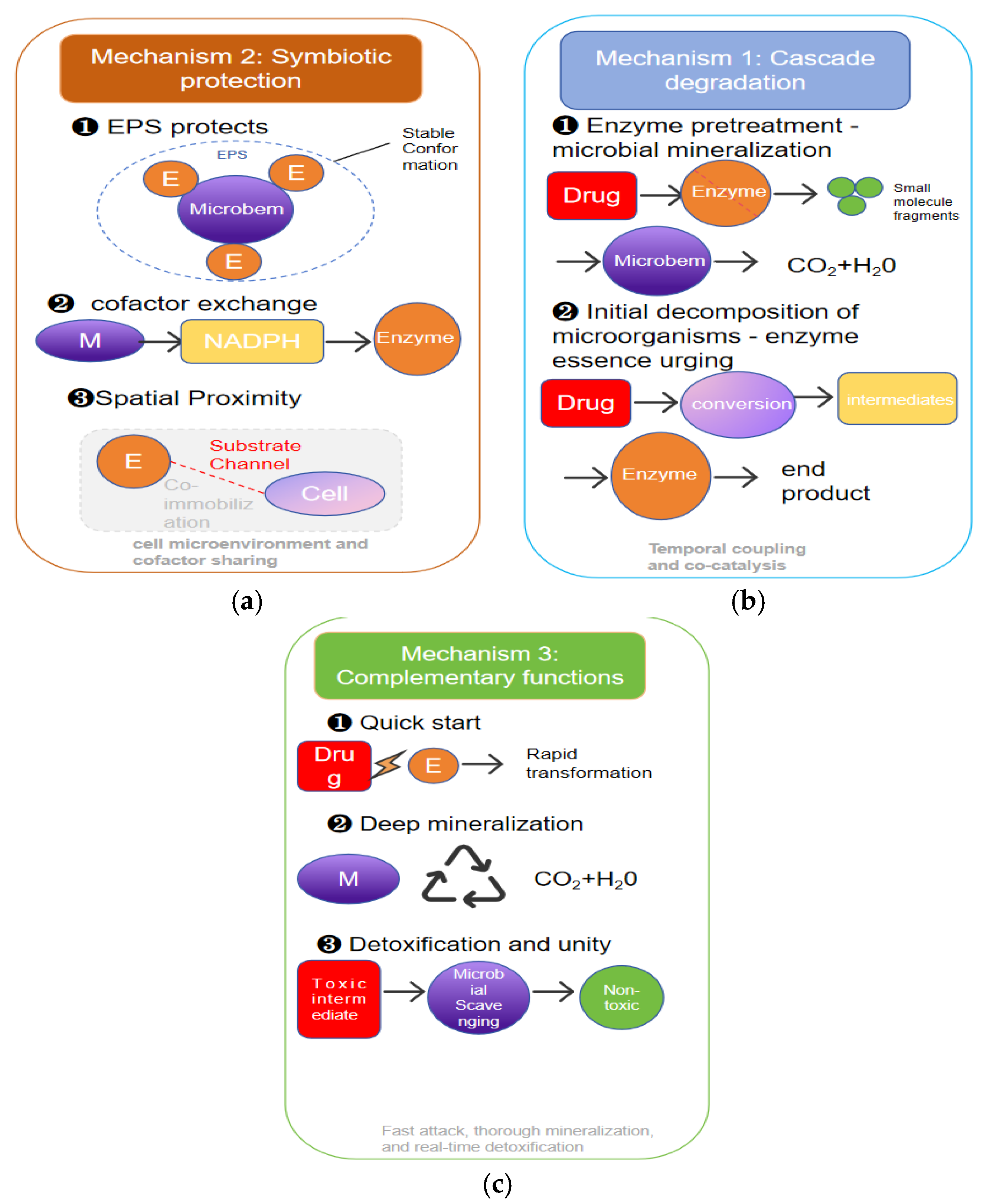
2.1. Cascade Degradation: Temporal Coupling of Synergistic Catalysis
2.2. Symbiotic Protection: Contribution of Microbial Microenvironments to Enzyme Stability
2.3. Functional Complementarity: Unification of Rapid Initiation and Deep Mineralization
3. Construction of Synergistic Platforms: From Enhancement Strategies to Engineering Applications
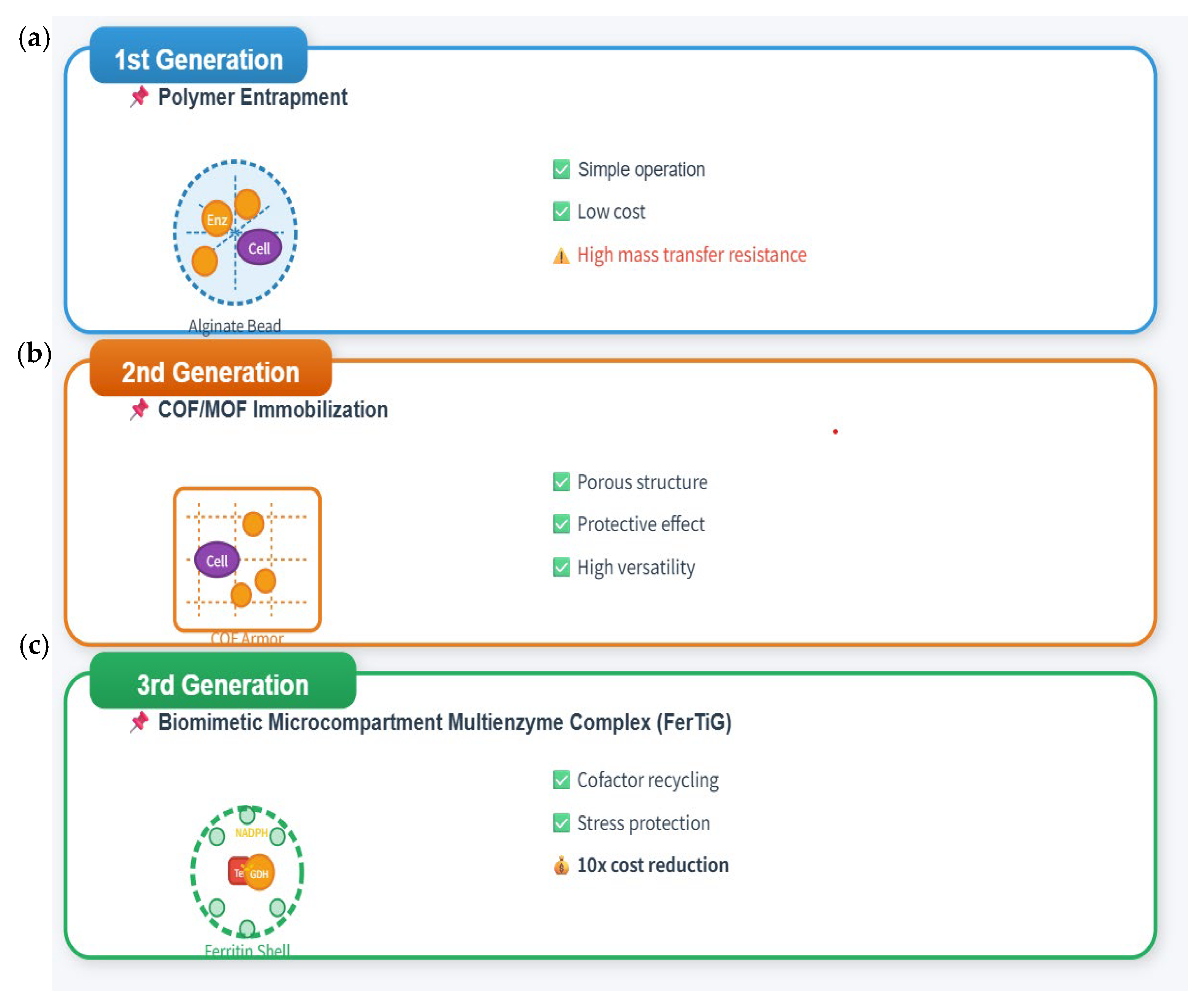
3.1. Co-Immobilization Technology: Construction of Artificial Synergistic Systems
3.2. Biofilm Platforms: Natural Synergistic Ecosystems
3.3. Synthetic Biology-Engineered Bacteria: From Single Cells to Multifunctional Platforms
3.4. Treatment Efficacy for Typical Pharmaceutical Pollutants
4. Towards Green Pharmaceuticals: Closed-Loop Value and Future Prospects of Synergistic Governance
4.1. Paradigm Shift from End-of-Pipe Treatment to Full-Cycle Management
4.2. Closed-Loop Value of Synergistic Platforms: Resource Recovery and Process Integration
4.3. Challenges and Constraints: From Laboratory to Practical Application
4.4. Future Research Directions: Intelligent Regulation and Multi-Omics Guidance
5. Conclusions
Author Contributions
Funding
Institutional Review Board Statement
Informed Consent Statement
Data Availability Statement
Acknowledgments
Conflicts of Interest
References
- Samal, K.; Mahapatra, S.; Hibzur Ali, M. Pharmaceutical wastewater as Emerging Contaminants (EC): Treatment technologies, impact on environment and human health. Energy Nexus 2022, 6, 100076. [Google Scholar] [CrossRef] [Scilit]
- Kotwani, A.; Joshi, J.; Kaloni, D. Pharmaceutical effluent: A critical link in the interconnected ecosystem promoting antimicrobial resistance. Environ. Sci. Pollut. Res. 2021, 28, 32111–32124. [Google Scholar] [CrossRef] [Scilit] [PubMed]
- Kimera, Z.I.; Mshana, S.E.; Rweyemamu, M.M.; Mboera, L.E.G.; Matee, M.I.N. Antimicrobial use and resistance in food-producing animals and the environment: An African perspective. Antimicrob. Resist. Infect. Control 2020, 9, 37. [Google Scholar] [CrossRef] [Scilit]
- Tegegne, A.A.; Mekasha, Y.T.; Ayu, A.A.; Hasen, G.; Suleman, S. A review on emerging pharmaceutical residues in Ethiopia: Occurrence, ecotoxicological aspects, and regulatory concerns. Front. Microbiol. 2024, 15, 1499487. [Google Scholar] [CrossRef] [Scilit] [PubMed]
- Nantaba, F.; Wasswa, J.; Kylin, H.; Bouwman, H.; Palm, W.U.; Kümmerer, K. Spatial trends and ecotoxic risk assessment of selected pharmaceuticals in sediments from Lake Victoria, Uganda, East Africa. Sci. Total Environ. 2024, 906, 167348. [Google Scholar] [CrossRef] [Scilit] [PubMed]
- Ngumba, E.; Gachanja, A.; Tuhkanen, T. Occurrence of selected antibiotics and antiretroviral drugs in Nairobi River Basin, Kenya. Sci. Total Environ. 2016, 539, 206–213. [Google Scholar] [CrossRef] [Scilit]
- Hossein, M.; Ripanda, A.S. Pollution by antimicrobials and antibiotic resistance genes in East Africa: Occurrence, sources, and potential environmental implications. Toxicol. Rep. 2025, 14, 101969. [Google Scholar] [CrossRef] [Scilit]
- Horvat, O.; Kovačević, Z. Human and Veterinary Medicine Collaboration: Synergistic Approach to Address Antimicrobial Resistance Through the Lens of Planetary Health. Antibiotics 2025, 14, 38. [Google Scholar] [CrossRef] [Scilit]
- Zhu, Y.G.; Johnson, T.A.; Su, J.Q.; Qiao, M.; Guo, G.X.; Stedtfeld, R.D.; Hashsham, S.A.; Tiedje, J.M. Diverse and abundant antibiotic resistance genes in Chinese swine farms. Proc. Natl. Acad. Sci. USA 2013, 110, 3435–3440. [Google Scholar] [CrossRef] [Scilit] [PubMed]
- Su, J.Q.; Wei, B.; Ou-Yang, W.Y.; Huang, F.Y.; Zhao, Y.; Xu, H.J.; Zhu, Y.G. Antibiotic resistome and its association with bacterial communities during sewage sludge composting. Environ. Sci. Technol. 2015, 49, 7356–7363. [Google Scholar] [CrossRef] [Scilit]
- Li, W.C. Occurrence, sources, and fate of pharmaceuticals in aquatic environment and soil. Environ. Pollut. 2014, 187, 193–201. [Google Scholar] [CrossRef] [Scilit]
- Wang, J.; Wang, S. Removal of pharmaceuticals and personal care products (PPCPs) from wastewater: A review. J. Environ. Manag. 2016, 182, 620–640. [Google Scholar] [CrossRef] [Scilit]
- Yang, Y.; Ok, Y.S.; Kim, K.H.; Kwon, E.E.; Tsang, Y.F. Occurrences and removal of pharmaceuticals and personal care products (PPCPs) in drinking water and water/sewage treatment plants: A review. Sci. Total Environ. 2017, 596–597, 303–320. [Google Scholar] [CrossRef] [Scilit]
- Ortiz de García, S.; Pinto Pinto, G.; García-Encina, P.A.; Irusta Mata, R.I. Ranking of concern, based on environmental indexes, for pharmaceutical and personal care products: An application to the Spanish case. J. Environ. Manag. 2014, 135, 11–18. [Google Scholar] [CrossRef] [Scilit]
- Caldas, S.; de Oliveira Arias, J.L.; Rombaldi, C.; Mello, L.; Cerqueira, M.; Martins, A.; Primel, E.G. Occurrence of pesticides and PPCPs in surface and drinking water in southern Brazil: Data on 4-Year Monitoring. J. Braz. Chem. Soc. 2018, 30, 71–80. [Google Scholar] [CrossRef] [Scilit]
- Wang, B.Q.; Xu, Z.X.; Dong, B. Occurrence, fate, and ecological risk of antibiotics in wastewater treatment plants in China: A review. J. Hazard. Mater. 2024, 469, 133925. [Google Scholar] [CrossRef] [Scilit] [PubMed]
- Kümmerer, K. Antibiotics in the aquatic environment: A review. Chemosphere 2009, 75, 417–434. [Google Scholar] [CrossRef] [Scilit] [PubMed]
- Mlunguza, N.Y.; Ncube, S.; Mahlambi, P.N.; Chimuka, L.; Madikizela, L.M. Determination of selected antiretroviral drugs in wastewater, surface water and aquatic plants using hollow fibre liquid phase microextraction and LC-MS/MS. J. Hazard. Mater. 2020, 382, 121067. [Google Scholar] [CrossRef] [Scilit] [PubMed]
- Al-Shaalan, N.H.; Ali, I.; Alothman, Z.; Al-Wahaibi, L.; Alabdulmonem, H. High performance removal and simulation studies of diuron pesticide in water on MWCNTs. J. Mol. Liq. 2019, 289, 111039. [Google Scholar] [CrossRef] [Scilit]
- Purkait, M.K.; Gupta, B.; Das, P.P. Performances of conventional treatment techniques for the treatment of pharmaceutical contaminated water: Challenges and opportunities. In Advances in Chemical Engineering; Elsevier: Amsterdam, The Netherlands, 2025; Volume 65, pp. 31–72. [Google Scholar] [CrossRef] [Scilit]
- Barczak, M.; Wierzbicka, M.; Borowski, P. Sorption of diclofenac onto functionalized mesoporous silicas: Experimental and theoretical investigations. Microporous Mesoporous Mater. 2018, 264, 254–264. [Google Scholar] [CrossRef] [Scilit]
- Alshehri, M.A.; Pugazhendhi, A. Biochar for wastewater treatment: Addressing contaminants and enhancing sustainability: Challenges and solutions. J. Hazard. Mater. Adavances 2024, 16, 100504. [Google Scholar] [CrossRef] [Scilit]
- Zhao, Y.; Qiu, Y.B.; Mamrol, N.; Ren, L.F.; Li, X.; Shao, J.H.; Yang, X.; van der Bruggen, B. Membrane bioreactors for hospital wastewater treatment: Recent advancements in membranes and processes. Front. CSE 2021, 16, 634–660. [Google Scholar] [CrossRef] [Scilit] [PubMed]
- Baran, W.; Adamek, E.; Jajko, M.; Sobczak, A. Removal of veterinary antibiotics from wastewater by electrocoagulation. Chemosphere 2018, 194, 381–389. [Google Scholar] [CrossRef] [Scilit]
- Bharti, M.; Das, P.P.; Purkait, M.K. A review on the treatment of water and wastewater by electrocoagulation process: Advances and emerging applications. J. Environ. Chem. Eng. 2023, 11, 109358. [Google Scholar] [CrossRef] [Scilit]
- Hübner, U.; Spahr, S.; Lutze, H.; Wieland, A.; Rüting, S.; Gernjak, W.; Wenk, J. Advanced oxidation processes for water and wastewater treatment—Guidance for systematic future research. Chem. Eng. J. 2024, 10, e30402. [Google Scholar] [CrossRef] [Scilit]
- Bhatia, V.; Malekshoar, G.; Dhir, A.; Ray, A.K. Enhanced photocatalytic degradation of atenolol using graphene TiO2 composite. J. Photochem. Photobiol. A Chem. 2017, 332, 182–187. [Google Scholar] [CrossRef] [Scilit]
- Bhattacharjee, B.; Ahmaruzzaman, M. Photocatalytic degradation of pharmaceuticals: Insights into biochar modification and degradation mechanism. Next Mater. 2024, 2, 100123. [Google Scholar] [CrossRef] [Scilit]
- Cai, T.; Liu, Y.T.; Wang, L.L.; Dong, W.Y.; Zeng, G.M. Recent advances in round-the-clock photocatalytic system: Mechanisms, characterization techniques and applications. J. Photochem. Photobiol. C Photochem. Rev. 2021, 48, 100432. [Google Scholar] [CrossRef] [Scilit]
- Brillas, E.; Mur, E.; Sauleda, R.; Sànchez, L.; Peral, J.; Domènech, X. Aniline mineralization by AOP’s: Anodic oxidation, photocatalysis, electro-Fenton and photoelectro-Fenton processes. Appl. Catal. B Environ. 1998, 16, 31–42. [Google Scholar] [CrossRef] [Scilit]
- Paíga, P.; Figueiredo, S.; Correia, M.; André, M.; Barbosa, R.; Jorge, S.; Delerue-Matos, C. Occurrence of 97 Pharmaceuticals in Wastewater and Receiving Waters: Analytical Validation and Treatment Influence. J. Xenobiot. 2025, 15, 78. [Google Scholar] [CrossRef] [Scilit]
- Tang, C.; Fang, S.H.; Yin, H.L.; Zhang, H.; Xin, X.; Yu, B.Q.; Zeng, Z.; Deng, K.C.; Zhang, Y.H.; Wu, Z.Z.; et al. Pharmaceuticals in drinking water in suburban communities in Chengdu, China: Potential risks on the human health. Environ. Monit. Assess. 2025, 197, 964. [Google Scholar] [CrossRef] [Scilit]
- Le Coadou, L.; Le Ménach, K.; Labadie, P.; Dévier, M.H.; Pardon, P.; Augagneur, S.; Budzinski, H. Quality survey of natural mineral water and spring water sold in France: Monitoring of hormones, pharmaceuticals, pesticides, perfluoroalkyl substances, phthalates, and alkylphenols at the ultra-trace level. Sci. T.T.E. 2017, 603–604, 651–662. [Google Scholar] [CrossRef] [Scilit]
- Farhan, M.; Hasani, I.W.; Khafaga, D.S.R.; Ragab, W.M.; Ahmed Kazi, R.N.; Aatif, M.; Muteeb, G.; Fahim, Y.A. Enzymes as Catalysts in Industrial Biocatalysis: Advances in Engineering, Applications, and Sustainable Integration. Catalysts 2025, 15, 891. [Google Scholar] [CrossRef] [Scilit]
- Bilal, M.; Iqbal, H.M.N. Tailoring Multipurpose Biocatalysts via Protein Engineering Approaches: A Review. Catal. Lett. 2019, 149, 2204–2217. [Google Scholar] [CrossRef] [Scilit]
- Moisan, J.K.; Meddeb-Mouelhi, F.; Charbonneau, D.M.; Beauregard, M. Impact of Salt Concentration and pH on Surface Charged Residues: Controlling Protein Association Pathways in Carboxylesterase EstGtA2. Protein Pept. Lett. 2017, 24, 561–572. [Google Scholar] [CrossRef] [Scilit]
- Kim, Y.J.; Nicell, J.A. Impact of reaction conditions on the laccase-catalyzed conversion of bisphenol A. Bioresour. Technol. 2006, 97, 1431–1442. [Google Scholar] [CrossRef] [Scilit] [PubMed]
- Bhunia, B.; Basak, B.; Mandal, T.; Bhattacharya, P.; Dey, A. Effect of pH and temperature on stability and kinetics of novel extracellular serine alkaline protease (70 kDa). Int. J. Biol. Macromol. 2013, 54, 1–8. [Google Scholar] [CrossRef] [Scilit]
- Yaashikaa, P.R.; Keerthana Devi, M.; Senthil Kumar, P. Advances in the application of immobilized enzyme for the remediation of hazardous pollutant: A review. Chemosphere 2022, 299, 134390. [Google Scholar] [CrossRef] [Scilit] [PubMed]
- Duman, Y.A.; Tekin, N. Kinetic and thermodynamic properties of purified alkaline protease from Bacillus pumilus Y7 and non-covalent immobilization to poly(vinylimidazole)/clay hydrogel. Eng. Life Sci. 2020, 20, 36–49. [Google Scholar] [CrossRef] [Scilit]
- Ren, H.; Qin, M.L.; Zhang, L.; Li, Z.M.; Li, Y.Z.; He, Q.; Zhong, J.H.; Zhao, D.H.; Lian, X.L.; Jiang, H.X.; et al. Modular Engineering of a Synthetic Biology-Based Platform for Sustainable Bioremediation of Residual Antibiotics in Aquatic Environments. Engineering 2025, 53, 231–244. [Google Scholar] [CrossRef] [Scilit]
- Wu, A.; Sha, F.; Su, S.; Farha, O.K. Recyclable Enzymatic Hydrolysis with Metal-Organic Framework Stabilized Humicola insolens Cutinase (HiC) for Potential PET Upcycling. Chem. Bio. Eng. 2024, 1, 798. [Google Scholar] [CrossRef] [Scilit]
- Noman, E.; Al-Gheethi, A.A.; Talip, B.A.; Mohamed, R.; Kassim, A.H. Oxidative Enzymes from Newly Local Strain Aspergillus iizukae EAN605 Using Pumpkin Peels as a Production Substrate: Optimized Production, Characterization, Application and Techno-Economic Analysis; Elsevier: Amsterdam, The Netherlands, 2020. [Google Scholar] [CrossRef] [Scilit]
- Wu, D.; Khan, S.; Zhang, S.J.; Wang, H.; Chen, W.; Wang, S.Q. Self-assembled Immobilization and Metal-Polyphenol Network Encapsulation of β-Galactosidase on T4 phage for Enhanced Biocatalytic Performance. Appl. Biochem. Biotechnol. 2025, 197, 4767–4787. [Google Scholar] [CrossRef] [Scilit] [PubMed]
- Karam, E.A.; Abdel Wahab, W.A.; Saleh, S.A.A.; Hassan, M.E.; Kansoh, A.L.; Esawy, M.A. Production, immobilization and thermodynamic studies of free and immobilized Aspergillus awamori amylase. Int. J. Biol. Macromol. 2017, 102, 694–703. [Google Scholar] [CrossRef] [Scilit]
- Ghaedmohammadi, S.; Nooraei, S.; Ahrari, F.; Moosavi, F.; Mohammadi, M.; Ahmadian, G. Thermostable and recyclable Candida antarctica lipase B immobilized on Bacillus subtilis using sortase technology. Microbiol. Spectr. 2025, 13, e01121-25. [Google Scholar] [CrossRef] [Scilit]
- Joss, A.; Zabczynski, S.; Göbel, A.; Hoffmann, B.; Löffler, D.; McArdell, C.S.; Ternes, T.A.; Thomsen, A.; Siegrist, H. Biological degradation of pharmaceuticals in municipal wastewater treatment: Proposing a classification scheme. Water Res. 2006, 40, 1686–1696. [Google Scholar] [CrossRef] [Scilit]
- Hu, M.; He, W.S.; Jiang, R.; Zhang, Y.; Wang, X.H. Bottom-up artificial construction of the M7-Z4 bacterial model enhanced sulfamethazine mineralization: Metagenomic analysis combined with bacterial isolation techniques. J. Hazard. Mater. 2025, 13, 118799. [Google Scholar] [CrossRef] [Scilit]
- Baena-Nogueras, R.M.; González-Mazo, E.; Lara-Martín, P.A. Degradation kinetics of pharmaceuticals and personal care products in surface waters: Photolysis vs biodegradation. Sci. Total Environ. 2017, 590–591, 643–654. [Google Scholar] [CrossRef] [Scilit] [PubMed]
- Wang, L.J.; Wang, X.Y.; Wu, H.; Wang, H.X.; Lu, Z.M. Interspecies synergistic interactions mediated by cofactor exchange enhance stress tolerance by inducing biofilm formation. mSystems 2024, 9, e00884-24. [Google Scholar] [CrossRef] [Scilit]
- Chen, X.Y.; Zhang, X.; Zhao, X.Y.; Xi, B.D.; Lu, Y. Microbial co-metabolism in the degradation of emerging organic pollutants. J. Environ. Sci. 2025. [Google Scholar] [CrossRef] [Scilit]
- Dong, T.J.; Zhang, L.; Yang, J.C.; Hao, S.W.; Peng, Y.Z. Photocatalysis-fueled algae-bacteria mutualism enables P450 enzyme-induced nitrite-free anammox for sustainable nitrogen removal. Water Res. 2026, 288, 124725. [Google Scholar] [CrossRef] [Scilit] [PubMed]
- Cui, L.; Chen, J.; Yan, Y.; Fei, Q.; Ma, Y.; Wang, Q. Development of oriented microbial consortium-based compound enzyme strengthens food waste hydrolysis and antibiotic resistance genes removal: Deciphering of performance, metabolic pathways and microbial communities. Environ. Res. 2024, 262, 119973. [Google Scholar] [CrossRef] [Scilit] [PubMed]
- Zheng, D.; Zheng, Y.L.; Tan, J.J.; Zhang, Z.J.; Huang, H.; Chen, Y. Co-immobilization of whole cells and enzymes by covalent organic framework for biocatalysis process intensification. Nat. Commun. 2024, 15, 5510. [Google Scholar] [CrossRef] [Scilit]
- Chen, Z.M.; Fan, Q.F.; Wang, J.H.; Zhang, J.Y.; Zhang, Y.H.; Tan, T.W.; Lv, Y.Q. Designing a mesoporous cascade reactor for enhanced enzymatic performance. Bioresour. Technol. 2025, 438, 133224. [Google Scholar] [CrossRef] [Scilit]
- Xue, K.; Bai, Z.H.; Fordour, E.; Guo, S.Q.; Zhou, Y.X.; Yang, Y.K.; Liu, X.X.; Li, Y.; Liu, C.L. Bacterial surface display of PETase mutants and MHETase for an efficient dual-enzyme cascade catalysis. Bioresour. Technol. 2024, 408, 131177. [Google Scholar] [CrossRef] [Scilit]
- Huang, L.; Jin, Y.; Zhou, D.H.; Liu, L.X.; Huang, S.K.; Zhao, Y.Q.; Chen, Y.C. A Review of the Role of Extracellular Polymeric Substances (EPS) in Wastewater Treatment Systems. Int. J. Environ. Res. Public Health 2022, 19, 12191. [Google Scholar] [CrossRef] [Scilit]
- Li, D.Y.; Wu, Y.S.; Liang, D.B.; Li, J.R.; Xie, C.F.; Zhu, Y.H.; Liu, T.T.; Du, L.Z.; Yao, X.R.; Liu, W.Q.; et al. Multi-omics insights into ROS-mediated molecular responses of extracellular polymeric substances in aerobic granular sludge under micro/nanoplastic stress. Chem. Eng. J. 2025, 523, 168713. [Google Scholar] [CrossRef] [Scilit]
- Zou, S.P.; Zhang, B.; Han, Y.Y.; Liu, J.L.; Zhao, K.; Xue, Y.P.; Zheng, Y.G. Design of a cofactor self-sufficient whole-cell biocatalyst for enzymatic asymmetric reduction via engineered metabolic pathways and multi-enzyme cascade. Biotechnol. J. 2024, 19, e2300744. [Google Scholar] [CrossRef] [Scilit]
- dos Santos, K.P.; Rios, N.S.; Labus, K.; Gonçalves, L.R.B. Co-immobilization of lipase and laccase on agarose-based supports via layer-by-layer strategy: Effect of diffusional limitations. Biochem. Eng. J. 2022, 186, 108533. [Google Scholar] [CrossRef] [Scilit]
- Yang, W.H.; Sun, H.; Cui, Z.H.; Chen, L.; Ji, Y.; Lu, F.P.; Liu, Y.H. Spatially sequential co-immobilization of phosphorylases in tiny environments and its application in the synthesis of glucosyl glycerol. Int. J. Biol. Macromol. 2024, 278, 134828. [Google Scholar] [CrossRef] [Scilit] [PubMed]
- Sun, J.H.; Yan, M.J.; Tao, G.D.; Su, R.B.; Xiao, X.M.; Wu, Q.S.; Chen, F.; Wu, X.L.; Lin, H.J. A single-atom manganese nanozyme mediated membrane reactor for water decontamination. Water Res. 2025, 268, 122627. [Google Scholar] [CrossRef] [Scilit] [PubMed]
- Wang, Z.; Sun, Y. A hybrid nanobiocatalyst with in situ encapsulated enzyme and exsolved Co nanoclusters for complete chemoenzymatic conversion of methyl parathion to 4-aminophenol. J. Hazard. Mater. 2022, 424, 127503. [Google Scholar] [CrossRef] [Scilit] [PubMed]
- Du, J.; Dang, X.; Zhao, H. Photo-enzyme cascade catalysis treatment of bisphenol A in water: Synergistic hydroxylation pathway for mineralization and detoxification. J. Hazard. Mater. 2025, 489, 137454. [Google Scholar] [CrossRef] [Scilit]
- Wang, X.H.; Wang, G.J.; Xu, X.L.; Xu, T.; He, Y.W.; Zhang, X.Y.; Yang, S.H.; Fan, J.H.; An, X.F. In-situ assembled biochar-yeast hybrid for tetracycline detoxification: Unparalleled robustness, toxicity assessment, and multi-omics analysis. Chem. Eng. J. 2025, 503, 158116. [Google Scholar] [CrossRef] [Scilit]
- Oh, S.; Nguyen, H.T.; Obayomi, K.S.; Siddiqui, S.I. Assessing the environmental risk potential of transformation byproducts formed during fungal enzymatic treatment of a pharmaceutical mixture. J. Ind. Eng. Chem. 2025, 142, 725–735. [Google Scholar] [CrossRef] [Scilit]
- Fu, X.J.; Fei, Q.R.; Zhang, X.J.; Li, N.; Zhang, L.; Zhou, Y. Two different types of hydrolases co-degrade ochratoxin A in a highly efficient degradation strain Lysobacter sp. CW239. J. Hazard. Mater. 2024, 473, 134716. [Google Scholar] [CrossRef] [Scilit]
- Jiang, Y.H.; Huang, X.; Yu, Y.X. A Comparative Study on Several Carriers of Immobilized Cells. Environ. Sci. Resour. Util. 1993, 2, CNKI. [Google Scholar]
- Li, P.; Chen, Q.S.; Wang, T.C.; Vermeulen, N.A.; Mehdi, B.L.; Dohnalkova, A.; Browning, N.D.; Shen, D.K.; Anderson, R.; Gómez-Gualdrón, D.A.; et al. Hierarchically Engineered Mesoporous Metal-Organic Frameworks toward Cell-free Immobilized Enzyme Systems. Chem 2018, 4, 1022–1034. [Google Scholar] [CrossRef] [Scilit]
- Chen, T.P.; Wang, S.M.; Niu, H.Q.; Yang, G.J.; Wang, S.N.; Wang, Y.Q.; Zhou, C.W.; Yu, B.; Yang, P.P.; Sun, W.J.; et al. Biofilm-Based Biocatalysis for Galactooligosaccharides Production by the Surface Display of β-Galactosidase in Pichia pastoris. Int. J. Mol. Sci. 2023, 24, 6507. [Google Scholar] [CrossRef] [Scilit] [PubMed]
- Sooriyakumar, P.; Bolan, N.; Kumar, M.; Singh, L.; Yu, Y.; Li, Y.; Weralupitiya, C.; Vithanage, M.; Ramanayaka, S.; Sarkar, B.; et al. Biofilm formation and its implications on the properties and fate of microplastics in aquatic environments: A review. J. Hazard. Mater. Adv. 2022, 6, 100077. [Google Scholar] [CrossRef] [Scilit]
- Flemming, H.C.; van Hullebusch, E.D.; Neu, T.R.; Nielsen, P.H.; Seviour, T.; Stoodley, P.; Wingender, J.; Wuertz, S. The biofilm matrix: Multitasking in a shared space. Nat. Rev. Microbiol. 2023, 21, 70–86. [Google Scholar] [CrossRef] [Scilit]
- Carr, C.M.; Harkova, L.G.; McCarthy, R.R. Engineering biology approaches to modulate bacterial biofilms. Trends Biotechnol. 2025, 43, 1525–1527. [Google Scholar] [CrossRef] [Scilit] [PubMed]
- Özkul, G.; Şahin Kehribar, E.; Ahan, R.E.; Şeker, U.Ö.Ş. An antibiotic-degrading engineered biofilm platform to combat environmental antibiotic resistance. ACS Biomater. Sci. Eng. 2024, 10, 6123–6134. [Google Scholar] [CrossRef] [Scilit]
- Zhang, X.E.; Liu, C.L.; Dai, J.B.; Yuan, Y.J.; Gao, C.X.; Feng, Y.; Wu, B.; Wei, P.; You, C.; Wang, X.W.; et al. Enabling technology and core theory of synthetic biology. Sci. China Life Sci. 2023, 66, 1742–1785. [Google Scholar] [CrossRef] [Scilit]
- Liu, W.; Sun, W.J.; Liang, C.C.; Chen, T.P.; Zhuang, W.; Liu, D.; Chen, Y.; Ying, H.J. Escherichia coli Surface Display: Advances and Applications in Biocatalysis. ACS Synth. Biol. 2025, 14, 648–661. [Google Scholar] [CrossRef] [Scilit] [PubMed]
- Taw, M.N.; Li, M.J.; Kim, D.; Rocco, M.A.; Waraho-Zhmayev, D.; DeLisa, M.P. Engineering a supersecreting strain of Escherichia coli by directed coevolution of the multiprotein TAT translocation machinery. ACS Synth. Biol. 2021, 10, 2947–2960. [Google Scholar] [CrossRef] [Scilit]
- Helvig, C.; Kariyawasam, T.; Vriens, B.; Petkovich, M. Genetically engineered bacteria and microalgae expressing a mutant of cytochrome P450 BM3 for efficient Diuron degradation in wastewater treatment. Appl. Environ. Microbiol. 2025, 91, e00023-25. [Google Scholar] [CrossRef] [Scilit]
- Doron, L.; Kerfeld, C.A. Bacterial microcompartments as a next-generation metabolic engineering tool: Utilizing nature’s solution for confining challenging catabolic pathways. Biochem. Soc. Trans. 2024, 52, 997–1010. [Google Scholar] [CrossRef] [Scilit]
- Amin, M.F.; Rahman, M.S. A critical review of pharmaceutical pollutants in soil and air: Ecotoxicological impacts on animal, plant and microbial communities—Health hazards and waste management. J. Hazard. Mater. Adv. 2026, 3, 70–87. [Google Scholar] [CrossRef] [Scilit]
- Dzionek, A.; Nowak, A.; Wojcieszyńska, D.; Potocka, I.; Smułek, W.; Guzik, U. Decomposition of non-steroidal anti-inflammatory drugs by activated sludge supported by biopreparation in sequencing batch reactor. Bioresour. Technol. 2024, 395, 130328. [Google Scholar] [CrossRef] [Scilit]
- Bhardwaj, P.; Sharma, S.; Khatri, M.; Singh, G.; Arya, S.K. Eradication of ibuprofen and diclofenac via in situ synthesized and immobilized bacterial laccase to Cu-based metal organic framework. J. Water Process Eng. 2023, 54, 104147. [Google Scholar] [CrossRef] [Scilit]
- Peng, H.X.; He, Y.Z.; Li, T.Y.; Peng, X.X. Acyclovir contamination in environment: Occurrence, transformation, toxicity, risk, and evaluation as a pharmaceutical indicator. Sci. Total Environ. 2024, 957, 177412. [Google Scholar] [CrossRef] [Scilit]
- Karungamye, P.; Rugaika, A.; Mtei, K.; Machunda, R. The pharmaceutical disposal practices and environmental contamination: A review in East African countries. HydroResearch 2022, 5, 99–107. [Google Scholar] [CrossRef] [Scilit]
- Bernardes, M.F.F.; Pazin, M.; Pereira, L.C.; Dorta, D.J. Impact of Pesticides on Environmental and Human Health; Intechopen: London, UK, 2015. [Google Scholar] [CrossRef] [Scilit]
- Daughton, C.G. Pharmaceuticals in the environment: Sources and their management. In Comprehensive Analytical Chemistry; Elsevier: Amsterdam, The Netherlands, 2007; pp. 1–58. [Google Scholar] [CrossRef] [Scilit]
- Dube, S. Green and sustainable pharmacology: Integrating environmental responsibility into drug discovery, development, and practice. IP Int. J. Compr. Adv. Pharmacol. 2025, 10, 125–133. [Google Scholar] [CrossRef] [Scilit]
- Akhrimenko, V.; Kümmerer, K.; Malato, S.; Lertxundi, U.; Orive, G. Designing at-source and end-of-pipe biotechnologies to tackle pharmaceutical pollution. Trends Biotechnol. 2025, 43, 2427–2439. [Google Scholar] [CrossRef] [Scilit] [PubMed]
- Parker, G.; Miller, F.A. Tackling Pharmaceutical Pollution Along the Product Lifecycle: Roles and Responsibilities for Producers, Regulators and Prescribers. Pharmacy 2024, 12, 173. [Google Scholar] [CrossRef] [Scilit] [PubMed]
- Caban, M.; Stepnowski, P. How to decrease pharmaceuticals in the environment? A review. Environ. Chem. Lett. 2021, 19, 3115–3138. [Google Scholar] [CrossRef] [Scilit]
- Medhi, B.; Sewal, R. Ecopharmacovigilance: An issue urgently to be addressed. Indian J. Pharmacol. 2012, 44, 547. [Google Scholar] [CrossRef] [Scilit]
- Dzidzornu, E.; Cherian, J.J.; D’souza, J.; Pandit, J. Ecopharmacovigilance: A review of cause, impact, and remedies. Med. Writ. 2023, 32, 118–121. [Google Scholar] [CrossRef] [Scilit]
- WHO. One Health. 2023. Available online: https://www.who.int/news-room/fact-sheets/detail/one-health (accessed on 8 May 2026).
- EU. European Parliament Resolution on a Strategic Approach to Pharmaceuticals in the Environment. 2020. Available online: https://www.europarl.europa.eu/doceo/document/TA-9-2020-0226_EN.html (accessed on 7 January 2019).
- OECD. Pharmaceutical Residues in Freshwater: Hazards and Policy Responses; OECD Publishing: Paris, France, 2019. [Google Scholar]
- Stefanache, A.; Marcinschi, A.; Marin, G.A.; Mitran, A.M.; Lungu, I.I.; Miftode, A.M.; Crivoi, F.; Lacatusu, D.; Baican, M.; Cioanca, O.; et al. Green Chemistry Approaches in Pharmaceutical Synthesis: Sustainable Methods for Drug Development. AppliedChem 2025, 5, 13. [Google Scholar] [CrossRef] [Scilit]
- Chacón, M.; Alvarez-Gonzalez, G.; Gosalvitr, P.; Berepiki, A.; Fisher, K.; Cuéllar-Franca, R.; Dixon, N. Complex waste stream valorization through combined enzymatic hydrolysis and catabolic assimilation by Pseudomonas putida. Trends Biotechnol. 2025, 43, 647–672. [Google Scholar] [CrossRef] [Scilit]
- He, D.; Wen, Y.J.; Wei, S.Z.; Li, S.K.; Liu, L.D.; Wu, J.M.; Zhou, Z.; Zhou, N.; Liu, H.M.; Zhou, Z.H. Conversation of pesticide residues into ammonium nitrogen (NH4+-N) through AOPs and its fertilization effect on lettuce growth. Biochar 2025, 7, 88. [Google Scholar] [CrossRef] [Scilit]
- Jiang, C.; Meng, Z. pH and CO2/N2 dual responsive Pickering emulsion stabilized by shellac nanoparticle-enzyme conjugates for synthesis of phytosterol esters. Food Chem. 2025, 493, 145555. [Google Scholar] [CrossRef] [Scilit] [PubMed]
- Wang, P.C.; Yang, X.W.; Lin, B.X.; Huang, J.Z.; Tao, Y. Cofactor self-sufficient whole-cell biocatalysts for the production of 2-phenylethanol. Metab. Eng. 2017, 44, 143–149. [Google Scholar] [CrossRef] [Scilit] [PubMed]
- Mehta, N. The synthetic microbial ecosystem: Rational design, dynamic control, and translational impact of consortia for sustainable waste valorization. ChemRxiv 2026. [Google Scholar] [CrossRef] [Scilit]
- Ishak, S.N.H.; Mat Saad, A.H.; Latip, W.; Rahman, R.A.R.N.Z.; Salleh, A.B.; Ahmad Kamarudin, N.H.; Leow, A.T.C.; Mohamad Ali, M.S. Enhancing industrial biocatalyst performance and cost-efficiency through adsorption-based enzyme immobilization: A review. Int. J. Biol. Macromol. 2025, 316, 144278. [Google Scholar] [CrossRef] [Scilit] [PubMed]
- Fisher, S.W.; Briggs, J.D. Environmental and ecological problems in the introduction of alien microorganisms in the soil. Agric. Ecosyst. Environ. 1988, 24, 325–335. [Google Scholar] [CrossRef] [Scilit]
- Arnold, B.J.; Huang, I.-T.; Hanage, W.P. Horizontal gene transfer and adaptive evolution in bacteria. Nat. Rev. Microbiol. 2022, 20, 206–218. [Google Scholar] [CrossRef] [Scilit]
- Kennedy, G.J.; Bowman, M.J.; Ascherl, K.L.; Nichols, N.N.; Saha, B.C. Biomass Demineralization and Pretreatment Strategies to Reduce Inhibitor Concentrations in Itaconic Acid Fermentation by Aspergillus terreus. Biomass 2024, 4, 1122–1141. [Google Scholar] [CrossRef] [Scilit]
- Kim, H.S.; Lee, J.Y.; Cho, Y.J.; Kim, H.S.; Kim, H.Y.; Sung, B.H. Governing Synthetic Biology: A Co-Evolutionary Framework for Sustainable Innovation. J. Microbiol. Biotechnol. 2025, 35, e2508001. [Google Scholar] [CrossRef] [Scilit]
- Salzano, D.; Shannon, B.; Grierson, C.; Marucci, L.; Savery, N.J.; di Bernardo, M. In-vivo distributed multicellular control of gene expression in microbial consortia. bioRxiv 2024. [Google Scholar] [CrossRef] [Scilit]
- Lázaro, H.M.; Otero-Muras, I.; Carbonell, P. BiosInt: Biosensor-based smart design of pathway dynamic regulation for industrial biomanufacturing. bioRxiv 2025. [Google Scholar] [CrossRef] [Scilit]
- Hsieh, Y.L. Computational Integration of Multi-Omics and Phenotype Data Into Genome-Scale Metabolic Models; Universität Potsdam: Potsdam, Germany, 2026. [Google Scholar] [CrossRef]
- Molina Ortiz, J.P.; McClure, D.D.; Holmes, A.; Rice, S.A.; Read, M.N.; Shanahan, E.R. Genome scale metabolic modelling of human gut microbes to inform rational community design. bioRxiv 2024. [Google Scholar] [CrossRef] [Scilit]
- Su, C.; Cui, H.T.; Wang, W.W.; Liu, Y.; Cheng, Z.Y.; Wang, C.; Yang, M.Q.; Qu, L.W.; Li, Y.; Cai, Y.J.; et al. Bioremediation of complex organic pollutants by engineered Vibrio natriegens. Nature 2025, 642, 1024–1033. [Google Scholar] [CrossRef] [Scilit] [PubMed]
- Madani, A.; Krause, B.; Greene, E.R.; Subramanian, S.; Mohr, B.P.; Holton, J.M.; Olmos, J.L.; Xiong, C.M.; Sun, Z.Z.; Socher, R.; et al. Large language models generate functional protein sequences across diverse families. Nat. Biotechnol. 2023, 41, 1099–1106. [Google Scholar] [CrossRef] [Scilit]
- Chauhan, S.; Singh, I.; Singh, M.; Sominder, A. Biotechnological Advancements in Active Pharmaceutical Ingredient Removal: Sustainable Solutions for Pharmaceutical Wastewater Treatment. Curr. Green Chem. 2026, 13, 103–123. [Google Scholar] [CrossRef] [Scilit]
- Sesay, F.; Sesay, R.E.V.; Kamara, M.; Li, X.S.; Niu, C.X. Biodegradation of pharmaceutical contaminants in wastewater using microbial consortia: Mechanisms, applications, and challenges. J. Environ. Manag. 2025, 384, 125564. [Google Scholar] [CrossRef] [Scilit]



| Drug Category | Representative Drug | Environmental Matrix | Detected Concentration Range | Main Sources | Ecological Risk (RQ) | References |
|---|---|---|---|---|---|---|
| Antibiotics | Ciprofloxacin | Surface water | nd–14.3 μg/L | Aquaculture wastewater, domestic sewage | 3.5–40.6 | [4,6,7] |
| Sulfamethoxazole | Surface water | nd–2.8 μg/L | Domestic sewage, medical wastewater | 0.1–3.53 | [4,6,16] | |
| Tetracycline | Sludge | 89–2300 μg/kg | Aquaculture wastewater | - | [10,16] | |
| Ofloxacin | Sludge | 2300 μg/kg (average) | Domestic sewage | - | [16] | |
| Anti-inflammatory drugs | Diclofenac | Surface water | nd–1.2 μg/L | Domestic sewage | <0.1 | [12,16] |
| Ibuprofen | WWTP effluent | 0.1–2.5 μg/L | Domestic sewage | <0.1 | [12,13] | |
| Hormones | Octylphenol | Sludge | 1179 ng/g (average) | Industrial/domestic sewage | - | [12] |
| Triclosan | Sludge | 1505 ng/g (average) | Personal care products | - | [12] | |
| Antiviral drugs | Various ARVs | Surface water | nd–3.2 μg/L | Medical wastewater | To be assessed | [6,18] |
| Pesticides | Diuron | Surface water | nd–0.8 μg/L | Agricultural runoff | 0.1–0.5 | [15,19] |
| Technology Type | Removal Mechanism | Advantages | Disadvantages | Example Drug Applications | References |
|---|---|---|---|---|---|
| Coagulation–flocculation | Charge neutralization, bridging adsorption | Simple operation, low cost, suitable for large scale | Low removal efficiency for dissolved drugs, large sludge production | Hydrophobic drugs | [1] |
| Adsorption | Physical/chemical adsorption | High removal rate, simple equipment | Phase transfer only (non-degradative), high adsorbent regeneration cost | Multiple drugs | [21,22] |
| Membrane separation | Sieving, charge repulsion | High separation efficiency, no chemical addition | Membrane fouling, high energy consumption, difficult concentrate disposal | Large molecule drugs | [23] |
| Electrocoagulation | In situ coagulant generation | Wide applicability, no external chemicals required | High energy consumption, electrode consumption | Antibiotics | [24,25] |
| Ozonation | Direct oxidation/·OH oxidation | Rapid reaction, no sludge production | Potential generation of toxic byproducts, complex equipment | Drugs with unsaturated structures | [26] |
| Photocatalysis | ·OH oxidation | Complete mineralization possible, utilizes solar energy | Difficult catalyst recovery, limited scalability | Multiple drugs | [27,28,29] |
| Electrochemical oxidation | Direct/indirect oxidation | Strong oxidation capacity, good controllability | High energy consumption, limited electrode life | Refractory drugs | [26,30] |
| Fenton oxidation | ·OH oxidation | Rapid reaction, simple equipment | Narrow pH range applicability, iron sludge generation | Multiple drugs | [26,30] |
| Environmental Factor | Primary Inactivation Mechanism | Molecular-Level Explanation | Representative Data/Case | Reference(s) |
|---|---|---|---|---|
| pH deviation from optimum | Alteration of active site ionization state; induction of non-native association/aggregation | Change in protonation state of catalytic residues; surface charge alterations leading to aggregation | EstGtA2 forms a non-native associated state (300 nm apparent particle size) resistant to unfolding up to 95 °C at specific pH | [36] |
| Elevated temperature | Enhanced thermal vibration; conformational collapse; activity/stability trade-off | Disruption of hydrogen bonds and hydrophobic interactions; competition between kinetic acceleration and inactivation | Laccase tends to inactivate above 45 °C | [37] |
| High ionic strength | Charge screening promoting aggregation; direct inhibition of active sites | “Salting-out” effect disrupting the hydration layer; interference with metal cofactors by metal ions/halides | Fe(III) and Cu(II) significantly inhibit BPA conversion | [37] |
| Combined stress (pH + temperature) | Synergistic acceleration of inactivation | Inactivation follows first-order kinetics (kd); faster inactivation as conditions deviate from optimum | Serine protease exhibits minimal kd at pH 9 and 37 °C | [38] |
| Parameter | Free Enzyme | Immobilized Enzyme | Improvement Factor | Reference(s) |
|---|---|---|---|---|
| Unit cost | ~1 USD/cm3 | ~0.107 USD/cm3 | ~90% reduction | [43] |
| Residual activity after 6 h at 50 °C | 40.63% | >85% | ~2-fold increase | [44] |
| Residual activity after 6 h UV exposure | 7.23% | 92.88% | ~13-fold increase | [44] |
| Optimal temperature | 50 °C | 55–60 °C | 5–10 °C increase | [45] |
| Number of reusability cycles | 1 | 9 cycles with ~50% retention | Multiple cycles | [46] |
| Storage stability | Days to weeks | >50% activity after 8 weeks | Significantly extended | [46] |
| Synergy Strategy | Specific Technology | Carrier/Platform | Key Features | Advantages | Limitations |
|---|---|---|---|---|---|
| Co-immobilization | Polymer entrapment | Alginate, PVA | Physical entrapment | Simple operation, low cost | High mass transfer resistance |
| COF immobilization | Covalent organic frameworks | Porous armor, co-localization | Enzyme protection, good substrate diffusion | Complex synthesis | |
| MOF immobilization | Metal–organic frameworks | High surface area, tunable pore size | High stability | Biocompatibility needs optimization | |
| Mimetic microcompartment composite | Ferritin shell | Multi-enzyme assembly, cofactor cycling | 7× efficiency ↑, 10× cost ↓ | Complex design | |
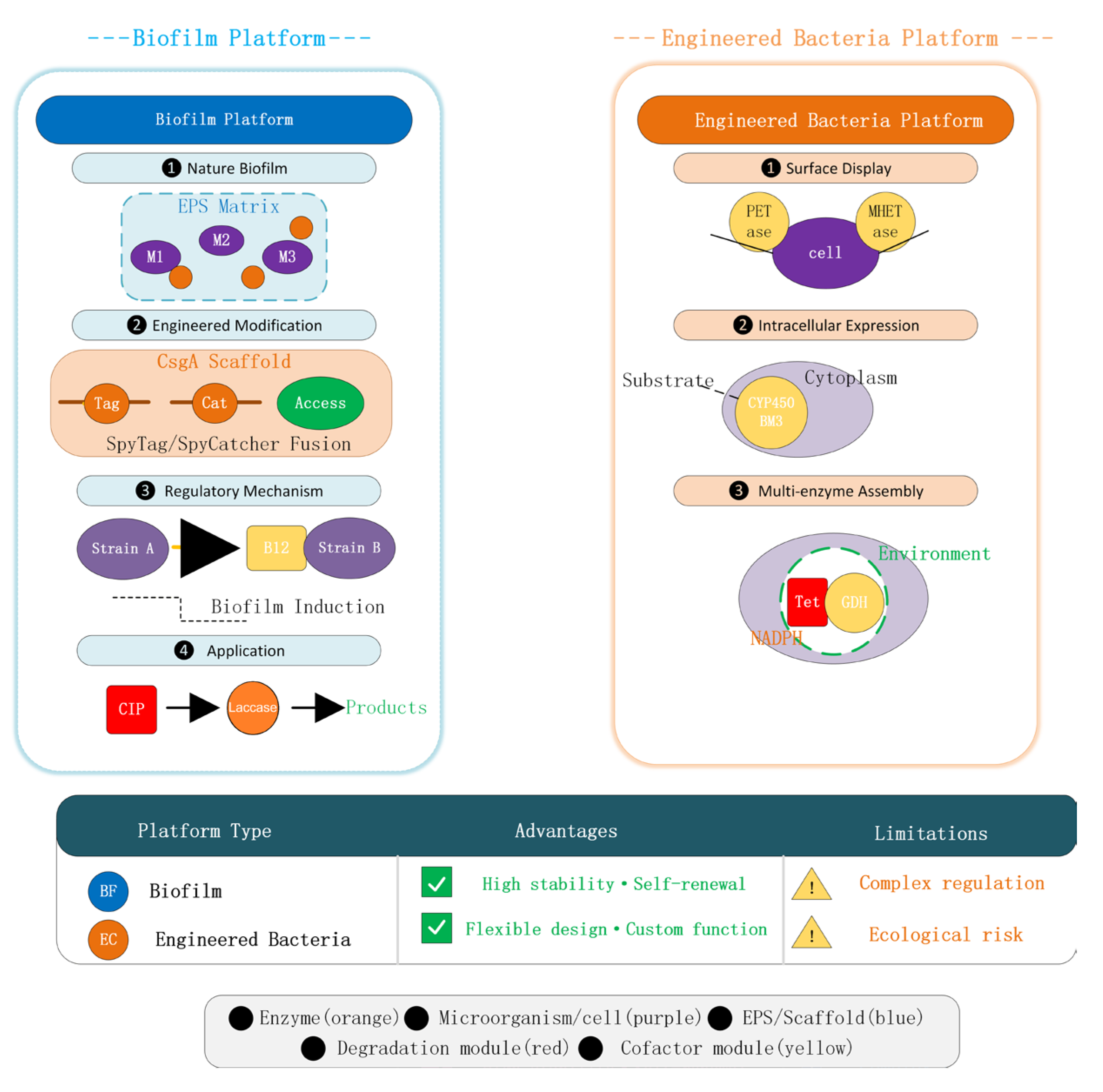
| Biofilm | Natural biofilm | EPS matrix | Extracellular enzyme retention, community metabolism | High stability, self-renewal | Difficult regulation |
| Engineered biofilm | CsgA scaffold | SpyTag/SpyCatcher fusion | Modular design, programmable | Long construction cycle | |
| Cofactor regulation | Biofilm | Induced formation by cofactor exchange | Enhanced stress tolerance | Complex mechanism | |
| Engineered bacteria | Surface display | Bacterial surface | Enzymes displayed on cell surface | Overcomes substrate transmembrane limitation | Limited display efficiency |
| Intracellular expression | Cytoplasm | Intracellular expression of engineered enzymes | Utilizes intracellular metabolism | Substrates require transmembrane transport | |
| Multi-enzyme intracellular assembly | Artificial microcompartment | Mimics bacterial microcompartments | Efficient cascade catalysis | Difficult assembly |
| Drug Category | Specific Drug | Synergy Platform Type | Platform Composition | Experimental Conditions | Removal Efficiency | Key Findings | Cost Analysis |
|---|---|---|---|---|---|---|---|
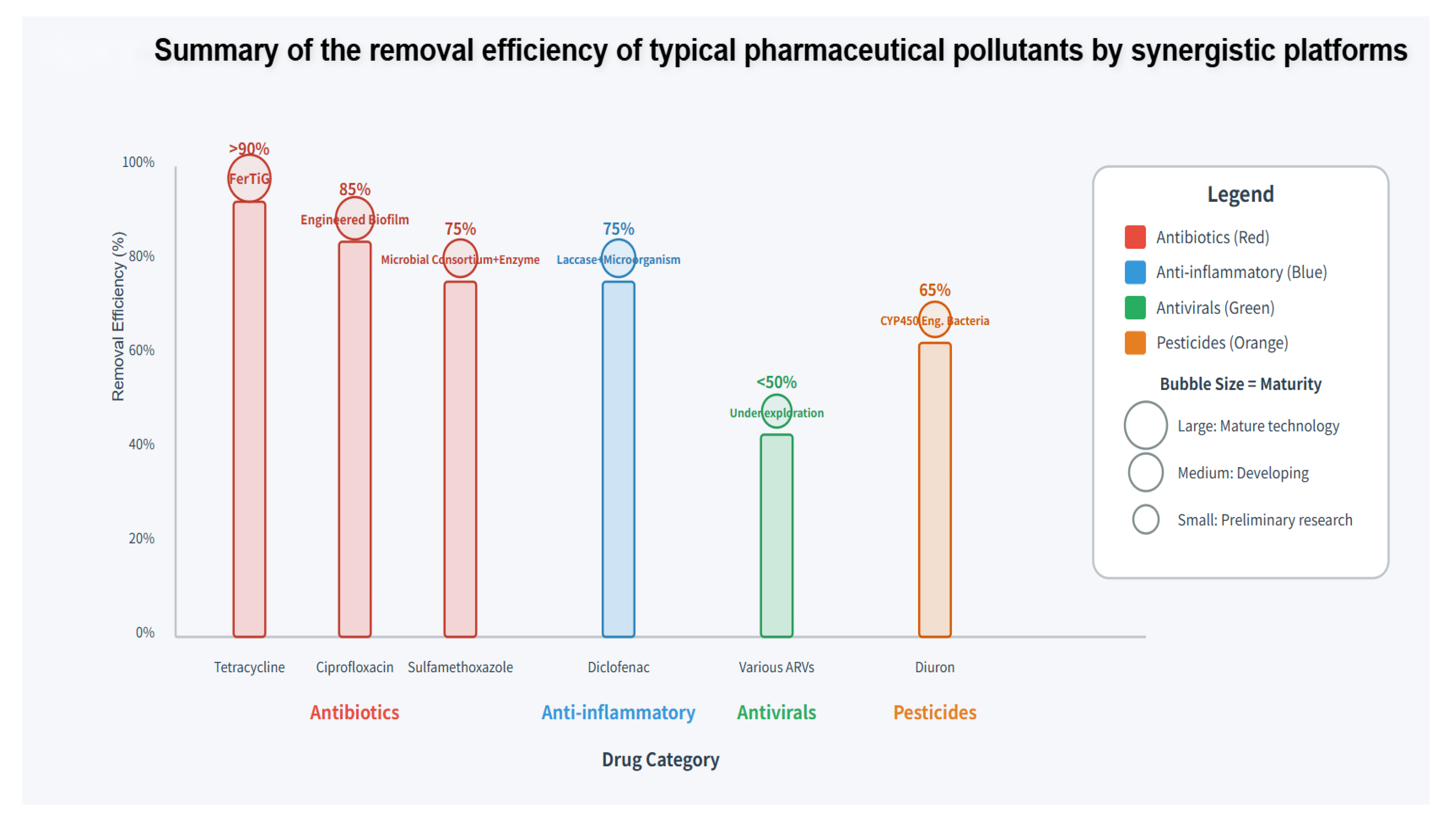
| Tetracyclines | Tetracycline | Mimetic microcompartment multi-enzyme complex | FerTiG (Tet(X4) + GDH + Ferritin) | Glucose-driven, room temperature | >90% (24 h) | 10× cost reduction, 7× efficiency improvement, strong stress resistance | 10-fold cost reduction via cofactor recycling; glucose as low-cost driving fuel |
| Fluoroquinolones | Ciprofloxacin | Engineered biofilm | E. coli CsgA-laccase fusion | Flow system, room temperature | 85% (48 h) | Long-term stable operation, modular design | Economical due to self-regenerating biofilm; no external enzyme supplementation required |
| Sulfonamides | Sulfamethoxazole | Microbial consortium + enzyme | Oriented microbial consortium-based compound enzyme | Wastewater treatment conditions | 70–80% | Simultaneous ARGs removal | Cost-effective using agricultural/food residues (vine pruning, brewer’s spent grains) as enzyme production substrate; 50 U·L−1 low enzyme concentration |
| Anti-inflammatory drugs | Diclofenac | Laccase + microorganism | Free laccase + activated sludge | Batch experiment | 75% | Laccase pretreatment enhances biodegradation | Moderate cost; reduces subsequent biotreatment burden |
| Pesticides | Diuron | Engineered bacteria (intracellular expression) | B. megaterium expressing CYP450 BM3 | TB medium | 65% (5 d) | 45% in synthetic wastewater, 15% in municipal wastewater | Requires IPTG induction; cost of heterologous expression system |
| Diuron | Engineered microalgae (chloroplast expression) | C. reinhardtii expressing CYP450 BM3 | Light culture | 52% | Wild type only 6% | Lower cost than bacterial system; light-driven, no inducer required | |
| Plastic monomers | PET (methodological reference) | Surface displays dual enzymes | E. coli displaying PETase + MHETase | 37 °C | 3.85 mM/d | 51× improvement over free enzyme, reusable | High reusability (3 cycles retain 30% activity); reduces long-term costs |
| Multiple drugs | 14 drugs | WWTP (biofilm) | Activated sludge process | Actual WWTP | >90% (majority) | Triclosan and octylphenol still persisted in sludge | Low operational cost for existing infrastructure; sludge disposal adds expense |
Disclaimer/Publisher’s Note: The statements, opinions and data contained in all publications are solely those of the individual author(s) and contributor(s) and not of MDPI and/or the editor(s). MDPI and/or the editor(s) disclaim responsibility for any injury to people or property resulting from any ideas, methods, instructions or products referred to in the content. |
© 2026 by the authors. Licensee MDPI, Basel, Switzerland. This article is an open access article distributed under the terms and conditions of the Creative Commons Attribution (CC BY) license.
Share and Cite
Sun, Z.; Chen, P.; Ge, X.; Zhang, W.; Liu, H. Synergistic Integration of Enzyme and Microbial Platforms for Sustainable Management of Pharmaceutical Pollutants: Towards a Greener Pharmaceutical Lifecycle. Biology 2026, 15, 804. https://doi.org/10.3390/biology15100804
Sun Z, Chen P, Ge X, Zhang W, Liu H. Synergistic Integration of Enzyme and Microbial Platforms for Sustainable Management of Pharmaceutical Pollutants: Towards a Greener Pharmaceutical Lifecycle. Biology. 2026; 15(10):804. https://doi.org/10.3390/biology15100804
Chicago/Turabian StyleSun, Zhongshan, Peitao Chen, Xiangyang Ge, Weiguo Zhang, and Huanmin Liu. 2026. "Synergistic Integration of Enzyme and Microbial Platforms for Sustainable Management of Pharmaceutical Pollutants: Towards a Greener Pharmaceutical Lifecycle" Biology 15, no. 10: 804. https://doi.org/10.3390/biology15100804
APA StyleSun, Z., Chen, P., Ge, X., Zhang, W., & Liu, H. (2026). Synergistic Integration of Enzyme and Microbial Platforms for Sustainable Management of Pharmaceutical Pollutants: Towards a Greener Pharmaceutical Lifecycle. Biology, 15(10), 804. https://doi.org/10.3390/biology15100804