Article

Potential Role of Captive Environments in Reshaping the Compositions of Pathogenic Gut Bacteria in Equus Species

1
College of Agriculture and Biology, Liaocheng University, Liaocheng 252059, China
2
Marine College, Shandong University (Weihai), Weihai 264209, China
3
College of Life Sciences, Qufu Normal University, Qufu 273165, China
*
Author to whom correspondence should be addressed.
Biology 2026, 15(10), 796; https://doi.org/10.3390/biology15100796 (registering DOI)
Submission received: 27 March 2026 / Revised: 2 May 2026 / Accepted: 14 May 2026 / Published: 16 May 2026
(This article belongs to the Section Microbiology)

Simple Summary

Equus ferus przewalskii, E. hemionus, and E. kiang are classified as first-class protected animals (Category I) in China. Ex situ breeding is one of the primary strategies for the conservation and recovery of these three Equus species. This study analyzed gut pathogens in wild and captive Equus species. We found that the relative abundance of zoonotic pathogens was significantly higher in captive individuals than in wild ones. Thus, captive environments may increase the risk of Equus species contracting zoonotic diseases. Therefore, we hope this study contributes to improving the health management of captive Equus species.

Abstract

Captive environments can have detrimental effects on the health of Equus species. However, due to the limitations of available databases, the types and abundance of pathogenic bacteria in Equus species remain largely unknown. Therefore, this study aimed to explore pathogenic gut bacteria in wild and captive Equus species. Using 16S rRNA gene sequencing and a comprehensive multiple bacterial pathogen detection database, we compared the pathogenic gut bacterial profiles of three Equus species (Equus ferus przewalskii, E. hemionus, and E. kiang) across different captive and wild environments. The pheatmap revealed that the three Equus species living in different captive environments showed convergence in their pathogenic gut bacterial composition. Captive Equus species had significantly enriched zoonotic bacteria, whereas wild Equus species had significantly enriched animal pathogenic bacteria. These findings suggest that a captive environment may increase the risk of zoonotic bacterial transmission between Equus species and humans. We hope that this study can provide a reasonable scientific basis for the management and protection of captive Equus species.

1. Introduction

The gut microbiome plays a pivotal role in host immunity and metabolic homeostasis across mammalian species [1,2]. In endangered wildlife conservation, microbial dysbiosis induced by captivity has been increasingly recognized as a critical factor affecting animal health [3]. Three species of the wild Equus (Equus ferus przewalskii, E. hemionus, and E. kiang) are found in China [4]. They are listed as a First-Grade State Protection animals in China, with the E. f. przewalskii listed as endangered by the International Union for Conservation of Nature, under criteria D [5]. Currently, captive breeding is one of the main methods to protect and rescue wild Equus species [6,7]. However, a captive environment can lead to unfavorable conditions such as sub-health and disease in Equus species [8]. This may be associated with an increased abundance of pathogenic bacteria in the gut microbiome of Equus species [8,9]. Recent studies have demonstrated that captivity-induced gut microbiome dysbiosis is associated with increased pathogen loads and disease susceptibility in endangered mammals. For instance, captive skywalker hoolock gibbon (Hoolock tianxing) and black rhinoceros (Diceros bicornis) exhibit higher abundance of pathogens such as Spirochetes [10] and Bacteroides fragilis [11]. These findings underscore the need to investigate how captive environments reshape pathogenic microbial communities in Equus species.
The gut microbiomes of Equus species are complex micro-ecosystems that contain bacteria (probiotics and pathogenic bacteria, etc.), fungi, and viruses [7,12,13,14,15,16]. Probiotic bacteria can provide energy and maintain health in these species [17]. In contrast, an increased abundance of pathogenic bacteria can cause diseases and pathological processes such as inflammation [14,18,19,20,21]. Therefore, researchers have explored the health of captive Equus species through gut microbiomics [6,14]. Based on the Greengenes and Silva databases, many studies have found that the abundance of potentially pathogenic bacteria is increased in the gut microbiome of captive Equus species [6,21,22,23]. Although the Greengenes and Silva databases provide descriptions of gut bacterial composition, a significant portion (13–15%) of the Equus gut microbiome remains unclassified. Moreover, pathogenic bacteria are not defined or classified in the Greengenes and Silva databases. As a result, the types and abundances of pathogenic bacteria in Equus species have not been characterized in detail.
We hypothesized that captive Equus species harbor higher abundance of zoonotic pathogens compared to wild counterparts, driven by human-associated microbial transmission. Thus, this study aimed to examine and compare the pathogenic gut bacteria in wild and captive members of the genus Equus. We analyzed 96 fecal samples from three Equus species across wild and captive environments, integrating alpha/beta diversity and taxonomic composition to analyze the abundance composition of zoonotic pathogens in captive Equus species. Our results indicate that the captive environment increases the abundance of zoonotic pathogenic bacteria in captive Equus species.

2. Materials and Methods

2.1. Sample Collection

Data were downloaded from the National Center for Biotechnology Information (NCBI) and selected based on the following criteria: (1) The data source includes Equus species from both wild and captive environments; (2) Sequencing samples were derived from fecal material; (3) The host was a healthy individual; (4) The sequencing region targeted the V3–V4 hypervariable regions of the 16S rRNA gene; (5) All fecal samples were collected in sterile centrifuge tubes, transported in mobile refrigerator at −20 °C during transportation, and stored below −20 °C until sequencing; and (6) The number of data points for each wild and captive environment exceeds 5 to ensure statistically significant.
After screening, a total of 96 samples were used for analysis [7,21,24,25,26]. Information on these samples is listed in Table S1. According to species and survival environment, we designated E. f. przewalskii (EFEP), E. hemionus (EHEM), and E. kiang (EKIA) in the wild environment as WEFEP, WEHEM, WEKIA_1, and WEKIA_2 (WEFEP and WEHEM, 44°36′ N, 88°30 E; WEKIA_1, 35°46.77′ N, 95°15.15′ E; WEKIA_2, 38°.37′ N, 101°.06′ E), respectively. Those in the captive environment were designated as CEFEP_1 (Gansu endangered animals protection center), CEFEP_2 (Xinjiang uygur autonomous region wild horse breeding research center), CEHEM (Gansu endangered animals protection center), CEKIA_1 (Jinan zoo), CEKIA_2 (Jinan wildlife world), and CEKIA_3 (Qinghai-Xizang plateau wild animal park), respectively.

2.2. Data Analysis

The primers and barcodes were removed from the raw reads using EasyAmplicon software V1.18.1 [27]. Clean reads were used for pathogenic gut bacterial analysis based on the Multiple Bacterial Pathogen Detection (MBPD) database [28]. For sequence clustering, the amplicon sequence variant (ASV) approach was employed, and species annotations were aligned to the MBPD reference database (18 August 2022) using the UCLUST algorithm, with a confidence threshold of 0.8 [28]. The relative abundance of pathogenic bacteria at various taxonomic levels (phylum to species) was normalized using the EasyAmplicon software V1.18.1 [27]. Alpha diversity indices (richness and Shannon) and beta diversity indices (Manhattan distance) were calculated using the EasyAmplicon software V1.18.1 [27]. Alpha diversity was visualized with a boxplot (Wilcoxon test, p < 0.05) by cloudtutu platform (https://cloudtutu.com (accessed on 1 March 2026)), and the rarefaction curves (richness diversity) and heatmap (Manhattan distances) were plotted using sp-peatmap script in EasyAmplicon software V1.18.1 [27]. The types of pathogenic bacteria in wild and captive Equus species were compared using the Kruskal–Wallis test (p < 0.05), visualized through cloudtutu platform (https://cloudtutu.com (accessed on 7 March 2026)). At the species level, we used the ‘ggplot2’ package in R software (V4.2.1) to generate relative abundance bar cumulative plots of the top 10 bacteria. Additionally, the Linear discriminant analysis Effect Size software (LEfSe, V1.1.2; LDA score > 3, p < 0.05) was employed to detect significantly different pathogenic gut bacteria between wild and captive Equus species.

3. Results

3.1. Overview of the Data and Diversity Analysis

After quality control, we obtained 6,131,161 effective reads from 96 samples, with an average of 63,866.26 effective reads per sample. A total of 7136 ASVs were identified in the 96 samples. The rarefaction curves (richness diversity) approached a plateau, indicating that the sequencing depth was sufficient for experimental analysis (Figure S1).
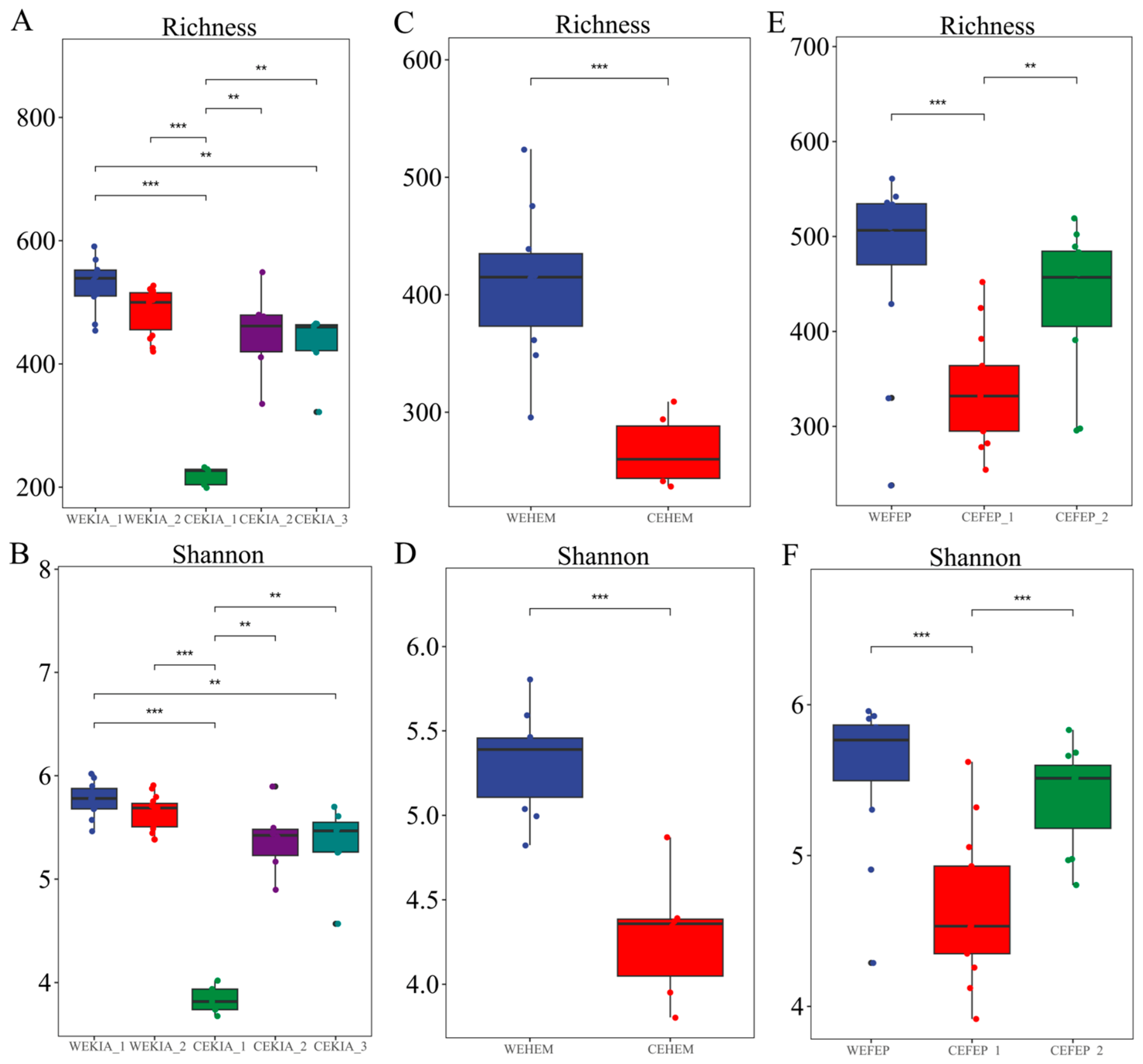
The results of the Wilcoxon tests for richness and Shannon indices are shown in a boxplot (Figure 1). The diversity and richness of pathogenic gut bacteria in wild Equus species were higher than those in captive Equus species. In different captive environments, the gut pathogenic bacteria of the same species exhibit varying alpha diversity. For example, group CEKIA_2 and CEKIA_3 were significantly higher than CEKIA_1, while the group CEFEP_2 was significantly higher than the group CEFEP_1. These findings suggest that Equus species are exposed to a greater variety of pathogenic bacteria in the wild environment. The composition of different environmental factors (such as environmental microbiome and diets) in different captive environments may significantly affect the diversity of gut pathogenic bacteria in Equus species.

3.2. Cluster and Pathogenic Bacteria Type Analyses

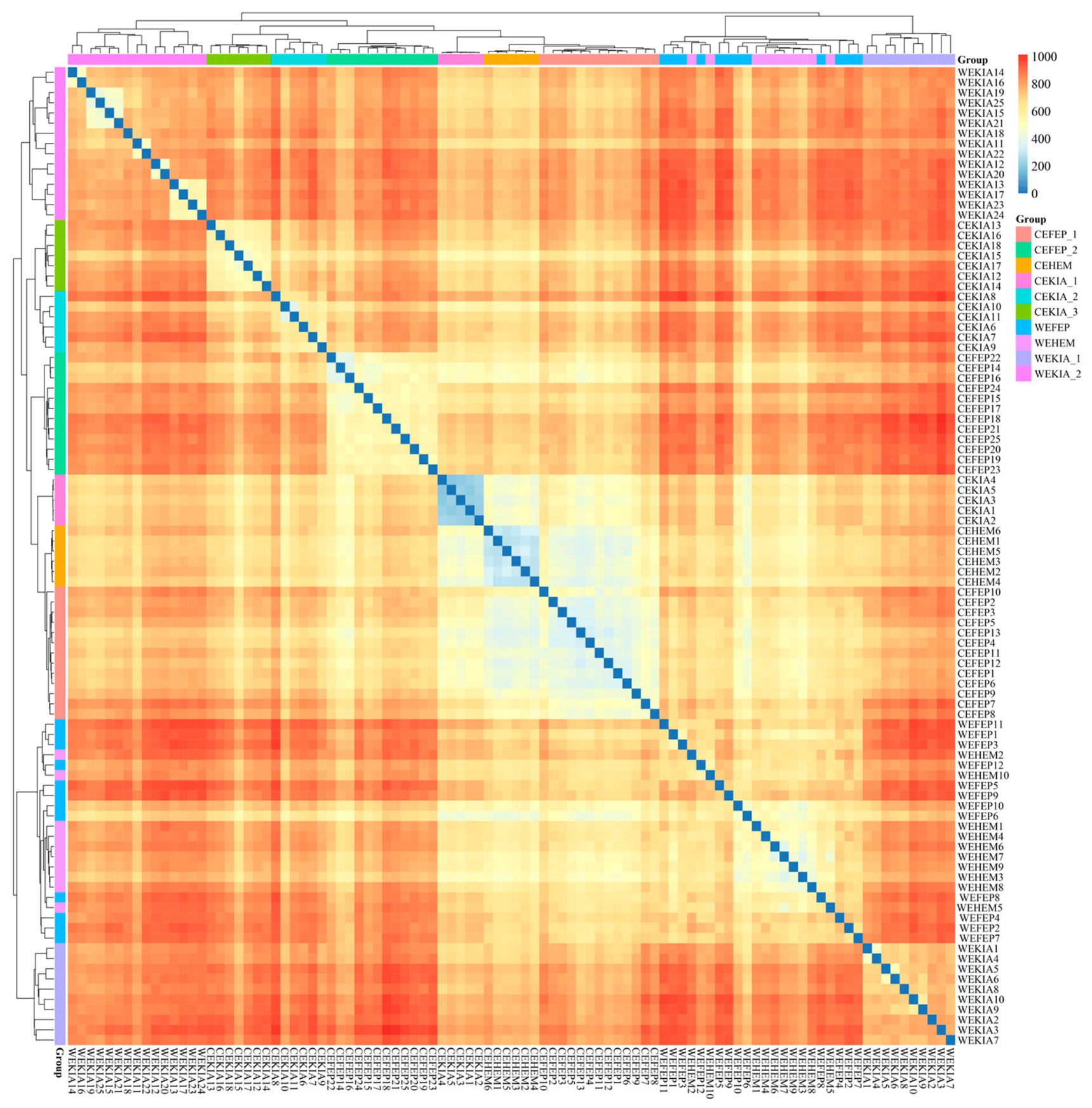
A heatmap was used to show the differences in pathogenic gut bacterial composition between wild and captive Equus species (Figure 2). The captive Equus species (CEKIA_1, CEKIA_2, CEKIA_3, CEHEM, CEFEP_1, and CEFEP_2) formed a separate cluster. Except for WEKIA_2, WEKIA_1, WEHEM, and WEFEP clustered together. Although the samples of group CEFEP_2 were sampled in winter, their pathogenic bacterial composition was similar to that of individuals sampled in spring and summer. Furthermore, the pathogenic gut bacterial composition of the three Equus species was similar in the five captive environments. We hypothesized that the same pathogenic bacteria may be present in different captive environments, resulting in a similar composition of pathogenic gut bacteria in captive Equus species.
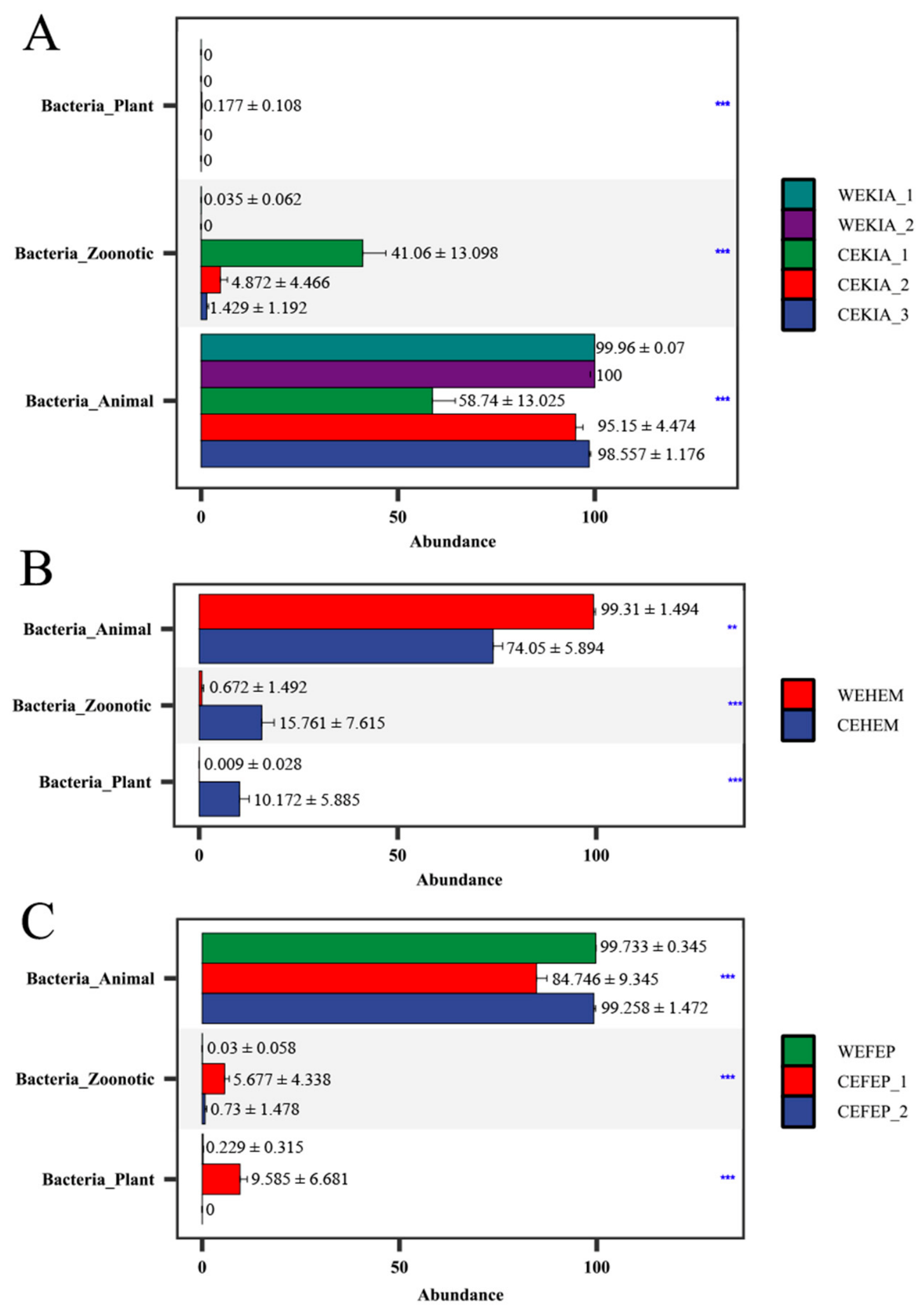
Based on the pathogenic bacteria type analysis (Figure 3), we observed that the relative abundance of zoonotic bacteria was significantly higher in captive Equus species (CEKIA_1, CEKIA_2, CEKIA_3, CEFEP_1, CEFEP_2, and CEHEM) than in wild Equus species (WEKIA_1, WEKIA_2, WEFEP, and WEHEM). Conversely, the relative abundance of animal pathogenic bacteria was significantly higher in wild Equus species (p < 0.05). The sum of average relative abundances of zoonotic and plant pathogenic bacteria in captive individuals (12.41%) was significantly higher than that in wild individuals (0.22%). Based on the results of Figure 2 and Figure 3, we merged CPKIA (1–3), CEFEP (1–2), and WEKIA (1–2) into CPKIA, CEFEP, and WEKIA, respectively.

3.3. Pathogenic Gut Bacteria Compositions

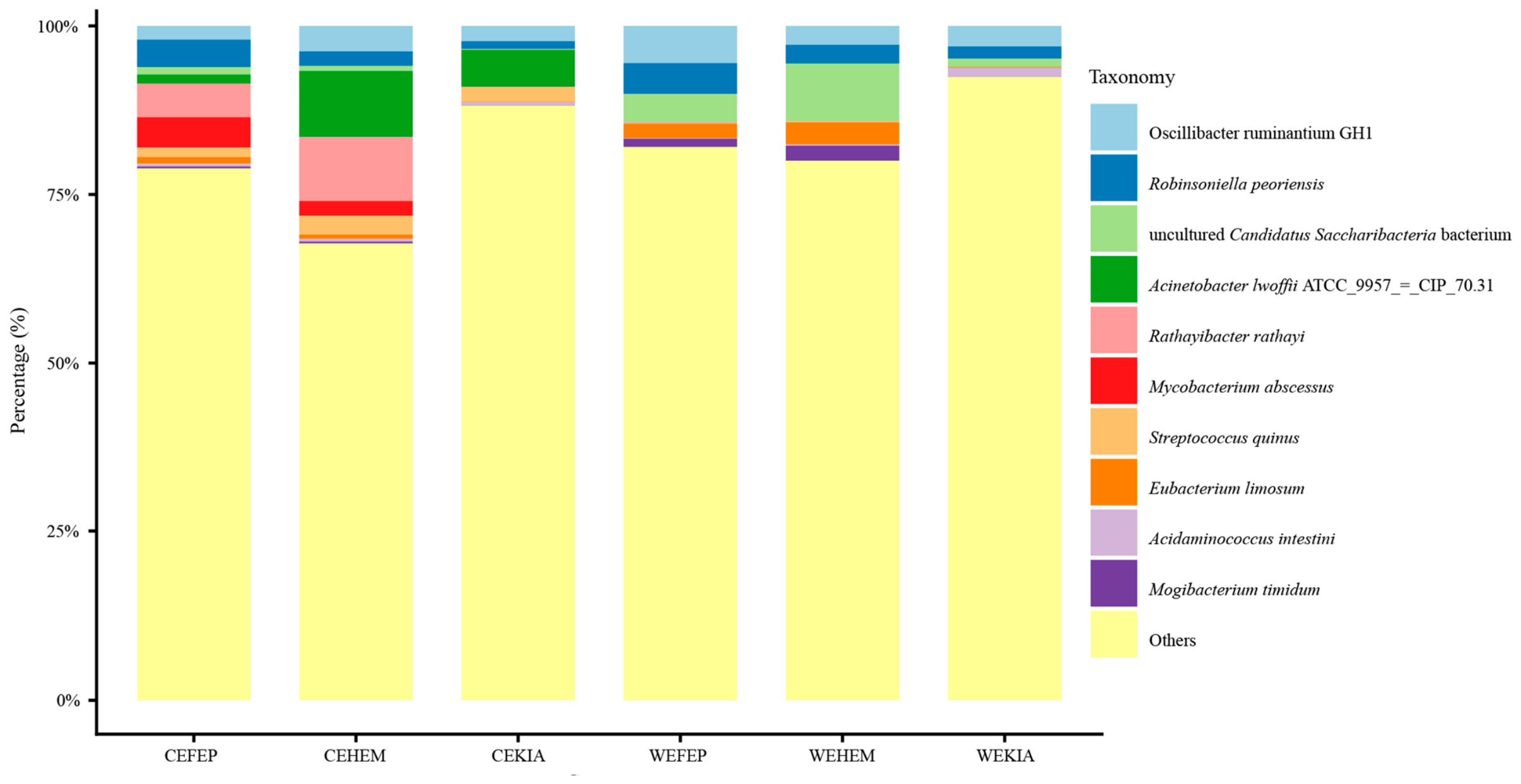
The unidentified bacteria and top 10 species occupied more than 80% and 16% of all samples, respectively. The average total abundance of the other 45 bacterial species does not exceed 4% of the gut pathogenic bacteria composition. Therefore, we used cumulative plots of relative abundance for the top 10 bacteria to further analyze the composition of pathogenic gut bacterial communities in wild and captive Equus species.
As shown in Figure 4, the most abundant species in specific wild and captive Equus groups are as follows: Rathayibacter rathayi (pathogenic type, plant) was observed in groups CEFEP (4.96%); Acinetobacter lwoffii ATCC 9957 = CIP70.31 (pathogenic type, zoonotic) was identified in Group CEKIA (5.47%) and CEHEM (9.48%); An uncultured Candidatus Saccharibacteria bacterium (pathogenic type, animal) was found in group WEHEM (8.59%); Oscillibacter ruminantium GH1 (pathogenic type, animal) was present in group WEKIA (3.06%) and WEFEP (5.52%).
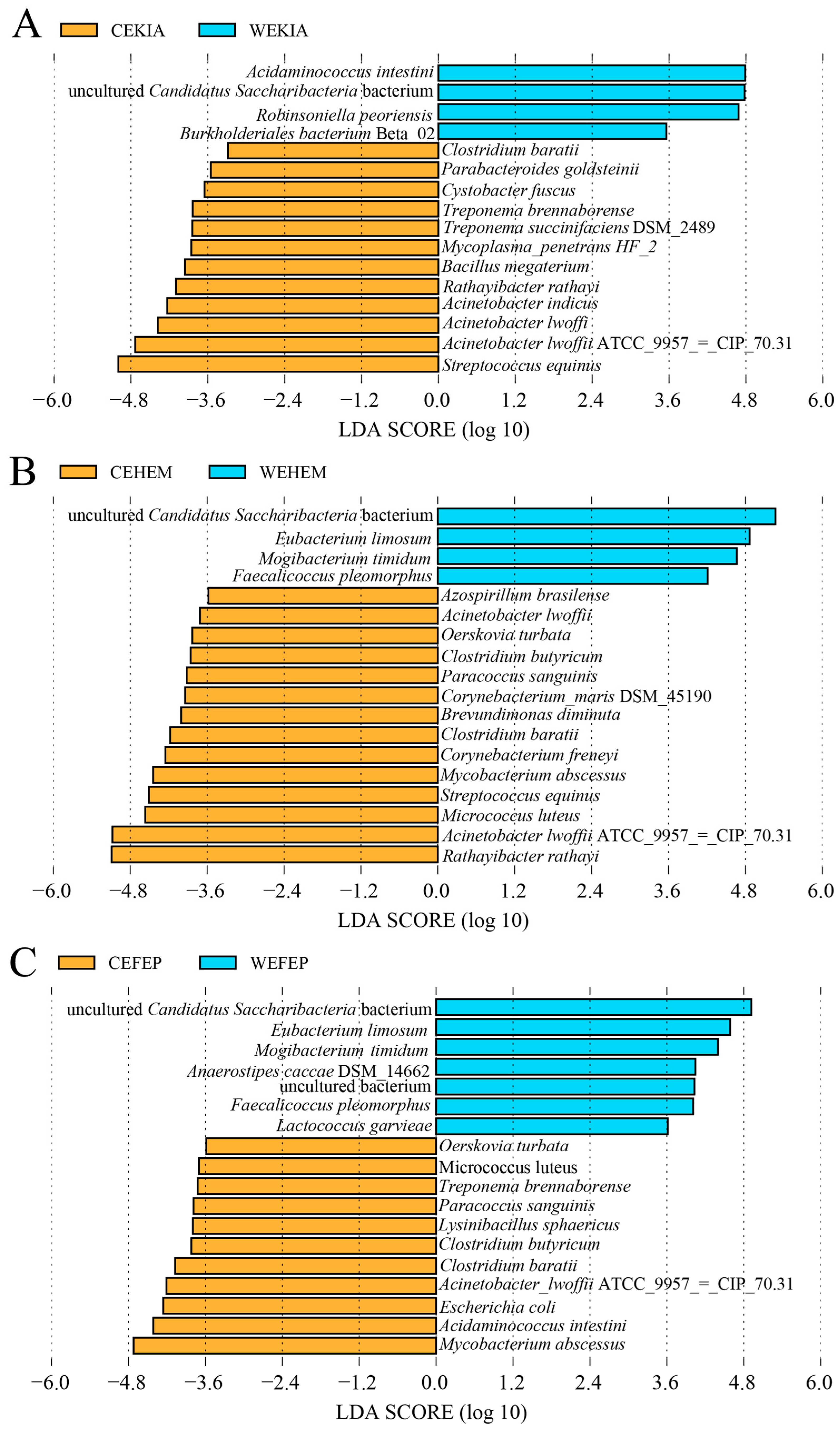
We performed LEfSe analysis (Figure 5) to identify indicator pathogenic gut bacteria that differ between captive and wild Equus species (groups WEKIA and CEKIA; groups WEHEM and CEHEM; and groups CEFEP and WEFEP). Compared to wild Equus species, the abundance of some bacterial species only significantly increased in two captive horse species, such as A. lwoffii (CEKIA and CEHEM). At the species level, A. lwoffii ATCC 9957 = CIP 70.31 and Clostridium butyricum were significantly enriched in captive Equus species. Uncultured C. Saccharibacteria bacterium were more abundant in wild Equus species than in captive Equus species. Compared to wild Equus species, the abundance of some bacterial species only significantly increased in two captive horse species, such as A. lwoffii (CEKIA and CEHEM). Similarly, the abundance of Eubacterium limosum only significantly increased in WEFEP and WEHEM.

4. Discussion

By comparing 16S rRNA data for captive and wild Equus species, we found that captive environments reshape the composition of pathogenic gut bacteria. Captive Equus species have similar gut pathogen structures, and the abundance of zoonotic pathogenic bacteria is significantly higher than that of wild Equus species. The substantial increase in the relative abundance of zoonotic pathogenic bacteria might contribute significantly to the observed similarity in pathogenic bacterial composition between captive Equus species. The findings of previous research are consistent with our results. For example, compared to their wild counterparts, captive animals such as Acinonyx jubatus [29], Ursus arctos [30], and Peromyscus maniculatus [31] exhibit higher relative abundances of animal pathogenic bacteria.
In addition, the gut microbiomes of captive Equus species have the same indicator pathogens, for example, A. lwoffii and A. lwoffii ATCC 9957 = CIP 70.31 (genus Acinetobacter). Numerous studies have demonstrated that the genus Acinetobacter is a zoonotic and opportunistic pathogen commonly found in farms, companion animals, and other environments [32,33,34]. Acinetobacter species can cause various diseases, including ventilator-associated pneumonia, bloodstream infections, and meningitis [35]. Acinetobacter carries antibiotic-resistant genes, which facilitate its spread between humans and animals [36,37]. Consequently, Acinetobacter may represent a significant health risk to individuals who interact closely with animals, including caregivers, zoo visitors, and captive Equus species. In the functional prediction, we also found that the abundance of human diseases was significantly higher in captive Equus species than in wild Equus species. Therefore, captive environments might increase the probability of disease development in Equus species [9].
In contrast, animal pathogenic bacteria exhibit higher abundance in wild Equus species [31]. For example, Eubacterium limosum (naturally present in soil) may facilitate the metabolic conversion of norepinephrine to 3,4-DHPG, resulting in a proconvulsant effect [38,39]. Uncultured Candidatus Saccharibacteria bacterium is also often present in natural environments such as soil and water [39]. Therefore, the natural environments represent a significant source of pathogenic gut bacteria in wild Equus species.
However, details regarding the welfare, living conditions, and health status of captive Equus species, as well as their interactions with other animals and humans, remain unclear. In addition, the age and gender information of some captive animals is unclear. All these factors may influence the abundance and composition of pathogenic bacteria; for example, captive Equus species may be in a state of subclinical infection. Although we have confirmed that the captive environment increases the abundance of zoonotic pathogens in Equus species, it is currently unclear which specific factors influence the composition of pathogenic bacteria in captive Equus species. Therefore, in future studies, we need to collect new samples to clarify the aforementioned information. Through in-depth analysis using multi-omics approaches (metagenomics and metabolomics) in conjunction with factors (such as animal health phenotypes and dietary habits), we aim to elucidate the mechanisms by which the captive environment increases the abundance of zoonotic pathogens in captive Equus species.

5. Conclusions

We characterized the diversity and composition of pathogenic gut bacteria in captive and wild Equus species via 16S rRNA gene sequencing. A captive environment influences Equus species to have a more similar composition of pathogenic gut bacterial communities, potentially increasing the probability of zoonotic disease development in these species. Therefore, before entering the enclosure, breeders should wear masks and disinfect their clothes. In addition, breeders must regularly disinfect and sterilize the enclosures of Equus species, and may use appropriate amounts of fluoroquinolone antibiotics if necessary. We hope that this study can provide a scientific basis for the protection and management of captive Equus species.

Supplementary Materials

The following supporting information can be downloaded at: https://www.mdpi.com/article/10.3390/biology15100796/s1, Figure S1: The results of sparse curves (richness diversity); Table S1: The information of the samples used in this study.

Author Contributions

Conceptualization, X.W.; methodology, H.L.; software, X.W.; validation, H.L. and X.H.; formal analysis, X.W.; resources, X.W.; data curation, H.L., S.H. and S.X.; writing—original draft preparation, X.W.; writing—review and editing, H.L.; visualization, X.W.; supervision, H.L.; project administration, H.L. and Y.L.; funding acquisition, H.L. and Y.L. All authors have read and agreed to the published version of the manuscript.

Funding

This research was funded by the Natural Science Foundation of Shandong Province, China, grant number ZR2023QC255, and the National Natural Science Foundation of China, grant number 32270480.

Institutional Review Board Statement

Not applicable. Although the research subjects are animals, no experimental operations were conducted on the target animals. The research data was sourced from publicly available databases.

Informed Consent Statement

Not applicable.

Data Availability Statement

All 16S rRNA gene data was sourced from the National Center for Biotechnology Information (https://www.ncbi.nlm.nih.gov/bioproject/PRJNA701711 (accessed on 20 February 2026); https://www.ncbi.nlm.nih.gov/bioproject/PRJNA837737; https://www.ncbi.nlm.nih.gov/sra/?term=PRJNA553267 (accessed on 20 February 2026); https://www.ncbi.nlm.nih.gov/bioproject/PRJNA558670 (accessed on 20 February 2026); https://www.ncbi.nlm.nih.gov/bioproject/PRJNA436598 (accessed on 20 February 2026)). The code used to analyze was sourced from GitHub (https://github.com/LorMeBioAI/MBPD (accessed on 21 February 2026); https://github.com/YongxinLiu/EasyAmplicon (accessed on 21 February 2026)).

Acknowledgments

We would like to acknowledge all researchers who participated in sample collection, and we also thank the National Center for Biotechnology Information (NCBI) Database for providing the molecular data.

Conflicts of Interest

The authors declare no conflicts of interest. The funders had no role in the design of the study; in the collection, analyses, or interpretation of data; in the writing of the manuscript; or in the decision to publish the results.

References

  1. Wang, X.; Gao, X.; Chen, Y.; Wu, X.; Shang, Y.; Zhang, Z.; Zhou, S.; Zhang, H. Comparative analysis of the gut microbiome of ungulate species from Qinghai-Xizang plateau. Ecol. Evol. 2024, 14, e70251. [Google Scholar] [CrossRef]
  2. Xiao, Y.; Zhao, Q.; Ni, D.; Zhang, X.; Hao, W.; Yuan, Q.; Xu, W.; Mu, W.; Wu, D.; Wu, X.; et al. Polymerization of dietary fructans differentially affects interactions among intestinal microbiota of colitis mice. ISME J. 2025, 19, wrae262. [Google Scholar] [CrossRef]
  3. Wang, X.; Shang, Y.; Xing, Y.; Chen, Y.; Wu, X.; Zhang, H. Captive environments reshape the compositions of carbohydrate active enzymes and virulence factors in wolf gut microbiome. BMC Microbiol. 2025, 25, 142. [Google Scholar] [CrossRef] [PubMed]
  4. Deng, T.; Xue, X. Phylogenetic relationships of the Chinese fossil species of the genus Equus (Perissodactyla, Equidae). Sci. China Ser. D Earth Sci. 1999, 42, 449–455. [Google Scholar] [CrossRef]
  5. King, S.; Boyd, L.; Zimmermann, W.; Kendall, B.  Equus ferus. In The IUCN Red List of Threatened Species; International Union for Conservation of Nature: Gland, Switzerland, 2015; p. T41763A97204950. [Google Scholar]
  6. Gao, H.; Chi, X.; Qin, W.; Wang, L.; Song, P.; Cai, Z.; Zhang, J.; Zhang, T. Comparison of the gut microbiota composition between the wild and captive Tibetan wild ass (Equus kiang). J. Appl. Microbiol. 2019, 126, 1869–1878. [Google Scholar] [CrossRef]
  7. Zhang, H.; Chen, Y.; Wu, X.; Shang, S.; Chen, J.; Yan, J.; Wei, Q.; Wang, X.; Lu, Y.; Zhang, H. Comparison of the Gut Microbiota in the Tibetan Wild Ass (Equus kiang) Collected from High and Low Altitude. Pak. J. Zool. 2020, 52, 2281–2291. [Google Scholar] [CrossRef]
  8. Li, B.; Gao, H.; Song, P.; Liang, C.; Jiang, F.; Xu, B.; Liu, D.; Zhang, T. Captivity shifts gut microbiota communities in white-lipped deer (Cervus albirostris). Animals 2022, 12, 431. [Google Scholar] [CrossRef]
  9. Huang, G.; Qu, Q.; Wang, M.; Huang, M.; Zhou, W.; Wei, F. Global landscape of gut microbiome diversity and antibiotic resistomes across vertebrates. Sci. Total Environ. 2022, 838, 156178. [Google Scholar] [CrossRef]
  10. Lan, L.Y.; Hong, Q.X.; Gao, S.M.; Li, Q.; You, Y.Y.; Chen, W.; Fan, P.F. Gut microbiota of skywalker hoolock gibbons (Hoolock tianxing) from different habitats and in captivity: Implications for gibbon health. Am. J. Primatol. 2023, 85, e23468. [Google Scholar] [CrossRef] [PubMed]
  11. Gibson, K.M.; Nguyen, B.N.; Neumann, L.M.; Miller, M.; Buss, P.; Daniels, S.; Ahn, M.J.; Crandall, K.A.; Pukazhenthi, B. Gut microbiome differences between wild and captive black rhinoceros—Implications for rhino health. Sci. Rep. 2019, 9, 7570. [Google Scholar] [CrossRef] [PubMed]
  12. Gilroy, R.; Leng, J.; Ravi, A.; Adriaenssens, E.M.; Oren, A.; Baker, D.; La Ragione, R.M.; Proudman, C.; Pallen, M.J. Metagenomic investigation of the equine faecal microbiome reveals extensive taxonomic diversity. PeerJ 2022, 10, e13084. [Google Scholar] [CrossRef] [PubMed]
  13. Li, C.; Li, X.; Guo, R.; Ni, W.; Liu, K.; Liu, Z.; Dai, J.; Xu, Y.; Abduriyim, S.; Wu, Z.; et al. Expanded catalogue of metagenome-assembled genomes reveals resistome characteristics and athletic performance-associated microbes in horse. Microbiome 2023, 11, 7. [Google Scholar] [CrossRef] [PubMed]
  14. Li, Y.; Zhang, K.; Liu, Y.; Li, K.; Hu, D.; Wronski, T. Community composition and diversity of intestinal microbiota in captive and reintroduced Przewalski’s horse (Equus ferus przewalskii). Front. Microbiol. 2019, 10, 1821. [Google Scholar] [CrossRef] [PubMed]
  15. Lindenberg, F.; Krych, L.; Kot, W.; Fielderil, J.; Frokiaer, H.; van Galen, G.; Nielsen, S.; Hansen, K. Development of the equine gut microbiota. Sci. Rep. 2019, 9, 14427. [Google Scholar] [CrossRef]
  16. Liu, H.; Han, X.; Zhao, N.; Hu, L.; Wang, X.; Luo, C.; Chen, Y.; Zhao, X.; Xu, S. The gut microbiota determines the high-altitude adaptability of tibetan wild asses (Equus kiang) in Qinghai-Tibet Plateau. Front. Microbiol. 2022, 13, 949002. [Google Scholar] [CrossRef]
  17. Sun, G.; Xia, T.; Wei, Q.; Dong, Y.; Zhao, C.; Yang, X.; Zhang, L.; Wang, X.; Sha, W.; Zhang, H. Analysis of gut microbiota in three species belonging to different genera (Hemitragus, Pseudois, and Ovis) from the subfamily Caprinae in the absence of environmental variance. Ecol. Evol. 2021, 11, 12129–12140. [Google Scholar] [CrossRef]
  18. Ang, L.; Vinderola, G.; Endo, A.; Kantanen, J.; Chen, J.; Binetti, A.; Burns, P.; Shi, Q.; Ding, S.; Yu, Z.; et al. Gut microbiome characteristics in feral and domesticated horses from different geographic locations. Commun. Biol. 2022, 5, 172. [Google Scholar] [CrossRef]
  19. Guan, Y.; Yang, T.; Han, Y.; Feng, M.; Wang, M.; Ge, P. Comparison of the gut microbiota composition between wild and captive sika deer (Cervus nippon hortulorum) from feces by high-throughput sequencing. AMB Express 2017, 7, 212. [Google Scholar] [CrossRef]
  20. Guan, Y.; Zhang, H.; Gao, X.; Shang, S.; Wu, X.; Chen, J.; Zhang, W.; Zhang, W.; Jiang, M.; Zhang, B.; et al. Comparison of the bacterial communities in feces from wild versus housed sables (Martes zibellina) by high-throughput sequence analysis of the bacterial 16S rRNA gene. AMB. Express 2016, 6, 98. [Google Scholar] [CrossRef]
  21. Zhou, Z.; Tang, L.; Yan, L.; Jia, H.; Xiong, Y.; Shang, J.; Shao, C.; Zhang, Q.; Wang, H.; He, L.; et al. Wild and captive environments drive the convergence of gut microbiota and impact health in threatened equids. Front. Microbiol. 2022, 13, 832410. [Google Scholar] [CrossRef]
  22. Gao, H.; Chi, X.; Li, G.; Qin, W.; Song, P.; Jiang, F.; Liu, D.; Zhang, J.; Zhou, X.; Li, S.; et al. Gut microbial diversity and stabilizing functions enhance the plateau adaptability of Tibetan wild ass (Equus kiang). MicrobiologyOpen 2020, 9, e1025. [Google Scholar] [CrossRef]
  23. Gao, H.; Jiang, F.; Zhang, J.; Chi, X.; Song, P.; Li, B.; Cai, Z.; Zhang, T. Effects of ex situ conservation on diversity and function of the gut microbiota of the Tibetan wild ass (Equus kiang). Integr. Zool. 2023, 18, 1089–1104. [Google Scholar] [CrossRef] [PubMed]
  24. Wang, X.; Wu, X.; Shang, Y.; Gao, Y.; Li, Y.; Wei, Q.; Dong, Y.; Mei, X.; Zhou, S.; Sun, G.; et al. High-altitude drives the convergent evolution of alpha diversity and indicator microbiota in the gut microbiomes of ungulates. Front. Microbiol. 2022, 13, 953234. [Google Scholar] [CrossRef]
  25. Tang, L.; Li, Y.; Srivathsan, A.; Gao, Y.; Li, K.; Hu, D.; Zhang, D. Gut microbiomes of endangered Przewalski’s horse populations in short- and long-term captivity: Implication for species reintroduction based on the soft-release strategy. Front. Microbiol. 2020, 11, 363. [Google Scholar] [CrossRef]
  26. Liu, H.; Zhao, X.; Xu, S.; Zhao, L.; Han, X.; Hu, L.; Xu, T.; Zhao, N.; Zhang, X.; Li, Q.; et al. Tibetan wild asses (Equus kiang) were superior to domestic donkeys (Equus asinus) in terms of the composition and function of gut microbial community. Res. Sq. 2019; in press. [CrossRef]
  27. Liu, Y.; Chen, L.; Ma, T.; Li, X.; Zheng, M.; Zhou, X.; Chen, L.; Qian, X.; Xi, J.; Lu, H.; et al. EasyAmplicon: An easy-to-use, open-source, reproducible, and community-based pipeline for amplicon data analysis in microbiome research. iMeta 2023, 2, e83. [Google Scholar] [CrossRef]
  28. Yang, X.; Jiang, G.; Zhang, Y.; Wang, N.; Zhang, Y.; Wang, X.; Zhao, F.-J.; Xu, Y.; Shen, Q.; Wei, Z. MBPD: A multiple bacterial pathogen detection pipeline for One Health practices. iMeta 2023, 2, e82. [Google Scholar] [CrossRef]
  29. Wasimuddin; Menke, S.; Melzheimer, J.; Thalwitzer, S.; Heinrich, S.; Wachter, B.; Sommer, S. Gut microbiomes of free-ranging and captive Namibian cheetahs: Diversity, putative functions and occurrence of potential pathogens. Mol. Ecol. 2017, 26, 5515–5527. [Google Scholar] [CrossRef]
  30. Schwab, C.; Cristescu, B.; Northrup, J.M.; Stenhouse, G.B.; Gänzle, M. Diet and environment shape fecal bacterial microbiota composition and enteric pathogen load of grizzly bears. PLoS ONE 2011, 6, e27905. [Google Scholar] [CrossRef]
  31. Diaz, J.; Redford, H.; Reese, T. Captive and urban environments are associated with distinct gut microbiota in deer mice (Peromyscus maniculatus). Biol. Lett. 2023, 13, 1293–1305. [Google Scholar] [CrossRef] [PubMed]
  32. Liang, J.; Zhou, K.; Li, Q.; Dong, X.; Zhang, P.; Liu, H.; Lin, H.; Zhang, X.; Lu, J.; Lin, X.; et al. Identification and characterization of a novel aminoglycoside 3″-Nucleotidyltransferase, ANT(3″)-IId, from Acinetobacter lwoffii. Front. Microbiol. 2021, 12, 728216. [Google Scholar] [CrossRef] [PubMed]
  33. Maboni, G.; Seguel, M.; Lorton, A.; Sanchez, S. Antimicrobial resistance patterns of Acinetobacter spp. of animal origin reveal high rate of multidrug resistance. Vet. Microbiol. 2020, 245, 108702. [Google Scholar] [CrossRef] [PubMed]
  34. Sun, Y.; Ji, X.; Liu, Y.; Liu, Q.; Guo, X.; Liu, J.; Xu, L.; Zhu, L.; Zhou, W.; Feng, S. New Delhi metallo-β-lactamase-1-producing Acinetobacter lwoffii of companion animal origin in China. Indian J. Med. Microbiol. 2015, 33, 615–617. [Google Scholar] [CrossRef]
  35. Gootz, T.D.; Marra, A. Acinetobacter balumannii: An emerging multidrug-resistant threat. Expert Rev. Anti-Infect. Ther. 2008, 6, 309–325. [Google Scholar] [CrossRef]
  36. Almasaudi, S.B. Acinetobacter spp. as nosocomial pathogens: Epidemiology and resistance features. Saudi J. Biol. Sci. 2018, 25, 586–596. [Google Scholar] [CrossRef] [PubMed]
  37. Bergogne-Berezin, E.; Towner, K.J. Acinetobacter spp. as nosocomial pathogens: Microbiological, clinical, and epidemiological features. Clin. Microbiol. Rev. 1996, 9, 148–165. [Google Scholar] [CrossRef]
  38. Wade, G. The genus Eubacterium and related genera. In The Prokaryotes: Volume 4: Bacteria: Firmicutes, Cyanobacteria; Dworkin, M., Falkow, S., Rosenberg, E., Schleifer, K.-H., Stackebrandt, E., Eds.; Springer: New York, NY, USA, 2006; pp. 823–835. [Google Scholar]
  39. Peng, Y.; Chiu, G.; Li, Y.; Zhang, X.; Yeung, L.; Chan, S.; Tun, M. The role of the gut-microbiome-brain axis in metabolic remodeling amongst children with cerebral palsy and epilepsy. Front. Neurol. 2023, 14, 1109469. [Google Scholar] [CrossRef] [PubMed]
Figure 1. Boxplot of Alpha diversity (Wilcoxon’s test). (A) Difference in richness diversity between WEKIA (1–2) and CEKIA (1–3); (B) difference in Shannon diversity between WEKIA (1–2) and CEKIA (1–3); (C) difference in richness diversity between WEHEM and CEHEM; (D) difference in Shannon diversity between WEHEM and CEHEM; (E) difference in Richness diversity between WEFEP and CEFEP (1–2); (F) difference in Shannon diversity between WEFEP and CEFEP (1–2). ** p < 0.01, *** p < 0.001. NWEKIA_1 = 10, NWEKIA_2 = 15, NWEHEM = 10, NWEFEP = 12, NCEKIA_1 = 5, NCEKIA_2 = 6, NCEKIA_3 = 7, NCEHEM = 6, NCEFEP_1 = 13, NCEFEP_2 = 12.
Biology 15 00796 g001
Figure 2. Pheatmap plot of gut pathogenic bacteria composition of all samples. A darker red color indicates a greater distance between two samples (i.e., the value approaches 1), while a lighter red color suggests a smaller distance between the two samples (i.e., the value approaches 0). NWEKIA_1 = 10, NWEKIA_2 = 15, NWEHEM = 10, NWEFEP = 12, NCEKIA_1 = 5, NCEKIA_2 = 6, NCEKIA_3 = 7, NCEHEM = 6, NCEFEP_1 = 13, NCEFEP_2 = 12.
Biology 15 00796 g002
Figure 3. Kruskal–Wallis test for pathogenic bacteria type between wild and captive Equus species ((A) captive and wild E. kiang; (B) captive and wild E. hemionus; (C) captive and wild E. f. przewalskii). ** p < 0.01, *** p < 0.001. NWEKIA_1 = 10, NWEKIA_2 = 15, NWEHEM = 10, NWEFEP = 12, NCEKIA_1 = 5, NCEKIA_2 = 6, NCEKIA_3 = 7, NCEHEM = 6, NCEFEP_1 = 13, NCEFEP_2 = 12.
Biology 15 00796 g003
Figure 4. Gut pathogenic bacteria composition of captive and wild Equus species at the species level. NWEKIA = 25, NWEHEM = 10, NWEFEP = 12, NCEKIA = 18, NCEHEM = 6, NCEFEP = 25.
Biology 15 00796 g004
Figure 5. At the species level, LEfSe (LDA Effect Size) analysis between captive and wild Equus species ((A) captive and wild E. kiang; (B) captive and wild E. hemionus; (C) captive and wild E. f. przewalskii; LDA > 3, p < 0.05). NWEKIA = 25, NWEHEM = 10, NWEFEP = 12, NCEKIA = 18, NCEHEM = 6, NCEFEP = 25.
Biology 15 00796 g005
Disclaimer/Publisher’s Note: The statements, opinions and data contained in all publications are solely those of the individual author(s) and contributor(s) and not of MDPI and/or the editor(s). MDPI and/or the editor(s) disclaim responsibility for any injury to people or property resulting from any ideas, methods, instructions or products referred to in the content.