
Beyond VEGF and TGF-β: A Comprehensive Review of Growth Factor Pathways in the Pathophysiology of Uterine Leiomyomas

 , , , , , and
Simple Summary
Abstract
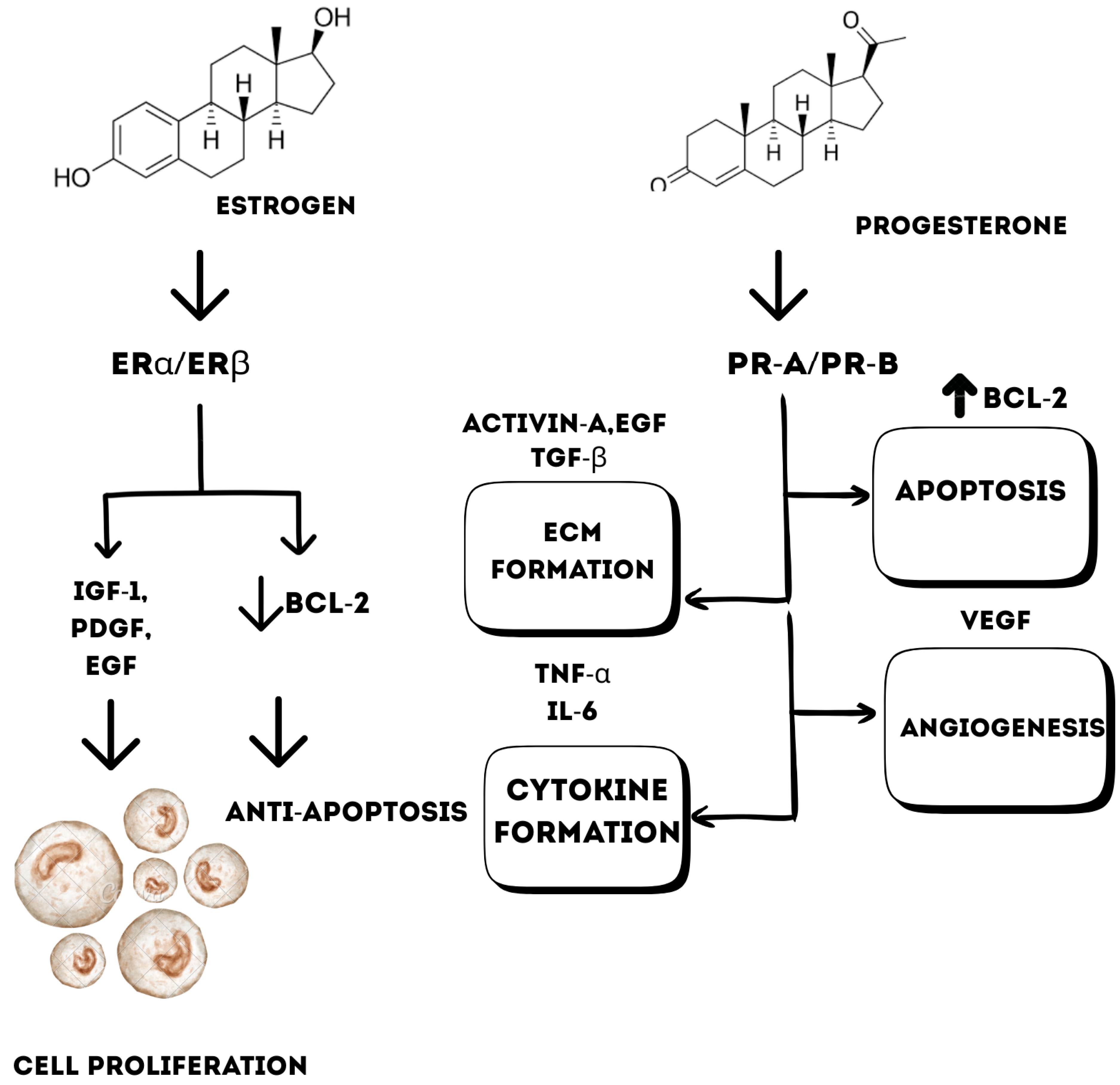
1. Introduction
2. Materials and Methods
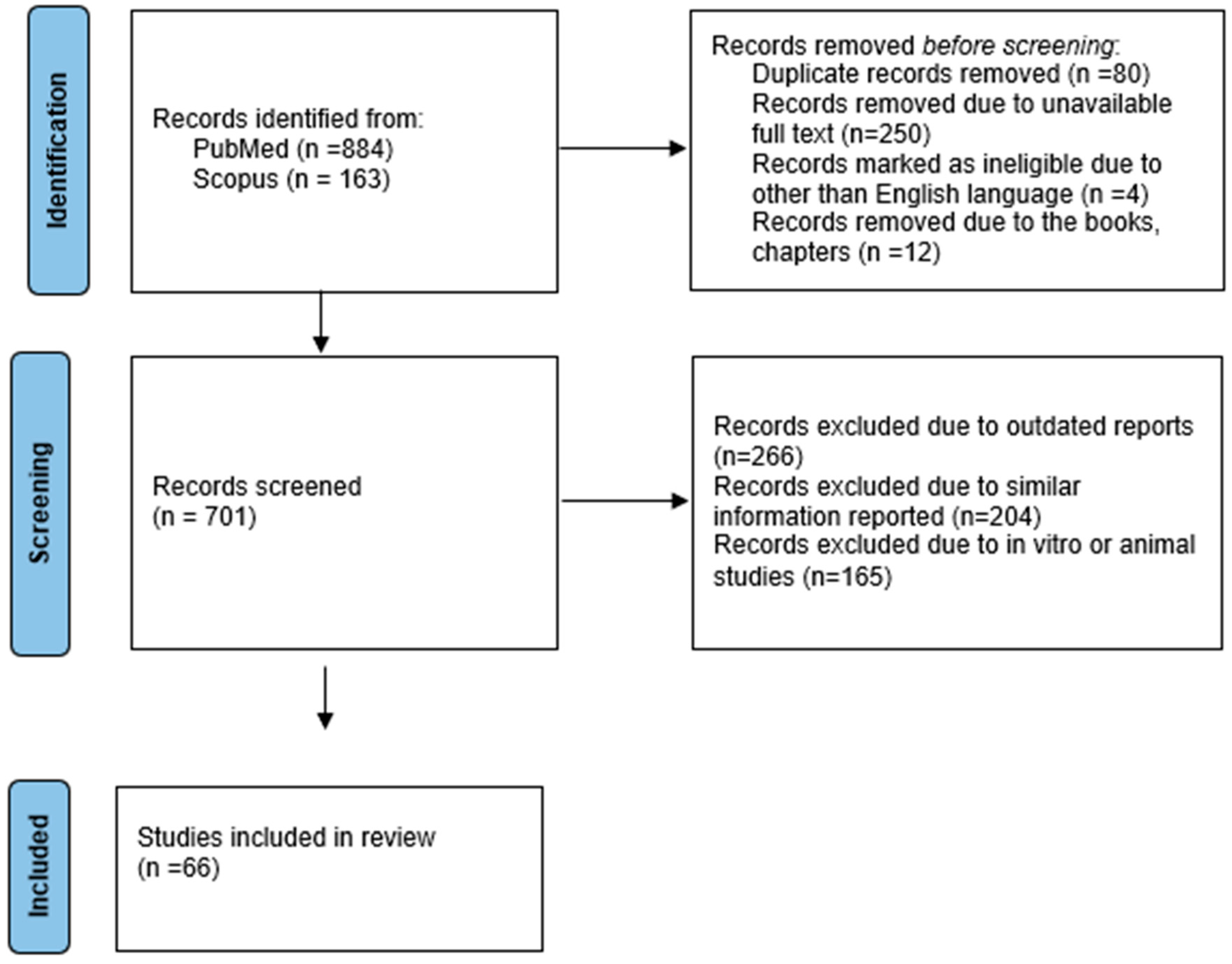
2.1. Search Strategy
2.2. Eligibility Criteria
3. Results
3.1. Vascular Endothelial Growth Factor (VEGF)
3.2. Transforming Growth Factor-β (TGF-β)
3.3. Fibroblast Growth Factors (FGFs)
3.4. Platelet-Derived Growth Factor (PDGF)
3.5. Insulin-like Growth Factors (IGFs)
3.6. Pro-Inflammatory Cytokines (TNF-α, IL-6, IL-1β)
3.7. Epidermal Growth Factor (EGF)
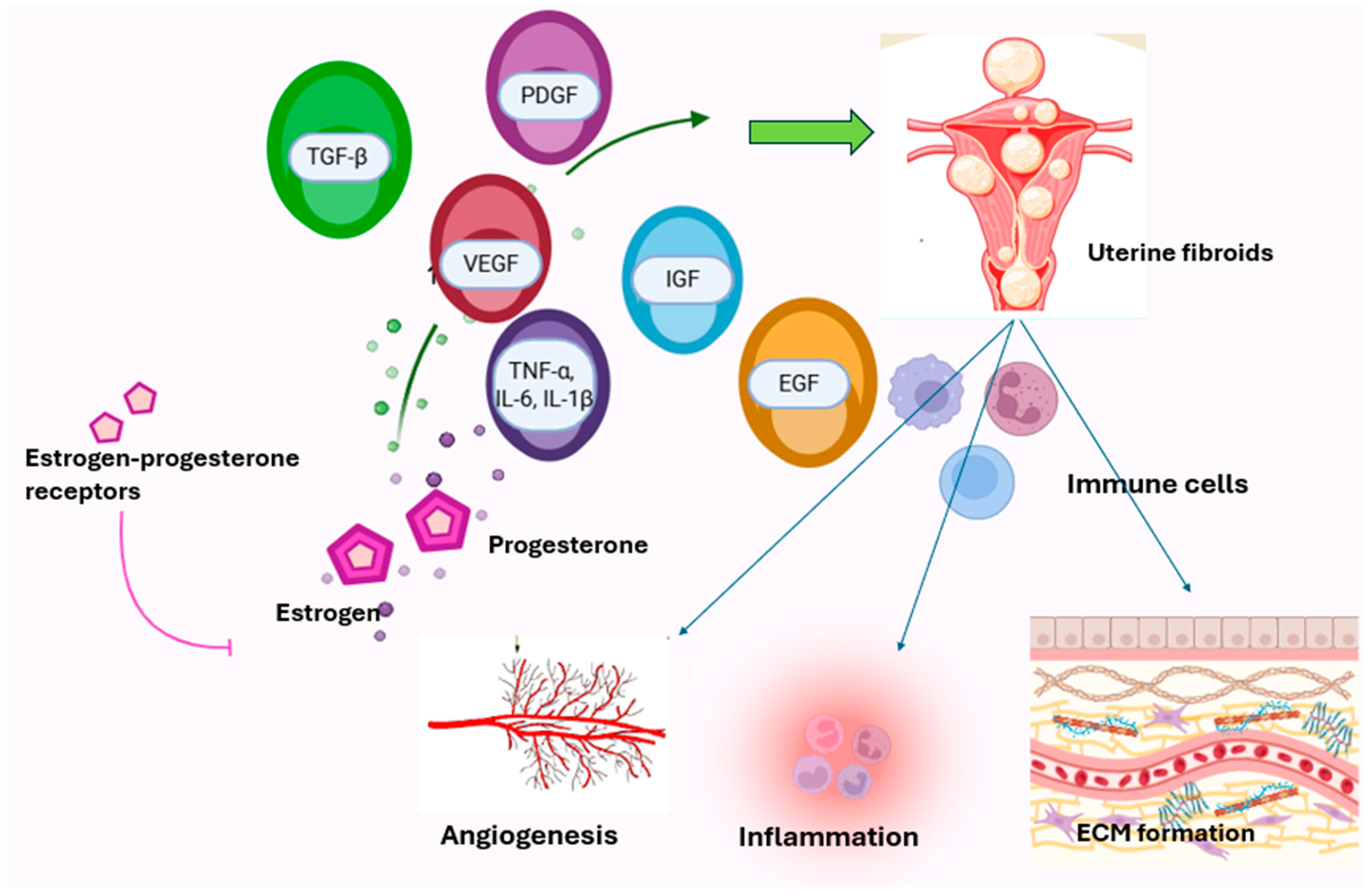
4. Discussion
Strengths and Limitations
5. Conclusions
Author Contributions
Funding
Institutional Review Board Statement
Informed Consent Statement
Data Availability Statement
Acknowledgments
Conflicts of Interest
Abbreviations
| VEGF | Vascular endothelial growth factor |
| VEGFR-1/2 | Vascular Endothelial Growth Factor Receptors 1 and 2 |
| PDGF | Platelet-derived growth factor |
| PDGF-A/B/C/D | PDGF isoforms |
| TGF-β | Transforming growth factor-beta |
| IGF-1/2 | Insulin-like growth factor-1/2 |
| EGF | Epidermal growth factor |
| EGFR | Epidermal growth factor receptor |
| FGF | Fibroblast growth factor |
| FGFR | Fibroblast growth factor receptor |
| MMPs | Matrix metalloproteinases |
| TIMPs | Tissue inhibitors of metalloproteinases |
| TNF-α | Tumor necrosis factor-alpha |
| IL-6, IL-1β | Interleukin-6, Interleukin-1 beta |
| PLCγ | Phospholipase C-gamma |
| PKC | Protein kinase C |
| Raf | Rapidly accelerated fibrosarcoma kinase |
| MEK | Mitogen-activated protein kinase kinase |
| MAPK | Mitogen-activated protein kinase |
| TbRI | Transforming growth factor-β receptor type I |
| PP2C | Protein phosphatase 2C |
| mTOR | Mechanistic target of rapamycin |
References
- Bulun, S.E.; Yin, P.; Wei, J.; Zuberi, A.; Iizuka, T.; Suzuki, T.; Saini, P.; Goad, J.; Parker, J.B.; Adli, M.; et al. Uterine Fibroids. Physiol. Rev. 2025, 105, 1947–1988. [Google Scholar] [CrossRef] [Scilit]
- Park, J.Y.; Chae, B.; Kim, M.-R. The Potential of Transforming Growth Factor-Beta Inhibitor and Vascular Endothelial Growth Factor Inhibitor as Therapeutic Agents for Uterine Leiomyoma. Int. J. Med. Sci. 2022, 19, 1779–1786. [Google Scholar] [CrossRef] [Scilit]
- Yerezhepbayeva, M.; Terzic, M.; Aimagambetova, G.; Crape, B. Comparison of Two Invasive Non-Surgical Treatment Options for Uterine Myomas: Uterine Artery Embolization and Magnetic Resonance Guided High Intensity Focused Ultrasound—Systematic Review. BMC Women’s Health 2022, 22, 55. [Google Scholar] [CrossRef] [Scilit]
- Vannuccini, S.; Petraglia, F.; Carmona, F.; Calaf, J.; Chapron, C. The Modern Management of Uterine Fibroids-Related Abnormal Uterine Bleeding. Fertil. Steril. 2024, 122, 20–30. [Google Scholar] [CrossRef] [Scilit]
- Yang, Q.; Ciebiera, M.; Bariani, M.V.; Ali, M.; Elkafas, H.; Boyer, T.G.; Al-Hendy, A. Comprehensive Review of Uterine Fibroids: Developmental Origin, Pathogenesis, and Treatment. Endocr. Rev. 2022, 43, 678–719. [Google Scholar] [CrossRef] [Scilit] [PubMed]
- Vannuccini, S.; Clemenza, S.; Cassioli, E.; Rossi, E.; Castellini, G.; Ricca, V.; Petraglia, F. Uterine Fibroids, Perceived Stress, and Menstrual Distress: A Key Role of Heavy Menstrual Bleeding. Reprod. Sci. 2023, 30, 1608–1615. [Google Scholar] [CrossRef] [Scilit] [PubMed]
- Akhatova, A.; Aimagambetova, G.; Bapayeva, G.; Laganà, A.S.; Chiantera, V.; Oppelt, P.; Sarria-Santamera, A.; Terzic, M. Reproductive and Obstetric Outcomes after UAE, HIFU, and TFA of Uterine Fibroids: Systematic Review and Meta-Analysis. Int. J. Environ. Res. Public Health 2023, 20, 4480. [Google Scholar] [CrossRef] [Scilit] [PubMed]
- Ukybassova, T.; Terzic, M.; Dotlic, J.; Imankulova, B.; Terzic, S.; Shauyen, F.; Garzon, S.; Guo, L.; Sui, L. Evaluation of Uterine Artery Embolization on Myoma Shrinkage: Results from a Large Cohort Analysis. Gynecol. Minim. Invasive Ther. 2019, 8, 165. [Google Scholar] [CrossRef] [Scilit] [PubMed]
- Tinelli, A.; Vinciguerra, M.; Malvasi, A.; Andjić, M.; Babović, I.; Sparić, R. Uterine Fibroids and Diet. Int. J. Environ. Res. Public Health 2021, 18, 1066. [Google Scholar] [CrossRef] [Scilit] [PubMed]
- Vafaei, S.; Alkhrait, S.; Yang, Q.; Ali, M.; Al-Hendy, A. Empowering strategies for Lifestyle interventions, Diet modifications, and Environmental Practices for Uterine Fibroid Prevention; unveiling the LIFE UP awareness. Nutrients 2024, 16, 807. [Google Scholar] [CrossRef] [Scilit] [PubMed]
- Keizer, A.L.; Semmler, A.; Kok, H.S.; van Kesteren, P.J.; Huirne, J.A.; Hehenkamp, W.J. Modifiable prognostic factors in uterine fibroid development: A systematic review of literature. J. Obstet. Gynaecol. 2024, 44, 2288225. [Google Scholar] [CrossRef] [Scilit]
- Martire, F.G.; Costantini, E.; Ianes, I.; d’Abate, C.; De Bonis, M.; Capria, G.; Piccione, E.; Andreoli, A. Nutrition and Uterine Fibroids: Clinical Impact and Emerging Therapeutic Perspectives. J. Clin. Med. 2025, 14, 7140. [Google Scholar] [CrossRef] [Scilit]
- Qu, Y.; Chen, L.; Guo, S.; Liu, Y.; Wu, H. Genetic liability to multiple factors and uterine leiomyoma risk: A Mendelian randomization study. Front. Endocrinol. 2023, 14, 1133260. [Google Scholar] [CrossRef] [Scilit]
- Šišljagić, D.; Blažetić, S.; Heffer, M.; Vranješ Delać, M.; Muller, A. The Interplay of Uterine Health and Obesity: A Comprehensive Review. Biomedicines 2024, 12, 2801. [Google Scholar] [CrossRef] [Scilit]
- Qin, H.; Lin, Z.; Vásquez, E.; Luan, X.; Guo, F.; Xu, L. Association between obesity and the risk of uterine fibroids: A systematic review and meta-analysis. J. Epidemiol. Community Health 2021, 75, 197–204. [Google Scholar] [CrossRef] [Scilit]
- Yang, Y.; Pan, M.; Zhu, W.; Luo, X.; Liang, X. Association between blood heavy metals exposure with uterine fibroids among American women: A cross-sectional analysis from NHANES data. BMC Women’s Health 2025, 25, 68. [Google Scholar] [CrossRef] [Scilit]
- Pavone, D.; Clemenza, S.; Sorbi, F.; Fambrini, M.; Petraglia, F. Epidemiology and Risk Factors of Uterine Fibroids Elsevier. Best. Pract. Res. Clin. Obstet. Gynaecol. 2018, 46, 3–11. [Google Scholar] [CrossRef] [Scilit] [PubMed]
- Vilos, G.A.; Allaire, C.; Laberge, P.-Y.; Leyland, N.; Vilos, A.G.; Murji, A.; Chen, I. The Management of Uterine Leiomyomas. J. Obstet. Gynaecol. Can. 2015, 37, 157–178. [Google Scholar] [CrossRef] [Scilit] [PubMed]
- Ciebiera, M.; Włodarczyk, M.; Wrzosek, M.; Męczekalski, B.; Nowicka, G.; Łukaszuk, K.; Ciebiera, M.; Słabuszewska-Jóźwiak, A.; Jakiel, G. Role of Transforming Growth Factor β in Uterine Fibroid Biology. Int. J. Med. Sci. 2017, 18, 2435. [Google Scholar] [CrossRef] [Scilit] [PubMed]
- Borahay, M.A.; Al-Hendy, A.; Kilic, G.S.; Boehning, D. Signaling Pathways in Leiomyoma: Understanding Pathobiology and Implications for Therapy. Mol. Med. 2015, 21, 242–256. [Google Scholar] [CrossRef] [Scilit]
- Borahay, M.A.; Asoglu, M.R.; Mas, A.; Adam, S.; Kilic, G.S.; Al-Hendy, A. Estrogen Receptors and Signaling in Fibroids: Role in Pathobiology and Therapeutic Implications. Reprod. Sci. 2017, 24, 1235–1244. [Google Scholar] [CrossRef] [Scilit]
- Ciebiera, M.; Włodarczyk, M.; Zgliczyńska, M.; Łukaszuk, K.; Męczekalski, B.; Kobierzycki, C.; Łoziński, T.; Jakiel, G. The Role of Tumor Necrosis Factor α in the Biology of Uterine Fibroids and the Related Symptoms. Int. J. Med. Sci. 2018, 19, 3869. [Google Scholar] [CrossRef] [Scilit] [PubMed]
- Aimagambetova, G.; Bapayeva, G.; Ukybassova, T.; Zemlyanskiy, V.; Gusmanov, A.; Terzic, M. The Role of VEGF and TGF-β Blood Levels for Fibroid Shrinkage, Menorrhagia Score, and Quality of Life Improvement after Uterine Artery Embolization for Uterine Fibroids: A Study Protocol. Front. Med. 2024, 11, 1382822. [Google Scholar] [CrossRef] [Scilit] [PubMed]
- Islam, M.S.; Greco, S.; Janjusevic, M.; Ciavattini, A.; Giannubilo, S.R.; D’Adderio, A.; Biagini, A.; Fiorini, R.; Castellucci, M.; Ciarmela, P. Growth Factors and Pathogenesis. Best. Pract. Res. Clin. Obstet. Gynaecol. 2016, 34, 25–36. [Google Scholar] [CrossRef] [Scilit] [PubMed]
- Plewka, D.; Morek, M.; Bogunia, E.; Waloszek, J.; Plewka, A. Expression of VEGF Isoforms and Their Receptors in Uterine Myomas. Ginekol. Pol. 2016, 87, 166–177. [Google Scholar] [CrossRef] [Scilit]
- Wang, X.; Bove, A.M.; Simone, G.; Ma, B. Molecular Bases of VEGFR-2-Mediated Physiological Function and Pathological Role. Front. Cell Dev. Biol. 2020, 8, 599281. [Google Scholar] [CrossRef] [Scilit]
- Kirschen, G.W.; AlAshqar, A.; Miyashita-Ishiwata, M.; Reschke, L.; El Sabeh, M.; Borahay, M.A. Vascular Biology of Uterine Fibroids: Connecting Fibroids and Vascular Disorders. Reproduction 2021, 162, R1–R18. [Google Scholar] [CrossRef] [Scilit]
- Navarro, A.; Bariani, M.V.; Yang, Q.; Al-Hendy, A. Understanding the Impact of Uterine Fibroids on Human Endometrium Function. Front. Cell Dev. Biol. 2021, 9, 633180. [Google Scholar] [CrossRef] [Scilit]
- Libby, J.R.; Royce, H.; Walker, S.R.; Li, L. The Role of Extracellular Matrix in Angiogenesis: Beyond Adhesion and Structure. Biomater. Biosyst. 2024, 15, 100097. [Google Scholar] [CrossRef] [Scilit]
- Lee, C.; Kim, M.-J.; Kumar, A.; Lee, H.-W.; Yang, Y.; Kim, Y. Vascular Endothelial Growth Factor Signaling in Health and Disease: From Molecular Mechanisms to Therapeutic Perspectives. Sig. Transduct. Target. Ther. 2025, 10, 170. [Google Scholar] [CrossRef] [Scilit]
- Bowler, E.; Oltean, S. Alternative Splicing in Angiogenesis. Int. J. Med. Sci. 2019, 20, 2067. [Google Scholar] [CrossRef] [Scilit]
- Panoilia, E.; Schindler, E.; Samantas, E.; Aravantinos, G.; Kalofonos, H.P.; Christodoulou, C.; Patrinos, G.P.; Friberg, L.E.; Sivolapenko, G. A Pharmacokinetic Binding Model for Bevacizumab and VEGF165 in Colorectal Cancer Patients. Cancer Chemother. Pharmacol. 2015, 75, 791–803. [Google Scholar] [CrossRef] [Scilit]
- Hosaka, K.; Yang, Y.; Seki, T.; Du, Q.; Jing, X.; He, X.; Wu, J.; Zhang, Y.; Morikawa, H.; Nakamura, M.; et al. Therapeutic Paradigm of Dual Targeting VEGF and PDGF for Effectively Treating FGF-2 off-Target Tumors. Nat. Commun. 2020, 11, 3704. [Google Scholar] [CrossRef] [Scilit]
- Mu, Y.; He, J.; Yan, R.; Hu, X.; Liu, H.; Hao, Z. IGF-1 and VEGF Can Be Used as Prognostic Indicators for Patients with Uterine Fibroids Treated with Uterine Artery Embolization. Exp. Ther. Med. 2016, 11, 645–649. [Google Scholar] [CrossRef] [Scilit]
- Baranov, V.S.; Osinovskaya, N.S.; Yarmolinskaya, M.I. Pathogenomics of Uterine Fibroids Development. Int. J. Med. Sci. 2019, 20, 6151. [Google Scholar] [CrossRef] [Scilit]
- Yang, Q.; Al-Hendy, A. Update on the Role and Regulatory Mechanism of Extracellular Matrix in the Pathogenesis of Uterine Fibroids. Int. J. Med. Sci. 2023, 24, 5778. [Google Scholar] [CrossRef] [Scilit]
- Deng, Z.; Fan, T.; Xiao, C.; Tian, H.; Zheng, Y.; Li, C.; He, J. TGF-β Signaling in Health, Disease and Therapeutics. Sig. Transduct. Target. Ther. 2024, 9, 61. [Google Scholar] [CrossRef] [Scilit] [PubMed]
- Milewska, G.; Ponikwicka–Tyszko, D.; Bernaczyk, P.; Lupu, O.; Szamatowicz, M.; Sztachelska, M.; Pilaszewicz-Puza, A.; Koda, M.; Bielawski, T.; Rahman, N.A.; et al. Functional evidence for two distinct mechanisms of action of progesterone and selective progesterone receptor modulator on uterine leiomyomas. Fertil. Steril. 2024, 122, 341–351. [Google Scholar] [CrossRef] [Scilit]
- Heldin, C.-H.; Moustakas, A. Signaling Receptors for TGF-β Family Members. Cold Spring Harb. Perspect. Biol. 2016, 8, a022053. [Google Scholar] [CrossRef] [Scilit]
- Islam, M.S.; Ciavattini, A.; Petraglia, F.; Castellucci, M.; Ciarmela, P. Extracellular Matrix in Uterine Leiomyoma Pathogenesis: A Potential Target for Future Therapeutics. Hum. Reprod. Update 2018, 24, 59–85. [Google Scholar] [CrossRef] [Scilit] [PubMed]
- El Sabeh, M.; Saha, S.K.; Afrin, S.; Islam, M.S.; Borahay, M.A. Wnt/β-Catenin Signaling Pathway in Uterine Leiomyoma: Role in Tumor Biology and Targeting Opportunities. Mol. Cell Biochem. 2021, 476, 3513–3536. [Google Scholar] [CrossRef] [Scilit]
- Ardizzone, A.; Bova, V.; Casili, G.; Repici, A.; Lanza, M.; Giuffrida, R.; Colarossi, C.; Mare, M.; Cuzzocrea, S.; Esposito, E.; et al. Role of Basic Fibroblast Growth Factor in Cancer: Biological Activity, Targeted Therapies, and Prognostic Value. Cells 2023, 12, 1002. [Google Scholar] [CrossRef] [Scilit]
- Parma, L.; Peters, H.A.B.; Sluiter, T.J.; Simons, K.H.; Lazzari, P.; De Vries, M.R.; Quax, P.H.A. bFGF Blockade Reduces Intraplaque Angiogenesis and Macrophage Infiltration in Atherosclerotic Vein Graft Lesions in ApoE3*Leiden Mice. Sci. Rep. 2020, 10, 15968. [Google Scholar] [CrossRef] [Scilit]
- Machado-Lopez, A.; Simón, C.; Mas, A. Molecular and Cellular Insights into the Development of Uterine Fibroids. Int. J. Med. Sci. 2021, 22, 8483. [Google Scholar] [CrossRef] [Scilit]
- Laddha, A.P.; Kulkarni, Y.A. VEGF and FGF-2: Promising Targets for the Treatment of Respiratory Disorders. Respir. Med. 2019, 156, 33–46. [Google Scholar] [CrossRef] [Scilit]
- Zou, X.; Tang, X.-Y.; Qu, Z.-Y.; Sun, Z.-W.; Ji, C.-F.; Li, Y.-J.; Guo, S.-D. Targeting the PDGF/PDGFR Signaling Pathway for Cancer Therapy: A Review. Int. J. Biol. Macromol. 2022, 202, 539–557. [Google Scholar] [CrossRef] [Scilit] [PubMed]
- Mariadas, H.; Chen, J.-H.; Chen, K.-H. The Molecular and Cellular Mechanisms of Endometriosis: From Basic Pathophysiology to Clinical Implications. Int. J. Med. Sci. 2025, 26, 2458. [Google Scholar] [CrossRef] [Scilit]
- Ai, J.-Y.; Liu, C.-F.; Zhang, W.; Rao, G.-W. Current Status of Drugs Targeting PDGF/PDGFR. Drug Discov. Today 2024, 29, 103989. [Google Scholar] [CrossRef] [Scilit] [PubMed]
- Mihaylova, Z.; Tsikandelova, R.; Sanimirov, P.; Gateva, N.; Mitev, V.; Ishkitiev, N. Role of PDGF-BB in Proliferation, Differentiation and Maintaining Stem Cell Properties of PDL Cells in Vitro. Arch. Oral. Biol. 2018, 85, 1–9. [Google Scholar] [CrossRef] [Scilit]
- Obeagu, E.I. Platelet-Derived Growth Factor (PDGF) and Its Impact in Fibroid Pathogenesis: A Narrative Review. Medicine 2025, 104, e42995. [Google Scholar] [CrossRef] [Scilit] [PubMed]
- Szydlowska-Gladysz, J.; Gorecka, A.E.; Stepien, J.; Rysz, I.; Ben-Skowronek, I. IGF-1 and IGF-2 as Molecules Linked to Causes and Consequences of Obesity from Fetal Life to Adulthood: A Systematic Review. Int. J. Med. Sci. 2024, 25, 3966. [Google Scholar] [CrossRef] [Scilit]
- Chen, Y.; Zhu, Y.; Song, S.; Hu, Y. Contribution of Insulin-like Growth Factor-1 to Tendon Repair. Int. J. Mol. Med. 2025, 56, 195. [Google Scholar] [CrossRef] [Scilit]
- Gkioka, E.; Msaouel, P.; Philippou, A.; Vlaghogiannis, N.I.; Vogkou, C.T.; Margiolis, A.; Koutsilieris, M. Review: The Role of Insulin-like Growth Factor-1 Signaling Pathways in Uterine Leiomyoma. In Vivo 2015, 29, 637–649. [Google Scholar]
- Zhu, Y.; Chen, L.; Song, B.; Cui, Z.; Chen, G.; Yu, Z.; Song, B. Insulin-like Growth Factor-2 (IGF-2) in Fibrosis. Biomolecules 2022, 12, 1557. [Google Scholar] [CrossRef] [Scilit]
- Moravek, M.B.; Yin, P.; Coon, J.S.; Ono, M.; Druschitz, S.A.; Malpani, S.S.; Dyson, M.T.; Rademaker, A.W.; Robins, J.C.; Bulun, S.E.; et al. Paracrine pathways in uterine leiomyoma stem cells involve insulinlike growth factor 2 and insulin receptor A. J. Clin. Endocrinol. Metab. 2017, 102, 1588–1595. [Google Scholar] [CrossRef] [Scilit]
- Bach, L.A. 40 years of IGF1: IGF-binding proteins. J. Mol. Endocrinol. 2018, 61, T11–T28. [Google Scholar] [CrossRef] [Scilit]
- Bernacchioni, C.; Ciarmela, P.; Vannuzzi, V.; Greco, S.; Vannuccini, S.; Malentacchi, F.; Pellegrino, P.; Capezzuoli, T.; Sorbi, F.; Cencetti, F.; et al. Sphingosine 1-Phosphate Signaling in Uterine Fibroids: Implication in Activin A pro-Fibrotic Effect. Fertil. Steril. 2021, 115, 1576–1585. [Google Scholar] [CrossRef] [Scilit]
- Zhang, Y.; Yang, C.; Ge, S.; Wang, L.; Zhang, J.; Yang, P. EphB4/TNFR2/ERK/MAPK Signaling Pathway Comprises a Signaling Axis to Mediate the Positive Effect of TNF-α on Osteogenic Differentiation. BMC Mol. Cell Biol. 2020, 21, 29. [Google Scholar] [CrossRef] [Scilit] [PubMed]
- Wang, Y.; Feng, G.; Wang, J.; Zhou, Y.; Liu, Y.; Shi, Y.; Zhu, Y.; Lin, W.; Xu, Y.; Li, Z. Differential Effects of Tumor Necrosis Factor-α on Matrix Metalloproteinase-2 Expression in Human Myometrial and Uterine Leiomyoma Smooth Muscle Cells. Hum. Reprod. 2015, 30, 61–70. [Google Scholar] [CrossRef] [Scilit] [PubMed]
- Regidor, P.-A.; Mayr, M.; Santos, F.G.; Calvo, B.L.; Gutierrez, R.; Rizo, J.M. Narrative Review of Chronic Inflammation in Uterine Myoma: Lack of Specialized Pro-Resolving Lipid Mediators (SPMs) and Vitamin D as a Potential Reason for the Development of Uterine Fibroids. Biomedicines 2025, 13, 1832. [Google Scholar] [CrossRef] [Scilit] [PubMed]
- De Mezer, M.; Dolata, N.; Markowska, J.; Krzyżaniak, M.; Naskręt-Grochowalska, A.; Żurawski, J.; Markowska, A. Immunohistochemical Expression of IL-1β, IL-6, and NF-Κβ in Fibroids. Front. Immunol. 2025, 16, 1571585. [Google Scholar] [CrossRef] [Scilit]
- Mullen, C.G.; Halsey, C. Clinical Uses of Recombinant Haematopoietic Growth Factors in Paediatrics. Paediatr. Child Health 2023, 33, 221–227. [Google Scholar] [CrossRef] [Scilit]
- Cetin, E.; Al-Hendy, A.; Ciebiera, M. Non-Hormonal Mediators of Uterine Fibroid Growth. Curr. Opin. Obstet. Gynecol. 2020, 32, 361–370. [Google Scholar] [CrossRef] [Scilit] [PubMed]
- Halder, S.K.; Osteen, K.G.; Al-Hendy, A. Vitamin D3 Inhibits Expression and Activities of Matrix Metalloproteinase-2 and -9 in Human Uterine Fibroid Cells. Hum. Reprod. 2013, 28, 2407–2416. [Google Scholar] [CrossRef] [Scilit] [PubMed]
- Najafi, M.; Farhood, B.; Mortezaee, K. Extracellular Matrix (ECM) Stiffness and Degradation as Cancer Drivers. J. Cell. Biochem. 2019, 120, 2782–2790. [Google Scholar] [CrossRef] [Scilit] [PubMed]
- Ouellette, A.; Do, C.; Cohn-Guthrie, S.; Lam, Y.-W.; Mahendroo, M.; Nallasamy, S. Lysyl Oxidases Are Necessary for Myometrial Contractility and On-Time Parturition in Mice. J. Endocr. Soc. 2025, 9, bvaf028. [Google Scholar] [CrossRef] [Scilit]



| Marker (Isoforms/Receptors) | Expression Pattern in Fibroid vs. Myometrium | Principal Receptors and Downstream Pathways | Biological/Clinical Function(s) in Fibroid Pathogenesis | Crosstalk with Other Mediators | References |
|---|---|---|---|---|---|
| VEGF-A (VEGF121, VEGF165, VEGF189; VEGFR1/VEGFR2) | Most studies show increased total VEGF-A mRNA/protein in fibroids vs. matched myometrium; isoform-specific data limited but VEGF165 predominates and VEGF189 is the principal matrix-bound form | VEGFR2 → PLCγ/PKC, PI3K/AKT, MAPK; increased endothelial proliferation, permeability and angiogenesis | Cell proliferation, migration and vascular endothelial cell development and may influence growth after UAE | FGF2 and PDGF for angiogenesis; interacts with TGF-β signaling to promote ECM deposition | [23,26,29,33,37,45] |
| TGF-β family | TGF-β consistently high ↑ increase in leiomyomas vs. myometrium | SMAD2/3 and Wnt/β-catenin pathway | Activate increased in mRNA expression of collagen, proteoglycans | Cross-talk with VEGF, promoting ECM accumulation | [2,36,37,39,41] |
| PDGF (PDGF-AA/BB; PDGFRα/β) | PDGF expression increased in many fibroid tissues | PI3K/AKT, ERK/MAPK → proliferation and fibrosis | Downregulates activin and myostatin levels under steroid hormone estrogen influence, encourages myoma cell proliferation | Synergy with TGF-β pathways | [20,45,48,50] |
| FGF | Frequently increased in fibroids and surrounding stroma | FGFR1/2 → MAPK, PI3K → mitogenic, angiogenic effects | Angiogenesis; increases matrix deposition | Potentiates VEGF-driven angiogenesis | [20,42,43,45] |
| EGF/EGFR | EGFR is regulated equally in the leiomyoma and MSMC | EGFR → MAPK/PI3K signaling | Activate DNA synthesis in leiomyoma | Interacts with IGF and PR/ER pathways | [20,21,62] |
| IGF-1/IGF-2 | High in uterine fibroids and myometrium than other growth factors | PI3K/AKT, MAPK | Excessive ECM accumulation and its components | Crosstalk with TGF-β, VEGF | [34,51,52,54] |
| Pro-inflammatory cytokines (TNF-α, IL-6, IL-1β) | Pro-inflammatory cytokines are highly expressed in uterine fibroids | NF-κB, ERK activation | Extracellular matrix (ECM) synthesis, apoptosis | Potentiates TGF-β and VEGF signaling | [27,39,61] |
| Growth Factor/Cytokine | Key Signaling Pathway | Role of Signaling Pathways in Fibroid Biology | References |
|---|---|---|---|
| VEGF (VEGF-A, B, C, D) | PLCγ–PKC–Raf–MEK–MAPK; PI3K/AKT | MAPK promotes endothelial proliferation; PI3K/AKT supports endothelial survival and permeability | [26] |
| TGF-β family | SMAD2/3–SMAD4; MAPK; PI3K/AKT | SMAD signaling activates fibrosis and ECM deposition; non-SMAD pathways support proliferation and angiogenic crosstalk | [28,38] |
| FGFs (FGF-1, FGF-2) | MAPK; PI3K/AKT | MAPK mediates smooth muscle and fibroblast proliferation; PI3K/AKT promotes angiogenic survival signaling | [43] |
| PDGF (AA, BB, CC, DD) | PI3K/AKT; Ras/MAPK; PLC-γ; JAK/STAT | PI3K/AKT supports stromal cell survival; MAPK stimulates proliferation; JAK/STAT regulates fibrotic gene expression | [24,44,48] |
| IGF-1/IGF-2 | PI3K/AKT; Ras/Raf/MAPK | PI3K/AKT drives cell survival and ECM synthesis; MAPK improves mitogenic signaling | [53] |
| TNF-α, IL-6, IL-1β | NF-κB; ERK/MAPK | NF-κB induces inflammatory and fibrotic mediators; ERK promotes migration and MMP production | [59,61] |
| EGF | ERK/MAPK; PI3K/AKT; JAK/STAT | ERK/MAPK; PI3K/AKT; JAK/STAT stimulates DNA synthesis; supports survival | [62] |
| ECM Component | Expression Pattern in Fibroid vs. Myometrium | Mechanism Interactions | Role(s) in Fibroid Pathology | GF Regulation | Hormonal Regulation | References |
|---|---|---|---|---|---|---|
| Collagens I and III | High in UFs than MM tissue | Activin A increase mRNA expression through Smad-⅔ signaling | Positive correlation to UF size and cell proliferated markers | TGF-β3, Activin A increase mRNA level in collagens | Collagen biosynthesis was managed by low dose of estrogen | [19,36,40,64] |
| Proteoglycans | Increased in leiomyoma | Through growth factor signaling | Proteoglycans act as TGF-β antagonists Increase its activation in fibrosis | TGF-β3 stimulates the expression of proteoglycans | Progesterone decreases proteoglycans mRNA expression in fibroid | [19,36,40,64] |
| Fibronectin | High in estrogen-treated fibroid | PDGF signaling influence production of fibronectin | Cell migration Differentiation Inflammation Bind cells to ECM components | TGF-β3, Activin A increase mRNA level in fibronectin | Estrogen increases fibronectin in UFs | [19,36,40,64] |
| MMPs (MMP-1, 2, 3, 9) | Expression of MMP-1, -2, -3, -9 is increased in UFs | Prevent apoptosis through Fas/Fas ligand (FasL) | Cell migration Differentiation Inflammation | FGFs, TGF-β VEGF interaction | Estrogen can reduce MMP-2 in leiomyoma | [36,64] |
| TIMPs (TIMP-1, TIMP-2) | Circulating level of TIMP-1 is high in leiomyoma | MMP activities was regulated by TIMPs | Play essential role in ECM remodeling | Upregulated by TGF-β and steroid hormones | Estradiol activates TIMP-1 expression | [36,64] |
| Lysyl oxidase (LOX) family | Increased in fibroid tissue | Regulate collagen cross-linking, reduce tumor development, ECM elasticity loss | MMP physiological regulators. | TGF-β together with HIF-1 induce LOX | Estrogen triggers Lox In cervix and vagina | [36,65,66] |
Disclaimer/Publisher’s Note: The statements, opinions and data contained in all publications are solely those of the individual author(s) and contributor(s) and not of MDPI and/or the editor(s). MDPI and/or the editor(s) disclaim responsibility for any injury to people or property resulting from any ideas, methods, instructions or products referred to in the content. |
© 2026 by the authors. Licensee MDPI, Basel, Switzerland. This article is an open access article distributed under the terms and conditions of the Creative Commons Attribution (CC BY) license.
Share and Cite
Rozmurat, N.; Terzic, S.; Zhao, P.; Bapayeva, G.; Kongrtay, K.; Tanko, M.N.; Terzic, M. Beyond VEGF and TGF-β: A Comprehensive Review of Growth Factor Pathways in the Pathophysiology of Uterine Leiomyomas. Biology 2026, 15, 92. https://doi.org/10.3390/biology15010092
Rozmurat N, Terzic S, Zhao P, Bapayeva G, Kongrtay K, Tanko MN, Terzic M. Beyond VEGF and TGF-β: A Comprehensive Review of Growth Factor Pathways in the Pathophysiology of Uterine Leiomyomas. Biology. 2026; 15(1):92. https://doi.org/10.3390/biology15010092
Chicago/Turabian StyleRozmurat, Nuray, Sanja Terzic, Peng Zhao, Gauri Bapayeva, Kuralay Kongrtay, Matthew Naanlep Tanko, and Milan Terzic. 2026. "Beyond VEGF and TGF-β: A Comprehensive Review of Growth Factor Pathways in the Pathophysiology of Uterine Leiomyomas" Biology 15, no. 1: 92. https://doi.org/10.3390/biology15010092
APA StyleRozmurat, N., Terzic, S., Zhao, P., Bapayeva, G., Kongrtay, K., Tanko, M. N., & Terzic, M. (2026). Beyond VEGF and TGF-β: A Comprehensive Review of Growth Factor Pathways in the Pathophysiology of Uterine Leiomyomas. Biology, 15(1), 92. https://doi.org/10.3390/biology15010092