
GATA-3 Suppression by DNAzyme Modulates Interleukin-10 and Liver Injury Markers in db/db Mice
 , , , , , , , ,
  and
and 
Simple Summary
Abstract
1. Introduction
2. Materials and Methods
2.1. Liposome Preparation
2.2. In Vivo Experimental Design and Treatment
2.3. Histopathology Assessment
2.4. Gene Expression Assessment
2.5. Serum Cytokines Assay
2.6. Statistical Analysis
3. Results
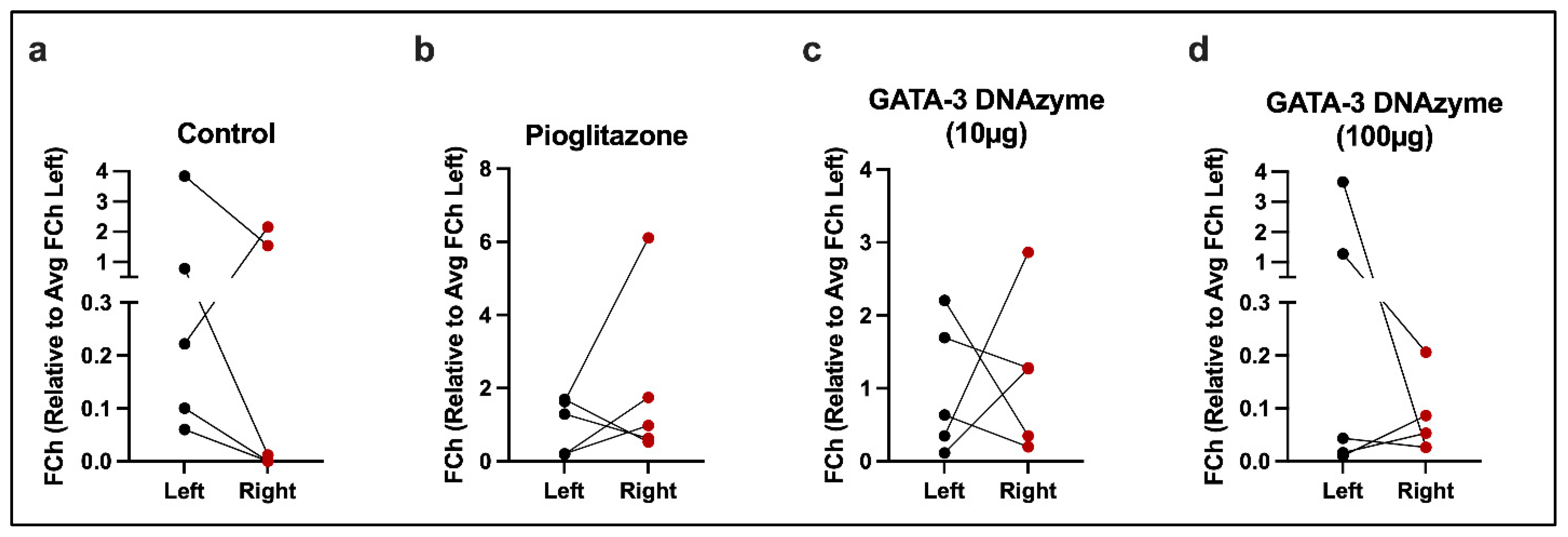
3.1. GATA-3 Expression Does Not Differ Between the Treated and Untreated Sides of the SAT upon GATA-3 DNAzyme Treatment
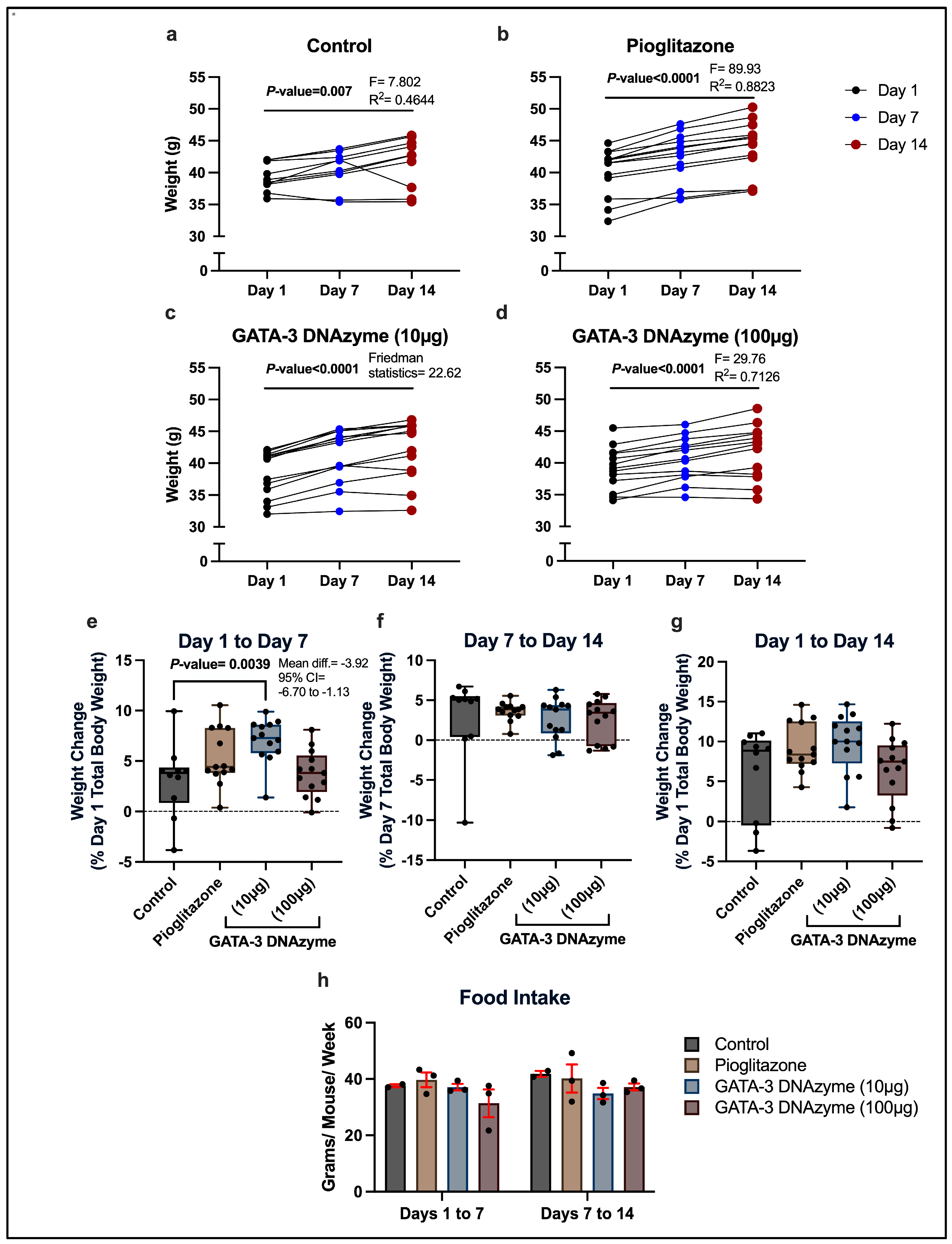
3.2. Low Dose GATA-3 DNAzyme Transiently Accelerates Total Body Weight Gain of db/db Mice
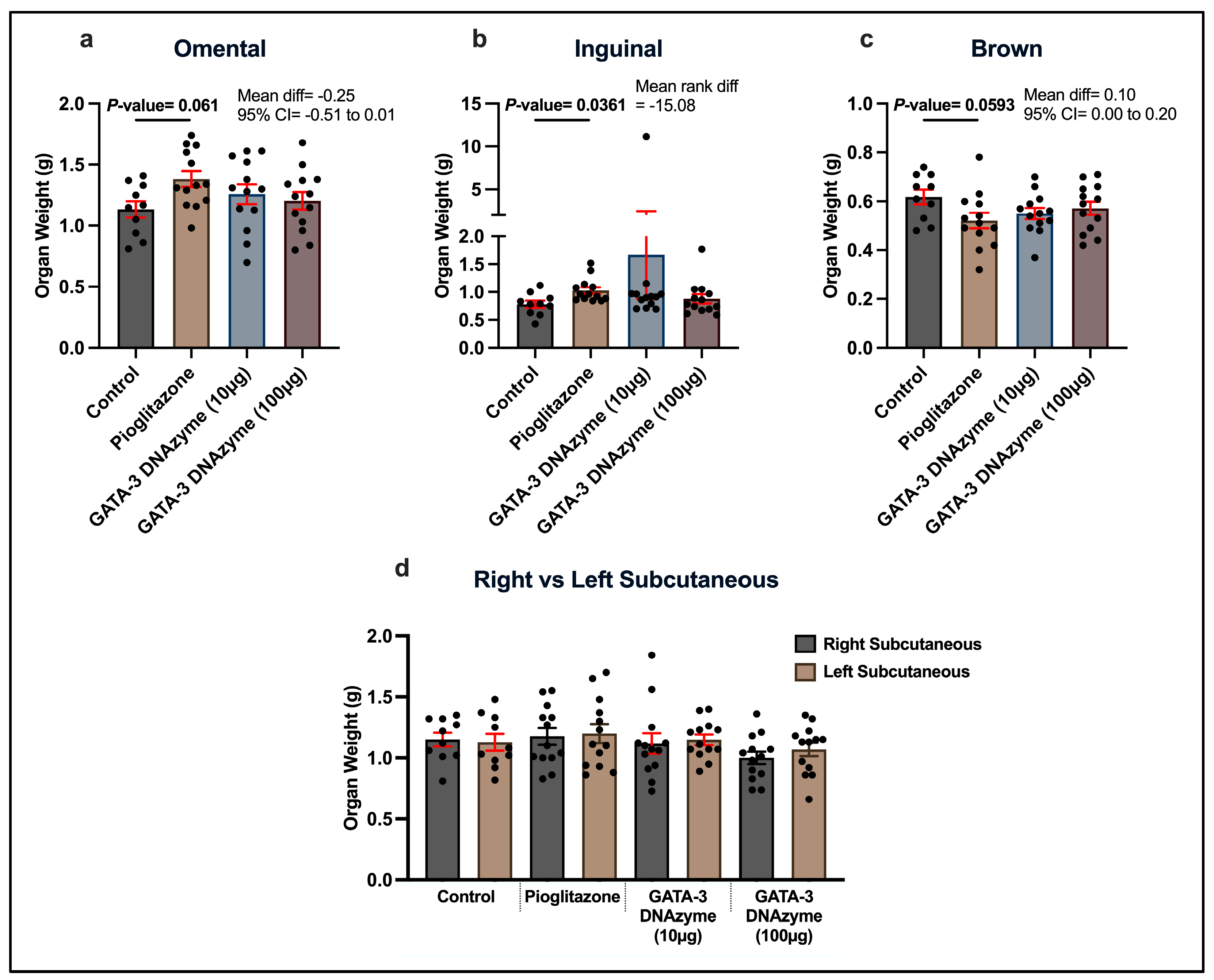
3.3. GATA-3 DNAzyme Treatment Does Not Affect Body Fat Distribution in db/db Mice
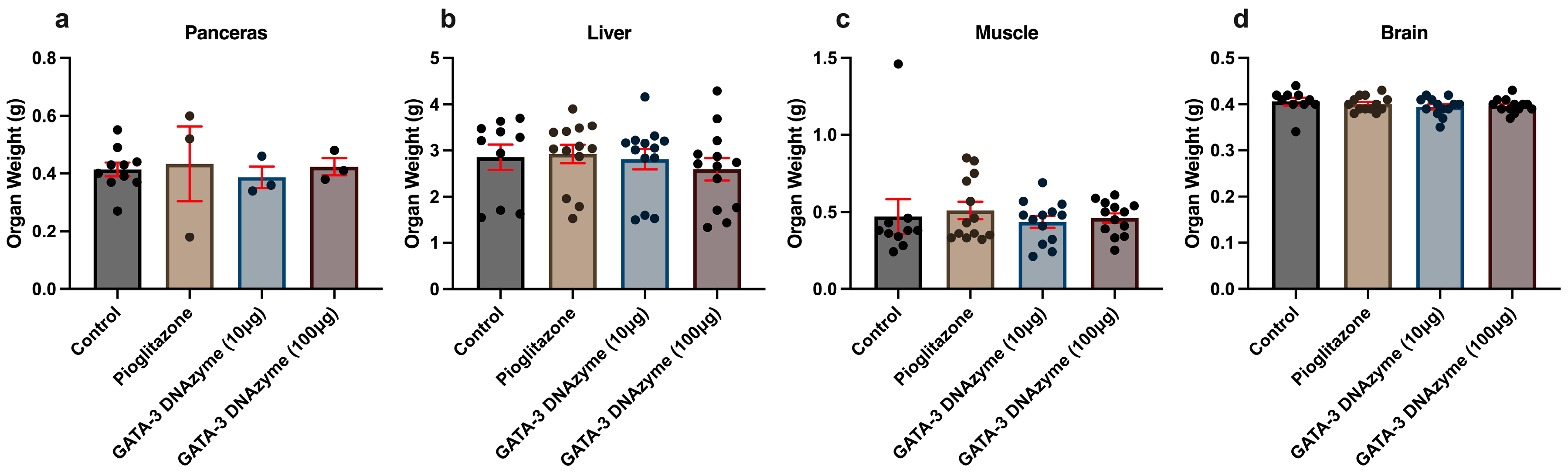
3.4. GATA-3 DNAzyme Treatment Does Not Change Organ Weights of Pancreas, Liver, Muscles and Brain of db/db Mice
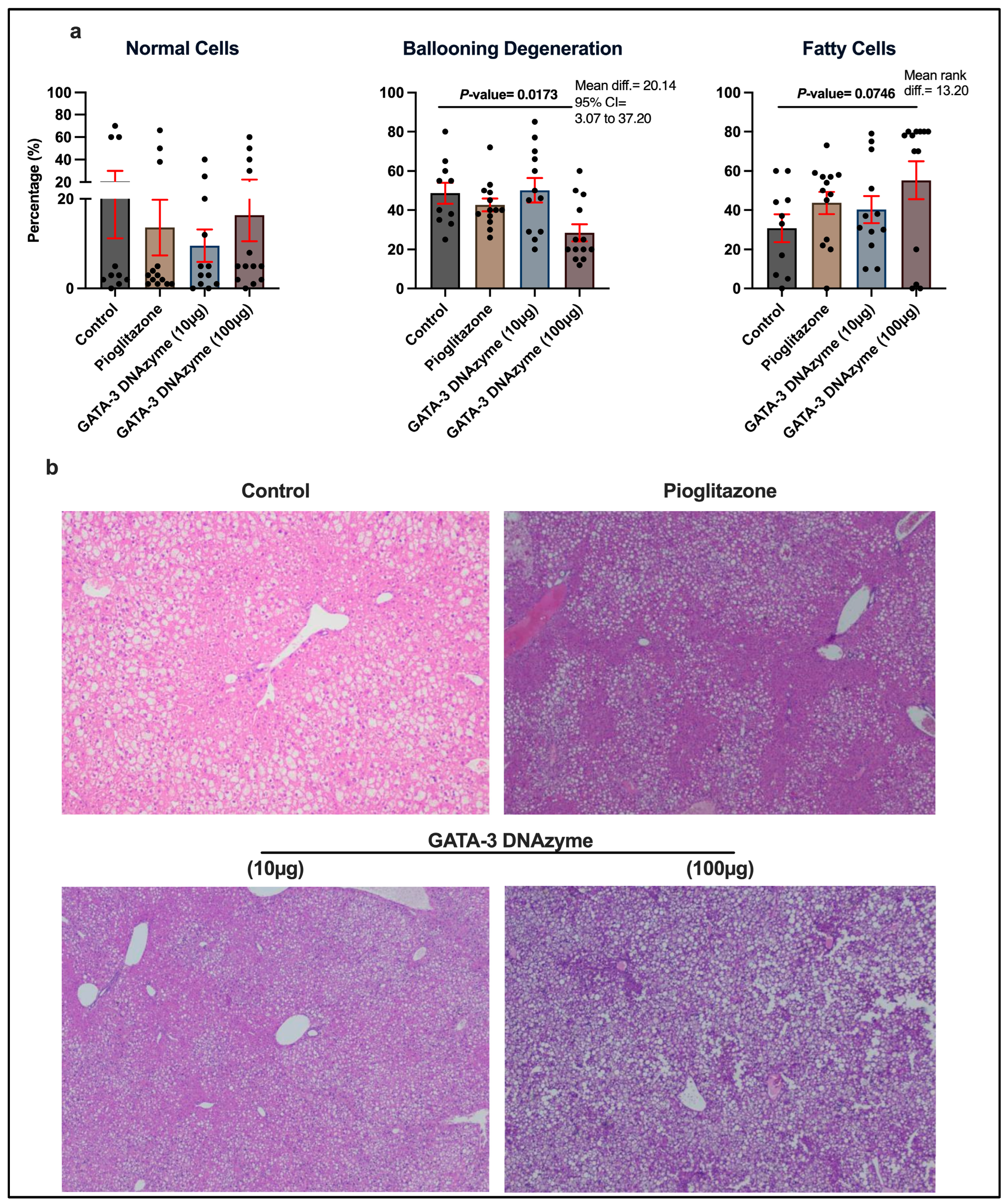
3.5. GATA-3 DNAzyme Decreases Ballooning Degeneration in the Liver of db/db Mice
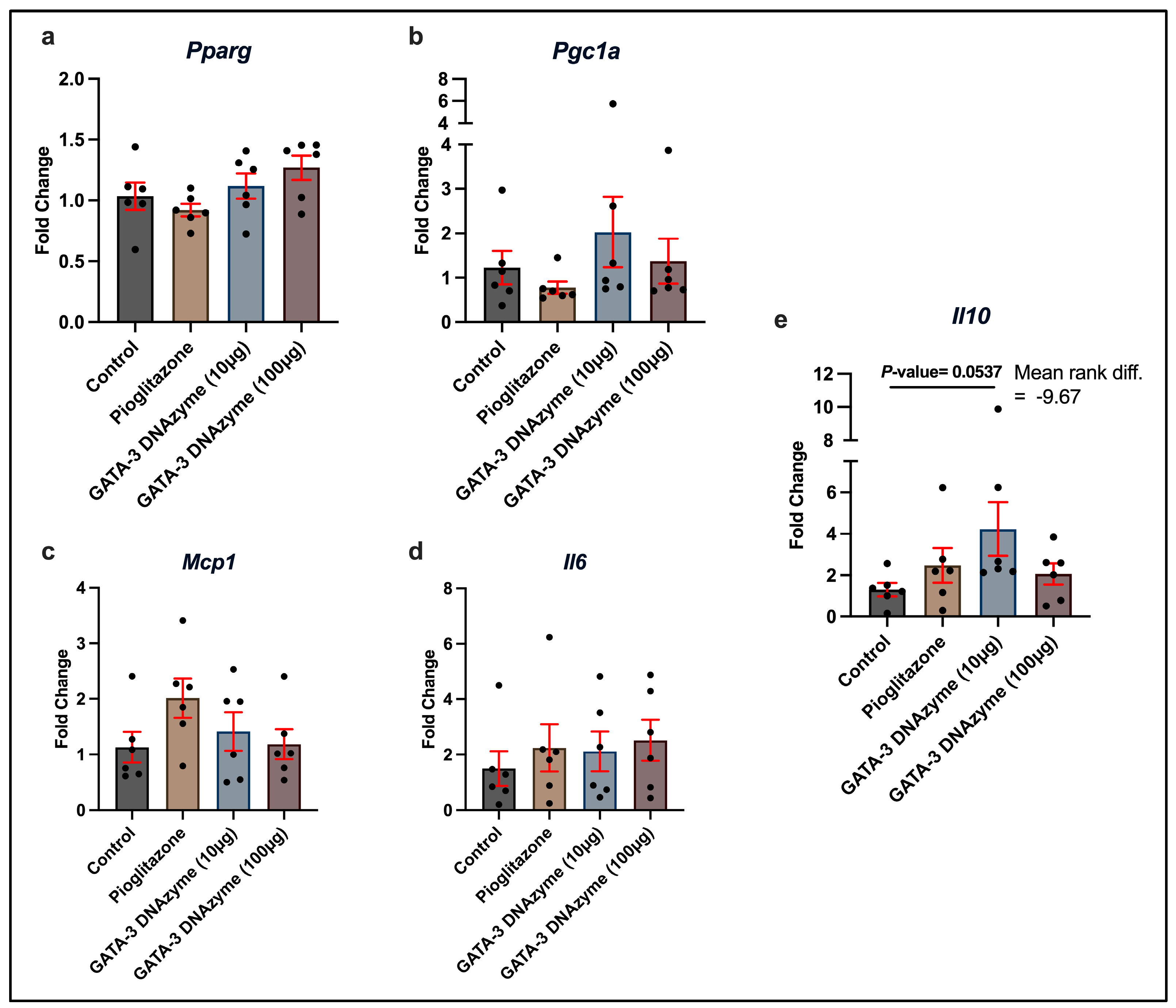
3.6. Treatment with GATA-3 DNAzyme Tends to Upregulate Il10 in the Liver of db/db Mice
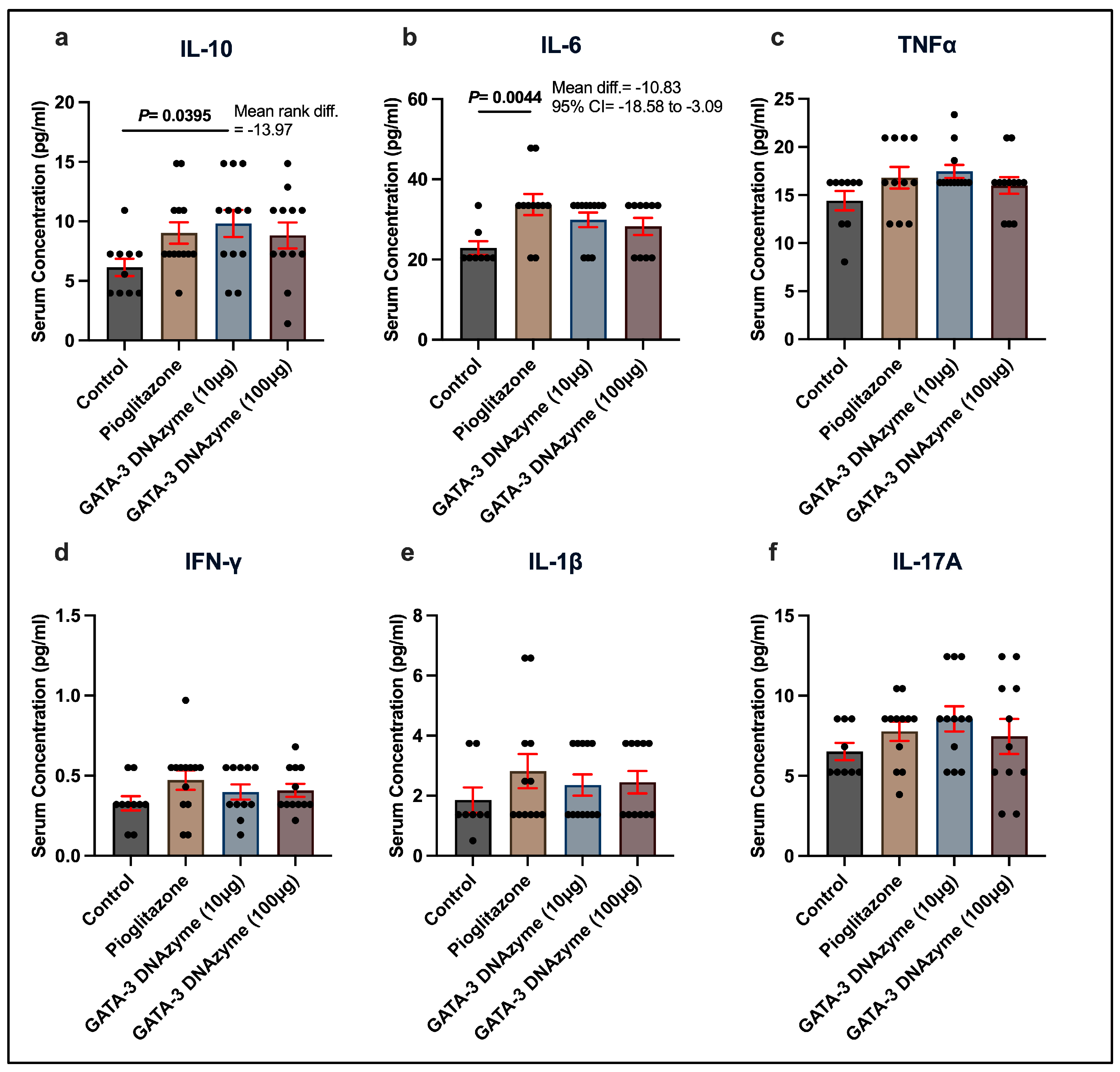
4. Treatment with GATA-3 DNAzyme Significantly Increases Serum IL-10 in db/db Mice
5. Discussion
6. Conclusions
7. Patents
Author Contributions
Funding
Institutional Review Board Statement
Data Availability Statement
Acknowledgments
Conflicts of Interest
References
- Wondmkun, Y.T. Obesity, Insulin Resistance, and Type 2 Diabetes: Associations and Therapeutic Implications. Diabetes Metab. Syndr. Obes. 2020, 13, 3611–3616. [Google Scholar] [CrossRef]
- Wang, X.; Rao, H.; Liu, F.; Wei, L.; Li, H.; Wu, C. Recent Advances in Adipose Tissue Dysfunction and Its Role in the Pathogenesis of Non-Alcoholic Fatty Liver Disease. Cells 2021, 10, 3300. [Google Scholar] [CrossRef] [PubMed]
- Okdahl, T.; Wegeberg, A.M.; Pociot, F.; Brock, B.; Storling, J.; Brock, C. Low-grade inflammation in type 2 diabetes: A cross-sectional study from a Danish diabetes outpatient clinic. BMJ Open 2022, 12, e062188. [Google Scholar] [CrossRef]
- Haya, A.-S.; Alexander, S.D.; Mohamed, A.E. Mediators of Impaired Adipogenesis in Obesity-Associated Insulin Resistance and T2DM. In Adipose Tissue; Leszek, S., Ed.; IntechOpen: Rijeka, Croatia, 2019; p. Ch. 7. [Google Scholar]
- Hammarstedt, A.; Gogg, S.; Hedjazifar, S.; Nerstedt, A.; Smith, U. Impaired Adipogenesis and Dysfunctional Adipose Tissue in Human Hypertrophic Obesity. Physiol. Rev. 2018, 98, 1911–1941. [Google Scholar] [CrossRef]
- Chait, A.; den Hartigh, L.J. Adipose Tissue Distribution, Inflammation and Its Metabolic Consequences, Including Diabetes and Cardiovascular Disease. Front. Cardiovasc. Med. 2020, 7, 22. [Google Scholar] [CrossRef]
- Kanda, H.; Tateya, S.; Tamori, Y.; Kotani, K.; Hiasa, K.; Kitazawa, R.; Kitazawa, S.; Miyachi, H.; Maeda, S.; Egashira, K.; et al. MCP-1 contributes to macrophage infiltration into adipose tissue, insulin resistance, and hepatic steatosis in obesity. J. Clin. Investig. 2006, 116, 1494–1505. [Google Scholar] [CrossRef]
- Uti, D.E.; Atangwho, I.J.; Omang, W.A.; Alum, E.U.; Obeten, U.N.; Udeozor, P.A.; Agada, S.A.; Bawa, I.; Ogbu, C.O. Cytokines as key players in obesity low grade inflammation and related complications. Obes. Med. 2025, 54, 100585. [Google Scholar] [CrossRef]
- Gustafson, B.; Hammarstedt, A.; Andersson, C.X.; Smith, U. Inflamed adipose tissue: A culprit underlying the metabolic syndrome and atherosclerosis. Arterioscler. Thromb. Vasc. Biol. 2007, 27, 2276–2283. [Google Scholar] [CrossRef] [PubMed]
- Karastergiou, K.; Mohamed-Ali, V. The autocrine and paracrine roles of adipokines. Mol. Cell Endocrinol. 2010, 318, 69–78. [Google Scholar] [CrossRef]
- Smith, U.; Kahn, B.B. Adipose tissue regulates insulin sensitivity: Role of adipogenesis, de novo lipogenesis and novel lipids. J. Intern. Med. 2016, 280, 465–475. [Google Scholar] [CrossRef] [PubMed]
- Jager, J.; Gremeaux, T.; Cormont, M.; Le Marchand-Brustel, Y.; Tanti, J.F. Interleukin-1beta-induced insulin resistance in adipocytes through down-regulation of insulin receptor substrate-1 expression. Endocrinology 2007, 148, 241–251. [Google Scholar] [CrossRef]
- Stojsavljevic, S.; Gomercic Palcic, M.; Virovic Jukic, L.; Smircic Duvnjak, L.; Duvnjak, M. Adipokines and proinflammatory cytokines, the key mediators in the pathogenesis of nonalcoholic fatty liver disease. World J. Gastroenterol. 2014, 20, 18070–18091. [Google Scholar] [CrossRef]
- Rosen, E.D.; Hsu, C.H.; Wang, X.; Sakai, S.; Freeman, M.W.; Gonzalez, F.J.; Spiegelman, B.M. C/EBPalpha induces adipogenesis through PPARgamma: A unified pathway. Genes. Dev. 2002, 16, 22–26. [Google Scholar] [CrossRef]
- Burhans, M.S.; Hagman, D.K.; Kuzma, J.N.; Schmidt, K.A.; Kratz, M. Contribution of Adipose Tissue Inflammation to the Development of Type 2 Diabetes Mellitus. Compr. Physiol. 2018, 9, 1–58. [Google Scholar] [CrossRef] [PubMed]
- Lee, S.M.; Muratalla, J.; Sierra-Cruz, M.; Cordoba-Chacon, J. Role of hepatic peroxisome proliferator-activated receptor gamma in non-alcoholic fatty liver disease. J. Endocrinol. 2023, 257, e220155. [Google Scholar] [CrossRef] [PubMed]
- Shoemaker, J.; Saraiva, M.; O’Garra, A. GATA-3 directly remodels the IL-10 locus independently of IL-4 in CD4+ T cells. J. Immunol. 2006, 176, 3470–3479. [Google Scholar] [CrossRef]
- Bacha, R.; Alwisi, N.; Ismail, R.; Pedersen, S.; Al-Mansoori, L. Unveiling GATA-3 Signaling Pathways in Health and Disease: Mechanisms, Implications, and Therapeutic Potential. Cells 2024, 13, 2127. [Google Scholar] [CrossRef] [PubMed]
- Garn, H.; Renz, H. GATA-3-specific DNAzyme–A novel approach for stratified asthma therapy. Eur. J. Immunol. 2017, 47, 22–30. [Google Scholar] [CrossRef]
- Popp, V.; Gerlach, K.; Mott, S.; Turowska, A.; Garn, H.; Atreya, R.; Lehr, H.A.; Ho, I.C.; Renz, H.; Weigmann, B.; et al. Rectal Delivery of a DNAzyme That Specifically Blocks the Transcription Factor GATA-3 and Reduces Colitis in Mice. Gastroenterology 2017, 152, 176–192.e175. [Google Scholar] [CrossRef]
- Larcher, L.M.; Pitout, I.L.; Keegan, N.P.; Veedu, R.N.; Fletcher, S. DNAzymes: Expanding the Potential of Nucleic Acid Therapeutics. Nucleic Acid. Ther. 2023, 33, 178–192. [Google Scholar] [CrossRef]
- Sel, S.; Wegmann, M.; Dicke, T.; Sel, S.; Henke, W.; Yildirim, A.O.; Renz, H.; Garn, H. Effective prevention and therapy of experimental allergic asthma using a GATA-3-specific DNAzyme. J. Allergy Clin. Immunol. 2008, 121, 910–916.e915. [Google Scholar] [CrossRef]
- Fuhst, R.; Runge, F.; Buschmann, J.; Ernst, H.; Praechter, C.; Hansen, T.; von Erichsen, J.; Turowska, A.; Hoymann, H.G.; Muller, M.; et al. Toxicity profile of the GATA-3-specific DNAzyme hgd40 after inhalation exposure. Pulm. Pharmacol. Ther. 2013, 26, 281–289. [Google Scholar] [CrossRef]
- Tong, Q.; Dalgin, G.; Xu, H.; Ting, C.N.; Leiden, J.M.; Hotamisligil, G.S. Function of GATA transcription factors in preadipocyte-adipocyte transition. Science 2000, 290, 134–138. [Google Scholar] [CrossRef] [PubMed]
- Tong, Q.; Tsai, J.; Tan, G.; Dalgin, G.; Hotamisligil, G.S. Interaction between GATA and the C/EBP family of transcription factors is critical in GATA-mediated suppression of adipocyte differentiation. Mol. Cell Biol. 2005, 25, 706–715. [Google Scholar] [CrossRef] [PubMed]
- Kouros-Mehr, H.; Kim, J.W.; Bechis, S.K.; Werb, Z. GATA-3 and the regulation of the mammary luminal cell fate. Curr. Opin. Cell Biol. 2008, 20, 164–170. [Google Scholar] [CrossRef]
- Xie, Z.; Li, Y.; Xiao, P.; Ke, S. GATA-3 promotes the autophagy and activation of hepatic stellate cell in hepatic fibrosis via regulating miR-370/HMGB1 pathway. Gastroenterol. Hepatol. 2024, 47, 219–229. [Google Scholar] [CrossRef]
- Al-Mansoori, L.; Al-Jaber, H.; Madani, A.Y.; Mazloum, N.A.; Agouni, A.; Ramanjaneya, M.; Abou-Samra, A.B.; Elrayess, M.A. Suppression of GATA-3 increases adipogenesis, reduces inflammation and improves insulin sensitivity in 3T3L-1 preadipocytes. Cell Signal 2020, 75, 109735. [Google Scholar] [CrossRef]
- Almuraikhy, S.; Kafienah, W.; Bashah, M.; Diboun, I.; Jaganjac, M.; Al-Khelaifi, F.; Abdesselem, H.; Mazloum, N.A.; Alsayrafi, M.; Mohamed-Ali, V.; et al. Interleukin-6 induces impairment in human subcutaneous adipogenesis in obesity-associated insulin resistance. Diabetologia 2016, 59, 2406–2416. [Google Scholar] [CrossRef] [PubMed]
- Porru, M.; Morales, M.D.P.; Gallo-Cordova, A.; Espinosa, A.; Moros, M.; Brero, F.; Mariani, M.; Lascialfari, A.; Ovejero, J.G. Tailoring the Magnetic and Structural Properties of Manganese/Zinc Doped Iron Oxide Nanoparticles through Microwaves-Assisted Polyol Synthesis. Nanomaterials 2022, 12, 3304. [Google Scholar] [CrossRef]
- Al-Jaber, H.; Mohamed, N.A.; Govindharajan, V.K.; Taha, S.; John, J.; Halim, S.; Alser, M.; Al-Muraikhy, S.; Anwardeen, N.R.; Agouni, A.; et al. In Vitro and In Vivo Validation of GATA-3 Suppression for Induction of Adipogenesis and Improving Insulin Sensitivity. Int. J. Mol. Sci. 2022, 23, 11142. [Google Scholar] [CrossRef]
- Burke, S.J.; Batdorf, H.M.; Burk, D.H.; Noland, R.C.; Eder, A.E.; Boulos, M.S.; Karlstad, M.D.; Collier, J.J. db/db Mice Exhibit Features of Human Type 2 Diabetes That Are Not Present in Weight-Matched C57BL/6J Mice Fed a Western Diet. J. Diabetes Res. 2017, 2017, 8503754. [Google Scholar] [CrossRef]
- Han, N.; He, J.; Shi, L.; Zhang, M.; Zheng, J.; Fan, Y. Identification of biomarkers in nonalcoholic fatty liver disease: A machine learning method and experimental study. Front. Genet. 2022, 13, 1020899. [Google Scholar] [CrossRef]
- Chen, D.; Gao, X.; Wang, J.; Zhao, H.; Liu, H.; Chen, S.; Zhang, J.; Meng, M. Activation of hepatic iNKT2 cells by alpha-GalCer ameliorates hepatic steatosis induced by high-fat diet in C57BL/6J mice. Int. Immunopharmacol. 2019, 74, 105727. [Google Scholar] [CrossRef]
- Ahmed, M.H.; Husain, N.E.; Almobarak, A.O. Nonalcoholic Fatty liver disease and risk of diabetes and cardiovascular disease: What is important for primary care physicians? J. Fam. Med. Prim. Care 2015, 4, 45–52. [Google Scholar] [CrossRef]
- Singla, T.; Muneshwar, K.N.; Pathade, A.G.; Yelne, S. Hepatocytic Ballooning in Non-alcoholic Steatohepatitis: Bridging the Knowledge Gap and Charting Future Avenues. Cureus 2023, 15, e45884. [Google Scholar] [CrossRef]
- Carlini, V.; Noonan, D.M.; Abdalalem, E.; Goletti, D.; Sansone, C.; Calabrone, L.; Albini, A. The multifaceted nature of IL-10: Regulation, role in immunological homeostasis and its relevance to cancer, COVID-19 and post-COVID conditions. Front. Immunol. 2023, 14, 1161067. [Google Scholar] [CrossRef] [PubMed]
- White, U.; Fitch, M.D.; Beyl, R.A.; Hellerstein, M.K.; Ravussin, E. Adipose depot-specific effects of 16 weeks of pioglitazone on in vivo adipogenesis in women with obesity: A randomised controlled trial. Diabetologia 2021, 64, 159–167. [Google Scholar] [CrossRef]
- Ruud, J.; Steculorum, S.M.; Bruning, J.C. Neuronal control of peripheral insulin sensitivity and glucose metabolism. Nat. Commun. 2017, 8, 15259. [Google Scholar] [CrossRef]
- Lu, X.; Xie, Q.; Pan, X.; Zhang, R.; Zhang, X.; Peng, G.; Zhang, Y.; Shen, S.; Tong, N. Type 2 diabetes mellitus in adults: Pathogenesis, prevention and therapy. Signal Transduct. Target. Ther. 2024, 9, 262. [Google Scholar] [CrossRef] [PubMed]
- Najlah, M.; Jain, M.; Wan, K.W.; Ahmed, W.; Albed Alhnan, M.; Phoenix, D.A.; Taylor, K.M.G.; Elhissi, A. Ethanol-based proliposome delivery systems of paclitaxel for in vitro application against brain cancer cells. J. Liposome Res. 2018, 28, 74–85. [Google Scholar] [CrossRef] [PubMed]
- Khudair, N.; Agouni, A.; Elrayess, M.A.; Najlah, M.; Younes, H.M.; Elhissi, A. Letrozole-loaded nonionic surfactant vesicles prepared via a slurry-based proniosome technology: Formulation development and characterization. J. Drug Deliv. Sci. Technol. 2020, 58, 101721. [Google Scholar] [CrossRef]
- Chun, K.H. Mouse model of the adipose organ: The heterogeneous anatomical characteristics. Arch. Pharm. Res. 2021, 44, 857–875. [Google Scholar] [CrossRef] [PubMed]
- Mandarim-de-Lacerda, C.A.; del Sol, M.; Vásquez, B.; Aguila, M.B. Mice as an Animal Model for the Study of Adipose Tissue and Obesity. Int. J. Morphol. 2021, 39, 1521–1528. [Google Scholar] [CrossRef]
- Collier, J.J.; Batdorf, H.M.; Merrifield, K.L.; Martin, T.M.; White, U.; Ravussin, E.; Burk, D.H.; Cooley, C.R.; Karlstad, M.D.; Burke, S.J. Pioglitazone Reverses Markers of Islet Beta-Cell De-Differentiation in db/db Mice While Modulating Expression of Genes Controlling Inflammation and Browning in White Adipose Tissue from Insulin-Resistant Mice and Humans. Biomedicines 2021, 9, 1189. [Google Scholar] [CrossRef] [PubMed]
- Zhang, L.J.; Wang, X.Z. Interleukin-10 and chronic liver disease. World J. Gastroenterol. 2006, 12, 1681–1685. [Google Scholar] [CrossRef]
- Kim, H.J.; Higashimori, T.; Park, S.Y.; Choi, H.; Dong, J.; Kim, Y.J.; Noh, H.L.; Cho, Y.R.; Cline, G.; Kim, Y.B.; et al. Differential effects of interleukin-6 and -10 on skeletal muscle and liver insulin action in vivo. Diabetes 2004, 53, 1060–1067. [Google Scholar] [CrossRef]
- Miller, A.M.; Wang, H.; Bertola, A.; Park, O.; Horiguchi, N.; Ki, S.H.; Yin, S.; Lafdil, F.; Gao, B. Inflammation-associated interleukin-6/signal transducer and activator of transcription 3 activation ameliorates alcoholic and nonalcoholic fatty liver diseases in interleukin-10-deficient mice. Hepatology 2011, 54, 846–856. [Google Scholar] [CrossRef]
- Gavitt, T.D.; Hartmann, A.K.; Sawant, S.S.; Mara, A.B.; Szczepanek, S.M.; Rouge, J.L. A GATA-3 Targeting Nucleic Acid Nanocapsule for In Vivo Gene Regulation in Asthma. ACS Nano 2021, 15, 11192–11201. [Google Scholar] [CrossRef]
- Turowska, A.; Librizzi, D.; Baumgartl, N.; Kuhlmann, J.; Dicke, T.; Merkel, O.; Homburg, U.; Höffken, H.; Renz, H.; Garn, H. Biodistribution of the GATA-3-specific DNAzyme hgd40 after inhalative exposure in mice, rats and dogs. Toxicol. Appl. Pharmacol. 2013, 272, 365–372. [Google Scholar] [CrossRef]
- Fischer, A.W.; Cannon, B.; Nedergaard, J. Leptin: Is It Thermogenic? Endocr. Rev. 2020, 41, 232–260. [Google Scholar] [CrossRef] [PubMed]
- Wang, B.; Chandrasekera, P.C.; Pippin, J.J. Leptin- and leptin receptor-deficient rodent models: Relevance for human type 2 diabetes. Curr. Diabetes Rev. 2014, 10, 131–145. [Google Scholar] [CrossRef]
- Kobayashi, K.; Forte, T.M.; Taniguchi, S.; Ishida, B.Y.; Oka, K.; Chan, L. The db/db mouse, a model for diabetic dyslipidemia: Molecular characterization and effects of Western diet feeding. Metabolism 2000, 49, 22–31. [Google Scholar] [CrossRef]
- Dalboge, L.S.; Almholt, D.L.; Neerup, T.S.; Vassiliadis, E.; Vrang, N.; Pedersen, L.; Fosgerau, K.; Jelsing, J. Characterisation of age-dependent beta cell dynamics in the male db/db mice. PLoS ONE 2013, 8, e82813. [Google Scholar] [CrossRef] [PubMed]
- Choi, H.M.; Kim, H.R.; Kim, E.K.; Byun, Y.S.; Won, Y.S.; Yoon, W.K.; Kim, H.C.; Kang, J.G.; Nam, K.H. An age-dependent alteration of the respiratory exchange ratio in the db/db mouse. Lab. Anim. Res. 2015, 31, 1–6. [Google Scholar] [CrossRef]
- de Souza, C.J.; Eckhardt, M.; Gagen, K.; Dong, M.; Chen, W.; Laurent, D.; Burkey, B.F. Effects of pioglitazone on adipose tissue remodeling within the setting of obesity and insulin resistance. Diabetes 2001, 50, 1863–1871. [Google Scholar] [CrossRef]
- Yu, P.; Wang, W.; Guo, W.; Cheng, L.; Wan, Z.; Cheng, Y.; Shen, Y.; Xu, F. Pioglitazone-Enhanced Brown Fat Whitening Contributes to Weight Gain in Diet-Induced Obese Mice. Exp. Clin. Endocrinol. Diabetes 2023, 131, 595–604. [Google Scholar] [CrossRef] [PubMed]
- Guan, W.; Cheng, F.; Wu, H.; Cao, Q.; Zhu, X.; Fan, Y.; Zhu, H.; Zhou, Y. GATA binding protein 3 is correlated with leptin regulation of PPARgamma1 in hepatic stellate cells. J. Cell Mol. Med. 2017, 21, 568–578. [Google Scholar] [CrossRef] [PubMed]



| Gene | Primers Sequences (5′ to 3′) |
|---|---|
| Gapdh | f: AGGTCGGTGTGAACGGATTTG |
| r: TGTAGACCATGTAGTTGAGGTCA | |
| GATA-3 | f: GAACCGGCCCCTTATCAAG |
| r: ACAGTTCGCGCAGGATGTC | |
| Pparγ | f: GGCTTCCACTATGGAGTTCA |
| r: GATCCGGCAGTTAAGATCAC | |
| Pgc-1α | f: TGCAGCCAAGACTCTGTATG |
| r: ATTGGTCGCTACACCACTTC | |
| Mcp1 | f: GCTACAAGAGGATCACCAGCAG |
| r: GTCTGGACCCATTCCTTCTTGG | |
| Il6 | f: TAGTCCTTCCTACCCCAATTTCC |
| r: TTGGTCCTTAGCCACTCCTTC | |
| Il10 | f: GCTCTTACTGACTGGCATGAG |
| r: CGCAGCTCTAGGAGCATGTG |
Disclaimer/Publisher’s Note: The statements, opinions and data contained in all publications are solely those of the individual author(s) and contributor(s) and not of MDPI and/or the editor(s). MDPI and/or the editor(s) disclaim responsibility for any injury to people or property resulting from any ideas, methods, instructions or products referred to in the content. |
© 2025 by the authors. Licensee MDPI, Basel, Switzerland. This article is an open access article distributed under the terms and conditions of the Creative Commons Attribution (CC BY) license.
Share and Cite
Al-Mansoori, L.; Elashi, A.A.; Hedaya, L.; Alser, M.; Almuraikhy, S.; Anwardeen, N.; Al-Jaber, H.; Hussain, S.; Al-Naemi, H.A.; Govindharajan, V.; et al. GATA-3 Suppression by DNAzyme Modulates Interleukin-10 and Liver Injury Markers in db/db Mice. Biology 2026, 15, 89. https://doi.org/10.3390/biology15010089
Al-Mansoori L, Elashi AA, Hedaya L, Alser M, Almuraikhy S, Anwardeen N, Al-Jaber H, Hussain S, Al-Naemi HA, Govindharajan V, et al. GATA-3 Suppression by DNAzyme Modulates Interleukin-10 and Liver Injury Markers in db/db Mice. Biology. 2026; 15(1):89. https://doi.org/10.3390/biology15010089
Chicago/Turabian StyleAl-Mansoori, Layla, Asma A. Elashi, Laila Hedaya, Maha Alser, Shamma Almuraikhy, Najeha Anwardeen, Hend Al-Jaber, Suhad Hussain, Hamda A. Al-Naemi, Vijay Govindharajan, and et al. 2026. "GATA-3 Suppression by DNAzyme Modulates Interleukin-10 and Liver Injury Markers in db/db Mice" Biology 15, no. 1: 89. https://doi.org/10.3390/biology15010089
APA StyleAl-Mansoori, L., Elashi, A. A., Hedaya, L., Alser, M., Almuraikhy, S., Anwardeen, N., Al-Jaber, H., Hussain, S., Al-Naemi, H. A., Govindharajan, V., Al-Saady, R. M., Malki, M. I., Naja, K., & Elrayess, M. A. (2026). GATA-3 Suppression by DNAzyme Modulates Interleukin-10 and Liver Injury Markers in db/db Mice. Biology, 15(1), 89. https://doi.org/10.3390/biology15010089