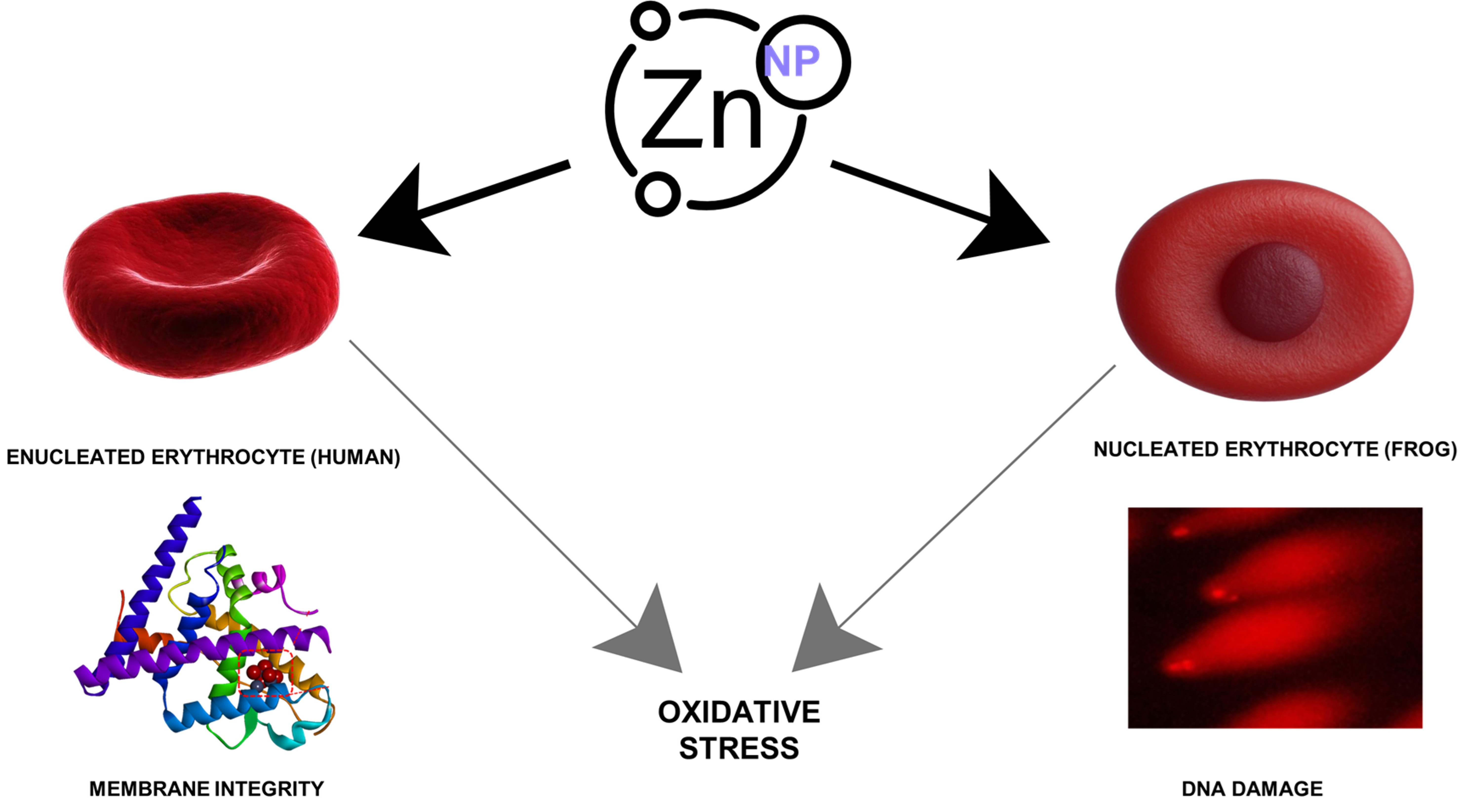
From Nucleus to No Nucleus: A Multimodal Study of the Toxicity of ZnO Nanoparticles: A Focus on Membrane Integrity, DNA Damage, and Molecular Docking
 ,
,  , ,
, ,  and
and 
Simple Summary
Abstract
1. Introduction
2. Materials and Methods
2.1. Study Design and Experimental Overview
2.2. Characterization of ZnO Nanoparticles
2.3. Preparation of ZnO Nanoparticle Suspensions
2.4. Human Erythrocyte Preparation
2.5. Amphibian Erythrocyte Preparation
2.6. ZnO Nanoparticle Exposure
2.7. Oxidative Stress Biomarkers
2.8. Assessment of DNA Damage Using the Comet Assay
2.9. Molecular Docking and Structural Analysis
2.10. Receptor and Ligand Preparation and Molecular Docking
2.11. In Silico Quantum Chemical Calculations of ZnO NPs
2.12. Statistical Analysis
3. Results
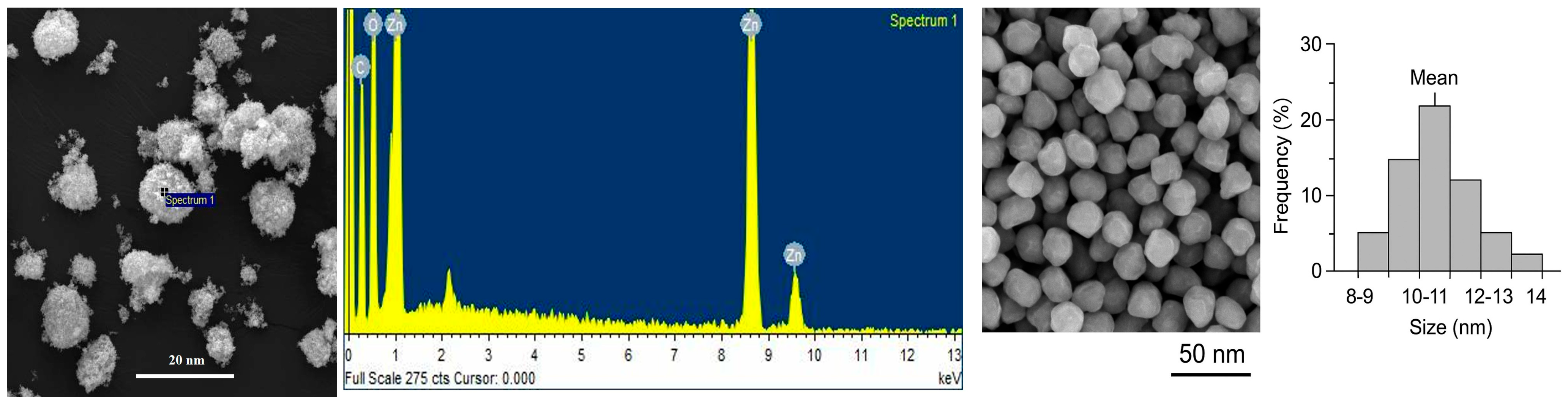
3.1. ZnO NPs Characterization
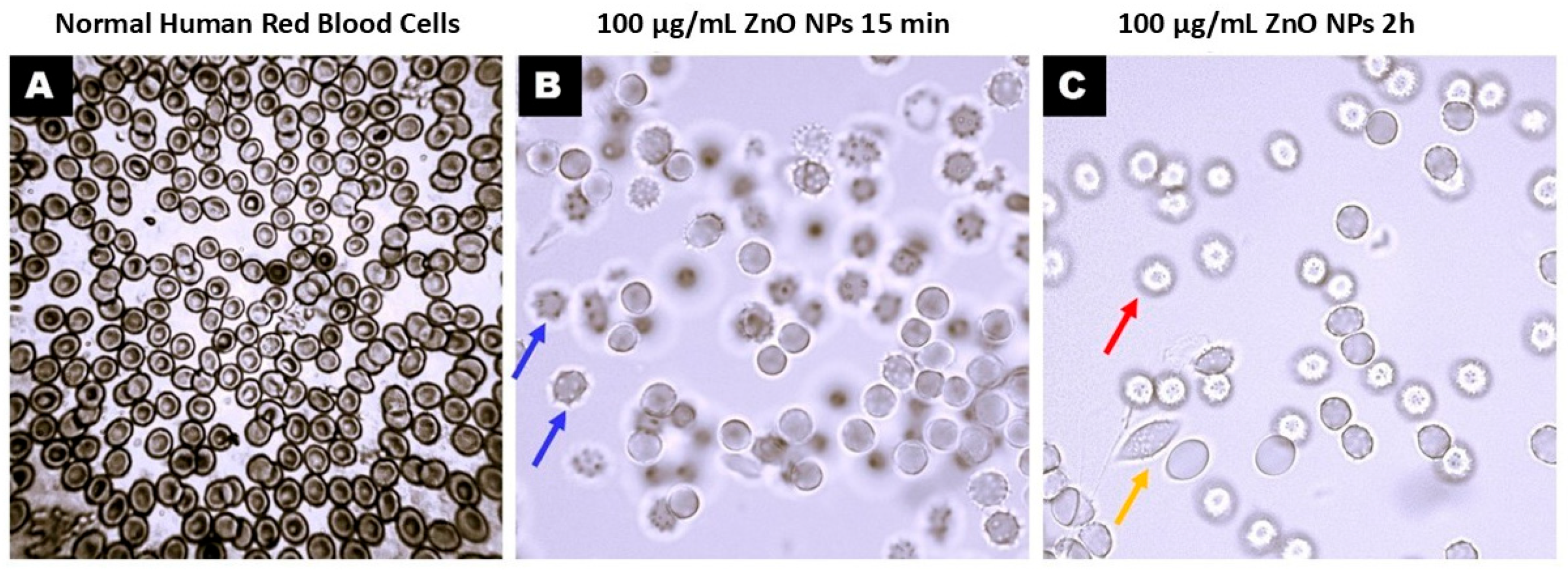
3.2. Morphological Results in 3 and, 24 h Exposure of Erythrocytes to ZnO NPs
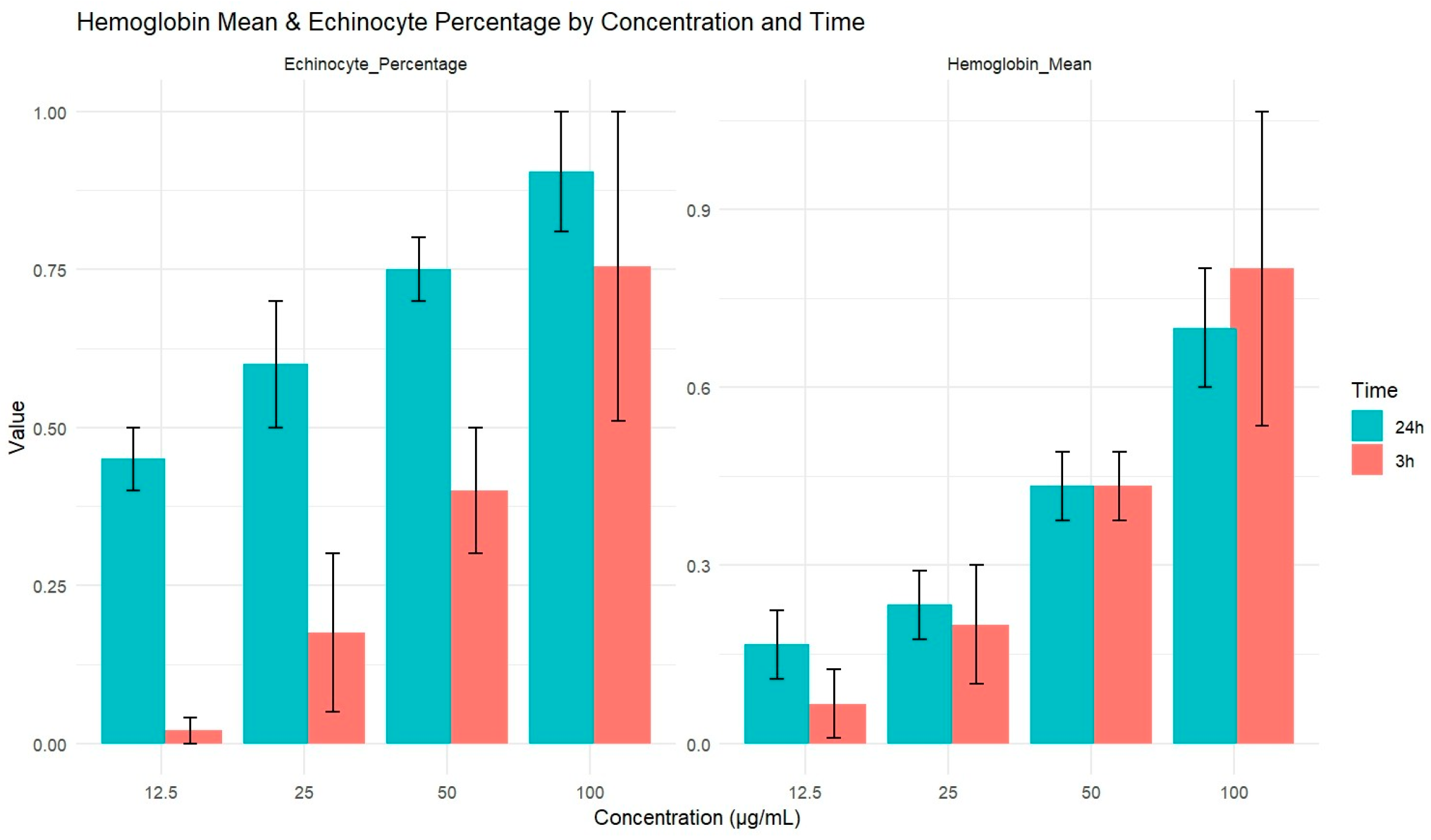
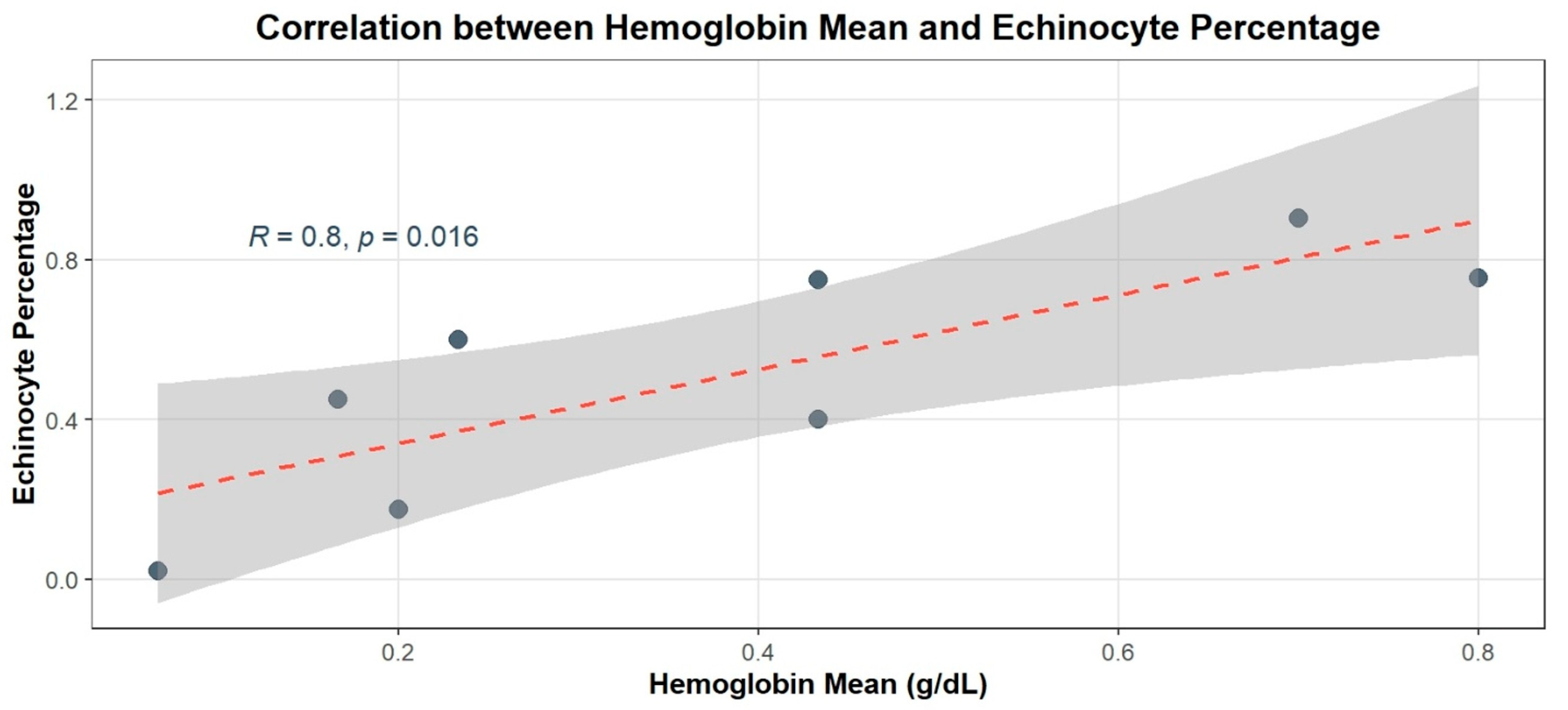
3.3. Hemolysis and Echinocytosis Results for 3 and 24 h of Exposure to ZnO NPs
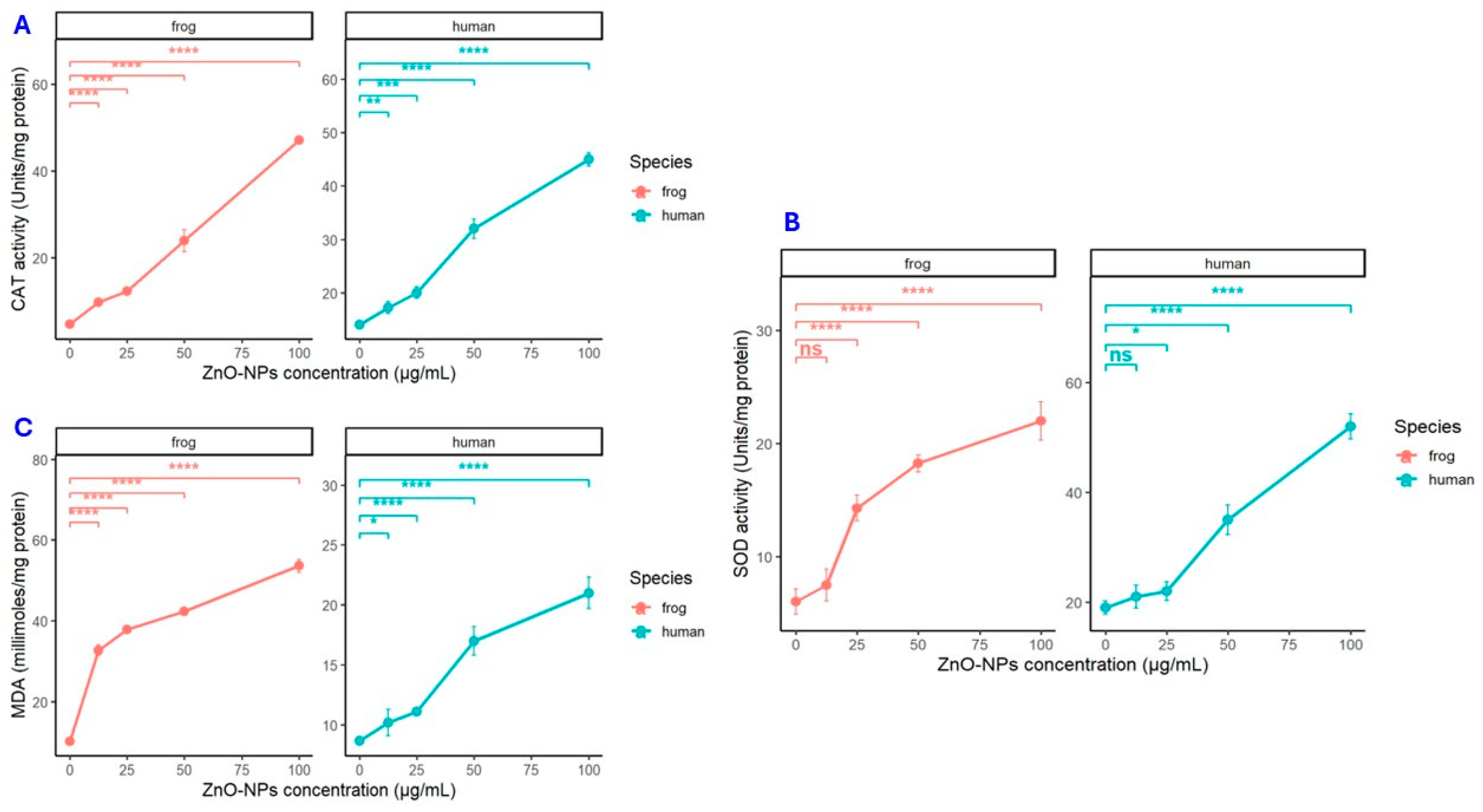
3.4. Antioxidant Enzyme Activities and Lipid Peroxidation Marker
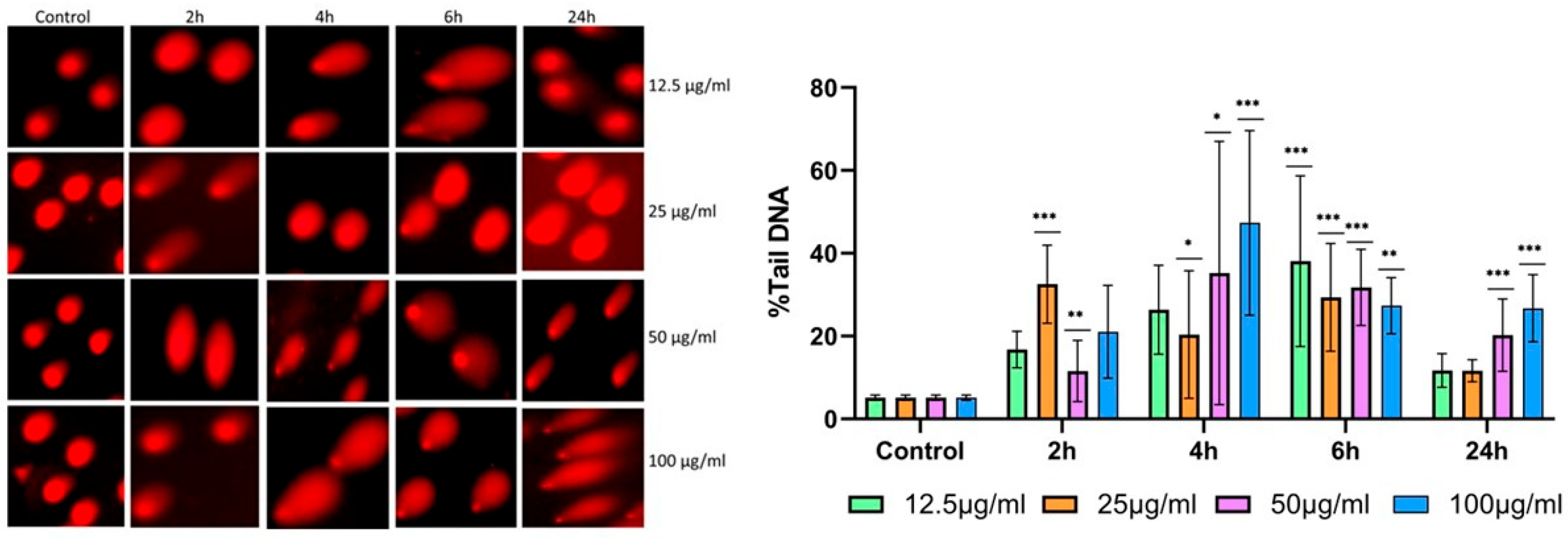
3.5. DNA Damage Assessment
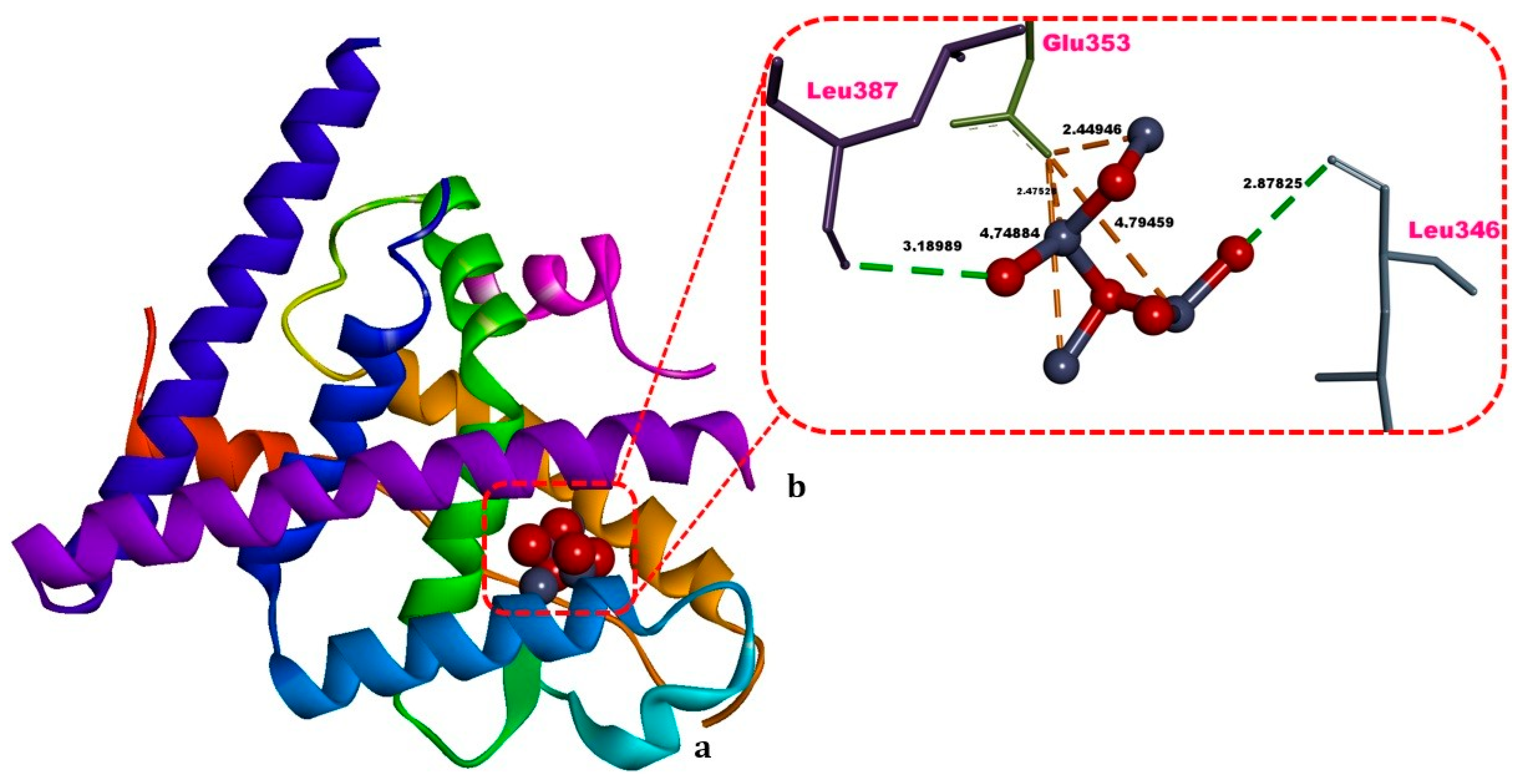
3.6. Molecular Docking
4. Discussion
5. Conclusions
Author Contributions
Funding
Institutional Review Board Statement
Informed Consent Statement
Data Availability Statement
Acknowledgments
Conflicts of Interest
Abbreviations
| ZnO NPs | Zinc Oxide Nanoparticles |
| CAT | Catalase |
| SOD | Superoxide dismutase |
| MDI | Malondialdehyde |
References
- Bratosin, D.; Estaquier, J.; Petit, F.; Arnoult, D.; Quatannens, B.; Tissier, J.P.; Ameisen, J.C. Programmed cell death in mature erythrocytes: A model for investigating death effector pathways operating in the absence of mitochondria. Cell Death Differ. 2001, 8, 1143–1156. [Google Scholar] [CrossRef] [PubMed]
- Lang, E.; Qadri, S.M.; Lang, F. Killing me softly: Suicidal erythrocyte death. Int. J. Biochem. Cell Biol. 2012, 44, 1236–1243. [Google Scholar] [CrossRef] [PubMed]
- Föller, M.; Lang, F. Ion transport in eryptosis, the suicidal death of erythrocytes. Front. Cell Dev. Biol. 2020, 8, 597. [Google Scholar] [CrossRef]
- Scherzad, A.; Meyer, T.; Kleinsasser, N.; Hackenberg, S. Molecular Mechanisms of Zinc Oxide Nanoparticle-Induced Genotoxicity. Materials 2017, 10, 1427. [Google Scholar] [CrossRef]
- Annangi, B.; Rubio, L.; Alaraby, M.; Bach, J.; Marcos, R.; Hernández, A. Acute and long-term in vitro effects of ZnO nanoparticles. Arch. Toxicol. 2015, 90, 2201–2213. [Google Scholar] [CrossRef] [PubMed]
- Liao, C.; Jin, Y.; Li, Y.; Tjong, S.C. Interactions of zinc oxide nanostructures with mammalian cells: Cytotoxicity and photocatalytic toxicity. Int. J. Mol. Sci. 2020, 21, 6305. [Google Scholar] [CrossRef]
- Liu, X.; Li, J.; Zhu, L.; Huang, J.; Zhang, Q.; Wang, J.; Xie, J.; Dong, Q.; Zou, Z.; Huang, G.; et al. Mechanistic insights into zinc oxide nanoparticles induced embryotoxicity via H3K9me3 modulation. Biomaterials 2024, 311, 122679. [Google Scholar] [CrossRef]
- Li, S.-Q.; Zhu, R.-R.; Zhu, H.; Xue, M.; Sun, X.-Y.; Yao, S.-D.; Wang, S.-L. Nanotoxicity of TiO2 nanoparticles to erythrocyte in vitro. Food Chem. Toxicol. 2008, 46, 3626–3631. [Google Scholar] [CrossRef]
- Khan, M.; Naqvi, A.H.; Ahmad, M. Comparative study of the cytotoxic and genotoxic potentials of zinc oxide and titanium dioxide nanoparticles. Toxicol. Rep. 2015, 2, 765–774. [Google Scholar] [CrossRef] [PubMed]
- Solorio-Rodriguez, S.A.; Wu, D.; Boyadzhiev, A.; Christ, C.; Williams, A.; Halappanavar, S. A systematic genotoxicity assessment of a suite of metal oxide nanoparticles reveals their DNA damaging and clastogenic potential. Nanomaterials 2024, 14, 743. [Google Scholar] [CrossRef]
- dos Reis, R.A.; da Silva, L.L.L.; Pieretti, J.C.; Creusot, B.; Lahouari, S.; Francius, G.; da Silva, R.A.G.; Clarot, I.; Boudier, A.; Seabra, A.B. Eco-friendly synthesis and biomedical potential of zinc oxide nanoparticles using Mentha piperita aqueous extract: Comparative analysis with chemically synthesized and commercial nanoparticles. Bioprocess Biosyst. Eng. 2025, 48, 1323–1338. [Google Scholar] [CrossRef] [PubMed]
- Kim, E.H.; Baek, S.M.; Choi, S.; Cho, J.; Tahmasebi, S.; Bae, O.N. Promoted coagulant activity and disrupted blood-brain barrier depending on phosphatidylserine externalization of red blood cells exposed to ZnO nanoparticles. Environ. Pollut. 2024, 362, 124921. [Google Scholar] [CrossRef] [PubMed]
- Motta, A.G.C.; do Amaral, D.F.; Benvindo-Souza, M.; Rocha, T.L.; Silva, D.d.M.e. Genotoxic and mutagenic effects of zinc oxide nanoparticles and zinc chloride on tadpoles of Lithobates catesbeianus (Anura: Ranidae). Environ. Nanotechnol. Monit. Manag. 2020, 14, 100356. [Google Scholar] [CrossRef]
- Aliko, V.; Vasjari, L.; Istifli, E.S.; Gjonaj, G.; Impellitteri, F.; Faggio, C.; Benedetti, E.; Zugaro, S.; Iannetta, A.; Perugini, M. Molecular docking analysis and in vivo assessment of zinc oxid nanoparticle toxicity in zebrafish larvae. Aquat. Toxicol. 2024, 276, 107112. [Google Scholar] [CrossRef] [PubMed]
- Meng, X.Y.; Zhang, H.X.; Mezei, M.; Cui, M. Molecular docking: A powerful approach for structure-based drug discovery. Curr. Comput.-Aided Drug Des. 2011, 7, 146–157. [Google Scholar] [CrossRef]
- Kamel, A.I.; Badawy, S.A.; Abdel-Mogib, M.; El-Rokh, A.R. Phytochemical, biological, DFT, and molecular docking evaluation of Euphorbia paralias. Sci. Rep. 2025, 15, 17961. [Google Scholar] [CrossRef]
- Bystrzejewska-Piotrowska, G.; Golimowski, J.; Urban, P.L. Nanoparticles: Their potential toxicity, waste, and environmental management. Waste Manag. 2009, 29, 2587–2595. [Google Scholar] [CrossRef]
- Leslie, H.A.; van Velzen, M.J.M.; Brandsma, S.H.; Vethaak, A.D.; Garcia-Vallejo, J.J.; Lamoree, M.H. Discovery and quantification of plastic particle pollution in human blood. Environ. Int. 2022, 163, 107199. [Google Scholar] [CrossRef]
- Naoum, P.C.R.; da Silva, J.M. Spectrometric measurement of methemoglobin without interference of chemical or enzymatic reagents. Rev. Bras. De Hematol. E Hemoter. 2004, 26, 19–22. [Google Scholar]
- Guex, N.; Peitsch, M.C. SWISS-MODEL and the Swiss-Pdb Viewer: An environment for comparative protein modeling. Electrophoresis 1997, 18, 2714–2723. [Google Scholar] [CrossRef]
- Ricci, C.G.; Netz, P.A. Docking studies on DNA–ligand interactions: Building and application of a protocol to identify the binding mode. J. Chem. Inf. Model. 2009, 49, 1925–1935. [Google Scholar] [CrossRef]
- Hanwell, M.D.; Curtis, D.E.; Lonie, D.C.; Vandermeersch, T.; Zurek, E.; Hutchison, G.R. Avogadro: An advanced semantic chemical editor, visualization, and analysis platform. J. Cheminformatics 2012, 4, 17. [Google Scholar] [CrossRef] [PubMed]
- Goodsell, D.S.; Morris, G.M.; Olson, A.J. Automated docking of flexible ligands: Applications of AutoDock. J. Mol. Recognit. JMR 1996, 9, 1–5. [Google Scholar] [CrossRef]
- Masnabadi, N.; Thalji, M.R.; Alhasan, H.S.; Mahmoodi, Z.; Soldatov, A.V.; Ali, G.A. Structural, electronic, reactivity, and conformational features of 2,5,5-trimethyl-1,3,2-diheterophosphinane-2-sulfide and its derivatives: DFT, MEP, and NBO calculations. Molecules 2022, 27, 4011. [Google Scholar] [CrossRef] [PubMed]
- Motta, A.G.C.; do Amaral, D.F.; Benvindo-Souza, M.; de Araújo, A.P.C.; Vieira, L.G.; de Melo e Silva, D.; Rocha, T.L. Assessment of multiple biomarkers in Lithobates catesbeianus tadpoles exposed to zinc oxide nanoparticles and zinc chloride: Integrating morphological and behavioral approaches to ecotoxicology. Environ. Sci. Pollut. Res. 2023, 30, 13755–13772. [Google Scholar] [CrossRef] [PubMed]
- Hancock, G.R.; Young, K.S.; Hosfield, D.J.; Joiner, C.; Sullivan, E.A.; Yildiz, Y.; Lainé, M.; Greene, G.L.; Fanning, S.W. Unconventional isoquinoline-based SERMs elicit fulvestrant-like transcriptional programs in ER+ breast cancer cells. npj Breast Cancer 2022, 8, 130. [Google Scholar] [CrossRef]
- Senapati, V.A.; Kumar, A.; Gupta, S.H.G.; Pandey, A.; Dhawan, A.K. ZnO nanoparticles induced inflammatory response and genotoxicity in human blood cells: A mechanistic approach. Food Chem. Toxicol. 2015, 85, 61–70. [Google Scholar] [CrossRef]
- Saptarshi, S.R.; Duschl, A.; Lopata, A.L. Biological reactivity of zinc oxide nanoparticles with mammalian test systems: An overview. Nanomedicine 2015, 10, 2075–2092. [Google Scholar] [CrossRef] [PubMed]
- Yadav, S.; Maurya, P.K. Recent advances in the protective role of metallic nanoparticles in red blood cells. 3 Biotech 2022, 12, 28. [Google Scholar] [CrossRef]
- Preedia Babu, E.; Subastri, A.; Suyavaran, A.; Premkumar, K.; Sujatha, V.; Aristatile, B.; Alshammari, G.M.; Dharuman, V.; Thirunavukkarasu, C. Size-dependent uptake and hemolytic effect of zinc oxide nanoparticles on erythrocytes and biomedical potential of ZnO–ferulic acid conjugates. Sci. Rep. 2017, 7, 4203. [Google Scholar] [CrossRef] [PubMed] [PubMed Central]
- Mitjans, M.; Marics, L.; Bilbao, M.; Maddaleno, A.S.; Piñero, J.J.; Vinardell, M.P. Size matters? A comprehensive in vitro study of the impact of particle size on the toxicity of ZnO. Nanomaterials 2023, 13, 1800. [Google Scholar] [CrossRef] [PubMed]
- Shirsekar, P.P.; Kanhe, N.; Mathe, V.L.; Lahir, Y.K.; Dongre, P.M. Interaction of zinc oxide nanoparticles with human red blood cells. Bionano Front. 2016, 9, 99–104. [Google Scholar]
- Tkachenko, A. Apoptosis and eryptosis: Similarities and differences. Apoptosis 2024, 29, 482–502. [Google Scholar] [CrossRef] [PubMed]
- Sharma, M.; Khan, F.H.; Mahmood, R. Nickel chloride generates cytotoxic ROS that cause oxidative damage in human erythrocytes. J. Trace Elem. Med. Biol. 2023, 80, 127272. [Google Scholar] [CrossRef] [PubMed]
- Aliko, V.; Vasjari, L.; Ibrahimi, E.; Impellitteri, F.; Karaj, A.; Gjonaj, G.; Piccione, G.; Arfuso, F.; Faggio, C.; Istifli, E.S. From shadows to shores: Quantitative analysis of CuO nanoparticle-induced apoptosis and DNA damage in fish erythrocytes: A multimodal approach combining experimental, image-based quantification, docking and molecular dynamics. Sci. Total Environ. 2024, 906, 167698. [Google Scholar] [CrossRef] [PubMed]
- Orrico, F.; Laurance, S.; Lopez, A.C.; Lefevre, S.D.; Thomson, L.; Moller, M.N.; Ostuni, M.A. Oxidative stress in healthy and pathological red blood cells. Biomolecules 2023, 13, 1262. [Google Scholar] [CrossRef]
- Nounou, H.; Attia, H.; Shalaby, M.; Arafah, M. Oral exposure to zinc oxide nanoparticles induced oxidative damage, inflammation and genotoxicity in rat’s lung. Life Sci. J. 2013, 10, 1969–1979. [Google Scholar]
- Kumari, K.; Khare, A.; Dange, S. The applicability of oxidative stress biomarkers in assessing chromium-induced toxicity in the fish Labeo rohita. BioMed Res. Int. 2014, 2014, 782493. [Google Scholar] [CrossRef]
- Sharma, V.; Anderson, D.; Dhawan, A. Zinc oxide nanoparticles induce oxidative DNA damage and ROS-triggered mitochondria-mediated apoptosis in human liver cells (HepG2). Apoptosis 2012, 17, 852–870. [Google Scholar] [CrossRef]
- Guo, D.; Bi, H.; Liu, B.; Wu, Q.; Wang, D.; Cui, Y. Reactive oxygen species-induced cytotoxic effects of zinc oxide nanoparticles in rat retinal ganglion cells. Toxicol. Vitr. 2013, 27, 731–738. [Google Scholar] [CrossRef]
- Quds, R.; Iqbal, Z.; Arif, A.; Mahmood, R. Mancozeb-induced cytotoxicity in human erythrocytes: Enhanced generation of reactive species, hemoglobin oxidation, diminished antioxidant power, membrane damage, and morphological changes. Pestic. Biochem. Physiol. 2023, 193, 105453. [Google Scholar] [CrossRef]
- Murthy, M.K.; Mohanty, C.S.; Swain, P.; Pattanayak, R. Assessment of toxicity in the freshwater tadpole Polypedates maculatus exposed to silver and zinc oxide nanoparticles: A multi-biomarker approach. Chemosphere 2022, 293, 133511. [Google Scholar] [CrossRef] [PubMed]
- Obeagu, E.I.; Igwe, M.C.; Obeagu, G.U. Oxidative stress’s impact on red blood cells: Unveiling implications for health and disease. Medicine 2024, 103, e37360. [Google Scholar] [CrossRef] [PubMed]
- Antonelou, M.H.; Kriebardis, A.G.; Velentzas, A.D.; Kokkalis, A.C.; Georgakopoulou, S.C.; Papassideri, I.S. Oxidative stress-associated shape transformation and membrane proteome remodeling in human erythrocytes. Free Radic. Biol. Med. 2011, 50, 1452–1463. [Google Scholar]
- Oravecz, K.; Kalka, D.; Jeney, F.; Cantz, M.; Nagy, I.Z. Hydroxyl free radicals induce cell differentiation in SK-N-MC neuroblastoma cells. Tissue Cell 2002, 34, 33–38. [Google Scholar] [CrossRef]
- Zárate-Insúa, J.; Gardey Merino, M.C.; Pastrana, G.; Dufou, L.; Fonovich, T.; Fernández, L.; Svartz, G. Toxicity assessment of zinc oxide nanoparticles in the early development of an autochthonous amphibian (Rhinella arenarum). Environ. Toxicol. Pharmacol. 2025, 119, 104820. [Google Scholar] [CrossRef]
- Chen, Z.-Y.; Yang, Y.-C.; Wang, B.-J.; Cheng, F.-Y.; Lee, Y.-L.; Lee, Y.-H.; Wang, Y.-J. Comparing different surface modifications of zinc oxide nanoparticles in the developmental toxicity of zebrafish embryos and larvae. Ecotoxicol. Environ. Saf. 2022, 243, 113967. [Google Scholar] [CrossRef]
- Salami, M.; Khosravi, M.; Zarei, M.H. Comparative toxic effect of bulk zinc oxide (ZnO) and ZnO nanoparticles on human red blood cells. Main Group Met. Chem. 2022, 45, 219–224. [Google Scholar] [CrossRef]
- Vona, R.; Gambardella, L.; Ortona, E.; Santulli, M.; Malorni, W.; Carè, A.; Pietraforte, D.; Straface, E. Functional estrogen receptors of red blood cells: Do they influence intracellular signaling? Cell. Physiol. Biochem. 2019, 53, 186–199. [Google Scholar] [CrossRef]
- Remigante, A.; Spinelli, S.; Gambardella, L.; Bozzuto, G.; Vona, R.; Caruso, D.; Villari, V.; Cappello, T.; Maisano, M.; Dossena, S. Internalization of nano- and micro-plastics in human erythrocytes leads to oxidative stress and estrogen receptor-mediated cellular responses. Free Radic. Biol. Med. 2024, 223, 1–17. [Google Scholar] [CrossRef]
- Perera, D.C.; Rasaiah, J.C. Exchange functionals and basis sets for density functional theory studies of water splitting on selected ZnO nanocluster catalysts. ACS Omega 2022, 7, 12556–12569. [Google Scholar] [CrossRef]
- Das, S.; Chatterjee, S.; Pramanik, S.; Devi, P.S.; Kumar, G.S. A new insight into the interaction of ZnO with calf thymus DNA through surface defects. J. Photochem. Photobiol. B Biol. 2018, 178, 339–347. [Google Scholar] [CrossRef]
- Elshakre, M.E.; Noamaan, M.A.; Moustafa, H.; Butt, H. Density functional theory, chemical reactivity, pharmacological potential and molecular docking of dihydrothiouracil-indenopyridopyrimidines with human-DNA topoisomerase II. Int. J. Mol. Sci. 2020, 21, 1253. [Google Scholar] [CrossRef] [PubMed]
- Agu, P.C.; Afiukwa, C.A.; Orji, O.; Ezeh, E.; Ofoke, I.; Ogbu, C.; Ugwuja, E.I.; Aja, P. Molecular docking as a tool for the discovery of molecular targets of nutraceuticals in disease management. Sci. Rep. 2023, 13, 13398. [Google Scholar] [CrossRef] [PubMed]
- Kar, P.; Oriola, A.O.; Oyedeji, A.O. Molecular docking approach for biological interaction of green synthesized nanoparticles. Molecules 2024, 29, 2428. [Google Scholar] [CrossRef]
- Impellitteri, F.; Yunko, K.; Calabrese, G.; Porretti, M.; Martyniuk, V.; Gnatyshyna, L.; Faggio, C. Chlorpromazine’s impact on Mytilus galloprovincialis: A multi-faceted investigation. Chemosphere 2024, 350, 141079. [Google Scholar] [CrossRef] [PubMed]
- Impellitteri, F.; Yunko, K.; Martyniuk, V.; Matskiv, T.; Lechachenko, S.; Khoma, V.; Faggio, C. Physiological and biochemical responses to caffeine and microplastics in Mytilus galloprovincialis. Sci. Total Environ. 2023, 890, 164075. [Google Scholar] [CrossRef]
- Impellitteri, F.; Yunko, K.; Martyniuk, V.; Khoma, V.; Piccione, G.; Stoliar, O.; Faggio, C. Cellular and oxidative stress responses of Mytilus galloprovincialis to chlorpromazine: Implications of an antipsychotic drug exposure study. Front. Physiol. 2023, 14, 1267953. [Google Scholar] [CrossRef]
- Shiry, N.; Alavinia, S.J.; Impellitteri, F.; Alavinia, S.J.; Faggio, C. Beyond the surface: Consequences of methyl tert-butyl ether exposure on oxidative stress, haematology, genotoxicity, and histopathology in rainbow trout. Sci. Total Environ. 2023, 900, 165784. [Google Scholar] [CrossRef]
- Prokić, M.D.; Amado, L.L. Amphibians in ecotoxicology: Recent advances across diverse regions. Curr. Opin. Environ. Sci. Health 2025, 46, 100633. [Google Scholar]
- Stagsted, J.; Young, J.F. Large differences in erythrocyte stability between species reflect different antioxidative defense mechanisms. Free Radic Res. 2002, 36, 779–789. [Google Scholar] [CrossRef] [PubMed]



| Parameter | Species | Source of Variation | df | F-Value | p-Value | Significance |
|---|---|---|---|---|---|---|
| SOD (U/mg protein) | Human | Between groups | 4 | 152.6 | <0.0001 | **** |
| Within groups | 10 | - | - | - | ||
| Frog | Between groups | 4 | 178.3 | <0.0001 | **** | |
| Within groups | 10 | - | - | - | ||
| CAT (U/mg protein) | Human | Between groups | 4 | 426.5 | <0.0001 | **** |
| Within groups | 10 | - | - | - | ||
| Frog | Between groups | 4 | 615.2 | <0.0001 | **** | |
| Within groups | 10 | - | - | - | ||
| \MDA (mmol/mg protein) | Human | Between groups | 4 | 240.1 | <0.0001 | **** |
| Within groups | 10 | - | - | - | ||
| Frog | Between groups | 4 | 692.7 | <0.0001 | **** | |
| Within groups | 10 | - | - | - |
| Ligand | Receptor | Binding Mode | Binding Energy * (ΔG: kcal/mol) | H-Bond | Electrostatic (Attractive, Pi-cation) | Van der Waals | Other (Metal-Acceptor) |
|---|---|---|---|---|---|---|---|
| ZnO NPs | ERα-LBD | — | −4.28 | Leu346 (2.87 Å), Leu387 (3.18 Å) | Glu353 (2.44 Å, 2.47 Å, 4.74 Å, 4.79 Å) | Leu349, Ala350, Leu391, Arg394, Leu403, Phe404 | — |
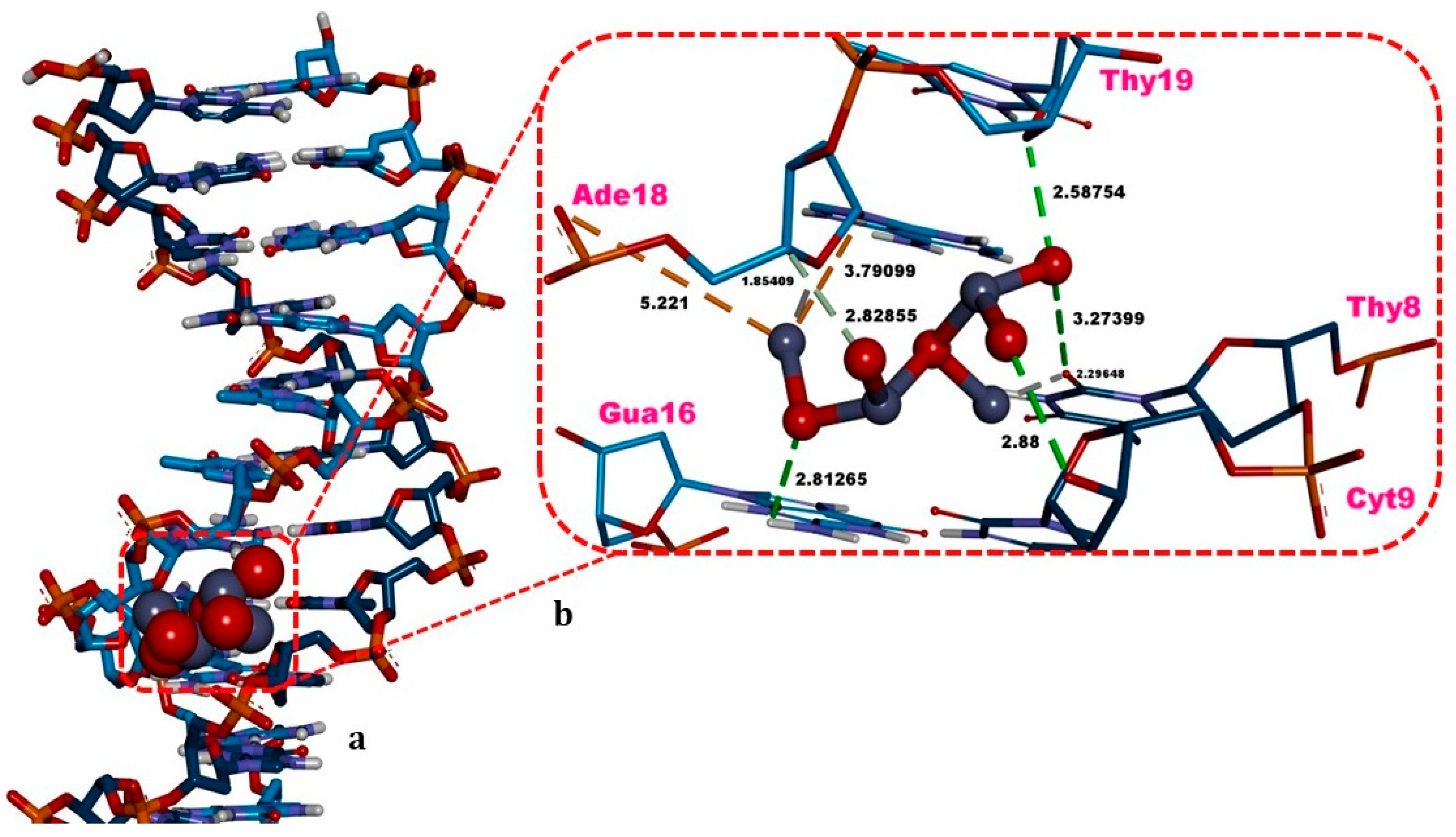
| ZnO NPs | B-DNA | Minor groove | −5.68 | Thy8 (3.27 Å), Cyt9 (2.88 Å), Gua16 (2.81 Å), Ade18 (2.82 Å), Thy19 (2.58 Å) | Ade18 (3.79 Å, 5.22 Å) | Thy8, Gua10, Ade17, Thy19 | Thy8 (2.29 Å), Ade18 (1.85 Å) |
| Docked Conformation | EHOMO | ELUMO | Energy Gap | μ | η | χ |
|---|---|---|---|---|---|---|
| ERα-LBD bound pose | −6.47 | −5.45 | 1.02 | −5.96 | 0.51 | 5.96 |
| B-DNA bound pose | −6.60 | −5.71 | 0.89 | −6.16 | 0.44 | 6.16 |
Disclaimer/Publisher’s Note: The statements, opinions and data contained in all publications are solely those of the individual author(s) and contributor(s) and not of MDPI and/or the editor(s). MDPI and/or the editor(s) disclaim responsibility for any injury to people or property resulting from any ideas, methods, instructions or products referred to in the content. |
© 2025 by the authors. Licensee MDPI, Basel, Switzerland. This article is an open access article distributed under the terms and conditions of the Creative Commons Attribution (CC BY) license.
Share and Cite
Sukaj, E.; Sula, E.; Vasjari, L.; Rama, A.; Istifli, E.S.; Impellitteri, F.; Aliko, V.; Faggio, C. From Nucleus to No Nucleus: A Multimodal Study of the Toxicity of ZnO Nanoparticles: A Focus on Membrane Integrity, DNA Damage, and Molecular Docking. Biology 2026, 15, 23. https://doi.org/10.3390/biology15010023
Sukaj E, Sula E, Vasjari L, Rama A, Istifli ES, Impellitteri F, Aliko V, Faggio C. From Nucleus to No Nucleus: A Multimodal Study of the Toxicity of ZnO Nanoparticles: A Focus on Membrane Integrity, DNA Damage, and Molecular Docking. Biology. 2026; 15(1):23. https://doi.org/10.3390/biology15010023
Chicago/Turabian StyleSukaj, Erion, Eldores Sula, Ledia Vasjari, Ariol Rama, Erman S. Istifli, Federica Impellitteri, Valbona Aliko, and Caterina Faggio. 2026. "From Nucleus to No Nucleus: A Multimodal Study of the Toxicity of ZnO Nanoparticles: A Focus on Membrane Integrity, DNA Damage, and Molecular Docking" Biology 15, no. 1: 23. https://doi.org/10.3390/biology15010023
APA StyleSukaj, E., Sula, E., Vasjari, L., Rama, A., Istifli, E. S., Impellitteri, F., Aliko, V., & Faggio, C. (2026). From Nucleus to No Nucleus: A Multimodal Study of the Toxicity of ZnO Nanoparticles: A Focus on Membrane Integrity, DNA Damage, and Molecular Docking. Biology, 15(1), 23. https://doi.org/10.3390/biology15010023