

Article

Potentially Zoonotic Bacteria in Exotic Freshwater Turtles from the Canary Islands (Spain)

1
Instituto Universitario de Enfermedades Tropicales y Salud Pública de Canarias, Universidad de La Laguna (ULL), Av. Astrofísico F. Sánchez, sn, 38203 La Laguna, Canary Islands, Spain
2
Departamento de Obstetricia y Ginecología, Pediatría, Medicina Preventiva y Salud Pública, Toxicología, Medicina Legal y Forense y Parasitología, Facultad de Farmacia, Universidad de La Laguna (ULL), Av. Astrofísico F. Sánchez, sn, 38203 La Laguna, Canary Islands, Spain
3
Programa de Doctorado de Ciencias Médicas y Farmacéuticas, Desarrollo y Calidad de Vida, Universidad de La Laguna (ULL), Av. Astrofísico F. Sánchez, sn. (Edificio Calabaza), 38200 La Laguna, Canary Islands, Spain
4
Programa de Doctorado en Biodiversidad y Conservación, Universidad de La Laguna (ULL), Av. Astrofísico F. Sánchez, sn. (Edificio Calabaza), 38200 La Laguna, Canary Islands, Spain
5
Área de Medio Ambiente Las Palmas, Cambio Climático y Proyectos Europeos, Gestión y Planeamiento Territorial y Medioambiental, S.A. GESPLAN, Av. Tres de Mayo, 71, 38005 Santa Cruz de Tenerife, Canary Islands, Spain
*
Author to whom correspondence should be addressed.
Biology 2025, 14(12), 1753; https://doi.org/10.3390/biology14121753 (registering DOI)
Submission received: 23 October 2025 / Revised: 25 November 2025 / Accepted: 25 November 2025 / Published: 6 December 2025

Simple Summary

Pond sliders are native to the southeastern United States, but they can be found all around the world. In the Canary Islands (Spain), they coexist with other, less-common exotic freshwater turtle species, most likely as a result of being released from captivity. The aim of this study was to determine the presence of potentially pathogenic bacteria in these species, collected on the islands of Tenerife and Gran Canaria (Canary Islands), and to assess the associated health risks for humans and local fauna. The results indicate that the reptile populations examined carry bacteria that can be pathogenic to both humans and other animals and are mainly associated with gastrointestinal disease. These pathogens pose a particular risk to children and the elderly, while animal handlers and pet owners constitute the most exposed groups.

Abstract

The pond slider (Trachemys scripta) is native to the southeastern United States but has been introduced all around the world, including to the Canary Islands (Spain), along with other less-common exotic freshwater turtles such as Graptemys pseudogeographica, Mauremys spp., and Pseudemys peninsularis. The aim of this study was to determine the presence of pathogenic bacteria in these animals and to evaluate the associated health risks for humans and local fauna. For this purpose, cloacal samples from 42 specimens collected on the islands of Tenerife and Gran Canaria (Canary Islands) were analyzed for potentially zoonotic bacteria using selective culture media and PCR. Non-tuberculous mycobacteria were the most isolated pathogen (57.9%), followed by Yersinia enterocolitica (42.1%) and Escherichia coli carrying stx and/or eae genes (33.3%). Salmonella spp. was detected in 31.0% of the chelonians, identifying Salmonella Typhi and Salmonella Typhimurium serotypes. Staphylococcus spp. showed a prevalence of 21%, mainly Staphylococcus aureus along with one antibiotic-resistant Staphylococcus hominis isolate. Pseudomonas spp. were found in 10.1% of samples, although only one isolate corresponded to Pseudomonas aeruginosa. Campylobacter spp. and Vibrio spp. were detected at low frequencies (<10%), and Listeria monocytogenes was not identified. Overall, the results indicate that aquatic turtle populations in the Canary Islands pose notable health risks, especially for animal handlers and people with compromised immune systems.

1. Introduction

The World Health Organization (WHO) defines zoonoses as “any disease or infection that is naturally transmissible from vertebrate animals to humans” [1]. Zoonotic viruses, bacteria, fungi, and parasites can be transmitted through direct contact or through food, water, vectors, or the environment [2], contributing to 61% of human infections, or even more in the case of emerging and reemerging diseases, with approximately 75% of them being related to animals [3,4]. Zoonotic diseases are not limited to rural areas and can also appear in urban settings, even if there are not noticeable animal populations in the surroundings, because of food and water contamination [5]. While zoonotic pandemics have been affecting humans since neolithic times, since humanity started to domesticate animals and plants, their relevance to human health has been particularly highlighted by recent highly virulent infections with pandemic potential, such as the 2005 H5/N1 avian influenza outbreak, the 2009 “swine flu” H1/N1 influenza pandemic, the 2013–2016 West African Ebola outbreak, and the 2019 coronavirus disease (COVID-19) pandemic, as well as local outbreaks of “neglected zoonoses” that can also have significant consequences [6,7].
Related to this, the introduction of foreign species into new habitats, mainly caused by the live animal trade stimulated by the growing tendency of owning exotic pets, increases the risk of zoonotic infections that can be life-threatening, particularly in children and immunocompromised people [8,9]. Some of these infections could be incorrectly prevented, diagnosed, or threatened because of the lack of knowledge of local health systems, which could have insufficient experience or training with these kinds of diseases [10,11]. Native fauna can also be infected with pathogens carried by introduced species, as well as being affected by predation, competition, and habitat alteration [12], especially species that belong to insular territories, due to the lack of competitors and predators that facilitate the settlement of invasive species and the spread of zoonotic diseases [13,14].
The Canary Islands (Spain) are located in north-west Africa, near the Morocco coastline (13°23′–18°80′ W and 27°37′–29°24′ N), and present the ideal life conditions for exotic species: warm temperatures, high availability of resources, and absence of predators. For these reasons, the archipelago harbors more than 340 invasive (or potentially invasive) animal and plant species, such as the barbary ground squirrel (Atlantoxerus getulus), the rose-ringed parakeet (Psittacula krameri), and the crimson fountaingrass (Cenchrus setaceus) [15,16]. Exotic reptiles are also present in the Canaries, the main example being the California kingsnake (Lampropeltis californiae), which has decreased the population of endemic lizards due to its dietary habits, and has been recognized as a carrier of zoonotic bacteria and parasites [17,18,19]. Moreover, exotic freshwater turtles have also been found on the islands, mostly pond sliders (Trachemys scripta) [20]. This chelonian, included in the Spanish catalog of invasive exotic species [21], is native to the southeastern United States and is the most widely distributed species in comparison with its endemic area, being found all around the world except for Antarctica [22]. In general, pet turtles can carry different bacteria without showing any clinical signs and shed them through their feces, posing an emerging public health concern [23]. However, despite all the investigations conducted on Salmonella in reptiles, which is the most contracted pathogen from this animal group, the presence and prevalence of other bacteria remain unclear [24]. Even though the zoonotic risk of other exotic reptiles found in the Canary Islands has been studied [19,25,26], there is no research regarding the microflora of wild freshwater turtles in this territory. For this reason, the aim of this study was to determine the presence of pathogenic bacteria in these animals and to evaluate their health risk to humans and local fauna.

2. Materials and Methods

2.1. Study Area and Specimen Collection

A total of 42 adult freshwater turtles (2 Graptemys pseudogeographica, 7 Mauremys spp., 3 Pseudemys peninsularis, 30 T. scripta) from the islands of Tenerife and Gran Canaria (Figure 1) were euthanized, frozen, and donated by the staff of the “Red de Alerta Temprana de Canarias para la Detección e Intervención de Especies Exóticas Invasoras” (REDEXOS) during 2021–2023, affiliated with a company Gestión y Planeamiento Territorial y Medioambiental, S.A. (GESPLAN) (Santa Cruz de Tenerife, Spain). This action was carried out following authorization from the “Dirección General de Lucha Contra el Cambio Climático y Medio Ambiente, Gobierno de Canarias” (Las Palmas de Gran Canaria, Spain). Table 1 shows the species studied and the location of their capture.

2.2. Sampling and Bacterial Isolation

The processing of the samples was performed after thawing the specimens at 4 °C and under aseptic conditions, using a class II biological safety cabinet (Telstar, Barcelona, Spain). Two cloacal samples were taken from each sampled animal using sterile swabs (Deltalab, Barcelona, Spain), and were incubated with 5 mL of Buffered Peptone Water (BPW) (Labkem, Barcelona, Spain). One sample was incubated at 37 °C for 24 h, and the other one at 42 °C for 18 h under microaerophilic conditions (using a 5 mL Eppendorf tube to reduce the oxygen percentage) for Campylobacter spp. isolation. An additional sample was obtained under the same conditions and stored for 8 h at 37 °C in 5 mL of Alkaline Peptone Water (APW) (1% NaCl, pH = 8.4) for Vibrio spp. Subsequently, 100 µL of liquid culture were inoculated onto different selective culture media: Baird–Parker agar (Labkem) for Staphylococcus spp., Cetrimide agar (VWR International, Leuven, Belgium) for Pseudomonas spp., Cefsulodin Irgasan Novobiocin agar (CIN) (Merck, Darmstadt, Germany) for Yersinia enterocolitica, Oxford agar for Listeria monocytogenes (Labkem), Thiosulfate citrate bile salts sucrose agar (TCBS) (VWR International) for Vibrio spp., sorbitol supplemented MacConkey agar (Scharlab, Barcelona, Spain), and Tryptone Bile X-glucuronide chromogenic agar (TBX) (Labkem) for Escherichia coli. Every plate was incubated for 24 h at 37 °C, except for the CIN, which was stored at 30 °C. In the case of Salmonella spp., 500 µL of BPW culture was transferred to 4.5 mL of Rappaport–Vassiliadis broth (VWR International) and incubated for 20 h at 42 °C. Then, 100 µL of the liquid culture was later incubated in SalmonellaShigella agar (Merck) for 24 h at 37 °C.

2.3. Molecular Biology Techniques

2.3.1. DNA Extraction

The colonies obtained were suspended in 1 mL of PBS under sterile conditions, followed by centrifugation at 12,000× g; then, the supernatant was discarded, and the process was repeated again. The resulting pellet was subjected to DNA extraction following López et al.’s [27] protocol. The same methodology was applied for the DNA isolation of Mycobacterium spp. and Campylobacter spp. using 1 mL of each BPW culture.

2.3.2. PCR Identification

Different polymerase chain reaction (PCR) techniques were performed for the identification of relevant zoonotic bacteria, along with resistance and virulence genes:
Six pairs of primers were employed for Campylobacter spp. (23s rRNA fragment) confirmation and Campylobacter coli (glyA gene), Campylobacter fetus (sapB2 gene), Campylobacter jejuni (hipO gene), Campylobacter lari (glyA gene), and Campylobacter upsaliensis (glyA gene) identification, according to Wang et al. [28].
Following the protocol described by Blanco et al. [29], some E. coli pathotypes were identified through the amplification of stx1, stx2, and eae virulence genes, responsible for Shiga-like toxins and intimin protein synthesis, respectively.
Listeria monocytogenes that grew in Oxford agar was identified by a simple PCR of a region of the iap gene, which codifies the p60 invasion-associated protein, as described by Jaton et al. [30].
Mycobacteria identification was carried out using a multiplex PCR described by Kim et al. [31]. This protocol also allows the differentiation between the Mycobacterium tuberculosis complex and the atypical mycobacteria group by amplifying the rpoB gene, and the regions of difference (RD) RD1 and RD8.
The colonies from cetrimide agar were irradiated with UV light, and the fluorescent ones were tested for Pseudomonas aeruginosa through simultaneous amplification of lipoprotein-coding genes: oprI and oprL, as described by De Vos et al. [32].
The identification of Salmonella enterica serotypes important to human health was carried out following De Freitas et al.’s [33] protocol. Two different PCRs were performed: one to identify Salmonella Enteritidis (sdfI gene) and Salmonella Typhi (ViaB gene), and a second one for Salmonella Typhimurium detection (Spy gene). In both cases, Salmonella spp. (OMPC gene) was tested.
A single m-PCR described by Campos-Peña et al. [34] was used for the identification of six Staphylococcus species: Staphylococcus aureus (nucA gene), Staphylococcus epidermidis (sep gene), Staphylococcus haemolyticus (mvaA gene), Staphylococcus hominis (hom gene), Staphylococcus lugdunensis (fbl gene), and Staphylococcus saprophyticus (sap gene), as well as for the detection of methicillin (mecA gene) and mupirocin (ileS2 gene) resistance genes.
According to Liu et al. [35], a PCR assay was performed to detect all bacteria belonging to the Vibrio genus by amplifying a fragment of 16s rDNA. A more specific PCR described by Neogi et al. [36] was performed with the positive samples, based on toxR gene amplification to identify Vibrio cholerae and Vibrio parahaemolyticus, and the vvhA gene for Vibrio vulnificus.
The colonies grown in CIN agar were tested for the ail (attachment and invasion locus) gene to identify pathogenic and non-pathogenic Y. enterocolitica strains, according to Wannet et al. [37].
All PCR assays were evaluated with 1.5% agarose gel electrophoresis (Fisher Bioreagents, Madrid, Spain) at 90 V for 1 h. SiZer-100 DNA Marker (iNtRON Biotechnology, Seongnam-Si, Republic of Korea) was used as molecular size marker and Real-Safe (Durviz SL, Valencia, Spain) as DNA stain. The gels were revealed with a ChemiDocTM XRS+ (Bio-Rad, Hercules, CA, USA) system.

2.3.3. Controls

Positive controls were employed in all PCR assays, using bacterial strains from the American Type Culture Collection (ATCC). These strains were stored at −70 °C and incubated for growth for 18 to 24 h in Tryptic Soy Broth (TSB) (Labkem) at 37 °C under aerobic conditions, or microaerophilic conditions in the case of Campylobacter spp. Subsequently, they were submitted to DNA extraction using the same method used for the samples. For the negative controls, nuclease-free molecular biology grade water (VWR International) was used instead of DNA.

2.4. Statistical Analysis

The chi-square test and Fisher’s exact test were applied, establishing a p-value of 0.05, to compare the prevalence between the turtle species and the islands where the studied animals were found. This was performed using the statistical Windows software “Statistical Package for the Social Sciences” (SPSS) 29.0.1.0 (IBM Corporation, Armonk, NY, USA). The 95% Clopper Pearson confidence intervals (95% CI) were calculated using the approximate or exact method, as appropriate.

3. Results

3.1. General

Mycobacterium spp. was the most isolated pathogen in the forty-two turtles studied, being identified in eleven out of nineteen animals (57.9%; 33.5–79.7), followed by Y. enterocolitica in eight out of nineteen (42.1%; 20.3–66.5), and virulent E. coli in fourteen out of forty-two (33.3%; 19.6–49.5). In contrast, none of the thirty-six turtles tested for L. monocytogenes showed positive results. Table 2 summarizes all positive results isolates.

3.2. Campylobacter spp.

None of the most clinically relevant Campylobacter species (C. coli, C. fetus, C. jejuni, C. lari, and C. upsaliensis) were detected in this study; however, four isolates were identified at the genus level. Three of them were from Gran Canaria (one P. peninsularis and two T. scripta) and one from T. scripta from Tenerife, with no statistical differences observed between the islands.

3.3. Escherichia coli (stx1, stx2 and Eae Genes)

Virulent E. coli genes were detected in fourteen out of forty-two turtles (33.3%; 19.6–49.5). The most prevalent gene was stx2, found in seven animals (16.7%; 7.0–31.4), followed by eae and sxt1 being found in six (14.3%; 5.4–28.5) and four (9.5%; 2.7–22.6) turtles, respectively. Three T.scripta showed the coexistence of two different genes: eae + sxt1 (Tenerife), eae + stx2 (Gran Canaria), and sxt1 + stx2 (Tenerife). Detailed data are shown in Table 3. There were no statistical differences between the prevalences of turtle species or island.

3.4. Listeria monocytogenes

Thirty-six turtle samples were tested for L. monocytogenes, and all tested negative.

3.5. Mycobacterium spp.

The exclusive amplification of the rpoB gene in eleven out of nineteen (57.9%; 33.5–79.7) turtles evidences the presence of atypical (non-tuberculous) mycobacteria in these specimens. No significative differences were found between the prevalences by species or island. Detailed results are shown in Table 4.

3.6. Pseudomonas spp.

Pseudomonas spp. was detected in two out of nineteen (10.1%; 1.3–33.1) animals tested (T. scripta from Tenerife) with no statistical differences between species or islands. The amplification of both oprI and oprL genes indicated the presence of P. aeruginosa in one (5.3%; 0.1–26.0) of them.

3.7. Salmonella spp.

Salmonella spp. was detected in thirteen out of forty-two (31.0%; 17.6–47.1) turtles. More specifically, S. Typhi and S. Typhimurium serotypes were found coinfecting one (2.4%, 0.06–12.6) T. scripta from Tenerife, but S. Enteritidis were not identified. Results are shown in Table 5. No statistical differences were found between the prevalences by turtle species or island.

3.8. Staphylococcus spp.

Nine positive isolates were obtained for Staphylococcus spp. from the forty-two chelonians studied (21.4%; 10.3–36.8), with S. aureus being identified in eight cases (19.0%; 8.6–34.1). The remaining isolate (2.4%; 0.06–12.6), from one T. scripta from Tenerife, was characterized as mupirocin-resistant S. hominis. All results are shown in Table 6. No statistical differences were observed between the prevalences by species or island.

3.9. Vibrio spp.

Thirty-six animals were tested for Vibrio sp., yielding positive results in one P. peninsularis and one T. scripta from Gran Canaria (5.6%; 0.7–18.7); however, a posterior PCR resulted negative for V. cholerae, V. parahaemolyticus, and V. vulnificus.

3.10. Yersinia enterocolitica

Eight out of nineteen turtles tested for Y. enterocolitica were positive for this bacterial species, with no statistical differences between islands. The presence of ail gene was not observed in any sample. Table 7 shows detailed results.

4. Discussion

4.1. Campylobacter spp.

Some Campylobacter species are well-known zoonotic agents with importance for human and veterinary health. The gastrointestinal disease they cause (campylobacteriosis) is one the most common bacterial illnesses and its incidence has been increasing over the last decade, causing symptoms like fever, abdominal pain, vomiting, diarrhea, and, in fewer cases, extraintestinal infections and/or autoimmune disorders [38,39]. Campylobacter jejuni and C. coli are the most frequent species that cause human infection, which are part of the microbiome that infect warm-blooded animals such as pigs and poultry, and are normally asymptomatic. For this reason, the main entry way for Campylobacter spp. into hosts is through the host’s consumption of contaminated animal products [40]. Other species, such as C. upsaliensis or C. lari, have been found to cause human disease; however, their actual clinical importance remains unknown because the specific Campylobacter species involved are not usually identified [41]. Four species have been isolated from reptiles to date: C. fetus, Campylobacter geochelonis, Campylobacter hyointestinalis, and Campylobacter iguaniorum, of which only C. fetus has been associated with human disease [42].
In our study, four (9.5%) Campylobacter spp. isolates were obtained, but none could be identified at the species level using our PCR protocol, which was designed for bacteria commonly involved in human campylobacteriosis. They may correspond to the previously mentioned reptile-associated species: C. geochelonis, C. hyointestinalis, and C. iguaniorum. Recent investigations have identified other species as responsible for disease [43,44], suggesting that the risk for humans and warm-blooded animals in contact with this turtle population could be higher. In general, the presence of Campylobacter in turtles is low, with reported prevalences ranging from 10.4% [45] to 1.1% or there even being a complete absence [46,47], which aligns with the results obtained in the Canary Islands. An exception is the study by Gilbert et al. [48] who reported 60.4% positive samples using PCR as the detection method. These authors noted that such differences could be due to the varying isolation and identification methods used in each study (specific media or PCR), as well as the intermittent shedding of microorganisms.

4.2. Escherichia coli (stx1, stx2 and Eae Genes)

Escherichia coli is widely distributed among vertebrates, especially warm-blooded animals and reptiles, showing different prevalences between species and being remarkably high in humans compared to reptiles [49]. Although E. coli is an important component of the intestinal microflora, its genetic plasticity has allowed the acquisition of multiple virulence factors, leading to different pathotypes that can cause both intestinal and extraintestinal infections, the latter mainly occurring in the urinary tract, but occasionally resulting in meningitis or endocarditis [50,51,52]. The stx and eae genes are responsible for a large part of the virulence of these pathogenic E. coli strains [53]; the first ones encode for verotoxins or Shiga-like toxins, divided into stx1 and stx2 with various subtypes each, and are related to bloody diarrhea and the life-threating hemolytic–uremic syndrome, especially stx2 [54,55]. Furthermore, the eae gene encodes for intimin, a protein that facilitates the attachment of E. coli to the intestinal epithelium, which is necessary for colonization [56].
Not many studies have tested reptiles for E. coli due to their association with warm-blooded animals, and even fewer have addressed its virulence [57]. The scarce data available show a low presence of Shiga-like E. coli (STEC) and/or intimin; for instance, Dec et al. [58] identified 32 out of 67 (47.8%) positive samples for E. coli among turtles, lizards, and snakes from Poland (with significantly similar prevalences between groups), half of which showed virulence factors, but none contained stx1, stx2, or eae genes. Martinez et al. [59] analyzed 20 ocellated lizards (Timon lepidus) from Spain without describing any positive STEC sample, and Bautista-Trujillo et al. [60] found low prevalences of virulent E. coli in 240 green iguanas (Iguana iguana) sampled in Mexico: 10% stx1, 0.4% stx2, and 0.8% eae. The results of our study are considerable higher than these and could suggest that, although reptiles are not major carriers of zoonotic E. coli, freshwater turtles from the Canary Islands could suppose a risk. However, further research is needed to confirm this hypothesis, along with the identification of other virulent factors and the characterization of the strains involved and their adaptability to the human host.

4.3. Listeria monocytogenes

Listeria monocytogenes is an opportunistic pathogen that mainly affects immunocompromised individuals, pregnant women and newborns, and can be found in soil, water, various food products, humans, and animals. This microorganism colonizes the intestinal tract through the ingestion of contaminated food and then disseminates to other organs, causing gastroenteritis, meningitis, encephalitis, mother-to-fetus infections, and septicemia, with a death rate of 25–30%. Even though listeriosis is rare compared to other foodborne infections, its high mortality makes this bacterium an important public health concern [61,62]. It is important to note that a cutaneous form of listeriosis can be contracted by veterinarians and farm workers from the animals they handle, and potentially spread the disease to their pets [63].
The adaptability of L. monocytogenes to different ranges of temperature, salinity, and pH allows its development in cold-blooded animals like reptiles [64]; even so, not many studies have been conducted on its prevalence in these animals, showing relatively low infection percentages. In wildlife animals from New York, Chen et al. [65] obtained a prevalence of 5.6% (18/324) overall, with the prevalence in reptiles (12%, 2/17) being slightly higher to mammals (8%, 5/64) and birds (4.5%, 11/242), while Nowakiewicz et al. [66] tested 130 European pond turtles (Emys orbicularis) from Poland, finding just two cases of L. monocytogenes in adults (1.5%, 2/130). The authors of these works comment that the observed differences could be due to the isolation methods applied. Of the 36 turtles tested in this study, none of them showed positive results for L. monocytogenes, suggesting that listeriosis infection may not be a major preoccupation to consider in freshwater turtles from the Canary Islands; nevertheless, further investigation is required to confirm this statement, taking into account the small sample size.

4.4. Mycobacterium spp.

Mycobacteriosis are a group of diseases with different symptomatology caused by various Mycobacterium species. These species are classified into the M. tuberculosis complex (primarily affecting the lungs) and non-tuberculous mycobacteria (NTM); these are also referred to as atypical or environmental mycobacteria because they can be isolated from water, soil, dust, and plants and frequently affect lymphatic, skin, and soft tissues [67,68,69]. Bacteria belonging to the atypical group (e.g., Mycobacterium chelonae, Mycobacterium fortuitum, Mycobacterium kansasii) can infect reptiles through cutaneous lesions or the ingestion of contaminated food and/or water; even so, reptiles appear to be naturally resistant, and in most cases are asymptomatic [24]. Many NTMs have been characterized as antibiotic-resistant, and despite not frequently affecting humans, case reports have been published; for this reason, children and individuals with compromised immune systems should take special precautions and avoid close contact with reptiles to minimize the risk of exposure [70].
While mycobacteriosis is more frequently reported in chelonians than in other reptile groups, mainly due their association with aquatic environments, most studies consist of case reports of sea turtles or, less frequently, freshwater turtles that show granulomatous lesions on viscera, bone or joint tissues, usually found postmortem [70]. In this study, non-tuberculous mycobacteria were detected in 11 out of 19 (57.9%) specimens. In contrast, the only study found searching for mycobacteria in wild freshwater turtles, conducted in Poland [71], reported a prevalence of 24.8% (31/125). This difference could be attributed to the warmer temperatures in the Canary Islands compared to Central Europe, which facilitates bacterial development, as well as the smaller sample size and the methodology employed [72,73]. Although our PCR protocol could not differentiate between species within this group, the most probable species present in the tested specimens is M. chelonae, as the most frequently identified mycobacterium in these animals, along with Mycobacterium marinum and Mycobacterium haemophilum [74,75]. Further studies should aim to identify the Mycobacterium species by amplifying and sequencing of other DNA fragments.

4.5. Pseudomonas spp.

Bacteria belonging to the Pseudomonas genus are known for their capacity to colonize a wide variety of environments, both aquatic and terrestrial, due to their metabolic and physiological adaptability [76]. Among all species, P. aeruginosa is the most extensively studied because of its pathogenic characteristics in plants and animals (including humans). It is often described as an opportunistic pathogen and is one of the most common causes of nosocomial infection, especially in individuals with compromised immune system, burns or wounds, or those using implants or indwelling medical devices [77,78]. In humans, P. aeruginosa can affect multiple organs including the skin, brain, eyes, ears, urinary tract, and lungs; however, urinary tract and pulmonary infections are the most common due to their ability to form biofilms on catheters and intubation equipment. Additionally, this bacterium possesses other virulence factors such as toxins, proteases, hemolysins, and antibiotic resistance mechanisms [79,80].
Regarding animals, P. aeruginosa can cause different symptomatology such as otitis in dogs, respiratory infections in cats, mastitis in cows or endometriosis in horses [81,82]. In reptiles, it is part of their oral and intestinal microflora but acts as an opportunistic pathogen too, although few reports have been published and these are focused mainly on lizards and snakes in which it causes ulcerative stomatitis, necrotizing enteritis, cloacitis, dermatitis, abscesses, and septicemia, among other symptoms [83]. The prevalence of P. aeruginosa found in this study (5.3%; 1/19) matches other works conducted in continental Spain such as Mengistu et al. [84], who found 2 out of 91 (2.2%) positive isolates from wild T. scripta samples, or Muñoz-Ibarra et al. [85], reporting 62 out of 345 (18.0%) positive reptiles (Testudines and Squamata) samples from Spain and Portugal; in this latter study, the authors analyzed other anatomical locations besides feces, like the skin or nose, which, along with the origin of the samples (from diseased animals belonging to clinics), might explain the higher percentage. In Italy, a study showed 9 positive P. aeruginosa isolates out of 218 (4.1%) healthy pet reptiles [86], suggesting that P. aeruginosa does not constitute a great threat to consider in freshwater turtles from the Canary Islands; however, more studies need to be conducted to affirm this hypothesis, considering the small sample size analyzed.

4.6. Salmonella spp.

Salmonella spp. is one of the most frequent causes of foodborne disease in humans, mainly through the consumption of poultry and eggs which are the primary sources of salmonellosis outbreaks [87]. Infections caused by this bacterium can be classified according to their pathogenicity: human-restricted serotypes (S. Typhi, Salmonella Paratyphi, and Salmonella Sendai) cause an invasive, life-threatening systemic disease known as typhoid or enteric fever, whereas nontyphoidal serotypes such as S. Enteritidis or S. Typhimurium normally cause self-limited gastroenteritis associated with intestinal inflammation and diarrhea lasting 5–7 days in immunocompetent individuals [88,89]. In animals, the most common clinical manifestation is a gastrointestinal disease, although acute septicemia, abortion, arthritis or respiratory disease can also be observed. However, infection often remain asymptotic, making control in farms and herds challenging [90].
Reptiles carry Salmonella spp. as part of their normal microbiota, with prevalences reaching up to 90% according to some studies, along with a wide variety of serotypes, some of them zoonotic [91]. This makes salmonellosis the most frequent zoonotic disease transmitted by pet reptiles [92]. In studies conducted on freshwater turtles from continental Spain, Hidalgo-Vila et al. [93,94] reported prevalences of 13,2% (10/76) and 6.6% (5/78) in free-living endemic turtles, and 6.38% (6/94) and 5.1% (2/39) in free-living and pet exotic turtles, respectively. They detected only one isolate of the zoonotic S. Typhimurium serotype in a single T. scripta turtle, with no presence of S. Typhi or S. Enteritidis. Marin et al. [95] reported that none of the 37 freshwater turtles (E. orbicularis and Mauremys leprosa) nor the 34 sea turtles (Caretta caretta) analyzed were positive for Salmonella spp. In contrast, tortoises tested in that study showed a prevalence of 36% (29/81), similar to the findings of Hidalgo-Vila et al. [93], where all samples (100%; 16/16) from Testudo graeca tortoises tested positive for this bacterial genus. The authors attributed these differences to the longer persistence of Salmonella spp. in terrestrial environments compared to aquatic ones, as well as to the geophagic and coprophagic habits of tortoises.
The results of this study (31.0%; 13/42) are considerably higher compared to continental Spain, which could mean that the turtles analyzed were pets liberated by their owners or escaped from households where they cohabited with more turtles in the same terrarium, as can occur in zoos and especially in pet shops, which has been noted in different studies [96,97,98,99,100]. The finding of S. Typhi in one T. scripta specimen from Tenerife, a serotype considered human-restricted [101,102], indicates a contamination of the animal environment with human feces; also, the isolation of the zoonotic S. Typhimurium in the same specimen indicates the risk of infection to the surrounding human populations and, especially, animal handlers. More studies need to be carried out to identify other Salmonella serotypes in freshwater turtles from the Canary Islands.

4.7. Staphylococcus spp.

Many Staphylococcus species are part of the normal microflora of humans and animals (mostly skin and mucosa), traditionally divided according to their capacity to produce coagulase enzymes [103]. Staphylococci can be transmitted through direct contact with infected humans, animals or unclean sanitary equipment, as well as through ingestion of contaminated food or water [104], with S. aureus being the most studied species due to its virulence and antimicrobial resistance. In healthy humans, it predominantly colonizes the nose, throat, axillae, and groin, causing minor skin infections that do not usually require antibiotic treatment but, in hospitalized or immunocompromised patients, especially those with skin lesions, the severity of the infection is higher, producing abscesses, lung infections, bacteremia, endocarditis, or osteomyelitis, requiring antibiotic therapy; this makes S. aureus one of the most common causes of hospital-associated infection along with P. aeruginosa [105,106].
In warm-blooded animals, the infection is similar to that of humans; however, staphylococci in reptiles often produce cutaneous diseases as well as gastrointestinal ones, such as stomatitis, dental and liver disease, or cloacitis [107]. Most of the related bibliography uses skin reptile samples for Staphylococcus spp. identification, which cannot be directly compared to our study; even so, interesting results have been obtained. For example, Strompfová et al. [108] used the MALDI-TOF technique on 40 skin samples from 17 different reptile species and isolated 51 coagulase-negative staphylococci, mainly Staphylococcus xylosus (22/40; 55%) and Staphylococcus sciuri (16/40; 40%), both commensal of skin and mucosa with the second one identified as an occasional opportunistic pathogen; however, no S. aureus was identified. Using the same method, Brockmann et al. [109] analyzed skin samples from 235 different reptiles and found 25 (10.6%) positive Staphylococcus spp. samples. Of the few studies found that analyze fecal samples, one, conducted by Espinosa-Gongora et al. [110] in the Copenhagen Zoo, did not isolate any S. aureus in the 21 reptiles analyzed (chelonians, lizards and snakes), which was the same result as Almeida et al.’s study [111], where all 66 Chelonoidis carbonaria tortoises were negative for this bacterium; however, 48 (72.7%) showed positive results for coagulase negative staphylococci, mostly S. sciuri and S. xylosus.
The notable difference in the prevalences of S. aureus in relation to our study (19.0%) indicates that the freshwater turtles from Tenerife and Gran Canaria could present a health risk to handlers, and especially, to people with a deficient immune system; however, more studies are needed to clarify the origin of the bacterium (e.g., contaminated water environment, contact with infected animals, etc.). One turtle was found carrying mupirocin-resistant S. hominis. This bacterium is typically found on human skin and rarely causes dermatological diseases, with some studies suggesting that it protects against the development of opportunistic pathogens [112,113]; therefore, its presence can indicate human contamination of the environment where the turtles inhabit. It is also important to mention that the PCR protocol used could lead to false negatives for less-common Staphylococcus species due to limited identification.

4.8. Vibrio spp.

The Vibrio genus comprises almost 200 described species that inhabit a wide range of aquatic environments [114,115]. Several species are pathogenic, with V. cholerae, V. parahaemolyticus, and V. vulnificus being the most important for human health; the first two cause gastroenteric disease with severe diarrhea (cholera), while the third causes wound infections and septicemia [116,117]. Vibriosis primarily occurs through the ingestion of raw or undercooked seafood contaminated with the bacteria or through wound contact with contaminated water, especially in warm seas [118,119]. Different Vibrio species have been detected in turtles; however, limited information is available regarding their symptomatology in these animals. They appear to be associated with skin and gastrointestinal lesions and may also cause bloodstream infection. Among the most common species identified in these reptiles, Vibrio alginolyticus can cause serious disease in humans, whereas Vibrio harveyi is an emerging opportunistic pathogen that affects many aquatic animals worldwide [120,121].
Studies focused on Vibrio spp. in turtles are mainly centered on sea turtles, particularly in Asia, where sea turtles are considered part of the human diet [122]. These studies show variable infection rates in cloacal samples, with V. alginolyticus and V. parahaemolyticus being frequently isolated, highlighting sea turtle consumption risk [121,123,124,125]. In this study, Vibrio prevalence was low, with only 2 positive turtles out of 36 (5.6%) being different from V. cholerae, V. parahaemolyticus, and V. vulnificus. This is probably due to V. alginolyticus’s reported abundance in similar animals; for this reason, more studies need to be conducted to precisely identify the species involved and determine the human infection risk.

4.9. Yersinia enterocolitica

Yersiniosis is a foodborne disease mainly caused by Y. enterocolitica that manifests as gastrointestinal inflammation, fever, vomiting, and diarrhea; it is especially intense in children under 5 years of age [126]. This bacterium can be found in a wide variety of animals and environments, with pigs (and pork products) being the main reservoir of human pathogenic strains; however, virulent serogroups have also been isolated in dogs, sheep, wild rodents, and water [127,128]. Yersinia enterocolitica is resistant to cold temperatures, allowing it to develop in refrigerated food, which is its main infection pathway [129]; despite this, not many studies have investigated its presence in cool-blooded animals.
The prevalence of Y. enterocolitica found in reptiles is considerably low: Silveira et al. [130] obtained one positive sample in 1 Pantherophis guttatus snake out of 23 (4.3%) wild reptiles from a rehabilitation center in Brazil; Nowakiewicz et al. [66] did not obtain any positive isolate from the 96 juvenile E. orbicularis turtles in a breeding center and only obtain positive isolate from 2 out of the 34 (5.9%) wild adult ones, both from Poland; and Kumar & Sharma [131] obtained negative results when analyzing 101 urban Hemidactylus flaviviridis geckos from India. These low results contrast with those obtained in this work (42.1%; 8/19); however, another study performed with exotic reptiles in the Canary Islands [26] obtained similar results, where 11 out of 29 (52.4%) veiled chameleons (Chamaeleo calyptratus) from Gran Canaria were positive for Y. enterocolitica, with only one isolate expressing the ail gene, which is typically found in pathogenic strains. In the case of the aquatic turtles, this gene was not detected; this absence may indicate an environmental origin and decrease the risk of human and animal infection.

4.10. Summary

The most frequently isolated bacteria were, in order of prevalence, Mycobacterium spp., Y. enterocolitica, and virulent E. coli. The detection of species and serotypes such as S. Typhi or S. hominis, which are considered specific or are mostly found in humans, may indicate close contact between the turtles and people, possibly due to contamination of the chelonian environment with wastewater from nearby households that, in some cases, are not connected to a sewerage system [132]. This finding could also suggest that some turtles captured in the wild had been released by their owners or had escaped from households where they were kept under poor livings conditions (i.e., overcrowded terrariums or unclean water supply). This would help explain the higher prevalence of some pathogens found, such as Y. enterocolitica or non-tuberculous mycobacteria, compared to previously published data. In addition to the risk to humans, the bacteria identified could affect other animals, even those far from the turtles’ habitat, through the contamination of watercourses.
Free-living turtles have been less studied than pet or zoological turtles, making it difficult to compare the results of this study with those of others. As far as is known, this is the first study conducted in the Canary Islands investigating the presence of zoonotic bacteria in wild freshwater turtles and providing relevant data on the public health risks posed by these species. However, the small sample size of some of the species examined, which limits statistical analysis, and the PCR methods employed, which did not allow to identify all the isolates obtained, constitute its main limitations. For these reasons, further studies should include larger numbers of specimens from different species, target additional pathogens or serotypes, and incorporate antibiotic resistance and virulence factor assays. It would also be useful to investigate the role of turtles in bacteria dissemination and to distinguish between reservoirs and mechanical carriers. The analysis of skin samples in addition to cloacal swabs could be valuable, as some bacteria species are more abundant in that anatomical part.
The results of this study highlight the risk that aquatic turtle populations in the Canary Islands pose to human health, especially to animal handlers in close contact with these animals and their environment, as well as to immunocompromised individuals. Therefore, the use of protective equipment such as gloves and face masks when handling these reptiles is recommended, and direct contact with the animals or their surroundings with bare hands should be avoided.

5. Conclusions

Exotic freshwater turtle populations from the islands of Tenerife and Gran Canaria carry diverse bacteria relevant to human and veterinary health. Among the pathogens detected, Shiga-like toxin producer E. coli, non-tuberculous mycobacteria, and S. aureus pose the greatest threat to people, especially animal handlers, children, and the elderly; additionally, other animals can also become infected. Considering the preliminary results obtained in the study, further research is required to analyze additional bacterial species and serotypes in larger sample sizes in order to gain a better understanding of the health risks posed by exotic turtles in the Canary Islands.

Author Contributions

Conceptualization, P.F. and N.A.-A.; methodology, N.A.-A. and P.F.; formal analysis, R.P.-V.; investigation, R.P.-V. and O.A.; resources, P.F.; data curation, R.P.-V.; writing—original draft preparation, R.P.-V.; writing—review and editing, all the authors; visualization, R.P.-V. and P.F.; supervision, P.F.; project administration, N.A.-A. and P.F.; funding acquisition, P.F. All authors have read and agreed to the published version of the manuscript.

Funding

This research was funded by “Consejería de Transición Ecológica, Lucha contra el Cambio Climático y Planificación Territorial” (Gobierno de Canarias)-Universidad de La Laguna agreement “Estudio de patógenos en aves migratorias y en especies exóticas en un escenario de cambio climático” (BOC-A-2020-248-4727). R.P.-V. was granted a predoctoral scholarship of the training program of the Department of Economy, Knowledge, and Employment of the Canary Government, co-funded by the European Social Fund (ESF) with a co-financing rate of 85% within the framework of the Canary Islands ESF Operational Program 2014–2020, priority axis 3, investment priority 10.2, specific object 10.2.1. (TESIS 2022010038).

Institutional Review Board Statement

The animal study protocol was approved by the “Dirección. General de Lucha Contra el Cambio Climático y Medio Ambiente” (Gobierno de Canarias).

Informed Consent Statement

Not applicable.

Data Availability Statement

All data obtained are included within the article.

Acknowledgments

We want to thank the REDEXOS staff for helping to supply the turtles.

Conflicts of Interest

The authors declare no conflicts of interest. The funders had no role in the design of the study; in the collection, analyses, or interpretation of data; in the writing of the manuscript; or in the decision to publish the results.

References

  1. Zoonoses. Available online: https://www.who.int/news-room/fact-sheets/detail/zoonoses (accessed on 19 June 2025).
  2. Chomel, B.B. Zoonoses. In Encyclopedia of Microbiology, 3rd ed.; Schaechter, M., Ed.; Elsevier Inc.: Amsterdam, The Netherlands, 2009; pp. 820–829. [Google Scholar] [CrossRef]
  3. Dong, X.; Soong, L. Emerging and Re-emerging Zoonoses are Major and Global Challenges for Public Health. Zoonoses 2021, 1, 1–2. [Google Scholar] [CrossRef]
  4. McArthur, D.B. Emerging Infectious Diseases. Nurs. Clin. N. Am. 2019, 54, 297–311. [Google Scholar] [CrossRef]
  5. Slifko, T.R.; Smith, H.V.; Rose, J.B. Emerging parasite zoonoses associated with water and food. Int. J. Parasitol. 2000, 30, 1379–1393. [Google Scholar] [CrossRef] [PubMed]
  6. Cross, A.R.; Baldwin, V.M.; Roy, S.; Essex-Lopresti, A.E.; Prior, J.L.; Harmer, N.J. Zoonoses under our noses. Microbes. Infect. 2019, 21, 10–19. [Google Scholar] [CrossRef]
  7. Morens, D.M.; Fauci, A.S. Emerging Pandemic Diseases: How We Got to COVID-19. Cell 2020, 182, 1077–1092. [Google Scholar] [CrossRef] [PubMed]
  8. Overgaauw, P.A.M.; Vinke, C.M.; van Hagen, M.A.E.; Lipman, L.J.A. A One Health Perspective on the Human–Companion Animal Relationship with Emphasis on Zoonotic Aspects. Int. J. Environ. Res. Public Health 2020, 17, 3789. [Google Scholar] [CrossRef] [PubMed]
  9. Reed, R.N.; Krysko, K.L. Invasive and introduced reptiles and amphibians. In Current Therapy in Reptile Medicine and Surgery; Mader, I., Douglas, R., Drivers, S.J., Eds.; Elsevier Inc.: Amsterdam, The Netherlands, 2013; pp. 304–309. [Google Scholar] [CrossRef]
  10. Shaheen, M.N.F. The concept of one health applied to the problem of zoonotic diseases. Rev. Med. Virol. 2022, 32, e2326. [Google Scholar] [CrossRef]
  11. Skowron, K.; Grudlewska-Buda, K.; Khamesipour, F. Zoonoses and emerging pathogens. BMC Microbiol. 2023, 23, 2032. [Google Scholar] [CrossRef] [PubMed]
  12. Borroto-Páez, R.; Bosch, R.A.; Fabres, B.A.; García, O.A. Introduced amphibians and reptiles in the Cuban Archipelago. Herpetol. Conserv. Biol. 2015, 10, 985–1012. [Google Scholar]
  13. Reynolds, R.G.; Niemiller, M.L. Island Invaders: Introduced amphibians and reptiles in the Turks and Caicos Islands. IRCF Reptiles & Amphibians 2010, 17, 116–121. [Google Scholar]
  14. de Wit, L.A.; Croll, D.A.; Tershy, B.; Newton, K.M.; Spatz, D.R.; Holmes, N.D.; Kilpatrick, A.M. Estimating Burdens of Neglected Tropical Zoonotic Diseases on Islands with Introduced Mammals. Am. J. Trop. Med. Hyg. 2017, 96, 749–757. [Google Scholar] [CrossRef]
  15. Ciencia Canaria—Invasoras: Las Especies Que Acechan en las Islas. Available online: https://www.cienciacanaria.es/secciones/a-fondo/1174-invasoras-las-especies-que-acechan-en-las-islas (accessed on 19 June 2025).
  16. Biota. Available online: https://www.biodiversidadcanarias.es/biota/estadisticas?se=0&m=0 (accessed on 21 October 2025).
  17. Piquet, J.C.; Warren, D.L.; Saavedra Bolaños, J.F.; Sánchez Rivero, J.M.; Gallo-Barneto, R.; Cabrera-Pérez, M.A.; Fisher, R.N.; Fisher, S.R.; Rochester, C.J.; Hinds, B.; et al. Could climate change benefit invasive snakes? Modelling the potential distribution of the California Kingsnake in the Canary Islands. J. Environ. Manag. 2021, 294, 112917. [Google Scholar] [CrossRef]
  18. Santana-Hernández, K.M.; Orós, J.; Priestnall, S.L.; Monzón-Argüello, C.; Rodríguez-Ponce, E. Parasitological findings in the invasive California kingsnake (Lampropeltis californiae) in Gran Canaria, Spain. Parasitology 2021, 148, 1345–1352. [Google Scholar] [CrossRef]
  19. Santana-Hernández, K.M.; Rodríguez-Ponce, E.; Medina, I.R.; Acosta-Hernández, B.; Priestnall, S.L.; Vega, S.; Marin, C.; Cerdà-Cuéllar, M.; Marco-Fuertes, A.; Ayats, T.; et al. One Health Approach: Invasive California Kingsnake (Lampropeltis californiae) as an Important Source of Antimicrobial Drug-Resistant Salmonella Clones on Gran Canaria Island. Animals 2023, 13, 1790. [Google Scholar] [CrossRef] [PubMed]
  20. REDEXOS. Available online: https://www3.gobiernodecanarias.org/cptss/sostenibilidad/biodiversidad/redexos/ (accessed on 19 June 2025).
  21. Real Decreto 630/2013, de 2 de Agosto, Por el que se Regula el Catálogo Español de Especies Exóticas Invasoras. Boletín Oficial del Estado, 185. 3 August 2013. Available online: https://www.boe.es/buscar/doc.php?id=BOE-A-2013-8565 (accessed on 19 June 2025).
  22. Standfuss, B.; Lipovšek, G.; Fritz, U.; Vamberger, M. Threat or fiction: Is the pond slider (Trachemys scripta) really invasive in Central Europe? A case study from Slovenia. Conserv. Genet. 2016, 17, 557–563. [Google Scholar] [CrossRef]
  23. Hossain, S.; Heo, G.J. Pet-turtles: A potential source of human pathogenic bacteria. Arch. Microbiol. 2021, 203, 3785–3792. [Google Scholar] [CrossRef]
  24. Ebani, V.V. Domestic reptiles as source of zoonotic bacteria: A mini review. Asian Pac. J. Trop. Med. 2017, 10, 723–728. [Google Scholar] [CrossRef]
  25. Abreu-Acosta, N.; Pino-Vera, R.; Izquierdo-Rodríguez, E.; Afonso, O.; Foronda, P. Zoonotic Bacteria in Anolis sp., an Invasive Species Introduced to the Canary Islands (Spain). Animals 2023, 13, 414. [Google Scholar] [CrossRef] [PubMed]
  26. Pino-Vera, R.; Abreu-Acosta, N.; Foronda, P. Study of Zoonotic Pathogens in Alien Population of Veiled Chameleons (Chamaeleo calyptratus) in the Canary Islands (Spain). Animals 2023, 13, 2288. [Google Scholar] [CrossRef]
  27. López, C.; Clemente, S.; Almeida, C.; Hernández, J.C.; Brito, A.; Hernández, M. A genetic approach to the origin of Millepora sp. in the eastern Atlantic. Coral Reefs 2015, 34, 631–638. [Google Scholar] [CrossRef]
  28. Wang, G.; Clark, C.G.; Taylor, T.M.; Pucknell, C.; Barton, C.; Price, L.; Woodward, D.L.; Rodgers, F.G. Colony Multiplex PCR Assay for Identification and Differentiation of Campylobacter jejuni, C. coli, C. lari, C. upsaliensis, and C. fetus subsp. fetus. J. Clin. Microbiol. 2002, 40, 4744–4747. [Google Scholar] [CrossRef]
  29. Blanco, M.; Blanco, J.E.; Mora, A.; Dahbi, G.; Alonso, M.P.; González, E.A.; Bernárdez, M.I.; Blanco, J. Serotypes, virulence genes, and intimin types of shiga toxin (verotoxin)-producing Escherichia coli isolates from cattle in Spain and identification of a new intimin variant gene (eae-ξ). J. Clin. Microbiol. 2004, 42, 645–651. [Google Scholar] [CrossRef]
  30. Jaton, K.; Sahli, R.; Bille, J. Development of Polymerase Chain Reaction assays for detection of Listeria monocytogenes in clinical cerebrospinal fluid samples. J. Clin. Microbiol. 1992, 30, 1931–1936. [Google Scholar] [CrossRef]
  31. Kim, Y.; Choi, Y.; Jeon, B.Y.; Jin, H.; Cho, S.N.; Lee, H. A simple and efficient Multiplex PCR assay for the identification of Mycobacterium genus and Mycobacterium tuberculosis complex to the species level. Yonsei Med. J. 2013, 54, 1220–1226. [Google Scholar] [CrossRef]
  32. De Vos, D.; Lim, A., Jr.; Pirnay, J.P.; Struelens, M.; Vandenvelde, C.; Duinslaeger, L.; Vanderkelen, A.; Cornelis, P. Direct detection and identification of Pseudomonas aeruginosa in clinical samples such as skin biopsy specimens and expectorations by Multiplex PCR Based on two outer membrane lipoprotein genes, oprI and oprL. J. Clin. Microbiol. 1997, 35, 1295–1299. [Google Scholar] [CrossRef]
  33. de Freitas, C.G.; Santana, A.P.; da Silva, P.H.; Gonçalves, V.S.; Barros, M.A.; Torres, F.A.; Murata, L.S.; Perecmanis, S. PCR multiplex for detection of Salmonella Enteritidis, Typhi and Typhimurium and occurrence in poultry meat. Int. J. Food. Microbiol. 2010, 139, 15–22. [Google Scholar] [CrossRef] [PubMed]
  34. Campos-Peña, E.; Martín-Nuñez, E.; Pulido-Reyes, G.; Martín-Padrón, J.; Caro-Carrillo, E.; Donate-Correa, J.; Lorenzo-Castrillejo, I.; Alcoba-Flórez, J.; Machín, F.; Méndez-Alvarez, S. Multiplex PCR assay for identification of six different Staphylococcus spp. and simultaneous detection of methicillin and mupirocin resistance. J. Clin. Microbiol. 2014, 52, 2698–2701. [Google Scholar] [CrossRef] [PubMed]
  35. Liu, Y.; Yang, G.; Wang, H.; Chen, J.; Shi, X.; Zou, G.; Wei, Q.; Sun, X. Design of Vibrio 16S rRNA gene specific primers and their application in the analysis of seawater Vibrio community. J. Ocean Univ. China 2006, 5, 157–164. [Google Scholar] [CrossRef]
  36. Neogi, S.B.; Chowdhury, N.; Asakura, M.; Hinenoya, A.; Haldar, S.; Saidi, S.M.; Kogure, K.; Lara, R.J.; Yamasaki, S. A highly sensitive and specific multiplex PCR assay for simultaneous detection of Vibrio cholerae, Vibrio parahaemolyticus and Vibrio vulnificus. Lett. Appl. Microbiol. 2010, 51, 293–300. [Google Scholar] [CrossRef]
  37. Wannet, W.J.B.; Reessink, M.; Brunings, H.A.; Maas, H.M.E. Detection of pathogenic Yersinia enterocolitica by rapid and sensitive duplex PCR assay. J. Clin. Microbiol. 2001, 39, 4483–4486. [Google Scholar] [CrossRef]
  38. Heimesaat, M.M.; Backert, S.; Alter, T.; Bereswill, S. Human Campylobacteriosis—A Serious Infectious Threat in a One Health Perspective. In Fighting Campylobacter Infections, Current Topics in Microbiology and Immunology; Backert, S., Ed.; Springer: Cham, Switzerland, 2021; pp. 1–23. [Google Scholar] [CrossRef]
  39. Masila, N.M.; Ross, K.E.; Gardner, M.G.; Whiley, H. Zoonotic and Public Health Implications of Campylobacter Species and Squamates (Lizards, Snakes and Amphisbaenians). Pathogens 2020, 9, 799. [Google Scholar] [CrossRef] [PubMed]
  40. Portes, A.B.; Panzenhagen, P.; Pereira dos Santos, A.M.; Junior, C.A.C. Antibiotic Resistance in Campylobacter: A Systematic Review of South American Isolates. Antibiotics 2023, 12, 548. [Google Scholar] [CrossRef]
  41. Fitzgerald, C. Campylobacter . Clin. Lab. Med. 2015, 35, 289–298. [Google Scholar] [CrossRef]
  42. Gilbert, M.J.; Duim, B.; Zomer, A.L.; Wagenaar, J.A. Living in Cold Blood: Arcobacter, Campylobacter, and Helicobacter in Reptiles. Front. Microbiol. 2019, 10, 1086. [Google Scholar] [CrossRef]
  43. Costa, D.; Iraola, G. Pathogenomics of Emerging Campylobacter Species. Clin. Microbiol. Rev. 2019, 32, e00072-18. [Google Scholar] [CrossRef] [PubMed]
  44. O’Brien, S.J. The consequences of Campylobacter infection. Curr. Opin. Gastroenterol. 2017, 33, 14–20. [Google Scholar] [CrossRef]
  45. Giacomelli, M.; Piccirillo, A. Pet reptiles as potential reservoir of Campylobacter species with zoonotic potential. Vet. Rec. 2014, 174, 479. [Google Scholar] [CrossRef]
  46. de Luca, C.; Iraola, G.; Apostolakos, I.; Boetto, E.; Piccirillo, A. Occurrence and diversity of Campylobacter species in captive chelonians. Vet. Microbiol. 2020, 241, 108567. [Google Scholar] [CrossRef]
  47. Marin, C.; Ingresa-Capaccioni, S.; González-Bodi, S.; Marco-Jiménez, F.; Vega, S. Free-living turtles are a reservoir for Salmonella but not for Campylobacter. PLoS ONE 2013, 8, e72350. [Google Scholar] [CrossRef]
  48. Gilbert, M.J.; Kik, M.; Timmerman, A.J.; Severs, T.T.; Kusters, J.G.; Duim, B.; Wagenaar, J.A. Occurrence, diversity, and host association of intestinal Campylobacter, Arcobacter, and Helicobacter in reptiles. PLoS ONE 2014, 9, e101599. [Google Scholar] [CrossRef] [PubMed]
  49. Tenaillon, O.; Skurnik, D.; Picard, B.; Denamur, E. The population genetics of commensal Escherichia coli. Nat. Rev. Microbiol. 2010, 8, 207–217. [Google Scholar] [CrossRef] [PubMed]
  50. Puvača, N.; de Llanos Frutos, R. Antimicrobial Resistance in Escherichia coli Strains Isolated from Humans and Pet Animals. Antibiotics 2021, 10, 69. [Google Scholar] [CrossRef]
  51. Riley, L.W. Distinguishing Pathovars from Nonpathovars: Escherichia coli. Microbiol. Spectr. 2020, 8, 4. [Google Scholar] [CrossRef] [PubMed]
  52. Sheikh, A.; Fleckenstein, J.M. Interactions of pathogenic Escherichia coli with CEACAMs. Front Immunol. 2023, 14, 1120331. [Google Scholar] [CrossRef]
  53. Kobayashi, H.; Kanazaki, M.; Hata, E.; Kubo, M. Prevalence and characteristics of eae- and stx-positive strains of Escherichia coli from wild birds in the immediate environment of Tokyo Bay. Appl. Environ. Microbiol. 2009, 75, 292–2295. [Google Scholar] [CrossRef]
  54. Crombé, F.; van Hoek, A.H.A.M.; Nailis, H.; Auvray, F.; Janssen, T.; Piérard, D. Intestinal Carriage of Two Distinct stx2f-Carrying Escherichia coli Strains by a Child with Uncomplicated Diarrhea. Pathogens 2024, 13, 1002. [Google Scholar] [CrossRef]
  55. Melton-Celsa, A.R. Shiga Toxin (stx) Classification, Structure, and Function. Microbiol. Spectr. 2014, 2, EHEC-0024-2013. [Google Scholar] [CrossRef]
  56. Gholami-Ahangaran, M.; Zia-Jahromi, N. Identification of shiga toxin and intimin genes in Escherichia coli detected from canary (Serinus canaria domestica). Toxicol. Ind. Health 2012, 30, 724–727. [Google Scholar] [CrossRef]
  57. Książczyk, M.; Dudek, B.; Kuczkowski, M.; O’Hara, R.; Korzekwa, K.; Wzorek, A.; Korzeniowska-Kowal, A.; Upton, M.; Junka, A.; Wieliczko, A.; et al. The Phylogenetic Structure of Reptile, Avian and Uropathogenic Escherichia coli with Particular Reference to Extraintestinal Pathotypes. Int. J. Mol. Sci. 2021, 22, 1192. [Google Scholar] [CrossRef]
  58. Dec, M.; Stepien-Pysniak, D.; Szczepaniak, K.; Turchi, B.; Urban-Chmiel, R. Virulence Profiles and Antibiotic Susceptibility of Escherichia coli Strains from Pet Reptiles. Pathogens 2022, 11, 127. [Google Scholar] [CrossRef] [PubMed]
  59. Martínez, R.; Sánchez, S.; Alonso, J.M.; Herrera-León, S.; Rey, J.; Echeita, M.A.; Morán, J.M.; García-Sánchez, A. Salmonella spp. and Shiga toxin-producing Escherichia coli prevalence in an ocellated lizard (Timon lepidus) research center in Spain. Foodborne. Pathog. Dis. 2011, 8, 1309–1311. [Google Scholar] [CrossRef]
  60. Bautista-Trujillo, G.U.; Gutiérrez-Miceli, F.A.; Mandujano-García, L.; Oliva-Llaven, M.A.; Ibarra-Martínez, C.; Mendoza-Nazar, P.; Ruiz-Sesma, B.; Tejeda-Cruz, C.; Pérez-Vázquez, L.C.; Pérez-Batrez, J.E.; et al. Captive green iguana carries diarrheagenic Escherichia coli pathotypes. Front. Vet. Sci. 2020, 7, 99. [Google Scholar] [CrossRef] [PubMed]
  61. Disson, O.; Moura, A.; Lecuit, M. Making sense of the biodiversity and virulence of Listeria monocytogenes. Trends. Microbiol. 2021, 29, 811–822. [Google Scholar] [CrossRef]
  62. Hamon, M.; Bierne, H.; Cossart, P. Listeria monocytogenes: A multifaceted model. Nat. Rev. Microbiol. 2006, 4, 423–434. [Google Scholar] [CrossRef]
  63. Matt, C.L.; Ramachandran, A.; Allison, R.W.; Wall, C.R.; Dieterly, A.M.; Brandão, J. Listeria monocytogenes in an inland bearded dragon (Pogona vitticeps). J. Exot. Pet Med. 2019, 30, 76–81. [Google Scholar] [CrossRef]
  64. Rubini, S.; Baruffaldi, M.; Taddei, R.; D’Annunzio, G.; Scaltriti, E.; Tambassi, M.; Menozzi, I.; Bondesan, G.; Mazzariol, S.; Centelleghe, C.; et al. Loggerhead Sea Turtle as Possible Source of Transmission for Zoonotic Listeriosis in the Marine Environment. Vet. Sci. 2023, 10, 344. [Google Scholar] [CrossRef]
  65. Chen, T.; Orsi, R.H.; Chen, R.; Gunderson, M.; Roof, S.; Wiedmann, M.; Childs-Sanford, S.E.; Cummings, K.J. Characterization of Listeria monocytogenes isolated from wildlife in central New York. Vet. Med. Sci. 2022, 8, 1319–1329. [Google Scholar] [CrossRef]
  66. Nowakiewicz, A.; Ziółkowska, G.; Zięba, P.; Dziedzic, B.M.; Gnat, S.; Wójcik, M.; Dziedzic, R.; Kostruba, A. Aerobic bacterial microbiota isolated from the cloaca of the European pond turtle (Emys orbicularis) in Poland. J. Wildl. Dis. 2015, 51, 255–259. [Google Scholar] [CrossRef]
  67. Gopalaswamy, R.; Shanmugam, S.; Mondal, R.; Subbian, S. Of tuberculosis and non-tuberculous mycobacterial infections—A comparative analysis of epidemiology, diagnosis and treatment. J. Biomed. Sci. 2020, 27, 74. [Google Scholar] [CrossRef]
  68. Reil, I.; Špičić, S.; Kompes, G.; Duvnjak, S.; Zdelar-Tuk, M.; Stojević, D.; Cvetnić, Z. Nontuberculous mycobacteria in captive and pet reptiles. Acta Vet. Brno 2017, 86, 101–107. [Google Scholar] [CrossRef]
  69. Ullmann, L.S.; das Neves Dias-Neto, R.; Cagnini, D.Q.; Yamatogi, R.S.; Oliveira-Filho, J.P.; Nemer, V.; Teixeira, R.H.; Biondo, A.W.; Araújo, J.P., Jr. Mycobacterium genavense infection in two species of captive snakes. J Venom. Anim. Toxins Incl. Trop. Dis. 2016, 18, 22–27. [Google Scholar] [CrossRef]
  70. Mitchell, M.A. Mycobacterial infections in reptiles. Vet. Clin. North. Am. Exot. Anim. Pract. 2012, 15, 101–111. [Google Scholar] [CrossRef]
  71. Radulski, Ł.; Krajewska-Wędzina, M.; Lipiec, M.; Weiner, M.; Zabost, A.; Augustynowicz-Kopeć, E. Mycobacterial Infections in Invasive Turtle Species in Poland. Pathogens 2023, 12, 570. [Google Scholar] [CrossRef] [PubMed]
  72. Aubry, A.; Mougari, F.; Reibel, F.; Cambau, E. Mycobacterium marinum . Microbiol. Spectr. 2017, 5. [Google Scholar] [CrossRef] [PubMed]
  73. Ota, R.; Iwasawa, M.T.; Ohkusu, K.; Kambe, N.; Matsue, H. Maximum growth temperature test for cutaneous Mycobacterium chelonae predicts the efficacy of thermal therapy. J. Dermatol. 2012, 39, 205–206. [Google Scholar] [CrossRef] [PubMed]
  74. Delghandi, M.R.; El-Matbouli, M.; Menanteau-Ledouble, S. Mycobacteriosis and Infections with Non-tuberculous Mycobacteria in Aquatic Organisms: A Review. Microorganisms 2020, 8, 1368. [Google Scholar] [CrossRef]
  75. Ebani, V.V. Bacterial Infections in Sea Turtles. Vet. Sci. 2023, 10, 333. [Google Scholar] [CrossRef]
  76. Silby, M.W.; Winstanley, C.; Godfrey, S.A.; Levy, S.B.; Jackson, R.W. Pseudomonas genomes: Diverse and adaptable. FEMS Microbiol. Rev. 2011, 35, 652–680. [Google Scholar] [CrossRef]
  77. Diggle, S.P.; Whiteley, M. Microbe Profile: Pseudomonas aeruginosa: Opportunistic pathogen and lab rat. Microbiology 2020, 166, 30–33. [Google Scholar] [CrossRef]
  78. Vieto, S.; Rojas-Gätjens, D.; Jiménez, J.I.; Chavarría, M. The potential of Pseudomonas for bioremediation of oxyanions. Environ. Microbiol. Rep. 2021, 13, 773–789. [Google Scholar] [CrossRef]
  79. Mulcahy, L.R.; Isabella, V.M.; Lewis, K. Pseudomonas aeruginosa Biofilms in Disease. Microb. Ecol. 2014, 68, 1–12. [Google Scholar] [CrossRef]
  80. Rumbaugh, K.P. Genomic complexity and plasticity ensure Pseudomonas success. FEMS Microbiol. Lett. 2014, 356, 141–143. [Google Scholar] [CrossRef]
  81. Pereira, A.; de Sousa, T.; Silva, C.; Igrejas, G.; Poeta, P. Impact of Antimicrobial Resistance of Pseudomonas aeruginosa in Urine of Small Companion Animals in Global Context: Comprehensive Analysis. Vet. Sci. 2025, 12, 157. [Google Scholar] [CrossRef]
  82. Ruiz-Roldán, L.; Rojo-Bezares, B.; de Toro, M.; López, M.; Toledano, P.; Lozano, C.; Chichón, G.; Alvarez-Erviti, L.; Torres, C.; Sáenz, Y. Antimicrobial resistance and virulence of Pseudomonas spp. among healthy animals: Concern about exolysin ExlA detection. Sci Rep. 2020, 10, 11667. [Google Scholar] [CrossRef]
  83. Foti, M.; Giacopello, C.; Fisichella, V.; Latella, G. Multidrug-Resistant Pseudomonas aeruginosa Isolates From Captive Reptiles. J. Exot. Pet Med. 2013, 22, 270–274. [Google Scholar] [CrossRef]
  84. Mengistu, T.S.; Garcias, B.; Castellanos, G.; Seminati, C.; Molina-López, R.A.; Darwich, L. Occurrence of multidrug resistant Gram-negative bacteria and resistance genes in semi-aquatic wildlife—Trachemys scripta, Neovison vison and Lutra lutra—as sentinels of environmental health. Sci. Total Environ. 2022, 15, 154814. [Google Scholar] [CrossRef]
  85. Muñoz-Ibarra, E.; Molina-López, R.A.; Durán, I.; Garcias, B.; Martín, M.; Darwich, L. Antimicrobial Resistance in Bacteria Isolated from Exotic Pets: The Situation in the Iberian Peninsula. Animals 2022, 12, 1912. [Google Scholar] [CrossRef]
  86. Ebani, V.V.; Fratini, F.; Ampola, M.; Rizzo, E.; Cerri, D.; Andreani, E. Pseudomonas and Aeromonas isolates from domestic reptiles and study of their antimicrobial in vitro sensitivity. Vet. Res. Commun. 2008, 32, 195–198. [Google Scholar] [CrossRef] [PubMed]
  87. Sanchez, S.; Hofacre, C.L.; Lee, M.D.; Maurer, J.J.; Doyle, M.P. Animal sources of salmonellosis in humans. J. Am. Vet. Med. Assoc. 2002, 221, 492–497. [Google Scholar] [CrossRef] [PubMed]
  88. Akinyemi, K.O.; Ajoseh, S.O.; Fakorede, C.O. A systemic review of literatures on human Salmonella enterica serovars in Nigeria (1999–2018). J. Infect. Dev. Ctries. 2021, 15, 1222–1235. [Google Scholar] [CrossRef] [PubMed]
  89. Marzel, A.; Desai, P.T.; Goren, A.; Schorr, Y.I.; Nissan, I.; Porwollik, S.; Valinsky, L.; McClelland, M.; Rahav, G.; Gal-Mor, O. Persistent Infections by Nontyphoidal Salmonella in Humans: Epidemiology and Genetics. Clin. Infect. Dis. 2016, 62, 879–886. [Google Scholar] [CrossRef]
  90. Zhao, S.; McDermott, P.F.; White, D.G.; Qaiyumi, S.; Friedman, S.L.; Abbott, J.W.; Glenn, A.; Ayers, S.L.; Post, K.W.; Fales, W.H.; et al. Characterization of multidrug resistant Salmonella recovered from diseased animals. Vet. Microbiol. 2007, 123, 122–132. [Google Scholar] [CrossRef]
  91. Bjelland, A.M.; Sandvik, L.M.; Skarstein, M.M.; Svendal, L.; Debenham, J.J. Prevalence of Salmonella serovars isolated from reptiles in Norwegian zoos. Acta Vet. Scand. 2020, 62, 3. [Google Scholar] [CrossRef]
  92. Hepps Keeney, C.M.; Petritz, O.A. Zoonotic Gastroenteric Diseases of Exotic Animals. Vet. Clin. N. Am. Exot. Anim. Pract. 2025, 28, 365–379. [Google Scholar] [CrossRef] [PubMed]
  93. Hidalgo-Vila, J.; Díaz-Paniagua, C.; de Frutos-Escobar, C.; Jiménez-Martínez, C.; Pérez-Santigosa, N. Salmonella in free living terrestrial and aquatic turtles. Vet. Microbiol. 2007, 119, 311–315. [Google Scholar] [CrossRef]
  94. Hidalgo-Vila, J.; Díaz-Paniagua, C.; Pérez-Santigosa, N.; de Frutos-Escobar, C.; Herrero-Herrero, A. Salmonella in free-living exotic and native turtles and in pet exotic turtles from SW Spain. Res. Vet. Sci. 2008, 85, 449–452. [Google Scholar] [CrossRef] [PubMed]
  95. Marin, C.; Martín-Maldonado, B.; Cerdà-Cuéllar, M.; Sevilla-Navarro, S.; Lorenzo-Rebenaque, L.; Montoro-Dasi, L.; Manzanares, A.; Ayats, T.; Mencía-Gutiérrez, A.; Jordá, J.; et al. Antimicrobial Resistant Salmonella in Chelonians: Assessing Its Potential Risk in Zoological Institutions in Spain. Vet. Sci. 2022, 9, 264. [Google Scholar] [CrossRef]
  96. Back, D.S.; Shin, G.W.; Wendt, M.; Heo, G.J. Prevalence of Salmonella spp. in pet turtles and their environment. Lab. Anim. Res. 2016, 32, 166–170. [Google Scholar] [CrossRef]
  97. Colon, V.A.; Lugsomya, K.; Lam, H.K.; Wahl, L.C.; Parkes, R.S.V.; Cormack, C.A.; Horlbog, J.A.; Stevens, M.; Stephan, R.; Magouras, I. Serotype Diversity and Antimicrobial Resistance Profile of Salmonella enterica Isolates from Freshwater Turtles Sold for Human Consumption in Wet Markets in Hong Kong. Front. Vet. Sci. 2022, 9, 912693. [Google Scholar] [CrossRef] [PubMed]
  98. Hydeskov, H.B.; Guardabassi, L.; Aalbaek, B.; Olsen, K.E.; Nielsen, S.S.; Bertelsen, M.F. Salmonella prevalence among reptiles in a zoo education setting. Zoonoses Public Health 2013, 60, 291–295. [Google Scholar] [CrossRef]
  99. Kuroki, T.; Ishihara, T.; Nakajima, N.; Furukawa, I.; Une, Y. Prevalence of Salmonella enterica Subspecies enterica in Red-Eared Sliders Trachemys scripta elegans Retailed in Pet Shops in Japan. Jpn. J. Infect. Dis. 2019, 72, 38–43. [Google Scholar] [CrossRef] [PubMed]
  100. Marin, C.; Lorenzo-Rebenaque, L.; Laso, O.; Villora-Gonzalez, J.; Vega, S. Pet Reptiles: A Potential Source of Transmission of Multidrug-Resistant Salmonella. Front. Vet. Sci. 2021, 7, 613718. [Google Scholar] [CrossRef] [PubMed]
  101. Dougan, G.; Baker, S. Salmonella enterica serovar Typhi and the pathogenesis of typhoid fever. Annu. Rev. Microbiol. 2014, 68, 317–336. [Google Scholar] [CrossRef] [PubMed]
  102. Spanò, S. Mechanisms of Salmonella Typhi Host Restriction. In Biophysics of Infection; Leake, M., Ed.; Springer: Cham, Switzerland, 2016; pp. 283–294. [Google Scholar] [CrossRef]
  103. Lisowska-Łysiak, K.; Lauterbach, R.; Międzobrodzki, J.; Kosecka-Strojek, M. Epidemiology and Pathogenesis of Staphylococcus Bloodstream Infections in Humans: A Review. Pol. J. Microbiol. 2021, 70, 13–23. [Google Scholar] [CrossRef]
  104. Al-Taii, N.A.; Al-Gburi, N.M.; Khalil, N.K. Detection of biofilm formation and antibiotics resistance of Staphylococcus spp. isolated from humans’ and birds’ oral cavities. Open Vet. J. 2024, 14, 2215–2223. [Google Scholar] [CrossRef]
  105. Lindsay, J.A. Staphylococci: Evolving Genomes. Microbiol. Spectr. 2019, 7, 485–498. [Google Scholar] [CrossRef]
  106. Ahmad-Mansour, N.; Loubet, P.; Pouget, C.; Dunyach-Remy, C.; Sotto, A.; Lavigne, J.-P.; Molle, V. Staphylococcus aureus Toxins: An Update on Their Pathogenic Properties and Potential Treatments. Toxins 2021, 13, 677. [Google Scholar] [CrossRef]
  107. Ebani, V.V. Staphylococci, Reptiles, Amphibians, and Humans: What Are Their Relations? Pathogens 2024, 13, 607. [Google Scholar] [CrossRef]
  108. Strompfová, V.; Štempelová, L.; Bujňáková, D.; Karahutová, L.; Nagyová, M.; Siegfried, L. Virulence determinants and antibiotic resistance in staphylococci isolated from the skin of captive bred reptiles. Vet. Res. Commun. 2024, 48, 1471–1480. [Google Scholar] [CrossRef]
  109. Brockmann, M.; Aupperle-Lellbach, H.; Gentil, M.; Heusinger, A.; Müller, E.; Marschang, R.E.; Michael Pees, M. Challenges in microbiological identification of aerobic bacteria isolated from the skin of reptiles. PLoS ONE 2020, 15, e0240085. [Google Scholar] [CrossRef]
  110. Espinosa-Gongora, C.; Chrobak, D.; Moodley, A.; Bertelsen, M.F.; Guardabassi, L. Occurrence and distribution of Staphylococcus aureus lineages among zoo animals. Vet. Microbiol. 2012, 158, 228–231. [Google Scholar] [CrossRef] [PubMed]
  111. Almeida Santana, J.; Almeida Silva, B.; Borges Trevizani, N.A.; Araújo e Souza, A.M.; Nunes de Lima, G.M.; Martins Furtado, N.R.; Faria Lobato, F.C.; Silveira Silva, R.O. Isolation and antimicrobial resistance of coagulase-negative staphylococci recovered from healthy tortoises in Minas Gerais, Brazil. Cienc. Rural 2022, 52, e20210354. [Google Scholar] [CrossRef]
  112. Severn, M.M.; Williams, M.R.; Shahbandi, A.; Bunch, Z.L.; Lyon, L.M.; Nguyen, A.; Zaramela, L.S.; Todd, D.A.; Zengler, K.; Cech, N.B.; et al. The Ubiquitous Human Skin Commensal Staphylococcus hominis Protects against Opportunistic Pathogens. MBio 2022, 13, e0093022. [Google Scholar] [CrossRef]
  113. Uddin, O.; Hurst, J.; Alkayali, T.; Schmalzle, S.A. Staphylococcus hominis cellulitis and bacteremia associated with surgical clips. IDCases 2022, 27, e01436. [Google Scholar] [CrossRef]
  114. Khan, F.; Tabassum, N.; Anand, R.; Kim, Y.M. Motility of Vibrio spp.: Regulation and controlling strategies. Appl. Microbiol. Biotechnol. 2020, 104, 8187–8208. [Google Scholar] [CrossRef]
  115. Noorian, P.; Hoque, M.M.; Espinoza-Vergara, G.; McDougald, D. Environmental Reservoirs of Pathogenic Vibrio spp. and Their Role in Disease: The List Keeps Expanding. In Vibrio spp. Infections. Advances in Experimental Medicine and Biology; Almagro-Moreno, S., Pukatzki, S., Eds.; Springer: Cham, Switzerland, 2023; pp. 99–126. [Google Scholar] [CrossRef]
  116. Gennari, M.; Ghidini, V.; Caburlotto, G.; Lleo, M.M. Virulence genes and pathogenicity islands in environmental Vibrio strains nonpathogenic to humans. FEMS Microbiol. Ecol. 2012, 82, 563–573. [Google Scholar] [CrossRef] [PubMed]
  117. Thompson, F.L.; Iida, T.; Swings, J. Biodiversity of vibrios. Microbiol. Mol. Biol. Rev. 2004, 68, 403–431. [Google Scholar] [CrossRef] [PubMed]
  118. Almagro-Moreno, S.; Martinez-Urtaza, J.; Pukatzki, S. Vibrio Infections and the Twenty-First Century. Adv. Exp. Med. Biol. 2023, 1404, 1–16. [Google Scholar] [CrossRef]
  119. Froelich, B.A.; Daines, D.A. In hot water: Effects of climate change on Vibrio-human interactions. Environ. Microbiol. 2020, 22, 4101–4111. [Google Scholar] [CrossRef]
  120. Onohuean, H.; Agwu, E.; Nwodo, U. A Global Perspective of Vibrio Species and Associated Diseases: Three-Decade Meta-Synthesis of Research Advancement. Environ. Health Insights 2022, 16, 11786302221099406. [Google Scholar] [CrossRef]
  121. Tsai, M.A.; Chang, C.C.; Li, T.H. Antimicrobial-resistance profiles of gram-negative bacteria isolated from green turtles (Chelonia mydas) in Taiwan. Environ. Pollut. 2021, 277, 116870. [Google Scholar] [CrossRef] [PubMed]
  122. Magnino, S.; Colin, P.; Dei-Cas, E.; Madsen, M.; McLauchlin, J.; Nöckler, K.; Maradona, M.P.; Tsigarida, E.; Vanopdenbosch, E.; Van Peteghem, C. Biological risks associated with consumption of reptile products. Int. J. Food. Microbiol. 2009, 134, 163–175. [Google Scholar] [CrossRef]
  123. Delli Paoli Carini, A.; Ariel, E.; Picard, J.; Elliott, L. Antibiotic Resistant Bacterial Isolates from Captive Green Turtles and In Vitro Sensitivity to Bacteriophages. Int. J. Microbiol. 2017, 2017, 5798161. [Google Scholar] [CrossRef]
  124. Chuen-Im, T.; Suriyant, D.; Sawetsuwannakun, K.; Kitkumthorn, N. The Occurrence of Vibrionaceae, Staphylococcaceae, and Enterobacteriaceae in Green Turtle Chelonia mydas Rearing Seawater. J. Aquat. Anim. Health 2019, 31, 303–310. [Google Scholar] [CrossRef]
  125. Zavala-Norzagaray, A.A.; Aguirre, A.A.; Velazquez-Roman, J.; Flores-Villaseñor, H.; León-Sicairos, N.; Ley-Quiñonez, C.P.; Hernández-Díaz, L.J.; Canizalez-Roman, A. Isolation, characterization, and antibiotic resistance of Vibrio spp. in sea turtles from Northwestern Mexico. Front. Microbiol. 2015, 6, 635. [Google Scholar] [CrossRef]
  126. Bancerz-Kisiel, A.; Szweda, W. Yersiniosis—Zoonotic foodborne disease of relevance to public health. Ann. Agric. Environ. Med. 2015, 22, 397–402. [Google Scholar] [CrossRef]
  127. Fàbrega, A.; Vila, J. Yersinia enterocolitica: Pathogenesis, virulence and antimicrobial resistance. Enferm. Infecc. Microbiol. Clin. 2012, 30, 24–32. [Google Scholar] [CrossRef] [PubMed]
  128. Peruzy, M.F.; Aponte, M.; Proroga, Y.T.R.; Capuano, F.; Cristiano, D.; Delibato, E.; Houf, K.; Murru, N. Yersinia enterocolitica detection in pork products: Evaluation of isolation protocols. Food Microbiol. 2020, 92, 103593. [Google Scholar] [CrossRef]
  129. Seabaugh, J.A.; Anderson, D.M. Pathogenicity and virulence of Yersinia. Virulence 2024, 15, 2316439. [Google Scholar] [CrossRef]
  130. Silveira, D.R.; Milan, C.; Ferrasso, M.M.; Dias, P.A.; Moraes, T.P.; Bandarra, P.M.; Minello, L.F.; Timm, C.D. Campylobacter jejuni, Campylobacter coli, Salmonella spp. e Yersinia enterocolitica isoladas de animais silvestres em um centro de reabilitação. Pesq. Vet. Bras. 2018, 38, 1838–1843. [Google Scholar] [CrossRef]
  131. Kumar, A.; Sharma, V.K. Enterobacteria of emerging pathogenic significance from clinical cases in man and animals and detection of toads and wall lizards as their reservoirs. Antonie Van Leeuwenhoek 1978, 44, 219–228. [Google Scholar] [CrossRef] [PubMed]
  132. ISTAC|Hogares Según Tipos y Frecuencia de Actividades o Instalaciones Contaminantes. Islas de Canarias. 2022|Banco de datos. Available online: https://www.gobiernodecanarias.org/istac/ (accessed on 23 June 2025).
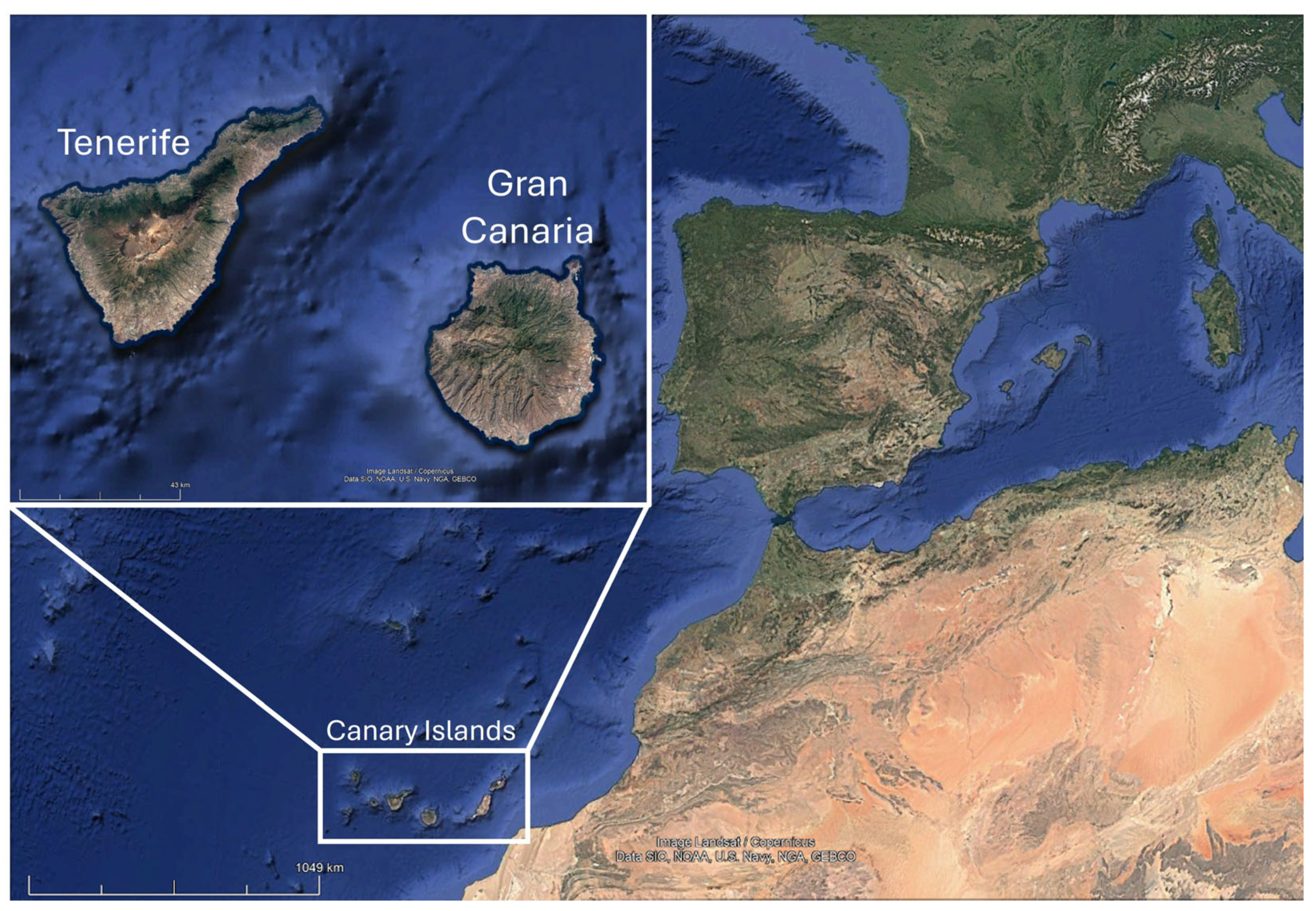
Figure 1. Location of Tenerife and Gran Canaria, where the specimens were collected. Image obtained from Google Earth Pro (v. 7.3.6.10441) and modified with Microsoft PowerPoint software (v. 2505).
Biology 14 01753 g001
Table 1. Number of turtles studied by species and capture location.
LocationGran CanariaTenerifeTotal
Species
Graptemys pseudogeographica202
Mauremys spp. 437
Pseudemys peninsularis303
Trachemys scripta171330
Total222042
Table 2. Pathogenic bacteria isolated from freshwater turtles from Tenerife and Gran Canaria (Canary Islands, Spain).
BacteriaTurtle Species+/n (Prevalence; 95% CI)
Campylobacter spp.; n = 42Graptemys pseudogeographica0/2
Mauremys spp. 0/7
Pseudemys peninsularis1/3 (33.3%; 0.8–90.6)
Trachemys scripta3/30 (10.0%; 2.1–26.5)
Total4/42 (9.5%; 2.7–22.6)
Escherichia coli (stx1, stx2 and eae genes); n = 42Graptemys pseudogeographica1/2 (50.0%; 1.26–98.7)
Mauremys spp. 3/7 (42.9%; 9.9–81.6)
Pseudemys peninsularis0/3
Trachemys scripta10/30 (33.3%; 17.3–52.9)
Total14/42 (33.3%; 19.6–49.5)
Listeria monocytogenes; n = 36Graptemys pseudogeographica0/2
Mauremys spp. 0/6
Pseudemys peninsularis0/3
Trachemys scripta0/25
Total0/36
Mycobacterium spp.; n = 19Graptemys pseudogeographica
Mauremys spp. 1/2 (50.0%; 1.26–98.7)
Pseudemys peninsularis1/1 (100%; 2.5–100)
Trachemys scripta9/16 (56.3%; 29.9–80.2)
Total11/19 (57.9%; 33.5–79.7)
Pseudomonas spp.; n = 19Graptemys pseudogeographica
Mauremys spp. 0/2
Pseudemys peninsularis0/1
Trachemys scripta2/16 (12.5%; 1.6–38.3)
Total2/19 (10.5%; 1.3–33.1)
Salmonella spp.; n = 42Graptemys pseudogeographica0/2
Mauremys spp. 1/7 (14.3%; 0.4–57.9)
Pseudemys peninsularis3/3 (100%; 29.2–100)
Trachemys scripta9/30 (30.0%; 14.7–49.4)
Total13/42 (31.0%; 17.6–47.1)
Staphylococcus spp.; n = 42Graptemys pseudogeographica1/2 (50.0%; 1.3–98.7)
Mauremys spp. 1/7 (14.3%; 0.4–57.9)
Pseudemys peninsularis1/3 (33.3%; 0.8–90.6)
Trachemys scripta6/30 (20.0%; 7.7–38.6)
Total9/42 (21.4%; 10.3–36.8)
Vibrio spp.; n = 36Graptemys pseudogeographica0/2
Mauremys spp. 0/7
Pseudemys peninsularis1/3 (33.3%; 0.8–90.6)
Trachemys scripta1/30 (3.3%; 0.1–17.2)
Total2/36 (5.6%; 0.7–18.7)
Yersinia enterocolitica; n = 19Graptemys pseudogeographica
Mauremys spp. 1/2 (50.0%; 1.3–98.7)
Pseudemys peninsularis1/1 (100%; 2.5–100)
T. scripta6/16 (40.0%; 16.3–67.7)
Total8/19 (37.5%; 15.2–64.6)
+: number of infected animals, n: total of animals, 95% CI: 95% Clopper–Pearson confidence interval, –: no specimen was tested.
Table 3. Number of E. coli carrying virulence genes eae, stx1, and stx2 isolates from freshwater turtles from Tenerife and Gran Canaria (Canary Islands, Spain).
Turtle SpeciesGraptemys
pseudogeographica
(n = 2)
Mauremys spp.
(n = 7)
Pseudemys peinsularis
(n = 3)
Trachemys scripta
(n = 30)
Total
(n = 42)
Virulence Genes
eae0006 (20.0%; 7.7–38.6)6 (14.3%; 5.4–28.5)
stx101 (14.3%; 0.4–57.9)03 (12.0%; 2.5–31.2)4 (9.5%; 2.7–22.6)
stx21 (50%; 1.3–98.7)2 (28.6%; 3.7–71.0)04 (16.0%; 4.5–36.1)7 (16.7%; 7.0–31.4)
Total1 (50%; 1.3–98.7)3 (42.9%; 9.9–81.6)010 (43.3%; 25.4–62.6)17 (40.5%; 25.6–56.7)
(Prevalence; 95% CI).
Table 4. Number of Mycobacterium spp. isolates in freshwater turtles from Tenerife and Gran Canaria (Canary Islands, Spain).
IslandGran Canaria
(n = 5)
Tenerife
(n = 14)
Total
(n = 19)
Turtle Species
Graptemys pseudogeographica
Mauremys spp. 1/2 (50.0%; 1.3–98.7)1/2 (50.0%; 1.3 -98.7)
Pseudemys peninsularis1/1 (100%; 2.5–100)1/1 (100%; 2.5–100)
Trachemys scripta2/4 (50.0%; 6.8–93.2)7/12 (58.3%; 27.7–84.8)9/16 (56.3%; 29.9–80.2)
Total3/5 (60.0%; 14.7–94.7)8/14 (57.1%; 28.9–82.3)11/19 (57.9%; 33.5–79.7)
(Prevalence; 95% CI), –: no specimen was tested.
Table 5. Number of Salmonella spp. isolates detected in freshwater turtles from Tenerife and Gran Canaria islands (Canary Islands, Spain).
IslandGran Canaria
(n = 26)
Tenerife
(n = 16)
Total
(n = 42)
Turtle Species
Graptemys pseudogeographica0/200/2
Mauremys spp. 0/41/3 (33.3%; 0.08–90.6)1/7 (14.3%; 0.4–57.9)
Pseudemys peninsularis3/3 (100%; 29.2–100)03/3 (100%; 29.2–100)
Trachemys scripta7/17 (41.2%; 18.4–67.1)2/13 (15.4%; 1.9–45.4)9/30 (30.0%; 14.7–49.4)
Total10/26 (38.5%; 20.2–59.4)3/16 (18.8%; 4.0–45.6)13/42 (31.0%; 17.6–47.1)
(Prevalence; 95% CI).
Table 6. Number of Staphylococcus spp. isolates detected in freshwater turtles from Tenerife and Gran Canaria (Canary Islands, Spain).
IslandGran Canaria
(n = 26)
Tenerife
(n = 16)
Total
(n = 42)
Turtle Species
Graptemys pseudogeographica1/2 (50.0% 1.3–98.7)01/2 (50.0% 1.3–98.7)
Mauremys spp. 1/4 (25.0%; 0.6–80.6)0/31/7 (14.3%; 0.4–57.9)
Pseudemys peninsularis1/3 (33.3%; 0.8–90.6)01/3 (33.3%; 0.8–90.6)
Trachemys scripta4/17 (23.5%; 6.8–49.9)2/13 (15.4%; 1.9–45.4)6/30 (20.0%; 7.7–38.6)
Total7/26 (26.9%; 11.6–47.8)2/16 (12.5%; 1.6–38.3)9/42 (21.4%; 10.3–36.8)
(Prevalence; 95% CI).
Table 7. Number of Y. enterocolitica isolates detected in freshwater turtles from Tenerife and Gran Canaria (Canary Islands, Spain).
IslandGran Canaria
(n = 5)
Tenerife
(n = 14)
Total
Turtle Species
Graptemys pseudogeographica
Mauremys spp. 1/2 (50.0%; 1.3–98.7)1/2 (50.0%; 1.3–98.7)
Pseudemys peninsularis1/1 (100%; 2.5–100)1/1 (100%; 2.5–100)
Trachemys scripta1/4 (25.0%; 0.6–80.6)5/12 (41.7%; 15.2–72.3)6/15 (40.0%; 16.3–67.7)
Total2/5 (40.0%; 5.3–85.3)6/14 (42.9%; 17.7–71.1)8/19 (42.1%; 20.3–66.5)
(Prevalence; 95% CI), –: no specimen was tested.
Disclaimer/Publisher’s Note: The statements, opinions and data contained in all publications are solely those of the individual author(s) and contributor(s) and not of MDPI and/or the editor(s). MDPI and/or the editor(s) disclaim responsibility for any injury to people or property resulting from any ideas, methods, instructions or products referred to in the content.



