An Efficient Homologous Recombination-Based In Situ Protein-Labeling Method in Verticillium dahliae
by
 and
and
Jie Yang
1,2,†, 
Mengran Liu
1,2,†,
Yue Jiao
3,
Hui-Shan Guo
1,
Chun-Min Shan
1,* and
and
Haiting Wang
1,* 1
State Key Laboratory of Plant Genomics, Institute of Microbiology, Chinese Academy of Sciences, Beijing 100101, China
2
University of Chinese Academy of Sciences, Beijing 100049, China
3
Development Center of Science and Technology, Ministry of Agriculture and Rural Affairs, Beijing 100176, China
*
Authors to whom correspondence should be addressed.
†
These authors contributed equally to this work.
Biology 2024, 13(2), 81; https://doi.org/10.3390/biology13020081
Submission received: 18 December 2023
/
Revised: 24 January 2024
/
Accepted: 26 January 2024
/
Published: 28 January 2024
(This article belongs to the Section Plant Science)
Simple Summary
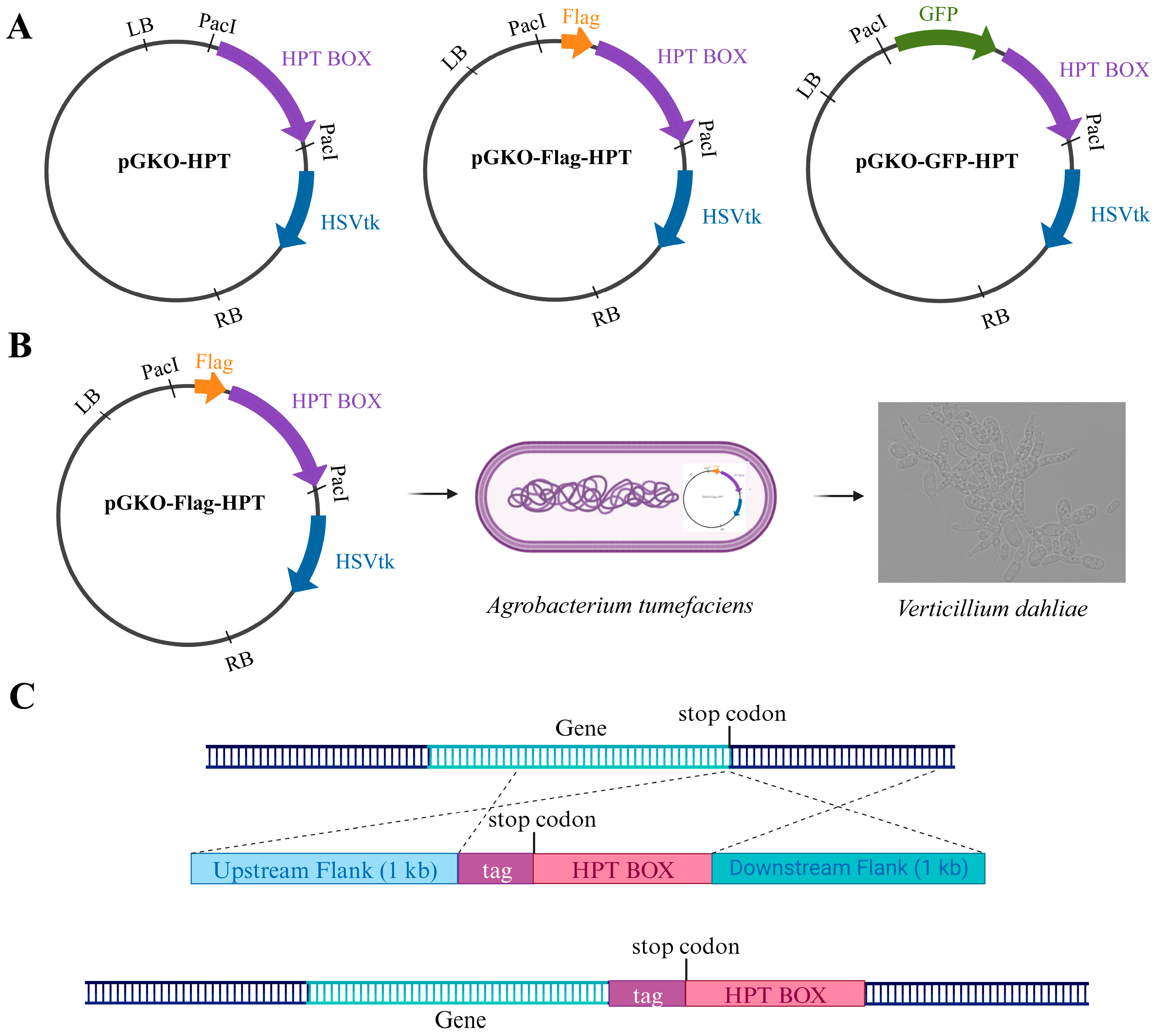
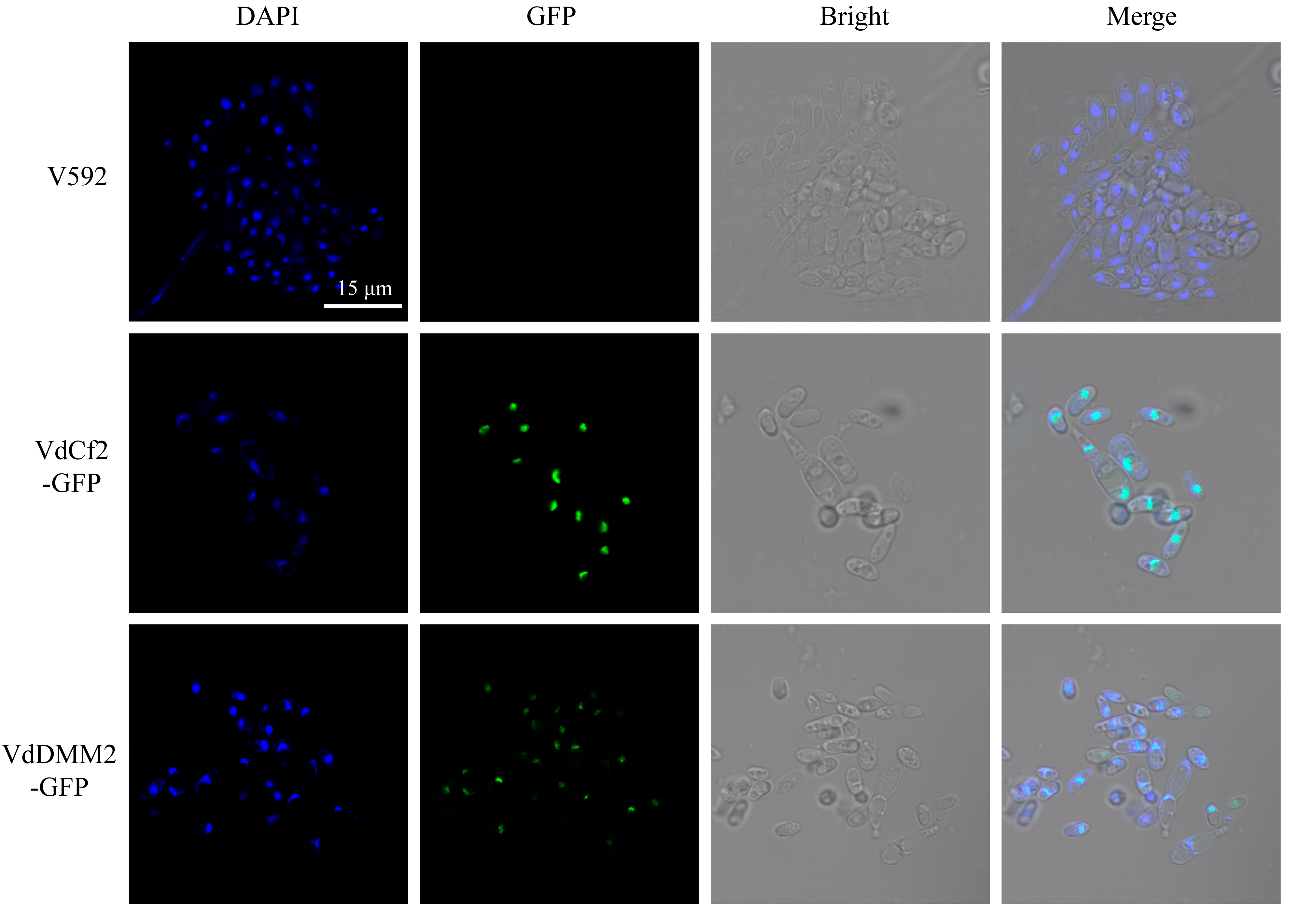
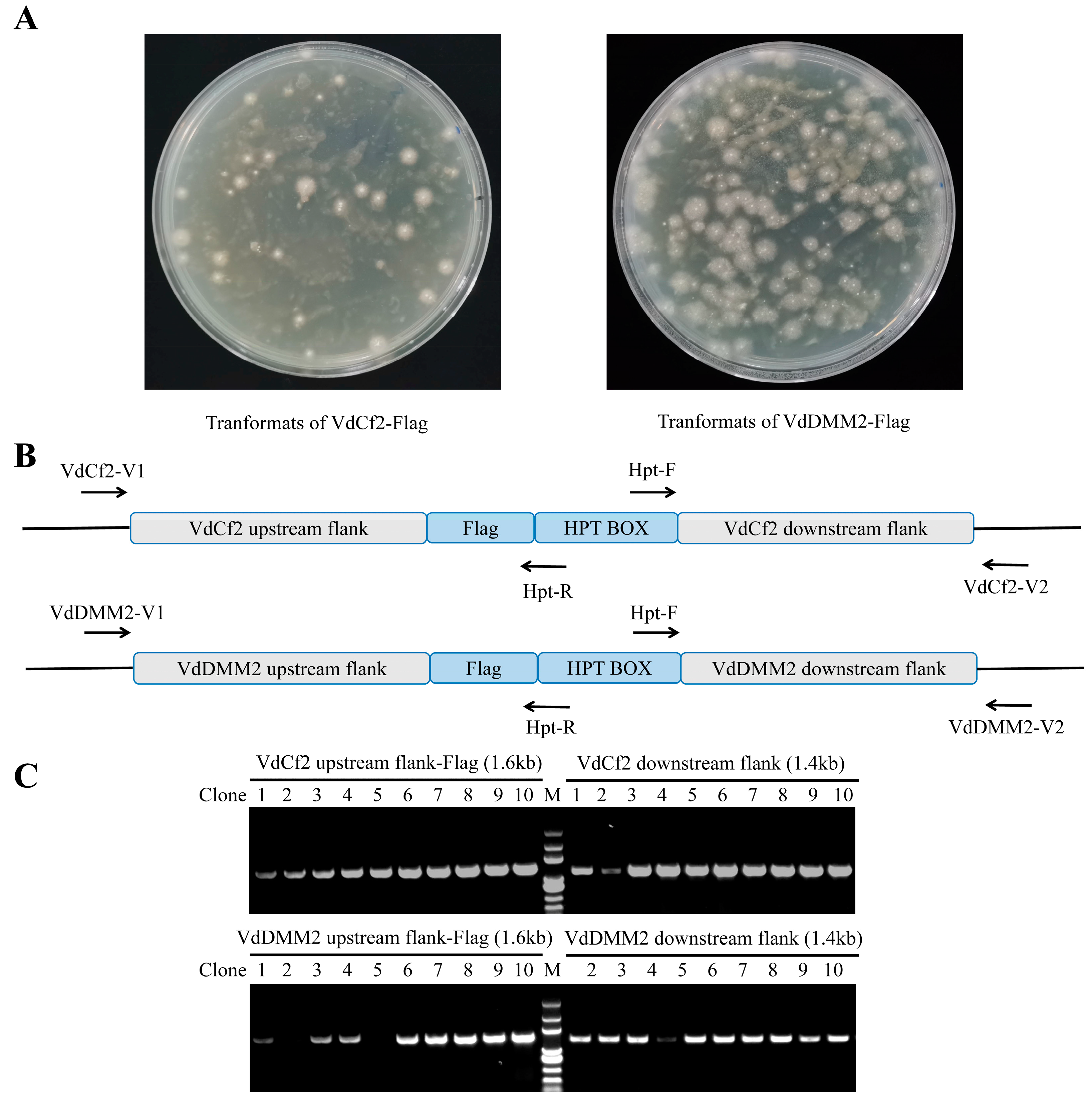
In situ protein labeling through homologous recombination is a powerful method for studying protein function across various fungal organisms. Traditionally, research on gene function in plant pathogens depends on methods like ectopic or overexpression, which may not always reflect natural protein behavior. Our study successfully implemented in situ labeling of proteins in the fungus Verticillium dahliae, a plant pathogen, by attaching Flag/GFP tags to proteins’ C-terminus via homologous recombination. We demonstrated the technique’s effectiveness by analyzing the subcellular localization and protein levels, confirming its utility in this organism. This advancement in protein in situ labeling provides a more precise approach to examine protein expression and function in plant pathogens, enhancing our understanding of their biological functions and potentially aiding in the development of disease control strategies.
Abstract
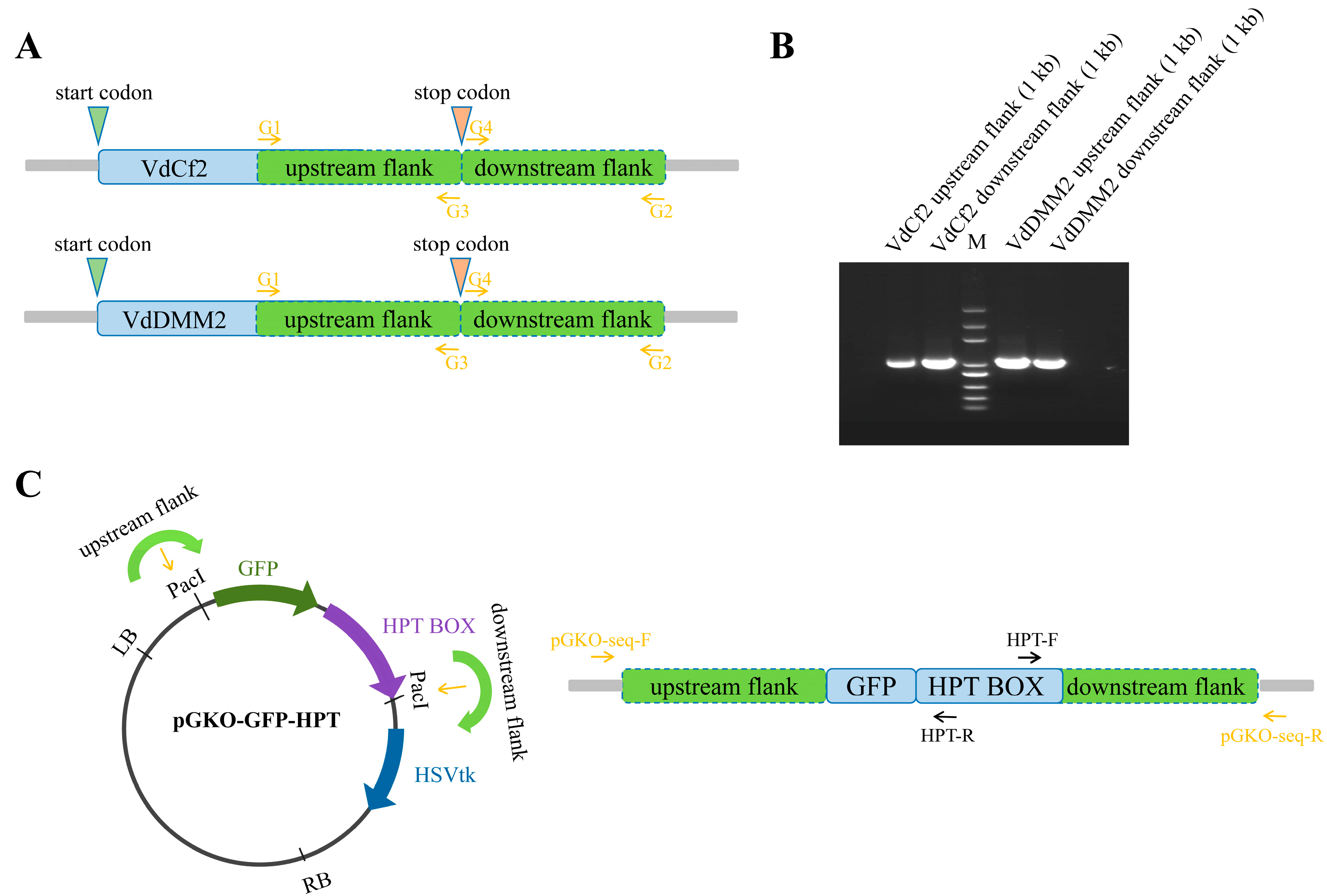
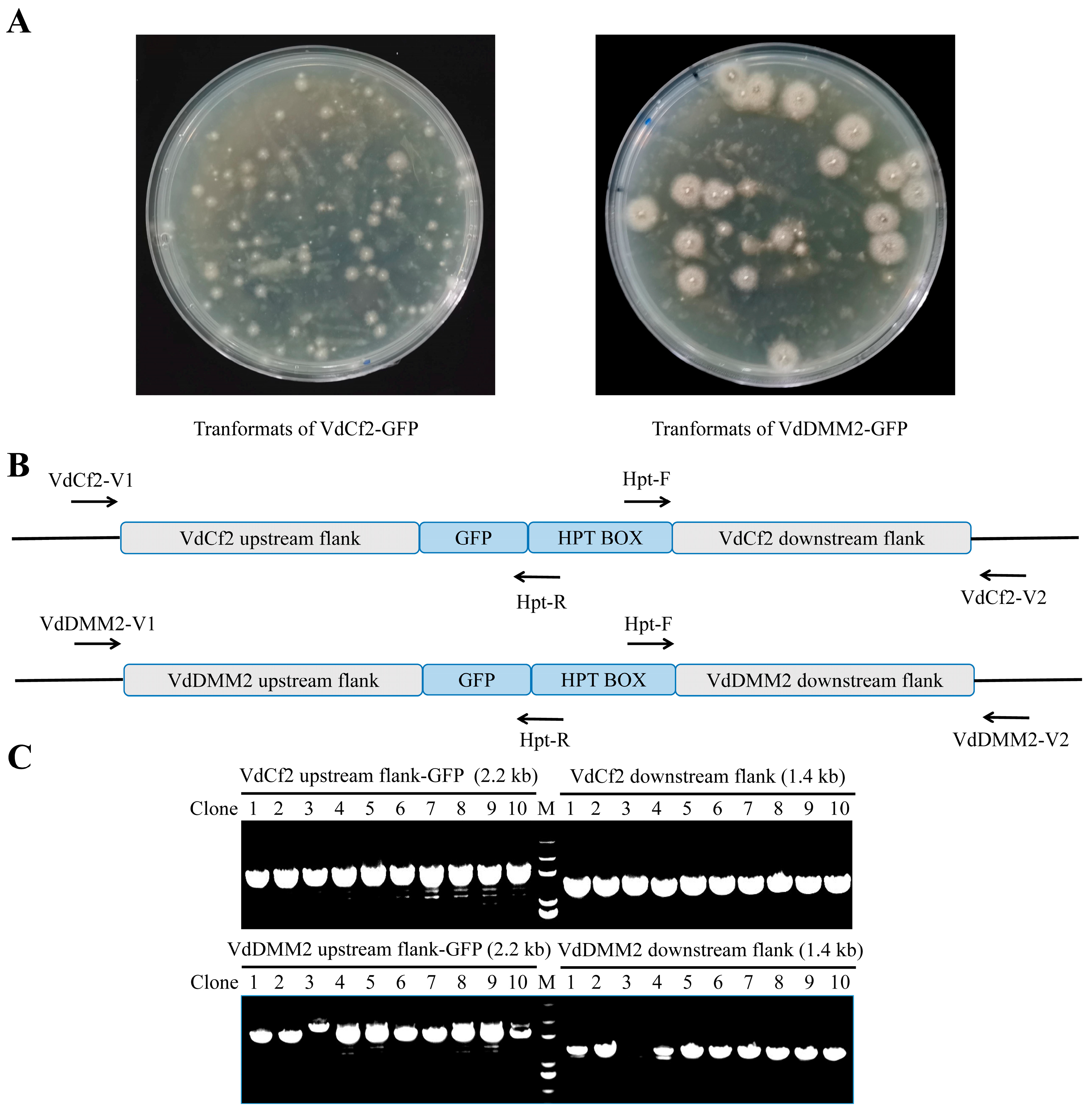
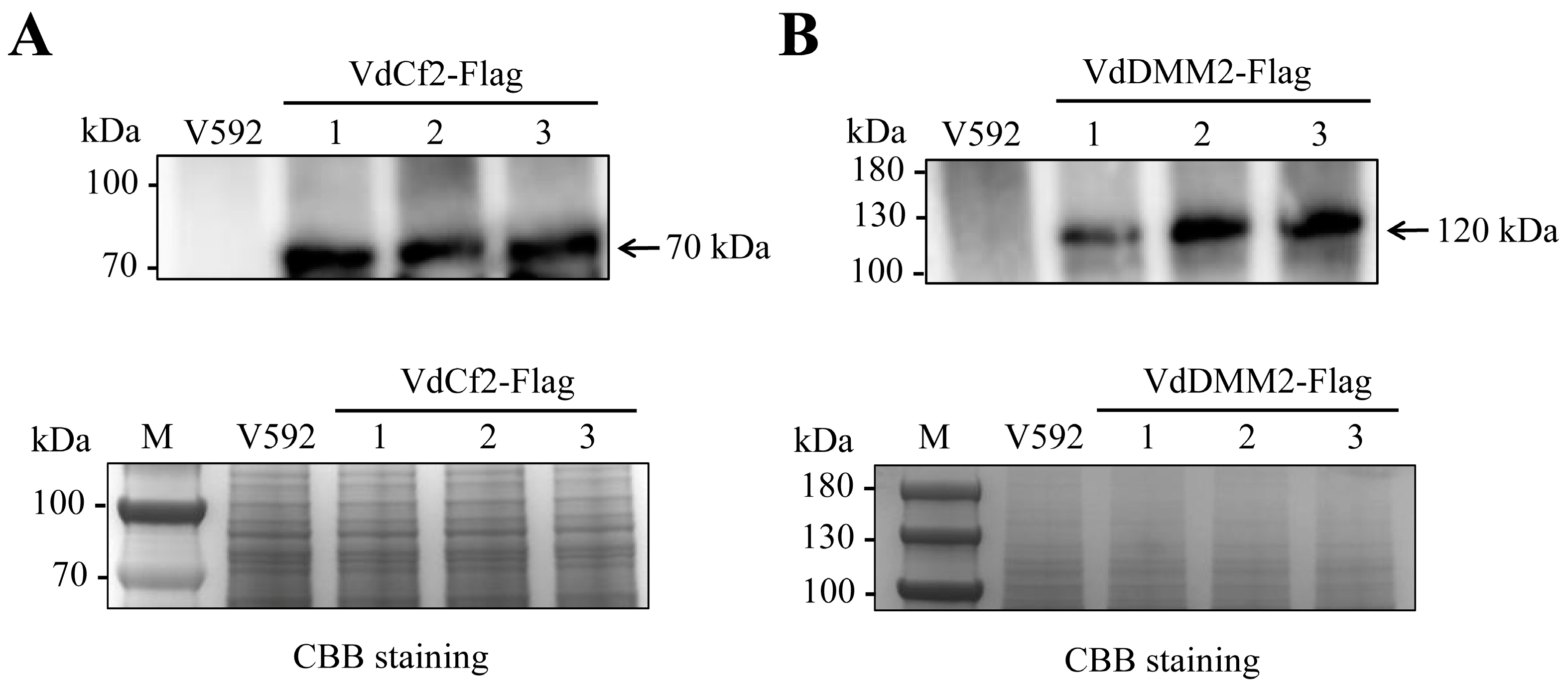
Accurate determination of protein localization, levels, or protein−protein interactions is pivotal for the study of their function, and in situ protein labeling via homologous recombination has emerged as a critical tool in many organisms. While this approach has been refined in various model fungi, the study of protein function in most plant pathogens has predominantly relied on ex situ or overexpression manipulations. To dissect the molecular mechanisms of development and infection for Verticillium dahliae, a formidable plant pathogen responsible for vascular wilt diseases, we have established a robust, homologous recombination-based in situ protein labeling strategy in this organism. Utilizing Agrobacterium tumefaciens-mediated transformation (ATMT), this methodology facilitates the precise tagging of specific proteins at their C-termini with epitopes, such as GFP and Flag, within the native context of V. dahliae. We demonstrate the efficacy of our approach through the in situ labeling of VdCf2 and VdDMM2, followed by subsequent confirmation via subcellular localization and protein-level analyses. Our findings confirm the applicability of homologous recombination for in situ protein labeling in V. dahliae and suggest its potential utility across a broad spectrum of filamentous fungi. This labeling method stands to significantly advance the field of functional genomics in plant pathogenic fungi, offering a versatile and powerful tool for the elucidation of protein function.