
Chorus Organization in a Neotropical Forest Cicada


Independent Researcher, Montréal, QC, Canada
Biology 2024, 13(11), 913; https://doi.org/10.3390/biology13110913
Submission received: 8 October 2024
/
Revised: 4 November 2024
/
Accepted: 7 November 2024
/
Published: 8 November 2024
(This article belongs to the Section Behavioural Biology)
Simple Summary
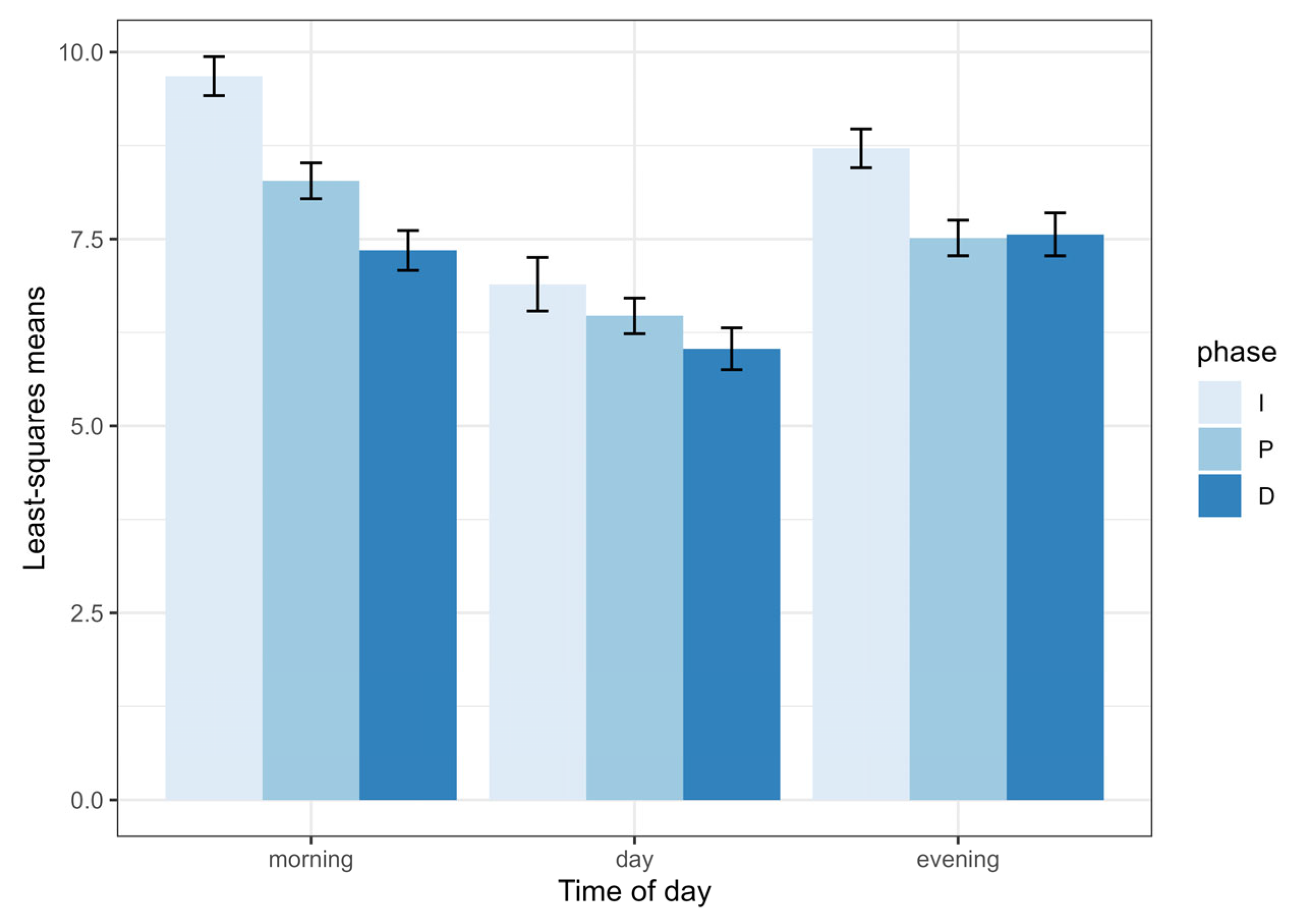
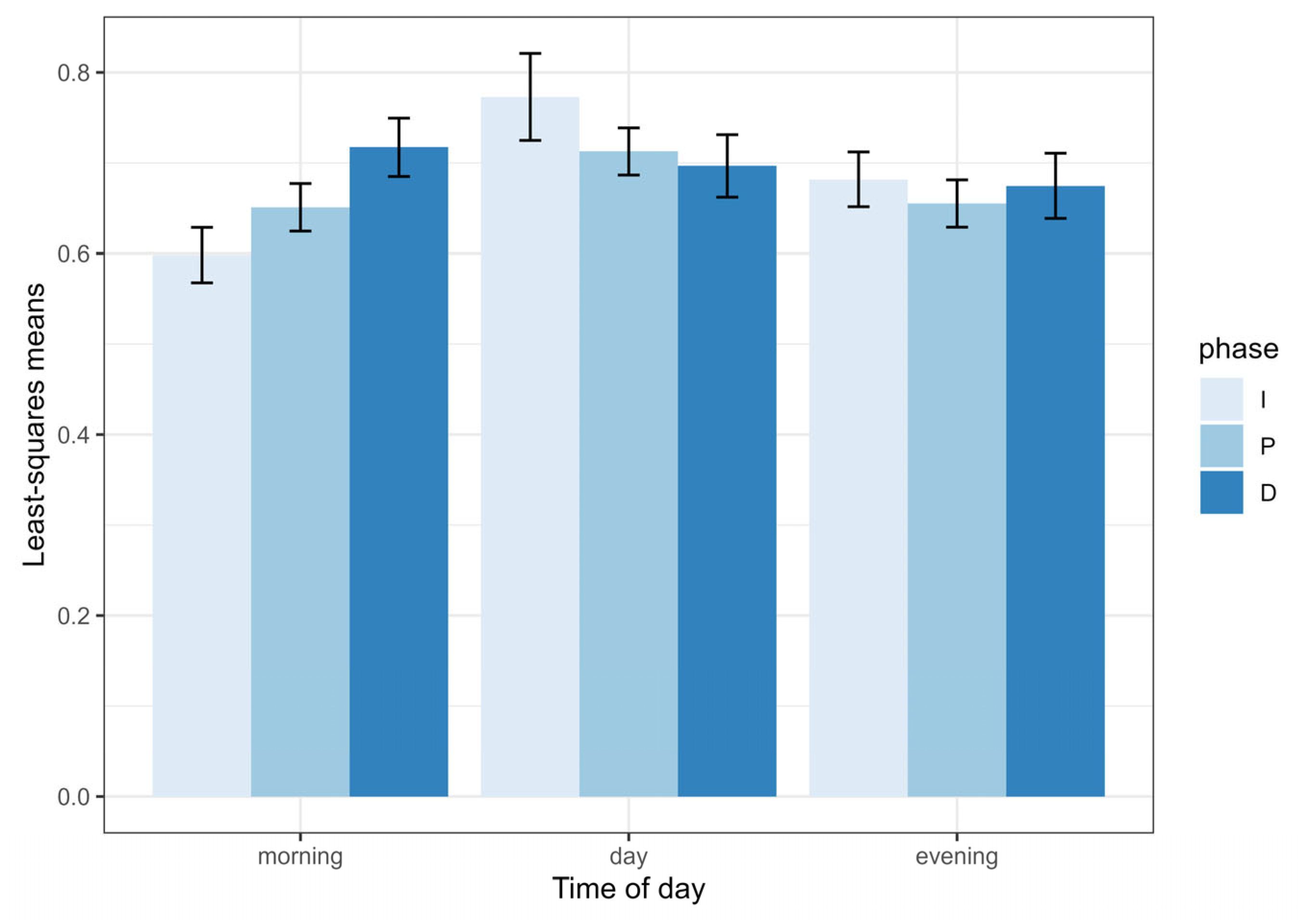
Males in many species of animals congregate to produce calls that attract females for reproduction. Such choruses are often limited to particular times of day, and, in some cases, the rhythm of calls is synchronized among males, suggesting advantages at the collective level to calling at the same time. However, synchronized calling may also represent the outcome of competitive interactions among males without the need to invoke advantages at the collective level. I investigated chorus organization in one species of Neotropical forest cicada in southern Belize to explore these issues. Choruses of calling males occurred at dawn and dusk and occasionally during the daytime. I found no evidence of synchronization in the rhythm of calls by males, as bouts of calling occurred after variable rather than fixed quiet intervals. In this species, synchronized calling by males thus probably emerged from competitive interactions among males to attract females. The degree of temporal overlap in the calls of males during a chorus varied as a function of chorus phase and time of day, suggesting flexibility in chorus organization, perhaps in relation to variation in the environmental factors, such as the number of predators present or ambient temperature during a chorus.
Abstract
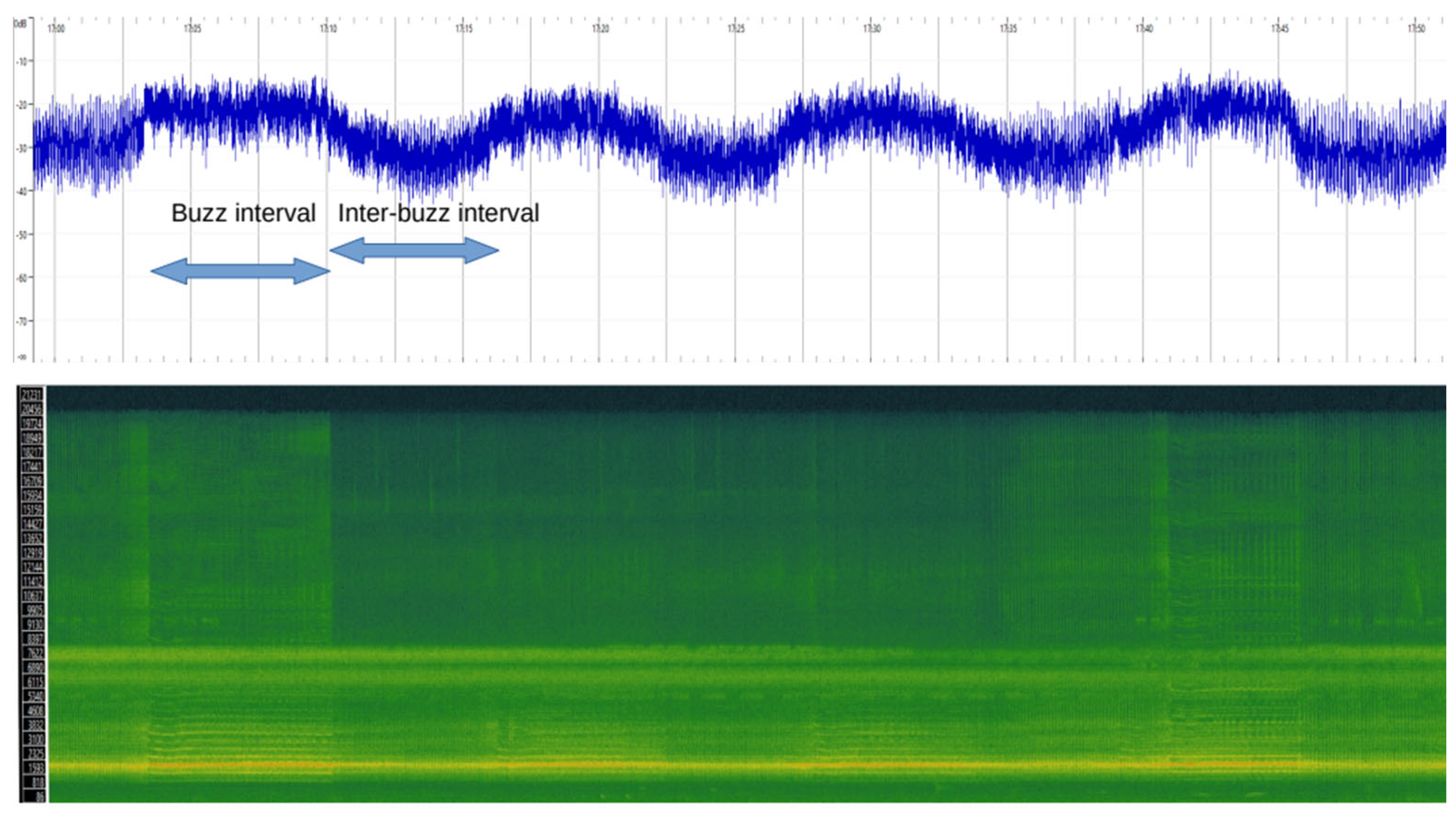
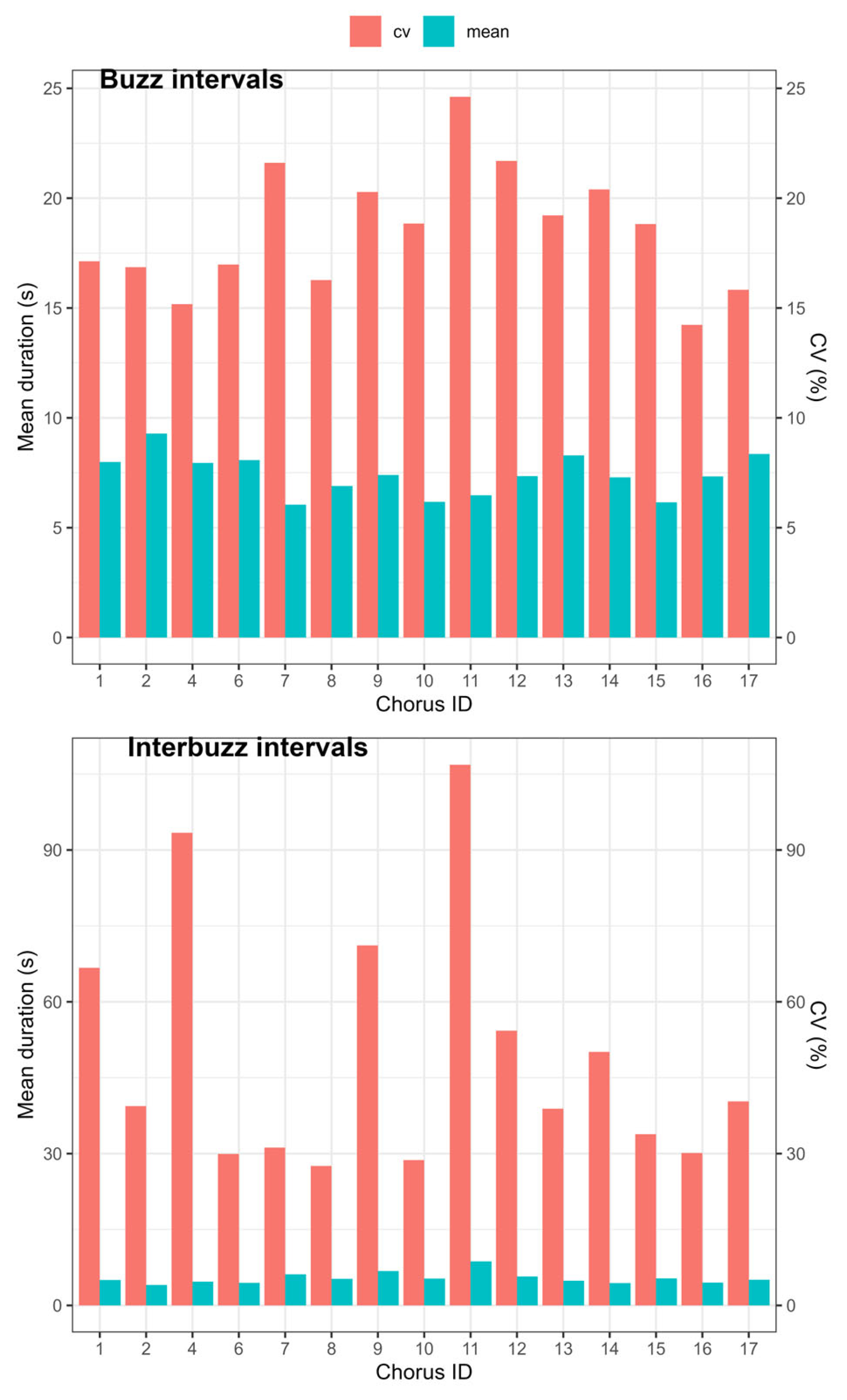
In many species of animals, males aggregate in particular locations and produce calls to attract searching females for reproduction. One striking feature of such choruses is synchronization. On a scale of hours, choruses are often concentrated at particular times of day, such as dawn or dusk. On a scale of seconds, males may also synchronize the rhythm of their calls with one another. While synchronized calling at this scale suggests benefits acting at the collective level, competitive interactions between males to attract females can also lead to synchronized calling as an epiphenomenon. Why males in some species synchronize the rhythm of their calls is still debated, and more work is needed to understand the evolution of this behavior. I investigated chorus organization in the Emerald cicada (Zammara smaragdula), a Neotropical forest cicada in southern Belize, to explore these issues. Choruses in this species occurred at dawn and dusk and, occasionally, during daytime. There was no evidence for synchronization in the rhythm of calls among males, as bouts of collective calling occurred after quiet intervals of variable rather than fixed durations. The temporal aggregation of calls in this species thus probably emerged from competitive interactions among males to attract females. The degree of temporal overlap in the calls of males during a chorus varied as a function of chorus phase and time of day, suggesting flexibility in chorus organization, perhaps in relation to temporal variations in factors such as the number of calling cicadas, the number of predators present or ambient temperature during a chorus.
Keywords:
acoustic communication; coordination; insects; predation risk; synchronization