Following the Pathway of W Chromosome Differentiation in Triportheus (Teleostei: Characiformes)
by
 , , , , ,
Mariannah Pravatti Barcellos de Oliveira
1, 
Rafael Kretschmer
2 ,
,
Geize Aparecida Deon
1, 
Gustavo Akira Toma
1 ,
,
Tariq Ezaz
3,
Caio Augusto Gomes Goes
4,
Fábio Porto-Foresti
4,
Thomas Liehr
5,* ,
,
Ricardo Utsunomia
4 and
Marcelo de Bello Cioffi
1 1
Departamento de Genética e Evolução, Universidade Federal de São Carlos, Sao Carlos 13565-905, Brazil
2
Departamento de Ecologia, Zoologia e Genética, Instituto de Biologia, Universidade Federal de Pelotas, Pelotas 96010-610, Brazil
3
Faculty of Science and Technology, Centre for Conservation Ecology and Genomics, University of Canberra, Canberra 2617, Australia
4
Faculdade de Ciências, Universidade Estadual Paulista, Bauru 13506-900, Brazil
5
Institute of Human Genetics, University Hospital Jena, 07747 Jena, Germany
*
Author to whom correspondence should be addressed.
Biology 2023, 12(8), 1114; https://doi.org/10.3390/biology12081114
Submission received: 29 June 2023
/
Revised: 4 August 2023
/
Accepted: 8 August 2023
/
Published: 10 August 2023
(This article belongs to the Section Genetics and Genomics)
Simple Summary
The evolutionary origins and dynamics of sex chromosomes are among the most challenging topics in the field of Evolutionary Biology. Despite ongoing research, many important aspects of sex chromosome evolution remain unresolved. One intriguing question is why do sex chromosomes tend to accumulate species-specific repetitive sequences. In our current study, we delved into this issue by examining the variation in satellite DNAs (SatDNAs) during the W differentiation process in many Triportheus fish species. Our findings added valuable insights to this complex puzzle. Despite sharing a similar ancestry, the DNA composition of the sex chromosomes of Triportheus species differed significantly. Notably, the W chromosome evolved independently among its various species.
Abstract
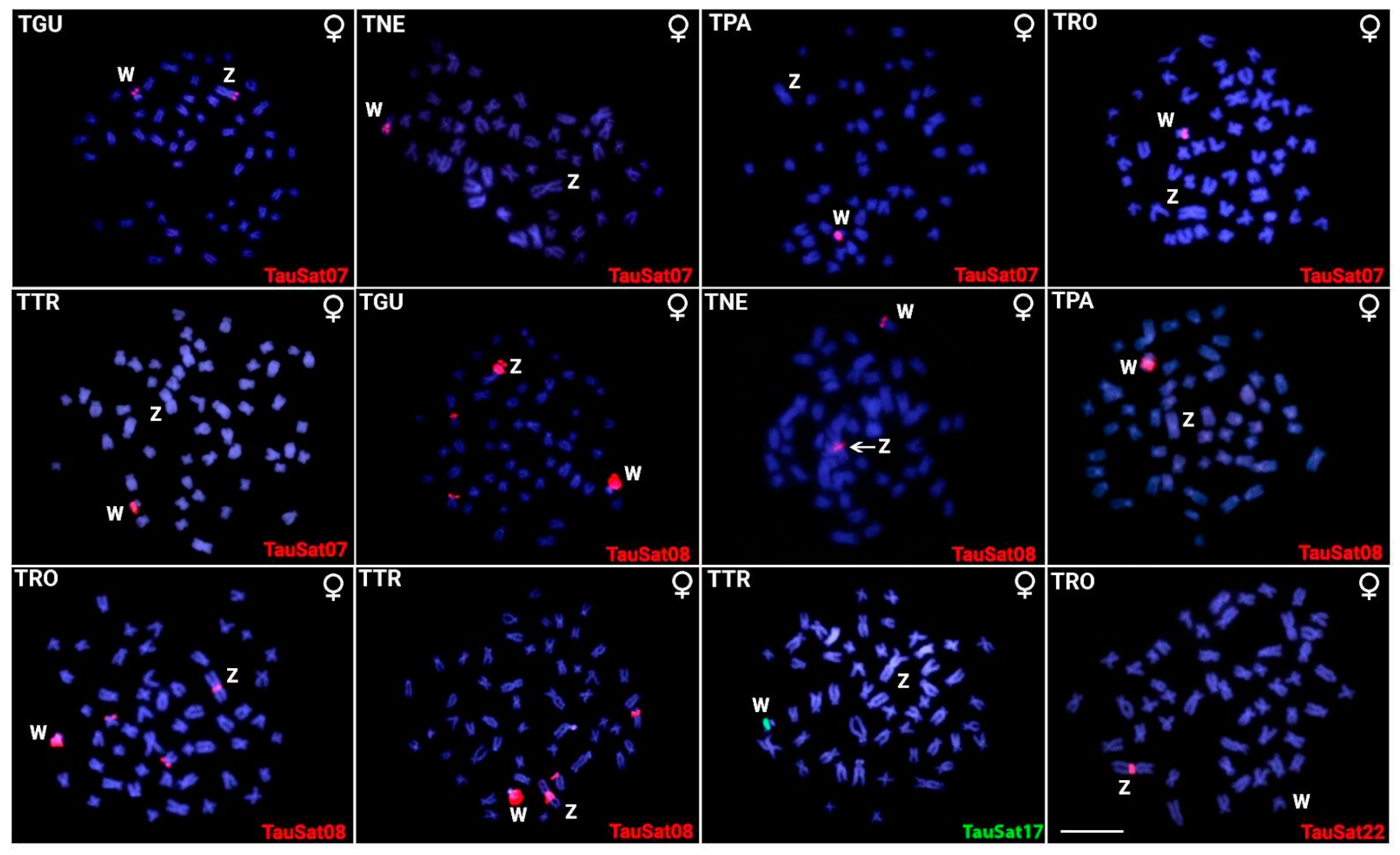
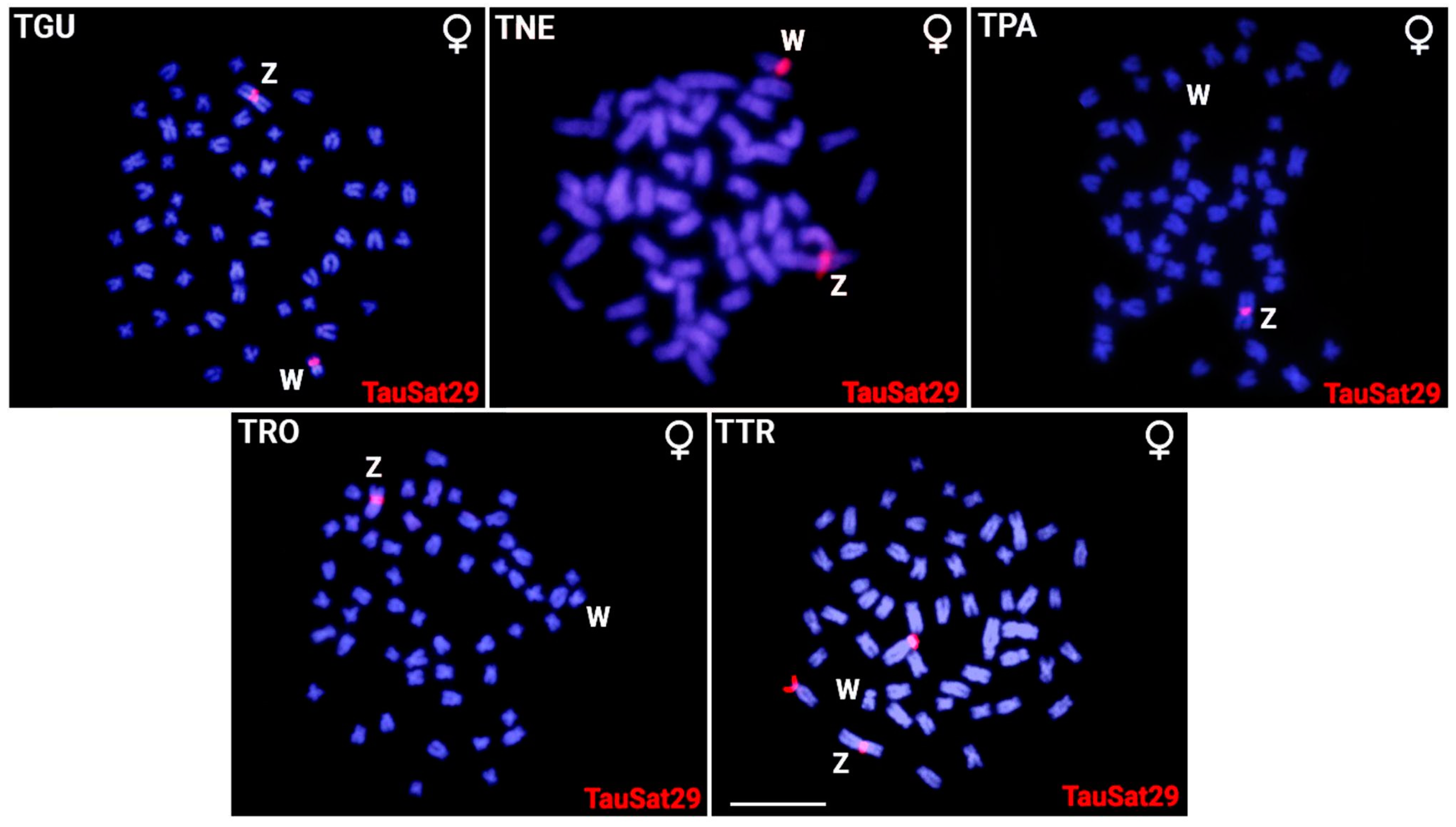
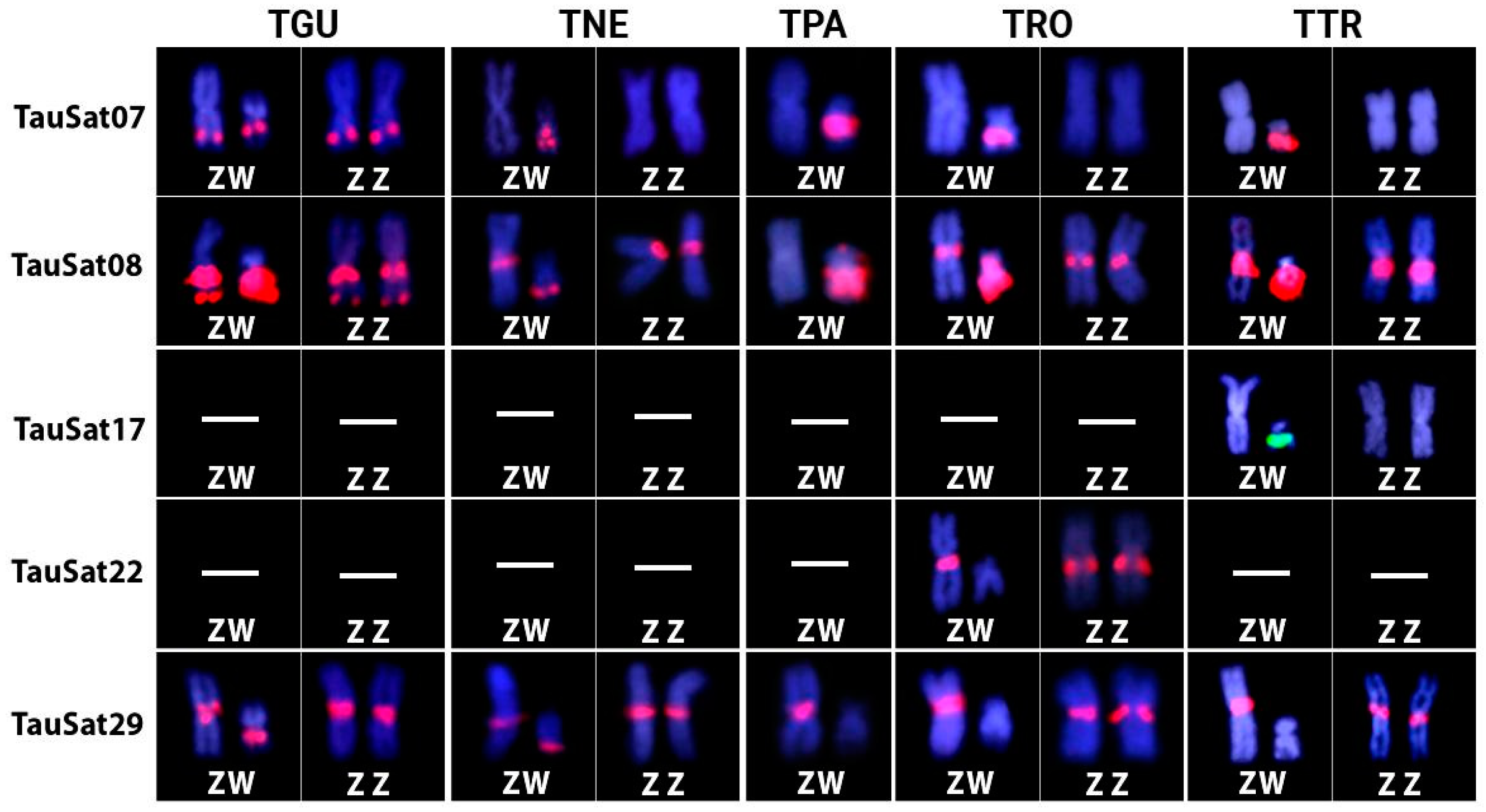
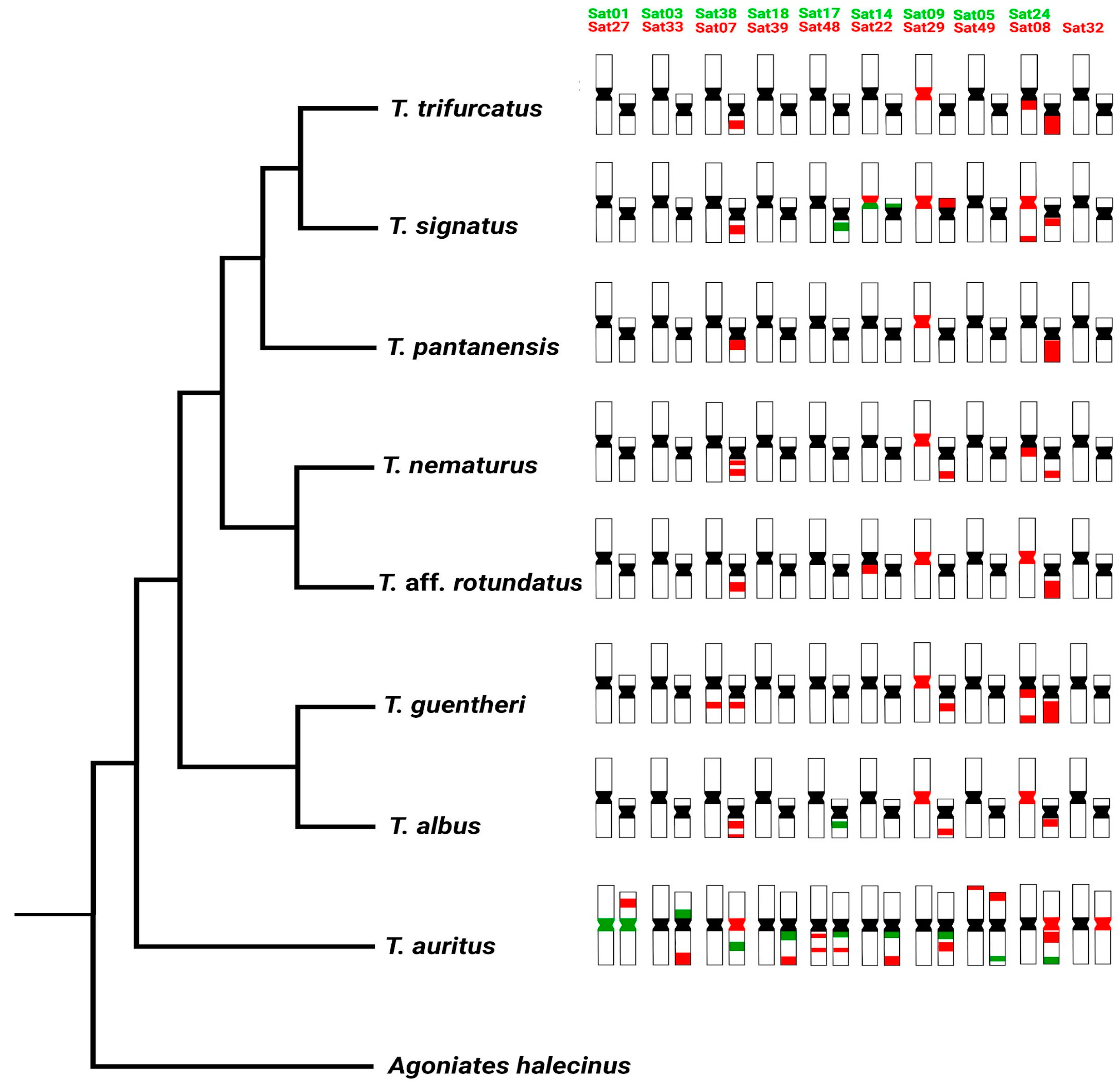
In this work, we trace the dynamics of satellite DNAs (SatDNAs) accumulation and elimination along the pathway of W chromosome differentiation using the well-known Triportheus fish model. Triportheus stands out due to a conserved ZZ/ZW sex chromosome system present in all examined species. While the Z chromosome is conserved in all species, the W chromosome is invariably smaller and exhibits differences in size and morphology. The presumed ancestral W chromosome is comparable to that of T. auritus, and contains 19 different SatDNA families. Here, by examining five additional Triportheus species, we showed that the majority of these repetitive sequences were eliminated as speciation was taking place. The W chromosomes continued degeneration, while the Z chromosomes of some species began to accumulate some TauSatDNAs. Additional species-specific SatDNAs that made up the heterochromatic region of both Z and W chromosomes were most likely amplified in each species. Therefore, the W chromosomes of the various Triportheus species have undergone significant evolutionary changes in a short period of time (15–25 Myr) after their divergence.
Keywords:
cytogenomics; sex chromosomes; satellite DNA; FISH