Extracellular Release of HMGB1 as an Early Potential Biomarker for the Therapeutic Response in a Xenograft Model of Boron Neutron Capture Therapy
by
 , , , , ,
Shoji Imamichi
1,2,3,4,† ,
,
Lichao Chen
1,2,3,†,
Tasuku Ito
2,5,
Ying Tong
1,
Takae Onodera
1,2,3,
Yuka Sasaki
1,2,
Satoshi Nakamura
4,6,
PierLuigi Mauri
7 ,
,
Yu Sanada
8,
Hiroshi Igaki
4,6,
Yasufumi Murakami
5,
Minoru Suzuki
8,
Jun Itami
4,6 ,
,
Shinichiro Masunaga
8 and
Mitsuko Masutani
1,2,3,4,* 1
Department of Molecular and Genomic Biomedicine, School of Biomedical Sciences, Nagasaki University Graduate, Nagasaki 852-8523, Japan
2
Lab of Collaborative Research, Division of Cellular Signaling, National Cancer Center Research Institute, Tokyo 104-0045, Japan
3
Central Radioisotope Division, National Cancer Center Research Institute, Tokyo 104-0045, Japan
4
Division of BNCT, EPOC, National Cancer Center, Tokyo 104-0045, Japan
5
Department of Biological Science and Technology, Faculty of Industrial Science and Technology, Tokyo University of Science, Tokyo 125-8585, Japan
6
Department of Radiation Oncology, National Cancer Center Hospital, Tokyo 104-0045, Japan
7
Clinical Proteomics Laboratory, Institute of Biomedical Technologies, National Research Council, 93-20054 Milan, Italy
8
Institute for Integrated Radiation and Nuclear Science, Kyoto University, Kumatori 590-0494, Japan
*
Author to whom correspondence should be addressed.
†
These authors contributed equally to this work.
Biology 2022, 11(3), 420; https://doi.org/10.3390/biology11030420
Submission received: 29 December 2021
/
Revised: 1 March 2022
/
Accepted: 3 March 2022
/
Published: 10 March 2022
/
Corrected: 10 August 2023
(This article belongs to the Special Issue Boron Neutron Capture Therapy: From Nuclear Physics to Biomedicine)
Simple Summary
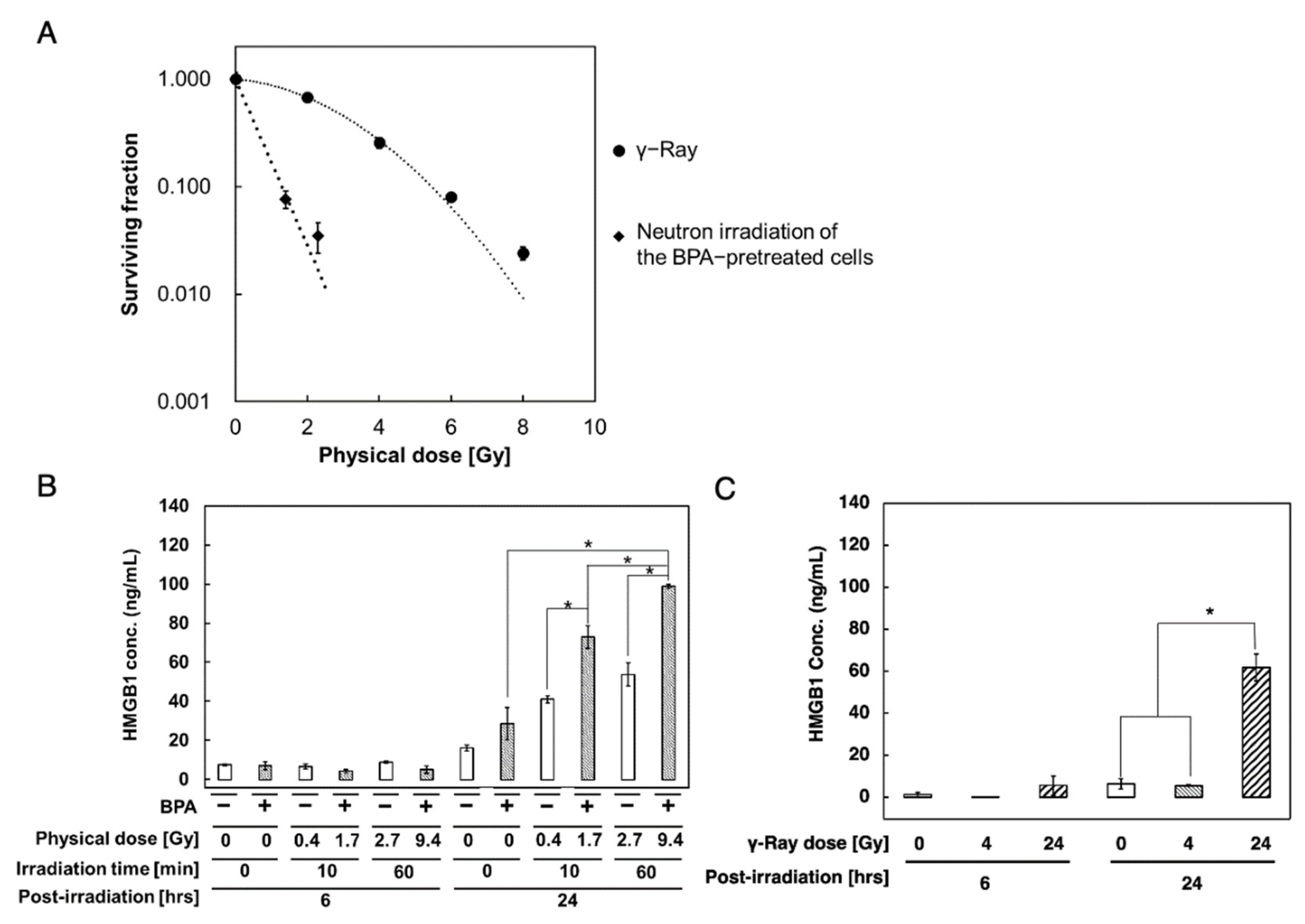
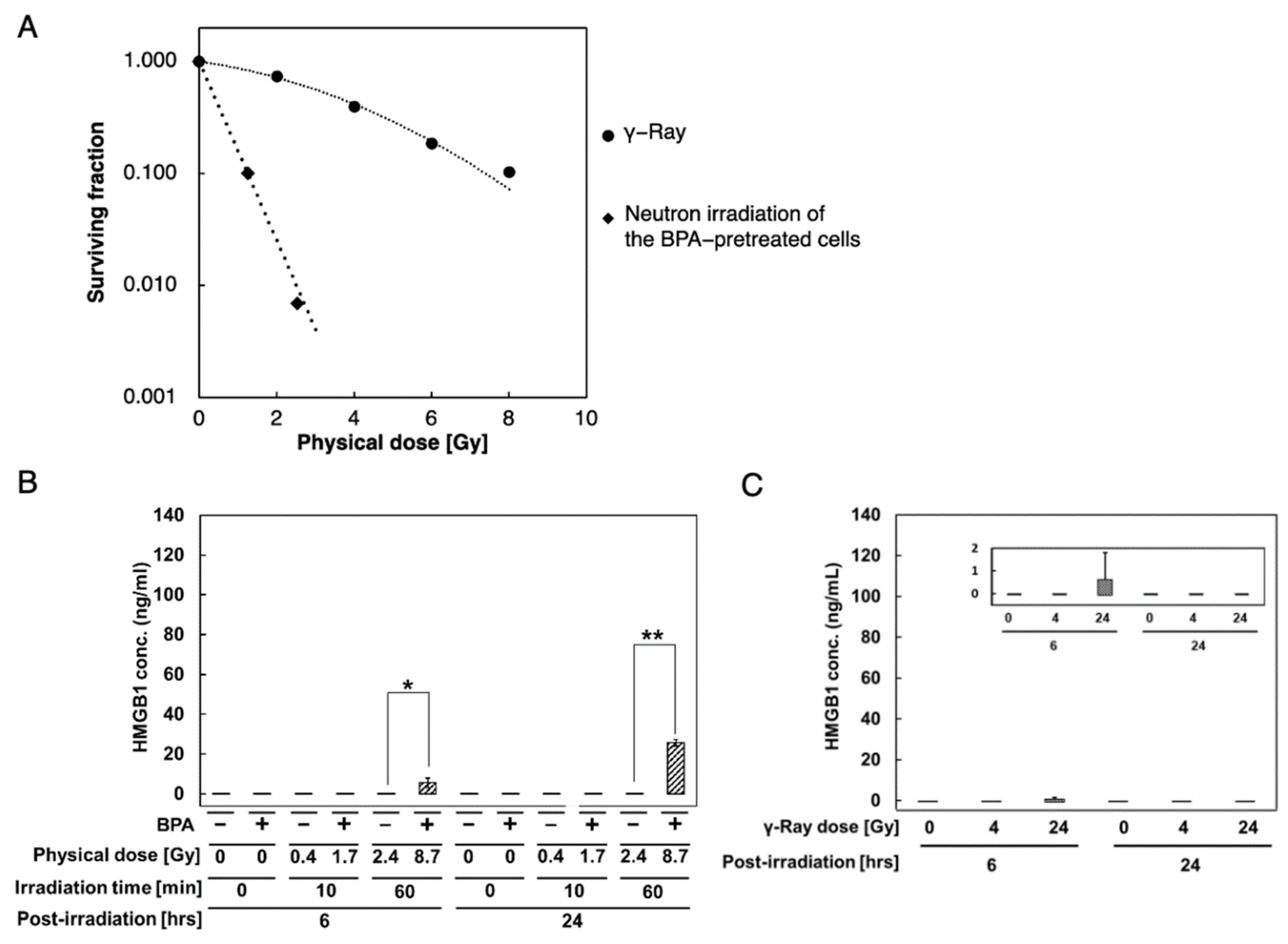
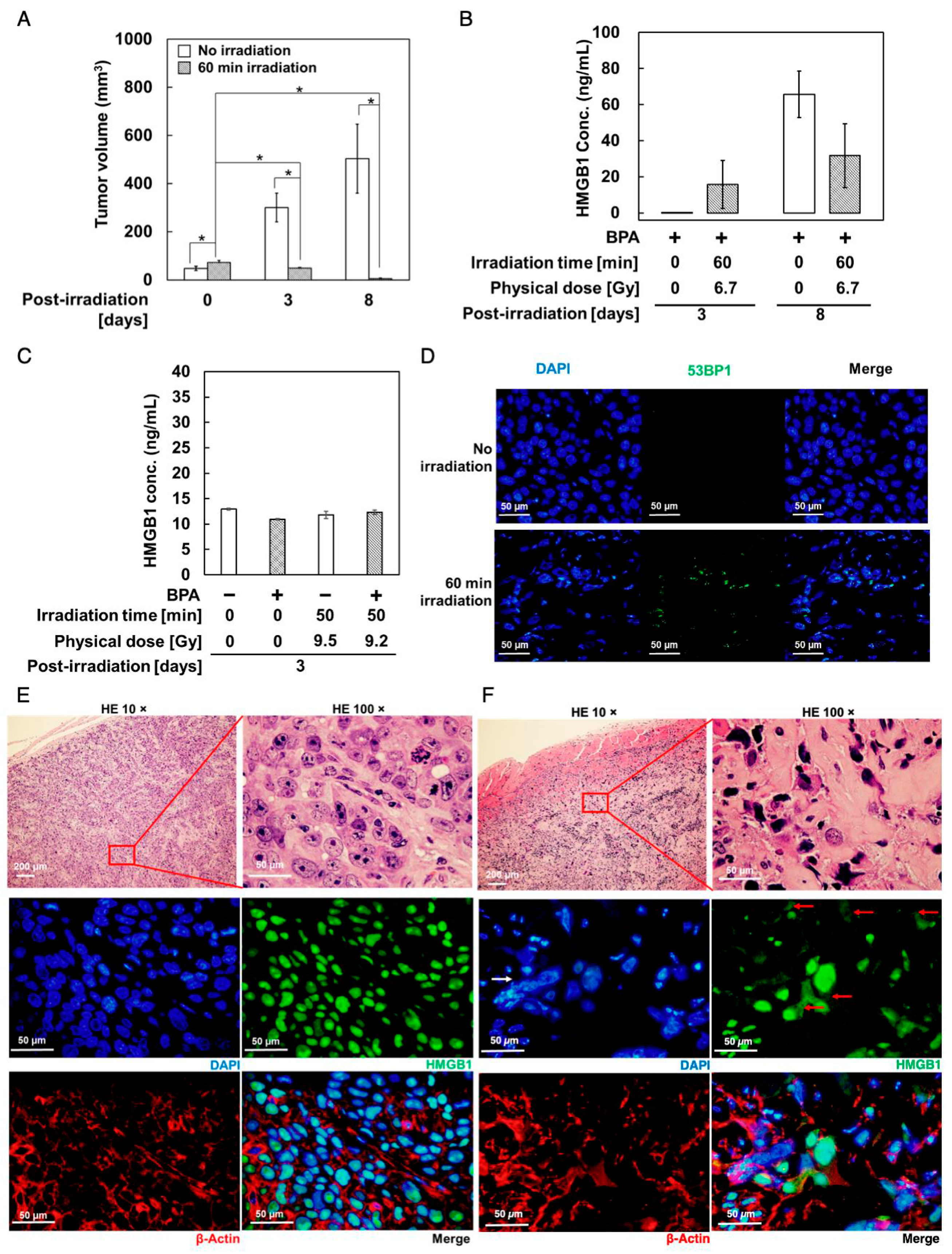
Boron neutron capture therapy (BNCT) is a non-invasive therapeutic technique for treating malignant tumors, however, there is a lack of methods to evaluate its therapeutic efficacy. Herein, we investigated whether high mobility group box 1 (HMGB1) is a potential biomarker of BNCT response in tumor cells and mice in combination with 10B-p-boronophenylalanine in the Kyoto University Nuclear Reactor. We observed an increased extracellular HMGB1 release in cancer cells 24 h post-BNCT irradiation, compared to that observed with an equivalent dose of gamma-ray irradiation. High levels of plasma HMGB1 were observed on day 3 post-BNCT irradiation in a xenograft mouse model. These levels were stably detected even when the size of the tumor decreased, suggesting that HMGB1 is a potential biomarker for the therapeutic efficacy of BNCT.
Abstract
Boron neutron capture therapy (BNCT) is a non-invasive therapeutic technique for treating malignant tumors, however, methods to evaluate its therapeutic efficacy and adverse reactions are lacking. High mobility group box 1 (HMGB1) is an inflammatory molecule released during cell death. Therefore, we aimed to investigate HMGB1 as a biomarker for BNCT response, by examining the early responses of tumor cells to 10B-boronophenylalanine (BPA)-based BNCT in the Kyoto University Nuclear Reactor. Extracellular HMGB1 release was significantly increased in human squamous carcinoma SAS and melanoma A375 cells 24 h after neutron irradiation but not after γ-irradiation. At 3 days post-BPA-based BNCT irradiation in a SAS xenograft mouse model, plasma HMGB1 levels were higher than those in the non-irradiation control, and HMGB1 was detected in both nuclei and cytoplasm in tumor cells. Additionally, increased plasma HMGB1 levels post-BNCT irradiation were detected even when tumors decreased in size. Collectively, these results indicate that the extracellular HMGB1 release occurs at an early stage and is persistent when tumors are reduced in size; therefore, it is a potential biomarker for evaluating the therapeutic response during BNCT.