Evaluation of the BioFire FilmArray Pneumonia Panel Plus to the Conventional Diagnostic Methods in Determining the Microbiological Etiology of Hospital-Acquired Pneumonia


1
Department of Microbiology, Faculty of Pharmacy, Misr International University (MIU), Cairo P.O. Box 19648, Egypt
2
Department of Clinical Laboratory Sciences, College of Applied Medical Sciences, King Khalid University, P.O. Box 61413, Abha 9088, Saudi Arabia
3
Department of Microbiology and Immunology, Faculty of Pharmacy, Ain Shams University, Organization of African Unity St., Abbassia, Cairo P.O. Box 11566, Egypt
4
International Medical Center, Clinical Microbiology Laboratory, Cairo P.O. Box 11451, Egypt
*
Author to whom correspondence should be addressed.
Biology 2022, 11(3), 377; https://doi.org/10.3390/biology11030377
Submission received: 27 January 2022
/
Revised: 18 February 2022
/
Accepted: 23 February 2022
/
Published: 27 February 2022
Simple Summary
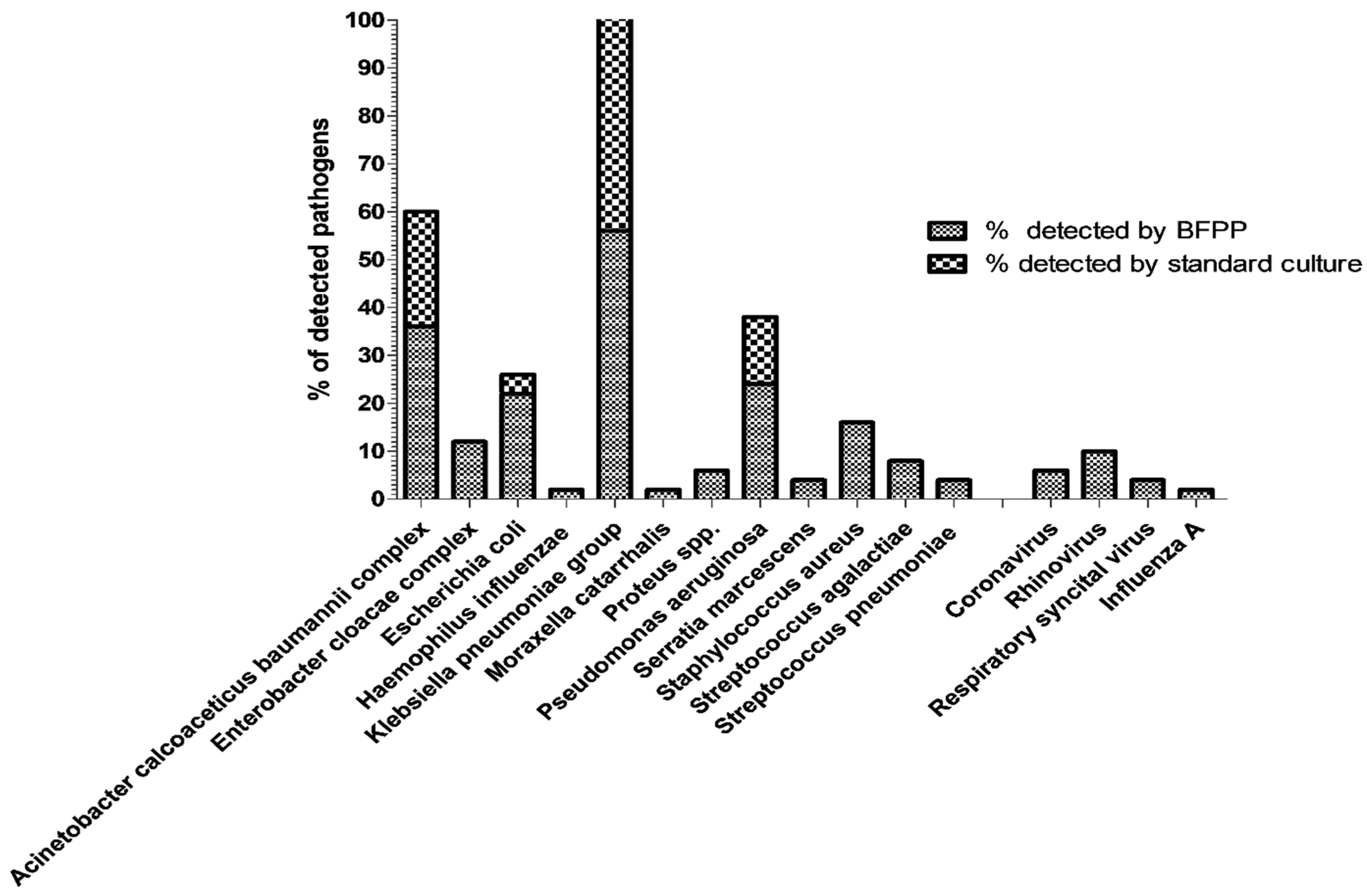
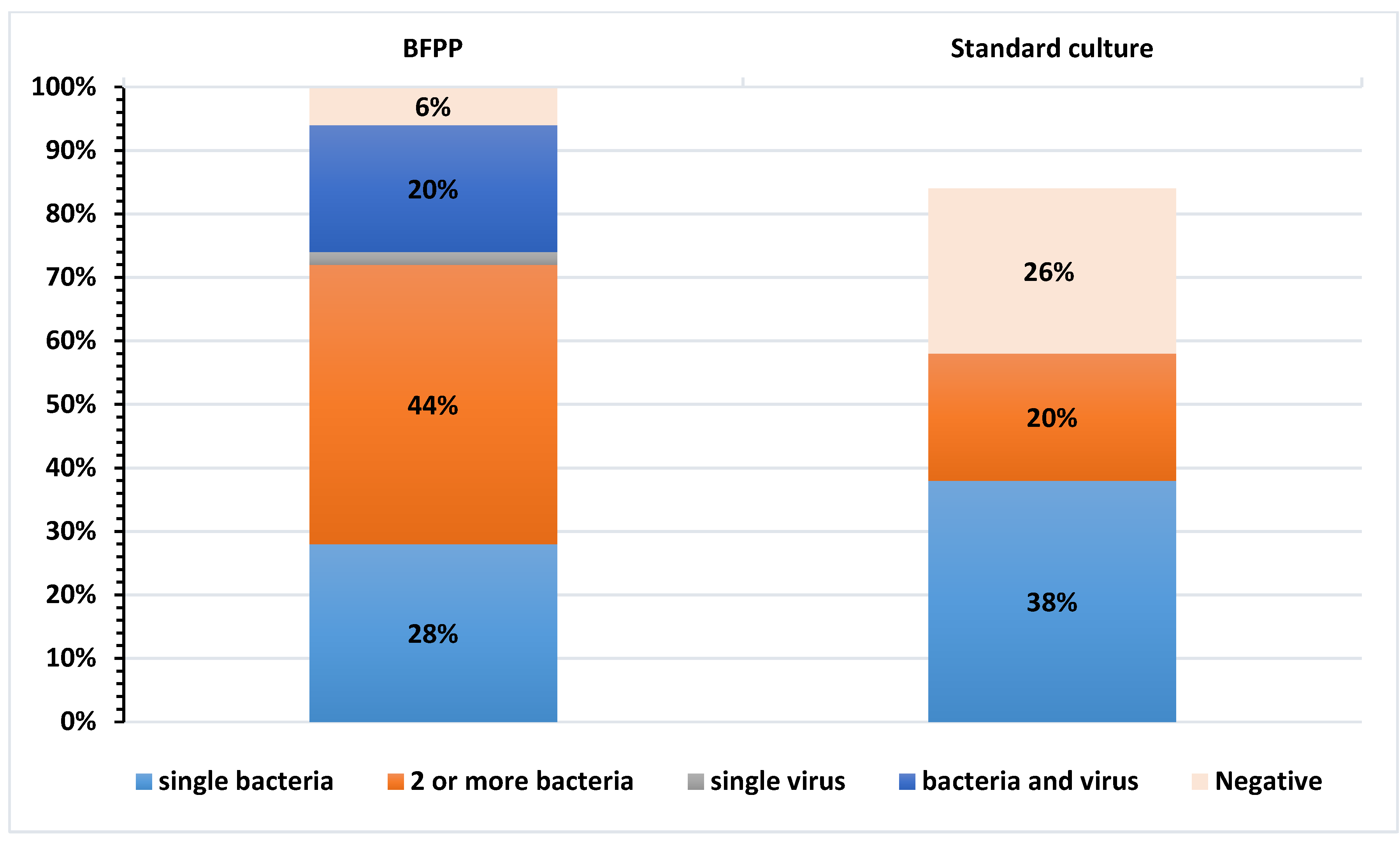
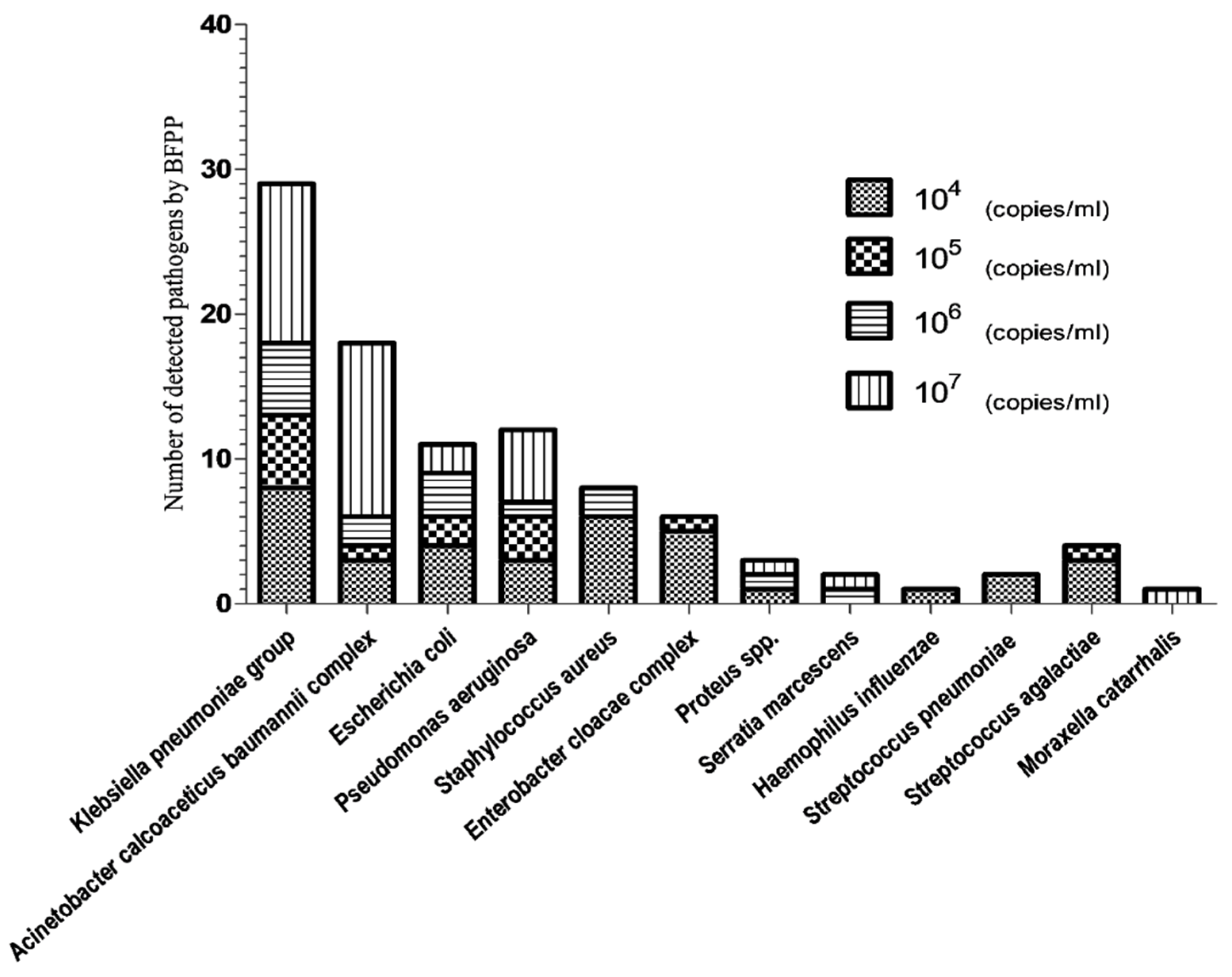
Hospital-acquired pneumonia (HAP) imposes public health threats because of its high morbidity and mortality rate. Accordingly, this study aimed to evaluate the diagnostic performance of the multiplexed BioFire FilmArray Pneumonia Panel plus (BFPP) for the rapid detection of various clinically relevant respiratory pathogens and genetic markers among 50 patients admitted with HAP to an intensive care unit (ICU) in a tertiary care hospital in Egypt. In comparison to standard culture methods, BFPP showed an overall sensitivity and specificity of 100% and 90%, respectively, with the identification of 11 viral targets (22%) among the tested specimens. The BFPP semi-quantitative analysis showed a concordance rate of 47.4% among positive culture specimens. For the examination of the antibiotic resistance genes, BFPP showed a positive percent agreement (PPA), a negative percent agreement (NPA) and an overall percent agreement (OPA), reaching 97%, 95%, and 95%, respectively, with standard antibiotic sensitivity testing. According to the obtained results, BFPP has the potential to enhance the rapid microbiological diagnosis of HAP cases, tailor appropriate antibiotic therapy, apply antimicrobial stewardship programs, and implement effective infection control measures.
Abstract
Hospital-acquired pneumonia (HAP) is a substantial public health issue that is associated with high mortality rates and is complicated by an arsenal of microbial etiologies, expressing multidrug-resistant phenotypes, rendering relatively limited therapeutic options. BioFire FilmArray Pneumonia Panel plus (BFPP) is a simple multiplexed PCR system that integrates sample preparation, nucleic acid extraction, amplification, and analysis of microbial etiology, with a turnaround time of about one hour. In comparison to standard culture methods, BFPP is simpler, easier to perform, and can simultaneously detect the most common pathogens involved in lower respiratory tract infections (34 targets). Accordingly, we evaluated the diagnostic performance of the multiplexed BFPP for the rapid detection of 27 clinically relevant respiratory pathogens and 7 genetic markers among 50 HAP cases admitted to the intensive care unit (ICU), who submitted mini-bronchoalveolar (mBAL) specimens. In comparison to standard culture methods, BFPP showed an overall sensitivity of 100% [95% CI; 90–100] and overall specificity of 90% [95% CI; 87.4–92.5] among all the tested bacterial targets. BFPP identified 11 viral targets (22%) among the tested specimens. The BFPP semi-quantitative analysis showed a concordance rate of 47.4% among positive culture specimens. For the investigation of the antibiotic resistance genes, BFPP showed a positive percent agreement (PPA), a negative percent agreement (NPA), and an overall percent agreement (OPA), reaching 97% [95% CI; 90–100], 95% [95% CI; 91.5–97], and 95% [95% CI; 93–97], respectively, with standard antibiotic sensitivity testing. In conclusion, BFPP has the potential to enhance the rapid microbiological diagnosis of HAP cases, and could aid in tailoring appropriate antibiotic therapies.