A Heterozygous Genotype-Dependent Branched-Spike Wheat and the Potential Genetic Mechanism Revealed by Transcriptome Sequencing

Key Laboratory of Plant Functional Genomics of the Ministry of Education, Jiangsu Key Laboratory of Crop Genomics and Molecular Breeding, Collaborative Innovation of Modern Crops and Food Crops in Jiangsu, Jiangsu Key Laboratory of Crop Genetics and Physiology, College of Agriculture, Yangzhou University, Yangzhou 225009, China
*
Author to whom correspondence should be addressed.
†
Authors contribute equally to the work.
Biology 2021, 10(5), 437; https://doi.org/10.3390/biology10050437
Submission received: 11 April 2021
/
Revised: 5 May 2021
/
Accepted: 11 May 2021
/
Published: 14 May 2021
Simple Summary
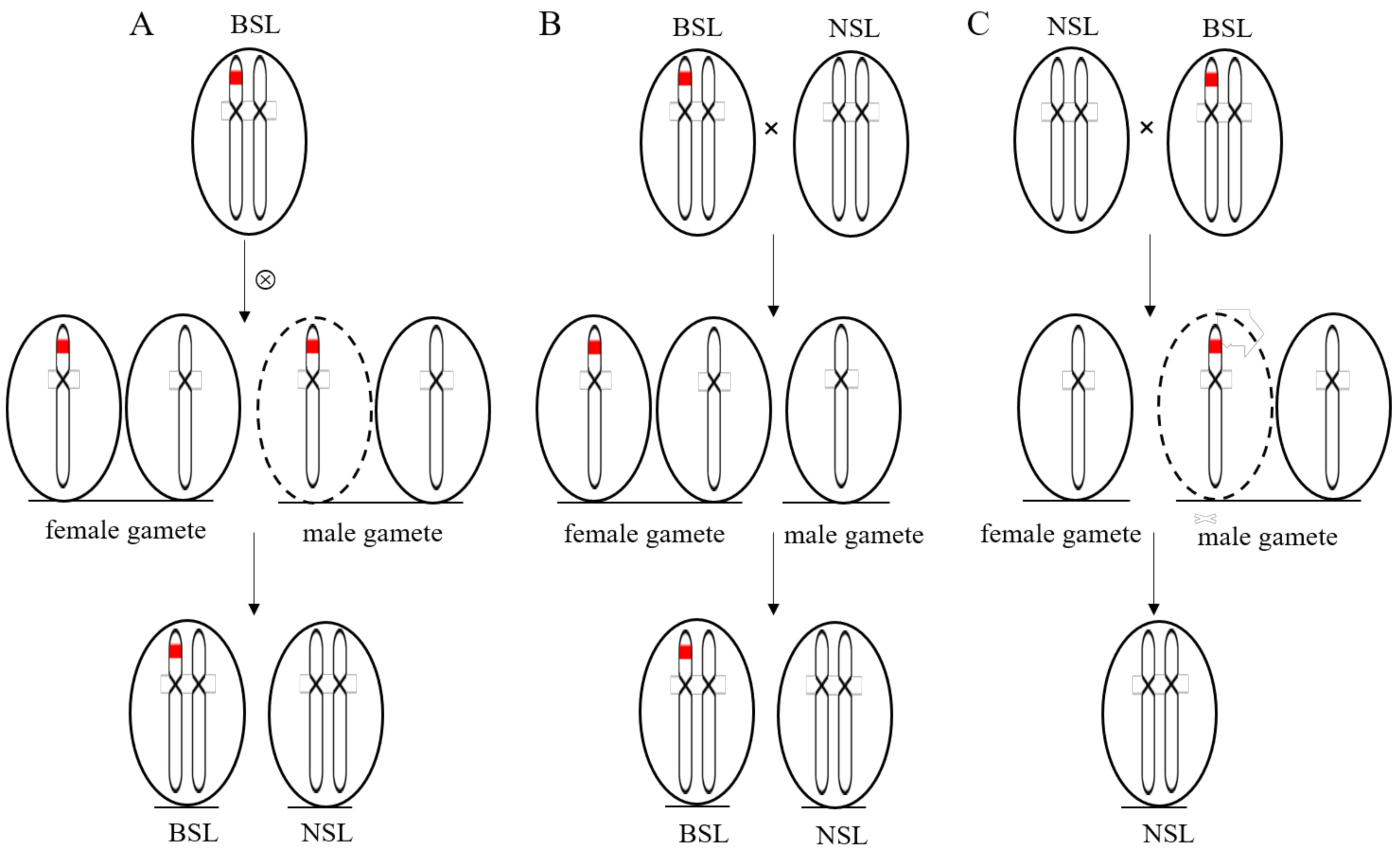
This paper reported a novel type of branched spike wheat from a natural mutation event. The branched spike was controlled by a heterozygous genotype. The genetic patterns showed that gametophytic male sterility probably contributed to the heterozygous genotype responsible for the branched spike trait. Expressional levels and Wheat FRIZZY PANICLE (WFZP) sequencing between the mutant with the branched spike and the wild-type with the normal spike showed that WFZP was not the causal gene for the branched spike. Data from transcriptome sequencing indicated that carbohydrate metabolism might be involved in the formation of the branched spike trait.
Abstract
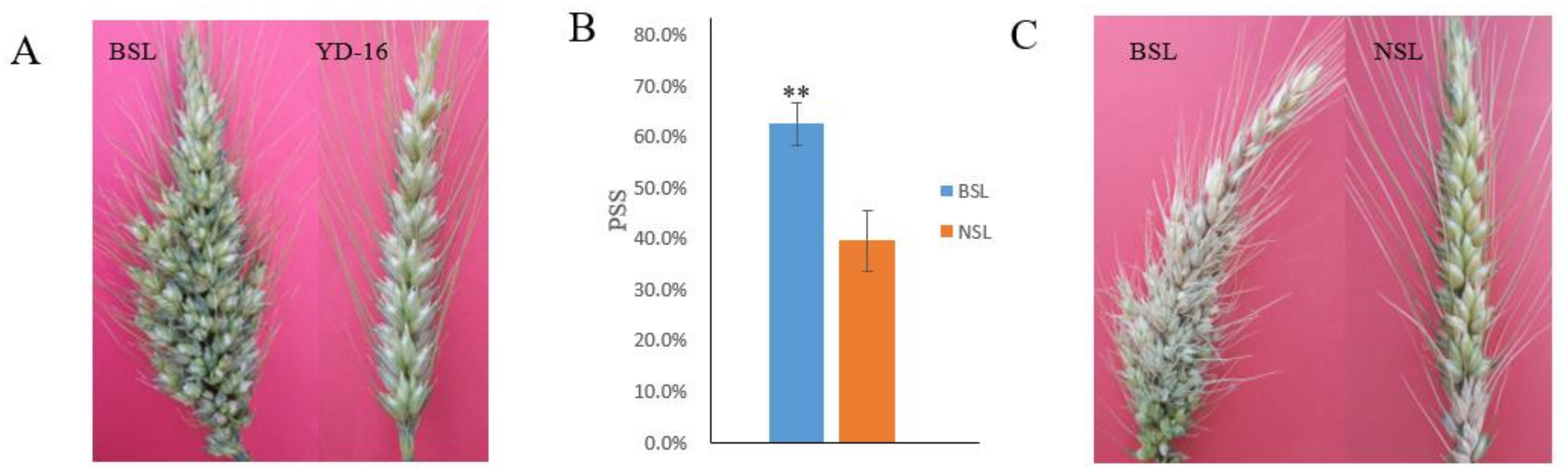
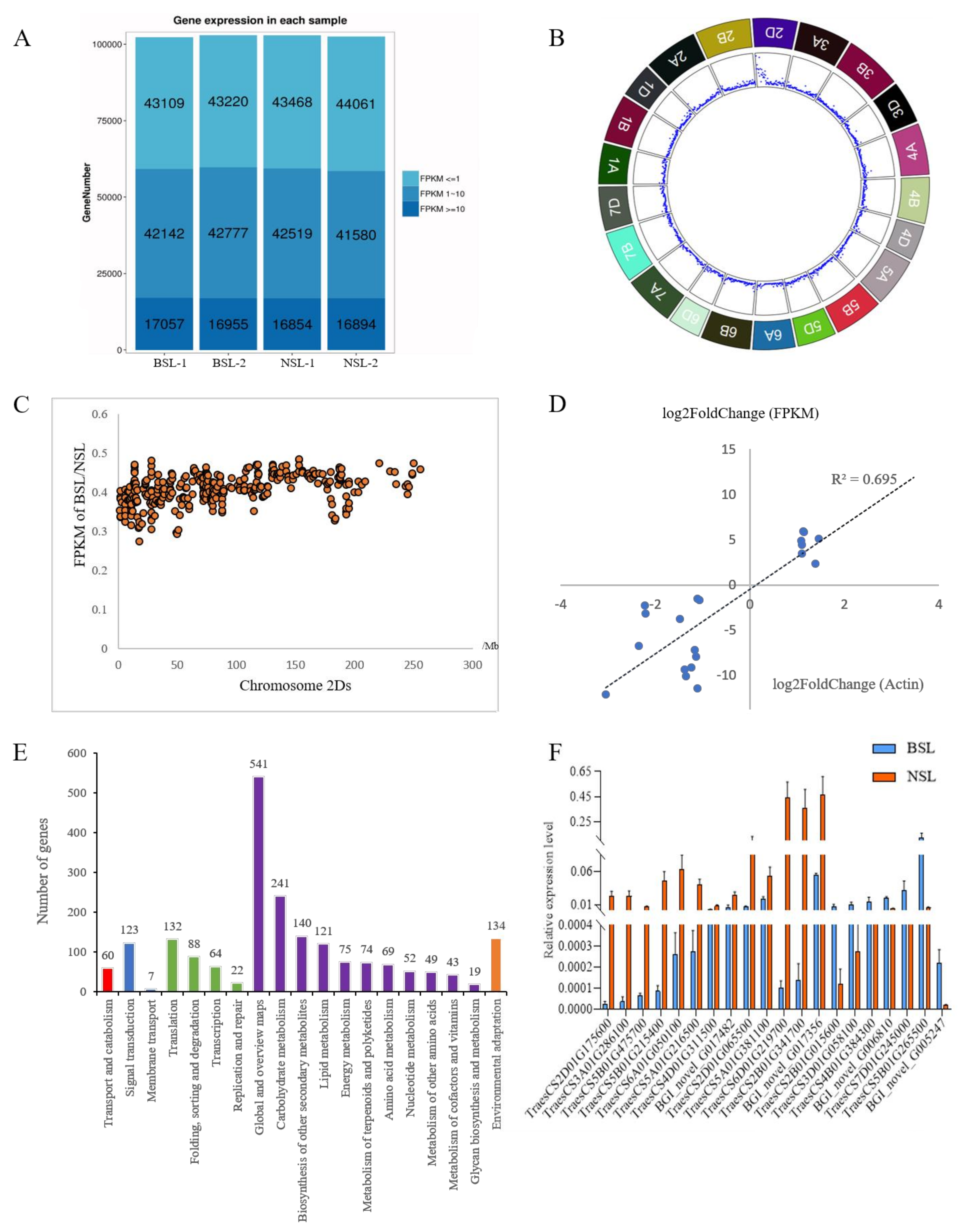
Wheat (Triticum aestivum L.) spike architecture is an important trait associated with spike development and grain yield. Here, we report a naturally occurring wheat mutant with branched spikelets (BSL) from its wild-type YD-16, which has a normal spike trait and confers a moderate level of resistance to wheat Fusarium head blight (FHB). The lateral meristems positioned at the basal parts of the rachis node of the BSL mutant develop into ramified spikelets characterized as multiple spikelets. The BSL mutant shows three to four-day longer growth period but less 1000-grain weight than the wild type, and it becomes highly susceptible to FHB infection, indicating that the locus controlling the BSL trait may have undergone an intensively artificial and/or natural selection in modern breeding process. The self-pollinated descendants of the lines with the BSL trait consistently segregated with an equal ratio of branched and normal spikelets (NSL) wheat, and homozygotes with the BSL trait could not be achieved even after nine cycles of self-pollination. Distinct segregation patterns both from the self-pollinated progenies of the BSL plants and from the reciprocal crosses between the BSL plants with their sister NSL plants suggested that gametophytic male sterility was probably associated with the heterozygosity for the BSL trait. Transcriptome sequencing of the RNA bulks contrasting in the two types of spike trait at the heading stage indicated that the genes on chromosome 2DS may be critical for the BSL trait formation since 329 out of 2540 differentially expressed genes (DEGs) were located on that chromosome, and most of them were down-regulated. Kyoto Encyclopedia of Genes and Genomes (KEGG) analysis showed that carbohydrate metabolism may be involved in the BSL trait expression. This work provides valuable clues into understanding development and domestication of wheat spike as well as the association of the BSL trait with FHB susceptibility.